
Gremolata: The Zesty 5-Minute Italian Herb Condiment You Need
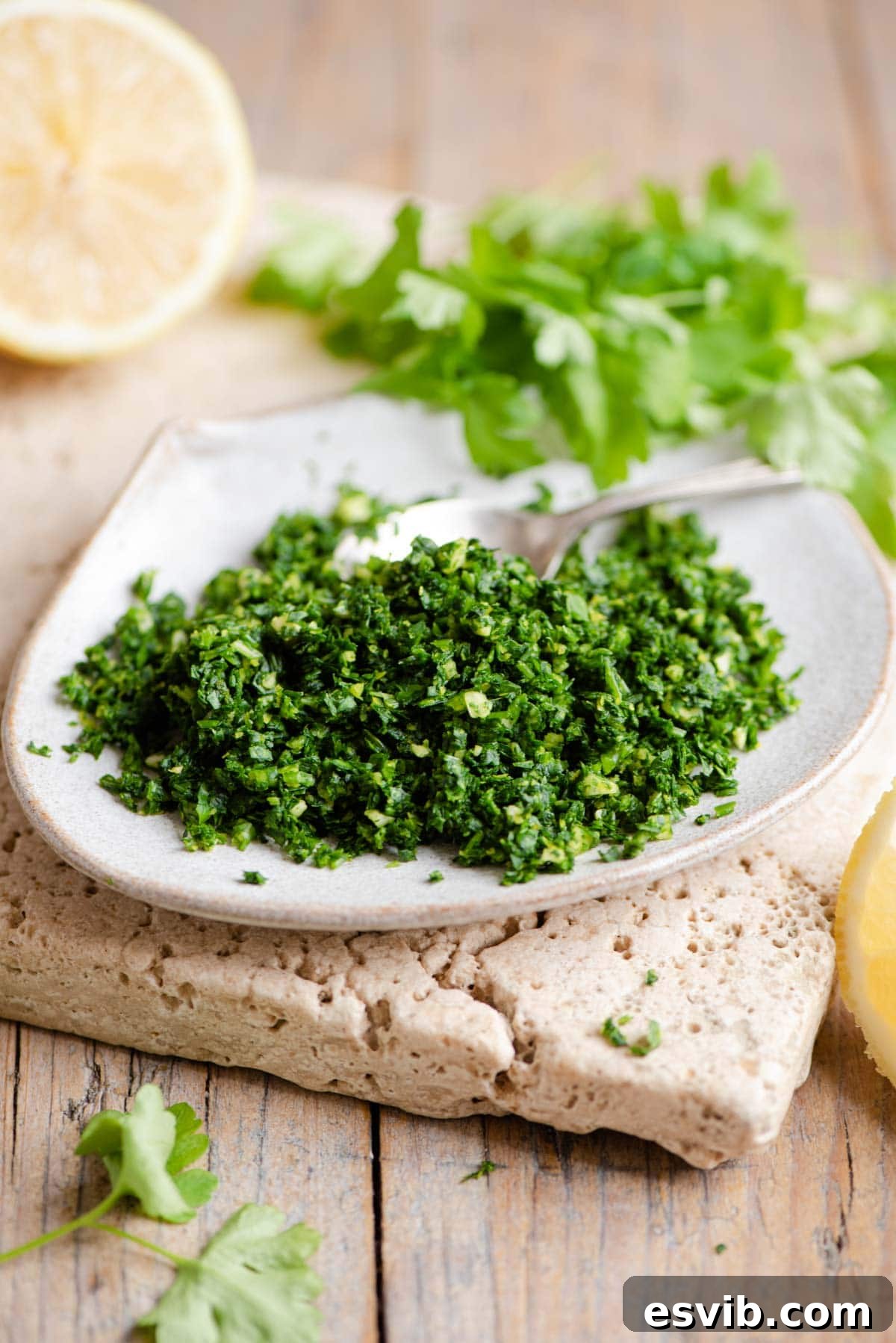
Gremolata is a truly exceptional and vibrant Italian herb condiment, renowned for its incredible freshness and bright flavor profile. Made from just three core ingredients – finely chopped fresh flat-leaf parsley, minced garlic, and grated lemon zest – it’s a culinary secret weapon. This simple yet powerful mixture is ready in a mere 5 minutes, offering the easiest way to infuse a burst of intense flavor and aromatic zest into an array of dishes, from hearty stews and comforting soups to creamy risotto and much more.
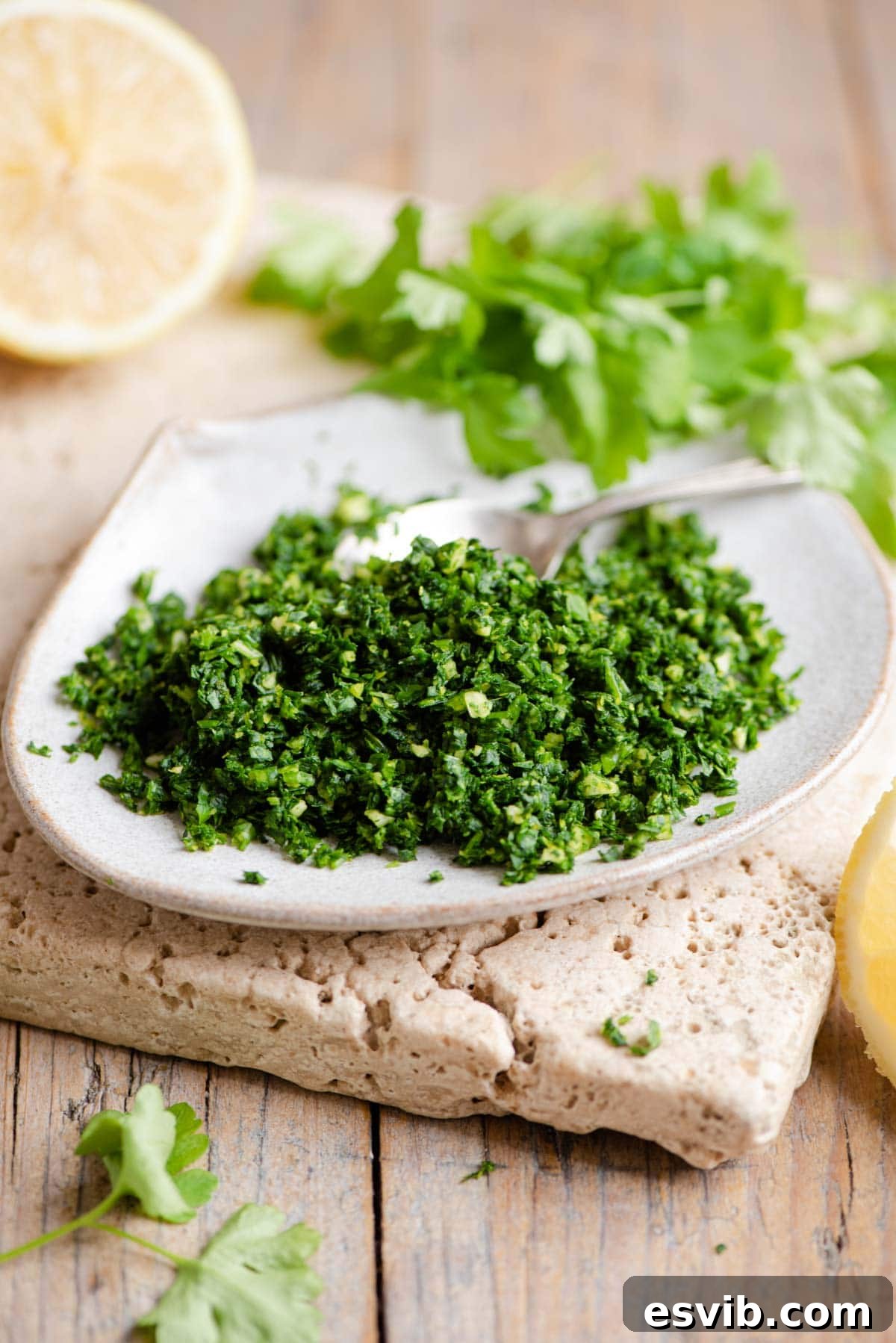
If you’re looking to transform everyday meals with minimal effort, or perhaps you have an abundance of fresh parsley waiting to be used, then Gremolata is your answer. This zingy, fresh, and incredibly vibrant condiment is a testament to the power of simple, quality ingredients working in harmony. It adds not just flavor, but also a delightful texture and a pop of color to almost any savory dish. A simple sprinkle over roast meats, flaky fish, rich stews, light soups, or even pasta dishes elevates them from ordinary to extraordinary, delivering a boost of Mediterranean freshness that’s truly irresistible.
What Exactly is Gremolata?
Hailing from the Lombardy region of Italy, Gremolata is a classic condiment traditionally served with Osso Buco, a slow-cooked braised veal shank dish. However, its versatility extends far beyond this classic pairing. The name “Gremolata” is believed to derive from the Lombard word “gremolà,” meaning “to crumb” or “to grind,” referring to the finely chopped texture of its components. It’s not a sauce in the typical sense, but rather a robust seasoning or garnish, designed to cut through rich flavors and provide a refreshing counterpoint. Unlike pesto, which often includes nuts and cheese, or salsa verde, which can have capers and anchovies, Gremolata maintains a clean, straightforward flavor profile, letting the individual characteristics of parsley, garlic, and lemon shine through.
The Simple Ingredients You Need for Authentic Gremolata
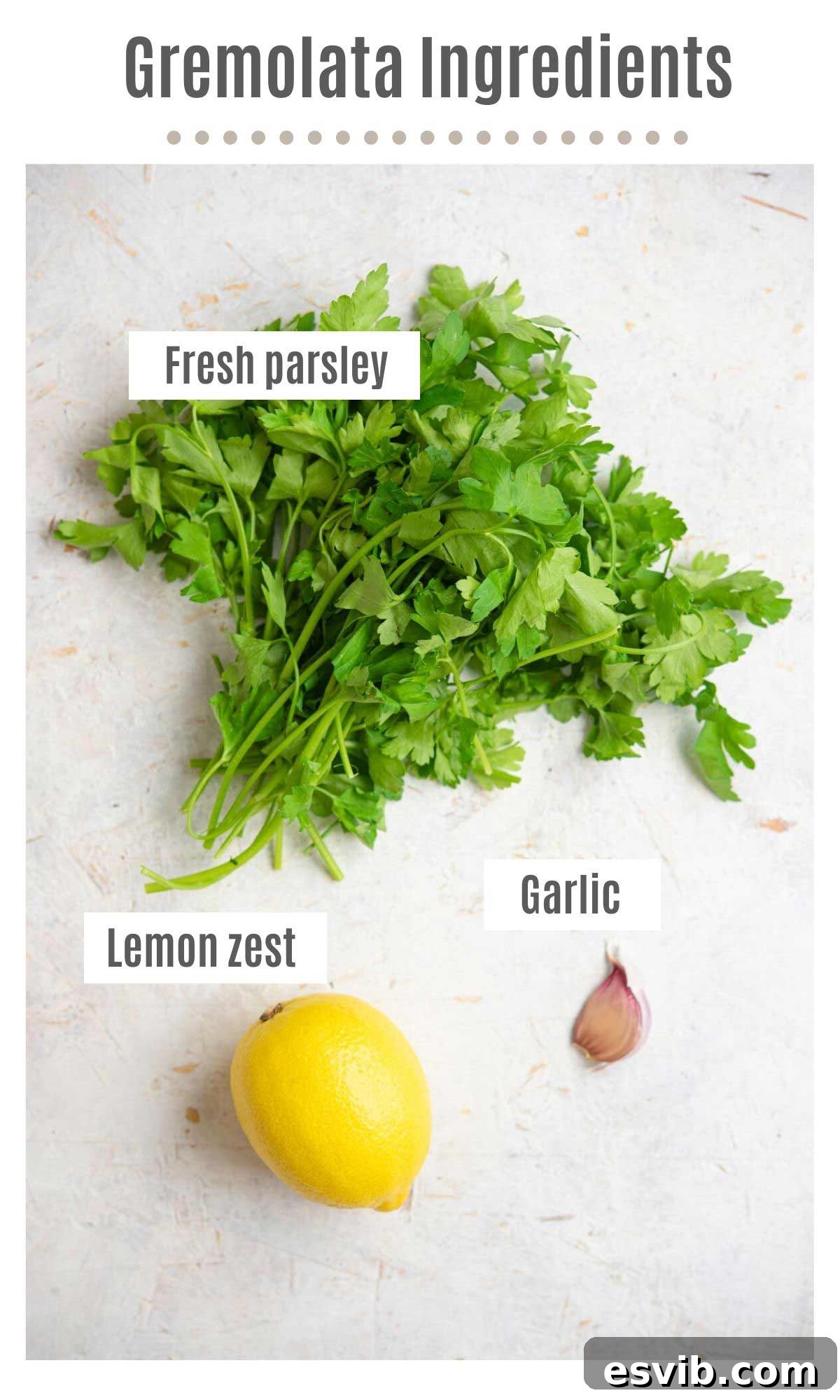
The beauty of Gremolata lies in its elegant simplicity. It requires just three fundamental ingredients, each playing a crucial role in creating its distinctive flavor:
- Fresh Flat-Leaf Parsley: This is the backbone of Gremolata. Flat-leaf parsley (also known as Italian parsley) is preferred over curly parsley for its stronger, cleaner flavor and easier chopping texture. Ensure it’s vibrant green and freshly picked for the best results.
- Garlic: Fresh garlic cloves are essential. They provide a pungent, savory kick that balances the brightness of the lemon and the herbaceousness of the parsley. Avoid pre-minced garlic, as its flavor won’t be as fresh or potent.
- Lemon Zest: The zest, or outer rind, of a fresh lemon provides the characteristic citrusy aroma and tang. It’s important to use only the yellow part of the peel, as the white pith underneath can be bitter. Organic lemons are recommended if possible, to avoid pesticides.
The photo below illustrates all the fresh ingredients you’ll need to create this amazing condiment!
Step-by-Step Guide to Making Perfect Gremolata
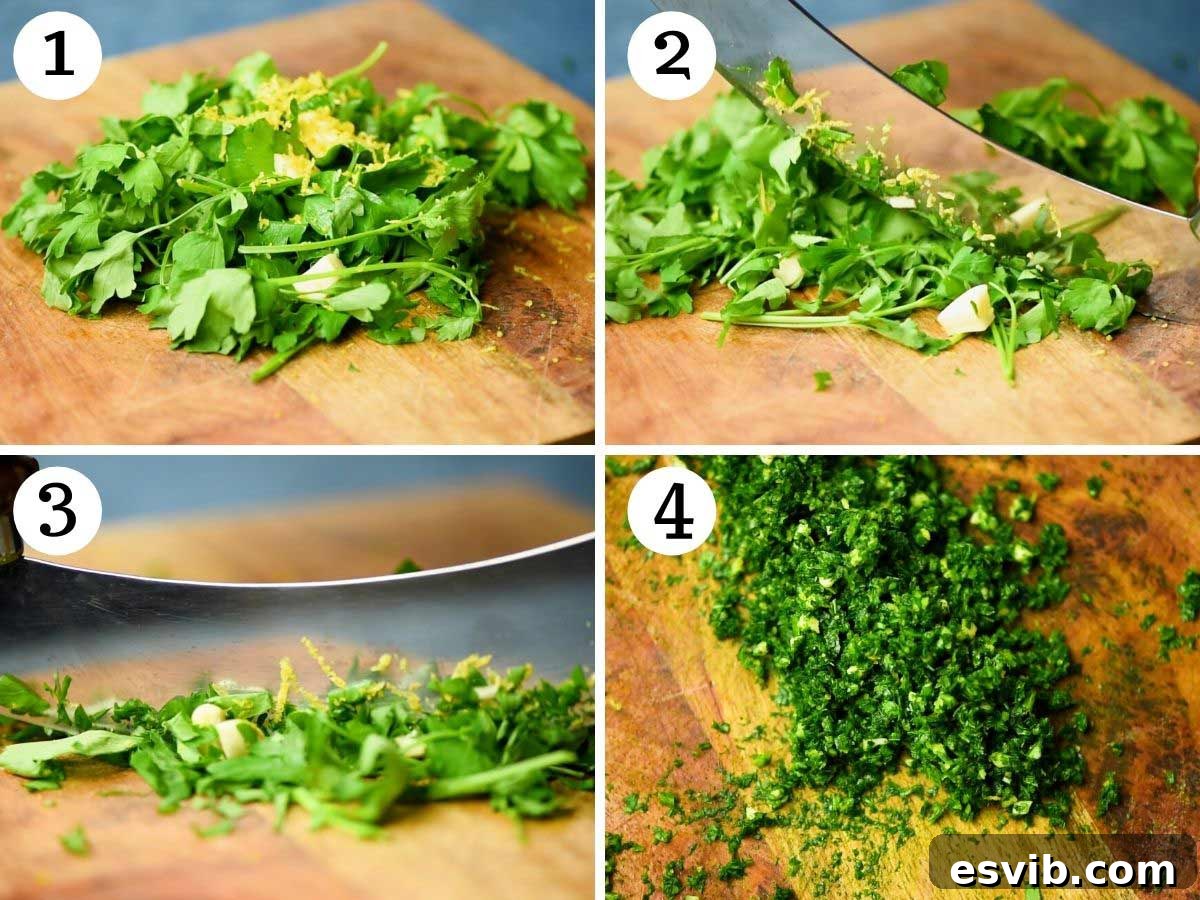
Creating Gremolata is incredibly straightforward and requires minimal culinary skill. The key is in the fine chopping, which allows the flavors to meld beautifully and ensures a consistent texture.
- Prepare the Parsley and Garlic: Begin by washing your fresh flat-leaf parsley thoroughly and patting it completely dry. This is crucial for both flavor and texture. Remove any thick, woody stems, keeping only the tender leaves and thinner stalks. Place the parsley on a clean cutting board. Peel your garlic clove(s) and chop them into rough, manageable chunks. Scatter these garlic pieces over the parsley.
- Add the Lemon Zest: Using a microplane or a fine grater, carefully zest the lemon directly over the parsley and garlic mixture. Be careful to only get the bright yellow outer layer, avoiding the bitter white pith. This ensures maximum lemon aroma and flavor without any unpleasant bitterness.
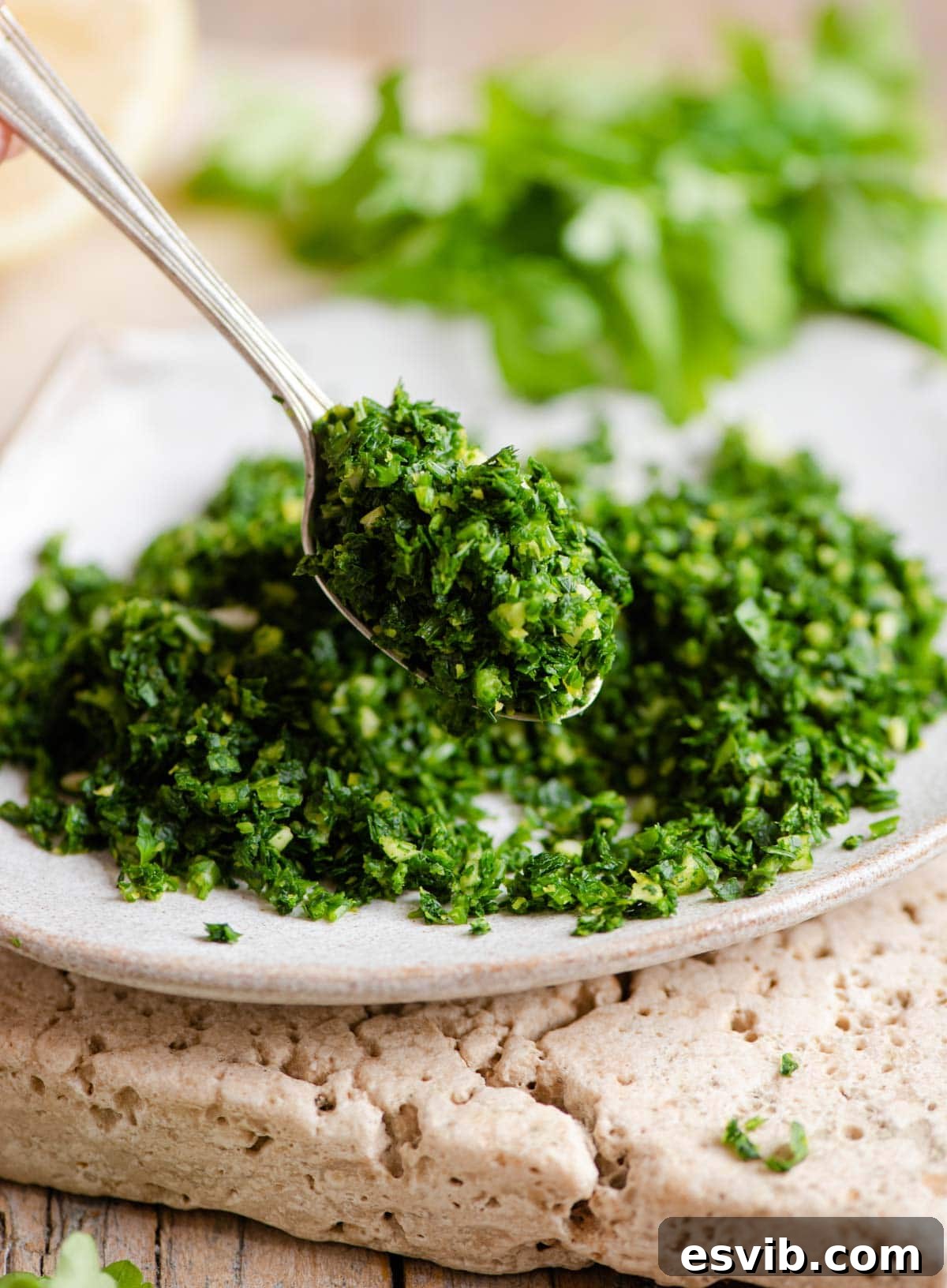
- Finely Chop Together: Now for the chopping! Using a mezzaluna (an Italian half-moon shaped knife with two handles, ideal for rocking motion chopping) or a very sharp chef’s knife, begin to finely chop all the ingredients together. Work systematically, gathering the ingredients back into a pile as you chop, until the mixture is uniform and resembles fine breadcrumbs or a coarse relish. The goal is to release the aromatic oils from the parsley and garlic, and blend them seamlessly with the lemon zest. This fine chop is essential for the characteristic texture and intense flavor of Gremolata. Continue chopping until you achieve the desired consistency—a fine, vibrant, and fragrant mixture.
Versatile Ways to Enjoy Gremolata
While Gremolata is famously paired with Osso Buco, its bright and fresh character makes it an incredibly versatile condiment that can enhance a vast array of dishes. Here are just a few ideas to inspire you:
- The Classic Pairing: Sprinkle it generously over Osso Buco (braised veal shanks). This traditional combination is a match made in heaven, with the Gremolata’s acidity and freshness beautifully cutting through the richness of the slow-cooked meat. Serve it alongside Risotto alla Milanese (saffron risotto) for a truly authentic and unforgettable Sunday dinner.
- Roast Meats: Elevate any roast chicken, lamb, or beef by sprinkling Gremolata over it just before serving. The herbs and citrus brighten the savory flavors of the meat.
- Fish and Seafood: It’s a fantastic complement to grilled or baked fish (like salmon, cod, or sea bass) and other seafood. Its zesty notes enhance the delicate flavors without overpowering them.
- Stews and Soups: Stir a spoonful into your favorite hearty stews or vegetable soups for an instant lift of freshness. It adds depth and a gourmet touch.
- Pasta and Risotto: Gremolata can be a simple, yet impactful, topping for pasta dishes, especially those with olive oil or light sauces. It also adds a wonderful pop of flavor to creamy risottos.
- Eggs: A sprinkle over scrambled eggs, omelets, or frittatas can add an unexpected layer of freshness to your breakfast or brunch.
- Roasted Vegetables: Transform roasted potatoes, carrots, asparagus, or broccoli into something special. Toss them with Gremolata after roasting for a vibrant finish.
- Appetizers: We even have a spectacular recipe for Burrata with ‘Nduja and Gremolata. This amazing appetizer takes literally 5 minutes to assemble and is a must-try for any cheese lover!
Expert Tips and FAQs for Perfect Gremolata
Achieving the best Gremolata is all about using fresh ingredients and the right technique. Here are some invaluable tips and answers to common questions:
- Chopping by Hand for Best Texture: While a food processor might seem tempting for speed, I strongly recommend chopping Gremolata by hand. This ensures a coarser, more distinct texture where you can appreciate the individual components, rather than a pulverized paste. I personally love using a Mezzaluna. This Italian half-moon shaped knife, with a handle at each end, allows for a rocking motion that makes fine chopping incredibly quick and easy. However, a sharp chef’s knife will also yield excellent results with a bit more patience.
- Trimming the Parsley Stalks: Generally, most parsley stalks are fine to use, especially the thinner ones, as they also contain flavor. I typically avoid wasting them unless they are particularly thick, tough, or woody. Just ensure they are finely chopped along with the leaves.
- Selecting Fresh Garlic: Always opt for fresh, firm garlic cloves. Avoid any that show signs of bruising, softness, or green sprouts, as these can indicate older garlic with a harsher flavor.
- The Right Parsley: Always use fresh flat-leaf parsley (Italian parsley). Wash it thoroughly under cold water and then dry it completely before chopping. Excess moisture can make your Gremolata soggy and dilute its flavor.
- Citrus Zest Variations: While lemon zest is traditional and provides that signature bright flavor, don’t be afraid to experiment! Depending on the dish you’re serving, you could try adding orange or lime zest for a slightly different citrus note. For instance, orange zest might be lovely with duck or pork, while lime zest could pair well with certain fish dishes.
- Optimal Storage: Gremolata is undoubtedly best served immediately when its flavors are at their freshest and most vibrant. However, if you have leftovers or wish to prepare it a little in advance, you can store it in an airtight container in the refrigerator. To help preserve its freshness and prevent browning, gently cover the surface of the Gremolata with a thin layer of good quality olive oil. This acts as a barrier, protecting it from air. Stored this way, it will keep well for up to 5 days, though its peak freshness is within the first 2-3 days.
Gremolata FAQs
Gremolata is best enjoyed fresh, immediately after preparation. However, if stored properly in an airtight container in the refrigerator and topped with a thin layer of olive oil, it can last for up to 5 days. Its vibrant flavors will be most potent in the first few days.
While you can use a food processor for convenience, I highly recommend chopping Gremolata by hand. Hand chopping allows for greater control over the texture, resulting in a perfectly coarse, “crumb-like” consistency that is essential for authentic Gremolata. A food processor often pulverizes the ingredients, turning them into a paste rather than a finely chopped relish, which can compromise the desired texture and flavor.
More Fresh Italian Herb Condiments You Might Like
If you love the fresh flavors of Gremolata, you’ll surely enjoy these other classic Italian condiments and sauces:
- How To Make Classic Basil Pesto: A fragrant blend of basil, pine nuts, garlic, Parmesan, and olive oil.
- Fresh and Easy Parsley Pesto: A vibrant, herb-forward pesto variation.
- Authentic Italian Salsa Verde (Green Sauce): A tangy, savory herb sauce often featuring capers and anchovies.
- Rich Walnut Sauce – Salsa di Noci: A creamy, nutty sauce perfect for pasta.
If you’ve tried this fantastic Gremolata recipe or any other delicious recipe on the blog, please don’t forget to rate the recipe below and share your experience in the comments. I truly love hearing from you and learning about your culinary adventures! You can also FOLLOW ME on FACEBOOK, INSTAGRAM, and PINTEREST to discover more delectable Italian food, cooking tips, and insights into what I’m currently creating in the kitchen.
Step By Step Photos Above
Most of our recipes come with step by step photos, helpful tips and tricks to make it perfectly first time and even video!
Gremolata – (Parsley, Garlic & Lemon)
Rated 5 out of 5 stars from 1 vote
By Emily
5
5
4 tbsp
Pin
Ingredients
- 2 cups fresh flat leaf parsley, (50g)
- Zest of 1 lemon
- 1 clove garlic
Instructions
-
Remove any thick hardy stalks from the parsley and place on a cutting board. Chop the garlic into rough chunks and place on top of the parsley then add the lemon zest.
-
Using a mezzaluna cutting blade or a sharp knife finely chop everything together until it resembles fine breadcrumbs.
Notes
- Chopping by hand – I like to use a Mezzaluna which is an Italian half-moon shaped knife with a handle at each end for rocking back and forth. It makes chopping super quick and easy but a sharp chef’s knife will also work just as well.
- Trimming the stalks – most stalks are fine to use I generally don’t like wasting them unless they are extra thick and tough.
- Garlic – make sure you use fresh garlic without any bruising or green sprouting stalk.
- Parsley – You need to use flat-leaf parsley that’s been washed and dried completely.
- Citrus zest – although lemon zest is traditionally added you can also try adding orange or lime zest depending on what you’re serving it with.
- Storage – Gremolata is best served immediately when it’s at its freshest but if you have leftovers or want to make it in advance you can cover it in olive oil and store it in the fridge. It’ll keep well for up to 5 days.
Helpful Info for All Our Recipes
- I always use extra virgin olive oil in all of my recipes unless stated otherwise.
- When I use canned or jarred tomatoes of any kind, I always recommend Cirio or Mutti brands for the best results and flavor.
- All vegetables are considered medium-sized unless specifically stated otherwise.
- All recipes on this blog are tested and developed using a fan (convection) oven.
- Find out more about how nutrition is calculated on our site.
- Check out our must-have Italian Pantry Staples for your kitchen.
- You can also find all our Essential Kitchen Tools for Italian Cooking to help you create authentic dishes.
Nutrition Facts (per serving)
Carbohydrates: 2g |
Protein: 1g |
Fat: 1g |
Saturated Fat: 1g |
Sodium: 17mg |
Potassium: 166mg |
Fiber: 1g |
Sugar: 1g |
Vitamin A: 2527IU |
Vitamin C: 40mg |
Calcium: 41mg |
Iron: 2mg
Nutrition information is automatically calculated, so should only be used as an approximation.