
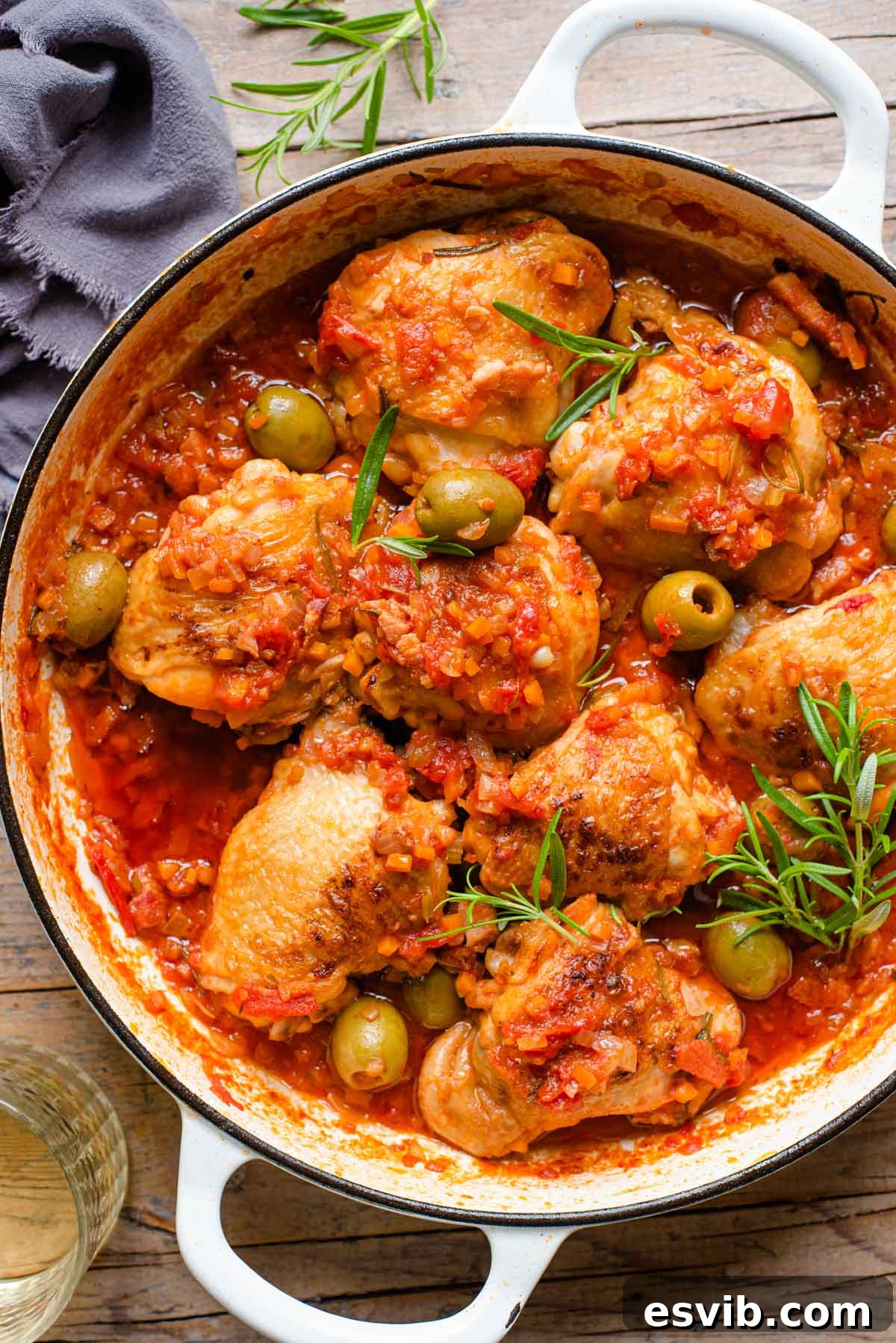
Authentic Chicken Cacciatore (Pollo alla Cacciatora): A Hearty Italian Hunter’s Stew
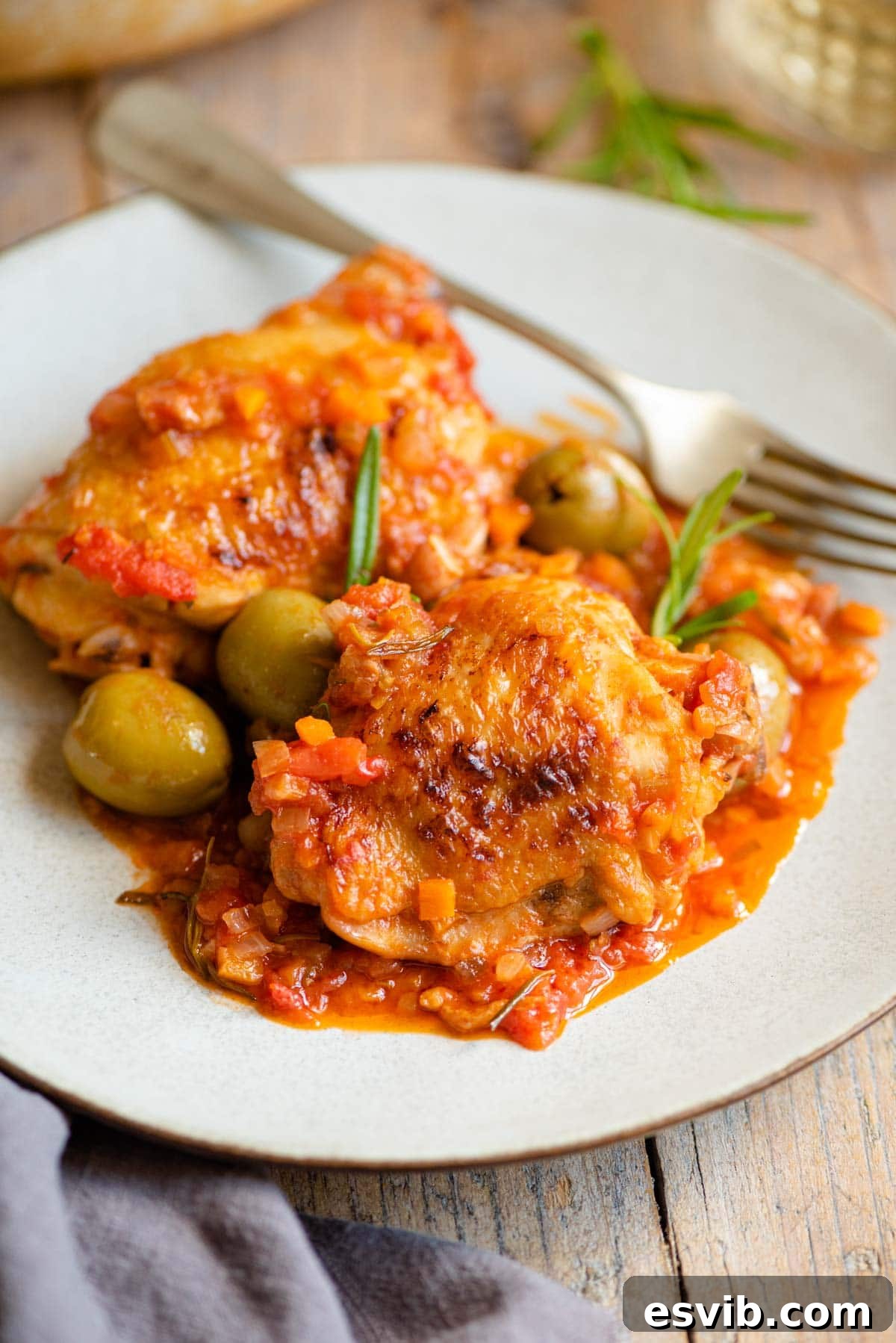
There are few dishes as intrinsically comforting and deeply satisfying as a classic Italian stew, and Chicken Cacciatore, or Pollo alla Cacciatora, stands proudly at the forefront. This rustic, flavorful dish brings together succulent chicken thighs, a rich tomato-based sauce, and a symphony of robust vegetables, aromatic herbs, savory pancetta, and briny olives. It’s the kind of meal that warms you from the inside out, perfect for sharing with loved ones on a chilly evening. Imagine serving this hearty stew alongside a bowl of creamy polenta, fluffy rice, or a generous portion of crispy Italian roast potatoes, soaking up every last drop of its magnificent sauce.
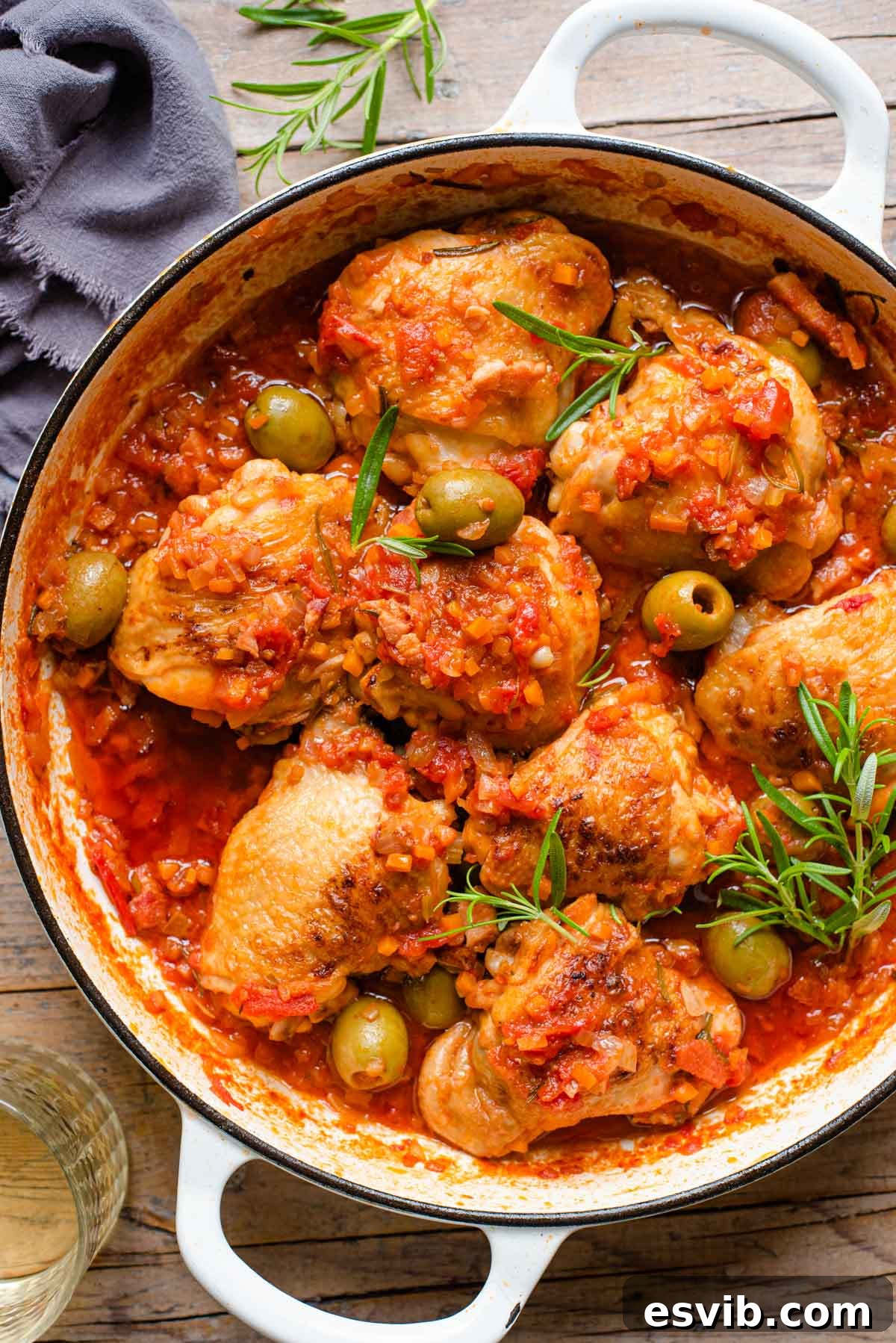
What is Chicken Cacciatore? Unraveling the “Hunter’s Style” Tradition
The name Pollo alla Cacciatora translates directly to “Chicken in the Hunter’s Style.” But what exactly does “hunter’s style” entail in Italian cuisine? Historically, it refers to dishes prepared with ingredients that a hunter might forage or easily acquire after a successful hunt. This usually means game meat or poultry, alongside wild mushrooms, herbs, and simple garden vegetables. The beauty of cacciatore lies in its simplicity and adaptability, reflecting the resourceful nature of traditional Italian cooking.
While the core concept remains consistent—a hearty stew of meat or poultry with vegetables—the specific ingredients for alla cacciatora vary considerably across Italy’s diverse regions. In Tuscany, for instance, you might find cacciatore made with wild boar or rabbit, often featuring porcini mushrooms and a splash of red wine. Further south, particularly in regions like Lazio or Campania, bell peppers are a common addition, lending a sweet and vibrant note to the sauce. Our preferred version, which we believe strikes a perfect balance of flavors and traditional elements, focuses on tender chicken, a rich tomato base, and the classic trio of carrot, celery, and onion.
Regardless of regional nuances, the essence of any alla cacciatora dish is its rustic, wholesome character. It’s a testament to how a few high-quality, seasonal ingredients can transform into a deeply flavorful and profoundly satisfying meal. This easy-to-prepare chicken cacciatore recipe is guaranteed to bring warmth and comfort to your kitchen, making it an ideal choice for a cozy dinner. Serve it with some crusty artisan bread, perfect for mopping up the luscious sauce, and your favorite wholesome Italian sides for a truly memorable comfort food experience.
Essential Ingredients for Your Perfect Chicken Cacciatore
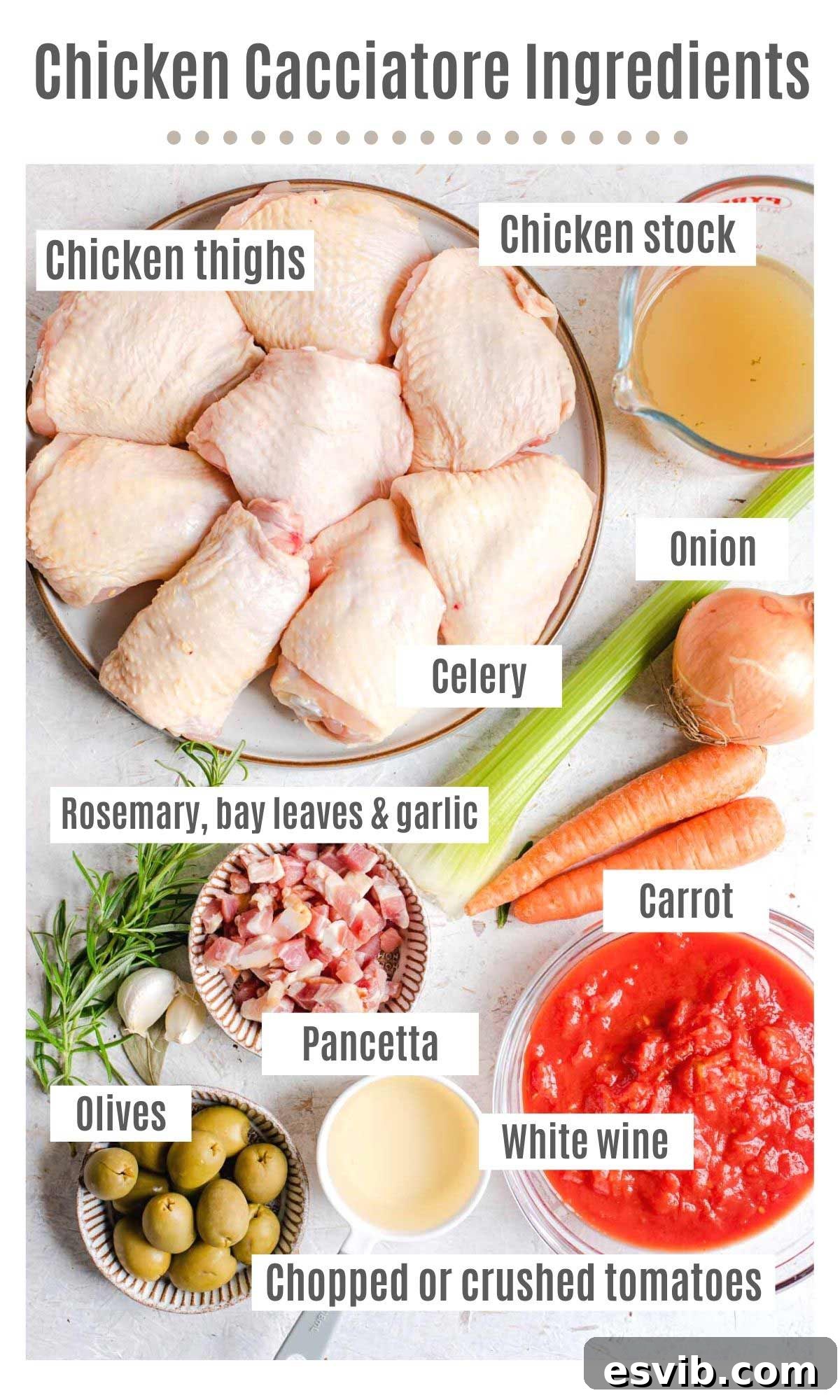
Crafting a truly authentic and delicious Chicken Cacciatore doesn’t require an extensive list of ingredients, but focusing on quality makes all the difference. Our super simple recipe calls for a harmonious blend of fresh produce and pantry staples, ensuring a rich and robust flavor profile. Here’s what you’ll need to gather:
- Chicken Thighs: Bone-in, skin-on thighs are preferred for maximum flavor and juiciness. Opt for free-range if possible.
- Aromatic Vegetables (Soffritto): Fresh carrot, celery, and onion form the essential flavor base.
- Pancetta: Diced pancetta adds a wonderful savory depth and richness.
- Olives: Green or black olives provide a delightful briny counterpoint to the rich sauce.
- Chicken Stock: Low sodium chicken stock allows you to control the seasoning precisely.
- Tomatoes: High-quality crushed tomatoes are key for the luscious sauce.
- White Wine: A dry white wine adds complexity and depth. (Can be substituted with extra stock if preferred).
- Fresh Herbs: Rosemary and bay leaf infuse the stew with classic Italian aromas.
- Garlic: Freshly minced garlic is indispensable for flavor.
- Olive Oil: Essential for sautéing and building the flavor layers.
- Salt and Pepper: To season the chicken and adjust the overall taste.
Step-by-Step Guide to Crafting Your Hunter’s Stew
Follow these detailed instructions to create a truly unforgettable Chicken Cacciatore. Pay attention to each step, as layering the flavors correctly is what makes this dish shine.
Preparation and Browning the Chicken
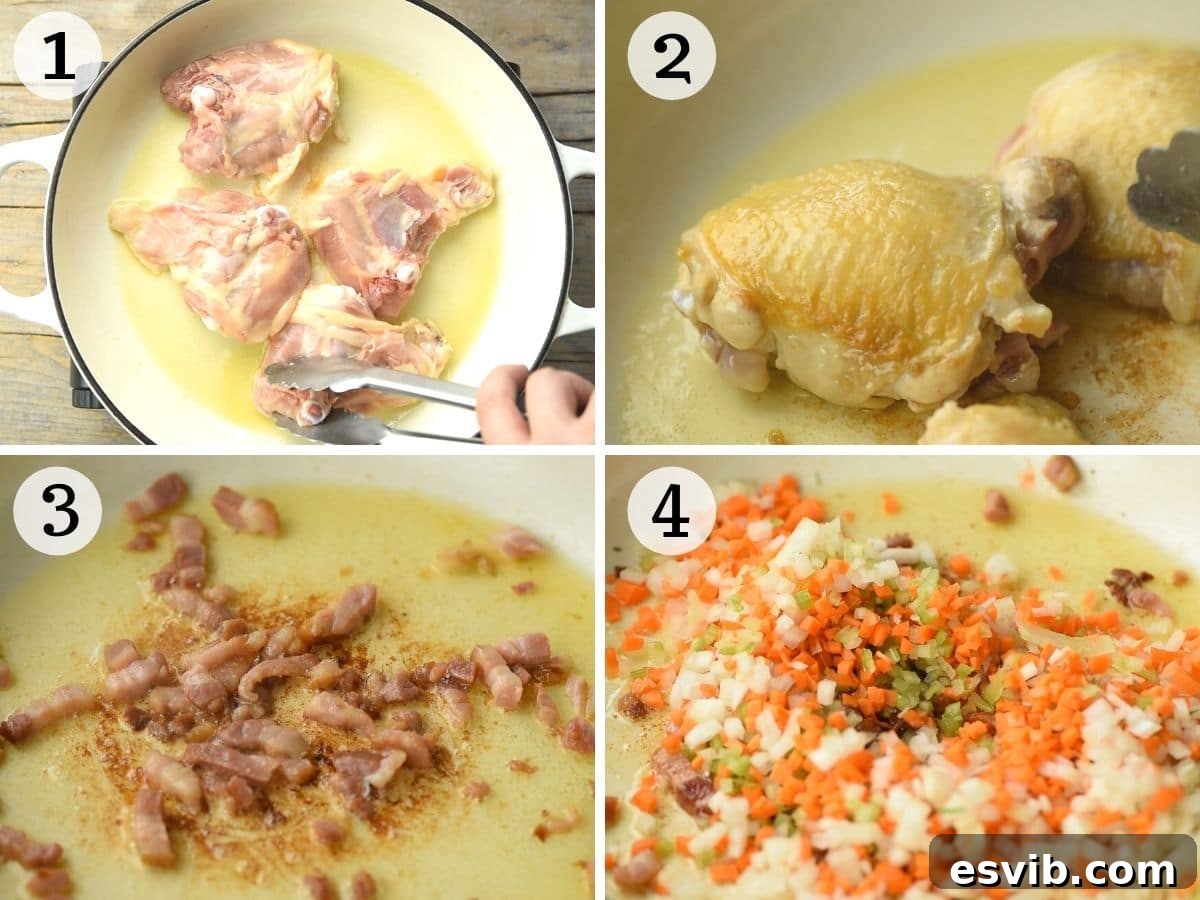
- Begin by heating a tablespoon of high-quality olive oil in a large, deep-sided skillet or Dutch oven over medium-high heat until shimmering. Season your chicken thighs generously with salt on both sides.
- Carefully place the chicken thighs, skin-side down, into the hot skillet. Allow them to brown undisturbed for 5-7 minutes, until the skin turns a deep golden-brown and becomes wonderfully crisp. This crucial step renders fat and develops rich flavor, contributing to the Maillard reaction.
- Flip the chicken thighs and brown them on the other side for another 2 minutes. This brief browning on the non-skin side also helps seal in juices. Once browned, remove the chicken from the skillet and set it aside on a plate.
- Pour out any excessive rendered fat from the skillet, leaving just about a tablespoon or two. Do not wipe the skillet clean, as the browned bits (fond) left on the bottom are packed with incredible flavor that will be released later.
Sautéing the Soffritto and Building the Sauce
- Add the diced pancetta to the skillet, still over medium-high heat, and fry for 2-3 minutes until it starts to crisp and render its fat. Pancetta adds a layer of smoky, salty richness that is truly authentic to Italian cooking.
- Next, add the finely chopped carrot, celery, and onion (the soffritto) to the skillet. Reduce the heat to medium and sauté the vegetables for about 5 minutes, stirring occasionally, until they soften but do not brown. This slow cooking allows their natural sweetness to develop, forming the aromatic backbone of the stew.
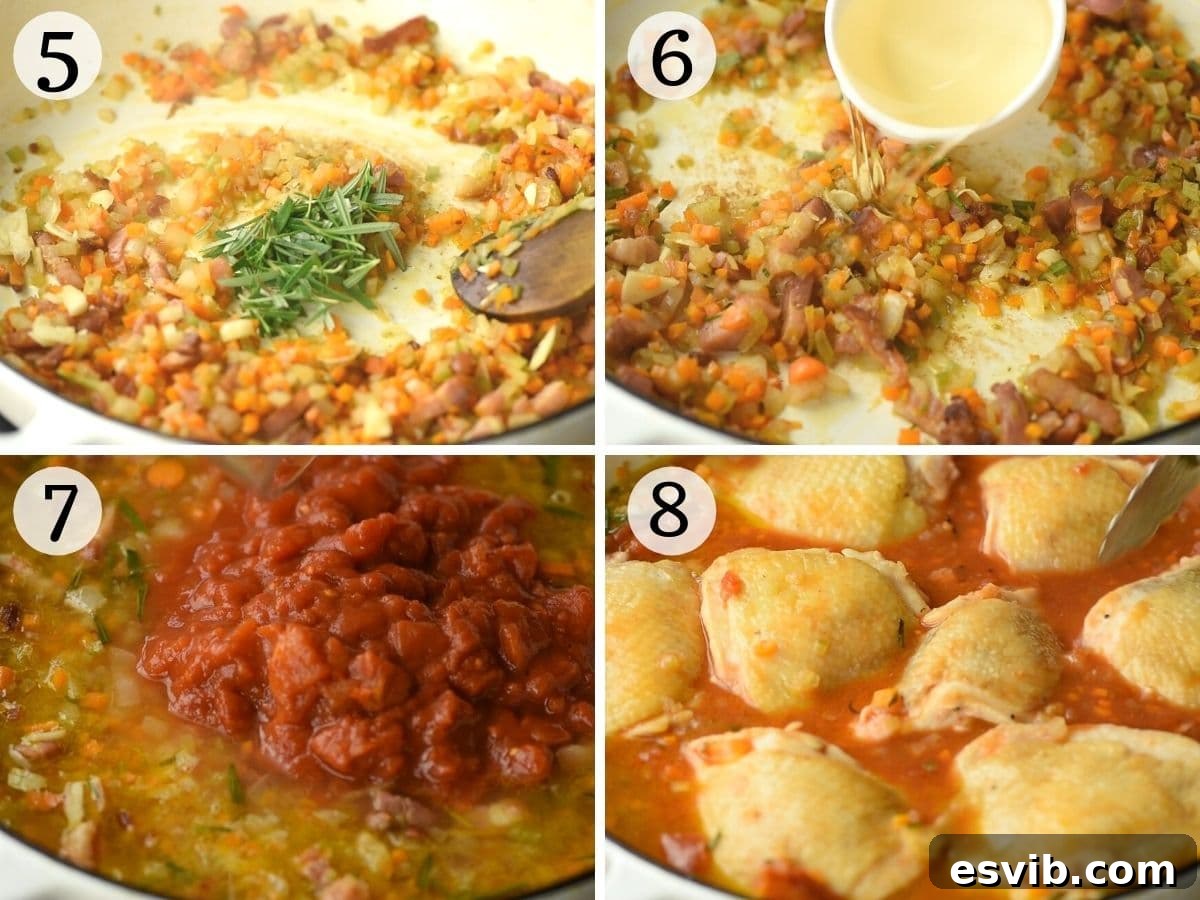
- Once the soffritto is soft, stir in the minced garlic, fresh rosemary sprig, and bay leaf. Sauté for another 2 minutes, allowing the fragrant herbs and garlic to release their aromas. Be careful not to burn the garlic, as this can turn bitter.
- Pour in the white wine and increase the heat slightly. Bring the mixture to a simmer and cook for 1-2 minutes, or until the alcohol scent has cooked off. This step, known as deglazing, lifts all those flavorful browned bits from the bottom of the pan, integrating them into the sauce.
Simmering and Finishing the Stew
- Now, add the crushed tomatoes and chicken stock to the skillet. Stir everything together well, scraping up any remaining fond from the bottom of the pan. Bring the sauce to a gentle simmer.
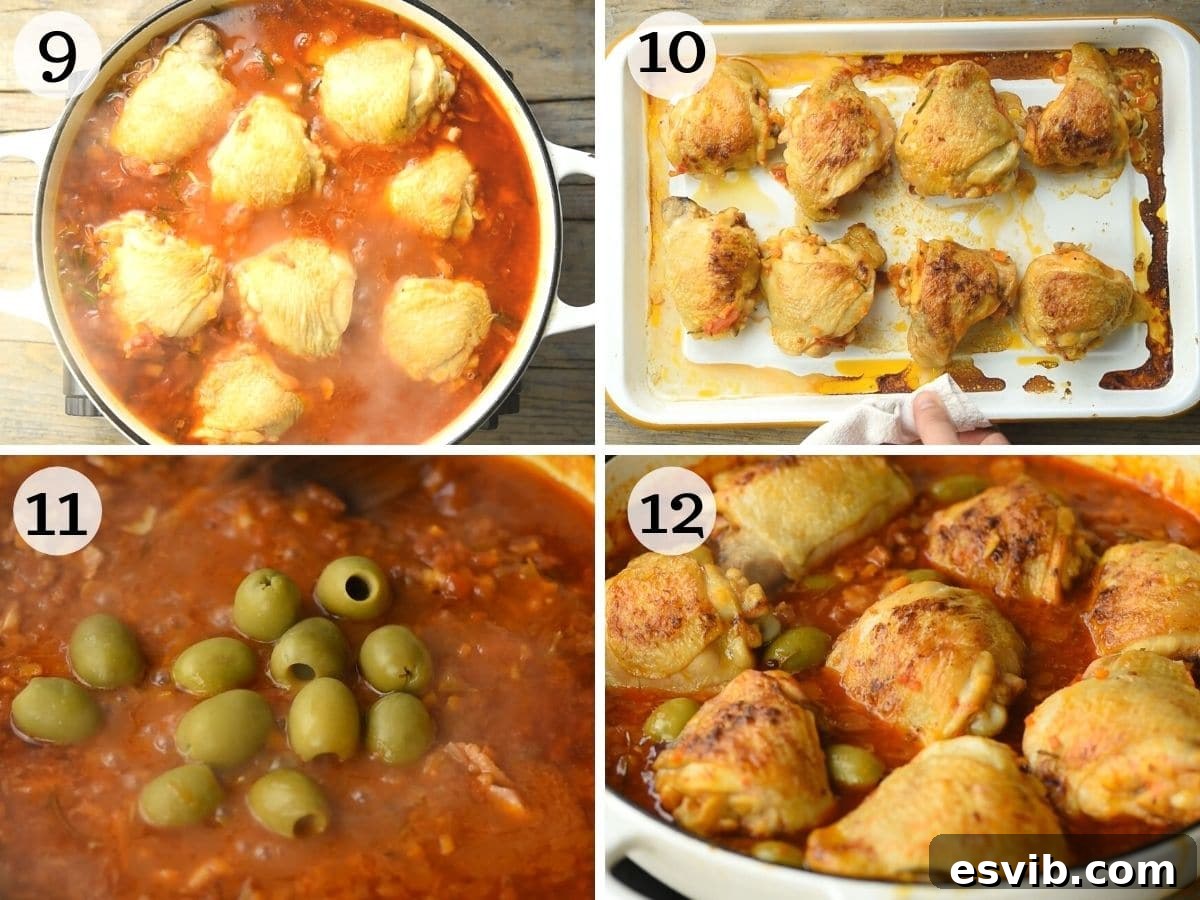
- Carefully return the browned chicken thighs to the pot, nestling them into the sauce. Ensure they are partially submerged. Cover the skillet with a lid and reduce the heat to low. Allow the cacciatore to simmer gently for 45 minutes. This slow braising allows the chicken to become incredibly tender and absorb all the wonderful flavors of the sauce.
- After 45 minutes, uncover the pot. Stir in the olives and continue to simmer for a further 10 minutes, allowing the sauce to reduce slightly and thicken to your desired consistency. The olives will also infuse their briny goodness into the stew during this final cooking phase.
- (Optional for Crispy Skin) While the sauce is reducing, you can remove the chicken thighs to a baking tray and place them under a hot broiler (oven-grill) for a couple of minutes. Keep a close eye on them to prevent burning. This step is completely optional but will crisp up the chicken skin beautifully, adding a delightful textural contrast.
- Finally, return the chicken (if you broiled it) back into the sauce. Stir gently and serve your magnificent Chicken Cacciatore immediately.
Perfect Pairings: What to Serve with Chicken Cacciatore
Chicken Cacciatore is a complete meal on its own, but traditional Italian pairings truly elevate the experience. The rich, savory sauce is just begging to be soaked up by something delicious. In Italy, hearty stews like this, or a robust Peposo (a Tuscan red wine beef stew), are often served with incredibly creamy polenta. Its smooth, buttery texture is the ideal canvas for the complex flavors of the cacciatore, making sure no drop of that exquisite sauce goes to waste.
Beyond polenta, you have many excellent choices. A crusty, rustic bread is always a fantastic option, allowing you to scoop up every last morsel. For a heartier side, consider serving it with perfectly seasoned Italian roasted potatoes, which offer a delightful textural contrast. Alternatively, simple steamed green vegetables like green beans, asparagus, or broccoli provide a fresh, light balance to the rich stew. For a more sophisticated pairing, much like with Ossobuco Milanese (Braised Veal Shanks), a fragrant saffron risotto would be an absolutely sublime accompaniment, adding an elegant touch to your meal.
Expert Tips & Frequently Asked Questions for Success
Achieving the best Chicken Cacciatore is all about attention to detail and understanding the role of each ingredient. Here are some top tips and answers to common questions:
- Choosing the Best Chicken: For the most flavorful and juicy cacciatore, always opt for bone-in and skin-on chicken thighs. The bone contributes depth of flavor to the sauce, and the skin helps keep the meat moist while rendering delicious fat for browning. Dark meat, like thighs and drumsticks, holds up beautifully during long braising, staying tender and succulent. Chicken breasts tend to dry out quickly and don’t contribute as much flavor to the overall stew. If possible, choose free-range chicken for superior taste and texture.
- The Importance of Quality Tomatoes: As with all authentic Italian dishes, the quality of your ingredients truly shines through. For the tomato base, invest in a reputable brand of crushed tomatoes you trust. High-quality San Marzano tomatoes, even if not explicitly labeled crushed, can be gently hand-crushed for this recipe. Avoid overly acidic or watery tomatoes, as they can diminish the richness of the sauce. Brands like Mutti or Cirio are consistently excellent choices, and Cento is often recommended in the US.
- Soffritto is Non-Negotiable: The combination of finely chopped carrot, celery, and onion, known as soffritto, is the flavor foundation for countless Italian soups, sauces, and stews. Taking the time to slowly sauté these vegetables until soft and translucent builds an essential layer of savory sweetness that cannot be rushed or skipped.
- Selecting Your Chicken Stock: You can use either chicken or vegetable stock for this recipe. The most crucial tip here is to choose a low-sodium variety. This allows you complete control over the final seasoning of your stew, preventing it from becoming overly salty before you’ve even had a chance to taste and adjust.
- Wine Selection & Substitution: A dry wine is ideal for cacciatore. For red wine, choices like Chianti or Barbera will add a richer, deeper flavor. If you prefer white wine, a crisp Vermentino or Gavi will lend a brighter, more aromatic note. The alcohol cooks off during simmering, leaving behind only the complex flavors. If you prefer not to cook with wine, you can easily substitute it with an equal amount of additional chicken or vegetable stock without compromising too much on flavor.
Recipe FAQs
In Italian, “alla cacciatora” directly translates to “hunter’s style.” It describes dishes that are traditionally rustic, simple, and wholesome, prepared with ingredients a hunter might have readily available after a day in the field—typically meat, game, or poultry, cooked with simple vegetables and herbs. This method emphasizes robust flavors and straightforward cooking techniques.
For the absolute best flavor and texture in Chicken Cacciatore, bone-in and skin-on chicken thighs or drumsticks are highly recommended. Dark meat is more forgiving during the long simmering process, remaining moist and tender. It also infuses the sauce with richer flavors from the bone marrow and rendered fat. Chicken breasts, while leaner, tend to dry out quicker when cooked for an extended period and don’t contribute as much depth to the stew.
Absolutely! Like many braised dishes and stews, Chicken Cacciatore often tastes even better the next day. Preparing it in advance allows the flavors to meld and deepen over time. You can cook the entire dish, let it cool completely, then refrigerate it in an airtight container. When ready to serve, simply reheat gently on the stovetop or in the oven until the chicken is piping hot throughout.
Yes, Chicken Cacciatore freezes exceptionally well, making it a fantastic meal prep option. Allow any leftovers to cool completely, then transfer them to freezer-safe containers or heavy-duty freezer bags. It can be stored in the freezer for up to 3 months. When you’re ready to enjoy it, thaw the cacciatore completely in the refrigerator overnight before reheating it on the stovetop or in the microwave.
More Italian Comfort Food Recipes You Might Love
If you’ve enjoyed the rustic charm and comforting flavors of our Chicken Cacciatore, we encourage you to explore more authentic Italian comfort food recipes from our kitchen:
- Chicken Puttanesca: A vibrant chicken dish with a bold, flavorful sauce featuring olives, capers, and anchovies.
- Veal Saltimbocca with Prosciutto and Sage: Tender veal cutlets draped with prosciutto and sage, pan-fried to perfection.
- Steak Pizzaiola – (Carne alla Pizzaiola): Sliced steak simmered in a rich tomato and oregano sauce, a Southern Italian classic.
- Italian Beef Braciole (Braciole al Sugo Pugliesi): Savory beef rolls braised in a flavorful tomato sauce until meltingly tender.
- Creamy Tuscan Chicken with Garlic & Pancetta: A decadent and rich chicken dish bursting with sun-dried tomatoes, spinach, and a creamy sauce.
- Eggplant Parmigiana (Parmigiana di Melanzane): Layers of tender eggplant, rich tomato sauce, and melted cheese, baked to golden perfection.
We hope this authentic Chicken Cacciatore recipe brings a taste of Italian tradition and warmth to your home. We love hearing about your culinary adventures! If you’ve tried this recipe or any other on our blog, please share your thoughts and experiences in the comments below. You can also connect with us on Facebook, Twitter, Instagram, and Pinterest to discover more delicious food and stay updated on our latest creations.
Chicken Cacciatore (Pollo alla Cacciatora) Recipe
This classic, rustic, and comforting Italian stew features juicy chicken thighs in a beautiful tomato sauce, flavored with hearty vegetables, herbs, pancetta, and olives. It’s the ultimate comfort food, perfect with creamy polenta or Italian roast potatoes.
- Author: Emily
- Prep Time: 30 minutes
- Cook Time: 1 hour
- Total Time: 1 hour 30 minutes
- Yields: 4-6 servings
Ingredients
- 8 chicken thighs, skin on and bone in (preferably free-range)
- 1 large carrot, finely chopped
- 1 stick celery, finely chopped
- 1 onion, finely chopped
- 2 cloves garlic, finely chopped
- ½ cup pancetta (80g), diced
- ½ cup olives, green or black (50g), pitted
- 1 cup low-sodium chicken stock
- 14.5 oz (400g) crushed tomatoes (high-quality brand like Mutti or Cirio)
- ½ cup white wine (125ml), dry (e.g., Vermentino or Gavi, or substitute with red wine like Chianti)
- 1 large sprig fresh rosemary
- 1 bay leaf
- 1 tbsp olive oil, extra virgin
- Salt and pepper, to taste
Instructions
- Heat 1 tablespoon of olive oil in a large, deep-sided skillet or Dutch oven over medium-high heat. Season the chicken thighs generously with salt and pepper. Place the chicken skin-side down in the hot skillet and brown for 5-7 minutes until deep golden and crisp. Flip and brown on the other side for 2 minutes. Remove chicken and set aside. Drain most of the excess fat from the skillet, leaving about 1-2 tablespoons.
- Add the diced pancetta to the skillet and fry for 2-3 minutes until crispy and rendered. Then, add the finely chopped carrot, celery, and onion (soffritto) to the skillet. Sauté over medium heat for about 5 minutes until the vegetables are soft and translucent, but not browned.
- Stir in the minced garlic, fresh rosemary sprig, and bay leaf. Continue to sauté for another 2 minutes until fragrant. Pour in the white wine and simmer for 1-2 minutes, or until the alcohol scent has dissipated, deglazing the pan.
- Add the crushed tomatoes and chicken stock to the skillet. Stir everything together, scraping up any browned bits from the bottom. Return the browned chicken thighs to the pot, cover, and reduce heat to low. Simmer gently for 45 minutes, allowing the flavors to meld and the chicken to tenderize.
- Uncover the pot, add the pitted olives, and continue to simmer for a further 10 minutes to allow the sauce to reduce slightly and thicken. For extra crispy skin, you can optionally remove the chicken to a tray and place under a broiler (oven-grill) for a couple of minutes just before serving.
- Return the chicken to the pot (if broiled) and serve immediately. Enjoy your authentic Chicken Cacciatore!
Video
Watch our step-by-step video guide to perfect your Chicken Cacciatore!
Notes
- Chicken: For the best flavor and juiciness, use free-range, bone-in, skin-on chicken thighs.
- Tomatoes: Always use high-quality crushed tomatoes. We recommend brands like Cirio Polpa or Mutti for their excellent flavor and consistency. Avoid overly acidic canned tomatoes.
- Chicken Stock: Opt for low-sodium chicken or vegetable stock to have better control over the final salt content of your dish.
- Wine: A dry red (like Chianti or Barbera) or dry white wine (like Vermentino or Gavi) will work well. If you prefer not to use wine, simply substitute with an equal amount of chicken stock.
- Storage: Leftovers can be stored in an airtight container in the refrigerator for 2-3 days and reheated. This dish also freezes beautifully; simply thaw completely before reheating.
Nutrition Information (Approximate per serving)
- Calories: 761 kcal
- Carbohydrates: 15g
- Protein: 44g
- Fat: 56g
- Saturated Fat: 15g
- Cholesterol: 241mg
- Sodium: 800mg
- Potassium: 984mg
- Fiber: 3g
- Sugar: 7g
- Vitamin A: 3011 IU
- Vitamin C: 13mg
- Calcium: 79mg
- Iron: 3mg
Nutrition information is automatically calculated and should be used as an approximation only.