
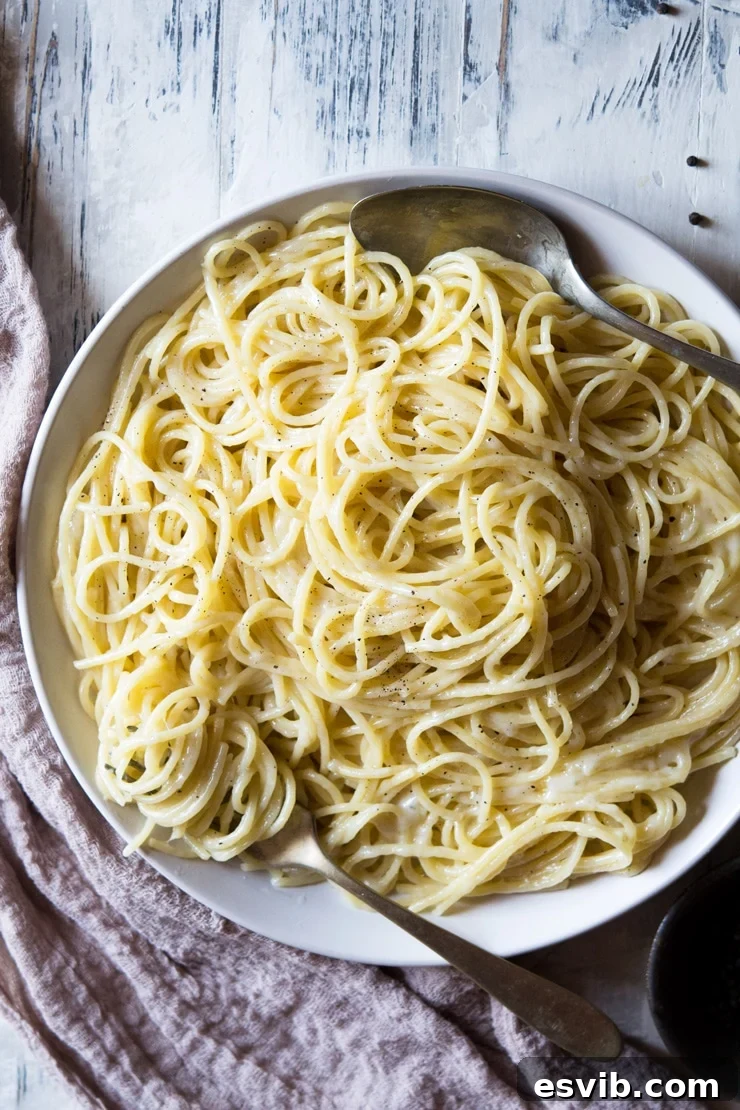
Indulge in the exquisite simplicity of a classic Italian dish, elevated with a touch of gourmet luxury. This White Truffle Cacio e Pepe recipe is more than just a meal; it’s a culinary revelation that proves incredible flavor doesn’t require hours in the kitchen. In just 10 minutes, you can create a fast, intensely flavorful, and oh-so-cheesy pasta masterpiece. It’s the ultimate quick comfort food, perfect for those busy weeknights when you need dinner on the table in a flash, or when you simply crave something truly special without the fuss. Our traditional Cacio e Pepe recipe gets a unique and utterly delicious twist with a decadent drizzle of aromatic white truffle oil, transforming a simple dish into an unforgettable dining experience.
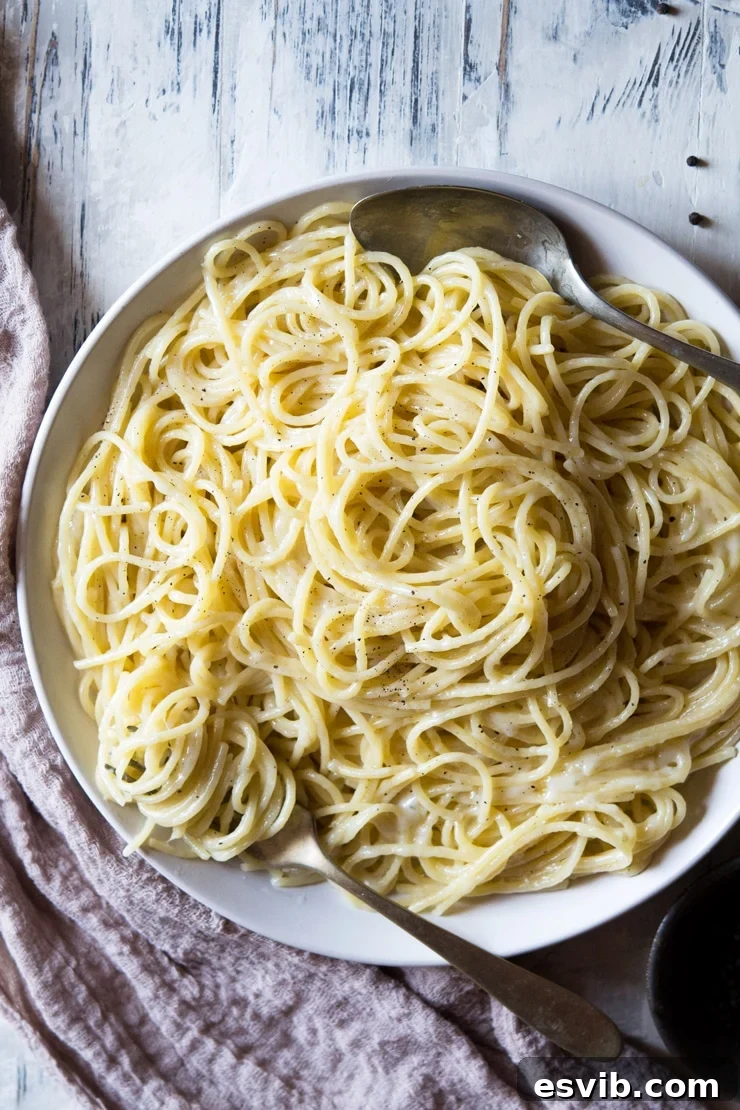
White Truffle Cacio e Pepe: A Luxurious 10-Minute Italian Delight
When it comes to satisfying pasta cravings, a classic Cacio e Pepe recipe is always a winning choice. Seriously, it’s like a super-speedy, sophisticated version of mac and cheese, delivering maximum flavor with minimal effort. Who doesn’t occasionally yearn for a generous bowl of perfectly cooked, incredibly cheesy pasta? It’s the kind of dish that begs you to curl up on the couch, perhaps with a glass of your favorite vino and a good movie. It’s the quintessential comfort food, ideal for transforming any ordinary evening into a cozy, delightful escape. This recipe takes that familiar comfort and infuses it with an unexpected, grown-up elegance that will have you coming back for more.
What is Cacio e Pepe? The Essence of Roman Simplicity
Before we dive into our truffle-infused version, let’s appreciate the roots of this iconic dish. Cacio e Pepe, meaning “cheese and pepper,” is one of the four classic pasta dishes of Roman cuisine, alongside Amatriciana, Carbonara, and Gricia. Its beauty lies in its elegant simplicity, relying on just a few high-quality ingredients to create a deeply satisfying and complex flavor profile. Traditionally, it’s made with Pecorino Romano cheese, freshly ground black pepper, and spaghetti (or similar long pasta), with the crucial emulsification achieved by combining the cheese and pepper with starchy pasta water. The result is a creamy, rich, and incredibly flavorful sauce that clings perfectly to every strand of pasta. Mastering Cacio e Pepe is a true test of a cook’s understanding of balance and technique, turning humble ingredients into something extraordinary.
The Elevated Secret: A Drizzle of White Truffle Oil
While traditional Cacio e Pepe is perfect in its own right, this recipe introduces a little “grown-up” twist that elevates it to a truly luxurious experience: white truffle oil. The earthy, pungent, and utterly unique aroma of white truffle transforms this simple cheese and pepper pasta into something truly special. If only we could all afford lashings of freshly shaved white truffle all over our cheesy pasta, but for most, that remains a dream. Instead, we turn to the liquid gold that is high-quality white truffle oil. While it might not replicate the exact complexity of fresh truffles, it offers a wonderfully potent and aromatic essence that perfectly complements the sharp Pecorino and spicy black pepper, creating a deeply satisfying umami bomb.
Choosing Your Truffle Oil Wisely
A word of caution: when using white truffle oil, a *teeny* amount goes a very long way. Its flavor is incredibly powerful, so start with just a few drops and add more to taste if desired. This potency is a good thing, as a single bottle will last for ages, making it a surprisingly economical way to infuse your dishes with gourmet flair. When selecting a truffle oil, look for one that uses natural white truffle essence rather than artificial flavorings for the best and most authentic taste. Quality matters here, as a good truffle oil can make all the difference in achieving that sublime aroma.
Crafting Your White Truffle Cacio e Pepe: Step-by-Step Guide
Creating this delightful dish is surprisingly straightforward, proving that gourmet flavors can be achieved with minimal fuss. Follow these simple steps for a perfect White Truffle Cacio e Pepe every time.
Recipe Overview
- Prep Time: 2 minutes
- Cook Time: 8 minutes
- Total Time: 10 minutes
- Servings: 4 people
- Author: Emily
Ingredients You’ll Need
The magic of Cacio e Pepe lies in its minimalist ingredient list. For this elevated version, we’re simply adding a touch of white truffle oil to the classic components.
- 14 oz (400g) spaghetti (or bucatini, tonnarelli for an authentic Roman experience)
- 1/2 cup (60g) Pecorino Romano cheese, finely grated (freshly grated is essential!)
- 1/2 cup (50g) Parmesan cheese, finely grated (adds a softer, nuttier note)
- 1.2 oz (35g) unsalted butter (adds richness and helps emulsify the sauce)
- 1/2 tbsp extra virgin olive oil (a good quality oil makes a difference)
- 1/2 tsp white truffle oil (start with less, add more to taste)
- 1 pinch sea salt (for the pasta water, and to season the sauce if needed)
- 1 large pinch freshly ground black pepper (course ground for texture and flavor)
Detailed Instructions
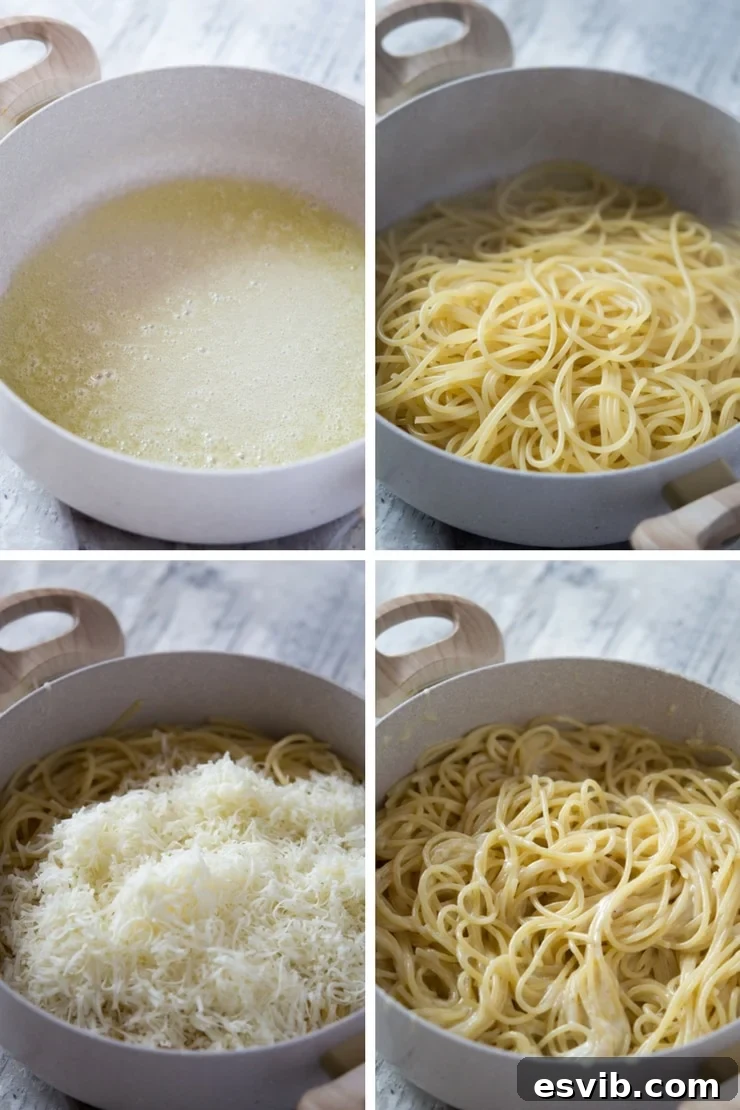
- Bring a large pot of generously salted water to a rolling boil. Add your chosen pasta (spaghetti is classic, but bucatini or tonnarelli also work beautifully). Boil until it’s perfectly al dente, meaning it’s cooked through but still has a firm bite. This is crucial for texture and for the sauce to cling properly. Before draining, make sure to reserve 1 cup (250ml) of the starchy pasta water. This is your secret weapon for the creamy sauce.
- While the pasta is cooking, prepare your sauce base. In a large pan or skillet (wide enough to hold all the pasta), add the butter and olive oil. Melt the butter over medium heat until it’s sizzling gently and just starting to brown slightly – this adds a wonderful nutty depth. Immediately turn off the heat to prevent burning and stir in the potent white truffle oil.
- Drain the cooked pasta thoroughly, shaking off excess water, then immediately add it to the pan with the melted butter, olive oil, and truffle oil.
- Next, sprinkle in the finely grated Pecorino Romano and Parmesan cheeses, along with a pinch of salt (remembering the Pecorino is already salty) and a very generous grinding of fresh black pepper. The pepper should be coarse for that characteristic Cacio e Pepe bite.
- Add about 1/4 cup of the reserved starchy pasta water to the pan. Using tongs or a large spoon, vigorously toss and stir the pasta with the cheese, butter, oil, and pepper. The goal is to emulsify the ingredients, creating a luxurious, creamy, and glossy cheese sauce that beautifully coats every strand of pasta. If the sauce appears too thick or clumpy, add another splash of the reserved pasta water, one tablespoon at a time, continuing to toss until you achieve the desired smooth, flowing consistency.
- Serve immediately in warm bowls. For an extra touch of indulgence, you can drizzle an additional few drops of white truffle oil over each serving, but always taste first as the truffle flavor is very strong. Garnish with an extra sprinkle of black pepper or finely grated cheese if desired. Enjoy your gourmet 10-minute meal!
Essential Tips for a Perfect White Truffle Cacio e Pepe
To ensure your Cacio e Pepe turns out perfectly creamy and flavorful every time, keep these expert tips in mind:
- Finely Grate Your Cheeses: This is arguably the most important tip. The Pecorino Romano and Parmesan must be very finely grated. If the cheese is grated too coarsely, it won’t melt as quickly or evenly, leading to clumps rather than a smooth, emulsified sauce. Use a microplane or the finest side of your box grater.
- Don’t Skimp on Pasta Water: Always reserve more pasta water than you think you’ll need. While this recipe typically only requires a splash to achieve the desired consistency, it’s always better to have extra on hand. Reserve at least 1 cup (250ml) to ensure you can adjust the sauce’s thickness if needed. The starch in the water is key to emulsification.
- Freshly Ground Pepper is a Must: Pre-ground pepper loses its potency quickly. For the signature spicy kick of Cacio e Pepe, freshly crack or grind your black pepper just before adding it to the dish. A coarse grind is traditional and provides a delightful texture contrast.
- Work Quickly and Off Heat: Once the pasta is drained and added to the pan, work swiftly to incorporate the cheese and pasta water. The residual heat from the pasta and the pan is enough to melt the cheese and create the emulsion. If the pan is too hot, the cheese can seize or become stringy. Turning off the heat before adding the truffle oil and then pasta prevents overheating.
- Choose the Right Pasta: While spaghetti is common, consider using traditional Roman pasta shapes like tonnarelli (square-cut spaghetti) or bucatini (thick, hollow spaghetti). These shapes have more surface area and can hold onto the creamy sauce beautifully.
- Adjust Truffle Oil to Taste: White truffle oil is very potent. Begin with the recommended 1/2 teaspoon. Taste the dish before adding any extra drops at the end. You want a subtle aroma, not an overpowering one.
- Not a Fan of Truffle? No problem! You can easily omit the white truffle oil and follow the exact same recipe for a delicious, traditional Cacio e Pepe that still stands on its own.
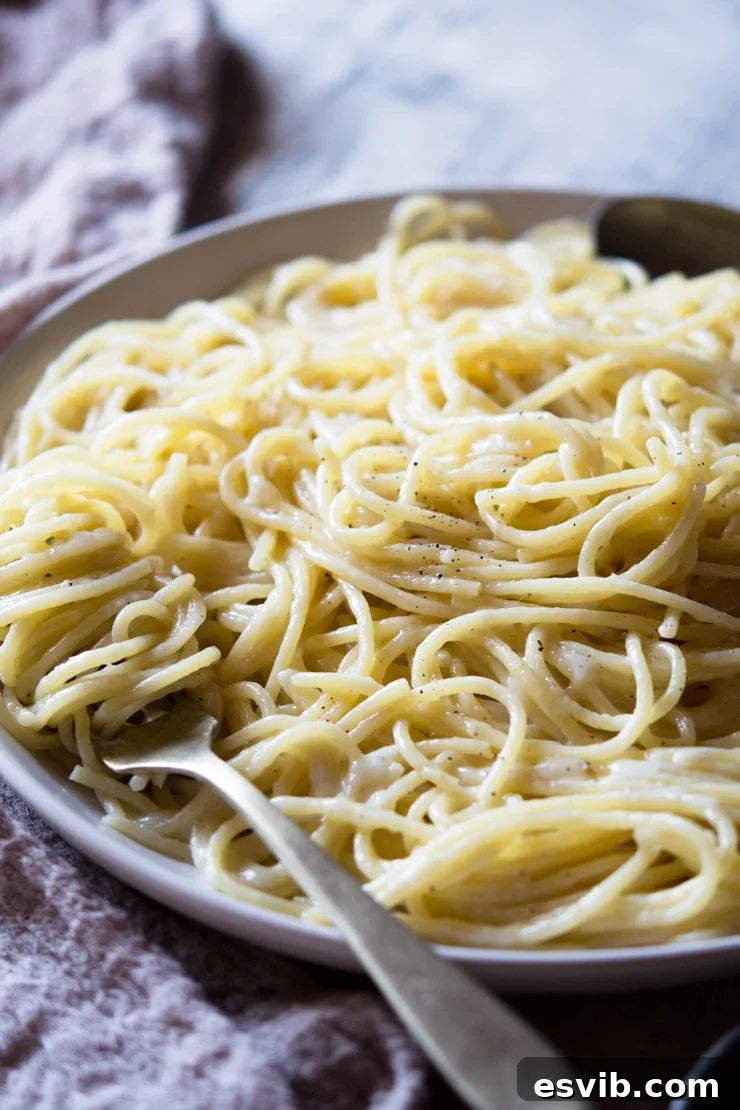
Serving Suggestions & Pairings
This White Truffle Cacio e Pepe is incredibly satisfying on its own, but you can enhance the dining experience with a few thoughtful additions. For a balanced meal, consider pairing it with a simple, crisp green salad dressed with a light vinaigrette to cut through the richness of the pasta. A basket of crusty Italian bread is perfect for soaking up any leftover sauce – no drop should go to waste! When it comes to beverages, a crisp white wine like a Vermentino or a light-bodied red such as a young Sangiovese would complement the earthy truffle and salty cheese beautifully. For a non-alcoholic option, sparkling water with a slice of lemon is always refreshing.
Variations & Customizations
While we adore this truffle-infused version, Cacio e Pepe is a versatile dish that can be adapted to your preferences or what you have on hand.
- No Truffle Option: As mentioned, simply omit the white truffle oil for a classic, authentic Cacio e Pepe. It’s still incredibly delicious!
- Add Protein: For a heartier meal, stir in some crispy pancetta or guanciale (bacon-like cured pork cheek), pan-seared chicken, or even sautéed mushrooms.
- Vegetable Boost: While not traditional, a handful of fresh spinach, blanched asparagus tips, or green peas can be tossed in with the pasta at the very end for added color and nutrients.
- Cheese Variations: While Pecorino Romano is essential for its sharp, salty kick, you can experiment with the ratio of Parmesan for a milder, nuttier flavor if preferred.
- Spicy Kick: If you love heat, add a pinch of red pepper flakes along with the black pepper.
Storage and Reheating
Cacio e Pepe is best enjoyed immediately after preparation when the sauce is at its freshest and creamiest. However, if you have leftovers, they can be stored in an airtight container in the refrigerator for up to 2-3 days. Reheating Cacio e Pepe can be a bit tricky, as the sauce can lose its emulsified texture. To revive it, gently reheat the pasta in a skillet over low heat, adding a splash of water or broth (and a tiny bit more grated cheese if desired) and stirring constantly until the sauce loosens and becomes creamy again. Avoid high heat, which can cause the cheese to separate.
Nutritional Information (Approximate per serving)
Please note: Nutrition information is automatically calculated and should only be used as an approximation.
- Calories: 680 kcal
- Carbohydrates: 76g
- Protein: 33g
- Fat: 26g
- Saturated Fat: 14g
- Cholesterol: 69mg
- Sodium: 905mg
- Potassium: 273mg
- Fiber: 3g
- Sugar: 3g
- Vitamin A: 565 IU
- Calcium: 686mg
- Iron: 1.8mg
Helpful Info for All Recipes
- I always use extra virgin olive oil in all of my recipes unless stated otherwise. Its robust flavor is perfect for Italian cooking.
- When I use canned or jarred tomatoes of any kind, I always recommend Cirio or Mutti brands for the best results and flavor.
- All vegetables are medium-sized unless stated otherwise.
- All recipes are tested and developed using a fan (convection) oven.
- Find out more about how nutrition is calculated.
- Check out our must-have Italian Pantry Staples for stocking your kitchen.
- You can also find all our Essential Kitchen Tools for Italian Cooking to make your culinary journey easier.
More Easy Pasta Recipes You Might Like
If you loved this quick and flavorful pasta, be sure to explore some of our other easy and delicious pasta recipes:
- Pasta Amatriciana – Bucatini, Tomato and Guanciale
- Pasta with artichokes and peas
- Smoked salmon pasta carbonara
- Pasta with pancetta, ricotta and tomato
- Broccoli pasta with chilli, garlic and parmesan
See how effortlessly delicious that was? You are truly just 10 minutes away from cheesy, truffle-infused pasta heaven. Now, all that’s left is to pour yourself that well-deserved glass of wine, choose your favorite movie, and savor every exquisite bite. Enjoy!
If you’ve tried this delightful White Truffle Cacio e Pepe recipe or any other recipe on our blog, we’d absolutely love to hear from you! Don’t forget to rate the recipe and share your thoughts in the comments section below. Your feedback and experiences are incredibly valuable to us! You can also FOLLOW US on FACEBOOK, TWITTER, INSTAGRAM, and PINTEREST to discover more mouth-watering food ideas and stay updated on what we’re cooking up next.