
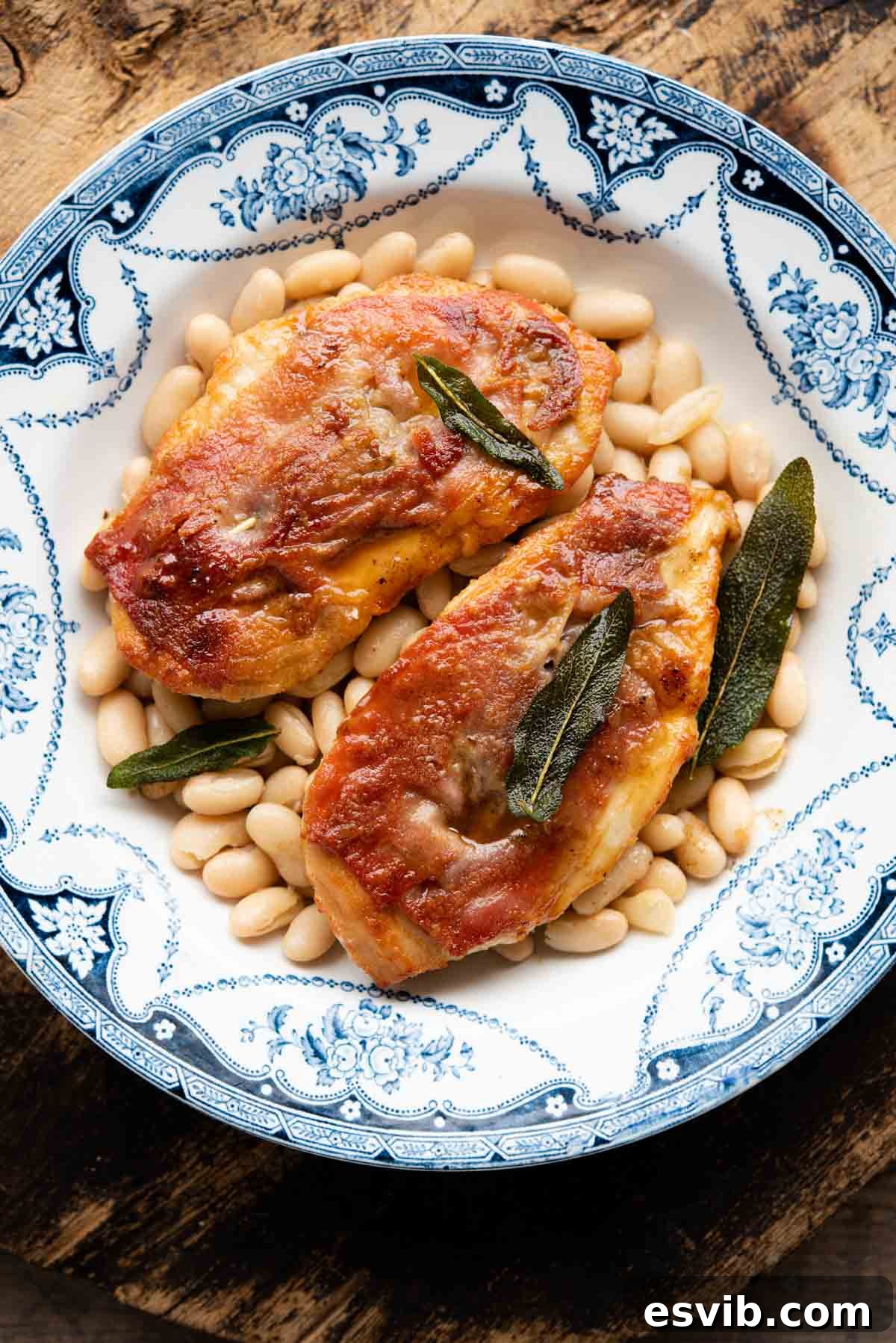
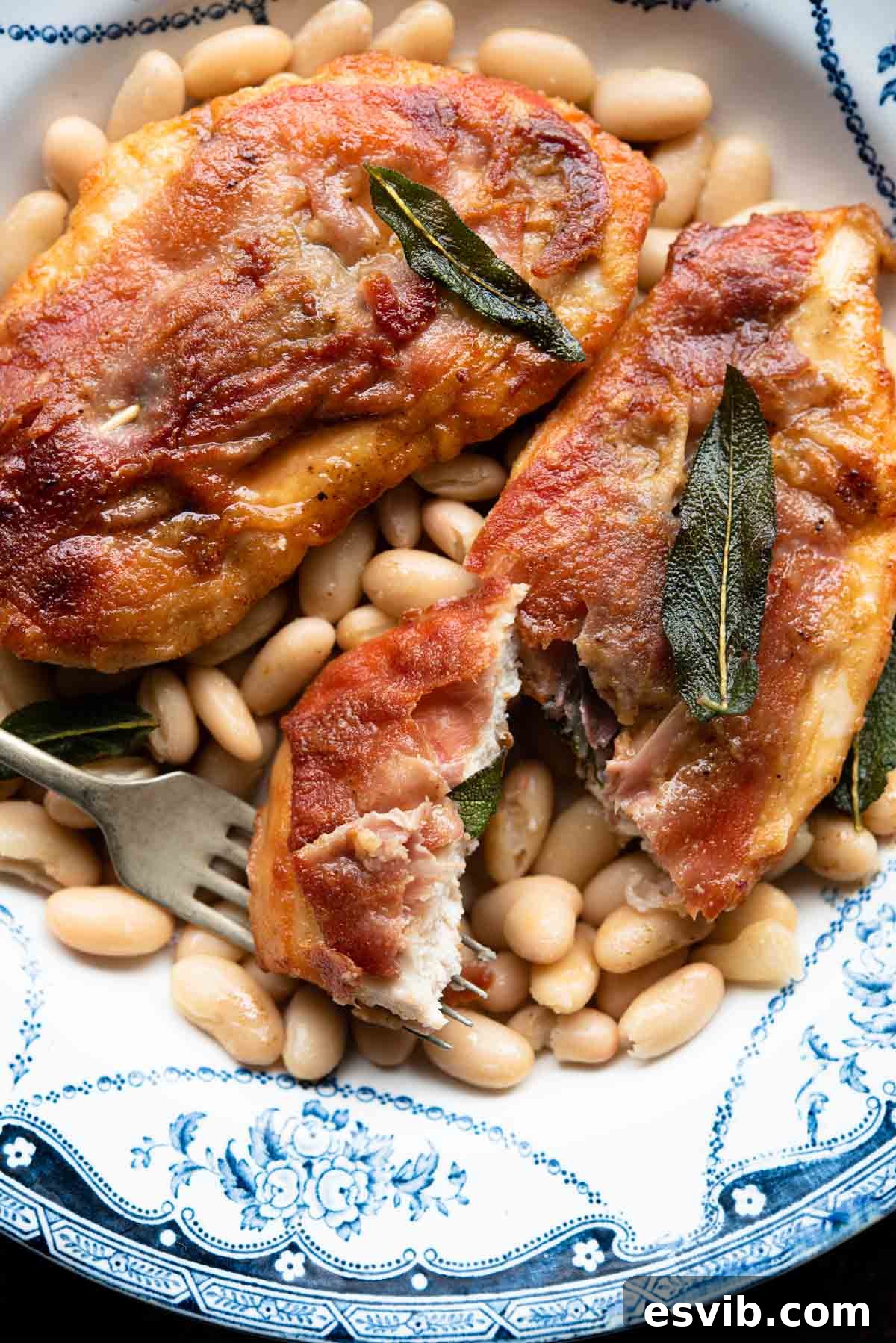
Chicken Saltimbocca is a delightful and approachable take on the celebrated Roman classic, traditionally made with veal. This version elevates succulent chicken cutlets with the savory crispness of prosciutto and aromatic fresh sage, pan-fried to golden perfection and finished with an effortlessly simple white wine sauce. Our preferred accompaniment for this exquisite dish is a side of rosemary cannellini beans, creating a complete and utterly delicious meal that’s surprisingly quick to prepare.
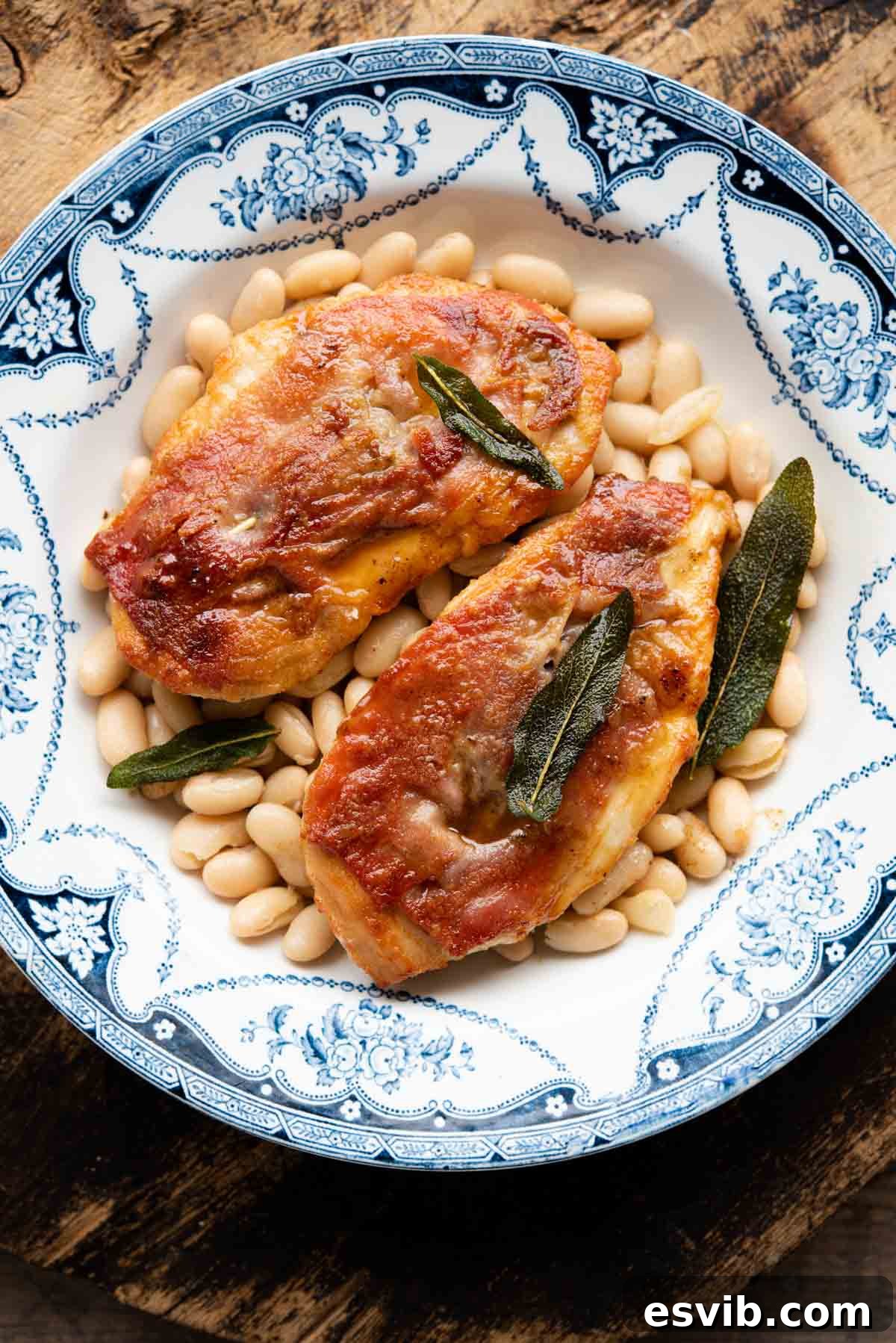
There’s an undeniable charm to Chicken Saltimbocca – it’s a dish that masterfully balances simplicity with an explosion of flavors. Each bite delivers the satisfying crunch of salty prosciutto, the herbaceous perfume of fresh sage, and the tender juiciness of chicken, all harmonized by a light, bright white wine sauce. This recipe isn’t just delicious; it’s a testament to how uncomplicated ingredients can yield extraordinary results.
While the traditional Roman Saltimbocca (“jumps in the mouth”) calls for veal, our chicken rendition offers a fantastic alternative that’s both more accessible and budget-friendly without sacrificing any of the iconic taste or texture. It provides the same authentic Italian experience, making it a beloved staple in many kitchens.
One of the most appealing aspects of this Chicken Saltimbocca recipe is its incredible speed. From start to finish, you can have this impressive meal on your table in just about 30 minutes. This makes it an ideal solution for those hectic weeknights when you crave something special but are short on time. Yet, its elegant presentation and rich flavors also make it sophisticated enough to impress guests at dinner parties or grace your table for special occasions.
When it comes to side dishes, versatility is key. We highly recommend serving Chicken Saltimbocca with our quick rosemary cannellini beans, which take merely 10 minutes to whip up, ensuring your entire meal comes together in record time. However, this chicken dish is incredibly adaptable and pairs beautifully with a wide array of vegetables or fresh salads. We’ll explore more delectable serving suggestions further down to inspire your culinary creations.
Explore the full recipe below, complete with detailed ingredient notes, step-by-step photographs, expert tips, exciting variations, and a video tutorial. For a convenient printable version, simply scroll to the bottom or click the recipe link.
Table of Contents
- The Essence of Saltimbocca
- Ingredients for Perfection
- Step-by-Step Visual Guide
- Achieving Ultimate Crispy Prosciutto
- Mastering the White Wine Sauce
- Delicious Serving Suggestions
- Top Tips and Frequently Asked Questions
- More Italian Recipes You Might Love
- Full Recipe Card
The Essence of Saltimbocca: Why This Dish “Jumps in the Mouth”
The name “Saltimbocca” is a playful Italian phrase that literally translates to “jumps in the mouth” – and for good reason! This dish is so irresistibly flavorful and satisfying that it truly feels like it leaps into your palate. Originating from Rome, Saltimbocca is traditionally made with thin slices of veal, layered with prosciutto and fresh sage, then pan-fried until golden and often served with a delicate white wine or butter sauce.
Our Chicken Saltimbocca retains all the charm and deliciousness of the original while offering a lean, readily available, and often more affordable protein. The combination of salty, savory prosciutto, aromatic sage, and tender chicken creates a symphony of textures and tastes that is both comforting and sophisticated. It’s a culinary experience that transports you straight to the heart of Italy with every forkful.
What makes this dish a true star is not just its incredible flavor profile, but also its remarkable efficiency. In less than 30 minutes, you can transform simple ingredients into a meal that feels gourmet. This makes it a perfect candidate for busy weeknight dinners, allowing you to enjoy a high-quality, home-cooked meal without spending hours in the kitchen. Yet, its elegant appearance and impressive taste also make it a fantastic option for entertaining guests or celebrating a special occasion. It’s truly a dish that effortlessly bridges the gap between everyday simplicity and special event sophistication.
Ingredients for Perfection
Crafting exceptional Chicken Saltimbocca begins with selecting high-quality ingredients. Below, you’ll find a visual guide showcasing everything you need, along with essential notes and potential substitutions to ensure your dish is nothing short of perfect.
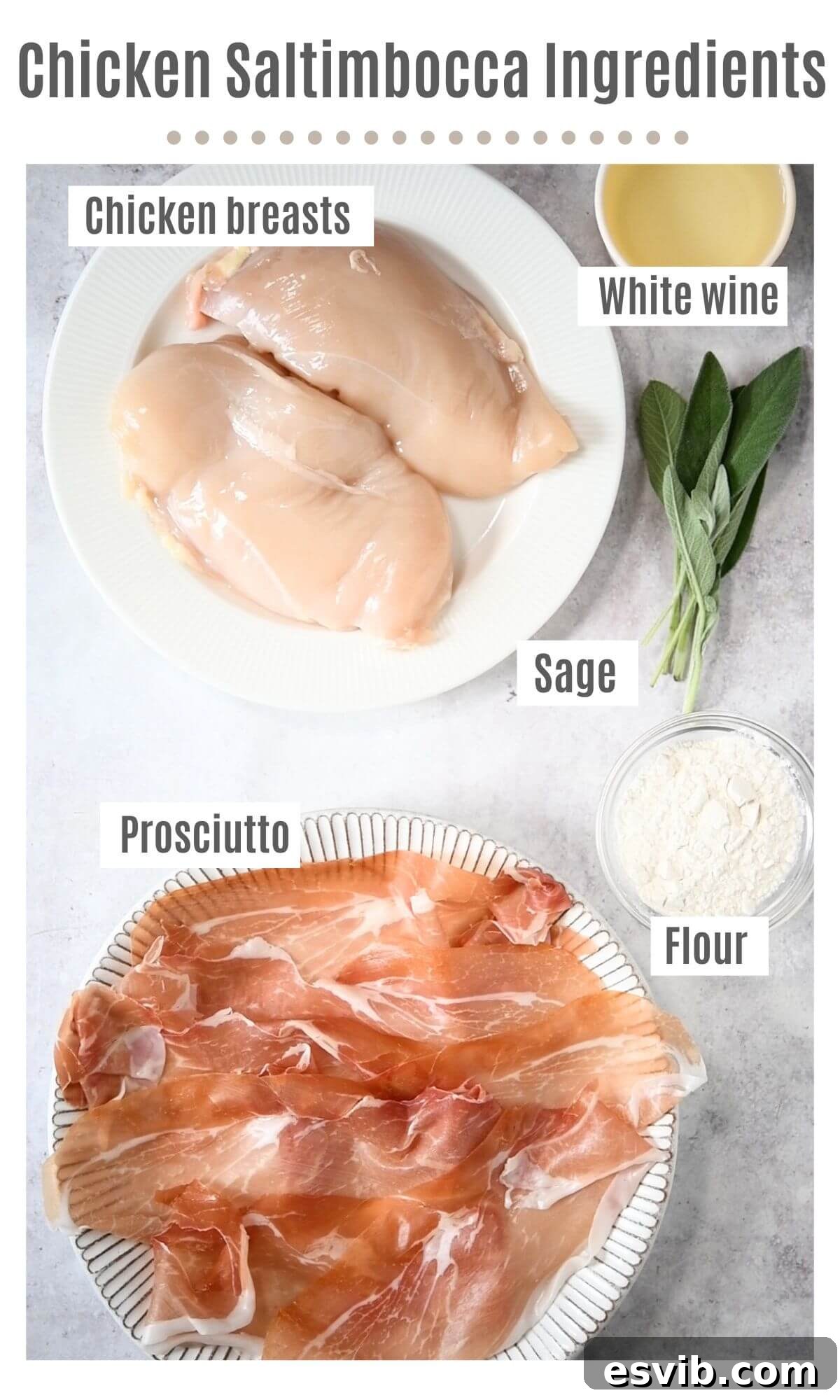
- Chicken: For the best results, use either pre-cut chicken cutlets or large chicken breasts that you can slice in half horizontally (butterfly them). Pounding them lightly with a meat mallet or rolling pin to achieve a uniform 1/4-inch (1/2 cm) thickness is crucial. This ensures even cooking and tender results. Even thickness is key for quick and consistent cooking.
- Prosciutto: The quality of your prosciutto makes a significant difference. Opt for a good quality prosciutto crudo (uncooked, dry-cured ham) if possible. Its salty, delicate flavor and ability to crisp up beautifully are essential to the dish’s signature taste and texture. Look for thinly sliced varieties.
- Sage: Fresh sage is non-negotiable for Saltimbocca. Its distinct, earthy, and slightly peppery aroma is fundamental to the dish’s identity. Avoid dried sage, as it lacks the vibrant flavor and fragrance. Ensure your sage leaves are fresh, green, and free from bruises or discoloration.
- Flour: A small amount of regular all-purpose flour is used for dredging the chicken. This light coating helps the prosciutto adhere, promotes browning, and slightly thickens the sauce. You only need a few tablespoons. For a gluten-free option, you can use a gluten-free all-purpose flour blend.
- White Wine: A dry Italian white wine is ideal for deglazing the pan and forming the sauce. Varieties such as Pinot Grigio, Vermentino, or Verdicchio work wonderfully. The key is to choose a wine you would enjoy drinking, as its flavor will concentrate in the sauce. Avoid “cooking wine” as it often contains added salt and preservatives that can detract from the final taste. If you prefer not to use alcohol, see the FAQ section for alternatives.
- Olive Oil: A good quality extra virgin olive oil is essential for pan-frying the chicken and adding a rich, fruity undertone to the sauce.
- Salt and Pepper: Simple seasonings are all that’s needed to enhance the natural flavors of the high-quality ingredients. Season lightly, remembering that prosciutto already adds a good amount of salt.
- Toothpicks: These are indispensable for securing the prosciutto and sage to the chicken cutlets during the cooking process.
Step-by-Step Visual Guide: Crafting Your Chicken Saltimbocca
Follow these detailed steps, complete with visual references, to create perfect Chicken Saltimbocca every time. Pay close attention to the preparation of the chicken and the cooking method for optimal results.
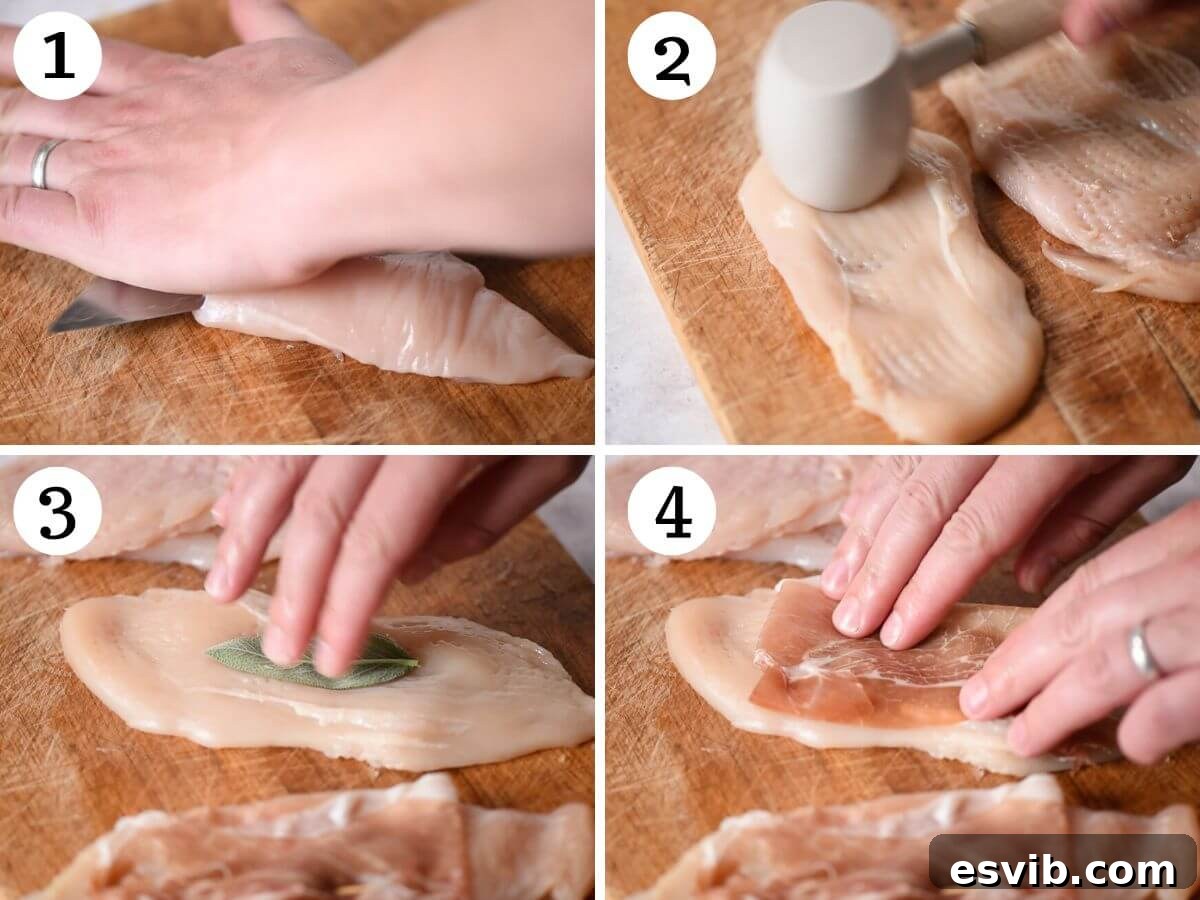
- Prepare the Chicken: Begin by taking your chicken breasts and carefully slicing them in half lengthwise to create two thinner cutlets from each breast. Next, place each cutlet between two sheets of parchment paper or plastic wrap. Using a rolling pin or a meat mallet, gently pound the chicken until it reaches an even thickness of approximately 1/4 inch (1/2 cm). This crucial step ensures rapid and uniform cooking, keeping the chicken tender and moist. (Refer to photos 1 and 2 in the collage below.)
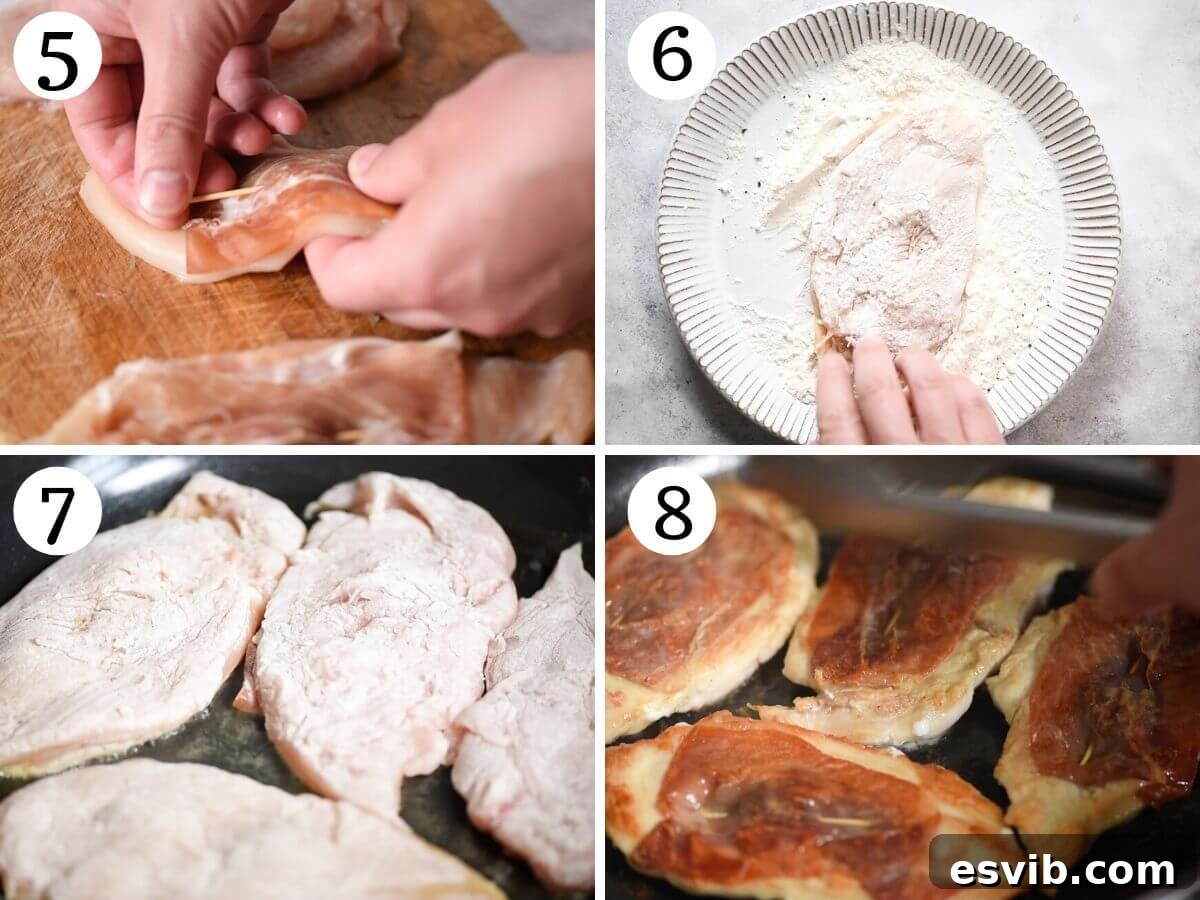
- Layer with Sage and Prosciutto: For each flattened chicken cutlet, place a single fresh sage leaf directly in the center. Then, lay a slice of prosciutto over the sage leaf. If your prosciutto slices are particularly large, you might need to fold them in half to fit the size of your cutlet. Secure the sage and prosciutto firmly in place using one or two toothpicks. These will prevent the layers from separating during cooking. Chef’s Note: For a visually appealing presentation, some prefer to place the sage leaf on top of the prosciutto. However, for maximum crispiness of the prosciutto, placing the sage underneath is often recommended. (See photos 3-5 for a clear demonstration of this layering technique.)
- Season and Dredge: Lightly season the plain, non-prosciutto side of each chicken cutlet with a pinch of salt. Remember, prosciutto is already quite salty, so be mindful not to over-season. Next, lightly dredge each cutlet in a shallow dish of all-purpose flour. Ensure the chicken is just barely coated, shaking off any excess flour. This thin coating helps achieve a beautiful golden crust and aids in thickening the subsequent wine sauce. (Photo 6 illustrates this step clearly.)
- Pan-Fry to Perfection: Heat a generous amount of olive oil in a large, non-stick pan or cast-iron skillet over medium heat until shimmering. Once the oil is hot, carefully place the chicken cutlets into the pan, making sure the prosciutto-covered side is facing down. Cook for approximately 4-5 minutes, allowing the prosciutto to become beautifully crispy and golden brown. Then, flip the cutlets and cook for an additional 3-4 minutes on the other side, or until the chicken is thoroughly cooked through and golden. At this stage, you may add a few extra fresh sage leaves to the pan if you wish for an aromatic garnish. (Observe photos 7 and 8 for frying guidance.)
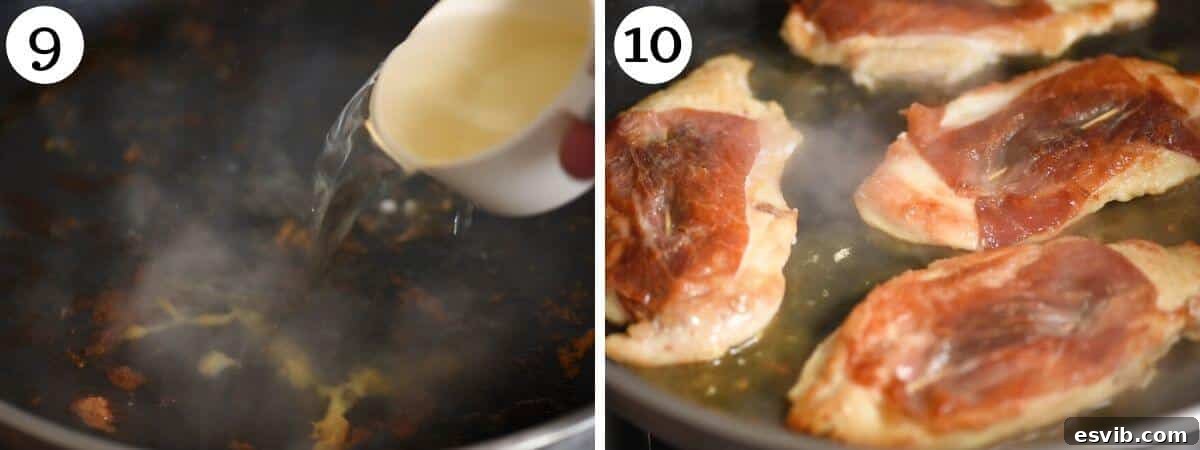
- Deglaze and Finish the Sauce: Remove the cooked chicken cutlets from the pan and transfer them to a plate, keeping them warm. Carefully pour the white wine into the hot pan. Immediately use a wooden spoon to scrape up all the delicious brown bits (known as fond) from the bottom of the pan – these carry immense flavor! Allow the wine to simmer vigorously for about 2-3 minutes, reducing by half until it forms a slightly thickened, aromatic sauce. Finally, return the chicken cutlets to the pan for a minute or two to warm through and coat them lightly in the luscious sauce. (Photos 9 and 10 demonstrate the deglazing and finishing process.)
- Serve Immediately: Turn off the heat and serve your spectacular Chicken Saltimbocca hot, garnished with any extra sage leaves if desired, and accompanied by your chosen side dishes.
Achieving Ultimate Crispy Prosciutto
The hallmark of a truly great Saltimbocca is the perfectly crispy prosciutto that crowns each chicken cutlet. This isn’t just about texture; it’s about flavor – the crispy prosciutto delivers an intense burst of salty, savory goodness that beautifully complements the tender chicken and fragrant sage. Here’s how to ensure your prosciutto achieves that coveted crispness:
- Quality Matters: Start with good quality, thinly sliced prosciutto crudo. Thicker slices won’t crisp as uniformly and can become chewy.
- Sage Placement: While a common presentation places sage on top of the prosciutto for a prettier look, for maximum crispiness, it’s best to place the sage leaf *underneath* the prosciutto. This allows the prosciutto to have direct contact with the hot pan.
- Prosciutto Side Down First: When you place the chicken cutlets into the hot pan with olive oil, always ensure the prosciutto-covered side goes down first. This gives the prosciutto ample time to render its fat and crisp up without overcooking the chicken.
- Medium Heat: Don’t crank the heat too high. A medium heat allows the prosciutto to gradually crisp and brown without burning. If the heat is too high, the prosciutto will char before it becomes truly crispy.
- Patience is Key: Let the prosciutto cook undisturbed for the recommended 4-5 minutes (or slightly longer if needed) on the first side. Resist the urge to move or flip it too early. You’re looking for a deep golden-brown color and a visibly crispy texture.
- Secure with Toothpicks: Make sure the prosciutto is well-secured to the chicken with toothpicks. This prevents it from curling up or detaching from the chicken, ensuring even contact with the pan.
Mastering the White Wine Sauce
The simple white wine sauce is the perfect complement to Chicken Saltimbocca, adding a touch of elegance and bringing all the flavors together. This pan sauce is created by deglazing the pan, capturing all the rich, browned bits left behind by the chicken and prosciutto. Here’s how to make it exceptional:
- Deglazing is Essential: The key to a flavorful sauce lies in deglazing the pan immediately after removing the chicken. Those browned bits (fond) stuck to the bottom of the pan are packed with concentrated flavor.
- Use a Dry White Wine: As mentioned in the ingredients, a dry Italian white wine like Pinot Grigio, Vermentino, or Verdicchio is ideal. The acidity of the wine helps to lift the fond from the pan and adds a bright, tangy counterpoint to the richness of the chicken and prosciutto.
- Scrape Thoroughly: As soon as you add the wine, use a wooden spoon or spatula to vigorously scrape the bottom of the pan. Ensure all those flavorful bits are incorporated into the liquid.
- Reduce by Half: Allow the wine to simmer uncovered for 2-3 minutes, or until it has reduced by about half. This process concentrates the flavors and slightly thickens the sauce. It should be light and flavorful, not heavy or gloopy.
- Adjust Seasoning (Optional): Taste the sauce after it has reduced. Due to the saltiness of the prosciutto, you might not need to add any extra salt. A pinch of black pepper, however, can enhance its overall flavor.
- Butter Finish (Optional): For an extra luxurious touch, you can swirl in a knob of cold butter off the heat at the very end. This will give the sauce a silky texture and a beautiful sheen.
- Alcohol-Free Alternative: If you prefer not to use wine, a low-sodium chicken broth can be used in the same quantity. While it won’t replicate the exact flavor profile, it will still provide a delicious liquid to deglaze the pan and create a savory sauce.
Delicious Serving Suggestions
While Chicken Saltimbocca is a star on its own, pairing it with the right side dishes can elevate your meal to new heights. Our absolute favorite is the quick and flavorful rosemary cannellini beans. Simply drain and rinse a can of cannellini beans, then warm them in a pan with a splash of olive oil, a whole garlic clove, fresh rosemary sprigs, and a touch of salt and pepper. This combination is incredibly easy and provides a wonderful earthy contrast to the rich chicken.
Once the beans are heated through and infused with flavor, remove the garlic clove and serve alongside your Saltimbocca. But the possibilities don’t end there! Here are more delicious, recommended side dishes that perfectly complement this Roman-inspired chicken:
- Arugula Salad with Lemon and Parmesan: A simple, peppery arugula salad dressed with fresh lemon juice and shaved Parmesan offers a bright, refreshing counterpoint to the rich chicken.
- Italian Roast Potatoes: Crispy on the outside and fluffy on the inside, these potatoes, often roasted with rosemary and garlic, provide a hearty and comforting accompaniment.
- Fagioli all’uccelletto – Beans in Tomato Sauce: A classic Tuscan bean dish cooked in a savory tomato sauce with sage, providing a rustic and flavorful side that echoes the dish’s Italian roots.
- Easy Green Bean Salad with Mustard and Garlic Dressing: A vibrant and tangy green bean salad adds freshness and a delightful textural crunch.
- Italian Green Beans In Tomato Sauce: Tender green beans simmered in a simple, flavorful tomato sauce offer a warm and wholesome vegetable option.
- Peas and Pancetta – Easy Italian Side Dish: Sweet peas combined with crispy pancetta (or even more prosciutto!) create a quick and savory side that’s both colorful and delicious.
- Creamy Polenta: Soft, creamy polenta provides a comforting and absorbent bed for the chicken and its delicious sauce.
- Crusty Bread: Don’t forget a good loaf of crusty Italian bread to sop up every last drop of that incredible white wine sauce!
Top Tips and Frequently Asked Questions
To ensure your Chicken Saltimbocca is consistently perfect, consider these expert tips and answers to common questions:
Top Tips for Success
- Embrace High-Quality Ingredients: The beauty of Saltimbocca lies in its simplicity, which means the quality of each ingredient truly shines through. Invest in good quality, free-range chicken and the finest prosciutto you can find. Fresh, unblemished sage leaves are also crucial for authentic flavor.
- Perfect Chicken Cutlets: If pre-cut chicken cutlets aren’t available, transforming large chicken breasts is easy. Slice them horizontally to create thinner cutlets, then pound them with a meat mallet or a rolling pin. Aim for a uniform thickness of about 1/4 inch (0.5 cm). This not only ensures even cooking but also makes the chicken incredibly tender. For four servings, two large chicken breasts usually suffice.
- Choose Your Wine Wisely: When selecting a white wine for the sauce, remember the golden rule: only cook with wine you would happily drink. A dry Italian white such as Vermentino, Gavi, Verdicchio, or Pinot Grigio is ideal. Their crisp acidity balances the richness of the dish beautifully. Absolutely avoid “cooking wine,” which often contains excessive salt and undesirable additives that can compromise the flavor of your sauce.
- Strategic Sage Placement for Crispy Prosciutto: Through years of preparing Saltimbocca, a key insight has emerged regarding sage placement. While placing the sage on top of the prosciutto can look attractive, for maximum prosciutto crispiness, it’s best positioned *underneath*. This allows the prosciutto to have direct contact with the hot pan, promoting that desirable crispy texture. If presentation is paramount, you can always fry a few extra sage leaves separately as a garnish.
- Don’t Overcrowd the Pan: If your pan is too small to accommodate all the chicken cutlets in a single layer without overlapping, cook them in batches. Overcrowding lowers the pan’s temperature, leading to steaming rather than searing, which prevents the prosciutto from getting crispy and the chicken from browning properly.
- Don’t Skip the Dredging: The light flour coating isn’t just for browning; it’s essential for creating the pan sauce. The flour particles mix with the brown bits in the pan when deglazed, helping to slightly thicken the white wine sauce to a perfect consistency.
Frequently Asked Questions
Saltimbocca is an Italian phrase that literally translates to ‘jumps in the mouth’. This evocative name perfectly captures the dish’s irresistible nature – the harmonious blend of flavors from the chicken (or veal), sage, and prosciutto is so incredibly good that it truly feels like it’s leaping into your palate with delight!
If you prefer not to use alcohol, you can easily replace the white wine with an equal quantity of low-sodium chicken stock or broth. This will still allow you to deglaze the pan and create a savory sauce, albeit with a slightly different flavor profile. Alternatively, you can choose not to make a pan sauce at all, though it adds a wonderful dimension to the dish.
Yes, Chicken Saltimbocca can be frozen for up to 3 months. For best quality, allow the cooked chicken to cool completely, then place it in an airtight freezer-safe container. When ready to enjoy, defrost it completely in the refrigerator overnight. Reheat gently in a pan on the stovetop or in the oven until it is piping hot all the way through. While it’s best enjoyed fresh due to the flour dredging, it still makes a convenient future meal.
Absolutely! To make Chicken Saltimbocca gluten-free, simply substitute the all-purpose flour for a good quality gluten-free all-purpose flour blend when dredging the chicken. The cooking method and other ingredients remain the same, ensuring a delicious gluten-free meal.
A large, heavy-bottomed skillet or a cast-iron pan is ideal. These types of pans distribute heat evenly, which is crucial for achieving a perfectly crispy prosciutto and evenly cooked chicken. A non-stick skillet can also work well, particularly for easier cleanup, but ensure it can withstand medium-high heat.
More Italian Recipes You Might Love
If you’ve fallen in love with this Chicken Saltimbocca recipe, you’ll be thrilled to discover more of our favorite Italian-inspired dishes. The four chicken and veal recipes below share a similar ethos of deliciousness, ease of preparation, and impressive results – perfect for expanding your repertoire of quick and flavorful meals!
Mains
Veal Saltimbocca with Prosciutto and Sage
Mains
Chicken Sorrentina (Pollo alla Sorrentina)
Mains
Chicken Piccata with Capers and Lemon
Mains
Breaded Veal Cutlets with Parmesan Cream
If you’ve tried this Chicken Saltimbocca recipe or any other delicious recipe on our blog, we would absolutely love to hear from you! Please don’t hesitate to rate the recipe and share your experience in the comments section below – your feedback is invaluable to us. You can also connect with us and discover more of our mouthwatering culinary creations by following us on Facebook, Instagram, and Pinterest. For weekly recipe updates and exclusive content, be sure to sign up for our Newsletter.
Step By Step Photos Above
Most of our recipes come with step by step photos, helpful tips and tricks to make it perfectly first time and even video!
Chicken Saltimbocca
★
★
★
★
By Emily
Pin
Equipment
-
toothpicks
-
large skillet or frying pan
-
meat mallet or rolling pin
Ingredients
- ▢ 2 large chicken breasts (or 4 chicken cutlets)
- ▢ 4 slices prosciutto crudo (good quality, thinly sliced)
- ▢ 4 fresh sage leaves, plus extra for garnish if desired
- ▢ ½ cup dry Italian white wine, such as Pinot Grigio, Vermentino or Verdicchio (120ml)
- ▢ All-purpose flour, for dredging (approx. 2-3 tablespoons)
- ▢ Olive oil, for pan-frying
- ▢ Salt, to taste (use sparingly due to prosciutto)
- ▢ Freshly ground black pepper, to taste
Instructions
-
Cut each chicken breast in half horizontally to create thinner cutlets. Place each cutlet between two sheets of parchment paper or plastic wrap and pound lightly with a meat mallet or rolling pin until they are roughly 1/2cm (¼ inch) thick.
-
Place one fresh sage leaf in the center of each chicken cutlet. Lay a slice of prosciutto on top of the sage (fold the prosciutto in half if the slice is larger than the cutlet). Secure the sage and prosciutto in place using one or two toothpicks.
-
Lightly season the plain side of each cutlet with a little salt (remembering prosciutto is salty) and freshly ground black pepper. Dredge each cutlet lightly in all-purpose flour, shaking off any excess.
-
Heat a generous drizzle of olive oil in a large pan over medium heat. Once hot, place the chicken cutlets in the pan, prosciutto-side down. Cook for about 4-5 minutes until the prosciutto is crispy and golden. Flip the chicken and cook for another 3-4 minutes on the other side, or until the chicken is cooked through. You can add extra sage leaves to the pan at this point for garnish (optional). Cook in batches if necessary to avoid overcrowding.
-
Remove the cooked chicken to a plate and keep warm. Add the white wine to the hot pan and immediately scrape up any brown bits (fond) from the bottom of the pan with a wooden spoon. Simmer the wine for 2-3 minutes, until it has reduced by half and slightly thickened into a light sauce.
-
Return the chicken cutlets to the pan to warm through and coat in the sauce for about 1 minute. Turn off the heat and serve immediately.
Video
Notes
Storage and freezing – Chicken Saltimbocca tastes best when served immediately due to the crispy prosciutto and freshly made sauce. However, leftovers can be stored in an airtight container in the fridge for 2-3 days. For longer storage, it can be frozen for up to 3 months.
To defrost – If frozen, defrost completely in the fridge, then reheat gently in a skillet on the stovetop over medium-low heat or in a preheated oven until piping hot throughout.
Wine substitution – For an alcohol-free sauce, replace the white wine with an equal amount of low-sodium chicken broth.
Crispy Prosciutto Tip – For the crispiest prosciutto, ensure the sage leaf is placed underneath the prosciutto, allowing direct contact with the hot pan.
Helpful Info for All Recipes
- I always use extra virgin olive oil in all of my recipes unless stated otherwise.
- When I use canned or jarred tomatoes of any kind, I always use Cirio or Mutti brands for the best results and flavor.
- All vegetables are medium sized unless stated otherwise.
- All recipes are tested and developed using a fan (convection) oven.
- Find out more about how nutrition is calculated.
- Check out our must-have Italian Pantry Staples.
- You can also find all our Essential Kitchen Tools for Italian Cooking.
Nutrition
Carbohydrates: 2g |
Protein: 25g |
Fat: 10g |
Saturated Fat: 2g |
Polyunsaturated Fat: 1g |
Monounsaturated Fat: 5g |
Trans Fat: 0.02g |
Cholesterol: 78mg |
Sodium: 184mg |
Potassium: 436mg |
Fiber: 0.1g |
Sugar: 0.01g |
Vitamin A: 37IU |
Vitamin C: 1mg |
Calcium: 7mg |
Iron: 1mg
Nutrition information is automatically calculated, so should only be used as an approximation.
Did you try this recipe?
Leave a comment below!