
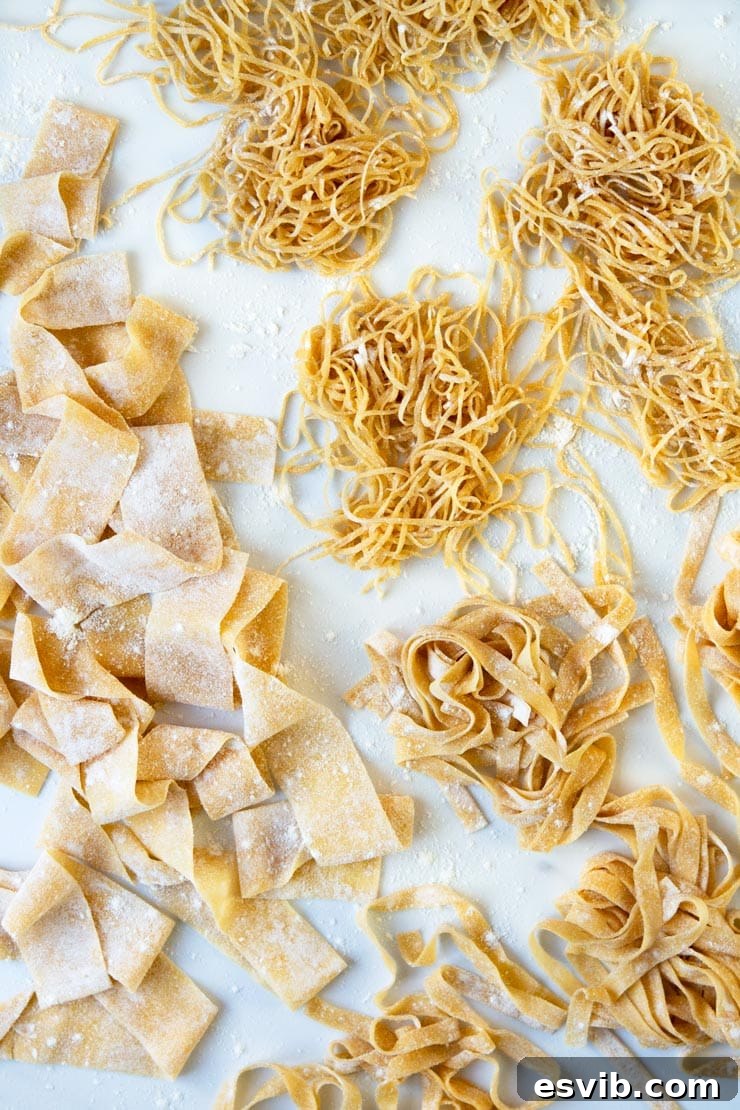
Embark on a culinary journey to Italy right from your kitchen with this basic yet incredibly versatile recipe for homemade pasta dough. Craft exquisite lasagna sheets, elegant farfalle, delicate ravioli, classic tagliatelle, hearty pappardelle, and so much more. Mastering pasta at home is a deeply rewarding experience, far simpler than it appears, and absolutely worth every ounce of effort for its unparalleled taste and texture.
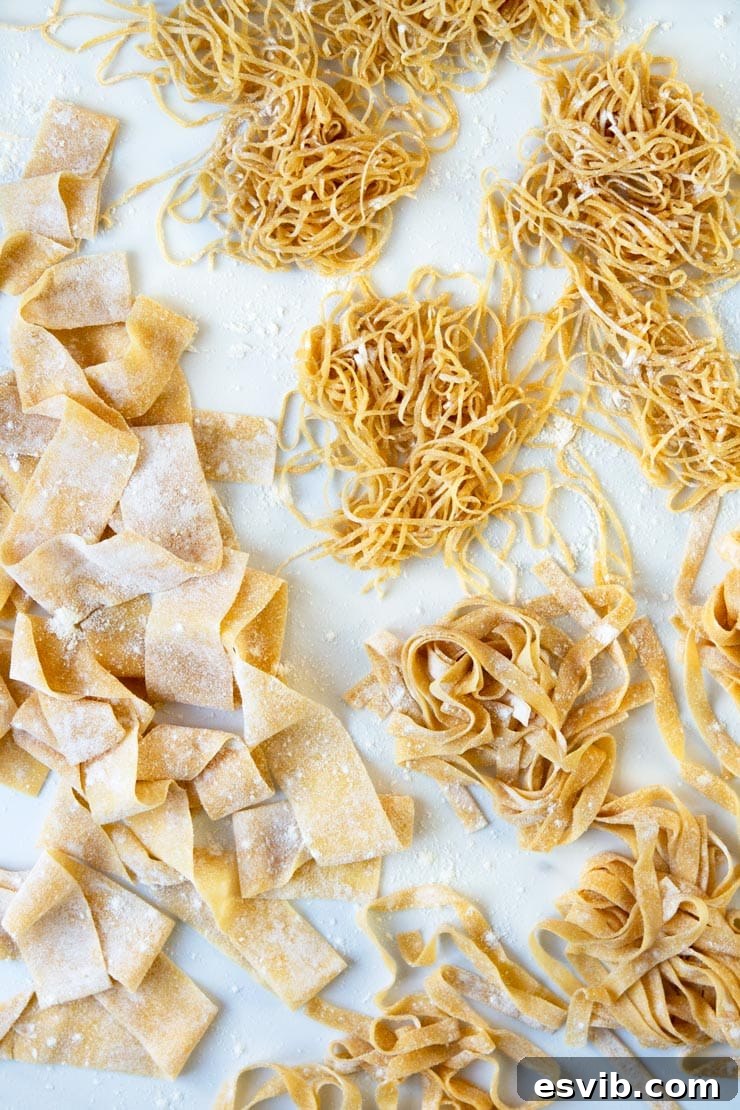
Mastering Homemade Pasta Dough: Your Essential Guide to Fresh Pasta from Scratch
For any true aficionado of Italian cuisine, the allure of homemade pasta is undeniable. There’s an inherent magic in transforming simple ingredients into a meal that speaks of tradition, comfort, and pure culinary delight. Whether your preference leans towards a rich and comforting lasagna, generously layered with a savory meat ragù and velvety béchamel sauce, or perhaps the rustic charm of fresh orecchiette with vibrant broccoli and a hint of chili, or even broad pappardelle intertwined with earthy mushrooms and savory speck, the foundation of an unforgettable meal often begins with fresh pasta.
The world of pasta is incredibly vast, offering an endless array of shapes and an infinite spectrum of sauces. This diversity is precisely why one could savor pasta daily without ever experiencing a hint of boredom! There’s a profound satisfaction that comes with knowing your meal was crafted from scratch, starting with fresh, homemade pasta dough. The flavor profile is simply incomparable, and the exquisite texture combined with the sheer joy of that first bite of truly homemade food can transport you straight to gastronomic bliss.
This comprehensive, step-by-step guide is designed to empower you to create a fundamental homemade pasta dough recipe, which can then be shaped into an abundance of comforting and delectable meals. We’ll walk you through the process of making the dough from scratch, complete with detailed photo instructions for forming classic shapes such as lasagna sheets, tagliatelle, pappardelle, and fettuccine. While these are popular choices, remember that the creative possibilities for pasta shapes are truly boundless.
The Perfect Egg To Flour Ratio For Homemade Pasta Dough
Achieving the ideal consistency for your pasta dough starts with the right proportions of flour and eggs. The widely accepted standard, particularly for beginners, is to use one large egg for every 100 grams (approximately 3.5 ounces) of ’00’ flour. This ratio forms a resilient yet pliable dough. For an enhanced richness and a beautiful golden hue, I personally prefer to incorporate one extra egg yolk into the entire mixture, regardless of the total quantity. It’s crucial to understand that this is one additional yolk for the whole batch, not per 100 grams of flour.
For instance, if you’re preparing ravioli for about six people, a good starting point would be 3 large eggs, 300 grams (roughly 10.5 ounces) of ’00’ flour, and that single, additional egg yolk. The quality of your ingredients, especially the eggs, plays a pivotal role in the final product. Always opt for the highest quality, free-range eggs you can source. In Italy, specialized eggs known as ‘Pasta Gialla’ (meaning ‘yellow dough’ or ‘yellow pasta’) are prized for their vibrant, almost orange yolks, which impart a stunning rich yellow color to the pasta. I’ve been fortunate to find free-range eggs that boast incredibly rich yolks, perfect for achieving that authentic Italian pasta color. Take some time to explore your local markets for the finest quality eggs available.
A crucial note on egg size: The size of your eggs directly impacts the dough’s hydration. This recipe is optimized for large eggs. If you happen to use small or medium-sized eggs, you might need to adjust the flour quantity slightly, potentially using less flour to achieve the desired consistency. Sticking to large eggs will ensure the most consistent and best results with this specific recipe.
Step-by-Step Guide to Making Homemade Pasta Dough
Mixing the Dough By Hand
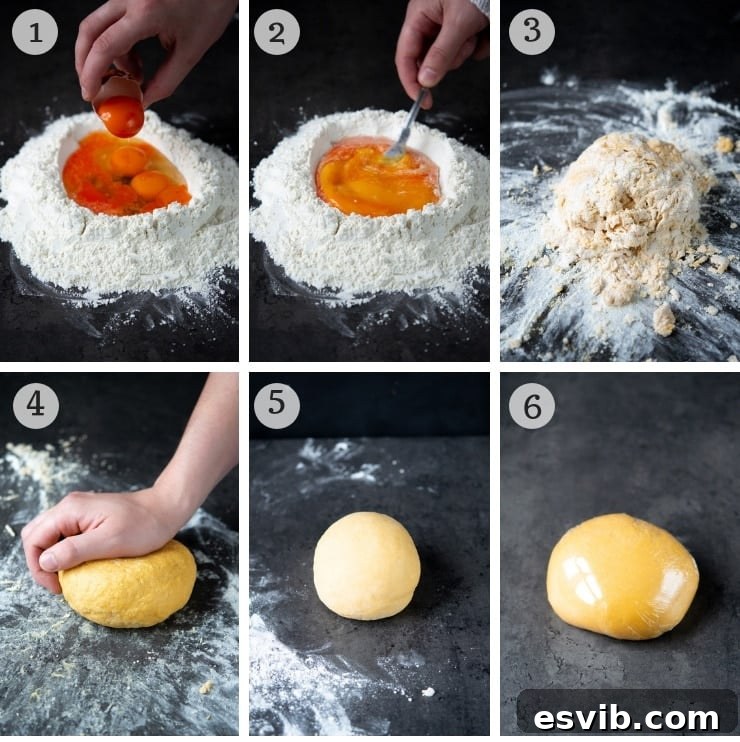
Begin by placing your ’00’ flour directly onto a clean, spacious work surface, forming it into a neat mound. Create a generous well in the center of the flour, much like a volcano, and carefully crack the eggs into this well (refer to photo 1 for visual guidance). This traditional method allows for careful incorporation of the wet and dry ingredients.
Using a fork, gently whisk the eggs in the well, slowly drawing in small amounts of flour from the sides until the mixture begins to combine and takes on a very rough, shaggy dough consistency (see photos 2 & 3). As more flour is absorbed, you may find it easier and more effective to switch from the fork to your hands, gently bringing the mixture together to form a cohesive ball.
Kneading and Resting the Dough
Once the rough dough has formed, gather it with your hands and begin the kneading process. This is a critical step for developing the gluten, which gives pasta its characteristic chewiness and elasticity. Knead the dough vigorously for a full 10 minutes. You’ll notice a significant transformation: the dough will become progressively smoother, more elastic, and wonderfully pliable. A good test for readiness is to cut the dough in half; if you see tiny air bubbles evenly distributed throughout, it’s a sign that the gluten has properly developed. After kneading, wrap the dough tightly in plastic wrap to prevent it from drying out, and allow it to rest at room temperature for at least 30 minutes (as shown in photos 4-6). This resting period is essential; it allows the gluten to relax, making the dough much easier to roll out evenly and thinly.
Rolling the Dough with a Pasta Machine
Once your dough has rested sufficiently, it’s time for rolling. Cut the dough ball in half; working with smaller portions makes the rolling process much more manageable. Flatten one half with the palm of your hand until it’s thin enough to fit comfortably through the widest setting of your pasta machine, typically labeled as ‘0’ (illustrated in photos 7 & 8).
Pass the dough through the widest setting of the pasta machine once. After this initial pass, take the dough sheet and fold one side over the other, effectively tripling it (as demonstrated in photos 9 and 10). Gently flatten the folded dough with the palm of your hand again to ensure it fits through the widest setting, and then feed it through once more. Repeat this crucial folding and rolling process through the widest setting a total of four times. This step is vital and should not be skipped, as it helps to further develop the gluten, remove any air pockets, and create a perfectly smooth, strong, and even sheet of pasta. After completing the four passes on the widest setting, proceed to roll the dough through each subsequent setting, from widest to second-to-last setting (often number 8 on most machines), passing it through each setting only once.

Achieving The Best Pasta Thickness
Determining the perfect pasta thickness is largely a matter of personal preference and the type of pasta you’re making. While pasta machines offer very fine settings, I seldom roll my dough to the very last setting. I find that the thinnest setting often makes the pasta overly delicate and much more challenging to handle, prone to tearing during cooking or shaping.
For making ravioli, which benefits from a slightly sturdier base to hold its filling, I typically roll the dough out to the third-to-last setting, which is usually number 7. However, for most other pasta types, such as lasagna, tagliatelle, or pappardelle, I find the second-to-last setting (number 8) provides the ideal balance of tenderness and resilience. This thickness allows the pasta to cook beautifully al dente and absorb sauces wonderfully without falling apart.
Crafting Various Pasta Shapes From Your Homemade Dough
Lasagne Sheets
Creating homemade lasagna sheets is wonderfully straightforward. Once your pasta dough has been rolled through the machine to your preferred thickness – either the second-to-last setting (my personal recommendation for best texture) or the very last setting for a truly delicate pasta – simply cut the long sheets into rectangles that perfectly fit your baking dish. With fresh, pliable lasagna sheets, you’re ready to assemble your layered masterpiece.
If you’re searching for an authentic, classic lasagna experience featuring a rich beef ragù and a silky, creamy béchamel sauce, be sure to explore my classic lasagna recipe here. For those seeking plant-based options, I also offer a delightful recipe for a vegetarian lentil ragù lasagna, and a comforting butternut squash lasagna, which is particularly perfect for autumn dining.
Tagliatelle, Pappardelle & Fettuccine
These three popular ribbon pasta shapes, while distinct in width, share a very similar preparation process, with pappardelle being the charming exception due to its wider cut. Tagliatelle and fettuccine can be easily made with a pasta machine attachment, but pappardelle traditionally calls for a rustic hand-cut approach.
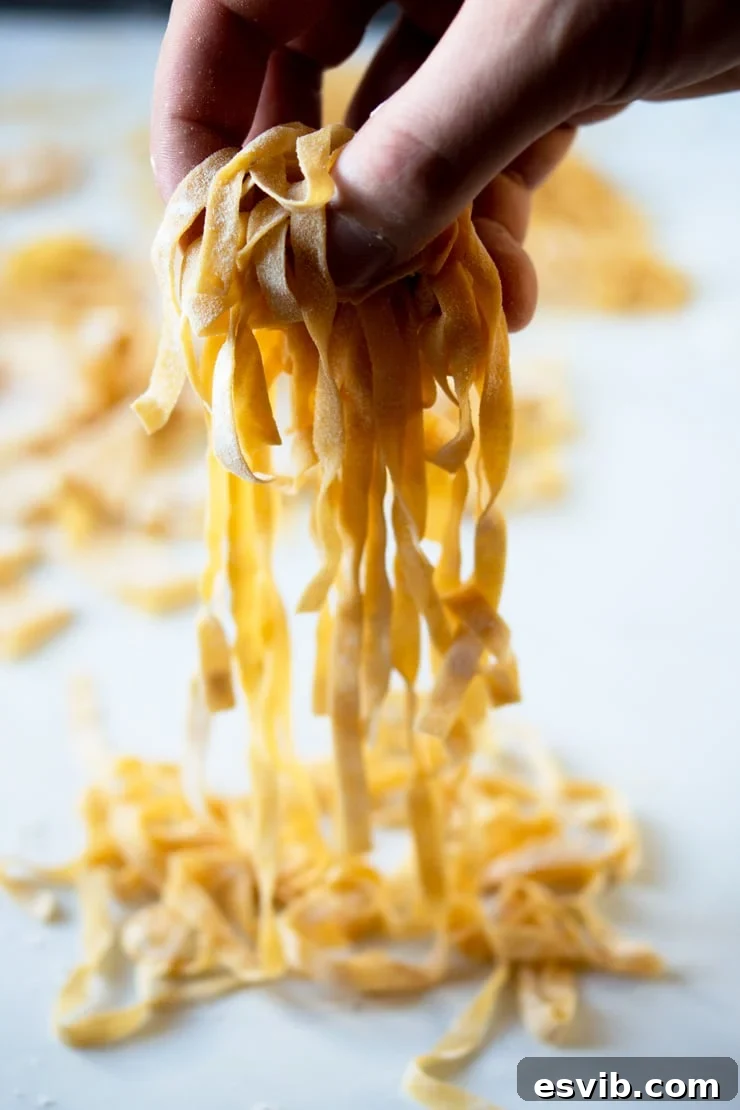
For pappardelle, take a fully rolled-out lasagna sheet and carefully fold it in half, then half again, and continue until you achieve a neat, approximately 1-inch wide strip (see photos 13 & 14). Once folded, use a sharp knife to cut this rolled strip into roughly 1/2-inch wide pieces. You can trim the ends if desired for a more uniform appearance (refer to photo 15). Gently unravel the cut pappardelle strands and use them immediately. If you plan to store them, loosely shape a few strands at a time into small nests and allow them to dry slightly on a floured surface (as shown in photo 16).
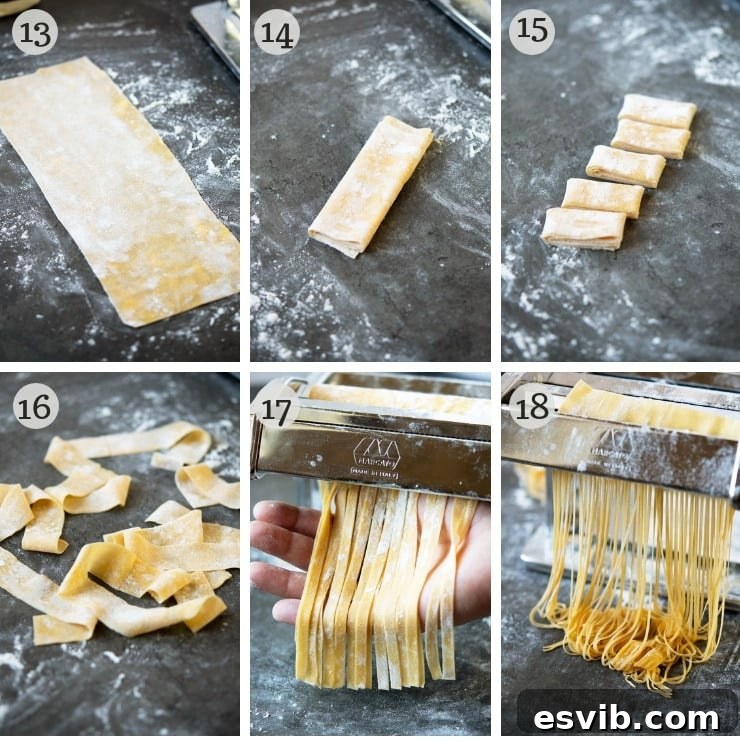
Making tagliatelle and fettuccine is even simpler with the right equipment. Most standard pasta machines come equipped with attachments for these specific cuts. Simply fit the appropriate attachment onto your pasta machine (for example, here’s the one I typically use). Feed your thin pasta sheets through the cutting attachment, and voilà, you’ll have perfectly cut tagliatelle or fettuccine ready to cook (refer to photos 17 & 18).
Just as with pappardelle, if you don’t plan to cook your tagliatelle or fettuccine immediately, gently form small nests from a few strands at a time. Lay these nests on a lightly floured surface or a pasta drying rack to dry out slightly, which helps prevent them from sticking together and preserves their shape.
Expert Tips for Perfect Homemade Pasta
- Flour Choice is Key: For the most authentic texture and best results when making pasta dough from scratch, always use ’00’ flour. This finely milled Italian flour has a lower protein content than all-purpose flour, resulting in a silkier, more tender pasta. You can find 00′ flour readily online or in specialty Italian food stores.
- Quality Eggs Matter: As discussed, the quality of your eggs significantly impacts the flavor, color, and texture of your pasta. Opt for the highest quality free-range eggs available. Their vibrant yolks and rich flavor will shine through in your finished dish.
- Knead Thoroughly: Do not skimp on the kneading time. Knead the dough for a minimum of 10 minutes. The vigorous action develops the gluten, which is crucial for elasticity and structure. The dough should feel smooth, elastic, and springy. A quick test: cut the dough in half; if you see small, even air bubbles inside, it’s a good indication that it’s ready.
- Resting is Essential: Always allow your pasta dough to rest for at least 30 minutes after kneading and before rolling it out. This resting period lets the gluten relax, making the dough much easier to roll thinly without snapping back, resulting in a more tender pasta.
- Flour Your Work Surface: To prevent sticking, lightly sprinkle your work surface and your pasta sheets with a fine layer of ’00’ flour or semola (fine semolina flour) when rolling. Semola is particularly good as it provides a coarser texture that helps prevent clumping.
- Care for Your Pasta Machine: A light dusting of flour on the rollers of your pasta machine before and during use will prevent the dough from sticking and ensure smooth operation.
- Experiment with Colors: For a fun and vibrant twist, try making different colored pasta! Check out our super easy recipes for Spinach Pasta Dough (for a beautiful green hue) and Beetroot Pasta Dough (for a stunning pink or red pasta).
Pasta Sauces To Serve Your Homemade Pasta With
The beauty of homemade pasta lies not only in its exquisite flavor but also in its incredible versatility. Fresh pasta pairs exceptionally well with a wide range of sauces, allowing its delicate taste and texture to truly shine. Here are some of our favorite pasta sauce recommendations that perfectly complement your freshly made dough:
- Simple Artichokes and Peas: A light, vibrant, and incredibly fresh sauce that highlights the sweetness of peas and the delicate flavor of artichokes.
- Sun-Dried Tomato & Roasted Red Pepper: A rich and robust sauce, bursting with Mediterranean flavors, perfect for coating broad, luscious pasta shapes.
- Eggplant Pasta Alla Norma: A classic Sicilian dish, featuring tender fried eggplant, rich tomato sauce, fresh basil, and salted ricotta.
- Parmesan and Butter (Pasta al Burro e Parmigiano): Sometimes, simplicity is key. A decadent, creamy, and utterly satisfying sauce that allows the pasta itself to be the star.
- Easy Sausage Ragù: A hearty and flavorful meat sauce, ideal for robust pasta shapes like pappardelle or tagliatelle, offering a deeply satisfying meal.
We genuinely hope you enjoy the process of making and savoring this Homemade Pasta Recipe. If you’ve tried this, or any other recipe from our blog, please don’t hesitate to rate the recipe and share your experience in the comments below – we love hearing from you! For more delicious food and culinary inspiration, you can also FOLLOW US on FACEBOOK, INSTAGRAM, and PINTEREST, or sign up for our NEWSLETTER to receive weekly updates on our latest recipes.
Step By Step Photos Above
Most of our recipes come with step by step photos, helpful tips and tricks to make it perfectly first time and even video!
Homemade Pasta Dough
By Emily
20
30
50
4 servings
Ingredients
- 400 g 00’ Flour, (3 cups spooned and levelled)
- 4 large eggs, free range
- 1 egg yolk, free range
Instructions
-
Place the flour on a clean work surface, make a well in the middle and add the eggs (photo 1).
-
Using a fork whisk the eggs whilst slowly incorporating the flour until combined and looks like a very rough dough (photo 2 & 3). You may need to use your hands once most of the egg is incorporated to help it along.
-
Bring the dough together with your hands to form a ball. Knead the dough for 10 minutes until smooth and pliable. Wrap the dough in cling film and leave to rest for 30 minutes, out of the fridge (photos 4-6).
-
Once the dough is rested it’s time to roll it out. Cut the dough in half so it’s easier to roll out and flatten it with the palm of your hand so it will fit through the first setting on the pasta machine, usually 0 (photos 7 & 8).
-
Pass the dough through the widest setting once then fold one side over the other as shown on photos 9 and 10. Flatten the dough with the palm of your hand again so it will fit through the widest setting and roll it through again.
-
Repeat this process, folding the sides in and passing it through the widest setting one more time. Once you’ve done that pass the dough through each setting once from the widest to the second last setting (number 7).
How To Make Lasagne sheets, Tagliatelle, Pappardelle and Fettuccini;
Lasagne
-
Roll the pasta dough through the machine until you reach the second last setting (my personal preference) or the very last setting. Cut the lasagne sheets to the right size to fit your dish and you’re good to go.
-
If you’re looking for a classic lasagne recipe made with a rich ragu and silky creamy bechamel sauce check out my lasagne recipe here. I also have a recipe for a vegetarian lentil ragu lasagna and a butternut squash lasagna that’s perfect for fall!
Tagliatelle, Pappardelle & Fettuccine
-
Each of the above calls for roughly the same process just different widths. The one exception is that pappardelle (the widest of the three) needs to be cut by hand.
-
Simply fold your lasagna sheet in half over and over again until you reach a 1-inch width (photos 13 & 14). Cut the roll of pasta into 1/2 inch pieces, you can trim the ends if you need to (photo 15).
-
Unravel the pappardelle and use as required. If you’re not using straight away shape a few strands at a time into nests to dry out (photo 16).
-
Making tagliatelle and fettuccine are really simple. Place the relevant attachment on your pasta machine (most pasta machines come with this, here’s the one I use). Roll the dough through the machine and you’ll have tagliatelle or fettuccini (photos 17 & 18).
-
Use the same method and shape the pasta into nests to dry out if you’re not using straight away.
Notes
The Best Pasta Thickness To Choose
I very rarely roll my pasta to the very last setting, I find it a little too thin and much harder to work with because it’s so delicate.
If I’m making ravioli I roll it out to the third last setting, number 7. For lasagne, tagliatelle or pappardelle I roll it out to the second last setting, number 8.
Egg To Flour Ratio
The general rule is 1 large egg to every 100g (3.5 oz) of 00′ flour.
I like to add 1 extra egg yolk to the whole mixture, please note I do not mean an extra egg yolk to every 100g.
As an example to make ravioli for 4-6 people I use 3 large eggs, 300g (10.5oz) 00′ flour and 1 egg yolk.
The eggs must be the highest quality free range eggs you can find. In Italy, they have egg specifically for making pasta called ‘Pasta Gialla’ yellow dough or yellow pasta.
The yolks are bright orange giving the pasta a beautiful yellow colour. Luckily I have found high quality eggs that are free range, delicious and have the perfect yolk to give homemade pasta that perfect colour. Have a search for the best you can find in your area.
P.S the size of the egg matters. If you use small or medium sized eggs you will need less flour. Stick to large eggs for the best results using this recipe.
Extra Tips For Making Homemade Pasta Dough
- Use 00′ flour for the best results when making pasta dough from scratch.
- Use the highest quality free range eggs possible.
- Knead the dough for no less than 10 minutes. It should be smooth and elastic in texture. If you’re unsure cut the dough in half, if there are tiny air bubbles inside the dough it’s ready.
- Make sure to rest the pasta dough for 30 minutes before rolling out.
- Make sure to lightly sprinkle flour on your work surface when rolling out.
- Always sprinkle a little flour on the rollers of your pasta machine to stop it sticking.
Helpful Info for All Recipes
- I always use extra virgin olive oil in all of my recipes unless stated otherwise.
- When I use canned or jarred tomatoes of any kind I always use Cirio or Mutti brands for the best results and flavor.
- All vegetables are medium sized unless stated otherwise.
- All recipes are tested and developed using a fan (convection) oven.
- Find out more about how nutrition is calculated.
- Check out our must-have Italian Pantry Staples.
- You can also find all our Essential Kitchen Tools for Italian Cooking.
Nutrition
Carbohydrates: 71g |
Protein: 21g |
Fat: 8g |
Saturated Fat: 2g |
Cholesterol: 211mg |
Sodium: 83mg |
Potassium: 506mg |
Sugar: 1g |
Vitamin A: 306IU |
Calcium: 65mg |
Iron: 4mg
Nutrition information is automatically calculated, so should only be used as an approximation.