

Dreaming of making restaurant-quality pizzas right in your own kitchen? It’s more achievable than you think, provided you have the right knowledge and tools. This guide will walk you through everything you need to know to bake the perfect pizza at home, from mastering your oven to selecting the best equipment.

There’s a unique joy in crafting homemade pizza from scratch. From the tactile experience of kneading the dough to the creative freedom of choosing your favorite toppings, and finally, the unmatched satisfaction of savoring a freshly baked, bubbling hot pie. It’s an culinary obsession that many of us share, transforming simple ingredients into a masterpiece.
Over the years of perfecting countless homemade pizzas, we’ve discovered that the final outcome hinges on a few critical factors: the quality of the flour you choose for your dough, the thoughtful selection of toppings (often, less is truly more!), and, perhaps most importantly, the tools you employ throughout the process. Don’t be intimidated by the term “tools” – we’re not talking about specialized commercial equipment. Often, the best results come from simple, accessible items you might already own or can easily acquire, like baking trays and skillets.
Do You Really Need a Dedicated Pizza Oven for Perfect Pizza?
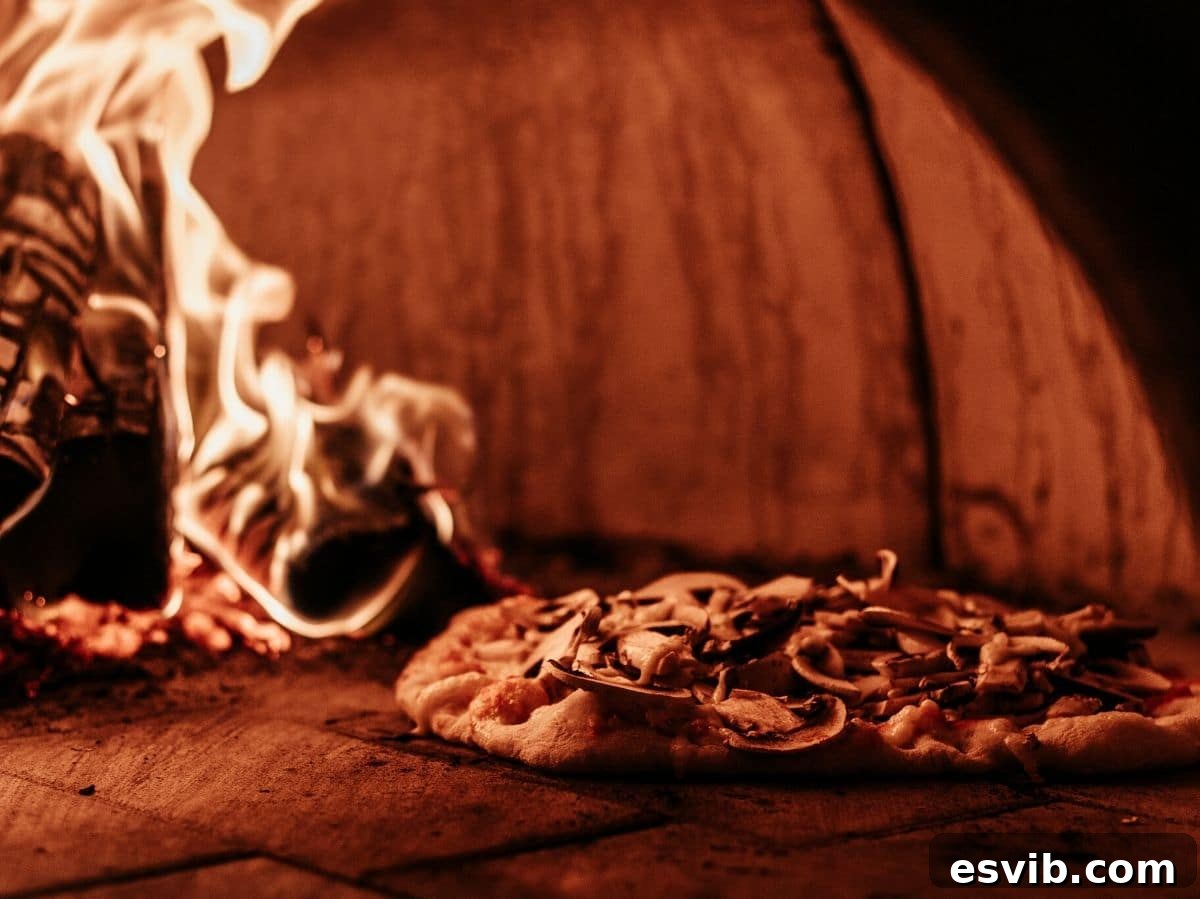
Let’s address the elephant in the room: the pizza oven. If your ultimate goal is a perfectly charred crust and lightning-fast cooking times of just 60-90 seconds, then yes, a dedicated pizza oven is undoubtedly the ideal choice. These specialized ovens, especially wood-fired models, can reach scorching temperatures of up to 500°C (930°F), creating a crust with the characteristic “leopard spots” and a unique smoky flavor that’s hard to replicate.
However, for most home cooks, owning a high-end pizza oven remains a luxury (a fantastic future life goal, perhaps!). The good news is, you absolutely do not need one to create genuinely beautiful and delicious homemade pizzas. With a standard home oven, and even judicious use of your broiler or grill, you can achieve impressive results. The secret lies in maximizing your oven’s potential and choosing the right baking surface.
A typical home oven usually tops out around 250°C (480°F), which is significantly cooler than a commercial pizza oven. This difference in temperature is why homemade pizzas in a conventional oven take much longer to cook, typically 8-15 minutes depending on the thickness and toppings. The key to success is to preheat your oven to its absolute hottest setting for an extended period – often 45-60 minutes – to ensure not just the air but also the oven’s interior walls and your chosen baking tool are thoroughly saturated with heat. This intense heat transfer is crucial for achieving a crispy base and a well-risen crust.
Essential Tools for Crafting the Ideal Pizza Crust
The baking tool you choose plays a pivotal role in the texture and quality of your pizza crust. Different surfaces offer distinct advantages and lead to varied results, from ultra-crispy to wonderfully chewy.
Standard Baking Sheets: Your Everyday Pizza Hero
The beauty of standard rectangular baking sheets is their universal availability. Chances are, you already have several in your kitchen, making them an excellent starting point for any home pizza enthusiast. While simple, they can yield fantastic pizzas with a few key techniques.
The most important tip when using a regular baking sheet is to **preheat it in the oven** to its highest temperature for at least 30 minutes before transferring your pizza dough. This initial burst of heat from the hot tray helps to shock the dough, promoting a crispier base and preventing sogginess. Once hot, carefully remove the tray and generously **sprinkle semolina flour or regular flour** across its surface. This acts as a non-stick barrier, ensuring your pizza slides off easily and contributes to a delightful crispness.
One potential drawback of regular baking sheets is their relatively poor heat retention. Thinner trays can cool down quickly once removed from the oven, especially by the time you’ve placed the dough and added your toppings. Opting for **heavy-duty, sturdy baking sheets** can mitigate this, as their greater mass allows them to retain heat for longer. With baking sheets, you have the versatility to create various crust styles, from thin and crispy to thicker, more substantial bases, depending on how thinly you roll your dough. They are also perfect for making unique regional pizzas like Sfincione, a delicious Sicilian pizza bread that requires a deep tray. For a party-perfect dish, check out our full step-by-step instructions for Sicilian pizza.
The Classic Pizza Stone: For Authentic Crispy Bases
A pizza stone is a popular choice among home bakers aiming for that authentic, brick-oven-style crust. Typically a circular or rectangular piece of ceramic or cordierite, a pizza stone is placed in your oven and preheated for a significant amount of time (often an hour or more) to absorb and retain a high level of heat. When the raw pizza is quickly transferred onto its blazing hot surface, the stone’s direct conductive heat and porous nature work wonders. It rapidly cooks the bottom of the crust, drawing out moisture and creating an incredibly crispy, chewy texture that’s difficult to achieve otherwise.
While effective, pizza stones do come with a few considerations. They can often be quite expensive, representing a more significant investment than a standard baking sheet. Furthermore, their weight and awkward shape can make them challenging to handle and store. A common limitation is that most households only own one, meaning you can only bake one pizza at a time. If you’re hosting a larger gathering or need to serve multiple pizzas simultaneously, a pizza stone might slow down your production line. In such scenarios, baking sheets might prove to be a more efficient option.
The Modern Pizza Steel: A Game Changer for Home Ovens
Evolving from the concept of the pizza stone, the pizza steel has emerged as a superior alternative for home ovens, especially for those seeking truly professional results. Made from high-grade steel, these plates are significantly more conductive than ceramic stones. This means they heat up faster and retain heat for much longer and more consistently. When a pizza is placed on a preheated pizza steel, the intense, even heat transfer to the dough is unparalleled in a home oven, leading to an incredibly crisp bottom crust and a wonderfully airy, chewy interior.
The higher thermal conductivity of steel not only shortens preheating times but also provides a more powerful burst of heat to the dough, simulating the conditions of a much hotter commercial oven more closely than a stone can. Pizza steels are also virtually indestructible, unlike ceramic stones which can crack if dropped or subjected to extreme thermal shock. While typically more expensive than stones, a pizza steel is an investment that can dramatically elevate your homemade pizza game, offering superior performance and durability.
Perforated Pizza Pans: Engineered for Crispiness
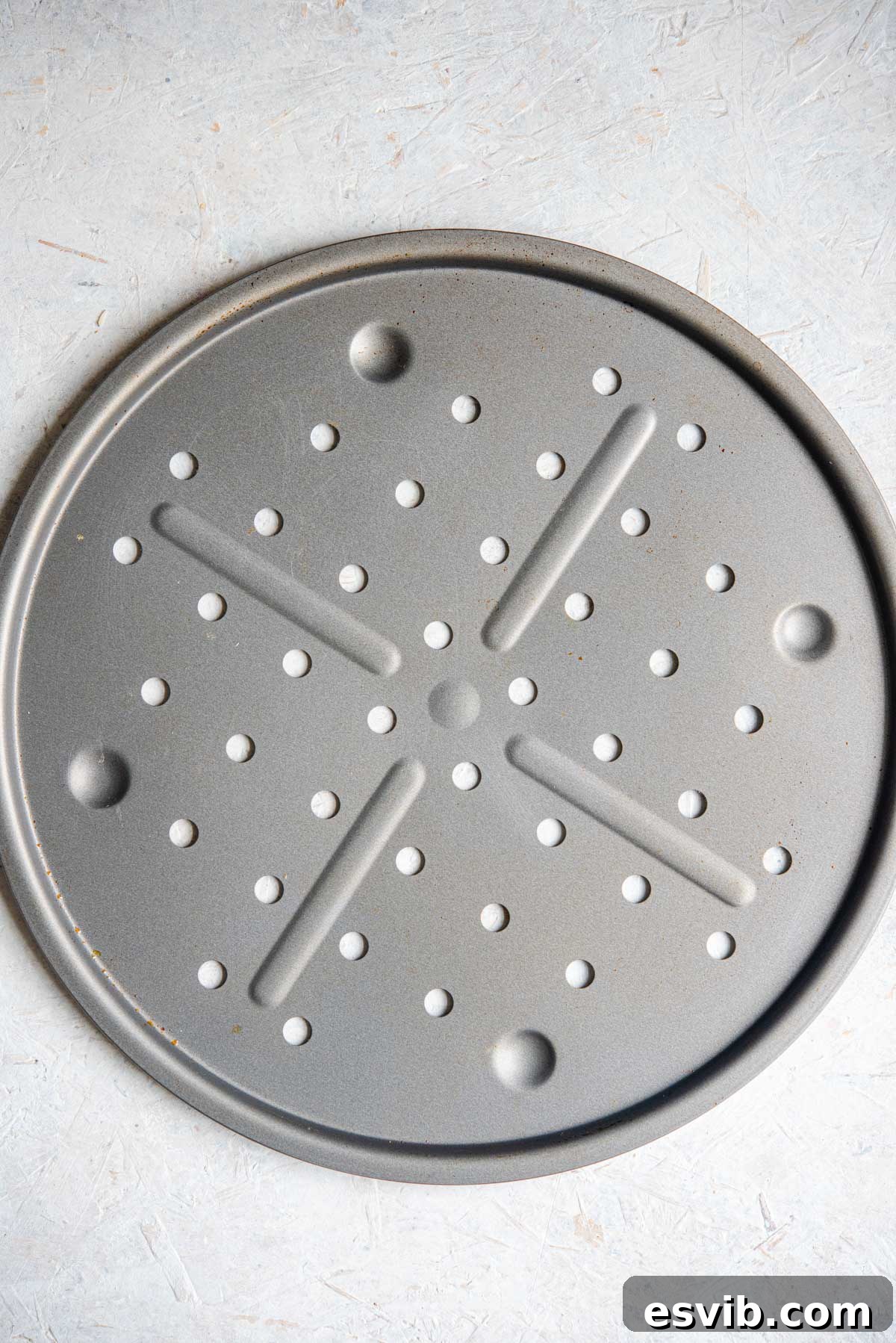
A specialized pizza pan, often circular with numerous small holes in its base, is another excellent tool for achieving a perfectly crispy pizza crust. The genius of this design lies in its ability to allow the heat from the oven to directly contact the entire surface of the pizza dough. Unlike solid trays, the perforations prevent steam from getting trapped underneath the dough, which is a common cause of soggy crusts. Instead, moisture can escape, leading to a much drier, crispier base that holds its integrity when you pick up a slice.
For many, including us, using a perforated pizza pan is a personal favorite method. These pans are typically lightweight, easy to store, and very affordable, making them a practical choice for regular use. They consistently deliver great results, producing a beautifully crisp bottom crust every time. Both our traditional Italian pizza dough and our quick instant pizza dough perform exceptionally well on these pans.
Cast Iron Skillet & Broiler Method: Neapolitan Style at Home
For those craving a Neapolitan-style pizza with its signature puffy, airy, and slightly charred outer crust, the cast iron skillet and broiler method is a revelation. This technique, though relatively new for many home cooks, delivers truly incredible results with surprising ease. The process involves cooking the pizza first on the stovetop in a hot cast iron skillet to rapidly crisp the bottom, then finishing it off under the intense heat of your oven’s broiler or grill element to cook the toppings and puff up the crust.
The cast iron skillet provides powerful conductive heat to the base of the pizza, replicating some of the initial crust development found in traditional high-temperature pizza ovens. Immediately transferring it to the broiler then provides intense radiant heat from above, cooking the toppings quickly and creating that beautiful, blistered crust that defines Neapolitan pizza. If you’ve never experimented with this method, it’s an absolute must-try for a truly authentic experience that ensures not a single crust will be left behind.
Indispensable Pizza-Making Accessories
Beyond the primary baking surface, a few accessories can significantly enhance your pizza-making experience, making it smoother, cleaner, and more precise.
- Pizza Cutter: A high-quality pizza wheel or a rocker-style pizza cutter is essential for clean, effortless slices. While a regular knife can work, it often drags toppings, tears the crust, and makes it challenging to achieve even portions. A sharp pizza cutter glides through, preserving the integrity of your freshly baked pie.
- Pizza Peel: A flat wooden or metal paddle, known as a pizza peel, is designed to smoothly transfer raw pizzas into and out of the oven. While some find them non-essential (as mentioned, a well-floured surface can allow for easy sliding), a peel becomes incredibly useful when dealing with larger pizzas, very hot baking surfaces like stones or steels, or for navigating tight oven spaces. Dusting your peel with semolina or flour before placing the dough on it ensures a frictionless transfer.
- Kitchen Scale: For truly consistent and perfect pizza dough every time, a digital kitchen scale is invaluable. While many recipes (including ours) provide measurements in cups, weighing your ingredients, especially flour and water, guarantees accuracy. Dough hydration and flour-to-water ratios are critical for texture, and a scale removes any guesswork, leading to repeatable, excellent results.
- Dough Scraper: A simple yet effective tool, a dough scraper is excellent for dividing dough, cleaning your work surface, and even transferring ingredients. It keeps your hands cleaner and helps manage sticky dough with ease.
- Wire Cooling Rack: Once your pizza is out of the oven, transferring it to a wire cooling rack for a minute or two before slicing can prevent the bottom from becoming soggy due due to trapped steam.
- Oven Thermometer: Given the importance of oven temperature, an accurate oven thermometer (separate from your oven’s built-in gauge) can confirm your oven is truly reaching and maintaining the desired heat, especially when preheating your baking surface.
Crafting Your Perfect Pizza: Our Top Recommendations and Tips
Now that you’re equipped with knowledge about various tools, let’s combine them with our best practices to help you create your ideal homemade pizza. Don’t forget to explore our guide on selecting the best flour for your dough, and for endless inspiration, delve into our extensive collection of pizza recipes.
- For Thin and Crispy Pizzas:
- Opt for our traditional Italian pizza dough, rolled out thinly. If time is of the essence, our Instant pizza dough is a fantastic quick alternative.
- Bake on a **circular perforated pizza pan** (as pictured above). The holes are crucial for achieving an extra-crispy base by allowing moisture to escape.
- Before baking, lightly dust the pan with flour or brush it very sparingly with olive oil to prevent sticking and further aid crisping.
- Always preheat your oven and the pan to its hottest setting for at least 30-45 minutes.
- For Medium to Thick Pizza Crusts or When Feeding a Crowd:
- Utilize our robust traditional pizza dough, or for a heartier option, our Sicilian pizza recipe is perfect for tray or pan pizzas. For a quick, yeast-free option, our instant pizza dough can also be adapted for thicker crusts.
- Use heavy-gauge, rectangular baking sheets or deep dish pans.
- **Always preheat the trays first** in the oven for a minimum of 30 minutes to ensure a crispy base.
- Dust the preheated tray generously with semolina or semola flour before adding the dough. This prevents sticking and adds to the crust’s texture.
- For even slices, especially with larger or thicker pizzas, your trusty pizza cutter will be indispensable.
- For Neapolitan-Style, Puffy-Crust Pizzas:
- The traditional Italian pizza dough with a slightly higher hydration works best.
- Employ the **cast iron skillet and broiler method**. Heat the skillet to searing hot on the stovetop, cook the pizza base for a few minutes, then transfer to the broiler to finish. This creates an incredibly airy, blistered crust.
- Ensure your broiler is fully preheated and use the top rack for maximum heat exposure.
We hope you’ve found this comprehensive guide insightful and inspiring! Experiment with these tools and techniques, and don’t hesitate to share your homemade pizza successes in the comments below!