
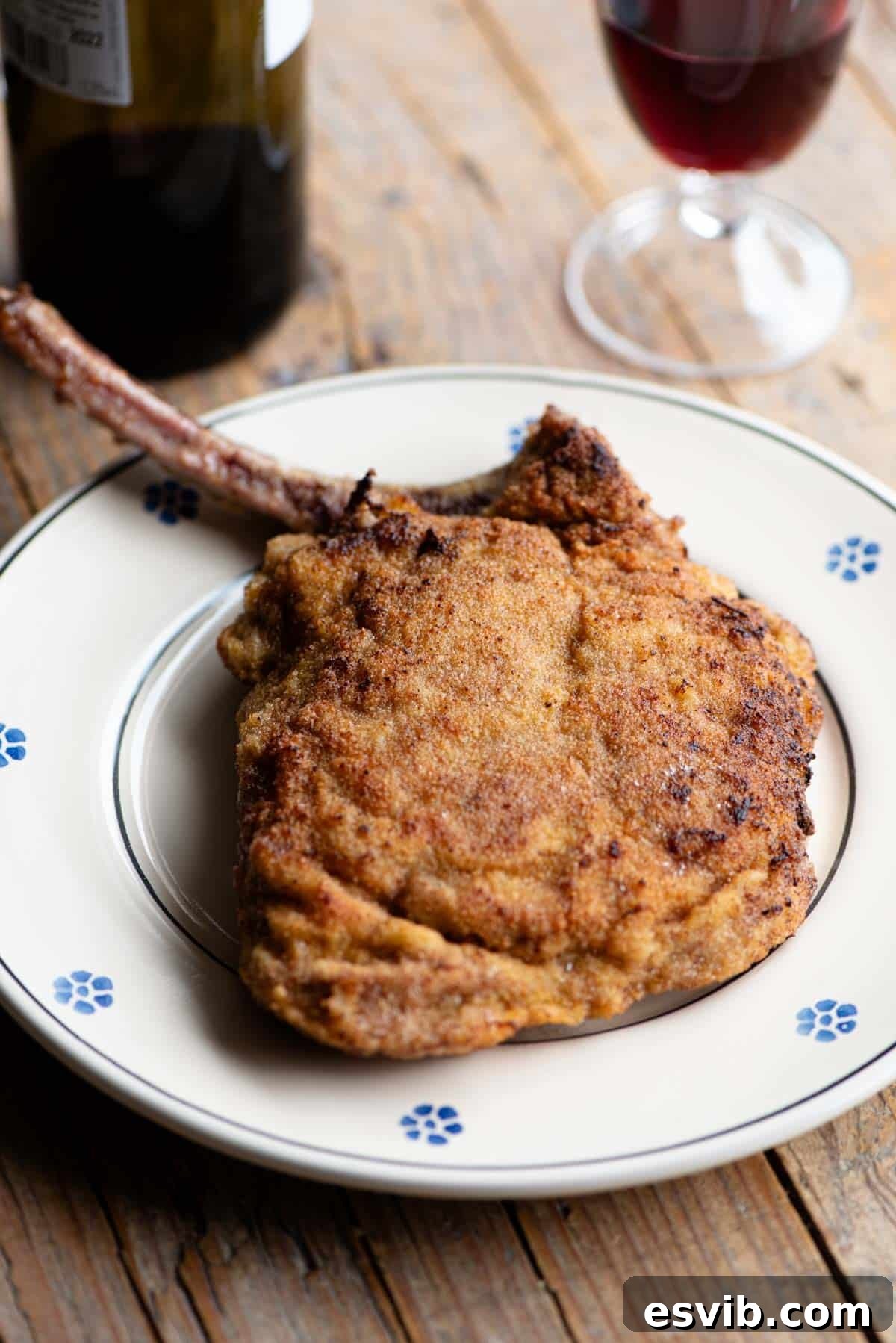
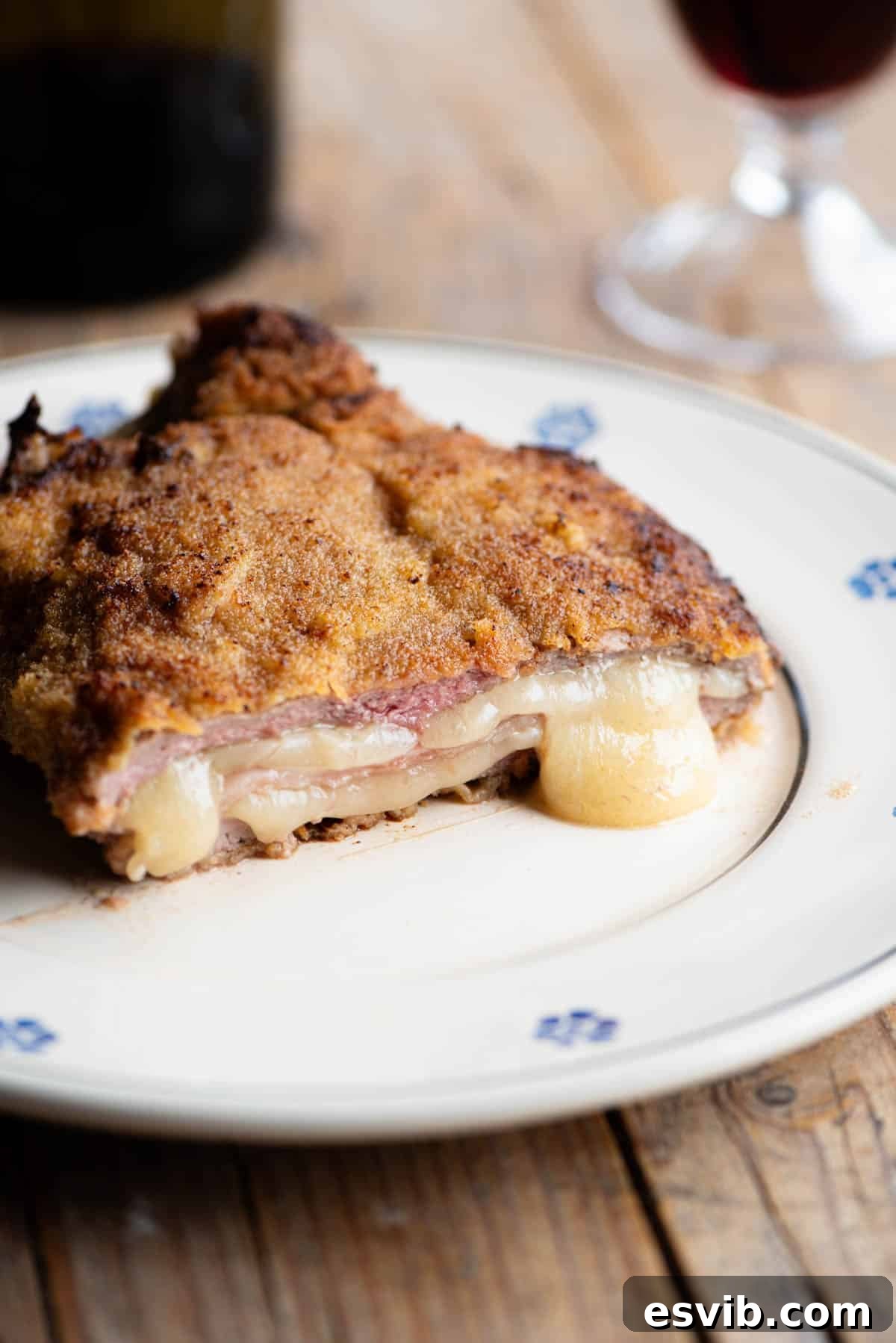
Embark on a culinary journey to the breathtaking Italian Alps with **Costoletta alla Valdostana**, a quintessential dish from the enchanting Aosta Valley. This isn’t just a meal; it’s an experience—a lavish breaded veal chop, generously stuffed with the region’s prized Fontina cheese and succulent prosciutto cotto, then pan-fried to golden perfection in rich butter. It’s a testament to the hearty, comforting, and undeniably delicious essence of Northern Italian cuisine, promising an indulgent bite that will linger in your memory long after the last morsel.
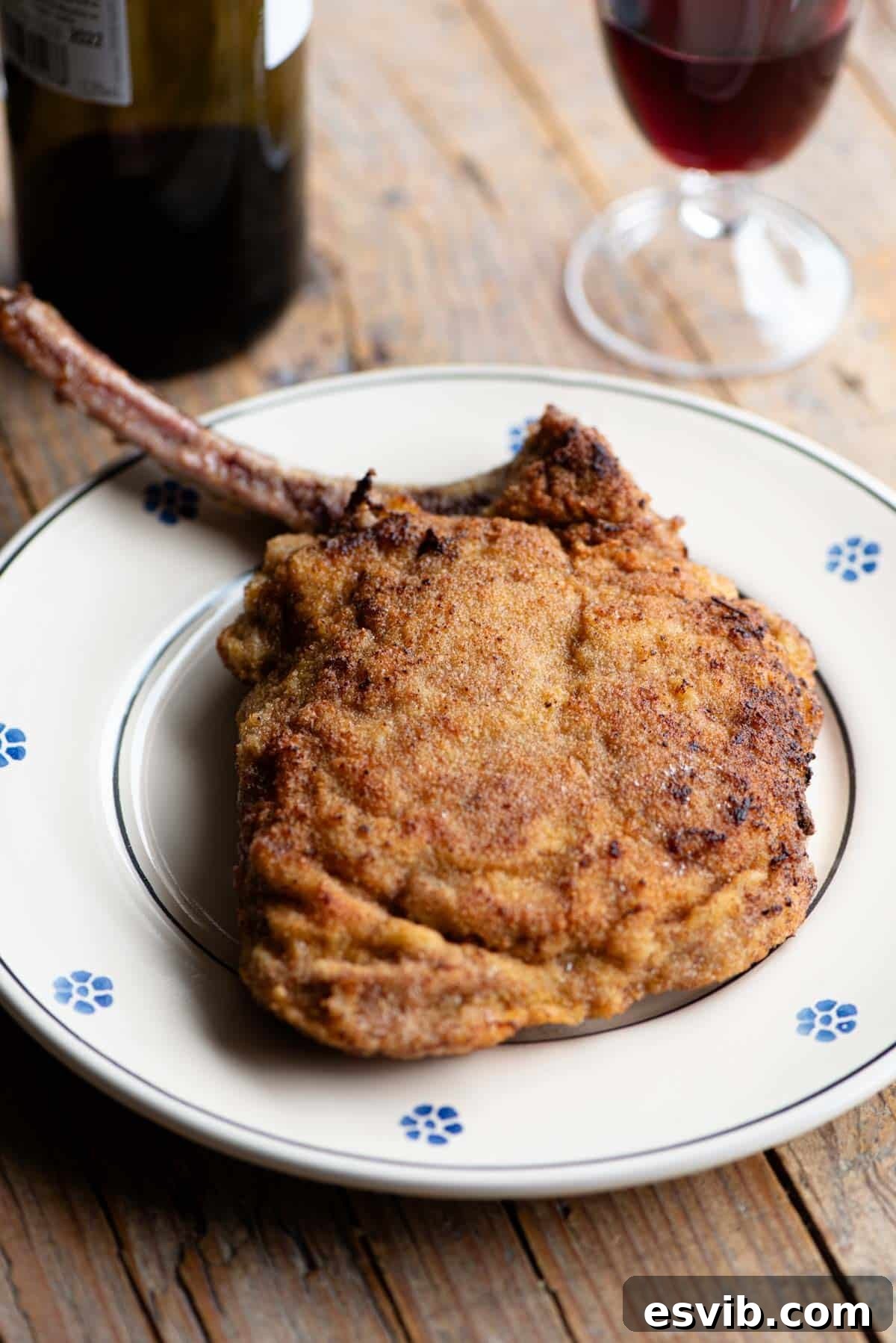
Discovering Costoletta alla Valdostana: A Regional Gem
Should your travels ever lead you to the stunning landscapes of Valle d’Aosta, nestled high in the Italian Alps, you’ll inevitably encounter this iconic dish gracing menus everywhere. Costoletta alla Valdostana is more than just a local specialty; it’s a culinary emblem of the region, embodying the warmth, richness, and tradition of Aostan gastronomy. It’s an absolute must-try for any food enthusiast seeking an authentic taste of Italy.
The name itself offers a clue to its presentation. You’ll find it listed as either “Costoletta” when the bone is left intact, or “Cotoletta” if the bone has been removed, both prepared in the distinctive Valdostana style – meaning it’s lavishly stuffed with the signature Fontina cheese and delicious cooked ham. This delightful combination is then expertly breaded and fried in butter, creating a dish that is undoubtedly rich, but profoundly satisfying and worth every single bite.
While often reserved for special occasions or as a luxurious treat, preparing Costoletta alla Valdostana at home is surprisingly accessible. Its indulgent nature makes it perfect for celebrating, yet its preparation is straightforward enough for an ambitious weeknight meal. We are thrilled to share this cherished recipe with you, and we sincerely hope you enjoy it as much as we do!
Explore our comprehensive guide below, featuring detailed notes on ingredients, step-by-step photography, essential tips for success, intriguing variations, and a full printable recipe at the bottom of the page.
Essential Ingredients for Authentic Costoletta alla Valdostana
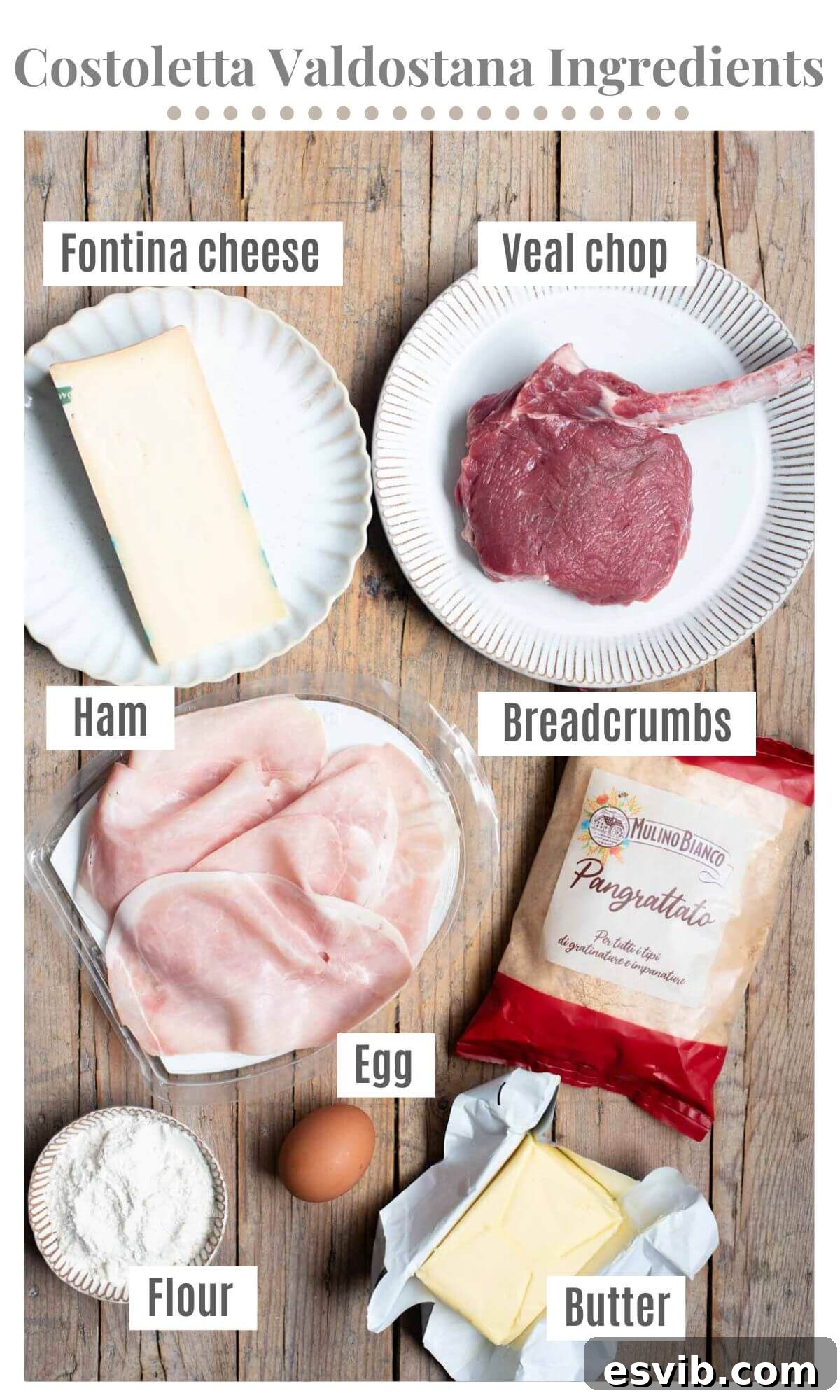
Ingredient Notes and Expert Substitutions
The magic of Costoletta alla Valdostana lies in the quality and authenticity of its core ingredients. Here’s what you’ll need and how to select them for the best results:
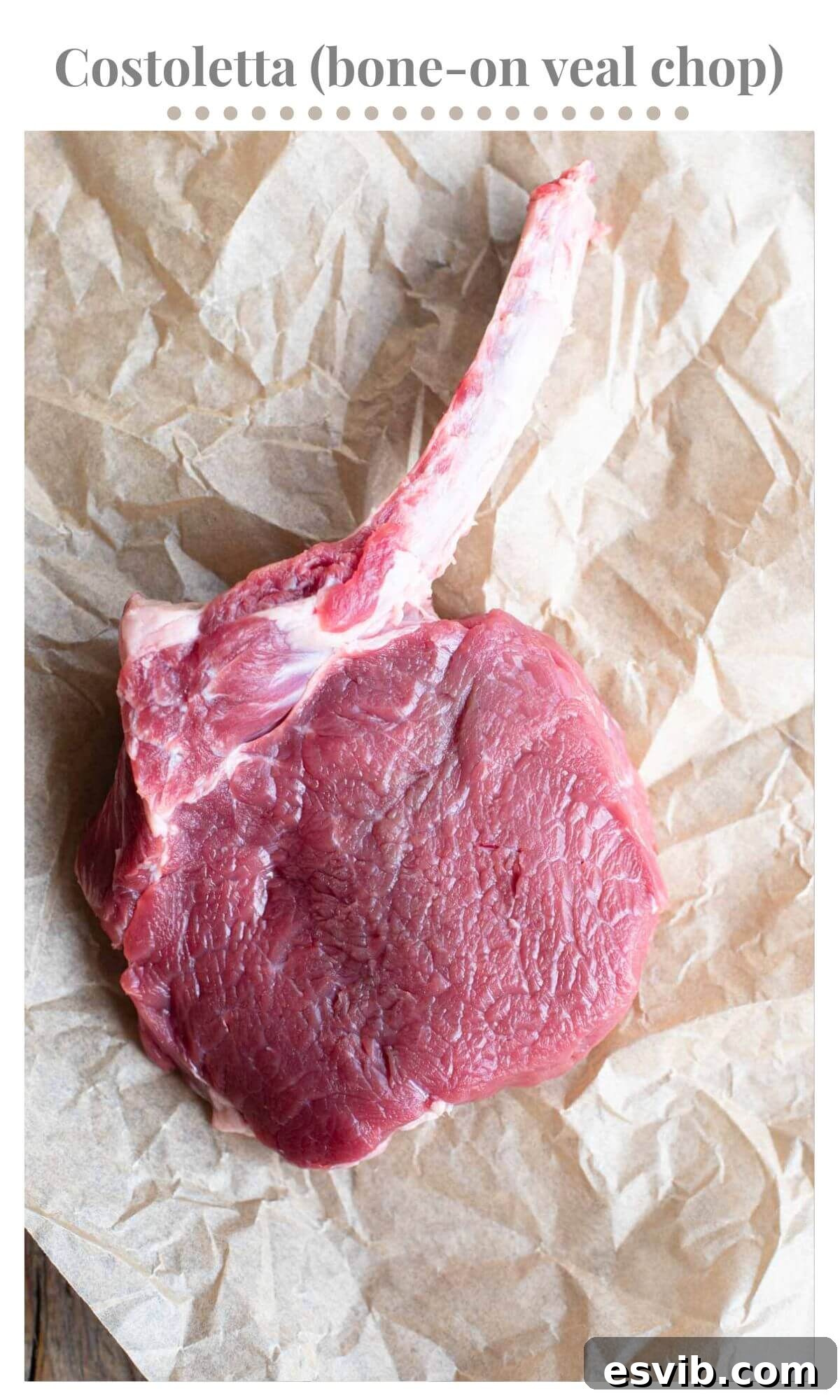
- Veal Chop: The star of the show. Traditionally, a bone-in veal chop is used (we’ll provide instructions on how to trim it). However, boneless veal chops or even large veal cutlets can also be used. If veal is unavailable or you prefer an alternative, a large pork chop or chicken cutlets can serve as excellent substitutes, though the flavor and texture will vary slightly (see tips below for adapting these cuts). Look for well-marbled, fresh veal for the most tender outcome.
- Fontina Cheese (DOP): This is the cornerstone of the Valdostana style. Fontina Valdostana, specifically with the “DOP” (Denominazione d’Origine Protetta) designation, is a semi-hard, rich, and nutty cheese produced exclusively in the Aosta Valley. Its incredible melting qualities are crucial for the gooey, irresistible filling. If genuine Fontina DOP is difficult to find, high-quality Gruyère or Comté cheese make admirable alternatives, offering similar creamy textures and savory notes.
- Prosciutto Cotto (Italian Cooked Ham): This tender, subtly sweet cooked ham provides a beautiful contrast to the richness of the veal and cheese. Opt for a good quality, thinly sliced prosciutto cotto for the best flavor and texture within the chop. Avoid overly salty or heavily spiced hams that might overpower the delicate veal.
- Breadcrumbs: For that perfect crispy crust, fine breadcrumbs are essential. Avoid panko, which creates a crunchier, flakier texture, or pre-seasoned breadcrumbs if you’re aiming for the traditional flavor profile. Plain, finely ground breadcrumbs allow the natural flavors of the veal and filling to shine. You can even make your own from stale bread for superior freshness.
- Butter: The traditional method calls for clarified butter (ghee) for frying, which provides a clean, rich flavor without burning. For home cooking, we recommend a blend of unsalted butter and a touch of olive oil. The olive oil raises the smoke point of the butter, preventing it from burning while still imparting that luscious, buttery taste. Feel free to use clarified butter if you have it on hand or prefer.
- Flour: A small amount of all-purpose flour for dredging helps the egg wash adhere perfectly, creating a solid base for the breadcrumbs.
- Egg: Acts as the binding agent for the breading, ensuring a uniform and crispy coating.
- Salt and Freshly Ground Black Pepper: Simple seasonings are all that’s needed to enhance the natural flavors of the veal. Season generously but be mindful of the saltiness from the ham and cheese.
Step-by-Step Visual Walk-Through of the Recipe
For those who learn best visually, we also offer a detailed video tutorial at the bottom of the page, guiding you through each stage of the process!
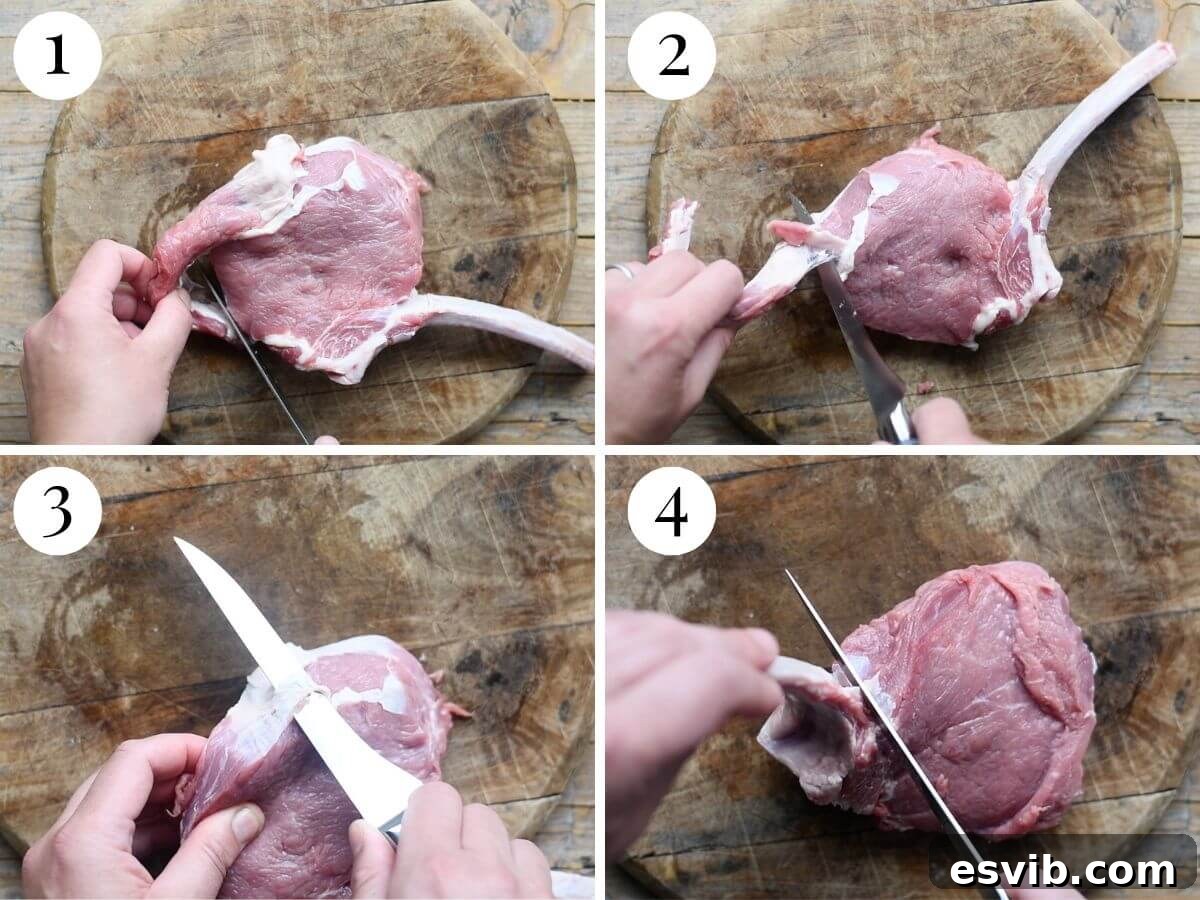
- Prepare and Trim the Veal: Begin by meticulously trimming off any sinew or silverskin from around the edges of your veal chop. This step ensures a more tender bite. Next, carefully trim the meat away from the bone, making sure to leave approximately one inch of meat still attached at the very end. This “hinge” will be crucial for stuffing. (Refer to photos 1-4 for detailed visual guidance).
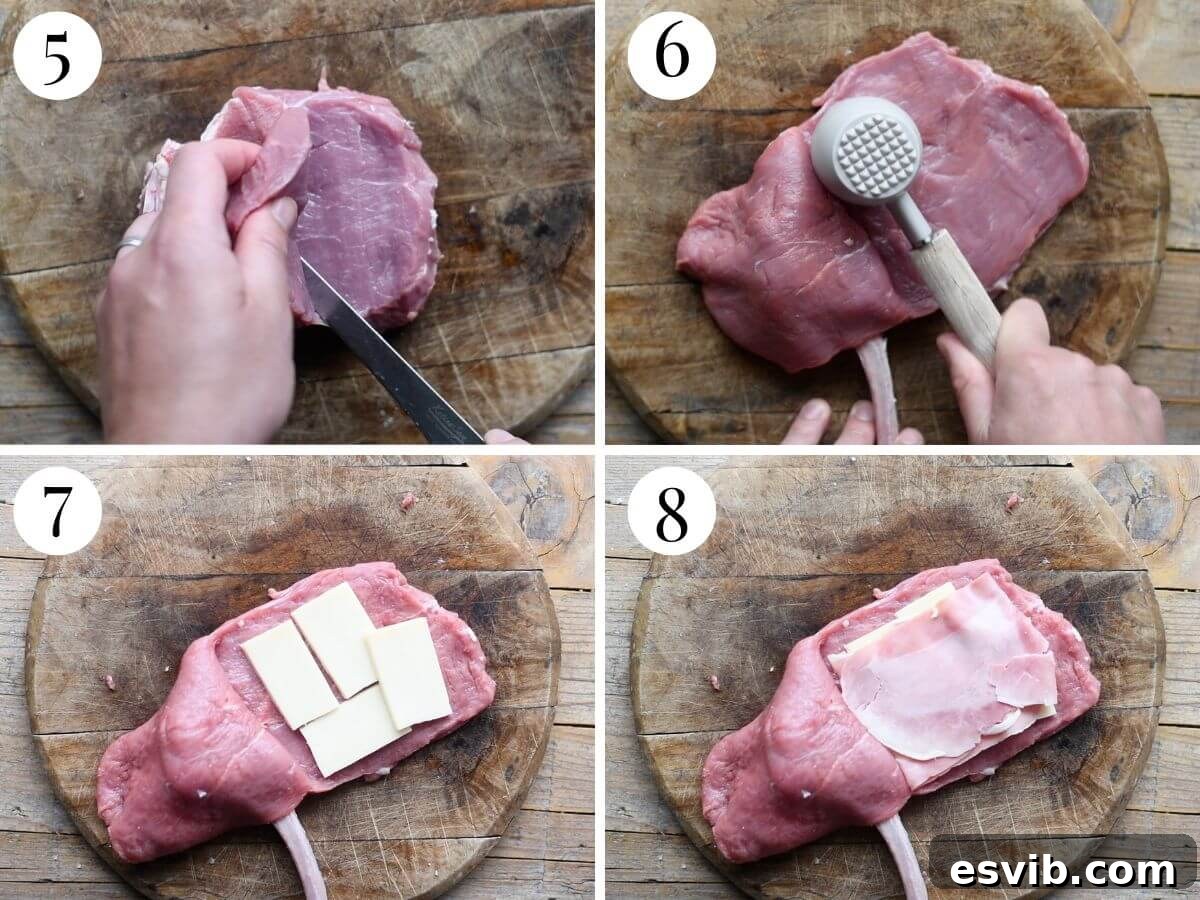
- Prepare and Stuff the Veal: With your veal chop trimmed, carefully cut it in half lengthwise, effectively creating a pocket. Crucially, ensure that the two halves remain attached at the bone, like an open book. Using the smooth side of a meat mallet, gently but firmly beat the veal until its thickness is reduced by about half. If you’re using a rolling pin, cover the meat with plastic wrap first to protect its delicate fibers and prevent tearing. (See photos 5 and 6 for visual instruction).
- Once flattened, it’s time to stuff! Lay a generous layer of Fontina cheese slices on one half of the veal. Follow this with two slices of prosciutto cotto, spreading them evenly. Top the ham with another layer of Fontina cheese. Carefully fold the other half of the veal over the filling, creating a sealed pocket. Gently beat the edges of the veal again with your mallet to help secure the filling and prevent the cheese from oozing out during frying. (Consult photos 7-10 for stuffing and sealing techniques).
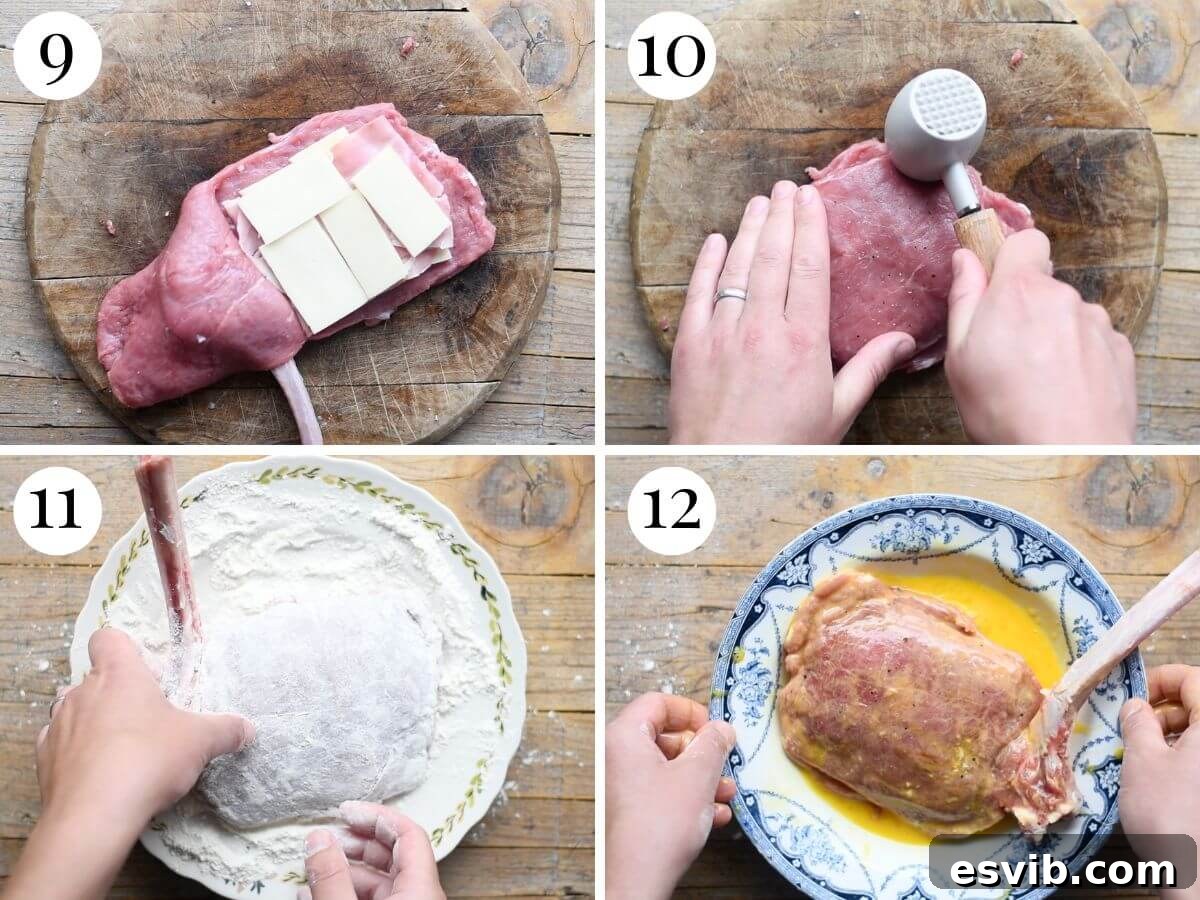
- Bread and Fry to Perfection: Prepare three shallow dishes: one with all-purpose flour, one with a beaten egg, and one with fine breadcrumbs. Carefully dredge the stuffed veal chop first in the flour, ensuring an even coating, then dip it into the beaten egg, allowing any excess to drip off. Finally, coat it thoroughly in the breadcrumbs, pressing gently to ensure they adhere completely.
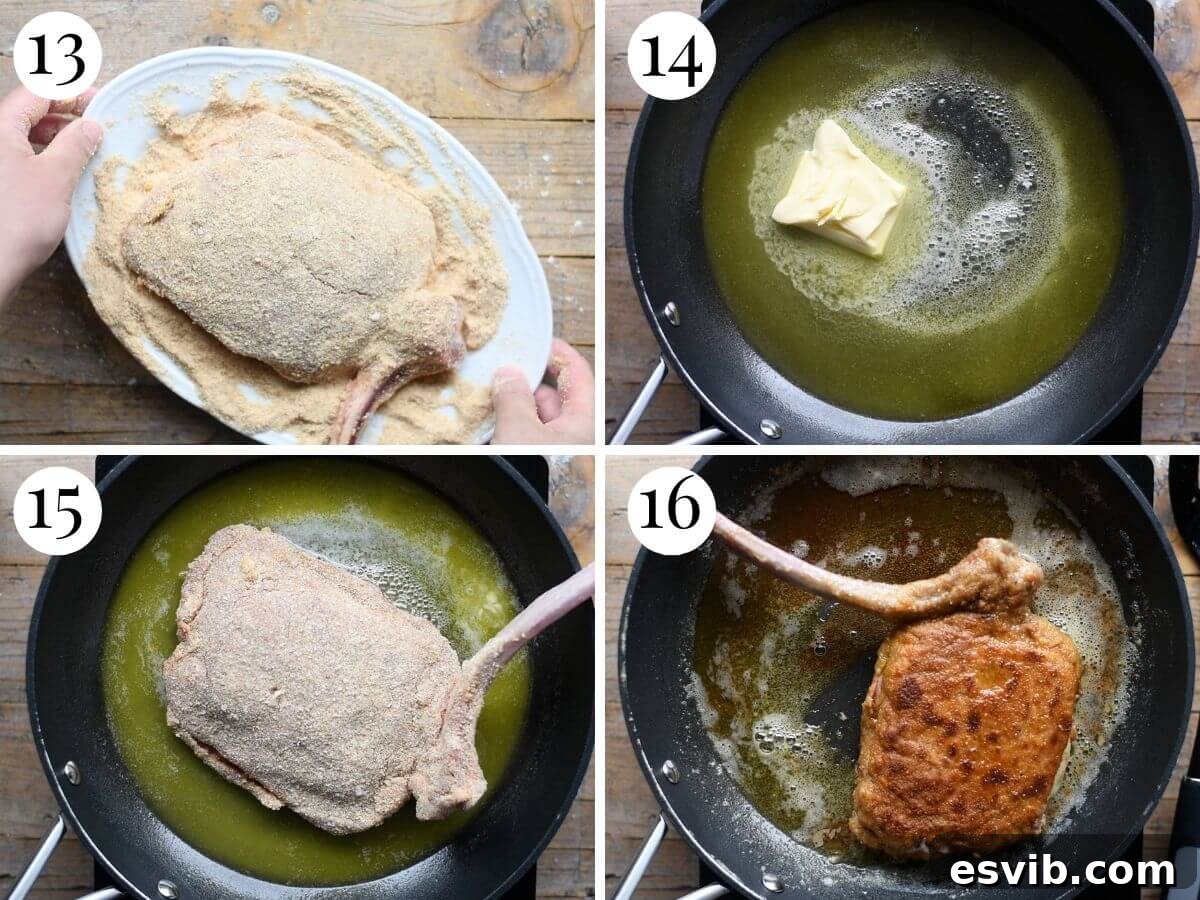
- Heat the unsalted butter and a splash of olive oil in a large, heavy-bottomed pan over medium-low heat. Once the butter is melted and slightly foamy, carefully place the breaded veal chop into the pan. Fry for approximately 4-5 minutes on each side, or until the breading is beautifully golden brown, crisp, and the veal is cooked through to your desired doneness. The internal temperature of veal should reach 145°F (63°C) for medium-rare, or higher for more well-done.
- Once fried, remove the veal chop from the pan and let it rest on a cutting board for about 3-4 minutes before slicing and serving. This crucial resting period allows the juices to redistribute, resulting in a more tender and flavorful chop. (Follow photos 11-16 for frying details and visual cues).
Adapting Costoletta alla Valdostana with Different Cuts of Meat
While a veal chop is traditional, this delicious concept can be adapted to other cuts of meat, offering versatile options without compromising on flavor.
- Veal or Chicken Cutlets: If using thinner cutlets (either veal or chicken), you won’t need to cut them like a chop. Instead, gently bash the cutlets with a meat mallet until they are thin enough and have sufficient circumference to be rolled. Place the Fontina and prosciutto cotto in the center, then carefully roll up the cutlet, tucking in the edges to create a tight parcel. Proceed with dredging, breading, and frying as you would with the veal chop. Adjust frying time as thinner cutlets will cook faster.
- Pork Chop: A large, boneless pork chop can be prepared in a similar fashion to the veal chop. Bash it thin, stuff, bread, and fry. Keep in mind that pork tends to be a bit tougher than veal when cooked, resulting in a slightly different texture, but still yielding a wonderfully flavorful dish. Ensure pork is cooked to an internal temperature of 145°F (63°C) for safety.
Recipe Tips & Frequently Asked Questions (FAQs)
- Bone In or Out? Your Choice: While traditional recipes often feature the bone for presentation and added flavor, you absolutely don’t have to keep it. If you prefer boneless, simply trim the veal and open it up like a book, ensuring it remains attached at one end to hold the filling.
- Mastering the Meat Mallet: Always use the flat end of your meat mallet to tenderize the meat, not the spikey side, which can tear the fibers. If you don’t have a mallet, a rolling pin works perfectly – just cover the veal with plastic wrap (cling film) beforehand to protect the meat from sticking or tearing.
- Careful Breading for a Perfect Seal: The breading step is crucial for keeping your delicious filling intact. Take your time to ensure the veal chop is completely and evenly coated in flour, egg, and breadcrumbs. This creates a protective barrier that prevents the cheese from escaping during frying.
- Prepping in Advance: This dish is fantastic for entertaining as you can prepare and stuff the veal chops ahead of time. Store the stuffed chops, covered, in the refrigerator until you’re ready to cook. However, avoid breading them in advance; the breadcrumbs will become soggy if left for too long, losing their desired crispness. Bread just before frying for optimal results.
- Frying Temperature is Key: Always fry your Costoletta alla Valdostana over a medium-low heat. If the heat is too high, the breadcrumbs will brown and potentially burn before the veal has a chance to cook through and the cheese has melted to perfection. A moderate temperature ensures a golden-brown crust and a perfectly cooked, juicy interior.
- Resting is Essential: Just like with any cooked meat, allowing the veal chop to rest for a few minutes after frying is vital. This brief pause allows the internal juices to redistribute, resulting in a more tender, succulent, and flavorful piece of meat. Don’t skip this step!
In Italian culinary terms, you’ll find this dish referred to as “Costoletta” when the bone is still attached to the veal chop, giving it a more rustic, substantial appearance. Conversely, “Cotoletta” indicates that the bone has been removed, often resulting in a thinner, sometimes rolled, cutlet of veal. For the Valdostana style, both bone-in and boneless versions are traditionally stuffed with Fontina cheese and ham.
Elevate Your Meal: Inspired Serving Suggestions
Costoletta alla Valdostana is a wonderfully rich and satisfying dish that pairs beautifully with simple, fresh sides to balance its decadence. Here are some of our favorite recommendations:
- Fresh Arugula Salad: A classic pairing, a light and peppery arugula (rocket) salad provides a refreshing counterpoint. Drizzled with a simple lemon vinaigrette and adorned with shavings of Parmigiano Reggiano, it cuts through the richness of the veal beautifully. (See our Arugula Salad with Lemon and Parmesan recipe).
- Crispy Italian Roast Potatoes: For a heartier accompaniment, perfectly roasted potatoes are always a hit. Our recipe for Italian Roast Potatoes with Rosemary and Garlic makes an excellent choice, offering a savory, aromatic crunch that complements the veal’s texture.
- Simple Green Vegetables: Steamed or sautéed green beans, asparagus, or broccoli drizzled with a high-quality extra virgin olive oil, a sprinkle of sea salt, and freshly cracked black pepper are elegant and healthy sides that allow the main dish to truly shine.
- Creamy Polenta: In true Northern Italian fashion, a side of creamy, buttery polenta would be a luxurious addition, perfect for soaking up any melted cheese or pan drippings.
Expand Your Palate: More Italian Veal Recipes to Explore
If you’ve enjoyed the rich flavors of Costoletta alla Valdostana, you’ll love exploring other traditional Italian veal dishes. Here are a few more favorites from our kitchen:
Mains
Veal Milanese (Cotoletta alla Milanese)
Mains
Breaded Veal Cutlets with Parmesan Cream
Mains
Veal Marsala (Scaloppine al Marsala)
Mains
Ossobuco Milanese (Braised Veal Shanks)
We truly hope you enjoy preparing and savoring this incredible Costoletta alla Valdostana recipe. Your feedback is invaluable, so please don’t hesitate to rate the recipe and share your thoughts in the comments section below – we love hearing from you! For more delicious Italian inspiration and to stay updated with our latest culinary creations, you can follow us on Facebook, Instagram, and Pinterest. You can also sign up for our Newsletter to receive weekly updates directly in your inbox.
Step By Step Photos Above
Most of our recipes come with step by step photos, helpful tips and tricks to make it perfectly first time and even video!
Costoletta alla Valdostana (Stuffed Breaded Veal)
By Emily
20 mins
8 mins
28 mins
2 chop (serves 2)
Equipment
- plastic wrap
- Meat mallet or rolling pin
- Large, heavy-bottomed pan
- Shallow dishes for breading
Ingredients
- 14 oz (400g) veal chop (bone-in)
- 2 slices prosciutto cotto, Italian ham
- 3.5 oz (100g) Fontina DOP cheese, cut into thick slices
- 1 large egg, beaten
- Flour, for dredging
- ¾ cup (100g) fine breadcrumbs
- 5-6 tablespoons (75g) unsalted butter
- 2 tablespoons olive oil
- Salt and freshly ground black pepper, to taste
Instructions
-
Trim off any sinew (silverskin) around the edges of the veal chop. Carefully trim the meat away from the bone, making sure to leave about one inch of the meat attached to the bone to create a hinge.
-
Cut the veal chop in half through the middle, ensuring it remains attached at the bone. Using the flat side of a meat mallet or a rolling pin (cover the meat with plastic wrap first if using a rolling pin), flatten the meat all over until it is about half its original thickness.
-
Open the flattened veal chop like a book. On one side, add a layer of Fontina cheese slices, then top with two slices of prosciutto cotto. Place another layer of cheese slices on top of the ham, then fold the other half of the veal over the filling.
-
Use a meat mallet or rolling pin to gently flatten the edges slightly. This step helps to seal the chop and keep the filling securely inside during cooking.
-
Prepare three shallow dishes: one with flour, one with the beaten egg, and one with breadcrumbs. Carefully dredge the stuffed veal chop first in flour, shaking off any excess. Then dip it into the beaten egg, ensuring a full coating, and finally, press it firmly into the breadcrumbs until completely coated. Place the breaded chop on a plate.
-
Add the butter and olive oil to a large, heavy-bottomed pan and heat over medium-low heat. Once the butter is melted and slightly foaming, carefully place the breaded veal chop in the pan. Cook for approximately 4-5 minutes on each side, or until golden, crispy, and cooked through. Ensure the internal temperature reaches a safe level for veal (145°F/63°C for medium-rare).
-
Remove the veal chop from the pan and let it rest for 3-4 minutes on a cutting board before serving. This allows the juices to redistribute, ensuring a tender and moist result.
Video Tutorial
(Original video source: Costoletta alla Valdostana (Stuffed Veal Chop))
Notes for Success
- Cheese Alternatives: If Fontina DOP is unavailable, excellent substitutes include Gruyère or Comté, both of which offer similar melt and flavor profiles.
- Boneless Option: While traditional, keeping the bone is optional. If you prefer a boneless chop, simply ensure the veal is kept attached at one end when cut open for stuffing.
- Consistent Heat for Frying: A medium-low heat is paramount. Too high, and your breadcrumbs will burn before the veal is properly cooked through and the cheese is beautifully melted.
- Advance Preparation: The veal can be prepped and stuffed in advance, then refrigerated until cooking time. However, do not bread the veal ahead of time, as the breadcrumbs will become soggy. Bread just before frying for the best crispy results.
Helpful Information for All Our Recipes
- We consistently use extra virgin olive oil in all our recipes unless explicitly stated otherwise, for superior flavor and health benefits.
- For canned or jarred tomatoes, we always recommend Cirio or Mutti brands to ensure the best possible taste and quality in your dishes.
- All vegetables specified in our recipes are assumed to be medium-sized unless their specific dimensions are mentioned.
- Every recipe provided has been rigorously tested and developed using a fan (convection) oven, so cooking times may vary slightly with conventional ovens.
- Discover more about how nutrition information is calculated on our website.
- Explore our guide to must-have Italian Pantry Staples to stock your kitchen like a true Italian chef.
- Find all our Essential Kitchen Tools for Italian Cooking to equip your culinary space.
Nutrition
Carbohydrates: 38g |
Protein: 72g |
Fat: 67g |
Saturated Fat: 26g |
Polyunsaturated Fat: 7g |
Monounsaturated Fat: 29g |
Trans Fat: 0.01g |
Cholesterol: 714mg |
Sodium: 1318mg |
Potassium: 889mg |
Fiber: 2g |
Sugar: 4g |
Vitamin A: 1108IU |
Calcium: 461mg |
Iron: 6mg
Nutrition information is automatically calculated, so should only be used as an approximation.
Did you try this recipe?
Leave a comment below and share your experience!