
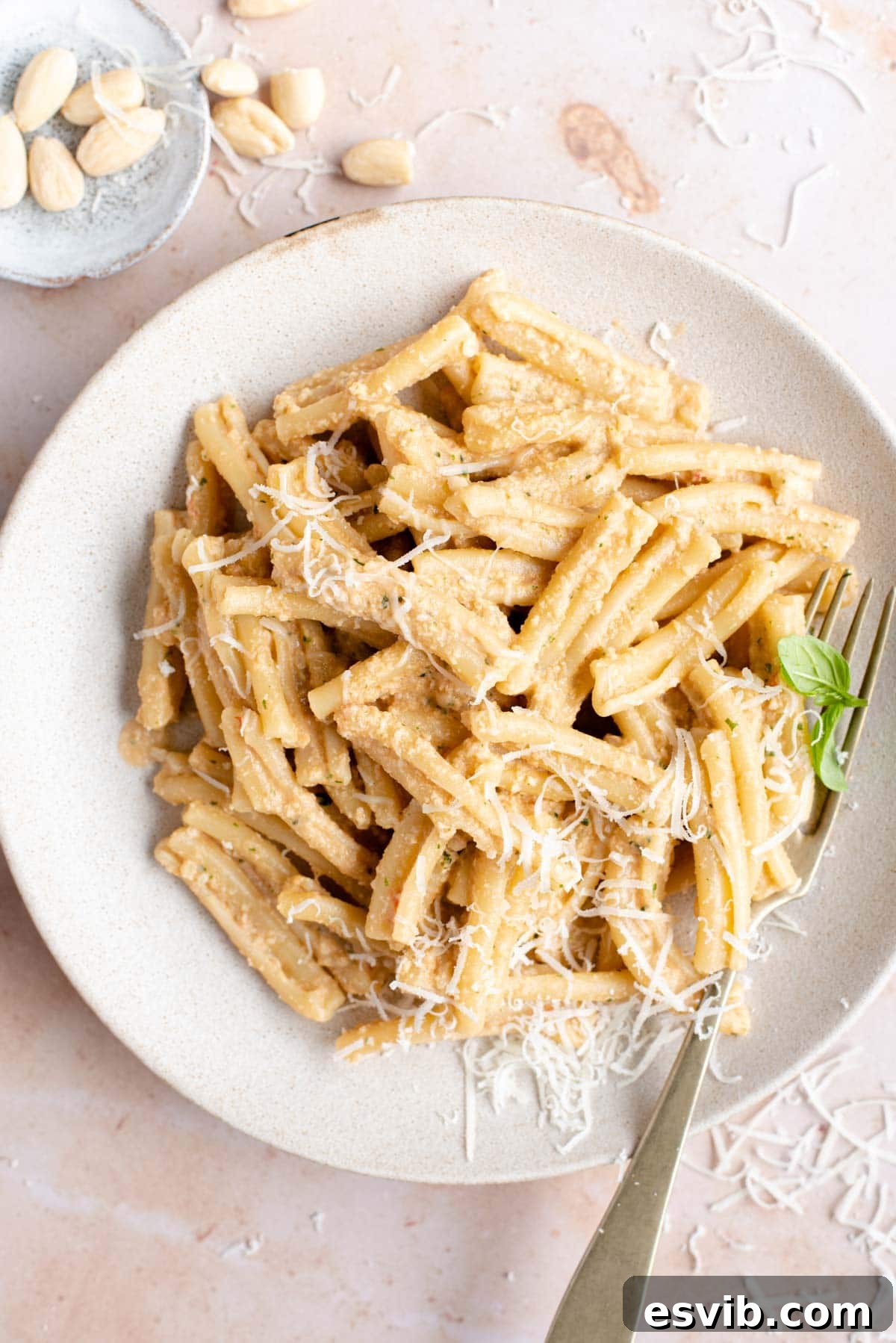
Transport your taste buds straight to the sun-drenched shores of Sicily with a vibrant and authentic **Pesto alla Trapanese**. This delightful Sicilian pesto, originating from the historic port city of Trapani, is a refreshing departure from its more widely known Ligurian green basil counterpart. It masterfully combines the fresh sweetness of ripe tomatoes, the delicate crunch of blanched almonds, fragrant basil, pungent garlic, and the savory tang of aged Pecorino cheese. Exceptionally easy to prepare and bursting with Mediterranean flavors, this pesto is your secret weapon for a quick, flavorful weeknight meal, transforming simple pasta into an unforgettable culinary experience.
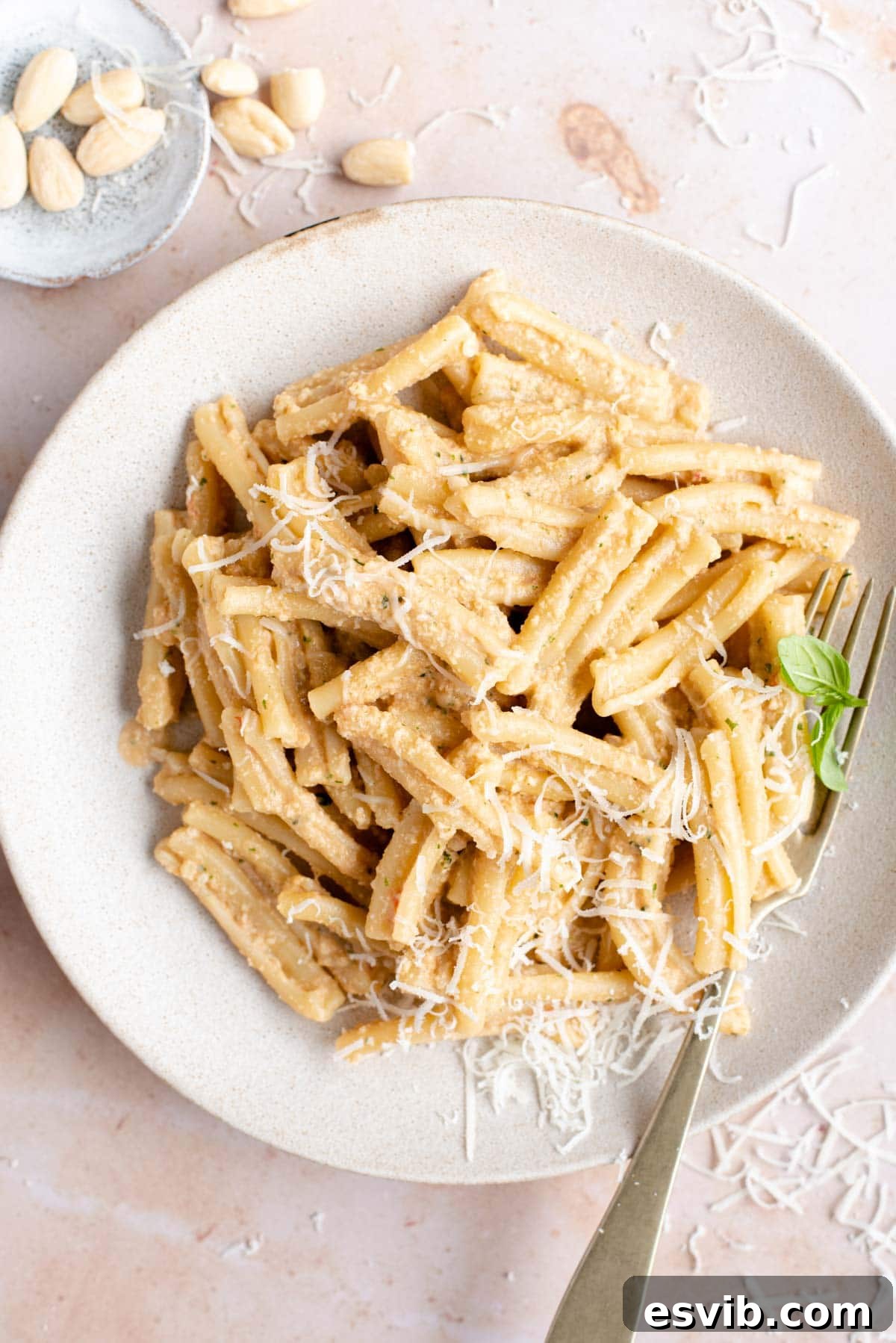
While many home cooks are familiar with the classic green basil pesto (Pesto alla Genovese), Pesto alla Trapanese offers a unique and equally enchanting flavor profile. Often referred to as “pesto rosso” or red pesto, its distinct crimson hue comes from the generous use of fresh, ripe tomatoes, giving it a bright, zesty, and slightly sweet character. This recipe is a beautiful testament to the simplicity and richness of Sicilian cuisine, proving that the most extraordinary flavors often emerge from the freshest, highest-quality ingredients prepared with minimal fuss. This traditional Trapanese sauce, often served with busiate pasta, embodies the essence of summer with its fresh, vibrant components.
Better yet, this remarkable pesto can be ready in 10 minutes or less, making it an ideal choice for busy weeknights or impromptu gatherings. Beyond its traditional pairing with pasta, the versatility of this Sicilian tomato and almond pesto is truly remarkable. Imagine it spread generously over crusty crostini as an elegant appetizer, swirled into a vibrant salad dressing to elevate fresh greens, or even used as a flavorful base for gourmet sandwiches and wraps. Its fresh ingredients make it a perfect accompaniment to grilled chicken, pan-seared fish, or roasted vegetables, adding a burst of Mediterranean sun to any dish. This comprehensive guide will walk you through the effortless process of creating your own authentic Pesto alla Trapanese, complete with detailed steps, essential tips, and creative serving suggestions to inspire your culinary adventures. Get ready to savor the authentic taste of Sicily!
Essential Ingredients for Authentic Sicilian Pesto alla Trapanese
Crafting the perfect Pesto alla Trapanese begins with selecting high-quality, fresh ingredients. Each component plays a vital role in creating the distinctive flavor profile of this beloved Sicilian sauce, renowned for its balance of sweetness, savoriness, and a touch of piquant garlic. Here’s a detailed look at what you’ll need and some crucial tips for the best results:
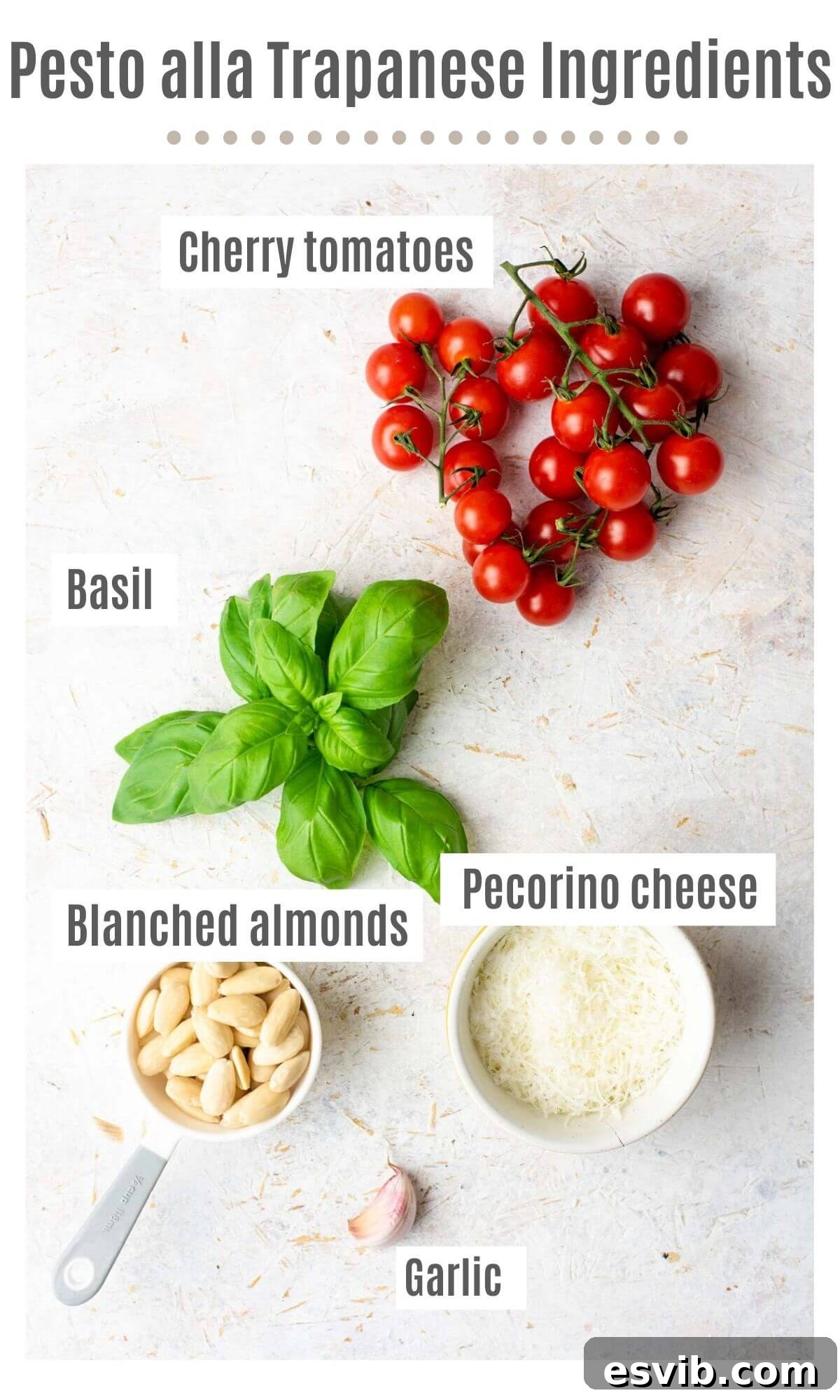
- Fresh Tomatoes: The very soul of this red pesto. We highly recommend using sweet cherry tomatoes for their concentrated flavor, vibrant color, and ease of preparation. They yield a naturally sweeter pesto and a more intense tomato taste. Alternatively, ripe plum tomatoes or other large, flavorful heirloom tomatoes can be used. Regardless of your choice, ensure they are very ripe for maximum sweetness and ease of peeling, which is a critical step in achieving a smooth pesto.
- Blanched Almonds: These are essential for providing the characteristic nutty texture and subtle sweetness that distinguishes Pesto alla Trapanese. It is crucial that the almonds are skinless (blanched) to ensure a smooth pesto and to prevent any bitterness or unwanted texture from the skins. If you only have raw almonds with skins, a quick blanching in boiling water followed by an ice bath will make peeling them effortless. Lightly toasting them enhances their flavor profile significantly, adding depth to the pesto.
- Pecorino Cheese: This hard, salty sheep’s milk cheese is deeply rooted in Sicilian culinary tradition and lends a sharp, tangy, and intensely savory depth to the pesto. Always opt for freshly grated Pecorino for the best flavor and texture. If authentic Pecorino is difficult to find or if you prefer a milder, nuttier taste, high-quality Parmesan (Parmigiano Reggiano) can be used as a substitute, though it will subtly alter the traditional Sicilian profile.
- Fresh Garlic: Absolutely non-negotiable for its pungent, aromatic kick that defines this pesto. Fresh garlic provides a sharpness that dried or powdered versions simply cannot replicate. One medium-sized clove is typically sufficient to infuse the pesto with its characteristic zest, but feel free to adjust to your personal preference for garlic intensity.
- Fresh Basil: A generous handful of fragrant fresh basil leaves adds a sweet, peppery, and intensely aromatic note, perfectly complementing the acidity of the tomatoes and the richness of the almonds. Always use fresh basil; dried basil will not provide the same bright, herbaceous quality essential for this pesto. Gently tear larger leaves to help them blend more effectively and release their full aroma.
- Extra Virgin Olive Oil (Optional, for consistency): While the core ingredients don’t strictly require added oil for the pesto base itself, a drizzle of high-quality extra virgin olive oil is often incorporated to achieve the desired consistency, especially when preparing it for pasta or as a dip. It also adds a beautiful fruity richness and helps to bind the ingredients, enhancing the overall mouthfeel.
- Sea Salt (to taste): Although Pecorino cheese contributes significant saltiness, always taste your pesto before serving and adjust with a pinch of sea salt if needed.
Step-by-Step Guide to Making Pesto alla Trapanese
Creating this delicious Sicilian pesto is surprisingly simple and requires minimal effort, making it an ideal recipe for both novice and experienced cooks. Follow these clear and detailed steps to prepare a fresh, authentic, and flavorful sauce that will impress everyone at your table:
Step 1: Prepare the Almonds and Tomatoes
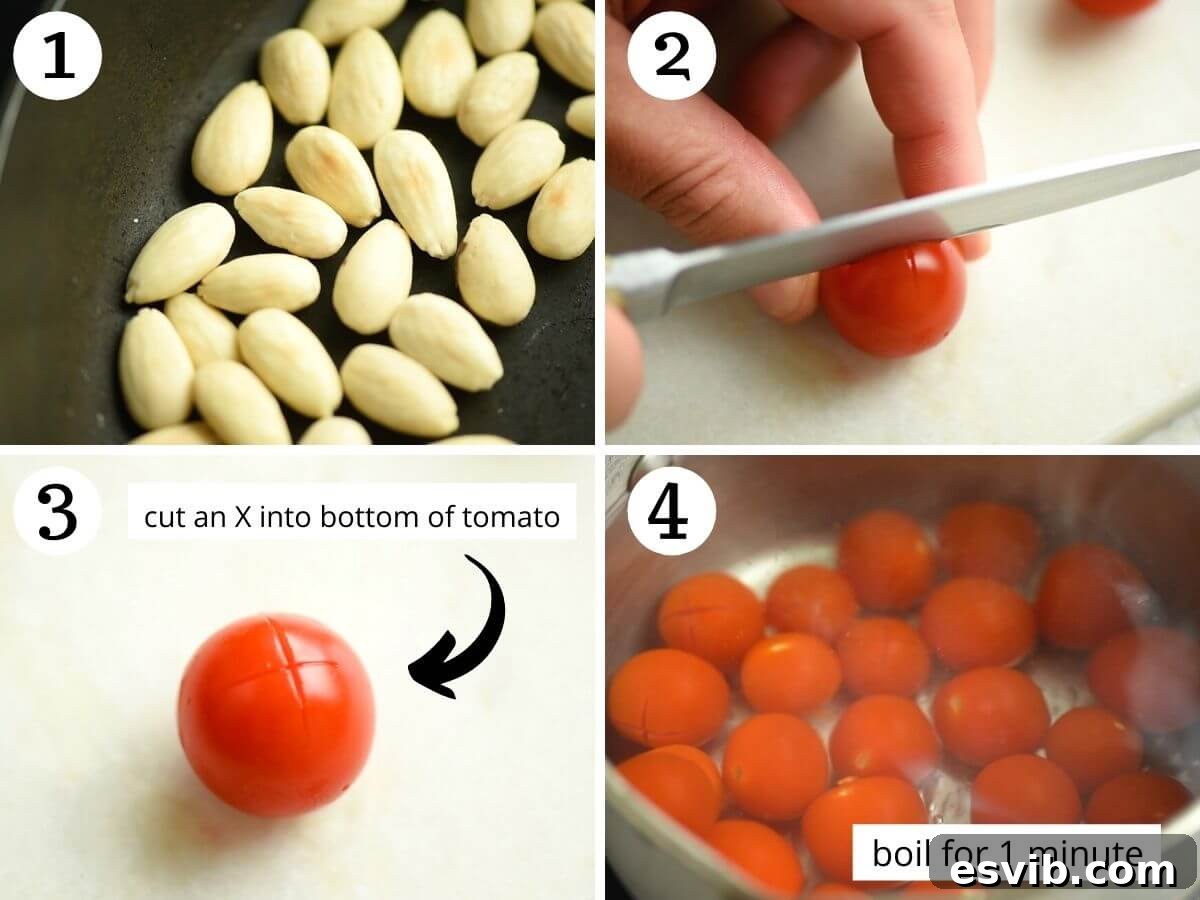
Begin by preparing your blanched (skinless) almonds. Place them in a dry pan over medium heat and toast them gently for a few minutes. Agitate the pan or stir frequently to ensure even toasting, watching carefully until they turn a light golden color and release a rich, nutty aroma. This crucial step significantly deepens their flavor. Once toasted, immediately remove them from the pan and set aside to cool completely. For the tomatoes, bring a small pot of water to a rolling boil. While the water heats, delicately score a small “X” at the bottom of each cherry tomato. Once the water reaches a vigorous boil, carefully drop the tomatoes into the pot and blanch them for just 1 to 2 minutes, or until you visibly notice their skins beginning to crack. This brief blanching process is essential for making the subsequent peeling step incredibly easy and efficient.
Step 2: Peel and Seed the Tomatoes
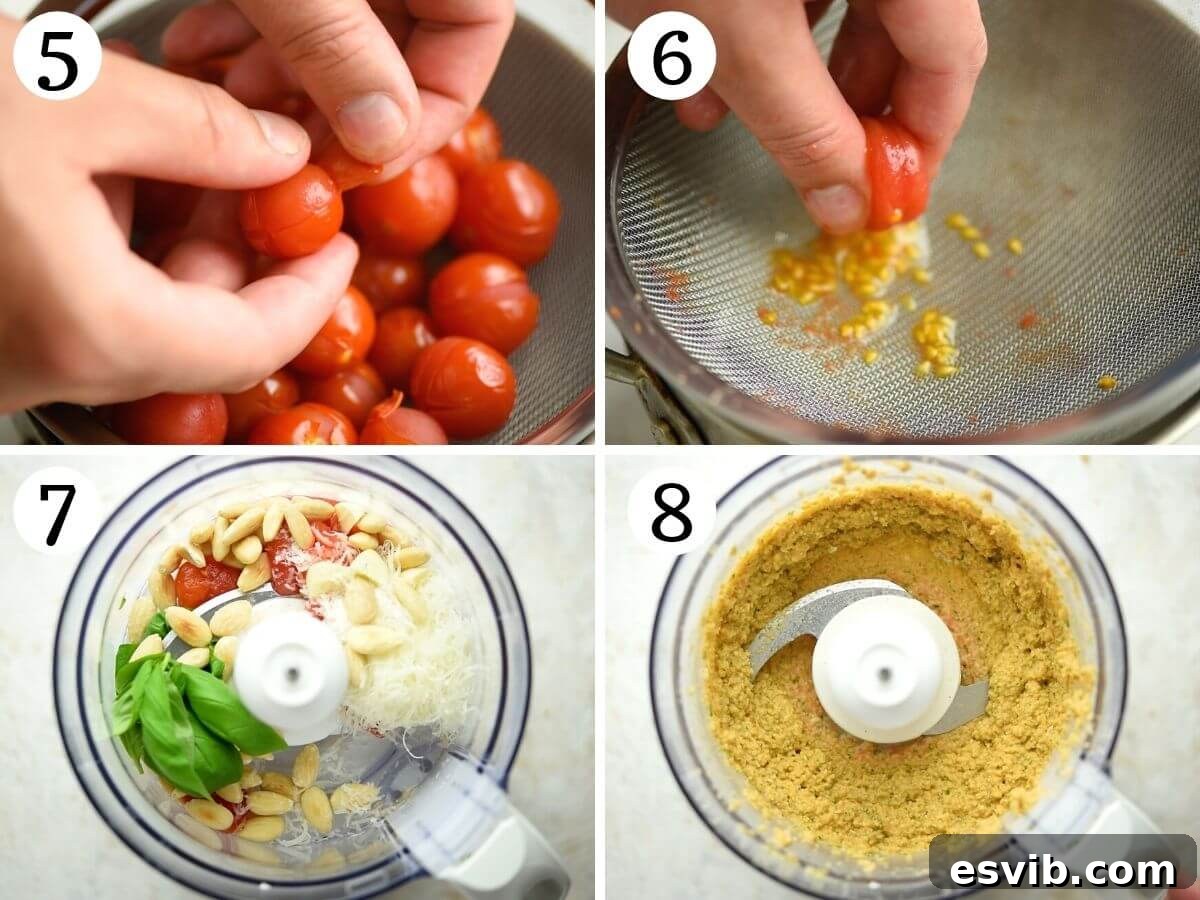
Once blanched, immediately drain the tomatoes and transfer them to a bowl of ice water or simply set them aside to cool for a few minutes until they are comfortable enough to handle. The blanched skins should now slip off effortlessly with your fingers. After peeling, it’s vital to gently squeeze each tomato to remove any excess seeds and watery juice. This step is crucial for achieving the correct pesto consistency, preventing it from becoming too watery or developing an undesirable gritty texture. Set the clean, peeled, and deseeded tomato flesh aside, ready for blending into your vibrant pesto.
Step 3: Blend the Pesto to Perfection
Carefully transfer the prepared tomatoes, cooled toasted almonds, freshly grated Pecorino cheese, fresh garlic, and fragrant basil leaves into the bowl of a food processor. Pulse the ingredients in short bursts until they reach a fine, yet still slightly rustic, pesto consistency. The goal is a texture that is homogeneous enough to coat pasta beautifully but retains a slight bite from the almonds. Be mindful not to over-process, as this can make the pesto too pasty or warm, which can dull the vibrant fresh flavors. If you don’t have a food processor, an immersion blender can work wonderfully in a tall container. For a truly traditional and deeply textural pesto, a mortar and pestle can be employed, grinding the ingredients in stages until the desired consistency is achieved, though this method requires a bit more effort and time.
Step 4: Season and Serve
Once your Pesto alla Trapanese is blended, give it a taste for seasoning. The Pecorino cheese is quite salty, so you may find that no additional salt is required. However, adjust with a pinch of sea salt to suit your personal preference. If you plan to serve it immediately, a final drizzle of high-quality extra virgin olive oil can further enhance the flavors, add a beautiful sheen, and create an even silkier texture. Your homemade Sicilian pesto is now ready to be enjoyed in countless delicious ways!
Serving Pesto alla Trapanese with Pasta for an Authentic Meal
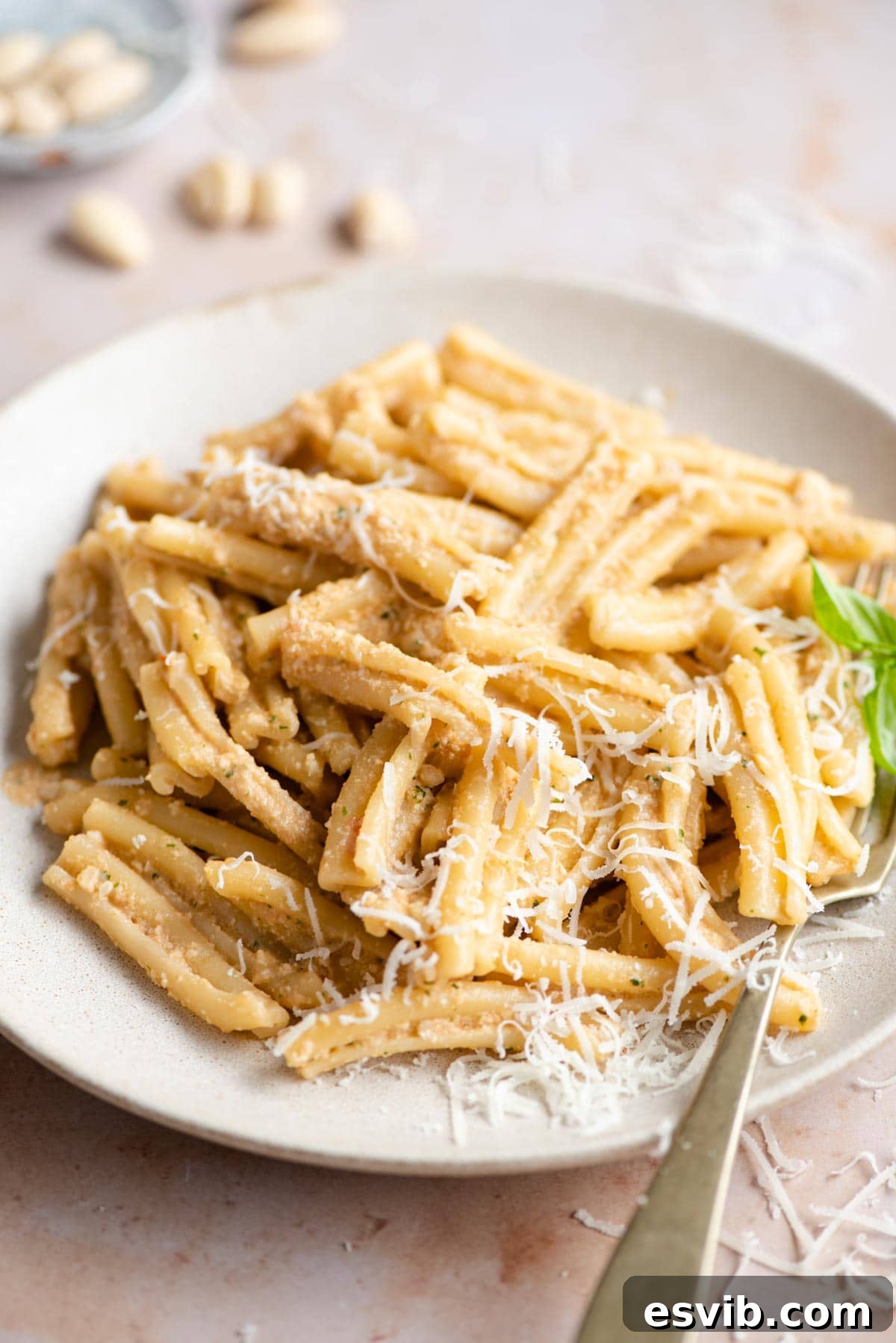
Pesto alla Trapanese truly shines when tossed with your favorite pasta. For the best culinary experience, boil your preferred pasta until it reaches a perfect al dente stage, retaining a slight firmness to the bite. Before draining, remember to generously reserve about 1 cup of the starchy pasta cooking water – this is a crucial ingredient for a successful sauce. Drain the rest of the pasta thoroughly and return it to the warm pot. Add your freshly made Pesto alla Trapanese to the pasta. Gradually add the reserved pasta water, a tablespoon at a time, mixing gently and continuously until the pesto beautifully emulsifies and evenly coats every strand of pasta, creating a luscious, cohesive sauce. The pasta water helps to thin the pesto and bind it to the pasta. You likely won’t need all of the reserved water, so add it cautiously. Give it a final taste and adjust with a touch more salt or a grind of black pepper if desired, before serving immediately, perhaps with a sprinkle of extra grated Pecorino and a fresh basil leaf for garnish.
Creative Ways to Enjoy Pesto alla Trapanese
While Pesto alla Trapanese is undoubtedly a match made in heaven for pasta, its vibrant flavor, fresh ingredients, and versatile texture make it suitable for a myriad of culinary applications. Don’t limit yourself to just spaghetti or linguine; explore these delicious and innovative ideas to incorporate this Sicilian gem into every course of your meals:
- A Sensational Pasta Sauce: This is the most classic and perhaps most satisfying way to enjoy Pesto alla Trapanese. Toss it through fresh or dried pasta, such as traditional busiate (a spiraled pasta from Trapani), casarecce, fusilli, penne, or even simple spaghetti, for a quick, wholesome, and incredibly flavorful meal.
- Elevated Bruschetta or Crostini: Transform simple bread into an exquisite appetizer. Spread the pesto generously over toasted slices of crusty baguette or ciabatta. For added flair, top with cured meats like prosciutto, fresh mozzarella cheese, ricotta salata, or a few briny capers before serving.
- Vibrant Salad Dressing: Create a bright and herbaceous dressing by thinning out the pesto with a little extra virgin olive oil and a refreshing squeeze of lemon juice. Drizzle it over green salads, hearty pasta salads, grain bowls, or even grilled vegetable salads.
- Flavorful Dip: Serve Pesto alla Trapanese as a captivating dip for entertaining. Pair it with crunchy grissini (Italian breadsticks), an assortment of fresh crudités (carrot sticks, cucumber, bell peppers), or warm pita bread. It’s a guaranteed crowd-pleaser!
- Gourmet Sandwich and Wrap Spread: Ditch your usual mayonnaise or mustard and use Pesto alla Trapanese to elevate everyday sandwiches, wraps, or paninis. Its robust flavor pairs wonderfully with grilled vegetables, sliced chicken, turkey, or various cured meats.
- Accompaniment to Grilled Proteins: Spoon a generous dollop of this vibrant pesto over grilled chicken breasts, pan-seared fish (especially firm white fish like swordfish or cod, both Sicilian favorites), or even roasted vegetables (like zucchini, eggplant, or bell peppers) for an instant flavor boost and a beautiful presentation.
- Unique Pizza Base: For a delightful and flavorful twist on traditional pizza, use Pesto alla Trapanese as the sauce instead of conventional tomato sauce. Top with fresh mozzarella and fresh basil leaves (added after baking to preserve their color and aroma) for a truly memorable pizza experience.
- Stuffed Dishes: Mix the pesto with creamy ricotta cheese and use this flavorful combination as a delicious filling for lasagna, stuffed pasta shells, cannelloni, or even chicken breasts.
Expert Tips and Frequently Asked Questions for Perfect Pesto alla Trapanese
To ensure your Pesto alla Trapanese turns out perfectly every time, bursting with authentic Sicilian flavor, keep these valuable tips in mind. We’ve also answered some of the most common questions to help you master this delightful, fresh tomato and almond sauce:
- Tomato Preparation is Key: The small “X” score at the bottom of each tomato before blanching them is not a suggestion, but a crucial technique. It ensures the skins peel off with incredible ease, preventing any unwanted grittiness in your pesto and contributing to its smooth, rich texture. Do not skip this step!
- Achieving the Right Consistency: When preparing the pesto specifically as a pasta sauce, remember the golden rule: always reserve some of the starchy pasta cooking water. This water is your best friend for gradually thinning out the pesto to the perfect coating consistency, helping it to cling beautifully to the pasta. If you’re using the pesto in salads, as a spread, or as a dip, you can adjust the consistency by drizzling in a little high-quality extra virgin olive oil until it reaches your desired richness and pourability.
- Quality of Ingredients: As with any recipe that relies on a few core ingredients, the quality of your fresh produce and cheese directly impacts the final flavor of your pesto. Use the freshest, ripest tomatoes, aromatic basil, and a good quality Pecorino cheese for an unmistakably authentic taste that sings of Sicily.
- Toasting Almonds: Do not skip the step of lightly toasting the blanched almonds. This simple process of dry-roasting awakens and deepens their inherent sweetness and nuttiness, adding a crucial layer of complex flavor that would be missing otherwise.
- Don’t Over-Process: When blending your pesto in a food processor, it’s best to use short, controlled pulses rather than continuous processing. This technique helps to achieve a rustic yet fine texture, preventing the pesto from becoming too warm, which can diminish the fresh basil’s vibrant color and flavor, or overly pasty.
Yes, blanching and peeling the tomatoes is a crucial step for authentic Pesto alla Trapanese. If you don’t blanch and peel them, your pesto will likely be too wet and watery due to the inherent moisture in tomatoes, and it will have an undesirable gritty texture from the skins. Blanching takes only 1-2 minutes, after which the skins will easily slip off, yielding a much smoother, more refined, and more flavorful pesto.
Freshly made Pesto alla Trapanese will keep wonderfully in an airtight container in the refrigerator for up to 4 days. To help preserve its vibrant color and freshness for longer, you can pour a thin layer of high-quality extra virgin olive oil over the surface of the pesto before sealing. This creates a protective barrier against air, which helps to prevent oxidation and maintain its flavor.
Absolutely! While a food processor makes quick work of preparing the pesto, Pesto alla Trapanese was traditionally made using a large mortar and pestle. This time-honored method allows for more precise control over the texture, often yielding a slightly coarser, more rustic pesto with an incredibly nuanced depth of flavor. If using a mortar and pestle, start by crushing the garlic and almonds, then gradually add the basil, followed by the tomatoes, and finally the cheese, grinding until you reach your desired consistency.
Yes, Pesto alla Trapanese freezes beautifully! It’s an excellent way to preserve the vibrant flavors of summer tomatoes and enjoy them year-round. Portion the pesto into ice cube trays or small freezer-safe containers. Once frozen solid, transfer the cubes to a larger freezer bag for convenient, long-term storage. It will keep well in the freezer for up to 3-4 months. Thaw in the refrigerator overnight or gently warm with a splash of pasta water when you’re ready to use it.
Pesto alla Trapanese is traditionally served with regional Trapanese pasta shapes such as busiate, whose unique spiral shape is perfect for clinging to the rich, chunky sauce. However, it also pairs wonderfully with other short pasta shapes like casarecce, fusilli, or penne, as well as longer, thicker pastas like spaghetti or linguine. Choose a pasta that has grooves or a good surface area to hold the vibrant sauce well.
Explore More Authentic Sicilian Recipes
If you’ve thoroughly enjoyed the delightful and fresh flavors of Pesto alla Trapanese, we warmly invite you to delve deeper into the rich and diverse culinary landscape of Sicily. The island’s cuisine is a treasure trove of vibrant dishes, steeped in history and tradition. Here are more traditional Sicilian recipes that are sure to captivate your palate and bring the tastes of Southern Italy to your kitchen:
- Pasta Alla Norma (Classic Sicilian Eggplant Pasta): A quintessential Sicilian dish featuring fried eggplant, rich tomato sauce, salted ricotta, and fresh basil.
- Sicilian Pizza (Sfincione – Focaccia-style Pizza): A thick, airy focaccia-like pizza topped with a savory tomato sauce, onions, anchovies, and breadcrumbs.
- Homemade Sicilian Cannoli (Crispy Shells & Creamy Filling): Indulge in Sicily’s most famous dessert with crispy fried pastry shells filled with sweet ricotta cream.
- Arancini (Fried Risotto Balls): Irresistible golden-fried rice balls, typically filled with ragù, mozzarella, and peas, a beloved Sicilian street food.
- Caponata (Sicilian Eggplant Stew): A sweet and sour eggplant dish with capers, olives, and celery, perfect as an appetizer or side.
We sincerely hope you thoroughly enjoy preparing and tasting this authentic Pesto alla Trapanese, a true highlight of Sicilian cuisine. Your feedback is incredibly valuable to us, so if you’ve tried this recipe or any other from our extensive collection, please don’t hesitate to rate it and share your thoughts in the comments section below. We absolutely love hearing about your cooking experiences and seeing your culinary creations! Stay connected with us for more delicious Italian recipes, cooking tips, and culinary inspiration by following us on FACEBOOK, INSTAGRAM, and PINTEREST. You can also sign up for our NEWSLETTER to receive our latest recipes and cooking tips directly in your inbox, ensuring you never miss a delicious update.
Pesto alla Trapanese (Authentic Sicilian Tomato & Almond Pesto)
★★★★★ (5/5 from 1 vote)
Cook Time: 2 mins
Total Time: 10 mins
Yields: 4 servings

Print Recipe
Pesto alla Trapanese is a delicious and incredibly easy-to-make Sicilian pesto, traditionally crafted with fresh tomatoes, blanched almonds, fragrant basil, a hint of garlic, and savory Pecorino cheese. It’s the perfect vibrant sauce for pasta, bruschetta, or as a versatile dip, offering a true taste of Trapani in minutes!
Ingredients
- 20-22 small cherry tomatoes (approx. 200g / 7oz), very ripe
- ½ cup blanched almonds (approx. 75g), lightly toasted
- ½ cup freshly grated Pecorino cheese (approx. 30g)
- ⅓ cup fresh basil leaves (about 6-10 large leaves), packed
- 1 medium clove garlic, peeled
- Optional: 2-3 tablespoons extra virgin olive oil (for desired consistency)
- Sea salt, to taste
Instructions
- Prepare Almonds: In a dry pan over medium heat, lightly toast the blanched almonds for 3-5 minutes until golden and fragrant. Remove and let them cool completely.
- Prepare Tomatoes: Bring a small pot of water to a boil. Score a small “X” at the bottom of each cherry tomato. Add tomatoes to boiling water and blanch for 1-2 minutes until skins begin to crack.
- Peel and Seed Tomatoes: Drain the tomatoes and let them cool enough to handle. Peel off all skins, then gently squeeze each tomato to remove excess seeds and juice. Set the peeled tomato flesh aside.
- Blend Pesto: Add the prepared tomatoes, cooled toasted almonds, grated Pecorino cheese, garlic, and fresh basil to a food processor. Pulse until a fine, rustic pesto consistency is achieved. Avoid over-processing.
- Adjust Consistency & Season: If desired, gradually add 2-3 tablespoons of extra virgin olive oil while pulsing to reach your preferred consistency. Taste the pesto and add sea salt if needed (Pecorino adds significant salt).
- Serve: Your homemade Pesto alla Trapanese is now ready to be served.
If serving with pasta:
- Cook Pasta & Reserve Water: Boil your preferred pasta until al dente. Before draining, reserve approximately 1 cup of the starchy pasta cooking water.
- Combine Pesto with Pasta: Drain the pasta and return it to the pot. Add the Pesto alla Trapanese to the warm pasta.
- Create the Sauce: Gradually add the reserved pasta water, a tablespoon at a time, mixing continuously until the pesto beautifully coats the pasta and forms a smooth, emulsified sauce. You may not need all the reserved water.
- Taste & Serve: Taste and adjust salt if necessary. Serve hot, optionally garnished with additional Pecorino cheese and fresh basil.
Video Tutorial
Watch our comprehensive step-by-step video guide to see exactly how to prepare this vibrant Pesto alla Trapanese!
Chef’s Notes & Tips
- Tomato Selection: For the most authentic and flavorful pesto, use very ripe cherry tomatoes. If using larger tomatoes, ensure they are also very ripe and peeled for the best texture.
- Almond Preparation: Always use blanched (skinless) almonds, and don’t skip the light toasting step, as it significantly enhances their nutty flavor and aroma.
- Cheese Choice: Pecorino cheese is traditional for its sharp, salty profile. If you prefer a milder taste, high-quality Parmesan (Parmigiano Reggiano) can be used as a substitute.
- Consistency Adjustment: When serving with pasta, use reserved pasta water to thin the pesto to a perfect sauce consistency. For other applications, a drizzle of extra virgin olive oil can achieve the desired richness and pourability.
- Storage: Store freshly prepared Pesto alla Trapanese in an airtight container in the refrigerator for up to 4 days. A thin layer of olive oil on the surface can help preserve its color and freshness.
- Freezing: Pesto alla Trapanese freezes exceptionally well. Portion it into ice cube trays or small freezer-safe containers and freeze for up to 3-4 months. Thaw in the refrigerator or gently warm before use.
Helpful Information for All Our Recipes
- We consistently use high-quality extra virgin olive oil in all our recipes unless specified otherwise for specific cooking techniques.
- For canned or jarred tomatoes, we highly recommend premium brands such as Cirio or Mutti for the best flavor and results in your dishes.
- All vegetable measurements are based on medium-sized produce unless a specific size or weight is explicitly mentioned.
- Our recipes are meticulously tested and developed using a fan (convection) oven to ensure reliable and consistent outcomes.
- Learn more about how nutrition information is calculated on our site for your dietary planning.
- Discover our essential Italian Pantry Staples to stock your kitchen with authentic ingredients.
- Explore our recommended Essential Kitchen Tools for Italian Cooking for a smoother and more enjoyable cooking experience.
Nutrition Facts (per serving)
Nutrition information is automatically calculated and should be used as an approximation.
- Calories: 152 kcal
- Carbohydrates: 6g
- Protein: 8g
- Fat: 12g
- Saturated Fat: 3g
- Polyunsaturated Fat: 2g
- Monounsaturated Fat: 6g
- Trans Fat: 1g
- Cholesterol: 13mg
- Sodium: 159mg
- Potassium: 243mg
- Fiber: 2g
- Sugar: 2g
- Vitamin A: 429 IU
- Vitamin C: 13mg
- Calcium: 181mg
- Iron: 1mg