
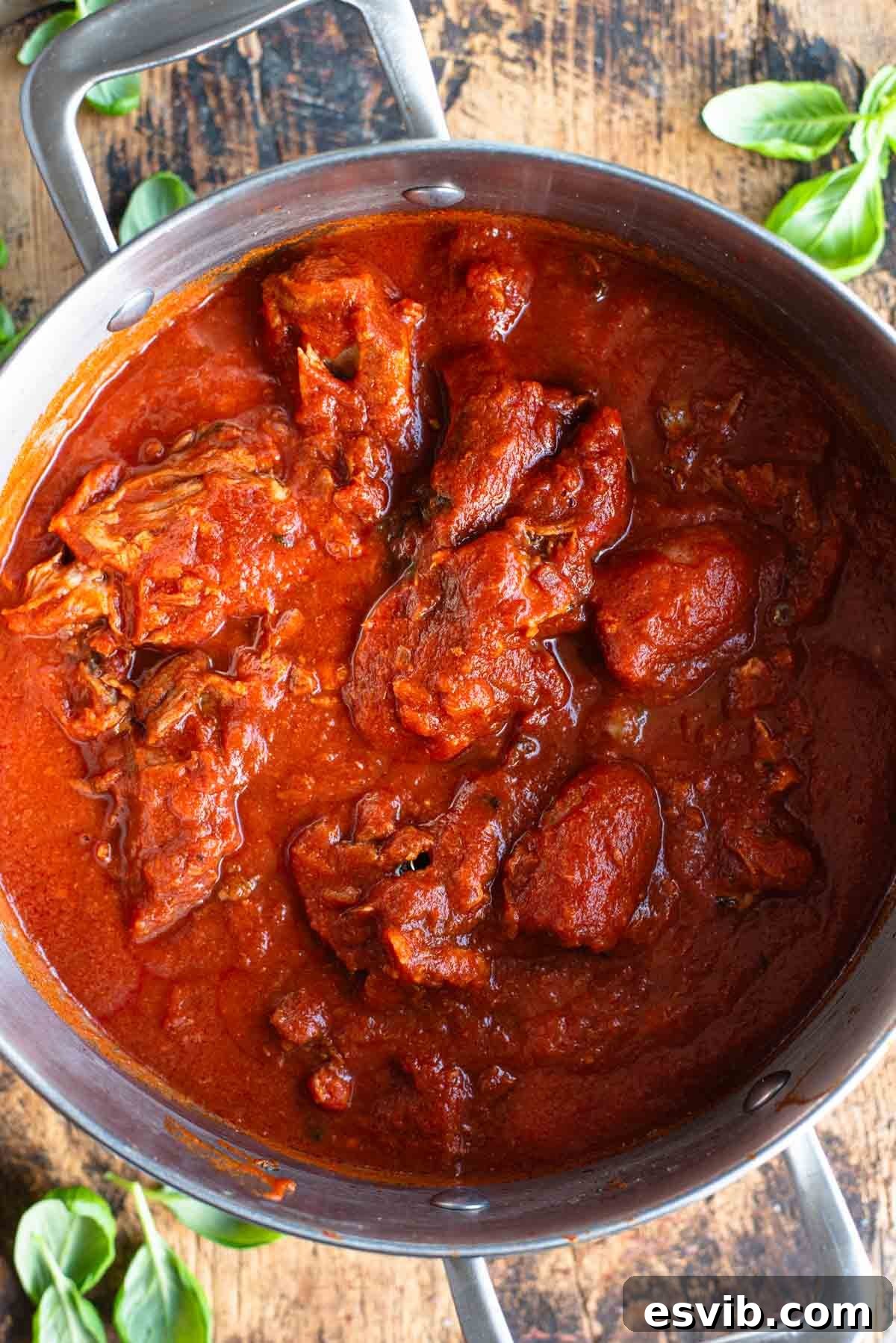
Ragu alla Napoletana is more than just a sauce; it’s a culinary institution, a beloved tradition that lies at the very heart of Neapolitan cuisine. This profoundly delicious ragu hails from the vibrant city of Naples, renowned for its rich flavors and passionate approach to food. Crafted from a carefully selected blend of different cuts of meat, including tender beef brisket, savory pork ribs, and aromatic Italian sausages, it’s gently simmered for hours with sweet onion, crushed tomatoes, and fragrant basil. The result is an incredibly rich, deeply flavorful, and unbelievably tender sauce that promises to transform your dining table into an authentic Italian experience. Perfectly suited for a cherished Sunday family meal, this versatile ragu offers a multitude of serving possibilities, making it a staple you’ll want to revisit time and again.
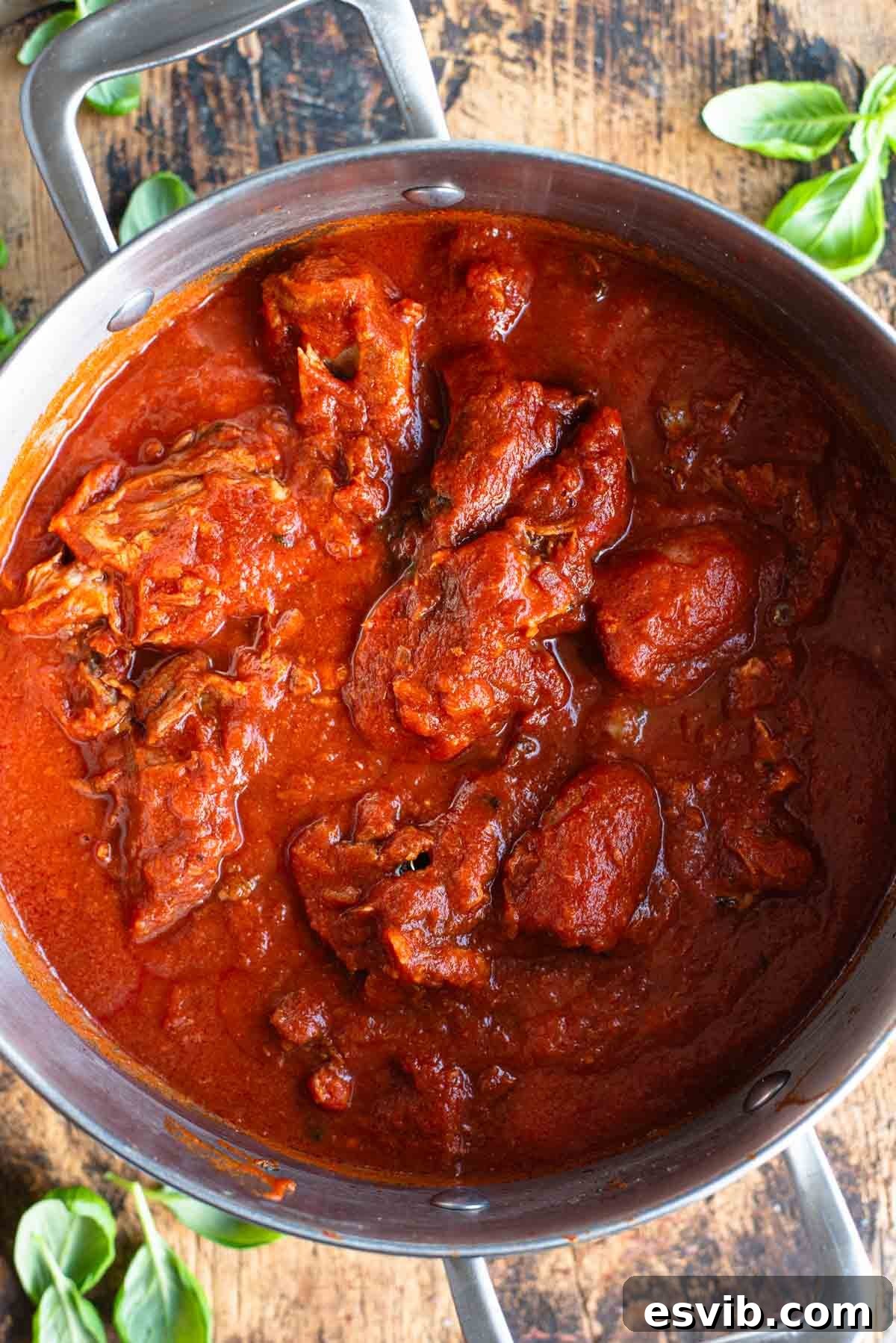
The Essence of Neapolitan Ragu: More Than Just a Sauce
We are thrilled to share this exceptional recipe, as it consistently delivers an unbelievably delicious outcome. Unlike many quicker sauces, Ragu alla Napoletana is a labor of love, a true “Sunday Gravy” that rewards patience with unparalleled depth. The magic truly begins with the careful selection of three distinct cuts of meat – each contributing its unique texture and flavor profile – which then slowly meld with the sweetness of ripe tomatoes, the freshness of basil, and the subtle aroma of onion. While the cooking time is substantial, the preparation itself is surprisingly straightforward, and the resulting ragu offers an incredible array of delightful uses beyond just pasta.
For generations, the tradition of serving Ragu alla Napoletana has unfolded in a specific, cherished manner, often forming the centerpiece of a glorious Sunday lunch. This method not only honors the rich history of the dish but also cleverly extends the enjoyment of the exquisite sauce and tender meats over multiple courses, making it a wonderfully economical and satisfying feast for the entire family.
Traditional Serving Suggestions for Ragu alla Napoletana
- First Course: Pasta with the Rich Sauce. After the extensive simmering, carefully remove all the cooked meat from the pot. The remaining luscious sauce, now infused with deep meaty flavors, is then served as a glorious first course. Toss it generously with your favorite pasta, ensuring it’s cooked perfectly al dente. A smaller, indulgent portion is typically served, allowing guests to savor the concentrated flavors of the ragu itself.
- Second Course: The Tender Meats. Following the pasta, the star of the show – the melt-in-your-mouth tender meats – are presented as the main course. Serve them with a drizzle of the glorious sauce and your choice of traditional Italian vegetable side dishes. Popular accompaniments often include vibrant sautéed greens (like broccoli rabe or spinach), perfectly roasted potatoes, or a simple fresh salad. This two-course approach is a hallmark of Neapolitan Sunday dining, transforming a single dish into a complete and unforgettable meal.
This traditional approach to serving Ragu alla Napoletana is deeply ingrained in Neapolitan culture, particularly for Sunday lunch. It’s an ingenious way to maximize the enjoyment of both the rich sauce and the succulent meat, effectively turning one masterful preparation into two distinct and satisfying courses. Depending on the number of people dining, the generous batch of sauce and meat can even extend to provide delicious components for up to three meals, making it a fantastic dish for meal prepping or entertaining.
Exploring Further Culinary Possibilities: Beyond Sunday Lunch
Beyond the classic two-course presentation, Ragu alla Napoletana lends itself beautifully to other traditional and equally indulgent uses:
- Dinner One: Ribs & Sausages, Dinner Two: Meatballs & Lasagne. For another delightful and traditional option, you can separate the meats. Enjoy the tender sausages and fall-off-the-bone pork ribs with your preferred sides for a sumptuous first dinner. Then, take the remaining beef brisket, which will be incredibly tender, and transform it into delectable meatballs. The entire batch of deeply flavored sauce can then be used to create an extraordinary Lasagne alla Napoletana, also famously known as Lasagne di Carnevale. This is a truly special, rich, and celebratory lasagna that is an absolute must-try for any lover of authentic Italian cuisine!
Below, you will find the complete, detailed recipe, complete with step-by-step photos to guide you visually through each stage of the cooking process. We poured our heart into perfecting this recipe, and we sincerely hope you cherish making and tasting this incredible Ragu alla Napoletana as much as we do!
Buon Appetito!
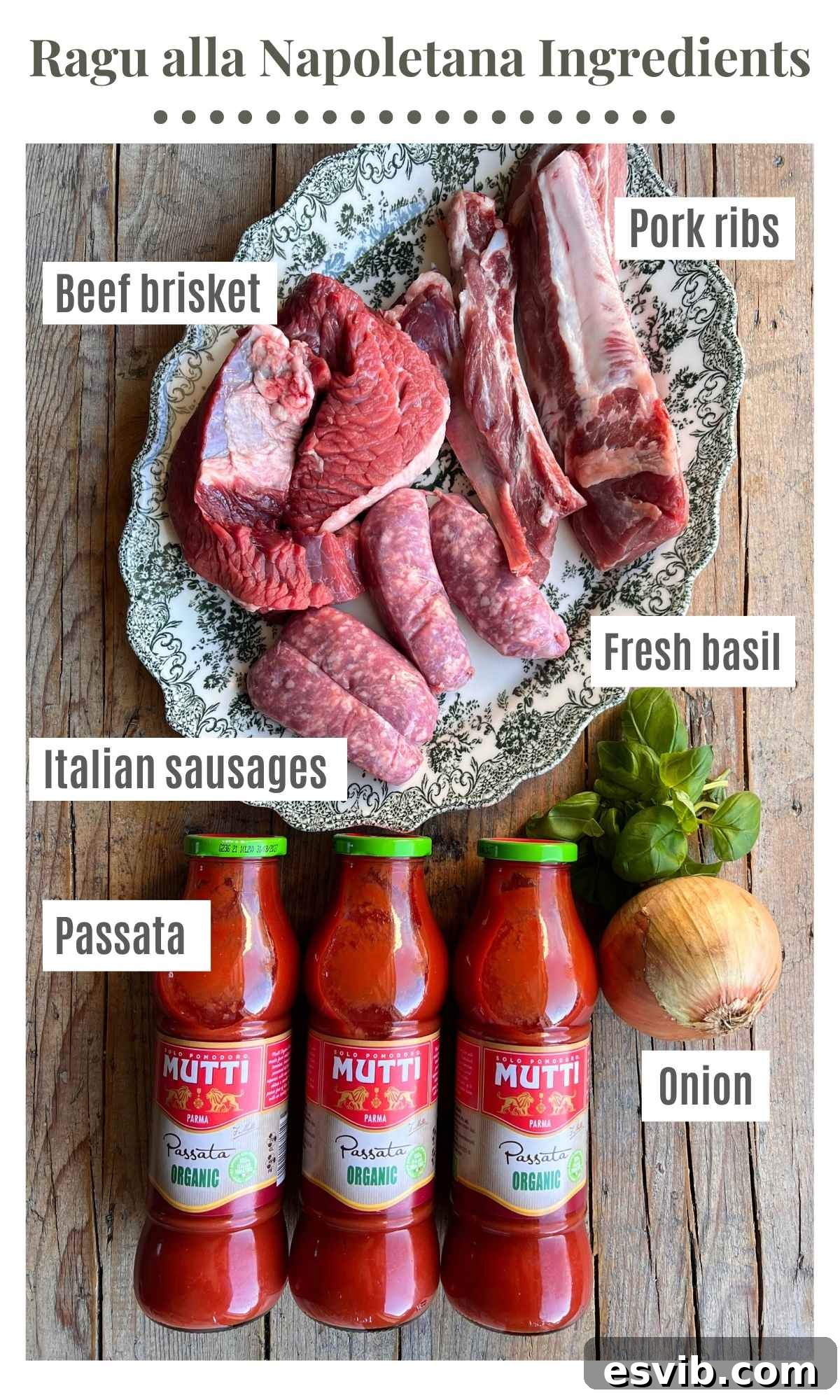
Essential Ingredients for Authentic Ragu alla Napoletana
Detailed Ingredient Notes and Expert Substitutions
Crafting an exceptional Ragu alla Napoletana begins with understanding the role of each key ingredient. Quality truly shines through in a dish with so few components.
- Meat Cuts – The Heart of the Ragu: We strongly recommend using a combination of beef brisket, savory Italian sausages, and succulent pork ribs. This trio provides an unparalleled depth of flavor and variety of texture. Beef brisket, a tougher cut, becomes incredibly tender and flavorful with slow cooking, making it perfect for shredding or forming into meatballs post-cooking. Pork ribs, especially bone-in, release incredible richness into the sauce and become wonderfully fall-off-the-bone tender. The Italian sausages, packed with herbs and spices, are absolutely essential; they contribute an intense, savory depth that truly defines this ragu. While we encourage this specific blend, you can experiment with other cuts like chuck steak (cut into large, hearty chunks) or pork shoulder. If substituting pork, always opt for a bone-in cut for maximum flavor extraction. The bone-in aspect is critical for that deep, authentic taste.
- Passata (Tomato Purée in the US) – The Soul of the Sauce: The quality of your tomatoes cannot be overstated for a sauce like this, where tomato is a primary flavor. Passata, a smooth, strained tomato purée, provides a silky base without seeds or skins, allowing the rich tomato flavor to shine. Using a high-quality brand will significantly impact the overall taste of your dish. Mutti is a personal favorite and a consistently reliable choice, but feel free to use any brand you know, trust, and love for its rich, sweet tomato flavor. Avoid passata with added sugar or excessive citric acid.
- Onion – The Aromatic Foundation: Finely chopped onion provides a sweet, aromatic base for the ragu. It slowly caramelizes and melts into the sauce, contributing to its rich complexity without being overtly noticeable in the final texture.
- Fresh Basil – A Touch of Mediterranean Brightness: Fresh basil added during the simmering process infuses the ragu with a distinct, sweet, and aromatic Mediterranean fragrance. It’s a simple addition that makes a world of difference.
- Olive Oil – The Cooking Medium: Use good quality extra virgin olive oil for browning the meats. It adds a subtle fruity note that complements the other ingredients beautifully.
- Salt – The Flavor Enhancer: Essential for seasoning the meats and the sauce, bringing out all the wonderful flavors. Adjust to taste throughout the cooking process.
Step-by-Step Guide to Crafting Your Neapolitan Ragu
Follow these detailed steps, accompanied by visual references, to create a truly unforgettable Ragu alla Napoletana.
- Prepare and Brown the Meats: Begin by heating a generous amount of olive oil in a large, heavy-bottomed pot or Dutch oven over medium-high heat. Once hot, carefully add the beef brisket, pork ribs, and Italian sausages. Working in batches if necessary to avoid overcrowding the pot, brown all sides of the meat thoroughly. This crucial step develops a rich, savory crust (the Maillard reaction) that locks in flavor and adds incredible depth to the ragu. Use tongs to gently move the meat around, ensuring even browning on all surfaces. Don’t rush this stage – a well-browned exterior is key to a flavorful sauce.
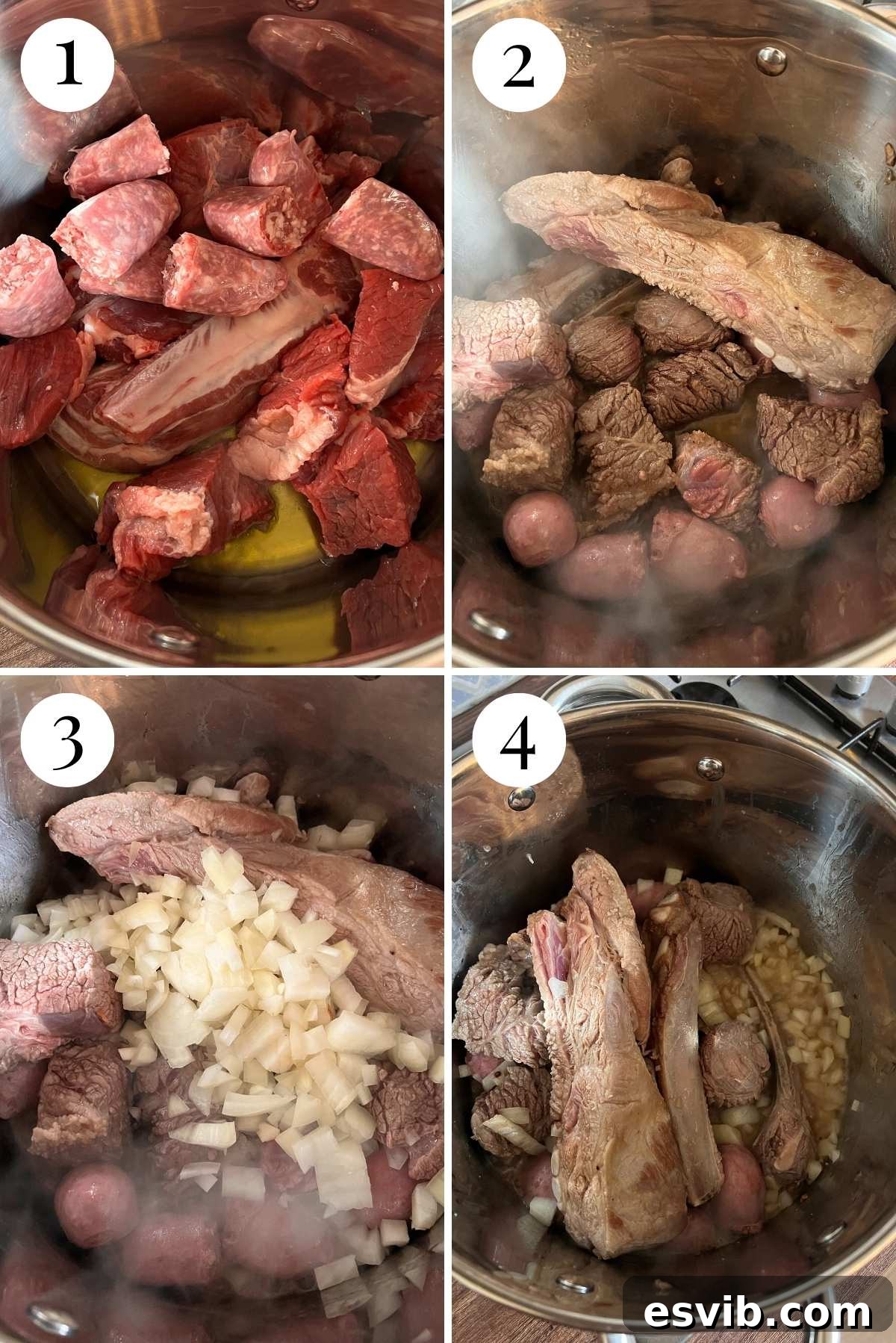
- Sauté the Onion: Once all the meat is beautifully browned, add the finely chopped onion to the pot. If there are any browned bits stuck to the bottom of the pot, use a wooden spoon to scrape them up as the onion softens – these bits are packed with flavor! Allow the onion to sauté gently until it becomes translucent and soft, which typically takes about 5-7 minutes. This step creates the aromatic foundation for your ragu.
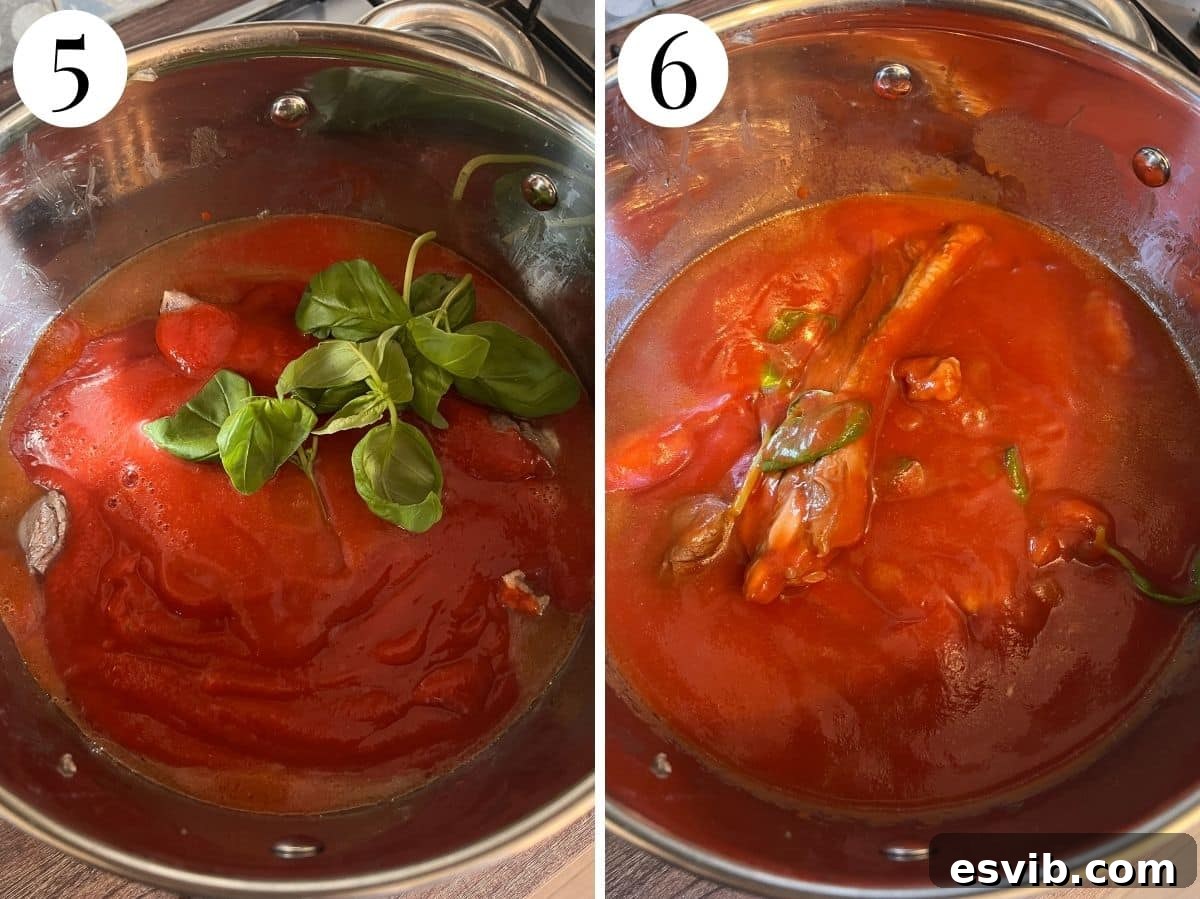
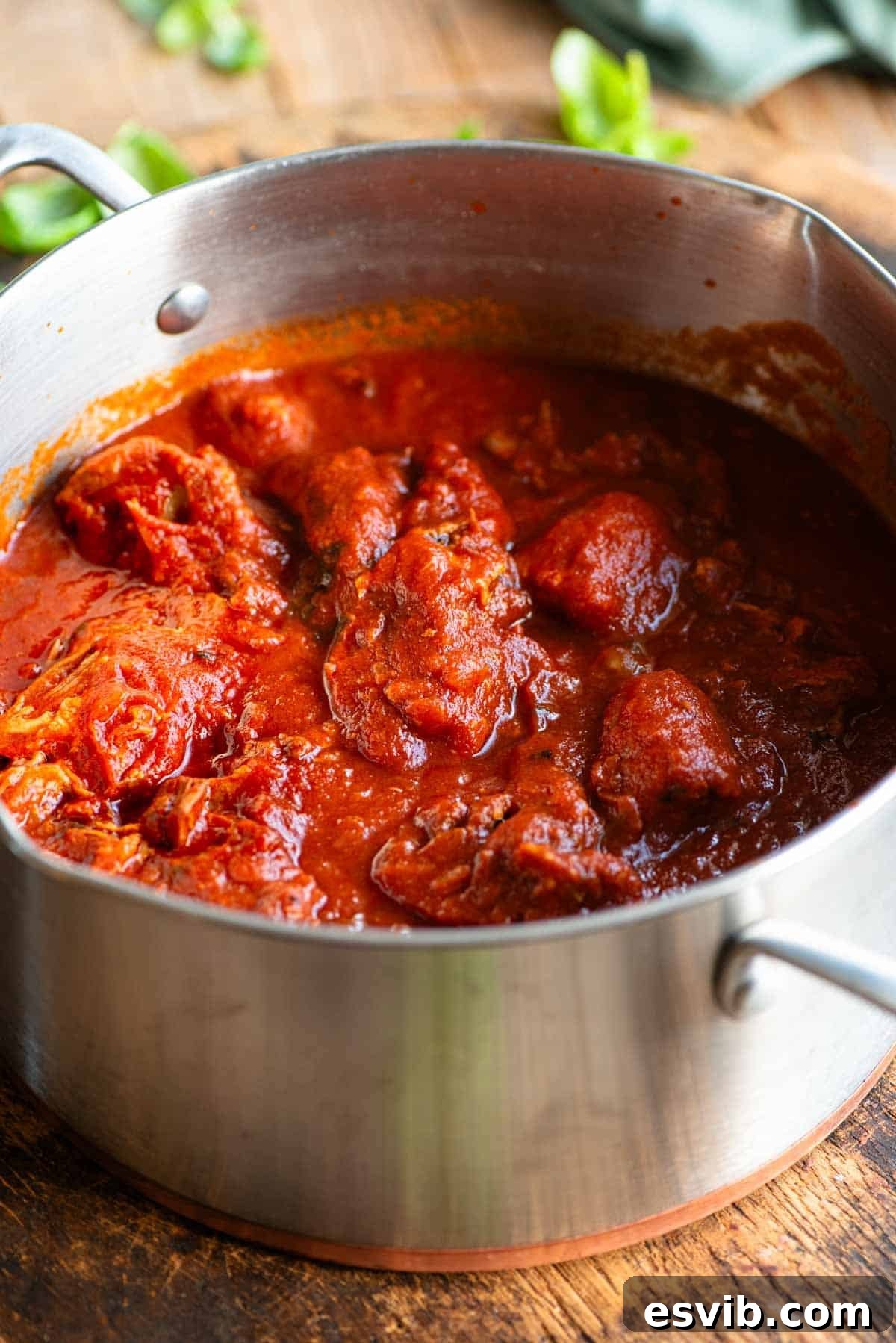
- Introduce Tomato and Basil for the Long Simmer: With the onion softened, pour in the high-quality tomato passata. Add a small handful of fresh basil leaves (you can lightly bruise them to release more aroma) and a generous pinch of salt. Stir everything together to combine. Bring the sauce to a gentle simmer, then reduce the heat to very low, cover the pot tightly with a lid, and let it cook for a minimum of 3 and a half hours. The key here is a slow, steady simmer – not a rolling boil – to allow the flavors to deepen and the meats to become incredibly tender. Check and stir the ragu occasionally (every 30-45 minutes) to prevent it from sticking to the bottom of the pot and ensure even cooking. If the sauce becomes too thick, you can add a splash of warm water or broth.
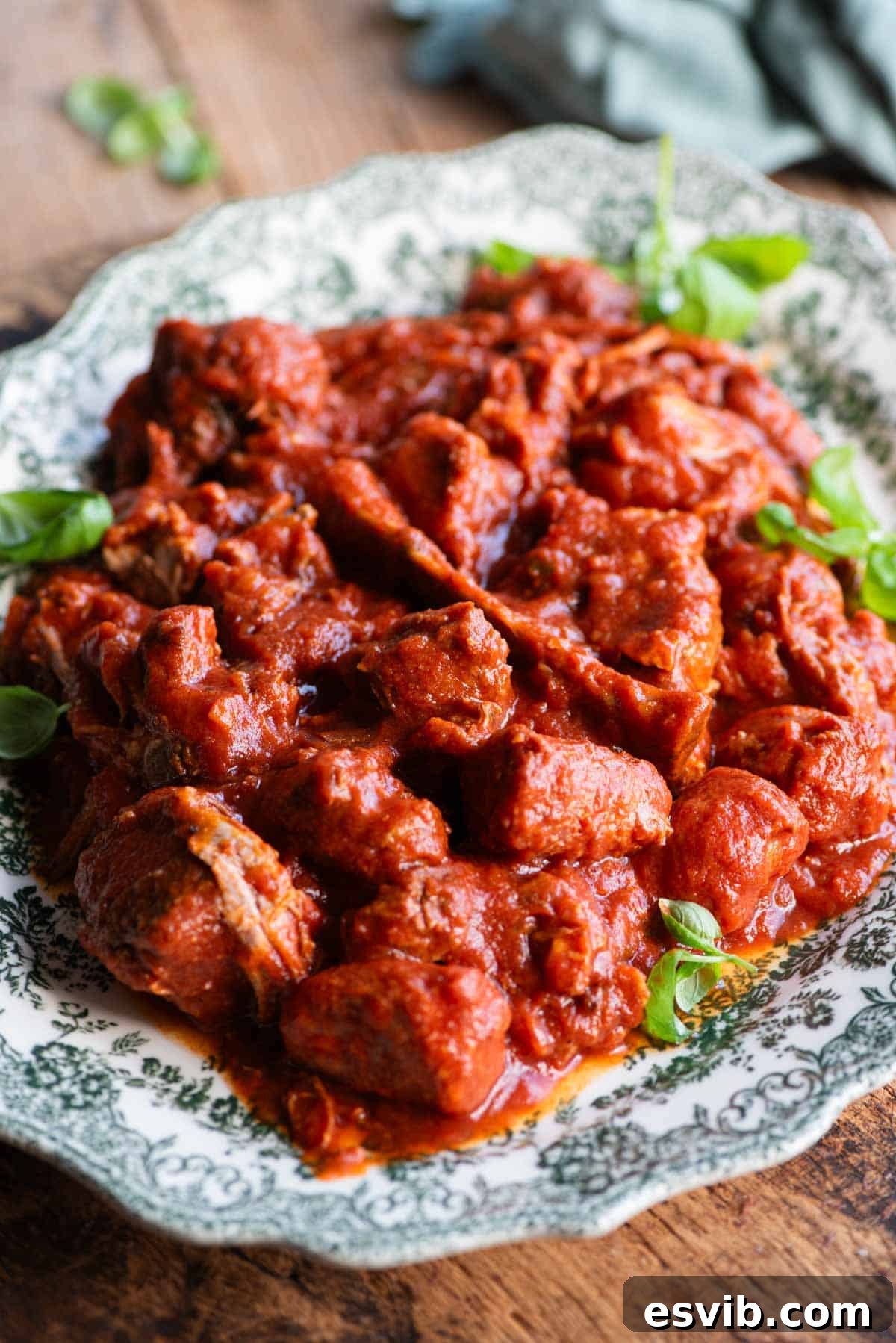
- Serve Your Magnificent Ragu: After the long, patient simmer, your Ragu alla Napoletana is ready to be enjoyed! The meat should be fork-tender and the sauce rich and deeply flavored. Carefully remove all the cooked meats from the pot and set them aside. The glorious sauce is now perfect for tossing with your favorite pasta. Serve a small portion of pasta with sauce as a first course. Then, serve the tender meats as a second course with a little extra sauce and your choice of delicious vegetable sides. Enjoy this authentic taste of Naples!
Expert Tips for the Perfect Neapolitan Ragu
Achieving the rich, authentic flavor of Ragu alla Napoletana is simpler with a few key techniques in mind:
- Don’t Rush the Browning: This is arguably the most critical step for flavor development. Ensure your pot is hot and the meat is not overcrowded. A deep, dark brown crust on the meat creates incredible depth through the Maillard reaction. This step alone contributes immensely to the ragu’s final taste.
- Low and Slow is Key: The magic of Neapolitan ragu happens during its long, gentle simmer. This extended cooking time at a low temperature tenderizes the tougher cuts of meat, allowing their flavors to fully infuse the sauce. Resist the urge to increase the heat or shorten the cooking time.
- Stir Occasionally: While the ragu simmers, give it a good stir every 30-45 minutes. This prevents the sauce from sticking to the bottom of the pot and burning, and also ensures all the meats are evenly bathed in the delicious tomato base.
- Taste and Adjust Seasoning: Always taste your ragu towards the end of the cooking process. You may need to add a little more salt or even a touch of freshly cracked black pepper to bring out its full potential. Remember that the flavors will have concentrated, so start with a conservative approach to salt.
- Make it Ahead: Ragu alla Napoletana, like many slow-cooked dishes, tastes even better the next day. The flavors continue to meld and deepen overnight, resulting in a more harmonious and satisfying sauce. Consider making it a day in advance for optimal flavor.
- Add Wine for Extra Complexity: Some traditional recipes call for adding wine after sautéing the onion and before adding the passata. If you choose to do so, use about 1/2 cup (125ml) of a good quality Italian red wine, preferably from the Campania region, where Naples is located. Let it simmer until almost fully evaporated to concentrate its flavors before adding the tomatoes.
Storing, Freezing, and Reheating Your Ragu
Ragu alla Napoletana is an excellent dish for meal prepping, as it stores and freezes beautifully.
- Storage in the Fridge: Once completely cooled, the ragu can be stored in an airtight container in the refrigerator for up to 3 days. This makes it perfect for enjoying over a couple of days, and as mentioned, it often tastes even better!
- Freezing for Later: For longer storage, Ragu alla Napoletana freezes exceptionally well. Once cooled, transfer the sauce (with or without the meat, depending on your preferred serving method) into freezer-safe containers or heavy-duty freezer bags. It can be stored in the freezer for up to 3 months. Thaw overnight in the refrigerator before reheating.
- Reheating Instructions: Reheat the ragu gently on the stovetop over low heat, stirring occasionally, until it is warmed through. If it seems too thick, you can add a splash of water or broth to reach your desired consistency.
More Italian Sunday Dinner Recipes You’ll Love
Pasta
Malloreddus alla Campidanese (Sardinian Sausage and Saffron Ragu)
Pasta
Authentic Lasagna Bolognese (Lasagne alla Bolognese)
Mains
Involtini alla Palermitana (Sicilian Beef Involtini)
Fresh Pasta
Lasagna di Carnevale (Neapolitan Lasagna)
If you’ve tried this Ragu alla Napoletana recipe or any other delicious recipe on our blog, we would absolutely love to hear from you! Please don’t hesitate to rate the recipe and share your experience in the comments section below – your feedback means the world to us! You can also follow us on Facebook, Instagram, and Pinterest for daily inspiration, or sign up for our Newsletter to receive our newest irresistible recipes directly in your inbox.
Step By Step Photos Above
Most of our recipes come with step by step photos, helpful tips and tricks to make it perfectly first time and even video!
Ragu alla Napoletana
★★★★★
By Emily
10
3
40
3
50
6 servings
Sign up for our newsletter to receive this recipe and weekly updates. Enter your email and agree to terms.
Ingredients
- 560 g (1 and 1/4 lbs) beef brisket, cut into large chunks
- 560 g (1 and 1/4 lbs) pork ribs
- 4 Italian sausages, cut in half (300g/10.5 oz)
- 1 onion, finely chopped
- 1680 g (6 and 1/3 cups) passata (tomato puree US)
- 1 small handful fresh basil
- 1-2 tablespoons olive oil
- Salt
Instructions
Prep
-
Finely chop the onion. Cut the Italian sausages in half. Cut the beef brisket into large, manageable chunks.
Make the Ragu
-
Heat 1-2 tablespoons of olive oil in a large, heavy-bottomed pot or Dutch oven over medium-high heat. Carefully add the beef brisket, pork ribs, and Italian sausages. Brown all sides of the meat thoroughly, working in batches if necessary to avoid overcrowding, which can steam the meat instead of browning it. This browning step is crucial for developing deep flavor.
-
Once all the meat is browned, add the finely chopped onion to the pot. Stir well, making sure the onion settles at the bottom to absorb the delicious browned bits. Sauté the onion until it is soft and translucent, about 5-7 minutes.
-
Next, pour in the passata (tomato purée). Add a generous pinch of salt and the fresh basil leaves. Stir everything to combine. Bring the ragu to a gentle simmer, then reduce the heat to very low, cover with a lid, and let it simmer gently for 3 and a half hours. Throughout this long simmer, make sure to check the ragu every 30-45 minutes and give it a stir to prevent it from sticking to the bottom of the pot.
-
After the simmering time, turn off the heat. The ragu is now ready. Remove the tender meats from the sauce and serve as preferred. Refer to our detailed serving suggestions in the notes section above for traditional ways to enjoy this incredible dish.
Notes
- Add Wine – For an added layer of flavor and complexity, some authentic recipes incorporate wine. After sautéing the onion, you can add about 1/2 cup (125ml) of a dry Italian red wine, preferably from the Campania region. Let it cook down until almost completely evaporated before adding the passata.
- Serving Options – The classic Neapolitan tradition involves removing the tender meats after cooking and serving the rich, flavorful sauce with pasta as a first course. The succulent meats are then enjoyed as a main course, accompanied by vegetable sides. Alternatively, you can shred or break up the meat directly into the sauce and serve it all together with pasta, or use the entire batch to create a spectacular Lasagna Napoletana.
- Meat Cuts Used – While there are minor variations, pork ribs and Italian sausages are almost always integral to Ragu alla Napoletana due to their flavor contribution. Feel free to substitute the beef brisket with other cuts like pork shoulder or beef topside (eye of round), ensuring they are suitable for long, slow cooking. Traditional Beef Braciole are also frequently used in this sauce.
- Meat Weight – Don’t worry if your meat cuts weigh slightly less or more than the amounts specified in the recipe. The recipe is forgiving, and the flavors will still be outstanding.
- Prep in Advance – The true beauty of this ragu is that its flavors deepen and improve overnight. Making the ragu a day in advance allows all the ingredients to meld wonderfully, resulting in an even more delicious sauce.
- Storage – Once your ragu has cooled completely, store it in an airtight container in the refrigerator for up to 3 days. For longer preservation, it can be frozen for up to 3 months. Thaw thoroughly in the refrigerator before gently reheating.
Helpful Information for All Our Recipes
- We consistently use extra virgin olive oil in all our recipes unless a different type is explicitly stated.
- For canned or jarred tomatoes, we always recommend Cirio or Mutti brands. Their superior quality ensures the best possible results and flavor in your dishes.
- All vegetables specified are assumed to be medium-sized unless otherwise noted in the recipe.
- All recipes published on this blog are meticulously tested and developed using a fan (convection) oven.
- To understand how our nutrition is calculated, please refer to our privacy policy.
- Discover our must-have Italian Pantry Staples to elevate your home cooking.
- Explore all our recommended Essential Kitchen Tools for Italian Cooking for a well-equipped kitchen.
Nutrition
Per Serving (Approximate):
- Calories: 710 kcal
- Carbohydrates: 27g
- Protein: 47g
- Fat: 47g
- Saturated Fat: 15g
- Polyunsaturated Fat: 6g
- Monounsaturated Fat: 20g
- Trans Fat: 0.3g
- Cholesterol: 173mg
- Sodium: 589mg
- Potassium: 1931mg
- Fiber: 6g
- Sugar: 14g
- Vitamin A: 1474 IU
- Vitamin C: 31mg
- Calcium: 79mg
- Iron: 8mg
Nutrition information is automatically calculated and should only be used as an approximation. Individual results may vary based on specific ingredients and preparation methods.
Did you try this recipe?
Leave a comment below!