
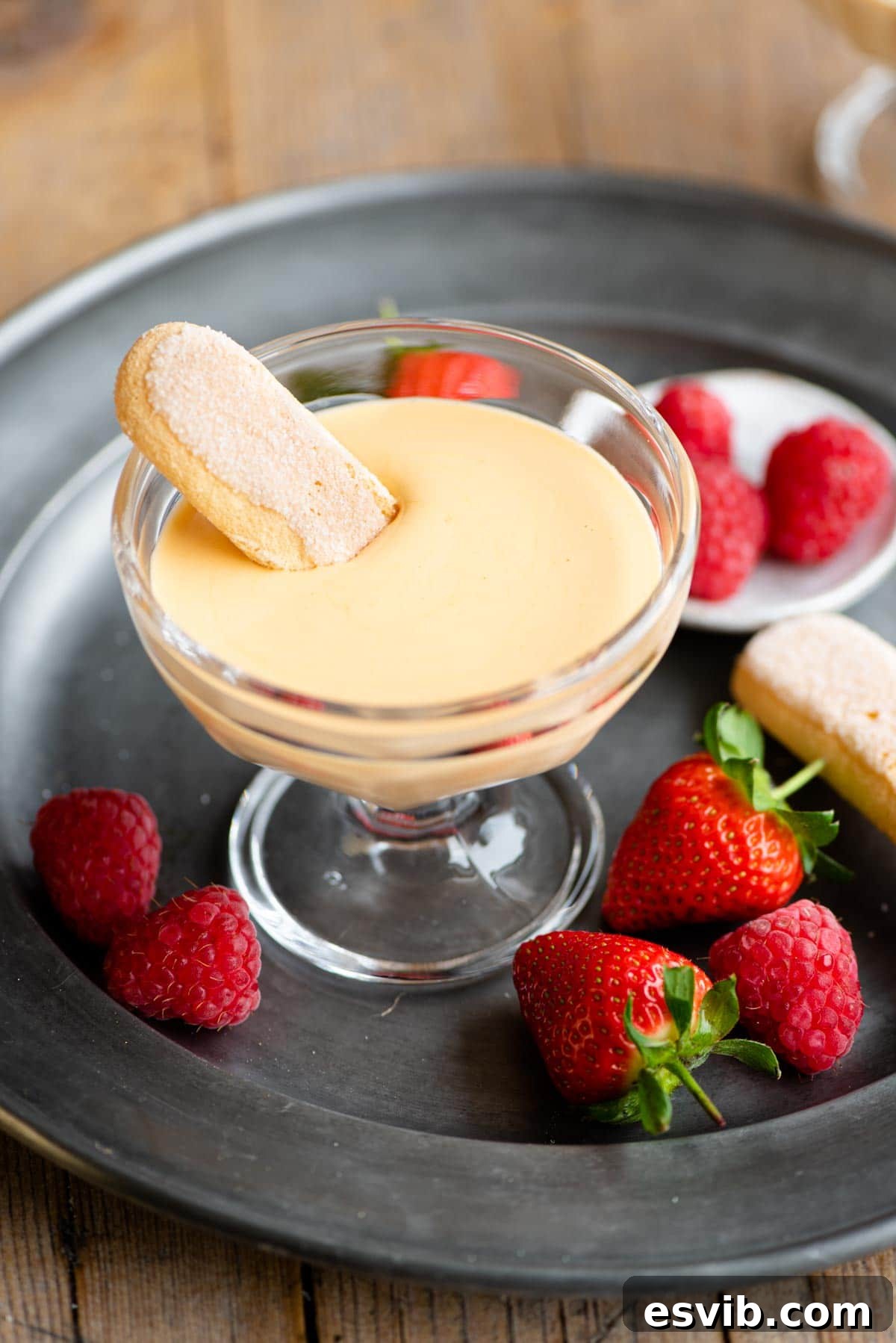
Indulge in the rich, sweet, and incredibly creamy delight of Zabaglione, a quintessential Italian dessert that captivates with its simplicity and elegance. This luxurious custard, made from just three core ingredients – egg yolks, sugar, and Marsala wine – transforms into a velvety dream, perfect for any occasion. Whether you serve it warm with delicate Savoiardi biscuits for dunking or chilled with a medley of fresh berries, Zabaglione promises an unforgettable taste of Italy.
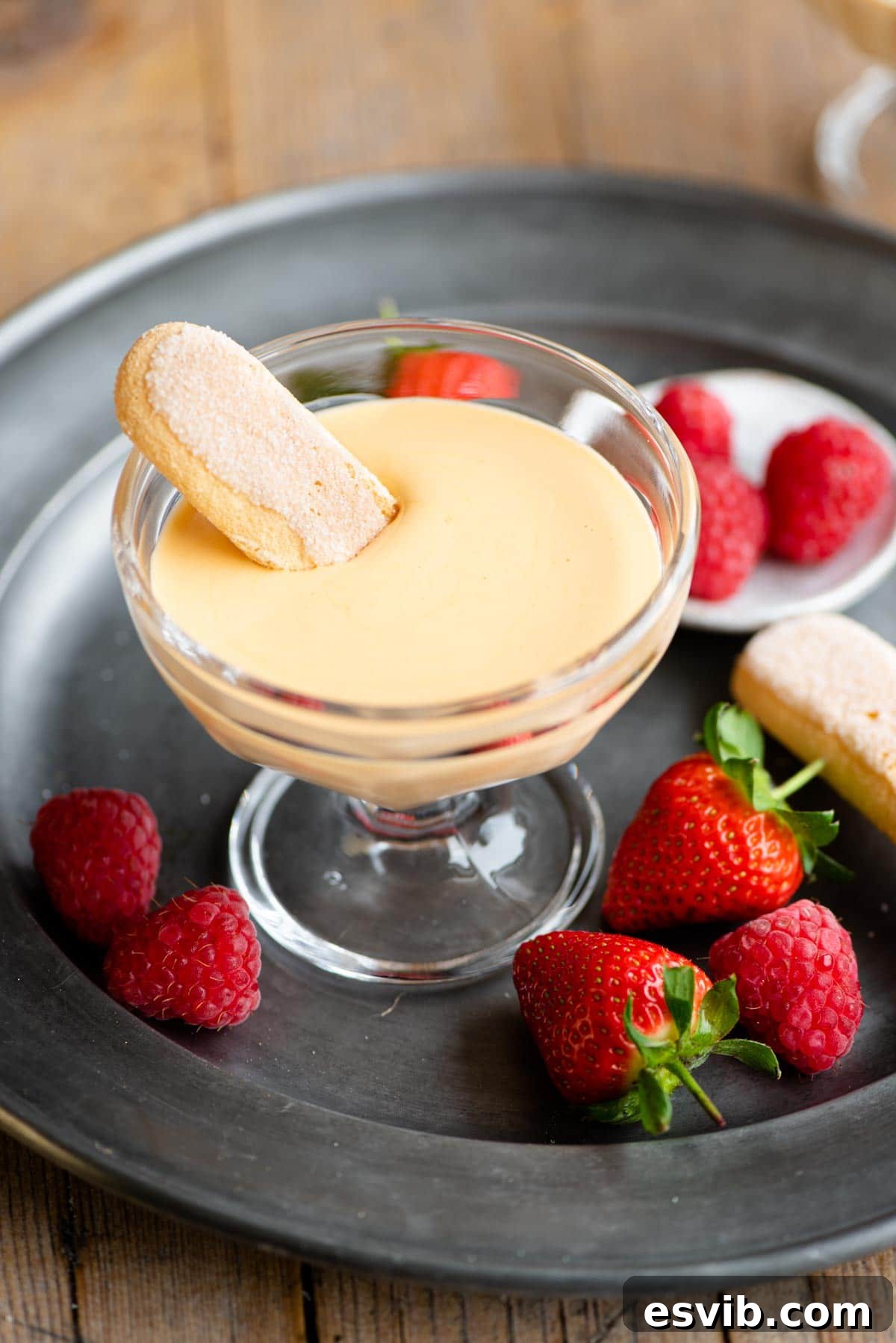
A Taste of Italian Tradition: The Allure of Zabaglione
Zabaglione, often spelled Zabaione, holds a special place in Italian culinary history, transcending its current status as a celebrated dessert. Originally, this concoction was less of a sweet treat and more of a comforting home remedy, lovingly prepared by Italian grandmothers (Nonnas) for those feeling under the weather. The rich egg yolks, packed with iron and vital nutrients, were believed to impart energy and aid the body’s recovery, making it a soothing tonic for convalescents.
Over centuries, Zabaglione evolved from a medicinal elixir into a beloved staple of Italian patisserie. Its remarkable versatility allows it to be enjoyed in various ways – served warm, it offers a comforting embrace, while chilled, it provides a refreshing counterpoint, particularly during warmer months. This transformation speaks to its enduring appeal and its profound connection to Italian culture, where food is often intertwined with care, family, and tradition.
Today, Zabaglione is recognized globally as a sophisticated yet approachable classic Italian dessert. Its preparation is surprisingly straightforward, relying on simple pantry staples to create a dessert that tastes far more intricate than its ingredient list suggests. This harmonious blend of egg yolks, sugar, and sweet Marsala wine yields a light, airy, and deliciously sweet custard that effortlessly elevates any meal, whether served simply or as part of a more elaborate dessert presentation.
Why Zabaglione is a Must-Try Dessert
There’s a reason why Zabaglione has captivated palates for centuries: its unique combination of simplicity, elegance, and profound flavor. It stands apart from other custards due to its distinct texture and the fragrant warmth imparted by Marsala wine. If you’re looking to explore the world of Italian desserts, Zabaglione offers an accessible entry point that delivers exceptional results.
- Effortlessly Elegant: Despite its humble ingredients, Zabaglione exudes sophistication. Its pale, golden hue and airy texture make it a visually appealing dessert that impresses guests without demanding complex culinary skills.
- Incredibly Versatile: Enjoy it warm, straight from the double boiler, for a comforting experience, or chill it for a refreshing treat. It pairs beautifully with a wide array of accompaniments, from simple cookies to fresh fruit.
- Simple Ingredients, Big Flavor: With just egg yolks, sugar, and Marsala, the quality of each ingredient shines through. This minimalist approach allows the rich, distinct flavor of the Marsala to be the star, balanced by the sweetness and creaminess of the eggs and sugar.
- Quick to Prepare: Once you understand the technique, Zabaglione comes together in under 15 minutes, making it an ideal last-minute dessert for entertaining or a spontaneous indulgence.
- A Taste of Authentic Italy: Making Zabaglione connects you directly to a cherished Italian tradition, offering a genuine culinary experience that evokes the warmth of an Italian home.
See the recipe below including notes on ingredients, step by step photos, tips, variations and a video tutorial. For the full printable recipe scroll to the bottom or click the recipe link below.
Mastering the Art of Zabaglione: Key Ingredients
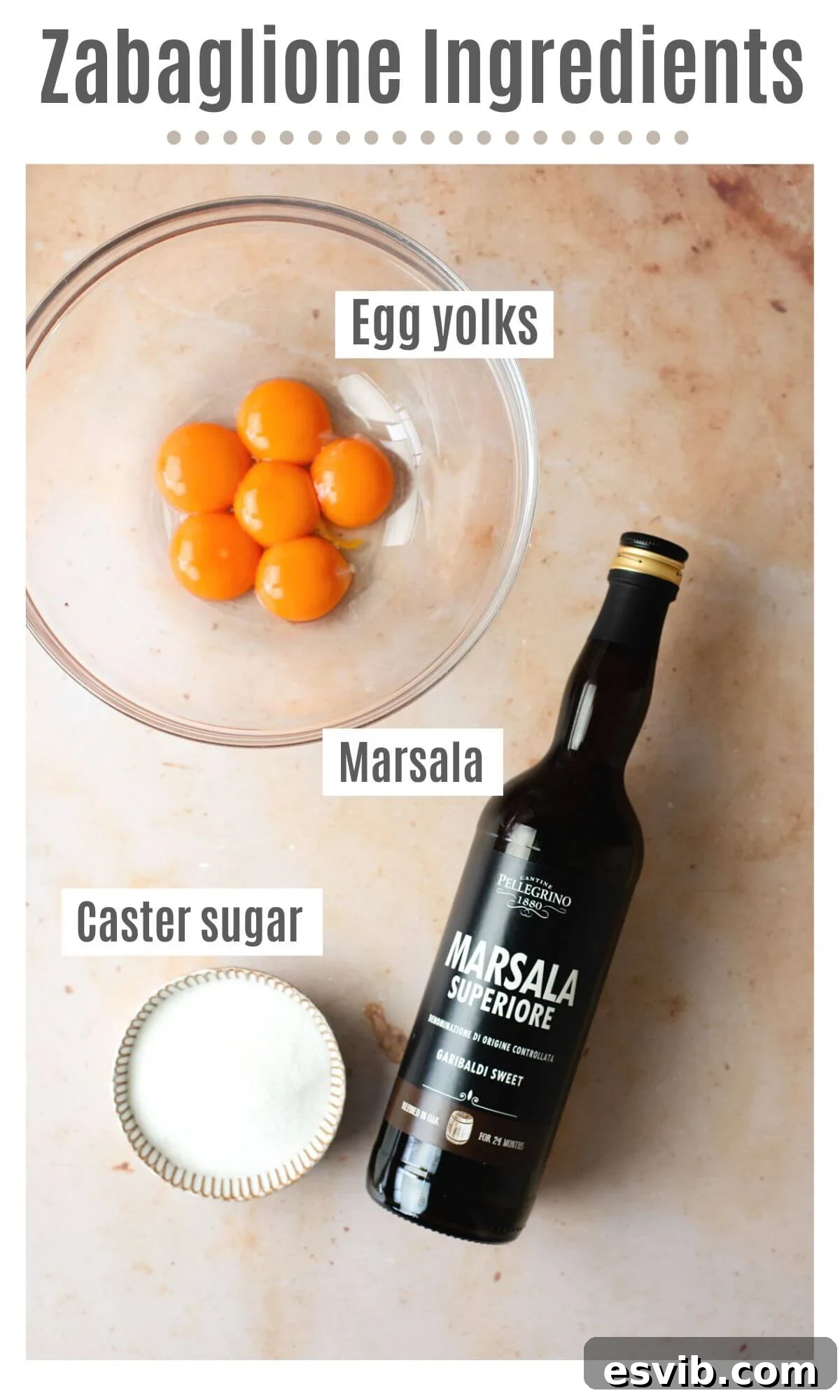
The magic of Zabaglione lies in the quality and careful combination of its few ingredients. Each component plays a crucial role in achieving the desired texture and flavor profile.
Egg Yolks
- Use fresh, large egg yolks for the best results. The yolks are the backbone of this creamy custard, providing richness and structure.
- Carefully separate the yolks from the whites. Save the egg whites for other delightful recipes like Ricciarelli cookies, meringues, or omelets. Precision in separation is key, as even a tiny bit of white can affect the emulsion.
- The number of egg yolks determines the batch size. A general rule of thumb is 1 egg yolk per serving.
Sugar
- Caster Sugar (Superfine): This is highly recommended as its fine granules dissolve quickly and evenly, ensuring a smooth, grit-free custard.
- Granulated Sugar: Can be used as an alternative if caster sugar is unavailable. However, you might need to whisk slightly longer to ensure it fully dissolves and prevents a grainy texture.
- The sugar not only sweetens but also helps to stabilize the egg yolks during the cooking process.
Marsala Wine
- Marsala: This fortified wine from Sicily is the traditional and quintessential ingredient for authentic Zabaglione. Its sweet, nutty, and sometimes caramelized notes are what give Zabaglione its distinctive flavor. Look for “Sweet Marsala” or “Marsala Superiore Dolce” for the best results.
- Alternative Liqueurs: If Marsala is not available or you prefer a different flavor profile, you can experiment with other sweet liqueurs such as Vin Santo, sweet sherry, rum, or even brandy. If using a less sweet liqueur, you might need to slightly increase the sugar content to maintain balance. Adjust the amount by 2-3 tablespoons if the alcohol content is higher or if the liqueur is drier.
- For a non-alcoholic version, espresso coffee is an excellent substitute, offering a rich depth of flavor. Other options include fruit juices (like grape or apple), or even a non-alcoholic sweet syrup, though the characteristic Marsala flavor will be absent.
Step-by-Step Guide: How to Make Authentic Italian Zabaglione
Preparation Essentials!
- Set up a Bain-Marie (Double Boiler): Choose a large saucepan and fill it halfway with water. Select a heatproof mixing bowl that can comfortably sit on top of the saucepan without touching the simmering water. This indirect heat is crucial for gentle cooking, preventing the eggs from scrambling.
- Separate Eggs Meticulously: Carefully separate your egg yolks from the whites. Place the yolks directly into your large heatproof mixing bowl. Store the egg whites in an airtight container in the fridge for future use – they can be frozen too!
Making Zabaglione is a surprisingly simple yet rewarding process. The key is constant whisking over gentle heat to create a light, airy, and creamy custard.
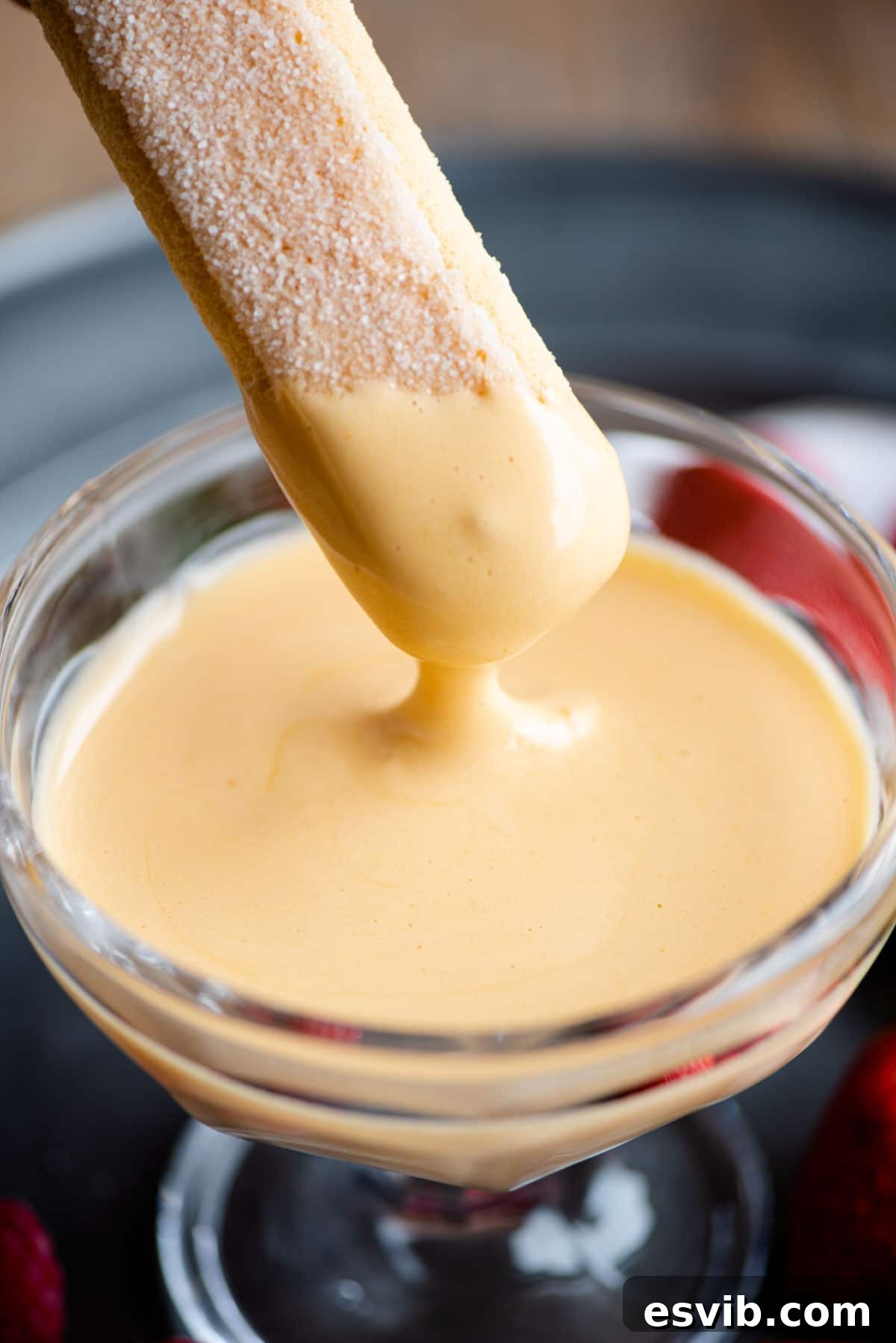
Once your Zabaglione reaches its perfect creamy consistency, pour it immediately into individual serving glasses or bowls. Serve it warm with traditional Savoiardi (ladyfinger) cookies for dipping, or alongside a vibrant medley of fresh fruits. For a refreshing twist, you can chill it in the fridge until ready to serve, perhaps topped with a dollop of freshly whipped cream. The choice is yours, but every spoonful promises a delightful experience.
Essential Tips for Perfect Zabaglione
Achieving the perfect Zabaglione consistency – light, frothy, and thick – requires attention to a few key details. Follow these tips to ensure your dessert turns out flawless every time, preventing common pitfalls and maximizing flavor.
- Remember the Golden Ratio: For every medium egg yolk, the traditional ratio is 1 tablespoon of sugar and 1 tablespoon of Marsala wine. This creates a balanced flavor and ideal consistency. If you prefer less alcohol, you can reduce the Marsala to 1/2 tablespoon per yolk, adjusting for taste.
- Utilize a Large Heatproof Bowl: As the egg and sugar mixture is whisked over heat, it will significantly increase in volume, potentially doubling or even tripling in size. Using a bowl that is adequately large and made of heatproof material (like glass or stainless steel) is crucial to prevent overflow and ensure even cooking.
- Ensure the Bowl Never Touches the Water: This is perhaps the most critical rule for a successful Zabaglione. The aim is to cook the eggs gently with steam, not direct boiling water. If the bottom of your mixing bowl makes contact with the simmering water, the direct heat will cook the egg yolks too rapidly, leading to scrambled eggs instead of a smooth custard. Maintain a small gap between the water and the bowl.
- Whisk Continuously and Vigorously: Consistent movement is key to emulsifying the ingredients and incorporating air, which gives Zabaglione its signature light and frothy texture. Do not let the egg mixture sit for more than a few seconds without whisking, as this will allow the heat to set the eggs, causing them to scramble or form lumps. A hand whisk is traditional, but an electric hand mixer can make the process easier and faster, especially for larger batches.
- Know When It’s Ready (The Ribbon Test): The Zabaglione is perfectly cooked when it has doubled in volume, turned pale yellow, and thickened to a point where it forms “ribbons.” To test, lift the whisk and let the mixture fall back into the bowl. If it leaves a trail (a “ribbon”) that holds its shape for a few seconds before slowly dissolving, it’s ready. If it disappears immediately, continue whisking over the heat.
Zabaglione Variations and Creative Twists
While the classic Marsala Zabaglione is undeniably delicious, this versatile custard base lends itself beautifully to various adaptations. Don’t be afraid to experiment with different flavors and ingredients to suit your personal preferences or the occasion.
- Alcoholic Variations:
- Port Wine: For a richer, deeper flavor, substitute Marsala with a good quality Port wine.
- Cognac or Brandy: These spirits add a robust, sophisticated note, perfect for a more adult dessert.
- Rum: A dark rum can impart a wonderfully aromatic and slightly caramel flavor.
- Vin Santo or Moscato d’Asti: For a lighter, sweeter, and more aromatic Italian wine flavor, these are excellent choices.
- Non-Alcoholic Alternatives:
- Espresso Coffee: A popular and delicious alternative, replacing Marsala with strong, freshly brewed espresso. This creates a coffee Zabaglione that is both rich and invigorating.
- Fruit Juices: For a family-friendly version, use grape juice, apple juice, or even orange juice. Ensure the juice is sweet enough, or adjust sugar levels accordingly.
- Vanilla Extract: Adding a teaspoon of high-quality vanilla extract can enhance the flavor of a non-alcoholic version significantly.
- Flavor Enhancements:
- Citrus Zest: A touch of finely grated lemon or orange zest can add a bright, fragrant lift to the custard.
- Spices: A tiny pinch of cinnamon, nutmeg, or cardamom can introduce subtle warmth and complexity.
- Chocolate: For a decadent treat, fold in a small amount of melted dark chocolate at the very end of the cooking process for a chocolate Zabaglione.
Serving Suggestions: Enjoying Your Zabaglione
Zabaglione’s charm extends to its incredible versatility in serving. Whether you prefer it hot or cold, with simple accompaniments or as part of a grander dessert, there are countless ways to savor this Italian delicacy.
- Traditional Warm Serve: The most classic way to enjoy Zabaglione is served warm, immediately after preparation, in small elegant glasses or cups. The warmth enhances its aromatic qualities. Accompany it with light and airy Savoiardi biscuits (ladyfingers) for dipping – their crisp texture provides a delightful contrast to the creamy custard.
- Fresh Fruit Medley: The richness of Zabaglione beautifully complements the natural sweetness and slight tartness of fresh fruits. Serve it warm over a colorful array of seasonal berries such as strawberries, raspberries, blueberries, or sliced peaches. The combination is a vibrant feast for both the eyes and the palate.
- Chilled and Refined: For a refreshing dessert, chill your Zabaglione in the fridge for at least an hour before serving. A small dollop of freshly whipped cream on top adds an extra layer of indulgence and a delightful textural element.
- With Italian Cakes and Pastries:
- During the festive season, drizzle warm Zabaglione over thick slices of Panettone or Pandoro, transforming these traditional Christmas cakes into an extraordinary dessert experience.
- For an even more elaborate creation, mix chilled Zabaglione with an equal amount of whipped cream or crema pasticcera (Italian pastry cream). This lightened mixture makes an exquisite filling for tarts, cakes, éclairs, or crepes.
- Espresso Infusion: For coffee lovers, a delightful variation involves mixing a shot of strong, freshly brewed espresso into the warm Zabaglione. This creates a unique dessert with a delightful coffee kick that perfectly balances the sweetness of the custard.
Common Questions About Zabaglione
How do I know the Zabaglione is ready?
The Zabaglione is ready when it has significantly increased in volume, turned pale yellow, and is thick enough to form a “ribbon.” When you lift the whisk, the mixture should fall back into the bowl in a thick stream, leaving a trail (a ribbon) on the surface that holds its shape for a few seconds before slowly disappearing. If it vanishes immediately, continue whisking over heat.
What can I use instead of alcohol?
If you prefer a non-alcoholic version, freshly brewed strong espresso coffee is a fantastic and popular substitute for Marsala. Other options include sweet grape juice, apple juice, or even a non-alcoholic sweet dessert wine alternative, though the unique Marsala flavor will be absent.
Zabaglione Vs. Custard, what’s the difference?
The primary difference lies in their ingredients and cooking methods. Traditional custard is typically made with egg yolks, sugar, and milk (or cream), and is often cooked directly in a saucepan or baked. Zabaglione, on the other hand, contains no milk or cream; it’s made solely with egg yolks, sugar, and wine (usually Marsala) and is always cooked gently over a bain-marie (double boiler).
Can I make Zabaglione ahead of time?
While Zabaglione is best served immediately for its peak airy and warm texture, it can be made ahead of time and chilled. If serving chilled, it will thicken slightly and become more dense, resembling a mousse. It will keep well in an airtight container in the fridge for up to 3 days. Whisk it gently before serving if you want to restore some of its airiness.
How can I prevent the eggs from scrambling?
To prevent scrambling, ensure your mixing bowl never touches the simmering water in the saucepan below; the eggs should cook by steam only. Also, continuous and vigorous whisking is crucial. Do not stop whisking for more than a few seconds, as stationary eggs will quickly overcook and curdle.
Storing Leftover Zabaglione
While Zabaglione is truly at its best when served fresh and warm, you can certainly store any leftovers for later enjoyment. Once prepared, allow the Zabaglione to cool completely to room temperature. Then, transfer it to an airtight container and refrigerate promptly. It will remain delicious for up to 3 days in the refrigerator. Note that its texture will become denser and more pudding-like when chilled, losing some of its initial frothy lightness. A quick whisk before serving can help revive some of its airiness.
Step By Step Photos Above
Most of our recipes come with step by step photos, helpful tips and tricks to make it perfectly first time and even video!
Italian Zabaglione Recipe
By Emily
5
10
15
4 – 6 servings
Ingredients
- 6 medium egg yolks or 5 large egg yolks
- 6 tablespoons caster sugar, (90g) can also use granulated sugar
- 6 tablespoons Marsala, (90ml)
Instructions
-
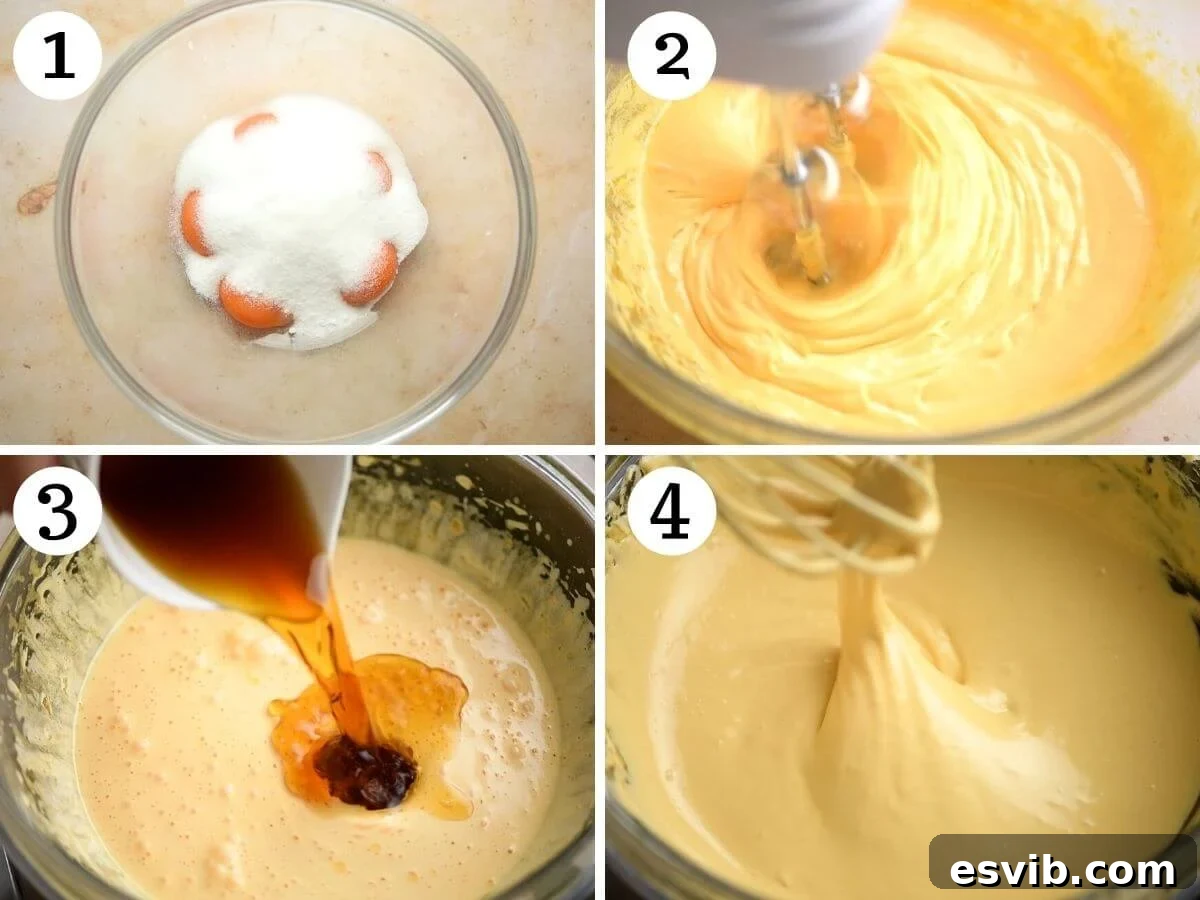
Heat a large pot halfway with water. Your mixing bowl should be able to sit on top of it without touching the water.
-
Add the egg yolks and sugar to a large mixing bowl. Whisk together with an electric whisk until pale and thick.
-
Place the bowl on top of the pot of hot water making sure the bowl doesn’t touch the water.
-
Add the Marsala and continuously mix with a hand whisk until the mixture has doubled in size and thickened into a custard (this can take 5-10 minutes).
-
The Zabaglione is ready when you can draw a ribbon that holds its shape for a few seconds. If it disappears immediately, it’s not ready, turn up the heat and keep whisking.
-
Once ready, pour into serving glasses and serve immediately with Savoiardi biscuits or fruit or chill in the fridge until ready to serve.
Notes
- Remember the ratio – for every medium egg yolk add 1 tablespoon of sugar and 1 tablespoon of Marsala. If you don’t want as much alcohol you can reduce it to 1/2 tablespoon.
- Use a large heatproof bowl – the mixture will double in size when heated so it’s important to use a bowl that will be big enough.
- Don’t let the bowl touch the water – the water will get very hot so don’t let the bowl touch the water or the eggs will overcook.
- Keep stirring – don’t let the egg mixture sit for more than a few seconds or the eggs will start to scramble.
- Add espresso – you can also add a shot of espresso as well as or instead of the Marsala.
- Serve warm or chilled from the fridge. The Zabaglione will keep well in the fridge for up to 3 days.
Helpful Info for All Recipes
- I always use extra virgin olive oil in all of my recipes unless stated otherwise
- When I use canned or jarred tomatoes of any kind I always use Cirio or Mutti brands for the best results and flavour.
- All vegetables are medium sized unless stated otherwise
- All recipes are tested and developed using a fan (convection) oven
- Find out more about how nutrition is calculated.
- Check out our must have Italian Pantry Staples.
- You can also find all our Essential Kitchen Tools for Italian Cooking.
Nutrition
Nutrition information is automatically calculated, so should only be used as an approximation.
Did you try this recipe?
Leave a comment below!
More Traditional Italian Desserts You’ll Love
If you’ve enjoyed the sweet and creamy indulgence of Zabaglione, you’re sure to appreciate these other timeless Italian dessert classics. Each recipe brings its own unique flavor and heritage, perfect for expanding your Italian culinary repertoire.
- Tiramisu – Authentic Recipe!
- Italian Crostata (Jam Tart)
- Italian Ricotta Doughnuts
- Chocolate Budino (Budino al Cioccolato)
- Torta Caprese (Flourless Italian Chocolate Cake)
If you’ve tried this Zabaglione Recipe or any other recipe on the blog, please don’t forget to rate the recipe and let me know how you got on in the comments below! I truly love hearing from you and seeing your culinary creations. You can also FOLLOW US on FACEBOOK, INSTAGRAM and PINTEREST for more delicious Italian food inspiration, or sign up to our NEWSLETTER to receive our latest recipes directly in your inbox.