
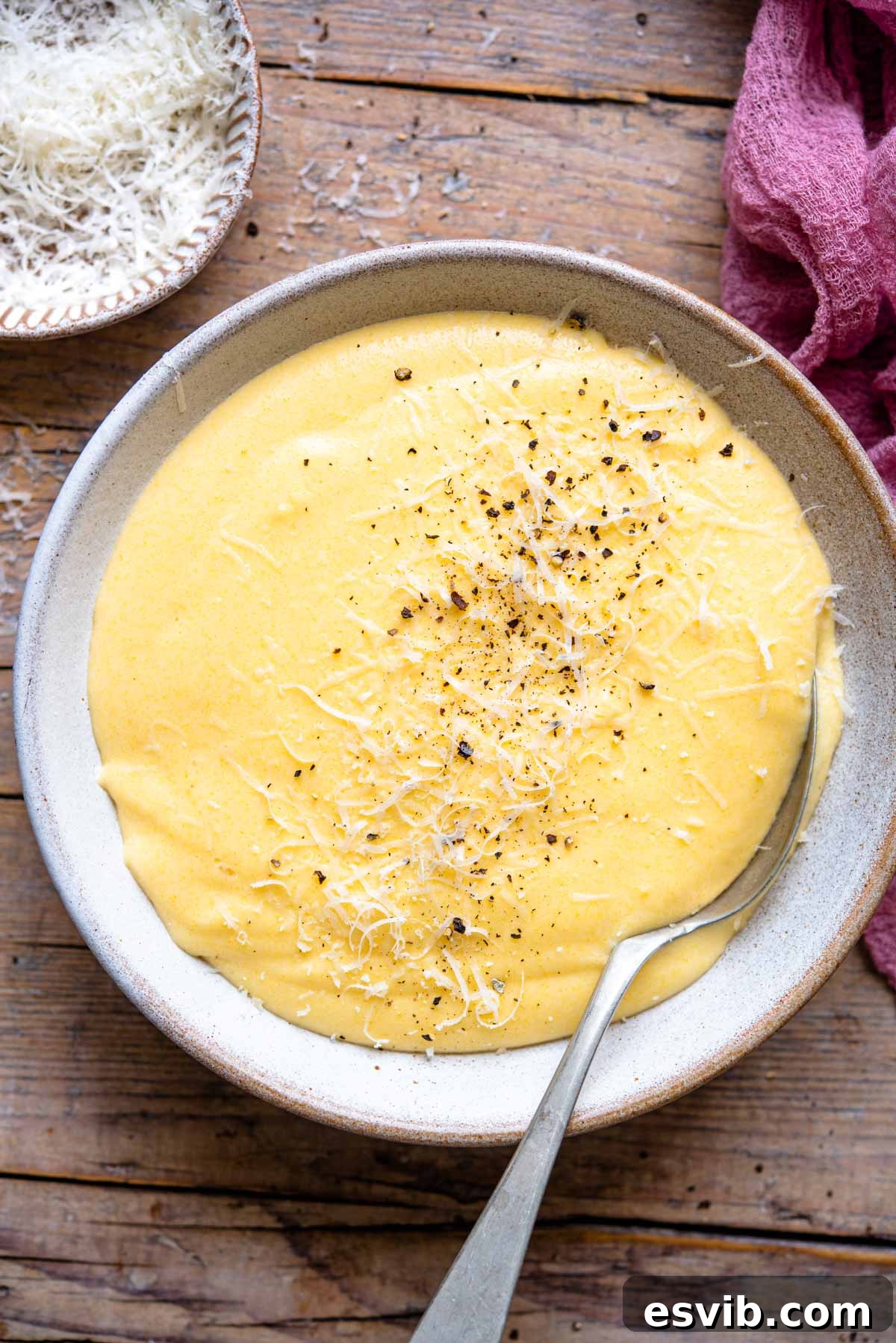
Master the art of making silky soft Creamy Polenta from scratch. This incredibly simple recipe utilizes basic pantry ingredients to create the ultimate comforting side dish, perfect alongside robust roasted meats, fresh vegetables, and savory stews. Prepare to elevate your meals with this timeless Italian staple.
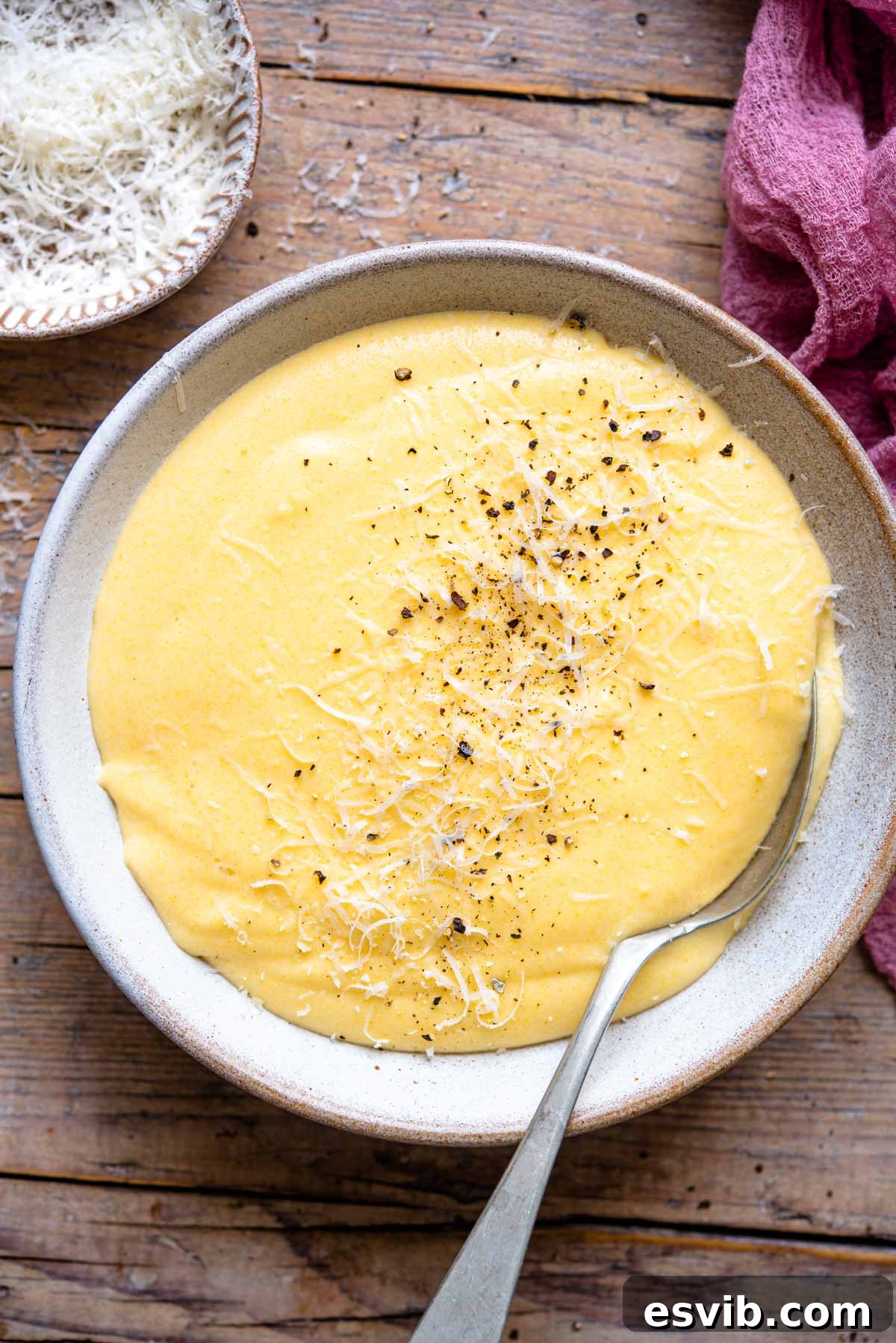
Mastering Silky Creamy Polenta: Your Guide to Italian Cornmeal Perfection
Polenta, a humble dish made from cornmeal, is a true testament to the power of simple ingredients transformed into something extraordinary. It’s a foundational comfort food, revered for its creamy, smooth texture and deeply satisfying flavor. This guide will walk you through everything you need to know to prepare perfect, silky polenta that will impress even the most discerning palates.
What Exactly is Polenta? Understanding This Italian Staple
Polenta, or farina di mais in Italian, is essentially what is known as yellow cornmeal outside of Italy. While there are a few variations, sometimes including buckwheat, polenta gialla (yellow polenta) is by far the most commonly used and universally loved type. This golden grain has been a cornerstone of Italian cuisine for centuries, particularly in the northern regions where it often replaces pasta or bread as a staple carbohydrate.
In Northern Italy, polenta is more than just food; it’s a cultural icon, frequently enriched with butter and various local cheeses like Fontina, Toma, or Taleggio towards the end of cooking. This tradition results in a dish that is unbelievably creamy, decadent, and utterly delicious, often sparking lively debates among Italians about the “correct” way to cook and serve it.
Exploring the Diverse Consistencies of Polenta
Polenta’s versatility extends to its serving consistency, which can be adapted to suit various dishes and personal preferences:
- Smooth, Creamy, and Looser Texture: This is my preferred style when serving polenta with rich stews, slow-cooked ragùs, or hearty meat casseroles. Its yielding consistency allows it to beautifully absorb the flavors of accompanying sauces.
- Thicker and Creamier: Achieved by using a slightly more coarsely-ground cornmeal or cooking it for a longer duration, this version offers a more substantial bite while still retaining its creamy character.
- Super Thick, Almost Mashed Potato-Like: This robust consistency is often served on a wooden board and allowed to set slightly. While still soft, it can be cut into firm slices, making it ideal for grilling or frying later.
The choice of consistency often depends on what you plan to pair your polenta with. For example, if you intend to grill or fry polenta slices later, a coarsely-ground cornmeal or quick-cook variety that sets firmly is best. However, for a truly luxurious side dish to accompany stews, ragù, roasted meats, or vegetables, the smooth and creamy result of this recipe is unsurpassed.
If you’re making polenta to be a main dish, perhaps mixed with Italian sausage or other meats, a medium-coarse ground polenta is often ideal. You can achieve this with the same recipe by simply extending the cooking time to around 45 minutes, allowing it to thicken further.
Traditional Polenta vs. Instant Polenta: The Great Debate
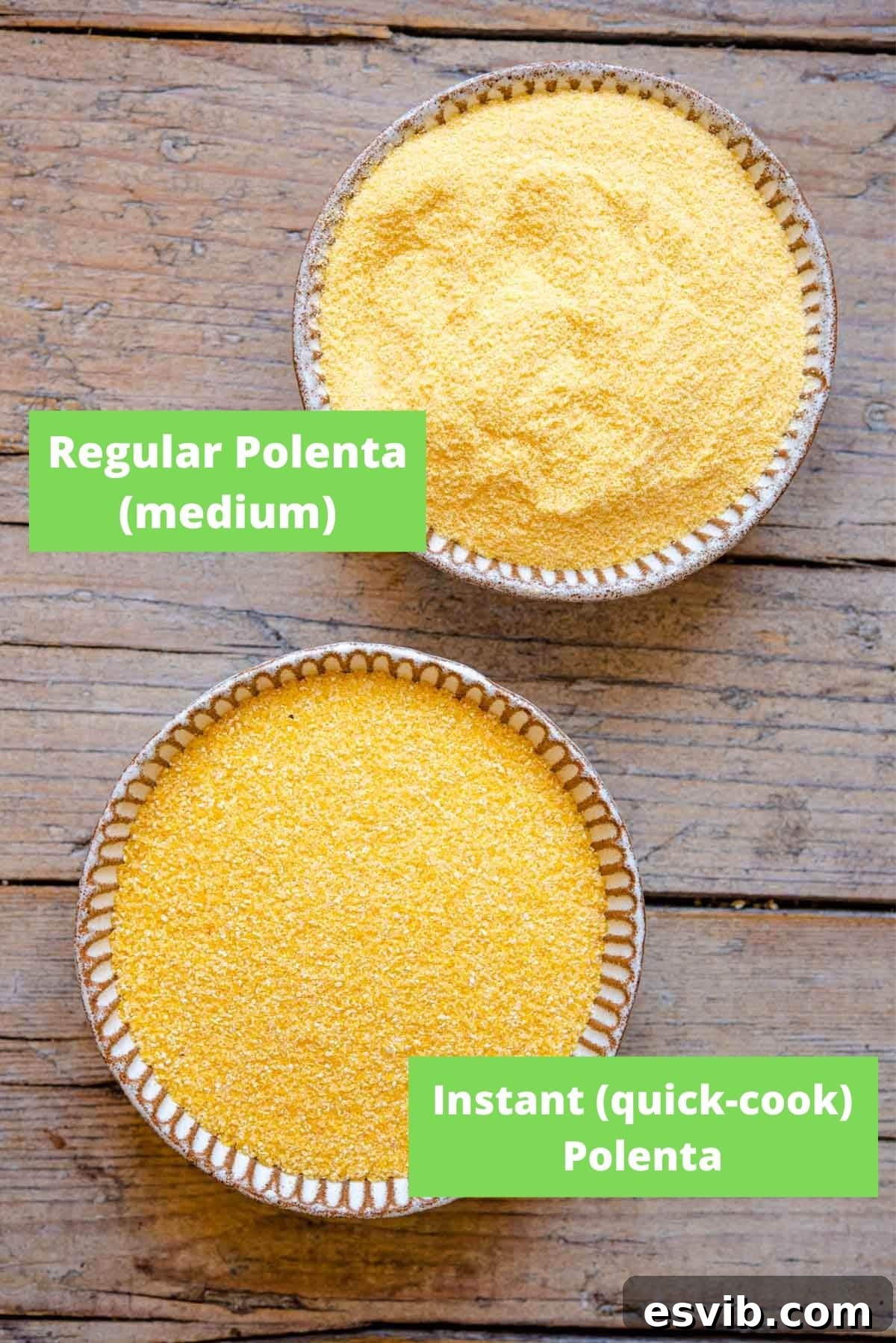
When it comes to polenta, there’s a significant distinction between the traditional, slow-cook variety and its quick-cook or instant counterpart. Understanding these differences is key to achieving your desired outcome.
Firstly, the most apparent difference lies in cooking times. Traditional polenta, depending on its coarseness, can take anywhere from 30 to 60 minutes to cook, requiring patient and consistent stirring. Quick-cook polenta, on the other hand, lives up to its name, being ready in as little as 5 minutes.
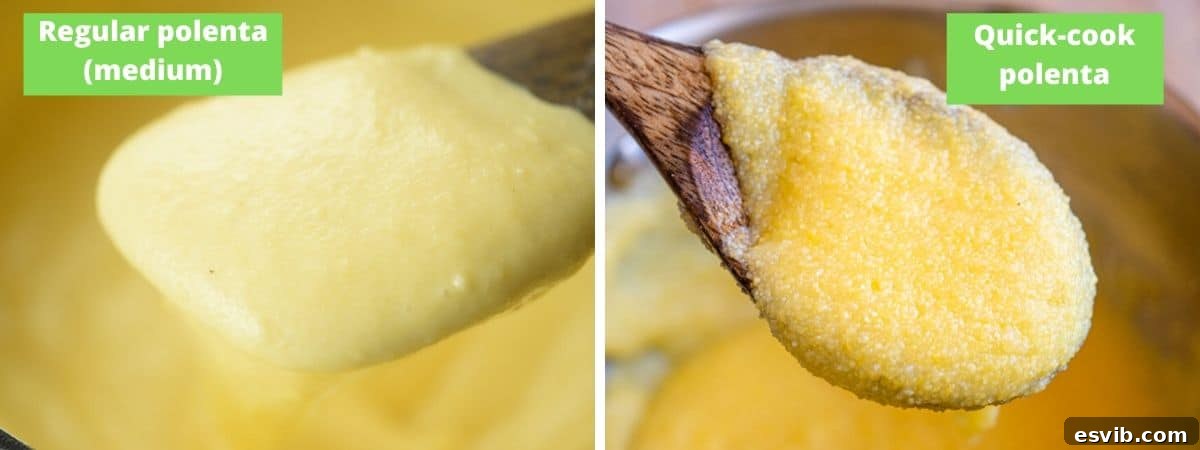
This rapid cooking time, however, comes with a trade-off in texture. Quick-cook polenta tends to have a more noticeably grainy texture, lacking the smooth, velvety mouthfeel of its traditional counterpart. While convenient, it often falls short in delivering the depth of flavor and luxurious creaminess that traditional polenta is celebrated for.
Instant polenta shines brightest when its primary purpose is to be grilled, fried, or baked after setting, as it firms up rapidly. It’s also a practical choice when you’re truly pressed for time. However, for an authentic, truly exceptional creamy polenta, the extra effort involved in preparing traditional polenta is unequivocally worth it. It’s a dish of unparalleled smoothness, richness, and sheer comfort.
Observing the difference between regular and quick-cook polenta, both before and after cooking, clearly illustrates the disparity in texture and even color, emphasizing why traditional methods are often preferred for optimal results.
How to Make Silky Creamy Polenta – Step-by-Step Perfection
Creating perfectly creamy polenta is a straightforward process that rewards patience and a few simple techniques. Follow these steps to achieve a consistently smooth and delicious result.
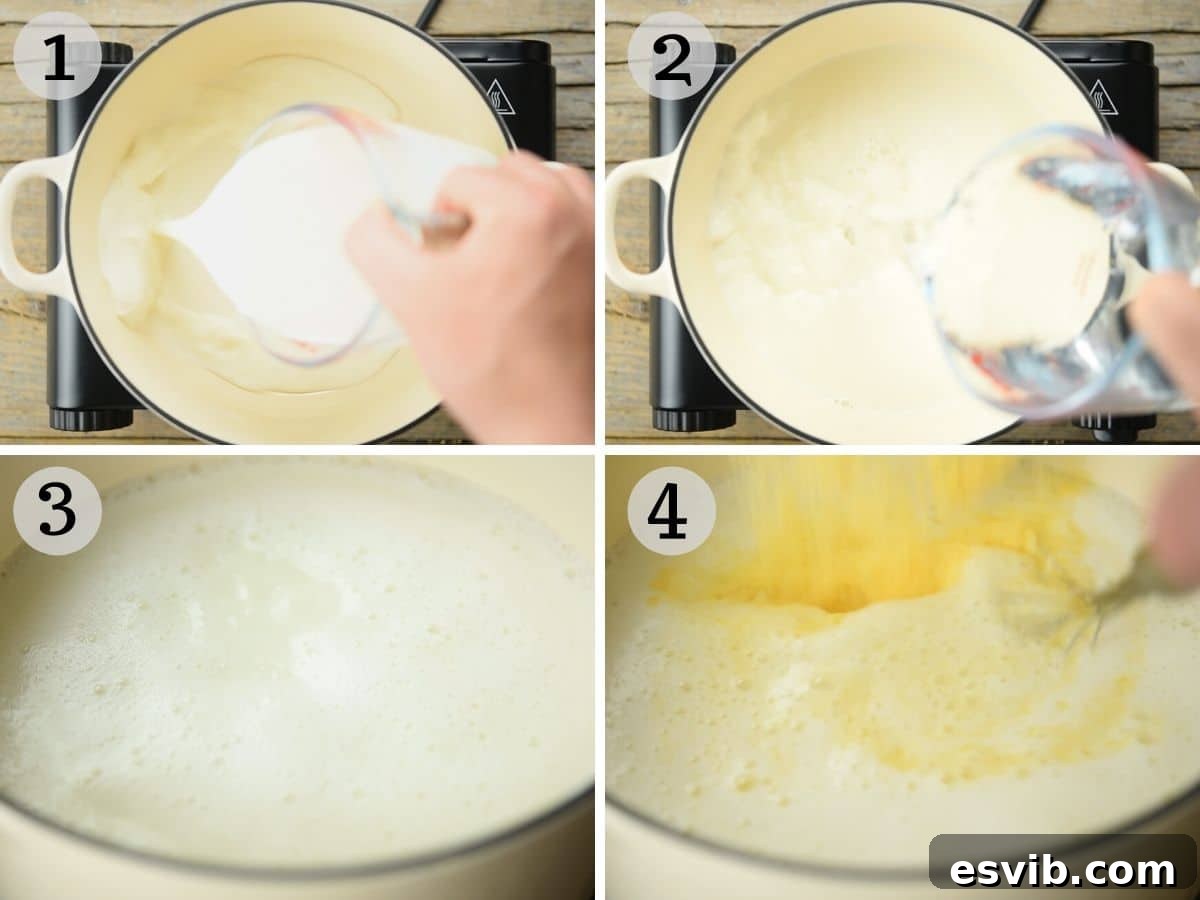
- **Prepare the Liquid:** Begin by combining the milk and water in a heavy-based saucepan or pot. Bring this mixture to a rolling boil over medium-high heat. Using a heavy-bottomed pot helps prevent sticking and ensures even cooking.
- **Gradually Add Polenta:** Once the liquid is boiling, *gradually* pour the polenta into the hot liquid in a slow, steady stream. Crucially, continuously stir or whisk the liquid as you pour to prevent any lumps from forming. This continuous motion is the secret to a smooth consistency.
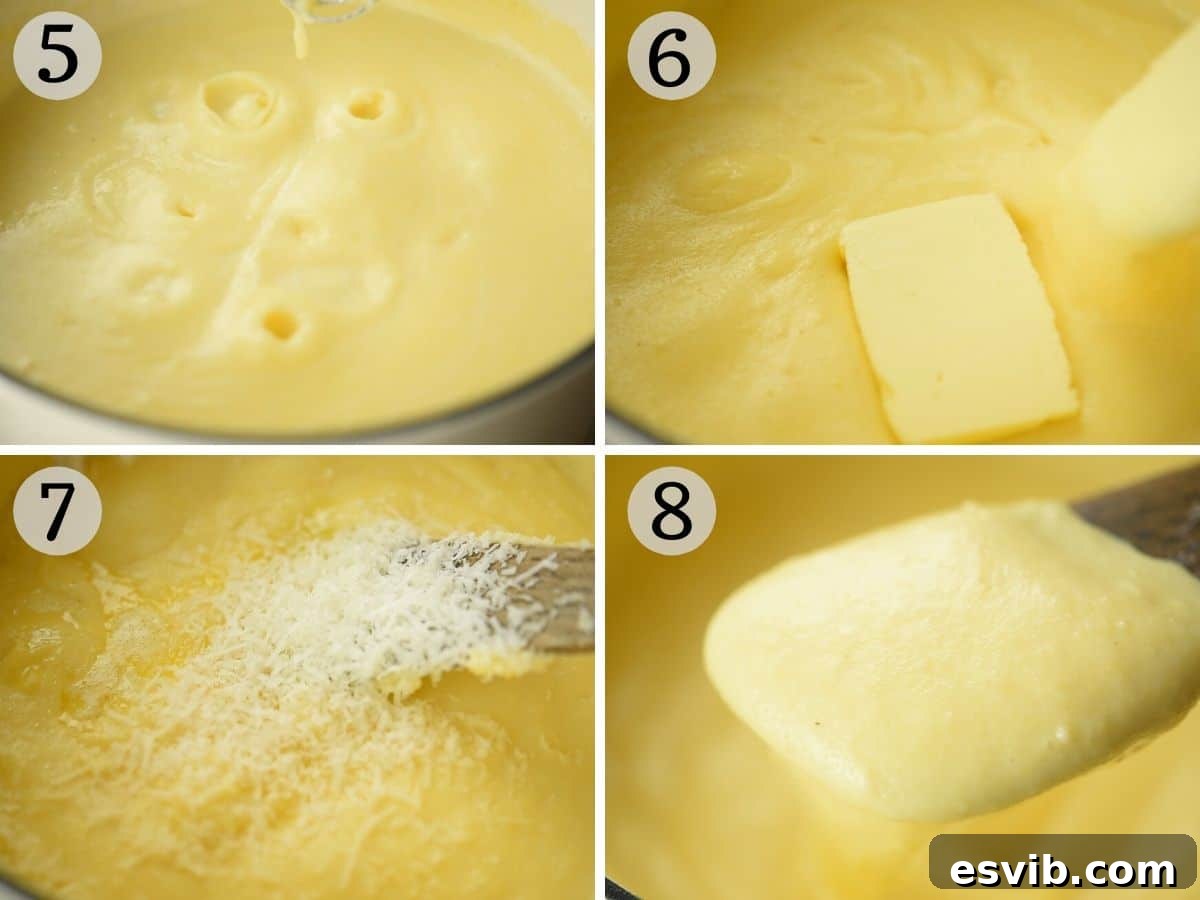
- **Initial Thickening and Simmering:** Continue stirring the polenta until it begins to visibly thicken. At this point, reduce the heat to very low. Allow the polenta to simmer gently, stirring regularly (every few minutes) to ensure it doesn’t stick to the bottom of the pot. This slow cooking allows the cornmeal to fully hydrate and soften, developing its characteristic creamy texture. The cooking process typically takes around 30 minutes for medium-ground cornmeal, though times can vary slightly depending on the brand and grind of polenta.
- **Enrich and Season:** After about 30 minutes, or once the polenta has achieved your desired creaminess and begins to pull away from the sides of the pot, remove it from the heat. Stir in the butter, freshly grated cheese (such as Parmigiano Reggiano), and season with salt and freshly ground black pepper to taste. Continue stirring until all the ingredients have melted and are thoroughly incorporated, making the polenta even more luscious.
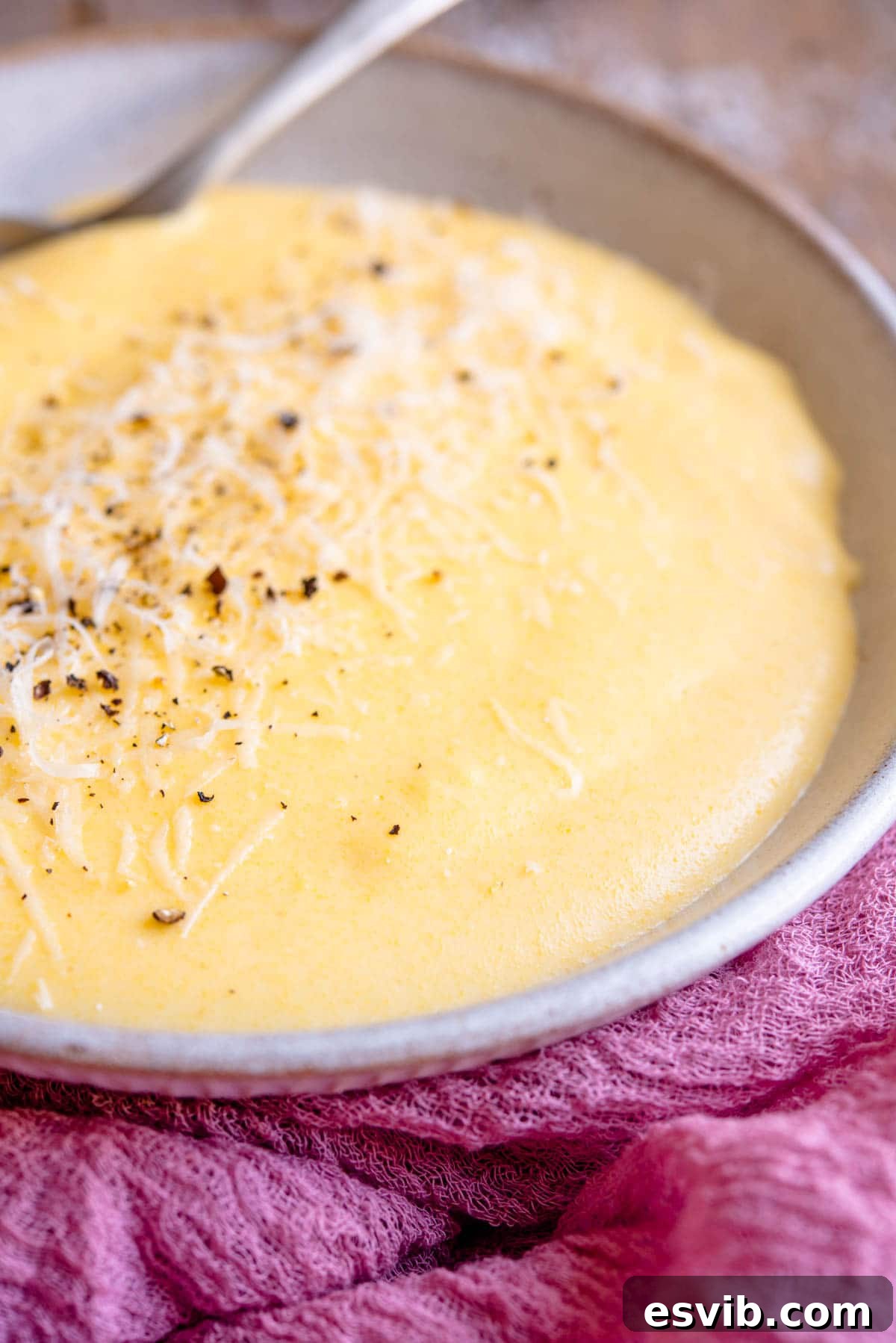
- **Serve Immediately:** Creamy polenta is best served hot and fresh. If you have leftovers, pour them into a baking tray or casserole dish immediately to cool, as it will begin to set fairly quickly.
Essential Tip: How to Achieve Lump-Free Polenta
The key to a perfectly smooth and creamy polenta is in the initial mixing. It is paramount to pour the polenta into the hot liquid *gradually* while continuously stirring or whisking. If you add the polenta all at once, it will clump together, and these lumps will be very difficult to smooth out.
What if Your Polenta is Already Lumpy? Don’t Despair!
A few minor lumps in your polenta are usually unnoticeable and perfectly acceptable. However, if you find yourself with a significantly lumpy batch that whisking can’t resolve, there’s a simple, albeit non-traditional, solution: you can blitz the cooked polenta in a food processor or use an immersion blender just before serving. This will break down the lumps and restore a smooth consistency, saving your dish!
Creative Variations and Flavor Enhancements for Polenta
Polenta is a wonderful canvas for culinary creativity. You can easily adapt its flavor profile with different cheeses and additional ingredients, depending on the main dish you’re serving or simply your mood. Here are some inspiring ideas:
Transforming Polenta with Cheese (Cheesy Polenta)
Cheese is polenta’s best friend, adding incredible depth and creaminess. Experiment with:
- Freshly grated Parmigiano Reggiano for a classic, salty, umami flavor.
- Freshly grated Pecorino Romano for a sharper, tangier kick.
- Gorgonzola for a pungent, creamy blue cheese experience.
- Toma cheese, a semi-hard Italian cheese, offering a delicate, nutty flavor.
- Taleggio, a soft, washed-rind cheese with a strong aroma but mild, fruity taste when melted.
- Fontina cheese, renowned for its excellent melting properties and rich, earthy flavor.
Beyond Cheese: Other Delicious Polenta Variations
Consider stirring in these ingredients towards the end of cooking for extra flavor and texture:
- Cooked Italian Sausage: Sliced and mixed through, this adds a hearty, savory element, transforming polenta into a more substantial meal.
- Slow-Cooked Caramelized Onions: Their sweet, savory depth is fantastic, especially when combined with sausage.
- Italian Salami: Cubed and stirred in for a peppery, salty bite.
- Cavolo Nero or Kale: Pre-cooked and finely chopped greens add nutrients, color, and a pleasant earthy note.
- Finely Chopped Fresh Basil: A burst of fresh, aromatic herb flavor, perfect for a lighter touch.
Storing and Reimagining Leftover Polenta
One of the great things about polenta is that leftovers can be transformed into entirely new and delicious dishes. However, it’s important to remember that once cooled, polenta will solidify and set, meaning you won’t be able to serve it in the same creamy, loose way as fresh polenta.
To prepare leftovers for storage and future use, immediately pour any remaining creamy polenta into a shallow baking tray or casserole dish. This allows it to cool and set evenly. Once it has completely cooled and firmed up, cover it tightly with plastic wrap and refrigerate for up to 3-4 days.
The Delicious Revival: Grilling, Baking, or Frying Leftover Polenta
Once your leftover polenta has set firm, you can easily cut it into various shapes—slices, squares, or even fries—and then grill, bake, or fry them until crispy. Drizzle the polenta pieces with a little olive oil before cooking to achieve a beautiful golden crust.
A personal favorite way to utilize leftover polenta is by making Crispy Baked Polenta Fries. They are incredibly satisfying and a fantastic alternative to traditional potato fries!
Top Tips for Crafting the Best Creamy Polenta Every Time
Achieving consistently perfect, creamy polenta is easy with a few insider tips:
- Choose the Right Cornmeal: If packages aren’t explicitly labeled “polenta,” look for yellow cornmeal that is medium-ground. This grind offers the best balance for a smooth, creamy texture without being too fine or too coarse.
- Pre-Process Coarse Cornmeal: If you can only find coarse cornmeal but prefer a silky smooth polenta, a quick solution is to blitz the cornmeal briefly in a food processor before cooking. This will give it a finer texture, closer to medium-ground.
- Customize Your Liquid Base: This recipe uses a delightful mixture of water and milk for a rich flavor. You can use all water for a lighter taste, or for extra indulgence, substitute some of the milk with a touch of cream.
- Adjusting Consistency: For a thicker polenta, simply reduce the initial liquid by about 1 cup, or cook it for an additional 10-15 minutes until it reaches your desired density.
- Storage is Key: Leftover polenta stores beautifully in the fridge for up to 3-4 days when covered tightly.
- Reinvent Leftovers: Don’t let leftover polenta go to waste! Cut the solidified polenta into slices, squares, or sticks, drizzle with olive oil, and grill, bake, or fry them until golden and crispy. Our recipe for Crispy Baked Polenta Fries is a fantastic way to enjoy them.
- Perfect Pairings: Creamy polenta is an exceptional accompaniment to many Italian dishes, especially hearty braises like Peposo – Tuscan Red Wine Beef Stew.
More Delicious Italian Side Dishes You Might Enjoy
Complement your Italian main courses with these other delectable sides:
- Crispy Baked Polenta Fries: A fun and flavorful way to use polenta.
- Italian Green Beans In Tomato Sauce: A vibrant and fresh vegetable side.
- Fagioli all’uccelletto – Beans in Tomato Sauce: A rustic and comforting Tuscan bean dish.
- Italian Roast Potatoes – Rosemary And Garlic: Crispy and aromatic, a classic accompaniment.
If you’ve tried this Creamy Polenta recipe or any other dishes from my blog, please take a moment to leave a comment below and share your experience. Your feedback is greatly appreciated! You can also FOLLOW ME on FACEBOOK, INSTAGRAM, and PINTEREST to discover more delicious recipes and kitchen adventures.
Step By Step Photos Above
Most of our recipes come with step by step photos, helpful tips and tricks to make it perfectly first time and even video!
Creamy Polenta
By Emily
Ingredients
- 1 cup polenta or medium yellow cornmeal (175g)
- 3 cups water (710ml)
- 2 cups milk (470ml)
- 2-4 tbsp butter (30-60g)
- ½ cup freshly grated Parmigiano Reggiano or cheese of choice (80g)
- Salt and pepper, to taste
Instructions
- Heat the water and milk in a large saucepan or pot until boiling. Once boiling, slowly pour the polenta into the hot liquid whilst continuously whisking to avoid any lumps. Keep stirring the polenta until it starts to thicken, then turn the heat down to low.
- Cook the polenta on a low heat for at least 30 minutes, or until it starts to come away from the edge of the pot, stirring occasionally with a wooden spoon (different brands and how fine or coarse the polenta is will make a difference in cooking times, but generally 30 minutes is enough time for medium ground cornmeal).
- Add the butter, Parmesan (or cheese of choice), salt, and pepper to taste and stir until melted and combined.
- Serve immediately or pour into a baking dish to cool for leftovers.
Video
Watch a step-by-step video demonstration of this Creamy Polenta recipe here: [Video Placeholder or Link]
Notes
- If you can’t find bags of cornmeal labelled polenta, then make sure to buy yellow cornmeal medium ground.
- If you can only find coarse cornmeal and prefer a smooth and creamy polenta, then blitz the cornmeal in a food processor before cooking with it. This will give it a finer texture.
- I like to use a mixture of water and milk for the cooking liquid, but you can use all water or even use a little cream for a little extra indulgence.
- If you prefer a thicker consistency, then omit 1 cup of liquid or cook it for longer (around 45 minutes).
- Leftovers can be stored in the fridge for up to 3-4 days.
- Cut leftovers into slices, drizzle in oil, and grill or bake them. Check out our recipe for crispy baked polenta fries for using leftovers!
- Polenta is perfect served with Peposo – Tuscan Red Wine Beef Stew.
Helpful Info for All Recipes
- I always use extra virgin olive oil in all of my recipes unless stated otherwise.
- When I use canned or jarred tomatoes of any kind, I always use Cirio or Mutti brands for the best results and flavor.
- All vegetables are medium sized unless stated otherwise.
- All recipes are tested and developed using a fan (convection) oven.
- Find out more about how nutrition is calculated.
- Check out our must-have Italian Pantry Staples.
- You can also find all our Essential Kitchen Tools for Italian Cooking.
Nutrition
Nutrition information is automatically calculated, so should only be used as an approximation.