
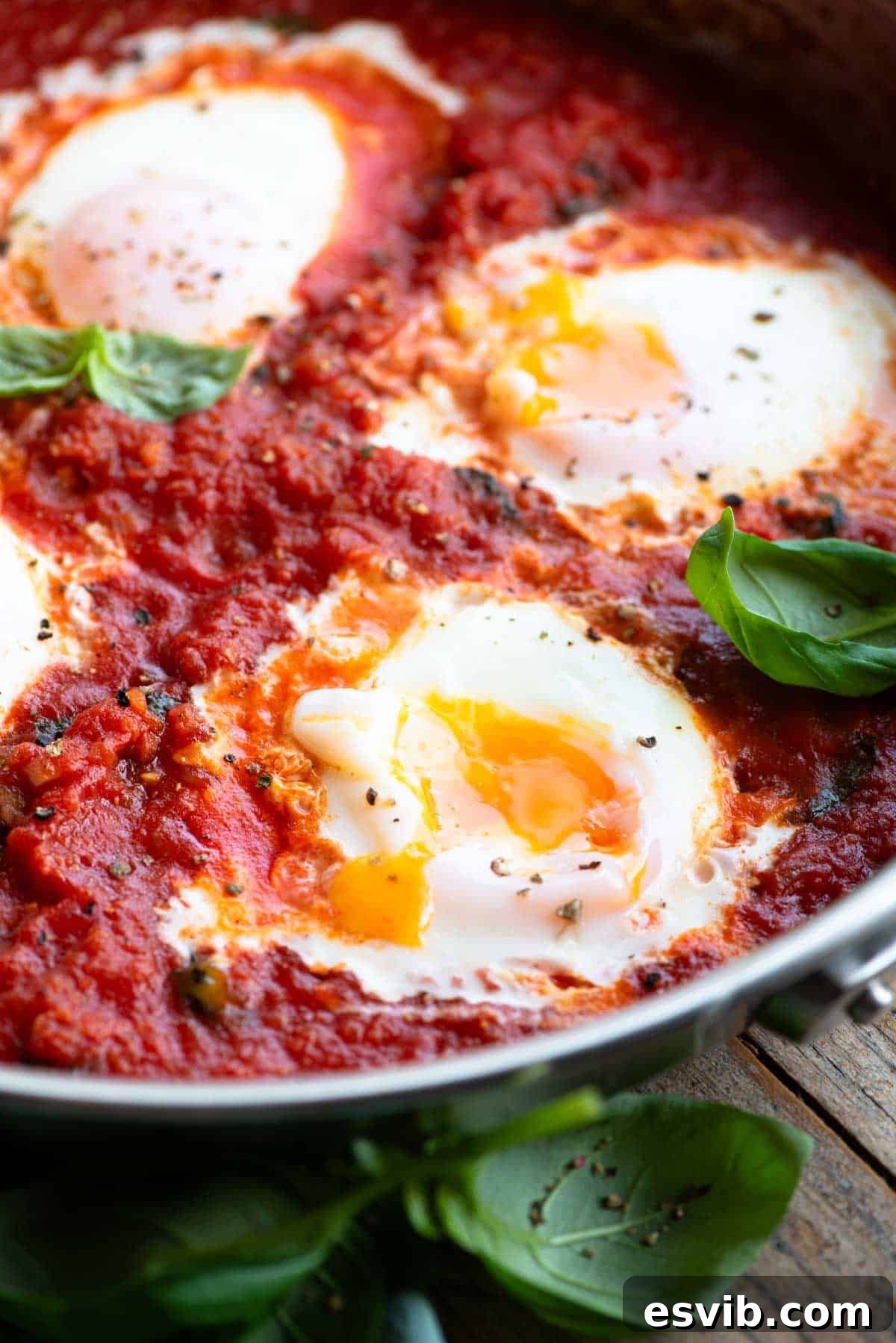
Spicy Nduja Eggs in Purgatory: A Fiery Taste of Southern Italy
Embark on a culinary journey to Southern Italy with this vibrant and utterly delicious recipe for **Eggs in Purgatory**, elevated by the tantalizing heat of Calabrian Nduja salami. Known as ‘Uova in Purgatorio’ or ‘Ova ‘mpriatorio’ in Neapolitan dialect, this traditional dish features perfectly poached eggs with irresistibly runny yolks, nestled in a deeply flavorful and spicy tomato sauce. It’s a super easy meal that promises maximum comfort and satisfaction, all ready in under 30 minutes. Get ready to dunk crusty bread into this heavenly concoction!
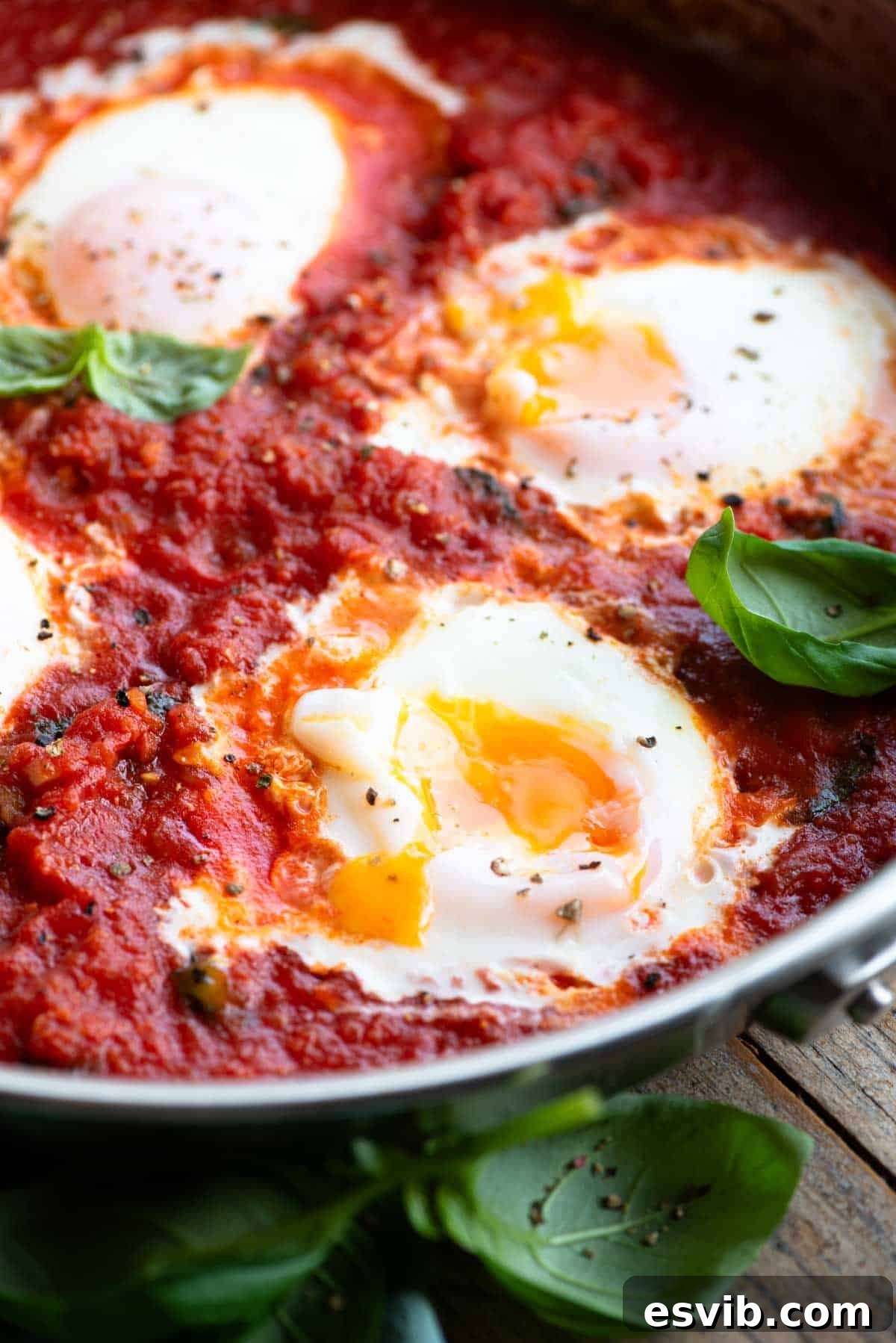
What is “Uova in Purgatorio”? History and Origin of Eggs in Purgatory
Eggs in Purgatory, or Uova in Purgatorio, is a beloved Neapolitan dish that hails from the sun-drenched region of Southern Italy. Its name carries a fascinating history, believed to be inspired by Dante Alighieri’s vivid imagery of Purgatory in “The Divine Comedy.” The vibrant, simmering red tomato sauce is said to represent the fiery realm of Purgatory, while the pristine white eggs symbolize the souls ascending towards salvation. This evocative name perfectly captures the visual appeal of the dish: pristine white eggs gently poached in a rich, bubbling red sauce.
Traditionally, this humble yet deeply comforting dish was created out of necessity, utilizing simple, readily available ingredients. Despite its basic components, it boasts an incredible depth of flavor and a comforting warmth that has made it a staple in Italian homes for generations. It’s a testament to Italian cuisine’s ability to transform everyday ingredients into something truly extraordinary.
Why Nduja? Elevating a Classic with Calabrian Heat
While the classic Eggs in Purgatory is delicious on its own, we believe in embracing bold flavors. That’s why we’re introducing a sensational twist: Calabrian Nduja. Nduja is a spicy, spreadable pork salami originating from the region of Calabria, renowned for its fiery red chili peppers. Unlike other cured meats, Nduja has a unique, soft texture that melts beautifully into sauces, infusing them with an unparalleled depth of rich, smoky, and spicy flavor.
The addition of Nduja transforms this comforting egg dish into an unforgettable culinary experience. Its robust heat perfectly complements the sweetness of the tomatoes and the richness of the egg yolks, creating a harmonious balance that will awaken your palate. It’s an ingredient that truly captures the passionate spirit of Southern Italian cooking, adding a delicious warmth that makes this dish even more addictive. If you love a little spice in your life, Nduja is an absolute game-changer for Eggs in Purgatory.
This versatile meal is often enjoyed for lunch or dinner in Italy, but its quick preparation and hearty nature make it absolutely perfect for a weekend breakfast or a decadent brunch. It’s one of those magical dishes that truly shines at any time of day.
Essential Ingredients for Your Spicy Eggs in Purgatory
A simple dish demands high-quality ingredients to truly shine. Here’s a closer look at what you’ll need, along with some helpful notes and substitution ideas:
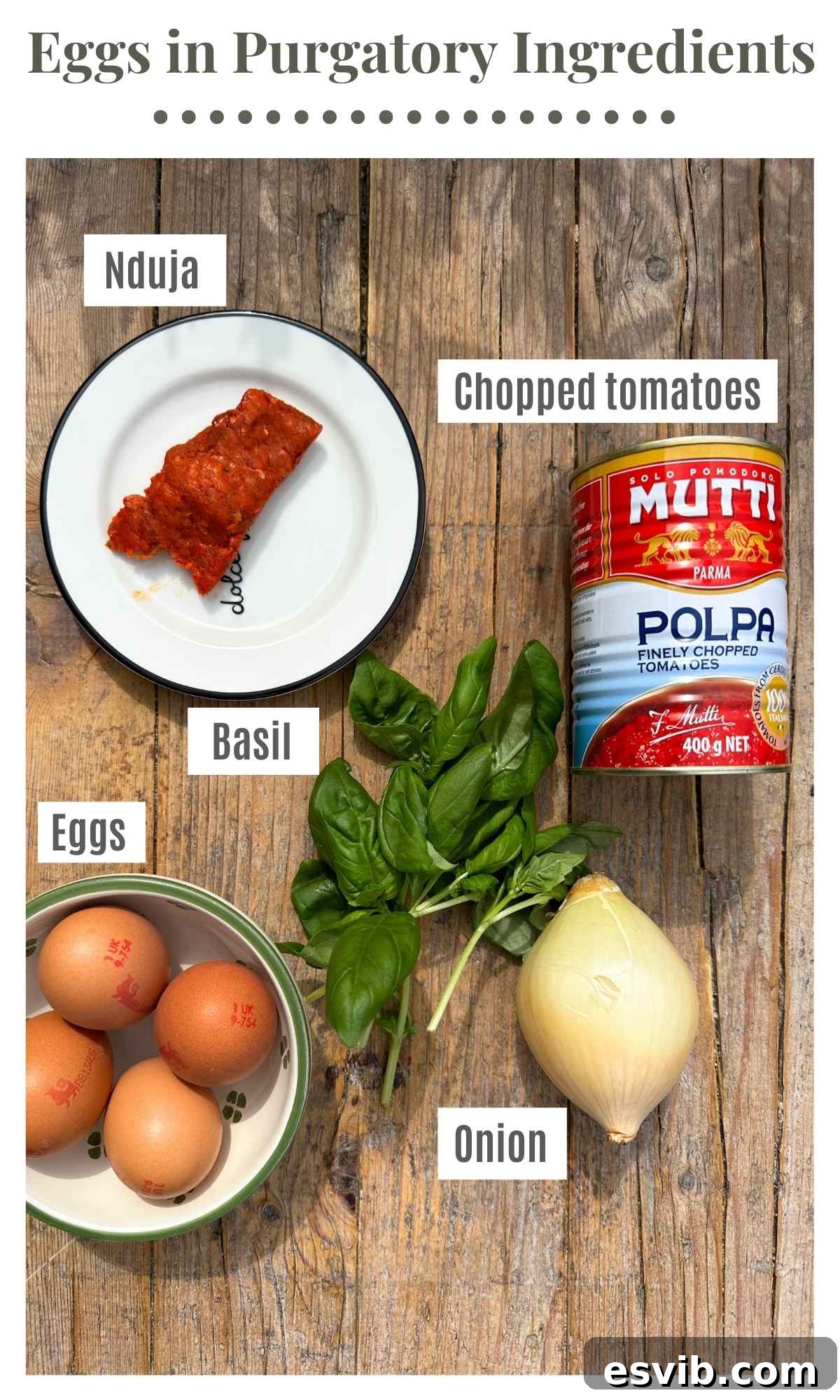
- Tomatoes: We highly recommend using finely crushed tomatoes, like Mutti Polpa, which offer a fresh, vibrant flavor and a smooth texture that’s perfect for poaching eggs. High-quality canned plum tomatoes (San Marzano are excellent) that you crush yourself would also work wonderfully. While passata (tomato puree in the US) can be used, be aware it will yield a thicker, richer sauce with a more intense tomato flavor. Avoid diced tomatoes as they tend to be firmer and don’t break down as well.
- White or Brown Onion: We prefer the subtle sweetness that a finely chopped white onion brings to the sauce, which beautifully balances the spice from the Nduja. However, a brown onion is a perfectly suitable alternative and will still provide a fantastic aromatic base. Use whatever you have on hand!
- Fresh Basil: This herb is non-negotiable for authentic Italian flavor. Fresh basil leaves, torn into pieces and stirred into the warm tomato sauce, release an incredible aroma and brightness. Dried basil simply won’t achieve the same vibrant taste, so please avoid it for this recipe.
- Nduja: The star of our spicy twist! This unique Calabrian salami is incredibly soft and spreadable. Look for it in specialty Italian markets, online, or in gourmet sections of larger supermarkets. If Nduja is difficult to find, you can substitute it with one spicy Italian sausage (removed from its casing and crumbled), a good quality spicy salami (finely diced), or simply add red pepper flakes (fresh or dried chili) to taste for heat. If you prefer a milder version, you can omit the Nduja entirely and still enjoy a delicious classic Eggs in Purgatory.
- Free-Range Eggs: Fresh, free-range eggs are paramount. Not only do they taste superior, but their whites also hold their shape better when poached, ensuring those beautiful, runny yolks. Aim for medium to large eggs.
- Olive Oil: Use a good quality extra virgin olive oil. Its fruity notes will enhance the overall flavor of the sauce.
- Salt and Pepper: Essential seasonings to bring out all the flavors. Always taste and adjust to your preference.
- Crusty Bread: An absolute must for serving! Fresh, crusty bread or char-grilled crostini is perfect for soaking up every last drop of the rich, spicy sauce and dunking into those glorious runny yolks.
Achieving Flawless Eggs: Expert Tips for Runny Yolks and Cooked Whites
One of the most common pitfalls when making Eggs in Purgatory (or any poached eggs in sauce) is ending up with an undercooked egg white, or conversely, an overcooked, firm yolk. Neither is ideal! That’s why we meticulously tested this recipe to guarantee perfectly cooked eggs every single time – tender, set whites with gloriously runny, golden yolks.
Our top tips for achieving this delicate balance are simple yet crucial:
- Maintain a Medium-Low Heat: It’s tempting to rush the cooking, but a gentle, consistent medium-low heat is key. This allows the egg whites to set slowly and evenly without causing the yolks to cook too quickly or the sauce to scorch.
- Use a Lid: Covering your pan creates a steamy environment that helps the top of the egg whites cook through thoroughly. This ensures no unappetizing “jiggly” whites remain, even as the yolks stay perfectly soft.
- Employ a Timer: Accuracy is vital. Eggs can go from perfectly runny to firm in a matter of seconds. Use a kitchen timer and stick to the recommended cooking times. It’s incredibly easy to get distracted and overcook them, so let your timer be your guide.
- Room Temperature Eggs: For more even cooking, bring your eggs to room temperature before adding them to the sauce. This helps prevent the whites from seizing up too quickly.
- Don’t Overcrowd the Pan: Ensure there’s enough space between each egg in the sauce. This allows them to cook evenly and makes it easier to serve them without breaking the delicate yolks.
By following these simple guidelines, you’ll master the art of perfectly cooked Eggs in Purgatory, ensuring a delightful texture contrast in every bite.
Step-by-Step Guide: How to Craft Your Nduja Eggs in Purgatory (Visual Walk-through)
Creating this delicious dish is simpler than you might think. Follow these straightforward steps to achieve a perfectly balanced and flavorful meal:
Step 1 – Build the Flavor Base: Begin by heating 1-2 tablespoons of olive oil in a 29cm (11.5 inch) pan (stainless steel works great). Add your finely chopped onion and sauté over medium heat for about 5-6 minutes until it becomes wonderfully soft and translucent. This sweetens the base of your sauce. Next, add the Nduja salami, breaking it up with a spoon as it melts into the warm oil and onion. Cook for another 2-3 minutes until the Nduja is soft, fragrant, and has infused the oil with its signature spicy, smoky aroma. This step is crucial for developing the rich flavor of your sauce. (See photos 1 and 2 below for visual guidance).
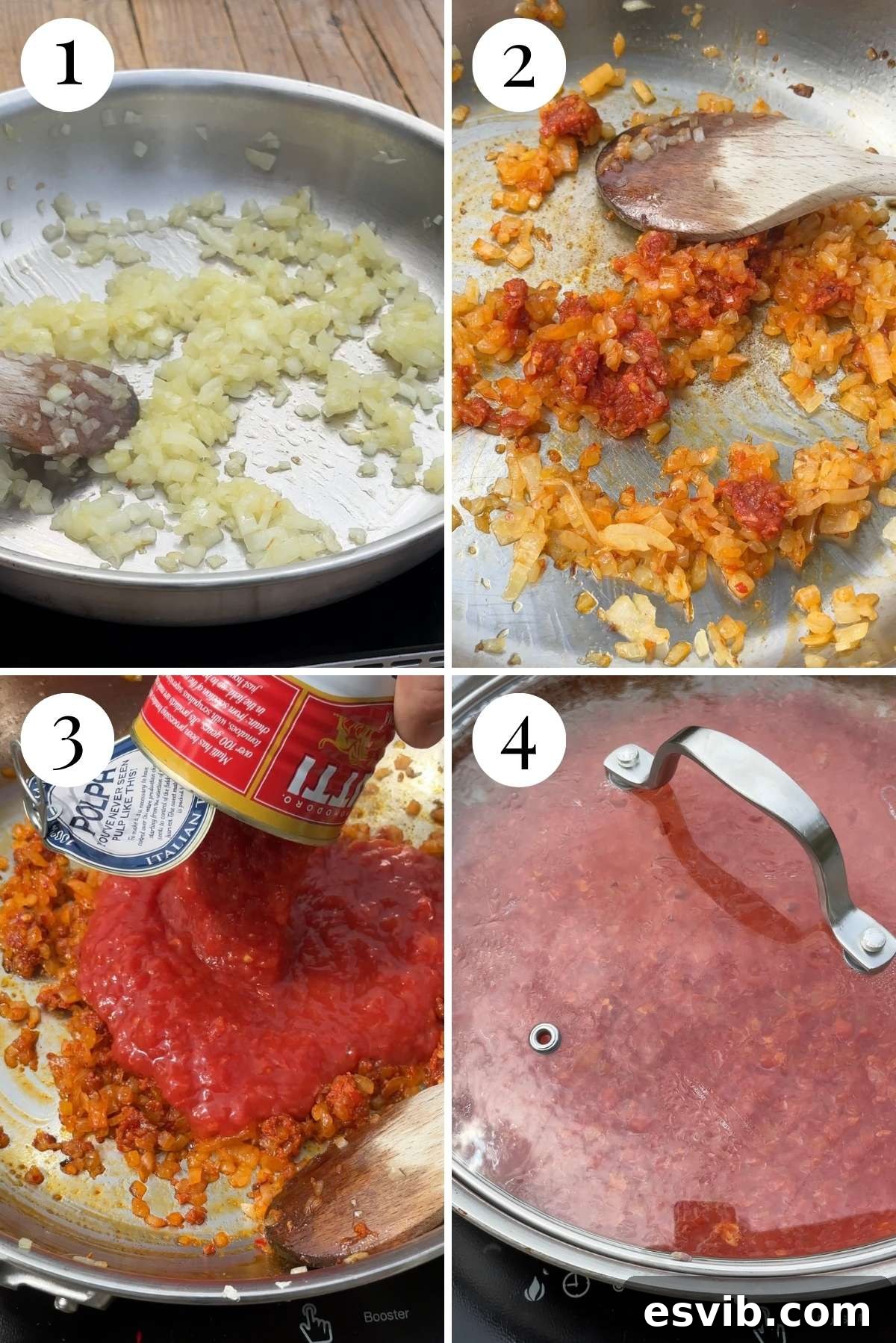
Step 2 – Simmer the Sauce: Pour in the crushed tomatoes (Mutti Polpa is highly recommended for its quality), add a generous handful of fresh basil (torn), and season with a good pinch of salt and freshly ground black pepper. Stir everything together. Bring the sauce to a gentle simmer over medium-high heat and cook uncovered for 5 minutes, allowing some of the liquid to reduce and the flavors to meld. Then, cover the pan with a lid, reduce the heat slightly, and let it simmer for another 5 minutes. This ensures the tomatoes break down further and the sauce deepens in flavor. (See photos 3 and 4).
Step 3 – Poach the Eggs: Once your sauce is beautifully simmering, create four small wells or indentations in the sauce using the back of a spoon. These don’t need to be perfectly symmetrical. Crack each egg individually into a small ramekin or bowl – this helps ensure no shell fragments get into your dish and allows for gentle placement. Carefully pour each egg, one at a time, into its designated well in the sauce. Reduce the heat to medium-low, cover the pan tightly with a lid, and cook for exactly 4 minutes. This precise timing is key for achieving those perfect runny yolks and set whites. After 4 minutes, remove the pan from the heat but keep the lid on, allowing it to rest for an additional 1 minute. This residual heat will finish cooking the whites without overcooking the yolks. (See photos 5-7).
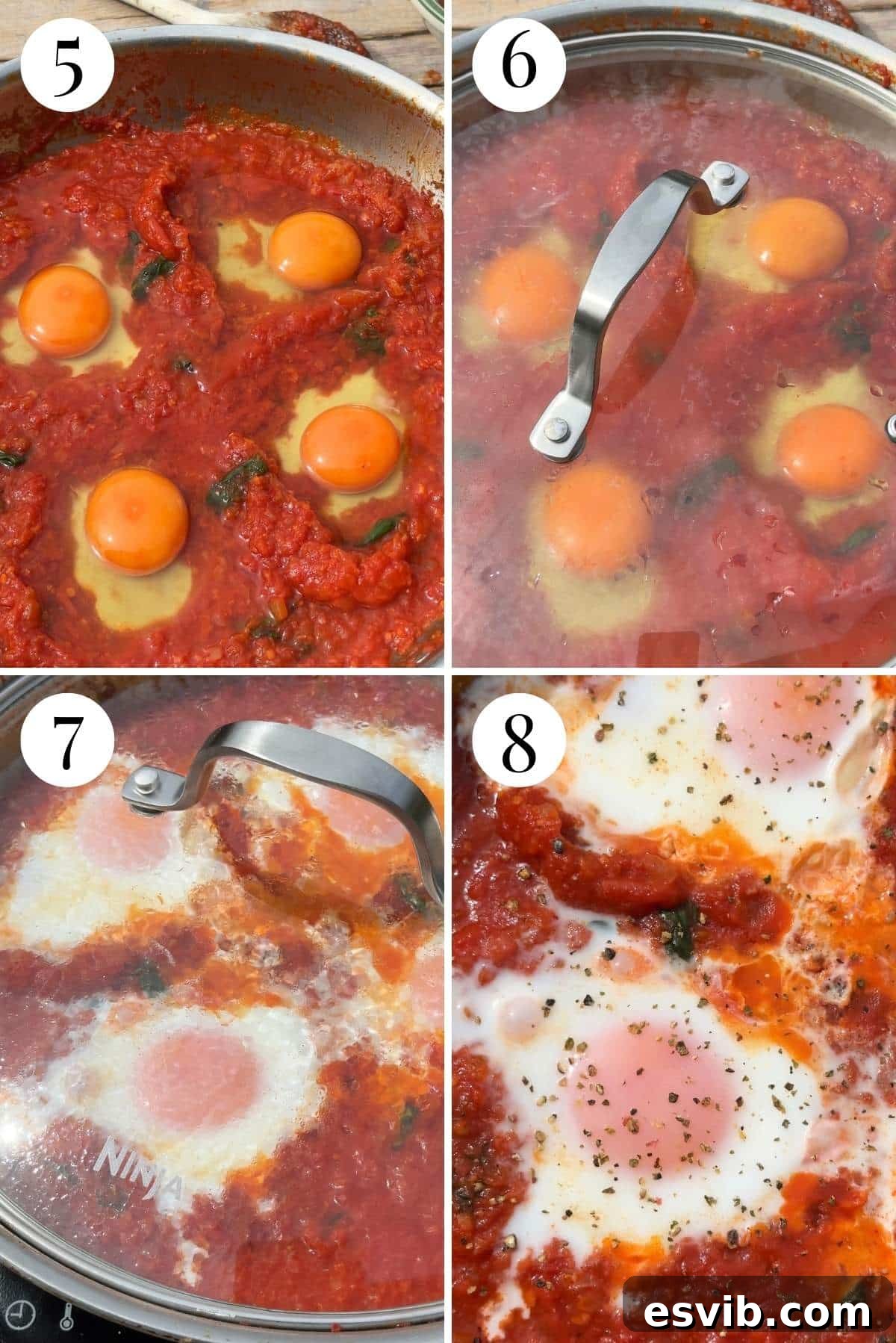
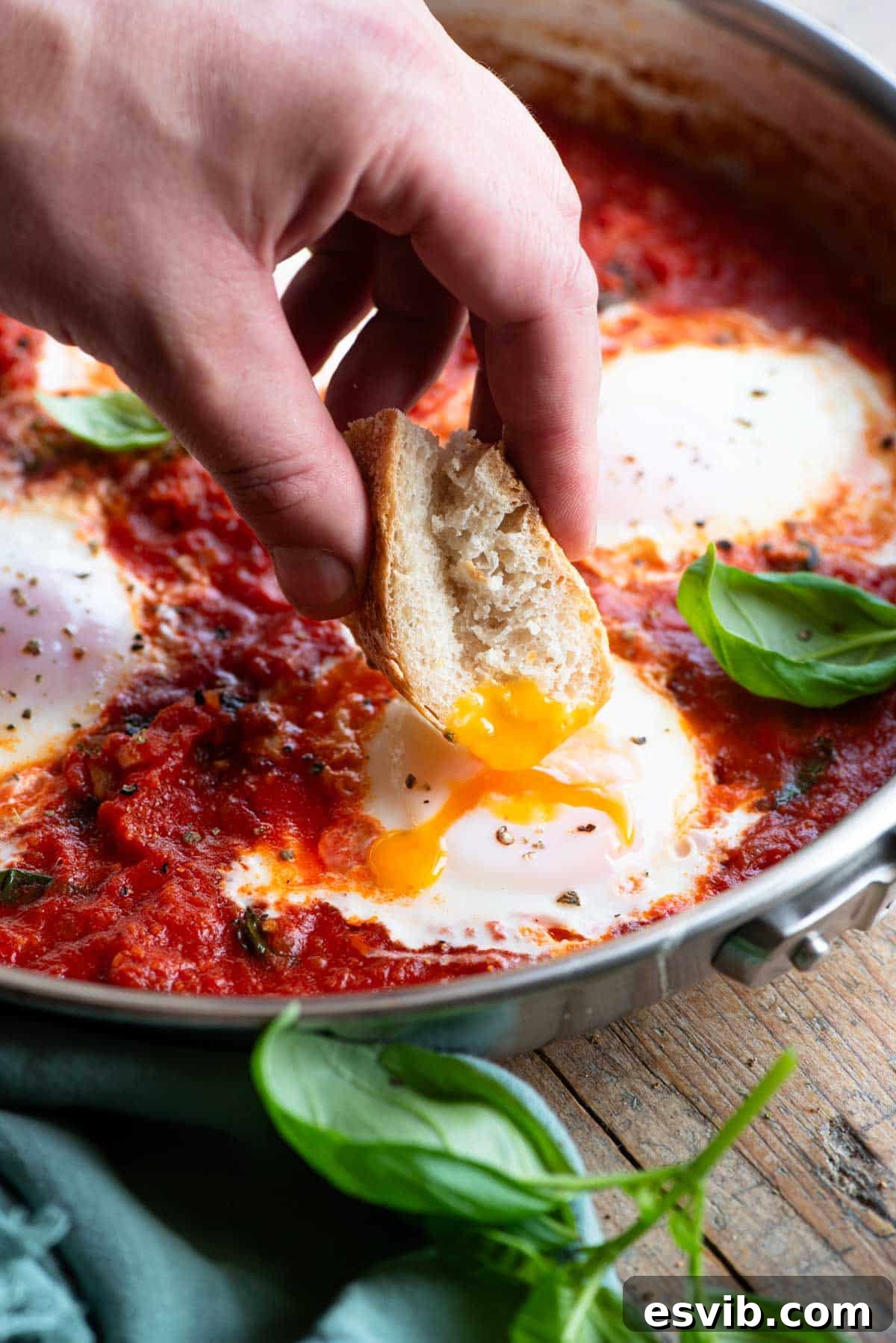
Step 4 – Serve and Enjoy: Finally, remove the lid. You’ll be greeted by beautifully cooked eggs with glistening, runny yolks. Sprinkle a tiny pinch of salt and pepper directly over each egg yolk to enhance its flavor. Serve immediately, with plenty of fresh, crusty bread or char-grilled crostini on the side for dipping. This dish is best enjoyed straight from the pan! (See photo 8 for the final presentation).
Delicious Variations and Customizations for Your Italian Eggs
While this recipe for Nduja Eggs in Purgatory is fantastic as is, it’s also wonderfully adaptable. Feel free to experiment with these variations to suit your taste:
- Add Garlic: For an extra layer of aromatic depth, mince 2-3 cloves of fresh garlic and add them to the pan with the onion. Sauté until fragrant (about 1 minute) before adding the Nduja.
- Olives and Capers: Incorporate some briny goodness! Stir in a handful of pitted Kalamata or Castelvetrano olives and a tablespoon of drained capers with the tomatoes. These additions introduce a delightful umami kick and Mediterranean flair.
- Italian Sausage: If you’re looking to make the dish even heartier, brown some crumbled Italian sausage (mild or spicy, depending on preference) with the onion. Drain any excess fat before proceeding with the Nduja and tomatoes. This makes it a more substantial meal.
- Parmigiano or Pecorino Romano Cheese: A sprinkle of freshly grated hard Italian cheese over the top just before serving adds a wonderful salty, nutty finish. Parmigiano Reggiano offers a milder, sweeter note, while Pecorino Romano provides a sharper, tangier profile.
- Leafy Greens: For a boost of nutrients and color, wilt a handful of fresh spinach or chopped kale into the sauce during the last few minutes of simmering, before adding the eggs.
- Roasted Bell Peppers: Sauté strips of red or yellow bell pepper with the onion for added sweetness and texture. This leans slightly towards a Shakshuka-like flavor but remains distinctly Italian with the Nduja.
- Different Herbs: While basil is traditional, a touch of fresh oregano or parsley (added at the end) can also complement the tomato sauce beautifully.
Recipe FAQs and Pro Tips for Success
Use Fresh Eggs: This cannot be stressed enough. Fresh, free-range eggs don’t just taste better; their whites will hold together more beautifully when poached in the sauce, resulting in a cleaner presentation and a superior texture. They are truly worth the investment for this dish.
Nduja Spice Level: The heat of Nduja can vary quite a bit between brands. We’ve found that 1 ounce (30g) provides a fantastic kick without being overwhelmingly spicy for most palates. However, spice tolerance is personal, so feel free to adjust the amount of Nduja to your liking. Start with a little less if you’re unsure, and you can always add more red pepper flakes at the table.
Easy Way to Add the Eggs: To ensure your eggs slide into the sauce perfectly without splashing or breaking, crack each egg individually into a small ramekin or measuring cup. Then, gently tip the egg from the ramekin directly into the prepared wells in the simmering sauce. Some cooks also find a soup ladle helpful for this task.
Pan Choice: While the recipe specifies a 29cm (11.5 inch) pan, a good quality stainless steel or cast-iron skillet with a lid is ideal. These materials distribute heat evenly, which is crucial for perfectly poaching the eggs and developing the sauce. A non-stick pan can also work, but ensure it’s oven-safe if you plan to keep the dish warm.
Making Crostini or Char-grilled Bread: For a delightful texture contrast, lightly toast slices of baguette or rustic bread in a toaster, under a broiler, or grill them until golden and slightly crisp. Rubbing them with a raw garlic clove while still warm adds another layer of flavor. Prepare these in advance so they are ready to serve with your hot eggs.
Prep Ahead: The tomato sauce can be prepared a day in advance and stored in the refrigerator. When you’re ready to eat, simply reheat the sauce gently on the stovetop until simmering, then proceed with adding the eggs as directed. This makes for an even quicker meal on busy days.
Serving: This recipe is truly best served immediately, straight from the pan, to enjoy the eggs at their peak runny-yolk perfection and the sauce at its most aromatic. Gather your family or guests around the table!
While both Eggs in Purgatory and Shakshuka are popular dishes featuring eggs poached in a flavorful tomato sauce, they originate from different culinary traditions and have distinct flavor profiles. Eggs in Purgatory is a Neapolitan dish, simple and rustic, typically relying on the pure flavors of tomatoes, basil, onion, and often a touch of heat (like Nduja or chili). Shakshuka, on the other hand, is a Middle Eastern and North African recipe, characteristically made with bell peppers, and heavily spiced with cumin, paprika, and sometimes cayenne pepper, giving it a much different aromatic and spicy complexity. The texture of the sauce and the overall spice blend are key differentiators.
The intriguing name of this recipe, Uova in Purgatorio, is believed to be inspired by the powerful imagery of Purgatory as depicted by Dante Alighieri in his 14th-century epic poem, “The Divine Comedy.” The fiery, rich red tomato sauce is said to represent the intense inferno of Purgatory, a place of purification. The pristine, white poached eggs, with their luminous yolks, symbolize the souls ascending the mountain, shedding their sins and seeking salvation before entering Heaven. It’s a beautiful, symbolic name that adds a layer of cultural depth to this simple yet profound dish, reflecting a blend of religious and culinary heritage.
Beyond the Basics: Serving Suggestions and Pairing Ideas
While crusty bread is the quintessential accompaniment for Eggs in Purgatory, don’t limit your options! This versatile dish pairs wonderfully with a variety of sides:
- Creamy Polenta: Serve a generous scoop of soft, creamy polenta underneath the eggs and sauce for a hearty and comforting meal. The polenta beautifully soaks up all the rich flavors.
- Pasta: A small portion of short pasta, like rigatoni or penne, tossed with the sauce (before adding the eggs) can transform this into a pasta dish.
- Rice: A simple side of steamed white or brown rice can also be a delightful accompaniment, especially if you want a gluten-free option for soaking up the sauce.
- Green Salad: A light, crisp green salad dressed with a simple vinaigrette can offer a refreshing counterpoint to the richness of the eggs and sauce, especially when serving for lunch.
- Wine Pairing: A light-to-medium-bodied red wine, such as a Sangiovese or a lighter Primitivo, would complement the tomato and Nduja beautifully. For white wine lovers, a dry Rosé or a crisp Vermentino could also be a lovely choice.
More Italian Breakfast & Brunch Recipes to Try
While Italian breakfasts are traditionally sweet, often featuring pastries, cakes, and cookies, we’ve included some savory options here that are perfect for breakfast or brunch, alongside a couple of beloved sweet Italian classics you absolutely must try!
Breakfast
Sauteed Tomato Breakfast Crostini With Poached Eggs
Breakfast
Pane Frattau (Sardinian Bread with Tomato and Poached Egg)
Breakfast
Italian Breakfast Bundt Cake – Ciambella Allo Yogurt
Italian Desserts
Pasticciotti (Italian Cream Filled Pastries)
If you’ve tried this **Spicy Nduja Eggs in Purgatory recipe** or any other recipe on the blog, we’d love to hear from you! Don’t forget to rate the recipe and share your thoughts in the comments section below. Your feedback is incredibly valuable! You can also **follow us** on Facebook, Instagram, and Pinterest, or sign up for our Newsletter to discover more of our delicious Italian-inspired recipes.
Step By Step Photos Above
Most of our recipes come with detailed step-by-step photos, helpful tips, and tricks to ensure perfect results on your first attempt!
Nduja Eggs in Purgatory
Be the first to rate this recipe!
By Emily
5 minutes
20 minutes
25 minutes
4 servings

Pin
Equipment
-
29cm (11.5 inch) pan (we used stainless steel)
-
Ramekin or small bowl (for cracking eggs)
Ingredients
- 14 oz (400g) chopped tomatoes, (we used Mutti Polpa for best quality)
- 1 white onion, finely chopped
- 1 oz (30g) Nduja, (about 2 tablespoons, adjust to taste for spice level)
- 4 free-range eggs, (at room temperature for best results)
- 1 large handful fresh basil, torn into pieces
- 1-2 tablespoons Olive oil, (extra virgin recommended)
- Salt and pepper, (to taste)
- Crusty bread, for serving (or char-grilled crostini)
Instructions
-
Heat 1-2 tablespoons of olive oil in a 29cm pan over medium heat. Sauté the finely chopped onion for 5-6 minutes until soft and translucent. Add the Nduja, breaking it up with a spoon, and cook until it melts and becomes fragrant (about 2-3 minutes).
-
Stir in the 14oz/400g chopped tomatoes, a large handful of fresh basil, and a good pinch of salt and pepper. Bring the sauce to a gentle simmer over medium-high heat and cook uncovered for 5 minutes. Then, cover with a lid and simmer for another 5 minutes to deepen the flavors.
-
Create 4 wells in the simmering sauce. Crack each egg into a small ramekin or bowl, then gently pour one egg into each well. Reduce the heat to medium-low, cover with the lid, and cook for 4 minutes. Remove the pan from the heat, keeping the lid on, and let it stand for 1 minute to finish cooking the whites.
-
Uncover the pan. Sprinkle a pinch of salt and pepper over each egg yolk. Serve immediately with plenty of crusty bread for dipping into the delicious sauce and runny yolks.
Notes
- Making crostini or char-grilled bread: To make things easier, you can toast your bread slices (baguette or rustic) beforehand. Fresh crusty bread is also a delicious option for dunking.
- Prep ahead: The tomato sauce can be made in advance and reheated before adding the eggs for a quicker meal.
- Serving: This recipe is truly best served immediately to enjoy the perfect runny yolks and warm, aromatic sauce.
Helpful Info for All Recipes
- I always use extra virgin olive oil in all of my recipes unless stated otherwise.
- When I use canned or jarred tomatoes of any kind, I always choose Cirio or Mutti brands for the best results and flavor.
- All vegetables mentioned are medium-sized unless specifically stated otherwise.
- All recipes are thoroughly tested and developed using a fan (convection) oven.
- Find out more about how nutrition is calculated.
- Check out our must-have Italian Pantry Staples.
- You can also find all our Essential Kitchen Tools for Italian Cooking.
Nutrition
Nutrition information is automatically calculated, so should only be used as an approximation.
Did you try this recipe?Leave a comment below!