
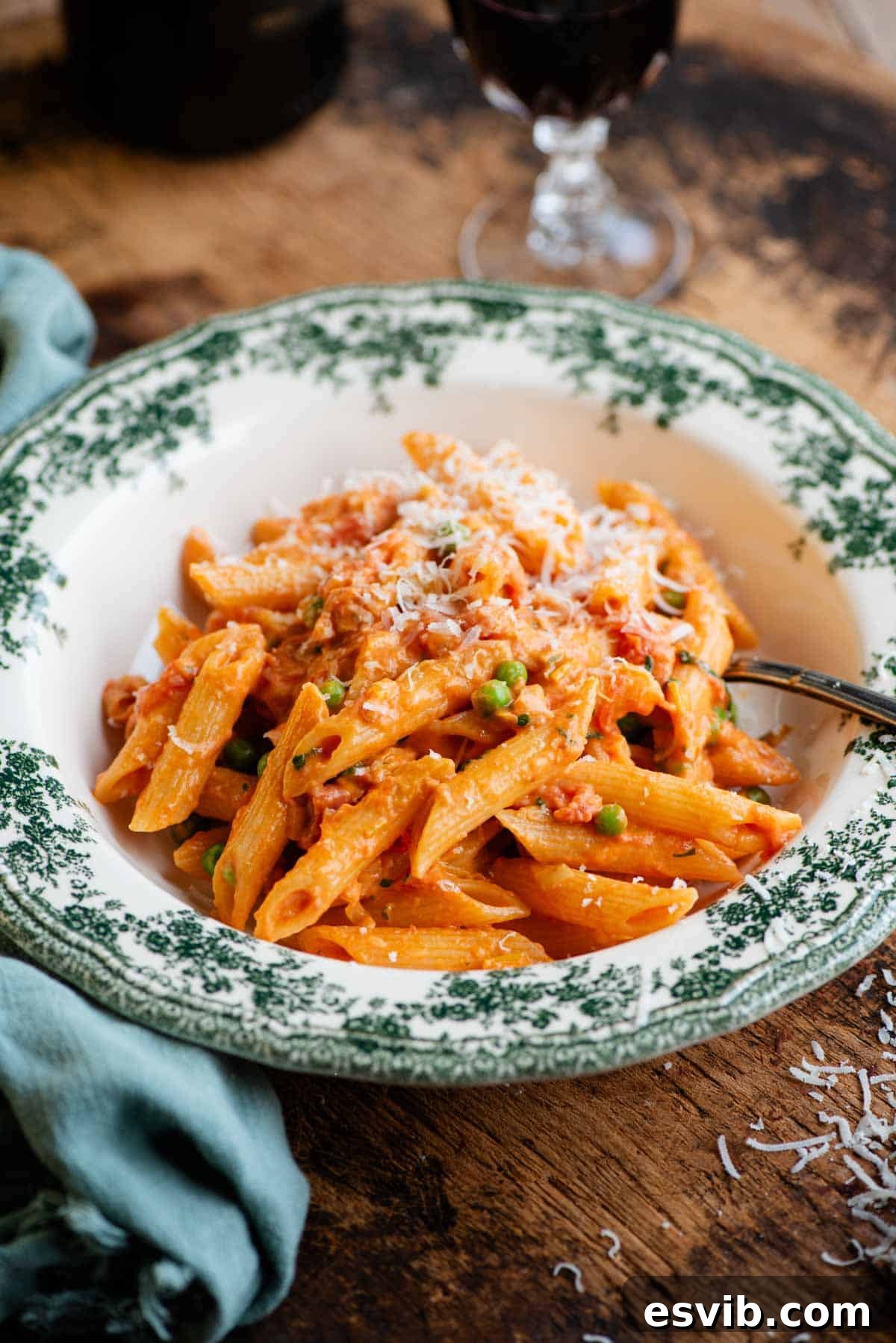
Pasta alle Sette P, affectionately known as the “Seven P’s Pasta,” is a culinary gem from the heart of Tuscany. This delightful dish promises an incredibly rich and creamy tomato sauce, beautifully balanced with the savory depth of pancetta, the delicate sweetness of leeks, and the fresh pop of peas. What makes this recipe truly unique and charming is its playful nod to seven key ingredients, each beginning with the letter ‘P’ in Italian. Surprisingly easy to prepare, this versatile recipe can also be effortlessly adapted to ingredients you might already have on hand, making it a perfect weeknight meal or a special occasion treat.
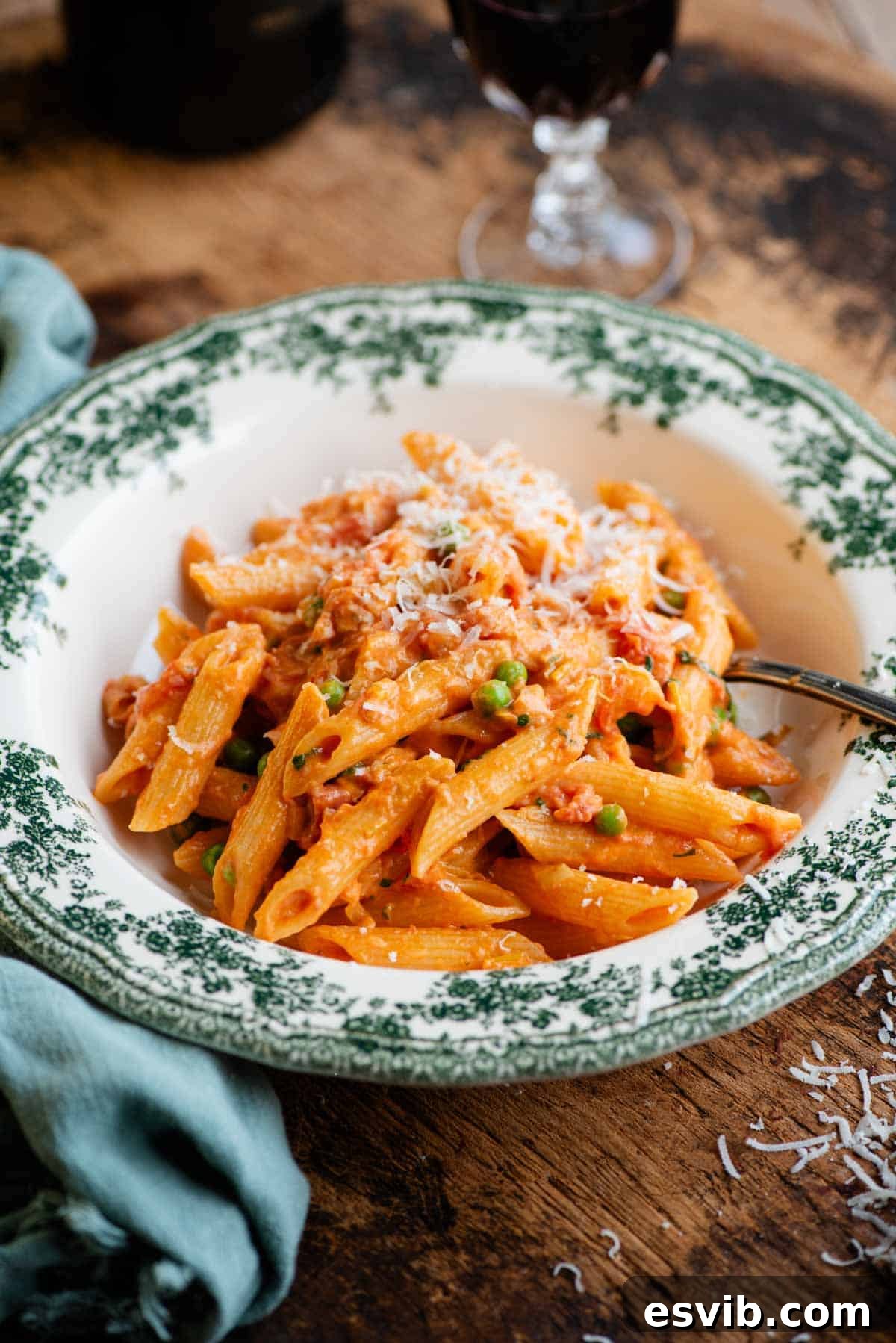
Pasta alle Sette P: A Tuscan Tradition with Seven Delicious ‘P’s
Hailing from the picturesque region of Tuscany, Pasta alle Sette P is more than just a meal; it’s a testament to Italian culinary ingenuity and a celebration of simple, quality ingredients. Often referred to as “Pasta ai Sette Peccati” (pasta of the 7 sins) due to its irresistibly delicious nature, this dish masterfully combines seven core components that, true to its name, all start with the letter ‘P’ when spoken in Italian.
Let’s dive into the delightful lineup that gives this pasta its legendary status:
- Pancetta (Unsmoked): This cured pork belly, similar to bacon but unsmoked, forms the foundational layer of savory flavor. Its rendered fat creates a rich base for the sauce.
- Porro (Leek): A delicate member of the onion family, leeks contribute a mild, sweet oniony note that beautifully complements the other robust flavors without overpowering them.
- Pomodori Pelati (Canned Plum Tomatoes): High-quality whole peeled tomatoes are essential, providing the vibrant, tangy heart of the creamy tomato sauce. San Marzano tomatoes are often considered the gold standard for their sweetness and low acidity.
- Panna (Heavy Cream): The element that transforms the sauce into a luxurious, velvety embrace. Heavy cream adds richness and a smooth texture, harmonizing the flavors.
- Piselli (Peas): These small, sweet green gems add a burst of freshness, a touch of sweetness, and a delightful textural contrast to the dish.
- Prezzemolo (Parsley): Freshly chopped parsley provides a bright, herbaceous counterpoint, lifting the flavors and adding a touch of vibrant color as a garnish.
- Parmigiano Reggiano: The king of Italian cheeses. Its salty, nutty, and umami-rich profile is generously grated into and over the finished pasta, tying all the elements together with unparalleled depth.
While this classic combination is truly exceptional, Italian cooking often embraces flexibility. There are a few delightful variations of this recipe that allow for personal taste or pantry availability. Some versions might introduce Peperoncino (chilli flakes) for a gentle warmth and subtle kick, adding a hint of spice to the creamy sauce. Others might incorporate Peperoni (bell peppers) for added sweetness and color, or even hearty Patate (potatoes) for a more substantial and comforting meal. However, the version we present here is truly beloved. It’s a combination of ingredients that, while perhaps not an obvious pairing at first glance, works together in perfect harmony, resulting in a remarkably delicious and comforting dish that will surely become a favorite in your kitchen.
Essential Ingredients for Pasta alle Sette P
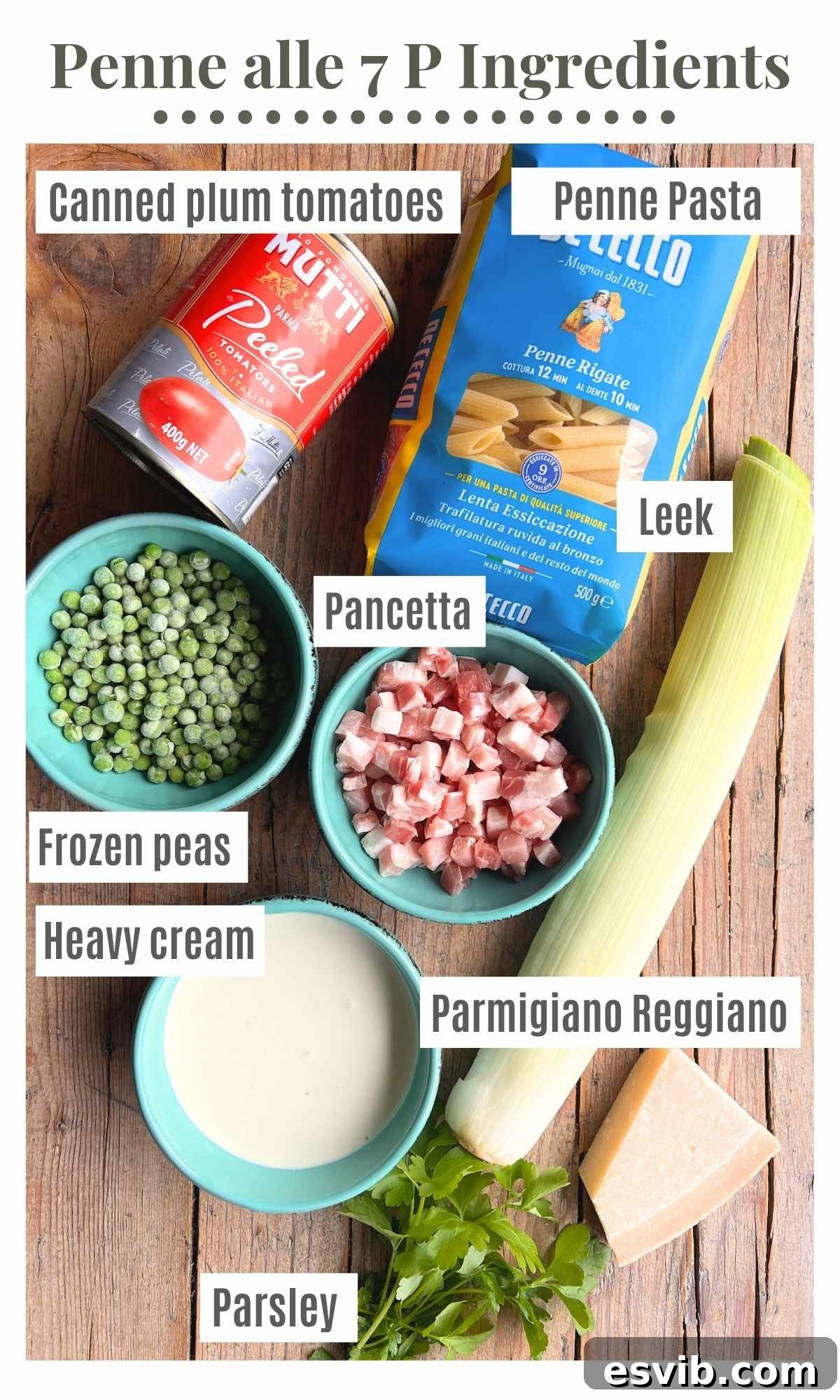
Crafting the perfect Pasta alle Sette P begins with selecting fresh, high-quality ingredients. This dish celebrates simplicity and flavor, so each component plays a crucial role in achieving the authentic Tuscan taste. Here’s what you’ll need to gather:
Ingredient Notes and Expert Substitutions
- Canned Plum Tomatoes: For the best flavor, opt for high-quality whole peeled plum tomatoes, such as San Marzano. Their natural sweetness and low acidity are unparalleled. If plum tomatoes are unavailable, you can also use good quality chopped tomatoes like Mutti Polpa, or even smooth passata (known as tomato puree in the US) for a quicker sauce.
- Heavy Cream (Panna): While heavy cream is essential for the signature richness, you can adjust the amount to your preference. For a lighter version of this pasta, feel free to reduce the quantity of cream or even skip it altogether. If omitting the cream, simply add a generous splash of reserved pasta water to the tomato sauce as it reduces, creating a lighter yet still wonderfully cohesive consistency.
- Pancetta: Unsmoked pancetta is traditional for its delicate, savory flavor. If you can’t find it, high-quality thick-cut bacon can be used as a substitute, though it will impart a smokier flavor. Ensure it’s diced into small, even cubes for proper rendering.
- Leeks (Porro): Choose firm, white, and light green leeks. Wash them thoroughly as they can trap dirt. Shallots or even a small onion can substitute, though they will alter the subtle sweetness.
- Peas (Piselli): Frozen peas are perfectly acceptable and convenient for this recipe. There’s no need to thaw them beforehand; they can be added directly to the sauce. If fresh peas are in season, they make an excellent, vibrant addition.
- Parmigiano Reggiano: Always opt for freshly grated Parmigiano Reggiano. Pre-grated cheese often contains anti-caking agents that can affect the sauce’s texture and flavor. A good quality Pecorino Romano could be a strong-flavored alternative if needed.
Step-by-Step Visual Guide: Crafting Your Pasta alle Sette P
Follow these detailed steps to recreate the authentic flavors of this Tuscan delight in your own kitchen. We’ve included helpful tips and visual cues to ensure your Pasta alle Sette P turns out perfectly every time.
- Prepare the Pancetta and Leeks: Begin by bringing a large pot of generously salted water to a rolling boil for your pasta. Meanwhile, prepare your leek: cut it in half lengthwise, rinse thoroughly under cold running water to remove any hidden grit, pat it dry, and then finely slice it into thin rounds. Heat a large, heavy-bottomed pan or skillet over medium heat. Add a light drizzle of olive oil, just enough to get things started, then add the cubed unsmoked pancetta. Fry the pancetta, stirring occasionally, until it turns lightly golden and releases its fragrant fat. This process usually takes about 5-7 minutes. Once the pancetta is beautifully browned, add the finely sliced leek to the pan. Sauté the leek gently, stirring frequently, until it softens and becomes translucent, which should take another 5-8 minutes. Avoid browning the leeks too much, as their sweetness is key to the sauce. (See photos 1-3 below for visual guidance on browning pancetta and softening leeks.)
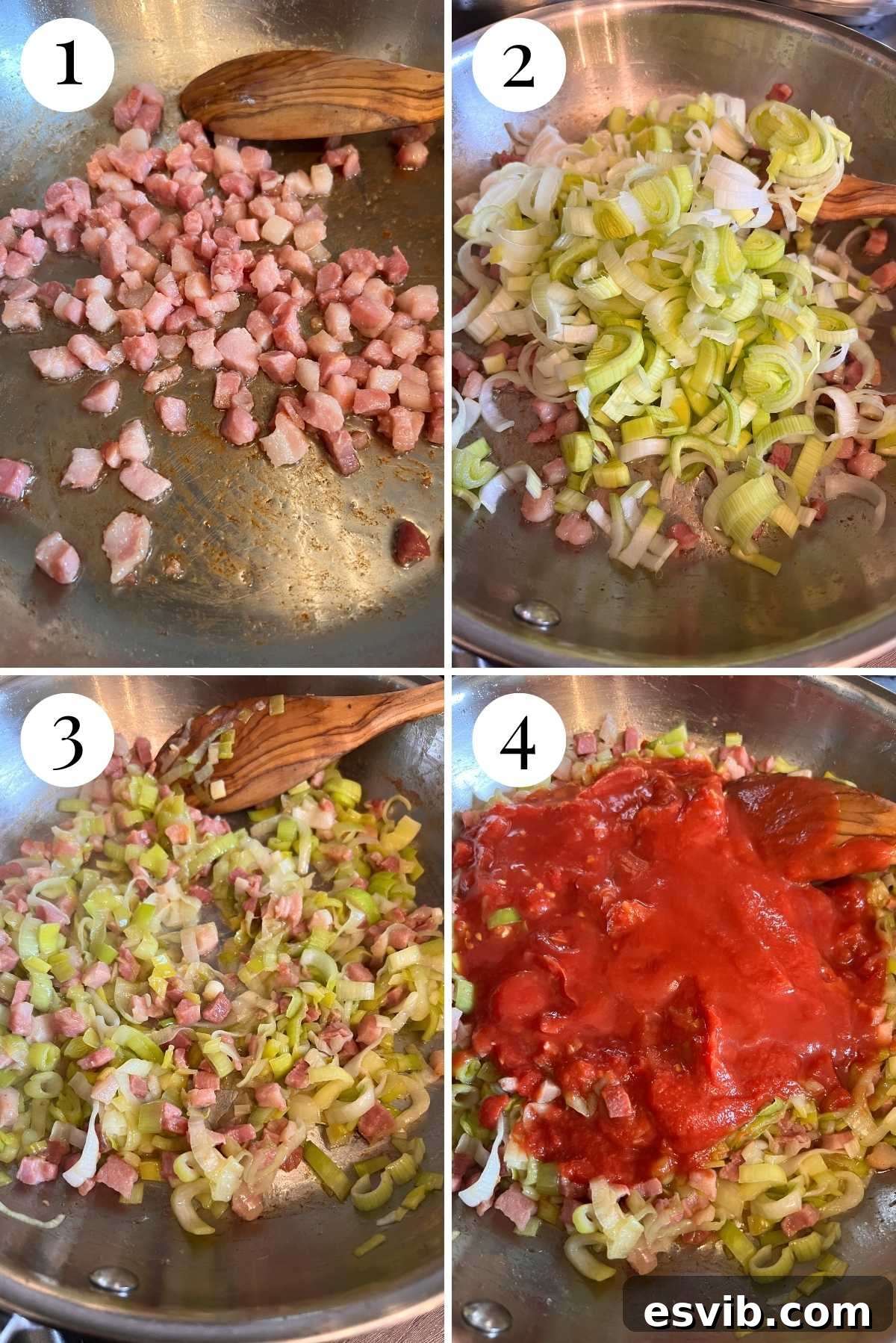
- Introduce the Tomatoes: Once the leeks are beautifully softened, it’s time to add the star of the sauce: the canned plum tomatoes. You have two options here: either crush the tomatoes by hand in a bowl before adding them to the pan for a chunkier sauce, or simply add them whole to the pan and use the side of a wooden spoon to crush them directly. Stir the crushed tomatoes into the pancetta and leek mixture. Bring the sauce to a gentle simmer, allowing the flavors to meld for about 5 minutes. (Refer to photo 4 below for adding and crushing tomatoes.)
- Add Cream and Simmer the Sauce: Pour in the heavy cream and stir everything together, ensuring all ingredients are well combined. Add a pinch of salt to taste, remembering that pancetta and Parmigiano Reggiano will add their own saltiness later. Bring the sauce back to a gentle simmer. At this point, add your chosen pasta (such as penne) to the boiling salted water you prepared earlier. Cook the pasta according to package directions until it is perfectly al dente – firm to the bite. While the pasta cooks, continue to gently simmer your sauce for another 10 minutes, for a total sauce simmering time of about 15 minutes. This allows the flavors to deepen and the sauce to thicken slightly. (See photos 5 and 6 below for the addition of cream and the simmering process.)
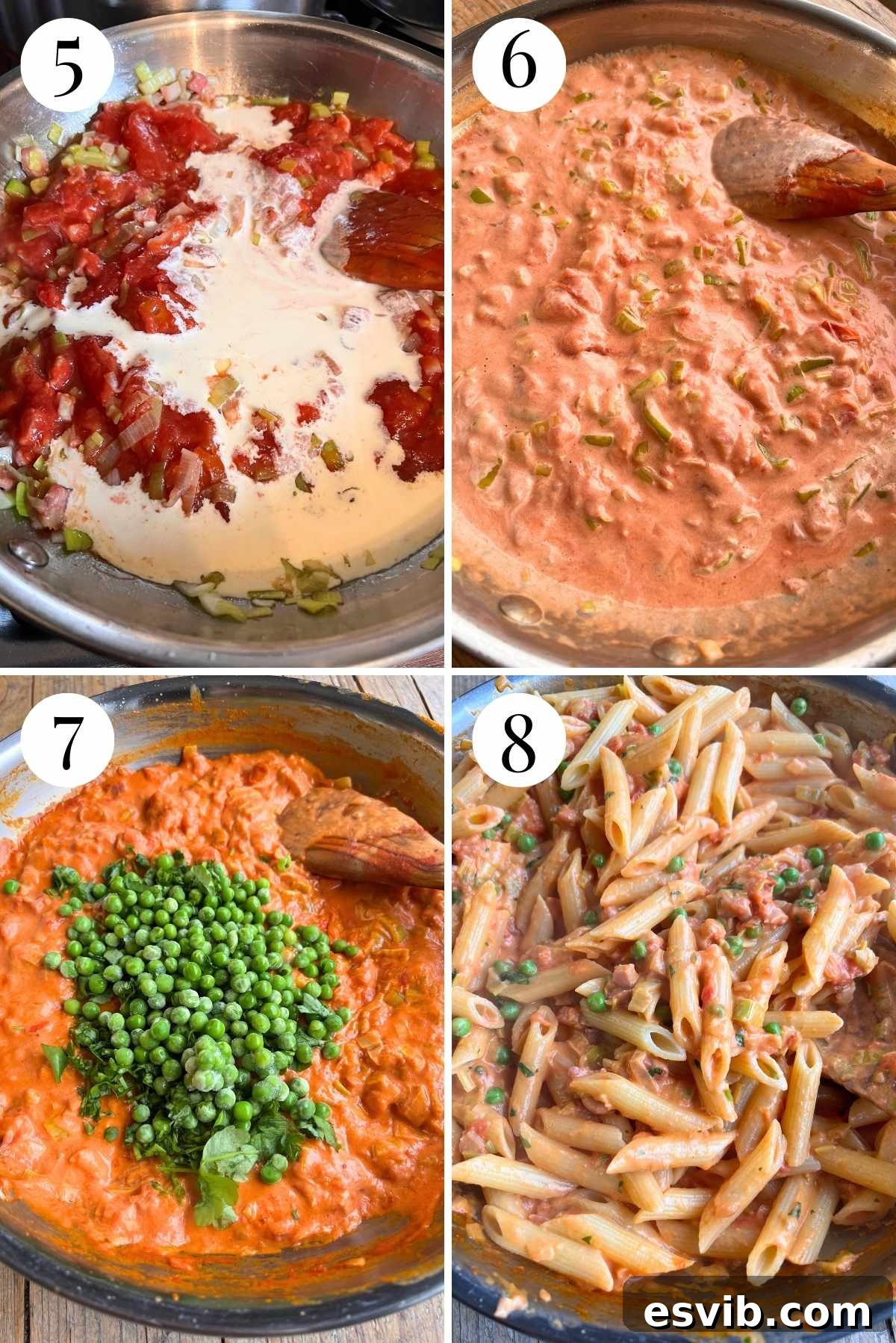
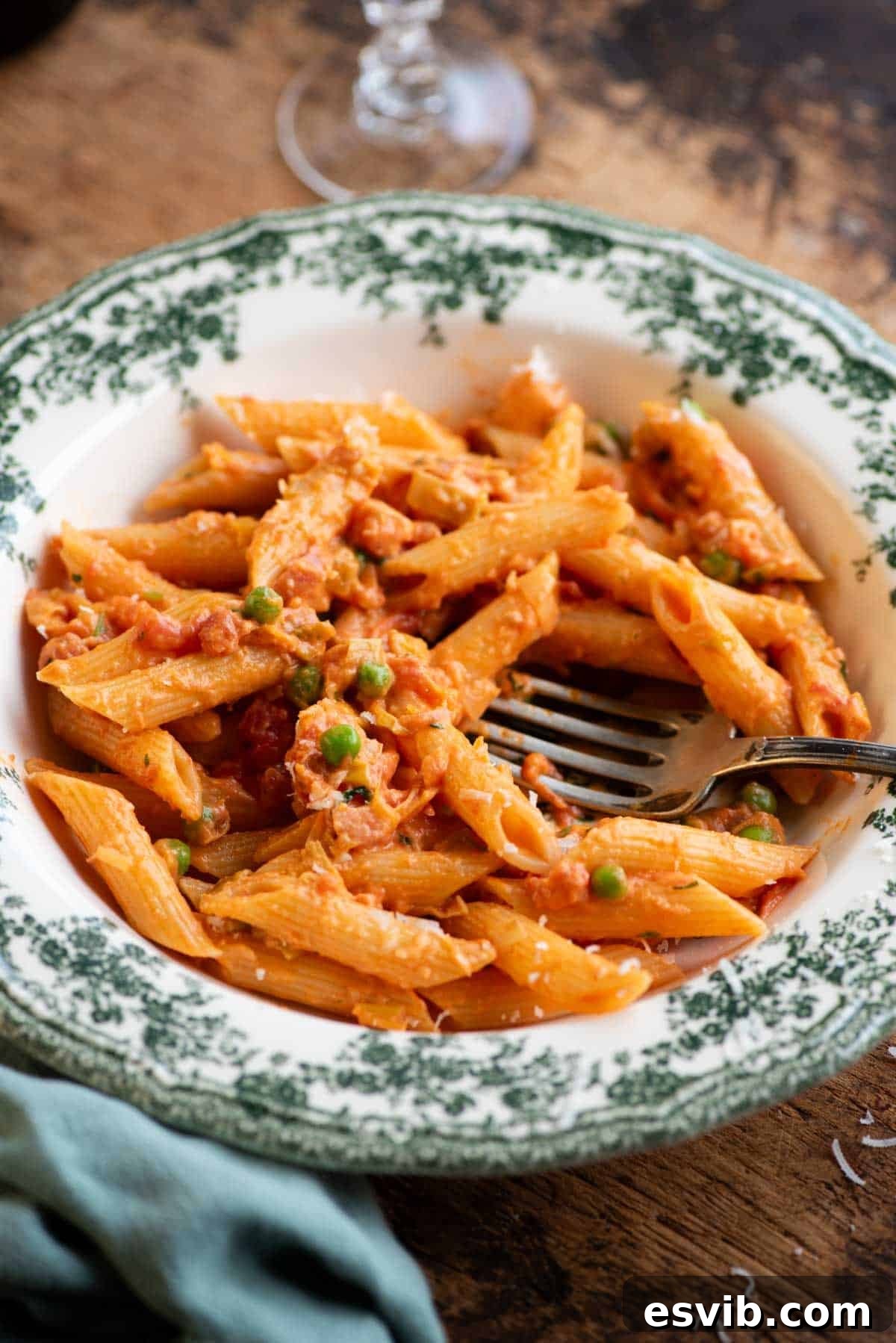
- Finishing Touches: Peas, Parsley, Cheese, and Pasta: Approximately 2-3 minutes before your pasta is ready to be drained, add the frozen peas and finely chopped fresh parsley to the simmering sauce. Stir them through gently. Just before draining the pasta, scoop out about a cup of the starchy pasta water and set it aside; this will be your secret weapon for adjusting sauce consistency. Drain the cooked penne pasta and add it directly to the sauce in the pan. Add the freshly grated Parmigiano Reggiano. Using tongs or a large spoon, toss everything vigorously to coat the pasta thoroughly in the creamy sauce. The warmth of the pasta will help the cheese melt perfectly, and the starchy pasta water, if needed, can be added a tablespoon at a time to achieve your desired consistency – making the sauce silkier and helping it cling beautifully to the pasta. Serve immediately, ensuring every strand is coated in this luscious Tuscan creation. (See photos 7 and 8 below for combining the pasta and final serving suggestions.)
Serving Suggestions & Expert Tips for Pasta alle Sette P
This “Seven P’s Pasta” is a complete and satisfying meal on its own, but a few simple additions can elevate the dining experience:
- Crusty Bread: A must-have for soaking up every last drop of the exquisite creamy sauce.
- Simple Green Salad: A light, fresh salad with a vinaigrette dressing provides a lovely contrast to the richness of the pasta.
- Wine Pairing: A medium-bodied, acidic Italian white wine like a Vermentino or a light-bodied red such as a Chianti Classico will beautifully complement the tomato and pancetta flavors.
Tips for Success:
- Quality Ingredients Matter: Since this dish has relatively few ingredients, the quality of each one truly shines through. Invest in good quality pancetta, San Marzano tomatoes, and freshly grated Parmigiano Reggiano.
- Don’t Overcook the Pasta: Al dente pasta provides the perfect texture and absorbs the sauce better. Always taste your pasta as it cooks.
- Reserve Pasta Water: This starchy water is liquid gold for emulsifying and loosening your sauce to the perfect consistency. Don’t skip this step!
- Fresh Herbs: Always use fresh parsley for garnish; it makes a significant difference in taste and aroma.
- Adjust Seasoning: Taste the sauce before adding the pasta and adjust salt and pepper as needed. Remember the cheese will add saltiness.
More Delicious Pasta Recipes to Try
If you’re looking to explore more authentic Italian pasta creations, you’re in the right place! Here are some other cherished recipes from our collection that we know you’ll love:
Sauces & Dressings
Sugo Finto (Vegetable Sauce)
A flavorful slow-cooked vegetable sauce, perfect for a hearty and healthy pasta meal.
Gnocchi
Spicy Sausage Baked Gnocchi
Indulge in a comforting dish of spicy sausage and creamy baked gnocchi, a true delight.
Pasta
Pasta alla Zozzona (A Roman Classic)
Experience the robust flavors of Rome with this rich and satisfying Pasta alla Zozzona.
Pasta
Pasta With Pancetta, Ricotta and Tomato
A simple yet flavorful pasta featuring the creamy texture of ricotta with savory pancetta and sweet tomato.
If you’ve tried this delightful Pasta alle Sette P recipe or any other recipe from our blog, we would love to hear from you! Don’t forget to rate the recipe and share your culinary experience in the comments section below. Your feedback truly inspires us! You can also connect with us and discover more delicious food by following us on Facebook, Instagram, and Pinterest. For weekly updates and exclusive new recipes, consider signing up for our Newsletter.
Step By Step Photos Above
Most of our recipes come with step by step photos, helpful tips and tricks to make it perfectly first time!
Pasta alle Sette P
By Emily
5 minutes
25 minutes
30 minutes
4
servings
Pasta alle Sette P is a delicious Tuscan pasta made with seven ingredients all beginning with the letter P. The creamy tomato sauce is super comforting and delicious made with leeks, pancetta and peas. This recipe is really easy to prepare and can be adapted with what you have at home.
Ingredients
- 14 oz (400g) Penne pasta, (or other short pasta)
- 1 scant cup (125g) unsmoked pancetta, cubed
- 1 leek
- 14 oz (400g) canned plum tomatoes
- ½ cup (110ml) heavy cream , (double cream UK)
- 1 small handful fresh parsley, finely chopped
- 1/2 cup (70g) frozen peas
- ½ cup (30g) freshly grated Parmigiano Reggiano
- Salt
- Olive oil
Instructions
-
Bring a large pot of water to a boil and salt it well. Cut the leek in half lengthways and rinse it under cold running water to remove any dirt. Pat it dry and finely slice it.
-
Heat a large pan on a medium heat and add a light drizzle of olive oil. Add the cubed pancetta and fry until slightly browned and crispy.
-
Once the pancetta is browned, add the sliced leek and sauté it gently until it’s soft and translucent, about 5-8 minutes. Then, add the plum tomatoes, breaking them up in the pan with the side of a wooden spoon (you can also crush them by hand before adding for a smoother sauce).
-
Add the heavy cream to the tomatoes and stir everything together with a pinch of salt. Bring the sauce to a gentle simmer for 5 minutes. At this point, add the pasta to the salted boiling water and cook until al dente. Continue to simmer the sauce gently for another 10 minutes (15 minutes total simmering time for the sauce).
-
About 2-3 minutes before the pasta is ready, add the frozen peas and finely chopped parsley to the sauce and stir them through. Reserve about 1 cup of pasta water, then drain the cooked pasta and add it directly to the sauce with the freshly grated Parmigiano Reggiano. Toss vigorously to coat the pasta evenly in the creamy sauce, adding a splash of reserved pasta water if needed to achieve your desired consistency.
-
Serve immediately with extra grated Parmigiano Reggiano on top for a truly authentic Tuscan experience. Enjoy!
Helpful Info for All Recipes
- I always use extra virgin olive oil in all of my recipes unless stated otherwise.
- When I use canned or jarred tomatoes of any kind, I always recommend Cirio or Mutti brands for the best results and flavor, as quality truly makes a difference.
- All vegetables mentioned are medium-sized unless specified otherwise.
- All recipes on this blog are carefully tested and developed using a fan (convection) oven.
- Find out more about how nutrition is calculated and our commitment to accuracy.
- Check out our must-have Italian Pantry Staples to stock your kitchen like a true Italian chef.
- You can also find all our recommended Essential Kitchen Tools for Italian Cooking to help you create authentic dishes with ease.
Nutrition Facts
Calories:
670
kcal
|
Carbohydrates:
86
g
|
Protein:
23
g
|
Fat:
26
g
|
Saturated Fat:
12
g
|
Polyunsaturated Fat:
3
g
|
Monounsaturated Fat:
9
g
|
Trans Fat:
0.04
g
|
Cholesterol:
57
mg
|
Sodium:
489
mg
|
Potassium:
594
mg
|
Fiber:
6
g
|
Sugar:
8
g
|
Vitamin A:
1183
IU
|
Vitamin C:
20
mg
|
Calcium:
180
mg
|
Iron:
3
mg
Nutrition information is automatically calculated and should only be used as an approximation.
Did you try this recipe?
Leave a comment below!