
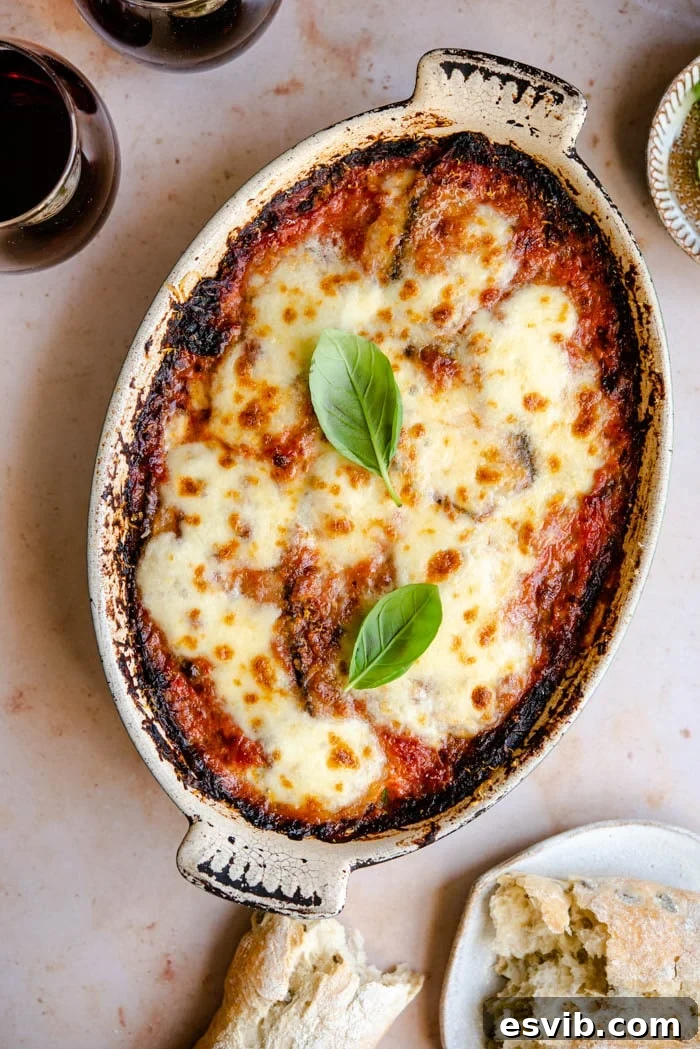
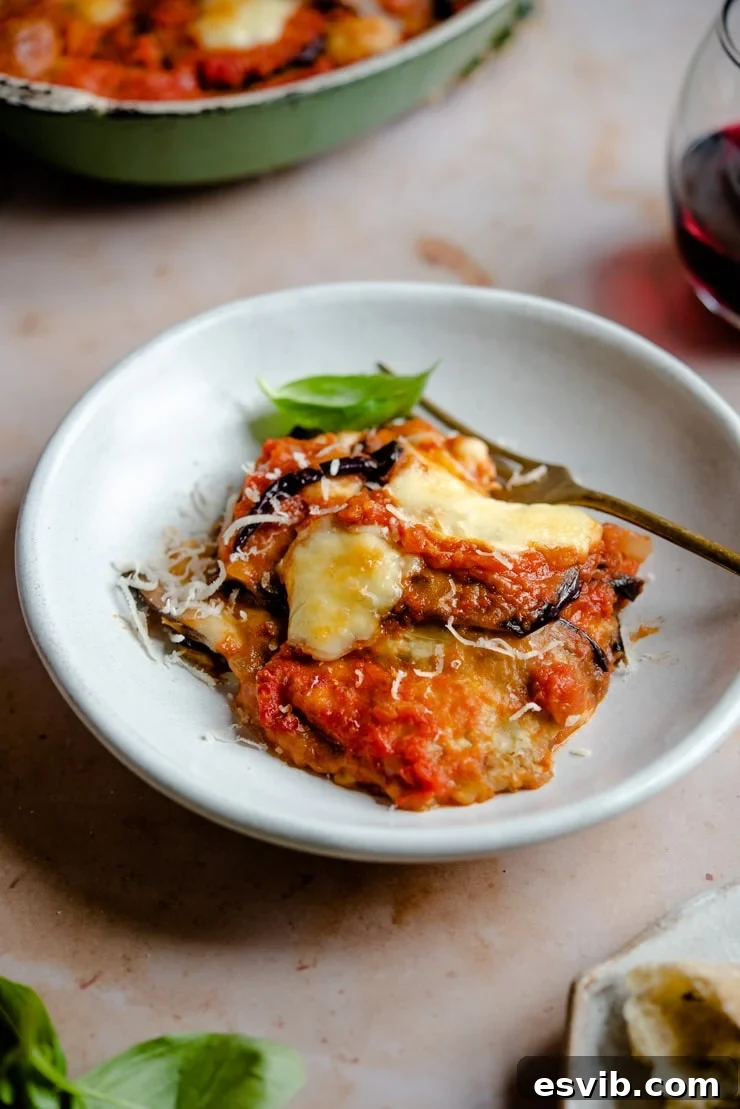
Eggplant Parmigiana, known in Italy as Parmigiana di Melanzane, stands as the quintessential Italian comfort food. This beloved dish features tender slices of aubergine (eggplant), gently fried or baked, meticulously layered with a rich, aromatic tomato sauce, fragrant basil leaves, and generous amounts of both salty Parmesan and creamy mozzarella cheese. Baked until golden and bubbling, it’s a symphony of flavors and textures that truly captures the heart of traditional Italian cooking.
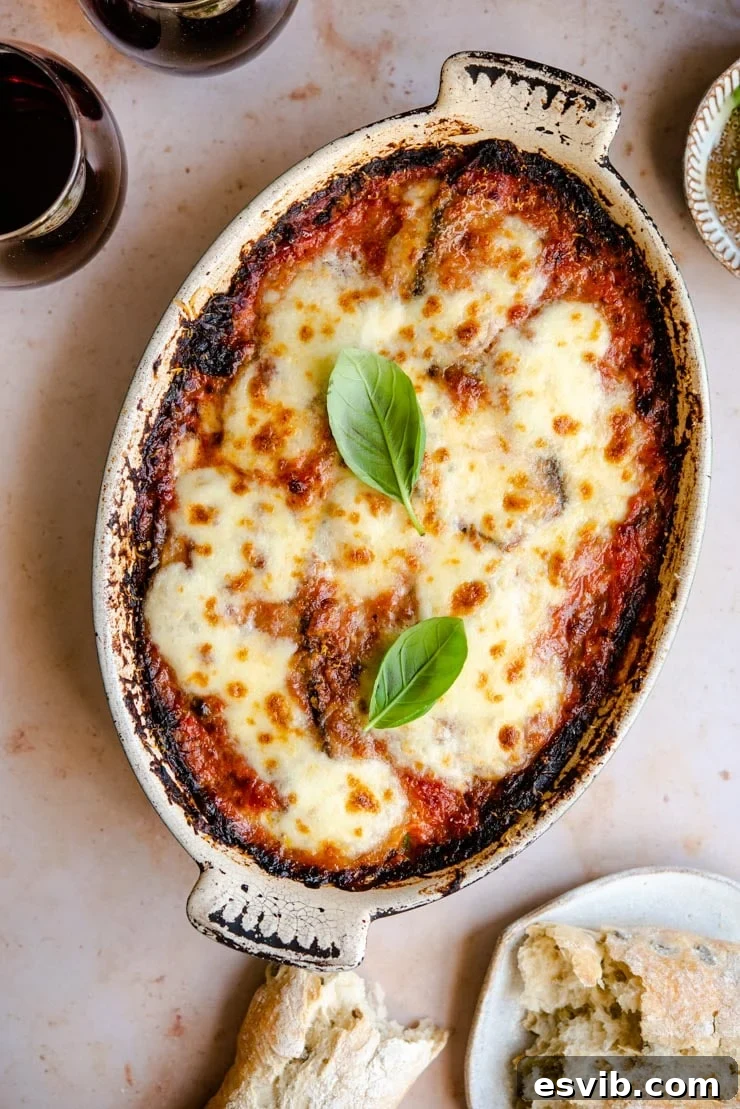
Eggplant Parmigiana, often simply called Eggplant Parmesan in English-speaking countries, is more than just a recipe; it’s a culinary experience steeped in Italian tradition. It’s one of those authentic Italian recipes that brings warmth and joy to any table, effortlessly becoming a family favorite. The magic truly happens when layers of perfectly prepared eggplant meet a vibrant tomato sauce and melt into a cheesy embrace, creating a dish that feels both luxurious and homely at the same time.
There’s an undeniable allure to the harmonious blend of flavors in this dish. Each forkful delivers the soft, savory eggplant, the tangy sweetness of the tomato sauce, the fresh burst of basil, and the irresistible gooeyness of mozzarella complemented by the sharp, nutty notes of Parmesan. Having perfected this recipe over many years, I can confidently say it never fails to impress. It’s a dish that remains a top choice whenever I crave genuine comfort food, right alongside hearty Tuscan sausage ragu, rustic Italian Stuffed Cabbage Rolls, and a classic, comforting beef lasagne.
While Eggplant Parmigiana involves a few distinct preparation stages, each step is surprisingly straightforward and contributes significantly to the final, spectacular result. To ensure your success, we’ve provided detailed instructions, helpful tips, and visual aids through step-by-step photos and a dedicated video. This comprehensive guide is designed to help you create a perfect Parmigiana the very first time you attempt it.
The effort invested in these initial steps is immensely rewarding. Imagine the enticing aroma filling your kitchen as the bubbling tomato sauce and melting mozzarella cheese bake to perfection in the oven. Eggplant, with its unique ability to absorb and enhance flavors, truly shines in this preparation, transforming into a rich and satisfying centerpiece. It’s arguably the ultimate way to enjoy this versatile vegetable, turning humble ingredients into a truly unforgettable meal.
Table of Contents
- Prepping the Eggplant
- How to Make Eggplant Parmigiana – Step by Step
- Make it Healthier
- More Italian Comfort Food Recipes to try
- Full Recipe
Prepping the Eggplant for Perfect Parmigiana
A common question many home cooks have when preparing Eggplant Parmigiana is whether or not to peel the eggplant. The straightforward answer is no, it’s not necessary to peel the eggplant. The skin of the eggplant contains valuable nutrients and adds a structural integrity to the slices, preventing them from becoming too mushy during cooking. However, for some individuals, the skin can be slightly difficult to digest or might have a slightly bitter taste depending on the eggplant variety. Therefore, the decision to peel or not is entirely based on your personal preference and dietary needs.
What I wholeheartedly recommend and consider an absolutely essential step—one you should never skip—is salting the eggplant prior to cooking. This crucial technique serves multiple purposes that are vital for achieving the best possible Eggplant Parmigiana. By lightly salting the eggplant slices and allowing them to rest, you effectively draw out a significant amount of excess moisture. This process prevents the eggplant from becoming watery or soggy when baked in the oven, ensuring a firmer texture and a dish that holds its structure beautifully.
Furthermore, salting also helps to mitigate any potential bitterness that might be present in some eggplants, especially larger or older ones, resulting in a milder, more palatable flavor. Follow this simple yet effective step for truly superior results in your Parmigiana. You can refer to the visual guide (photos 1-6 in the recipe instructions below) to see exactly how to execute this important prep step.
How to Make Authentic Eggplant Parmigiana – Step by Step
Below, you’ll find detailed step-by-step photos that offer a visual guide to crafting this classic dish. For the complete written recipe, including expert tips on storage, freezing, and ingredient specifics, please consult the recipe card at the bottom of this page.
The journey to a perfect Eggplant Parmigiana begins with preparing the aubergines. Start by thinly slicing your eggplants, aiming for a consistent thickness of about 1/4 inch (or 1/2 cm). Arrange these slices in a colander, ideally placed over a bowl or in your sink. Lightly sprinkle the eggplant slices with salt, ensuring an even coating. Allow them to rest for at least one hour; this crucial step draws out excess moisture, which is key for preventing a soggy Parmigiana and ensuring better frying results (see photos 1 & 2 for reference).
While the eggplant is resting, you can prepare the simple yet flavorful tomato sauce. Begin by finely chopping one medium white onion. In a saucepan, sauté the chopped onion in a little olive oil over medium heat until it becomes translucent and soft, but not browned. Next, pour in the tomato passata (pureed tomatoes). Stir in a small bunch of fresh basil, torn by hand to release its aromatic oils. Season with a pinch of salt and freshly ground black pepper, then bring the sauce to a gentle simmer. Let it cook for 10-15 minutes, allowing the flavors to meld beautifully. Once done, set the sauce aside (refer to photos 7 & 8 for visual guidance).
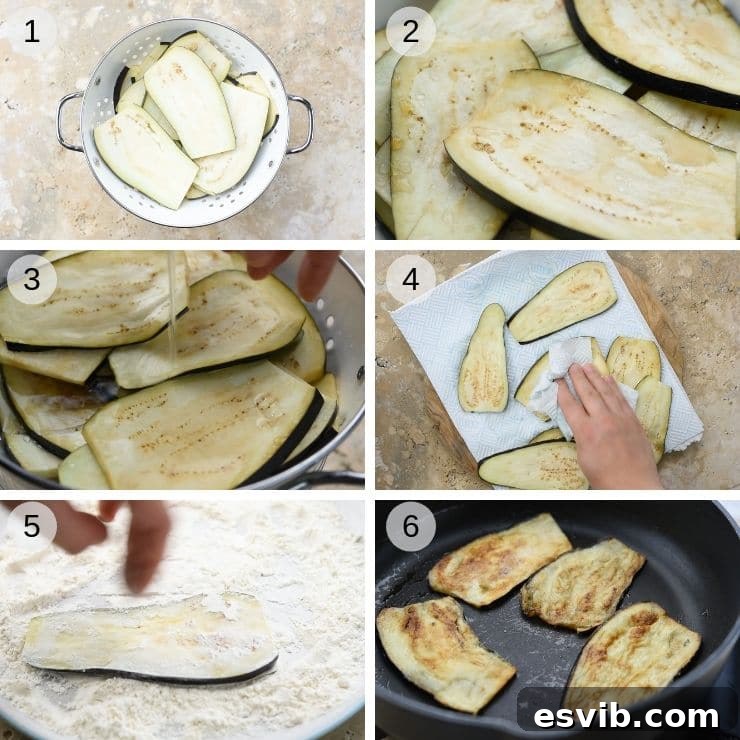
Once the eggplant slices have rested and released their moisture, rinse them thoroughly under cold running water to remove any excess salt. Pat them completely dry using a clean kitchen towel or paper towels. This step is vital for ensuring crispiness when frying and helps the flour adhere properly (see photos 3 & 4).
Lightly dust each dried eggplant slice with flour, shaking off any excess. This thin coating helps create a delicate crispness and prevents the eggplant from absorbing too much oil during frying. Heat sunflower oil in a large skillet or frying pan over medium-high heat. Fry the floured eggplant slices for just a few seconds on each side until they are lightly golden. It’s important not to overcrowd the pan; work in batches if necessary. Once fried, drain the eggplant slices on kitchen paper to absorb any residual oil, ensuring they remain light and flavorful (refer to photos 5 & 6).
Top Tip for Frying: To prevent the eggplant from becoming mushy, make sure to fry each batch immediately after dusting it with flour. If left to sit, the eggplant will absorb the flour, leading to an undesirable texture.
Before assembling, preheat your oven to 180°C (350°F) or gas mark 4. Select a baking dish—an 11×8 inch oval dish works perfectly, but a rectangular or square dish of a similar size (e.g., 10×8 inch) will also be suitable. To prevent the first layer of eggplant from sticking, spoon a small amount of your prepared tomato sauce onto the bottom of the baking dish and spread it evenly.
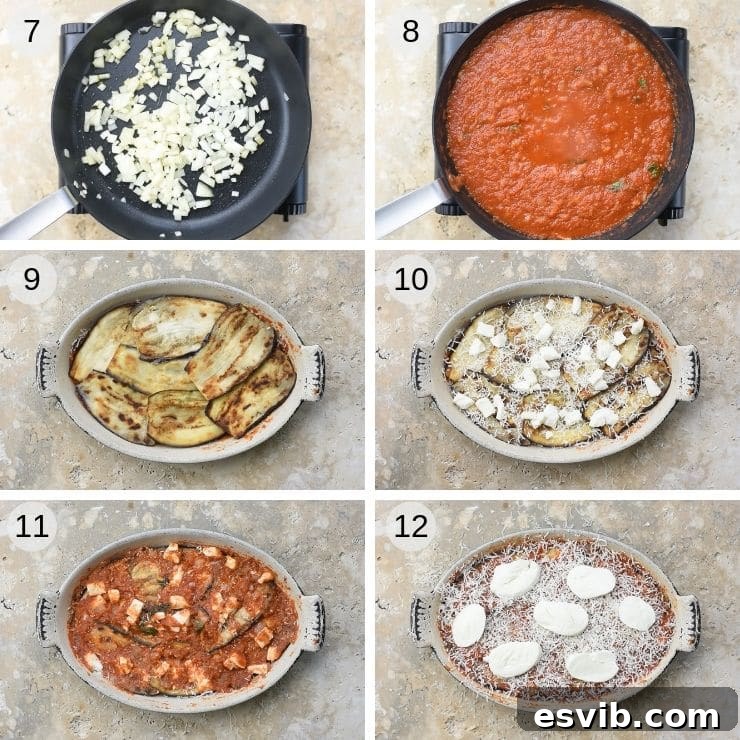
Now, the assembly truly begins, building the rich layers of your Eggplant Parmigiana. Place a single layer of the fried eggplant slices over the tomato sauce base in your baking dish. Generously sprinkle this layer with freshly grated Parmesan cheese, followed by cubes of creamy mozzarella. Add another light sprinkling of black pepper for an extra depth of flavor, and then spoon a little more of your delicious tomato sauce over the cheese. Continue this layering process, alternating between eggplant, Parmesan, mozzarella, pepper, and tomato sauce, until you have just one top layer remaining to complete your dish (see photos 9-11 for a visual guide to layering).
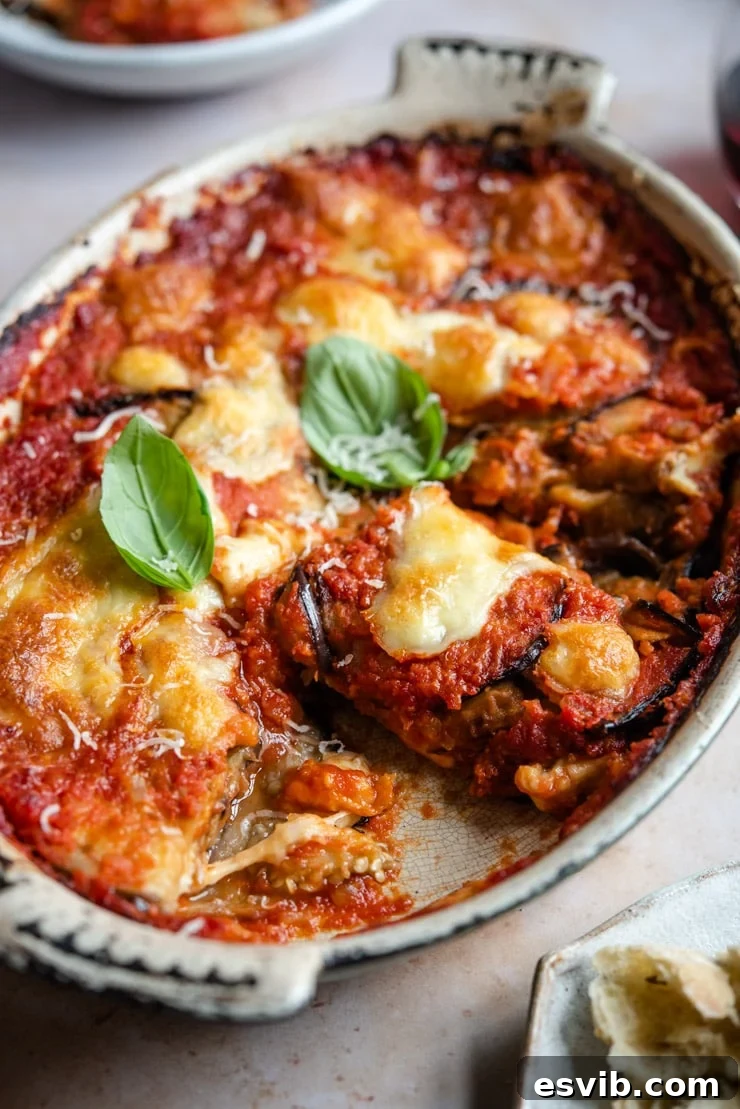
For the grand finale, the top layer should be covered with the remaining tomato sauce, ensuring an even spread. Crown this with a final, generous scattering of both Parmesan and mozzarella cheese. This last layer of cheese will melt and brown beautifully, forming an irresistible crust. Cover the baking dish loosely with aluminum foil to prevent the cheese from browning too quickly and to allow the flavors to meld. Bake for 20 minutes with the foil on. Then, carefully remove the foil and continue baking for another 20 minutes, or until the top is gorgeously golden brown and bubbling enthusiastically. The internal temperature should be piping hot throughout. Allow the Parmigiana to rest for at least 5-10 minutes before serving; this allows the layers to set and makes for easier, cleaner slicing.
Make it Healthier: Lighter Variations of Eggplant Parmigiana
While our traditional recipe offers the authentic, rich taste of Parmigiana di Melanzane, it’s entirely possible to adapt it for a slightly lighter, healthier meal without sacrificing much of the incredible flavor. The primary way to reduce the fat content is by altering how you cook the eggplant.
Instead of dusting the eggplant slices in flour and frying them in oil, consider grilling or baking them. To grill, brush the eggplant slices lightly with olive oil and grill them on a griddle pan or outdoor grill until tender with appealing char marks. If baking, arrange the slices on a baking sheet, brush with olive oil, and bake at 200°C (400°F) until soft and slightly golden. Both methods still yield wonderfully tender eggplant that absorbs the rich tomato and cheese flavors beautifully, resulting in a dish that is just as delicious but significantly lighter. This alternative method is a fantastic way to enjoy this Italian classic with fewer calories and less fat.
For those looking to experiment with cheese, another delightful alternative to classic mozzarella is smoked scamorza cheese, or even smoked mozzarella. These options introduce a wonderful smoky depth to the entire dish, elevating its flavor profile to an incredible new level. The subtle smokiness complements the sweetness of the tomato sauce and the earthiness of the eggplant beautifully, offering a sophisticated twist on the traditional recipe. You could also incorporate some ricotta cheese into the layers for an even creamier texture and milder flavor.
More Italian Comfort Food Recipes to Try
- Italian Stuffed Cabbage Rolls
- Eggplant Lasagna with Prosciutto and Mozzarella
- Eggplant Rollatini with Spinach and Ricotta
- Creamy Tuscan Chicken with Garlic & Pancetta
- Lasagna di Carnevale (Neapolitan lasagna)
- Italian Beef Ragu – A Classic Recipe
We absolutely love hearing from you! If you’ve had the pleasure of trying this Eggplant Parmigiana recipe or any other delightful dish from our blog, please don’t hesitate to share your experience in the comments section below. Your feedback and culinary adventures truly inspire us! You can also connect with us and discover more delicious food ideas and behind-the-scenes glimpses by following us on Facebook, Instagram, and Pinterest.
Step By Step Photos Above
Many of our recipes include detailed step-by-step photos, along with helpful tips and tricks, to ensure you achieve perfect results on your very first attempt.
Parmigiana di Melanzane (Eggplant Parmigiana)
By Emily
Print Recipe
Ingredients
- ▢ 2 large aubergines/eggplant, approximately 700g (1.5 lbs)
- ▢ 1.5 lbs pureed tomatoes (passata), chunky or smooth texture (700g)
- ▢ 1 white onion
- ▢ Small bunch of fresh basil
- ▢ 8.8 oz mozzarella cheese, cut into small cubes (250g)
- ▢ 3/4 cup Parmigiano Reggiano cheese, freshly grated (70g)
- ▢ 1/2 tbsp olive oil
- ▢ flour, for dusting the eggplant
- ▢ sunflower oil, for frying (approximately 1/2 cup / 125ml, adjust as needed)
- ▢ salt and pepper, to season all layers
Instructions
-
Begin by thinly slicing the eggplant (aubergines) to about 1/4 inch (0.5 cm) thickness. Place these slices in a colander, sprinkle them lightly but evenly with salt, and set aside for 1 hour. This crucial step draws out excess moisture, which is essential for preventing the dish from becoming watery and aids in achieving crispy fried eggplant.
-
While the eggplant rests, prepare the simple, flavorful tomato sauce. Finely chop one white onion and sauté it in a pan with the olive oil over medium heat. Cook until the onion is translucent and soft, ensuring it doesn’t brown. Add the tomato passata (pureed tomatoes) to the pan, along with a small bunch of fresh basil, torn by hand to release its full aroma. Season the sauce with a pinch of salt and pepper, stir well, then let it simmer gently for 10-15 minutes to allow the flavors to deepen and meld. Once cooked, set the sauce aside.
-
After the eggplant has rested, rinse the slices thoroughly under cold running water to wash off the salt. Pat them completely dry with a clean kitchen towel or paper towels. Lightly dust each dried eggplant slice with flour, shaking off any excess. In a large skillet or frying pan, heat sunflower oil over medium-high heat. Fry the floured eggplant slices for a few seconds on each side until they are lightly golden brown. Work in batches to avoid overcrowding the pan. Once fried, immediately transfer them to a plate lined with kitchen paper to drain any excess oil, ensuring they stay crisp and not greasy.
-
Preheat your oven to 180°C (350°F / Gas Mark 4). For baking, an 11×8 inch oval dish works wonderfully, but any rectangular or square baking dish of a similar size (such as 10×8 inch) will also be suitable.
-
To prevent the first layer of eggplant from sticking and to ensure even cooking, spoon a small amount of the prepared tomato sauce into the bottom of your chosen baking dish and spread it evenly across the base.
-
Begin assembling the Parmigiana by placing a single layer of the fried eggplant slices over the tomato sauce base. Follow this with a generous sprinkling of freshly grated Parmesan cheese, then scatter cubes of mozzarella cheese over the Parmesan. Add a light dusting of black pepper and a couple of spoonfuls of tomato sauce. Remember to reserve about one-third of the total tomato sauce for the final top layer. Continue layering in this sequence (eggplant, Parmesan, mozzarella, pepper, tomato sauce) until you have built all but the very last layer of your dish.
-
For the top layer, spoon over the remaining tomato sauce, ensuring it covers the last layer of eggplant. Finish by generously topping with the remaining Parmesan and mozzarella cheese. Cover the baking dish loosely with aluminum foil and bake in the preheated oven for 20 minutes. After this time, remove the foil and continue baking for another 20 minutes, or until the cheese is beautifully golden brown and bubbling enthusiastically. Let the Eggplant Parmigiana rest for 5-10 minutes before slicing and serving. This resting period allows the layers to set and makes for easier, cleaner portions.
Video
Notes
- Always Salt the Eggplant: This step is non-negotiable for the best results. Salting the eggplant before cooking draws out excess moisture, preventing your Parmigiana from becoming soggy and ensuring a better texture. It also helps reduce any bitterness.
- No Breadcrumbs Needed for Traditional Parmigiana: Authentic Eggplant Parmigiana typically relies on a light dusting of flour for the eggplant. Breadcrumbs are often used in American-style eggplant parmesan, but for a true Italian taste, flour is all you need for that perfect delicate coating.
- Eggplant Thickness is Key: Aim to cut your eggplant slices approximately 1/4 inch (or 1/2 cm) thick. While perfect accuracy isn’t crucial, keeping them consistently thin will ensure they cook evenly and integrate beautifully into the layers of the dish.
- Dredge and Fry Immediately: Once you’ve dusted a batch of eggplant slices in flour, fry them straight away. If floured eggplant sits for too long before frying, the eggplant absorbs the flour and can turn soft and mushy, losing the desired texture.
- Invest in High-Quality Tomatoes: The tomato sauce is a foundational element of Eggplant Parmigiana. Using the highest quality pureed tomatoes (passata) available will make a significant difference in the overall flavor of your dish. Low-quality tomatoes can unfortunately detract from the entire experience.
- Prepping in Advance: This dish is excellent for preparing ahead of time. You can assemble the entire Parmigiana and store it, unbaked, in the refrigerator for up to 1-2 days. When ready to serve, simply take it out of the fridge an hour before baking to let it come to room temperature, then bake as directed.
- Leftovers Storage: Any leftover Eggplant Parmigiana stores wonderfully in an airtight container in the refrigerator for 3-4 days. To reheat, cover it loosely with foil and bake in the oven until it’s heated through and bubbling. Deliciously, leftovers can also be enjoyed cold, perhaps alongside a fresh salad.
- Freezing Instructions: Eggplant Parmigiana freezes exceptionally well, both as a fully prepared unbaked dish or as individual leftover portions. For convenience, I highly recommend assembling it in disposable aluminum foil trays if you plan to freeze it before baking. This allows you to bake it directly from frozen (at 180°C / 350°F for approximately 1 hour, or until piping hot throughout). If you freeze the Parmigiana in a regular ceramic or glass baking dish, ensure it is thoroughly defrosted in the refrigerator overnight before baking to prevent thermal shock and ensure even cooking.
Helpful Info for All Our Recipes
- We consistently use high-quality extra virgin olive oil in all our recipes unless specifically stated otherwise, for superior flavor.
- For canned or jarred tomatoes of any variety, we always opt for renowned Italian brands such as Cirio or Mutti. Their exceptional quality consistently delivers the best flavor and results in our dishes.
- Unless specified, all vegetables referenced in our recipes are considered medium-sized.
- All recipes featured on our site are rigorously tested and developed using a fan (convection) oven to ensure reliable outcomes.
- For transparency, you can learn more about how nutrition information is calculated for our recipes.
- Discover our essential guide to Italian Pantry Staples to stock your kitchen like a true Italian cook.
- Explore our comprehensive list of Essential Kitchen Tools for Italian Cooking to equip yourself for authentic Italian culinary adventures.
Nutrition
Nutrition information is automatically calculated, so should only be used as an approximation.