
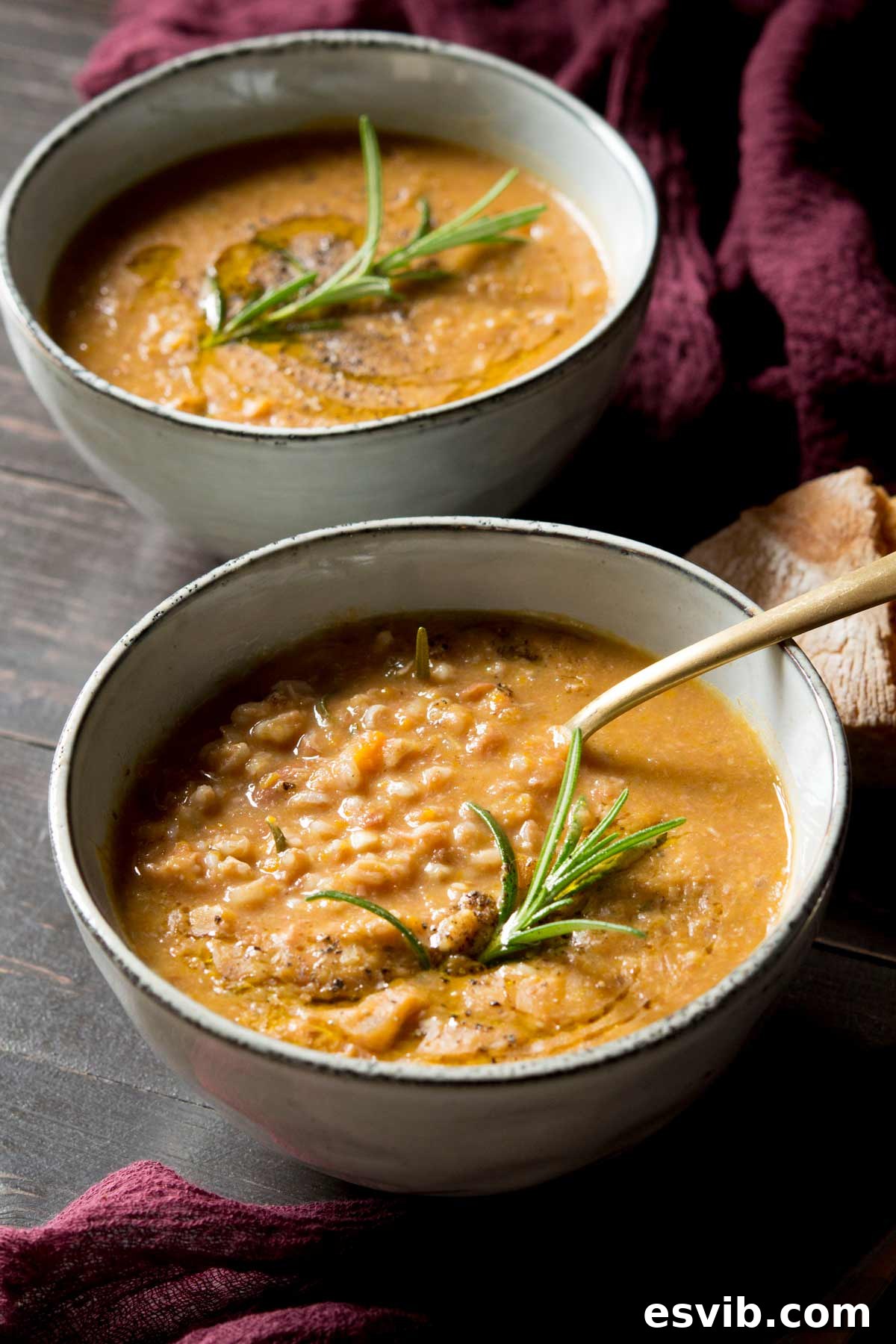
Experience the true essence of Italian home cooking with our simple, yet incredibly delicious, Tuscan Farro Soup. This heartwarming recipe is a celebration of robust flavors, featuring wholesome vegetables, creamy borlotti beans (also known as cranberry beans), savory smoked pancetta, and fragrant garlic. Each spoonful is packed with authentic taste, brimming with nutrients, and absolutely perfect for finding warmth and comfort during the colder months!
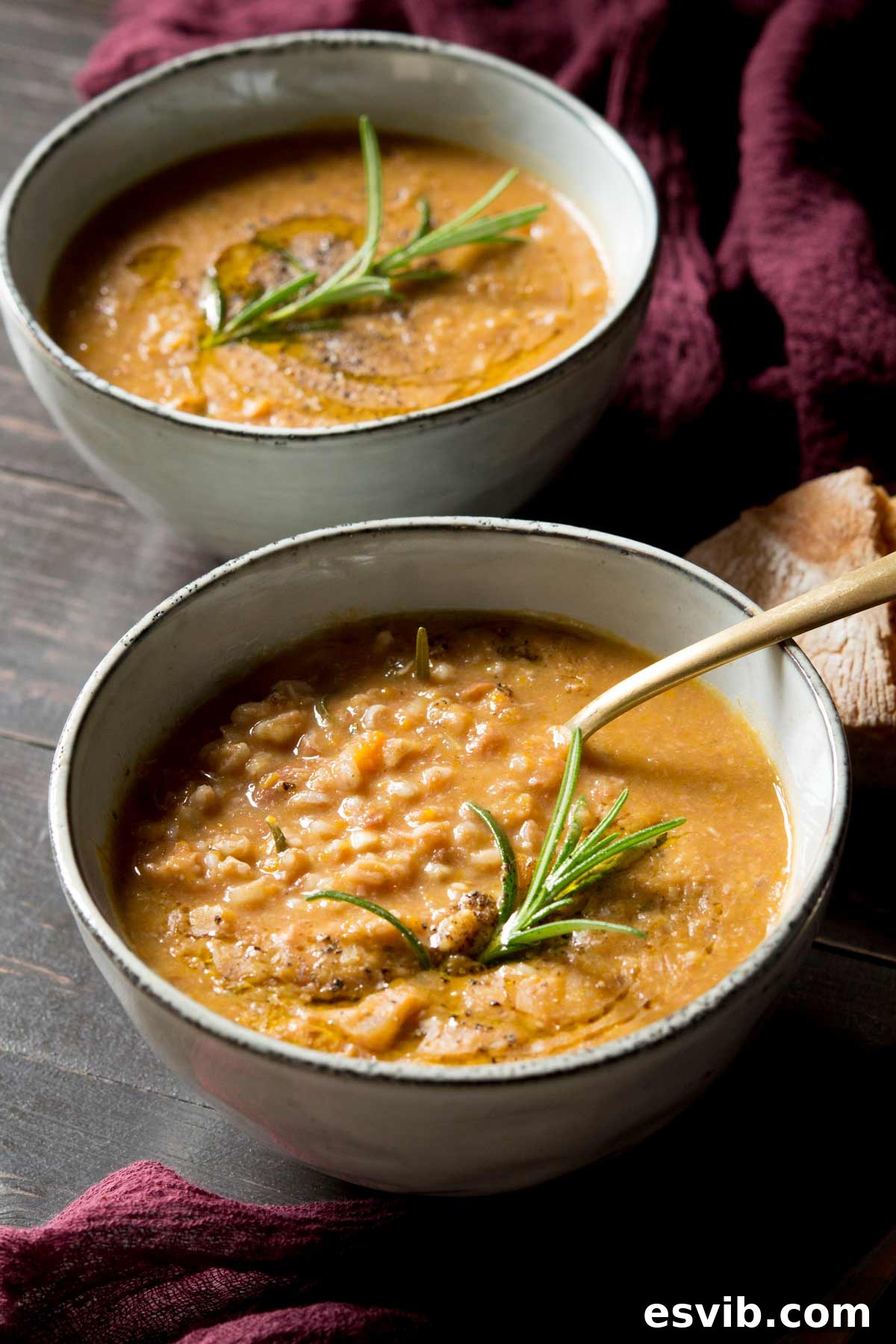
Authentic Tuscan Farro Soup: A Culinary Journey into Italian Comfort
Embark on a delightful culinary journey to the heart of Tuscany with this authentic Farro Soup recipe. Farro, an ancient Italian wheat grain, has been a staple in Mediterranean diets for centuries, cherished for its satisfying chewiness and distinct nutty flavor. It shares many characteristics with spelt and is widely celebrated across Italy, particularly in the Tuscan region, where it forms the backbone of numerous hearty dishes, from nourishing soups and stews to refreshing salads.
This particular Tuscan Farro Soup recipe stands out as one of my absolute favorites. It beautifully encapsulates the essence of Italian country cooking – simple, wholesome ingredients transformed into a dish brimming with incredible depth and soul-satisfying flavor. Imagine sweet, tender root vegetables, the irresistible smoky richness of pancetta, the creamy texture of borlotti beans, and the aromatic warmth of fresh rosemary, all simmering together to create a symphony of tastes that will transport you straight to an Italian nonna’s kitchen.
To truly complete this rustic Italian dining experience, ensure you serve your generous bowls of Tuscan Farro Soup with an abundance of crusty artisan bread, perfect for soaking up every last drop of the rich, savory broth. For an extra special touch, a piece of warm, fluffy homemade focaccia makes for an irresistible accompaniment!
What Makes This Tuscan Farro Soup an Italian Gem?
Beyond its delicious taste, this Tuscan Farro Soup is a beacon of nutritious, flavorful Italian home cooking. Here’s why this recipe is a must-try and will quickly become a cherished favorite in your kitchen:
- Profound, Earthy Flavors: The foundation of this soup is built upon a classic Italian soffritto (a sautéed mix of carrots, celery, and onion), which lays down a sweet, savory, and aromatic base. Combined with savory pancetta, pungent garlic, and fresh rosemary, it creates an incredibly complex and inviting flavor profile that deepens wonderfully as the soup gently simmers.
- Wholesome and Substantially Hearty: Farro, the star ancient grain, contributes a fantastic chewy texture and a significant nutritional boost, making this soup incredibly satisfying and filling. Paired with protein-rich borlotti beans, it transforms into a well-rounded and complete meal on its own.
- Bursting with Nutrients: This soup is a nutritional powerhouse, loaded with fresh, fiber-rich vegetables, wholesome grains, and hearty beans. When prepared with lean pancetta or made vegetarian, it’s a healthy choice that supports overall well-being and a balanced diet.
- The Ultimate Comfort Food: While it’s undoubtedly a go-to dish for chilly evenings and brisk autumn days, its fresh ingredients and vibrant flavors make it a comforting meal enjoyable throughout the year. It’s the epitome of cozy, soul-warming food.
- Ideal for Meal Prepping: Like many exceptional soups, this Tuscan Farro Soup often improves with age, tasting even better the day after it’s made. This makes it an excellent candidate for meal preparation, ensuring you have delicious, healthy meals ready to go throughout the week, or for effortlessly feeding a larger gathering.
Key Ingredients: Unlocking the Authentic Tuscan Taste
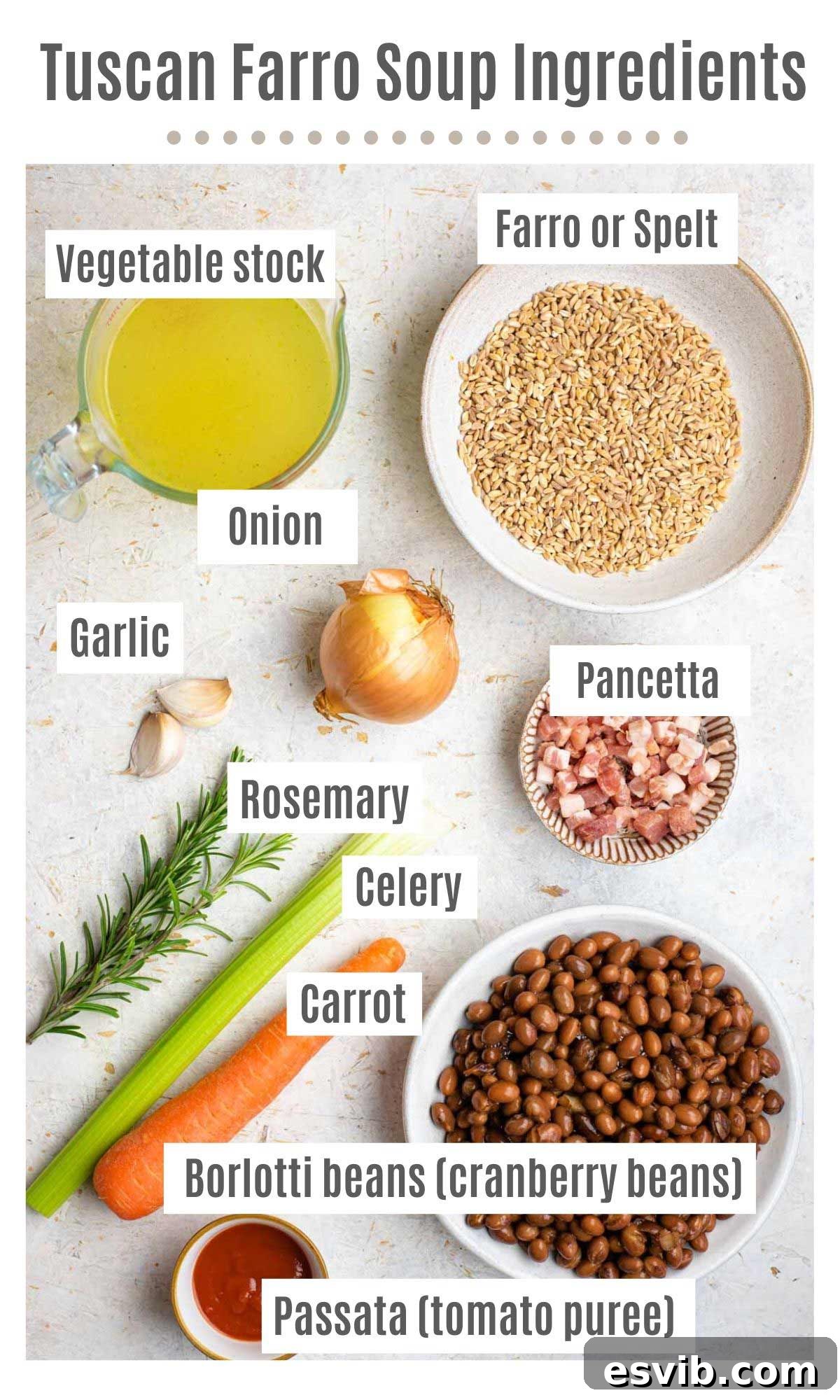
Crafting this soulful Tuscan Farro Soup relies on a selection of fresh, high-quality ingredients, each playing a crucial role in building the soup’s authentic flavor and comforting texture. Here’s a detailed look at the components that will bring this Italian classic to life:
- Farro: The cornerstone of our soup! This ancient Italian wheat grain is beloved for its satisfying chewiness and delicate nutty taste. It adds a wonderful rustic character to the soup. If traditional farro is difficult to source, excellent alternatives include spelt or barley, which offer similar hearty textures and nutritional benefits. Regardless of the type, always ensure you rinse farro thoroughly under cold water before cooking to remove any excess starch.
- Aromatic Vegetables (Soffritto): The foundation of countless Italian dishes, the classic trinity of finely chopped carrot, celery, and onion (collectively known as soffritto) is non-negotiable. This aromatic base is slowly sautéed to draw out its natural sweetness and build incredible depth of flavor right from the start of the cooking process.
- Garlic: Indispensable for imparting that characteristic Italian warmth and robust, pungent aroma. For the best flavor, always opt for freshly minced garlic rather than pre-packaged alternatives.
- Rosemary: This wonderfully fragrant herb is a defining element of Tuscan cuisine. Its piney, slightly peppery notes infuse the soup with an authentic rustic charm. Using fresh sprigs of rosemary will yield the most impactful and aromatic results.
- Pancetta: Cubed smoked pancetta is key for adding a fantastic salty, savory, and smoky depth to the soup. As it renders, it releases flavorful fat that becomes the initial base for cooking the soffritto. For those seeking a vegetarian version, simply omit the pancetta and use a good quality extra virgin olive oil for sautéing, perhaps adding a pinch of smoked paprika for a hint of smoky flavor.
- Vegetable Stock: The primary liquid base for our soup. Choosing a low-sodium, high-quality vegetable stock is recommended, allowing you to control the overall seasoning and ensure a rich flavor without overpowering the other ingredients.
- Borlotti Beans (Cranberry Beans): These beautiful, speckled beans are a traditional component in Tuscan cooking. They contribute substantial body and a delightful creaminess, especially when partially blended into the soup. Canned borlotti beans offer convenience; just remember to rinse them very well before use.
- Passata (Tomato Purée): A modest amount of passata is included to add a subtle hint of sweetness and a beautiful touch of color to the broth, without making the soup overly tomato-forward. Tomato paste can be used as a more concentrated alternative, adjusting the quantity accordingly.
- Olive Oil: A superior quality extra virgin olive oil is indispensable for sautéing the initial ingredients and, crucially, for drizzling generously over the finished soup to add an authentic, peppery Italian finish.
- Salt and Pepper: To be added and adjusted to your personal taste, these basic seasonings are vital for enhancing and balancing all the natural flavors within the soup.
For your convenience, observe the visual guide below, showcasing all the fresh, vibrant ingredients that will soon transform into your comforting Tuscan Farro Soup!
How to Prepare Tuscan Farro Soup: Your Detailed Cooking Guide
Crafting this flavorful and hearty Tuscan Farro Soup is a straightforward and rewarding process, built on the principle of layering flavors. Follow these detailed steps to achieve a perfect, comforting bowl:
-
Step 1: Building the Aromatic Flavor Base (Soffritto & Pancetta)
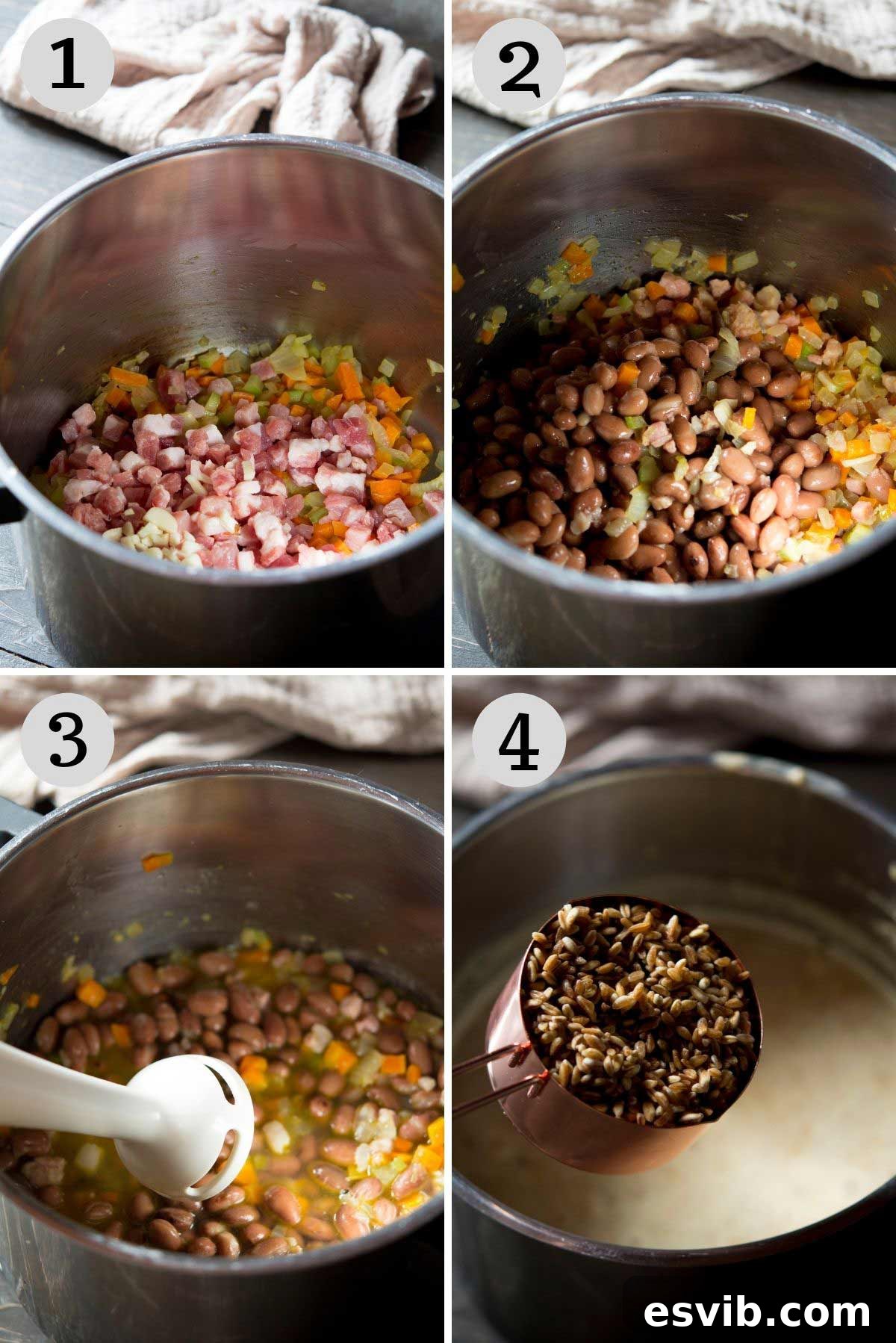
Begin by heating 1 tablespoon of extra virgin olive oil in a large, sturdy pot or a Dutch oven over a medium-low heat. Add the finely chopped carrot, celery, and onion (your soffritto). Sauté these aromatic vegetables gently and patiently, stirring occasionally, for about 8-10 minutes, or until they become beautifully soft, translucent, and slightly sweet. This slow caramelization is fundamental for the soup’s deep flavor. Next, introduce the cubed pancetta (approximately 1/2 cup or 100g) and the finely chopped garlic (2 cloves). Continue to cook for an additional 2-3 minutes, stirring regularly, until the pancetta begins to crisp up and the garlic releases its fragrant aroma. Be careful not to burn the garlic. The rendered pancetta fat will infuse the entire base with an exquisite savory depth.

The initial stage: slowly sautéing the soffritto and pancetta to develop foundational flavors. -
Step 2: Incorporate Borlotti Beans and Initial Vegetable Stock
Take your canned borlotti beans (about 3 cups or 800g) and rinse them thoroughly under cold running water in a colander. This step helps remove any excess sodium and canning liquid, ensuring a cleaner flavor profile. Add the rinsed beans to the pot with the sautéed vegetables and pancetta. Pour in 2 cups (approximately 500ml) of vegetable stock. Bring the entire mixture to a gentle simmer, allowing the flavors to begin merging.
-
Step 3: Create a Rustic, Creamy Base
Carefully use a hand-held immersion blender to purée the beans, vegetables, and pancetta directly in the pot. The aim is to achieve a rustic purée, so don’t worry if it’s not perfectly smooth; some texture adds to the homemade charm and hearty feel of the soup. This blending step helps to thicken the soup and create a wonderfully creamy base that contrasts beautifully with the cooked farro.
-
Step 4: Add Farro and Remaining Liquids
Before adding the farro (1 cup or 180g) to the soup, it is essential to rinse it thoroughly under cold running water for a few seconds. This crucial step washes away any loose starches, which helps prevent the soup from becoming overly gummy. Place the pot back over a medium heat. Stir in the rinsed farro, along with the passata (2 tablespoons), the remaining 3 cups (750ml) of vegetable stock, a generous pinch of salt and freshly cracked black pepper, and the fresh rosemary sprigs. Give everything a good stir to ensure all ingredients are well combined.
-
Step 5: Simmer and Cook to Perfection
Bring the soup to a gentle boil, then reduce the heat to low, cover the pot tightly, and let it simmer peacefully for 30-40 minutes. The exact cooking time for the farro may vary slightly depending on whether you are using pearled, semi-pearled, or whole farro (pearled cooks faster). The soup is perfectly ready when the farro grains are tender yet still possess a delightful, pleasant chew. Taste the soup and adjust the seasoning as needed with more salt and pepper, ensuring the flavors are perfectly balanced.
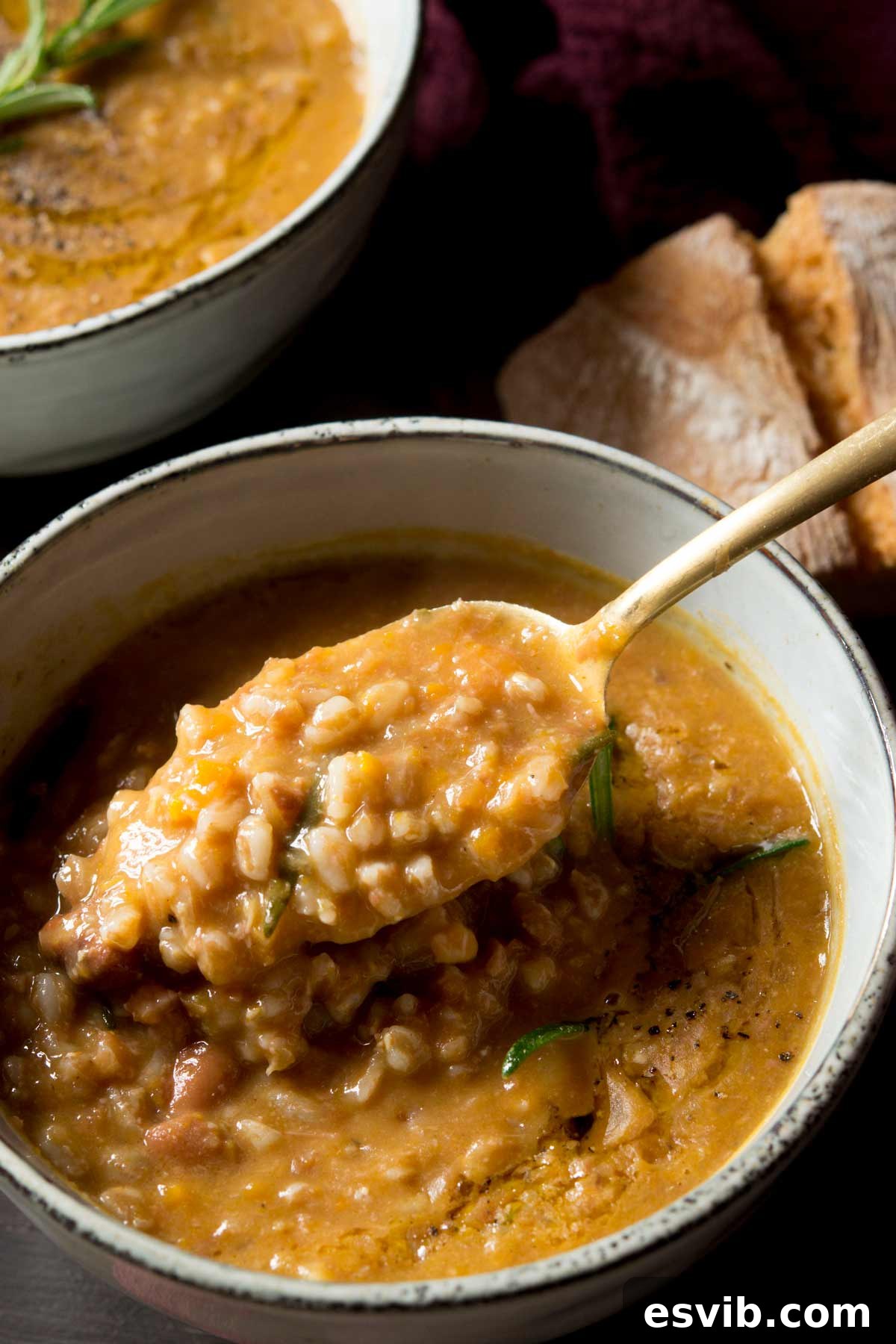
A close-up showcasing the perfectly cooked and hearty Tuscan Farro Soup. -
Step 6: Serve, Garnish, and Savor
Ladle the piping hot, aromatic soup generously into large, cozy bowls. For an authentic Tuscan finishing touch, drizzle each serving with a good quality extra virgin olive oil and sprinkle with freshly cracked black pepper. Serve immediately with plenty of crusty Italian bread or warm focaccia, which are ideal for dipping and soaking up every last drop of the flavorful broth. A generous grating of fresh Parmesan cheese over the top is also a highly recommended addition for an extra layer of savory goodness!
Expert Tips & Delicious Variations for Your Tuscan Farro Soup
To help you get the most out of this wonderful Tuscan Farro Soup recipe and tailor it to your dietary needs or taste preferences, here are some invaluable tips and exciting variations:
- Preparing the Farro Correctly: As mentioned in the instructions, always rinse your farro thoroughly under cold running water for a few seconds before adding it to the pot. This simple step helps remove excess starches, preventing the soup from becoming overly cloudy or gummy. If you are using whole farro (which has a longer cooking time), consider soaking it for an hour or two, or even overnight, to significantly reduce the simmering time. Pearled or semi-pearled farro typically doesn’t require pre-soaking.
- Transforming it into a Vegetarian or Vegan Delight: This soup is wonderfully versatile and can be easily adapted!
- Vegetarian Version: Simply omit the pancetta. You can add a tablespoon of good quality olive oil to the pot before sautéing the soffritto to provide a rich base.
- Vegan Version: In addition to omitting the pancetta, ensure you use vegetable stock and avoid any cheese garnishes. To replicate some of that smoky, savory depth usually provided by pancetta, consider adding a pinch of smoked paprika or a dash of liquid smoke to the soffritto. Sautéing finely chopped mushrooms (like cremini or shiitake) alongside the vegetables can also add a fantastic umami boost.
- Achieving Your Preferred Texture: The beauty of this soup lies in its adaptability when it comes to texture.
- Creamy with Chewy Grains: My preferred method involves blending a majority of the soup base until it’s a rustic purée before adding the farro. This creates a luxurious, creamy broth that provides a delightful contrast to the hearty, chewy texture of the cooked farro grains.
- Rustic and Chunky: If you prefer a more traditional, chunky soup, you can absolutely skip the blending step entirely. Just leave all the vegetables and beans whole. They will soften beautifully as they simmer, creating a robust, country-style soup.
- Smart Ingredient Substitutions: Don’t have everything on hand? No problem!
- Grains: If farro isn’t readily available, pearled barley or spelt make excellent 1:1 substitutes. They offer similar hearty textures and nutritional profiles, maintaining the essence of the soup.
- Beans: While borlotti beans are traditional for their creamy texture and flavor, cannellini beans (white kidney beans) or even chickpeas would work wonderfully, lending a slightly different but equally delicious creamy element.
- Herbs: While fresh rosemary is classic, a bay leaf added during simmering, or a sprig of fresh thyme, could also be used to complement the flavors beautifully.
- Enhance the Flavor Further:
- Parmesan Rind: For an even richer, more savory broth, add a discarded Parmesan cheese rind to the soup while it simmers. Just remember to remove it before serving.
- Citrus Brightness: A squeeze of fresh lemon juice or a sprinkle of lemon zest added right before serving can magically brighten all the flavors in the soup.
- Fresh Herbs: Garnish with additional fresh parsley or basil for an extra pop of color and invigorating freshness.
- Storing Leftovers & Freezing: This soup is a fantastic candidate for meal prepping and freezes exceptionally well!
- Refrigeration: Leftovers will maintain their quality and flavor when stored in an airtight container in the fridge for 3-4 days. The flavors often meld and deepen overnight, making it even more delicious.
- Freezing: For longer storage, you can freeze the cooked soup for up to 3 months in suitable freezer-safe containers. When you’re ready to enjoy it, thaw the soup completely in the refrigerator overnight, then reheat gently on the stovetop. You might need to add a splash of extra vegetable stock or water if the soup has thickened considerably during freezing and thawing.
More Heartwarming Italian Soup Recipes to Explore
If you’ve been captivated by the comforting and robust flavors of this Tuscan Farro Soup, then you’re in for a treat! Our kitchen is brimming with more Italian culinary treasures that promise warmth, flavor, and satisfaction. Here are some other delightful soup recipes that we’re sure you’ll love:
- Ribollita – The Ultimate Hearty Tuscan Vegetable and Bread Soup
- Wholesome Tuscan Chickpea Soup
- Pappa al Pomodoro – Rustic Italian Tomato Bread Soup
- Creamy and Comforting Zucchini Potato Soup
- Rich and Earthy Wild Mushroom Soup
- Spiced Cinnamon Pumpkin Soup for Autumn Nights
We absolutely cherish hearing from our community! If you’ve had the pleasure of trying this delightful Tuscan Farro Soup recipe or any other recipe from our blog, please don’t hesitate to take a moment to rate it and share your valuable thoughts in the comments section below. Your feedback and experiences truly inspire us to keep creating and sharing delicious recipes! You can also FOLLOW US on FACEBOOK, TWITTER, INSTAGRAM, and PINTEREST to discover even more delectable food creations, get behind-the-scenes glimpses, and stay updated on what we’re cooking up next.
This comprehensive post about Tuscan Farro Soup was initially published on November 9th, 2017, and has since been extensively updated and expanded to provide the most delightful and informative cooking experience.
Tuscan Farro Soup with Beans – Recipe Card
Follow our detailed step-by-step guide with accompanying photos for perfect results every time!
Prep Time: 10 mins
Cook Time: 50 mins
Total Time: 1 hr
Servings: 6 people
Rating: 4.75 out of 5 stars from 8 user votes
A truly delightful and simple Tuscan Farro Soup, featuring a harmonious blend of hearty vegetables, creamy borlotti beans (cranberry beans), savory pancetta, and fragrant garlic. This soup is brimming with flavor, highly nutritious, and the ultimate choice for staying cozy and satisfied during cooler weather!
Ingredients
- 1 medium carrot, finely chopped
- 1 medium onion, finely chopped
- 1 celery stalk, finely chopped
- 2 cloves garlic, finely chopped
- 1/2 cup smoked pancetta, cubed (approx. 100g)
- 2 sprigs fresh rosemary
- 3 cups pre-cooked borlotti beans (cranberry beans), 800g can, rinsed and drained
- 1 cup farro (or spelt or barley), 180g, rinsed
- 5 cups vegetable stock (1250ml)
- 2 tbsp passata (smooth tomato puree), or concentrated tomato paste
- 1 tbsp extra virgin olive oil, plus extra for serving
- Salt and freshly cracked black pepper, to season
Instructions
- Heat 1 tbsp olive oil in a large pot over medium-low heat. Add finely chopped carrot, celery, and onion. Sauté gently until soft and translucent (8-10 minutes).
- Add cubed pancetta (1/2 cup / 100g) and finely chopped garlic (2 cloves). Cook for 2-3 minutes more, stirring, until pancetta begins to crisp and garlic is fragrant.
- Rinse the canned borlotti beans (3 cups / 800g) and add them to the pot along with 2 cups (500ml) of vegetable stock. Bring to a simmer.
- Using a hand-held immersion blender, blitz the beans, vegetables, and pancetta into a rustic purée. Some texture is desirable, it doesn’t need to be completely smooth.
- Rinse the farro (1 cup / 180g) thoroughly under cold running water. Return the pot to medium heat and stir in the rinsed farro.
- Add the passata (2 tbsp), the remaining 3 cups (750ml) of vegetable stock, a pinch of salt and pepper, and the fresh rosemary sprigs. Stir well to combine.
- Bring to a gentle boil, then reduce heat to low, cover, and simmer for 30-40 minutes, or until the farro is tender with a pleasant chew. Taste and adjust seasoning as needed.
- Serve hot in large bowls. Drizzle generously with extra virgin olive oil and sprinkle with fresh black pepper. Serve immediately with plenty of crusty bread or warm focaccia.
Notes
- Farro Preparation: Always rinse farro under cold running water before cooking to remove excess starch, ensuring a clearer broth.
- Vegetarian/Vegan Option: For a meat-free version, simply omit the pancetta. For vegan, also ensure vegetable stock is used and no cheese. Consider adding smoked paprika or mushrooms for umami depth.
- Texture Control: Blend the base for a creamy soup with chewy farro. For a chunky, rustic soup, skip the blending step entirely.
- Storage & Freezing: Leftovers keep well in the fridge for 3-4 days. This soup also freezes beautifully for up to 3 months; thaw completely before reheating gently.
Helpful Info for All Recipes from Our Kitchen
- I consistently use high-quality extra virgin olive oil in all my recipes unless a different type of oil is specifically stated.
- When any recipe calls for canned or jarred tomatoes (whether crushed, diced, or puréed), I highly recommend using Cirio or Mutti brands for their superior flavor and consistent quality.
- All vegetables listed in our recipes are assumed to be medium-sized unless otherwise specified.
- Our recipes are tested and developed using a fan (convection) oven, so cooking times may vary slightly if using a conventional oven.
- For detailed information on how nutrition values are calculated for our recipes, please refer to our privacy policy.
- Explore our essential list of Italian Pantry Staples to stock your kitchen with authentic ingredients.
- Discover the Essential Kitchen Tools for Italian Cooking that we find indispensable.
Nutrition Information (Approximate values per serving)
Calories: 333kcal | Carbohydrates: 50g | Protein: 13g | Fat: 10g | Saturated Fat: 3g | Trans Fat: 1g | Cholesterol: 11mg | Sodium: 1404mg | Potassium: 568mg | Fiber: 14g | Sugar: 4g | Vitamin A: 2214IU | Vitamin C: 4mg | Calcium: 68mg | Iron: 3mg
Please note: All nutrition information provided is automatically calculated and should be considered an approximation. Individual results may vary.
Did you try this authentic Tuscan Farro Soup recipe? We’d love to hear your thoughts! Leave a comment below!