
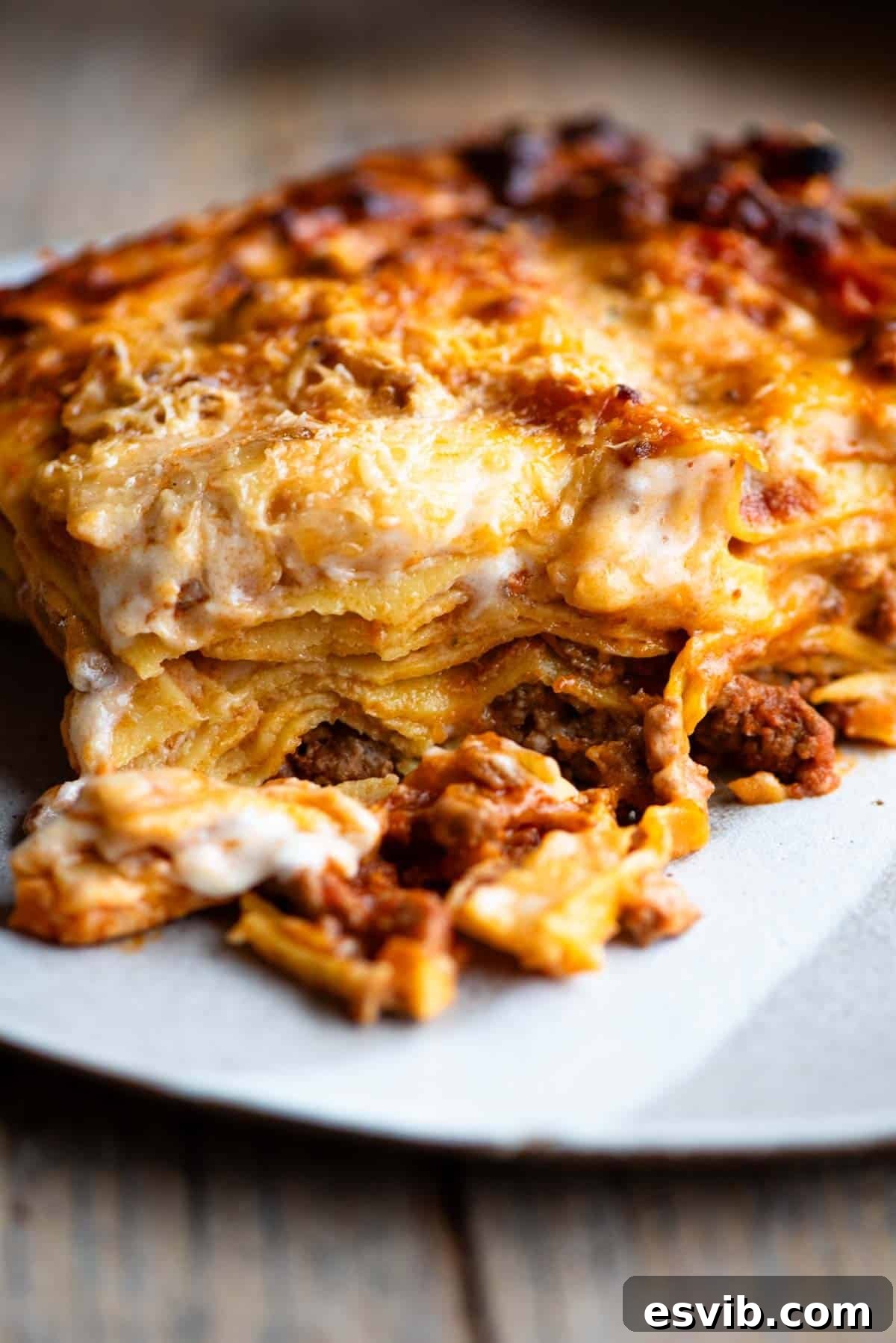
Prepare to embark on a culinary journey with our incredibly delicious Italian Lamb Lasagna. This magnificent dish is a celebration of flavors, built upon a rich, slowly simmered lamb ragu, intertwined with delicate layers of fresh homemade pasta, and crowned with a luscious creamy bechamel sauce generously infused with the sharp, savory notes of Pecorino cheese. More than just a meal, it’s a heartfelt expression of comfort food, making it an ideal centerpiece for cherished family dinners and especially memorable for Easter festivities.
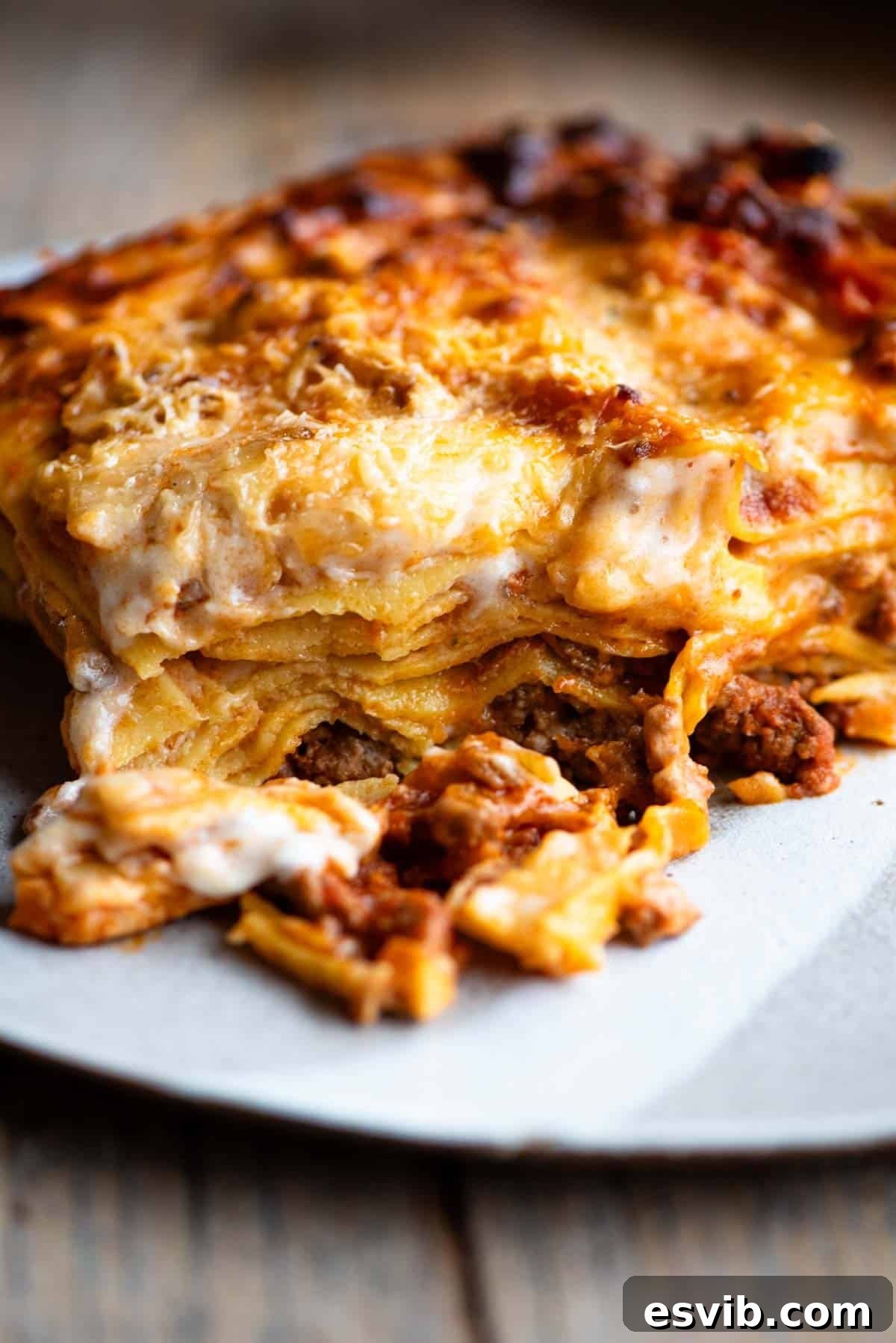
If you’re searching for a truly showstopping and utterly delicious way to feature lamb on your holiday table, particularly for Easter, look no further than this exquisite Lamb Lasagna. It transcends the ordinary, offering a depth of flavor and texture that will captivate every palate. Each bite delivers a harmonious blend of the deeply savory lamb ragu, the tender chew of fresh pasta, and the silky, cheesy embrace of the Pecorino bechamel. It is, quite simply, divine.
Admittedly, crafting a lasagna of this caliber requires a dedication of time and effort. This is particularly true if you choose to make the pasta from scratch, a step we wholeheartedly recommend for an unparalleled experience. However, we promise, the undeniable deliciousness that results makes every moment spent in the kitchen incredibly worthwhile. Just like the glowing reviews for our traditional beef lasagna attest, the reward far outweighs the work.
Envision a relaxed afternoon, perhaps with a glass of your favorite Italian wine, accompanied by your most cherished music, as you meticulously layer this culinary masterpiece. It’s not just cooking; it’s an act of love, a mindful process that culminates in a dish that brings people together. We sincerely hope you find as much joy in preparing and savoring this Lamb Lasagna as we do.
Buon Appetito e Buona Pasqua! (Enjoy your meal and Happy Easter!)
Below you’ll find the comprehensive recipe, including detailed notes on ingredients, step-by-step photos to guide you, valuable tips, exciting variations, and a video tutorial to ensure your success. For the full printable recipe, please scroll to the bottom.
Essential Ingredients for Your Lamb Lasagna
The foundation of any great Italian dish lies in the quality and thoughtful selection of its ingredients. For this Lamb Lasagna, each component plays a crucial role in building the incredible depth of flavor. Here’s what you’ll need, along with important considerations and potential substitutions.
Ingredient Notes and Expert Substitutions
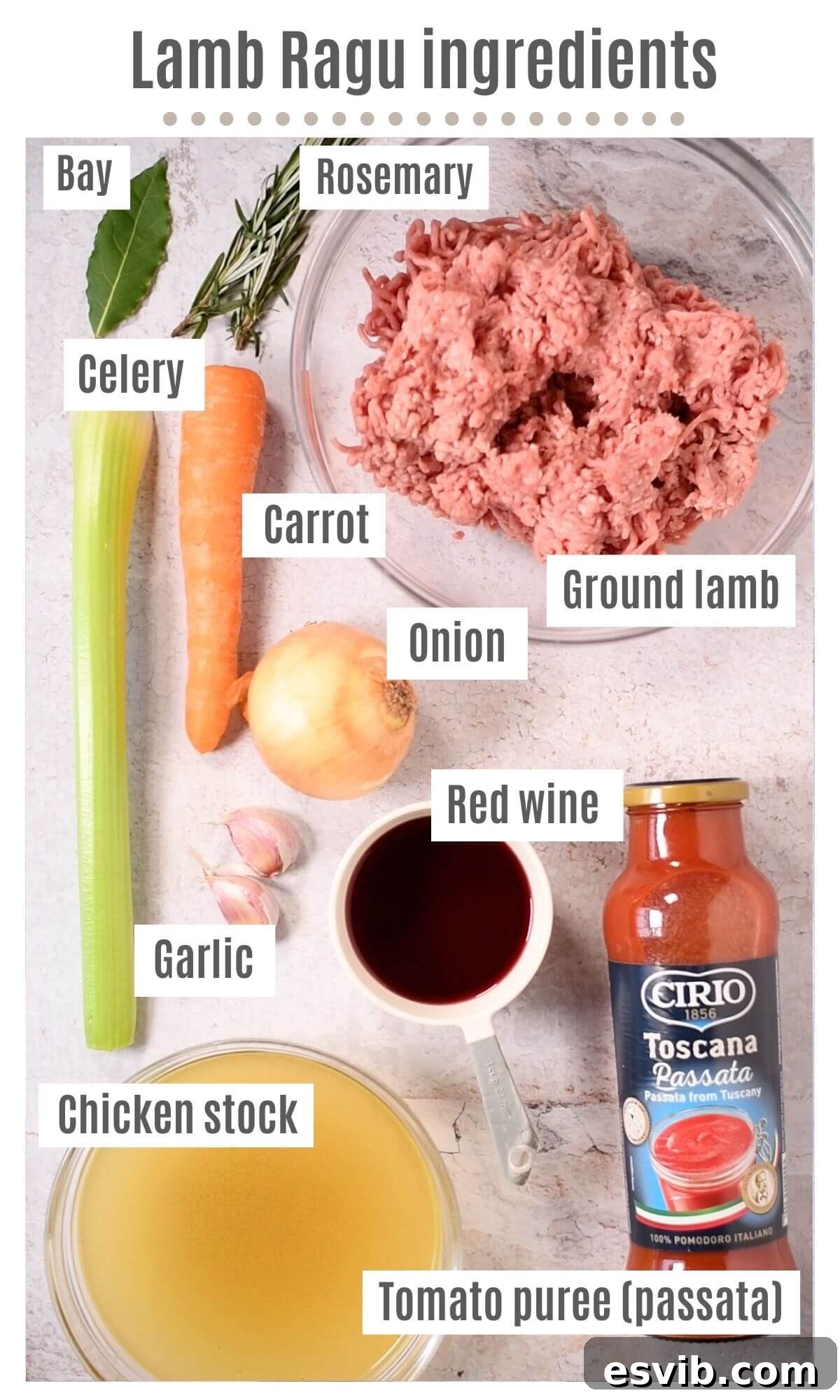
- Ground Lamb Mince: The star of our ragu! Opt for good quality lamb mince, ideally around 20% fat. Lamb is naturally quite fatty, and this richness contributes to the ragu’s flavor. However, remember that you will need to drain off a significant amount of the rendered fat after browning to prevent the ragu from becoming greasy.
- Soffritto (Carrot, Celery, Onion): This aromatic base is non-negotiable in Italian cooking. Each of these finely chopped vegetables slowly caramelizes, creating a sweet and savory foundation that adds immense depth of flavor to the sauce. Don’t rush this step; patience here pays off in the final taste.
- Garlic: Fresh garlic is paramount. Its pungent, aromatic qualities are essential for an authentic Italian flavor profile. Please avoid garlic powders or pre-minced garlic in a jar, as they lack the vibrant taste of fresh cloves.
- Red Wine: A splash of red wine is used to deglaze the pan after browning the lamb and sautéing the soffritto. It adds a wonderful layer of complexity and acidity, enhancing the overall richness of the ragu. A dry red wine like Chianti or Merlot works beautifully. If you prefer, a dry white wine can also be used, or you can omit the wine entirely and substitute with additional stock, though it will alter the flavor slightly.
- Tomato Passata (Tomato Puree US): We favor passata for its smooth texture and concentrated tomato flavor, which yields a silky ragu. Crushed tomatoes are a perfectly acceptable alternative if passata is unavailable; just expect a slightly chunkier sauce.
- Chicken Stock: Use a low-sodium chicken stock to give you control over the final seasoning. This allows you to adjust the salt content later, preventing an overly salty dish, especially with the addition of Pecorino cheese.
- Fresh Herbs (Rosemary and Bay Leaf): These fresh herbs infuse the ragu with their distinctive aromas during the long simmer. Fresh is always best for maximum impact; dried herbs can be used in a pinch, but in smaller quantities.
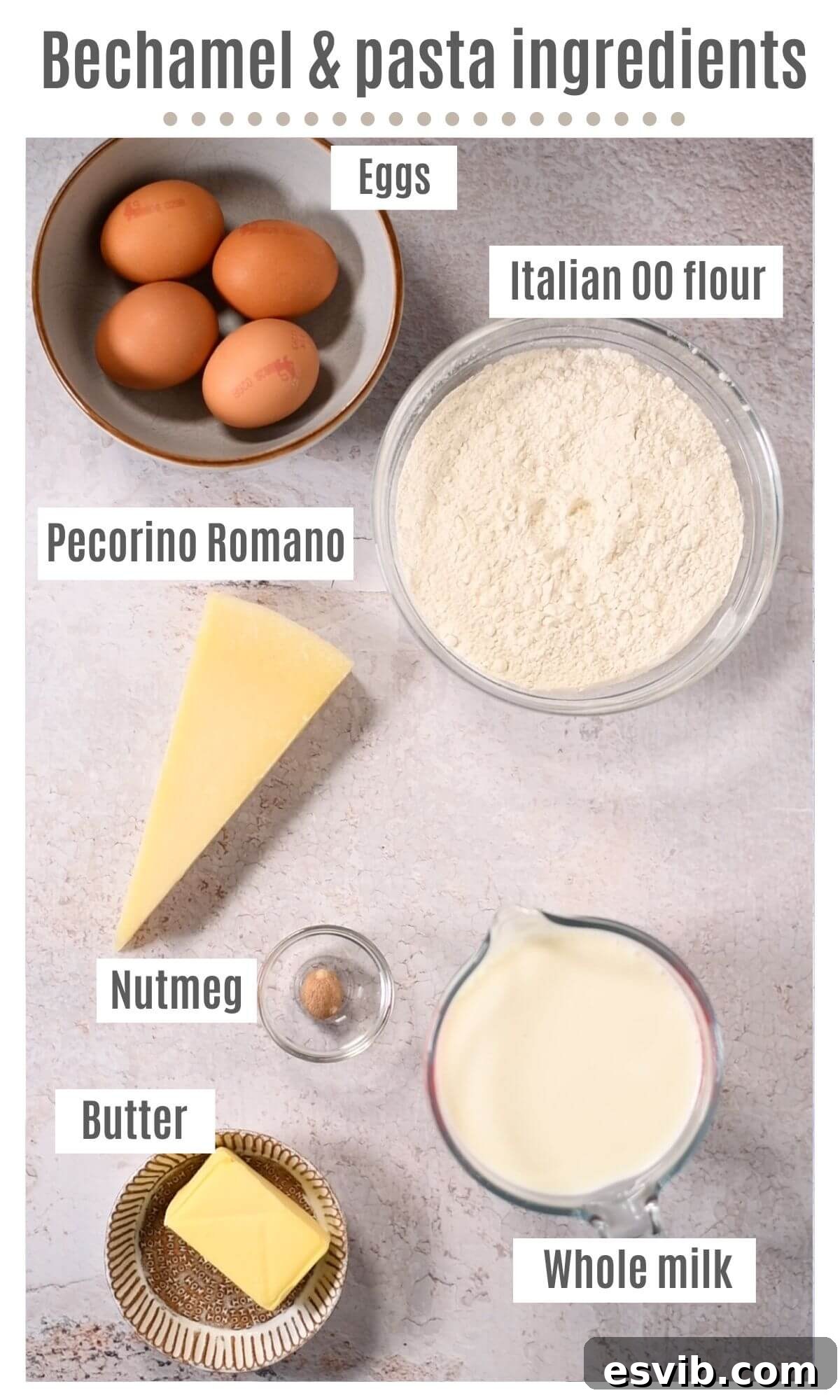
- Homemade Pasta Dough: The magic of homemade pasta cannot be overstated in lasagna. All you need are Italian 00 flour and good quality eggs. The tender, pliable sheets absorb the sauces beautifully. If time is a constraint, store-bought fresh pasta sheets (found in the refrigerated section) are a convenient and excellent alternative. Avoid dried lasagna noodles if possible, as they don’t offer the same delicate texture.
- Besciamella (Bechamel Sauce): Our creamy bechamel is made with whole milk, butter, flour, and a hint of nutmeg. Using whole milk is highly recommended as it contributes significantly to the sauce’s luxurious, velvety texture and richness. Reduced-fat milk will result in a thinner, less satisfying bechamel.
- Pecorino Romano Cheese: This sharp, salty sheep’s milk cheese is an absolute revelation with lamb, elevating the flavor profile of the bechamel and the entire lasagna. Its robust character pairs exceptionally well. While Pecorino Romano is highly recommended for its unique taste, Parmigiano Reggiano is a suitable substitute if needed, offering a slightly milder, nuttier flavor.
Step-by-Step Photos and Detailed Instructions
Creating this Italian Lamb Lasagna is a process of building layers of flavor. Follow these detailed steps, accompanied by expert tips, to ensure a perfect result every time.
Crafting the Rich Lamb Ragu
The ragu is the heart of our lasagna, requiring time and patience for its flavors to fully develop. Starting this component the day before is highly recommended for an even more profound taste.
Begin by finely chopping your carrot, celery, and onion. This trio, known as soffritto, forms the aromatic base of many Italian sauces. Set them aside.
Heat a generous drizzle of olive oil in a large, heavy-bottomed pan or Dutch oven over medium-high heat. Add the ground lamb and brown it thoroughly, breaking it up with a spoon as it cooks. Once the lamb is beautifully browned and cooked through, remove it from the pan using a slotted spoon and transfer it to a separate bowl. Crucially, pour all the rendered fat from the pan into another heat-proof bowl. This step is essential as lamb releases a considerable amount of fat, which, if left in the pan, would make your ragu greasy. Discard the solidified fat once it cools down, never down the drain! (Refer to photos 1-3).
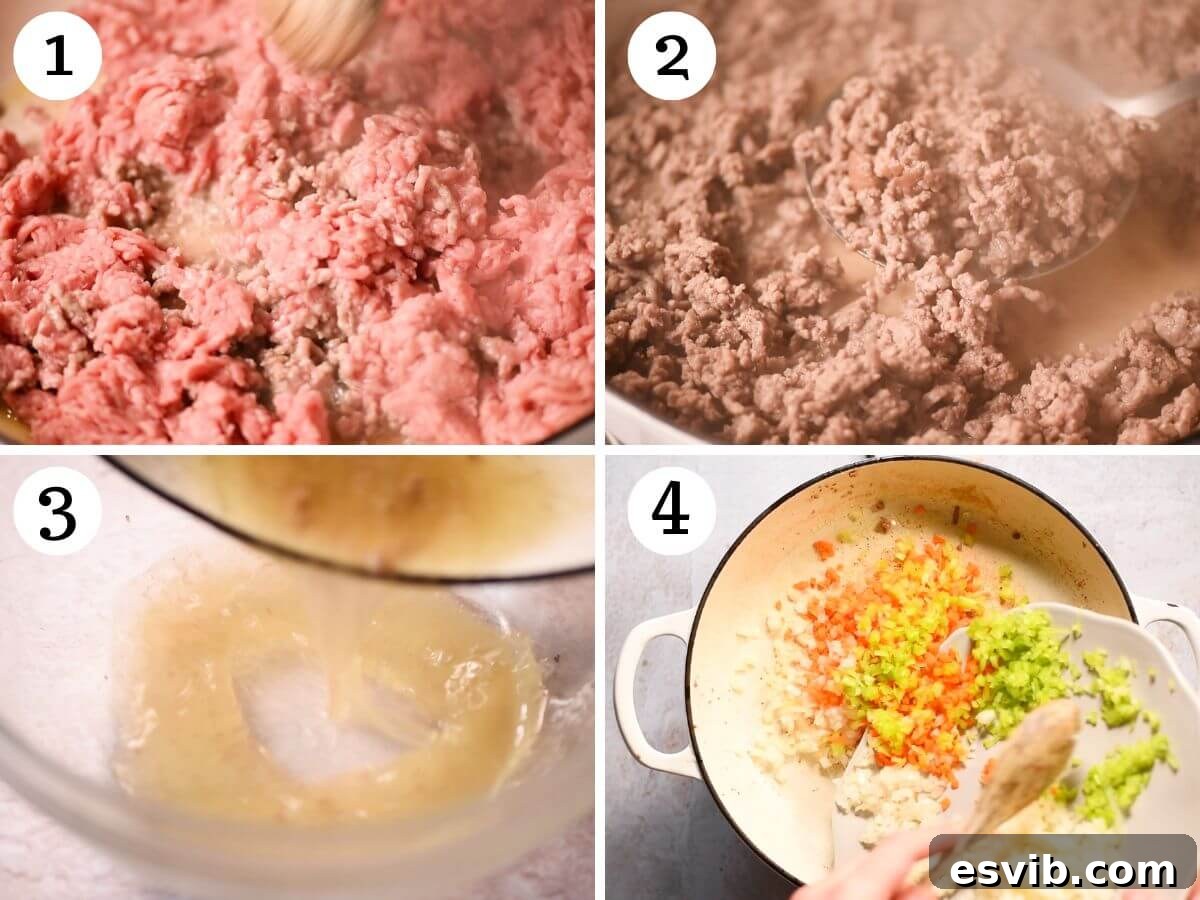
Now, add about 1 tablespoon of fresh olive oil back to the pan (if needed, there might be residual flavor-rich fond). Add the finely chopped soffritto (carrot, celery, and onion) to the pan. Sauté these vegetables over a medium-low heat. This is a slow and gentle process; you want them to soften and become translucent, releasing their sweetness, but not brown. Allow about 10 minutes for this step, stirring occasionally. This slow sautéing is key to developing a deep, nuanced flavor in your ragu (photo 4).
Once the soffritto is soft and aromatic, add the minced fresh garlic to the pan and sauté for just about 1 minute until fragrant. Be careful not to burn the garlic, as it can turn bitter. Return the drained browned lamb mince to the pan with the sautéed vegetables and stir well to combine all the ingredients. Pour in the red wine and bring it to a simmer, allowing it to reduce for about 2-3 minutes. This process, known as deglazing, helps scrape up any flavorful bits from the bottom of the pan and cooks off the alcohol, leaving behind only the rich wine flavor (photos 5-7).
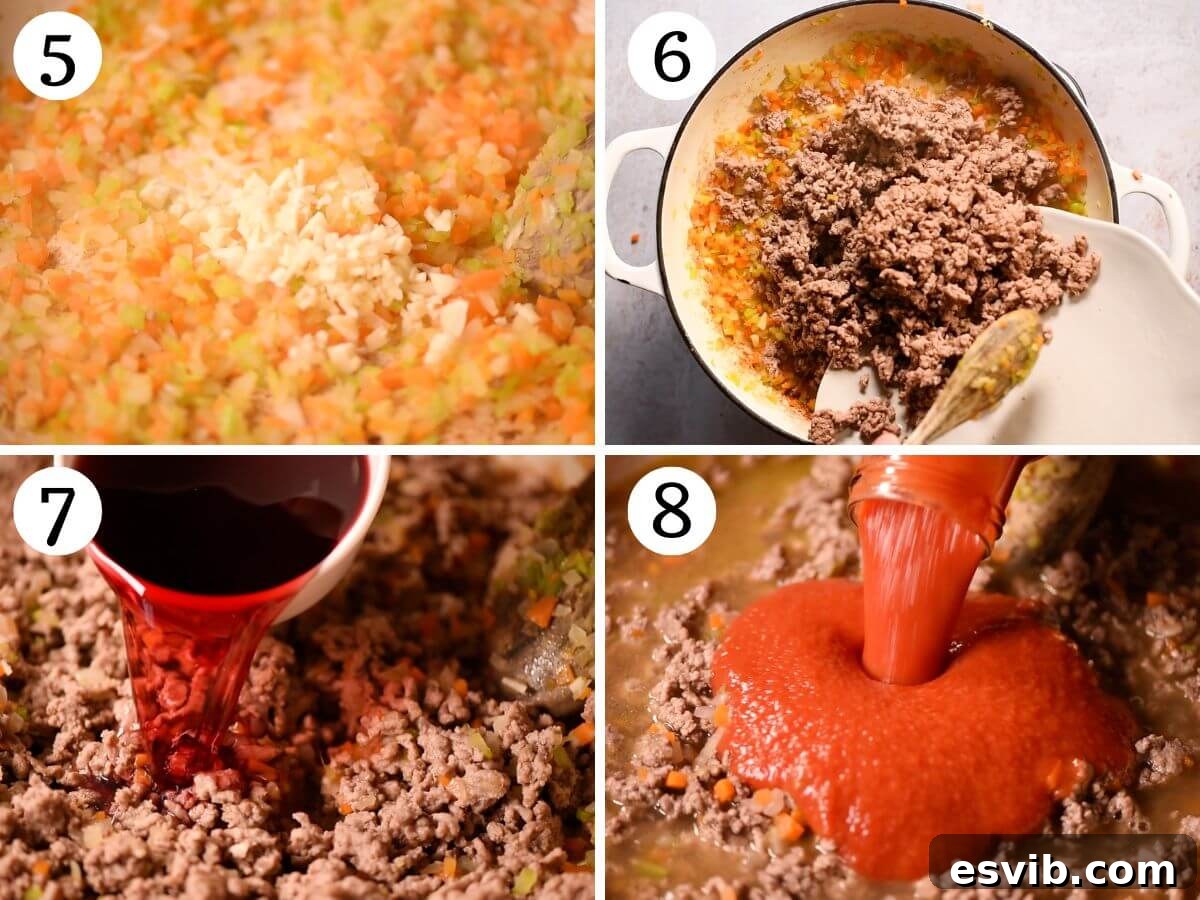
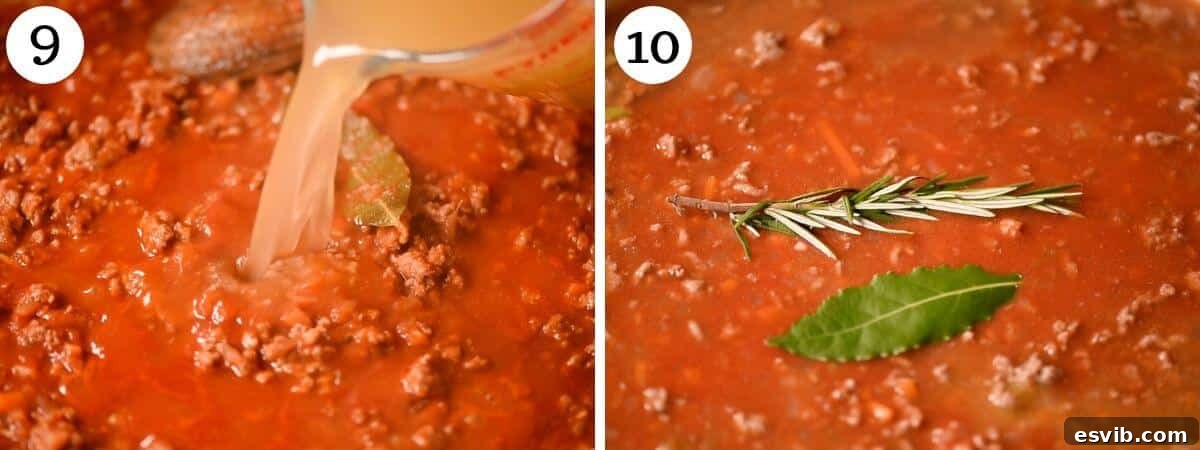
Finally, add the tomato passata, half of the chicken stock, the bay leaf, and the sprig of fresh rosemary to the pan. Stir everything together thoroughly. Bring the mixture to a gentle simmer, then reduce the heat to low and let it cook uncovered for a generous 4 hours. During this long simmer, the flavors will meld and intensify beautifully. Remember to add the remaining chicken stock halfway through the cooking time. If at any point the sauce appears to be reducing too much and becoming too thick, feel free to add a little more water or stock to maintain its consistency (photos 8-10).
Preparing Your Homemade Pasta Dough
Homemade pasta is a game-changer for lasagna, offering a delicate texture and incredible flavor that elevates the entire dish. This process is rewarding and straightforward.
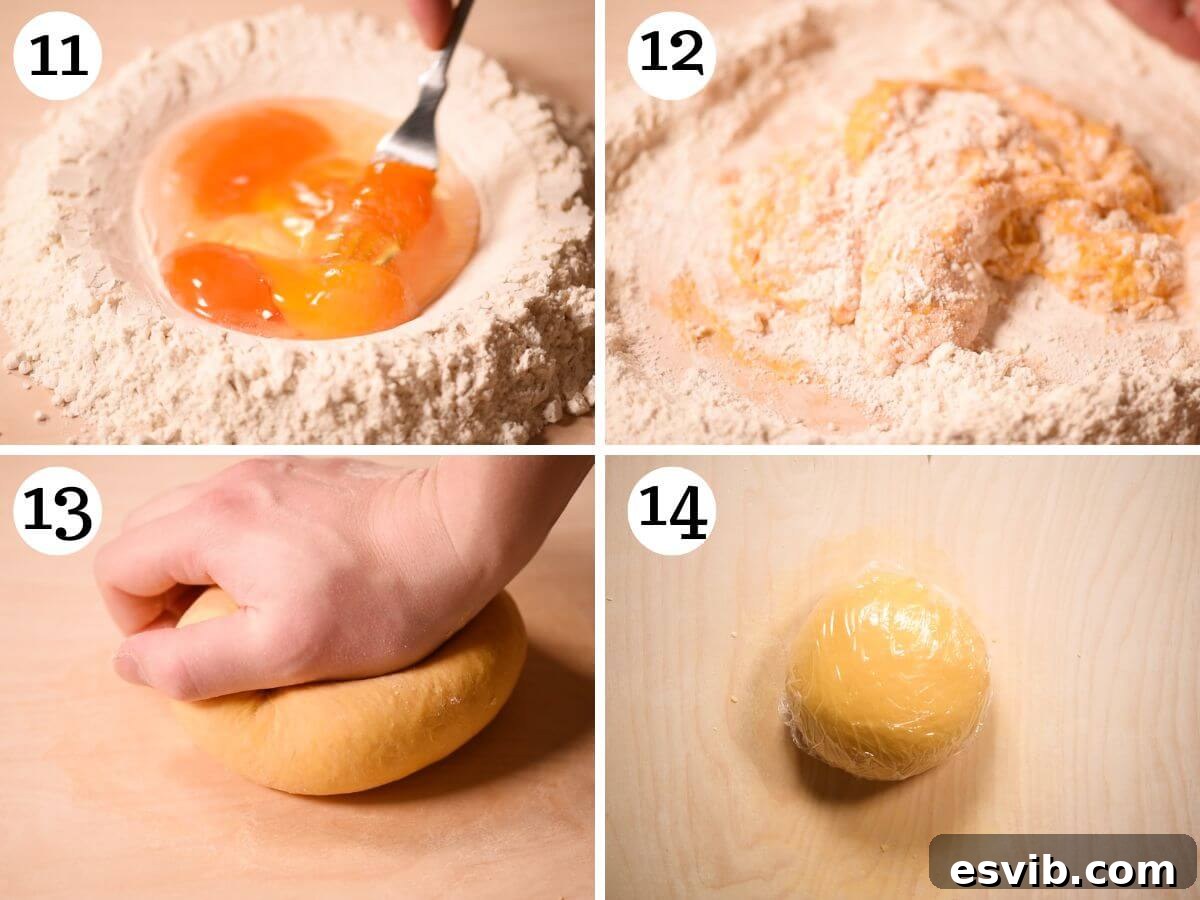
On a clean, spacious work surface (a large wooden board or clean countertop works best), tip out your 00 flour and create a large, wide well in the center. Carefully crack the eggs directly into this well. Using a fork, gently scramble the eggs within the well, being careful not to break the flour walls (photo 11).
Gradually, using your fork, begin to incorporate small amounts of the surrounding flour into the egg mixture. Continue this process, little by little, until a rough, shaggy dough starts to form. At this point, set your fork aside and use your hands to bring the dough together. Knead the dough vigorously for about 10 minutes. The kneading process develops the gluten, resulting in a smooth, elastic, and pliable dough that’s a joy to work with (photos 12 and 13).
Pasta Making Tip: The hydration of your pasta dough can fluctuate depending on factors like the size of your eggs or the humidity in your kitchen. If your dough feels excessively sticky, incorporate a tiny bit more flour, a small pinch at a time, until it reaches the right consistency. Conversely, if the dough seems too dry or stiff, simply wet your hands slightly and continue kneading; the added moisture from your hands will help soften and hydrate the dough.
Once your dough is perfectly kneaded and smooth, wrap it tightly in plastic wrap (cling film) to prevent it from drying out. Let it rest at room temperature for at least 30 minutes. This resting period is crucial as it allows the gluten to relax, making the dough much easier to roll out (photo 14).
Preparing the Creamy Pecorino Bechamel
This rich and cheesy bechamel sauce adds a layer of velvety indulgence to our lamb lasagna, balancing the robust ragu perfectly.
Melt the butter in a saucepan over a medium heat. Once the butter is completely melted and slightly bubbling, sprinkle in the flour. Whisk continuously for approximately 1 minute, cooking out the raw flour taste and creating a smooth roux. The roux should be pale yellow, not browned, as this is a white sauce (photos 15 and 16).
Next, gradually add half of the whole milk to the roux while whisking vigorously. Continue whisking until the sauce is completely smooth and free of any lumps. Once this first addition of milk has thickened, pour in the remaining milk and continue whisking until the sauce is beautifully smooth, thick, and coats the back of a spoon (photos 17 and 18).
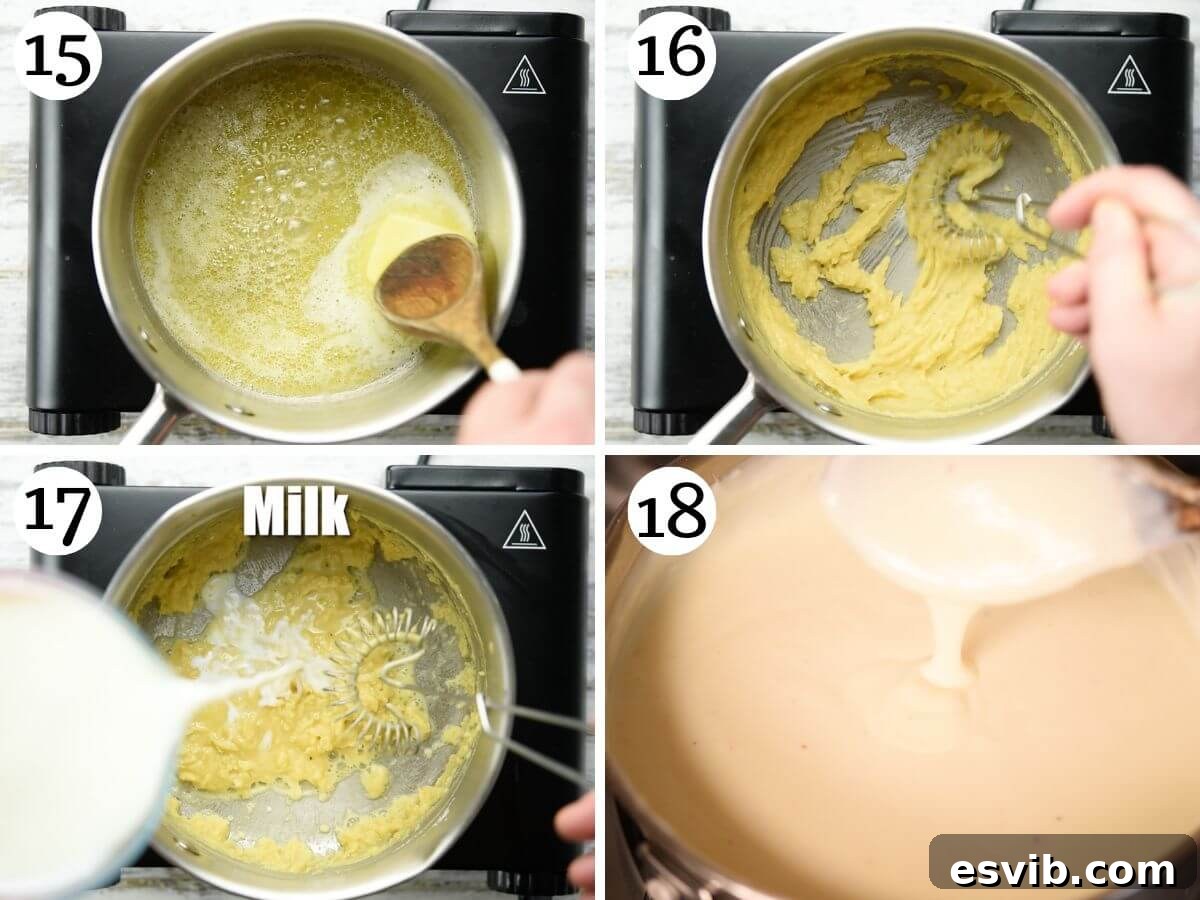
Season the bechamel with a generous pinch of salt, freshly ground black pepper, and a dash of freshly grated nutmeg. Finally, stir in the freshly grated Pecorino cheese. Continue stirring gently until the cheese has completely melted into the sauce, creating a smooth, cheesy bechamel. Set the sauce aside, covered, to keep it warm and prevent a skin from forming.
Rolling and Blanching Your Fresh Pasta Sheets
With your ragu simmering and bechamel ready, it’s time to prepare your homemade pasta sheets for layering. This is where the magic of fresh pasta truly shines.
First, bring a large pot of water to a rolling boil and season it generously with salt. The water should taste like the sea; this seasons your pasta from within.
Meanwhile, set up your pasta machine. Start by setting it to the widest possible setting (typically number 0 on most machines). Take your rested pasta dough and cut it in half, keeping one half tightly wrapped in plastic wrap to prevent it from drying out (photo 19).
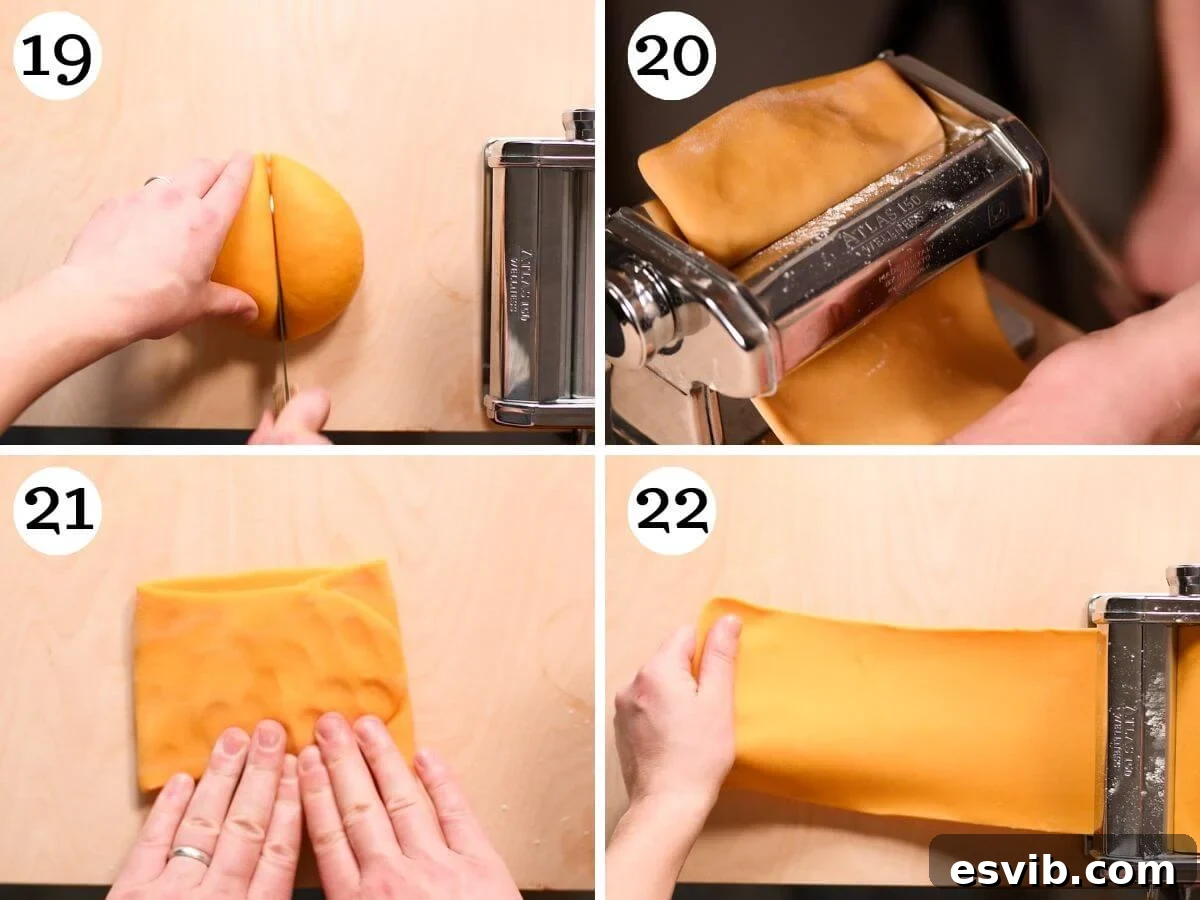
Take the unwrapped half of the dough and flatten it slightly with your hands to make it easier to feed into the pasta machine. Pass it through the widest setting. Now, fold one end of the dough sheet towards the middle, and then fold the other end directly over it, as if you were folding a letter or leaflet. Flatten this folded dough slightly and pass it through the widest setting again. Repeat this folding and passing through the widest setting one more time. This process helps to strengthen the gluten and create a perfectly smooth sheet of pasta (photos 20-22).
Next, progressively roll your dough through each subsequent setting on your pasta machine, reducing the thickness each time, until you reach the third-to-last number on your machine (usually setting number 7). Throughout this process, if you find the pasta dough becoming too sticky, or sticking to the machine or your work surface, lightly dust it with a small amount of flour. Patience is key here to achieve thin, uniform sheets.
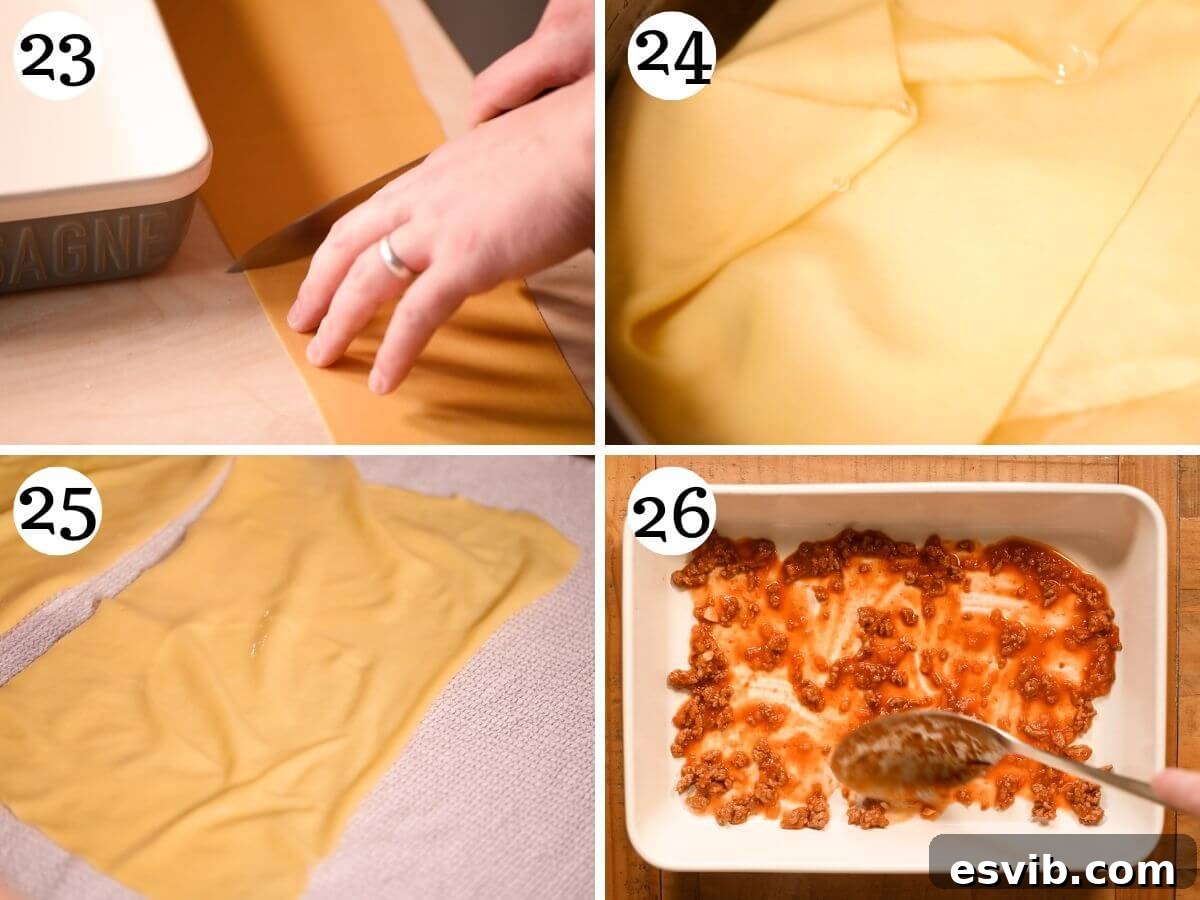
Once you have your thin pasta sheets, cut them into pieces large enough to fit your lasagna baking dish. Carefully blanch them in the boiling salted water, usually two or three sheets at a time, for just 1 minute. They will be tender and pliable. Using tongs, transfer the blanched pasta sheets directly to a clean kitchen towel laid out on your work surface. Allow them to dry out for just a few seconds; this prevents them from sticking together and makes them easier to handle (photos 23-25).
Repeat this entire rolling and blanching process with the second half of your pasta dough. Expert Tip: Many find it easier to begin assembling the lasagna once the first half of the blanched pasta is ready, and then roll out and blanch the remaining dough as you go. This keeps the pasta fresh and manageable.
Assembling and Baking Your Masterpiece
With all your components prepared, it’s time for the exciting part: layering your lamb lasagna to perfection.
If you plan to bake your lasagna immediately, pre-heat your oven to 200°C (400°F).
To begin, spread a thin, even layer of your rich lamb ragu across the bottom of your 9×13 inch baking dish. This prevents the first pasta layer from sticking. Carefully lay the first layer of blanched pasta sheets on top of the ragu, trimming any excess pasta as needed to fit the dish snugly (photos 26 and 27).
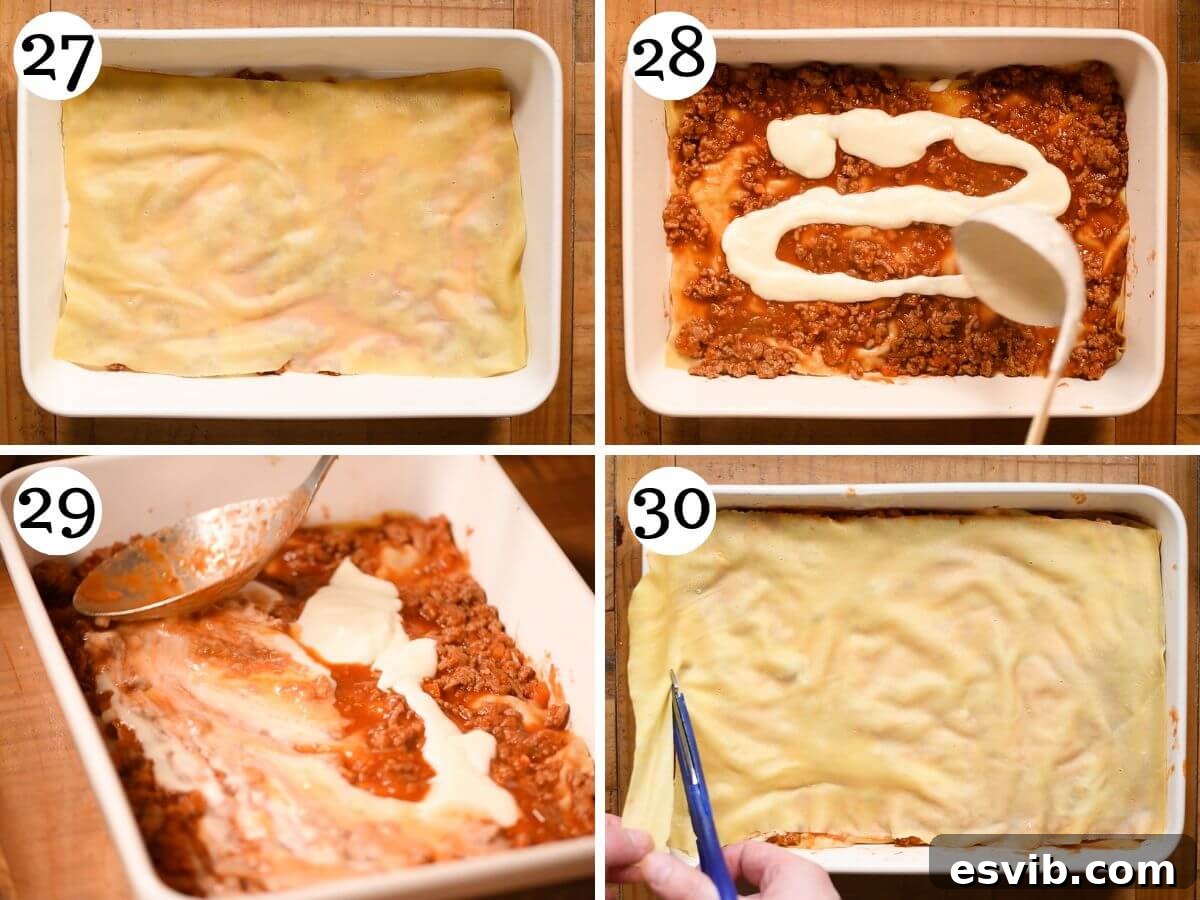
For the subsequent layers, generously spread a large spoonful of the lamb ragu over the pasta, ensuring good coverage. Then, follow with a ladleful of the creamy Pecorino bechamel sauce, spreading it evenly over the ragu. Continue this layering sequence – pasta, ragu, bechamel – until you have used up all your ingredients. You should aim for approximately 6 distinct layers, resulting in a tall, impressive lasagna. Ensure that your final top layer consists of a little ragu, followed by a very generous amount of bechamel sauce (photos 28-31).
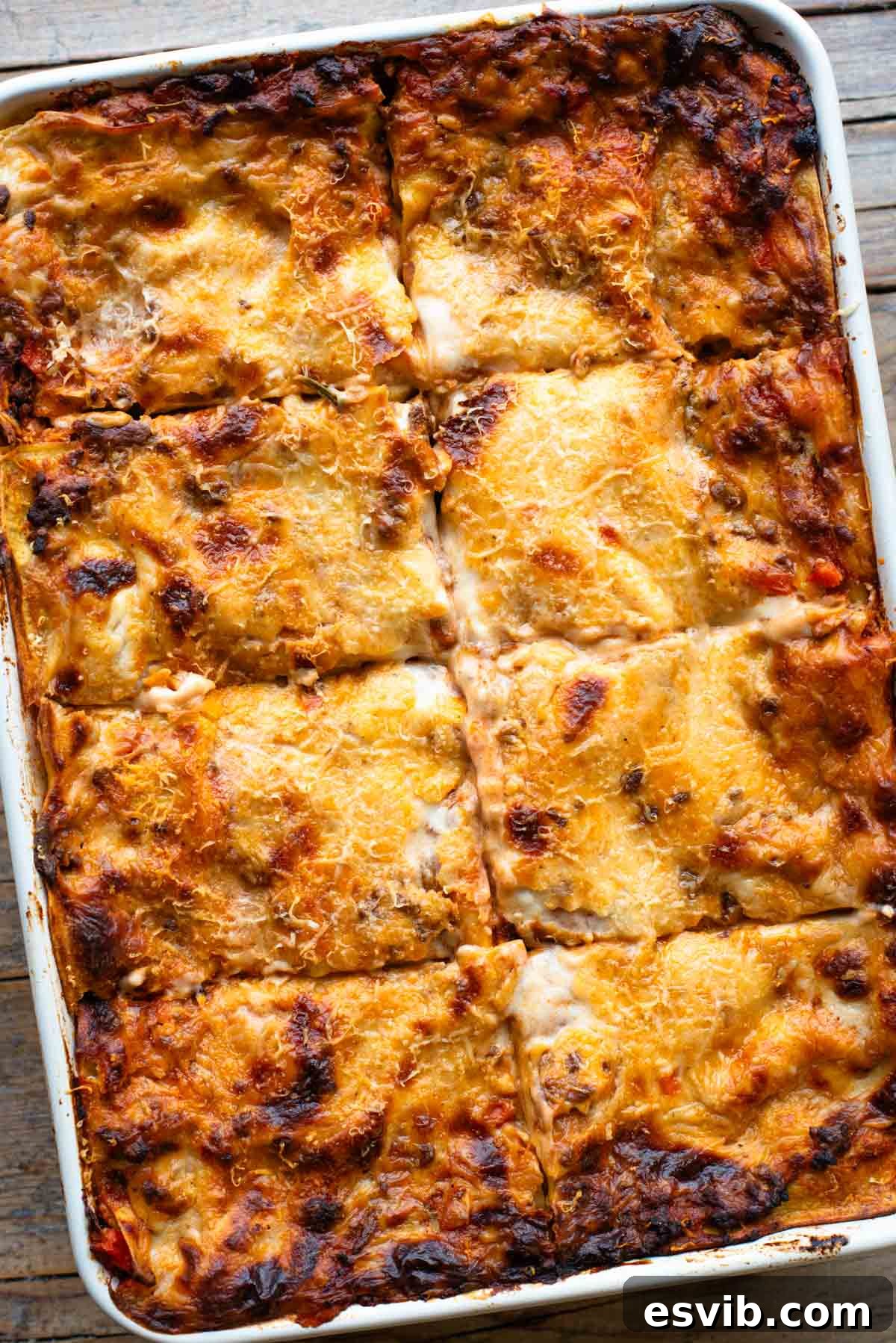
Finally, top the entire lasagna with a final grating of fresh Pecorino cheese. This will create a beautiful, golden crust. Place the baking dish into your pre-heated oven and bake, uncovered, for 30-40 minutes. The lasagna is ready when the top is golden brown, bubbly, and irresistible (photo 33).
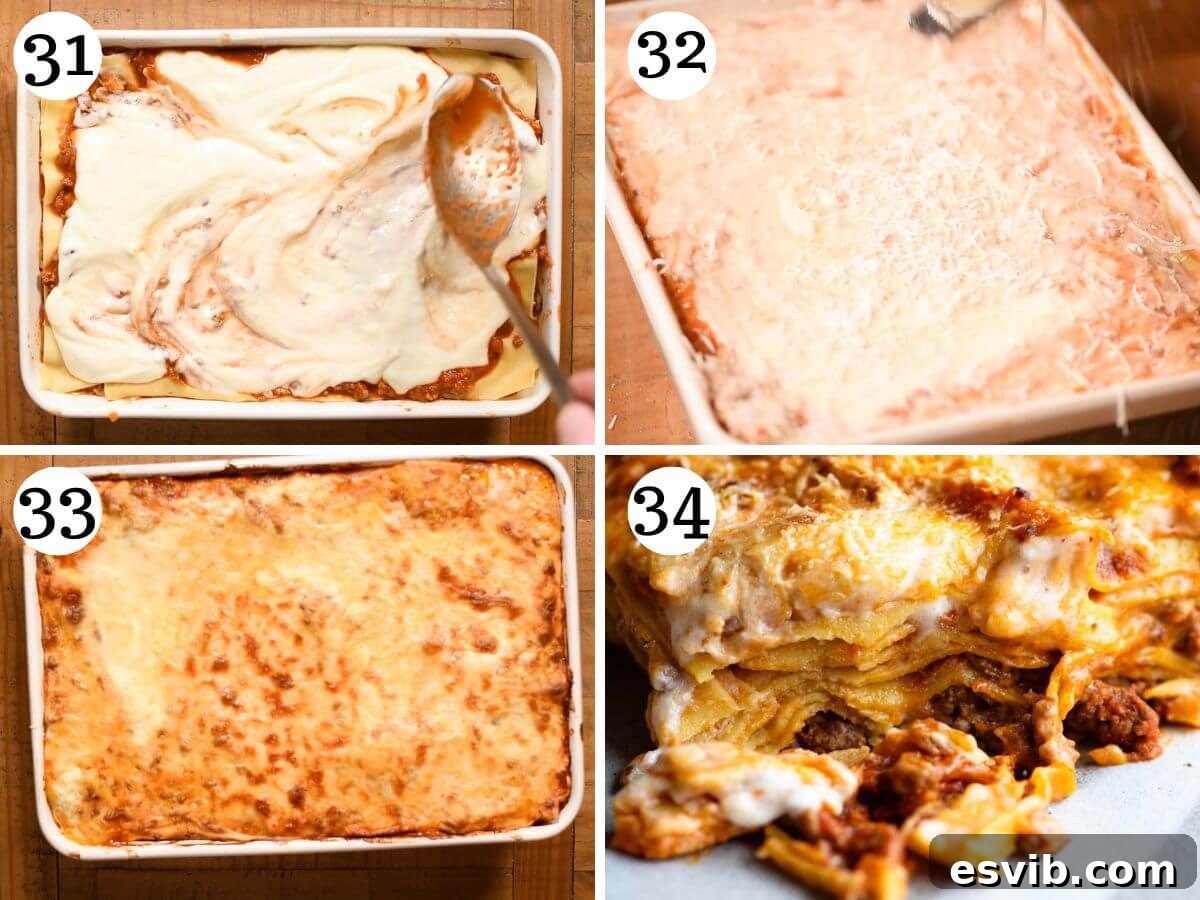
Once baked, it’s crucial to let the lasagna rest for at least 10 minutes before attempting to cut and serve it. This resting period allows the layers to settle and firm up, ensuring clean, perfect slices that hold their shape. Serve warm and enjoy! (photo 34).
Expert Recipe Tips and Frequently Asked Questions
Mastering this Lamb Lasagna is easier with a few insider tips and answers to common questions. Read on to perfect your dish!
- Prepare the Ragu the Day Before: This is perhaps our most crucial tip. Not only does the ragu require several hours of simmering, but allowing it to rest overnight in the refrigerator truly transforms its flavor. The ingredients have time to meld and deepen, resulting in an even more complex and delicious sauce for your lasagna. This also breaks up the cooking process, making assembly day much smoother.
- Always Drain the Lamb Fat: As mentioned in the instructions, lamb mince releases a significant amount of fat during browning. It is imperative to drain this fat thoroughly. Use a slotted spoon to transfer the browned lamb to a bowl, then carefully pour the rendered fat into a separate, heat-proof container. Once the fat has solidified, you can easily discard it with your food waste. Never pour hot grease down your drain, as it can cause severe clogs.
- Choosing Your Lasagna Sheets: While homemade pasta is highly recommended for its superior texture and flavor, we understand that time isn’t always on your side. If you opt for convenience, use fresh lasagna sheets found in the refrigerated section of your grocery store. These are generally thinner and more pliable than dried sheets and yield a more tender lasagna.
- The Precision of a Kitchen Scale for Pasta: When making homemade pasta, accuracy is key. We strongly advocate for using a digital kitchen scale to weigh your flour rather than relying on volume measurements (cups). Flour can pack differently into a cup, leading to inconsistencies. A scale ensures precise ratios, giving you the best chance for perfectly hydrated and kneadable dough.
- Optimal Sauce Consistency: The ragu should be thick enough to cling to the pasta layers but still spreadable. If it’s too thin, your lasagna could become watery. If too thick, it won’t penetrate the pasta effectively. Adjust with a splash of stock or water if needed during the final simmering stage.
- Resting is Essential: Don’t rush to cut into your freshly baked lasagna. Allowing it to rest for at least 10-15 minutes after it comes out of the oven is vital. This resting period allows the sauces to redistribute and set, making for cleaner slices and preventing the lasagna from collapsing.
Absolutely! Preparing the ragu the day before is highly recommended for enhanced flavor. You can assemble the entire lasagna up to one day in advance, cover it tightly, and store it in the refrigerator. On the day of serving, simply take it out an hour before baking to allow it to come to room temperature, then bake as directed.
Yes, this Lamb Lasagna freezes beautifully! Once completely cooled after baking, you can freeze the entire lasagna or cut it into individual portion sizes for convenience. Wrap it tightly in plastic wrap and then aluminum foil to prevent freezer burn. Allow the lasagna to defrost completely in the refrigerator before reheating in the oven. Alternatively, you can freeze the ragu and bechamel sauces separately and defrost them before assembling a fresh lasagna.
Explore More Italian Easter Recipes
If you loved this Lamb Lasagna, you’ll surely enjoy these other traditional Italian recipes, perfect for Easter celebrations or any festive occasion. Dive into the rich culinary heritage of Italy!
Antipasti
Pizza Rustica (Italian Easter Pie)
Antipasti
Torta Pasqualina (Spinach & Ricotta Egg Pie)
Mains
Italian Lamb Ragu (Ragu di Agnello)
Italian Desserts
Italian Easter Bread (Pane di Pasqua)
We truly hope you’ve enjoyed discovering this Italian Lamb Lasagna recipe. If you’ve tried this or any other recipe from our blog, please don’t forget to rate the recipe and share your experience in the comments below – we absolutely love hearing from you! You can also follow us on Facebook, Instagram, and Pinterest, or sign up for our Newsletter to receive weekly updates on our latest delicious creations.
Step By Step Photos Above
Most of our recipes come with step by step photos, helpful tips and tricks to make it perfectly first time and even video!
Italian Lamb Lasagna with Pecorino Bechamel
By Emily
1 hr 15 mins
5 hrs
6 hrs 15 mins
8 servings
Equipment
-
Pasta machine or rolling pin
-
9×13 inch baking dish
-
Clean kitchen towels (for blanching pasta)
-
Plastic wrap (cling film)
Ingredients
Ragu
- 1.7 lbs lamb mince, (800g) we used 20% fat
- 1 large carrot
- 1 large onion
- 1 large celery stick
- 2 cloves garlic
- 1 cup red wine, (240ml)
- 2 and 1/3 cups tomato passata (tomato puree), (700g)
- 5 and 1/4 cups chicken stock, (1250 ml)
- 1 bay leaf
- 1 sprig rosemary
Pasta dough
- 3 medium eggs, (220g)
- 1 egg yolk
- 300 g Italian 00 flour, (2 cups plus 2 tablespoons)
Pecorino bechamel
- 5 tablespoons butter, (70g)
- 5 tablespoons flour, (70g)
- 4 cups whole milk, (1 litre)
- 1 pinch freshly grated nutmeg
- 1 cup freshly grated Pecorino Romano, (70g)
- Salt and pepper
Instructions
Preparation notes
-
I recommend making the ragu the day before not only because it needs a good few hours to cook but the flavours really develop with time so leaving it overnight will make it even more delicious.
To make the ragu
-
Finely chop the carrot, celery and onion and set aside.
-
Heat a drizzle of olive oil in a large pan and brown the lamb. Once browned remove the lamb to a bowl using a slotted spoon and pour all of the fat into a separate bowl (discard once solidified).
-
Next, add about 1 tablespoon of olive oil to the pan and saute the soffritto (carrot, celery and onion) on a medium-low heat until soft but not browned. Do this slowly to develop flavour (about 10 minutes).
-
Once softened, add the garlic and saute for about 1 minute. Add the drained lamb back to the veg and stir to combine. Add the red wine and let it reduce for about 2-3 minutes until you can no longer smell the alcohol.
-
Add the tomato, half of the chicken stock, bay leaf and rosemary sprig. Stir to combine and let it simmer for 4 hours uncovered adding the remaining stock half way through. If the sauce reduces too much you can add more water.
Make the pasta dough
-
Tip the flour on a clean work surface and make a large wide well in the middle. Add the eggs to the well and scramble them with a fork.
-
Using your fork start incorporating the flour into the egg a little at a time until a rough dough forms. Use your hands to bring it together and knead it for 10 minutes.
-
Pasta tip: the hydration of your pasta can vary depending on the size of your eggs/humidity. If it seems very sticky you can incorporate more flour a little at a time and if too dry you can wet your hands to knead the dough adding in more moisture.
-
Once kneaded, wrap your dough in plastic wrap (cling film) and let it rest for at least 30 minutes.
Make your bechamel
-
Add the butter to a saucepan on a medium heat. Once melted, add the flour and whisk into the butter for around 1 minute to create a roux.
-
Next, add half of the milk whilst whisking until smooth and lump free. Once thickened, add the rest of the milk and whisk until smooth and thickened.
-
Add a pinch of salt, pepper, nutmeg and the grated Pecorino cheese, stir until the cheese has melted and set aside.
Roll out and blanch the pasta
-
Bring a large pot of water to a boil and salt it well.
-
Meanwhile, set up your pasta machine and set it to the widest setting (usually number 0). Cut your dough in half keeping one half wrapped in plastic wrap.
-
Flatten the other half so it’s easier to pass through your pasta machine and pass it through the widest setting. Fold one end of the dough to the middle and the other end right over that as if you were creating a leaflet. Flatten the dough and pass it through the widest setting again. Repeat this one more time.
-
Next, roll your dough once through each setting up until the 3rd last number (usually number 7). You may need to lightly dust the pasta dough, surface and pasta machine with flour if it feels too sticky.
-
Cut the pasta in sheets big enough to fit your lasagna dish. Blanch them in the boiling water (about 2 or 3 at a time) for 1 minute then transfer them to a clean kitchen towel. Let them dry out for a few seconds.
-
Repeat this with the second half of the dough. Tip: I find it easier to start assembling the lasagna with half of the blanched pasta before rolling out the rest.
Layer the lasagna
-
If baking straight away pre-heat the oven to 200C (400F).
-
Spread a thin layer of ragu on the bottom of your baking dish and lay the first layer of pasta sheets on top (you can cut any excess pasta).
-
For the next layer, spread out a large spoonful of ragu and a ladleful of bechamel spreading it out on top of the ragu. Continue the layering until you have used up all the ingredients (you should get 6 layers) making sure the final layer is a little ragu and a generous amount of bechamel. Top with a grating of Pecorino cheese and bake uncovered for 30-40 minutes until golden and bubbling.
-
Let the lasagna rest for 10 minutes before cutting and serving.
Video
Watch our video tutorial for a visual guide on making this delicious Italian Lamb Lasagna!
Notes
- Prepare the ragu the day before – I recommend making the ragu the day before not only because it needs a good few hours to simmer but leaving it overnight will allow the flavours to develop making it even more delicious.
- Drain the fat – a lot of fat is released when browning the lamb which will need to be drained off. Use a slotted spoon to remove the browned lamb to a bowl then pour all the fat into a separate bowl. Once the fat has hardened you can throw it in the food waste (don’t clog your drain).
- Lasagna sheets (pasta) – if you don’t want to make homemade pasta you can use store-bought pasta instead, I recommend using fresh lasagna sheets found in the refrigerator section.
- Use a kitchen scale for pasta – if making homemade pasta I highly recommend using a kitchen scale to weigh your flour. It’s the best way to get accurate results.
- Leftovers – the lasagna will keep well in the fridge for up to 2-3 days or can be frozen.
Helpful Info for All Recipes
- I always use extra virgin olive oil in all of my recipes unless stated otherwise
- When I use canned or jarred tomatoes of any kind I always use Cirio or Mutti brands for the best results and flavour.
- All vegetables are medium sized unless stated otherwise
- All recipes are tested and developed using a fan (convection) oven
- Find out more about how nutrition is calculated.
- Check out our must have Italian Pantry Staples.
- You can also find all our Essential Kitchen Tools for Italian Cooking.
Nutrition
Nutrition information is automatically calculated, so should only be used as an approximation.

Never Miss a Recipe!
Join our newsletter community and receive the latest Italian recipes, cooking tips, and culinary inspiration directly in your inbox. Be the first to discover new dishes and elevate your home cooking with authentic flavors.
Subscribe to Our Newsletter