
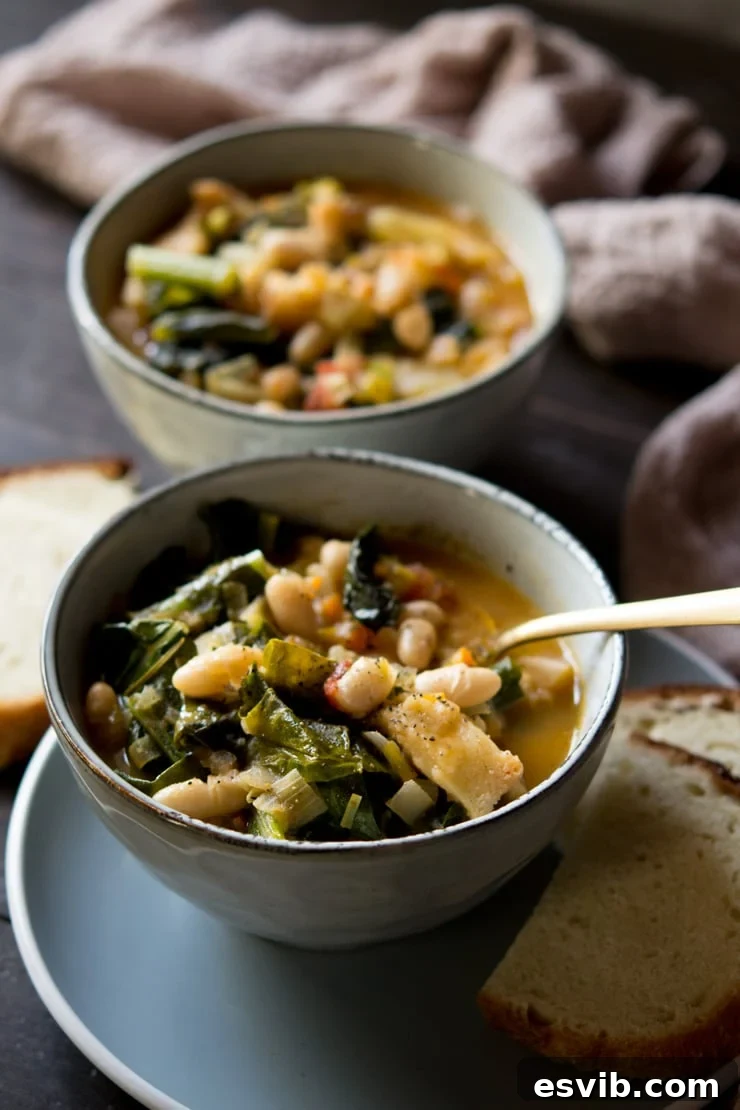
Experience the true taste of Tuscany with Ribollita, a robust and incredibly flavorful vegetable and bread soup. This classic dish, featuring nutritious cannellini beans, vibrant cavolo nero, tender potatoes, aromatic garlic, and hearty stale bread, is a culinary embrace perfect for chilly winter evenings. More than just a meal, Ribollita is a wholesome tradition, brimming with rustic charm and satisfying goodness that speaks volumes about Italian comfort food.
This traditional Tuscan vegetable soup stands as a beloved staple across Italy, particularly cherished during the colder months when a warm, nourishing meal is most desired. Far from a light broth, Ribollita is a substantial, stew-like creation, renowned for its thick, chunky texture and deep, complex flavors that develop over time. Its very name, derived from “ri-bollita” meaning “reboiled,” hints at its unique characteristic: it’s often best enjoyed the day after it’s initially made. This resting and gentle reheating process allows the myriad of ingredients to meld further, deepen their savory notes, and for the soup to thicken beautifully, achieving its ultimate comforting consistency.
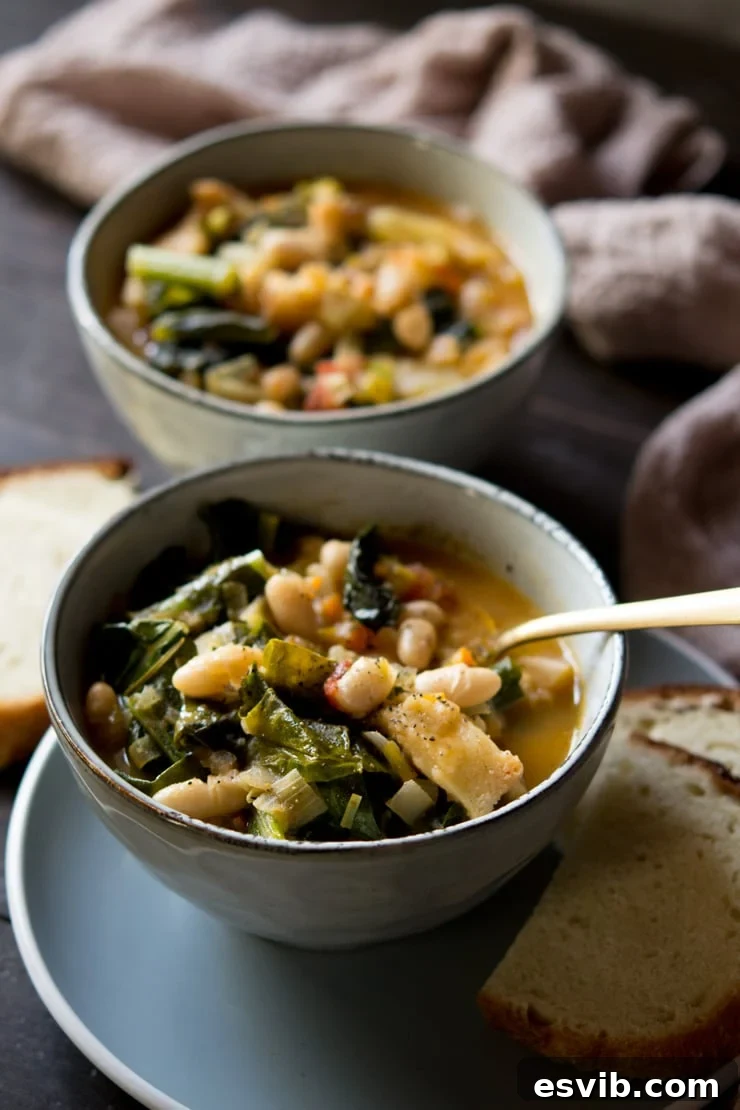
The Heartwarming History and Origin of Ribollita: A Story of Tuscan Ingenuity
Ribollita is a quintessential example of “cucina povera” – peasant cooking – an esteemed Italian culinary philosophy centered around resourcefulness, sustainability, and transforming humble, often leftover, ingredients into delicious and satisfying meals. Historically, this nourishing soup was conceived as a clever way to revive and elevate leftover minestrone or other vegetable soups. In ancient times, and even up to recent history, Tuscan families, often of modest means, would prepare a large batch of vegetable soup and then reboil it with the addition of stale, crusty bread. This wasn’t merely for convenience; it was a highly effective method to bulk out the meal, making it more filling, economical, and sustaining for hard-working farming communities.
Over centuries, what began as humble necessity evolved into a celebrated Tuscan specialty, a testament to the region’s ability to turn basic fare into extraordinary cuisine. The act of “reboiling” became integral to its identity, proving that patience and simple techniques could unlock profound flavors. While the core concept remains consistent – a thick vegetable soup generously enriched with bread – countless regional and family variations exist, each adding a personal touch. However, certain vegetables are almost universally included, forming the backbone of this comforting and iconic dish. These commonly used vegetables ensure a deep, earthy, and authentically Tuscan flavor profile:
- Cavolo Nero (Tuscan Kale): This dark, leafy green, also known as Lacinato kale, is a signature ingredient. It provides a slightly bitter, robust flavor and a wonderful, slightly chewy texture that holds up well during cooking.
- Savoy Cabbage: A milder cabbage variety that contributes sweetness and additional body to the soup, balancing the intensity of other greens.
- Carrots: Essential for building the aromatic base (soffritto) and contributing natural sweetness, which mellows the soup’s overall flavor.
- Onion: A fundamental component of the crucial soffritto, adding deep savory notes and a foundational sweetness when slowly cooked.
- Celery: The third leg of the Italian soffritto, offering a fresh, slightly peppery, and herbaceous note that brightens the vegetable base.
- Potatoes: These starchy vegetables are vital; as they break down during simmering, they naturally thicken the soup, adding a wonderful creaminess and substantial texture without needing any dairy.
- Tomatoes: Canned chopped tomatoes provide a touch of acidity, a rich umami backdrop, and a vibrant color to the soup, complementing the earthiness of the greens and beans.
- Cannellini Beans: These creamy white kidney beans are fundamental to Ribollita, contributing a significant amount of plant-based protein, dietary fiber, and a distinct nutty flavor that pairs perfectly with the other ingredients. They also add to the soup’s characteristic thick and hearty consistency.
Crafting Authentic Ribollita: A Step-by-Step Guide to Tuscan Vegetable and Bread Soup Perfection
Making Ribollita is a culinary journey that rewards patience with unparalleled flavor. While it involves a few distinct stages, each step is straightforward and contributes significantly to the final, comforting, and deeply satisfying result. Prepare to immerse yourself in the art of Tuscan cooking.
Step 1: Preparing the Heart of the Soup – The Cannellini Beans
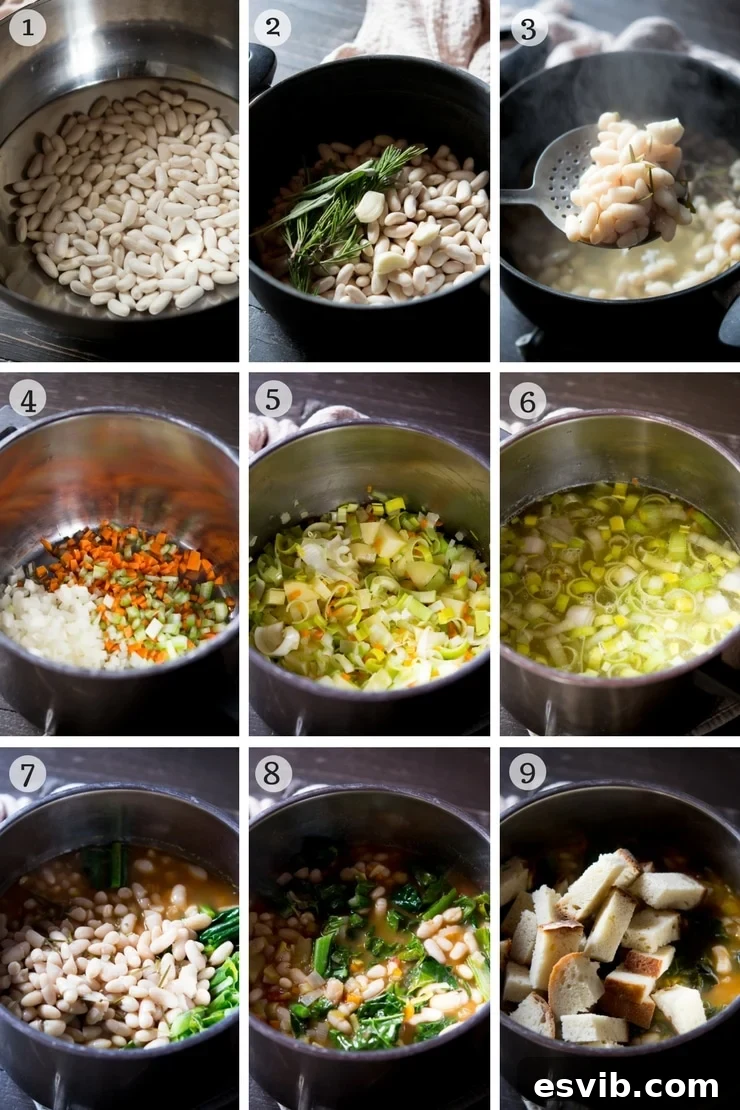
The journey to a truly authentic Ribollita begins with dried cannellini beans. This initial step, though requiring foresight and time for soaking, is well worth the effort for the superior texture and profound flavor it imparts to the soup. First, you need to soak the dried cannellini beans in a generous amount of cold water. Aim for at least 12 hours, with an ideal soaking time extending to 24 hours. Soaking ensures that the beans cook evenly, significantly reduces their cooking time, and also makes them more digestible by breaking down complex sugars.
Once adequately soaked, thoroughly drain the beans and transfer them to a clean, heavy-bottomed pot. To infuse them with classic Italian aromatics, add three peeled garlic cloves, two fragrant sprigs of fresh rosemary, and five aromatic sage leaves. These herbs will impart a beautiful, earthy, and herbaceous flavor that will permeate the entire soup. Cover the beans generously with fresh water – ensuring they are fully submerged by at least an inch or two – and place the pot on a low heat. Bring the water to a gentle simmer, then cover the pot and allow the beans to cook slowly for approximately 2 hours, or until they are tender and creamy but still hold their shape. The long, slow simmer is crucial for developing their exquisite texture and absorbing the herbal flavors.
After simmering, carefully remove the cooked beans from the pot using a slotted spoon and place them in a separate bowl. Discard the spent rosemary and sage sprigs, as their flavor has now been fully extracted. Crucially, **do not discard the bean cooking liquid.** This flavorful broth, imbued with the essence of the beans, garlic, and herbs, will serve as your rich, homemade stock for the Ribollita. It contributes an incredible depth of flavor that store-bought vegetable stock simply cannot replicate, forming the very soul of your soup.
Time-Saving Tip: If you find yourself pressed for time or prefer a quicker method, you can certainly bypass the soaking and simmering of dried beans. Instead, use two cans (approximately 15 oz each) of good quality pre-cooked cannellini beans. Ensure they are thoroughly drained and rinsed before adding them towards the end of the cooking process. In this instance, replace the bean cooking liquid with an equivalent amount of high-quality vegetable stock to ensure your soup retains a rich and robust base flavor.
Step 2: Building the Flavor Foundation – The Soffritto
The secret to the profound depth of flavor in many classic Italian dishes, including Ribollita, lies in the “soffritto.” This is an aromatic base of finely diced vegetables gently sautéed in olive oil, serving as the essential foundation upon which the entire dish is built. For Ribollita, this aromatic trio is paramount. Begin by finely chopping your carrot, onion, and celery. The finer and more consistent the dice, the more smoothly they will meld into the soup, releasing their full spectrum of flavors. Add these finely chopped vegetables to a large, heavy-bottomed pot or Dutch oven with a generous glug of good quality extra virgin olive oil. Sauté them gently over medium-low heat until they become very soft and translucent, but without allowing them to brown. This slow, patient cooking extracts maximum sweetness and aroma, forming the indispensable flavor base for your hearty soup. For those eager to delve deeper into this fundamental Italian technique, you can click here for more details about the art of soffritto.
Next, introduce the peeled and uniformly cubed potatoes along with the thinly sliced leek to the pot. Continue to cook, stirring occasionally, until the leek has softened and the potatoes have begun to absorb the rich flavors of the soffritto. This stage prepares the vegetables for their roles, with the potatoes eventually breaking down to add a natural creaminess and the leek contributing a delicate, sweet oniony note.
Step 3: Assembling and Simmering for Deep Flavor
Now it’s time to bring all the prepared elements together to create the magnificent soup base. Carefully pour in the reserved bean cooking liquid, the additional vegetable stock, and the canned chopped tomatoes. Add a good pinch of salt and freshly ground black pepper to season the liquid generously. Stir all the ingredients together to combine them well. Bring the mixture to a gentle simmer, then reduce the heat to low, ensuring it maintains a slow, steady bubble. Cover the pot and let it cook undisturbed for approximately 40 minutes. This extended simmering time is crucial; it allows all the vegetables to tenderize beautifully, their starches to release, and the flavors to deepen, meld, and intertwine, creating a truly harmonious and robust base for your Ribollita.
Step 4: The Finishing Touches and Embracing the “Reboiled” Magic
After the initial long simmer, your soup base will be rich and fragrant. It’s now time for the final additions that define Ribollita. Add the roughly chopped cavolo nero (or your chosen dark leafy greens) and the pre-cooked cannellini beans to the pot. Stir them in well, ensuring the greens are fully submerged in the hot liquid so they can wilt and cook evenly. Cover the pot once more and continue to simmer for another 20 minutes. This period allows the cavolo nero to soften to perfection and its distinct earthy notes to fully infuse the soup, becoming an integral part of its flavor profile.
Finally, introduce the chopped crusty bread into the soup. The bread, whether fresh or day-old, is key to Ribollita’s characteristic texture; it will absorb the rich broth, swelling and thickening the soup to its signature rustic consistency. Stir the bread in gently, ensuring it is submerged. Simmer gently for a further 10 minutes, or until the bread has fully softened and disintegrated into the soup, contributing to its creamy, hearty texture.
Once the bread has fully softened and the soup has thickened to your desired, hearty consistency, your Ribollita is technically ready to be enjoyed. However, for the most authentic and intensely flavorful experience, resist the urge to devour it immediately. For true Ribollita magic, allow the soup to cool completely, then gently reheat it the next day. This “reboiling” process is where Ribollita truly shines; the flavors deepen, mingle, and mature overnight, making it even more incredibly delicious, robust, and comforting. Before serving, drizzle each bowl with a generous amount of high-quality extra virgin olive oil and a sprinkle of freshly ground black pepper for an authentic Tuscan finish.
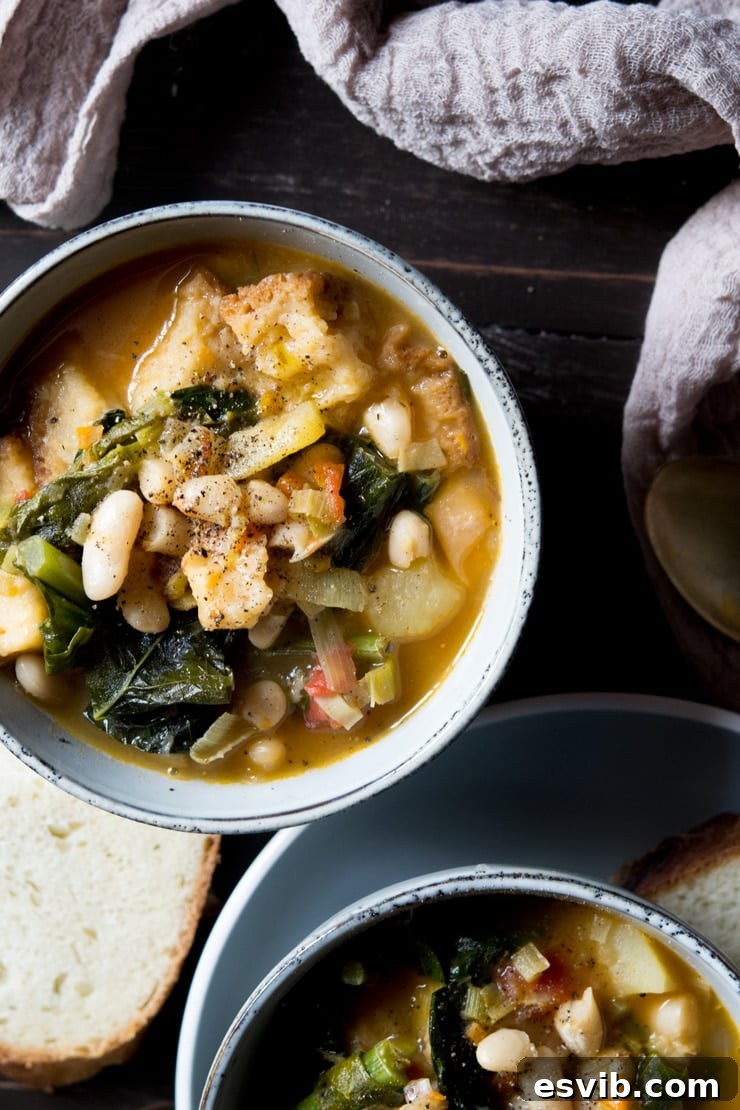
Serving Suggestions and Enjoying Your Ribollita
Ribollita, while deeply satisfying and complete on its own, can be elevated with a few simple garnishes that highlight its rustic charm. A final, generous drizzle of your finest extra virgin olive oil over each bowl just before serving is not merely traditional; it adds a luxurious sheen, a peppery note, and an unmistakable fruity aroma that brightens the entire dish. A fresh grind of black pepper is also essential to enhance the flavors. For those who enjoy dairy, a delicate sprinkle of freshly grated Parmigiano Reggiano or Pecorino Toscano can add an extra layer of savory depth and umami, although it’s worth noting that traditionally, Ribollita is often served without cheese, particularly if aiming for a strictly vegan dish. Serve alongside additional slices of crusty, artisanal bread for dipping, or simply savor its hearty texture as a complete meal.
This versatile soup also lends itself beautifully to creative variations, allowing you to adapt it to your taste or available ingredients. Feel free to experiment with other dark leafy greens like Swiss chard, spinach, or even regular curly kale if cavolo nero is unavailable in your region. Different types of white beans, such as cannellini, great northern, or navy beans, can also be used interchangeably, though cannellini remain the classic choice for their creamy texture. Some recipes might include a touch of red pepper flakes for a subtle kick of heat, or a splash of dry red wine during the soffritto stage to add another layer of complexity and a deeper, more robust flavor profile to the soup. You could even add seasonal vegetables like zucchini or green beans for added freshness during different times of the year.
Why Ribollita is the Ultimate Winter Comfort Food
There’s a profound reason why Ribollita has remained a beloved and enduring dish in Tuscany for centuries, especially as the colder months descend. Its sheer heartiness and exceptional nutritional density make it the perfect antidote to winter’s chill, a true culinary embrace on a frosty evening. Each spoonful delivers a rich medley of tender, slow-cooked vegetables, creamy cannellini beans, and crusty bread that has lovingly absorbed all the complex, savory flavors of the broth. This creates a dish that not only fills the stomach but truly warms you from the inside out. Beyond its undeniable comforting qualities, Ribollita beautifully embodies the spirit of sustainable and mindful cooking, transforming humble, readily available ingredients into a gastronomic delight. It’s more than just a meal; it’s a bowl full of Italian tradition, a rich tapestry of history, and an unparalleled source of warmth and well-being.
Nutritional Benefits of This Tuscan Gem
Ribollita is not only a delicious culinary experience but also an incredibly nutritious one. It’s a powerhouse of plant-based goodness, packed with protein and dietary fiber from the cannellini beans, making it wonderfully filling and immensely beneficial for digestive health. The abundance of fresh vegetables like cavolo nero, carrots, celery, potatoes, and tomatoes provides a rich array of essential vitamins, minerals, and potent antioxidants. Cavolo nero, in particular, stands out as a superfood, celebrated for its high content of vitamins K, A, and C, as well as calcium and iron. This soup is a fantastic way to enjoy a balanced, wholesome, and profoundly satisfying meal, making it an excellent choice for vegetarians and easily adaptable for vegans simply by ensuring the vegetable stock is purely plant-based and omitting any cheese garnishes. It truly nourishes the body and soul.
We invite you to embark on this culinary journey and bring the authentic taste of Tuscany to your kitchen!
Ribollita – Tuscan Vegetable Soup Recipe
By Emily
Prep Time: 10 minutes |
Cook Time: 1 hour 10 minutes |
Total Time: 1 hour 20 minutes |
Servings: 6 people
Ribollita, a hearty Tuscan vegetable soup made with cannellini beans, cavolo nero, bread, potatoes and garlic it’s packed full of nutrition and flavour. A great recipe for chilly winter evenings!
Ingredients
For the beans
- 1 1/2 cups (250g) dried cannellini beans
- 2 sprigs fresh rosemary
- 5 fresh sage leaves
- 3 cloves peeled garlic
For the soup
- 1 carrot, finely chopped
- 1 white onion, finely chopped
- 1 stalk celery, finely chopped
- 1 leek, sliced and cleaned
- 1 lb (500g) cavolo nero, tough stems removed and roughly chopped
- 2 medium-sized potatoes, peeled and cut into 1-inch cubes (around 560g/oz)
- 1 cup (270g) canned chopped tomatoes
- 5 cups / 1 liter good quality vegetable stock
- 1 tbsp extra virgin olive oil (recommended for best flavor)
- 7 oz (200g) crusty, day-old bread, chopped into bite-sized pieces
- Salt and freshly ground black pepper to taste
- Extra virgin olive oil for drizzling (for serving)
Instructions
- First, soak the dried cannellini beans in a large bowl of cold water for at least 12 hours, preferably 24 hours. Ensure they are fully submerged.
- Once the beans have soaked, drain them thoroughly. Add the drained beans to a clean pot with 3 peeled garlic cloves, two sprigs of fresh rosemary, and 5 fresh sage leaves. Cover the beans with approximately 4 cups / 1 liter of fresh water. Bring to a gentle simmer over low heat, then cover the pot and cook for about 2 hours, or until the beans are tender.
- After cooking, carefully remove the cooked beans with a slotted spoon and transfer them to a separate bowl. Discard the rosemary and sage sprigs. Crucially, reserve all the bean cooking liquid – this will serve as a flavorful stock for your soup.
- While the beans are cooking, prepare your soffritto. Finely chop the carrot, onion, and celery. In a large, heavy-bottomed pot or Dutch oven, heat 1 tablespoon of olive oil over medium-low heat. Add the chopped carrot, onion, and celery, and sauté gently until they are very soft and translucent, about 10-15 minutes, ensuring they do not brown.
- Add the peeled and cubed potatoes and the sliced leek to the pot with the soffritto. Continue to cook, stirring occasionally, until the leek has softened, about 5-7 minutes.
- Pour in the reserved bean cooking liquid, the 5 cups / 1 liter of vegetable stock, and the canned chopped tomatoes. Season generously with a good pinch of salt and freshly ground black pepper. Bring the soup to a gentle simmer, then reduce the heat to low, cover, and let it cook for 40 minutes, allowing all the vegetables to tenderize and the flavors to meld.
- Now, add the roughly chopped cavolo nero and the cooked cannellini beans to the pot. Stir well to combine and ensure the greens are submerged. Cover the pot again and simmer for another 20 minutes, allowing the cavolo nero to soften.
- Finally, add the chopped crusty bread to the soup. Stir it in thoroughly. Continue to simmer gently for a further 10 minutes, or until the bread has fully softened and thickened the soup to a rich, stew-like consistency.
- Taste and adjust seasoning if necessary. For the most authentic experience, allow the Ribollita to cool completely, then gently reheat it the next day. Serve hot, drizzled with extra virgin olive oil and a fresh grind of black pepper.
Notes
- If you’re pressed for time, you can skip the first three steps. Instead, use two cans (approx. 15 oz each) of drained and rinsed pre-cooked cannellini beans, adding them with the cavolo nero in step 7. Replace the bean cooking liquid entirely with extra vegetable stock.
- The total time listed above excludes the initial bean soaking time.
- Ribollita typically tastes even better the next day, as flavors deepen and the texture becomes richer after “reboiling.”
Nutrition
Calories: 235 kcal per serving
Nutrition information is automatically calculated based on typical values and should only be used as an approximation.
Helpful Information for All Our Recipes
- I consistently use high-quality extra virgin olive oil in all my recipes unless a specific alternative is explicitly stated.
- For canned or jarred tomatoes of any kind, I highly recommend using Cirio or Mutti brands to achieve the best possible results and flavor profile in your dishes.
- Unless specified otherwise, assume all vegetables mentioned in our recipes are of a medium size.
- All recipes featured on this blog are meticulously tested and developed using a fan (convection) oven to ensure reliable results.
- Curious about the nutritional aspects of our dishes? Find out more about how nutrition is calculated.
- Stocking your kitchen? Check out our must-have Italian Pantry Staples for authentic flavors.
- Discover all our recommended Essential Kitchen Tools for Italian Cooking to help you master Italian cuisine.
Did you try this recipe?
Leave a comment below and share your experience!
If you’ve tried this authentic Tuscan vegetable and bread soup, Ribollita, or any other delicious recipe from our blog, please don’t forget to rate the recipe and let me know how it turned out for you in the comments section below. Your feedback is incredibly valuable, and I truly appreciate hearing from you and learning about your cooking experiences! You can also FOLLOW ME on FACEBOOK, TWITTER, INSTAGRAM, and PINTEREST to see more delicious food ideas, culinary inspiration, and what I’m getting up to in the kitchen.