
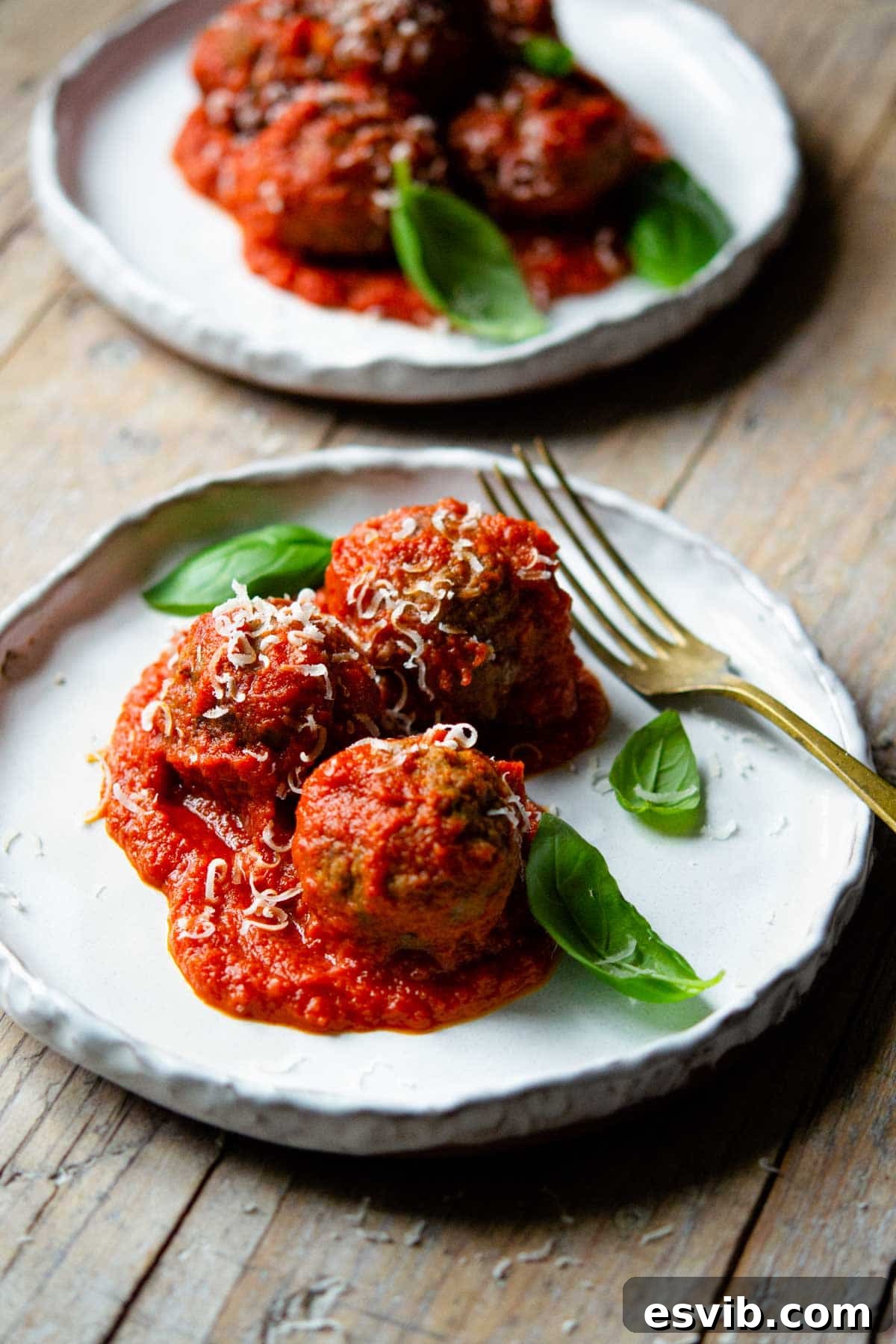
Polpette al Sugo – a truly iconic Italian dish featuring incredibly juicy meatballs bathed in a rich, flavorful tomato sauce. This traditional recipe is a beloved staple in Italian homes, especially for leisurely Sunday family dinners. It’s surprisingly easy to follow and guarantees a meal packed with authentic taste and comforting warmth. Be sure to serve it with plenty of crusty bread, perfect for “fare la scarpetta” – a delightful Italian custom of soaking up every last drop of that exquisite sauce!
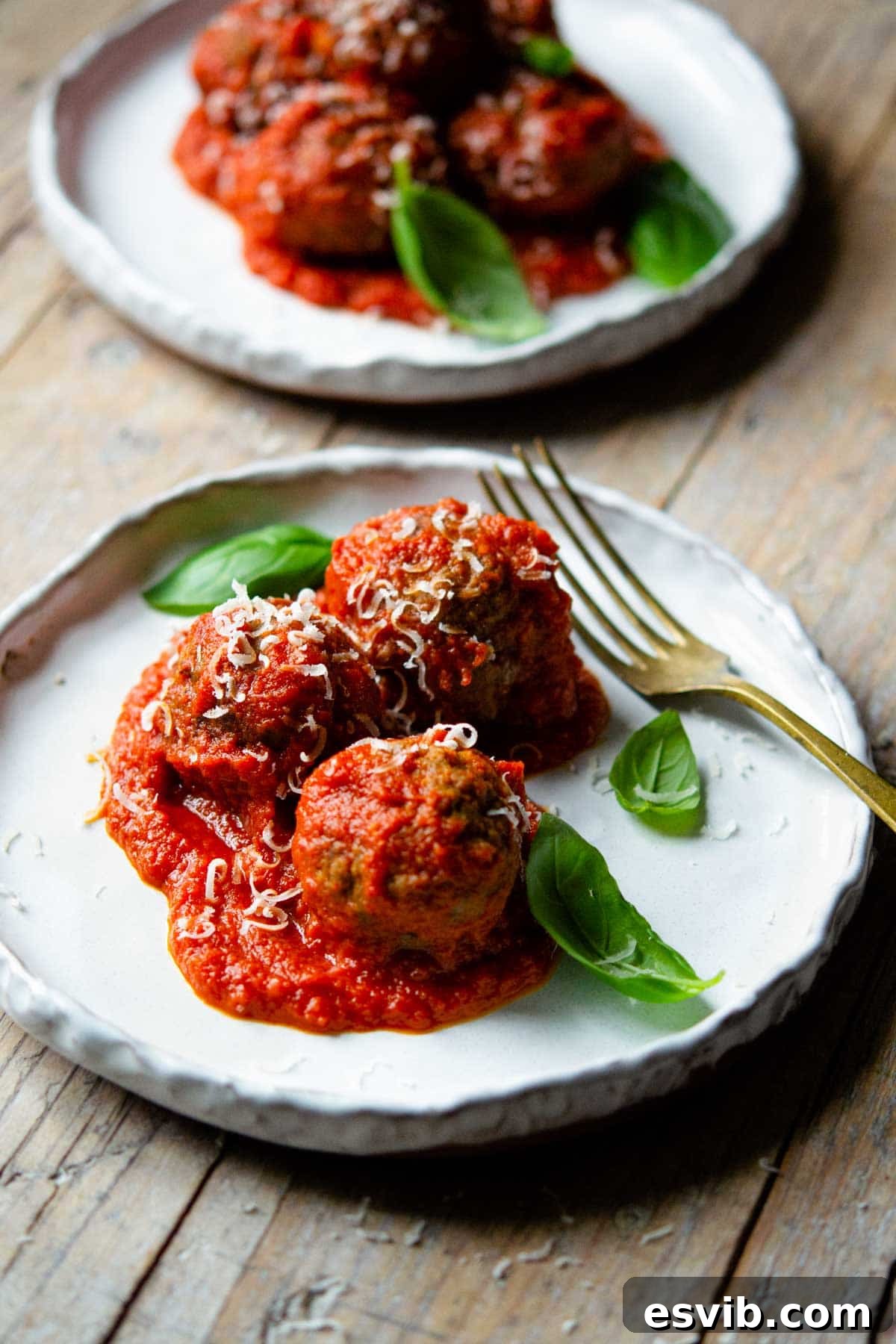
The Heart of Italian Home Cooking: What are Polpette?
The world of Italian meatballs, or “Polpette,” is wonderfully diverse, showcasing the rich culinary traditions from various regions across Italy. While the concept of ground meat rolled into balls is universal, Italian Polpette stand out for their incredible flavor and often a lighter, more tender texture compared to their American counterparts. This is largely due to the careful selection of ingredients and the time-honored cooking methods.
You’ll find countless variations of Polpette throughout Italy, reflecting regional preferences and available ingredients. Some recipes call for a harmonious blend of meats, such as succulent beef, delicate veal, and flavorful pork, to achieve a complex depth of taste and texture. Each meat contributes its unique characteristics, resulting in a perfectly balanced meatball. In contrast, some regions prefer using a single type of meat, perhaps lean ground beef for a robust flavor or even chicken for a lighter, more subtle option.
Beyond the choice of meat, authentic Italian Polpette often incorporate a variety of enriching additions. Cheeses like creamy ricotta, sharp Pecorino Romano, or salty Parmigiano Reggiano are frequently mixed into the meatball mixture, adding moisture, tang, and an irresistible umami boost. These cheeses not only bind the ingredients but also impart a distinctly Italian character to the finished dish. For those seeking meat-free alternatives, Italy also boasts delicious vegetable-based versions, such as our incredibly flavorful eggplant meatballs, proving that the spirit of “polpette” extends beyond just meat.
This particular recipe focuses on Polpette al Sugo, a beloved traditional preparation where tender Italian meatballs are gently baked or simmered in a luscious, homemade tomato sauce. It’s a hallmark of Italian Sunday dinner, designed for sharing and savoring, typically accompanied by an abundance of crusty bread and various contorni (side dishes). Our comprehensive guide below includes detailed step-by-step photos, invaluable tips, and creative serving suggestions, ensuring you can master these super juicy and flavorful Italian meatballs that you’ll be eager to recreate time and time again.
Crafting Perfect Polpette: Ingredients You’ll Need
Creating truly delicious Polpette al Sugo starts with selecting the right, high-quality ingredients. Each component plays a vital role in achieving that perfect balance of flavor and texture, making every bite a culinary delight.
- Ground Beef: Opt for good quality ground beef with a fat content of around 80/20 (80% lean, 20% fat) for the best flavor and juiciness. The fat renders during cooking, keeping the meatballs moist and tender. For a richer, more complex flavor profile, you can also use a mixture of 50% beef and 50% pork, or even a blend of beef and veal, which adds a wonderful tenderness and traditional Italian touch.
- Egg: A large, fresh, free-range egg is essential as a binding agent. It helps hold all the meatball ingredients together, preventing them from crumbling during cooking and contributing to a cohesive, tender texture. It’s a crucial component for structure.
- Fresh Breadcrumbs: Fresh breadcrumbs are a game-changer for authentic Italian meatballs. Unlike dried breadcrumbs, fresh breadcrumbs soak up moisture and flavors from the meat and other ingredients, ensuring the meatballs remain incredibly juicy and tender, never dry or dense. They contribute significantly to the desired light texture.
- Pine Nuts: Often featured in meatball recipes from Northern Italy, pine nuts add a subtle, buttery crunch and a unique, delicate flavor that complements the richness of the meat beautifully. Lightly toasting them before adding can further enhance their aromatic qualities.
- Garlic: Fresh garlic is non-negotiable for authentic Italian flavor. Minced fresh garlic infuses the meatballs with a pungent, aromatic warmth that powdered garlic simply cannot replicate. Aim for one generous clove, finely minced, for maximum impact.
- Herbs: For this traditional recipe, we recommend a mix of dried oregano and a hint of fennel seeds. Dried oregano offers a classic Italian fragrance, while fennel seeds provide a subtle anise-like note that pairs wonderfully with pork (if using) and beef. Feel free to adjust the herbs to your preference; fresh parsley, basil, or a pinch of red pepper flakes can also be excellent additions to customize the flavor.
- Salt and Pepper: Essential for seasoning the meatballs properly. Don’t be shy; adequate seasoning brings out all the beautiful flavors and balances the richness of the meat.
For the rich tomato sauce, you’ll need:
- Onion: One medium onion, finely chopped, forms the aromatic base of your tomato sauce. Sautéing it until soft and translucent sweetens the sauce and adds a layer of foundational flavor, creating depth.
- Garlic: Another clove of minced fresh garlic for the sauce, enhancing its aromatic profile and complementing the meatballs perfectly. Always use fresh for the best result.
- Canned Chopped Tomatoes: The quality of your canned tomatoes truly makes a difference here. We highly recommend using good quality chopped canned tomatoes (preferably San Marzano or a trusted Italian brand like Mutti or Cirio) for the best flavor and texture in your sauce. These tomatoes are picked at peak ripeness, ensuring a naturally sweet and vibrant sauce.
- Tomato Paste: Two tablespoons of tomato paste (also known as puree in the UK) provide deep umami flavor and help to thicken and enrich the sauce, giving it a beautiful, concentrated tomato essence that makes the sauce truly shine.
- Olive Oil: Use good quality extra virgin olive oil for sautéing and building the sauce base. Its fruity notes are integral to authentic Italian cooking.
- Salt and Pepper: To season the sauce, bringing out the sweetness of the tomatoes and balancing all the flavors, creating a harmonious blend.
Step-by-Step Guide to Irresistible Italian Meatballs
Making Polpette al Sugo is a rewarding culinary journey. Follow these steps carefully to ensure tender, flavorful meatballs and a perfectly balanced sauce that will impress everyone at your table.
1. Combine Meatball Ingredients: Begin by adding all the meatball components – ground beef, egg, fresh breadcrumbs, pine nuts, minced garlic, dried oregano, fennel seeds, salt, and pepper – into a food processor. Blitz until the mixture is thoroughly combined and smooth. The goal is a uniform consistency that will make shaping easier and result in tender meatballs. Avoid over-processing, which can make the meat tough. (Refer to photos 1 & 2 in the visual guide for the mixture consistency).
2. Shape the Meatballs: Next, transfer the meatball mixture to a clean bowl. Using your hands, gently shape the mixture into meatballs by rolling them one by one in the palms of your hands. Aim for consistent sizes, roughly 1.5 to 2 inches (3-5 cm) in diameter, to ensure they cook evenly. This recipe typically yields about 12-13 perfectly sized meatballs. (Refer to photo 3 for visual guidance on shaping).
Top Tip for Shaping: When rolling the meatballs, they should appear shiny and smooth on the surface, with minimal to no cracks. This indicates a well-bound mixture. If the mixture feels too sticky or difficult to shape, lightly dampen your hands with water. This technique helps create a tighter ball that holds its shape better and cooks more uniformly.
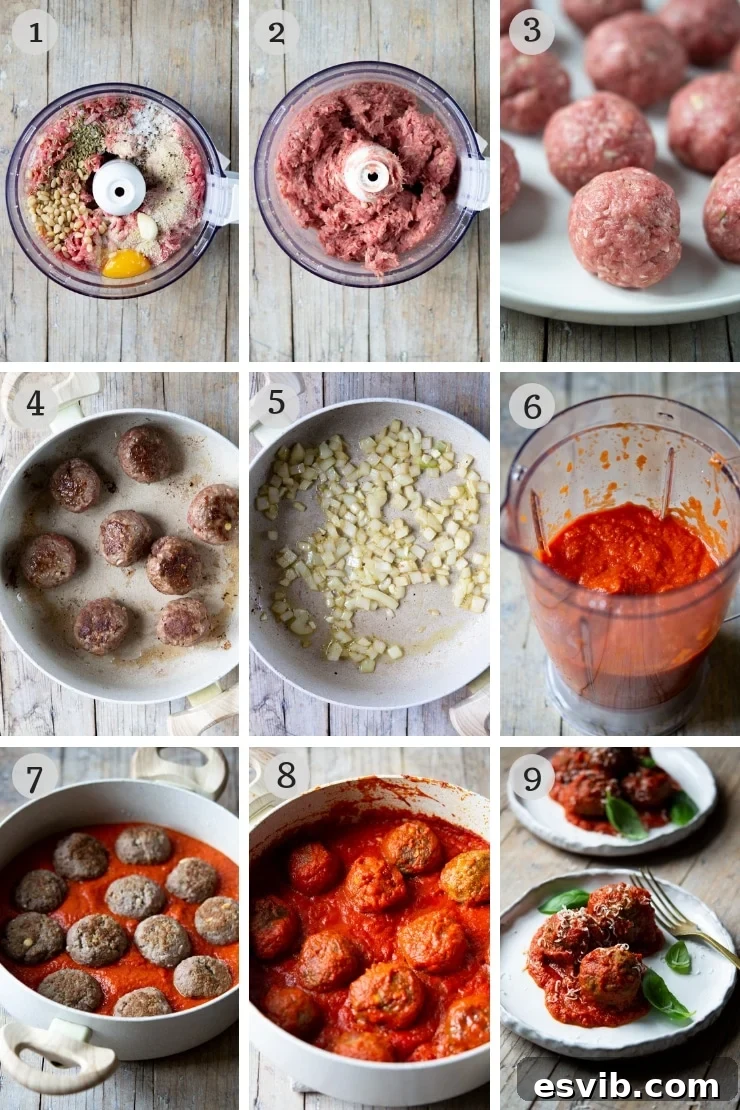
3. Brown the Meatballs: Heat a tablespoon of olive oil in a large, heavy-bottomed pan or Dutch oven over medium-high heat. Carefully add the shaped meatballs to the hot oil, ensuring not to overcrowd the pan (cook in batches if necessary to maintain even browning). Brown the meatballs on all sides until a beautiful golden-brown crust forms. This searing step is crucial as it locks in the juices and develops deep, rich flavors through the Maillard reaction, contributing significantly to the final taste. Once nicely browned, transfer the meatballs to a plate and set them aside.
4. Sauté Aromatics for the Sauce: In the same pan (do not clean it, as the browned bits from the meatballs add incredible depth of flavor to the sauce!), add the finely chopped onion. Sauté over medium heat, stirring occasionally, until the onion softens and becomes translucent, usually about 5-7 minutes. Then, add the minced garlic and cook for another minute until fragrant, being careful not to burn it, which can turn the garlic bitter.
5. Prepare and Simmer the Sauce: Carefully transfer the cooked onion and garlic from the pan into a blender, along with the high-quality canned chopped tomatoes. Blend until the sauce is completely smooth. This step ensures a silky, luxurious texture for your tomato sauce. Pour the blended sauce back into the pan. Stir in the tomato paste, salt, and pepper to taste. If the sauce seems too thick at this point, rinse out the tomato cans with about 1/4 cup of water each and add this flavorful liquid to the sauce. Bring the sauce to a gentle simmer over low heat and let it cook for at least 10 minutes to allow the flavors to meld beautifully.
6. Add the Polpette and Finish Cooking: Gently add the browned meatballs back into the simmering tomato sauce. Carefully toss them or spoon sauce over them to ensure they are fully submerged and coated. Reduce the heat to low, cover the pan, and let the meatballs slowly simmer in the sauce for about 30 minutes. This slow simmer allows the meatballs to cook through, absorb the delicious flavors of the sauce, and become incredibly tender, while the sauce thickens slightly to a perfect, rich consistency. (Refer to photos 7-9 for the final simmering stage).
Exploring Cooking Methods for Your Polpette
While this recipe specifically utilizes pan-frying followed by simmering, it’s worth noting that Italian meatballs can be cooked in various ways, each offering a distinct texture and experience. The method you choose often depends on the desired outcome and how you plan to serve your Polpette.
- Deep Frying: This is a classic method for traditional Italian Polpette, especially when they are intended to be served as an appetizer or without sauce. Deep-frying in olive oil (or sometimes vegetable oil) results in meatballs with an incredibly crispy, golden-brown exterior and a beautifully juicy interior. The quick, high-heat cooking creates a delightful textural contrast. Once fried, these meatballs are often enjoyed simply as they are, allowing their inherent flavor to shine, perhaps with a squeeze of lemon or a fresh herb garnish.
- Pan Frying (like this recipe): Our preferred method when serving meatballs in a rich tomato sauce involves pan-frying them first. This initial searing creates a flavorful crust on the outside of each meatball, a process known as the Maillard reaction, which locks in moisture and develops deep, savory notes. After browning, the meatballs are then transferred to simmer gently in the tomato sauce, where they finish cooking and absorb all the wonderful flavors of the sauce. This two-step process ensures both a delicious exterior and a tender, moist interior, making them perfect for a saucy dish.
- Baking: For a more hands-off and often healthier approach, you can skip the pan-frying step and bake the raw meatballs directly in the sauce. Simply arrange the raw meatballs in an oven-safe dish, cover them generously with your prepared tomato sauce, and bake in a preheated oven (or cook on the stovetop with a lid). This method is convenient and results in very tender meatballs that are fully infused with the sauce’s flavors. While they won’t have the same browned crust as pan-fried versions, they are still incredibly delicious and perfect for a comforting, easy meal.
Each method offers a wonderful way to enjoy Polpette, so feel free to experiment and find your favorite that best suits your taste and occasion!
Expert Tips & Frequently Asked Questions (FAQs)
To ensure your Polpette al Sugo turn out perfectly every time, keep these valuable tips in mind. We’ve also addressed some common questions to help you master this Italian classic and impress your family and friends.
- Good Quality Ingredients Make the Best Tasting Food: This cannot be stressed enough, especially in Italian cooking where simplicity often means the ingredients are the stars. Using high-quality components, particularly when it comes to your canned tomatoes, genuinely elevates the final taste. Invest in the best you can find, and you’ll undoubtedly taste the difference in your sauce.
- Best Tomatoes to Use: As mentioned, quality matters. Look for brands you trust. We consistently recommend Mutti or Cirio tomatoes for their consistent quality, sweet flavor, and vibrant color. Many home cooks in the US also speak highly of Cento tomatoes, though their availability can vary by region.
- Rolling the Meatballs: Achieving smooth, crack-free meatballs is key to both their appealing appearance and preventing them from breaking apart during cooking. If the meat mixture feels too sticky while rolling, lightly wet your hands with a little water. This prevents sticking and helps create a uniform, shiny surface.
- Brown the Meatballs: Do not skip the browning step! Searing the meatballs creates a rich, flavorful crust through the Maillard reaction, which deepens their taste. This process not only adds incredible depth of flavor to the meatballs themselves but also helps to lock in their precious juices, ensuring they remain succulent and tender as they simmer in the sauce.
- Variations Are Encouraged: Feel free to customize your meatballs to suit your taste! You can experiment with different types of cheese (like grated Parmigiano Reggiano, Grana Padano, or even some fresh ricotta for extra moisture), various fresh or dried herbs (fresh parsley, basil, marjoram, or a pinch of dried chili flakes for a subtle kick), or even incorporate finely grated vegetables like zucchini or carrots for added nutrients and texture. Explore our recipes for Eggplant Meatballs in Tomato Sauce (a delicious meat-free option) and Baked Chicken Meatballs for more inspiration and dietary alternatives.
- Is Spaghetti and Meatballs Truly Italian?: This is a classic culinary debate! While immensely popular, spaghetti and meatballs as a combined dish is largely an Italian-American tradition. In Italy, you typically won’t find pasta and meatballs served together in the same course. The closest traditional recipe is “Chitarra alla Teramana” from Teramo, Abruzzo, which features tiny, pea-sized meatballs (pallottine) served with spaghetti alla chitarra pasta. More commonly, meat dishes (secondi) and pasta dishes (primi) are served as separate courses in Italy.
- My Sauce Has Reduced Too Much, What Should I Do?: If your tomato sauce becomes too thick during simmering, simply add a splash of warm water or vegetable broth to loosen it to your desired consistency. Stir well and let it come back to a gentle simmer for a few minutes.
- How Long Do Meatballs Last?: Cooked Polpette al Sugo, stored in an airtight container in the refrigerator, will stay fresh and delicious for 3-4 days. Raw, prepared meatballs can also be stored in the fridge for up to 2 days before cooking.
- Can I Prepare This in Advance?: Absolutely! This dish is fantastic for meal prep. You can prepare the entire dish and simply reheat it gently when you’re ready to eat. Alternatively, you can prepare the meatballs and sauce separately up to step 5 (before adding the meatballs to simmer) and combine them closer to serving time.
- Can I Freeze Them?: Yes, Polpette are excellent for freezing! You can freeze cooked meatballs with or without the sauce in suitable freezer-safe containers or bags. Ensure they are completely defrosted in the refrigerator before reheating. When reheating, if the sauce has thickened too much, add a splash of water to restore its ideal consistency.
Perfect Pairings: What to Serve with Polpette al Sugo
In Italy, Polpette are celebrated in various ways, always with a focus on fresh, seasonal accompaniments that balance the richness of the dish. The most crucial element, regardless of how you serve them, is to have plenty of crusty bread on hand for “fare la scarpetta” – that irresistible tradition of mopping up every last, delicious drop of sauce from your plate.
Polpette al Sugo are traditionally a highlight of the Sunday dinner table, often served as a “secondo” (main course) after a pasta dish. They pair beautifully with a variety of simple yet flavorful contorni (side dishes) such as savory Italian roast potatoes, tender green beans in tomato sauce, a fresh arugula salad with a simple vinaigrette, or other seasonal roasted vegetables like asparagus or broccoli. The robust flavors of the meatballs and sauce complement these sides wonderfully, creating a balanced and hearty meal.
Following the traditional Italian dining custom, you might first serve a “primo” (first course) using the delectable tomato sauce from the meatballs tossed with your favorite pasta. Then, the meatballs themselves would be presented as the “secondo” alongside your chosen side dishes. This approach allows you to fully appreciate both the rich sauce and the succulent meatballs in distinct courses, showcasing the thoughtfulness of Italian meal progression. You can delve deeper into Italian dining traditions and meal structure in our Italian Braciole recipe.
Another incredibly comforting pairing for Polpette al Sugo is creamy polenta. The soft, rich, and often savory polenta acts as a perfect canvas for the savory meatballs and their sauce, making for a truly hearty and satisfying meal, especially during colder months. The creaminess of the polenta beautifully contrasts the texture of the meatballs.
Beyond being a main course, you’ll also discover tiny meatballs (often called “pallottine” in some regions) incorporated into baked pasta dishes like pasta al forno (baked pasta) or even layered within a rich lasagna. As previously mentioned, the dish closest to the American “spaghetti and meatballs” in Italy is found in Teramo, Abruzzo, where these tiny “pallottine” are served with Spaghetti alla Chitarra pasta, a unique regional specialty.
When meatballs are deep-fried and served without sauce, they transform into a delightful appetizer or “aperitivo,” perfect for enjoying with drinks before a meal. They can be served with a sprinkle of salt and pepper, a lemon wedge, or a simple dipping sauce.
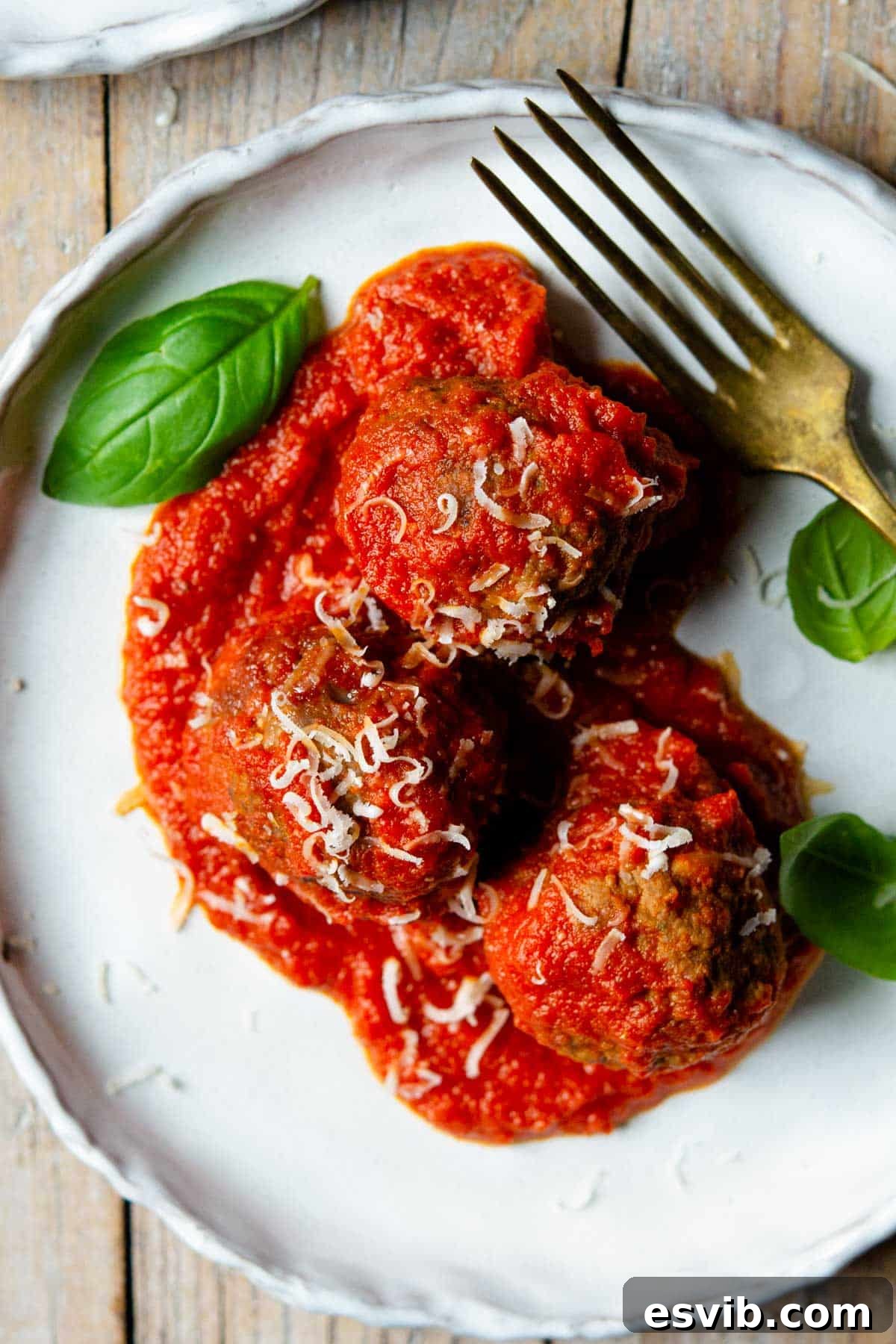
Discover More Authentic Italian Recipes
If you loved making these traditional Italian meatballs and want to explore more culinary delights from the heart of Italy, be sure to check out some of our other authentic Italian recipes. Each recipe offers a taste of true Italian heritage and flavor:
- Italian Beef Ragu – A Classic Recipe
- Florentine Steak – Chargrilled Porterhouse
- Lasagne al Forno (Traditional Italian Beef Lasagna)
- Ossobuco Milanese (Braised Veal Shanks)
- Chicken Cacciatore – Pollo alla Cacciatora
Polpette al Sugo – Italian Meatballs in Tomato Sauce Recipe
Below you’ll find the full recipe card for our delicious Polpette al Sugo. We’ve included preparation and cooking times, serving suggestions, and all the detailed steps and measurements you need to create this amazing dish with confidence.
Polpette al Sugo – Italian Meatballs in Tomato Sauce
By Emily
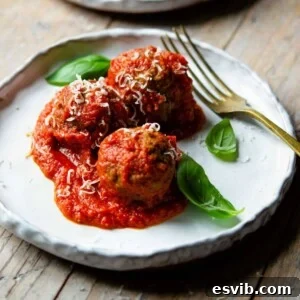
Polpette al Sugo – Juicy Italian meatballs in a rich tomato sauce. This traditional Italian recipe is perfect for a family Sunday dinner, easy to follow and packed with flavor. Serve with plenty of crusty bread to mop up every last drop of sauce (fare la scarpetta!).
Ingredients
For the Meatballs
- 1.1 lbs (500g) ground beef
- 1 large egg, free-range
- 1 tablespoon pine nuts
- 1 clove garlic, minced
- 1 teaspoon dried oregano
- 1/2 tablespoon fennel seeds
- 1/4 cup (60g) fresh breadcrumbs
- Salt and pepper to season
For The Sauce
- 1 onion, finely chopped
- 1 clove garlic, minced
- 2 (14 oz) cans (800g total) chopped canned tomatoes, high quality
- 2 tablespoons tomato paste (puree in UK)
- 1 tablespoon olive oil
- Salt and pepper, to season
For Serving
- Freshly grated parmesan or pecorino cheese
- Torn fresh basil leaves
Instructions
- Put all the meatball ingredients (ground beef, egg, pine nuts, garlic, oregano, fennel seeds, breadcrumbs, salt, and pepper) in a food processor and blitz until thoroughly combined and smooth. Next, using your hands, shape the mixture into 12-13 meatballs by rolling them one by one in the palms of your hands. They should be shiny and smooth with minimal to no cracks on the surface.
- Heat a little olive oil in a large pan over medium-high heat. Brown the meatballs on all sides, then remove and set aside on a plate.
- In the same pan, sauté the finely chopped onion until soft and translucent (about 5-7 minutes). Add the minced garlic and cook for another minute until fragrant.
- Place the cooked onion and garlic in a blender with the high-quality canned chopped tomatoes. Blend until the sauce is smooth. Pour the sauce back into the pan. Stir in the tomato paste, salt, and pepper. Rinse out the tomato cans with about 1/4 cup of water each and add this water to the sauce. Simmer the sauce on a low heat for 10 minutes.
- Add the browned meatballs back to the sauce. Gently toss them to ensure they are fully covered in the sauce. Simmer slowly, covered, for 30 minutes, allowing the meatballs to cook through and absorb the flavors while the sauce thickens slightly.
- Serve hot with a generous sprinkling of freshly grated parmesan or pecorino cheese and torn fresh basil leaves. Enjoy immediately with plenty of crusty bread for dipping!
Notes
- Good quality ingredients make the best tasting food: Always prioritize high-quality ingredients, especially for tomatoes, as they are the foundation of your sauce.
- Best tomatoes to use: Trustworthy brands like Mutti or Cirio are highly recommended for superior flavor and color.
- Rolling the meatballs: For smooth, crack-free meatballs that hold their shape, wet your hands slightly if the mixture is too sticky.
- Brown the meatballs: Searing creates a flavorful crust and locks in juices, crucial for tender and delicious meatballs.
- Variations: Experiment with different cheeses, herbs, or even finely grated vegetables to customize your meatballs. See our Eggplant Meatballs or Baked Chicken Meatballs for more ideas.
- Storage and freezing: Leftovers keep well in the fridge for 3-4 days in an airtight container. Cooked meatballs and sauce can be frozen; thaw completely in the refrigerator and add water if the sauce is too thick when reheating.
Helpful Info for All Recipes
Here are some general tips that apply to many of our Italian recipes:
- We always use extra virgin olive oil in all of our recipes unless stated otherwise.
- For canned or jarred tomatoes of any kind, we consistently use Cirio or Mutti brands for the best results and authentic flavor.
- All vegetables are assumed to be medium-sized unless otherwise specified.
- All recipes are tested and developed using a fan (convection) oven.
- Find out more about how nutrition is calculated.
- Check out our must-have Italian Pantry Staples to stock your kitchen.
- You can also find all our Essential Kitchen Tools for Italian Cooking.
Nutrition Information (Approximate per serving)
Calories: 398kcal | Carbohydrates: 7g | Protein: 24g | Fat: 29g | Saturated Fat: 10g | Cholesterol: 129mg | Sodium: 165mg | Potassium: 528mg | Fiber: 2g | Sugar: 3g | Vitamin A: 235IU | Vitamin C: 4.8mg | Calcium: 84mg | Iron: 4.1mg
Please note that nutrition information is automatically calculated and should only be used as an approximation. It can vary based on specific ingredients and preparation methods.
We truly hope you enjoy preparing and savoring these traditional Polpette al Sugo (Italian Meatballs)! If you’ve tried this recipe or any other on our blog, please don’t forget to rate it and share your experience and thoughts in the comments below. We absolutely love hearing from you and seeing your culinary creations! You can also FOLLOW US on FACEBOOK, INSTAGRAM, and PINTEREST, or sign up for our NEWSLETTER to discover more of our delicious and authentic Italian food straight to your inbox.