
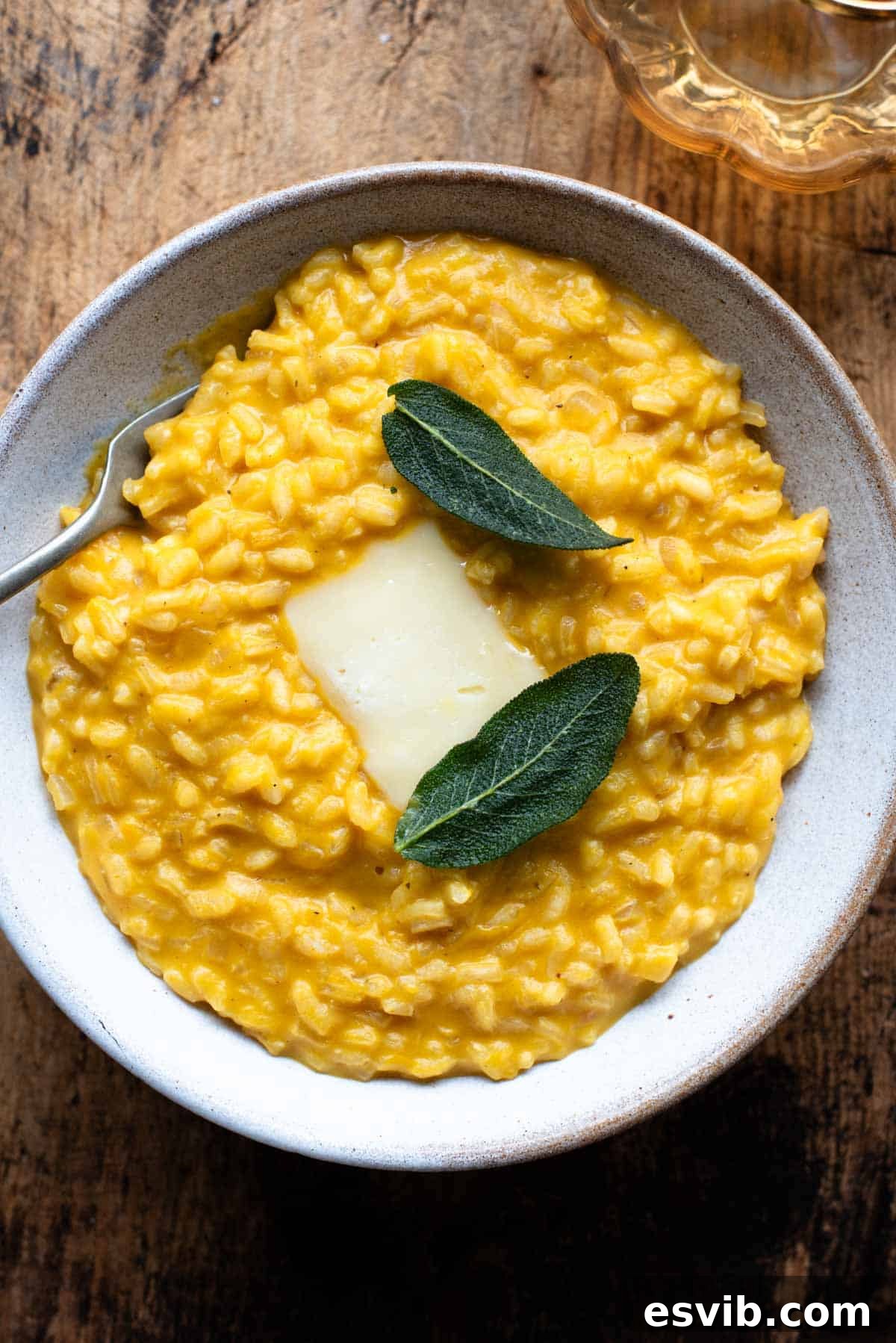
Prepare to fall in love with autumn all over again with this incredibly rich, velvety, and deeply comforting **Roasted Pumpkin Risotto** (Risotto alla Zucca). This isn’t just any risotto; it’s a meticulously crafted culinary experience, highlighting the sweet essence of roasted pumpkin and garlic puree, the distinctive tang of melting Taleggio cheese, a hint of sophisticated white wine, and the delightful crunch of aromatic crispy sage leaves. It’s truly the quintessential dish for those crisp, cozy autumn evenings when you crave warmth and flavor in every spoonful.
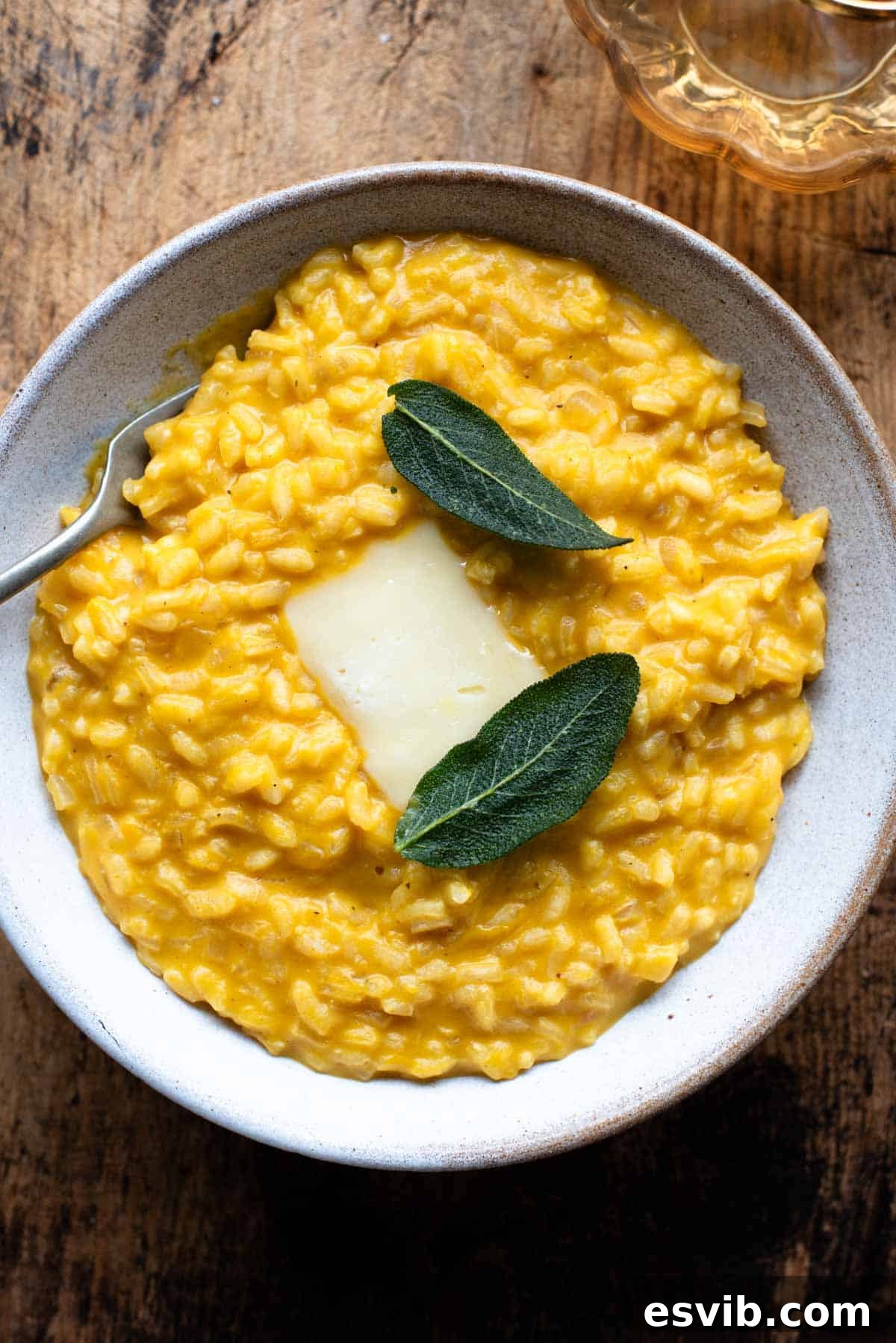
As the vibrant colors of summer give way to the golden hues of autumn, pumpkins and various winter squashes become abundant, inviting us into the kitchen to create heartwarming dishes. This recipe offers a truly exquisite and elevated way to celebrate these seasonal treasures. The secret to its profound depth of flavor lies in a crucial preliminary step: roasting fresh pumpkin alongside whole garlic cloves until they transform into a soft, sweet, and beautifully caramelized medley. This roasting process intensifies the pumpkin’s natural sugars and imbues the garlic with a mellow sweetness, developing a complex flavor base that canned pumpkin simply cannot replicate.
Once transformed into a silky-smooth puree, this roasted pumpkin and garlic mixture is lovingly incorporated into the Arborio rice, imbuing the risotto with an unparalleled richness and an incredibly creamy texture. But the indulgence doesn’t stop there. The addition of tangy, creamy Taleggio cheese melts seamlessly into the warm grains, elevating the risotto to an insanely delicious level of decadence that is both comforting and sophisticated. To complete this masterpiece, a scattering of freshly fried, golden-crisp sage leaves provides a delightful textural contrast and an aromatic finish, making this dish not just a meal, but an unforgettable experience. It’s the perfect, hearty fall dinner, guaranteed to wrap you in warmth and comfort on even the chilliest of evenings, making it an ideal centerpiece for family meals or entertaining.
Dive deeper into this recipe with detailed notes on ingredients, step-by-step photos for visual guidance, expert tips to perfect your technique, exciting variations, and a video tutorial to walk you through each stage. For a convenient printable version of the full recipe, simply scroll to the very bottom of this page.
Essential Ingredients for Your Perfect Pumpkin Risotto
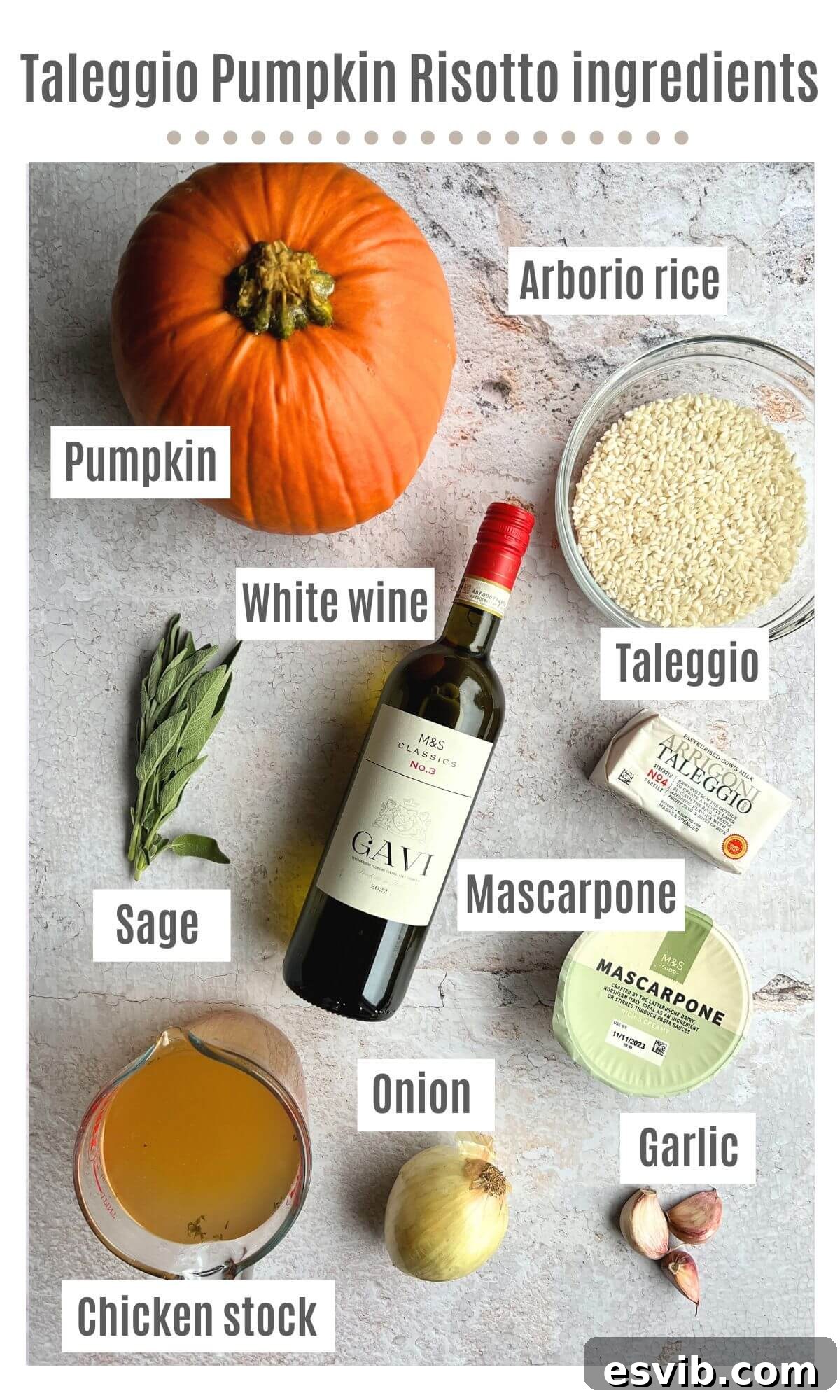
Ingredient Spotlight: Key Notes and Smart Substitutions for Flavour Success
Crafting an outstanding risotto begins with a deep understanding of each component. Here’s a closer look at what you’ll need and how to make thoughtful substitutions without compromising the rich flavor or luxurious texture of your pumpkin risotto:
- Pumpkin or Squash: Autumn truly is the golden season for this versatile ingredient. While our recipe utilizes a regular pumpkin (often referred to as Autumn Gold for its vibrant color and sweet, dense flesh), the beauty of this dish lies in its adaptability. You can confidently use almost any type of pumpkin or winter squash. Butternut squash is an excellent and popular choice, offering a slightly nuttier, sweeter profile and a smooth texture. Hokkaido pumpkin (also known as Red Kuri) boasts a lovely chestnut-like flavor and vibrant orange hue, making for a visually striking risotto. Even delicate varieties like Delicata or Acorn squash can be wonderful, contributing their unique sweetness and subtle creaminess to the puree. Always select a pumpkin or squash that feels firm, heavy for its size, and is free from any soft spots or blemishes.
- Arborio Rice: This is a non-negotiable hero for authentic Italian risotto. Arborio rice, along with its equally suitable counterpart, Carnaroli rice, is absolutely crucial due to its uniquely high amylopectin starch content. This particular type of starch is released slowly and steadily during the cooking process, creating the characteristic creamy, velvety texture of risotto while still allowing each grain to retain a desirable *al dente* bite in its center. Attempting to use long-grain rice varieties, such as Basmati or Jasmine, will unfortunately not yield the desired results, as they lack the necessary starch to achieve that signature creaminess and tend to become mushy.
- Dry White Wine: A splash of dry white wine, such as an Italian Gavi, Pecorino, or Pinot Grigio, adds a delightful depth of flavor, acidity, and complexity to the risotto. This acidity helps to balance the richness of the pumpkin and cheese, cutting through the creaminess. The alcohol content cooks off completely during the simmering process, leaving behind only the nuanced, aromatic flavors. If you prefer to avoid alcohol, you can certainly omit the wine. In its place, consider deglazing the pan with a good quality vegetable broth combined with a tiny squeeze of lemon juice or a teaspoon of white wine vinegar to mimic that essential acidic component.
- Taleggio Cheese: This soft, semi-lactic, pungent, and utterly delicious Italian cheese is a true star in this recipe. Its tangy, fruity, and slightly earthy notes complement the sweet roasted pumpkin beautifully, creating a harmonious flavor profile. Taleggio’s exceptional melting properties also contribute immensely to the risotto’s luxurious, oozy creaminess. If authentic Taleggio is unavailable or not to your particular taste, there are excellent alternatives. Fontina, another semi-soft Italian cheese, offers a milder, nutty, and milky flavor with superb melting capabilities. For those who enjoy a bolder, more piquant taste, a small amount of Gorgonzola (a creamy blue cheese) can add an exciting, sharper dimension, though it should be used sparingly due to its stronger flavor. Finally, a generous grating of Parmigiano Reggiano can always be stirred in at the end for its salty, umami kick, but remember that Taleggio provides a unique creaminess and aromatic profile that is truly distinctive.
- Mascarpone: This decadent Italian cream cheese is a fantastic addition to our pumpkin risotto, lending an extra layer of richness and an unparalleled velvety smooth texture. It’s incorporated directly into the pumpkin puree, ensuring that every single spoonful of risotto is incredibly luscious and utterly decadent. If mascarpone isn’t readily accessible, you can achieve a similar effect by substituting it with heavy cream (known as double cream in the UK). Use approximately 1/4 cup (60ml) to replicate the added richness and creaminess.
- Fresh Sage: Fresh sage leaves, crisped to perfection in olive oil, are an absolute must for this recipe. They provide an essential earthy, aromatic punch and a delightful textural contrast that elevates the entire dish. Dried sage will not deliver the same vibrant flavor or the satisfying crispy texture. If fresh sage is truly unavailable, you could infuse the roasted pumpkin with alternative herb flavors by adding fresh rosemary or thyme to the baking tray as it roasts.
- Stock (Broth): We highly recommend using a low-sodium chicken stock as the primary liquid base for your risotto. This strategic choice gives you complete control over the overall saltiness of the dish, allowing you to season precisely to your taste at the end. For a delicious vegetarian version of this pumpkin risotto, simply substitute the chicken stock with a good quality, flavorful vegetable stock. It is crucial to ensure your stock is kept warm (simmering gently in a separate pot) throughout the risotto-making process. Adding cold stock will significantly drop the temperature of the rice, interrupting the cooking process and affecting the final texture of your risotto.
Step-by-Step Guide: Crafting Your Perfect Pumpkin Risotto from Scratch
Follow these detailed, easy-to-understand instructions to create a restaurant-quality pumpkin risotto right in your own kitchen. We’ve broken down the process into two clear phases: first, preparing the intensely flavorful pumpkin and garlic puree, and then, expertly assembling the creamy, dreamy risotto.
Phase 1: Preparing the Roasted Pumpkin and Garlic Puree – The Flavor Foundation
The secret to this risotto’s profound taste is its deeply flavored roasted pumpkin and garlic puree. This initial step is absolutely crucial for intensifying the pumpkin’s natural sweetness and infusing it with wonderful aromatic depth that will permeate the entire dish.
- Begin by pre-heating your oven to a precise 200°C (400°F). As the oven comes to temperature, start preparing your pumpkin.
-
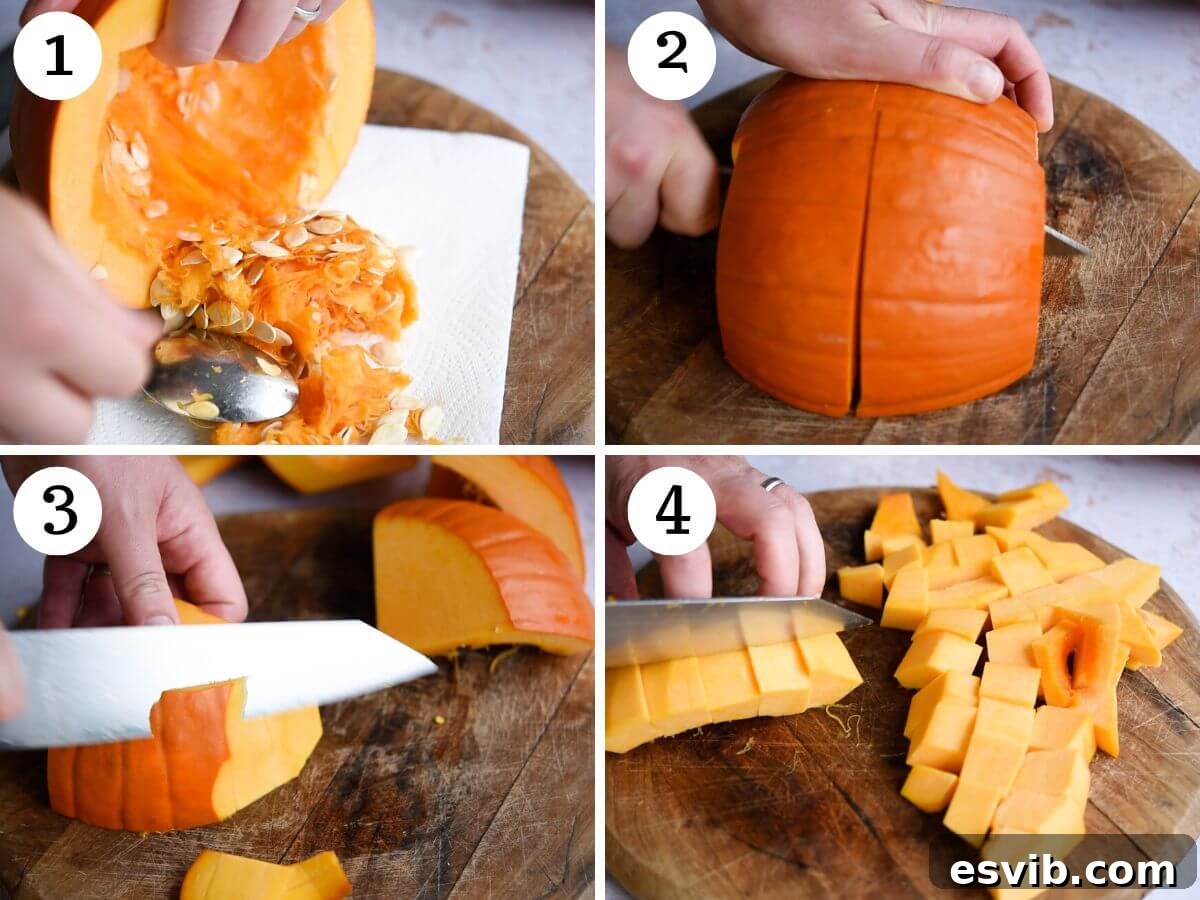
Carefully remove the seeds and any fibrous, stringy bits from the center of the pumpkin using a sturdy spoon. Once cleaned, cut the pumpkin into manageable quarters. Then, using a sharp, sturdy knife or a reliable vegetable peeler, meticulously cut off the tough outer skin. This step is essential for achieving a perfectly smooth puree later on.

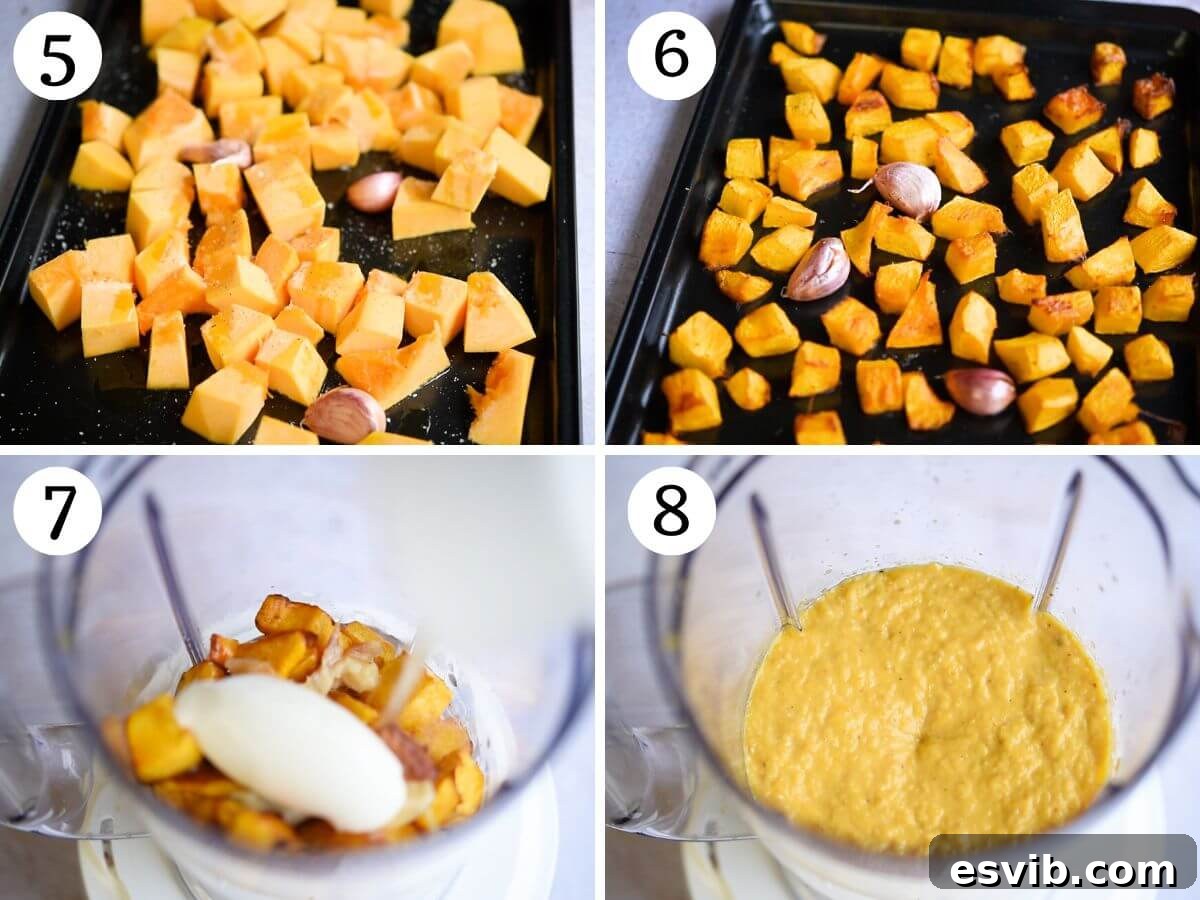
A visual guide demonstrating the effective way to clean and portion your pumpkin for optimal roasting. - Now, cut the skinned pumpkin flesh into medium-sized, roughly uniform cubes. This helps ensure that all pieces roast evenly. Arrange these pumpkin cubes onto a large baking tray in a single layer to avoid steaming. Add the 3 whole garlic cloves directly to the tray, keeping their skins on – the skins will protect them from burning and allow them to steam and soften beautifully within.
-
Generously drizzle the pumpkin and garlic with good quality olive oil. Season liberally with flaky sea salt and freshly ground black pepper. Toss everything gently to ensure an even coating. Roast in the pre-heated oven for approximately 40-45 minutes, or until the pumpkin is fork-tender and exhibits beautiful, caramelized edges. These golden-brown spots signify concentrated sweetness. The garlic cloves will be incredibly soft and fragrant, ready to burst from their skins.
Showcasing the roasting process for pumpkin and garlic, forming the rich base of the puree. - Once roasted to perfection, transfer the tender pumpkin cubes to a blender or food processor. Carefully squeeze the soft, sweet garlic pulp from their skins directly into the blender with the pumpkin. Add the mascarpone and approximately 1 ladleful of your warm stock (about ½ cup or 120 ml). Blitz the mixture until you achieve a perfectly smooth, luscious, and vibrant puree. Set this aside; it’s now ready to transform your risotto.
Phase 2: Expertly Assembling the Creamy Risotto – The Heart of the Dish
With your intensely flavorful pumpkin puree ready, it’s now time to bring the risotto to life. This stage requires a little patience and consistent stirring, but the results are incredibly rewarding and well worth the effort. This is where the magic happens!
-
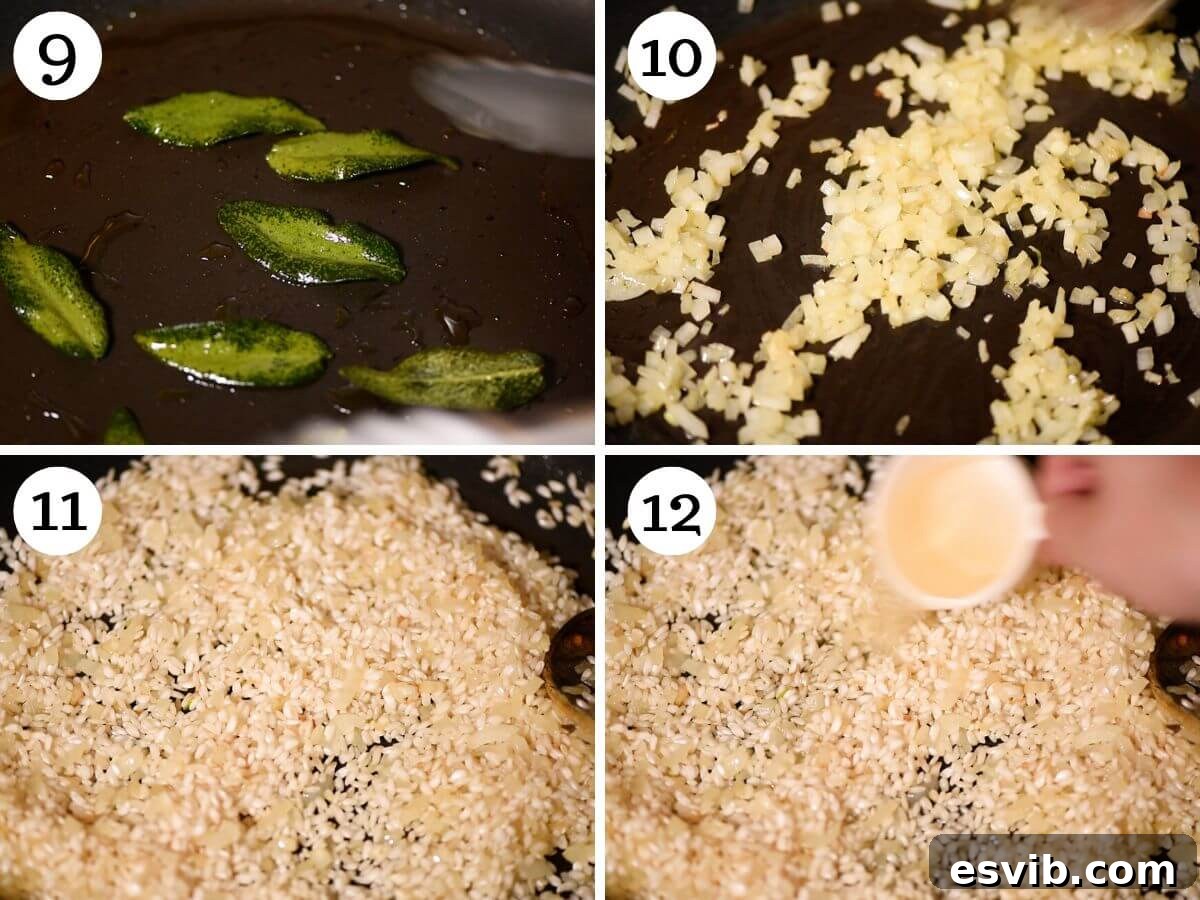
In a large, heavy-bottomed frying pan or a wide Dutch oven, add about 1 tablespoon of olive oil and heat it over medium heat until it shimmers. Carefully add the fresh sage leaves and fry them for just a minute or two until they become beautifully crisp, fragrant, and slightly darker in color. Watch them closely as they can burn quickly. Once crispy, immediately transfer them to a plate lined with kitchen paper to drain any excess oil. Set these aside; they will be your delightful garnish.
The simple yet impactful step of frying sage leaves and the initial stage of sautéing the onion for the risotto base. - Add another generous drizzle of olive oil to the same pan (there’s no need to clean it; the residual flavors add depth) and return it to a medium-low heat. Add the finely chopped onion and sauté gently until it becomes soft, translucent, and fragrant, but crucially, not browned. This slow cooking allows the onion’s natural sweetness to develop without any bitterness. If you notice your onion starting to brown, immediately reduce the heat to prevent scorching.
- Add the Arborio rice to the pan with the softened onion. Stir continuously for 1-2 minutes, allowing the rice grains to toast slightly and become coated in the oils and onion. This process, known as *tostatura*, helps the grains cook evenly. The rice should appear slightly opaque around the edges. Next, pour in the dry white wine. Stir constantly, allowing the wine to bubble and reduce by half. This usually takes about 1-2 minutes, during which the alcohol will evaporate, leaving behind a concentrated, aromatic flavor that will infuse into the rice.
-
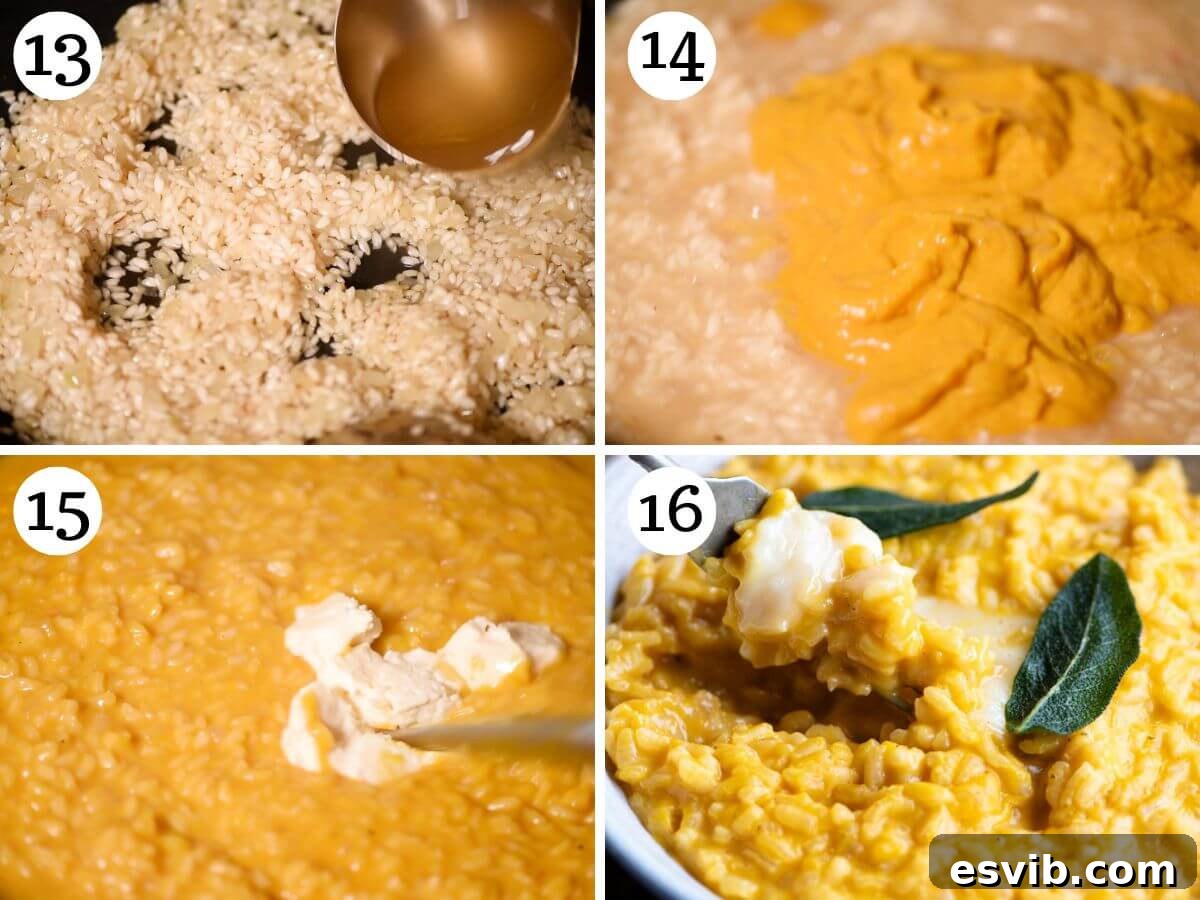
Once the wine has mostly evaporated, begin adding your warm stock. Add one ladleful (about ½ cup) at a time to the rice, stirring gently but consistently. It is essential to wait for the rice to absorb almost all of the liquid before adding the next ladleful. This gradual addition and constant stirring are absolutely key to developing the risotto’s signature creamy texture, as they gently coax the starch out of the Arborio rice grains. Continue this rhythmic process for approximately 18-20 minutes, or until the rice is nearly *al dente* – cooked through but still retaining a slight, pleasant chewiness in the center.
The crucial process of gradually incorporating stock into the rice to achieve the perfect creamy, *al dente* risotto. - When most of the stock has been absorbed and the rice is almost *al dente*, stir in the previously prepared roasted pumpkin and garlic puree. Mix thoroughly until the vibrant, sweet puree is completely incorporated into the risotto, giving it its beautiful color and rich flavor. Continue to cook for a further 5 minutes, allowing the flavors to meld beautifully and for the rice to reach its perfectly *al dente* stage.
- Remove the pan from the heat. This is the moment for *mantecatura* – the final creaming of the risotto, which gives it its ultimate luxurious texture. Add the cubed Taleggio cheese. Stir vigorously until the cheese has completely melted into the risotto, creating an incredibly creamy and opulent consistency. Taste the risotto for seasoning and adjust with additional salt and freshly ground black pepper as needed. Remember that both the roasted pumpkin and the stock were already seasoned, so add salt incrementally and taste as you go.
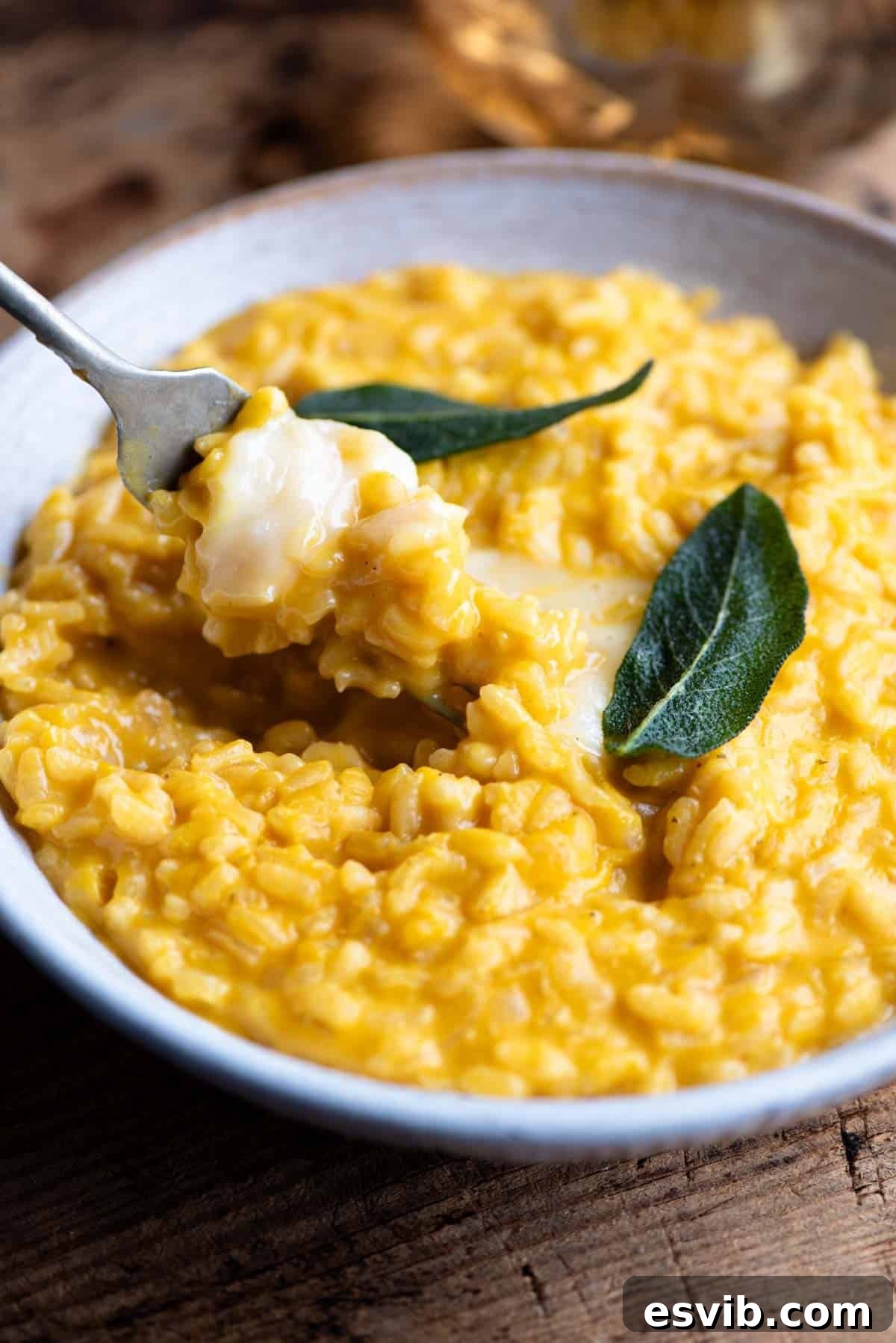
- Serve the warm, rich pumpkin risotto immediately in individual bowls. Garnish each serving with one generous slice of fresh Taleggio cheese, allowing it to gently melt and soften from the residual heat, and a sprinkle of those delightful crispy sage leaves you prepared earlier. Enjoy this spectacular taste of autumn! It pairs wonderfully with a simple green salad or crusty bread.
Expert Tips and Frequently Asked Questions for Risotto Success
Mastering the art of risotto is more accessible than you might think, especially with these helpful hints and answers to common culinary queries:
- Prep Ahead for Simplified Cooking: To significantly streamline your cooking process on the day, consider roasting the pumpkin and preparing the puree in advance. The pumpkin puree can be made up to a day before and stored conveniently in an airtight container in the refrigerator. This forward planning allows you to focus solely on the dynamic risotto-making steps when it’s time to cook, making a homemade, delicious meal much more feasible even on a busy weeknight.
- Slow and Steady Wins the Flavor Race with Onions: The initial sautéing of the onion, often referred to as the *soffritto*, lays a critical flavor foundation for your entire risotto. The trick here is to sauté it slowly and gently over a medium-low heat. This gentle approach allows the onion to soften, become beautifully translucent, and release its natural sweetness without browning, which can, surprisingly, introduce bitterness. If you notice your onion starting to take on color, immediately reduce the heat to prevent scorching. Patience at this stage truly pays off in a sweeter, more aromatic, and well-balanced risotto.
- Embrace Taleggio (or its Wonderful Alternatives): While Taleggio cheese brings a uniquely tangy, earthy, and incredibly melty quality that pairs exquisitely with the sweetness of roasted pumpkin, we understand it might not always be readily available in all regions. If you can’t find it, don’t hesitate to use Fontina, another fantastic Italian cheese that offers a milder, nutty flavor and excellent melting characteristics. For those who enjoy a bit of a bolder kick, a small amount of Gorgonzola (a creamy blue cheese) can add a fantastic, contrasting tang and depth, though it should be used sparingly due to its stronger profile. Even a generous grating of high-quality Parmigiano Reggiano stirred in at the very end will contribute a delightful salty, umami finish, though it won’t entirely replicate the specific creaminess and aroma that Taleggio provides.
- Season to Perfection – Control the Salt: Risotto, particularly when made with starchy rice and vegetables, typically requires a decent amount of seasoning to truly shine. We highly recommend starting with a low-sodium stock. This strategic choice gives you complete control over the final salt content, allowing you to adjust it precisely to your taste preferences. Remember that your roasted pumpkin will also have been seasoned, so always taste the risotto carefully before adding more salt towards the very end. A final check for seasoning just before serving is always a good practice to ensure optimal flavor.
- Achieving the Perfect “Al Dente” Texture: The hallmark of a truly great Italian risotto is its *al dente* texture – meaning the rice grains should be tender yet retain a slight, pleasant chewiness in the center. To achieve this, continuously taste the rice as you add the last few ladles of stock. You want the risotto to be wonderfully creamy but never mushy, and certainly not hard. Remove it from the heat just as it reaches this perfect sweet spot. It’s a fine balance that comes with practice.
- Understanding “All’onda” – The Desired Consistency: This beautiful Italian term, meaning “wavy,” describes the ideal consistency of a perfectly cooked risotto. When gently shaken, the risotto should flow gracefully in soft, creamy waves on the plate, rather than standing stiffly or being overly soupy. This *all’onda* consistency is a strong indicator of sufficient liquid and proper starch release from the rice. If your risotto appears too thick, simply stir in a little more warm stock until the desired consistency is achieved. If it’s too thin, continue to simmer and stir for another minute or two, allowing more liquid to evaporate.
Frequently Asked Questions (FAQs)
Here are answers to some common questions you might have about preparing and enjoying this delicious pumpkin risotto:
Risotto is truly at its absolute best when eaten immediately after cooking. The creamy texture and perfect *al dente* bite are most pronounced fresh from the pan. However, if you do find yourself with leftovers, you can certainly store them in an airtight container in the refrigerator for up to 1-2 days. While reheating risotto on its own can sometimes result in a less desirable texture (it tends to stiffen), leftovers are absolutely fantastic for making other delicious dishes! Consider transforming them into delightful arancini (crispy fried risotto balls) or savory risotto cakes (patties). These are wonderful and creative ways to enjoy the flavors in a completely new and exciting form.
This recipe is easily and deliciously adaptable for vegetarians by simply substituting the chicken stock with a high-quality, flavorful vegetable stock. For a vegan version, you would need to omit both the Taleggio cheese and the mascarpone. You could explore replacing the mascarpone with a rich plant-based cream alternative (such as a creamy cashew cream or a full-fat coconut cream, ensuring its flavor profile complements the pumpkin). For the cheesy element, consider substituting the Taleggio with a generous amount of good quality nutritional yeast for a savory, umami flavor, or a high-quality plant-based Parmesan alternative. Keep in mind that while the flavors will still be wonderful, the texture and overall richness will be different from the dairy-based version.
More Delicious Pumpkin and Squash Recipes to Explore
If you love the comforting and versatile flavors of pumpkin and squash as much as we do, you’re in for an absolute treat! These additional recipes offer even more creative and delightful ways to enjoy the abundant bounty of the autumn harvest. Expand your seasonal culinary repertoire and discover new favorites with these enticing dishes:
Discover More Autumnal Delights
Risotto
Butternut Squash Risotto With Thyme
Fresh Pasta
Butternut Squash Ravioli with Sage and Brown Butter Sauce
Pasta
Creamy Butternut Squash Pasta
Pasta
Butternut Squash Lasagna – Sage, Prosciutto & Goats Cheese
We sincerely hope you thoroughly enjoy making and savoring this delightful **Taleggio Pumpkin Risotto recipe**! If you’ve tried this, or any other recipe from our blog, please don’t hesitate to share your experience with us. We absolutely love hearing from you – feel free to leave a comment below and let us know how it turned out. Your feedback and culinary adventures are incredibly valuable to our community!
You can also **connect with us** and discover even more of our delicious Italian-inspired recipes by following us on Facebook, Instagram, and Pinterest. For the very latest recipes, cooking tips, and culinary inspiration delivered straight to your inbox every week, we invite you to sign up for our Newsletter.
For a comprehensive visual guide, detailed step-by-step photos and a helpful video tutorial are available earlier in this article.
Taleggio Pumpkin Risotto
By Emily
A rich, creamy, and deeply comforting **Pumpkin Risotto** (Risotto alla Zucca) crafted with sweet roasted pumpkin and garlic puree, tangy Taleggio cheese, a splash of white wine, and finished with crispy sage leaves. It’s the perfect dish for cozy autumn evenings.
Ingredients
- 1.5 lbs (700g) Fresh pumpkin (e.g., Autumn Gold, Butternut, Hokkaido)
- 1 medium onion, finely chopped
- 1/4 cup (60ml) dry white wine (e.g., Gavi, Pecorino, Pinot Grigio)
- 1.5 cups (300g) Arborio rice (or Carnaroli rice)
- 3 large garlic cloves (skins on, for roasting)
- 1 heaped tablespoon mascarpone cheese
- 2 oz (50g) Taleggio cheese, cubed, plus 4 additional slices for serving
- 8 fresh sage leaves
- 5 cups (1.25 Litres) low-sodium chicken stock (or vegetable stock for vegetarian)
- Olive oil, for roasting and sautéing
- Salt and freshly ground black pepper, to taste
Instructions
To make the pumpkin puree:
- Pre-heat the oven to 200°C (400°F).
- Remove the seeds and stringy bits from the pumpkin. Cut it into quarters, then carefully cut off the skin.
- Cut the skinned pumpkin flesh into medium-sized cubes and place them on a large baking tray with the 3 garlic cloves (skins on).
- Drizzle the pumpkin and garlic generously with olive oil, then season with salt and pepper. Roast in the oven for 40-45 minutes until the pumpkin is tender and slightly caramelised.
- Transfer the cooked pumpkin to a blender. Squeeze the soft garlic pulp from its skins directly into the blender. Add the mascarpone and 1 ladleful of warm stock (about ½ cup/120 ml). Blitz until you achieve a smooth, creamy puree, then set aside.
To make the risotto:
- Add about 1 tablespoon of olive oil to a large frying pan. Once hot, add the fresh sage leaves and fry for 1-2 minutes until crispy. Transfer them to a plate lined with kitchen paper and set aside for garnish.
- Add another drizzle of olive oil to the same pan over medium heat. Sauté the finely chopped onion until it is soft and translucent but not browned (reduce heat if needed).
- Add the Arborio rice to the pan and stir for 1-2 minutes to toast the grains. Pour in the white wine and stir until it has reduced by half (simmer for 1-2 minutes).
- Begin adding the warm stock, one ladleful at a time. Stir continuously and allow the rice to absorb almost all of the liquid before adding the next ladleful. Continue this process for about 18-20 minutes until the rice is nearly *al dente*.
- Once most of the stock has been used, add the prepared pumpkin puree and stir it thoroughly into the risotto. Cook for a further 5 minutes, ensuring the rice is fully cooked to *al dente* perfection.
- Turn off the heat. Add the cubed Taleggio cheese and stir vigorously until it is completely melted and incorporated, creating a wonderfully creamy texture. Taste the risotto and adjust the seasoning with salt and pepper as needed.
- Serve the pumpkin risotto immediately in warm bowls, topped with a slice of Taleggio cheese and the crispy sage leaves.
Recipe Notes
For the best possible results, keep these essential tips in mind:
- Prep ahead of time: To save time on the day you plan to serve, you can roast the pumpkin and make the puree up to 24 hours in advance. Store it in an airtight container in the refrigerator.
- Slowly cook the onion: The key to a flavorful risotto begins with the onion. Sauté it gently on a medium-low heat until it’s soft and translucent, ensuring it doesn’t brown, which can add a bitter note.
- Taleggio cheese alternatives: While Taleggio is highly recommended for its unique tang and creaminess, if it’s unavailable, Fontina offers a milder, nutty option. For a bolder flavor, a small amount of Gorgonzola or a final grating of Parmigiano Reggiano can also be used.
- Add salt to taste: Begin with low-sodium stock to maintain control over the overall saltiness. Remember that the roasted pumpkin will already be seasoned. Always taste the risotto and adjust salt and pepper carefully towards the end of cooking.
Helpful Info for All Our Recipes
- We exclusively use extra virgin olive oil in all our recipes unless specified otherwise.
- For canned or jarred tomatoes of any kind, we always opt for premium brands such as Cirio or Mutti to ensure the best flavor and consistent results.
- Unless explicitly stated otherwise, all vegetables mentioned in our recipes are assumed to be of medium size.
- All recipes are meticulously tested and developed using a fan (convection) oven for consistent results.
- Find out more about how nutrition information is calculated on our website.
- Discover our essential Italian Pantry Staples to stock your kitchen for authentic flavors.
- Explore all our Essential Kitchen Tools for Italian Cooking to ensure you have everything you need for culinary success.
Nutrition Facts
Per serving (approximate):
Calories: 451kcal | Carbohydrates: 87g | Protein: 16g | Fat: 6g | Saturated Fat: 3g | Polyunsaturated Fat: 1g | Monounsaturated Fat: 1g | Cholesterol: 11mg | Sodium: 265mg | Potassium: 976mg | Fiber: 6g | Sugar: 5g | Vitamin A: 18883IU | Vitamin C: 39mg | Calcium: 186mg | Iron: 5mg
Nutrition information is automatically calculated and should only be used as an approximation. Individual nutritional values may vary based on specific ingredients and preparation methods.
Did you try this recipe? We’d love to hear from you! Please leave a comment below!