
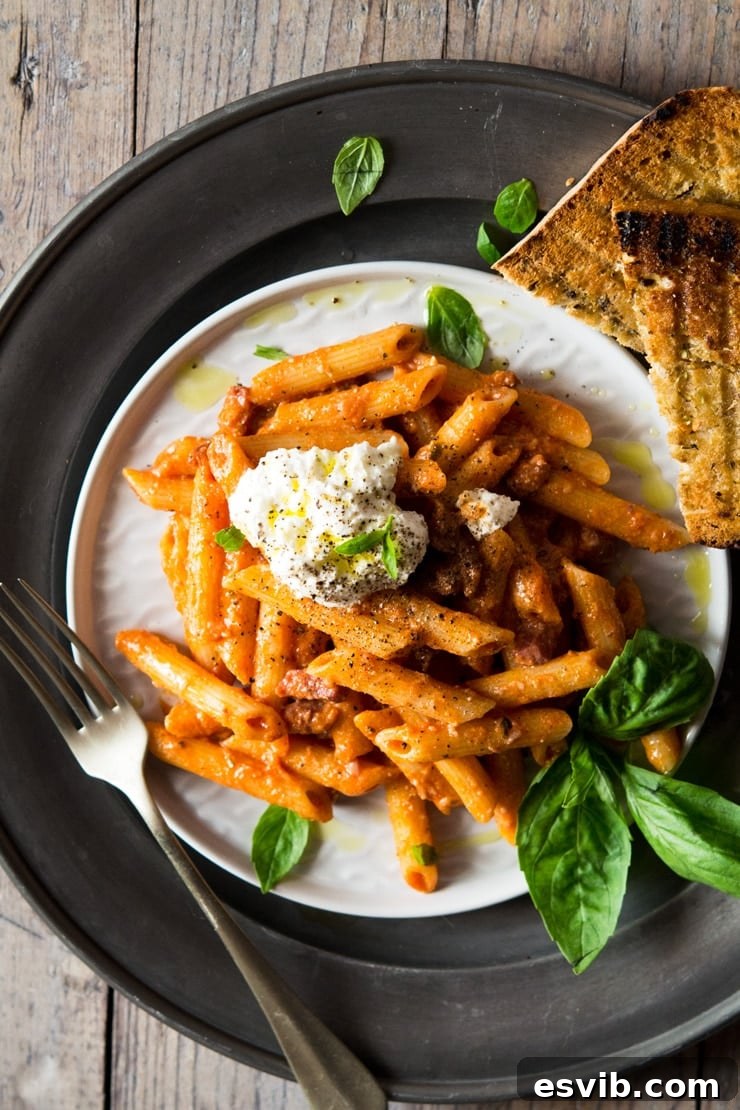
Delightful Penne Pasta with Creamy Ricotta, Savory Pancetta, and Robust Tomato Sauce
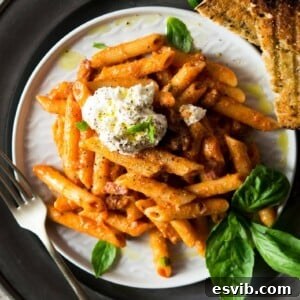
Prepare to be captivated by this incredibly simple yet profoundly flavorful Penne Pasta dish, featuring the perfect marriage of creamy ricotta, crispy pancetta, and a rich, deeply satisfying tomato sauce. This Italian-inspired meal is not just delicious; it’s a comforting masterpiece that can be on your table in under 30 minutes, making it an ideal choice for a busy weeknight or a relaxed weekend feast. Serve it generously in large bowls alongside some crusty garlic bread and a fresh green salad for an unforgettable dining experience.
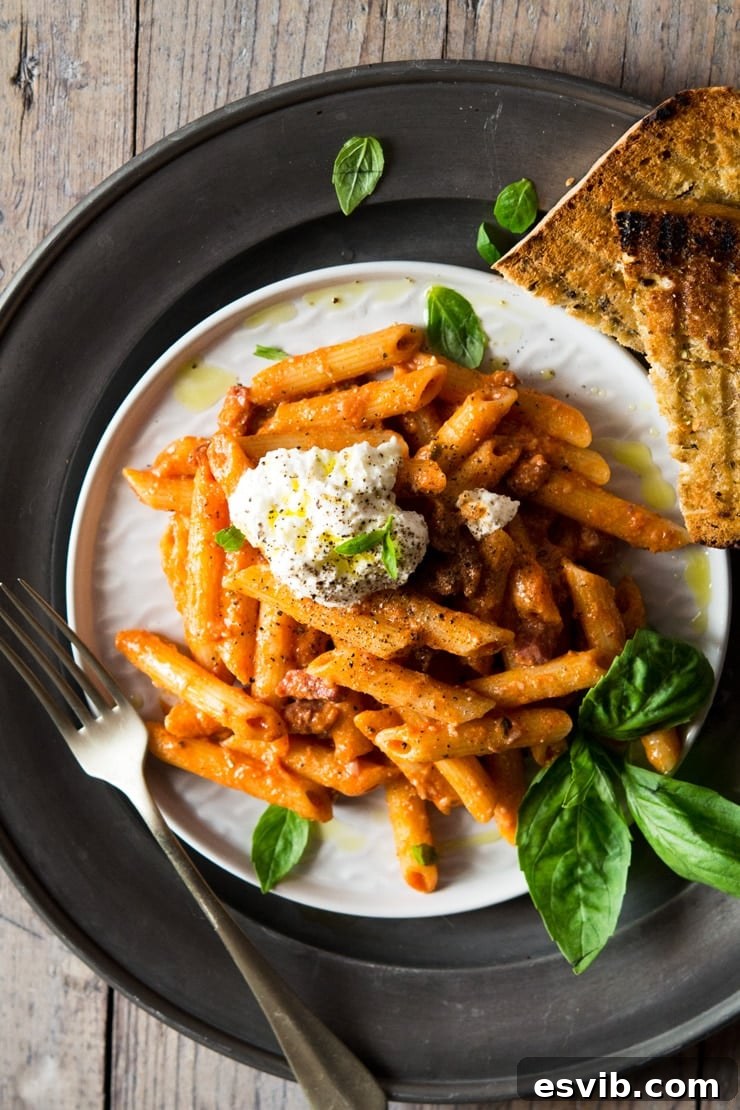
Embrace the Creamy Indulgence of Ricotta Pasta
There’s something truly magical about pasta dishes that incorporate ricotta cheese. Its delicate, creamy texture and mild, slightly sweet flavor transform any sauce into a luxurious experience. While I adore all forms of ricotta pasta sauce, this particular rendition, enhanced with the smoky depth of pancetta, the bright tang of red wine, and the sweetness of tomato, stands out as a personal favorite. It’s an evolution from my simpler Ricotta Pasta Sauce: 2 Ways recipe, which offers a no-cook shortcut. This version, while still incredibly quick, introduces layers of complex flavors that make it truly exceptional.
The beauty of this recipe lies in its balance. The richness of the pancetta cuts through the creaminess of the ricotta, while the tomato sauce provides a vibrant, acidic backbone that ties all the elements together. It’s a dish that feels both authentic and approachable, perfect for seasoned cooks and beginners alike. The secret to its incredible depth of flavor lies in a few simple techniques and quality ingredients, which we will explore in detail.
Unlocking Flavor: A Deep Dive into Key Ingredients
Every great pasta dish starts with exceptional ingredients. For this Penne with Ricotta and Pancetta, focusing on quality will elevate your meal from good to absolutely outstanding.
Penne: The Perfect Vessel
Penne pasta, with its tubular shape and ridged surface, is an ideal choice for this recipe. The hollow center and exterior grooves are perfect for capturing and holding onto the rich tomato and ricotta sauce, ensuring every bite is bursting with flavor. We recommend cooking your penne to a perfect al dente – firm to the bite – for the best texture and to prevent it from becoming mushy when mixed with the sauce.
Pancetta: The Savory Heart of the Dish
Pancetta is an Italian cured pork belly, often described as the Italian cousin to bacon, though with a distinct flavor profile. Unlike smoked bacon, pancetta is typically cured with salt, pepper, and sometimes spices, but not smoked, giving it a cleaner, richer pork flavor. In this recipe, cubed pancetta is rendered until crispy, releasing its aromatic fat into the pan, which then forms the base for our sauce. This crispy pancetta adds a wonderful textural contrast and an irresistible savory depth that truly defines the dish.
When purchasing pancetta, you’ll often find it in two main forms: cubed (known as pancetta a cubetti) or thinly sliced (like prosciutto). For this recipe, cubed pancetta is preferred as it renders beautifully, providing both flavor and a delightful chew. If you can only find thinly sliced pancetta, you can still use it; just chop it into small pieces before frying.
Creamy Ricotta: The Unsung Hero
Ricotta cheese, meaning “recooked,” is a fresh, soft Italian cheese made from the whey leftover from cheesemaking. Its light, airy texture and mild flavor make it incredibly versatile. In this pasta, ricotta is stirred directly into the warm tomato sauce, creating a lusciously creamy and smooth consistency without being overly heavy. It melts into the sauce, coating each piece of pasta beautifully and adding a delightful tang that complements the savory pancetta and sweet tomatoes.
For the best results, opt for a good quality, full-fat ricotta. The flavor and creaminess it imparts are unmatched. Don’t be alarmed if the ricotta appears slightly grainy when first mixed into the sauce; this is normal and will smooth out as it fully incorporates and warms through.
The Simple Yet Flavor-Packed Tomato Sauce
Our tomato sauce in this recipe is built on the foundation of high-quality passata (strained crushed tomatoes). Passata provides a smooth, vibrant tomato base that cooks quickly, allowing the other flavors to shine without lengthy simmering. Combined with sautéed garlic and dried oregano, it forms a classic Italian flavor profile that is comforting and familiar. A splash of red wine is crucial here, as it deglazes the pan, capturing all the delicious caramelized bits from the pancetta and adding a wonderful depth and complexity to the sauce.
The Magic of Reserved Pasta Water
This is arguably one of the most important tips for any pasta dish, and it cannot be overstated: always reserve at least a cup (250ml) of the starchy pasta water before draining your pasta. This culinary gold is your secret weapon for creating silky, emulsified sauces. The starch in the pasta water helps to bind the sauce to the pasta, making it incredibly cohesive and flavorful. If your sauce ever seems too thick, or you just want to add an extra ‘oomph’ of flavor and richness, a ladle or two of pasta water will work wonders. Trust me, you’ll be amazed at the difference it makes.
Pancetta vs. Prosciutto: Understanding the Italian Cured Meats
It’s common to confuse pancetta and prosciutto, as both are delicious Italian cured pork products. However, they are distinct in their preparation, texture, and culinary applications, each bringing unique qualities to a dish.
- Prosciutto: Prosciutto is a dry-cured Italian ham, typically made from the hind leg of a pig. The most famous varieties, like Prosciutto di Parma or Prosciutto di San Daniele, are aged for months, sometimes even years. Because it is dry-cured, prosciutto is considered “cooked” and is meant to be eaten raw. It has a delicate, melt-in-your-mouth texture and a sweet, intensely savory flavor. Prosciutto is often served in very thin slices as an antipasto, wrapped around melon or grissini, on crostini, in sandwiches, or paired with cheese and wine. It adds a sophisticated touch and requires no cooking to enjoy its full flavor.
- Pancetta: Pancetta, on the other hand, is made from pork belly, similar to bacon. It is cured with salt and spices but is typically *not* smoked. While some varieties might be lightly smoked (like the one suggested in this recipe), traditional pancetta is unsmoked. It’s usually sold either rolled (pancetta arrotolata) or flat (pancetta tesa), and often cubed (cubetti di pancetta) or thinly sliced. Unlike prosciutto, pancetta is generally cooked before eating. Cooking pancetta renders out its flavorful fat, which is then used as a base for sauces, stews, or braises, imparting a rich, savory depth. When crisped, it provides a wonderful textural element. Thin slices of pancetta are also excellent for wrapping meats like chicken, beef, or sausages, adding moisture and flavor during roasting.
In summary, while both are cured pork, prosciutto is ready-to-eat and delicate, best enjoyed raw, while pancetta is a versatile cooking ingredient that releases incredible flavor when rendered and crisped.
Pancetta Substitutions & Vegetarian Alternatives
While pancetta provides a unique depth, there are excellent substitutes if you can’t find it or prefer a vegetarian option. The goal is to replicate that savory, slightly salty, and umami-rich element.
- Bacon: A readily available substitute for pancetta is good quality streaky bacon. Choose unsmoked bacon if possible to get closer to pancetta’s flavor profile, or embrace the smoky notes if you enjoy them. Fry it until crispy and crumble it into the sauce.
- Smoked Ham or Prosciutto: If you have leftover smoked ham or even some thicker-cut prosciutto, you can chop it and lightly crisp it in the pan. Be mindful that prosciutto is much saltier, so adjust seasoning accordingly. It also works as a great substitute in other recipes, like my butternut squash lasagna recipe.
- Sun-dried Tomatoes (Vegetarian): For a fantastic vegetarian alternative, sun-dried tomatoes are exceptional. They are intensely flavorful, offering a concentrated burst of sweet, tangy, and savory notes. Chop them finely and sauté them in olive oil before adding the garlic and oregano. Their chewy texture and robust taste make them a perfect stand-in, especially in cheesy dishes or rich pasta sauces.
- Capers (Vegetarian): Capers, with their briny, pungent, and slightly floral notes, can also provide a wonderful savory pop. Rinse them well, chop them if large, and add them to the pan with the garlic. They bring a different kind of savoriness, but one that is equally compelling.
- Smoked Tofu or Mushrooms (Vegetarian): For a heartier vegetarian option, finely diced and sautéed smoked tofu or deeply browned mushrooms (like cremini or shiitake) can offer a good umami base and chewy texture. Cook them until they develop a rich brown crust for maximum flavor.
How To Make Penne Pasta With Pancetta, Ricotta And Tomato – Step By Step
Creating this delicious pasta dish is straightforward. Follow these simple steps for a perfect result every time.
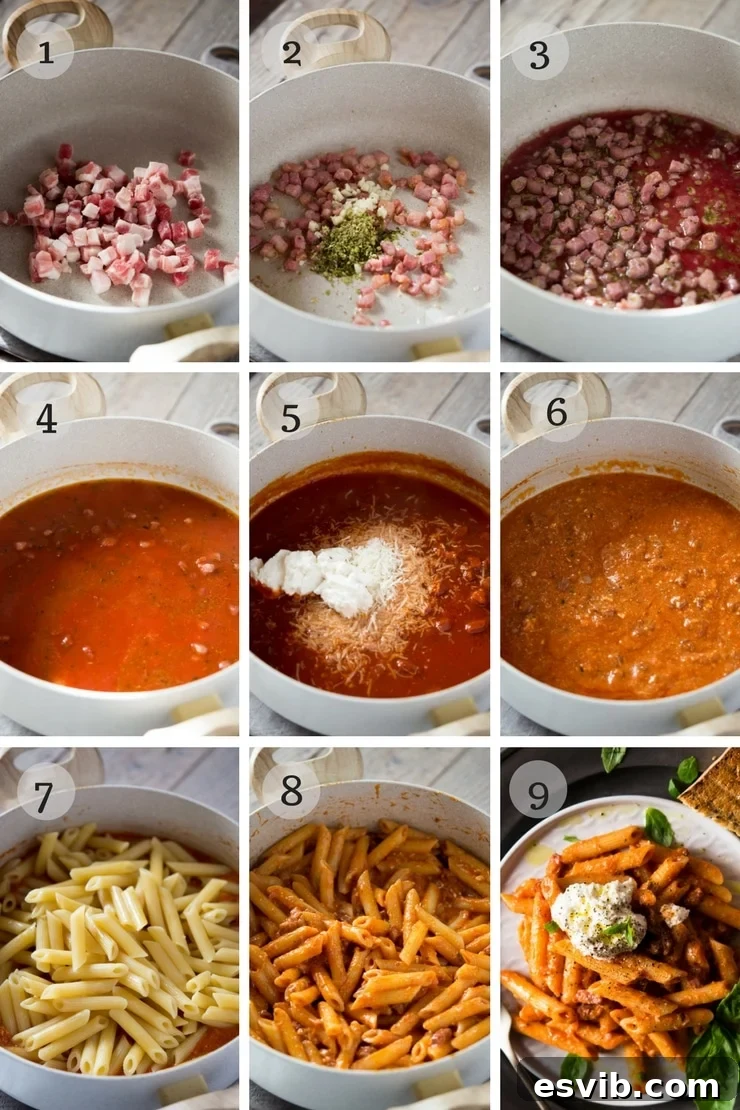
- Cook the Pasta: Begin by bringing a large pot of heavily salted water to a rolling boil. Add the penne pasta and cook according to the package instructions until it is perfectly al dente. This means it should be firm to the bite, not mushy. Before draining, remember to reserve at least 1 cup (250ml) of the starchy pasta water. You’ll need this later to achieve the perfect sauce consistency.
- Render the Pancetta: While the pasta is cooking, place a large skillet or frying pan over medium heat. Add the cubed pancetta and fry for 1-2 minutes, stirring occasionally, until it starts to brown and become crispy. The fat will render out, creating a flavorful oil in the pan. At this stage, there should be enough rendered fat, but if your pan looks dry, add about ½ tablespoon of olive oil.
- Build the Flavor Base: To the pan with the pancetta, add the finely chopped garlic and dried oregano. Sauté for about 30 seconds until fragrant, being careful not to burn the garlic. Immediately pour in the red wine and let it reduce for 1 minute, scraping up any browned bits from the bottom of the pan. This step is called deglazing and adds incredible depth to the sauce.
- Simmer the Sauce: Next, add the passata (crushed strained tomatoes) and ½ cup (125ml) of the reserved pasta water to the pan. Bring the sauce to a gentle simmer and cook for 3-4 minutes, allowing it to reduce slightly and for the flavors to meld. Turn off the heat and season generously with salt and black pepper to taste.
- Incorporate Ricotta and Pasta: Off the heat, add the good quality ricotta cheese and grated parmesan to the tomato sauce. Stir vigorously until the cheeses are completely combined and the sauce becomes beautifully creamy. If the sauce appears too thick at this point, gradually add 3-4 tablespoons of the reserved pasta water, stirring continuously, until you reach your desired consistency. This emulsifies the sauce, making it silky and rich.
- Combine and Serve: Add the drained al dente penne pasta directly into the sauce. Toss everything together until the pasta is thoroughly coated in the creamy, rich sauce. Serve immediately in large bowls. For an extra touch of indulgence, add an additional dollop of fresh ricotta on top of each serving, a drizzle of high-quality olive oil, and a sprinkle of freshly cracked black pepper or fresh basil leaves.
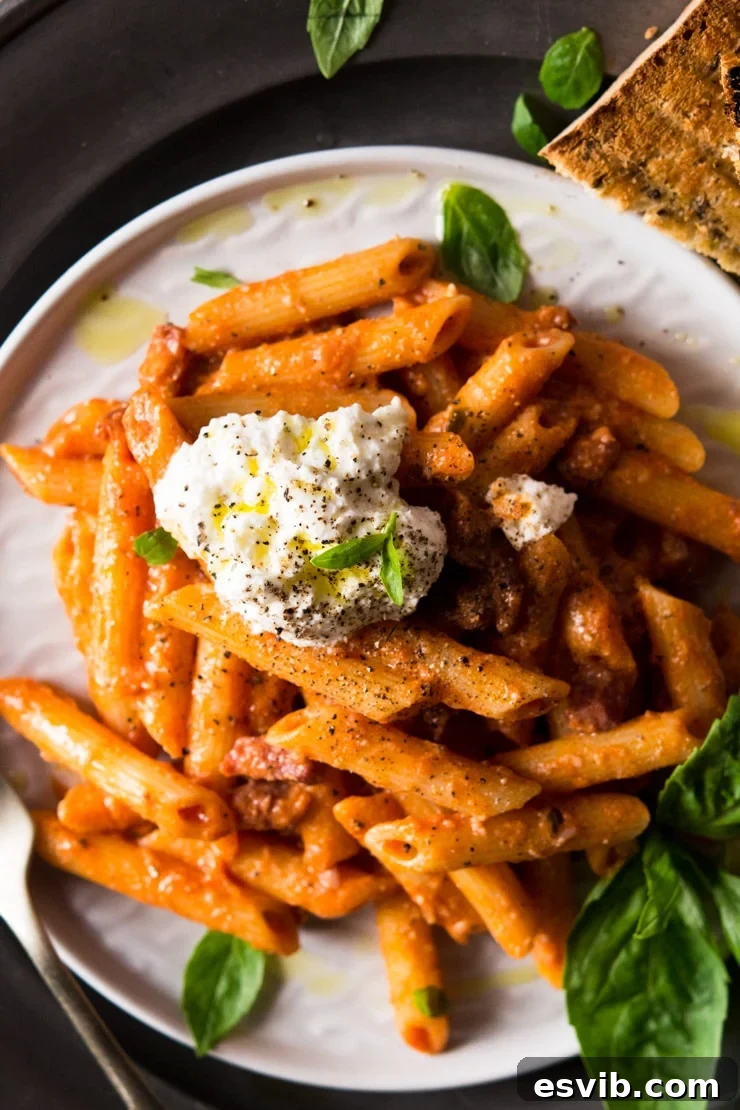
Expert Tips for a Perfect Penne with Ricotta and Pancetta
- The Ricotta Texture: Don’t worry if the ricotta looks a little grainy when first stirred into the hot sauce. This is normal! As it fully combines and warms through, it will become smooth and creamy.
- Pasta Water is Essential: Seriously, this is non-negotiable! The starchy pasta water is key to achieving a perfectly emulsified, glossy, and flavorful sauce. Do not substitute it with plain water.
- Quality Ingredients Matter: Since this recipe uses a few core ingredients, the quality of each shines through. Opt for good quality ricotta, fresh garlic, authentic passata, and excellent pancetta for the best possible flavor.
- Taste and Adjust: Always taste your sauce before mixing in the pasta. Adjust salt, pepper, or even a tiny pinch of sugar if your tomatoes are too acidic.
- Serve Immediately: This pasta is best enjoyed fresh off the stove while the sauce is at its creamiest.
Serving Suggestions & Wine Pairings
This Penne with Ricotta, Pancetta, and Tomato Sauce is a hearty meal on its own, but it pairs wonderfully with a few simple accompaniments to complete the Italian dining experience.
- Toasted Garlic Bread: Crusty bread, lightly toasted and rubbed with garlic, is perfect for soaking up every last drop of the delicious sauce.
- Fresh Green Salad: A simple mixed green salad with a light vinaigrette provides a refreshing contrast to the richness of the pasta.
- Wine Pairing: For a delightful wine pairing, consider a medium-bodied red such as a Chianti, Sangiovese, or a Montepulciano d’Abruzzo. Their acidity and fruity notes complement the tomato and pancetta beautifully. If you prefer white wine, a crisp Pinot Grigio or Vermentino would also be a lovely choice.
Storage and Reheating
Leftovers of this pasta dish are still delicious, though the ricotta’s creaminess may lessen slightly. Store any remaining pasta in an airtight container in the refrigerator for up to 3 days. When reheating, gently warm it on the stovetop over low heat, adding a splash of reserved pasta water (if you saved extra) or a little broth to help loosen the sauce and restore its creamy texture. You might also want to stir in a fresh spoonful of ricotta and a sprinkle of Parmesan.
More Easy Pasta Recipes To Try:
If you loved this recipe, explore these other delicious and easy pasta dishes from my kitchen:
- Sun-dried Tomato Pasta with Roasted Red Pepper: A vibrant and flavorful vegetarian pasta featuring intense sun-dried tomatoes and sweet roasted red peppers.
- Ricotta Pasta Sauce: 2 Ways: Discover two incredibly fast, no-cook ricotta pasta sauces perfect for when you need dinner on the table in minutes.
- Mafalde Pasta with Butter and Parmesan: A classic, minimalist dish proving that sometimes, the simplest ingredients make the most satisfying meal.
- Creamy Butternut Squash Pasta: Indulge in the sweet and earthy flavors of butternut squash blended into a rich, creamy sauce.
- Bucatini with Roasted Red Pepper Cream Sauce: Long, hollow bucatini pasta coated in a luxurious, smoky roasted red pepper cream sauce.
- Spaghetti alla Puttanesca: A bold and zesty pasta dish packed with olives, capers, anchovies, and tomatoes.
Penne Pasta with Ricotta and Tomato Sauce
By Emily
This Penne Pasta with Ricotta, Pancetta, and Tomato Sauce is a current favorite that’s incredibly tasty and easy to make. Delicious comfort food!
Prep Time: 2 mins
Cook Time: 20 mins
Total Time: 22 mins
Servings: 4 people
Ingredients
- 1 clove garlic, finely chopped
- 1 cup smoked pancetta, cubed (100g)
- 14.1 oz penne pasta (400g)
- 1/4 cup ricotta, good quality (50g)
- 1 1/4 cups crushed strained tomatoes, passata (250g)
- 1/3 cup reserved pasta water, plus 3-4 tbsp if needed (125ml)
- 1 tbsp dried oregano
- 1/4 cup red wine (60ml)
- 0.7 oz parmesan plus extra for seasoning (20g)
- 1 pinch salt and pepper, to season
Instructions
- Bring a large pot of salted water to a boil and cook the penne pasta according to packet instructions until al dente. Remember to reserve at least 1/3 cup (125ml) of the pasta water before draining.
- Add the pancetta to a large pan and fry for 1-2 minutes until it starts to brown and crisp. There should be enough oil from the pancetta, but if not, add ½ tbsp of olive oil.
- Add the garlic and oregano to the pan and fry for 30 seconds until fragrant. Pour in the red wine and reduce for 1 minute, scraping up any browned bits.
- Stir in the passata and 1/3 cup (125ml) of reserved pasta water. Cook the sauce for 3-4 minutes until it has reduced and the flavors have melded. Turn off the heat and season with salt and pepper.
- Add the ricotta and parmesan to the sauce. Stir until completely combined and creamy. Return the pan to very low heat.
- Add the drained penne pasta to the sauce and toss until completely coated. If the sauce is too thick for your liking, add an additional 3-4 tbsp of reserved pasta water to achieve a smoother consistency.
- Serve immediately, topped with an extra dollop of ricotta, a drizzle of olive oil, and a sprinkle of fresh pepper or basil leaves if desired.
Notes
- The ricotta will look slightly grainy when first added, but don’t worry; it will smooth out as it warms and incorporates into the sauce.
- Always reserve the starchy pasta water; do not replace it with normal water, as it is crucial for emulsifying the sauce.
- You can substitute pancetta for sun-dried tomatoes or capers for a vegetarian option.
Nutrition
Calories: 476kcal
Nutrition information is automatically calculated, so should only be used as an approximation.
Helpful Info for All Recipes
- I always use extra virgin olive oil in all of my recipes unless stated otherwise.
- When I use canned or jarred tomatoes of any kind, I always use Cirio or Mutti brands for the best results and flavor.
- All vegetables are medium-sized unless stated otherwise.
- All recipes are tested and developed using a fan (convection) oven.
- Find out more about how nutrition is calculated.
- Check out our must-have Italian Pantry Staples.
- You can also find all our Essential Kitchen Tools for Italian Cooking.