
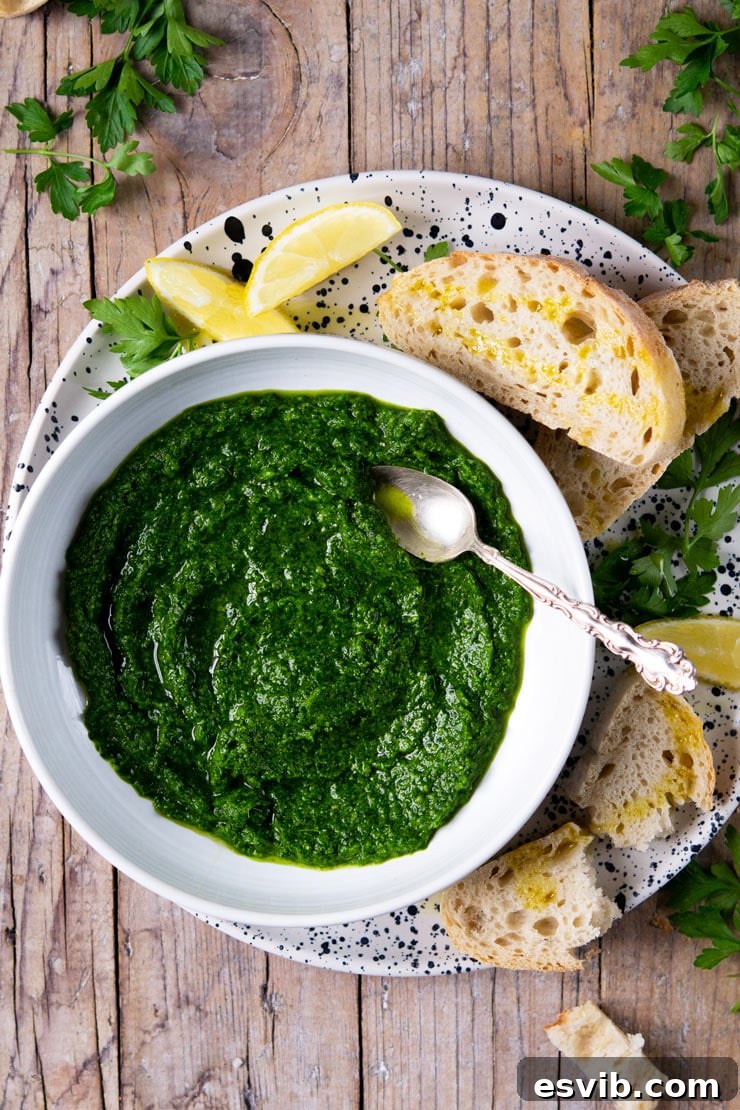
Easy Parsley Pesto: Your New Favorite 2-Minute Homemade Sauce
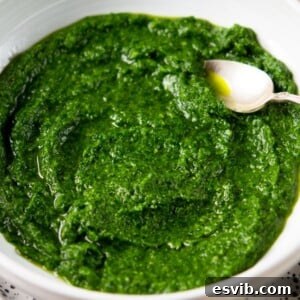
Unlock a world of fresh flavor with this incredibly easy parsley pesto recipe! Crafted from simple, wholesome ingredients, this vibrant green sauce is ready in only 2 minutes, transforming your meals with minimal effort. Whether tossed with pasta, spooned over grilled fish or chicken, stirred into salads, spread in sandwiches, or served as a delightful dip, this homemade pesto is the ultimate flavor enhancer your kitchen needs.
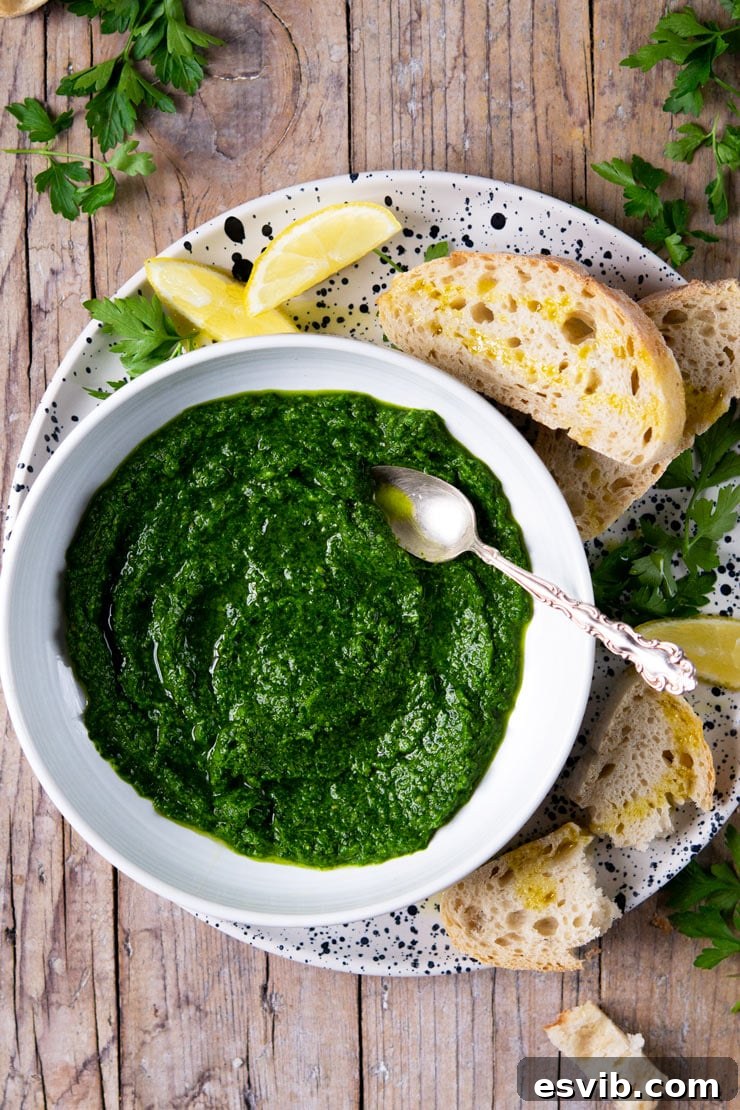
For many food enthusiasts, pesto holds a special place in the culinary repertoire. The classic basil pesto, especially when homemade, offers an unparalleled depth of flavor far superior to any jarred alternative. But have you ever considered the aromatic potential of parsley? This often-underestimated herb makes for an equally incredible, if not more refreshing, pesto!
Indeed, the beauty of pesto lies in its adaptability. While basil reigns supreme in traditional Italian cuisine, you can craft delicious pestos from various fresh herbs. Imagine a zesty coriander (cilantro) pesto elevating your Mexican dishes, or a vibrant mint pesto complementing Middle Eastern flavors. However, for Mediterranean and Italian-inspired cooking, both basil and parsley varieties offer a delightful, herbaceous punch that is truly hard to beat.
Why Choose Parsley Pesto? Beyond the Basil Standard
Parsley pesto offers a distinct, brighter, and slightly peppery flavor profile compared to its basil cousin. It’s less sweet and brings a wonderful earthiness that pairs beautifully with a wider range of dishes, from delicate seafood to hearty grilled meats. Plus, it’s often more readily available and affordable than fresh basil, making it a fantastic everyday choice for adding gourmet flair to your meals. This recipe is designed for maximum flavor with minimal fuss, proving that homemade doesn’t have to mean time-consuming.
Essential Ingredients for Perfect Parsley Pesto
Crafting this quick and flavorful parsley pesto requires just a handful of fresh, high-quality ingredients. Each component plays a crucial role in building the perfect balance of taste and texture:
- Fresh Flat-Leaf Parsley: The star of our show, providing a clean, vibrant, and slightly peppery base.
- Bright Lemon Juice: Adds a necessary zing and freshness, balancing the richness of the oil and cheese, and helping to preserve the pesto’s color.
- Aromatic Garlic: Provides a pungent depth that is characteristic of any great pesto.
- Aged Parmesan Cheese: Offers a salty, umami-rich creaminess that rounds out the flavors.
- Creamy Pine Nuts: Contributes a delicate, buttery texture and subtle nuttiness without overpowering the parsley.
- High-Quality Extra Virgin Olive Oil: The binding agent that emulsifies the ingredients, adding fruity notes and a luxurious mouthfeel.
- Sea Salt and Freshly Ground Black Pepper: To season and enhance all the wonderful flavors.
The quality of your ingredients directly impacts the final taste of your pesto. Opt for the freshest parsley you can find, a good quality Parmigiano Reggiano, and a robust extra virgin olive oil for the best results. These simple choices elevate this humble sauce into something truly extraordinary.
Crafting Your Parsley Pesto: Two Effortless Methods
Making pesto is surprisingly simple, and you have two primary methods, each with its own charm and efficiency. While traditionalists might swear by the mortar and pestle, modern kitchens often favor the speed of a blender or food processor. Both deliver delicious results; it simply depends on your preference and time constraints.
The Traditional Method: Mortar and Pestle
For those who appreciate the ritual and nuanced texture, the mortar and pestle method is deeply satisfying. This technique gently bruises the herbs and nuts, releasing their essential oils more slowly and creating a pesto with a slightly coarser, more rustic texture and a deeply integrated flavor. It’s believed by many Italian purists, especially those from Liguria (the birthplace of basil pesto), that true pesto isn’t made any other way.
- Begin by adding the pine nuts and garlic to your mortar. Grind them into a fine paste. The friction helps to release their aromatic compounds.
- Next, add the parsley, a handful at a time, pounding and rotating the pestle to crush the leaves against the mortar. This slow process prevents the herbs from overheating, preserving their fresh green color and delicate flavor.
- Once the parsley is mostly broken down, gradually incorporate the grated Parmesan cheese, mixing until well combined.
- Finally, slowly drizzle in the extra virgin olive oil while continuing to pound and stir, until a smooth, thick, and emulsified pesto forms. Season with salt and pepper to taste.
The Quick Method: Immersion Blender or Food Processor
For speed and convenience, an immersion blender or food processor is a game-changer. This method produces a wonderfully smooth pesto in mere seconds, perfect for busy weeknights or when you need a burst of flavor in a hurry. It’s the method I use most often for its incredible efficiency.
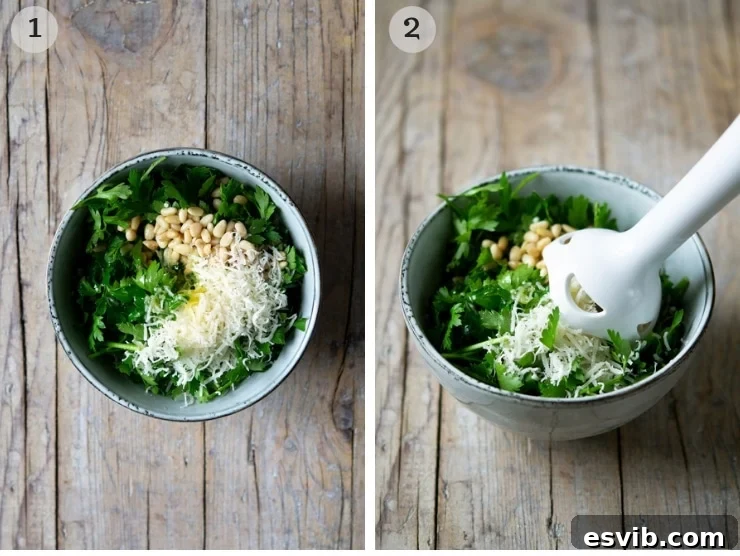
- Simply place all your ingredients – parsley, pine nuts, lemon juice, garlic, Parmesan, and a splash of olive oil – into a bowl or the bowl of your food processor.
- Using an immersion blender, blitz the ingredients on a low setting, moving the blender up and down, until everything is finely chopped and begins to come together.
- If using a food processor, pulse the ingredients a few times, then process continuously, scraping down the sides as needed, until you reach your desired consistency.
- Gradually add the remaining olive oil until the pesto is smooth and thick. Avoid over-processing, which can warm the pesto and dull its vibrant color.
- Taste and adjust seasoning with salt and freshly ground black pepper as needed. Done!
Flat-Leaf Parsley vs. Curly Parsley: A Key Distinction
When selecting your parsley for pesto, the type truly matters. While both varieties are edible, I strongly advocate for using flat-leaf parsley (also known as Italian parsley). Its leaves are tender, possess a more robust and complex flavor, and blend into a much smoother consistency. Curly parsley, on the other hand, tends to be tougher and more fibrous, often resulting in a coarser pesto with a less refined taste. For the silkiest, most flavorful parsley pesto, always reach for the flat-leaf variety.
Expert Tips for the Best Parsley Pesto
- Freezing for Future Freshness: Pesto freezes beautifully! To preserve its vibrant flavor and color, transfer it into ice cube trays and freeze until solid. Once frozen, pop the cubes out and store them in airtight freezer bags for up to 6 months. This allows you to easily thaw small portions as needed, minimizing waste and maximizing convenience. You can also store it in small plastic containers, ensuring a thin layer of olive oil covers the top to prevent oxidation.
- Toasting Pine Nuts – or Not: While many recipes suggest toasting pine nuts to enhance their flavor, for pesto, I recommend using un-toasted pine nuts. Their raw state contributes a uniquely creamy, delicate flavor and a softer texture that harmonizes perfectly with the other ingredients, creating a more cohesive and smooth pesto.
- Cheese Choices: Authentic Italian pestos often use Parmigiano Reggiano, renowned for its nutty, salty, and complex flavor. However, a hard Pecorino cheese (made from sheep’s milk) is an excellent alternative, offering a sharper, tangier profile that can add another layer of excitement to your pesto. Feel free to use either, based on your preference.
- Embrace the Garlic: Unless you have a specific dietary restriction or aversion, do not skip the garlic! It is fundamental to the robust, aromatic essence of pesto, providing a depth of flavor that is simply irreplaceable. Start with one clove and add more to taste if you love a strong garlicky kick.
- Quality Olive Oil is Key: Invest in a good quality extra virgin olive oil. It’s a foundational ingredient that provides body, helps emulsify, and contributes significantly to the overall flavor of your pesto.
- Adjusting Consistency: If your pesto is too thick, add a little more olive oil or a tiny splash of cold water until it reaches your desired consistency. If it’s too thin, you can add a few more pine nuts or a bit more Parmesan cheese.
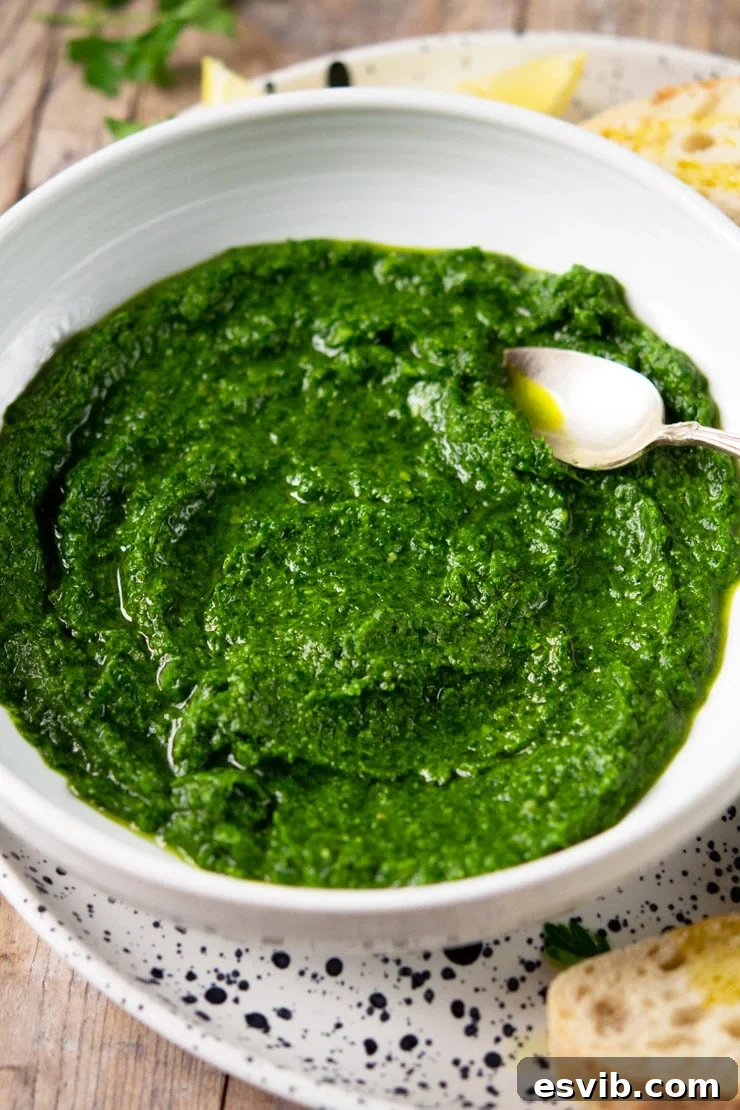
Endless Culinary Possibilities: Ways to Enjoy Your Parsley Pesto
The versatility of parsley pesto is truly remarkable. Once you have a batch ready, you’ll find countless ways to incorporate its fresh, herbaceous flavor into your daily cooking:
- Pasta Perfection: Toss it generously with your favorite hot pasta, such as spaghetti, linguine, or gnocchi, for a quick and satisfying meal. Add a splash of pasta water for extra creaminess.
- Elevated Sandwiches & Wraps: Spread a thin layer on the base of a sandwich, ciabatta, or wrap to add an instant burst of flavor. It pairs beautifully with chicken, turkey, mozzarella, and fresh tomatoes.
- Vibrant Side Dish: Toss fresh spinach or other leafy greens with a dollop of pesto for a simple, flavorful side salad. It also enhances roasted or steamed vegetables like green beans, broccoli, or asparagus.
- Flavorful Salad Dressing: Whisk a tablespoon of pesto with a little extra olive oil, lemon juice, and a touch of water to create a quick and flavorful dressing for any green salad.
- Protein Power-Up: Serve it alongside roast chicken, grilled fish (like salmon, cod, or sea bass), or pan-seared pork chops. It adds a gourmet touch and keeps proteins moist and flavorful.
- Delicious Dip: Offer it as a vibrant dip for crusty bread, fresh vegetable sticks, or crackers at your next gathering.
- Pizza Base: Use it as a flavorful base instead of tomato sauce for a unique and delicious pesto pizza.
- Egg Enhancer: Stir a teaspoon into scrambled eggs, an omelet, or spread on toast with a fried egg for a breakfast or brunch upgrade.
- Soup & Stew Swirl: Swirl a spoon of pesto into hot vegetable soups or minestrone just before serving for an extra layer of freshness.
Explore More Pesto Creations
If you love the versatility and flavor of homemade pesto, be sure to explore these other fantastic pesto recipes:
- Classic Basil Pesto
- Sun-Dried Tomato Pesto with Ricotta
- Nutritious Cavolo Nero Pesto
- Pesto alla Trapanese (Sicilian Pesto)
If you’ve tried this Easy Parsley Pesto recipe or any other recipe on the blog, I’d love to hear how it turned out! Please leave a comment below and let me know your thoughts. You can also FOLLOW ME on FACEBOOK, TWITTER, INSTAGRAM, and PINTEREST for more delicious food ideas and behind-the-scenes glimpses!
Step By Step Photos Above
Most of our recipes come with step by step photos, helpful tips and tricks to make it perfectly first time and even video!
Parsley Pesto Recipe
By Emily
2 mins
2 mins
1 cup (enough to serve 4 with pasta)
Print Recipe
Ingredients
- 2 oz (60g) flat-leaf parsley (approx. 2 large handfuls)
- 1 heaped tbsp pine nuts (untoasted)
- 1 squeeze lemon juice (approx. 1 tsp, or to taste)
- 1 clove garlic (or more, to taste)
- 1 tbsp Parmigiano Reggiano or Pecorino cheese, freshly grated
- 4 tbsp extra virgin olive oil (or more, for desired consistency)
- Salt and freshly ground black pepper, to taste
Instructions
-
Place all ingredients (parsley, pine nuts, lemon juice, garlic, Parmesan, and olive oil) in a bowl. Blitz until smooth and thick with an immersion blender.
-
Alternatively, if using a mortar and pestle, add pine nuts and garlic first, pound into a paste, then add parsley gradually, followed by cheese, and finally drizzle in olive oil while pounding until smooth.
-
Taste and season with salt and freshly ground black pepper as required. Your fresh parsley pesto is ready to use!
Notes
- Freezing Pesto: Yes, you can freeze pesto! Transfer it into an ice cube tray or small airtight plastic containers. Freeze for up to 6 months. Once frozen, pop cubes into a freezer bag.
- Serving Suggestion: Toss with your favorite pasta for a quick meal, spread on the base of a sandwich, toss with spinach as a side, mix into any salad for extra flavor, or serve with roast chicken or grilled fish.
- Ingredient Variations: For a vegan option, nutritional yeast can substitute Parmesan cheese. Other nuts like walnuts or almonds can replace pine nuts, though the flavor will differ slightly.
Calories from Fat 522
Helpful Info for All Recipes
- I always use extra virgin olive oil in all of my recipes unless stated otherwise.
- When I use canned or jarred tomatoes of any kind, I always use Cirio or Mutti brands for the best results and flavor.
- All vegetables are medium sized unless stated otherwise.
- All recipes are tested and developed using a fan (convection) oven.
- Find out more about how nutrition is calculated.
- Check out our must-have Italian Pantry Staples.
- You can also find all our Essential Kitchen Tools for Italian Cooking.
Nutrition Overview
Calories:
547kcal
|
Carbohydrates:
5g
|
Protein:
3g
|
Fat:
58g
|
Saturated Fat:
8g
|
Cholesterol:
3mg
|
Sodium:
115mg
|
Potassium:
332mg
|
Fiber:
1g
|
Vitamin A:
5055IU
|
Vitamin C:
80.8mg
|
Calcium:
142mg
|
Iron:
4mg
Nutrition information is automatically calculated and should only be used as an approximation.