
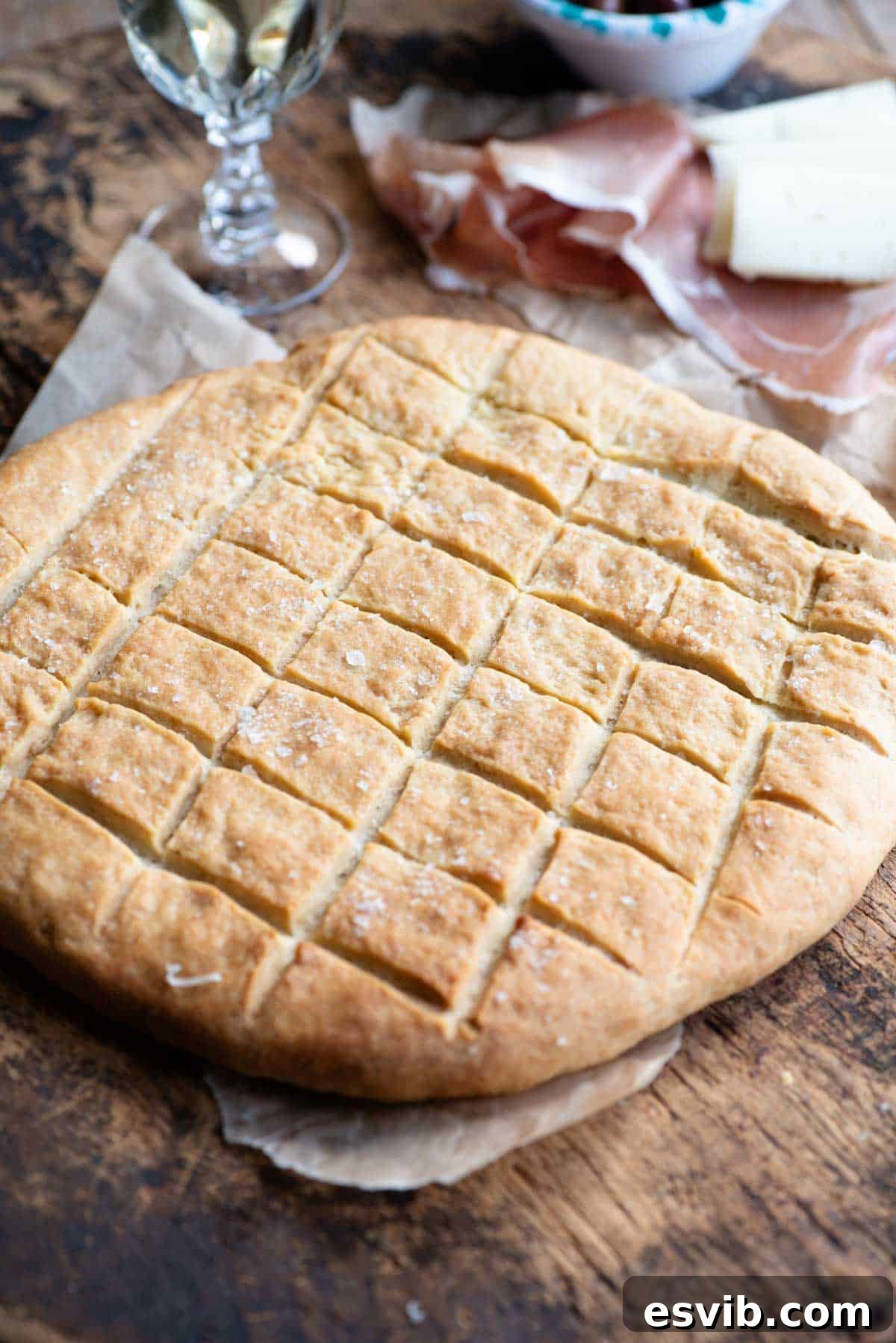
Pizza Scima is a true hidden gem of Italian cuisine, a traditional unleavened flatbread originating from the rugged and beautiful region of Abruzzo. Unlike what its name might suggest to some, it’s not a pizza in the conventional sense, but rather a unique and incredibly addictive bread. Crafted with just a handful of simple ingredients – flour, white wine, and olive oil – and generously seasoned with flaky sea salt, Pizza Scima offers a delightful texture that’s a perfect cross between a crispy cracker and a tender focaccia, boasting a crumbly, pastry-like interior. Its straightforward preparation makes it a go-to recipe for home cooks, and its rich, savory flavor makes it an ideal accompaniment for cured meats, aged cheeses, olives, and a glass of good wine.
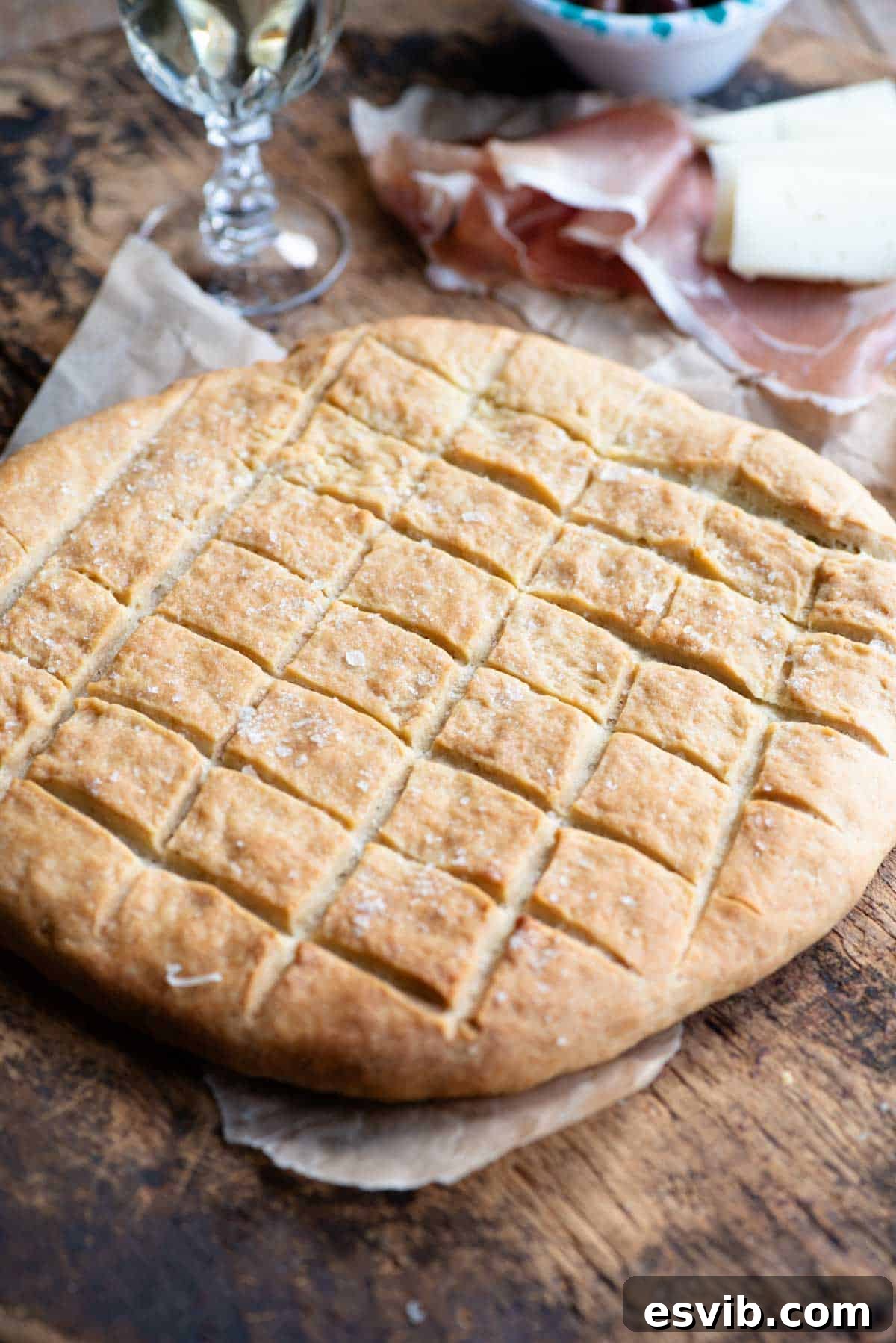
Unveiling Pizza Scima: Abruzzo’s “Silly” Flatbread Sensation
Pronounced “sheema,” Pizza Scima is a culinary testament to the simplicity and ingenuity of Abruzzese cooking. The name itself, derived from the Italian word “scema” (meaning silly or simple), hints at the remarkably unfussy nature of this bread. It stands apart from leavened breads like focaccia or conventional pizza dough, as it requires no yeast, no rising time, and minimal kneading. This characteristic not only simplifies the baking process but also contributes to its distinctively crisp exterior and wonderfully crumbly, yet tender, inside. It’s a bread that truly tells a story of rustic Italian charm, where quality ingredients and straightforward techniques yield extraordinary results.
Why Pizza Scima Will Become Your New Favorite Italian Treat
If you’re looking for an incredibly easy recipe that delivers maximum flavor and versatility, Pizza Scima is it. Its unleavened nature makes it astonishingly quick to prepare, cutting down on the waiting time associated with yeast-based doughs. But don’t let its simplicity fool you; this flatbread is packed with an irresistible taste. The combination of fruity olive oil, aromatic white wine, and a generous sprinkle of sea salt creates a savory profile that is both comforting and sophisticated. It’s crispy enough on the outside to offer a satisfying crunch, yet soft and delicate on the inside, making each bite an absolute delight. Served warm, perhaps with an extra drizzle of good quality extra virgin olive oil, it truly reaches a heavenly state that you won’t be able to resist.
Ready to bake? Below you’ll find comprehensive details on ingredients, step-by-step instructions with accompanying photos, and expert tips to ensure your Pizza Scima is perfect every time. For the complete printable recipe, simply scroll to the dedicated recipe card section at the bottom of the page.
Table of Contents
- The Essence of Pizza Scima: Ingredients
- Step-by-Step Guide to Baking Pizza Scima
- Pro Tips for Perfect Pizza Scima
- Frequently Asked Questions About Pizza Scima
- More Delicious Italian Snacks to Try
- Full Pizza Scima Recipe
The Essence of Pizza Scima: Key Ingredients
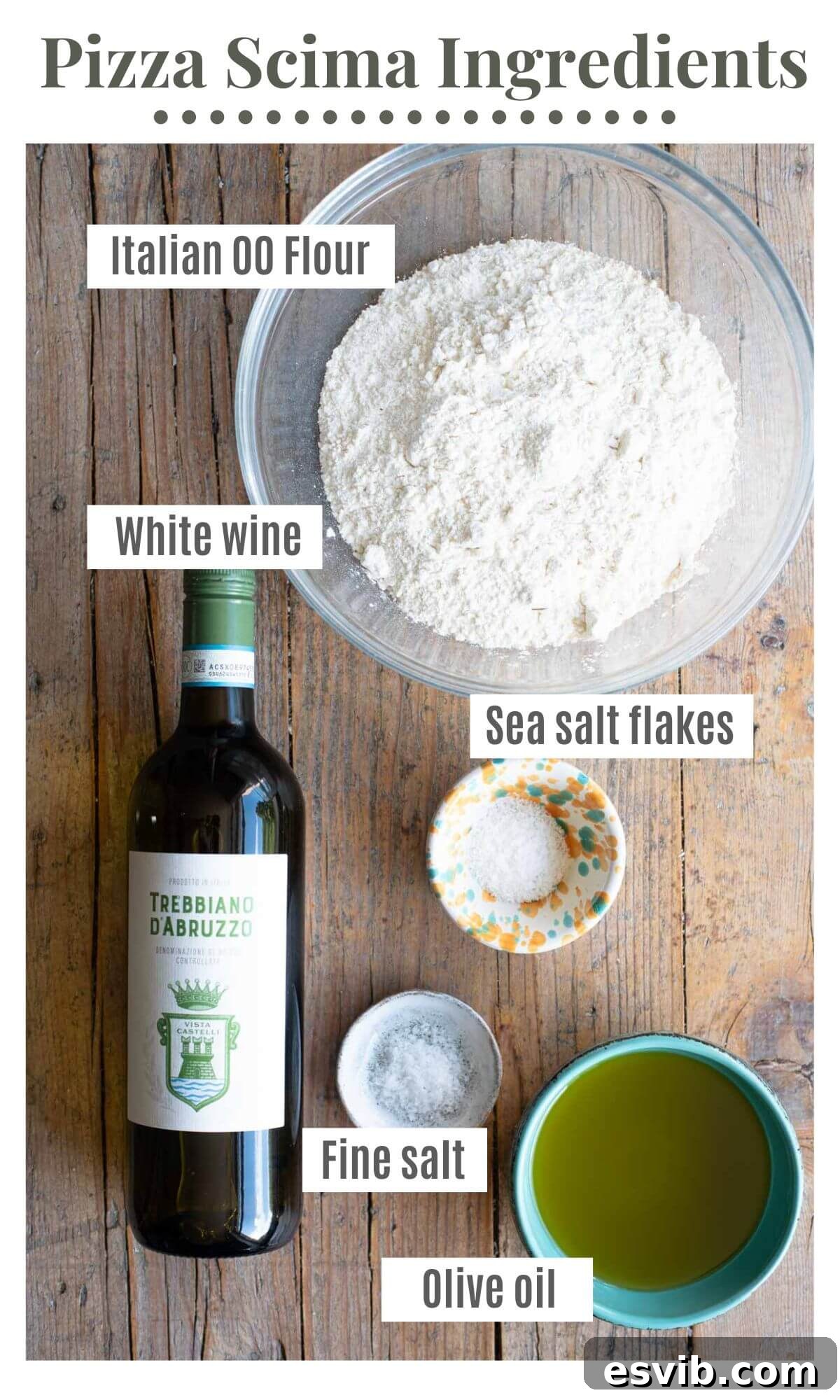
Creating authentic Pizza Scima relies on a minimal list of high-quality ingredients. Each component plays a vital role in achieving the desired flavor and texture of this traditional Abruzzese flatbread.
Ingredient Notes and Expert Substitutions
- Flour: For an authentic Italian experience, we recommend using Italian 00 flour. This finely milled flour contributes to the delicate, crumbly texture that makes Pizza Scima so special. However, standard all-purpose flour works beautifully as well, producing a slightly chewier yet equally delicious result.
- White Wine: The white wine is not just for flavor; it also contributes to the dough’s tenderness and unique aroma. Traditionally, a dry white wine like Trebbiano D’Abruzzo is used, paying homage to the region. Any dry Italian white wine you enjoy drinking, such as Pinot Grigio or Vermentino, will be an excellent choice. If you prefer to avoid alcohol, water can be used as a direct substitute. While the flavor profile will be slightly different, the bread will still be delicious and retain its signature texture.
- Salt: We use two types of salt for optimal taste. Fine salt is crucial for even distribution throughout the dough, ensuring every bite is perfectly seasoned from within. For the topping, flaky sea salt (like Maldon) is highly recommended. Its larger crystals provide a wonderful textural contrast and a burst of savory flavor on the surface. If you don’t have flaky sea salt, a coarse sea salt can be a good alternative.
- Olive Oil: Extra virgin olive oil is indispensable for Pizza Scima, both as a primary ingredient in the dough and as a luxurious drizzle before and after baking. Its rich, fruity notes are fundamental to the bread’s overall flavor. Opt for a high-quality extra virgin olive oil to truly elevate the taste of this simple flatbread.
Step-by-Step Guide to Baking Pizza Scima
Crafting Pizza Scima is a straightforward and rewarding process, even for novice bakers. Follow these simple steps to bring a taste of Abruzzo into your home kitchen.
- Prepare Dry Ingredients: In a large mixing bowl, combine the flour and fine salt. Whisk them together thoroughly to ensure the salt is evenly distributed. This forms the base of your unleavened flatbread (photo 1).
- Create a Well: Form a well in the center of your dry ingredients. This will be the reservoir for your liquid components. Carefully pour in the extra virgin olive oil and the white wine into this well (photos 2 and 3).
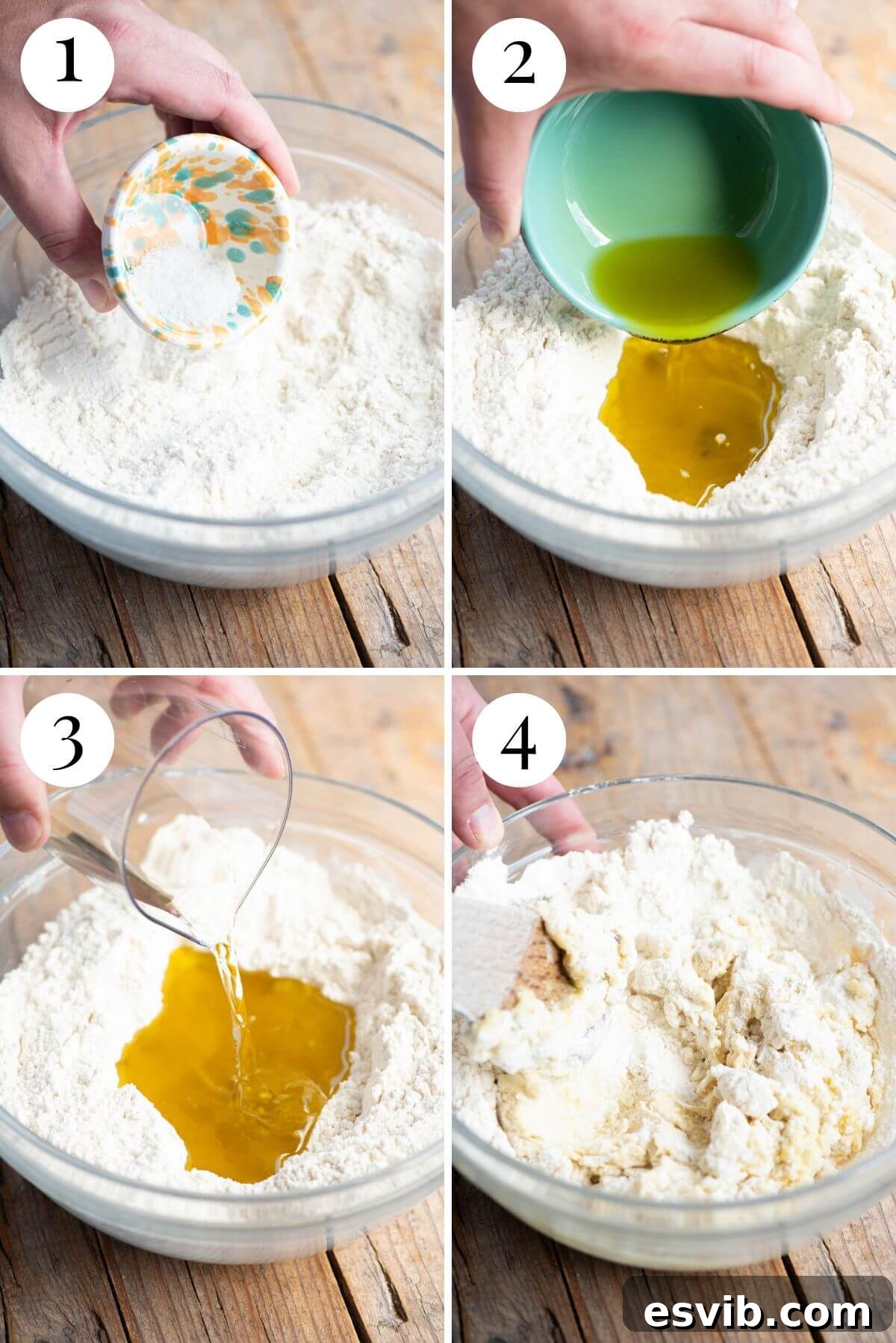
- Form the Dough: Using a wooden spatula or a sturdy spoon, begin to mix the wet and dry ingredients from the center outwards. Continue mixing until a rough, shaggy dough starts to form (photo 4).
- Brief Kneading: Transfer the rough dough onto a clean, lightly floured work surface. Knead the dough very briefly, just for a minute or two, until it comes together into a smooth, cohesive ball. Remember, over-kneading is not necessary and can lead to a tough flatbread (photos 5-7).
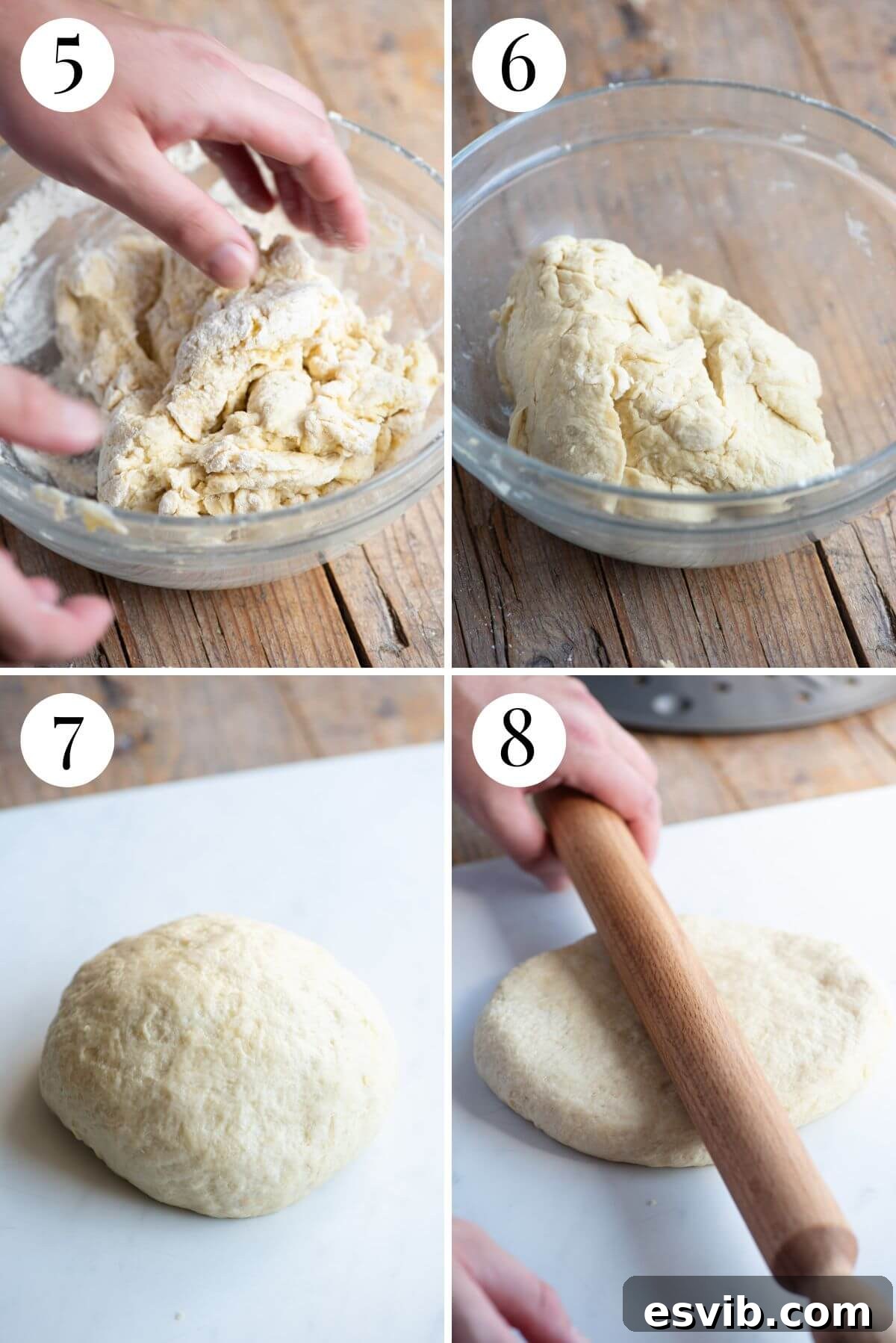
- Roll Out the Dough: With a rolling pin, gently roll the dough out into a circular shape, approximately 9 inches (23 cm) in diameter and about 2/3 inch (1.5-2 cm) thick. Aim for an even thickness to ensure uniform baking (photos 8 and 9).
- Score the Surface: Carefully transfer the rolled dough onto a baking tray that has been lightly greased with olive oil. A round pizza tray is ideal, but a rectangular one will also work. Using a sharp knife, score the entire surface of the dough in a criss-cross or diamond pattern, with lines roughly 1 inch (2.5 cm) apart. This scoring helps with portioning after baking and contributes to its rustic appearance (photo 10).
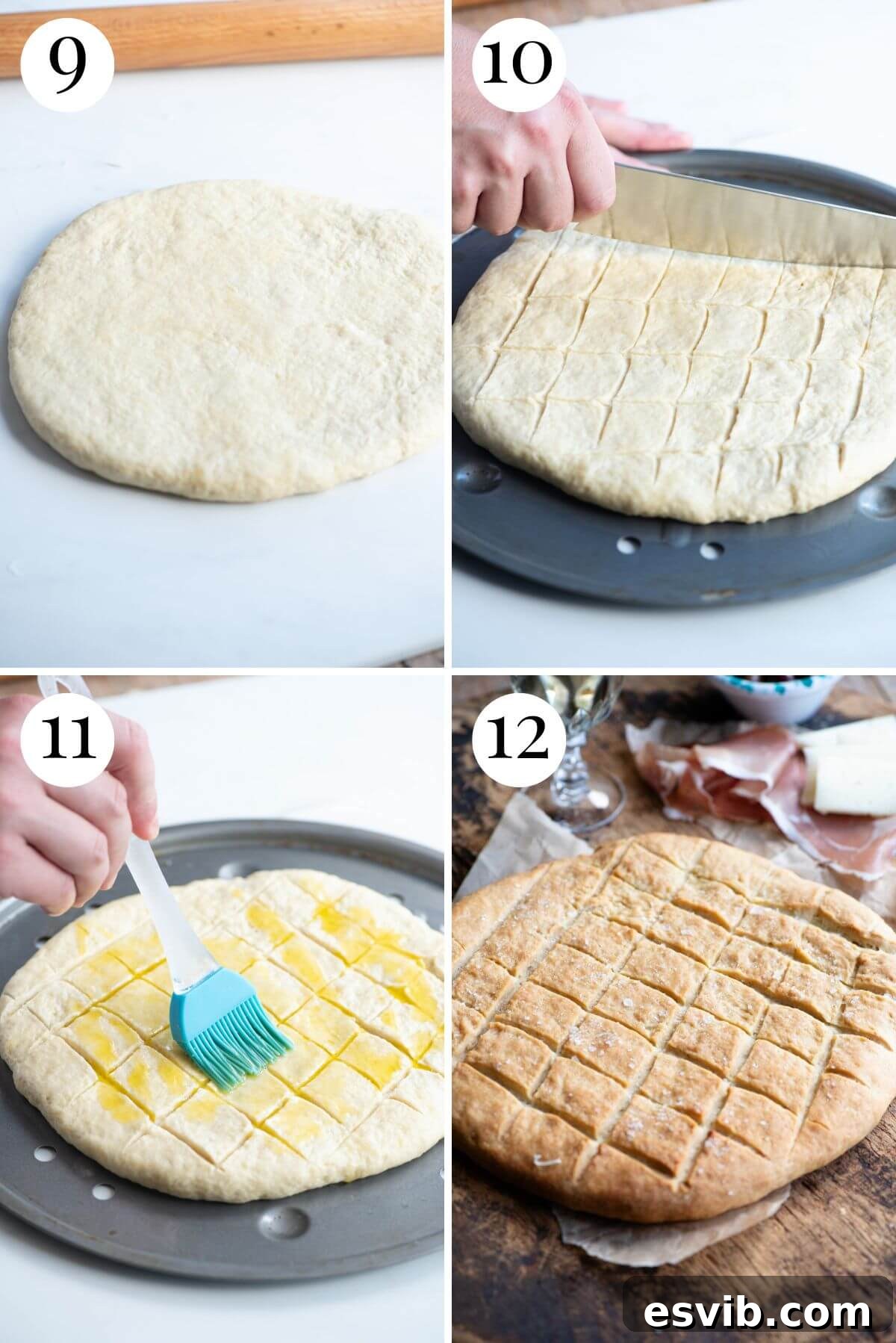
- Brush and Bake: Lightly brush the surface of the scored Pizza Scima with more olive oil, then sprinkle generously with flaky sea salt. Bake in a preheated oven on the middle shelf for approximately 50 minutes, or until deeply golden brown and cooked through (photo 11).
- Serve Warm: Once baked, remove the Pizza Scima from the oven. For an extra touch of richness and flavor, drizzle a little more extra virgin olive oil over the warm flatbread. Allow it to cool on the tray for about 10 minutes before breaking it into pieces and serving. This brief cooling period helps the texture set and prevents it from being too hot to handle (photo 12).
Pro Tips for Perfect Pizza Scima
Achieving the perfect Pizza Scima is simple, especially with these insider tips:
- Mindful Kneading: Since Pizza Scima is unleavened, over-kneading can lead to a tough and dense texture. Knead the dough just until it forms a smooth, coherent ball. The goal is to bring the ingredients together, not to develop gluten excessively.
- No Extra Flour for Kneading: Thanks to the generous amount of olive oil in the dough, it should be naturally pliable and non-sticky. You shouldn’t need to add extra flour to your work surface when kneading or rolling. If, for any reason, you find the dough difficult to handle, try rolling it between two sheets of baking parchment. You can then transfer the parchment-enclosed dough directly to your baking tray.
- Precise Scoring: The criss-cross or diamond scoring pattern isn’t just for aesthetics; it helps to define portions and makes breaking the cooked flatbread into individual pieces much easier. Use a sharp knife and score the dough about halfway through its thickness – deep enough to create clear lines, but not so deep that you cut all the way through.
- Allow it to Cool: While the aroma of freshly baked Pizza Scima is incredibly tempting, resist the urge to eat it immediately. Letting it cool for 5-10 minutes after baking allows the internal structure to set, resulting in the best possible texture and allowing the flavors to meld beautifully. It’s best enjoyed warm, not piping hot.
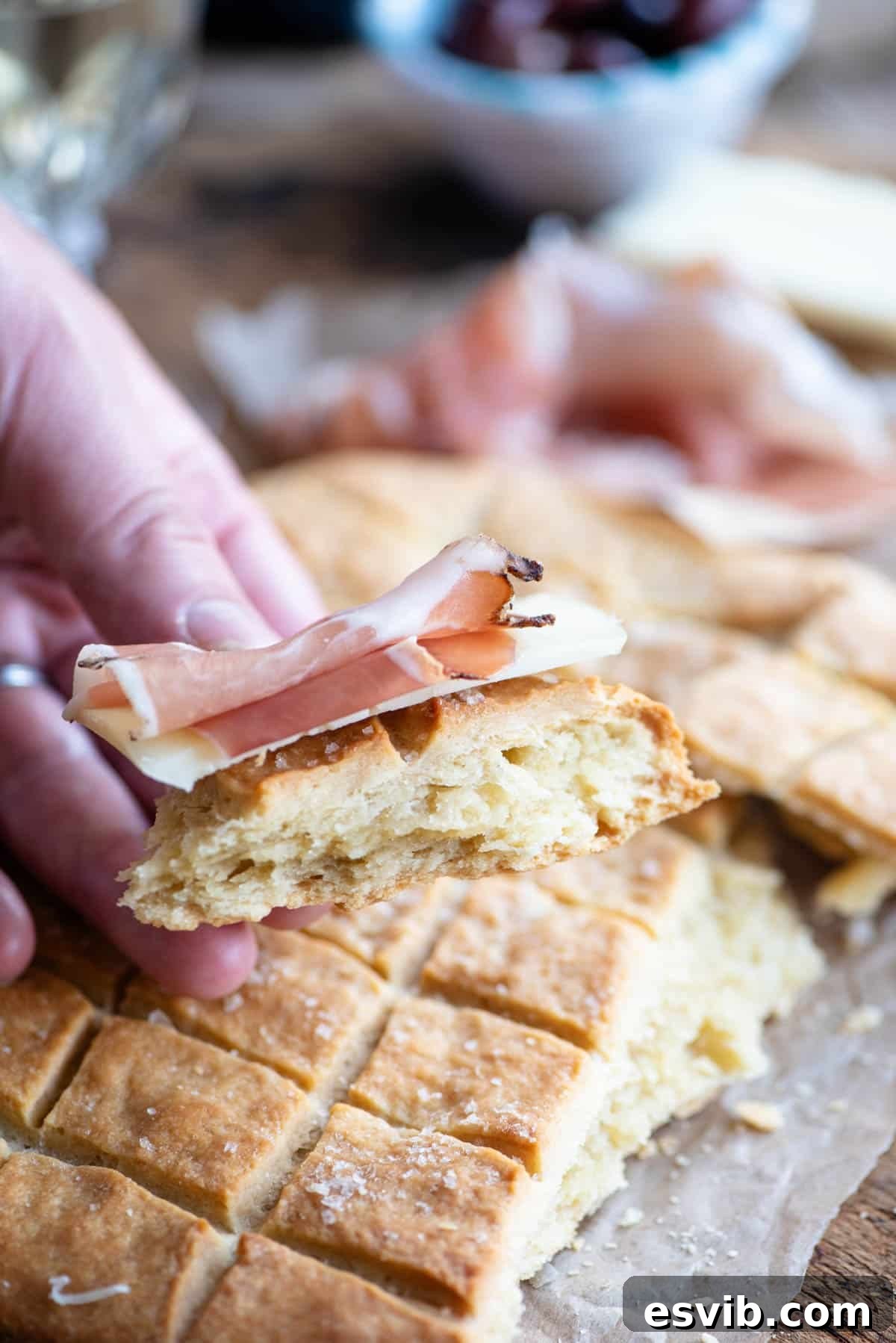
- Versatile Serving: Pizza Scima is wonderfully versatile. Break it into rustic pieces and serve it as you would traditional bread or crackers. It’s a fantastic addition to an antipasti platter alongside cured meats, various Italian cheeses, marinated olives, and flavorful dips like tapenade or pesto. Don’t underestimate its simple charm, though; it’s addictively delicious enjoyed entirely on its own, perhaps with just another generous drizzle of olive oil.
- Storage and Leftovers: Pizza Scima is truly at its best when served warm, straight from the oven. However, any leftovers can be stored. Once completely cool, wrap the flatbread tightly in aluminum foil or place it in an airtight container. It will keep well at room temperature for 2-3 days. To refresh, simply warm it gently in a low oven for a few minutes until slightly crisp again.
Frequently Asked Questions About Pizza Scima
If you prefer not to use alcohol, or simply don’t have white wine on hand, you can easily substitute it with an equal amount of water. While the wine adds a subtle layer of flavor and aroma, water will still yield a delicious and perfectly textured flatbread.
The term “Scima” comes from the Italian word “scema,” which translates to “silly” or “stupid.” This endearing nickname refers to the incredible simplicity of the recipe. It highlights how straightforward it is to make, requiring minimal ingredients and no complex techniques, yet yielding such a profoundly satisfying result.
Pizza Scima, as traditionally prepared, is dairy-free, making it suitable for those with dairy sensitivities or allergies. However, it is made with wheat flour, so it is not gluten-free. For a gluten-free version, you would need to experiment with a gluten-free flour blend, though the texture and handling properties of the dough may vary.
More Delicious Italian Snacks to Try
If you’ve fallen in love with the rustic charm of Pizza Scima, you’ll surely enjoy exploring other authentic Italian appetizers and flatbreads. Here are some more delightful recipes from our kitchen:
Antipasti
Italian Potato Fritters (Tortei di Patate)
Bread & Savory Bakes
Brustengo (Umbrian Flatbread)
Breakfast
Pane Frattau (Sardinian Bread with Tomato and Poached Egg)
Sides
Ricotta Chicken Croquettes
We hope you enjoy making and sharing this delightful Pizza Scima recipe. Your feedback means the world to us! If you’ve tried this recipe or any other on our blog, please don’t hesitate to rate it and share your experience in the comments section below. We love hearing from our community! You can also connect with us and discover more delicious Italian food by following us on Facebook, Instagram, and Pinterest, or by signing up for our Newsletter.
Step-By-Step Photos Above
Most of our recipes include helpful tips, step-by-step photos, and tricks to ensure perfect results on your first attempt!
Pizza Scima (Abruzzese Flatbread)
By Emily
20 minutes
50 minutes
1 hour
10 minutes
8
servings
Print Recipe
Equipment
-
Rolling pin
-
Round pizza tray or large rectangular tray
Ingredients
- 450 g Italian 00 flour, (1 lb or 3 and ⅓ cups)
- 6 tablespoons (90g) extra virgin olive oil , plus extra for serving
- 200 ml white wine, (6.7 fl oz or ½ cup plus ⅓ cup) – see notes for non-alcoholic alternative
- 1/2 tablespoon (7g) fine salt
- Flaky sea salt for serving
Instructions
-
Pre-heat your oven to 200°C (400°F). Lightly grease your chosen baking tray with olive oil and set it aside.
-
In a large mixing bowl, combine the flour and fine salt. Create a well in the center of the mixture and pour in the 6 tablespoons of olive oil and the white wine.
-
Using a spoon or wooden spatula, mix all the ingredients together until a rough dough forms. Transfer the dough onto a clean work surface and knead it briefly for about one minute, just until it comes together into a smooth, cohesive ball. Avoid over-kneading.
-
With a rolling pin, roll the dough out into a circle approximately 9 inches (23 cm) in diameter and about ¾ inch (2 cm) thick.
-
Carefully transfer the rolled dough to your greased baking tray. Using a sharp knife, score the entire top surface of the dough in a criss-cross or diamond pattern, with lines about 1 inch (2.5 cm) wide (refer to the photos above for visual guidance).
-
Drizzle the scored dough with an additional 1 tablespoon of olive oil and sprinkle generously with flaky sea salt. Bake on the middle shelf of your preheated oven for 50 minutes, or until golden brown and cooked through.
-
Remove the Pizza Scima from the oven. For extra flavor and moisture, immediately brush it with another 1-2 tablespoons of fresh olive oil.
-
Allow the flatbread to cool on the tray for 5-10 minutes before breaking it into pieces and serving warm.
Notes
- Don’t over-knead: Remember that Pizza Scima is an unleavened bread. Kneading the dough just enough for it to come together into a smooth ball is sufficient. Over-kneading will develop too much gluten, which can result in a tough and chewy flatbread rather than the desired crumbly texture.
- No extra flour needed: The dough contains a significant amount of olive oil, which naturally prevents it from sticking. You generally won’t need to dust your work surface with extra flour during kneading or rolling. If, however, you find the dough unexpectedly difficult to handle, a simple trick is to roll it out between two sheets of baking parchment. You can then bake it directly on the parchment-lined tray.
- Scoring the dough: The criss-cross or diamond pattern scored across the top of the dough serves a functional purpose: it helps to guide you in breaking the flatbread into neat, bite-sized pieces when serving. Use a sharp knife for clean lines, and aim to cut about halfway through the dough’s thickness.
- Let it cool: For the best texture and to allow the flavors to fully develop, let the Pizza Scima cool for about 5-10 minutes after removing it from the oven. Serving it immediately when piping hot can make it less enjoyable, as it needs a moment to set.
- Serving versatility: Break the warm Pizza Scima into rustic pieces. It’s excellent served as you would traditional bread or crackers—perfect alongside cured Italian meats, a selection of hard or soft cheeses, marinated olives, or various dips. It’s also incredibly satisfying and delicious when enjoyed simply on its own, perhaps with just another drizzle of fine extra virgin olive oil.
- Leftovers: While freshly baked and warm is ideal, Pizza Scima can be enjoyed later. Once completely cooled, wrap any leftover flatbread tightly in aluminum foil or store it in an airtight container. It will remain delicious for 2-3 days at room temperature. For best results, gently reheat in a preheated oven until warmed through and slightly crisp.
Helpful Info for All Recipes
- Unless otherwise specified, we consistently use high-quality extra virgin olive oil in all our recipes.
- For canned or jarred tomatoes, we always opt for Cirio or Mutti brands to ensure superior flavor and consistent results.
- All vegetables used in our recipes are typically medium-sized unless specifically noted.
- Every recipe provided has been thoroughly tested and developed using a fan (convection) oven.
- Find out more about how nutrition is calculated for our recipes.
- Explore our essential guide to Italian Pantry Staples for stocking your kitchen.
- Discover all our recommended Essential Kitchen Tools for Italian Cooking.
Nutrition
Calories:
324
kcal
|
Carbohydrates:
44
g
|
Protein:
6
g
|
Fat:
12
g
|
Saturated Fat:
2
g
|
Polyunsaturated Fat:
1
g
|
Monounsaturated Fat:
8
g
|
Sodium:
361
mg
|
Potassium:
78
mg
|
Fiber:
2
g
|
Sugar:
0.4
g
|
Calcium:
11
mg
|
Iron:
3
mg
Nutrition information is automatically calculated and should be used as an approximation only.
Did you try this recipe?
Leave a comment below and share your experience!