
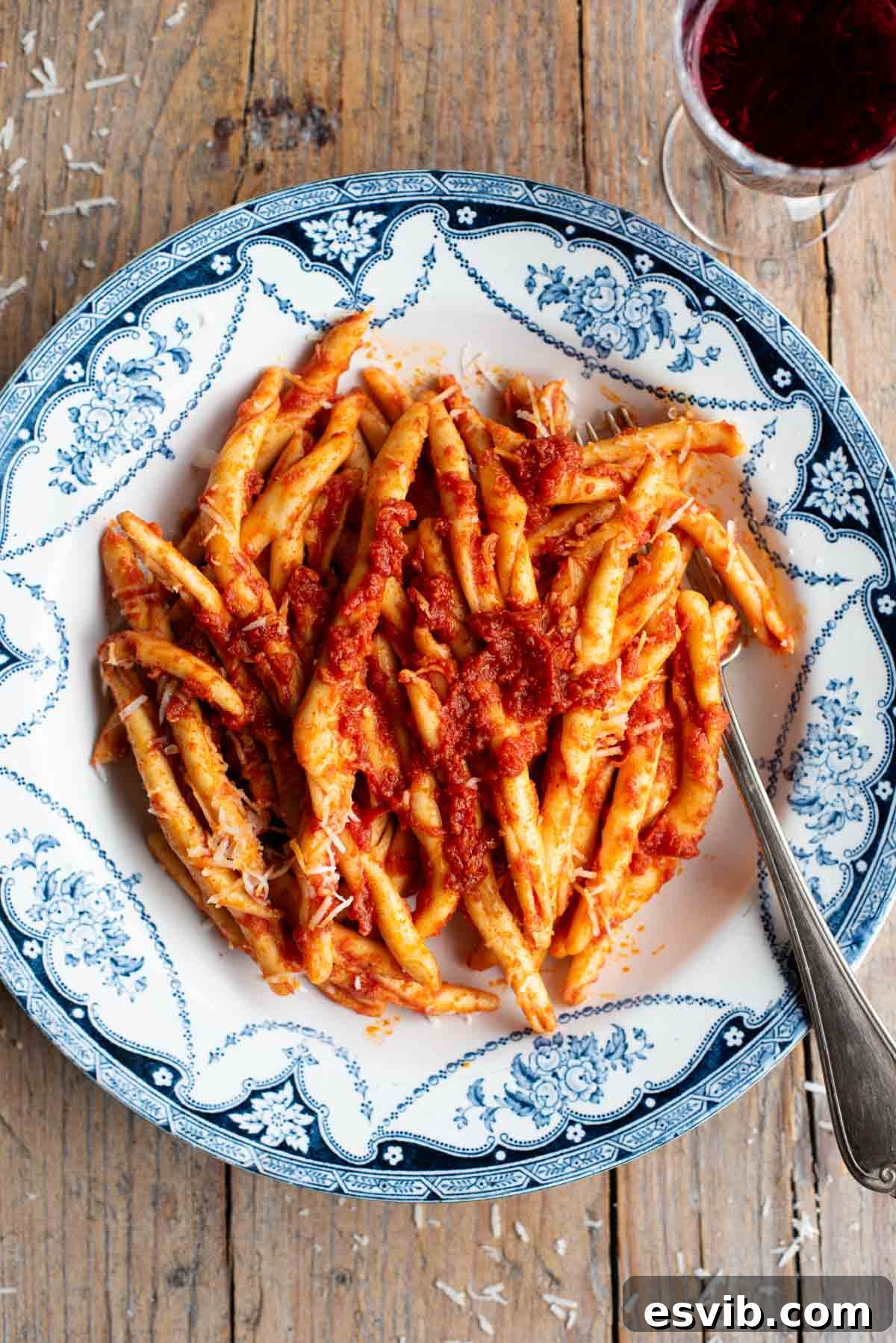
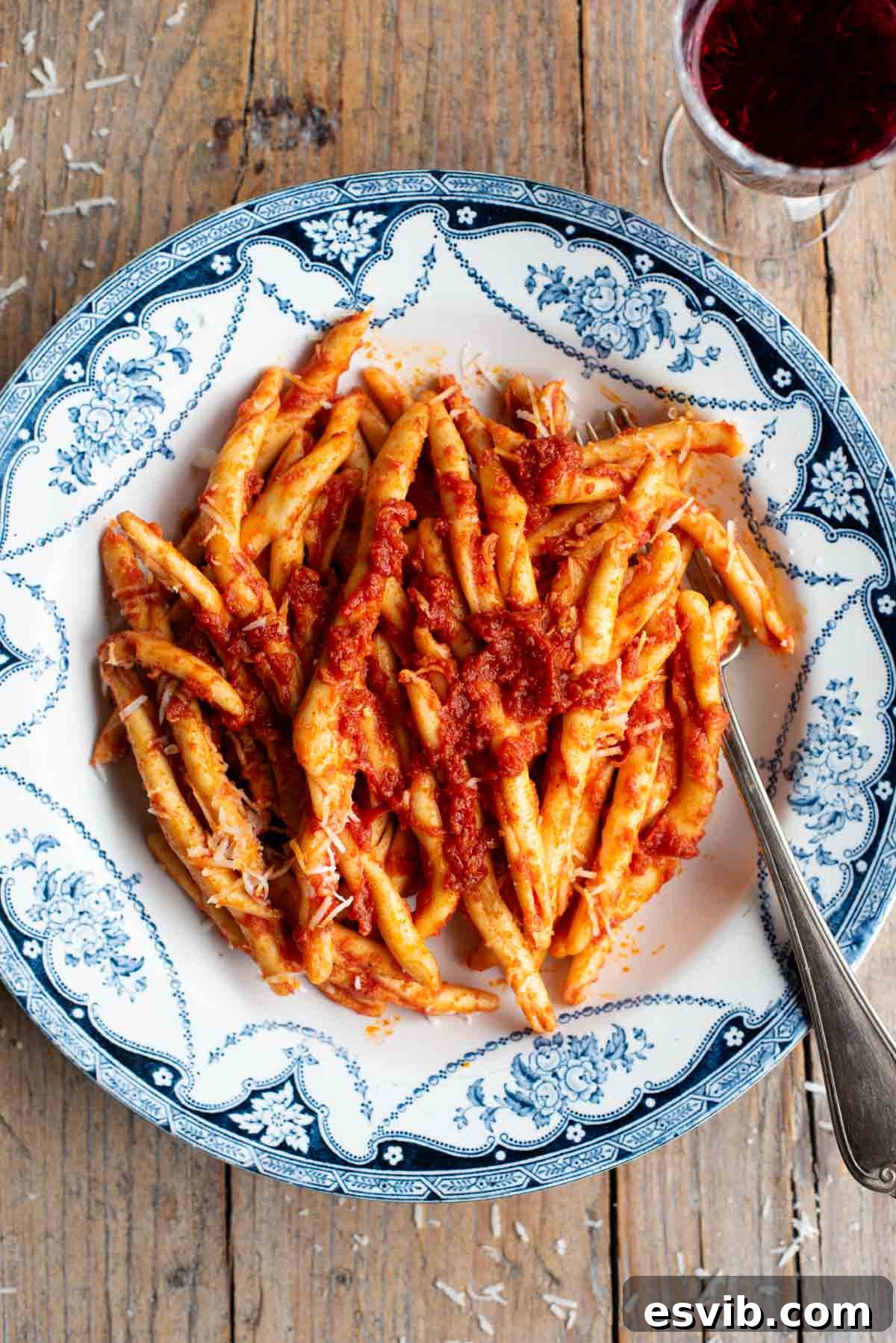
Fileja alla ‘Nduja is not just a pasta dish; it’s a vibrant explosion of flavor, a culinary journey to the heart of Calabria, Italy. This iconic, fiery recipe combines the unique twisted Fileja pasta with the notorious spicy ‘Nduja sausage, simmered in a rich tomato sauce and generously finished with grated Pecorino cheese. It’s a dish for those who truly appreciate a bold kick and authentic Italian zest.
Taste the Heat of Calabria: A Culinary Adventure
Calabria, the toe of Italy’s boot, is renowned for its rugged landscapes, stunning coastlines, and a cuisine that proudly embraces intense flavors, especially chili. Among its most celebrated culinary contributions is ‘Nduja, a spreadable, spicy sausage that has captured the hearts (and taste buds) of food enthusiasts worldwide. This dish, Fileja alla ‘Nduja, perfectly encapsulates the region’s culinary identity – simple, robust, and unapologetically bold. If you’re a fan of genuinely spicy food, prepare to fall in love with this authentic Calabrian masterpiece.
The Distinctive Charms of Fileja Pasta
At the core of this dish is Fileja, a traditional Calabrian pasta shape. Unlike many Italian pastas made with eggs, Fileja is crafted from simple semolina pasta dough and water. Its distinctive elongated, twisted shape is not merely aesthetic; it’s designed to expertly capture and hold hearty sauces, making it an ideal companion for a rich meat or, in this case, a spicy ‘Nduja-infused tomato sauce.
The creation of Fileja is a testament to traditional pasta-making artistry. Each strand is typically rolled over a thin metal rod, known locally as a Danaco or Dinacolo, giving it its characteristic corkscrew-like twist. This manual technique results in a pasta that offers a satisfying chew and an unparalleled ability to cling to every morsel of sauce, ensuring a burst of flavor in every bite. While traditionally made by hand, dried Fileja is becoming more available, though still considered a specialty item outside of Italy.
‘Nduja: Calabria’s Fiery Gem
‘Nduja, a cured and spreadable pork sausage, is the true star of this spicy pasta. Originating from the town of Spilinga in Calabria, ‘Nduja gets its vibrant red color and intense heat from generous amounts of Calabrian chili peppers. This unique sausage is fermented and aged, developing a complex flavor profile that is smoky, savory, and powerfully spicy all at once. Its spreadable texture allows it to melt beautifully into sauces, infusing them with its rich, piquant essence.
The popularity of ‘Nduja has soared globally in recent years, making it increasingly accessible in Italian food stores and even mainstream supermarkets in many countries, particularly the UK. Its versatility extends far beyond pasta; we frequently incorporate it into a variety of dishes, from Roasted Cherry Tomato Spaghetti with Burrata and Nduja and Nduja Pizza to indulgent Scallops with ‘Nduja Garlic Butter. However, this Fileja alla ‘Nduja recipe undeniably showcases ‘Nduja at its spiciest and most authentic best.
It’s important to note that Calabrian cuisine is synonymous with chili, and this dish is no exception. While we’ve adjusted the amount of ‘Nduja in this recipe to a slightly milder (yet still very spicy) level of 70g (2.5oz) compared to the traditional 100g (3.5oz), feel free to increase it if your palate truly craves extreme heat. For those who shy away from spicy food, this might not be the ideal choice, but for lovers of heat, it’s an absolute must-try!
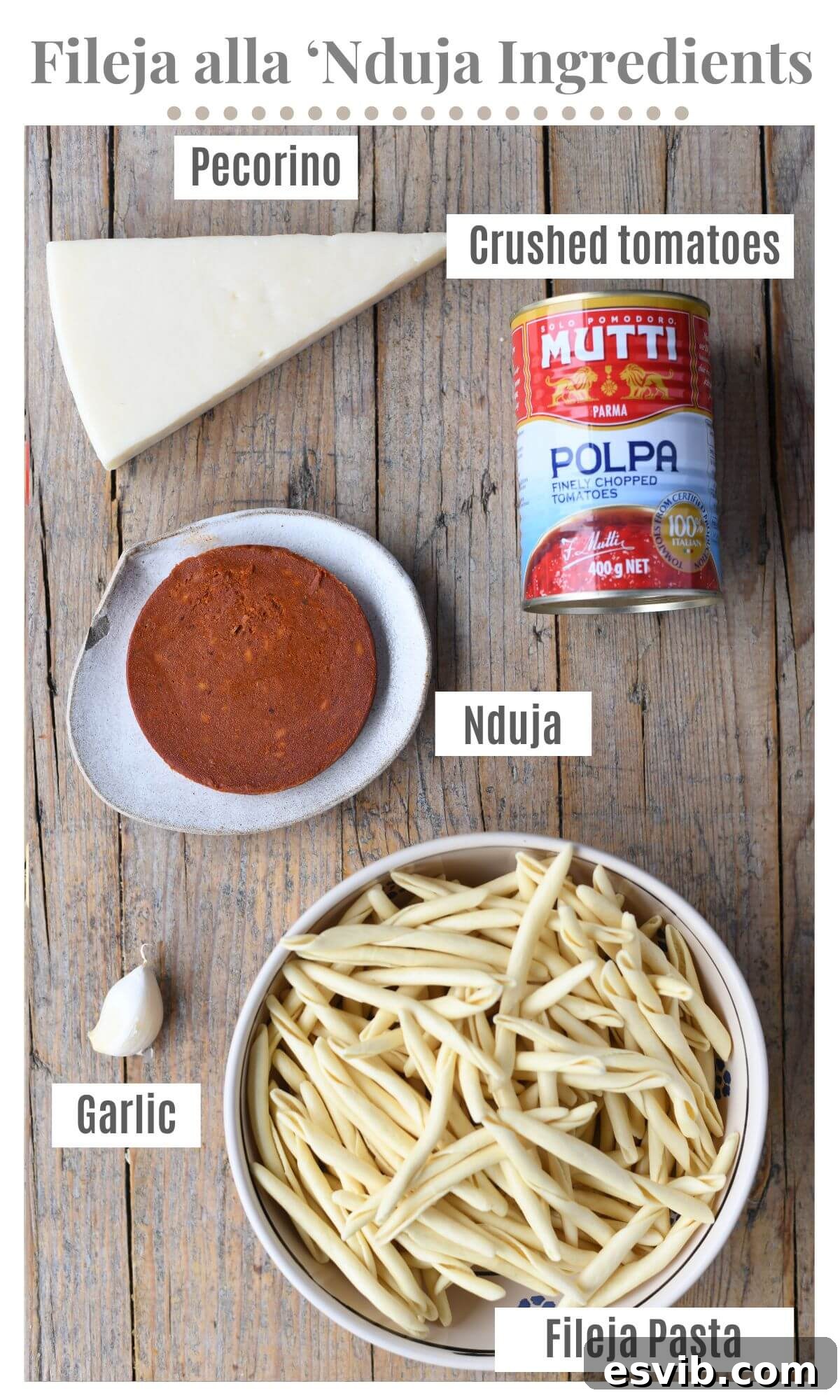
Essential Ingredients for Fileja alla ‘Nduja
Ingredient Notes and Expert Substitutions
- Fileja Pasta: The authentic choice for this dish, Fileja’s unique twists perfectly cradle the rich sauce. If finding traditional Fileja proves challenging, don’t worry! Excellent substitutes include other short, twisted pasta shapes like penne, fusilli, or casarecce, which also do a fantastic job of holding the sauce. You can even try making your own semolina pasta dough at home for a truly authentic experience.
- ‘Nduja: This spicy, cured, and spreadable sausage is non-negotiable for the dish’s signature flavor. You’ll typically find it in Italian specialty food stores, or increasingly, in the deli sections of larger supermarkets, especially in the UK and other European countries. Look for ‘Nduja sold in casings rather than jars, as the jarred versions often lack the authentic texture and depth of flavor.
- Tomatoes: For the sauce, we highly recommend using high-quality canned crushed tomatoes (Mutti Polpa is our go-to for its consistent flavor and texture). Canned plum tomatoes (San Marzano are excellent) can also be used; simply crush them by hand before adding to the pan. While passata (sieved tomatoes or tomato puree) can be used, be aware that it will result in a sauce with a richer, heavier consistency and a more concentrated tomato flavor, which might slightly overpower the delicate nuances of the ‘Nduja.
- Garlic: We use a whole, peeled garlic clove. Sautéing it whole allows it to gently infuse the olive oil with its aroma without burning, providing a subtle, sweet garlic background to the spicy sauce. It can be removed before serving if desired, or finely minced if you prefer a more pronounced garlic presence.
- Pecorino Cheese: This sharp, salty sheep’s milk cheese is the traditional finishing touch for Fileja alla ‘Nduja. Its robust flavor stands up beautifully to the spiciness of the ‘Nduja. While Parmigiano Reggiano can be used in a pinch, Pecorino offers a more authentic Calabrian profile.
- Olive Oil: As with all Italian cooking, a good quality extra virgin olive oil is essential. It forms the base for sautéing the garlic and melting the ‘Nduja, carrying and distributing the flavors throughout the sauce.
- Salt: Crucial for seasoning both the pasta water and the sauce. Remember to salt the pasta water generously – it should taste like the sea!
Crafting Fileja alla ‘Nduja: A Step-by-Step Guide
Follow these simple steps to create a truly unforgettable spicy Calabrian pasta dish.
- Prepare Your Pasta: Begin by bringing a large pot of water to a rolling boil. Add a generous amount of salt to the water – this is your only chance to season the pasta itself. Once boiling, add your Fileja (or chosen alternative pasta) and cook according to package instructions until al dente. Aim to time your pasta cooking so it finishes around the same time your sauce is ready. If needed, you can always make the sauce first and gently reheat it while the pasta cooks. Remember, al dente pasta is key for the best texture in this dish.
- Infuse the Olive Oil with Garlic: While the pasta cooks, heat about two tablespoons of good quality olive oil in a large pan over medium heat. Add the whole, peeled garlic clove to the pan and gently sauté for one to two minutes. The goal is to allow the garlic to become fragrant and release its aromatic oils into the olive oil, not to brown or burn it. This subtle garlic infusion forms a foundational layer of flavor for the sauce.
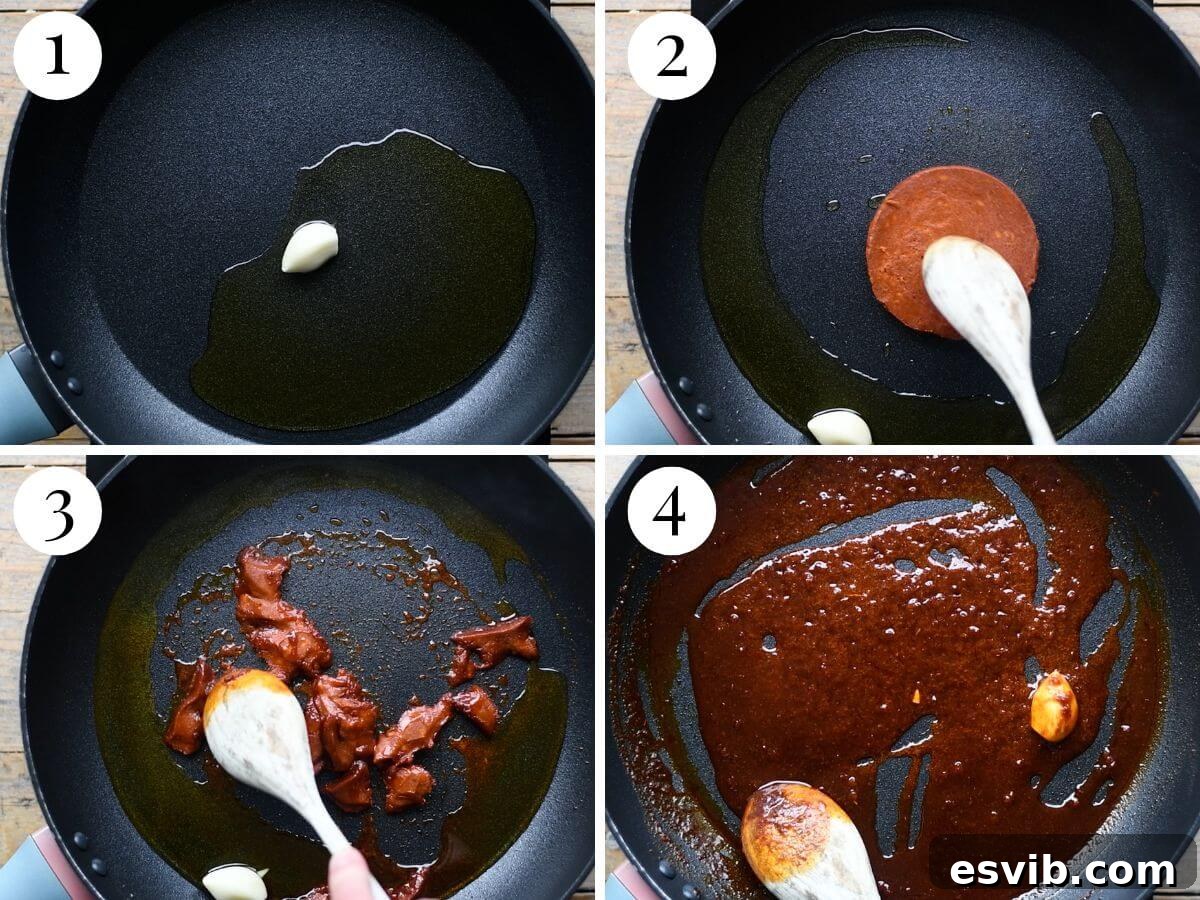
- Melt the ‘Nduja: Carefully add the ‘Nduja to the pan with the fragrant garlic oil. As it heats, the ‘Nduja will begin to melt and render its spicy, pork-infused fat into the oil, creating a wonderfully aromatic and vibrant red base for your sauce. Stir occasionally until the ‘Nduja has fully melted and is bubbling gently, usually taking a few minutes. This step is crucial for distributing its intense flavor.
- Simmer the Tomato Sauce: Once the ‘Nduja is fully melted, pour in the canned crushed tomatoes. Add a small pinch of salt, but be mindful as ‘Nduja itself is quite salty. Stir everything together and bring the sauce to a gentle simmer. Allow it to cook for at least 10 minutes, stirring occasionally. During this time, the flavors will meld, the sauce will deepen in color, and the raw acidity of the tomatoes will mellow, creating a rich and spicy tomato base.
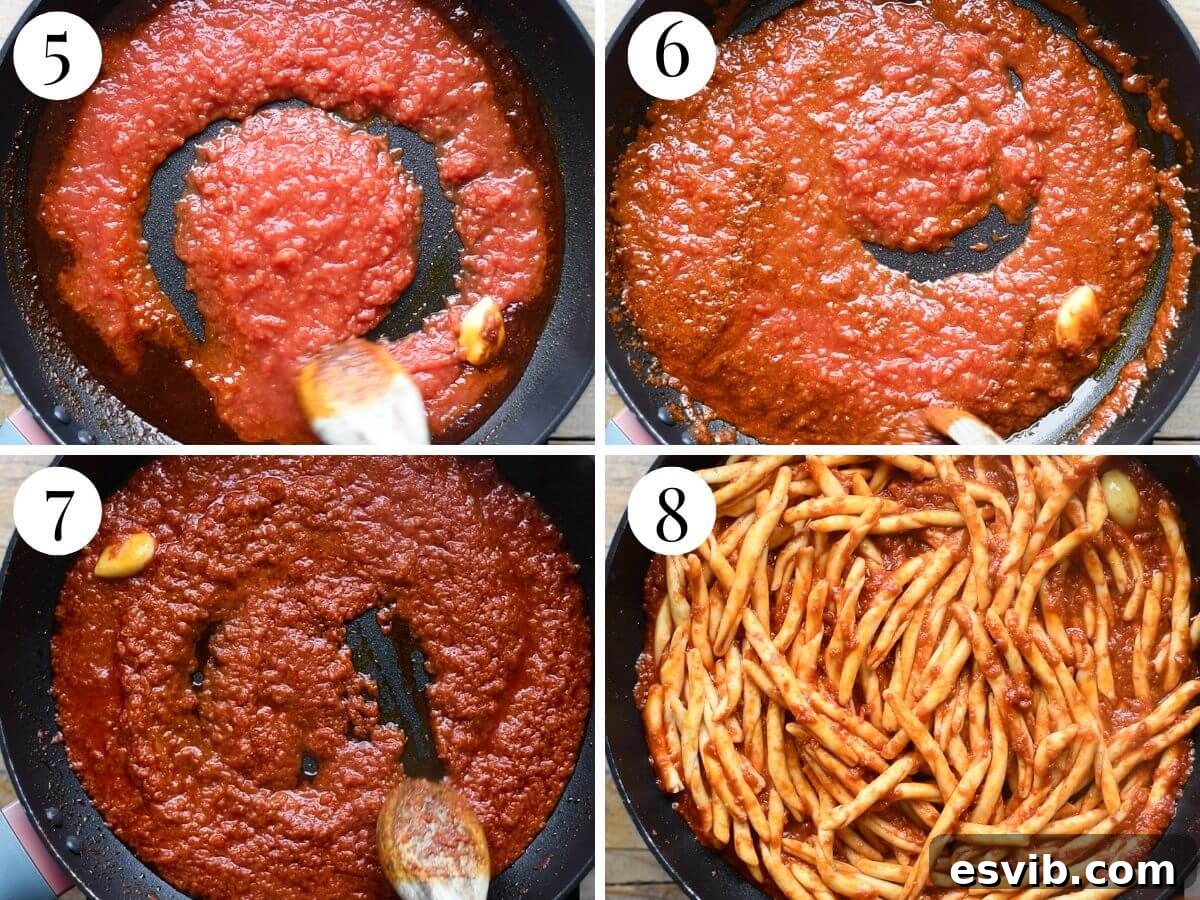
- Combine Pasta and Sauce: Using tongs, transfer the cooked al dente pasta directly into the pan with the simmering ‘Nduja tomato sauce. If the sauce seems a little thick, add a splash or two of the reserved pasta cooking water; the starches in the water will help emulsify the sauce and make it incredibly glossy and smooth. Toss the pasta vigorously until every piece is evenly coated in the rich, spicy sauce.
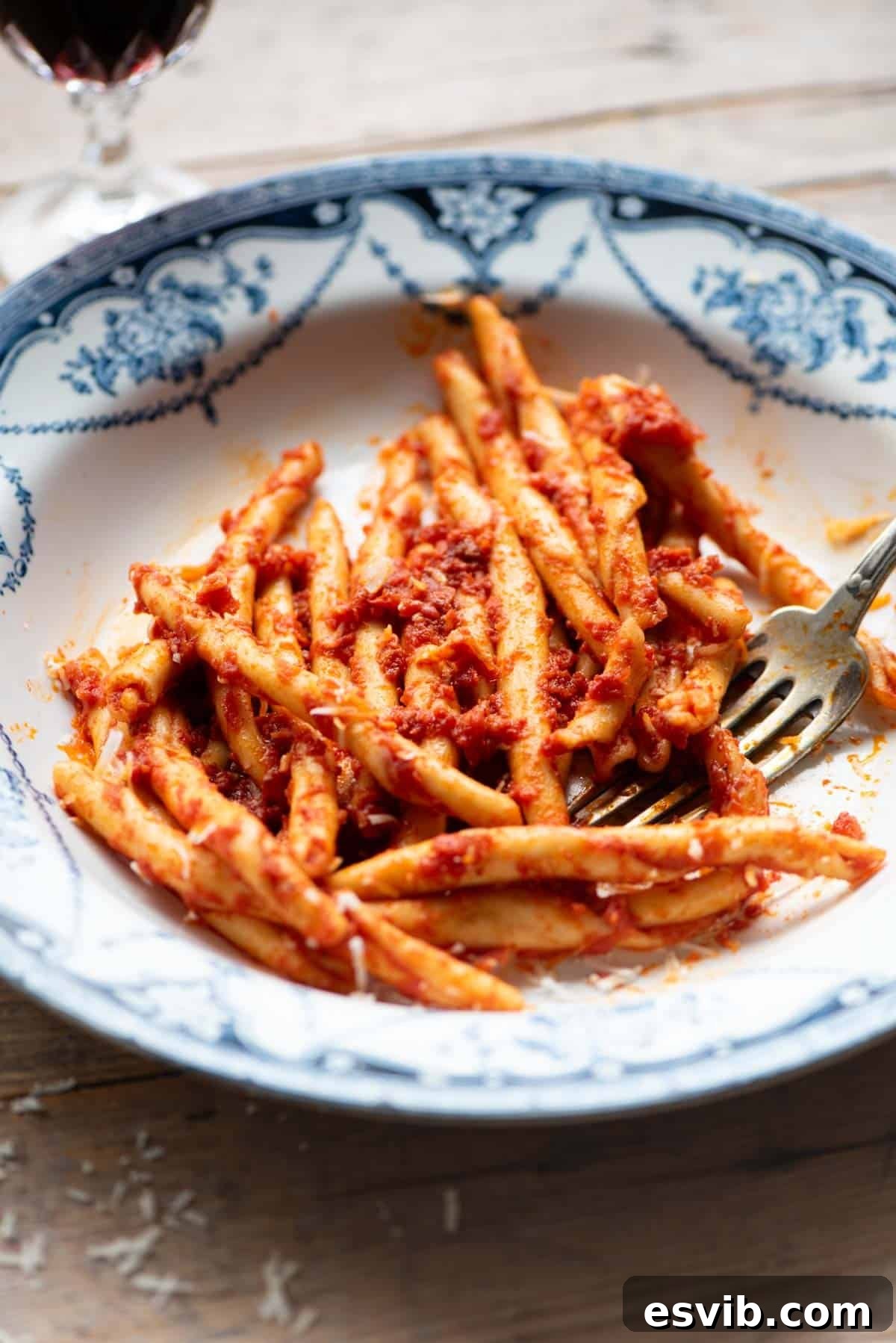
- Serve and Enjoy: Divide the hot pasta among serving bowls. Finish each portion with a generous grating of fresh Pecorino cheese. For an extra touch of freshness, a few fresh basil leaves can be added, though the dish is perfectly delicious in its traditional, minimalist form. Serve immediately and prepare for a burst of Calabrian heat!
Expert Tips for the Perfect Fileja alla ‘Nduja
- Choosing Your ‘Nduja: ‘Nduja comes in various forms and sizes, from large whole sausages to smaller, vacuum-packed portions. For the best flavor and texture, always opt for ‘Nduja in its natural casing. While jarred ‘Nduja is available, it often contains added oils and lacks the authentic consistency, which can affect the final sauce. Look for a firm, bright red product.
- Controlling the Heat Level: Our recipe uses 70g (2.5oz) of ‘Nduja, providing a significant but manageable heat. Traditionally, 100g (3.5oz) might be used, delivering a truly fiery experience that some might find overwhelmingly hot. Feel free to adjust the quantity to suit your personal spice preference – start with less if you’re unsure, and remember you can always add a pinch of dried chili flakes at the end for an extra kick!
- Pasta Shape Flexibility: While Fileja is the star, its availability can be limited. Don’t let this deter you! Excellent substitutes include penne, fusilli, casarecce, or even maccheroni. The key is to choose a short pasta with grooves or twists that can effectively capture the rich, unctuous sauce. If you’re feeling ambitious, try making your own Fileja from scratch using a simple semolina and water dough.
- Optional Herb Additions: Some variations of this recipe include fresh basil added at the very end, just before serving. While basil certainly adds a lovely aromatic note, the beauty of Fileja alla ‘Nduja often lies in its simplicity, allowing the intense flavors of ‘Nduja and tomato to truly shine. We find it doesn’t strictly need it, but it’s a matter of personal preference.
- Storing Leftovers: Any leftover pasta sauce (without the pasta mixed in) will keep well in an airtight container in the refrigerator for up to 2-3 days. If you have leftover pasta already mixed with the sauce, it’s best consumed within 1-2 days. Reheat gently on the stovetop, adding a splash of water or broth if needed to loosen the sauce. It can also be enjoyed at room temperature for a quick snack.
- The Magic of Pasta Water: Always reserve a cup or so of the starchy pasta cooking water before draining. This liquid gold can be added to your sauce at the end to help emulsify it, creating a silkier, more cohesive texture that perfectly coats the pasta. It’s a chef’s secret for perfect pasta every time!
Explore More Authentic Calabrian Flavors
If you’ve enjoyed the bold flavors of Fileja alla ‘Nduja, you’ll love exploring other traditional Calabrian dishes. Here are a few more recipes to transport your taste buds to Southern Italy:
Discover More Calabrian Delights
Sides
Pipi e Patati (Calabrian Peppers and Potatoes)
Sides
Peperoni Ammollicati (Peppers and Breadcrumbs)
Antipasti
Italian Tuna Stuffed Cherry Peppers
Pasta
Orecchiette with ‘Nduja Sugo
If you’ve tried this Fileja alla ‘Nduja recipe or any other recipe on the blog, we’d love to hear from you! Don’t forget to leave a comment below and share your experience. You can also follow us on Facebook, Instagram, and Pinterest or sign up for our Newsletter to receive delicious new recipes every week.
Most of our recipes come with step-by-step photos, helpful tips, and tricks to make it perfectly the first time.
Fileja alla ‘Nduja (Spicy Calabrian ‘Nduja Pasta)
By Emily
Prep Time: 2 mins
Cook Time: 12 mins
Total Time: 14 mins
Servings: 4 servings
Print Recipe
Fileja alla ‘Nduja is a super simple and delicious spicy pasta dish. It’s made with traditional Fileja pasta, spicy ‘Nduja sausage, tomato, and topped with Pecorino cheese. This is for those who can handle the heat!
Ingredients
- 14 oz (400g) Fileja pasta (or a short pasta shape such as Penne)
- 2.5 oz (70g) ‘Nduja
- 14 oz (400g) canned crushed tomatoes (we used Mutti Polpa)
- 1 garlic clove, whole and peeled
- Pecorino, for serving
- Olive oil
- Salt
Instructions
- Bring a large pot of water to a boil and salt it well. Add your pasta and cook until al dente.
- Meanwhile, add around 2 tablespoons of olive oil to a large pan. Sauté the whole peeled clove of garlic for a minute or two until fragrant.
- Add the ‘Nduja and let it melt. Once melted and bubbling, add the tomatoes with a small pinch of salt and let the sauce simmer for 10 minutes.
- Transfer the cooked pasta to the sauce and toss it until evenly coated in the sauce.
- Serve in bowls topped with plenty of Pecorino cheese.
Notes
- ‘Nduja varieties: ‘Nduja is packaged in different shapes and sizes, so it may not come in one thick slice like we have pictured above. If possible, avoid ‘Nduja sold in jars as it’s just not the same.
- Heat level: Traditionally 100g (3.5oz) of ‘Nduja is added to the sauce. We find 70g (2.5oz) to be a good amount (still very hot without blowing your socks off!). This is all up to personal preference.
- Pasta shapes: You can have a go at making Fileja at home using our semolina pasta dough or use dried if you have it. Since it can be hard to find, you can use another short shape, like Penne or Fusilli, which also works very well for this sauce.
- Adding herbs: Some variations of this recipe add fresh basil in at the end, but we believe the dish is perfect without it, allowing the ‘Nduja and tomato flavors to be the star.
- Leftovers: The pasta sauce will keep well in the fridge for up to 2 days and can be reheated or eaten at room temperature.
Helpful Info for All Our Recipes
- We always use extra virgin olive oil in all of our recipes unless stated otherwise.
- When we use canned or jarred tomatoes of any kind, we always recommend Cirio or Mutti brands for the best results and flavor.
- All vegetables mentioned are medium-sized unless stated otherwise.
- All recipes are tested and developed using a fan (convection) oven.
- Find out more about how nutrition is calculated.
- Check out our must-have Italian Pantry Staples.
- You can also find all our Essential Kitchen Tools for Italian Cooking.
Nutrition
Carbohydrates: 79g |
Protein: 17g |
Fat: 18g |
Saturated Fat: 4g |
Polyunsaturated Fat: 3g |
Monounsaturated Fat: 9g |
Trans Fat: 0.1g |
Cholesterol: 97mg |
Sodium: 152mg |
Potassium: 538mg |
Fiber: 5g |
Sugar: 6g |
Vitamin A: 365IU |
Vitamin C: 13mg |
Calcium: 74mg |
Iron: 3mg
Nutrition information is automatically calculated, so should only be used as an approximation.
Did you try this recipe?
Leave a comment below!