
Brodo di Carne, the quintessential Italian meat broth, is far more than a simple culinary ingredient; it’s the very soul of the Italian kitchen. This slow-simmered, deeply flavorful liquid forms the aromatic foundation for an astonishing array of beloved dishes, transforming the simplest ingredients into extraordinary meals. From comforting bowls of tortellini in broth to the creamiest risottos and most succulent pasta dishes, a well-made Brodo di Carne is the secret weapon of any Italian cook, imbuing every bite with an unparalleled depth of flavor and warmth.
In Italy, crafting Brodo di Carne is a cherished tradition, particularly during colder months or for festive celebrations. It exemplifies the philosophy of *cucina povera* – “peasant cooking” – where humble, readily available ingredients are elevated through patient preparation and skillful technique. More than just a broth, it’s a labor of love that fills your home with an incredibly comforting and nostalgic aroma, promising wholesome, nourishing meals for family and friends. The satisfying knowledge that a pot of this “liquid gold” is gently simmering on the stove, ready to lend its magic to humble dishes, is one of the true joys of Italian home cooking.
The Indispensable Culinary Foundation of Italian Cuisine
The versatility of Brodo di Carne is truly remarkable, making it an indispensable component in countless classic Italian preparations. Imagine the indescribably delicious Tortellini in Brodo, where delicate pasta parcels float in a crystal-clear, intensely flavorful broth – a dish synonymous with Italian holidays and celebratory gatherings. It also provides the soothing backdrop for simple yet profoundly nourishing bowls of Minestra di Riso (Italian Rice Soup) or Pastina in Brodo (tiny pasta in broth), perfect for when you seek comfort and a gentle pick-me-up. Hearty Italian dumplings, such as (Canederli in Brodo), also find their ideal, flavorful home within its rich embrace.
Beyond its prominent role in soups, Brodo di Carne is absolutely crucial for imparting unparalleled depth of flavor to risotto dishes. It is absorbed slowly, ladle by ladle, by the Arborio rice, creating a creamy, intensely savory experience that defines authentic risotto. It’s also an excellent addition to pasta sauces, enriching their base, and forms the luscious liquid for braised meats and hearty casseroles. Essentially, any savory dish that benefits from a profound umami boost will shine brighter with the addition of this homemade broth, showcasing its power to transform ordinary ingredients into something truly special.
Crafting Your Own Liquid Gold: Essential Brodo di Carne Ingredients
Ingredient Notes and Substitutions for an Authentic Broth
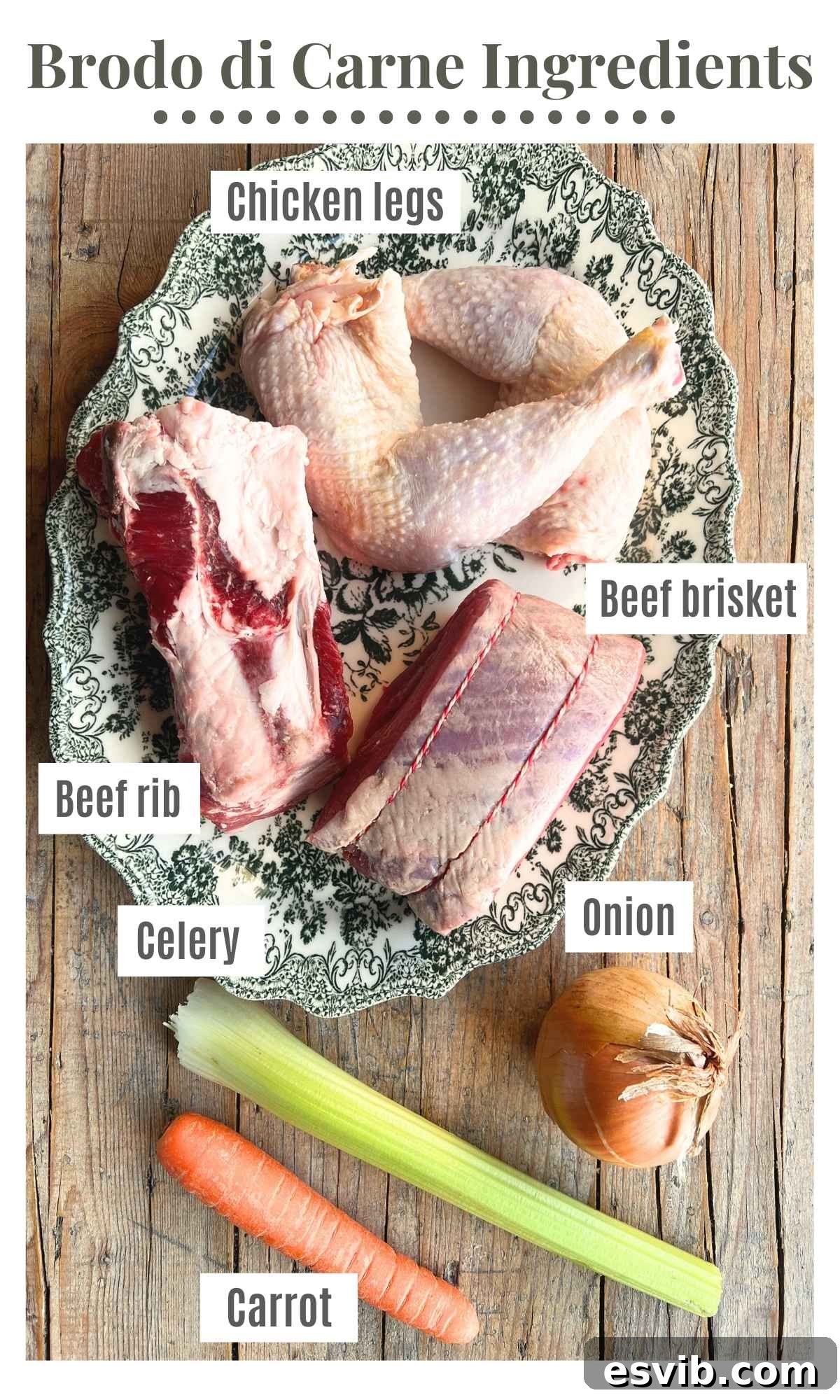
- Meat Selection: An authentic Brodo di Carne traditionally features a thoughtful combination of meats, most commonly chicken and beef or veal. The secret to a truly rich, gelatinous, and profoundly flavored broth lies in the careful selection and inclusion of bones. Veal or beef bones, such as marrow bones, beef ribs, or shank, are excellent choices as they contribute significantly to the broth’s body and depth of taste. Chicken legs (comprising both thighs and drumsticks) add a complementary layer of savory goodness and a balanced flavor. Feel free to adjust the proportions to align with your personal preference; for a more pronounced beef flavor, consider adding an extra cut of beef. The synergy of different meats and bones creates a complex flavor profile that single-meat broths often cannot achieve.
- Vegetables (Soffritto Base): The vegetable base, or *soffritto*, for Brodo di Carne is intentionally kept simple. This minimalist approach allows the inherent flavors of the meat to truly dominate and shine through. Carrots, celery, and onion form the classic aromatic trio. It’s important to wash these vegetables thoroughly. Some traditional recipes might incorporate one or two whole tomatoes for a very subtle hint of sweetness and a touch of color, though this inclusion is less common and can be omitted if you prefer a purer, lighter broth. A few parsley stems can also be added for an extra layer of freshness.
- Salt: Salt plays a vital role in enhancing and balancing the myriad flavors within the broth. The optimal time to add it is once the broth has reached a gentle simmer, allowing it to dissolve gradually and thoroughly meld with the other ingredients. While you can always adjust the seasoning at the end, starting with a moderate amount is key to building flavor. Sea salt flakes are often recommended for their clean, unadulterated taste.
- Water: The quality and temperature of your water are significant factors. Always begin by covering your ingredients with cold water. This technique is crucial because cold water allows impurities from the meat to release slowly and rise to the surface, making them easy to skim off. This process results in a clearer, more flavorful broth. Conversely, using hot water can prematurely ‘shock’ the meat, sealing in impurities and potentially leading to a cloudy broth with less depth of flavor and an undesirable texture.
The Gentle Art of Simmering: Your Guide to Perfect Brodo di Carne
Making Brodo di Carne is a meditative and rewarding process, a slow dance of simple ingredients transforming into something truly extraordinary. It demands patience but surprisingly little active intervention. The true magic unfolds through a long, consistent, and gentle simmer.
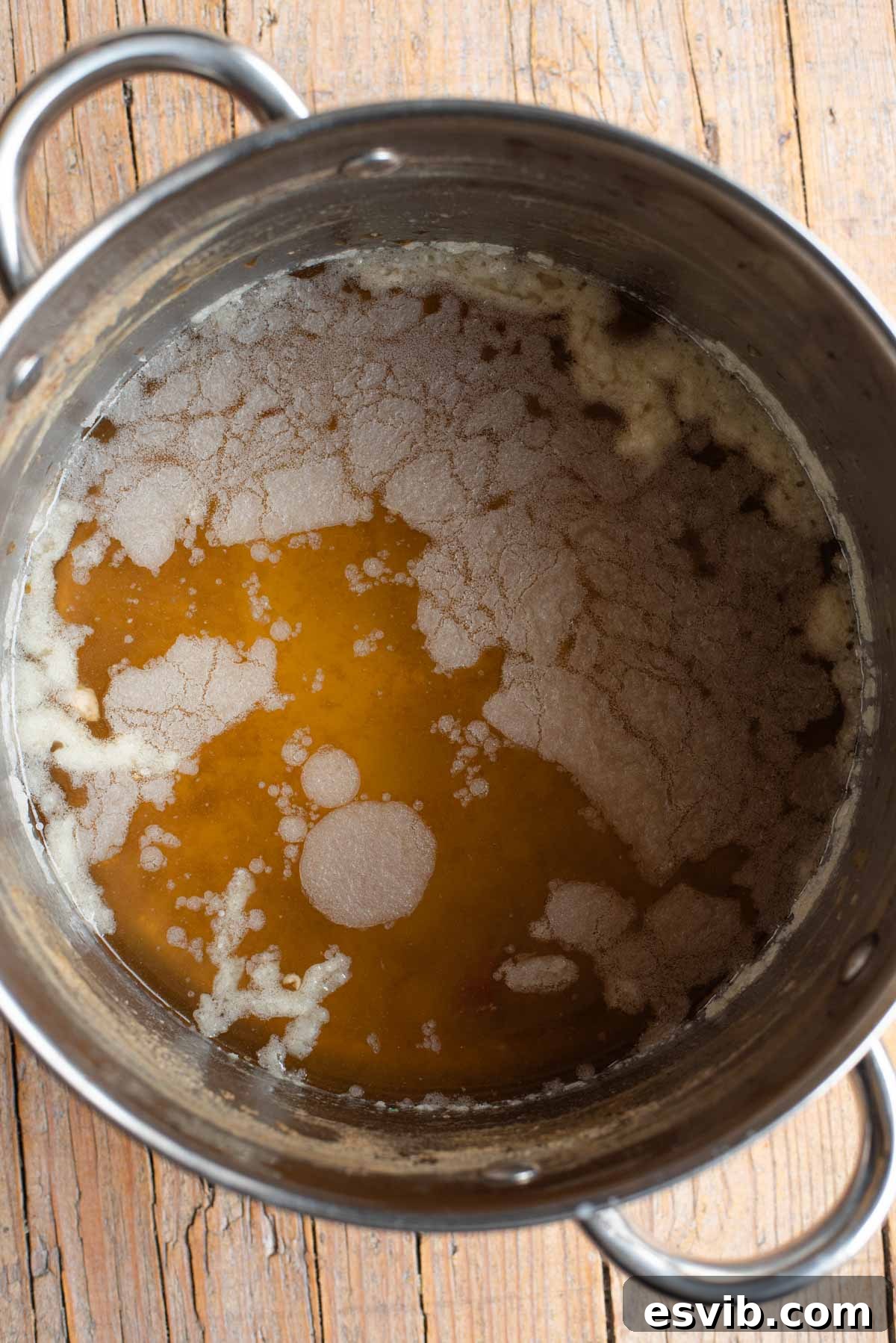
Step By Step Photos Above
Most of our recipes come with step-by-step photos, helpful tips, and tricks to ensure perfect results the first time, and sometimes even video guidance!
Brodo di Carne (Authentic Italian Meat Broth)
By Emily
Print Recipe
Brodo di Carne, Italian meat broth, is an essential component in every Italian kitchen. Whether it’s used as a foundation for simple soups or as a rich base for exquisite risotto and pasta dishes, a superior Brodo di Carne acts as a culinary secret, transforming humble ingredients into something truly extraordinary.
To receive this delicious Brodo di Carne recipe directly in your inbox and get new recipes weekly, please subscribe to our newsletter here. We’d love to share more authentic Italian flavors with you!
Ingredients
- 2 chicken legs (approx. 550g / 1 ¼ pounds)
- 700 g (1.5 lbs) Beef brisket
- 500 g (1 lb) Beef with bone (e.g., beef rib, bone marrow, or shank for maximum flavor extraction)
- 1 large Carrot, washed and trimmed
- 1 Celery stalk, washed and cut in half
- 1 Onion, cut in half (you may leave the skin on for a deeper golden color, or remove it for a purer taste))
- 3.5 litres cold water (approximately 3.7 quarts)
- 3 teaspoons sea salt flakes (adjust to your preferred taste)
Instructions
-
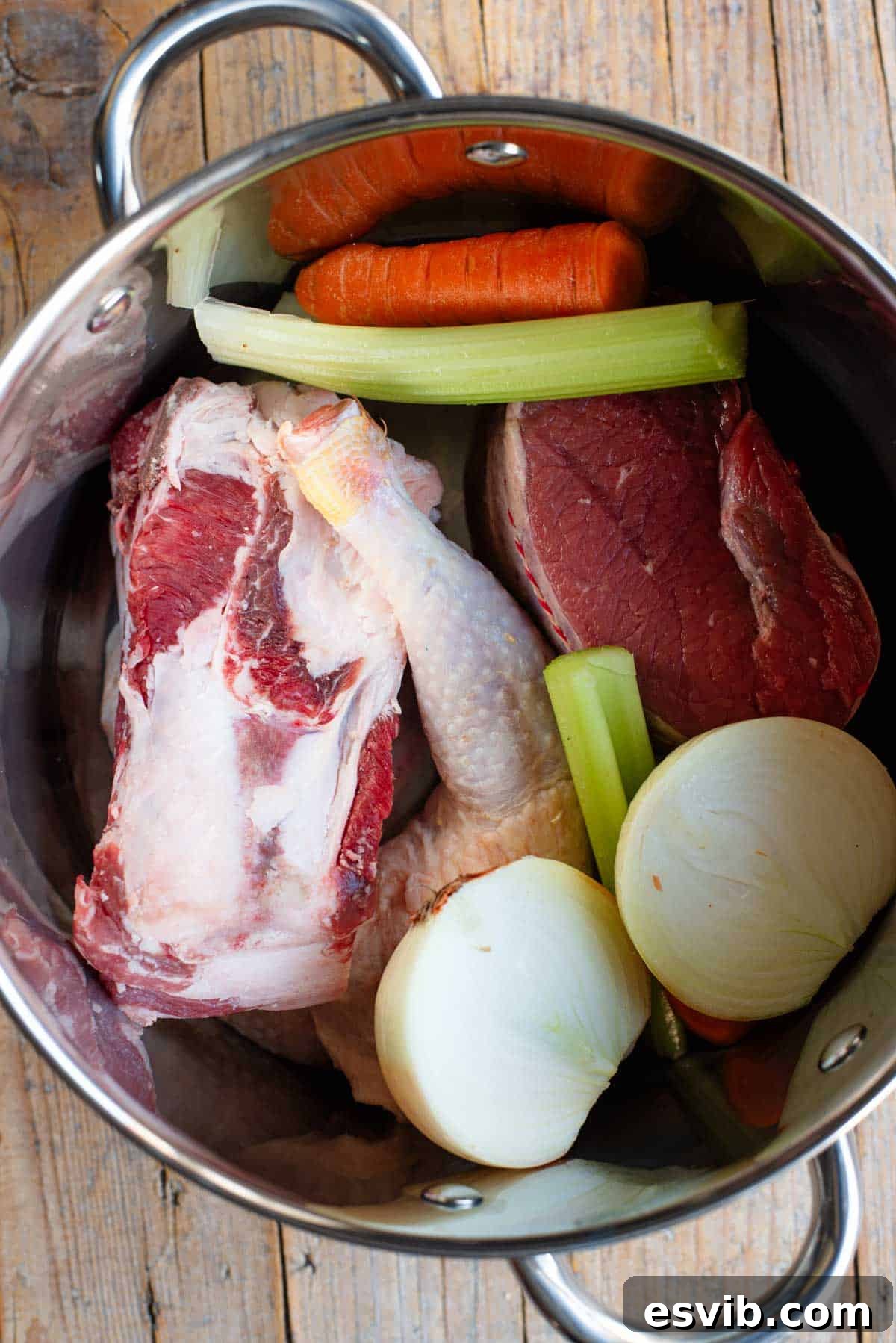
To begin, carefully place all the selected meat cuts (chicken legs, beef brisket, and beef with bone) along with the prepared vegetables (carrot, celery, and onion halves) into a large, heavy-bottomed stockpot. Pour the measured amount of cold water over all the ingredients, ensuring they are fully submerged. Starting with cold water is a critical step, as it allows the impurities in the meat to release gradually, resulting in a clearer and significantly richer broth.
-
Place the stockpot over high heat and slowly bring the water to a gentle simmer. As soon as small bubbles begin to appear around the edges of the pot, add the sea salt flakes. Immediately reduce the heat to medium or medium-low. The objective is to maintain a very gentle simmer, not a vigorous boil. Rapid boiling would agitate the ingredients, emulsify the fats, and likely result in a cloudy broth. A slow, gentle simmer allows the flavors to meld harmoniously without clouding the liquid.
-
During the initial phase of simmering, a layer of foam, often referred to as “scum,” will rise to the surface. This foam consists of impurities released from the meat. Using a ladle or a fine-mesh skimmer, carefully remove and discard this foam. Skimming is essential for achieving a clear, clean broth. This process typically occurs mostly at the beginning of the cooking time.
-
Allow the broth to continue simmering gently, uncovered, for a minimum duration of 3 hours. It is important to resist the urge to stir the broth during this period, as stirring can disturb the impurities settled at the bottom and cloud the liquid. After 3 hours, turn off the heat. Carefully remove the cooked meat and vegetables from the pot using tongs or a slotted spoon. The cooked meat will be incredibly tender and can be repurposed in numerous ways (refer to the notes below for usage ideas). While the vegetables have imparted their flavor to the broth and are often discarded, they are perfectly edible if you wish to consume them.
-
Let the broth cool completely at room temperature. Once it has reached room temperature, transfer it to the refrigerator. As the broth chills, a distinct layer of fat will solidify on the surface. This fat can be easily skimmed off with a spoon, allowing you to control the richness and achieve a lighter consistency for your final broth. Removing the fat is optional but often preferred for a cleaner taste and presentation.
-
The freshly prepared Brodo di Carne can be stored in an airtight container in the refrigerator for up to 2-3 days, ensuring its freshness. For longer-term storage, divide the cooled broth into freezer-safe containers or sturdy freezer bags, leaving a small amount of headspace to allow for expansion during freezing. Properly stored, it will keep beautifully in the freezer for up to 3 months, ready to elevate your next authentic Italian meal whenever inspiration strikes.
Recipe Notes & Expert Tips for Perfect Brodo
- Meat Proportions and Variety: Feel entirely free to customize the precise mix of chicken, beef, and/or veal based on your preferred flavor profile. For an even richer, more profoundly complex beef flavor, consider adding extra beef bone cuts such as bone marrow or shank; these contribute significantly to both flavor and gelatin content. The combination of different cuts, especially those rich in bones and connective tissue, is paramount for producing a deeply flavorful and naturally gelatinous broth.
- To Skim or Not to Skim the Fat: If you intend to use the broth immediately and don’t mind a richer, fuller consistency, you can certainly skip the step of refrigerating and skimming the fat. However, for many traditional Italian recipes, and to achieve a beautifully clear and cleaner-tasting broth, defatting after chilling is highly recommended.
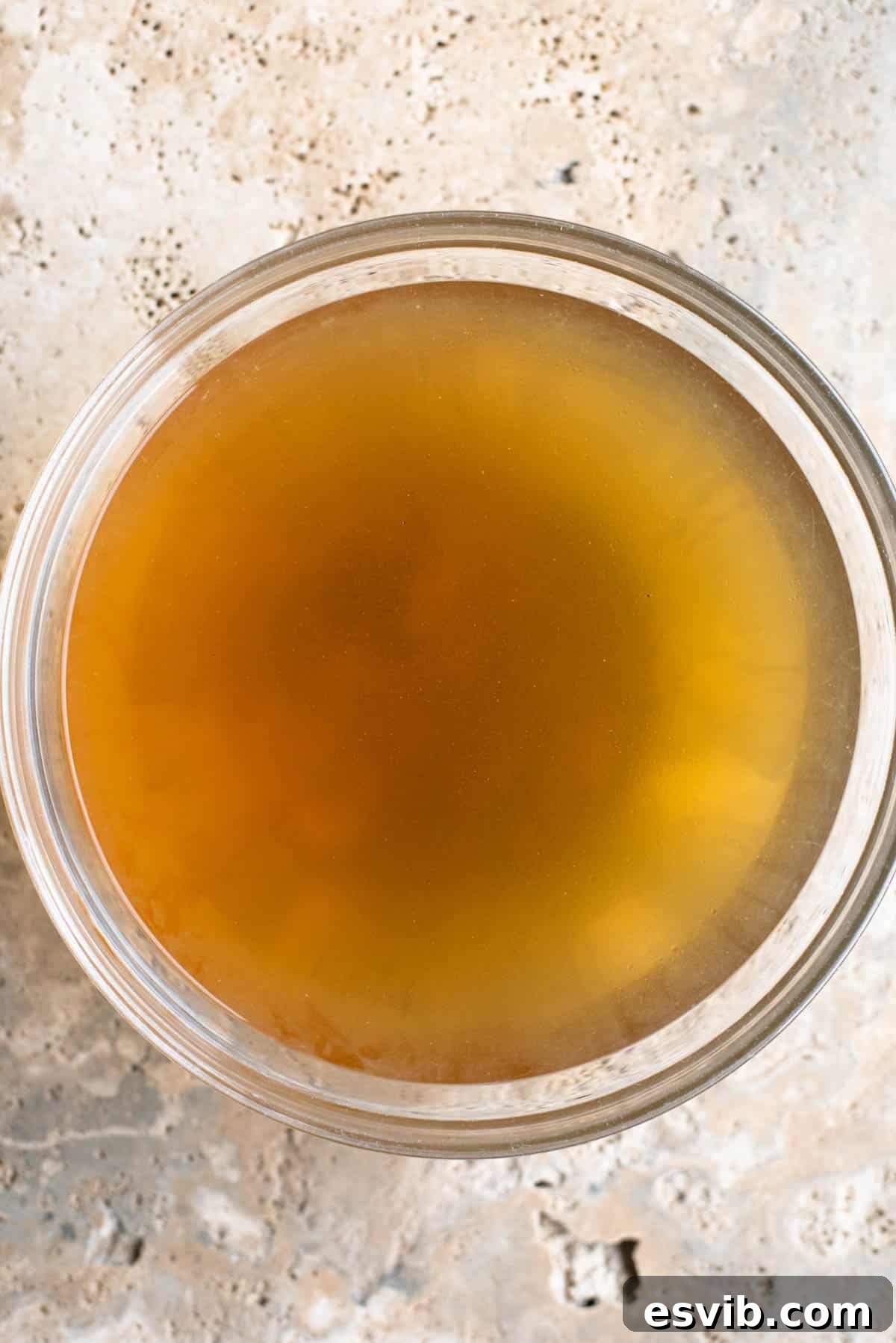
- Straining for Unrivaled Clarity: After the broth has cooled down and you’ve expertly skimmed off the solidified fat, straining is a critical step for achieving a magnificently clear broth. A fine-mesh sieve will generally suffice for this purpose. For an exceptionally pure and translucent liquid, consider lining your fine-mesh sieve with a double layer of cheesecloth. This meticulous step removes even the finest particles, leaving you with a sparkling, golden, and pristine broth.
- Utilizing the Cooked Meat: Never discard the incredibly flavorful cooked meat from your broth! The chicken, now wonderfully tender, is perfect for shredding into salads or sandwiches, adding to other soups, or serving as a simple, wholesome dinner alongside fresh vegetable sides. The beef can similarly be sliced or shredded and incorporated into a myriad of dishes, from rich ragùs and hearty casseroles to flavorful tacos or simply making delicious, savory sandwiches. This ensures zero waste and maximizes the utility of your ingredients.
- Optional Flavor Enhancements: While traditional Brodo is celebrated for its purity and simplicity, you can, if desired, experiment with subtle aromatic enhancements. Adding a single bay leaf, a fresh sprig of rosemary, or even a few whole cloves can introduce interesting nuanced flavors, particularly suitable for festive occasions or when preparing richer dishes. These aromatics should be added along with the initial ingredients.
- The Golden Rule: Gentle Simmer, Never Boil: Always remember this crucial principle: broth *simmers*, it absolutely does not boil. A rapid boil can aggressively break down the ingredients too quickly, leading to a cloudy broth, and ultimately result in a less refined, less nuanced flavor profile. Maintain a gentle, consistent simmer throughout the cooking process for the best results.
Helpful Information for All Our Recipes
- We consistently use extra virgin olive oil in all of our recipes unless explicitly stated otherwise.
- For any canned or jarred tomatoes required, we highly recommend using Cirio or Mutti brands. Their superior quality guarantees the best possible flavor and results in your dishes.
- All vegetables specified in our recipes are assumed to be of medium size unless a different size is clearly noted.
- Our recipes are meticulously tested and developed using a fan (convection) oven to ensure reliable and consistent results.
- Find out more comprehensive details about how our nutrition information is calculated.
- Don’t miss our essential guide to Italian Pantry Staples – must-have ingredients for authentic Italian cooking.
- You can also explore all our recommendations for Essential Kitchen Tools for Italian Cooking to equip your kitchen like a true Italian chef.
Nutrition Information
Approximate Nutritional Values (per serving, based on 1.3-1.5 liters total broth yield, including the cooked meat before removal and subsequent fat skimming):
- Calories: 1894 kcal
- Carbohydrates: 14g
- Protein: 206g
- Fat: 107g
- Saturated Fat: 37g
- Polyunsaturated Fat: 10g
- Monounsaturated Fat: 47g
- Trans Fat: 0.1g
- Cholesterol: 724mg
- Sodium: 6372mg
- Potassium: 3624mg
- Fiber: 3g
- Sugar: 6g
- Vitamin A: 8201 IU
- Vitamin C: 10mg
- Calcium: 202mg
- Iron: 18mg
Please note: Nutrition information is automatically calculated and should therefore only be used as an approximation. The values provided are for the entire batch of broth, including the meat, prior to any fat removal or separation of ingredients.
Ways to Elevate Your Cooking with Homemade Brodo di Carne
Once you’ve lovingly prepared a batch of this magnificent Brodo di Carne, a vast world of culinary possibilities opens up before you. Its delicate yet profound flavor profile makes it exceptionally versatile, suitable for transforming both simple, comforting family meals and more elaborate, impressive dishes.
Key Principles for Achieving Perfect Homemade Broth
- Always Start with Cold Water: This fundamental principle cannot be overstressed. Covering your meat and vegetables with cold water, rather than hot or warm, is paramount for the success of your broth. Cold water facilitates a gradual heating process, allowing impurities from the meat to slowly rise to the surface where they can be easily skimmed away. This crucial step prevents the broth from becoming cloudy and ensures maximum flavor and gelatin extraction from the bones, yielding a truly superior result.
- Embrace the Power of Simplicity: The inherent beauty and deep flavor of traditional Brodo di Carne stem directly from its uncomplicated nature. The core ingredients – high-quality meat, nutrient-rich bones, and a select few basic aromatics – are genuinely all you need. Resist any urge to overcomplicate the recipe with too many ingredients. If you do wish to subtly enhance the flavor for specific culinary applications, a single bay leaf, a fresh sprig of rosemary, or even a few whole cloves can be added, particularly if you’re preparing festive or richer dishes.
- Master the Art of Straining for Clarity: Once your broth has thoroughly cooled and you have meticulously skimmed off the fat layer, the next critical step is straining to achieve a beautifully clear and clean broth. A fine-mesh sieve will typically be sufficient for this task. However, for an exceptionally pure and translucent liquid that truly sparkles, we recommend lining your fine-mesh sieve with a double layer of cheesecloth. This meticulous filtering process removes even the finest particulate matter, leaving you with a remarkably sparkling, golden, and pristine broth.
- Reimagine the Cooked Meat: Never, ever discard the wonderfully flavorful and tender cooked meat that emerges from your broth. It’s a valuable byproduct! The chicken will be succulent and perfectly suited for light dinners when served with vibrant vegetable sides, or it can be easily shredded and incorporated into fresh salads or hearty sandwiches. Similarly, the beef can be expertly sliced or shredded and creatively utilized in a myriad of dishes, from enriching savory ragùs and robust casseroles to creating delicious tacos or simply making wholesome, flavorful sandwiches. This approach ensures nothing goes to waste and every component of your ingredients is celebrated.
Explore More Delicious Recipes Using Your Homemade Brodo
Soups
Minestra di Riso (Italian Rice Soup)
Soups
Pastina Soup (Italian Chicken Noodle Soup)
Mains
Zuppa alla Valpellinese (Cheese and Cabbage Casserole)
Soups
Butternut Squash Pasta Soup with Crispy Pancetta
We sincerely hope this comprehensive guide inspires you to create your own authentic Brodo di Carne. It truly is a rewarding culinary endeavor that brings the warmth, profound flavors, and cherished traditions of Italy right into your home kitchen. If you’ve tried this essential recipe or any other delightful creation from our blog, please don’t hesitate to share your experience and rate the recipe in the comments section below – we absolutely love hearing from you! For an abundance of more delicious Italian food and inspiring recipes, we invite you to follow us on Facebook, Instagram, and Pinterest, or simply sign up for our Newsletter to receive our latest culinary delights directly in your inbox.
Did you try this recipe?
Leave a comment below!