

Embrace the festive spirit of Tuscany with Befanini, delightful Tuscan Christmas Cookies crafted to honor the whimsical legend of La Befana. These simple yet profoundly delicious treats feature a rich, buttery dough, subtly infused with notes of aromatic rum and warm vanilla. Cut into charming festive shapes and adorned with vibrant sprinkles, Befanini are more than just cookies; they are a cherished tradition, bringing families together during the magical Italian holiday season.

The Enchanting Legend of La Befana: Italy’s Christmas Witch
Central to the tradition of Befanini cookies is the fascinating figure of La Befana, an iconic Italian Christmas Witch. Unlike her Nordic counterparts, La Befana is a benevolent and beloved character who gracefully takes to the skies on the night of January 5th. Mounted on her trusty broomstick, she embarks on a magical journey, visiting homes across Italy to fill children’s stockings. For those who have been good, she bestows delicious sweets, candies, and small gifts. However, for children who have been mischievous, she leaves behind lumps of coal – though often these days, it’s edible coal candy, adding a playful twist to the tradition.
La Befana’s visit culminates on January 6th, a significant date that marks the Feast of the Epiphany. This day officially brings the vibrant Italian Christmas festivities and celebrations to a close. Thus, sharing a plate of freshly baked Befanini cookies on Epiphany is the perfect way to bid farewell to the holiday season, or, as many Italians would agree, to keep the joyous spirit rolling just a little bit longer! This enduring legend and the delicious cookies associated with it are deeply woven into the cultural fabric of Tuscany and beyond, symbolizing warmth, generosity, and the magic of childhood.
Befanini: A Taste of Tuscan Holiday Tradition
In the heart of Tuscany, as the Christmas season draws to a close, you’ll find Befanini cookies proudly displayed in every Pasticceria (bakery). These sweet establishments fill with the enticing aroma of these festive treats. Yet, the true charm of Befanini lies in the home. Many Tuscan families gather to make their own batches, transforming the kitchen into a hub of holiday cheer. Children delight in rolling out the dough and selecting whimsical Christmas cookie cutters, making the baking process as enjoyable as devouring the final product. The simplicity and deliciousness of Befanini make them an ideal project for all ages, fostering cherished memories and passing down culinary traditions.
At their core, Befanini cookies are crafted from a traditional Pasta Frolla base – a rich, buttery shortcrust pastry that forms the foundation of many Italian desserts. What elevates Befanini is the careful infusion of bright lemon zest, a hint of dark rum, and the comforting essence of vanilla. This combination creates a uniquely balanced flavor profile that is both festive and utterly irresistible. The beauty of these cookies also lies in their versatility: you can use any Christmas-themed cookie cutters you prefer. We love using shapes like Christmas stockings, to directly represent La Befana’s tradition of filling them, alongside classic Christmas trees and delicate snowflakes, adding to their holiday appeal.
Unlock the secrets to perfect Befanini cookies! Below, you’ll find our comprehensive recipe, complete with detailed notes on ingredients, step-by-step photographs, expert tips, creative variations, and a helpful video tutorial. For the full printable recipe, simply scroll to the bottom of the page or click the convenient recipe link provided.
Essential Ingredients for Befanini
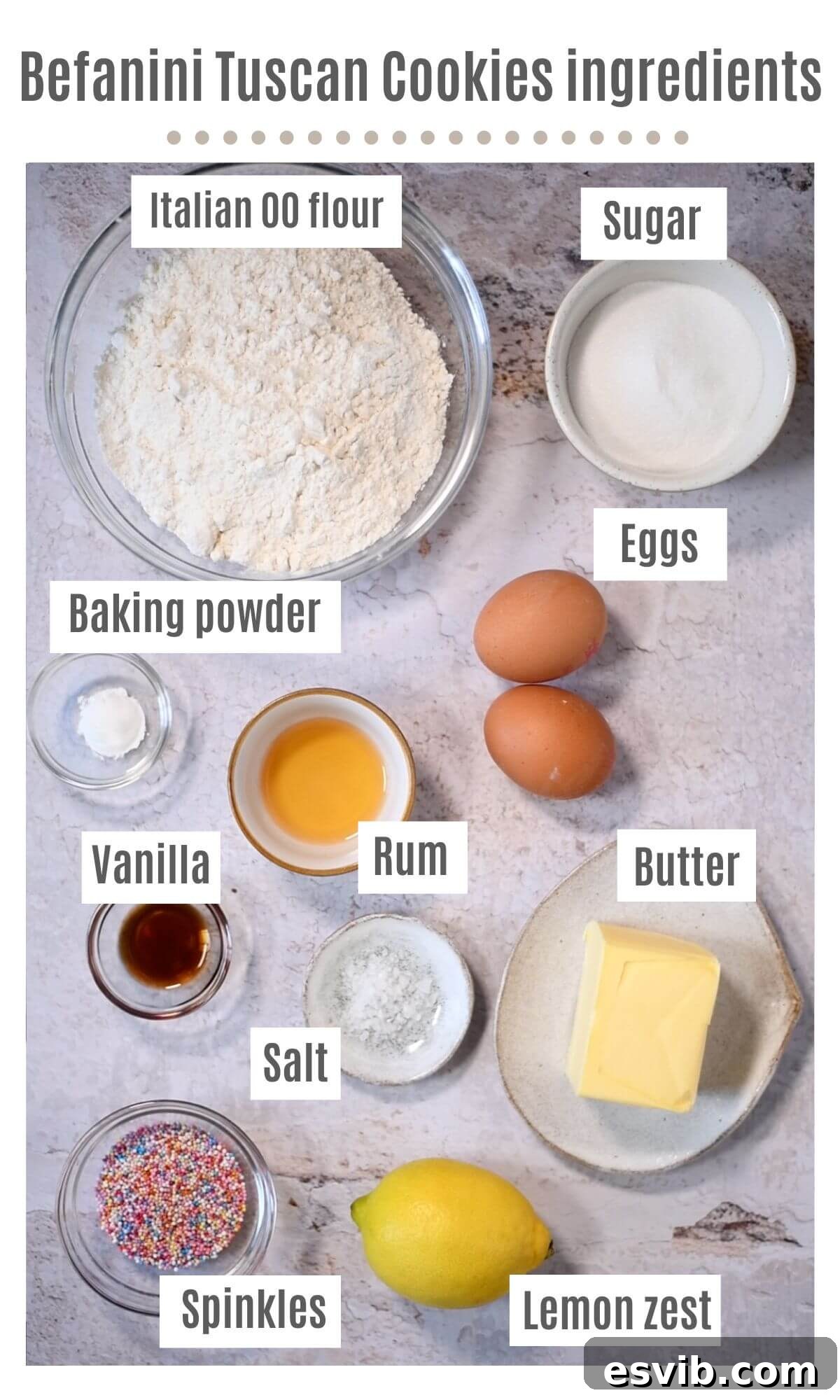
Ingredient Spotlight & Expert Substitutions
- Flour: For an authentic Italian touch, we highly recommend using Italian 00 flour, known for its fine texture and ability to create tender pastry. However, if 00 flour is not readily available, standard all-purpose flour will work beautifully as a substitute, yielding delicious results.
- Baking Powder: This leavening agent is crucial for giving the Befanini their characteristic delicate texture. Always double-check the expiration date of your baking powder, as an expired batch is a common culprit for baking mishaps, especially for those who don’t bake frequently.
- Sugar: Caster sugar (also known as superfine sugar) is our preference for this recipe because its fine granules dissolve quickly and evenly, resulting in a smooth, consistent dough. While granulated sugar can be used as an alternative, caster sugar provides a superior texture.
- Unsalted Butter: The key to a tender, flaky Pasta Frolla is using cold butter, straight from the fridge. Cut into small cubes, cold butter helps create pockets of steam during baking, contributing to the cookie’s delightful structure. Ensure it stays cold throughout the mixing process.
- Vanilla: For the best flavor, opt for a high-quality vanilla extract or vanilla bean paste. These will impart a rich, authentic vanilla aroma and taste. For an even more intense flavor, the seeds scraped from one fresh vanilla pod can be used.
- Lemon Zest: This provides a bright, fragrant citrus note that perfectly complements the vanilla and rum. Always use unwaxed lemons since you’re utilizing the rind. If you prefer a different citrus profile, orange zest makes an excellent substitute, offering a slightly sweeter, warmer aroma.
- Rum: Dark rum adds a distinctive depth and warmth to the cookies, enhancing their festive character. While optional, it’s highly recommended for the traditional Befanini flavor. If you choose to omit the rum, no additional liquid is needed for substitution.
Step-by-Step Guide to Baking Befanini
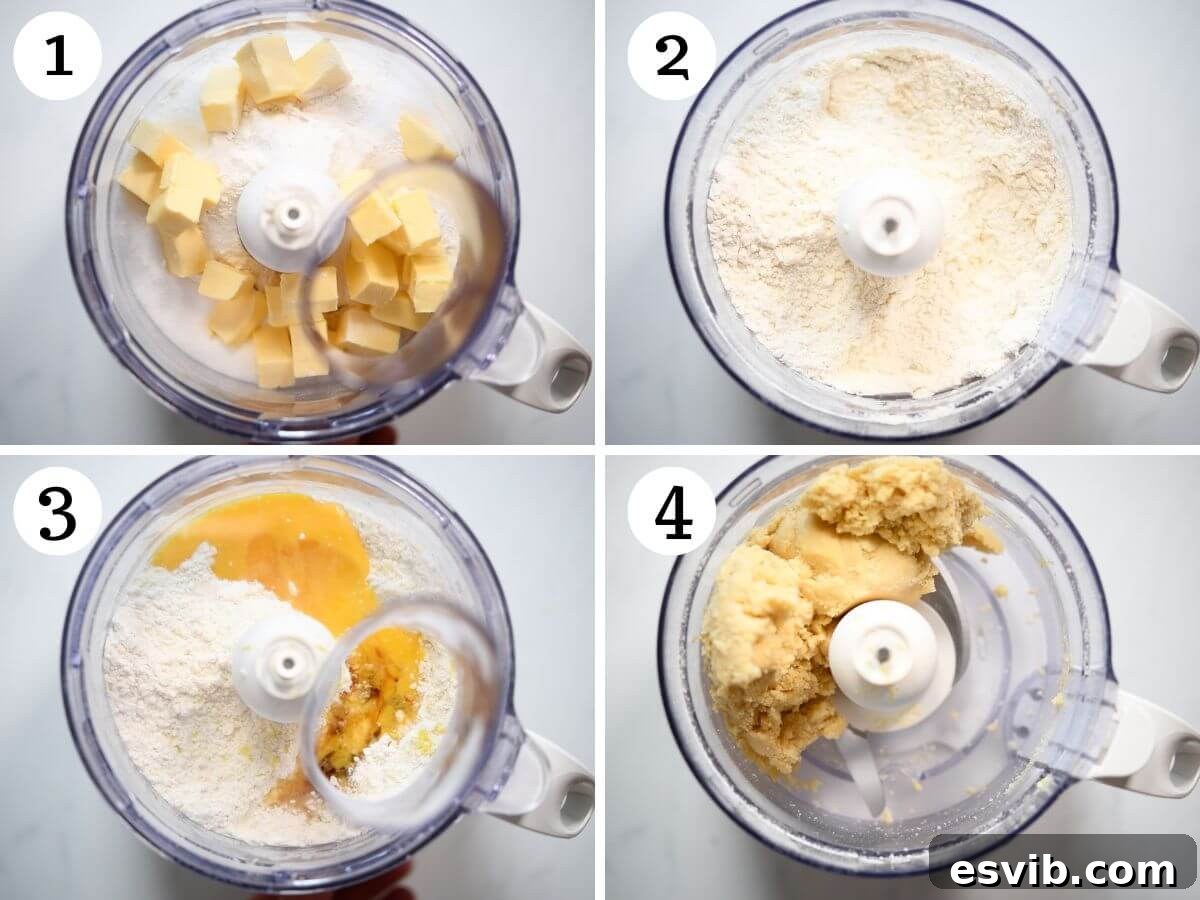
Begin by combining the dry ingredients with the cold butter. In a food processor, add the flour, caster sugar, baking powder, and a pinch of salt. Add the cold, cubed unsalted butter. Pulse the ingredients together until the mixture resembles fine breadcrumbs. This ensures the butter is evenly distributed without being overmixed, which is key for a tender dough (refer to photos 1 and 2 below for visual guidance).
Next, introduce the wet ingredients to the crumb mixture. Add the medium egg, dark rum, vanilla extract, and the fragrant lemon zest into the food processor. Continue to blitz the mixture until a cohesive dough forms. Be careful not to overmix; stop once the dough just comes together (see photos 3 and 4 for the correct consistency).
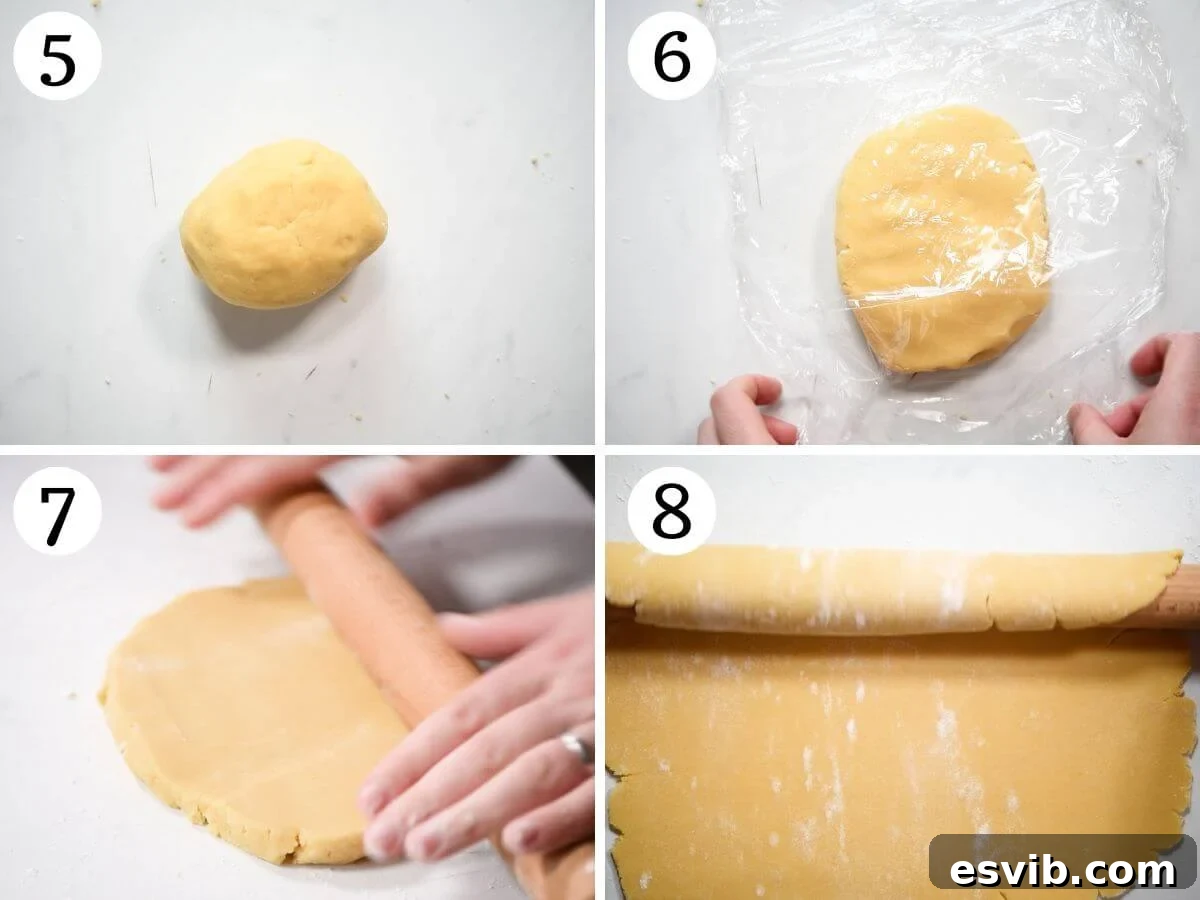
Once the dough has formed, carefully remove it from the food processor. Gently shape it into a flat disk or ball, then wrap it tightly in plastic wrap (cling film). Place the wrapped dough in the refrigerator to chill for at least 1 hour. This chilling time is crucial as it allows the butter to firm up and the gluten to relax, making the dough much easier to handle and preventing excessive spreading during baking (photos 5 and 6 illustrate this step).
After chilling, remove the dough from the fridge and let it sit at room temperature for about 5-10 minutes. This allows it to soften slightly, making it pliable enough to roll without cracking, but still cold enough to maintain its structure. Do not let it sit for longer than 10 minutes. Lightly dust a clean work surface with a small amount of flour. Roll out the dough evenly to a thickness of approximately ⅛ inch or 0.5 cm. Aim for an even thickness to ensure uniform baking (follow photos 7 and 8 for rolling technique).
Using your favorite Christmas cookie cutters, cut out the desired shapes from the rolled dough. Carefully transfer the cut cookies to a baking tray lined with parchment paper. Once all the cookies are on the tray, refrigerate them again for another half an hour before baking. This second chilling step is vital to prevent the cookies from shrinking or losing their shape in the oven, ensuring crisp edges and perfect festive forms. Any leftover dough scraps can be gently kneaded back together, rerolled, and cut into more cookies, minimizing waste (visualize this process with photos 9 and 10).
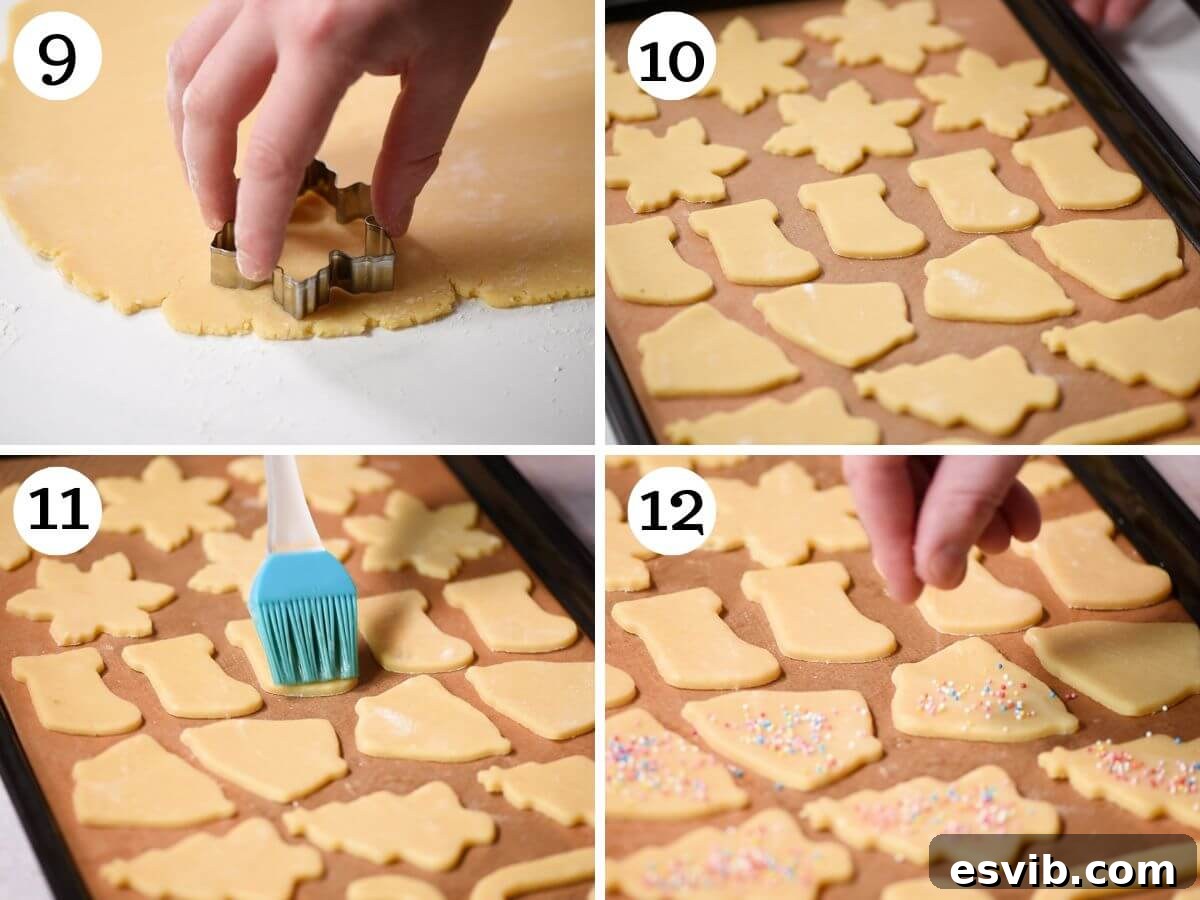
While the cookies are chilling for the second time, pre-heat your static oven to 180°C (350°F). Prepare your festive topping by lightly whisking one egg white for just a couple of seconds until slightly frothy. Gently brush this egg white mixture over the top surface of each cookie. Immediately after brushing, generously sprinkle your chosen festive sprinkles over the cookies; the egg wash acts as a perfect adhesive.
Bake the cookies for approximately 12 minutes. Befanini are traditionally pale, so they should not brown significantly at the edges. They will be soft when they first come out of the oven. Allow the cookies to cool completely on the baking tray before attempting to move them. As they cool, they will firm up, becoming perfectly crisp and ready to enjoy.

Expert Tips for Irresistible Befanini
- The Importance of Double Chilling: This is arguably the most crucial tip for perfect Befanini. The initial chill after mixing the dough is essential because it prevents the dough from being too sticky and unmanageable, making it a joy to roll out. The second chill, after cutting out the shapes but before baking, is equally important. It ensures the butter is firm, which minimizes spreading in the oven and helps the cookies retain their beautiful, crisp shapes and intricate details. Don’t skip these steps!
- Customizing Dough Flavor: While lemon zest offers a classic brightness, feel free to experiment. Orange zest is a wonderful alternative, providing a sweeter, warmer citrus note that pairs beautifully with the other flavors. If you prefer a simpler flavor profile, you can omit the zest altogether without impacting the dough’s texture. For an extra festive touch, consider adding a pinch of cinnamon or nutmeg to the dry ingredients.
- Omitting the Rum: The dark rum adds a subtle, warm depth to the Befanini, but it is entirely optional. If you prefer to make these cookies alcohol-free, simply leave out the rum. There’s no need to substitute it with extra liquid, as the dough consistency will remain suitable for baking.
- Optimal Storage and Freezing: To maintain their freshness, store your baked Befanini cookies in an airtight container at room temperature. They will remain wonderfully delicious for 5-7 days. For longer preservation, these cookies freeze exceptionally well. Arrange them in a single layer on a baking sheet to flash freeze, then transfer them to a freezer-safe bag or container, separated by parchment paper, for up to 3 months. Thaw at room temperature before serving.
- Achieving Even Thickness: When rolling out the dough, strive for a consistent thickness (⅛ inch or 0.5 cm). This ensures that all cookies bake evenly, preventing some from being undercooked while others are too crisp. Using a rolling pin with thickness guides can be very helpful.
- Preventing Sticking: Lightly flour your work surface and rolling pin. If the dough starts to stick, gently lift and re-flour. Avoid using too much flour, as it can make the cookies tough.
Discover More Italian Christmas Delights
More Festive Recipes from Italy
Christmas
Ice Cream Stuffed Mini Panettone (Cherry and Chocolate)
Italian Cookies
Italian Butter Cookies (Pasta Frolla Montata)
Italian Cookies
Cuccidati (Italian Fig Cookies)
Italian Desserts
Panforte – Tuscan Fruit and Nut Cake
We genuinely hope you enjoy making this Befanini Tuscan Christmas Cookies recipe as much as we do! If you’ve tried this, or any other recipe from our collection, please don’t hesitate to rate the recipe and share your experience in the comments section below. We absolutely love hearing from you and seeing your culinary creations! You can also stay connected with us and discover more of our delicious food by following us on Facebook, Instagram, and Pinterest, or by signing up for our Newsletter for weekly recipe updates.
Step By Step Photos Above
Most of our recipes come with step by step photos, helpful tips and tricks to make it perfectly first time and even video!
Befanini (Tuscan Christmas Cookies)
By Emily
15 minutes
10 minutes
1 hour 30 minutes
1 hour 55 minutes
30 cookies

Equipment
-
Christmas cookie cutters
-
Food processor
-
Baking trays
-
Parchment paper
Ingredients
- 2 cups Italian 00 flour, (250g) can also use all-purpose flour
- ½ cup caster sugar, (80g)
- 8.5 tablespoons cold unsalted butter, cubed (120g)
- ½ teaspoon baking powder
- 1 teaspoon vanilla extract
- 1 medium egg
- 1 tablespoon dark rum
- Zest of 1 lemon
- 1 pinch of salt
Topping
- 1 egg white
- sprinkles
Instructions
-
In a food processor, combine the flour, sugar, baking powder, salt, and cold, cubed butter. Pulse until the mixture forms fine, even crumbs, resembling coarse sand.
-
Add the egg, rum, vanilla extract, and lemon zest to the food processor. Continue to pulse until the ingredients come together and form a cohesive dough. Be careful not to overmix the dough.
-
Remove the dough from the food processor, gently form it into a flat disk, and wrap it tightly in plastic wrap (cling film). Refrigerate the dough for at least 1 hour to allow it to firm up and for the flavors to meld.
-
Once chilled, take the dough out of the fridge and let it sit at room temperature for 5-10 minutes to soften slightly, making it easier to roll. Lightly dust a clean work surface with flour and roll out the dough to an even thickness of ⅛ inch (approximately 0.5 cm).
-
Using your favorite Christmas-themed cookie cutters, cut out shapes from the rolled dough. Carefully place the cut cookies onto a baking tray lined with parchment paper. Refrigerate the shaped cookies for an additional half an hour before baking. Gather any dough scraps, gently knead them back into a ball, re-roll, and cut out more cookies until all dough is used.
-
Pre-heat your oven to 180°C (350°F). Lightly whisk an egg white for a few seconds until slightly frothy, then gently brush it over the top of each cookie. Immediately sprinkle generously with festive sprinkles. Bake the cookies for approximately 12 minutes, or until they are pale golden and set. Avoid over-browning.
-
Allow the baked cookies to cool completely on the baking tray before handling them. This cooling time allows them to firm up and prevents them from breaking.
Video
Notes
- Chill the cookie dough twice: This double-chilling method is key! The first chill makes the dough manageable for rolling, while the second chill (after cutting) prevents the cookies from spreading too much and losing their festive shapes in the oven.
- Flavouring the dough: While lemon zest offers a classic taste, orange zest is a delightful alternative for a sweeter, warmer citrus note. You can also omit the zest entirely if preferred.
- Skipping the rum: If you prefer to make these cookies alcohol-free, simply leave out the dark rum. No additional liquid is needed for substitution, and the cookies will still be delicious.
- Storage and freezing: Befanini cookies keep beautifully for 5-7 days when stored in a sealed container at room temperature. For longer storage, they can be frozen for up to 3 months in an airtight container or freezer bag.
- Yield variation: The quantity of cookies produced may vary depending on the size of your cookie cutters and how efficiently you use the dough off-cuts.
Helpful Info for All Recipes
- I always use extra virgin olive oil in all of my recipes unless stated otherwise.
- When I use canned or jarred tomatoes of any kind, I always use Cirio or Mutti brands for the best results and flavor, known for their superior quality.
- All vegetables are medium sized unless stated otherwise.
- All recipes are meticulously tested and developed using a fan (convection) oven to ensure consistent results.
- Find out more about how nutrition is calculated and our commitment to transparency.
- Explore our must-have Italian Pantry Staples to stock your kitchen like a true Italian chef.
- You can also find all our Essential Kitchen Tools for Italian Cooking to equip yourself for authentic Italian culinary adventures.
Nutrition
Nutrition information is automatically calculated, so should only be used as an approximation.
Did you try this recipe?
Leave a comment below!