
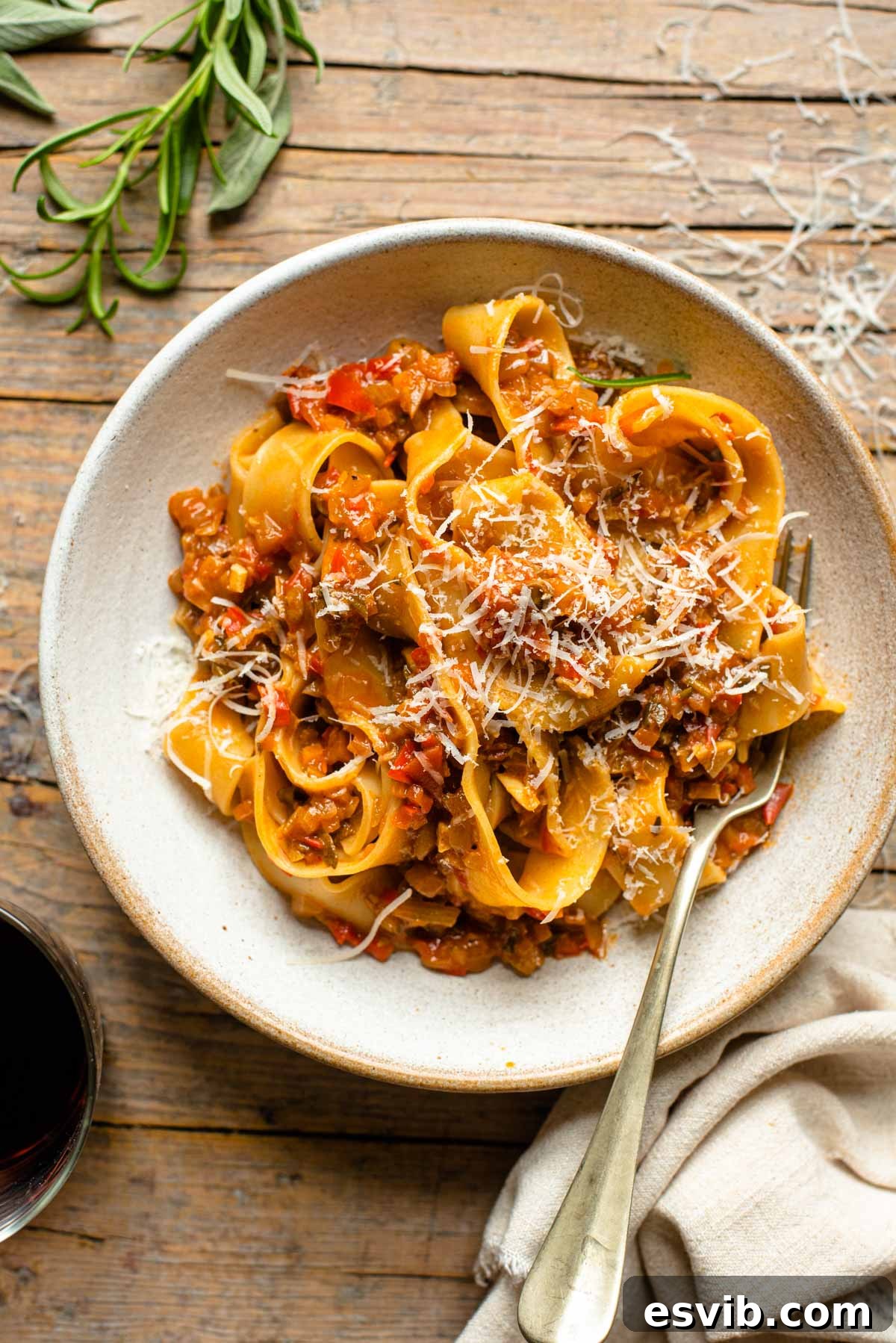
The Ultimate Hearty & Flavorful Vegetable Ragu Recipe (Meat-Free!)
Prepare to be amazed by this incredibly rich and deeply satisfying Vegetable Ragu. Crafted with a thoughtful selection of simple yet vibrant vegetables, fresh aromatic herbs, and pungent garlic, this sauce offers such profound flavor that you’ll hardly believe it’s entirely meat-free! It’s the perfect companion for your favorite pasta, beautifully finished with a generous dusting of Parmesan cheese for an unforgettable dining experience.
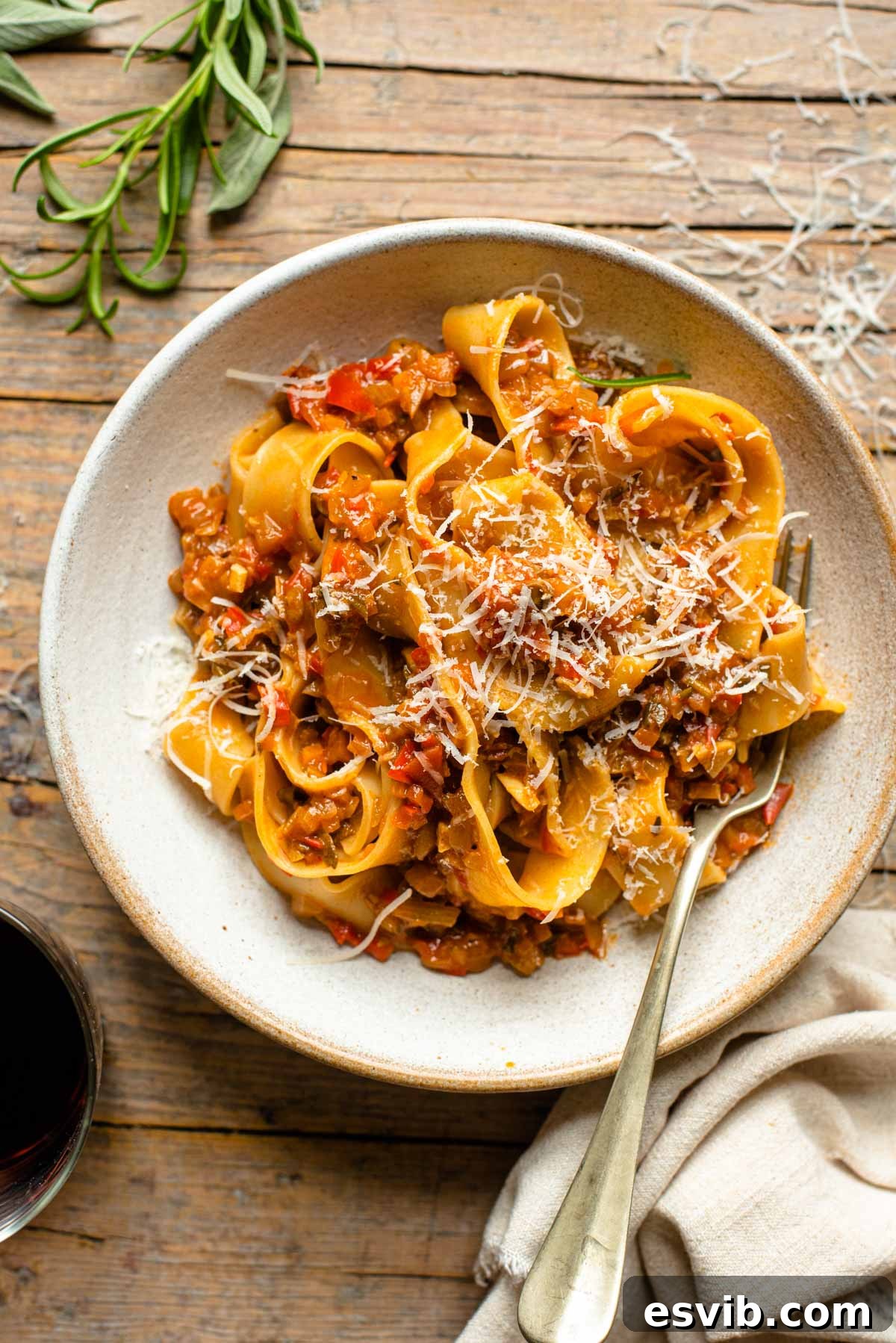
Why This Vegetable Ragu Will Revolutionize Your Vegetarian Cooking
For those seeking a truly exceptional vegetarian pasta sauce, look no further. This Vegetable Ragu transcends expectations, delivering an unparalleled depth of flavor and a luscious texture that genuinely rivals traditional meat-based ragu. Many who first taste it are convinced there’s a secret, savory addition like N’duja or pancetta, such is its robust profile. The secret, however, lies in the deliberate combination and preparation of wholesome vegetables and fresh herbs, making it completely vegetarian and utterly delicious.
While an authentic meat ragu might demand hours of slow cooking to achieve its full potential, this vibrant vegetable alternative develops its complex, satisfying flavors in a surprisingly short time – around one hour of simmering. This efficiency makes it an ideal choice for a comforting weeknight meal or an impressive dish for weekend entertaining, without requiring an entire afternoon in the kitchen. Once ready, serve it generously over your pasta of choice, piled high with freshly grated Parmesan, and be sure to have some crusty bread on hand to soak up every last drop of this magnificent sauce.
The Meat-Free Marvel of Umami
One of the most remarkable aspects of this vegetable ragu is its ability to create a deep umami experience without any meat. The combination of slow-sautéed root vegetables, sun-kissed tomatoes, and especially the star ingredient – dried porcini mushrooms – works synergistically to build a rich, savory foundation. This isn’t just a “substitute” for meat; it’s a celebration of vegetable flavors, cooked down and concentrated to produce a sauce that is intensely satisfying and profoundly delicious in its own right.
Essential Ingredients for a Perfect Vegetable Ragu
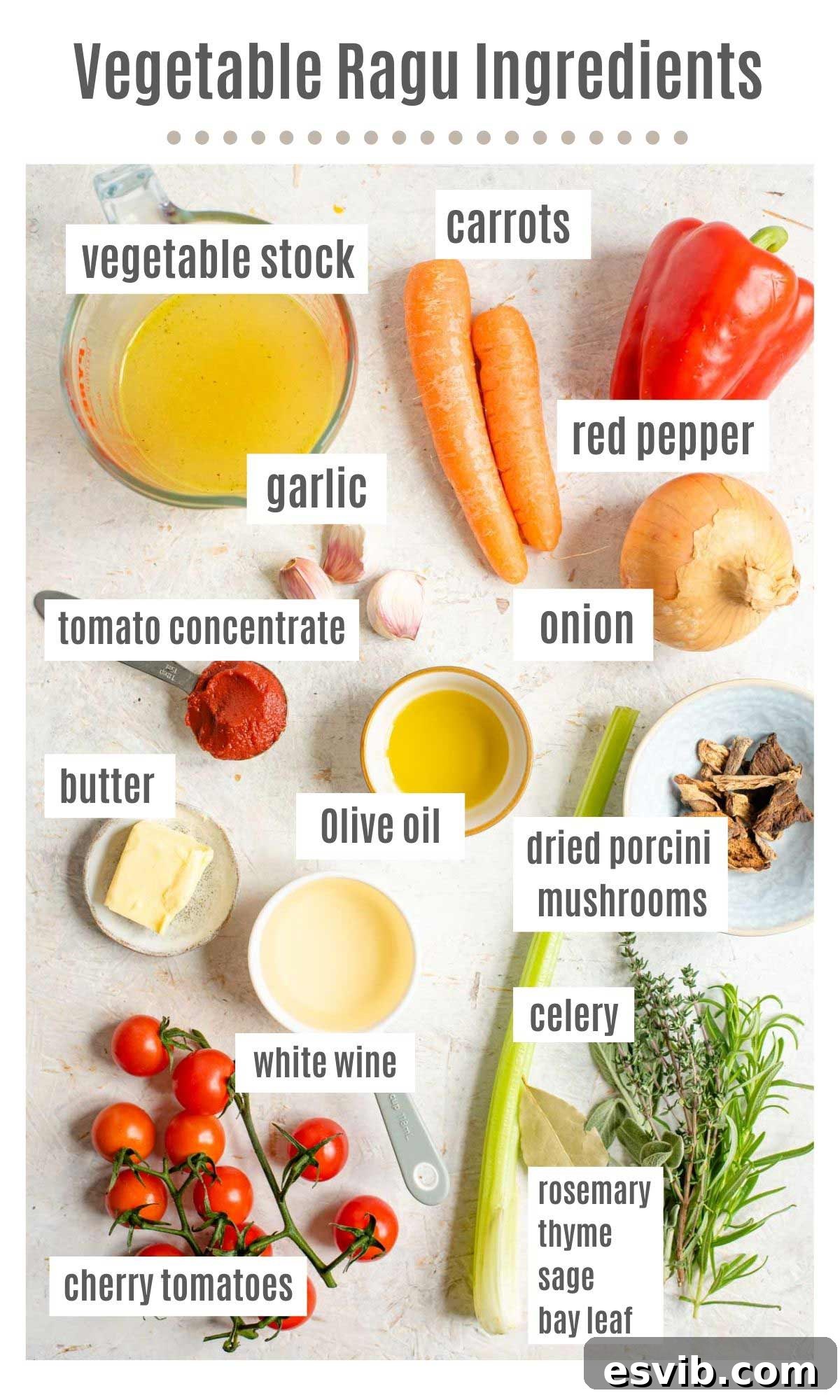
The secret to this vegetable ragu’s incredible taste lies in the quality and careful preparation of its core ingredients. Each component is chosen for its specific contribution to the layered flavors and luxurious texture that define this exceptional sauce. Here’s a detailed breakdown of what you’ll need, and why each element is crucial:
- The Hearty Soffritto Vegetables: The base of any great Italian sauce begins with a finely diced mixture of **onion, carrot,** and **celery**. This classic “soffritto” is slowly sautéed to create an aromatic, sweet foundation. A vibrant **red bell pepper** is added to this trio, introducing an extra layer of sweetness, a hint of freshness, and a beautiful pop of color that enriches the sauce’s visual and flavor profile.
- Aromatic Fresh Herbs: To infuse the ragu with an authentic Mediterranean essence, a generous selection of fresh herbs is paramount. Fragrant **rosemary, thyme,** and **sage** contribute earthy, peppery, and subtly minty notes, deepening the savory character of the sauce. A single **bay leaf** further enhances the complexity during the simmering process, adding a woody, slightly floral undertone.
- Dried Porcini Mushrooms: These are the undisputed champions of umami in this recipe. When rehydrated in hot water or stock, dried porcini mushrooms release a profoundly savory, almost meaty flavor that is absolutely essential for achieving that deep, rich taste often associated with traditional ragu. They are key to that impressive “I can’t believe it’s meat-free” quality.
- Fresh Garlic: The pungent and aromatic qualities of **fresh garlic** are indispensable. Always opt for fresh cloves, peeled and finely minced, as pre-chopped or ground garlic simply cannot deliver the same vibrant, sharp flavor that brightens the entire sauce.
- High-Quality Stock: A good quality **vegetable stock** forms the savory liquid base, marrying all the flavors together as they simmer. Using a flavorful stock is crucial for a rich final product. While vegetable stock keeps the dish strictly vegetarian, chicken stock can also be used for those who do not require a strictly plant-based meal.
- White Wine: A splash of dry **white wine** (or even a robust red, depending on preference) serves multiple purposes. It adds a crucial layer of acidity, helps deglaze the pan to incorporate flavorful fond, and as it simmers, the alcohol evaporates, leaving behind a concentrated, nuanced essence that enriches the ragu.
- Concentrated Tomato Paste: Though used in a small amount, concentrated **tomato paste** (known as tomato puree in the UK) is a powerhouse ingredient. It provides a deep, robust tomato backbone to the sauce, enhancing both its vibrant color and its intense, savory depth.
- Butter for Richness: This ingredient might seem unconventional for a vegetable sauce, but **butter** is a secret weapon here. Adding it at the sautéing stage imparts an incredible creamy texture and a luxurious, smooth mouthfeel to the finished ragu. It contributes significantly to the sauce’s richness and overall deliciousness, making it exceptionally comforting.
- Fresh Cherry Tomatoes: Halved or quartered **fresh cherry tomatoes** introduce a burst of sweet acidity and freshness. They cook down to add a delicate texture and bright flavor that perfectly complements the slow-cooked vegetables.
- Extra Virgin Olive Oil: As the initial fat for sautéing, a good quality **extra virgin olive oil** is essential. It helps cook the vegetables evenly and forms another layer of flavor that is foundational to Italian cooking.
- Salt and Pepper: These fundamental seasonings are critical for balancing and enhancing all the complex flavors in the ragu. Always taste and adjust as you go to achieve perfect harmony.
How to Prepare Your Delicious Vegetable Ragu – Step by Step Guide
Creating this flavorful vegetable ragu is a rewarding process, built on patient sautéing and gentle simmering. Follow these detailed steps to achieve a perfectly rich and aromatic sauce every time:
- Rehydrate Porcini and Prepare Stock: Begin by preparing your vegetable stock according to package instructions. In a small bowl, place the dried porcini mushrooms and pour a small amount of hot vegetable stock over them, ensuring they are submerged. This allows them to rehydrate and release their intense aromatic essence. Set this bowl aside for at least 10 minutes.
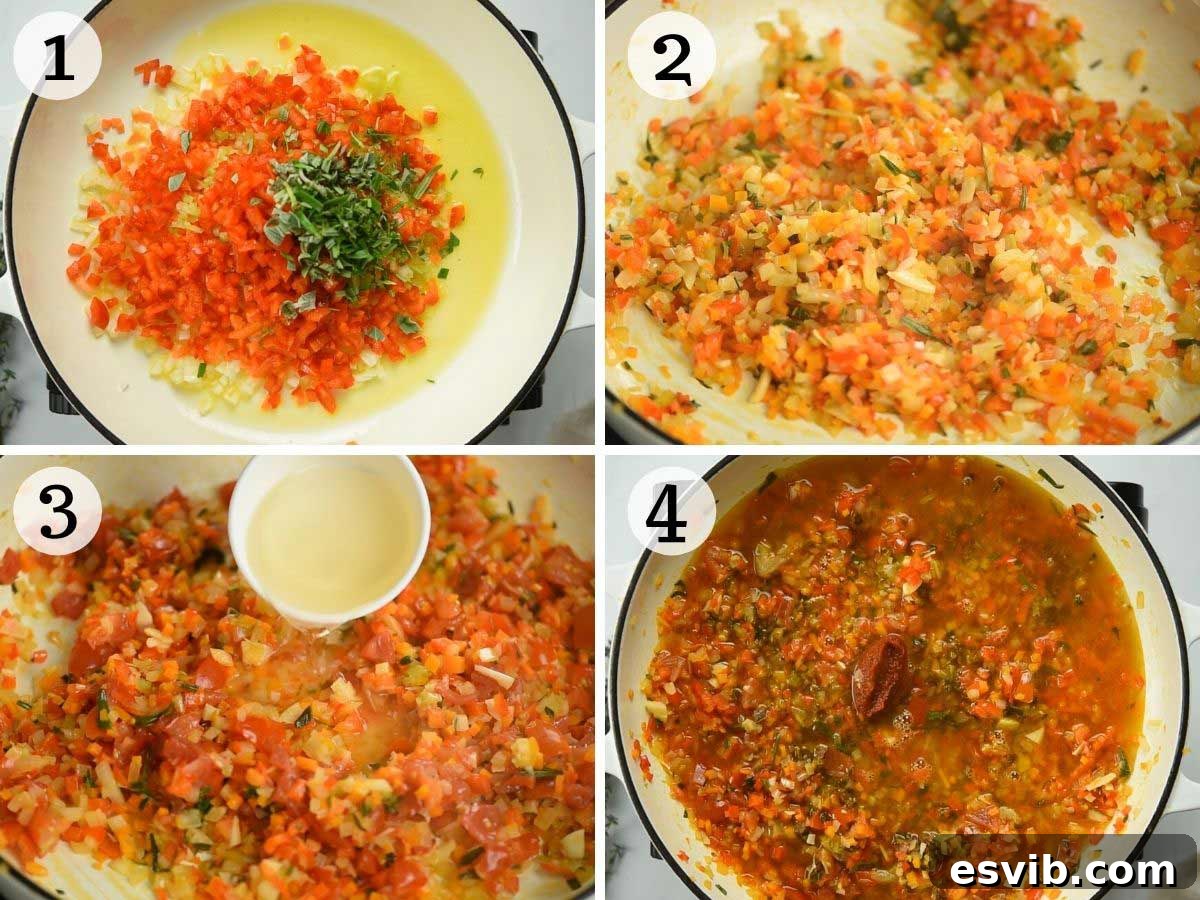
- Build the Soffritto Base: In a large, deep-sided pan or Dutch oven, combine 1 tablespoon of olive oil and the butter. Heat over medium-low heat until the butter is melted and shimmering. Add the finely chopped carrot, celery, onion, red bell pepper, and all the fresh, chopped herbs (rosemary, thyme, sage). Sauté these vegetables gently and patiently for 10-15 minutes, stirring occasionally, until they are beautifully softened and translucent but not browned. This slow cooking step is fundamental for developing the deep, sweet foundational flavors of the ragu.
- Infuse with Garlic and Deglaze with Wine: Add the minced garlic to the pan and continue to sauté for just 1 minute until it becomes wonderfully fragrant. Be vigilant to prevent it from burning, as burnt garlic can turn bitter. Next, stir in the quartered fresh cherry tomatoes and pour in the white wine. Increase the heat slightly to medium and simmer for 2-3 minutes, allowing the wine to reduce by about half and its alcohol to evaporate, leaving behind a concentrated, nuanced flavor.
- Incorporate Porcini and Liquids: Carefully remove the rehydrated porcini mushrooms from the stock (reserve the soaking liquid!). Roughly chop the softened porcini mushrooms and add them to the sautéed vegetables in the pan. Now, pour in the reserved vegetable stock (including the strained porcini soaking liquid for extra flavor, if you wish to filter it first). Add the bay leaf and stir in the concentrated tomato paste. Mix everything thoroughly to combine all the ingredients.
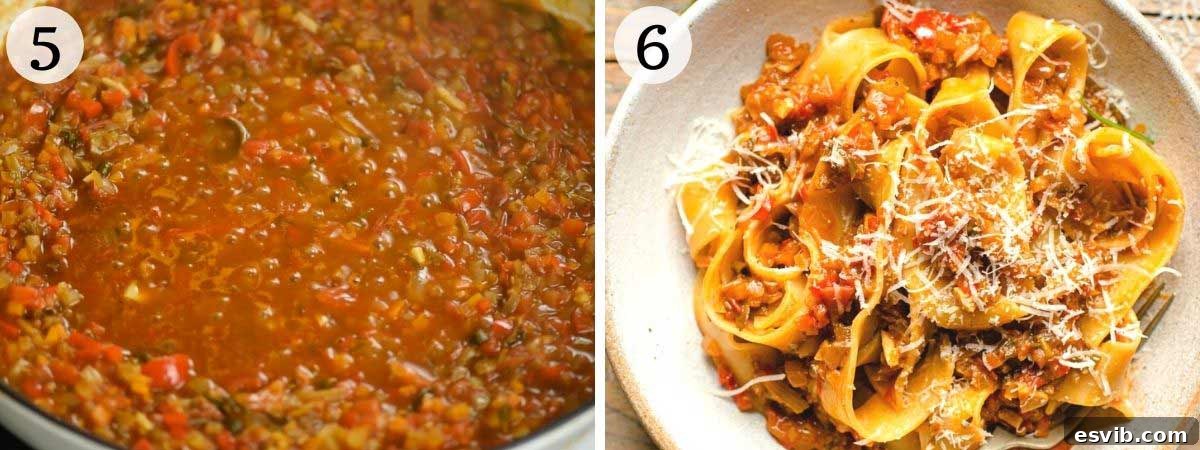
- The Gentle Simmer: Bring the sauce to a gentle simmer, then cover the pan with a lid and reduce the heat to low. Allow the ragu to simmer undisturbed for 30 minutes, giving all the flavors ample time to meld and deepen into a harmonious blend.
- Thicken and Finish: After 30 minutes, remove the lid and continue to simmer for another 20 minutes, or until the sauce has visibly reduced and thickened to your desired hearty consistency. The vegetables should be exceptionally tender, almost melting into the sauce. Season the ragu generously with salt and freshly ground black pepper to taste, adjusting as needed.
- Serve with Pasta: While the ragu simmers, prepare your favorite pasta according to package instructions until it reaches a perfect al dente texture (typically 8-10 minutes). Drain the pasta, reserving a small amount of pasta water. Toss the hot, cooked pasta directly with the warm ragu, ensuring every strand is coated in the rich sauce. If the sauce seems too thick, add a splash of the reserved pasta water to loosen it to your preferred consistency. Serve immediately with a generous grating of fresh Parmesan cheese and, if desired, a side of crusty bread for dipping.
Expert Tips for the Best Vegetable Ragu & Common Questions Answered
Achieving a truly exceptional vegetable ragu is simple when you know a few key techniques and have answers to common queries. Here are our top tips and frequently asked questions:
- Precision in Vegetable Cutting: For an authentic ragu consistency where vegetables almost melt into the sauce, it’s crucial to cut your carrot, celery, onion, and bell pepper as finely and uniformly as possible. Smaller pieces will soften quicker and integrate more seamlessly. While hand-chopping is ideal, a food processor can speed up the process; just be careful not to over-process them into a watery paste. Aim for a fine dice.
- Unlocking Umami with Dried Porcini Mushrooms: These fantastic fungi are a powerhouse of umami flavor and are easily found in the dried goods or international aisle of most grocery stores. Before rehydrating, give them a quick rinse under cold water to remove any potential grit. Then, soak them in hot vegetable stock for at least 10-15 minutes until tender. The dark, flavorful soaking liquid is a precious commodity – be sure to strain it through a fine-mesh sieve or coffee filter to catch any lingering sediment, and add it directly to your ragu along with the roughly chopped mushrooms. This step significantly boosts the sauce’s depth.
- The Indispensable Role of Butter: While this recipe champions vegetables, the addition of butter at the initial sautéing stage is non-negotiable for an extraordinary ragu. It contributes an incredible richness, a silky smoothness, and a luxurious mouthfeel that truly elevates the sauce, mimicking the decadent qualities often found in traditional meat ragus. Don’t skip it for the best results!
- Fresh Herbs vs. Dried: For the most vibrant and aromatic flavor profile, we highly recommend using fresh rosemary, thyme, and sage. Their bright, pungent notes truly shine. If fresh herbs aren’t available, you can substitute with dried herbs, but remember that dried herbs are more concentrated. Use about one-third the amount of dried herbs compared to fresh (e.g., 1 teaspoon dried for 1 tablespoon fresh). Add dried herbs with the initial sautéing of the soffritto to allow their flavors to bloom.
- Patience During Simmering Pays Off: The simmering stage is where the magic truly unfolds. Allowing the ragu to gently cook for the recommended time – first covered, then uncovered – is crucial. This extended, patient simmering allows the vegetables to fully tenderize, the flavors to concentrate, and the sauce to thicken to that perfect, clinging consistency. Resist the urge to rush this step; the extra time is well worth the incredible flavor development.
- Taste and Season Accordingly: Always taste your ragu as it simmers and at the end of cooking. Adjust the seasoning with salt and freshly ground black pepper. Remember that vegetable stock often contains sodium, so add salt gradually to avoid over-seasoning. A little freshly ground pepper enhances the overall taste beautifully.
Frequently Asked Questions About This Vegetable Ragu
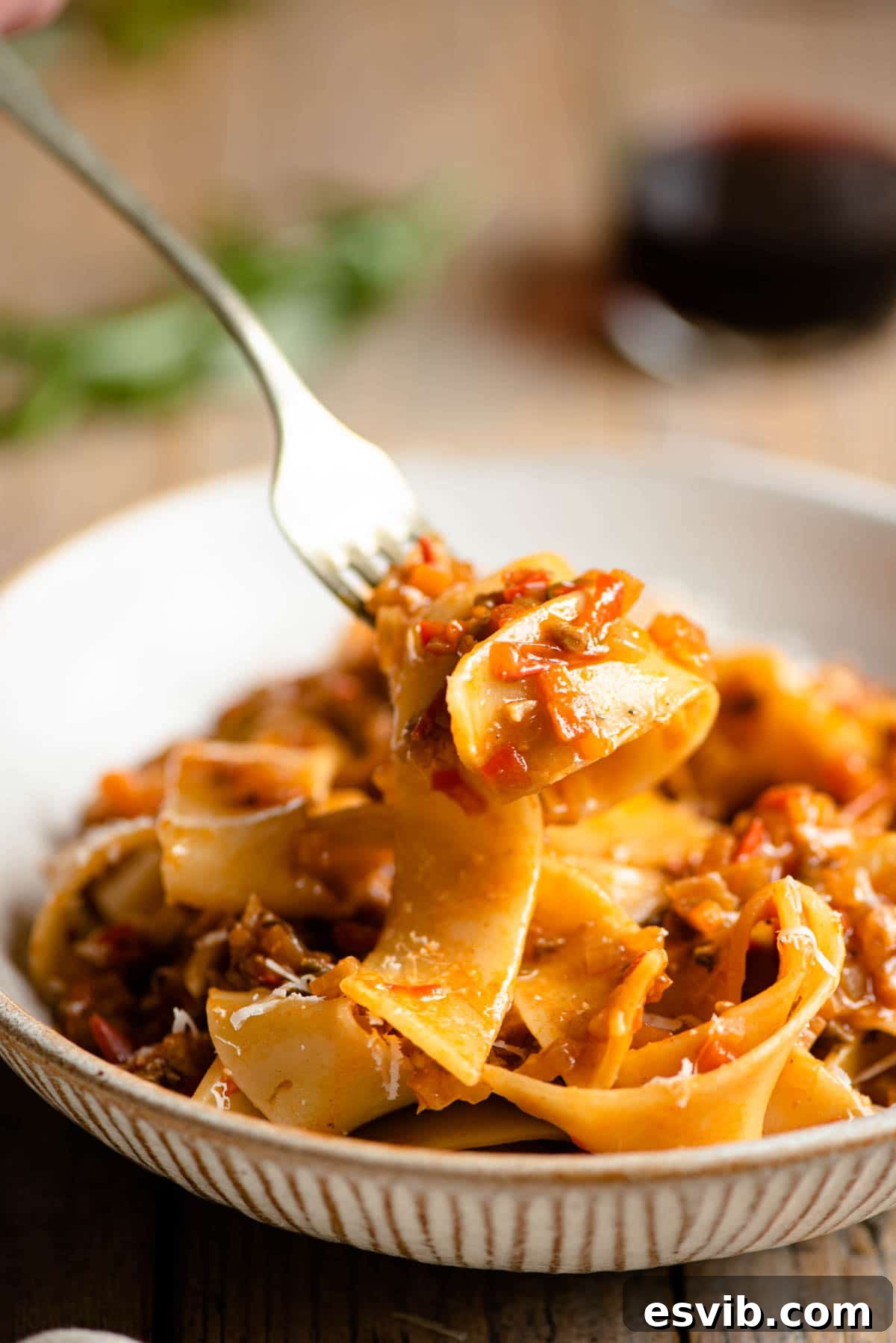
This rich and flavorful sauce is incredibly versatile and pairs beautifully with a wide range of pasta shapes. While any pasta will work, we especially love it with wide, flat pastas such as pappardelle, fettuccine, or tagliatelle. Their broad surface areas are excellent at catching and holding onto the robust, chunky sauce, ensuring every bite is bursting with flavor. Don’t forget a generous grating of fresh Parmesan cheese and a side of crusty artisanal bread to mop up every last bit of the delicious sauce!
Absolutely! To make an alcohol-free version of this delicious ragu, simply substitute the white wine with an equal amount of extra vegetable stock. The sauce will still develop a wonderful depth of flavor from the slow-cooked vegetables, herbs, and porcini mushrooms.
Yes, this vegetable ragu freezes exceptionally well, making it an excellent choice for meal prepping. Once the sauce has cooled completely, transfer it to airtight sealed containers or sturdy freezer bags. It will maintain its quality for up to 3 months in the freezer. When you’re ready to enjoy it, thaw the ragu completely in the refrigerator overnight, then gently reheat it on the stovetop. If needed, add a splash of water or vegetable stock to achieve your desired consistency.
Certainly! This recipe is quite flexible and encourages culinary creativity. Feel free to experiment with other finely diced vegetables such as zucchini, eggplant, leeks, or even fresh mushrooms (cremini or button mushrooms would be great). You could also stir in a handful of fresh spinach or kale during the last few minutes of simmering for added nutrition. Just ensure any additions are chopped to a similar size to maintain the desired ragu texture and ensure even cooking.
While pasta is a classic pairing, this versatile vegetable ragu can be enjoyed in many other delicious ways! Try it spooned over creamy polenta, layered into a vegetarian lasagna, served with fluffy gnocchi, or as a flavorful topping for roasted potatoes or baked sweet potatoes. It can even be used as a filling for savory tarts or as a hearty base for a vegetable stew. Its rich flavor makes it adaptable to many dishes.
More Irresistible Italian Vegetarian Recipes You Might Love
If you’ve enjoyed this delightful meat-free ragu and are eager to explore more delicious Italian vegetarian cuisine, be sure to check out these other fantastic recipes from our collection:
- Lentil Ragu Lasagne: A wholesome and deeply comforting vegetarian rendition of a classic Italian baked pasta dish.
- Penne Pomodoro (Tomato Basil Pasta): A vibrant, fresh, and intensely flavorful tomato pasta that stands as a beloved staple in Italian households.
- Spaghetti Aglio e Olio: Garlic & Oil Pasta: Elegant in its simplicity, this timeless dish beautifully highlights the pure flavors of good olive oil and fragrant garlic.
- Ricotta Pasta Sauce: 2 Ways: Discover a creamy, delicate, and incredibly quick pasta sauce, perfect for a light yet satisfying meal.
- Cavatelli and Broccoli Pasta: A rustic and hearty pasta dish featuring tender, earthy broccoli florets paired with chewy cavatelli pasta.
We sincerely hope you’ll give this fantastic Vegetable Ragu a try! If you’ve made this recipe or any other delicious dish from our blog, please don’t hesitate to share your experience and feedback in the comments section below. We absolutely love hearing from you and learning about your culinary adventures! You can also FOLLOW US on FACEBOOK, INSTAGRAM, and PINTEREST to discover even more mouth-watering food ideas, cooking tips, and to see what delightful creations we’re cooking up next.
Vegetable Ragu with Pappardelle Pasta
By Emily
Cook Time: 1 hr
Total Time: 1 hr 15 mins
Servings: 4
An incredible Vegetable Ragu that’s so rich in flavour you’d never know it’s meat-free! Made with beautiful and simple vegetables, fresh herbs and garlic. Toss with your favourite pasta and top with plenty of parmesan cheese!
Ingredients
- 1 large carrot, or 2 small, peeled and finely chopped
- 1 stick celery, finely chopped
- 1 large onion, peeled and finely chopped
- 1 red bell pepper, finely chopped (seeds and stalk removed)
- 3 cloves garlic, peeled and finely chopped
- 1 cup fresh cherry tomatoes, cut into quarters
- 1 tbsp fresh rosemary, roughly chopped
- 1 tbsp fresh thyme, roughly chopped
- 3-4 sage leaves, roughly chopped
- 1 bay leaf
- ½ cup white wine (125ml)
- 2 cups vegetable stock (500ml)
- 1 tbsp tomato paste (tomato puree UK)
- 2 tbsp dried porcini mushrooms
- 2 tbsp olive oil
- 2 tbsp butter (30g)
- Salt and pepper, to season
For serving
- 14 oz pappardelle pasta or pasta of choice (400g)
- Freshly grated Parmesan cheese
- Crusty bread (optional, for dipping)
Instructions
- Prepare the vegetable stock. Add the dried porcini mushrooms to a small amount of hot stock to rehydrate, then set aside.
- Heat 1 tbsp olive oil and the butter in a large deep-sided pan over medium-low heat. Add the finely chopped carrot, celery, onion, bell pepper, and all chopped fresh herbs. Sauté for 10-15 minutes until softened but not browned.
- Stir in the minced garlic and sauté for 1 minute until fragrant. Add the quartered cherry tomatoes and white wine, then simmer for 2-3 minutes until the wine reduces slightly.
- Scoop out the rehydrated porcini mushrooms, roughly chop them, and add to the pan. Pour in the vegetable stock (including the strained porcini soaking liquid), add the bay leaf, and stir in the tomato paste. Mix well.
- Cover the pan and simmer on low heat for 30 minutes. Uncover and continue to simmer for another 20 minutes until the sauce has reduced, thickened, and the vegetables are tender. Season with salt and pepper to taste.
- Cook your chosen pasta until al dente (check packet instructions). Toss the cooked pasta directly with the warm ragu. Serve immediately with a generous grating of Parmesan cheese and crusty bread if desired.
Notes
- Vegetable Preparation: Finely chopping vegetables is key for a smooth ragu consistency and even cooking.
- Porcini Mushrooms: Rinse dried porcini, rehydrate in hot stock (at least 10 mins), chop, and add both mushrooms and strained liquid to the sauce for maximum umami.
- Butter’s Role: The butter is crucial for adding richness, creaminess, and a luxurious texture to this meat-free ragu.
- Herb Choice: Fresh herbs yield the best flavor, but dried can be used (use 1/3 the amount of fresh).
- Storage: Leftover ragu keeps for 2-3 days in the fridge or freezes well for up to 3 months.
- Nutrition: Nutritional values provided are for the sauce only, not including pasta or additional toppings.
Nutrition Information
Carbohydrates: 19g |
Protein: 5g |
Fat: 14g |
Saturated Fat: 5g |
Cholesterol: 15mg |
Sodium: 148mg |
Potassium: 579mg |
Fiber: 4g |
Sugar: 6g |
Vitamin A: 4502IU |
Vitamin C: 55mg |
Calcium: 41mg |
Iron: 1mg
Nutrition information is automatically calculated and should only be used as an approximation.
Helpful Info for All Recipes on Our Blog
- We exclusively use extra virgin olive oil in all our recipes unless explicitly stated otherwise.
- For canned or jarred tomatoes, we highly recommend using Cirio or Mutti brands to ensure the best flavor and consistent results.
- Unless otherwise specified, all vegetables mentioned in our recipes are of medium size.
- Every recipe shared here is meticulously tested and developed using a fan (convection) oven to ensure reliable outcomes.
- To understand how we calculate nutritional values, please refer to our detailed nutrition calculation policy.
- Explore our curated list of must-have Italian Pantry Staples to stock your kitchen like a pro.
- Discover the Essential Kitchen Tools for Italian Cooking that will elevate your culinary experience.
Did you try this incredible Vegetable Ragu recipe? We’d love to hear from you! Please leave a comment below and share your experience. Your feedback helps us grow!