
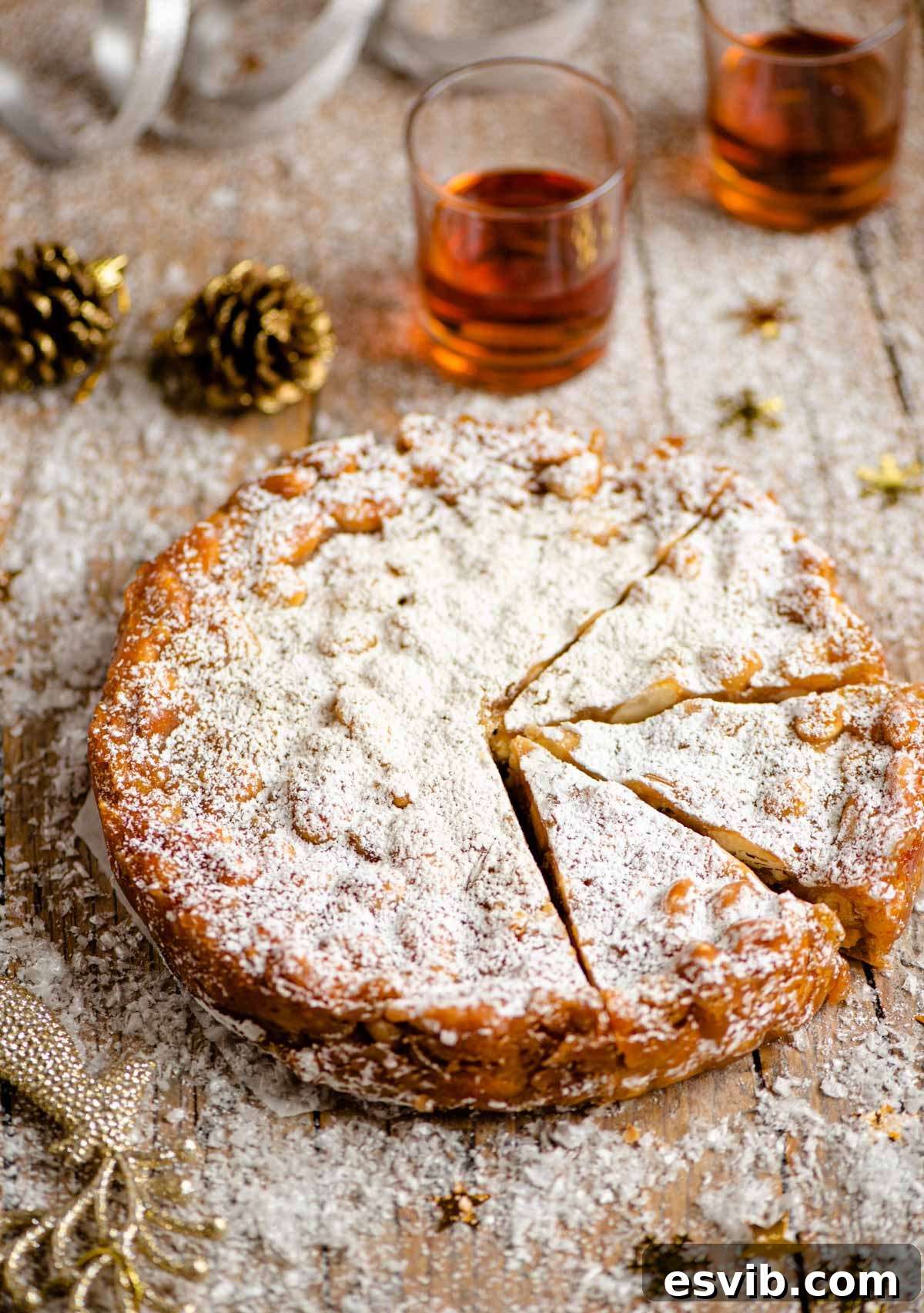
Panforte di Siena – a timeless Tuscan Christmas cake, celebrated for its unique blend of candied fruits, toasted nuts, and aromatic festive spices, all elegantly dusted with a delicate layer of powdered sugar. This dense, chewy, and intensely flavorful fruitcake is not just a holiday dessert; it’s a cherished tradition, a delightful treat, and an exquisite homemade gift that embodies the true spirit of an Italian Christmas.
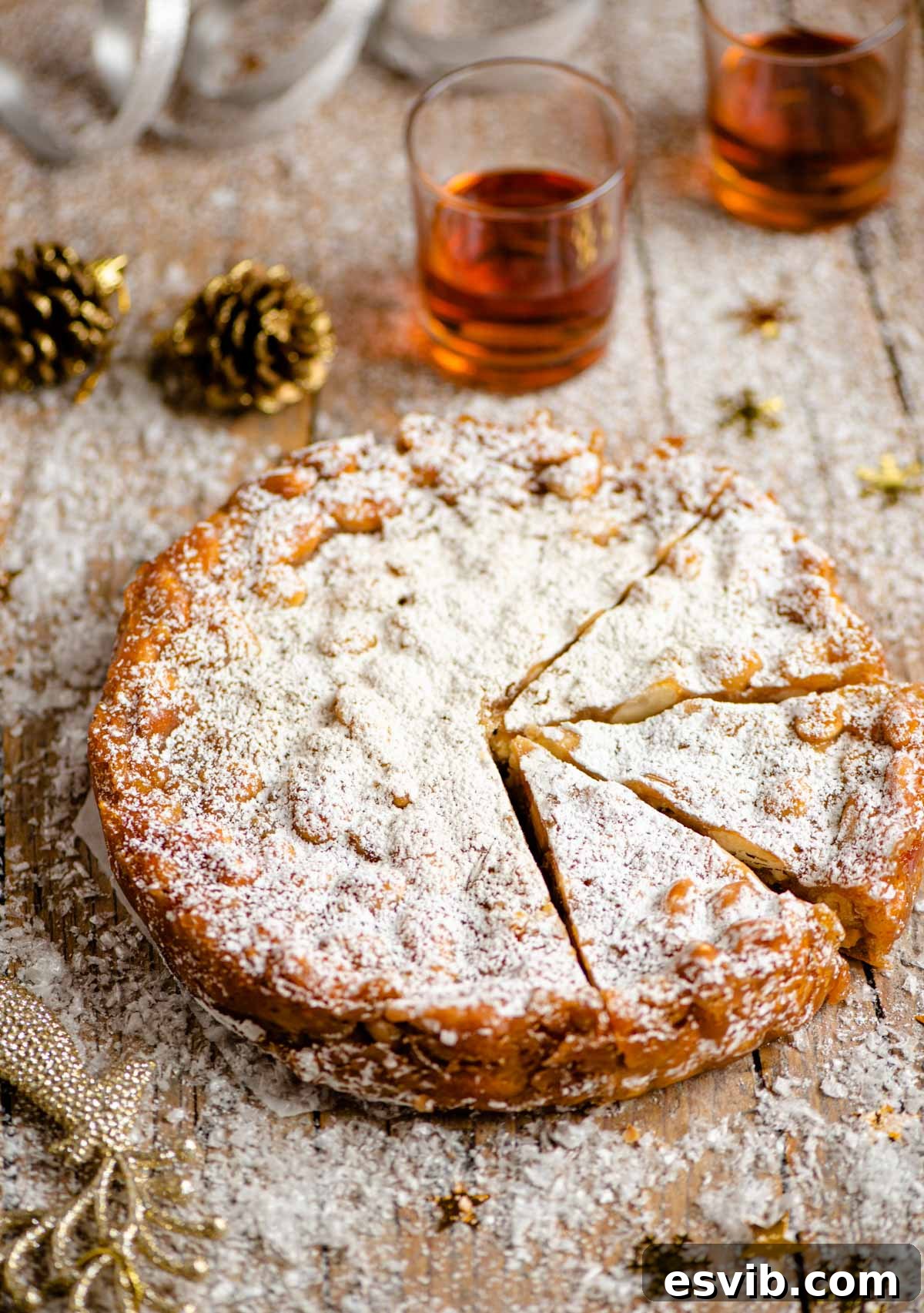
Panforte di Siena: A Traditional Tuscan Christmas Cake
From the moment you take your first bite, Panforte transports you straight to the heart of an Italian Christmas. The harmonious symphony of warming spices, sweet candied fruit, and crunchy nuts creates an irresistible festive experience. Originating from the charming medieval city of Siena in Tuscany, this exquisite cake holds a special place in Italian holiday culinary traditions, making it a must-try for anyone seeking an authentic taste of Italian festivities.
The Rich History of Panforte: More Than Just a Cake
Panforte, which literally translates to “strong bread,” boasts a history as rich and deep as its flavor. Its roots trace back to Siena in the 13th century, where it was initially prepared by apothecaries and monks using locally available ingredients. The earliest versions were simpler, made with flour, honey, and various spices, often serving as a nutrient-dense food that could be stored for long periods. The name “Panforte” is believed to have derived either from its slightly sour taste in early forms before perfect fruit preservation, or more likely, from its intensely “strong” and concentrated flavor profile, packed with an array of spices and nuts.
Over centuries, as trade routes flourished and exotic spices became more accessible from the East, the recipe for Panforte evolved, transforming into the beloved treat we know today. It became particularly popular during the festive season due to its precious ingredients and long shelf life. Another fascinating aspect of Panforte’s heritage is its close relative, Panpepato. While similar in core ingredients, Panpepato distinguishes itself with a more pronounced spice blend, often including black pepper – a luxurious and expensive ingredient in medieval times. This addition gave it a bolder, spicier kick, hence the “pepato” or “peppered” in its name. Panforte di Siena, particularly the more modern “Panforte Margherita” (named after Queen Margherita of Savoy), typically features a milder, yet still richly aromatic, spice combination, foregoing the pepper for a sweeter, more approachable taste. My personal journey living in Siena for two years allowed me to taste countless variations, admiring the artful displays in local bakeries, each piece meticulously wrapped for gifting, a testament to its enduring charm.
Why Panforte is the Perfect Holiday Treat and Gift
Beyond its delicious taste, Panforte offers incredible practicality during the busy holiday season. This recipe is surprisingly easy to make at home, requiring minimal fuss and producing spectacular results. One of its greatest advantages is its impressive shelf life; properly stored, Panforte can last for up to three weeks, and often even longer. This makes it an ideal candidate for preparing in advance, allowing you to reduce stress closer to Christmas and enjoy more time with loved ones. It’s also perfectly suited for gifting. Imagine presenting your friends and family with a beautifully wrapped, homemade Panforte – a thoughtful, delicious, and authentically Italian gesture that will surely be appreciated. While it’s perfect for sharing, be warned: you’ll definitely want to keep a slice or two (or more!) for yourself. Its irresistible flavor is simply too good to pass up, making it a staple in many festive households.
Interested in exploring more Italian Christmas culinary delights? Be sure to check out our comprehensive guide on Traditional Italian Christmas Foods to discover what Italians traditionally enjoy in each region during the festive period, offering a deeper dive into Italy’s rich gastronomic heritage.
Essential Ingredients for Authentic Panforte
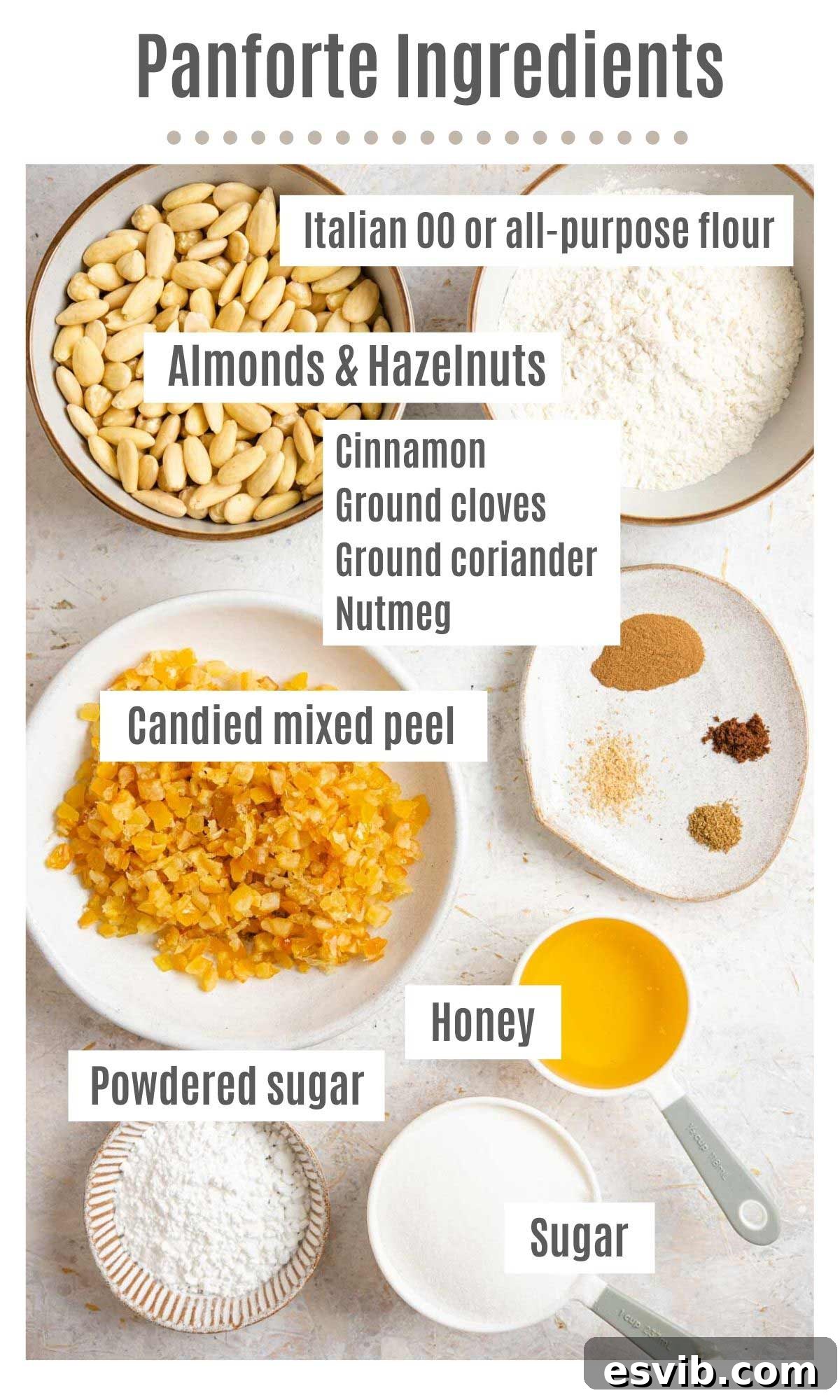
Creating authentic Panforte requires a careful selection of quality ingredients, each playing a crucial role in developing its characteristic flavor and texture. Here’s a detailed look at what you’ll need:
- Flour: Italian “00” flour is traditional, known for its very fine texture, which contributes to Panforte’s unique density. However, standard all-purpose flour works beautifully as a readily available alternative for home bakers, providing the cake with sufficient structure without making it overly tough or crumbly.
- Mixed Nuts: The heart of Panforte’s chewy texture and rich flavor. Blanched almonds and hazelnuts are classic choices, offering a delightful crunch and robust nutty notes. For an enhanced experience, lightly toast the nuts before incorporating them into the mixture, as this intensifies their flavor. Feel free to experiment with other nuts like unsalted pistachios for a vibrant color and unique taste, or walnuts for a more rustic feel.
- Candied Mixed Peel: This ingredient adds bursts of sweet, tangy, and citrusy flavor, creating delightful chewy pockets throughout the dense cake. Using high-quality candied orange and lemon peel is essential for achieving that authentic, bright flavor balance against the spices and nuts.
- Runny Honey & Granulated Sugar: These two components form the sticky, sweet binder that holds all the ingredients together, giving Panforte its signature dense and chewy consistency. The honey also contributes a unique floral aroma and complex sweetness that granulated sugar alone cannot provide.
- Festive Spices: The soul of Panforte’s Christmas essence. A blend of ground cinnamon, earthy coriander, pungent cloves, and a hint of freshly grated nutmeg creates a warm, inviting, and deeply aromatic spice profile that truly defines this holiday cake. This combination evokes classic holiday flavors and contributes significantly to the cake’s distinctive taste.
- Powdered Sugar (Icing Sugar): Used for generously dusting the finished cake, it gives Panforte its traditional elegant, snow-dusted appearance, which is both aesthetically pleasing and adds a subtle touch of sweetness to each bite.
Beyond the ingredients, having the right tools makes the process smoother and more enjoyable. You’ll definitely need a 7.5 to 8-inch springform cake pan, which is ideal for easily releasing the sticky, dense cake once it’s cooled. Baking parchment is absolutely crucial for lining the pan; it prevents the Panforte from sticking and ensures a clean release. While traditionalists might use edible rice paper (carta ostia) for lining, parchment paper is a more common and equally effective choice for home bakers. Lastly, a sturdy, heat-resistant silicone spatula is invaluable for mixing the incredibly sticky honey and nut mixture, as its non-stick properties and flexibility make the task much easier.
Step-by-Step Guide to Crafting Your Own Panforte
Making Panforte might seem intimidating at first glance, but it’s a surprisingly straightforward process that yields incredibly rewarding and impressive results. Follow these detailed steps to create your perfect Tuscan Christmas treat:
- Prepare Your Pan and Preheat Oven: Begin by preheating your oven to 320°F (160°C). This ensures your oven is at the correct temperature as soon as your mixture is prepared. Thoroughly line your 7-8 inch springform cake pan with baking parchment, making sure it covers both the bottom and extends well up the sides. A light rub of butter or a quick spray of oil on the pan before applying the parchment can help it adhere better. This crucial step is vital for easy and clean removal of the finished Panforte after baking.
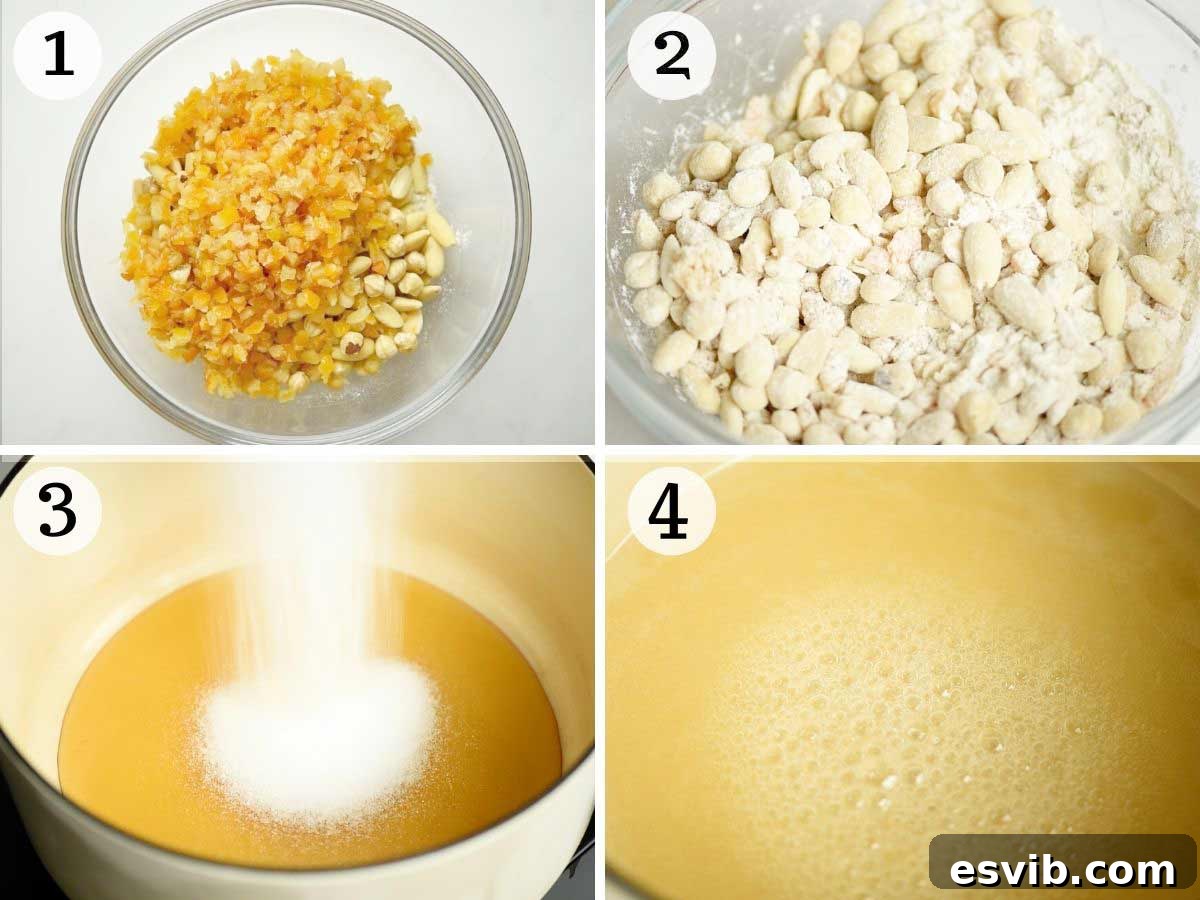
- Combine Dry Ingredients: In a large mixing bowl, combine the flour, all your aromatic festive ground spices (cinnamon, coriander, cloves, and nutmeg), the mixed nuts, and the candied mixed peel. Stir these ingredients thoroughly with a spoon or whisk to ensure they are evenly distributed throughout the mixture. Set this bowl aside for a moment while you prepare the wet components.
- Prepare the Honey and Sugar Mixture: In a large, heavy-bottomed pot or a Dutch oven, add the granulated sugar and runny honey. Place the pot over medium heat. Stir continuously with a wooden spoon or spatula until the sugar has completely dissolved into the honey, and the mixture begins to gently bubble around the edges. This simmering process creates the sticky, sweet base that binds all the other ingredients together and contributes to Panforte’s dense texture.
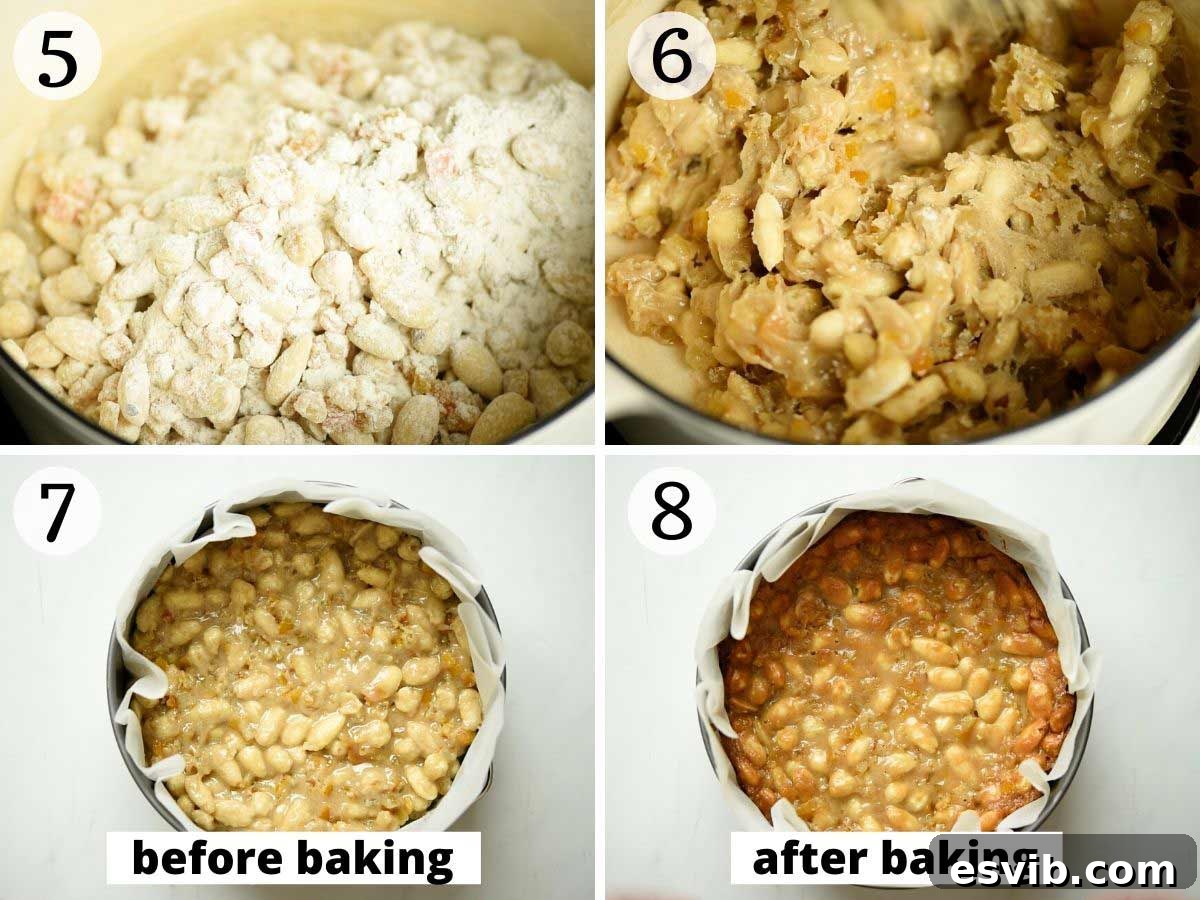
- Integrate Dry and Wet Mixtures: Reduce the heat to low. Immediately add the reserved dry ingredient mixture (flour, nuts, spices, and candied peel) to the bubbling honey and sugar. Work quickly and stir vigorously with a sturdy silicone spatula until all the dry ingredients are thoroughly combined with the honey mixture. The mixture will become very thick, stiff, and incredibly sticky at this stage, which is precisely why a heat-resistant silicone spatula is highly recommended for its non-stick properties and strength.
- Press into the Prepared Pan: Once fully combined and still warm, spoon the thick, sticky Panforte mixture into your meticulously lined cake pan. Using the back of your silicone spatula or a piece of lightly oiled parchment paper, press and smooth the mixture evenly across the pan. Aim for a compact, uniform layer, ensuring there are no air pockets. Working efficiently during this step is absolutely key, as the mixture will begin to cool and stiffen rapidly, making it harder to spread.
- Bake to Perfection: Place the cake pan into your preheated oven and bake for approximately 35 to 40 minutes. The Panforte should be firm to the touch when gently pressed and appear slightly darker around the edges. It’s important to avoid over-baking, as this can make the cake too hard and less chewy.
- Cool Completely: Remove the Panforte from the oven and let it cool completely in the pan on a wire rack. This prolonged cooling process is absolutely crucial for the cake to set properly and develop its signature dense and delightfully chewy texture. Attempting to slice it while still warm will likely result in a crumbly mess and difficulty in handling.
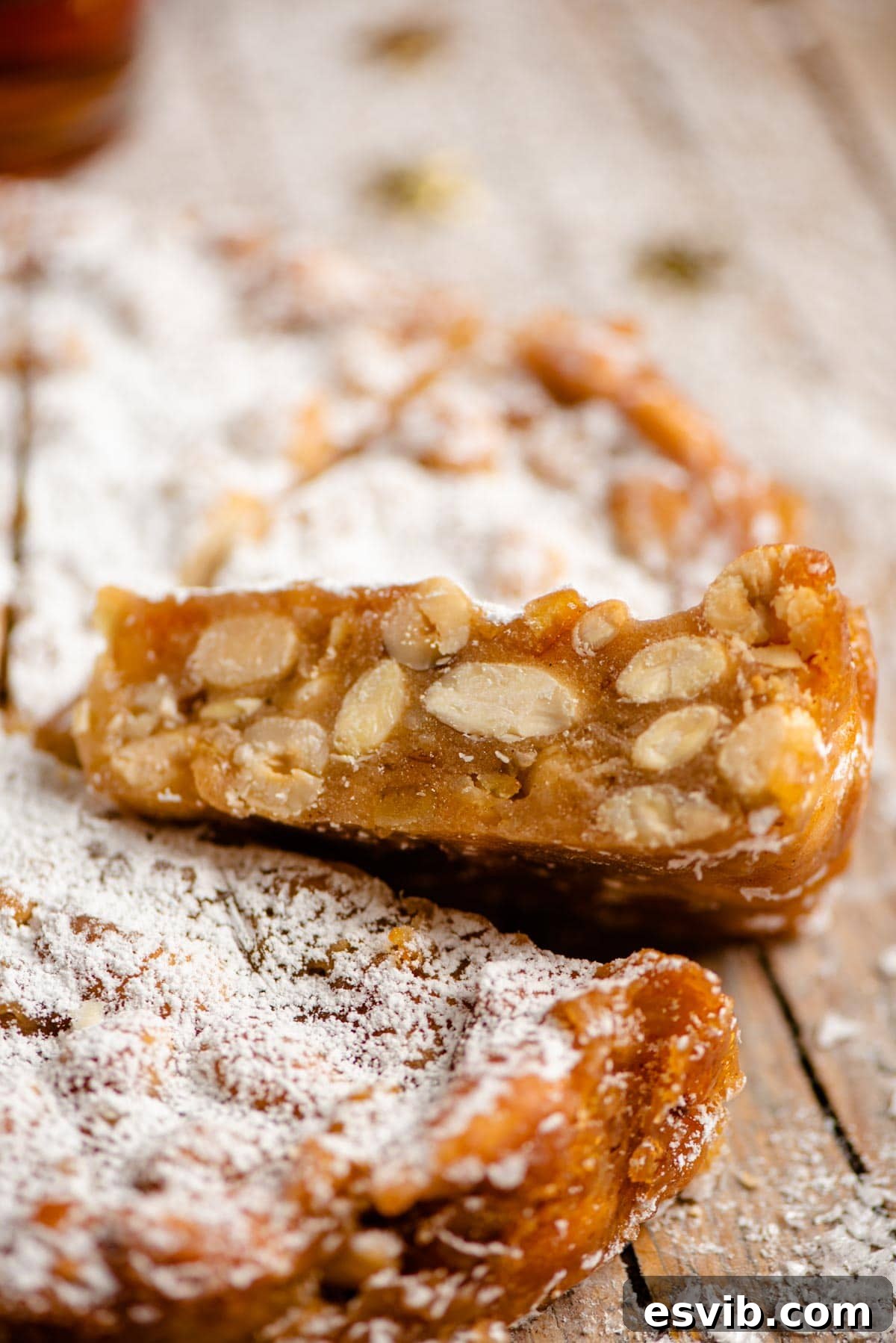
- Dust and Serve: Once entirely cooled and firm, carefully remove the Panforte from the springform pan and gently peel away the baking parchment. Generously dust the entire top surface of the cake with powdered sugar, creating its traditional elegant, snow-dusted appearance.
- Enjoy or Store: Your homemade Panforte is now ready to be sliced and savored! Use a sharp knife to cut it into thin wedges or small rectangles. It pairs wonderfully with a warm cup of coffee, a glass of Vin Santo, or simply enjoyed on its own as a festive treat.
Expert Tips for the Best Panforte di Siena
- Proper Pan Lining is Key: As emphasized in the instructions, meticulous pan lining is absolutely crucial for Panforte. While baking parchment is highly effective and widely available, some traditional recipes call for edible rice paper (carta ostia). If you opt for rice paper, there’s no need to remove it before serving, as it’s perfectly safe and customary to eat with the cake. Regardless of your choice, ensure your chosen lining extends well up the sides of the pan for effortless removal and a clean finish.
- Act Swiftly and Decisively: The honey and sugar mixture, once combined with the dry ingredients, will begin to cool and set quite rapidly. It’s imperative to work quickly and with purpose when stirring everything together and pressing it into the cake pan. This rapid action ensures a smooth, even consistency and prevents the mixture from becoming too stiff and unmanageable, which can happen if you hesitate.
- Embrace the Silicone Spatula Advantage: Due to the incredibly sticky and thick nature of the Panforte mixture, a sturdy, heat-resistant silicone spatula is your absolute best friend in the kitchen for this recipe. Its non-stick surface and flexible yet strong construction make stirring and spreading the dense mixture far easier and cleaner than with a wooden spoon or metal utensil, minimizing waste and frustration.
- Patience During Cooling is a Virtue: Resist the temptation to slice your Panforte before it has completely cooled down to room temperature. Cooling allows the cake to firm up properly, developing its characteristic dense and chewy texture. Attempting to slice it while still warm will undoubtedly result in a crumbly, unmanageable mess. Additionally, dusting with powdered sugar while warm will cause the sugar to dissolve into the cake, so always wait until it’s fully chilled for that pristine, snow-dusted finish.
- The Art of Gifting Panforte: Panforte makes an exceptional and deeply personal homemade Christmas gift. Once completely cooled and elegantly dusted, wrap individual cakes or even neatly sliced portions beautifully in wax paper, clear cellophane, or festive tissue paper, then tie it with a charming holiday ribbon. It’s a gift that truly comes from the heart, showcasing your culinary prowess and thoughtfulness.
- Optimal Storage Secrets: To maintain its freshness, delightful chewiness, and aromatic flavors, wrap your Panforte tightly in plastic wrap (cling film). Then, store it in an airtight container or a decorative cookie tin at room temperature. When stored correctly, it will keep beautifully for up to 3 weeks, and often even longer, becoming a wonderful treat to enjoy throughout the holiday season.
- Freezing for Extended Enjoyment: Panforte freezes exceptionally well, making it perfect for preparing far in advance. For long-term storage, ensure the cake is completely cooled. Wrap it tightly first in plastic wrap, then add an additional protective layer of aluminum foil, or place it in a heavy-duty freezer bag or freezer-safe container. It can be stored in the freezer for several months. When you’re ready to enjoy it, simply transfer it to the refrigerator overnight to thaw slowly, or allow it to thaw at room temperature for a few hours before slicing and serving.
Frequently Asked Questions About Panforte
What are the best nuts to use in Panforte?
While blanched almonds and hazelnuts are traditionally used and provide a wonderful, classic flavor and texture, you have creative freedom to personalize your Panforte! Many enthusiasts enjoy adding unsalted pistachios for a beautiful pop of green color and a distinct, slightly sweet taste, or walnuts for a more rustic feel and earthy notes. A harmonious mix of several types of nuts can add complexity, depth, and visual appeal to your cake. Regardless of your choice, ensure the nuts are fresh and, if desired, lightly toasted before incorporating them, as this significantly enhances their nutty flavor.
How long does Panforte last?
Panforte is renowned for its excellent and impressive shelf life, making it a fantastic make-ahead holiday treat and a perfect edible gift. When wrapped properly in plastic wrap and stored in an airtight container at room temperature, it can easily last for up to 3 weeks. Some claim that Panforte can maintain its quality and flavor for over a month if stored correctly in optimal conditions, making it a durable and delightful addition to your holiday spread.
Can I freeze Panforte?
Absolutely! Panforte freezes beautifully, allowing you to extend its enjoyment far beyond the immediate holiday season. To freeze, ensure the cake is completely cooled to room temperature. Wrap it tightly first in plastic wrap to protect it from freezer burn, then add an additional protective layer of aluminum foil, or place it in a heavy-duty, freezer-safe bag or container. It can be stored in the freezer for several months without compromising its quality. When you’re ready to indulge, simply transfer it to the refrigerator overnight to thaw slowly, or let it thaw at room temperature for a few hours before slicing and serving.
Explore More Italian Christmas Desserts
Italy’s Christmas culinary traditions are incredibly rich, diverse, and filled with delightful sweets that capture the essence of the season. If you loved making Panforte, here are some other equally delightful Italian Christmas desserts to try, each offering a unique taste of Italy’s festive spirit:
- Chocolate Salami (Salame di Cioccolato)
- Pandoro Christmas Tree Cake (Italian Christmas Cake)
- Struffoli – Italian Honey Balls
- Panettone Bombe – Christmas Ice Cream Cake
- Panettone Bread Pudding
- Ricciarelli – another delicate and delicious Sienese specialty, often compared to Panforte for its regional origins.
Your Feedback Matters!
We absolutely love hearing from you and value your culinary adventures! If you’ve tried this Panforte Recipe or any other recipe from our collection, please consider sharing your experience by leaving a comment below. Your insights and feedback are incredibly valuable to us and our growing community of home cooks. Don’t forget to connect with us and become part of our vibrant food community on FACEBOOK, INSTAGRAM, and PINTEREST to stay updated with more delicious Italian food, behind-the-scenes glimpses, and inspiring culinary ideas!
Important Information for All Recipes
Here are some helpful details and practices we consistently follow across all our recipes to ensure clarity and consistency:
- We always use high-quality extra virgin olive oil in all of our savory recipes unless a different type of oil or fat is specifically stated in the ingredient list.
- For the absolute best flavor and results in recipes calling for canned or jarred tomatoes of any kind (e.g., crushed, diced, whole peeled), we highly recommend using premium Italian brands such as Cirio or Mutti. Their superior quality significantly impacts the final taste.
- Unless specified otherwise within the recipe instructions or ingredient list, all vegetables referred to in our recipes are assumed to be of medium size.
- All our recipes are meticulously tested and developed using a fan (convection) oven. If you are using a conventional oven, minor adjustments to baking times and temperatures may be necessary.
- Find out more about how nutrition information is calculated on our website, providing transparency regarding the approximate nutritional values.
- Discover our essential Italian Pantry Staples to help you stock your kitchen with key ingredients for authentic Italian cooking.
- Explore all our recommended Essential Kitchen Tools for Italian Cooking to ensure you have a well-equipped kitchen for preparing delicious Italian meals.
Panforte Nutrition Facts (Approximate per Serving)
Based on a serving size of 1/15th of the cake, the approximate nutritional values are:
- Calories: 300 kcal
- Carbohydrates: 41g
- Protein: 5g
- Fat: 15g
- Saturated Fat: 1g
- Sodium: 11mg
- Potassium: 184mg
- Fiber: 3g
- Sugar: 32g
- Vitamin A: 5 IU
- Vitamin C: 2mg
- Calcium: 32mg
- Iron: 2mg
Note: Nutrition information provided is an approximation and can vary based on specific brands of ingredients used and minor variations in preparation methods. It should be used as a general guide.