
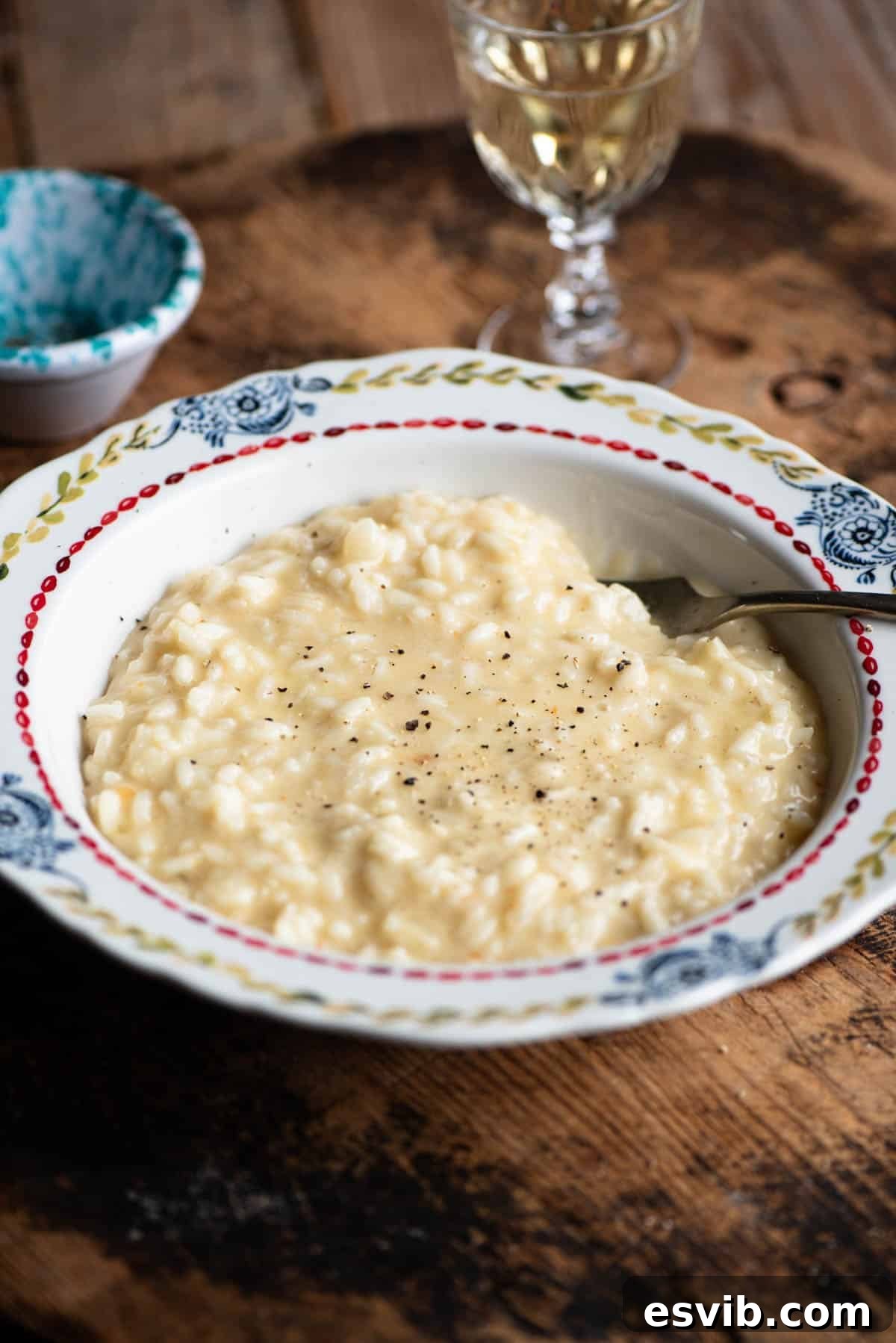
Risotto alla Valdostana: The Ultimate Creamy Fontina Cheese Comfort Food
Risotto alla Valdostana is more than just a meal; it’s a warm embrace on a cold day. Hailing from the picturesque Aosta Valley in northern Italy, this traditional risotto recipe is a celebration of rich flavors and comforting textures. Prepared with fragrant white wine and an abundance of exquisite Fontina DOP cheese, it’s a dish that promises to be easy to make, incredibly hearty, and utterly delicious. Perfect for keeping you cozy and satisfied during the colder months, this recipe brings the rustic charm of the Italian Alps directly to your kitchen.
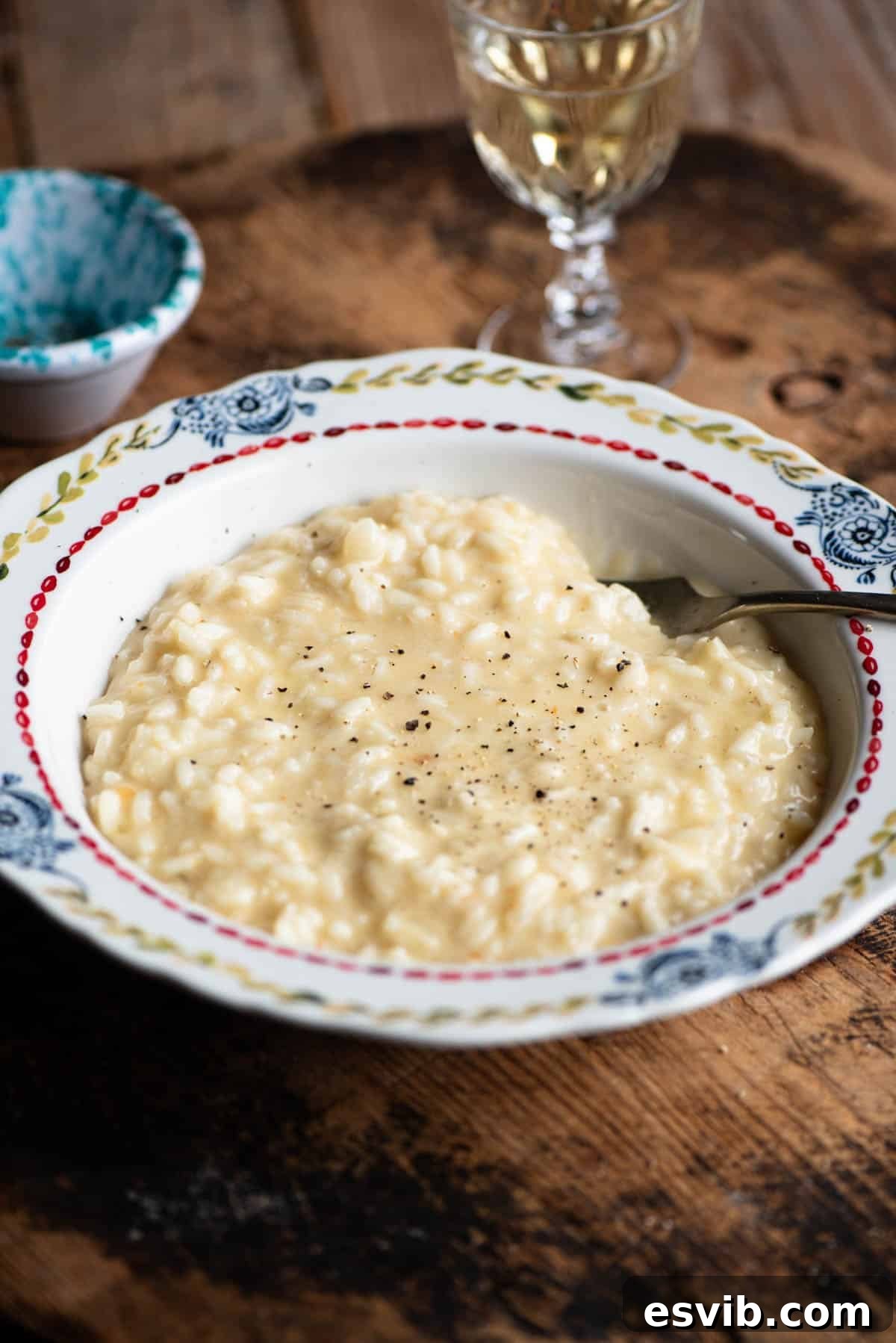
A Journey to the Aosta Valley: The Heart of Italian Mountain Cuisine
Nestled amidst the majestic peaks of the Alps, the Aosta Valley is Italy’s smallest region, yet it boasts a culinary heritage as grand as its mountainous landscape. Known for its robust, soul-satisfying dishes, the cuisine of Aosta Valley is perfectly suited to keep you warm and energized against the alpine chill. Among its many treasures, Risotto alla Valdostana stands out as a true emblem of comfort. This dish embodies the region’s resourceful cooking style, utilizing local, high-quality ingredients to create something truly special.
For many, this creamy and extra-cheesy bowl of warm risotto is the very definition of comfort food. It’s a dish that evokes images of crackling fires and snowy vistas, offering a hearty and nourishing experience with every spoonful. While sophisticated in flavor, this recipe is surprisingly straightforward to prepare. It builds upon the fundamental techniques of classic risotto making, elevated by the decadent addition of local Fontina cheese right at the finish. The result is a risotto that is not just creamy, but intensely flavorful, with a depth that speaks volumes about its alpine origins.
Why You’ll Fall in Love with This Fontina Cheese Risotto
There are countless reasons to adore Risotto alla Valdostana. Its rich, cheesy flavor is incredibly satisfying, making it an ideal choice for a comforting meal. The simplicity of the cooking process, combined with the luxurious outcome, means you don’t need to be a gourmet chef to achieve spectacular results. The blend of textures – from the al dente rice to the velvety melted cheese – creates a delightful mouthfeel that keeps you coming back for more. It’s a taste of authentic Italian tradition, offering a glimpse into the hearty and wholesome cooking of the Aosta Valley.
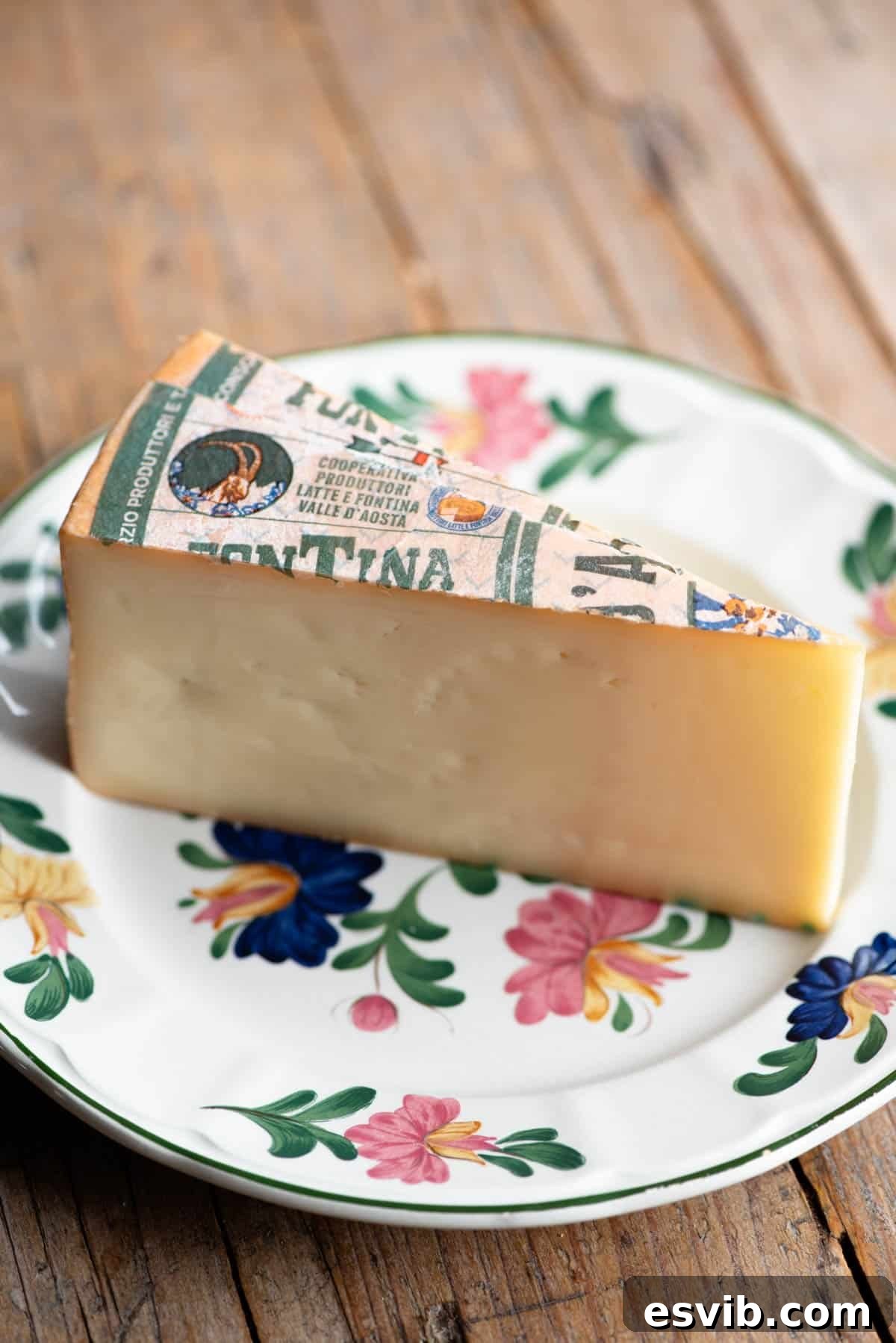
The star of this dish, Fontina DOP cheese, is an absolute game-changer. Its distinctive nutty, earthy flavor, coupled with its exceptional melting properties, makes it ideally suited for risotto. When melted, Fontina retains its unique character, blending seamlessly into the rice to create an unctuous, flavorful sauce without becoming stringy or greasy. While authentic Fontina DOP is highly recommended for the best results, a good quality Gruyère can serve as a suitable alternative if Fontina is hard to source. However, we highly encourage you to seek out genuine Fontina to fully appreciate the traditional taste of the Aosta Valley.
Looking to explore more traditional recipes from the Aosta Valley? Don’t miss out on Costoletta alla Valdostana (Stuffed Breaded Veal), a hearty meat dish perfect for a robust main course, and Tegole Valdostane (Hazelnut and Almond Cookies), delightful treats that capture the essence of the region’s sweet baking traditions. These are just a few of the many culinary delights waiting to be discovered from this unique corner of Italy.
Below, you’ll find the complete recipe, including detailed notes on ingredients, step-by-step photographs, and expert tips to ensure your Risotto alla Valdostana is perfect every time. For a full printable version of the recipe, simply scroll to the bottom of the page or click the dedicated recipe link.
Essential Ingredients for Authentic Valdostana Risotto
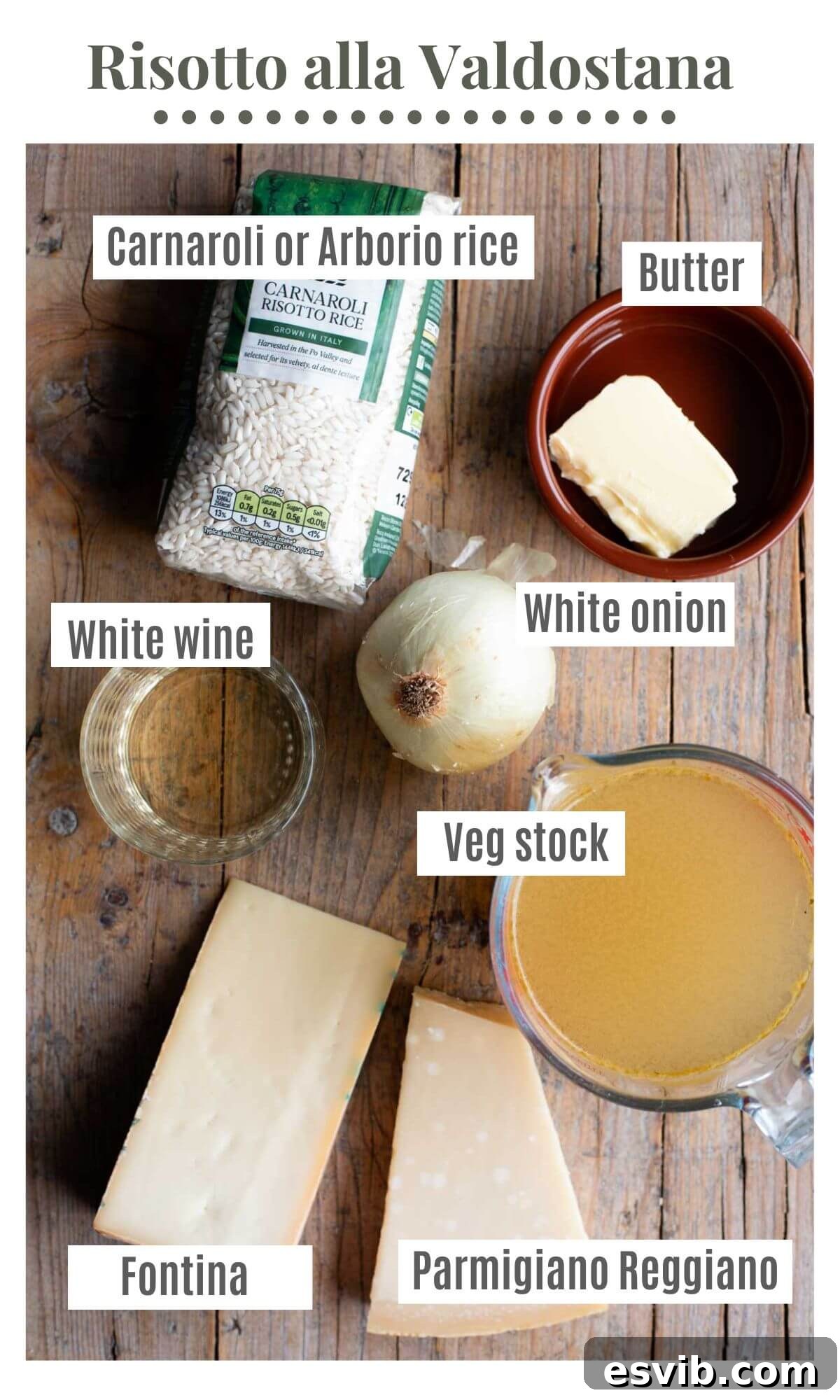
Crafting a truly authentic Risotto alla Valdostana begins with selecting the right ingredients. Each component plays a vital role in achieving the dish’s signature creamy texture and rich flavor profile. Here’s a detailed look at what you’ll need, along with some important notes and potential substitutions to guide you.
Ingredient Notes and Substitutions
- Unsalted Butter: The Northern Italian Touch. In many parts of northern Italy, butter is favored over olive oil for cooking, imparting a distinct richness and a nuanced flavor to dishes. We highly recommend using unsalted butter to maintain precise control over the overall seasoning of your risotto. Using unsalted butter ensures that the natural saltiness of the Fontina and Parmigiano Reggiano can shine through without making the dish excessively salty.
- Risotto Rice: The Foundation of Creaminess. The choice of rice is paramount for a proper risotto. Carnaroli and Arborio are the two primary varieties recommended due to their high starch content and ability to absorb liquid while maintaining an appealing al dente bite. Carnaroli is often considered the “king of risotto rice” for its superior starch release and resilience, leading to an exceptionally creamy yet perfectly structured risotto. Arborio is more widely available and also produces excellent results, though it can be slightly less forgiving and prone to becoming mushy if overcooked. Both types release starch gradually, which is the secret to that coveted creamy texture.
- Dry White Wine: Aromatic Depth and Acidity. A good quality dry white Italian wine is essential for this recipe. Varieties like Pinot Grigio, Soave, or even a dry Vermentino would work beautifully. The wine adds a crucial layer of acidity and complexity, deglazing the pan and contributing to the overall aromatic profile of the risotto. It’s always a good rule of thumb to cook with a wine that you would genuinely enjoy drinking, as its flavor will concentrate significantly in the dish.
- Vegetable Stock: The Flavor Carrier. While vegetable stock is commonly used and creates a wonderful, light base that allows the cheese to be the star, chicken stock can also be used for a richer, more savory flavor profile. Regardless of your choice, it’s vital to use high-quality stock, ideally homemade, for the best possible taste. If opting for store-bought stock, it is absolutely crucial to select a low-sodium version. This is because both Fontina and Parmigiano Reggiano are quite salty cheeses, and using regular stock could lead to an overwhelmingly salty final dish. Keeping the stock consistently warm throughout the cooking process is also a small but important detail that ensures a continuous, even cooking temperature for the rice, contributing to a perfectly creamy risotto.
- Fontina DOP Cheese: The Aosta Valley Star. Fontina DOP (Denominazione di Origine Protetta) is truly the heart and soul of Risotto alla Valdostana. This semi-hard, savory cheese, exclusively from the Aosta Valley, is celebrated for its distinctive nutty, earthy flavor, and its remarkable melting consistency. It becomes incredibly smooth and creamy when heated, without becoming stringy or greasy, making it perfect for incorporating into a risotto. You can typically find authentic Fontina in specialty cheese shops, gourmet supermarkets, or well-stocked Italian food stores. If Fontina DOP is absolutely unavailable, Gruyère cheese is considered the best alternative, offering a similar nutty flavor and excellent melting qualities.
- Parmigiano Reggiano: A Touch of Umami. While Fontina provides the primary cheesy character, a grating of freshly grated Parmigiano Reggiano adds another layer of salty, umami depth and a delightful sharpness that perfectly complements the Fontina. Always use freshly grated Parmigiano Reggiano for superior flavor and texture; pre-grated varieties often lack the same intensity.
- White Onion: The Sweet Foundation. A finely chopped white onion provides the essential aromatic base for the risotto. When slowly sautéed in butter, it sweetens and softens, building a crucial layer of flavor that permeates the entire dish.
- Salt and Freshly Ground Black Pepper: Seasoning to Perfection. These pantry staples are essential for balancing and enhancing all the flavors. Remember to season judiciously, especially considering the saltiness of the cheeses and stock.
Step-by-Step Guide to Crafting Your Creamy Risotto alla Valdostana
Making risotto is often described as an art of patience and technique, but it’s an incredibly rewarding process that yields truly spectacular results. Follow these detailed steps carefully to achieve a wonderfully creamy, al dente, and flavorful Risotto alla Valdostana.
- Prepare Your Stock: The very first step for any great risotto is to prepare your stock. Pour your chosen vegetable or chicken stock into a separate saucepan and bring it to a gentle simmer over a low flame. Keep it warm throughout the entire cooking process. This prevents shocking the rice with cold liquid, which can interrupt the cooking, make the rice cook unevenly, and hinder the release of starch necessary for that signature creaminess.
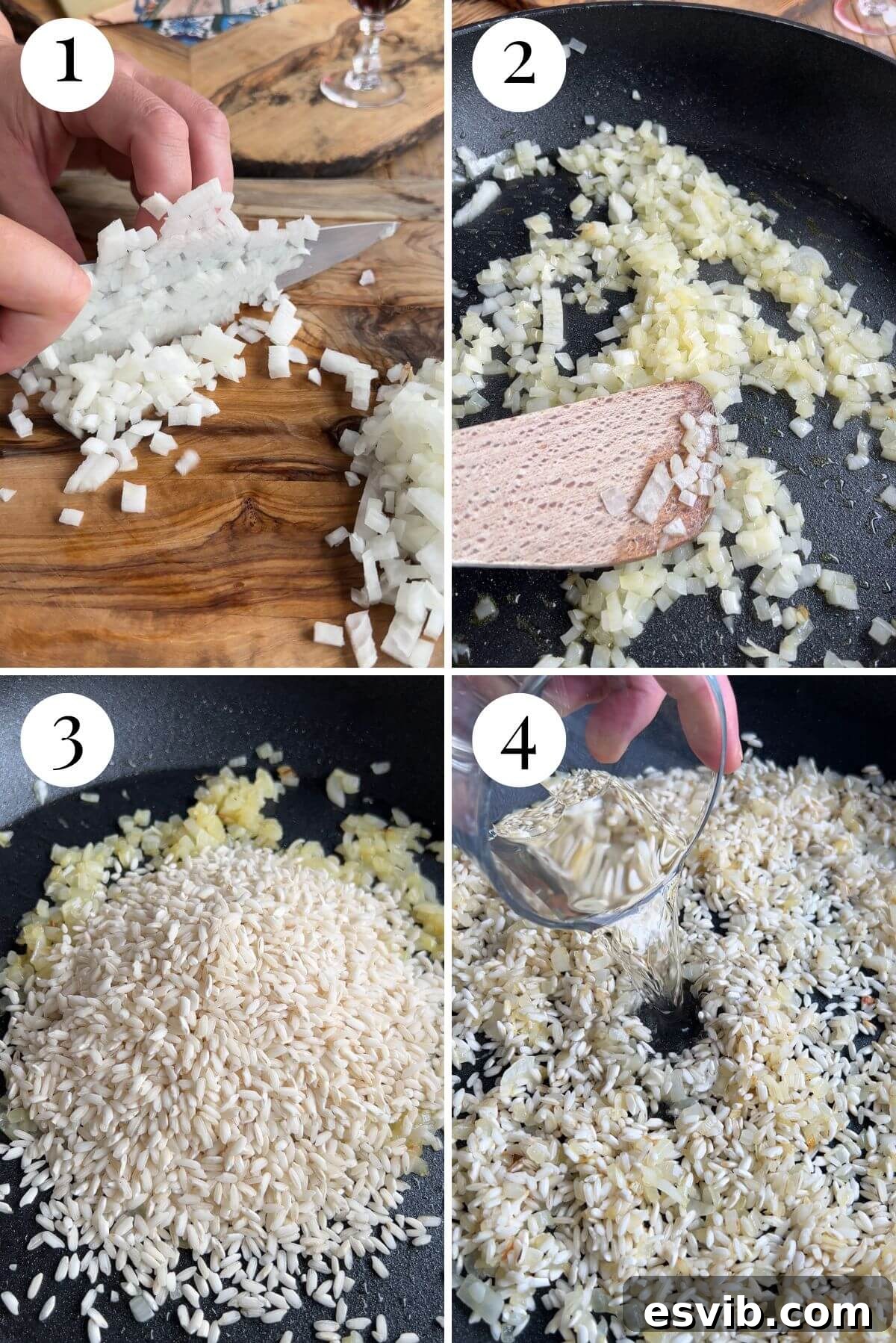
- Slowly Sauté the Onion: In a large, heavy-bottomed pan or Dutch oven (the wider the pan, the better for even cooking), melt the unsalted butter over a low heat. Add the finely chopped white onion along with a small pinch of salt. Sauté the onion very slowly, stirring occasionally, for about 7-10 minutes until it becomes translucent and soft, almost melting into the butter, without taking on any brown color. This gentle, slow cooking is crucial; it prevents the butter from burning and allows the onion’s natural sweetness to fully develop, forming a rich and aromatic base for your risotto (refer to photos 1 and 2 for visual guidance on this stage).
- Toast the Risotto Rice: Once the onion is perfectly tender and translucent, add the Carnaroli or Arborio rice directly to the pan. Stir continuously to ensure every single grain of rice is thoroughly coated with the melted butter and softened onions. Continue to toast the rice for 1-2 minutes over medium heat. This step, known as “tostatura,” is fundamental. It lightly toasts the exterior of the rice grains, helping them to retain their shape and achieve a pleasant al dente texture, while simultaneously preparing their core to absorb liquid and gradually release its starches (See photo 3 for the toasted rice).
- Deglaze with White Wine: Now, pour in the dry white wine. The wine will hit the hot pan and immediately begin to bubble and steam. Stir constantly, allowing the wine to cook out and evaporate for 1-2 minutes until it has almost completely reduced. The alcohol will cook off, leaving behind a delicate aroma and a crucial acidic note that brightens the risotto’s overall flavors. This step also serves to deglaze the pan, lifting any flavorful browned bits from the bottom and incorporating them into the dish (refer to photo 4, showcasing the wine reduction).
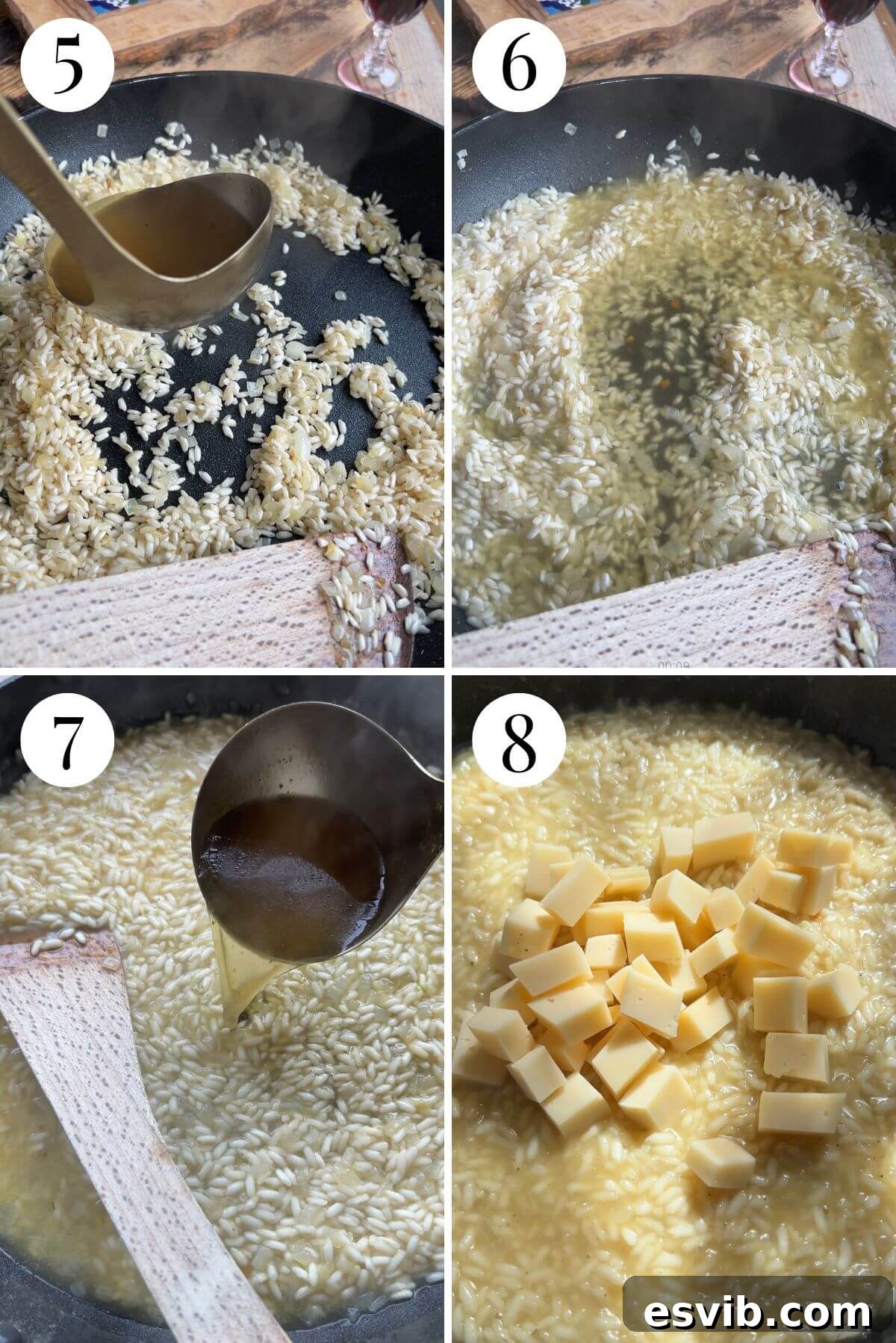
- Gradually Add Stock for Creaminess: Once the wine has almost completely reduced, begin the gradual addition of the warm stock. Add 1-2 ladles of stock at a time, stirring gently but consistently. Wait for each addition of stock to be almost entirely absorbed by the rice before adding the next. This progressive method is absolutely essential for extracting the starch from the rice grains, which is what creates the characteristic creamy, velvety texture of a well-made risotto. Continue this process for about 18-20 minutes, or until the rice is al dente – cooked through but still with a pleasant slight bite in the center. Keep stirring frequently to prevent the rice from sticking to the bottom of the pan and to ensure even cooking (photos 5-7 beautifully illustrate this crucial stirring and absorption process).
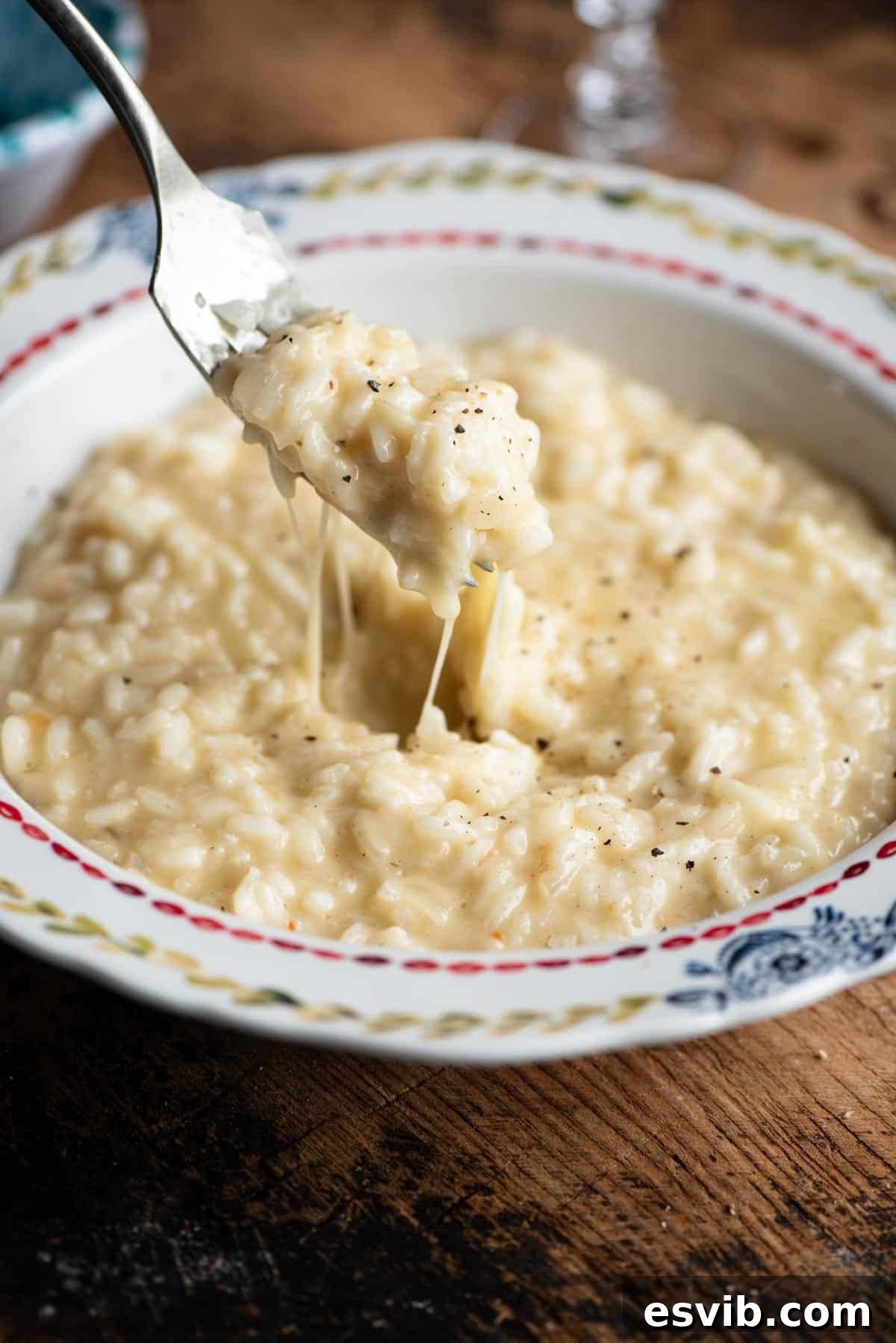
- The Cheesy Finale: Melting in the Valdostana Magic. When you’re ready to add the last 2 ladlefuls of stock, it’s time for the cheeses – the moment the Risotto alla Valdostana truly comes alive. Add the freshly grated Parmigiano Reggiano and the cubed Fontina DOP cheese to the risotto. Stir vigorously and continuously until both cheeses have completely melted and are beautifully incorporated, creating an incredibly creamy, glossy, and luscious texture. Taste the risotto for seasoning and add any additional salt or freshly cracked black pepper if needed. The risotto should have a fluid, flowing consistency, known as “all’onda” (like a wave), not stiff or overly soupy. Serve immediately in warm bowls, garnished with a final generous sprinkle of freshly cracked black pepper (see photo 8 for the exquisite finished dish).
Expert Tips for Risotto Success
Achieving the perfect creamy risotto is a rewarding culinary skill that requires attention to detail. Keep these expert tips in mind to ensure your Risotto alla Valdostana turns out flawlessly and deliciously every single time.
- Patience is Key: Low and Slow Wins the Race. This cannot be stressed enough when making risotto. The initial sautéing of the onions in butter should always be done over a low heat to prevent the butter from burning and to allow the onions to soften perfectly, which typically takes about 7-10 minutes. Similarly, cooking the risotto itself requires a consistent medium-low heat. A slow, steady simmer and continuous (but not constant) stirring are absolutely crucial for the rice to gradually release its starches, resulting in that desirable creamy consistency without becoming gluey or clumpy. Rushing the cooking process can lead to undercooked rice or a lumpy, unappealing texture.
- The Perfect Moment to Add Cheese. The timing for incorporating the cheeses is vital for achieving the correct texture and flavor in your risotto. Always add the Fontina and Parmigiano Reggiano right at the very end of the cooking process, specifically when you are adding the final ladles of stock. Adding cheese too early can interfere with the rice’s ability to properly absorb liquid and achieve its proper al dente state. Stirring in the cheese at the conclusion allows it to melt beautifully into the hot rice, creating a rich, emulsified, and velvety sauce that envelops every grain.
- Seasoning Smartly: Mind the Salt. Both Fontina and Parmigiano Reggiano are naturally flavorful and salty cheeses. Therefore, exercise caution and be judicious with salt throughout the initial cooking process. Add only a small pinch of salt when sautéing the onions, and always opt for low-sodium stock. Once the cheeses have completely melted and been incorporated into the risotto, taste the dish. Only then should you adjust the seasoning with additional salt if necessary. A generous grind of fresh black pepper at the very end is always a welcome aromatic addition.
- Keep Your Stock Warm: The Golden Rule. As reiterated in the instructions, always keep your stock simmering gently in a separate pan. Adding cold stock to hot rice will drastically lower the temperature of the risotto mixture, interrupting the continuous cooking process and potentially leading to unevenly cooked rice and a less creamy result. A warm, consistent addition of liquid is paramount.
- Stirring Technique: Consistent, Not Constant. While frequent stirring is important for promoting starch release and preventing the rice from sticking to the bottom of the pan, you don’t need to stir *every single second*. Gentle, regular stirring, especially after each addition of stock, is sufficient. Over-stirring can sometimes break down the rice grains too much, leading to a mushy texture rather than distinct, al dente grains.
- Achieving “All’onda” Consistency: The hallmark of a perfectly cooked risotto is its flowing, wave-like consistency, known as “all’onda” in Italian. When you gently shake or tilt the pan, the risotto should spread out smoothly and softly, like a gentle wave. It shouldn’t be too soupy, nor should it be too stiff and clumped together. If your risotto appears too thick, simply add a little more warm stock (a tablespoon at a time) and stir until the desired “all’onda” consistency is achieved.
Storing and Reheating Leftovers (and Making Arancini!)
Risotto is undoubtedly at its absolute best when served fresh off the stove, while its creamy texture and vibrant flavors are at their peak. However, it’s not uncommon to have leftovers, and thankfully, there are delicious ways to enjoy them!
- Reheating Risotto: If you have leftover risotto, store it in an airtight container in the refrigerator for 1-2 days. When you’re ready to reheat, gently warm it in a saucepan over low heat. You’ll notice that the risotto will have stiffened considerably in the fridge as the starch sets. To restore its creamy consistency, add a generous splash of water or warm stock and stir continuously until the rice loosens and reaches a desirable, flowing texture. Ensure it’s piping hot throughout before serving.
- Transform into Arancini: One of the most beloved and delicious ways to utilize leftover risotto is to transform it into Arancini, classic Italian fried rice balls. This cheesy Risotto alla Valdostana is particularly well-suited for making incredible Arancini due to its rich flavor and the way it firms up when cold. To make them, simply take portions of the cold risotto and roll them into compact balls (you can even insert a small cube of fresh Fontina cheese into the center of each ball for an extra cheesy burst when fried!). Then, dredge the balls sequentially in all-purpose flour, beaten egg, and finally, fine breadcrumbs, ensuring they are fully coated. Fry them in hot oil until they are golden brown and wonderfully crispy on the outside, creating a truly delightful snack or appetizer.
Discover More Italian Comfort Food & Risotto Recipes
If you’ve fallen in love with the comforting allure of risotto and the rich flavors of Italian cuisine, there’s a whole world of delicious variations and traditional dishes waiting to be explored. Risotto is an incredibly versatile dish, capable of incorporating a wide array of ingredients from seasonal vegetables to savory meats and cheeses. Here are some of our other favorite risotto recipes that are sure to tantalize your taste buds and inspire your culinary adventures:
Explore Our Risotto Collection
Risotto
Taleggio Pumpkin Risotto with Crispy Sage
Risotto
Pea and Pesto Risotto
Risotto
Cacio e Pepe Risotto
Risotto
Creamy Mushroom Risotto
If you’ve tried this delightful Risotto alla Valdostana recipe or any other recipe from our blog, we’d absolutely love to hear from you! Please don’t hesitate to rate the recipe and share your experience, tips, or questions in the comments section below. Your feedback truly means a lot to us and helps other home cooks on their culinary journey! You can also follow us on Facebook, Instagram, and Pinterest for more daily culinary inspiration, behind-the-scenes glimpses, and delicious food photography. Don’t forget to sign up for our Newsletter to receive weekly updates on our latest delicious creations and exclusive content directly to your inbox.
Step By Step Photos Above
Most of our recipes come with step by step photos, helpful tips and tricks to make it perfectly first time and even video!
Risotto alla Valdostana
By Emily
5 minutes
40 minutes
45 minutes
4 servings
Print Recipe
Ingredients
- 1.5 cups (270g) carnaroli or arborio risotto rice
- 1 white onion, finely chopped
- ¼ cup (60ml) dry white wine
- 5 cups (1200ml) vegetable stock, low sodium
- 7 oz (200g) Fontina DOP cheese, cut into small cubes
- 1/3 cup (30g) Parmigiano Reggiano, freshly grated
- 2 tablespoons (30g) unsalted butter
- Salt and freshly ground black pepper, to taste
Instructions
-
Heat your stock in a saucepan and keep it warm over low heat throughout the cooking process.
-
Melt the unsalted butter in a large, heavy-bottomed pan. Add the finely chopped white onion with a small pinch of salt. Sauté the onion on a low heat until soft and translucent (about 7-10 minutes), stirring occasionally to prevent burning.
-
Add the risotto rice to the pan and stir until every grain is coated in the butter and onions. Toast the rice for 1-2 minutes over medium heat, stirring constantly, until lightly translucent at the edges.
-
Pour in the dry white wine and let it cook out, stirring, for 1-2 minutes until it has almost completely reduced and the alcohol has evaporated.
-
Begin adding the warm stock, 2 ladles at a time. Stir the rice gently until each addition of stock has been almost fully absorbed before adding the next 2-3 ladles. Continue this process, stirring frequently, until the rice is al dente (approximately 18-20 minutes).
-
When you add the last 2 ladles of stock, incorporate the grated Parmigiano Reggiano and the cubed Fontina DOP cheese. Stir vigorously until all the cheese has fully melted and the risotto is beautifully creamy and “all’onda” (flowing like a wave). Taste for seasoning and add more salt or freshly ground black pepper if desired. Serve immediately in warm bowls.
Video
Notes
- Take your time: Cook the onions slowly in butter on a low heat. If you turn the heat up, the butter will burn before the onions are cooked. It’s also important to cook your risotto on a medium-low heat and not rush it. This will ensure it’s extra creamy and delicious.
- Adding cheese: It’s important to add the cheese right at the end (when you add the last amount of stock) and not before the rice is cooked.
- Adding salt: Add only a small pinch of salt throughout the cooking process then taste the risotto once the cheese has melted and add more to taste. The cheese is salty so will add a lot of seasoning. We also recommend using low-sodium stock for this reason.
- Leftovers: This risotto is best served immediately but can be stored in the fridge for 1-2 days. To reheat, add a splash of water or stock to the risotto to loosen it then reheat until piping hot. Alternatively, use cold risotto to make Arancini (deep-fried rice balls).
- Consistency: The ideal risotto should be “all’onda,” meaning it should flow like a wave when you shake the pan. Adjust with extra warm stock if it’s too thick.
Helpful Info for All Our Recipes
- We always use extra virgin olive oil in all of our recipes unless stated otherwise.
- When we use canned or jarred tomatoes of any kind, we always recommend Cirio or Mutti brands for the best results and flavor.
- All vegetables are medium sized unless stated otherwise.
- All recipes are tested and developed using a fan (convection) oven.
- Find out more about how nutrition is calculated.
- Check out our must-have Italian Pantry Staples.
- You can also find all our Essential Kitchen Tools for Italian Cooking.
Nutrition
Carbohydrates: 79g |
Protein: 19g |
Fat: 38g |
Saturated Fat: 24g |
Polyunsaturated Fat: 2g |
Monounsaturated Fat: 10g |
Trans Fat: 1g |
Cholesterol: 116mg |
Sodium: 1757mg |
Potassium: 175mg |
Fiber: 3g |
Sugar: 5g |
Vitamin A: 1761IU |
Vitamin C: 3mg |
Calcium: 293mg |
Iron: 4mg
Nutrition information is automatically calculated, so should only be used as an approximation.
Did you try this recipe?
Leave a comment below!