
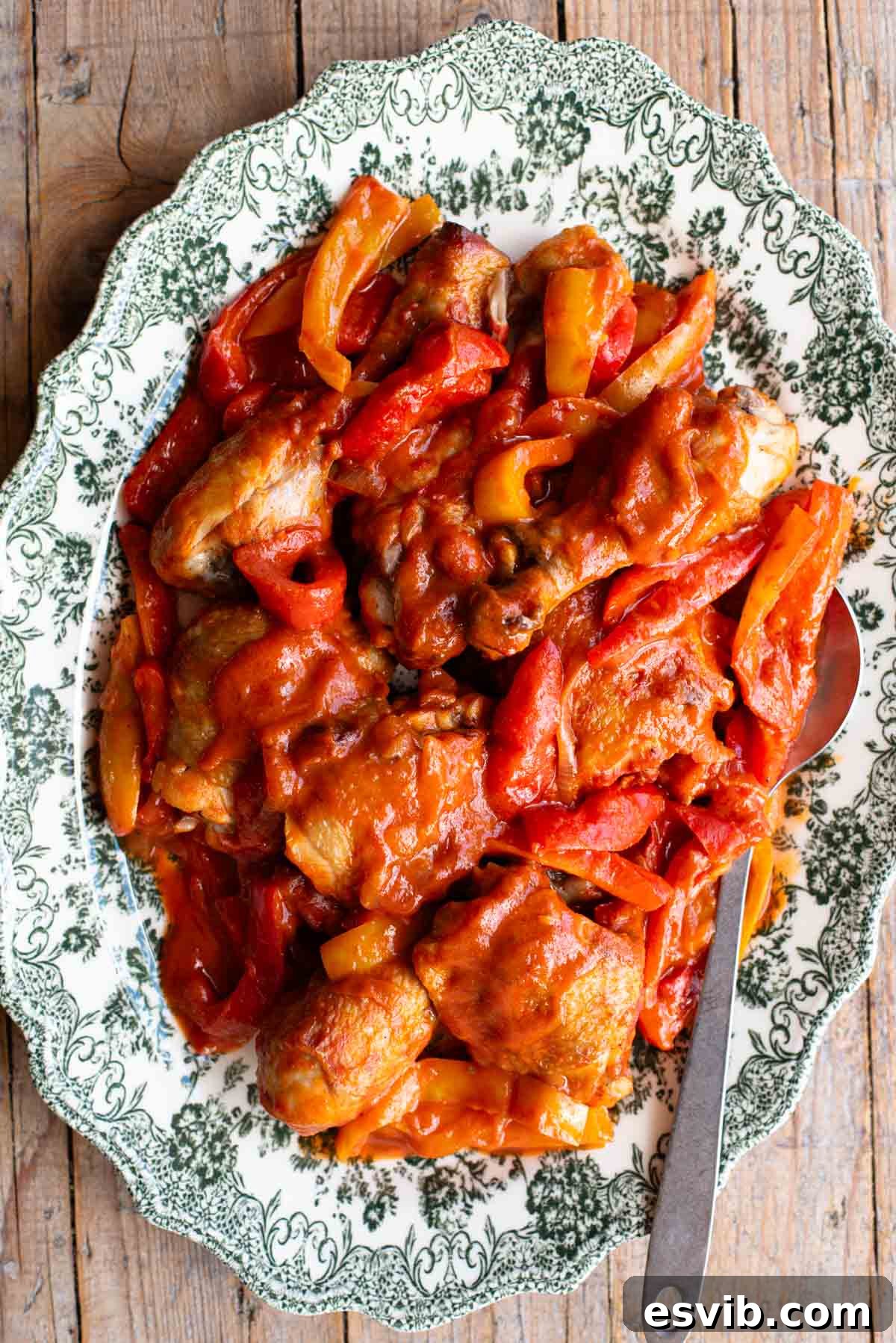
Authentic Pollo ai Peperoni alla Romana: A Taste of Roman Tradition
Step into the heart of Roman culinary tradition with Pollo ai Peperoni alla Romana, a dish that perfectly encapsulates the rustic charm and rich flavors of Italy’s capital. This beloved Roman chicken and peppers recipe brings together succulent chicken pieces, vibrant bell peppers, fragrant garlic, and sweet onions, all harmoniously simmered in a luscious tomato sauce. It’s a meal that speaks of history, comfort, and the joy of simple, quality ingredients.
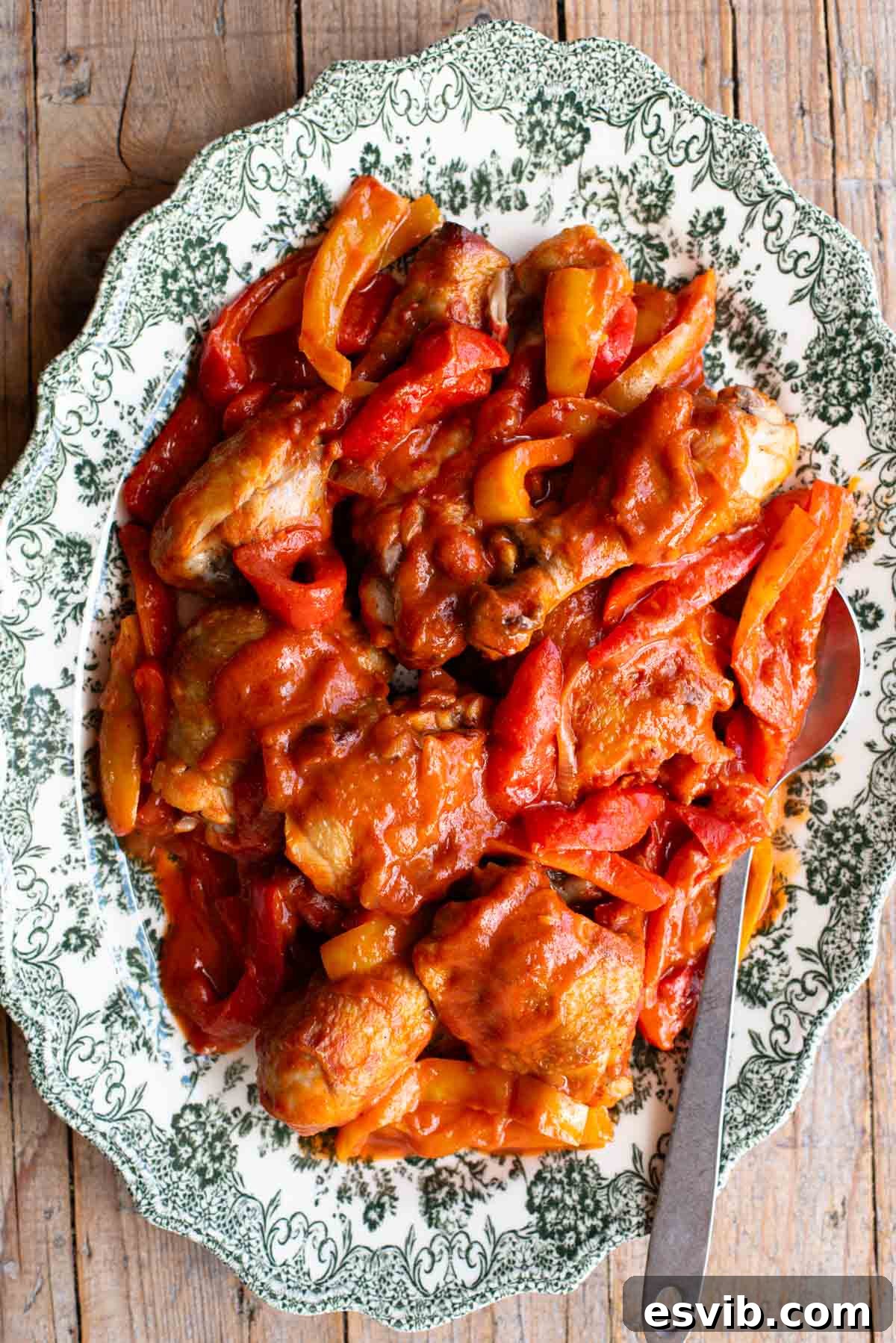
Perfectly suited for a hearty family dinner or a cozy gathering with friends, this chicken and peppers dish is incredibly versatile. It pairs wonderfully with classic Italian roast potatoes, fresh green beans, and, of course, an abundance of crusty bread to soak up every last drop of the incredible sauce. Prepare to be transported to the bustling trattorias of Rome with every forkful!
The Roman Heritage of Pollo ai Peperoni
Pollo ai Peperoni alla Romana is more than just a chicken dish; it’s a culinary emblem of Rome. Roman cuisine is renowned for its emphasis on fresh, seasonal ingredients and straightforward preparations that allow the natural flavors to shine. This recipe is a prime example, showcasing the vibrant produce of the region – especially the sweet, colorful bell peppers that are abundant during the warmer months.
Traditionally, this Roman chicken recipe calls for a whole chicken, expertly cut into pieces, and often cooked in separate pans before being combined. While we appreciate tradition, we’ve adapted this classic to be more accessible for the modern home cook without compromising on flavor. Our simplified approach uses a mix of bone-in, skin-on chicken thighs and drumsticks, making preparation much easier and ensuring uniformly tender, juicy chicken every time. This also eliminates the common pitfall of overcooking chicken breast, which can sometimes happen with whole chicken preparations.
Furthermore, while some traditionalists might advocate for cooking the chicken separately from the peppers and onions, our tests have shown that a single-pan method yields equally delicious results with significantly less fuss. Cooking everything together allows the flavors to meld beautifully from the start, creating a deeper, more cohesive sauce that is truly unforgettable. This streamlined approach means you can enjoy an authentic Roman experience with minimal effort and maximum flavor.
The sauce is, without a doubt, the star of this Roman chicken and peppers dish. Rich, savory, and bursting with the sweetness of tomatoes and peppers, it’s a testament to the power of slow simmering. Don’t forget that essential crusty bread – it’s practically a requirement for mopping up every last bit of that exquisite sauce! This recipe bears a delightful resemblance to another personal favorite, Pollo in Potacchio, a delicious braised chicken dish from the Le Marche region. If you’re eager to explore more mouthwatering Italian chicken recipes, both of these are absolute must-tries.
We absolutely adore serving Pollo ai Peperoni with perfectly roasted potatoes and a chilled glass of crisp white wine. It’s a simple pairing that elevates the meal to a truly memorable dining experience. Enjoy!
Essential Ingredients for Authentic Roman Chicken with Peppers
Crafting the perfect Pollo ai Peperoni alla Romana begins with selecting the finest ingredients. Here’s a closer look at what you’ll need and some tips for choosing the best quality components.
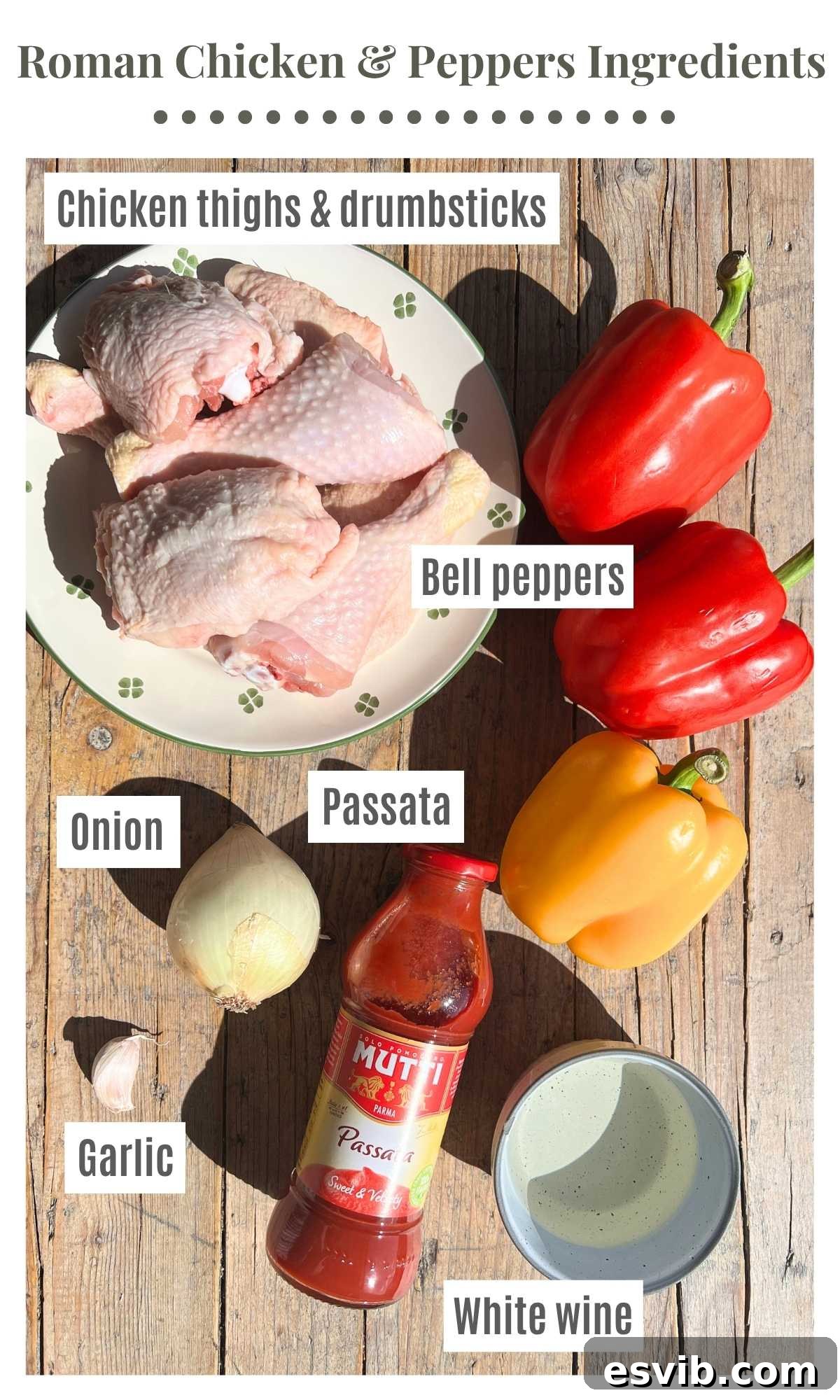
- Bell Peppers: Traditionally, a vibrant mix of red and yellow bell peppers lends both color and a balanced sweetness to the dish. However, if you prefer, using all red peppers is a perfectly acceptable alternative that still delivers fantastic flavor. Choose firm, blemish-free peppers for the best results.
- Passata (Tomato Puree in the US): The quality of your tomato passata makes an enormous difference to the depth and richness of your sauce. We highly recommend using a reputable brand you trust, such as Mutti or Cirio, known for their superior tomato products. Passata is a smooth, strained tomato puree, offering a silky base for your sauce unlike diced or crushed tomatoes.
- White Onion: A white onion contributes a wonderful, mellow sweetness that truly complements the other flavors in the sauce. If a white onion isn’t readily available, a brown or yellow onion can be used instead, though the flavor profile might be slightly less sweet. Ensure it’s finely sliced to soften evenly.
- Garlic Clove: In this traditional Roman preparation, a whole peeled garlic clove is used to infuse the olive oil with its aroma, then removed. This provides a subtle, background garlic flavor. If you desire a more pronounced garlic presence, you can finely chop or mince the clove and leave it in the sauce.
- White Wine: The white wine adds a layer of acidity and complexity, deglazing the pan and enhancing the overall flavor. The golden rule is to always cook with a wine you’d happily drink! Excellent choices for this dish include dry Italian white wines such as Trebbiano, Orvieto, Pecorino, or Pinot Grigio.
- Chicken: For the best flavor and moisture, we opt for bone-in, skin-on chicken thighs and drumsticks. The skin crisps up nicely, and the bones contribute to a richer sauce.
- Olive Oil: As with most Italian cooking, a good quality extra virgin olive oil is indispensable for sautéing and building the flavor base.
- Salt and Pepper: Essential for seasoning to taste and balancing the flavors.
Step-by-Step Guide to Crafting Perfect Roman Chicken and Peppers
Creating this delicious Pollo ai Peperoni alla Romana is surprisingly straightforward. Follow these steps for a perfect, flavorful result every time.
Step 1: Infuse Oil and Sear Chicken. Begin by adding 2-3 tablespoons of good quality olive oil to a large, heavy-bottomed pan or Dutch oven over medium heat. Add the whole peeled garlic clove and let it fry gently for about 1 minute, until it just begins to turn lightly golden and fragrant. This process infuses the oil with a delicate garlic flavor. Remove the garlic clove and set it aside for later. Next, add the chicken pieces, skin side down, to the hot pan. Cook for 5-7 minutes until the skin is beautifully golden and crispy. Flip the chicken pieces with kitchen tongs and cook for another 5 minutes on the other side to brown. This searing locks in juices and builds flavor. Remove the browned chicken from the pan and set aside on a plate.
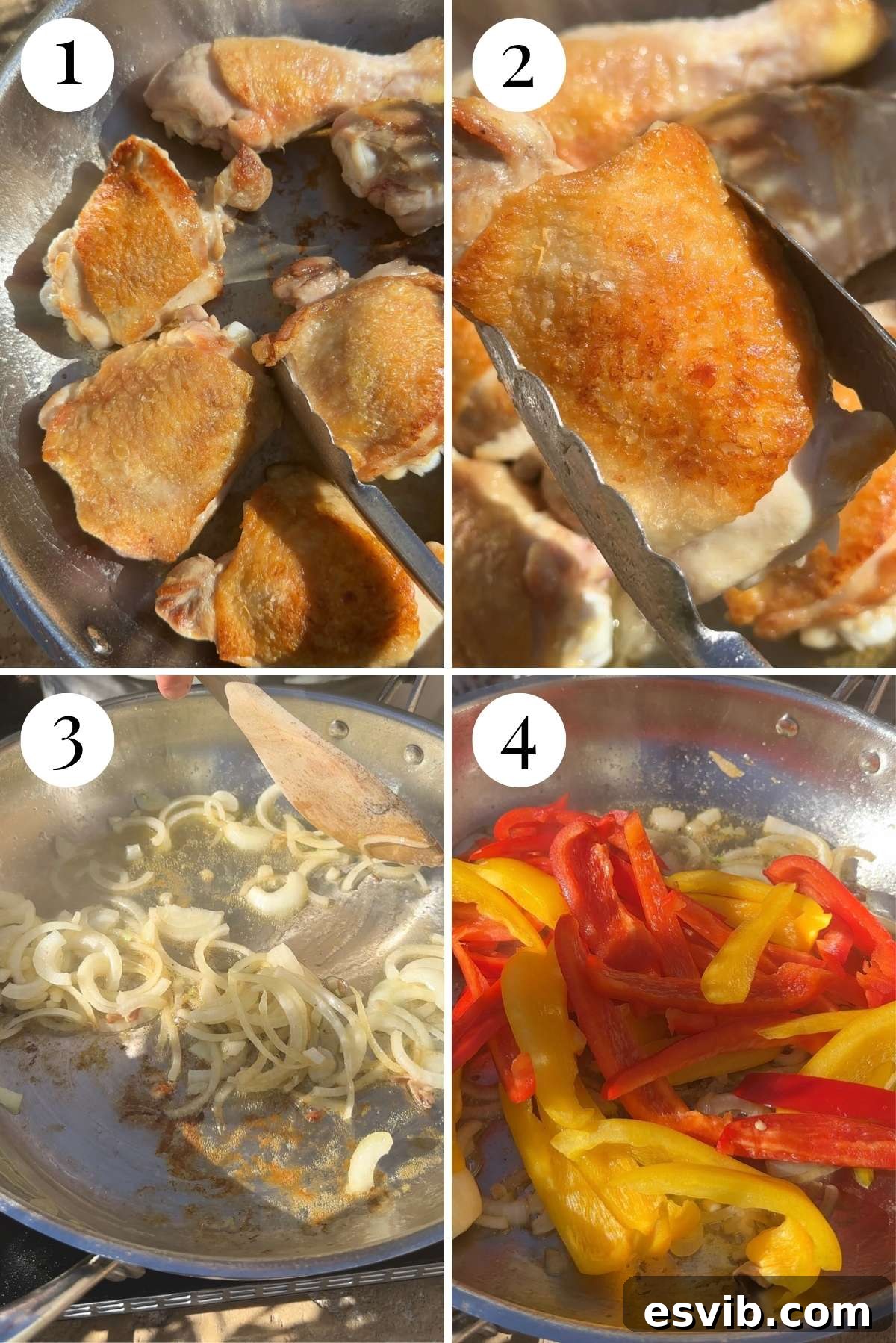
Step 2: Sauté Onions and Peppers. In the same pan, add the finely sliced white onion (add a splash more olive oil if the pan seems dry). Sauté the onion for about 5 minutes until it softens and becomes translucent, releasing its natural sweetness. Then, add the sliced red and yellow bell peppers to the pan. Continue to sauté the peppers for another 5 minutes, allowing them to begin to soften and develop a slight char, which adds to the complexity of the sauce.
Step 3: Deglaze and Simmer. Return the seared chicken and the reserved garlic clove to the pan with the sautéed vegetables. Pour in the white wine and increase the heat slightly, allowing it to simmer and reduce for a minute or so. This step deglazes the pan, capturing all those delicious browned bits from the chicken. Next, add the tomato passata, along with a generous pinch of salt and freshly ground black pepper. Stir everything together, cover the pan with a lid, and reduce the heat to low. Let the chicken and vegetables gently simmer for 25-30 minutes, allowing the flavors to meld and the chicken to cook through, absorbing the rich sauce.
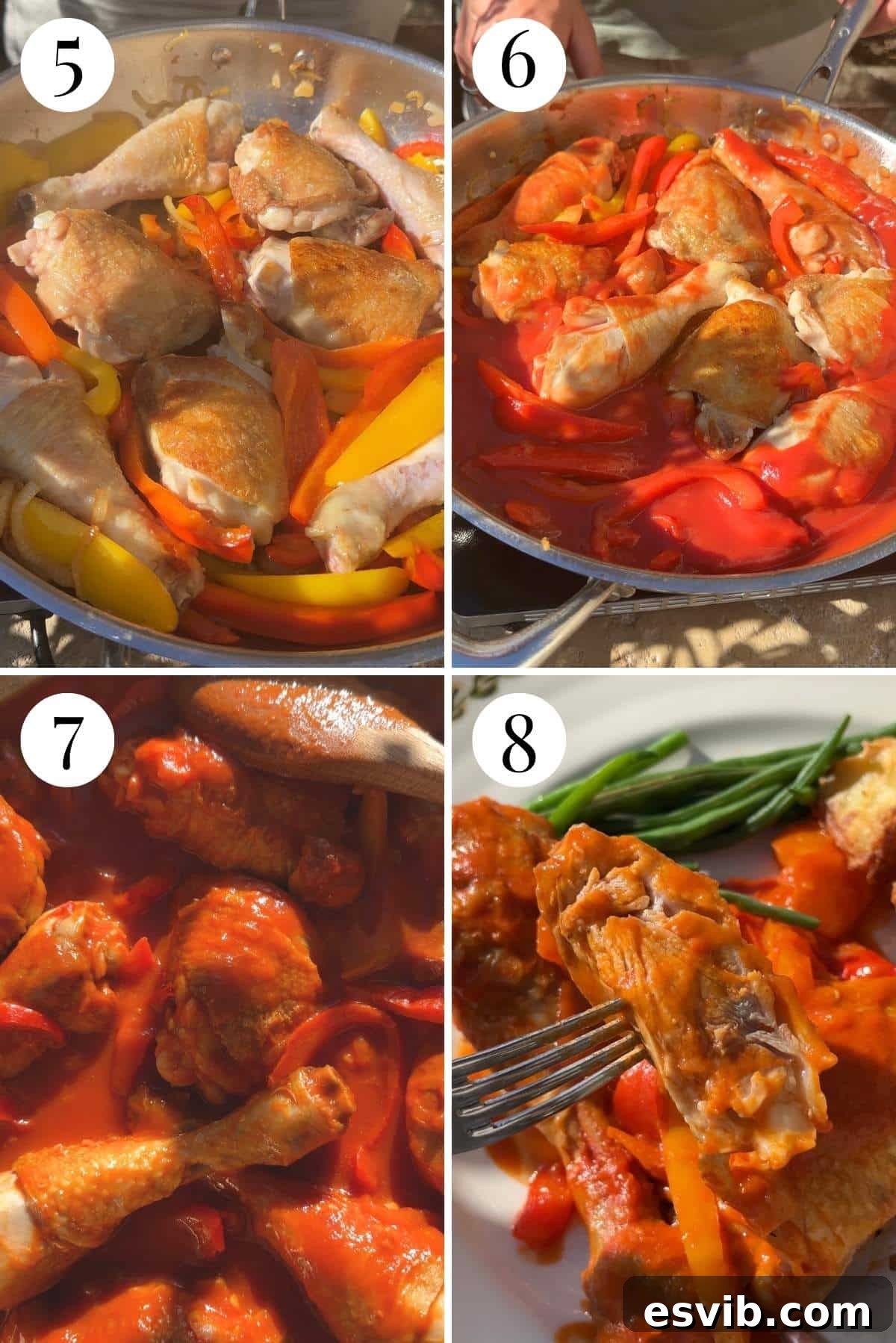
Step 4: Reduce and Serve. After the initial simmering, remove the lid from the pan and continue to cook the chicken and sauce for another 20 minutes. This allows the sauce to thicken and reduce slightly, intensifying its flavor and creating that perfect consistency. Once the sauce has reduced to your liking and the chicken is tender, it’s ready to serve. Remove the whole garlic clove before serving, if desired, or leave it in for those who enjoy a milder garlic taste.
Expert Tips & Creative Variations for Your Pollo ai Peperoni
This classic Roman chicken and peppers recipe is fantastic as is, but it’s also wonderfully adaptable. Here are some tips and variations to customize it to your taste:
- For a Stronger Garlic Flavor: The traditional Italian method of using a whole garlic clove to infuse the oil and then removing it provides a subtle aromatic background. If you love garlic and want a more robust flavor, feel free to finely chop or mince the garlic clove and leave it in the sauce to cook with the onions and peppers.
- Add a Spicy Kick: For those who enjoy a bit of heat, incorporating fresh chili or dried chili flakes (peperoncino) is a fantastic addition. Add a small amount along with the onions and peppers, or stir in flakes towards the end of cooking for a spicier finish.
- Mediterranean Twists: To introduce additional layers of flavor, consider adding a handful of pitted black olives or a tablespoon of briny capers during the last 10-15 minutes of simmering. They complement the tomato and pepper sauce beautifully. A few chopped anchovy fillets, dissolved in the hot olive oil before adding the chicken, can also add an umami depth without tasting overtly fishy.
- Herbaceous Notes: While not strictly traditional, fresh herbs can elevate this dish. A sprig of fresh rosemary added during the simmering phase will infuse a woody aroma, or stir in some fresh basil or oregano at the very end for a bright, fragrant finish.
- Additional Vegetables: Feel free to expand the vegetable profile. Sliced zucchini, eggplant, or even mushrooms can be sautéed alongside the peppers and onions to add more bulk and nutritional value.
- Chicken Cut Variations: While bone-in, skin-on pieces are preferred for flavor and moisture, you can use boneless, skinless chicken thighs or even chicken breast. If using breast meat, reduce the initial searing time and add it back to the pan later in the simmering process to prevent it from drying out. Adjust total cooking time accordingly.
Perfect Pairings: What to Serve with Roman Chicken and Peppers
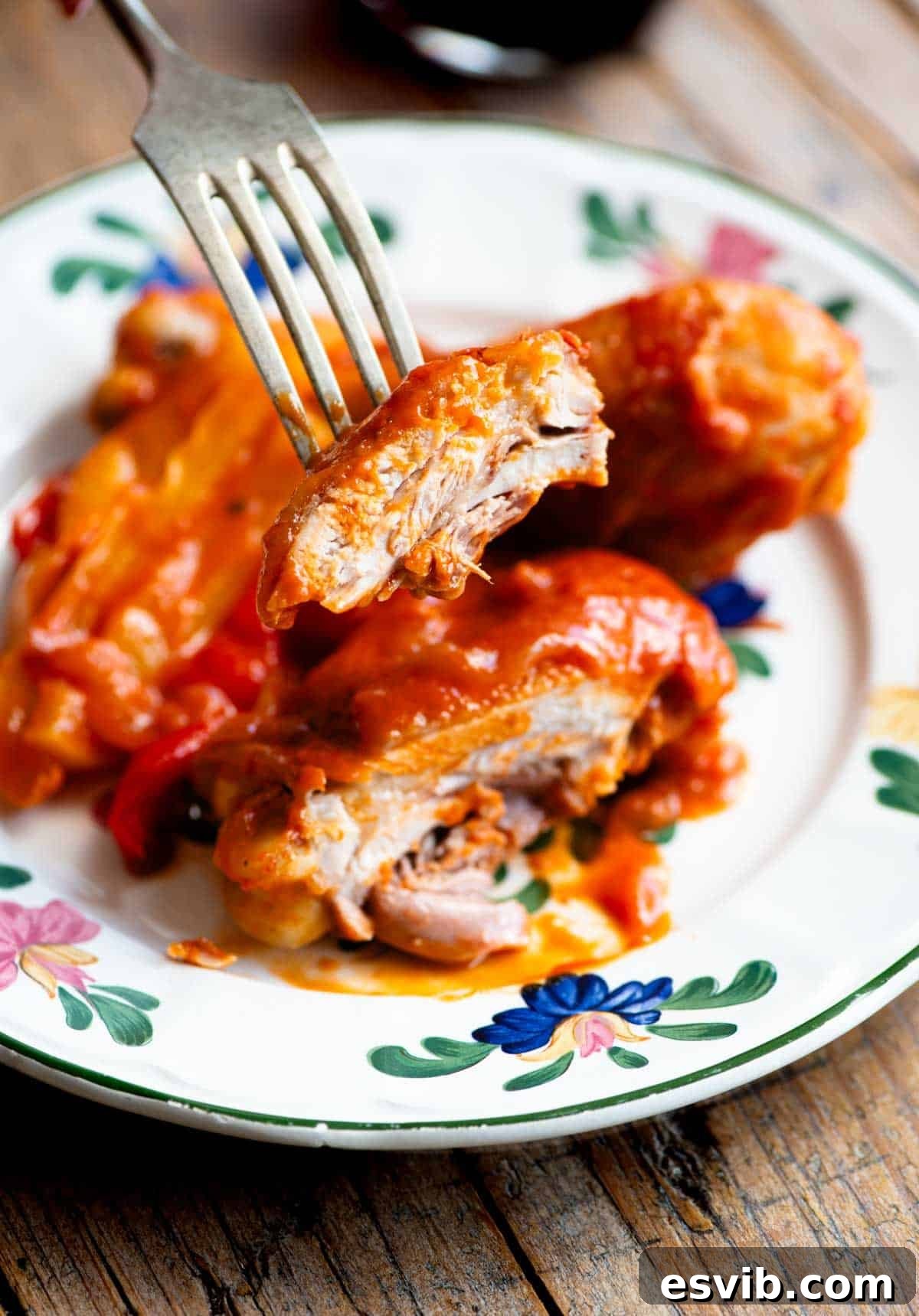
Pollo ai Peperoni alla Romana is a wonderfully complete meal on its own, but the right accompaniments can truly elevate the dining experience. Here are some of our favorite serving suggestions:
- Crusty Bread: This is non-negotiable! A good quality crusty Italian bread, ciabatta, or baguette is absolutely essential for soaking up every last bit of the rich, flavorful tomato and pepper sauce. It’s truly one of the best parts of the meal.
- Italian Roast Potatoes: Our go-to side dish! Crispy on the outside and fluffy on the inside, Italian roast potatoes are the perfect complement. Their savory texture and flavor stand up beautifully to the robust chicken and pepper sauce.
- Fresh Green Beans: Lightly steamed or sautéed green beans, simply drizzled with a little extra virgin olive oil, a pinch of salt, and freshly ground black pepper, provide a refreshing contrast and a touch of vibrant green to your plate. Asparagus or broccoli rabe are also excellent choices.
- Creamy Polenta: For a comforting and hearty option, serve the Roman chicken over a bed of creamy polenta. The polenta’s subtle flavor and smooth texture make it an ideal vehicle for the rich sauce.
- Simple Green Salad: A fresh, crisp green salad with a light vinaigrette can offer a refreshing counterpoint to the richness of the main dish, cleansing the palate between bites.
- Wine Pairing: A crisp, dry Italian white wine is highly recommended. Consider a Frascati from Lazio (Rome’s region), a Vermentino, or a light-bodied Chianti (if you prefer red) that won’t overpower the delicate flavors of the dish.
Explore More Authentic Italian Chicken Recipes
If you’ve fallen in love with the flavors of our Roman Chicken and Peppers, you’ll be delighted to discover more exquisite Italian chicken dishes that are equally delicious and rewarding to make.
Mains
Chicken Cacciatore – Pollo alla Cacciatora
Mains
Chicken Sorrentina (Pollo alla Sorrentina)
Mains
Pollo in Potacchio (Italian Braised Chicken)
Mains
Creamy Tuscan Chicken with Garlic & Pancetta
We hope you thoroughly enjoy preparing and savoring this authentic Roman chicken and peppers recipe. If you’ve tried it or any other recipe on our blog, please don’t forget to share your experience by leaving a comment below. We love hearing from you and seeing your culinary creations! You can also follow us on Facebook, Instagram, and Pinterest, or sign up for our Newsletter to discover more of our delicious food and recipes.
Step-by-Step Photos Available Above
Most of our recipes include detailed step-by-step photos, helpful tips, and tricks to ensure perfect results on your first attempt, and often even a video!
Pollo ai Peperoni alla Romana (Roman Chicken and Peppers)
★★★★★
By Emily
10
1
10
1
20
4 servings
Ingredients
- 4 chicken thighs, (skin on and bone in)
- 4 chicken drumsticks, (skin on and bone in)
- 2 red bell peppers, cut into thin strips
- 1 yellow bell pepper, cut into strips
- 1 white onion, finely sliced
- 1 garlic clove, peeled and kept whole
- 14 oz (400g) tomato passata (tomato puree US)
- ½ cup (125ml) white wine
- Salt and pepper
- Olive oil
Instructions
-
Add 2-3 tablespoons of olive oil to a large pan on a medium heat and add the whole peeled garlic clove. Let it fry gently for 1 minute or so until it just starts to turn lightly golden, then remove it and set aside.
-
Add the chicken skin side down and cook for 5-7 minutes, then turn them around with kitchen tongs and cook for another 5 minutes on the other side. Remove the chicken from the pan to a plate and set aside.
-
Add the sliced onion to the pan (add more oil if necessary) and saute for 5 minutes until soft then add the sliced peppers and cook for another 5 minutes.
-
Add the chicken and garlic back to the pan, then add the white wine and let it simmer and reduce for a few minutes. Add the tomato passata with a good pinch of salt and pepper, then cover with a lid and cook on low for 25-30 minutes.
-
Remove the lid and cook for a further 20 minutes to reduce the sauce, then serve.
Video
Notes
Storage: Leftovers will keep well in an airtight container in the fridge for up to 3 days and can be reheated as per instructions above. This dish also freezes beautifully for longer storage; you can freeze the chicken and sauce for up to 3 months. Make sure to defrost completely in the refrigerator before reheating on the stove or in the microwave.
Helpful Info for All Recipes
- I always use extra virgin olive oil in all of my recipes unless stated otherwise.
- When I use canned or jarred tomatoes of any kind, I always use Cirio or Mutti brands for the best results and flavor, as the quality of tomatoes is paramount in Italian cooking.
- All vegetables mentioned are medium-sized unless stated otherwise in the ingredient list.
- All recipes are tested and developed using a fan (convection) oven, so adjust timings if using a conventional oven.
- Find out more about how nutrition is calculated, as these values are approximations.
- Check out our must-have Italian Pantry Staples to stock your kitchen.
- You can also find all our Essential Kitchen Tools for Italian Cooking to equip yourself properly.
Nutrition
Carbohydrates: 19g |
Protein: 35g |
Fat: 26g |
Saturated Fat: 7g |
Polyunsaturated Fat: 6g |
Monounsaturated Fat: 11g |
Trans Fat: 0.1g |
Cholesterol: 180mg |
Sodium: 200mg |
Potassium: 1107mg |
Fiber: 4g |
Sugar: 9g |
Vitamin A: 2552IU |
Vitamin C: 144mg |
Calcium: 55mg |
Iron: 4mg
Nutrition information is automatically calculated, so should only be used as an approximation.
Did you try this recipe?
We’d love to hear from you! Leave a comment below!