
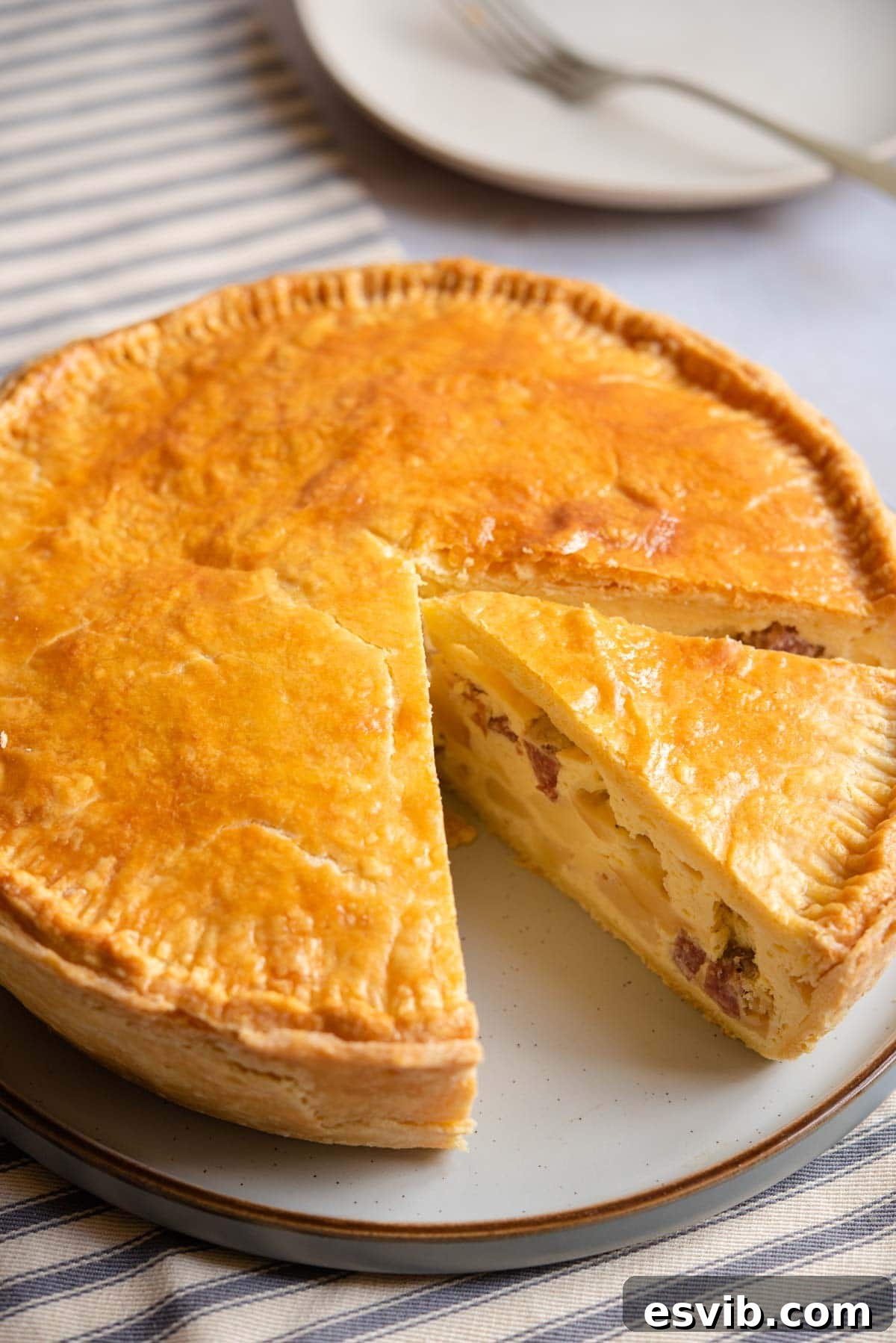
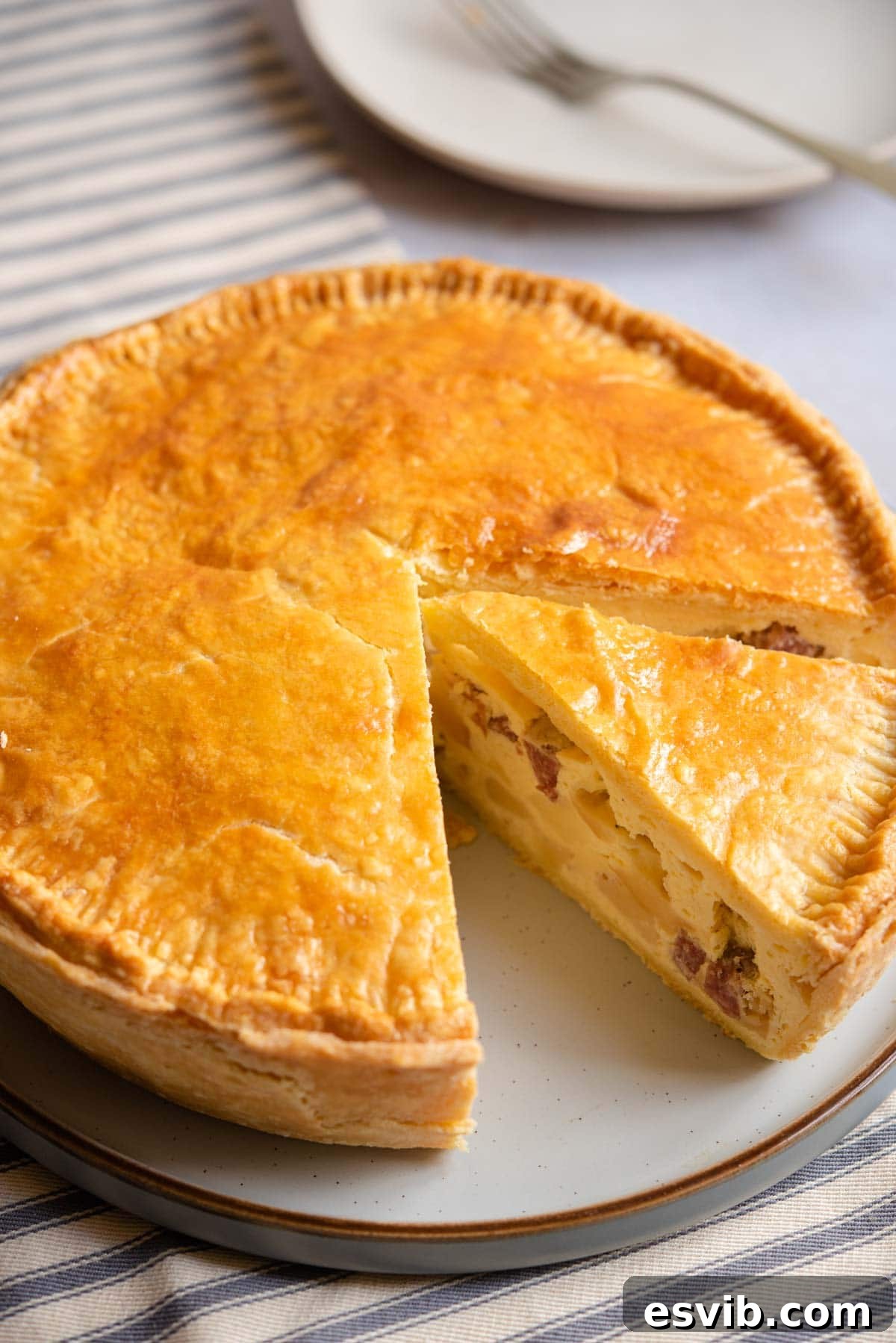
Pizza Rustica, also affectionately known as Pizza Chiena or Pizza Ripiena, is far more than just a pie; it’s a culinary masterpiece and a cherished tradition for Italian families during Easter. This incredible Italian Easter pie features a perfectly flaky and buttery homemade pie crust, generously filled with a savory blend of eggs, creamy ricotta, robust salami, and various flavorful cheeses. Our detailed recipe guides you through creating a truly special pie that not only bursts with authentic Italian flavors but also boasts an undeniably impressive appearance, making it the centerpiece of any Easter celebration.
The Heritage of Pizza Rustica: A Southern Italian Easter Tradition
Hailing from the picturesque regions of Southern Italy, particularly Campania and Lazio, Pizza Rustica embodies the spirit of Easter in a way few other dishes can. Its name, literally meaning “rustic pizza” or “countryside pizza,” speaks to its humble origins and hearty nature. Traditionally, this substantial pie was prepared during Holy Week to break the Lenten fast, offering a celebratory abundance of rich meats, cheeses, and eggs after weeks of abstinence. Depending on the specific region or even family tradition, you might encounter variations made with a robust pizza dough crust or, as in our beloved recipe, a delicate, flaky pastry crust.
While often compared to a quiche due to its egg-rich filling, Pizza Rustica stands distinct with its diverse medley of cured meats and a richer array of cheeses. It’s a dish that tells a story, a testament to Italian ingenuity in transforming simple ingredients into something extraordinary. Each bite offers a harmonious balance of textures and tastes: the crisp exterior of the crust yielding to a creamy, savory interior. Our recipe focuses on creating this perfect balance, ensuring a buttery pastry that melts in your mouth and a filling that celebrates the classic flavors of Italy, featuring whole milk ricotta, savory salami, and a blend of Pecorino and smoked Scamorza cheese. This is not just a meal; it’s an experience, an edible tradition that brings warmth and joy to the Easter table.
Crafting Your Perfect Pizza Rustica: Essential Ingredients
The secret to an unforgettable Pizza Rustica lies in selecting high-quality ingredients. Below, we’ve outlined everything you’ll need, along with important notes to guide your choices towards achieving the most delicious Italian Easter pie.
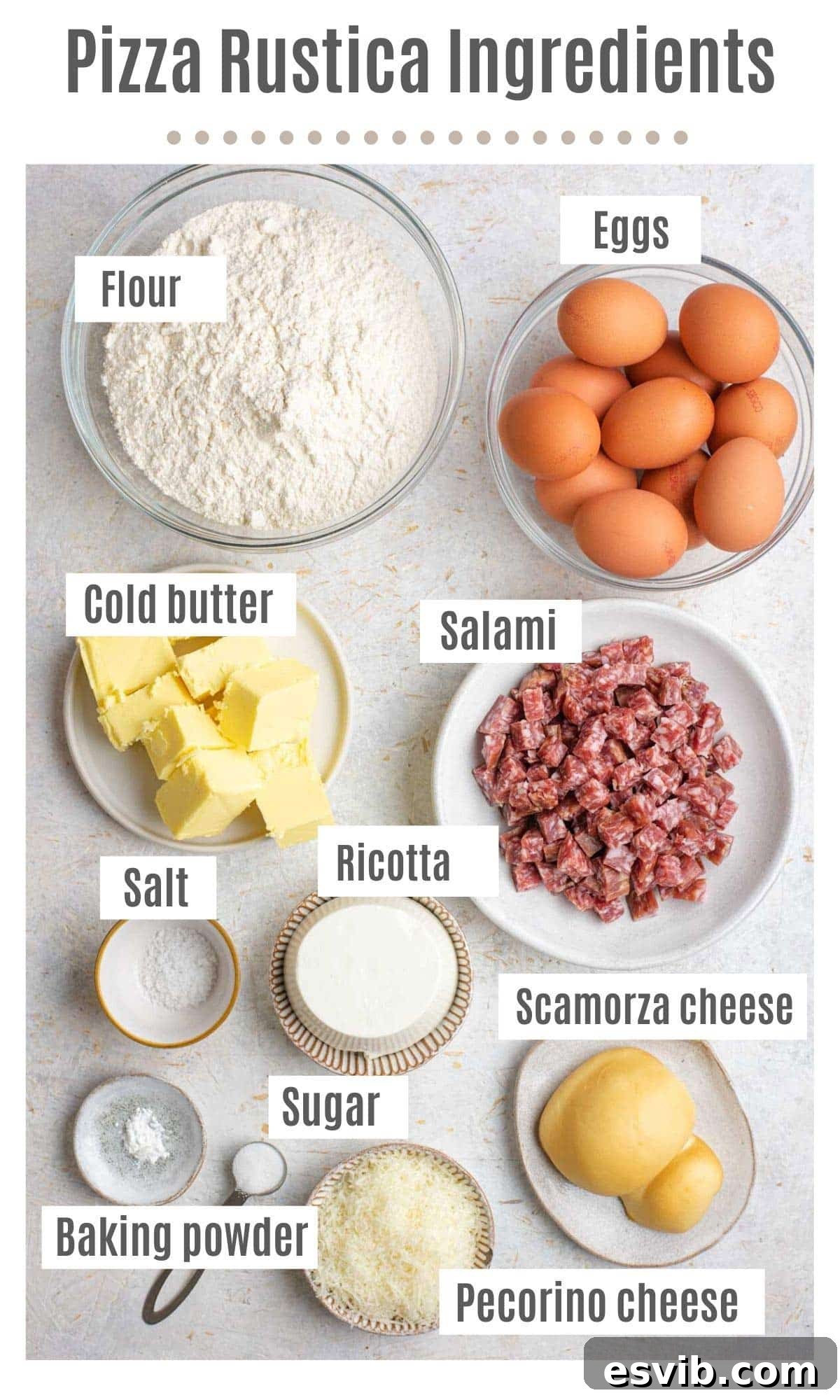
- Flour: While traditional Italian recipes often call for “00” flour, known for its fine texture and ability to create delicate pastries, standard all-purpose flour works beautifully for this recipe. If you have “00” flour, use it for an authentic touch; otherwise, rest assured that all-purpose will deliver an excellent result.
- Cold Butter: This is a non-negotiable component for achieving a truly flaky, tender pastry crust. The butter must be kept as cold as possible throughout the mixing process. We highly recommend using a food processor to pulse the cold, cubed butter with the flour. This method minimizes contact with warm hands, which can prematurely melt the butter and compromise the crust’s texture.
- Eggs: For both the pastry and the rich filling, large eggs are essential. Allowing them to come to room temperature before use, particularly for the filling, ensures they incorporate more smoothly with the other ingredients, leading to a more uniform and creamy texture.
- Whole Milk Ricotta: Opt for whole milk ricotta cheese for its superior richness and creamy consistency. This isn’t the time for low-fat alternatives, as the full-fat version contributes significantly to the luxurious mouthfeel and deep flavor of the filling. Ensure it’s well-drained to prevent a watery pie.
- Salami: The choice of salami is key to the overall flavor profile. We suggest a non-spicy variety, ideally a whole piece that you can cube yourself. Salami Napoli, with its balanced flavor and firm texture, is an excellent choice. Cubing the salami (about 1/2 inch) ensures an even distribution of flavor and texture throughout the pie.
- Cheese Medley: Our recipe shines with a combination of Pecorino Romano and smoked Scamorza. Pecorino adds a sharp, salty depth, while smoked Scamorza introduces a delightful creamy texture and a mellow, smoky note. If smoked Scamorza is unavailable, suitable substitutes include cubed Provolone (mild or sharp), Fontina for a nutty creaminess, or a firm, low-moisture mozzarella. The goal is a balance of flavor and melt-ability.
Mastering the Flaky Pastry Crust for Pizza Rustica
A truly remarkable Pizza Rustica begins with a perfectly crafted crust. This recipe calls for a delicate, flaky pastry that beautifully complements the rich, savory filling. Don’t be intimidated; with a few simple steps and the right technique, you’ll achieve bakery-quality results right in your own kitchen.
Making the Dough:
In a large bowl, combine the flour, sea salt, granulated sugar, and baking powder. These dry ingredients form the foundation of your pastry. Next, transfer this mixture into a food processor. Add the cubed, cold unsalted butter (approximately 9 oz or 250g). Pulse the mixture until it resembles fine breadcrumbs. This step is crucial for incorporating the butter without overworking it, ensuring a tender and flaky crust. The food processor keeps the butter cold and prevents your hands from warming it up too much.
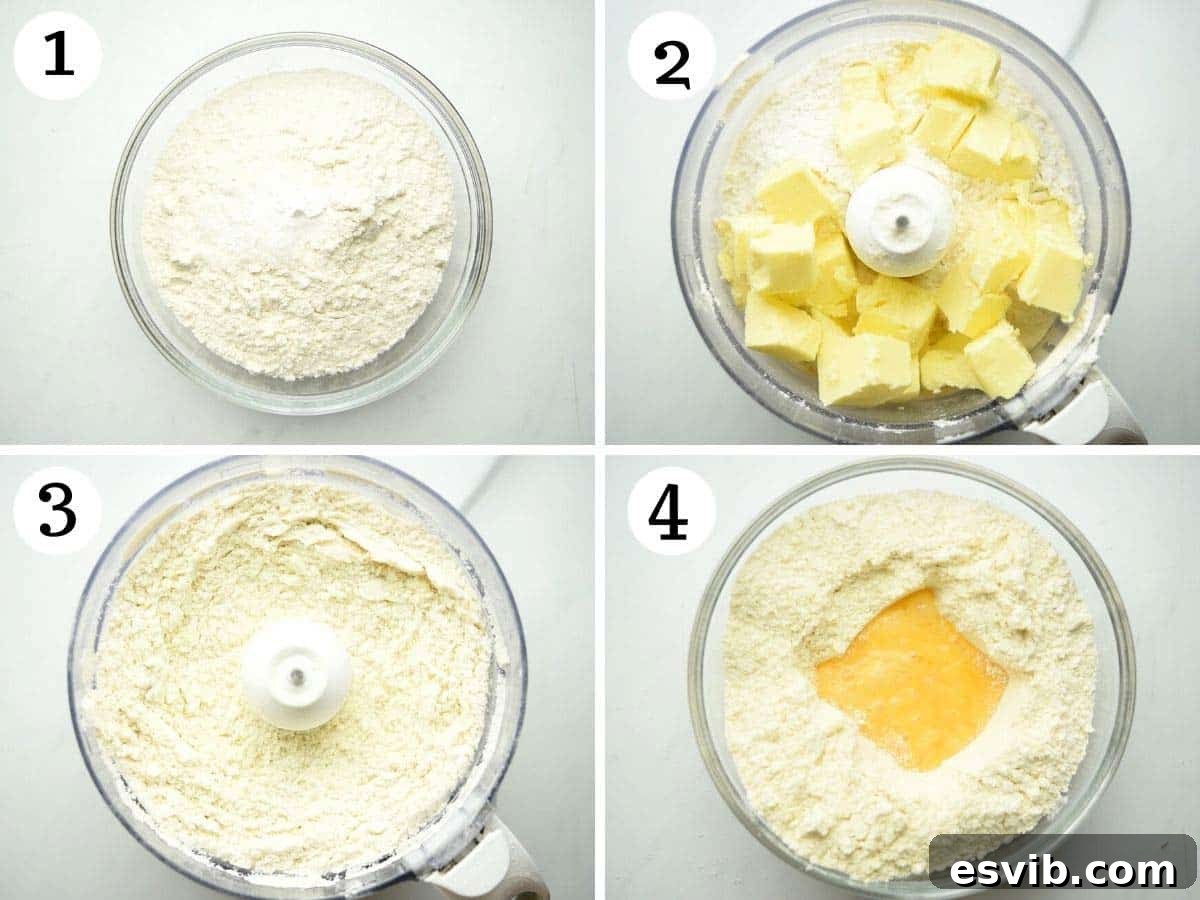
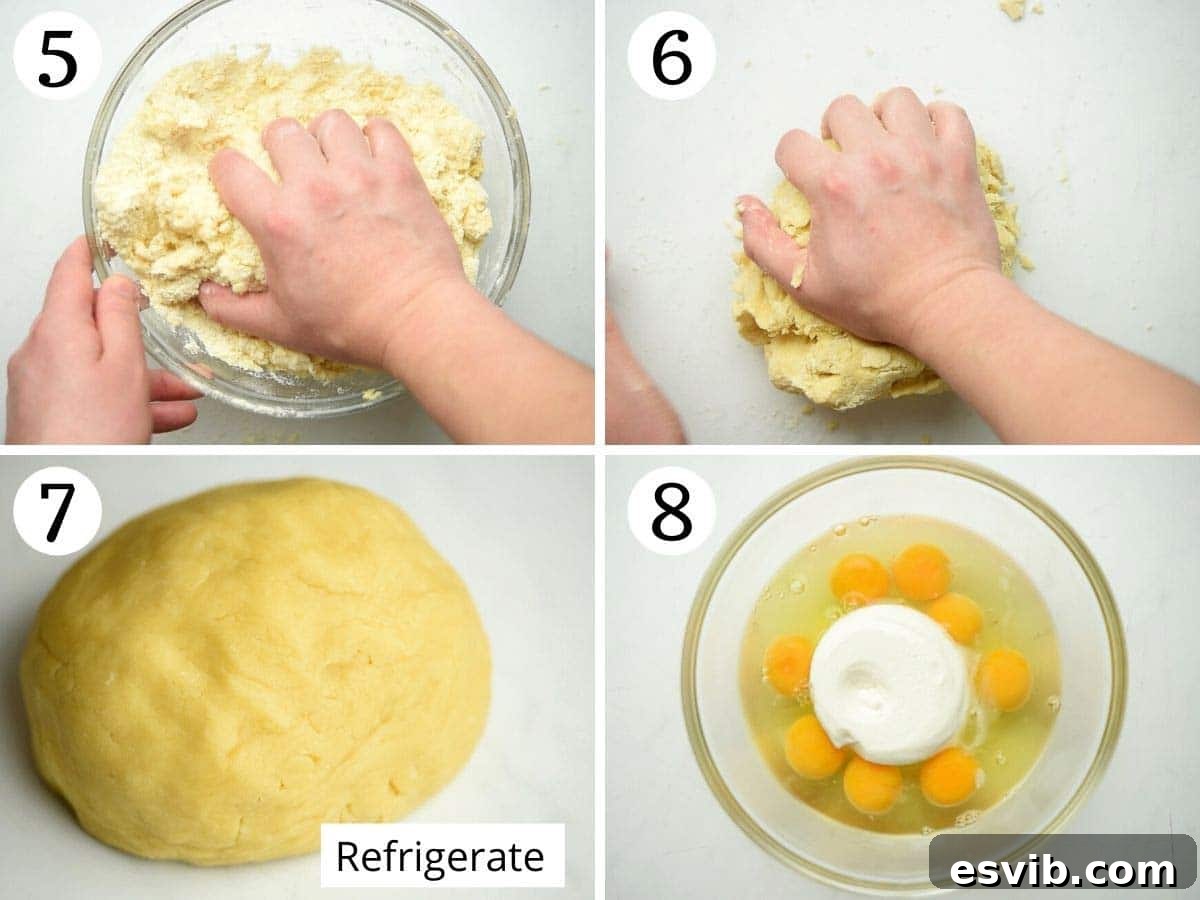
Once the butter is fully incorporated into the flour mixture, transfer it back to your large bowl. Create a well in the center of the mixture and crack in three large beaten eggs. Begin to mix everything together, either with a fork or by hand, until a cohesive dough starts to form. At this point, turn the dough out onto a lightly floured surface and gently knead it just enough to bring it together into a smooth ball. The key here is to avoid over-kneading, which can develop the gluten too much and result in a tough crust. You want the dough to be just combined and smooth. Wrap the finished dough tightly in plastic wrap and refrigerate it for at least 1 hour. This chilling period is essential; it allows the gluten to relax, makes the dough easier to roll, and helps create those coveted flaky layers.
Preparing the Rich and Savory Pizza Rustica Filling
The heart of Pizza Rustica lies in its incredibly flavorful filling. This savory medley of eggs, ricotta, and a carefully selected blend of meats and cheeses creates a harmonious symphony of tastes and textures that is truly irresistible. Preparing the filling is straightforward but requires attention to detail to ensure every slice is perfect.
Assembling the Filling:
First, begin by preparing your chosen meats and cheeses. Cube the salami (preferably a non-spicy variety like Salami Napoli) and the smoked Scamorza cheese (or your preferred firm cheese such as Fontina or Provolone) into uniform ½-inch pieces. Setting these aside ensures they are ready to be folded into the creamy egg and ricotta base.
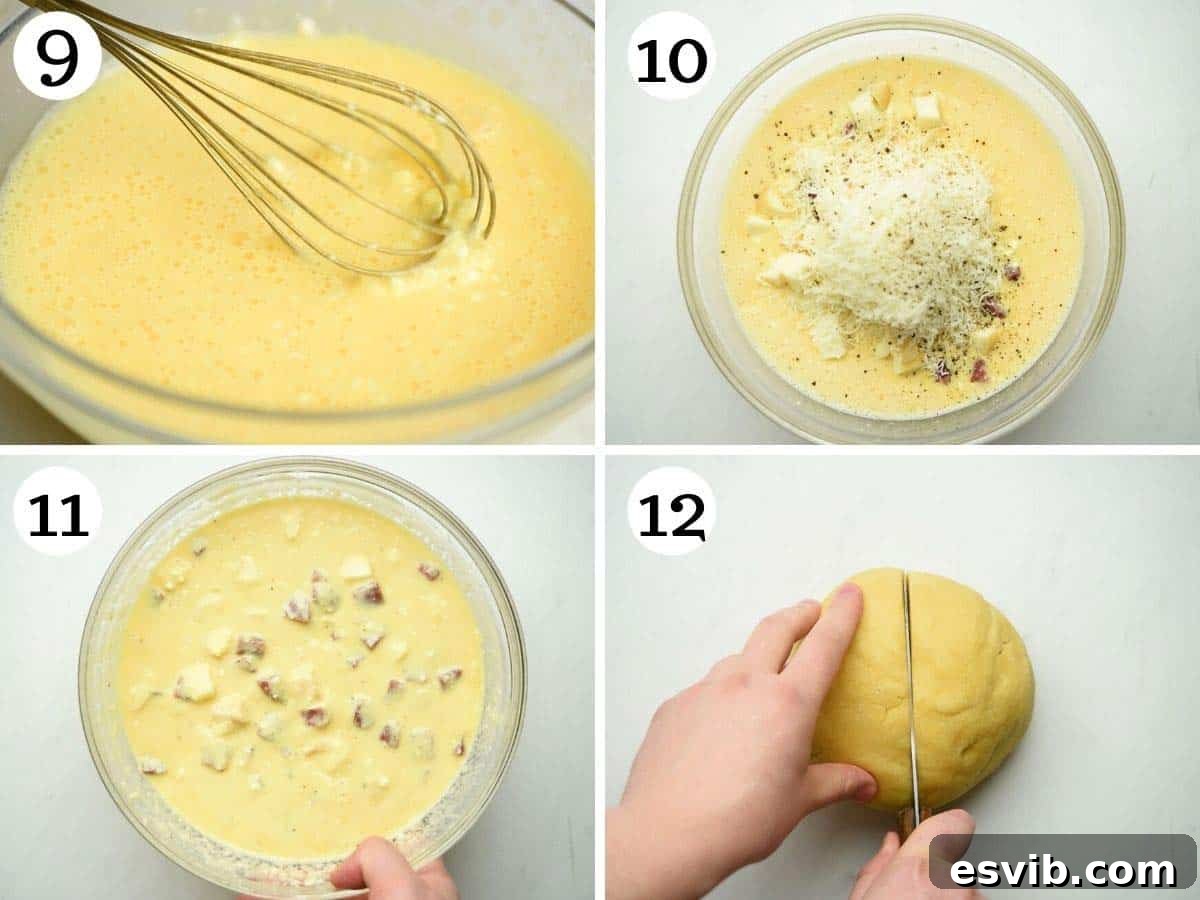
In a generously sized mixing bowl, combine the eight large eggs with the whole milk ricotta cheese. Whisk these two ingredients together thoroughly until the mixture is smooth and most of the lumps from the ricotta have dissolved. This creates a luxurious, creamy base that will bind all the savory components together. Once the base is smooth, gently fold in the cubed salami, the cubed Scamorza, the grated Pecorino Romano cheese, and a generous seasoning of freshly ground black pepper. Mix everything just until combined. Remember, the cured meats and Pecorino cheese are already quite salty, so no additional salt should be necessary for the filling. Taste a small amount if unsure, but generally, the existing sodium levels will be sufficient.
Assembling and Baking Your Italian Easter Pie
With the pastry chilled and the filling ready, it’s time to bring your Pizza Rustica to life. The assembly process is key to ensuring a beautiful, well-sealed pie that bakes evenly to golden perfection.
Assembly Steps:
Pre-heat your oven to 350°F (180°C). While the oven heats, generously grease a 9-10 inch pie dish with butter. This ensures the pie releases easily after baking. Remove your chilled dough from the refrigerator and divide it into two portions. On a lightly floured surface, roll out the first half of the dough into a large, rough circle, approximately ¼ inch (3-4mm) thick. This will form the bottom crust of your pie.
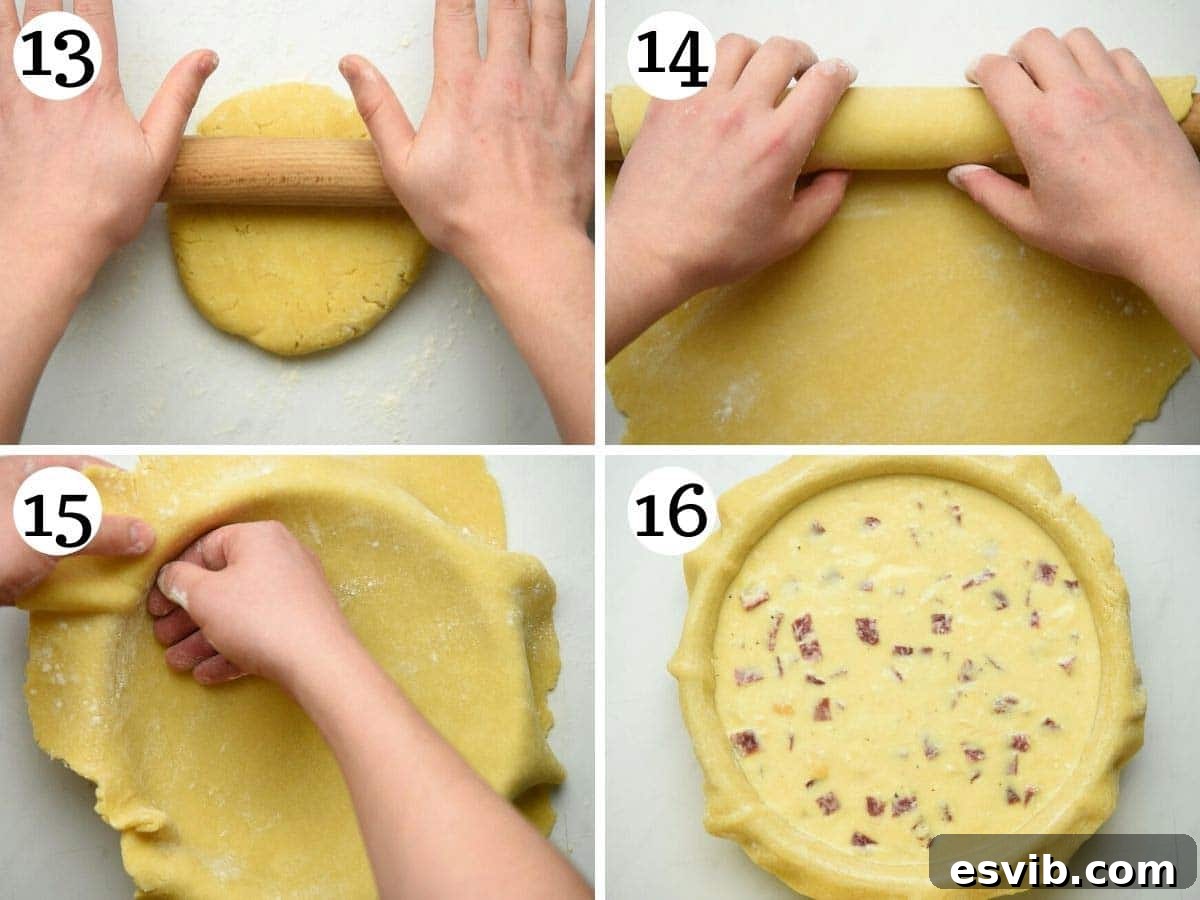
Carefully transfer the rolled-out dough over your prepared pie dish, gently tucking in the edges to create a neat base. Pour the prepared savory filling evenly into the pie crust. Next, roll out the second half of the dough to create the top crust, aiming for a similar thickness and size to cover the pie.
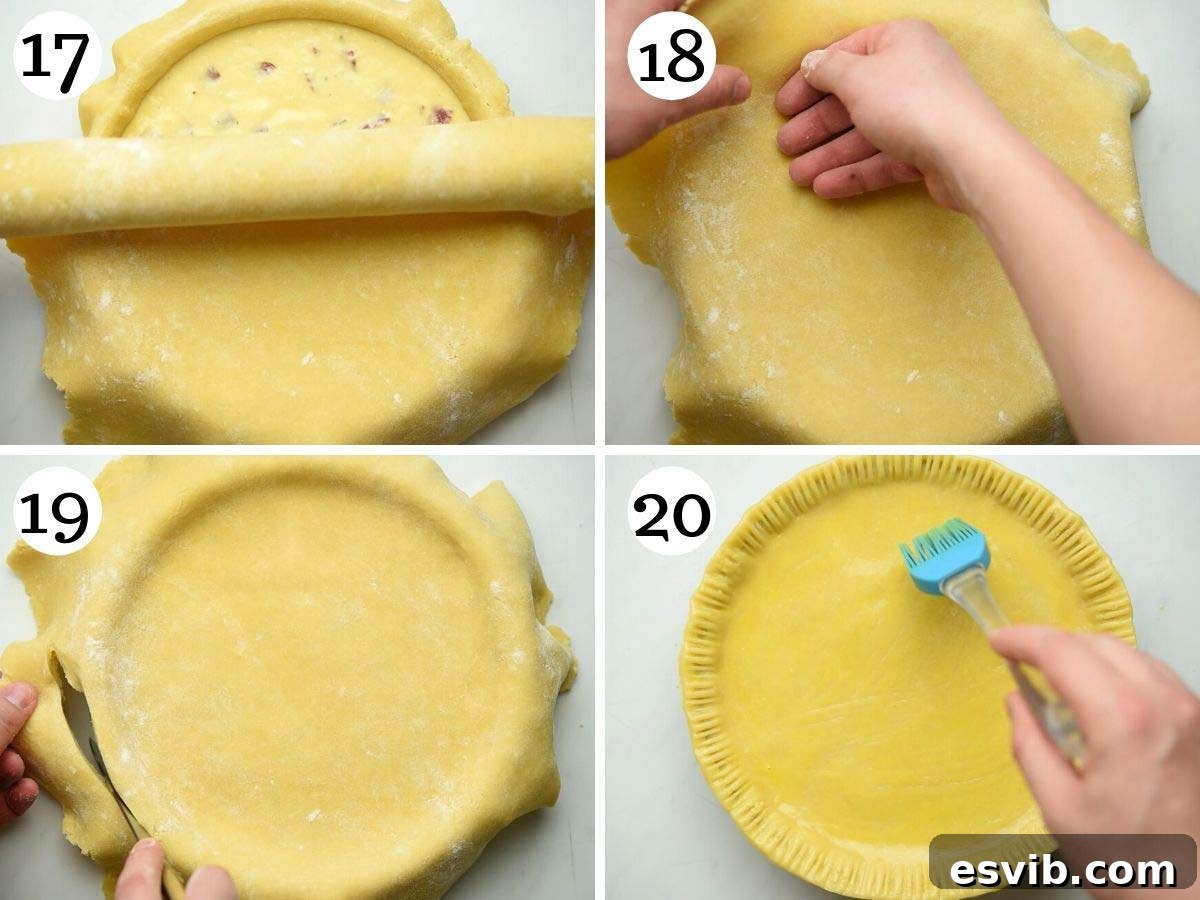
Place the top crust over the filling. Gently press down on the crust so it lightly touches the filling, then carefully press the edges of the top crust to the sides of the pie dish, ensuring the filling is completely encased and sealed. Use a sharp knife to trim any excess pastry from the edges. To create a decorative and secure seal, use the tines of a fork to press the top and bottom crusts together around the entire perimeter of the pie. If you find the pastry isn’t adhering well, lightly dab the edges with a little water before pressing to help them stick. Finally, brush the entire top of the pie with a beaten egg. This egg wash will give your Pizza Rustica that beautiful, golden-brown sheen when baked. Don’t forget to make a small incision in the center of the top crust; this allows steam to escape during baking, preventing the pie from becoming soggy or bursting.
Baking and Cooling:
Bake your Pizza Rustica in the pre-heated oven for approximately 1 hour, or until the crust is beautifully golden brown and the filling is set and cooked through. A good indicator of doneness is when the pie feels firm to the touch in the center. Once baked, remove the pie from the oven and allow it to cool completely before slicing and serving. This cooling period is vital; it allows the filling to firm up properly, ensuring clean, elegant slices. While delicious warm, Pizza Rustica is traditionally, and arguably best, enjoyed cold or at room temperature, allowing its complex flavors to fully develop.
Recipe Tips, FAQs, and Serving Suggestions
To ensure your Pizza Rustica is a resounding success, consider these helpful tips and answers to common questions. This traditional Italian Easter pie is designed for sharing and enjoyment, and these insights will help you make the most of your culinary creation.
- Salami Selection: When purchasing salami, aim for a whole piece or ask your deli counter to cut a thicker portion that you can easily cube into ½-inch pieces. This allows for better texture and flavor distribution compared to thin slices.
- Flavor Variations: Pizza Rustica is wonderfully versatile! Feel free to customize the meat and cheese selection based on your preferences or what’s available. Mortadella, prosciutto cotto (cooked ham), or any mild, firm salami can be excellent additions. While cubing is preferred for texture, sliced meats can also be used if cut into small pieces.
- Cheese Alternatives: Beyond smoked Scamorza, many firm Italian cheeses work well. Consider Fontina for a mild, nutty flavor, Provolone (mild or sharp) for classic Italian taste, or low-moisture mozzarella for its melting qualities. Avoid fresh mozzarella, as it can release too much water.
- Less is More: Resist the urge to overfill your pie. A balanced filling, typically with 1-2 types of cured meats and 1-2 firm cheeses (in addition to the ricotta), is ideal. Too many ingredients can overwhelm the delicate crust and lead to an inconsistent bake.
- Salt Balance: Due to the inherent saltiness of cured meats like salami and hard cheeses like Pecorino, it’s generally unnecessary to add extra salt to the filling. Always taste a small portion of the filling before adding more to avoid over-seasoning.
- Cooling is Crucial: Patience is a virtue when it comes to Pizza Rustica. Allowing the pie to cool completely, or at least to lukewarm, is essential. This sets the filling, preventing it from crumbling and ensuring clean, beautiful slices.
- Serving Suggestions: Pizza Rustica is traditionally served cold or at room temperature, allowing the rich flavors to meld beautifully. It’s substantial enough to be enjoyed on its own as a main course, but it also pairs wonderfully with a light, fresh side salad. A simple arugula salad with a bright lemon vinaigrette provides a refreshing contrast to the pie’s richness.
- Advance Preparation & Storage: This pie is an excellent make-ahead dish! You can prepare the entire pie in advance and store it in the refrigerator once cooled for up to 4 days. Leftover pastry dough can be wrapped tightly in plastic wrap and frozen for future use or kept in the fridge for a couple of days.
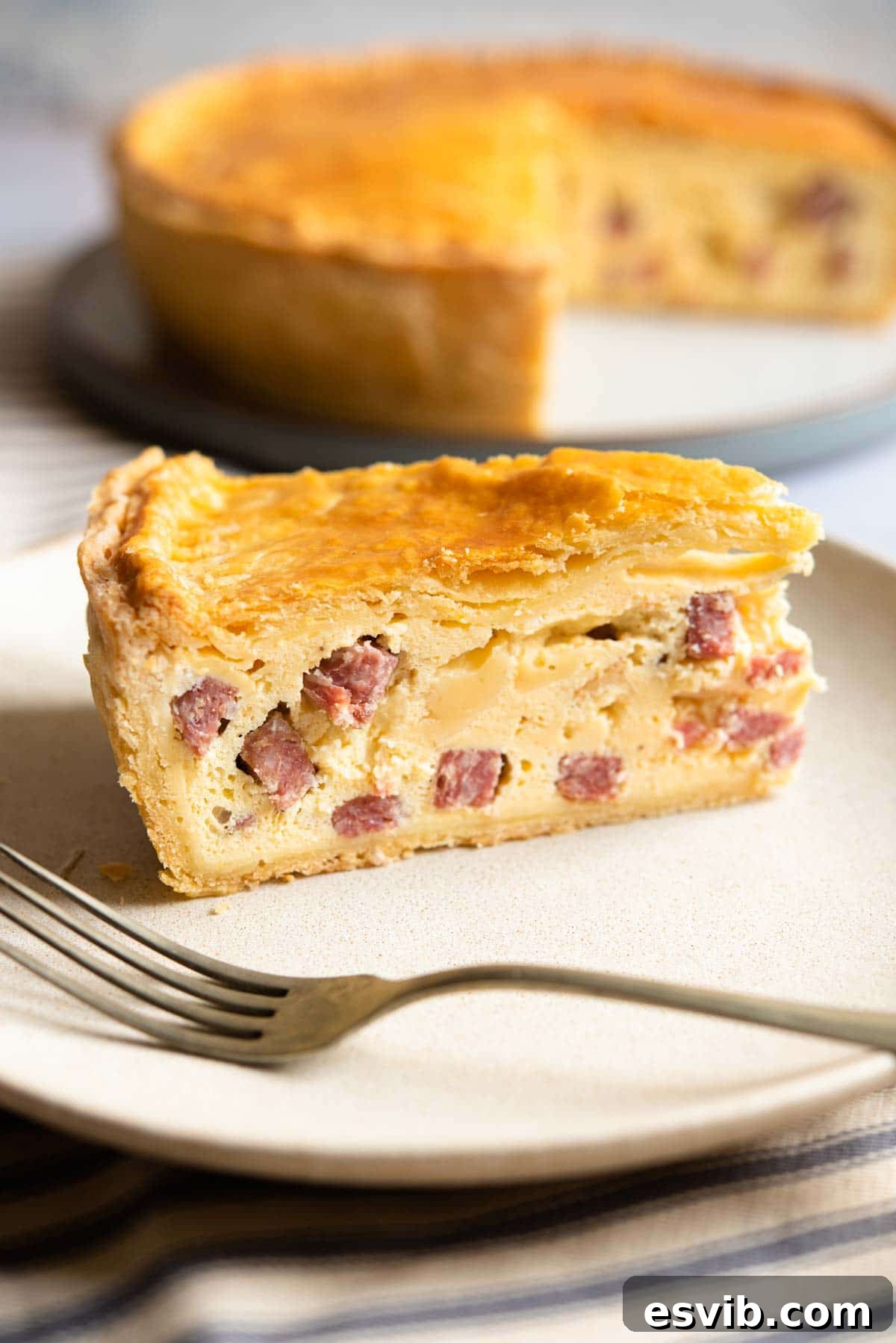
We truly hope you enjoy creating and savoring this magnificent Italian Easter Pie. It’s a recipe that brings joy and a taste of tradition to any gathering. If you’ve tried this Pizza Rustica or any other recipe from our collection, please share your experience and leave a comment below. We love hearing from our community!
Pizza Rustica (Italian Easter Pie)
This incredible Italian Easter pie features a flaky, buttery crust filled with eggs, creamy ricotta, savory salami, and delicious cheeses, perfect for a memorable holiday celebration.
Ingredients
Pastry (pie crust)
- 9 oz cold unsalted butter (250g), plus extra for greasing
- 3.5 cups Italian 00 Flour or All-purpose flour (500g)
- 3 large eggs, plus 1 beaten egg for brushing
- 1 tsp sea salt
- 1 tsp granulated sugar
- ¼ tsp baking powder
Filling
- 8 large eggs
- 1 cup whole milk ricotta (250g), well-drained
- 2 cups salami, cubed (240g), non-spicy variety recommended
- 1 cup smoked Scamorza cheese, cubed (200g) – can also use Fontina or Provolone
- ⅔ cup Pecorino Romano cheese, grated (40g)
- ¼ tsp black pepper, to season
Instructions
Make the Pastry
- In a bowl, mix the flour, salt, sugar, and baking powder. Transfer to a food processor, add the cubed cold butter (250g), and pulse until the mixture resembles fine crumbs.
- Return the butter-flour mixture to the bowl, create a well in the middle, and add the 3 large beaten eggs.
- Mix everything until a dough begins to form. Gently knead the dough by hand into a smooth ball; do not over-knead.
- Wrap the dough in plastic wrap and refrigerate for 1 hour.
Make the Filling
- Cut the salami and smoked Scamorza (or chosen cheese) into ½-inch cubes. Set aside.
- In a large bowl, whisk the 8 large eggs with the ricotta until smooth and lump-free. Fold in the cubed salami (2 cups), Scamorza (1 cup), grated Pecorino cheese (⅔ cup), and black pepper until just combined.
To Assemble & Bake
- Pre-heat the oven to 350°F (180°C) and grease a 9-10 inch pie dish with butter.
- Remove the dough from the fridge and divide it into two halves. Roll out the first half into a large circle, about ¼ inch (3-4mm) thick, to form the bottom crust.
- Carefully place the dough over the pie dish, tucking in the edges. Pour the prepared filling evenly into the pie. Roll out the second half of the dough for the top crust.
- Place the top crust over the pie, gently pressing it down to touch the filling. Press the edges of the top crust firmly against the sides of the pie dish to completely encase the filling.
- Trim any excess dough with a sharp knife and use a fork to press and seal the edges together. If needed, lightly dab the edges with water to aid adhesion.
- Brush the top of the pie with the remaining beaten egg and make a small incision in the center to allow steam to escape during baking.
- Bake for 1 hour, or until golden brown and cooked through. Allow the pie to cool completely before slicing and serving. It’s best eaten cold or slightly warm.
Notes
- Flavor Variations: Customize your pie with other cured meats like Mortadella or prosciutto cotto (ham), and firm cheeses such as Fontina or Provolone. Cube meats for best texture.
- Salt Caution: Cured meats and Pecorino cheese provide significant saltiness; avoid adding extra salt to the filling.
- Cool Before Slicing: Crucial for a set filling and clean slices.
- Serving: Delicious cold or at room temperature, perhaps with a simple arugula salad.
- Storage: Keeps well in the fridge for 3-4 days. Leftover pastry can be frozen or refrigerated for a couple of days.
Nutrition
Carbohydrates: 34 g |
Protein: 22 g |
Fat: 36 g |
Saturated Fat: 19 g |
Trans Fat: 1 g |
Cholesterol: 245 mg |
Sodium: 1026 mg |
Potassium: 218 mg |
Fiber: 1 g |
Sugar: 1 g |
Vitamin A: 974 IU |
Calcium: 228 mg |
Iron: 3 mg
Nutrition information is automatically calculated, so should only be used as an approximation.