
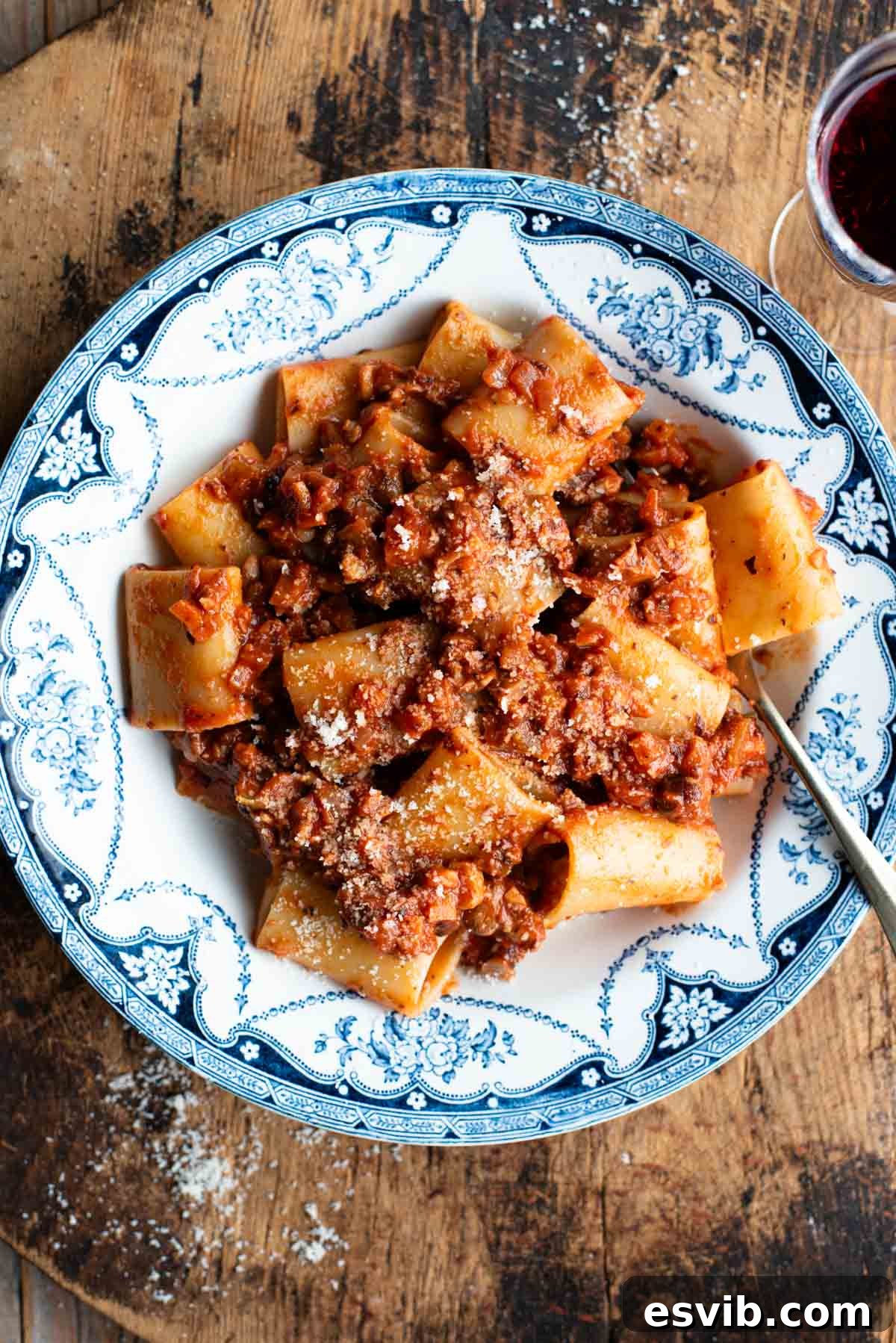
Piedmontese Hazelnut Ragu: A Flavorful Vegetarian Italian Masterpiece
Embark on a culinary journey to Italy’s northern region of Piedmont with this exquisite and truly unique Piedmontese hazelnut ragu. This innovative recipe ingeniously replaces traditional meat with the region’s prized hazelnuts, creating an incredibly rich, savory, and completely vegetarian ragu. Simmered to perfection alongside robust red wine, a medley of fresh vegetables, and fragrant herbs, this sauce develops a depth of flavor that is both comforting and sophisticated. It’s an ideal accompaniment for your favorite pasta shapes or a luxurious dollop over creamy polenta, promising a delightful dining experience that defies expectations of a meat-free meal.
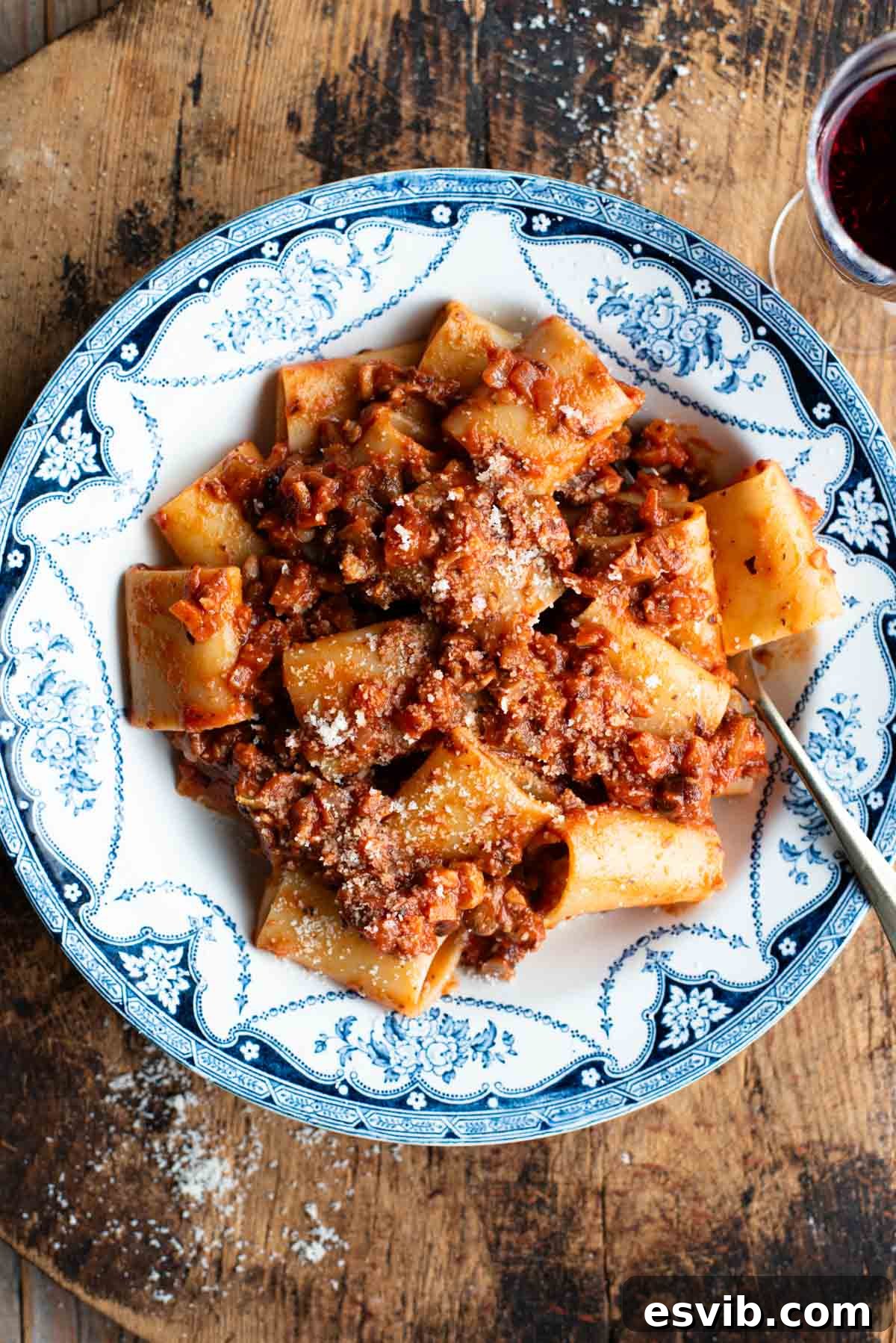
Why You’ll Love This Piedmontese Hazelnut Ragu
- A True Piedmontese Delight: Experience a traditional regional flavor profile with a delightful, modern vegetarian twist.
- Rich & Satisfying Meat-Free Alternative: This ragu delivers all the richness and depth you expect from a classic ragu, without any meat, making it perfect for vegetarians and flexitarians alike.
- Incredible Flavor in Just One Hour: Despite its complex taste, this ragu simmers for only an hour, proving that incredible flavor doesn’t always require an all-day commitment.
- Versatile Pairing: Absolutely divine with a variety of pasta shapes or served elegantly over creamy polenta.
Table of Contents
- Why You’ll Love This Piedmontese Hazelnut Ragu
- The Story Behind Piedmontese Hazelnut Ragu
- Ingredient Spotlight: What You Need to Know
- Step-by-Step Visual Guide to Making Hazelnut Ragu
- Expert Tips and Frequently Asked Questions
- More Culinary Gems from Piedmont to Explore
- Full Recipe Card
The Story Behind Piedmontese Hazelnut Ragu
When I first encountered this intriguing ragu, known locally as ragù alle nocciole, my curiosity was instantly piqued. The idea of hazelnuts taking center stage in a rich Italian sauce was unlike anything I had ever tasted, and I knew I had to recreate it. Piedmont, a stunning region nestled in the northwest of Italy, is globally celebrated for its exceptional hazelnuts, often considered among the finest in the world. It’s no surprise, then, that these aromatic nuts are not only a star ingredient in savory dishes but also foundational to some of the region’s most beloved sweets. You’ll find them in decadent treats such as luscious hazelnut chocolate spreads, delicate Baci di Dama cookies, and luxurious Baci chocolates.
While meat-based ragus have a long and storied history in Italian cuisine, evolving from slow-cooked stews designed to make tough cuts of meat tender, the concept of a vegetarian ragu is a more modern adaptation. This hazelnut version pays homage to the spirit of ragu – a deeply flavorful, slowly simmered sauce – while embracing the abundant local produce of Piedmont. Crafting this particular ragu proved to be a delightful challenge, as readily available traditional recipes for ragù alle nocciole are surprisingly scarce. This encouraged us to develop our own interpretation, drawing on classic Italian techniques and a deep appreciation for regional ingredients. The result is a recipe that we believe captures the essence of Piedmontese culinary innovation, offering a harmonious blend of earthy hazelnuts, aromatic vegetables, and a hint of red wine that creates an unforgettable sauce. We are absolutely thrilled with this rendition and are confident you will be too.
Ingredient Spotlight: What You Need to Know
Crafting the perfect Piedmontese Hazelnut Ragu begins with selecting high-quality ingredients. Here’s a closer look at the key components and why they matter:
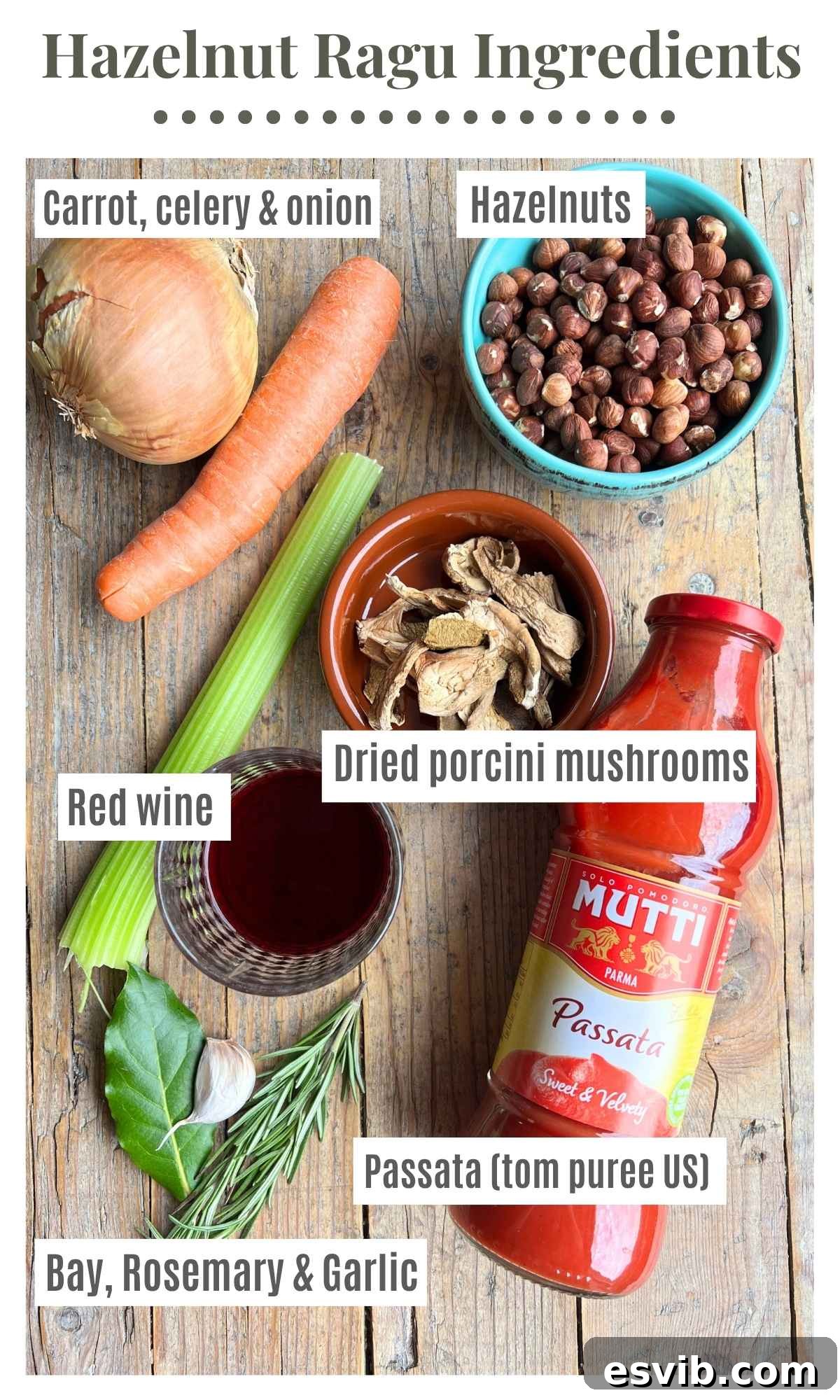
- Hazelnuts: The undisputed star of our ragu! We recommend using whole hazelnuts with their skins on. Roasting them slightly enhances their nutty flavor and makes the skins easier to remove, though skinless hazelnuts work just as well if preferred. If your hazelnuts are already toasted, you can skip that initial step and proceed directly to pulsing them in a food processor. The texture should be coarse and crumbly, providing a delightful bite that mimics ground meat in a traditional ragu.
- Dried Porcini Mushrooms: These robust mushrooms contribute an incredible depth of umami and an earthy aroma to the sauce. Mixed dried mushrooms can also be used if porcini are unavailable. Remember to soak them in hot water for at least 10-15 minutes to rehydrate and soften them. This soaking liquid is precious – it’s full of flavor and will be used in the ragu, just be careful to avoid any grit settled at the bottom. As an alternative, fresh crimini (chestnut) mushrooms can be finely chopped and sautéed with the other vegetables to offer a similar earthy dimension.
- Passata (Tomato Puree US): A high-quality passata forms the rich base of our ragu. Known as tomato puree in the US, passata is essentially strained, uncooked tomato pulp, offering a smooth consistency and intense tomato flavor. We highly recommend brands like Mutti or Cirio, as their superior quality truly makes a difference in the final taste of your sauce. However, feel free to use your preferred brand of good quality passata or tomato puree.
- Red Wine: A crucial element for depth and complexity. Opt for a dry red wine, such as a Barbera d’Asti (a regional Piedmontese wine, fittingly!) or a Chianti. The alcohol cooks off, leaving behind a rich, fruity, and slightly acidic note that beautifully balances the earthiness of the hazelnuts and mushrooms.
- Mirepoix (Carrot, Celery, Onion): This classic aromatic base is fundamental to almost any good ragu. Finely dicing these vegetables allows them to soften and melt into the sauce, releasing their sweet and savory flavors, building the foundation of the ragu’s rich taste.
- Garlic, Bay Leaf, and Rosemary: These herbs and aromatics infuse the ragu with a warm, herbaceous, and slightly pungent character. Fresh rosemary provides a distinct piney note, while the bay leaf adds a subtle, savory undertone.
- Olive Oil: Always use a good quality extra virgin olive oil. Its fruity and peppery notes will complement and enhance the other flavors.
- Salt and Pepper: Season generously throughout the cooking process, tasting as you go, to ensure the ragu is perfectly balanced.
Step-by-Step Visual Guide to Making Hazelnut Ragu
Follow these steps closely to ensure your Piedmontese Hazelnut Ragu is nothing short of perfection. Visual aids are provided to guide you through each stage of the cooking process.
Step 1 – Prepare the Hazelnuts: Begin by toasting the whole hazelnuts in a dry pan over medium heat for a few minutes until fragrant and lightly browned. This enhances their flavor and makes the skins easier to remove. Once cooled, pulse them in a food processor until you achieve a rough, crumbly texture, akin to coarse breadcrumbs, as shown in photos 1 and 2.
Step 2 – Rehydrate Porcini: Place the dried porcini mushrooms in a small bowl and cover them with hot water. Let them soak for at least 10 minutes to rehydrate fully. Set this aside, making sure to reserve the flavorful soaking liquid (photo 3).
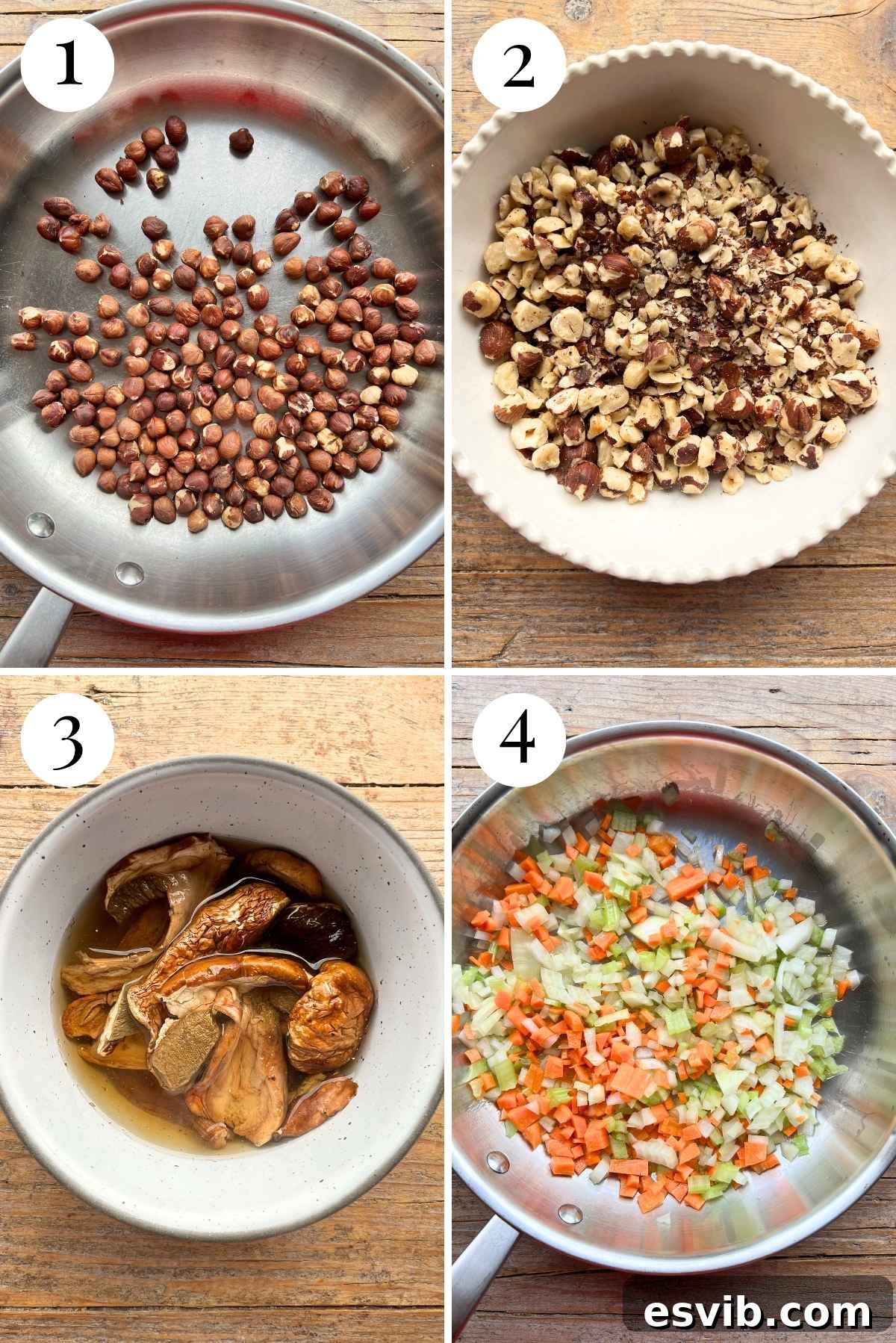
Step 3 – Sauté the Soffritto: In a large, heavy-bottomed pan or Dutch oven, heat 1-2 tablespoons of olive oil over medium heat. Add the finely chopped carrot, celery, and onion. Sauté gently for about 10 minutes until the vegetables are soft and translucent, but ensure they don’t brown, as this can affect the sweetness of the ragu (photo 4).
Step 4 – Infuse Aromatics: Once the vegetables are tender, add the finely chopped garlic clove, the pulsed hazelnuts, bay leaf, and rosemary sprigs to the pan. Sauté for another 1-2 minutes, stirring constantly, until the garlic becomes fragrant and the hazelnuts release their aroma. Be careful not to burn the garlic (photo 5).
Step 5 – Add Mushrooms and Deglaze: Remove the rehydrated porcini mushrooms from their soaking liquid, gently squeezing out any excess water, and roughly chop them. Add the chopped porcini to the pan, along with most of their reserved soaking liquid. Pour the liquid slowly, leaving behind any grit that may have settled at the bottom. Next, pour in the red wine and bring the mixture to a simmer, allowing it to cook until the strong alcohol smell has dissipated, indicating the alcohol has cooked off and left its rich flavors behind (photo 6).
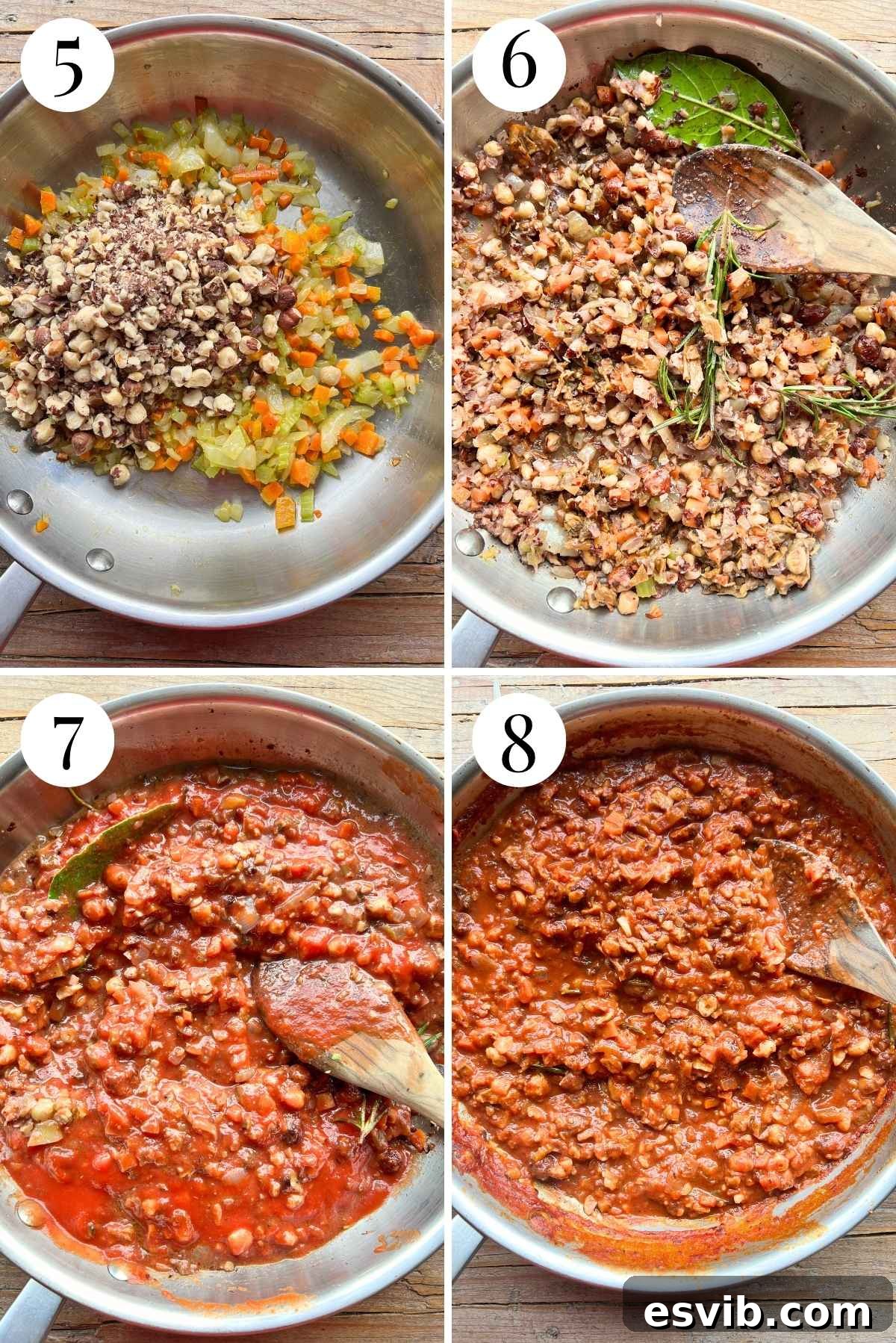
Step 6 – Simmer to Perfection: Stir in the tomato passata (tomato puree) and 1/2 cup (125ml) of water. Season generously with a good pinch of salt and freshly ground black pepper. Bring the ragu to a gentle simmer, then reduce the heat to low, cover the pan, and let it cook for at least 1 hour. Make sure to check it halfway through the simmering time, stirring occasionally. If the sauce becomes too thick or reduces too much, add a little more water (¼-½ cup/60-125ml) to achieve your desired consistency. The longer it simmers, the more the flavors meld and deepen. Before serving, taste the ragu and adjust the seasoning as needed, adding more salt or pepper to your preference. Once the ragu is ready, cook your pasta al dente in plenty of salted boiling water. Transfer the cooked pasta directly into the sauce, tossing it thoroughly to ensure every piece is beautifully coated. If the sauce seems too thick for coating, use a splash of the starchy pasta water to loosen it slightly (photos 7 and 8). Serve immediately, topped with freshly grated Parmigiano Reggiano.
Expert Tips and Frequently Asked Questions
Elevate your Piedmontese Hazelnut Ragu with these insightful tips and answers to common queries:
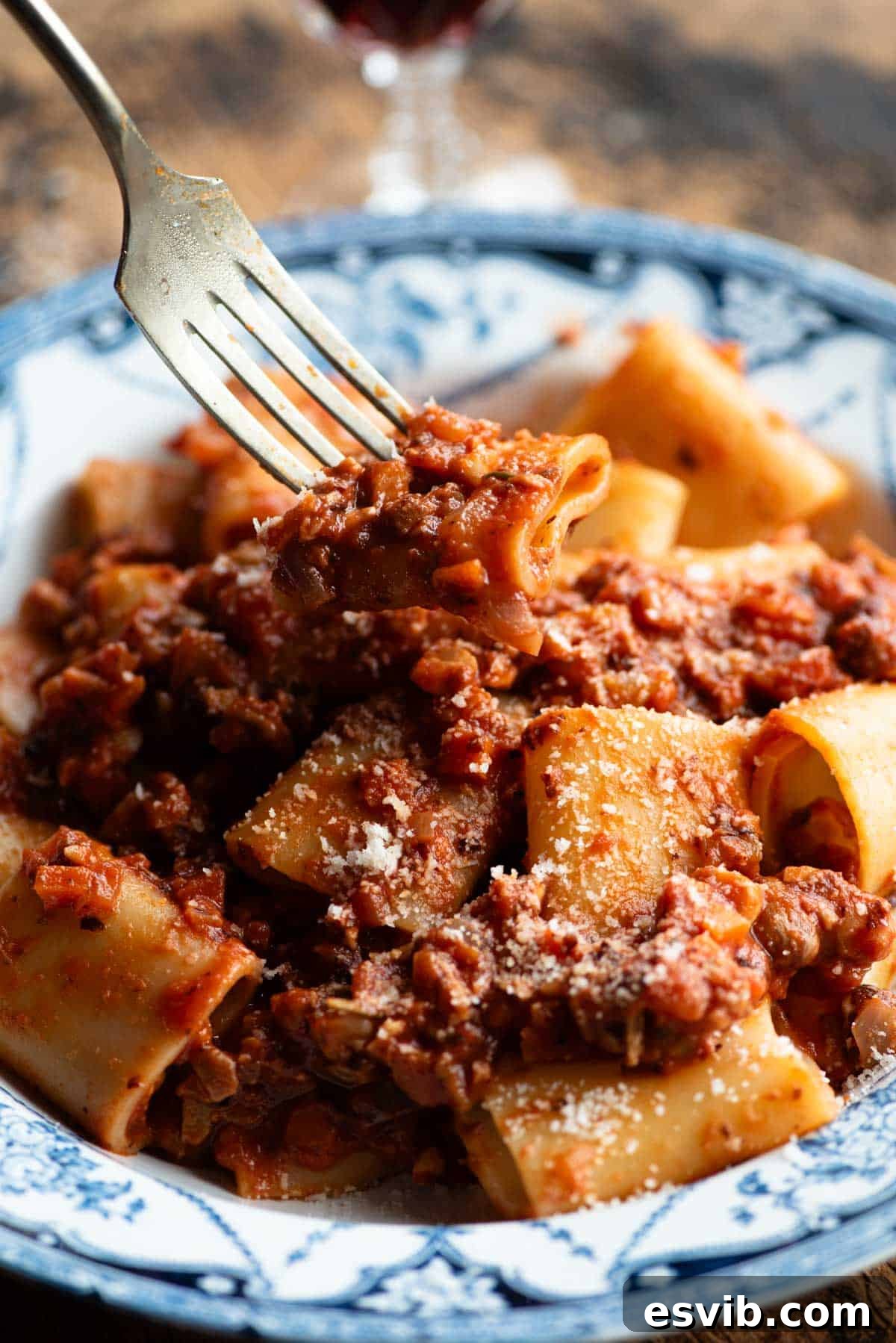
- Choosing the Best Pasta: While we’ve used paccheri for its ability to hold a hearty sauce, this ragu is incredibly versatile. Most pasta shapes with a good surface area or ridges will work wonderfully. Consider robust choices like rigatoni, penne, or even long strands such as tagliatelle or pappardelle, which can elegantly carry the rich sauce.
- Adjusting Hazelnut Texture: Our recipe aims for a rough, crumbly hazelnut texture that provides a satisfying bite, mimicking the consistency of traditional ground meat. If you prefer a softer, more integrated texture, you can blitz the hazelnuts a little finer in your food processor. Alternatively, you can extend the simmering time of the ragu by another hour, adding more water as needed, which will further soften the nuts and allow them to meld even more into the sauce.
- Irresistible Serving Suggestions: Beyond pasta, this delightful ragu truly shines when served over a bed of creamy, rich polenta. The velvety polenta perfectly complements the hearty texture and deep flavors of the sauce. It’s also fantastic as a base for a vegetarian lasagna or even as a topping for toasted bruschetta.
- Making it Vegan: This ragu is already vegetarian! To make it completely vegan, simply ensure you use a plant-based alternative to Parmigiano Reggiano for serving, or omit the cheese entirely.
- Can I Use Fresh Mushrooms Instead of Dried Porcini? Absolutely! If dried porcini are not available or preferred, you can use about 1 cup (100-150g) of finely chopped fresh crimini (chestnut) mushrooms. Sauté them along with the carrot, celery, and onion until they release their moisture and are tender.
Yes, this hazelnut ragu is an excellent make-ahead dish! You can prepare the ragu entirely in advance and refrigerate it until you’re ready to serve. It will keep beautifully in an airtight container in the fridge for up to 3-4 days. In fact, like many ragus, the flavors often deepen and improve overnight, making it even more delicious the next day. Reheat gently on the stovetop, adding a splash of water or vegetable broth if needed to loosen the sauce.
More Culinary Gems from Piedmont to Explore
Mains
Vitello Tonnato (Veal with Tuna Sauce)
Sides
Ricotta Chicken Croquettes
Fresh Pasta
Homemade Agnolotti (Step by Step)
Antipasti
Bagna Cauda (Anchovy, Garlic & Butter Dip)
If you’ve tried this delightful Piedmontese Hazelnut Ragu or any other recipe from our collection, we’d absolutely love to hear from you! Please don’t forget to rate the recipe and share your thoughts in the comments section below – your feedback is invaluable. You can also connect with us and discover more of our delicious Italian-inspired creations by following us on Facebook, Instagram, and Pinterest. For weekly recipe inspiration delivered straight to your inbox, be sure to sign up for our Newsletter!
Step By Step Photos Above
Most of our recipes come with detailed step-by-step photos, helpful tips, and tricks to ensure you achieve perfect results on your first attempt!
Piedmontese Hazelnut Ragu
By Emily
30 minutes
1 hour
20 minutes
1 hour
50 minutes
4
servings
Pin
Ingredients
-
1 medium carrot -
1 celery stalk -
1 medium onion -
1 cup (150g) whole hazelnuts -
1/2 cup (15g) dried porcini mushrooms -
1 bay leaf -
2 sprigs fresh rosemary -
1 garlic clove, finely chopped -
1/2 cup (125ml) dry red wine , (such as Barbera d’Asti or Chianti) -
2 cups (460g) Passata (tomato puree US) -
1/2 cup (125ml) water -
Extra virgin olive oil -
Salt and freshly ground black pepper -
1 lb (450g) pasta of choice, (such as paccheri, rigatoni or tagliatelle) -
Parmigiano Reggiano, for serving (use a vegetarian-friendly cheese if needed)
Instructions
Prep Work
-
To begin, add the dried porcini mushrooms to a small ramekin or bowl and completely cover them with hot water. Allow them to soak for at least 10-15 minutes, or until they are soft and rehydrated. Reserve the soaking liquid for later use.
-
Next, toast the whole hazelnuts in a dry pan over medium heat for a few minutes, shaking the pan occasionally. This process brings out their natural oils and deepens their flavor. Once fragrant and lightly golden, remove them from the pan and let them cool completely. Transfer the cooled hazelnuts to a food processor and pulse them until you achieve a rough, crumbly texture; avoid over-processing them into a paste. Set these aside.
Building the Ragu
-
Finely chop the carrot, celery, and onion into very small, uniform pieces to create your soffritto. Heat 1-2 tablespoons of extra virgin olive oil in a large, heavy-bottomed pan or Dutch oven over medium heat. Add the chopped vegetables and sauté them gently for about 10 minutes, stirring frequently, until they are soft and translucent but not browned. This slow sautéing is key to developing a sweet base for the ragu.
-
Once the vegetables are soft, add the finely chopped garlic clove, the pulsed hazelnuts, the bay leaf, and the fresh rosemary sprigs to the pan. Continue to sauté for another 1-2 minutes, stirring continuously, until the garlic becomes wonderfully fragrant. Be careful not to let the garlic burn.
-
Retrieve your rehydrated porcini mushrooms. Remove them from their soaking liquid, gently squeeze out any excess water, and roughly chop them. Add the chopped porcini to the vegetables in the pan. Carefully pour in most of the reserved mushroom soaking liquid, being sure to leave behind any sandy grit that may have settled at the bottom of the bowl.
-
Next, pour in the red wine. Increase the heat slightly and bring the mixture to a simmer, allowing it to cook for a few minutes until you can no longer detect a strong alcohol smell. This means the alcohol has evaporated, leaving only the rich wine flavor. Finally, stir in the tomato passata (tomato puree) and the measured water, along with a good pinch of salt and freshly ground black pepper. Stir everything together until well combined.
-
Reduce the heat to medium-low, cover the pan, and let the ragu simmer gently for 1 hour. It’s important to check the sauce halfway through the cooking time, giving it a stir. If you notice it has reduced too much or become too thick, add a little more water as needed (approximately ¼-½ cup / 60-125ml) to maintain a rich, saucy consistency.
-
After simmering, taste the ragu and adjust the seasoning as necessary. Add extra salt, pepper, or a pinch of sugar if the tomatoes are too acidic, until the flavors are perfectly balanced to your liking. Remove and discard the bay leaf and rosemary sprigs before serving.
-
Once the ragu is ready, cook your pasta of choice in a large pot of generously salted boiling water according to package instructions until it is perfectly al dente. Drain the pasta, reserving a cup of the starchy pasta water, then immediately transfer the cooked pasta to the pan with the ragu.
-
Toss the pasta thoroughly with the sauce, ensuring every piece is beautifully coated. If the sauce seems too thick to coat the pasta evenly, add a splash or two of the reserved pasta water to loosen it to your desired consistency. Serve immediately in warm bowls, generously topped with freshly grated Parmigiano Reggiano (or a vegetarian-friendly alternative).
Notes
Helpful Info for All Our Recipes
- I consistently use extra virgin olive oil in all my recipes unless a different type is specifically mentioned.
- For canned or jarred tomatoes of any variety, I always opt for Cirio or Mutti brands. Their superior quality ensures the best possible flavor and results in your dishes.
- All vegetables specified in our recipes are assumed to be medium-sized unless otherwise stated.
- Every recipe featured here has been thoroughly tested and developed using a fan (convection) oven for consistent results.
- Discover more about how nutrition information is calculated on our site.
- Explore our essential list of Italian Pantry Staples to stock your kitchen like a true Italian cook.
- Find all our recommended Essential Kitchen Tools for Italian Cooking to master authentic Italian cuisine.
Nutrition
Carbohydrates: 48g |
Protein: 14g |
Fat: 37g |
Saturated Fat: 3g |
Polyunsaturated Fat: 5g |
Monounsaturated Fat: 27g |
Sodium: 59mg |
Potassium: 1531mg |
Fiber: 12g |
Sugar: 11g |
Vitamin A: 3212IU |
Vitamin C: 21mg |
Calcium: 113mg |
Iron: 6mg
Nutrition information is automatically calculated, so should only be used as an approximation.
Did you try this recipe?
Leave a comment below!