
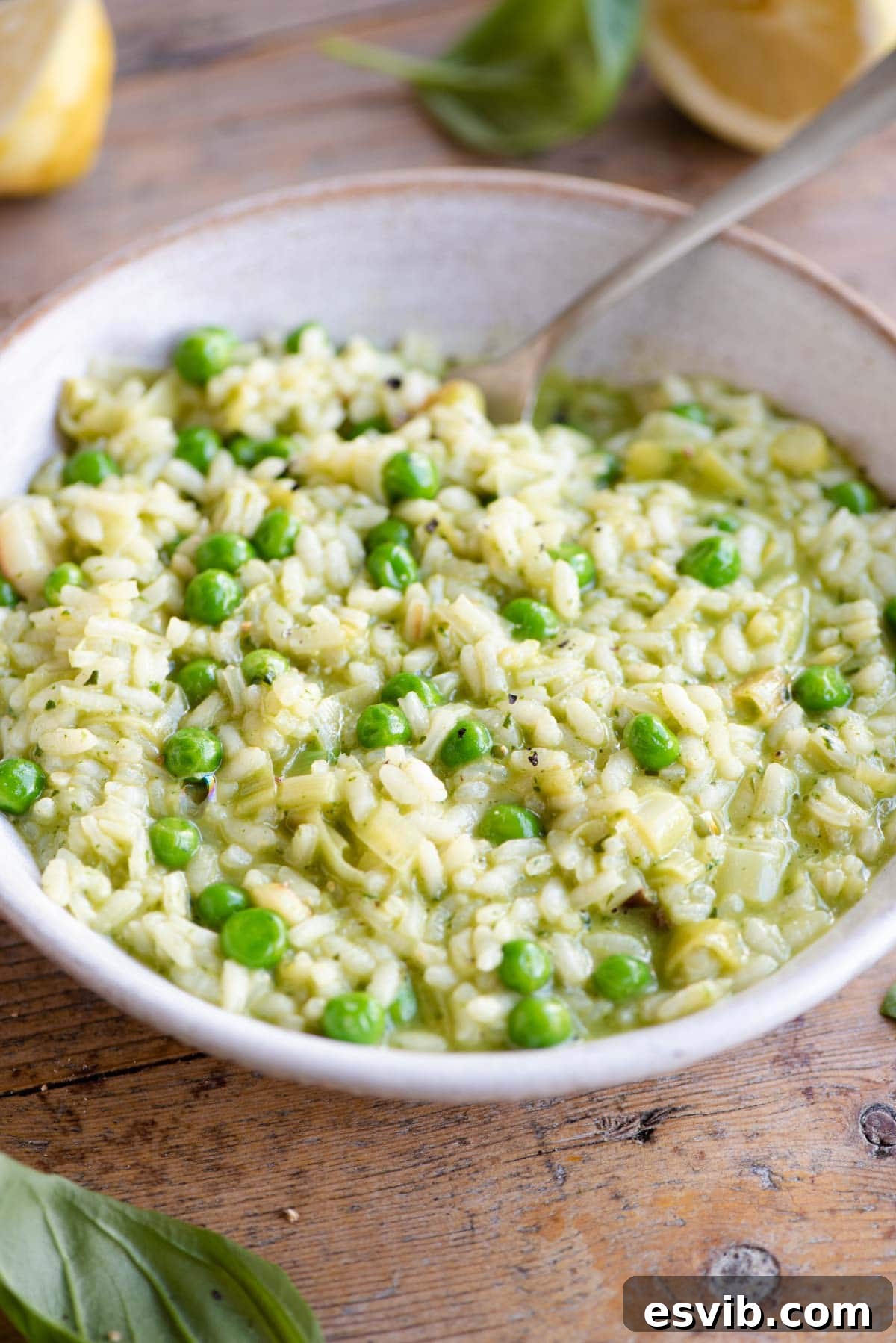
Prepare to tantalize your taste buds with our absolutely delicious and incredibly easy Pea and Pesto Risotto. This vibrant Italian dish is a true celebration of fresh, seasonal flavors, featuring the subtle sweetness of tender peas, the aromatic richness of homemade basil pesto, bright zesty lemon, and the savory depth of white wine and tender leeks. Forget bland, store-bought jars; our lightning-fast, 5-minute homemade basil pesto elevates this risotto to an unforgettable culinary experience, making it perfectly fresh, bright, and utterly delightful for any spring or summer occasion.
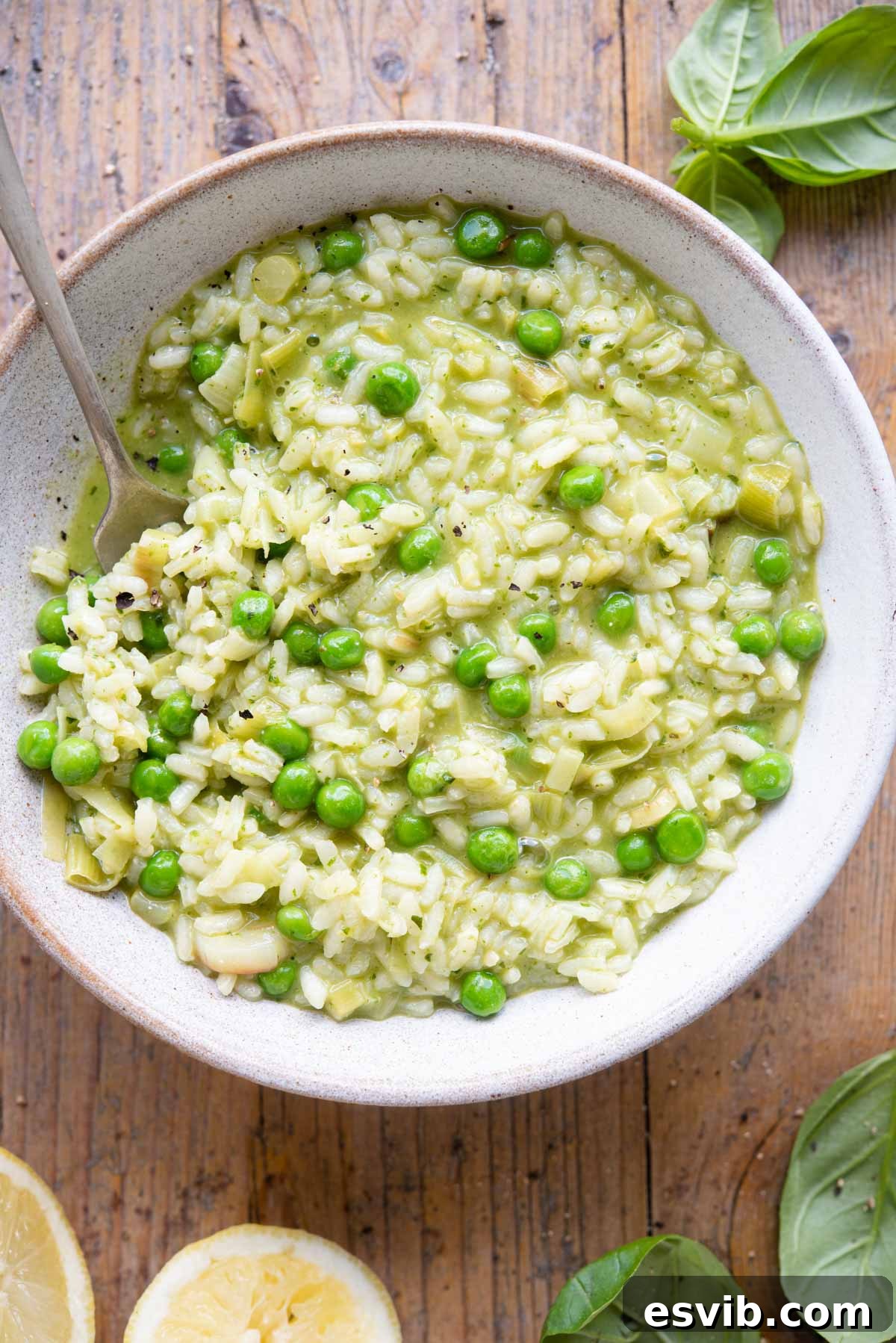
Why This Pea and Pesto Risotto Will Become Your Favorite Go-To Recipe
Risotto often carries a reputation for being complex or time-consuming, but this recipe effortlessly debunks that myth. We’ve streamlined the process without compromising on the depth or authenticity of flavor, ensuring that even novice cooks can achieve a restaurant-quality dish with ease. Here’s why this Pea and Pesto Risotto stands out as a must-try:
- Effortlessly Elegant: Despite its sophisticated appearance and incredible flavor, this risotto is surprisingly simple to prepare. It’s the perfect dish for a comforting weeknight meal or an impressive centerpiece for entertaining guests.
- Bursting with Freshness: The harmonious combination of naturally sweet peas, tangy lemon, and aromatic basil pesto creates a vibrant flavor profile that truly sings of the warmer months of spring and summer. Each spoonful is a refreshing delight.
- Unbeatable Homemade Pesto: The undisputed secret weapon of this recipe is its quick, homemade pesto. Crafted in mere minutes, it delivers an authentic, herbaceous taste and bright green hue that jarred versions simply cannot replicate.
- Deeply Comforting and Satisfying: The signature creamy texture of perfectly cooked Arborio rice, infused with savory vegetable stock and tender sautéed leeks, offers a profoundly comforting and satisfying eating experience that nourishes both body and soul.
- Naturally Versatile & Easily Adaptable: This recipe is naturally vegetarian when prepared with vegetable stock, making it a wonderful option for various dietary preferences. It’s also incredibly easy to customize with additional seasonal vegetables or your favorite protein.
- Quick & Rewarding: With a prep time of just 10 minutes and a cook time of around 30 minutes, you can have a gourmet-tquality Italian meal on your table in under an hour, making it a highly rewarding cooking experience.
Essential Ingredients: The Foundation of Flavor
The key to crafting a truly exceptional risotto lies in selecting quality ingredients and understanding their role in building the dish’s flavor and texture. Below, you’ll find a detailed look at everything you need for this Pea and Pesto Risotto, along with helpful notes and potential substitutions to ensure your culinary success.
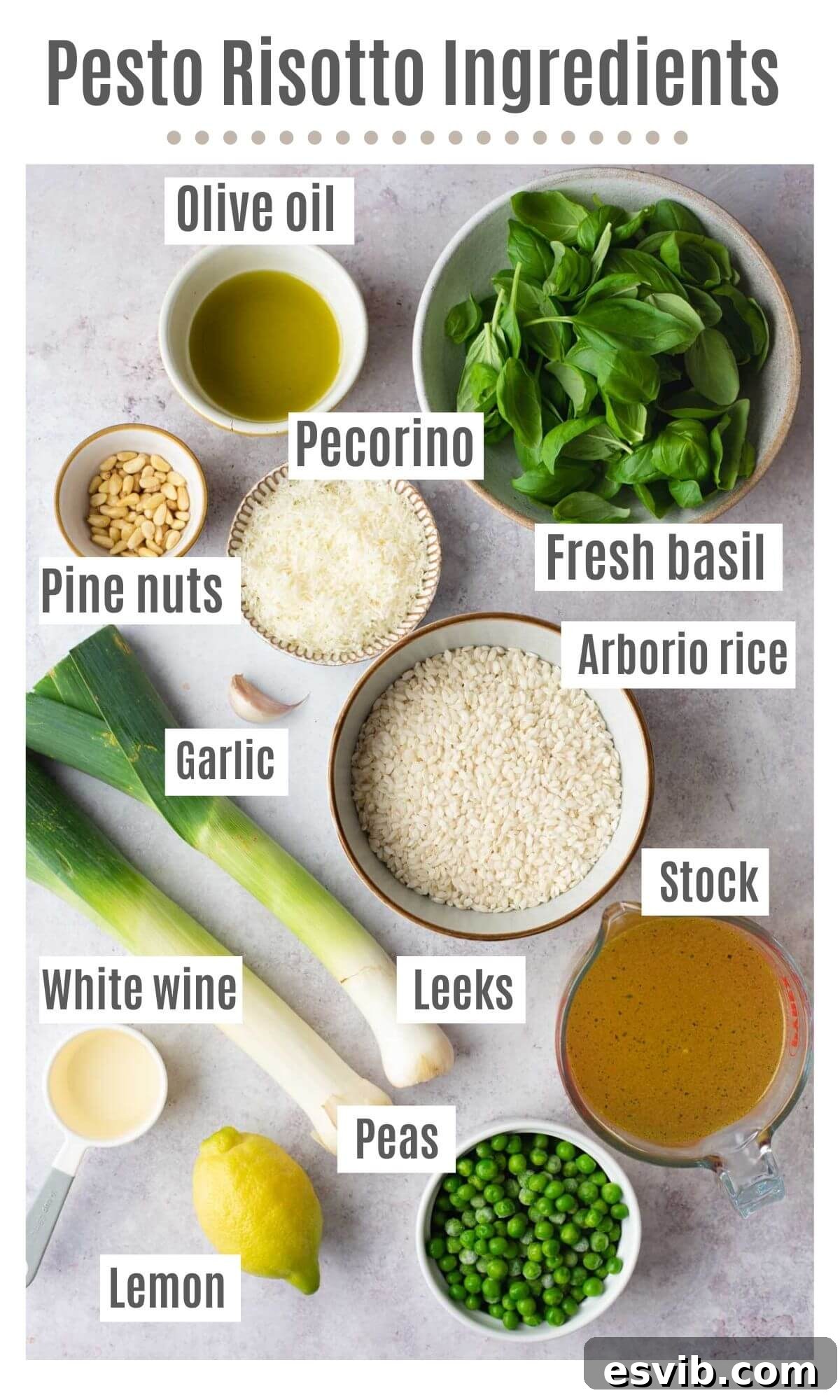
- Arborio Rice: This Italian short-grain rice is the non-negotiable cornerstone of any great risotto. Its high starch content (amylopectin) is crucial for releasing the creamy texture as it cooks and is stirred. While Arborio is widely available, you can also use Carnaroli rice, often lauded as the “king” of risotto rices for its slightly firmer grain and superior ability to absorb liquid without becoming mushy. Steer clear of long-grain rice varieties, as they lack the necessary starch to achieve the desired creamy, luscious consistency.
- Stock (Vegetable or Chicken): The quality of your stock directly impacts the depth and richness of your risotto’s final flavor. We recommend opting for a good quality, low-sodium vegetable or chicken stock so you have precise control over the overall seasoning. Crucially, keep your stock simmering gently in a separate pot throughout the entire cooking process; adding cold stock will drastically cool down your risotto, interrupting the cooking and starch release.
- Dry White Wine: A modest splash of dry white wine, such as Pinot Grigio, Sauvignon Blanc, or Vermentino, adds a wonderful layer of acidity and complex depth to the risotto. It’s added early to deglaze the pan, helping to release any caramelized bits, and its alcohol evaporates quickly, leaving behind only its delicious, nuanced essence. If you prefer to avoid alcohol, simply substitute with an equal amount of additional warm stock.
- Leeks: These elegant members of the onion family contribute a delicate, sweet, and savory aromatic base that complements the other vibrant flavors beautifully. Ensure you wash them thoroughly after slicing, as layers of dirt can often hide within their rings. If leeks are unavailable, a finely chopped yellow onion or a couple of shallots can serve as an excellent substitute.
- Peas (Frozen or Fresh): For maximum convenience and consistent sweetness, frozen peas are a fantastic choice and require no defrosting before being added to the dish. If fresh peas are in season and readily available, they will undoubtedly lend an even brighter, more pronounced garden-fresh taste that enhances the springtime feel of the risotto.
- Lemon (Zest and Juice): The zest and juice from a fresh, unwaxed lemon are indispensable in this recipe. They provide a vital burst of refreshing, tangy flavor that beautifully cuts through the richness of the risotto, adding a vibrant finish. Always opt for unwaxed or organic lemons since you’ll be utilizing the aromatic rind.
- Homemade Basil Pesto: This is truly where the magic of this dish unfolds! To make the most incredible, aromatic, and intensely flavorful basil pesto, you’ll need fresh basil leaves, lightly toasted pine nuts, a small clove of garlic, finely grated Pecorino Romano cheese (or Parmigiano Reggiano for a milder profile), and high-quality extra virgin olive oil. We strongly, *strongly* recommend making your own pesto; store-bought jarred pesto simply cannot compare in terms of freshness, vibrant color, and exquisite flavor.
- Extra Virgin Olive Oil: A good quality extra virgin olive oil is essential both for sautéing the aromatics and as a key component of your homemade pesto, lending a rich, fruity, and authentic Mediterranean character to the entire dish.
- Salt and Freshly Ground Black Pepper: These foundational seasonings are crucial for balancing and enhancing all the flavors. Remember to taste and adjust frequently throughout the cooking process, as risotto often requires more seasoning than you might initially anticipate.
Step-by-Step Guide to Crafting Your Perfect Pea and Pesto Risotto
Follow these meticulously detailed steps to create a creamy, restaurant-quality Pea and Pesto Risotto right in your own kitchen. Patience and precision are your best friends on the journey to achieving that coveted al dente consistency.
1. Prepare Your Homemade Basil Pesto
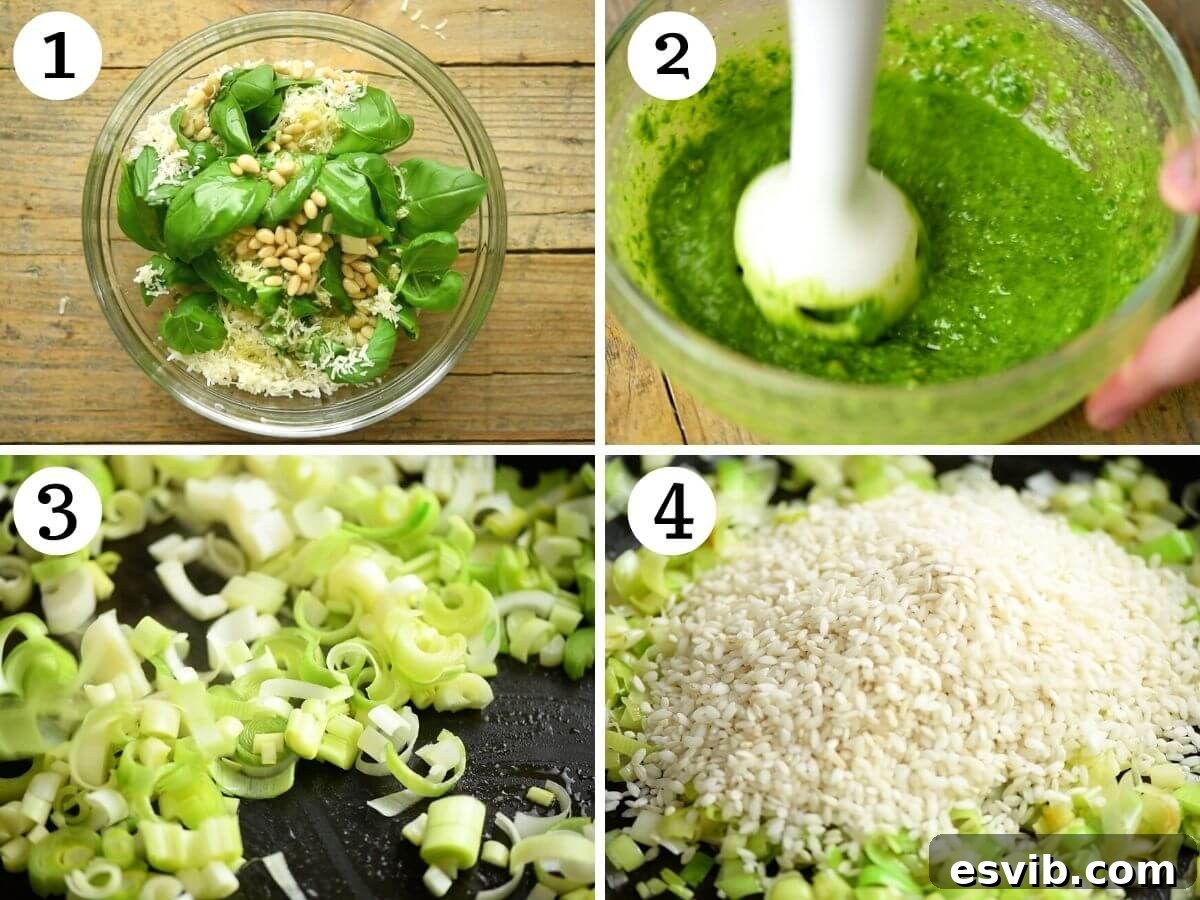
Begin by making your fresh, vibrant basil pesto. In a small food processor or using an immersion (hand-held) blender, combine the fresh basil leaves, grated Pecorino Romano (or Parmigiano Reggiano), pine nuts, peeled garlic clove, and 3 tablespoons of high-quality extra virgin olive oil. Blitz the ingredients until they form a smooth, fragrant, and bright green paste. Taste the pesto and adjust the seasoning if necessary with a pinch of salt. Transfer the freshly made pesto to a separate bowl and set it aside. This simple step takes only about 5 minutes but makes an extraordinary difference to the final flavor of your risotto.
2. Sauté the Leeks and Toast the Rice
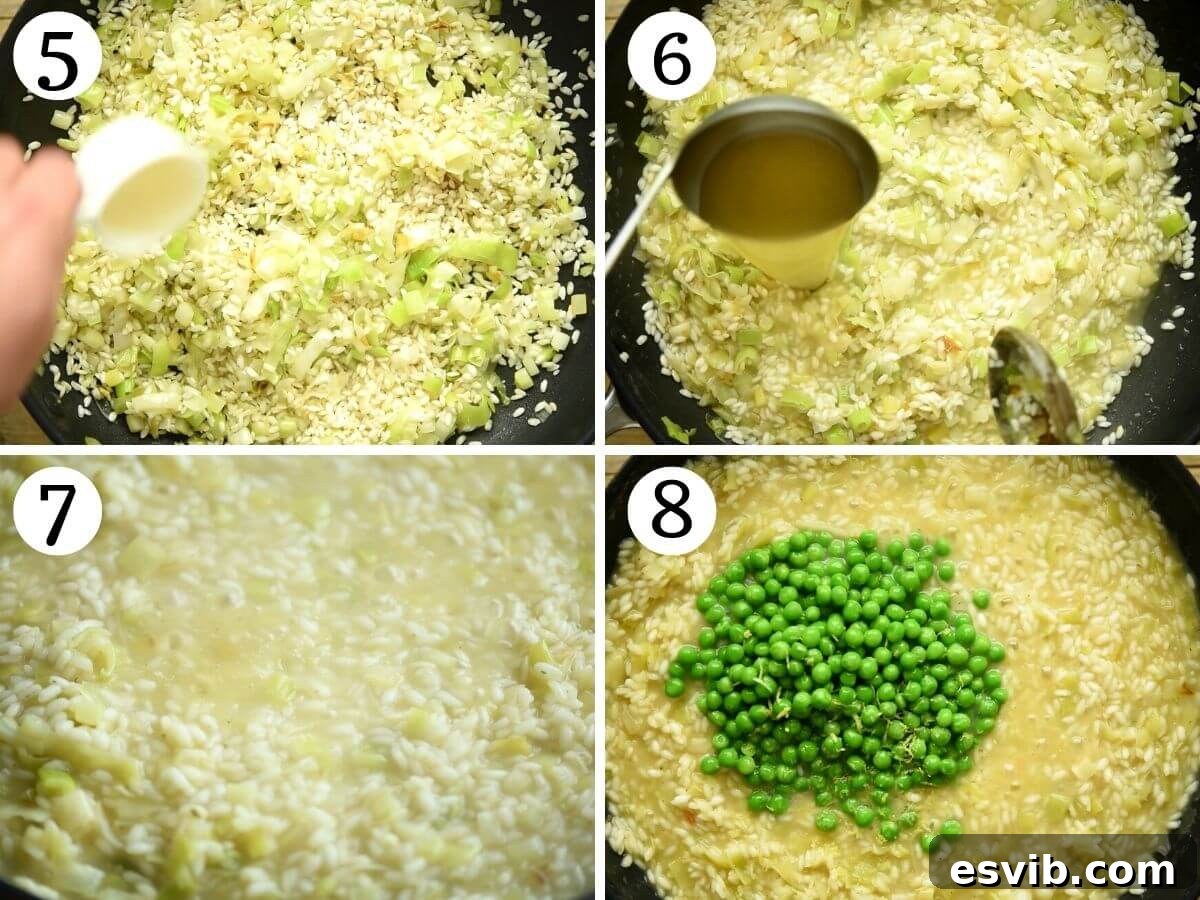
In a large, heavy-bottomed pan or a sturdy Dutch oven, heat 1-2 tablespoons of extra virgin olive oil over medium heat. Add the thoroughly washed and sliced leeks to the pan. Sauté gently for approximately 2 minutes, stirring occasionally, until the leeks are softened and beautifully translucent but crucially, not browned. Over-browning can introduce a bitter note. Once the leeks are tender, add the Arborio rice to the pan. Stir continuously for 1-2 minutes, allowing the rice grains to lightly toast and become thoroughly coated in the fragrant oils from the leeks. This crucial “toasting” step (known in Italian as tostatura) helps to seal the exterior of each rice grain, ensuring they absorb the liquid more evenly and maintain a pleasant al dente bite later in the cooking process.
3. Deglaze with Wine and Gradually Add Stock
Pour in the dry white wine and stir until it has almost completely reduced and absorbed into the rice, which typically takes about a minute. The wine not only deglazes the pan, capturing all the delicious fond, but also adds a vital layer of acidity and flavor. Next, add around two ladles of your warm stock to the rice. Stir gently but consistently, allowing the rice to slowly absorb the liquid. As the stock is absorbed and the bottom of the pan becomes visible when you draw your spoon across it, add another ladle of warm stock. Continue this patient process, adding one ladle at a time and stirring frequently, until all the stock is used up and the rice is wonderfully creamy yet still retains a slight, pleasant chew (al dente). This step usually takes 20-25 minutes, requiring your gentle attention and stirring.
4. Incorporate Peas and Lemon
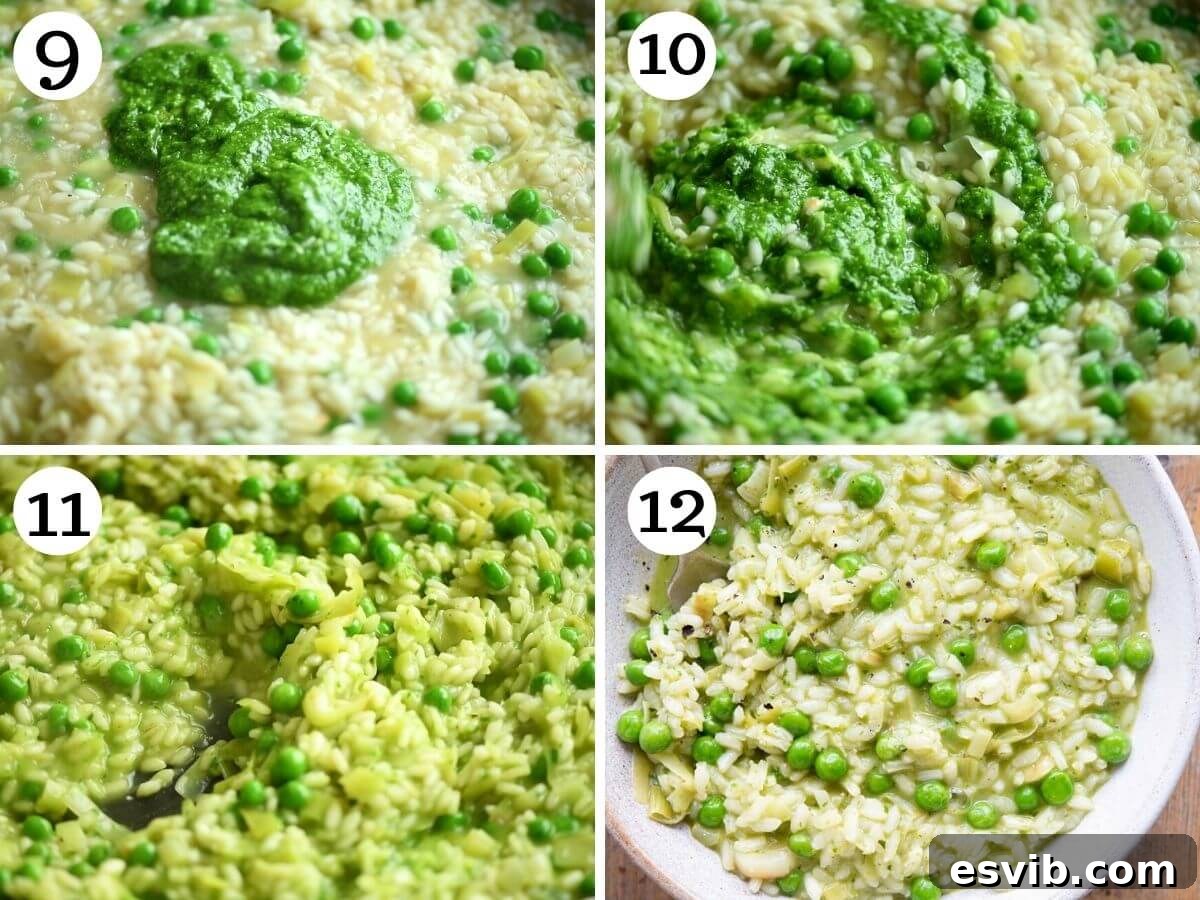
Towards the very end of the cooking process, when you add the final amount of stock, also stir in the frozen peas, the bright lemon zest, and the tangy lemon juice. Continue to cook for an additional 1-2 minutes, just long enough for the peas to heat through and become tender-crisp, and for the refreshing essence of the lemon to fully infuse the creamy risotto. This ensures the peas retain their vibrant color and texture.
5. Finish with Pesto, Season, and Serve
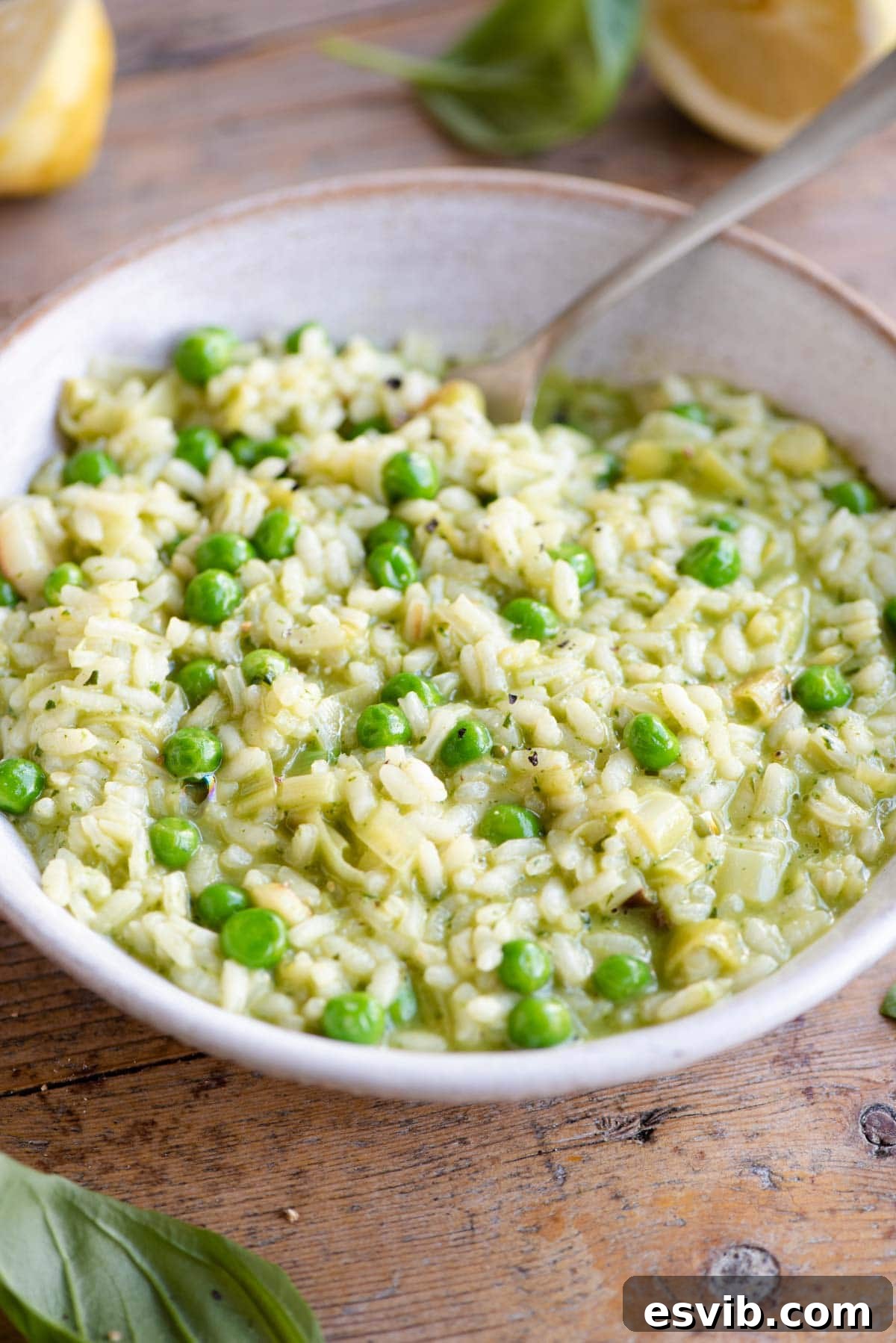
Remove the pan from the heat. Now, stir in your freshly prepared homemade basil pesto. The residual heat from the creamy risotto will gently warm the pesto, releasing its full, incredible aroma and flavor without cooking out its fresh, herbaceous qualities. Taste the risotto for seasoning and generously adjust with salt and freshly ground black pepper as needed. Risotto, like pasta, often benefits from more seasoning than you might initially think, so don’t hesitate to taste and tweak. Serve your Pea and Pesto Risotto immediately, perhaps garnished with a little extra fresh basil or a delicate shaving of Pecorino Romano cheese for an added touch of elegance.
Pro Tips for Achieving the Best Pea and Pesto Risotto Every Time
Mastering risotto is all about understanding a few key techniques. These expert tips will help ensure your Pea and Pesto Risotto is consistently perfect:
- Always Keep Your Stock Warm: This is arguably the most crucial tip for perfect risotto. Adding cold stock to hot rice will drastically lower the temperature of your risotto, interrupt the delicate cooking process, and prevent the starch from releasing properly, resulting in unevenly cooked grains. Always keep your stock simmering gently in a separate pot throughout the entire cooking time.
- Embrace the Art of Stirring: Risotto requires stirring, but not constant, vigorous stirring. Frequent, gentle stirring helps to release the necessary starch from the Arborio rice grains, which is what creates the dish’s signature creamy texture. However, over-stirring can break down the rice too much, leading to a gluey or sticky consistency. Stir enough to prevent sticking and ensure even absorption, but allow the rice a moment to settle and absorb liquid between additions.
- Aim for Al Dente Perfection: The ideal risotto should be creamy and flowing (a consistency Italians refer to as all’onda, meaning “wavy”), with each individual rice grain still retaining a slight, pleasant chewiness – perfectly al dente. It should never be mushy or soupy. Taste frequently in the last few minutes to achieve this precise texture.
- Taste and Adjust Seasoning Liberally: Risotto, like many Italian dishes, often requires more seasoning than you might initially expect. Start with a moderate amount of salt and pepper, then taste the risotto frequently as it cooks, especially after incorporating the pesto. Adjust the seasoning as needed, adding more salt and freshly ground black pepper until the flavors truly sing.
- Homemade Pesto is a Game Changer: While convenience might be tempting, the difference in flavor between homemade and store-bought jarred pesto is immense. Our quick, 5-minute homemade basil pesto brings unparalleled freshness, aroma, and vibrant color to this dish. It’s truly worth the tiny extra effort and will elevate your risotto to new heights.
- Serve Immediately for Optimal Texture: Risotto is a dish that waits for no one. Its creamy consistency and delicate al dente texture are at their absolute peak right off the stove. Have your serving plates ready and serve the risotto piping hot as soon as it’s finished cooking to enjoy it at its very best.
Flavorful Variations and Thoughtful Serving Suggestions
This Pea and Pesto Risotto is wonderfully versatile, making it easy to adapt to your personal preferences, dietary needs, or whatever seasonal ingredients you happen to have on hand. Feel free to get creative with these ideas:
- Add a Boost of Protein: For a more substantial and hearty meal, consider stirring in some grilled chicken breast, sautéed shrimp, flaked pan-seared salmon, or crispy fried pancetta or bacon bits at the very end of the cooking process.
- Explore Other Vegetables: While peas are fantastic, this risotto welcomes other spring and summer vegetables. Blanched asparagus tips, fresh spinach (stirred in at the very end until just wilted), finely diced zucchini, or even roasted cherry tomatoes would all make delicious additions.
- Cheese Swaps & Enhancements: While Pecorino Romano in the pesto and for garnish is traditionally vibrant, freshly grated Parmigiano Reggiano can also be used, offering a slightly milder, nuttier flavor. A dollop of creamy mascarpone stirred in at the end can also add an extra layer of luxuriousness.
- Nutty Alternatives for Pesto: If pine nuts aren’t readily available or if you have a preference, walnuts or almonds can be used in your homemade pesto for a different but equally delicious texture and flavor profile. Lightly toast them beforehand for maximum aroma.
- Extra Herbaceousness: A few sprigs of fresh mint, finely chopped and added along with the peas, can introduce an unexpected and delightful layer of cool freshness that perfectly complements the basil and lemon.
Serve your vibrant Pea and Pesto Risotto immediately, perhaps alongside a simple, crisp green salad dressed with a light vinaigrette. A basket of warm, crusty Italian bread is also a wonderful accompaniment, perfect for soaking up any leftover creamy goodness in the bowl. For an elegant finish, garnish individual servings with a sprinkle of extra fresh basil leaves, a delicate shaving of Pecorino Romano cheese, or an extra squeeze of fresh lemon juice.
Storage and Reheating Tips for Leftovers
While risotto is always at its absolute best when enjoyed fresh off the stove, any leftover Pea and Pesto Risotto can be stored and reheated for later enjoyment. Simply place any cooled leftover risotto in an airtight container and refrigerate promptly for up to 2-3 days.
To reheat, gently warm the risotto in a saucepan over medium-low heat. It’s important to add a splash of water, vegetable stock, or even milk (for extra creaminess) to loosen it up and help restore its creamy texture, as rice will continue to absorb liquid as it cools. Stir frequently until the risotto is heated thoroughly and has regained its desired consistency. Be careful not to overcook it during reheating, as this can cause the rice to become mushy.
For an exceptionally delicious way to utilize leftover risotto, consider transforming it into classic Italian Arancini! Roll the cooled risotto into small balls, optionally stuff each ball with a cube of mozzarella cheese, then bread them by dipping in flour, beaten egg, and finely ground breadcrumbs. You can then deep-fry or air-fry these delightful morsels until they are golden brown and wonderfully crispy on the outside, with a warm, gooey interior. They make for a fantastic appetizer or snack!
Complete Recipe Card: Pea and Pesto Risotto
Below you’ll find the comprehensive recipe card for this incredible Pea and Pesto Risotto, including precise ingredient measurements, detailed step-by-step instructions, and helpful nutritional information. We’ve laid out the preparation time, cook time, and serving sizes to assist you in efficiently planning your meal.
Pea and Pesto Risotto
By Emily
Prep Time: 10 mins
Cook Time: 30 mins
Total Time: 40 mins
Servings: 4 servings
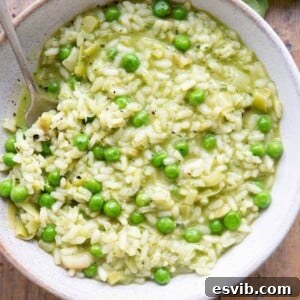
A delicious and easy Pea and Pesto Risotto made with white wine, leeks, peas and the most incredible 5-minute homemade basil pesto. Packed with zesty lemon this risotto is fresh, vibrant and utterly delicious!
Ingredients
For the Risotto
- 1.5 cups Arborio rice (300g)
- 4-5 cups vegetable stock (1 litre), kept warm
- ¼ cup dry white wine (60ml)
- 1 large leek (or 2 small), thoroughly washed, trimmed, and thinly sliced
- 1 cup frozen peas (150g)
- Zest of 1 unwaxed lemon and juice of half a lemon
- Salt and freshly ground black pepper, to taste
- 1-2 tablespoons extra virgin olive oil, plus extra for sautéing
For the Homemade Pesto
- 2.5 cups fresh basil leaves (30g), packed
- ⅓ cup Pecorino Romano or Parmigiano Reggiano (30g), freshly grated
- 1.5 tablespoons pine nuts (20g), lightly toasted if preferred
- 1 small clove garlic, peeled
- 3 tablespoons extra virgin olive oil (45ml)
Instructions
Preparation
- Carefully cut the leek in half lengthwise and rinse it thoroughly under cold running water to remove any hidden grit or dirt between its layers. Pat dry with a clean towel and cut into thin, uniform slices. Ensure your vegetable stock is gently simmering in a separate pot, ready to be added.
To Make the Pesto
- In a small food processor or using an immersion (hand-held) blender, combine the fresh basil leaves, grated Pecorino (or Parmigiano Reggiano), pine nuts, peeled garlic clove, and 3 tablespoons of olive oil. Blitz until you achieve a smooth, vibrant green paste. Taste the pesto and adjust seasoning as needed with a pinch of salt. Transfer the fresh homemade pesto to a small bowl and set aside.
To Make the Risotto
- Heat 1-2 tablespoons of olive oil in a large, heavy-bottomed pan or Dutch oven over medium heat. Add the prepared leeks and sauté for approximately 2 minutes, stirring occasionally, until they are softened and translucent but not browned.
- Add the Arborio rice to the pan with the softened leeks. Stir constantly for 1-2 minutes, allowing the rice grains to lightly toast and become thoroughly coated in the oil. This crucial “toasting” step helps to seal the exterior of the rice grains.
- Pour in the white wine and continue to stir until the wine has almost entirely evaporated and absorbed into the rice, which typically takes about 1 minute.
- Once the wine has reduced, add two ladles of the warm stock to the rice. Stir gently and continuously until the rice has absorbed almost all the liquid. Continue adding the warm stock, one ladle at a time, allowing each addition to be mostly absorbed before adding the next. This process should take about 20-25 minutes in total, creating a wonderfully creamy texture.
- When you add the last ladle of stock, also stir in the frozen peas, the bright lemon zest, and the tangy lemon juice. Continue to cook for another 1-2 minutes, just until the peas are heated through and become tender-crisp.
- Remove the pan from the heat. Stir in your freshly made basil pesto. The residual heat from the risotto will gently warm the pesto without cooking out its fresh flavor.
- Taste the risotto for seasoning and add salt and freshly ground black pepper generously as needed. Serve immediately, garnished with extra fresh basil or Pecorino if desired.
Video Guide
For a visual walkthrough of the entire recipe, watch our detailed video guide below:
Watch Pea and Pesto Risotto Video Guide

Chef’s Notes & Expert Tips for Success
- Don’t Skimp on Seasoning! Risotto, like a good pasta sauce, can take a surprising amount of seasoning. Always taste as you go and adjust salt and pepper to ensure the flavors truly sing and are perfectly balanced.
- Use Good Quality Stock: The foundation of your risotto’s flavor comes directly from the stock you use. Investing in a high-quality vegetable or chicken stock will make a noticeable and superior difference in the final taste of your dish.
- Homemade Pesto is a Game Changer: We cannot emphasize this enough – seriously, skip the jarred stuff. Our 5-minute homemade basil pesto brings unparalleled freshness, aromatic intensity, and vibrant color to this dish. It’s truly worth the minimal extra effort!
- Storing Leftovers: Leftover Pea and Pesto Risotto can be stored in an airtight container in the refrigerator for up to 2-3 days.
- Reheating Leftovers: When reheating, gently warm the risotto in a saucepan over medium-low heat. You’ll need to add a splash of water, vegetable stock, or even milk to loosen it up and help restore its creamy texture. Stir frequently until heated through.
- Transform Leftovers into Arancini: Give your cooled leftover risotto a second, delicious life by rolling it into small balls (optionally stuffing with a cube of mozzarella), then breading with flour, egg, and breadcrumbs before deep-frying until golden brown and crispy for a delightful Italian snack.
Helpful Information for All Our Recipes
- I always use extra virgin olive oil in all of my recipes unless specifically stated otherwise.
- When I use canned or jarred tomatoes of any kind, I consistently choose Cirio or Mutti brands for the best possible results and authentic flavor.
- All vegetables are assumed to be medium-sized unless otherwise specified in the recipe.
- All recipes are tested and developed using a fan (convection) oven.
- Find out more about how nutrition information is calculated on our site.
- Discover our must-have Italian Pantry Staples to stock your kitchen.
- Explore all our recommended Essential Kitchen Tools for Italian Cooking.
Nutrition Information
Calories: 490 kcal | Carbohydrates: 73g | Protein: 11g | Fat: 16g | Saturated Fat: 3g | Polyunsaturated Fat: 3g | Monounsaturated Fat: 9g | Cholesterol: 9mg | Sodium: 1049mg | Potassium: 273mg | Fiber: 5g | Sugar: 5g | Vitamin A: 1976IU | Vitamin C: 20mg | Calcium: 143mg | Iron: 5mg
Please note: Nutrition information is automatically calculated and should only be used as an approximation.
We truly hope you enjoy making and savoring this incredible Pea and Pesto Risotto! If you’ve tried this recipe or any other delicious dish from our blog, please don’t forget to rate the recipe and let us know how you got on in the comments section below – we absolutely love hearing from you! You can also Follow us on Facebook, Instagram and Pinterest, or sign up to our exclusive Newsletter to receive weekly updates on our latest and most delicious food creations.
More Delicious Recipes for Spring & Summer
Risotto
Risotto al Limone (Lemon Risotto)
Pasta
Pasta e Piselli (Pasta with Peas)
Sides
Peas and Pancetta – Easy Italian Side Dish
Pasta
Pasta al Limone (Creamy Lemon Pasta)
Explore More Delicious Italian Risotto Recipes to Try
- Cacio e Pepe Risotto: A creamy, peppery delight inspired by the classic Roman pasta dish, transformed into a comforting risotto.
- Butternut Squash Risotto with Thyme: A deeply comforting and earthy risotto, perfect for embracing the cozy flavors of autumn.
- Simple Saffron Risotto (Risotto alla Milanese): The iconic golden risotto from Milan, rich with the distinct aroma and flavor of saffron threads.
- Creamy Tomato & Zucchini Risotto: A wonderfully fresh and summery take on risotto, combining the sweetness of ripe tomatoes with tender zucchini.
- Creamy Mushroom Risotto: A perennial favorite, this deeply savory and wonderfully satisfying risotto highlights the rich umami of various mushrooms.