
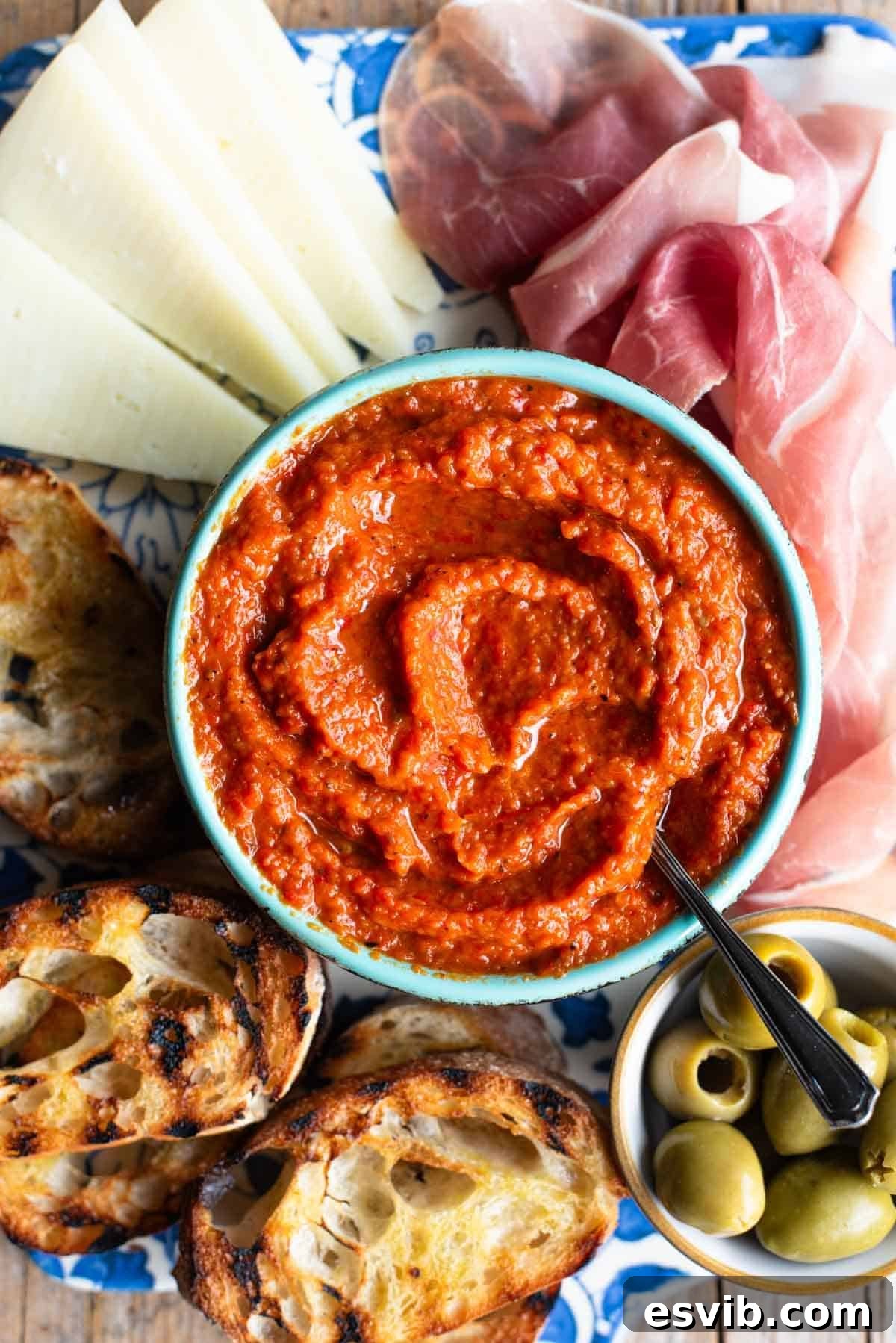
Embark on a culinary journey to the heart of Northeastern Italy and the vibrant Balkans with this exquisite recipe for Authentic Ajvar. This deeply flavorful spread, crafted from charred red peppers, tender eggplant, and aromatic garlic, boasts a remarkable balance of sweet and smoky notes with a savory depth that will captivate your palate. While its origins are deeply rooted in Balkan traditions, Ajvar has found a beloved home in Italy’s Friuli-Venezia Giulia region, where it’s cherished alongside an array of cured meats, artisanal cheeses, and succulent sausages.
The enchanting region of Friuli-Venezia Giulia, nestled in Italy’s northern mountainous expanse, is a melting pot of culinary influences. Its gastronomy is profoundly shaped by its immediate neighbors: Austria, Slovenia, and Croatia. This unique geographical and cultural crossroads explains the delightful presence of Ajvar, a condiment that hails from the Balkans, yet is ubiquitously embraced and enjoyed throughout Friuli-Venezia Giulia.
At its core, Ajvar is a celebration of seasonal produce, transforming humble peppers and eggplants into a rich, complex spread. The magic truly happens when the vegetables are expertly charred, lending an irresistible smokiness that forms the backbone of its unique character. These perfectly blistered peppers are then combined with tender, roasted eggplant, pungent garlic, and a hint of white wine vinegar, creating a harmonious blend that is smoky, subtly sweet, and wonderfully savory – a true delight for the senses.
This comprehensive guide will walk you through the full Ajvar recipe, complete with detailed notes on ingredient selection and valuable tips for achieving perfection. If you’re eager to delve deeper into the rich flavors of Friuli-Venezia Giulia, don’t miss our authentic recipes for Frico, a crispy cheese and potato dish, or our delectable Friulian Scallops Gratin.
Table of Contents
- History and Cultural Significance
- Ingredients
- Visual Walk-Through of the Recipe
- Ways to Use Ajvar
- Recipe Tips
- Storage and Shelf Life
- Full Recipe Card
- More Dips and Pestos to Try
Ajvar: A Journey Through History and Culture
Ajvar, often referred to as “red gold,” carries a rich history intertwined with the culinary heritage of the Balkan Peninsula. Traditionally made in late summer and early autumn when red peppers are at their peak, Ajvar was a staple for winter provisioning, a testament to its long shelf life when properly prepared. Each family often has its own cherished recipe, passed down through generations, making it a symbol of home and tradition.
Its journey to Friuli-Venezia Giulia is a natural extension of historical ties and geographical proximity. The region’s borders with Slovenia and Croatia mean that cultural exchanges, including culinary ones, have always been vibrant. Ajvar seamlessly integrated into Friulian cuisine, adapting slightly to local tastes while retaining its authentic essence. Today, it’s not uncommon to find homemade Ajvar gracing tables in both humble trattorias and elegant restaurants across the region, a beloved condiment that truly embodies the spirit of cross-cultural gastronomy.
Key Ingredients for the Perfect Ajvar
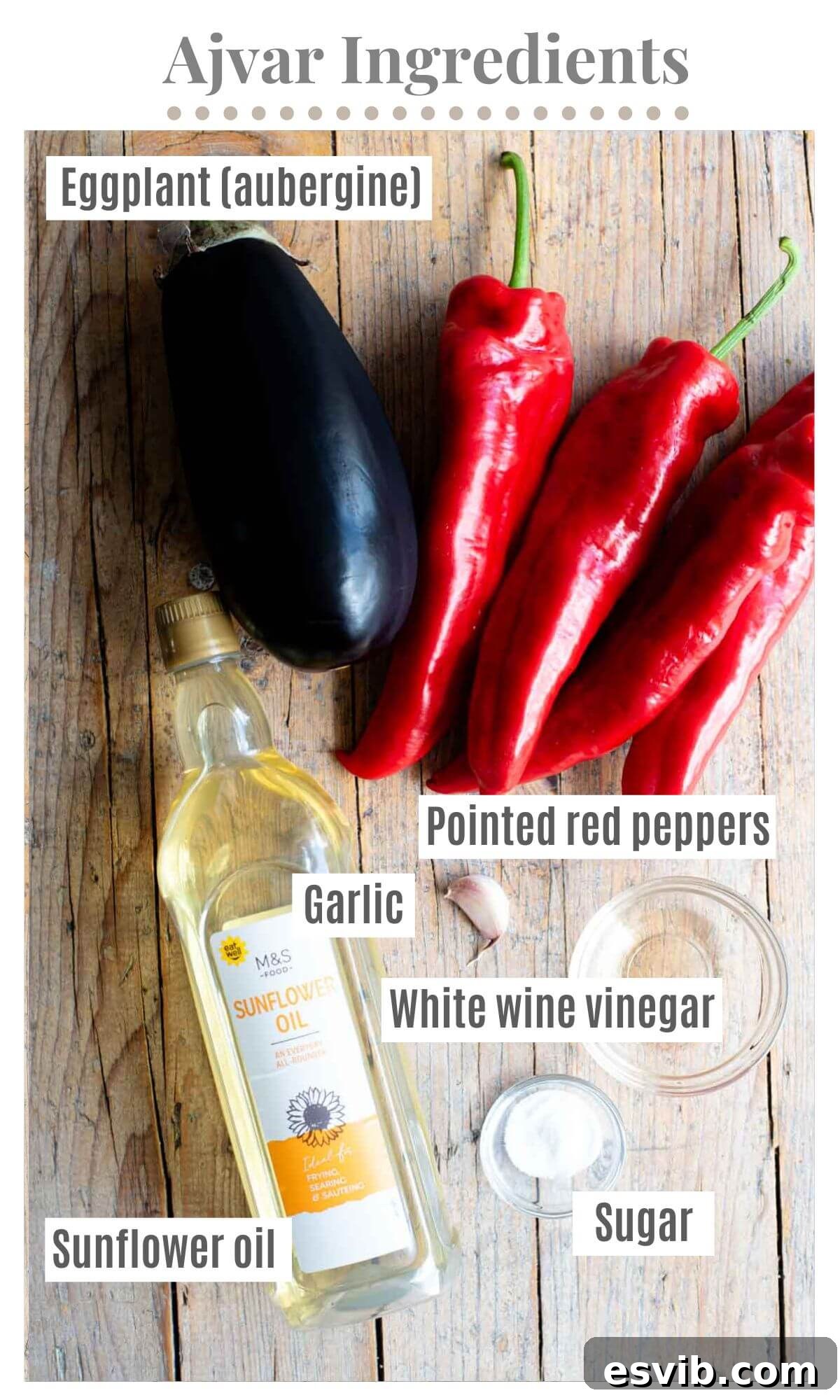
Ingredient Notes and Expert Substitutions
- Peppers: The star of Ajvar! We highly recommend using pointed peppers, often known as Romano or Kapia peppers. These peppers are naturally sweeter and have thinner skins, which become incredibly easy to char and peel, contributing significantly to the smooth texture and rich flavor of the finished spread. While bell peppers can be used in a pinch, they are less sweet and their thicker skins are more challenging to remove, which can impact the final texture and charring process.
- Eggplant (Aubergine): You’ll need 1 large eggplant or 2 smaller ones. Look for firm, plump eggplants with smooth, glossy skins, free from blemishes or soft spots. The flesh should be creamy white with minimal seeds. Roasting the eggplant adds a delicate creaminess and depth that complements the smoky peppers beautifully.
- Garlic: A single garlic clove provides just enough aromatic punch without overpowering the delicate flavors of the vegetables. Adjust to your preference, but remember Ajvar is about balance.
- Sunflower Oil: A neutral-flavored oil like sunflower oil is ideal as it allows the natural flavors of the peppers and eggplant to shine. If sunflower oil isn’t available, grapeseed oil or another mild vegetable oil can be used as a substitute. Olive oil, particularly extra virgin, has a stronger flavor that might compete with the Ajvar’s profile, so use it sparingly if opting for it.
- Sugar and White Wine Vinegar: These two ingredients are crucial for balancing the flavors. The sugar enhances the natural sweetness of the peppers and eggplant, while the white wine vinegar provides a bright, tangy counterpoint that elevates the overall taste. We suggest starting with the amounts specified in the recipe and then adjusting to your personal taste at the end.
- Olive Oil: Used primarily for roasting the eggplant, a good quality olive oil helps tenderize the eggplant and contributes to its rich, roasted flavor.
- Salt: Essential for seasoning and bringing all the flavors together. Always season to taste.
Visual Walk-Through: Crafting Homemade Ajvar
Making Ajvar is a labor of love, but the process is straightforward and incredibly rewarding. Follow these steps carefully to create a perfectly smoky and delicious spread.
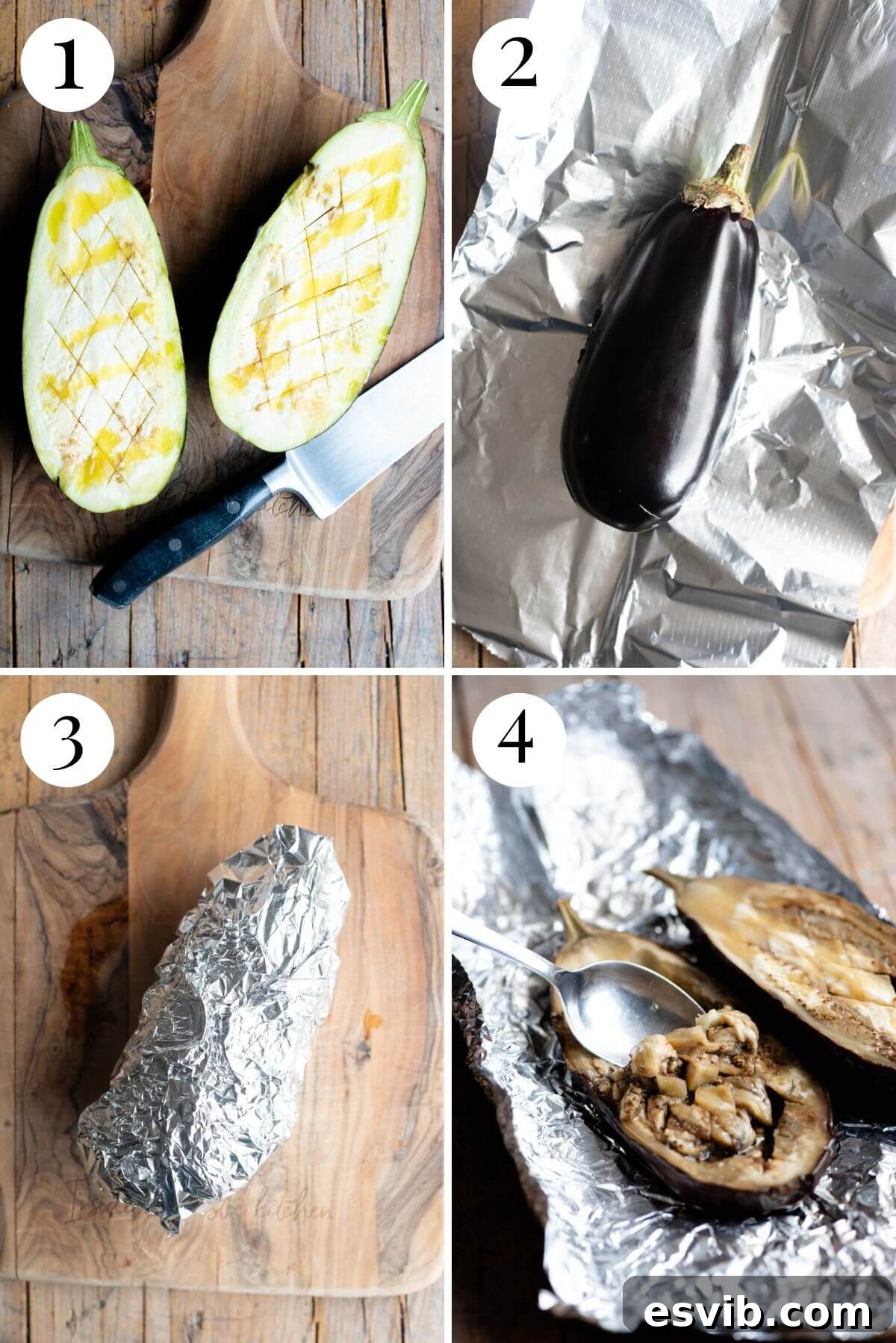
- Roast the Eggplant: Begin by preheating your oven to 180℃ (350℉). Carefully cut the eggplant in half lengthwise. Using a sharp knife, score the flesh in a criss-cross pattern without cutting through the skin. Drizzle generously with olive oil, then press the halves back together. Wrap the entire eggplant tightly in aluminum foil. Roast for 1 hour to 1 hour and 15 minutes, or until the eggplant is completely soft and tender when pierced with a fork (photos 1-4). This slow roasting ensures a creamy texture and deep flavor.
- Char the Peppers for Ultimate Flavor: This step is critical for Ajvar’s signature smoky taste. Place the pointed peppers directly over a naked gas flame on your stovetop. Using tongs, turn them frequently until their skins are completely blackened and blistered on all sides. The peppers should also feel soft to the touch, indicating they are cooked through (photo 5).
- Steam and Cool the Peppers: Immediately transfer the charred peppers to a deep dish or bowl. Cover the dish tightly with plastic wrap or a lid. Allow them to sit and steam for about 30 minutes to 1 hour, or until they are cool enough to handle. The steam helps to loosen the skins, making them much easier to peel (photo 6).
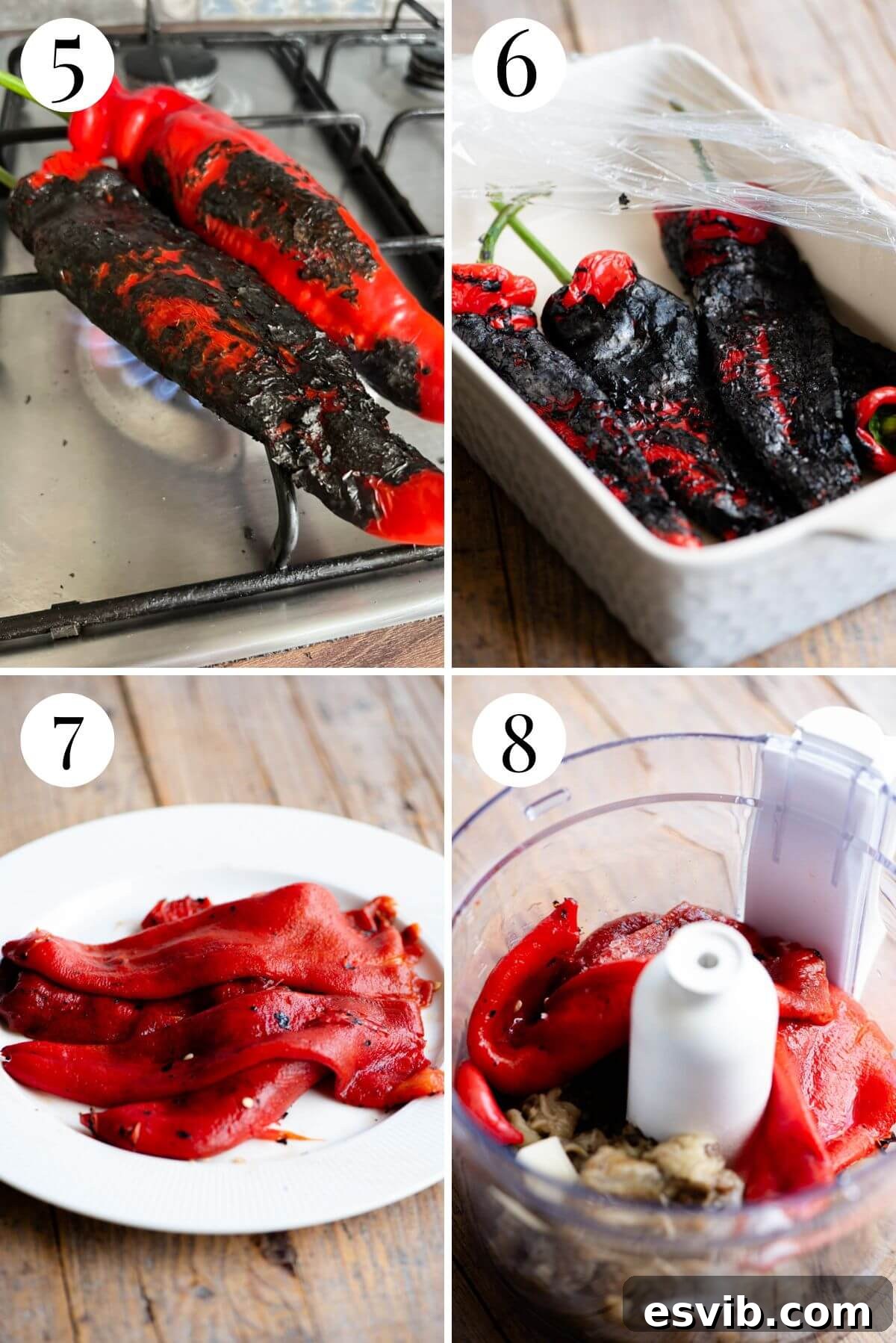
- Peel and Prepare the Peppers: Once cooled, carefully peel all the charred skin from the peppers. Most of the skin should slip off easily. For any stubborn black bits, use a damp piece of kitchen paper to gently wipe them off. Ensure you remove the stems and seeds as well. Avoid rinsing the peppers under water, as this can wash away some of the precious smoky flavor.
- Blitz to Perfection: Scoop out the tender flesh from the roasted eggplant and place it into a food processor. Add the peeled peppers, the garlic clove, sugar, and white wine vinegar, along with a pinch of salt. Blitz the mixture until it reaches your desired consistency – smooth for a creamy spread, or slightly chunky if you prefer a more rustic texture (photos 8 and 9).
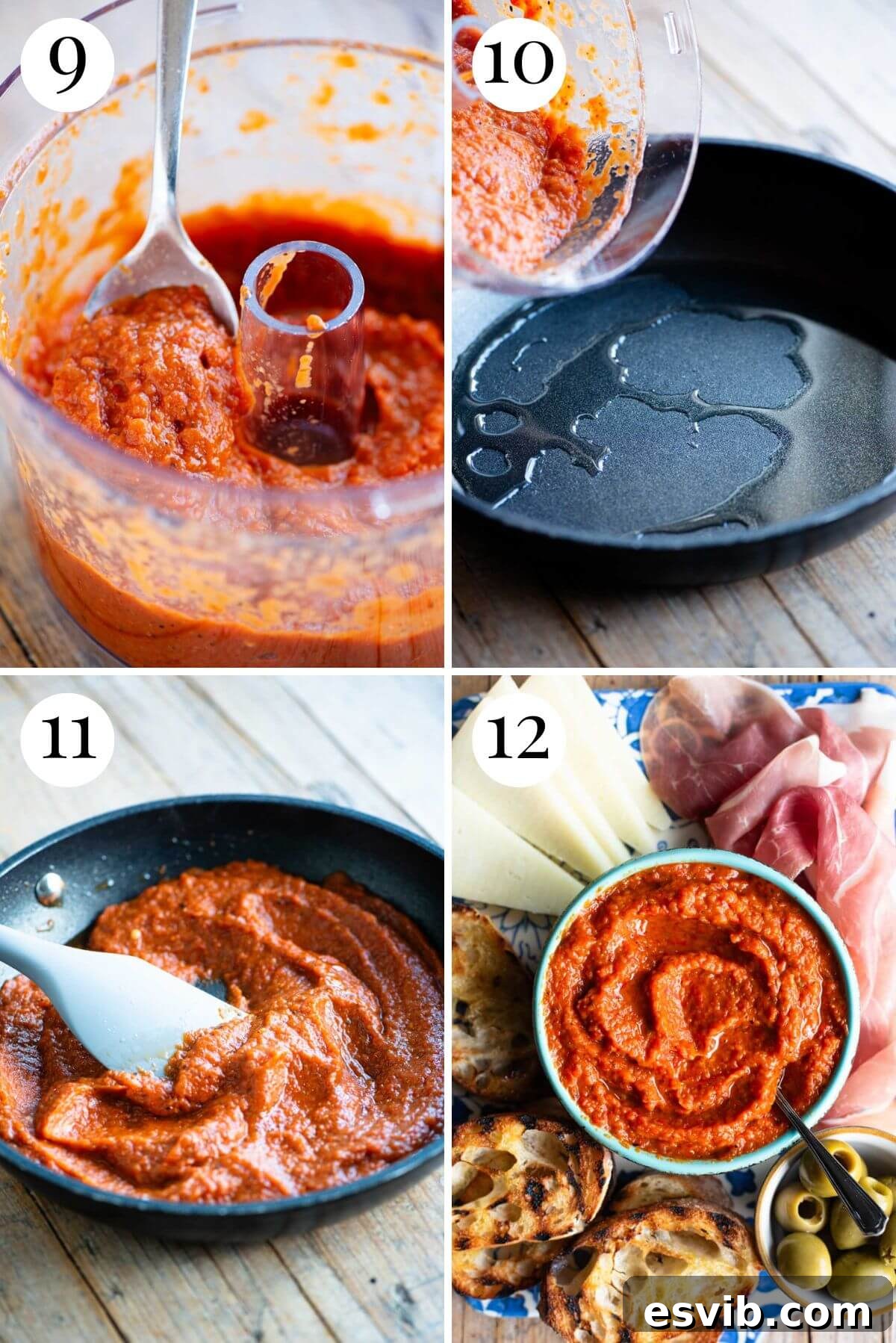
- Cook and Intensify Flavors: Pour the sunflower oil into a medium frying pan and heat it over medium heat until hot. Add the blitzed Ajvar mixture to the pan and stir well to combine the oil. Simmer the Ajvar gently for 5 to 10 minutes, stirring occasionally. This crucial step allows the flavors to meld and intensify, and helps to reduce any excess moisture, resulting in a richer, more concentrated spread. Once cooked, turn off the heat and let the Ajvar cool completely. Serve as a versatile sauce, a delightful dip, or a robust condiment (photos 10-12).
Delicious Ways to Enjoy Your Homemade Ajvar
Ajvar is incredibly versatile and can elevate a wide variety of dishes. Here are just a few delicious ways to incorporate this flavorful spread into your meals:
- A Superior Condiment: Serve Ajvar generously alongside any grilled or roasted meats. It’s fantastic with chicken, steak, pork chops, or sausages, adding a burst of smoky, tangy flavor that beautifully complements savory proteins. Think of it as a gourmet alternative to ketchup or BBQ sauce.
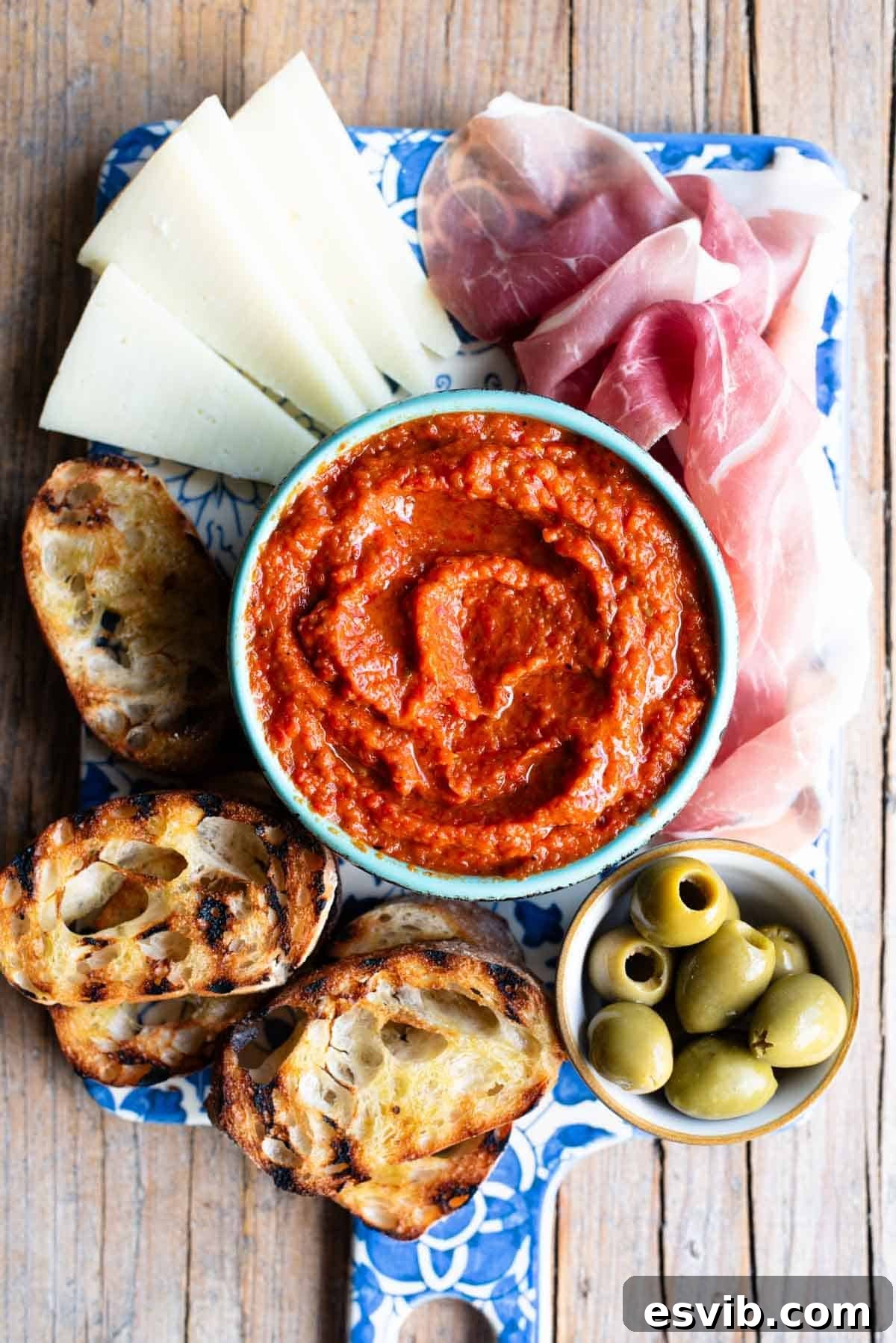
- The Ultimate Dip & Spread: Enjoy Ajvar as a vibrant dip with crunchy crostini, fresh ciabatta bread, or pita bread. It’s also an essential component of any charcuterie or cheese board, pairing exquisitely with cured meats like prosciutto or salami, and various cheeses. For more inspiration, explore our antipasti category!
- Elevate Your Sandwiches and Wraps: Spread a generous layer of Ajvar on your favorite sandwiches, wraps, or burgers. Its rich flavor pairs wonderfully with grilled vegetables, cheeses, or even cold cuts, adding moisture and a distinct gourmet touch.
- Pasta Sauce Base: Thin Ajvar slightly with a little pasta water or vegetable broth and toss it with your favorite pasta for a quick, flavorful vegetarian meal. Add some fresh herbs and a sprinkle of Parmesan.
- Egg Enhancer: A dollop of Ajvar next to scrambled eggs, omelets, or fried eggs in the morning adds a sophisticated twist to breakfast or brunch.
- Roasted Vegetable Companion: Drizzle or dollop Ajvar over roasted root vegetables, zucchini, or bell peppers for an extra layer of flavor.
Expert Recipe Tips for Perfect Ajvar
- Achieve Extra Smoky Flavor: For an even more intense smoky profile, you can traditionally char the eggplant over a naked flame as well, similar to the peppers, instead of roasting it in the oven. This method adds a pronounced depth of smokiness that many aficionados adore. If you choose this route, ensure the eggplant is very tender before processing.
- Managing Eggplant Moisture: After roasting or charring, eggplants can sometimes retain a lot of moisture. If your roasted eggplant flesh appears overly watery, you can easily remove the excess. Simply place the scooped-out eggplant flesh into a fine-mesh sieve and gently press out the moisture with the back of a spoon or your hands before adding it to the food processor. This step ensures your Ajvar isn’t too runny.
- Pointed Peppers vs. Bell Peppers: As mentioned, pointed peppers (Romano or Kapia) are ideal due to their natural sweetness and thin skins, which char and peel easily. If only bell peppers are available, you can certainly use them. However, be aware that their thicker skins will take longer to char and may be a bit more challenging to remove thoroughly. Patience is key here to achieve that smooth consistency.
- Adjusting Consistency: The desired consistency of Ajvar can vary from a thick, rustic spread to a smoother, more fluid dip. If you prefer a thinner Ajvar, you can gradually add a little more sunflower oil or even a splash of water while blitzing until it reaches your preferred texture. Conversely, if your Ajvar is too thin, return it to the frying pan and simmer it down further over medium-low heat, stirring frequently, to reduce the liquid and thicken it to your liking.
Properly stored homemade Ajvar will keep beautifully in an airtight container in the refrigerator for up to 3 days. For longer storage, you can sterilize jars and hot-pack the Ajvar, similar to preserving jams, which can extend its shelf life to several months. Always ensure the jars are properly sealed. Ajvar is delicious served warm, at room temperature, or even chilled.
Ajvar (Authentic Roasted Red Pepper and Eggplant Spread)
By Emily
20 mins
1 hr 20 mins
1 hr 40 mins
1 cup (270g)
Print Recipe
You’ll find Ajvar in Friuli-Venezia Giulia, the northern mountainous region of Italy, a beloved import from the Balkans. It’s made with perfectly charred red peppers, roasted eggplant, and fresh garlic, offering a delightful sweet, smoky, and savory flavor profile. This versatile spread is ideal for serving with cured meats, gourmet cheeses, or hearty sausages.
Ingredients
- 4 pointed peppers (Romano or Kapia peppers recommended)
- 1 large eggplant or 1.5 medium eggplants (see notes for size)
- 1 garlic clove (minced or finely grated)
- 1 teaspoon sugar (granulated)
- 1 tablespoon white wine vinegar
- 1.5 tablespoons sunflower oil (or other neutral-flavored oil)
- Olive oil (for roasting eggplant)
- Salt (to taste)
Instructions
- Pre-heat the oven to 180℃ (350℉). Cut the eggplant (aubergine) in half lengthwise and score the flesh in a criss-cross pattern. Drizzle generously with olive oil, then press the halves back together and wrap tightly in aluminum foil. Roast in the oven for 1 hour to 1 hour and 15 minutes, or until the eggplant is very tender.
- While the eggplant roasts, char the pointed peppers. Place them directly over the naked flame of a gas hob, turning frequently with tongs until the skins are completely blackened and blistered on all sides. Transfer the charred peppers to a tray or bowl and cover tightly with cling film to steam for 30 minutes to 1 hour. This helps loosen the skins for easy peeling.
- Once the peppers have cooled, remove as much of the black charred skin as you can. The majority should come off easily with your hands. Use a damp piece of kitchen paper to gently wipe off any remaining stubborn black bits. Remove the stems and seeds from the peppers.
- Scoop out the tender flesh from the roasted eggplant and place it into a food processor. Add the peeled peppers, sugar, minced garlic clove, and a pinch of salt. Blitz until the mixture is smooth or reaches your desired consistency (slightly chunky is also delicious).
- Add the sunflower oil to a small frying pan over medium-low heat. Once the oil is hot, add the Ajvar mixture from the food processor and stir well to combine. Cook the Ajvar for 5-10 minutes, stirring occasionally, to allow the flavors to intensify and any excess moisture to reduce. This step makes the Ajvar richer and more delicious.
- Turn off the heat and let the Ajvar cool completely before serving. It can be enjoyed warm, at room temperature, or chilled.
Notes
- Size of Eggplant: If you don’t have one large eggplant, we recommend roasting 2 medium ones and using the flesh from approximately one and a half of them for this recipe. The remaining half can be saved and added to other dips, sauces, or soups.
- Moisture in Eggplant: As noted in our tips, if your roasted eggplant appears to have a lot of excess moisture, place the scooped-out flesh into a sieve and gently squeeze out the liquid before blending. This prevents a watery Ajvar.
- Pointed Peppers vs. Bell Peppers: While pointed peppers are ideal, bell peppers can be used if they are all you have. However, expect them to take a little longer to char, and their thicker skins might be slightly more difficult to remove cleanly.
- Adjusting Consistency: To achieve a thinner Ajvar, you can add a little more oil (like sunflower oil) during the blending process. For a thicker consistency, simmer the Ajvar in the pan for a few extra minutes to reduce more moisture.
- Intense Smoky Flavor: For a deeper smoky taste, consider charring the eggplant over a direct flame instead of roasting it. This method imparts a more pronounced smoky note that truly elevates the Ajvar.
- Storage: Homemade Ajvar keeps well in an airtight container in the fridge for up to 3 days. It can be served at various temperatures depending on your preference. For longer preservation, proper canning techniques should be followed.
Helpful Info for All Our Recipes
- We always use extra virgin olive oil in all of our recipes unless explicitly stated otherwise. Its robust flavor is a staple in our kitchen.
- When using canned or jarred tomatoes of any kind, we highly recommend Cirio or Mutti brands for their consistent quality and superior flavor.
- Unless specified, all vegetables used in our recipes are considered medium-sized.
- All recipes are meticulously tested and developed using a fan (convection) oven to ensure reliable results.
- Find out more about how our nutrition information is calculated.
- Explore our must-have Italian Pantry Staples to stock your kitchen.
- Discover all our Essential Kitchen Tools for Italian Cooking for a seamless cooking experience.
Nutrition Information
Carbohydrates: 32g |
Protein: 5g |
Fat: 22g |
Saturated Fat: 2g |
Polyunsaturated Fat: 1g |
Monounsaturated Fat: 18g |
Sodium: 11mg |
Potassium: 1075mg |
Fiber: 14g |
Sugar: 20g |
Vitamin A: 231IU |
Vitamin C: 16mg |
Calcium: 48mg |
Iron: 1mg
Nutrition information is automatically calculated and should be used as an approximation only.
More Irresistible Dips and Pestos to Explore
Dips & Pestos
Pistachio Pesto (Pesto di Pistacchi)
Sauces & Dressings
Italian Salsa Verde (Green Sauce)
Dips & Pestos
Artichoke Pesto (Quick 5-Minute Recipe)
Antipasti
Whipped Ricotta Dip with Roasted Tomatoes
Did you try this amazing Ajvar recipe?
We’d love to hear your thoughts! Share your experience in the comments below!
If you’ve tried this Ajvar recipe or any other delightful recipe on our blog, don’t forget to rate the recipe and let us know how you got on in the comments below. We truly love hearing from you and seeing your culinary creations! You can also follow us on Facebook, Instagram, and Pinterest for daily inspiration, or sign up to our Newsletter to receive our newest delicious recipes directly in your inbox. Happy cooking!