
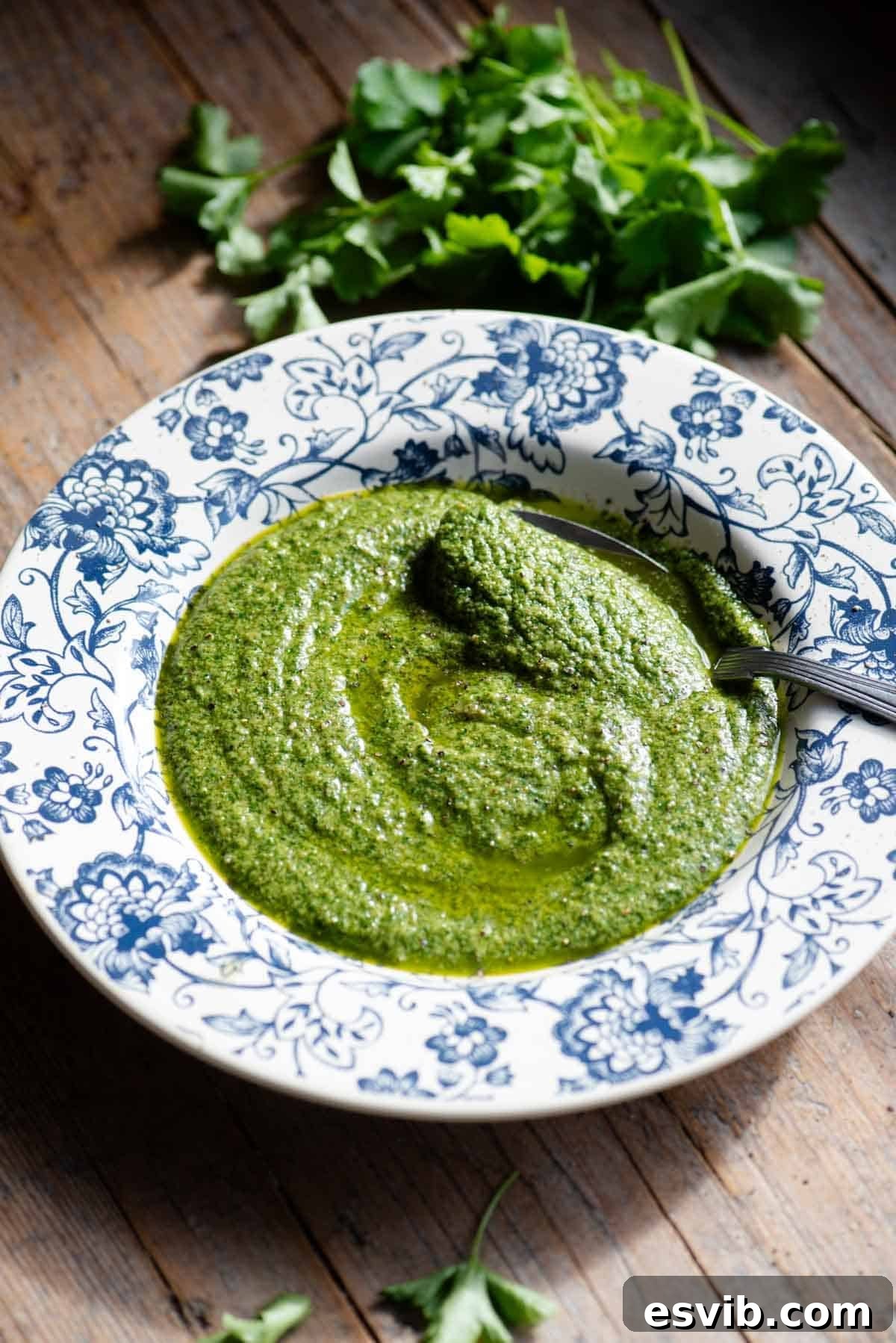
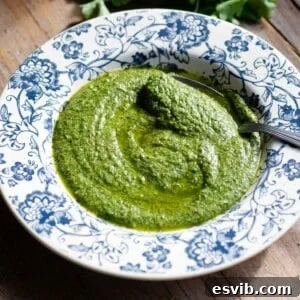
Unveil the rich, aromatic flavors of Italy with our recipe for **Authentic Tuscan Salsa Verde**. This fresh and tangy green sauce, deeply rooted in the culinary traditions of Tuscany, particularly Florence, is a symphony of finely chopped fresh parsley, pungent garlic, savory anchovies, and a unique, creamy texture lent by stale bread and a hard-boiled egg yolk. Far more than just a condiment, this versatile sauce breathes new life into a myriad of dishes, making it an indispensable addition to any discerning cook’s repertoire. Whether you’re dressing succulent meats, delicate fish, crisp vegetables, or simply spreading it on a rustic sandwich, Tuscan Salsa Verde promises an explosion of bright, herbaceous deliciousness that truly captures the essence of Italian home cooking.
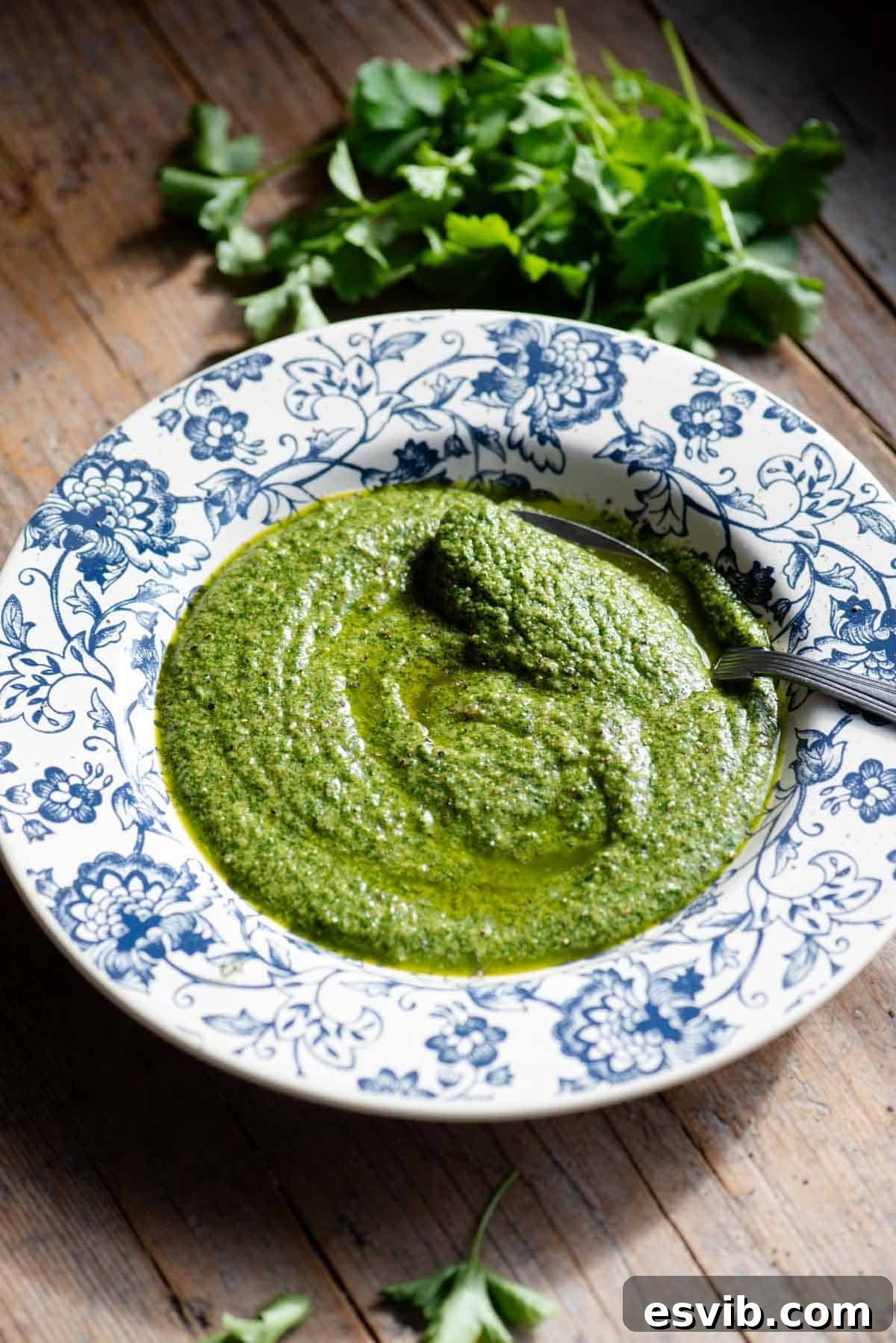
While various interpretations of Italian Salsa Verde exist across the country, each boasting its regional nuances, this particular rendition embodies the time-honored method prevalent in Tuscany, with a special emphasis on its traditional preparation in Florence. This isn’t merely a sauce; it’s a piece of Florentine culinary heritage, often gracing the plates alongside local delicacies.
Historically, this vibrant green sauce is the perfect accompaniment to Lampredotto, a beloved traditional Florentine tripe roll, and the hearty Bollito Misto, a medley of mixed boiled meats. These pairings underscore the sauce’s role in cutting through richness and adding a refreshing counterpoint to robust dishes, a characteristic that makes it incredibly adaptable to modern tables.
Beyond its traditional role, Tuscan Salsa Verde shines in countless contemporary applications. Its bright, piquant profile makes it an exceptional partner for everything from crispy roasted potatoes and tender boiled potatoes – transforming them into a delightful potato salad or side dish – to fresh green salads, perfectly grilled steaks, and savory pork chops. It elevates simple sandwiches into gourmet experiences, proving its incredible versatility. We find ourselves reaching for this sauce almost daily, discovering new ways to enjoy its complex yet harmonious flavors.
What truly sets this Tuscan version apart is its ingenious use of vinegar-soaked stale bread and a hard-boiled egg yolk. These unassuming ingredients are not merely fillers; they are culinary secrets. The stale bread soaks up the vinegar, lending a delightful tang and acting as a natural thickener, while the hard-boiled egg yolk imparts an unparalleled richness and creamy emulsion, binding all the flavors together beautifully. The result is a sauce that is both robust and delicate, surprisingly easy to prepare, and utterly addictive.
In the following sections, you’ll find the complete recipe, meticulously detailed, along with our expert tips for achieving perfection and a wealth of serving suggestions to inspire your next meal. Get ready to embark on a flavorful journey to the heart of Tuscany with this authentic green sauce. Enjoy!
Essential Ingredient Notes for Tuscan Salsa Verde
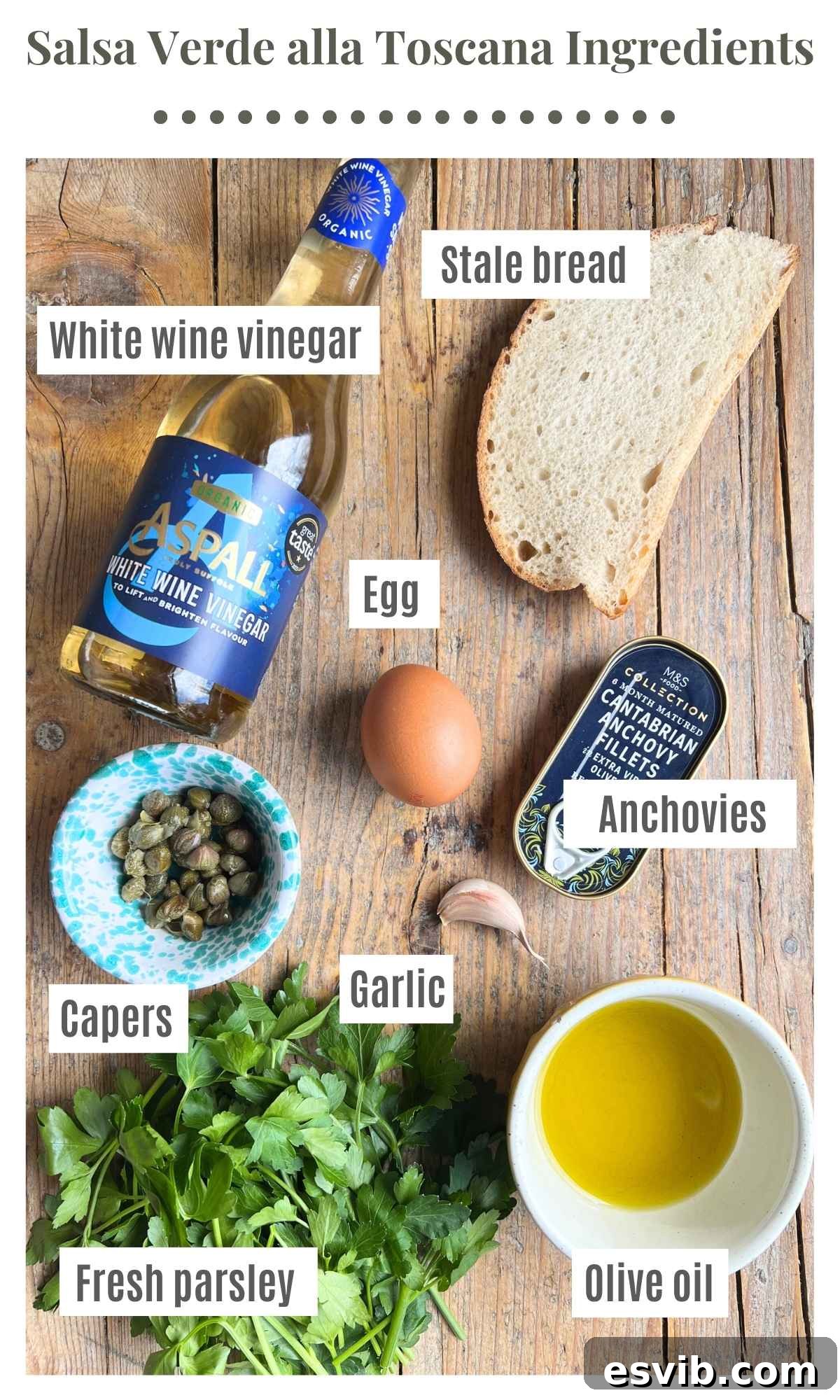
Crafting the perfect Tuscan Salsa Verde begins with understanding the role of each ingredient. Quality and proper preparation are key to achieving that authentic, vibrant flavor and luxurious texture. Here’s a closer look at the stars of this traditional Italian green sauce:
- Flat-Leaf Parsley: The Herbaceous Heart
For an authentic Tuscan Salsa Verde, **flat-leaf parsley** (also known as Italian parsley) is non-negotiable. Its robust flavor and tender texture are superior to curly parsley, which tends to be tougher and less aromatic. We encourage using the stalks as well – they are packed with flavor and help minimize waste. Simply ensure they are thoroughly washed and dried, then roughly chop them along with the leaves. This approach contributes to a fuller, more complex herbaceous base.
- Capers: Punctuation of Briny Tang
Capers introduce a crucial briny, slightly floral tang that balances the richness of the other ingredients. We recommend using **capers jarred in brine** for convenience and consistent flavor. If you opt for salt-packed capers, remember to rinse them thoroughly under cold water to remove excess salt before using. Their small size means they blend seamlessly into the sauce, distributing their distinct flavor evenly.
- Stale Bread: The Unsung Thickener and Flavor Carrier
The use of **stale bread** is a hallmark of traditional Tuscan Salsa Verde and a testament to Italian cucina povera (peasant cooking), where nothing goes to waste. Ideally, your bread should be at least **one day old**, or even two. This isn’t just about reducing waste; stale bread possesses a unique ability to absorb the white wine vinegar without disintegrating into a watery mush, thereby contributing body and a delightful tang to the sauce. Avoid overly soft or heavily flavored breads; a simple, crusty Italian loaf or country bread works best. If you don’t have stale bread, you can gently toast fresh bread slices in a dry pan or oven for a few minutes until firm but not crispy, then let them cool before use.
- Hard-Boiled Egg Yolk: The Secret to Creaminess and Emulsion
This ingredient is perhaps the most distinctive element of Tuscan Salsa Verde. We only use the **hard-boiled egg yolk** for a reason: it’s a natural emulsifier and contributes an incredible richness and velvety creaminess that cannot be replicated. The yolk helps bind the oil and vinegar, creating a smooth, stable sauce. The egg white is not needed for the sauce itself, but don’t discard it! It can be refrigerated and used in countless ways – chopped into salads, mixed with mayonnaise for a quick sandwich filling, or added to toast for a protein boost. This frugal approach is very much in line with traditional Italian cooking philosophy.
- Anchovies: Umami Depth (Don’t Be Shy!)
The thought of anchovies can be intimidating for some, but trust us – they are absolutely essential for the profound savory depth, or *umami*, in Tuscan Salsa Verde. When finely chopped and blended, anchovies dissolve into the sauce, imparting a complex saltiness and richness without leaving a fishy taste. They enhance the overall flavor profile, acting as a secret ingredient that makes the sauce truly memorable. Use good quality, oil-packed anchovy fillets, preferably rinsed briefly if they are very salty.
- Garlic: Aromatic Foundation
Fresh garlic provides a pungent, aromatic foundation for the sauce. One medium clove is usually sufficient to add a bright, spicy kick without overpowering the delicate herbs. Ensure your garlic is fresh and free from sprouts, which can lend a bitter taste. It will be blended with the other ingredients, so a rough chop is fine.
- White Wine Vinegar: The Brightening Agent
White wine vinegar is crucial for its acidity, which not only tenderizes the stale bread but also provides the characteristic tangy finish of the sauce. It cuts through the richness and brightens all the flavors, creating a well-balanced profile. Choose a good quality white wine vinegar for the best results, as its flavor will be prominent.
- Extra Virgin Olive Oil: The Liquid Gold
As with most Italian sauces, a high-quality **extra virgin olive oil** is paramount. It’s not just a fat; it’s a flavor enhancer, carrying the aromas and tastes of the other ingredients. Use a robust, fruity olive oil that you enjoy for drizzling. The quantity can be adjusted to achieve your desired consistency, ensuring a smooth, emulsified sauce.
- Salt and Black Pepper: To Taste
Seasoning is always personal. Given the saltiness from the anchovies and capers, add **salt** incrementally and taste as you go. Freshly ground **black pepper** adds a gentle heat and aromatic finish. Always taste and adjust before serving.
Achieving the Perfect Consistency for Your Salsa Verde
The texture of Tuscan Salsa Verde is a matter of personal preference, and both smooth and slightly chunky versions are equally delicious. Understanding how to achieve your desired consistency is key to enjoying this versatile sauce to its fullest.
For those who prefer a velvety, homogenous sauce, a **small food processor or an immersion blender** with a chopper attachment is your best friend. This is my go-to method, as it quickly breaks down all the ingredients into a beautifully smooth puree. Blitzing the sauce until it’s perfectly smooth allows all the flavors to meld seamlessly, creating an elegant consistency that coats foods beautifully.
If you lean towards a more rustic, textured sauce, traditional methods involving a **sharp knife or a mezzaluna (rocker knife)** are ideal. By finely chopping all the ingredients by hand, you’ll achieve a chunkier consistency with distinct bits of parsley, capers, and anchovies. This texture provides a pleasant bite and visual appeal, offering a different sensory experience while still delivering that incredible Tuscan flavor. Whichever method you choose, the resulting salsa verde will be packed with authentic taste and ready to elevate your dishes.
Expert Recipe Tips for Perfect Tuscan Salsa Verde
To ensure your Tuscan Salsa Verde turns out perfectly every time, keep these practical tips in mind:
Optimize Your Equipment: While a full-sized food processor can work, a **mini food processor or the chopper attachment of an immersion blender** is often superior for small batches of sauces like this. Larger processors can sometimes struggle to properly chop and blend smaller quantities, leaving some ingredients unevenly processed. My personal favorite is a mini food processor that attaches directly to my immersion blender – it’s powerful, efficient, and perfect for creating smooth pestos and vibrant sauces without waste.
Prepare Ahead for Convenience: One of the beauties of Tuscan Salsa Verde is its suitability for meal prep. You can certainly serve the sauce immediately after making it, allowing its fresh flavors to burst forth. However, it also benefits from a little time for the flavors to deepen and meld. Feel free to **prepare it up to 1-2 days in advance**. Store it in an airtight container in the refrigerator. Before serving, give it a good stir, and if it has thickened too much, you can loosen it with a tiny splash of extra virgin olive oil or a few drops of white wine vinegar.
Adjusting Consistency and Flavor: If your sauce is too thick, gradually add more olive oil until it reaches your desired pourable or spreadable consistency. If it’s too thin, you might add a tiny bit more stale bread (soaked and squeezed) or simply allow it to sit in the fridge for a short while, as it tends to thicken slightly upon chilling. For flavor adjustments, if it’s too tangy, a pinch of sugar can balance it; if not tangy enough, a few more drops of vinegar will do the trick. Always taste and adjust as you go!
Versatile Serving Suggestions for Tuscan Salsa Verde
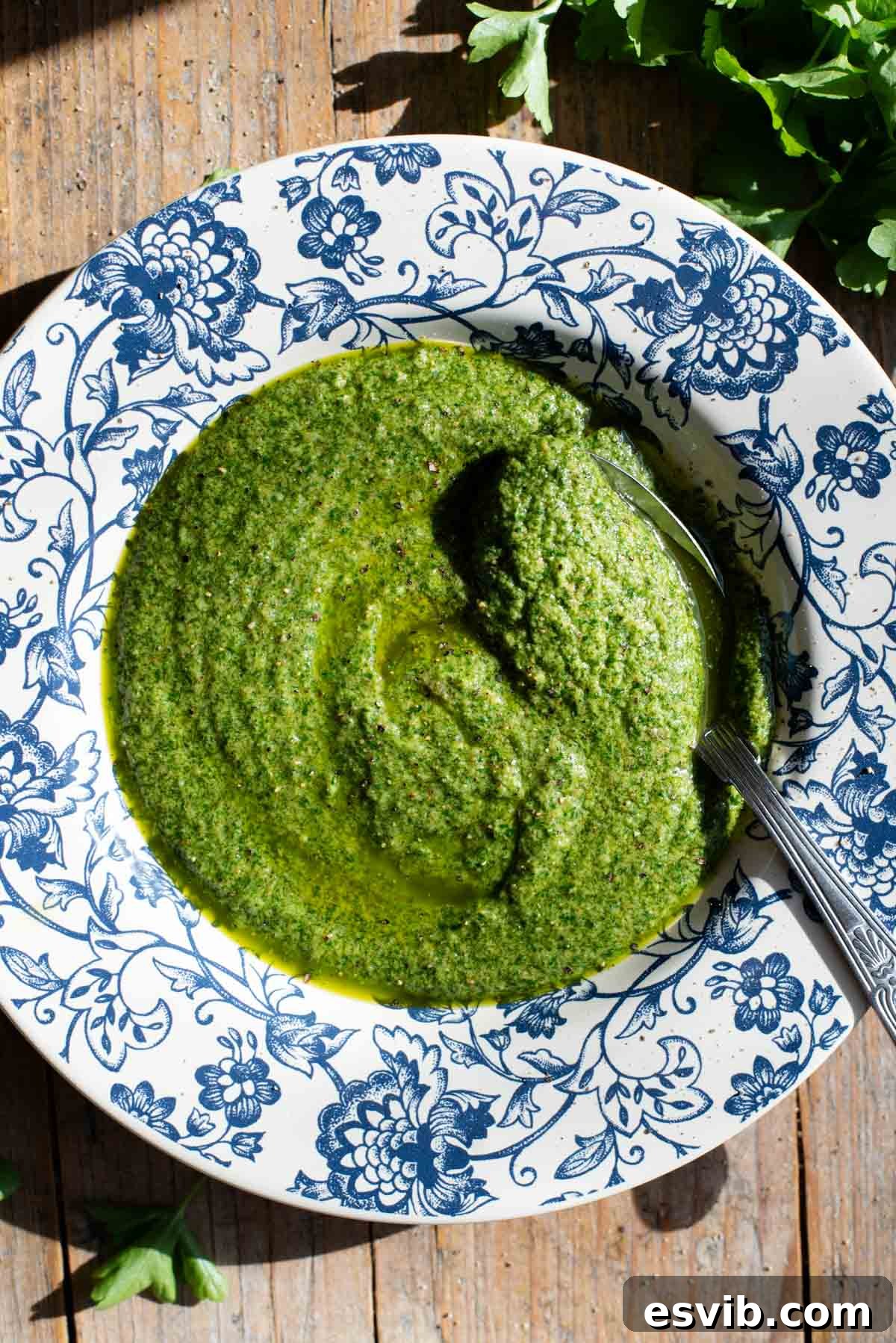
The beauty of Tuscan Salsa Verde lies in its incredible versatility. Its bright, tangy, and herbaceous profile makes it an ideal companion for a vast array of dishes, transforming simple meals into something extraordinary. Here are some of our favorite ways to enjoy this Florentine classic:
- Potatoes: A Match Made in Heaven
Salsa Verde elevates potatoes like no other. Toss it with warm, **boiled potatoes** for a vibrant and incredibly flavorful potato salad or a simple yet elegant side dish. For an extra layer of flavor, consider mixing in some steamed green beans. Alternatively, spoon it generously over crispy roast potatoes, where its freshness cuts through the richness of the potatoes, creating a truly irresistible combination.
- Meats: The Ultimate Flavor Enhancer
This sauce is a traditional partner for rich meats, providing a refreshing counterpoint. It’s utterly delicious served alongside juicy **roast chicken**, perfectly **char-grilled steak**, or tender **pork chops**. For a truly authentic experience, pair it with the classic Bollito Misto (mixed boiled meats) or dollop it onto rolls filled with slow-cooked pork shoulder, where its tanginess beautifully complements the savory meat. It also works wonderfully with grilled sausages or lamb.
- Fish and Seafood: A Bright Companion
Salsa Verde brings a lively zest to fish and seafood. Serve it spooned over flaky **baked salmon**, delicate white fish like cod or halibut, or even grilled swordfish. Its herbaceous notes and bright acidity enhance the natural flavors of the seafood without overpowering them. It’s also fantastic with grilled shrimp or scallops.
- Other Vegetables: A Garden’s Best Friend
Don’t limit this sauce to just potatoes! Tuscan Salsa Verde is fantastic with a variety of vegetables. Drizzle it over **roasted carrots** to add a burst of freshness, or toss it through blanched **broccolini or green beans** for an easy and flavorful side. It’s equally good with grilled asparagus, roasted bell peppers, or even steamed artichokes, transforming simple vegetables into gourmet delights.
- Sandwiches and Wraps: Everyday Gourmet
Forget plain mayo or mustard! Use Salsa Verde as a vibrant and flavorful **condiment for almost any sandwich or wrap**. It adds an incredible depth and freshness to turkey sandwiches, chicken wraps, veggie burgers, or even a simple cheese toastie. The variations are truly endless, limited only by your imagination.
- Eggs: Elevate Your Breakfast
For a surprisingly delicious twist, spoon a small amount of Salsa Verde over scrambled eggs, fried eggs, or even a frittata. It adds a bright, savory kick that will transform your breakfast or brunch.
- Crostini and Bruschetta: Italian Appetizer Perfection
Spread this green sauce generously onto toasted bread slices for quick and elegant **crostini or bruschetta**. It’s a fantastic appetizer that highlights the sauce’s fresh flavors and is perfect for entertaining or a light snack.
- Pasta: A Simple Yet Flavorful Sauce
While not a traditional pesto, Tuscan Salsa Verde can be lightly tossed with warm pasta for a simple, light, and wonderfully flavorful pasta dish. Add some cherry tomatoes or roasted vegetables for a complete meal.
No matter how you choose to serve it, Tuscan Salsa Verde is guaranteed to impress with its vibrant flavor and authentic Italian charm. Experiment with these ideas and discover your own favorite pairings!
More Irresistible Italian Sauces and Pestos to Explore
If you’ve fallen in love with the vibrant flavors of Tuscan Salsa Verde, you’ll be delighted to discover other incredible Italian sauces and pestos that can elevate your cooking. Each offers a unique taste of Italy, perfect for adding depth and authenticity to your meals.
Sauces & Dressings
Salmoriglio (Southern Italian Herb Sauce)
Dips & Pestos
Arugula Pesto
Dips & Pestos
Pistachio Pesto (Pesto di Pistacchi)
Sauces & Dressings
Walnut Sauce – Salsa di Noci
We hope you thoroughly enjoy preparing and savoring this **Authentic Tuscan Salsa Verde recipe**. Your culinary journey is important to us, so if you’ve tried this or any other recipe on our blog, please don’t hesitate to rate it and share your experiences in the comments section below – we absolutely love hearing from you! To stay connected and discover more of our delicious Italian food, you can also **follow us** on Facebook, Instagram, and Pinterest, or sign up for our Newsletter to receive weekly recipe inspiration directly to your inbox. Buon appetito!
Step By Step Photos Above
Most of our recipes come with step by step photos, helpful tips and tricks to make it perfectly first time and even video!
Salsa Verde alla Toscana (Tuscan Green Sauce)
By Emily
15
7
22
6
servings (makes about 1 cup)
Ingredients
- 35 g (1 packed cup) fresh flat-leaf parsley
- 1 medium slice of stale bread, crusts removed (about 40g)
- 1 large egg
- 1 tablespoon capers
- 2 anchovies
- 1 clove garlic
- White wine vinegar
- 40-60 ml (1/4 cup) Extra virgin olive oil
- Salt and pepper, to taste
Instructions
-
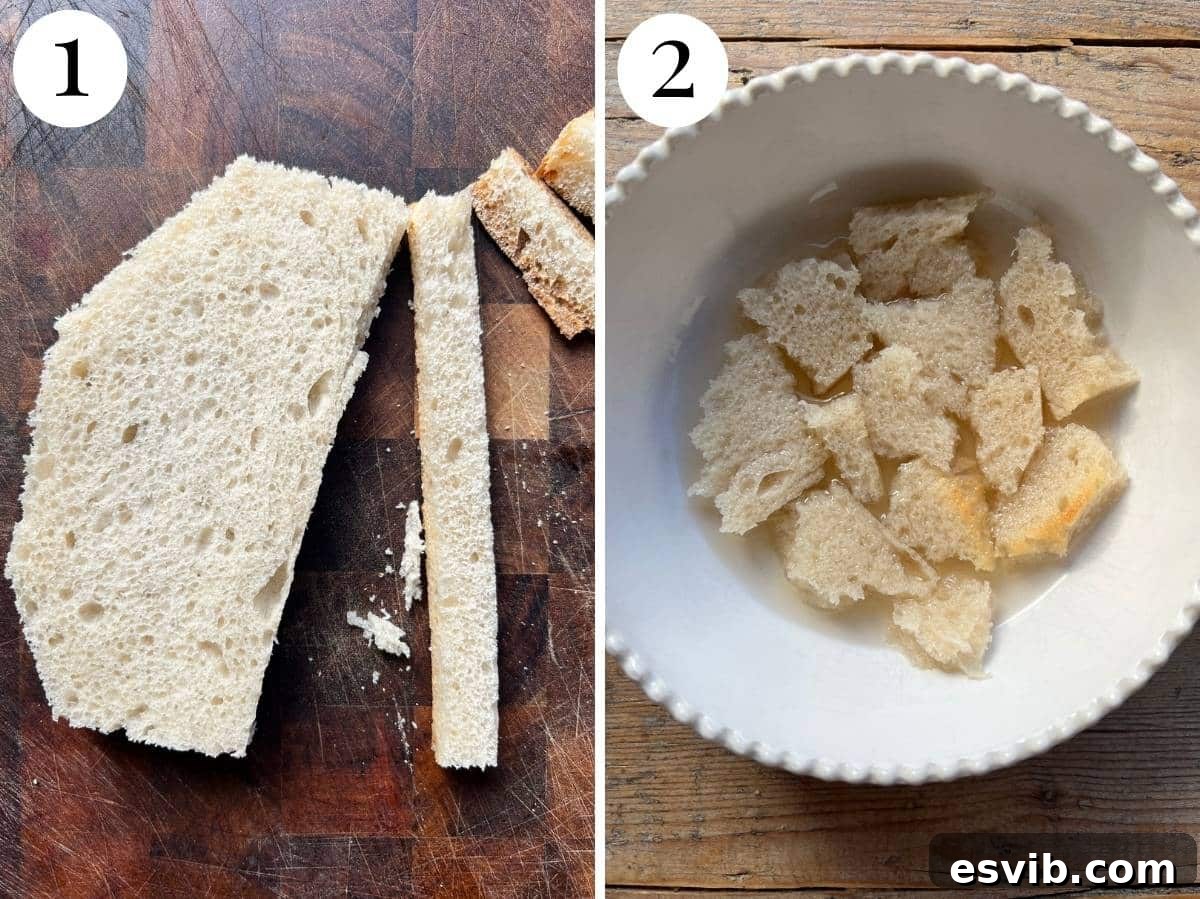
Begin by preparing the stale bread. Carefully cut the crusts from the slice of stale bread, then tear or cut the bread into small, manageable pieces. Place these pieces into a small bowl and generously cover them with white wine vinegar. Set the bowl aside to allow the bread to soak and soften, absorbing the tangy vinegar.

-
Next, prepare the egg. Place the large egg in a small saucepan and fill the saucepan with enough cold water to fully cover the egg. Cover the pan with a lid and bring the water to a rolling boil over medium-high heat. As soon as the water begins to boil vigorously, remove the lid and immediately set a timer for exactly 7 minutes. This timing ensures a perfectly hard-boiled egg with a rich, creamy yolk.
-
Once the 7 minutes are up, carefully drain the hot water from the saucepan using a sieve. Immediately transfer the egg under cold running water for about 30 seconds. This rapid cooling stops the cooking process and makes the egg easier to peel. Set the cooled egg aside to fully cool down, then peel its shell. We will only be using the yolk.
-
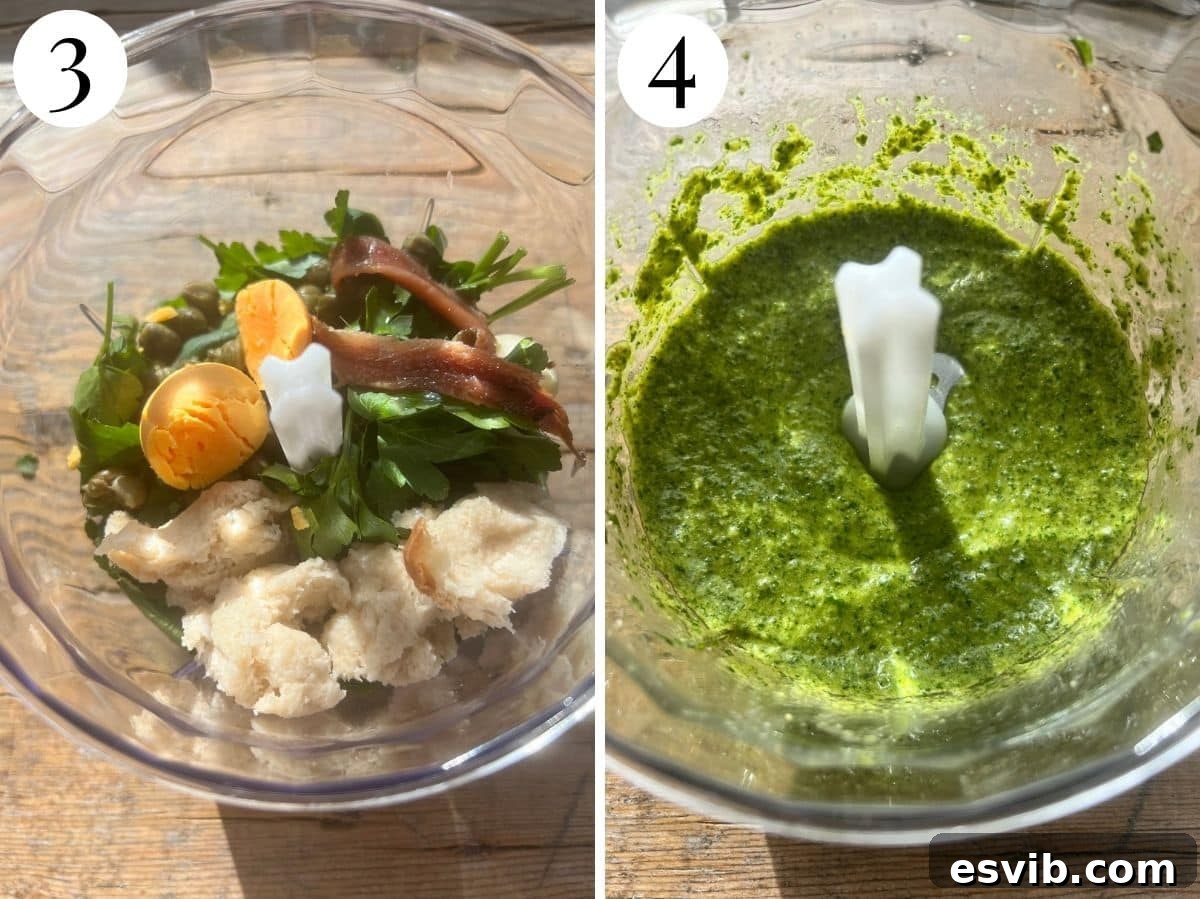
Now, assemble the core ingredients in your food processor. Add the fresh flat-leaf parsley (including the stalks for maximum flavor), the anchovy fillets, the drained capers, and the peeled garlic clove. Carefully remove the yolk from the hard-boiled egg and add it to the food processor with the other ingredients.
-
Retrieve the vinegar-soaked stale bread. Firmly squeeze the bread to remove any excess white wine vinegar; you want it moist but not dripping. Add the squeezed bread to the food processor, followed by 40-60 ml (1/4 cup) of extra virgin olive oil. Begin to blend the mixture, pausing to scrape down the sides as needed, until you achieve a smooth, vibrant green sauce. If the sauce appears too thick, gradually add a little more olive oil until your desired consistency is reached.
-
Finally, it’s time to taste and adjust the seasoning. Spoon a small amount of the salsa verde and taste it. The anchovies and capers provide natural saltiness, so add salt and freshly ground black pepper incrementally, only as needed, until the flavors are perfectly balanced to your preference. Your authentic Tuscan Salsa Verde is now ready to serve!
Notes
- Storage – Your freshly made Tuscan Salsa Verde will keep beautifully for up to 2 days when stored in an airtight container in the refrigerator. For best flavor, allow it to come to room temperature for about 15 minutes before serving.
- Serving – For an abundance of delicious serving ideas and inspiration, please refer to the comprehensive “Serving Suggestions” section earlier in this post.
Helpful Info for All Recipes
- I always use extra virgin olive oil in all of my recipes unless stated otherwise. Its robust flavor is fundamental to Italian cuisine.
- When I use canned or jarred tomatoes of any kind, I exclusively use Cirio or Mutti brands for the absolute best results and authentic flavor. Their quality makes a significant difference.
- Unless specified differently, all vegetables mentioned in our recipes are assumed to be medium-sized.
- All recipes featured on this blog are meticulously tested and developed using a fan (convection) oven, which may require slight adjustments for conventional ovens.
- Find out more about how our nutrition information is calculated and its approximate nature.
- Check out our must-have Italian Pantry Staples to stock your kitchen for authentic Italian cooking.
- You can also find all our Essential Kitchen Tools for Italian Cooking to equip your culinary adventures.
Nutrition Facts (per serving)
Calories: 87kcal | Carbohydrates: 4g | Protein: 2g | Fat: 7g | Saturated Fat: 1g | Polyunsaturated Fat: 1g | Monounsaturated Fat: 5g | Trans Fat: 0.01g | Cholesterol: 28mg | Sodium: 83mg | Potassium: 55mg | Fiber: 0.5g | Sugar: 0.5g | Vitamin A: 463IU | Vitamin C: 7mg | Calcium: 23mg | Iron: 1mg
Nutrition information is automatically calculated and should only be used as an approximation. Variations can occur based on specific ingredient brands, preparation methods, and portion sizes.
Did you try this recipe?
Leave a comment below!