

Genovese Sauce, or La Genovese Napoletana, is an incredibly delicious and profoundly flavorful pasta sauce that hails from Naples, Italy. Unlike many tomato-based Italian sauces, this ragu stars a remarkable quantity of slowly caramelized onions, combined with tender beef and a touch of white wine. While it requires patience to simmer slowly to achieve its signature richness and luscious consistency, the process is surprisingly simple and requires minimal active attention, yielding one of the most unforgettable pasta sauces you’ll ever taste. This culinary masterpiece is more than just a sauce; it’s a testament to the art of slow cooking, transforming humble ingredients into something truly extraordinary.
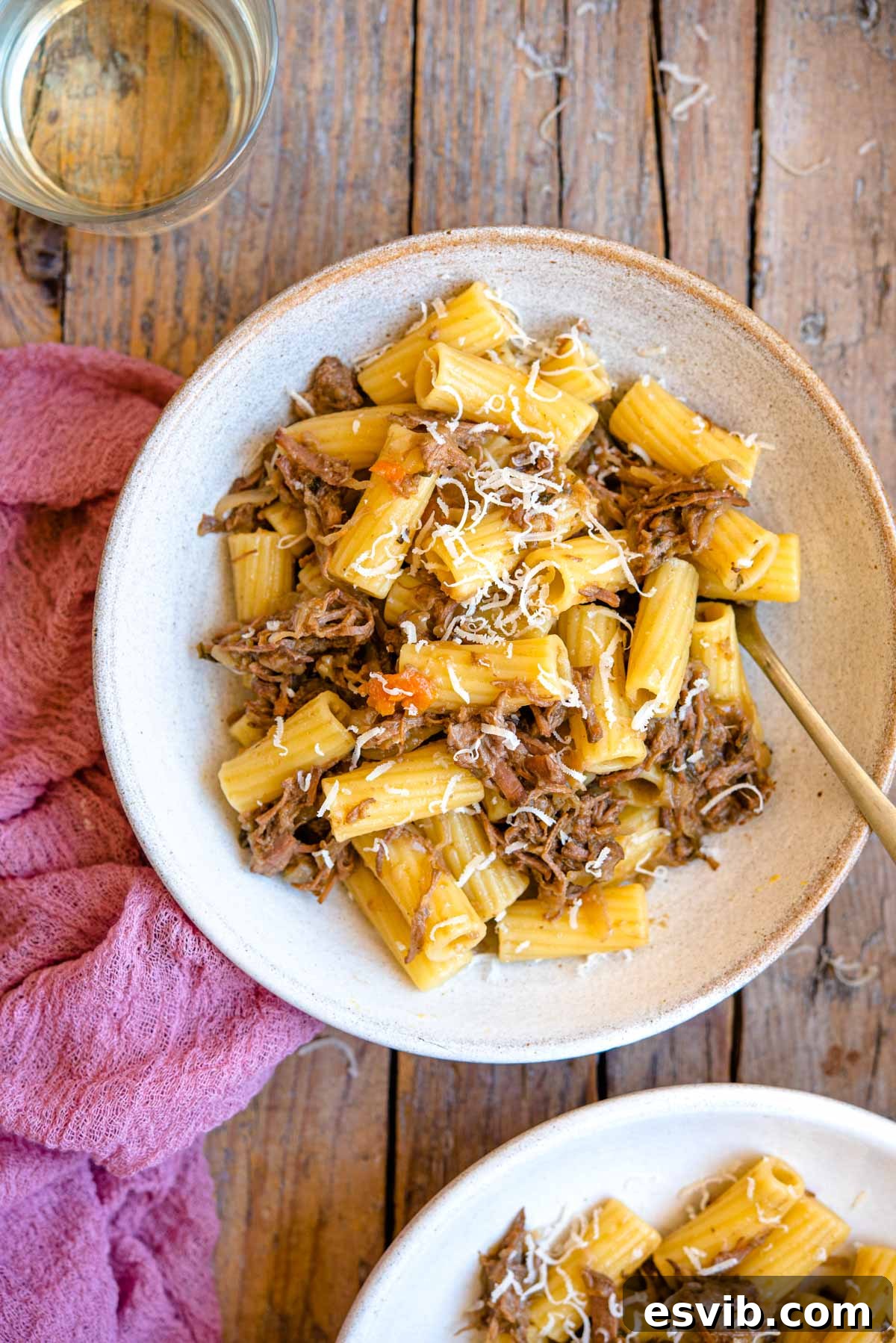
Unveiling Genovese Sauce: A Neapolitan Culinary Gem
The origins of Genovese Sauce are a delightful culinary paradox. Despite its name, which strongly suggests a connection to Genoa, Italy, this iconic sauce is firmly rooted in Naples, the vibrant capital of the Campania region. This geographical twist often sparks curiosity and adds to the allure of this unique dish.
Several theories attempt to explain this intriguing nomenclature. Some culinary historians believe the sauce was introduced to Campania by Genovese sailors during the Renaissance, who perhaps shared their onion-centric cooking methods with the locals. Other accounts suggest that a skilled Genovese chef, working in Naples, first concocted this rich ragu, passing his knowledge to Neapolitan kitchens. What remains truly fascinating is that a sauce bearing this name is virtually non-existent in Genoa itself, making it a distinctly Neapolitan creation.
Regardless of its precise historical journey, this ragu is widely considered one of Italy’s best-kept culinary secrets! Unlike the globally renowned Bolognese or Marinara, you’ll rarely find Genovese Sauce gracing restaurant menus outside of Campania. Its absence from mainstream Italian eateries has preserved its status as a cherished regional specialty, primarily enjoyed in homes and traditional trattorias within its native land. Many outside of Italy, and even some within, are completely unaware of its existence. However, once you experience the profound depth of flavor that develops from hours of slow simmering, we guarantee it will quickly become a cherished favorite in your own kitchen, inspiring you to recreate it time and time again.
Essential Ingredients for Authentic Genovese Sauce
The magic of Genovese Sauce lies in the quality and quantity of its core ingredients, particularly the onions. Paying attention to these details will ensure an authentic and deeply satisfying result.
Onions: The Heart of the Sauce
You’ll notice that this recipe calls for a significant amount of onions—far more than you would find in a typical traditional Italian ragu. We use a generous 1 kilogram (approximately 2.2 pounds or 4 large onions) of yellow onions for our La Genovese. These onions are not merely a background flavor; they are the star, transforming into a sweet, rich, and naturally creamy base that defines the sauce.
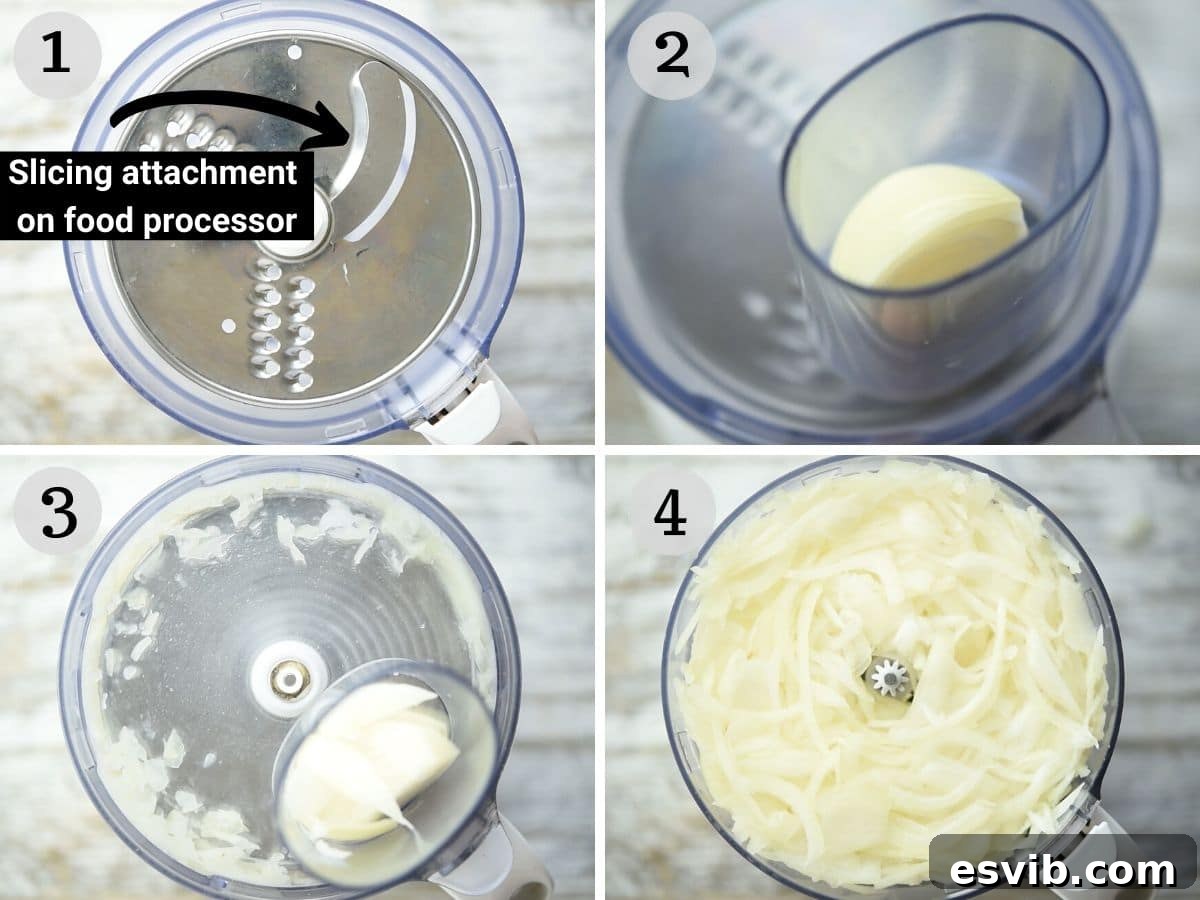
The key to their transformation is thin slicing, not chopping. This allows them to melt down slowly and evenly without browning too quickly, releasing all their natural sugars and liquids. Slicing such a large quantity by hand can be a tear-inducing task. If you’re prone to watery eyes, a food processor with a slicing attachment is your best friend. It not only makes the process much quicker and easier on your eyes but also ensures uniform, fine slices—just be sure to use the slicer, not the shredder, for the best texture.
Carrot & Celery: The Aromatic Foundation
In addition to the onions, a small amount of finely chopped carrot and celery forms a classic Italian soffritto base. You only need one carrot and one celery stalk. It’s crucial not to be tempted to add extra carrots, as their natural sweetness can easily overpower the delicate balance of the sauce, making it too sweet and detracting from the savory onion character.
Beef: The Slow-Cooked Star
For the beef, you’ll want a cut suitable for slow cooking, such as beef chuck roast or stewing beef. You can use either a whole piece or a few medium-sized chunks. The choice between keeping the beef whole or cutting it into pieces depends entirely on how you envision serving this versatile sauce. Slow cooking renders the beef incredibly tender, allowing it to easily shred or slice beautifully when done. We’ll explore two delicious serving options below!
White Wine: A Touch of Complexity
A small amount of white wine is introduced towards the end of the cooking process, specifically during the final hour once the pot is uncovered. This timing is deliberate; as the sauce continues to simmer without a lid, the wine reduces, its alcohol evaporates, and its complex flavors infuse deeply into the rich onion and beef base. It might seem like a modest amount of liquid for such a substantial ragu, but rest assured, the copious onions release an incredible amount of their own moisture during the initial covered cooking phase. This natural liquid, combined with the slow caramelization of the onions, gives the Genovese Sauce its signature rich, glossy, and creamy consistency, with hardly any added liquid.
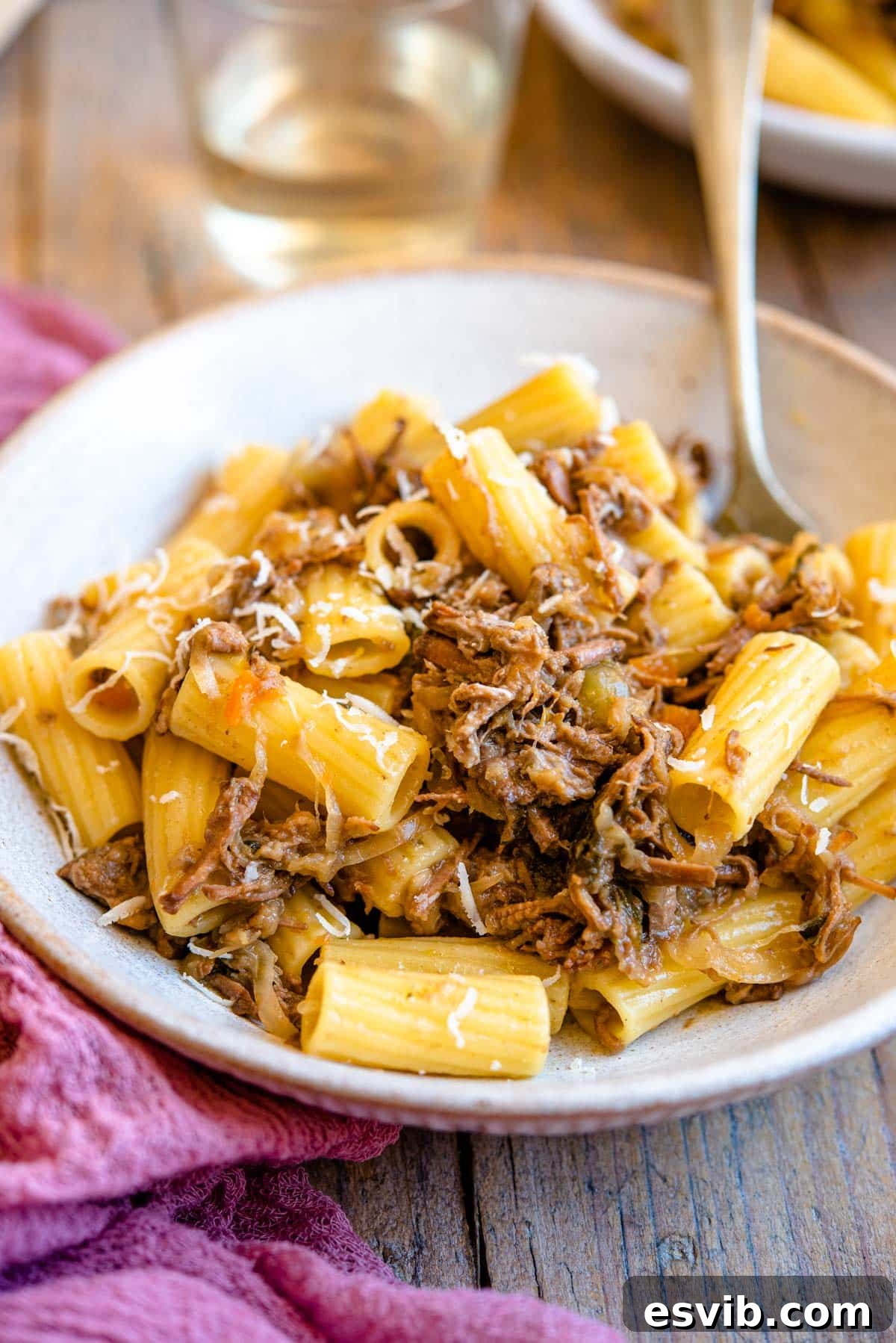
Crafting the Perfect Genovese Sauce: A Step-by-Step Guide
Making Genovese Sauce is a labor of love that rewards patience with unparalleled flavor. Follow these steps to create this Neapolitan masterpiece:
- Prepare the Onions: Begin by thinly slicing the large yellow onions. This can be done meticulously by hand or, for greater efficiency and uniformity, using a food processor with a slicing blade (our preferred method, as seen in photos 1-4 below). The goal is delicate, translucent slices, not thick chunks.
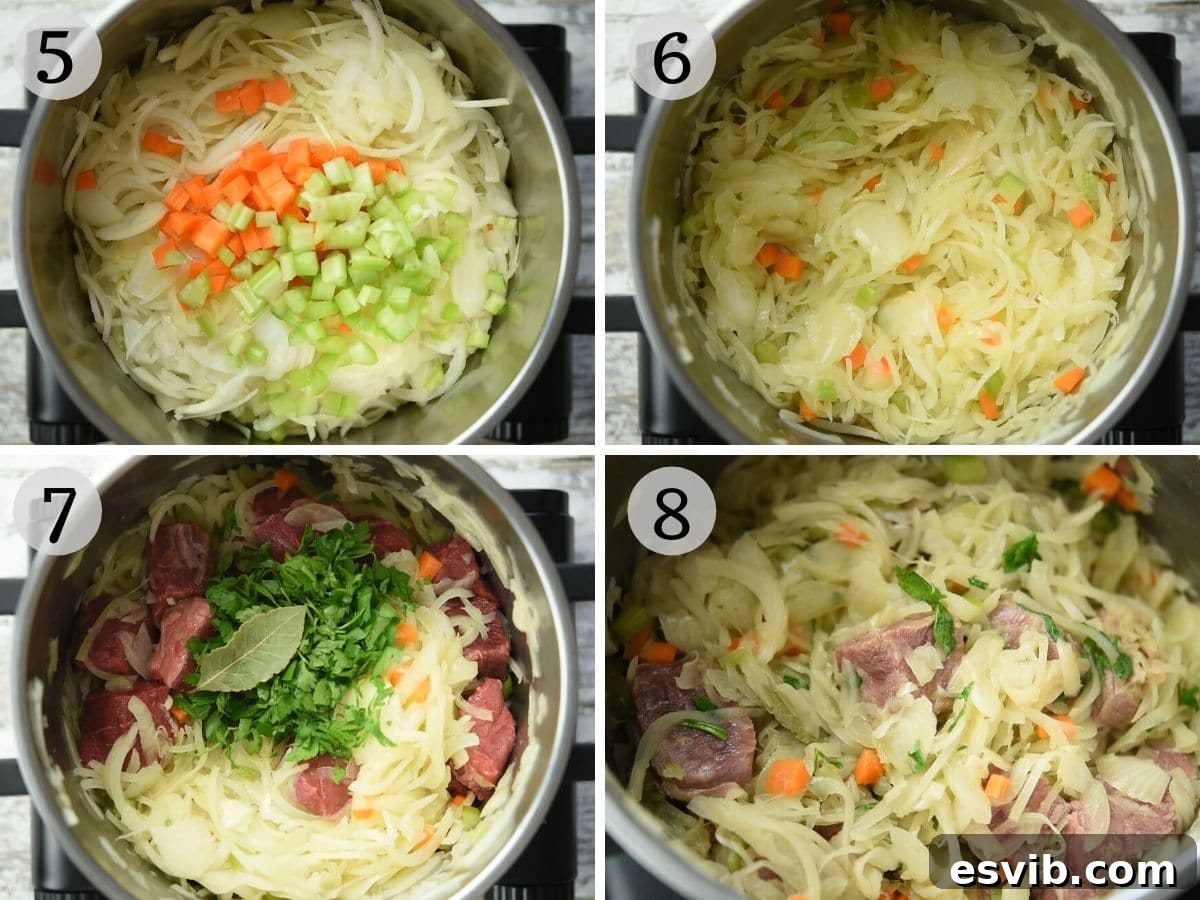
- Build the Foundation: Heat the olive oil in a large, heavy-bottomed pot or Dutch oven over a medium-low heat. Add the thinly sliced onions along with the finely chopped carrot and celery. The low heat is crucial here; you want to slowly sauté the onions for about 10 minutes, allowing them to soften and become translucent without browning. This gentle cooking process coaxes out their natural sweetness and prevents any bitterness.
- Brown the Beef: While the vegetables are softening, lightly season your beef chuck roast or stewing beef with salt and pepper. Add the seasoned beef to the pot with the bay leaf and fresh parsley. Gently brown the beef for a minute or two on all sides. This step is not about searing for a crust, but rather to develop a subtle depth of flavor before the long simmer (photos 5 & 6 demonstrate this stage).
- The Long Simmer (Covered): Once the beef has lightly browned, cover the pot tightly and reduce the heat to medium-low. Allow the sauce to slowly simmer for a full 3 hours. During this phase, the onions will gradually break down, releasing their abundant moisture and caramelizing gently, infusing the beef with incredible sweetness and creating a rich, thick liquid. It’s essential to check and stir the sauce every so often to prevent sticking and ensure even cooking. The aroma filling your kitchen will be absolutely captivating.
- The Final Reduction (Uncovered): After 3 hours, remove the lid from the pot. At this point, the onions should be completely melted into a glorious, golden-brown confit, and the beef fork-tender. Add the white wine and continue to simmer the sauce, uncovered, for another hour. This final hour allows the wine to reduce and integrate, adding a beautiful layer of acidity and aroma, while also thickening the sauce to its desired luscious consistency. The sauce will take on a beautiful, glossy sheen as it cooks down (photos 9-11 show the sauce developing).
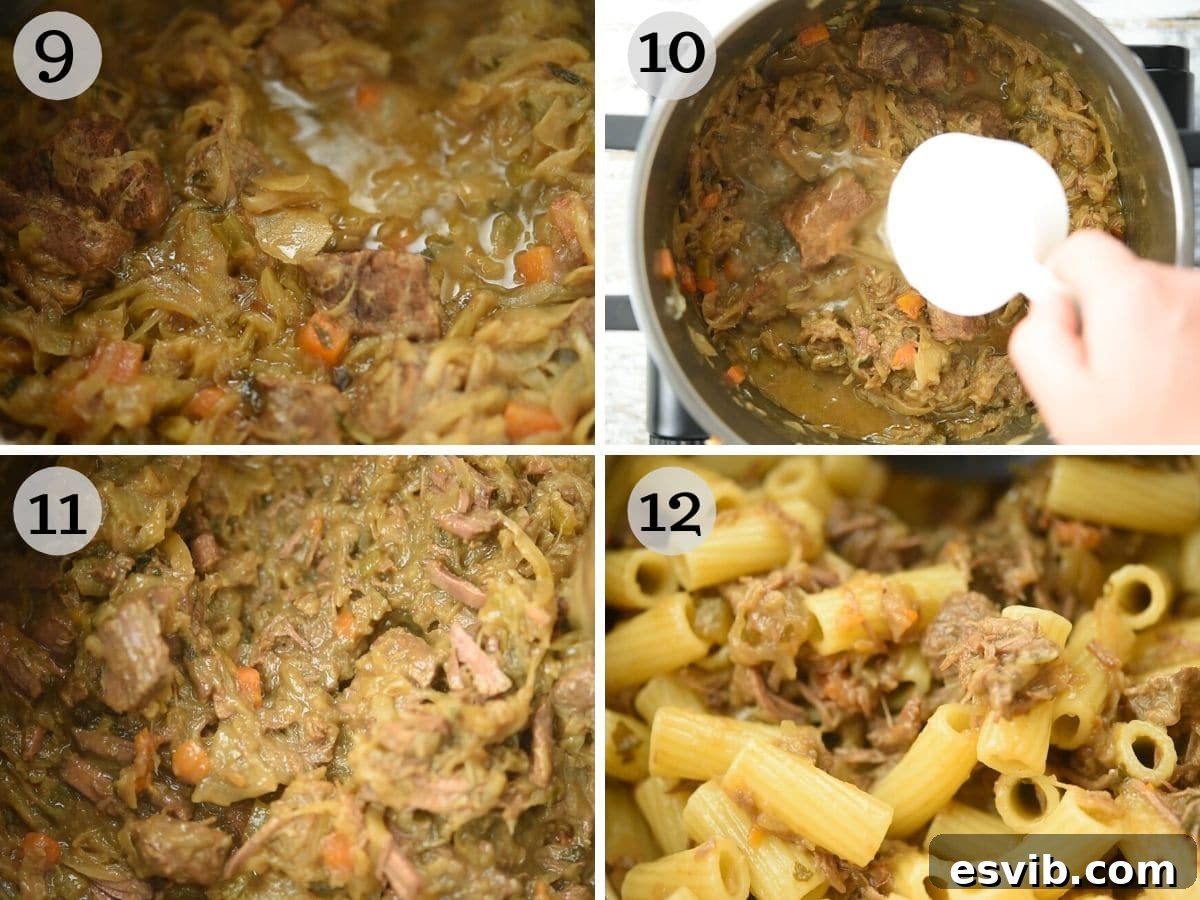
- Season and Serve: Once the sauce has reduced and achieved its perfect texture, taste and adjust seasoning with additional salt and pepper as needed. Cook your preferred pasta shape according to package directions until al dente. Drain the pasta, reserving a little pasta water. Toss the cooked pasta directly with a generous amount of the Genovese Sauce, adding a splash of pasta water if needed to help create a silky emulsion. Serve immediately, perhaps with a sprinkle of freshly grated Parmesan cheese (photo 12 shows the final dish).
Elevating Your Meal: Delicious Serving Suggestions for Genovese Sauce
Genovese Sauce offers two distinct yet equally delicious ways to be enjoyed, reflecting traditional Italian dining customs. Both methods allow you to fully appreciate the complex flavors of this exceptional ragu.
Serving Suggestion 1: Integrated Ragu (Sauce with Shredded Beef)
This is arguably the most common and simplest way to enjoy Genovese Sauce. As directed in the recipe, you slowly cook the beef, whether cut into chunks or left whole, directly within the onion sauce. During the extended simmering, the meat becomes incredibly tender, often falling apart and melting into the rich onion base. When serving, you can either gently shred the beef into the sauce before tossing with pasta, or simply allow it to naturally break down. This creates a hearty, unified pasta dish where every forkful delivers both the sweet onions and tender strands of beef.
Pasta shapes that are ideal for capturing this rich ragu include rigatoni, ziti, paccheri, or even large shell pasta. The ridges and hollows of these shapes are perfect for holding onto every drop of the luxurious sauce.
Serving Suggestion 2: Primo and Secondo (Pasta Course and Meat Course)
For a more traditional Italian dining experience, particularly common on special occasions or Sunday lunches in Naples, you can serve Genovese Sauce as two separate courses: a Primo Piatto (first course) and a Secondo Piatto (second course).
- For the Primo: Instead of cutting the beef into chunks, keep it whole and cook it within the sauce as directed for 3 hours. After this initial cooking time, carefully remove the whole piece of beef from the pot and set it aside to keep warm. Continue cooking the onion sauce (now without the beef) for the final hour with the white wine. Once the sauce is complete, toss it with your favorite pasta and serve it as your delightful first course.
- For the Secondo: While enjoying your pasta, slice the reserved, tender beef into thick, generous portions. Serve these slices as a separate main course. Traditionally, this Secondo would be accompanied by some Contorni (side dishes) to complete the meal.
Excellent side dishes that complement the rich beef include Italian roasted potatoes, vibrant green beans with tomato sauce, or simply some lightly sautéed greens like spinach or broccoli rabe. This two-course approach allows you to fully appreciate the nuanced flavors and textures of both the pasta and the beautifully cooked beef, making for a truly memorable Italian feast.
Mastering Genovese Sauce: Expert Tips for Success
While Genovese Sauce is deceptively simple, a few expert tips will ensure your version is absolutely perfect every time:
- Patience is Key: This sauce truly cooks itself after the initial preparation. Your main role is to stir it every so often during the long simmer to ensure nothing sticks to the bottom of the pot. Maintaining a consistent medium-low heat is vital for the slow caramelization of the onions and the tenderizing of the beef without burning.
- Trust the Onions: There’s absolutely no need to add extra liquid, such as broth or water, during the initial covered cooking stage. The sheer volume of onions will naturally release a significant amount of water as they break down, creating a self-basting environment for the beef and forming the liquid base of your sauce. Don’t be tempted to add more!
- Perfect Pasta Pairing: Genovese Sauce is wonderfully versatile and pairs beautifully with many pasta shapes. Choose your favorite, but consider heartier, tubular shapes like rigatoni, paccheri, or ziti. Their structure is excellent for catching and holding onto the rich, thick sauce. Always make sure to toss the cooked pasta and sauce together thoroughly before serving to ensure every strand is coated.
- Enhance Flavor with Grana Padano or Parmesan: A sprinkle of freshly grated Parmigiano Reggiano or Grana Padano cheese just before serving is highly recommended. The salty, nutty notes of the cheese complement the sweet, savory sauce beautifully.
- Make Ahead Magic: Genovese Sauce is one of those dishes that often tastes even better the next day, as the flavors have more time to meld and deepen. It stores exceptionally well! Leftover sauce will keep for around 3-4 days in an airtight container in the fridge.
- Freezing for Later: This sauce is also an excellent candidate for freezing. Divide it into individual portions in freezer-safe containers and freeze for up to 3 months. Thaw overnight in the fridge and reheat gently on the stovetop, adding a splash of water or broth if needed to loosen the consistency.
More Italian Ragu Recipes You Might Like:
- Italian Beef Ragu – A Classic Recipe
- Venetian Duck Ragu with Pappardelle
- Pici and Tuscan Sausage Ragu
- Leftover Pulled Pork Ragu
If you tried this Genovese Sauce recipe or any other recipes on our blog, please be sure to leave us a comment below to let us know how you got on. We love hearing from you and seeing your culinary creations. You can also FOLLOW US on FACEBOOK, INSTAGRAM, and PINTEREST to discover more delicious food and keep up with our latest kitchen adventures!
Genovese Sauce – La Genovese Napoletana
By Emily
Prep Time: 10 mins
Cook Time: 4 hrs
Total Time: 4 hrs 10 mins
Servings: 6 – 8 servings
Genovese Sauce or La Genovese Napoletana is an incredibly delicious sauce made with a ton of slow cooked onions, beef and white wine. Although it takes time to simmer slowly into the most rich and luscious pasta sauce you’ll ever taste it doesn’t require much attention and is super simple to make!
Pin Recipe | Print Recipe
Ingredients
- 4 large yellow onions, finely sliced (1 kg)
- 1 carrot, finely chopped
- 1 celery stick, finely chopped
- 1.3 lbs beef chuck roast or stewing beef, cut into medium-large chunks or left whole (600g)
- ½ cup white wine (120ml)
- 1 bay leaf
- ½ cup fresh parsley, roughly chopped (a small handful)
- 1-2 tbsp olive oil
- Salt and pepper, for seasoning
- Freshly grated Parmesan, for serving
Instructions
- Prepare all the vegetables (refer to notes on cutting the onions for best results) and sprinkle the beef with salt and pepper on all sides.
- Add the olive oil to a large, heavy-bottomed pot over medium-low heat. Add the thinly sliced onions, finely chopped carrot, and celery. Sauté the onions gently for 10 minutes, ensuring they soften and become translucent without browning.
- Add the seasoned beef, bay leaf, and parsley to the pot. Allow the beef to lightly brown on all sides. You may need to gently move the mixture around to ensure the beef makes contact with the bottom of the pot.
- Cover the pot tightly with a lid and reduce the heat to medium-low. Let it slowly cook for 3 hours, stirring every now and then (approximately every 30-45 minutes) to prevent sticking and promote even cooking.
- After 3 hours, remove the lid and add the white wine to the pot. Continue to simmer the ragu, uncovered, on a medium-low heat for another hour, allowing the wine to reduce and the sauce to thicken and become glossy.
- Once the sauce has finished cooking, taste and adjust seasoning with additional salt and pepper as desired. Toss generously with your choice of cooked and drained pasta.
Video
Watch how to make Genovese Sauce: Genovese Sauce Video
Notes
There are two primary ways to serve this sauce: either as directed above, where the beef breaks down and becomes an integral part of the sauce, or by serving the beef separately as a second course. Here’s how to do the latter:
- Brown the whole piece of beef first on all sides, then remove it from the pot and set aside to keep warm.
- Add the onions, carrot, and celery to the pot and sauté for 10 minutes until softened.
- Return the browned beef back to the pot along with the herbs. Cover and cook for 3 hours, turning the beef halfway through the cooking time.
- After 3 hours, remove the beef again and keep it warm.
- Add the white wine to the onion sauce (now without the beef) and cook uncovered for 1 hour to allow the sauce to reduce and thicken. Serve this rich onion sauce with pasta.
- Slice the tender beef and serve it as a second course (Secondo) alongside your choice of side dishes (Contorni) and a small spoon of the onion sauce on top.
- Italian roasted potatoes, green beans, or sautéed greens would be perfect accompaniments for the beef!
Extra Tips
- This sauce pretty much cooks itself after the initial prep work; you just need to make sure you stir it every so often to ensure it’s not sticking and keep it on a medium-low heat.
- There’s no need to add liquid at the first stage of cooking because the onions release a lot of water, so don’t be tempted to add any extra.
- You can toss this sauce with any pasta you like, so choose your favorite. Just make sure to toss the pasta and sauce together thoroughly before serving.
- Leftover sauce will keep well for around 3-4 days in the fridge or can be frozen and thawed as needed.
Helpful Info for All Recipes
- I always use extra virgin olive oil in all of my recipes unless stated otherwise.
- When I use canned or jarred tomatoes of any kind, I always use Cirio or Mutti brands for the best results and flavor.
- All vegetables are medium sized unless stated otherwise.
- All recipes are tested and developed using a fan (convection) oven.
- Find out more about how nutrition is calculated.
- Check out our must-have Italian Pantry Staples.
- You can also find all our Essential Kitchen Tools for Italian Cooking.
Nutrition Information (Approximate per serving)
- Calories: 226kcal
- Carbohydrates: 12g
- Protein: 23g
- Fat: 7g
- Saturated Fat: 2g
- Cholesterol: 61mg
- Sodium: 83mg
- Potassium: 609mg
- Fiber: 3g
- Sugar: 6g
- Vitamin A: 4015IU
- Vitamin C: 16mg
- Calcium: 60mg
- Iron: 3mg
Nutrition information is automatically calculated, so should only be used as an approximation.
Did you try this recipe? Leave a comment below!