
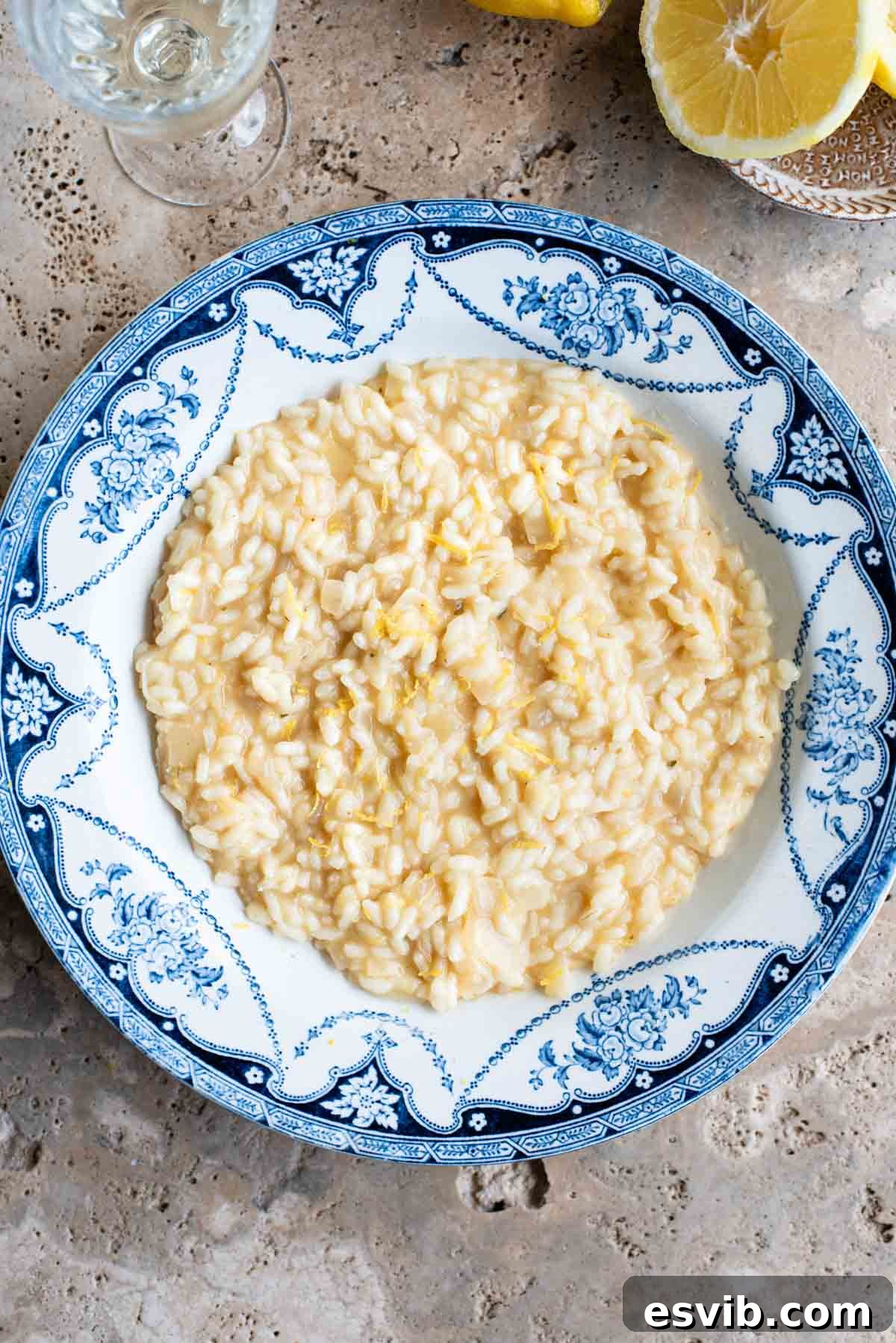
Prepare to tantalize your taste buds with this vibrant and incredibly satisfying Lemon Risotto, also known as Risotto al Limone. This recipe delivers a harmonious blend of refreshing lemon zest and juice with a wonderfully rich, creamy texture, all achieved without a single drop of cream! It’s the perfect dish for those moments when you crave something light and fresh, yet deeply comforting and filling. Easy to make and bursting with authentic Italian flavor, this lemon risotto is destined to become a staple in your culinary repertoire.
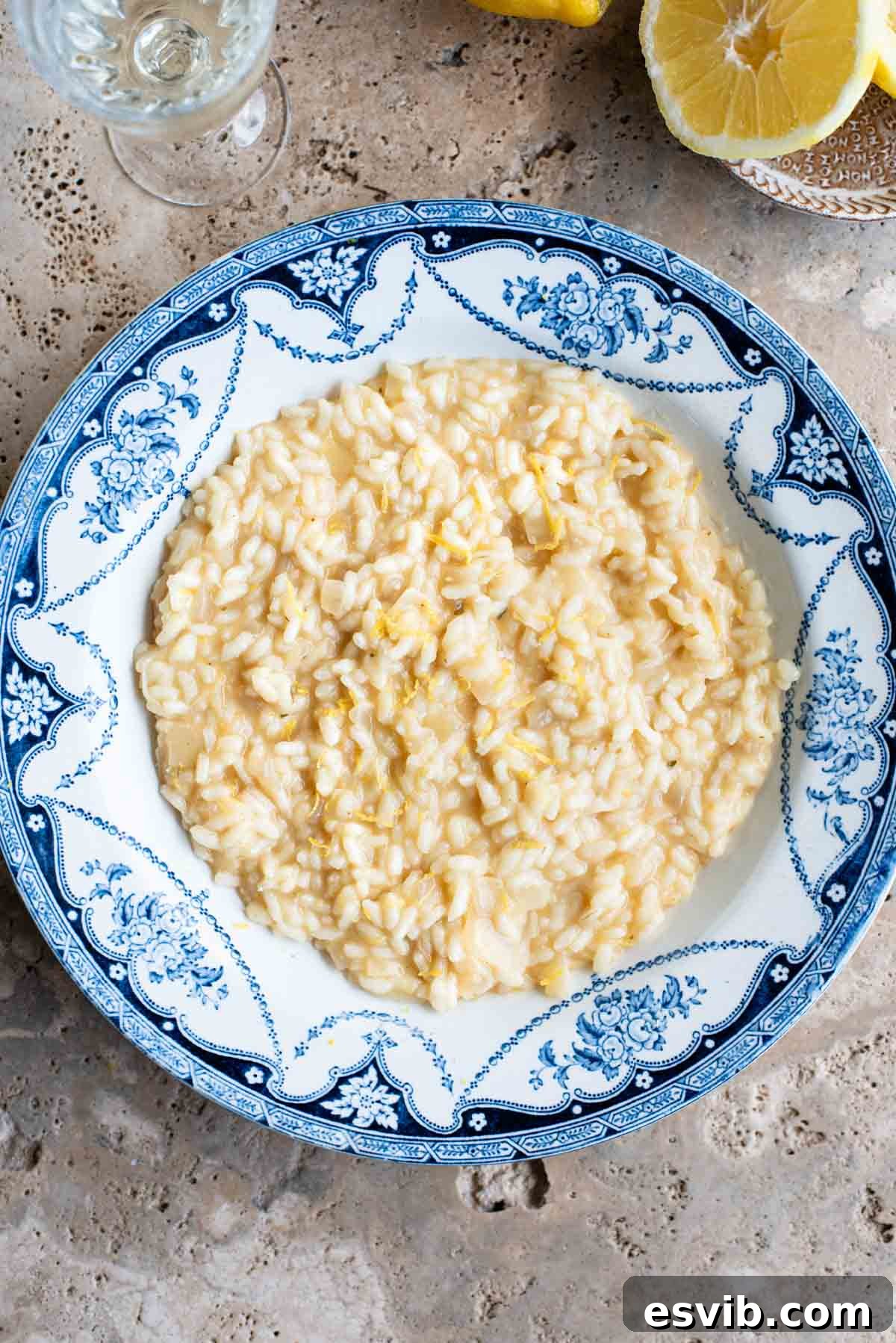
Embrace the Freshness: Introducing Risotto al Limone
Risotto al Limone is more than just a meal; it’s an experience that transports you straight to the sun-drenched coasts of Italy. It masterfully combines the comforting warmth of a classic risotto with the bright, zingy essence of fresh lemons. Just like our beloved Pasta al Limone, this dish shines brightest when the days grow longer and we naturally start to desire lighter, more refreshing flavors.
The magic behind risotto’s signature creaminess lies entirely within the rice itself. As the grains cook, they release their natural starch, creating a luscious, velvety sauce. This process is further enhanced by the traditional Italian technique known as ‘mantecatura’. This involves vigorously stirring cold butter and often grated hard cheese into the hot, starchy rice at the very end of cooking. This final step not only enriches the flavor but also imparts an irresistibly silky and glossy finish to the risotto, making it incredibly luxurious without needing any added cream.
The delightful contrast between the richness of the perfectly cooked risotto and the invigorating zest of fresh lemon is utterly divine. We are confident that you will savor every spoonful of this incredible dish as much as we do. Below, you’ll find the full recipe, along with our comprehensive tips, tricks, and exciting variations to ensure your lemon risotto is nothing short of spectacular!
Table of Contents
- Why You’ll Love This Lemon Risotto
- Essential Ingredients for Lemon Risotto
- Step-by-Step Guide to Creamy Lemon Risotto
- Expert Tips for the Perfect Risotto
- Delicious Variations and Serving Suggestions
- Frequently Asked Questions About Lemon Risotto
- Full Lemon Risotto Recipe
- More Delicious Risotto Recipes
Why You’ll Love This Lemon Risotto
Our lemon risotto recipe isn’t just another dish; it’s a culinary journey designed to bring joy and simplicity to your kitchen. Here are just a few reasons why you’ll fall in love with it:
- Incredibly Fresh and Zesty: The star of the show is, of course, the lemon! Its bright, clean flavor cuts through the richness of the risotto, creating a beautifully balanced taste that feels invigorating.
- Luxuriously Creamy (Without Cream!): Experience the magic of traditional Italian risotto making. The natural starches released from the rice, combined with the final “mantecatura” with butter and cheese, create an unbelievably silky texture that will surprise you with its richness – all without any heavy cream.
- Simple to Master: Despite its gourmet appeal, this recipe is surprisingly straightforward. With a little patience and attention to detail, even novice cooks can achieve a restaurant-quality risotto at home.
- Comforting Yet Light: It’s the perfect paradox – deeply comforting and satisfying, yet simultaneously fresh and light enough not to weigh you down. Ideal for spring and summer evenings, or whenever you crave a taste of sunshine.
- Versatile and Customizable: While delicious on its own, this lemon risotto serves as a fantastic base for various additions. Whether you want to incorporate seasonal vegetables, fresh herbs, or a protein like salmon, this recipe adapts beautifully.
Essential Ingredients for Lemon Risotto
Crafting the perfect lemon risotto starts with selecting high-quality ingredients. Each component plays a crucial role in achieving that signature creamy texture and bright, balanced flavor profile.
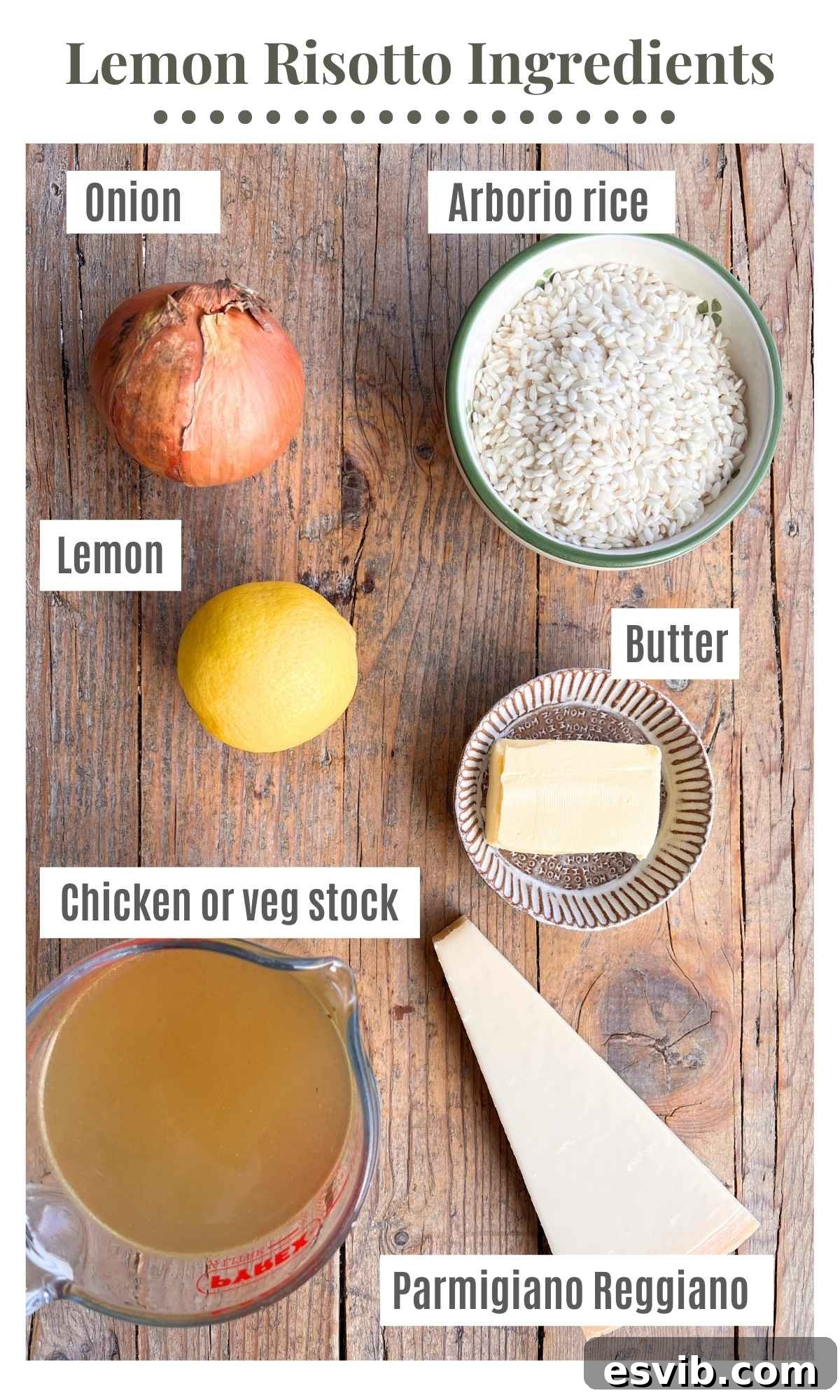
Ingredient Notes and Expert Tips
- Risotto Rice: The Foundation of Creaminess
For authentic risotto, the type of rice you choose is paramount. You’ll need a short-grain, high-starch rice variety. The three main types perfect for risotto are:
- Arborio: The most common and readily available. It’s forgiving and produces a wonderfully creamy risotto.
- Carnaroli: Often considered the “king of risotto rice.” It has a higher starch content and holds its shape better, resulting in an even creamier and more consistent texture, less prone to overcooking.
- Vialone Nano: A smaller, plumper grain that absorbs liquid evenly and cooks more quickly, yielding a very tender and creamy risotto. It’s excellent but can be harder to find outside of Italy.
Important: Do NOT use long-grain rice like basmati or jasmine. These varieties lack the necessary starch to create the characteristic creamy texture of risotto.
- Fresh Lemon: Zest and Juice are Key
The soul of our lemon risotto! Always opt for an unwaxed, preferably organic lemon. Since you’ll be using both the zest and the juice, organic lemons ensure you’re getting pure, unadulterated flavor without any chemical residues. If you can find an Amalfi lemon, renowned for its intense aroma and less acidic, sweeter juice, your risotto will be elevated to an extraordinary level!
- Onion: The Aromatic Base
A finely chopped onion forms the crucial aromatic base for your risotto. White or brown onions work perfectly. For a milder flavor, you could also use finely diced shallots.
- Quality Stock: Chicken or Vegetable
The liquid that transforms your rice. You can use either high-quality chicken stock or vegetable stock. We highly recommend using low-sodium stock (or homemade) so you can precisely control the seasoning. Regular stock can sometimes make the risotto overly salty, especially after the addition of cheese.
- Unsalted Butter: For the Perfect “Mantecatura”
Butter is essential for the final “mantecatura” – the process of stirring it into the finished risotto to achieve that glossy, silky, and incredibly creamy texture. Using unsalted butter allows you to manage the overall saltiness of the dish.
- Parmigiano Reggiano: The Salty Finish
Authentic Parmigiano Reggiano adds a wonderful salty, umami depth that complements the lemon beautifully. If you prefer a sharper, more piquant flavor, Pecorino Romano is a fantastic alternative. For a dairy-free or vegan option, you can omit the cheese entirely or use a high-quality vegan Parmesan substitute.
- Extra Virgin Olive Oil: A staple in Italian cooking, used for sautéing the aromatics. We recommend a good quality Extra Virgin Olive Oil.
- Salt and Freshly Ground Black Pepper: Essential for seasoning to taste, balancing the flavors.
Step-by-Step Guide to Creamy Lemon Risotto
Achieving perfect lemon risotto is all about technique and patience. Follow these detailed steps to create a truly unforgettable dish.
Preparation: Get Everything Ready Before You Start
Before you even turn on the stove, ensure all your ingredients are prepped and within easy reach. This includes finely chopping your onion, zesting and juicing your lemon, and most importantly, warming your stock. Having warm stock is critical for a smooth cooking process, as cold stock will shock the rice and prolong cooking time.
Step 1: Sauté the Onion Base
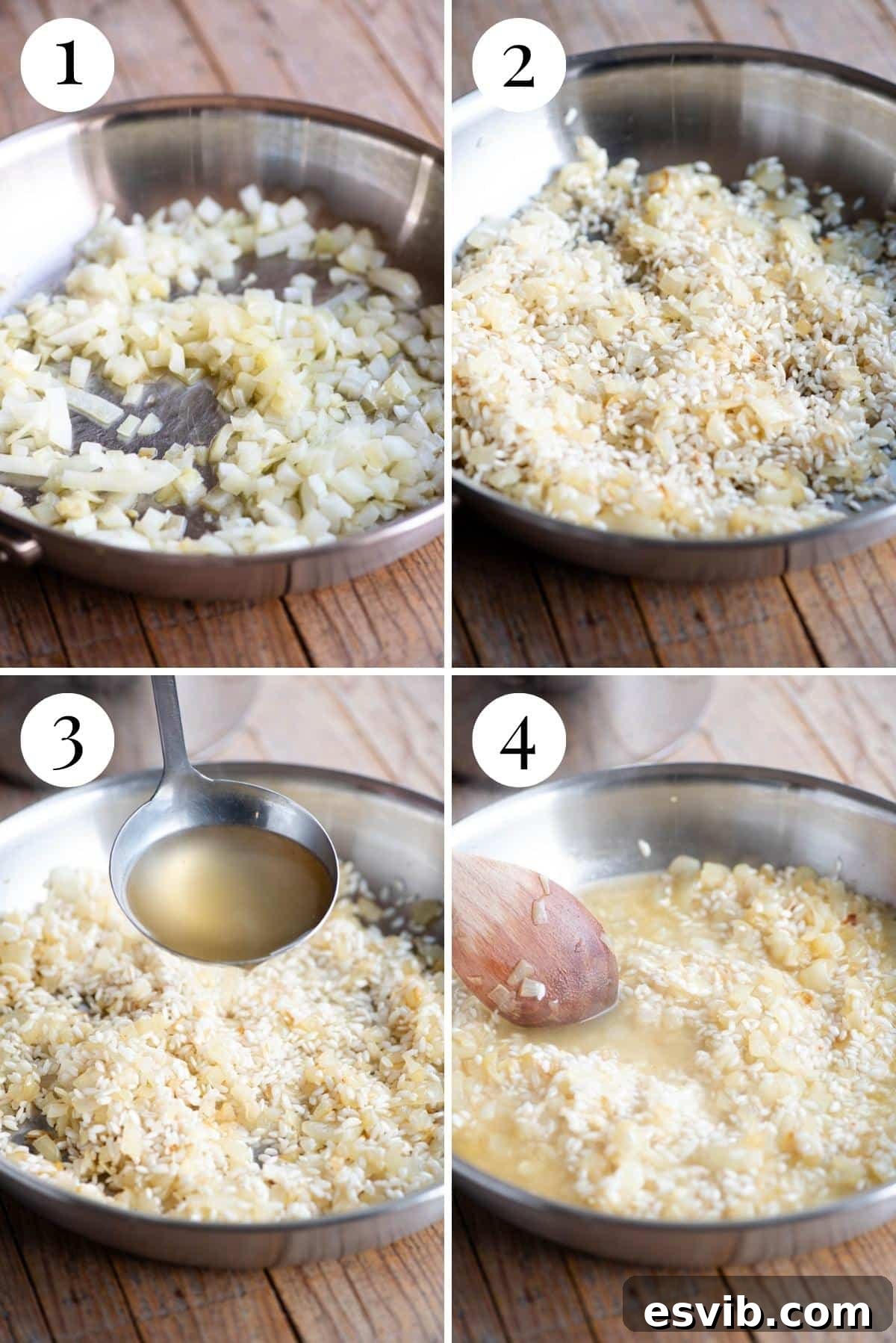
In a large, heavy-bottomed pan or a Dutch oven, add 1-2 tablespoons of high-quality olive oil. Heat over a medium heat. Add the finely chopped onion and sauté gently for 5-10 minutes until it softens and becomes translucent, but without browning. This step is vital for building the foundational flavor of your risotto. (Refer to photo 1 in the collage below for visual guidance).
Step 2: Toast the Risotto Rice
Add the risotto rice to the pan with the softened onion. Stir continuously for 1-2 minutes, allowing the rice grains to toast. You’ll notice the edges of the rice becoming translucent, while the center remains opaque. This toasting process, known as ‘tostatura,’ seals the grains, preventing them from becoming mushy and ensuring they absorb liquid more evenly, contributing to that desired al dente texture. (See photo 2).
Step 3: Gradually Add the Warm Stock
Begin adding your warm stock to the rice, 1-2 ladlefuls at a time. Stir continuously, allowing each addition of stock to be almost fully absorbed by the rice before adding the next. This gradual addition and constant stirring are what encourages the rice to release its starches, creating the creamy texture. Maintain a gentle simmer throughout the cooking process. If using low-sodium stock, add a good pinch of salt now, tasting and adjusting as you go. Continue this process for approximately 18-20 minutes, or until all the stock is used up and the rice is cooked al dente – meaning it’s tender but still has a slight bite in the center. (Observe photos 3 and 4 for the stock addition process).
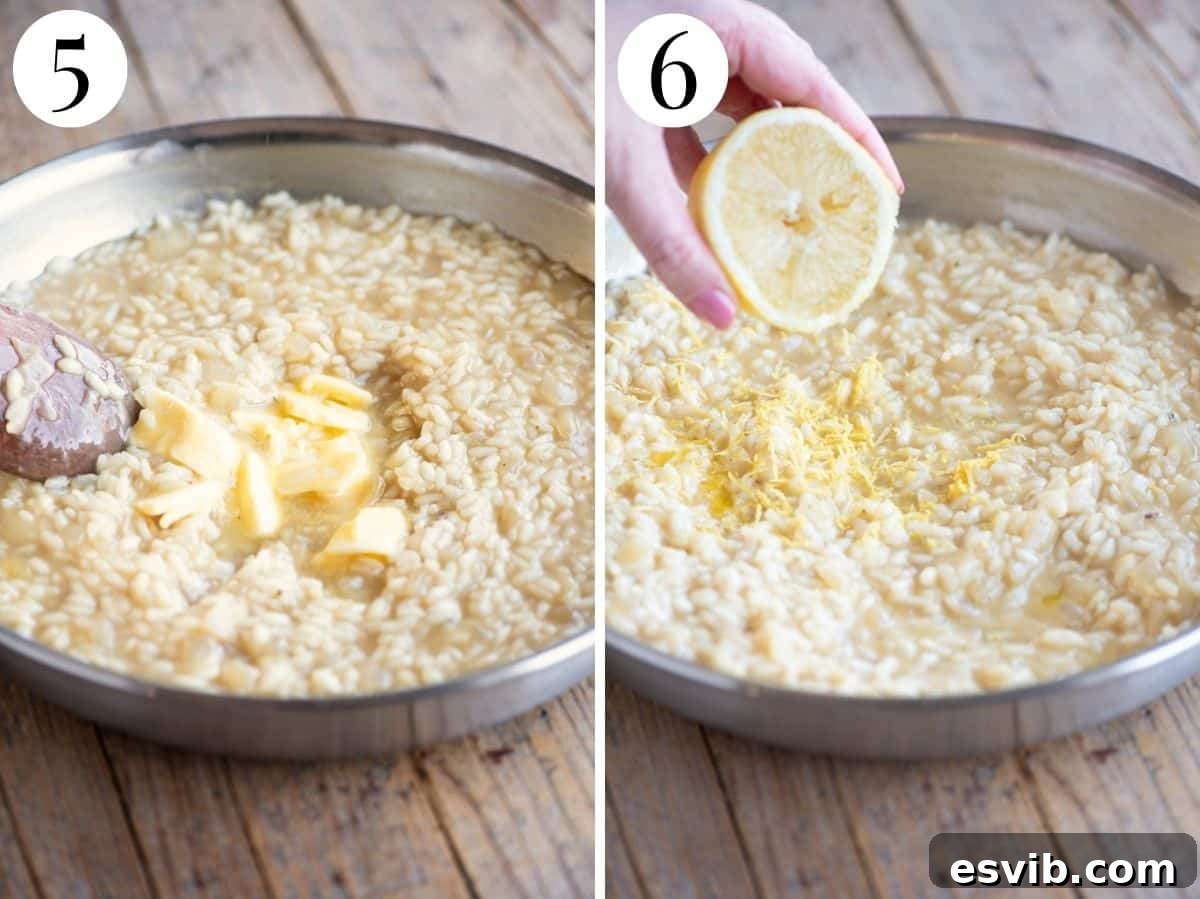
Step 4: The Art of “Mantecatura” – Finishing with Butter, Lemon, and Cheese
Once the rice is perfectly cooked and the risotto has reached a wonderfully loose, wavy consistency (it should spread slightly on the plate), remove the pan from the heat. This is where the magic of ‘mantecatura’ happens. Immediately stir in the cold unsalted butter until it has completely melted and emulsified, creating a glossy sheen. Next, add the fresh lemon juice (start with half a lemon’s juice, and add more to taste later) and the fragrant lemon zest. Finally, fold in the grated Parmigiano Reggiano. This combination finishes the risotto with incredible flavor and that coveted smooth, creamy texture. (As shown in photos 5 and 6).
Step 5: Taste, Adjust, and Serve Immediately
Before serving, always taste your risotto. Adjust the seasoning as needed with more salt, freshly ground black pepper, a little extra lemon juice for brightness, or more Parmigiano for added richness. Risotto is a dish that demands to be enjoyed immediately, so ladle it into warm bowls and serve without delay for the best experience!
Expert Tips for the Perfect Risotto
Mastering risotto is all about understanding a few key principles. These tips will help you achieve a restaurant-quality dish every time:
- Warm Stock is Non-Negotiable: Always heat your stock in a separate saucepan and keep it simmering gently. Adding cold stock will drastically cool down the rice, disrupting the cooking process and affecting the final texture.
- Don’t Wash the Rice: Unlike other rice dishes, you do NOT want to wash risotto rice. The starch on the exterior of the grains is crucial for creating that signature creamy texture.
- Constant, Gentle Stirring: While you don’t need to stir constantly for 20 minutes straight, frequent and gentle stirring is key. This helps release the starch from the rice and prevents it from sticking to the bottom of the pan.
- Cook to “Al Dente”: The rice should be tender but still have a slight, pleasant bite in the center. Overcooked risotto becomes mushy, while undercooked risotto will be hard.
- The “Wave” Test: A perfectly cooked risotto should have a fluid consistency. When you tip the pan slightly, the risotto should spread out slowly like a wave. It should never be stiff or overly dry.
- Season Gradually: Especially if using store-bought stock, which can be salty. Add salt at the beginning with the first ladle of stock, then taste and adjust at the end after adding the cheese and butter.
- Serve Immediately: Risotto is a dish that waits for no one! It’s at its absolute best right off the stove, when it’s warm, creamy, and still has that perfect consistency.
- Lemon Zest vs. Juice: Lemon zest provides intense aromatic flavor without adding too much acidity, while the juice provides the bright, tangy kick. Add both at the very end to preserve their fresh qualities.
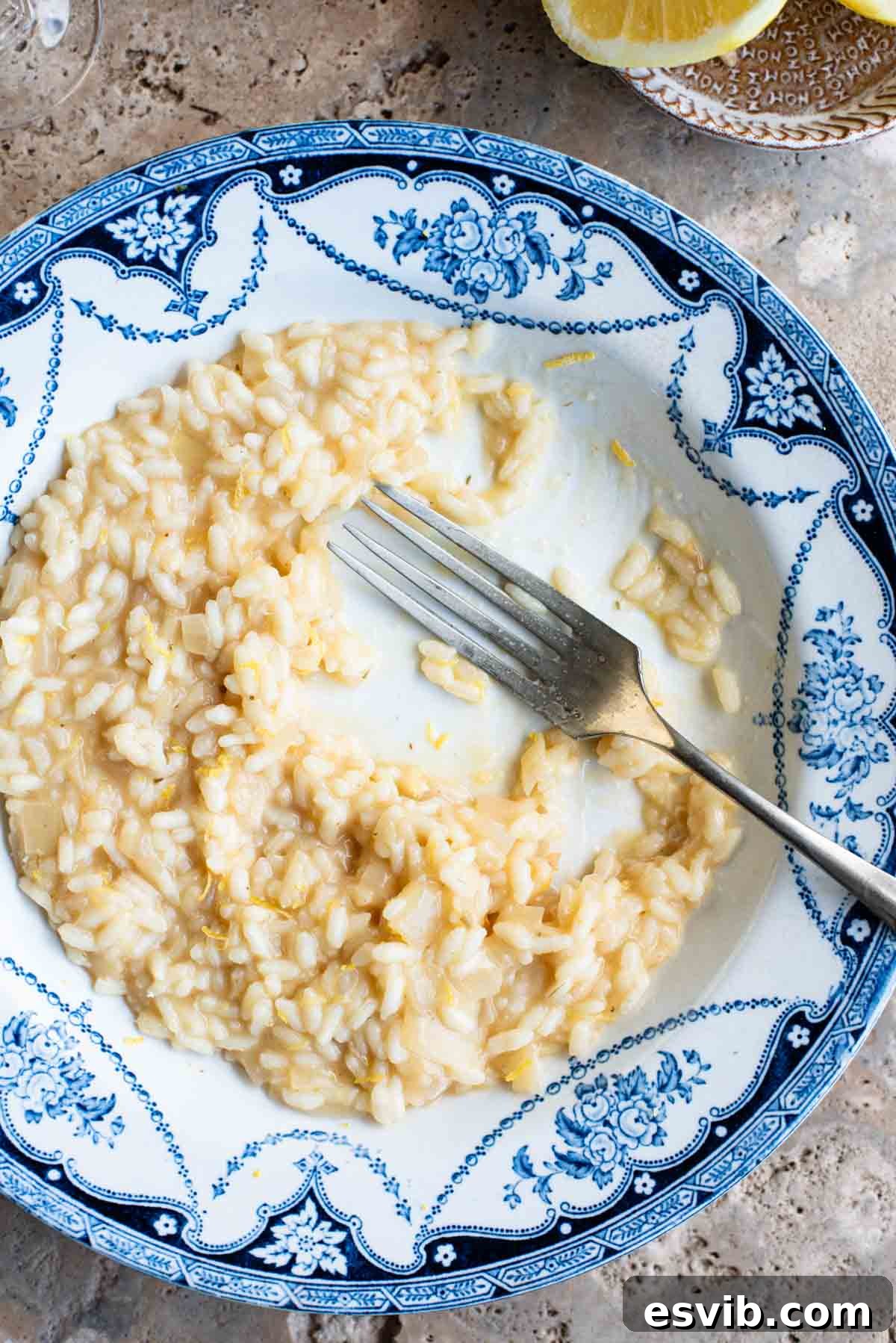
Delicious Variations and Serving Suggestions
While classic lemon risotto is exquisite on its own, it also serves as a fantastic canvas for culinary creativity. Feel free to experiment with these additions to make it your own, and consider these pairing suggestions for a complete meal:
- Add Seasonal Vegetables:
Introduce a burst of color and extra freshness by incorporating green vegetables when they’re in season. Popular and delicious options include:
- Asparagus: Blanch or lightly sauté chopped asparagus tips and stir them in during the last few minutes of cooking, or fold them in at the very end.
- Leeks: If using leeks, slice them thinly and sauté them with the onion at the beginning. You might want to omit the regular onion for a milder leek flavor.
- Peas: Frozen peas can be added directly to the risotto during the last 5 minutes of cooking. Their sweetness is a wonderful contrast to the lemon.
- Zucchini: Grated or finely diced zucchini can be added during the last 10 minutes of cooking.
- Infuse with Fresh Herbs:
Herbs can significantly elevate the aromatic profile of your risotto.
- Thyme: Fresh thyme pairs wonderfully with lemon. Stir in a small handful of fresh thyme leaves at the very end for a more fragrant, earthy note.
- Basil: Fresh basil, torn or chopped, adds a sweet, peppery counterpoint. Stir it in just before serving.
- Mint: For an unexpectedly refreshing twist, a tiny sprinkle of chopped fresh mint can be truly delightful.
- Introduce Protein:
Transform your lemon risotto into a heartier main course with the addition of protein.
- Salmon: Flaking some cooked salmon fillet into the risotto at the very end is incredibly delicious and a combination we often enjoy.
- Shrimp: Lightly sautéed shrimp can be folded in at the end.
- Chicken: Shredded or diced cooked chicken breast is another excellent addition.
- A Touch of Spice: For those who enjoy a little heat, a pinch of red pepper flakes sautéed with the onion can add a subtle warmth.
Serving Suggestions:
Lemon risotto is versatile enough to be a standalone main dish or an exquisite side. Here are some ideas:
- Main Course: Serve a generous portion in a warm bowl, perhaps with a simple green salad dressed with a light vinaigrette to complement the fresh flavors. A glass of crisp white wine, like a Sauvignon Blanc or Pinot Grigio, would be an ideal pairing.
- Side Dish: It makes an excellent accompaniment to grilled fish, roasted chicken, or pan-seared scallops.
- Garnish: Always finish with a sprinkle of fresh lemon zest, a swirl of good quality extra virgin olive oil, and perhaps some freshly grated Parmigiano Reggiano or a few fresh herb leaves.
More Delicious Risotto Recipes
Mains
Simple Saffron Risotto
Risotto
Pea and Pesto Risotto
Risotto
Taleggio Pumpkin Risotto with Crispy Sage
Risotto
Cacio e Pepe Risotto
Frequently Asked Questions About Lemon Risotto
Here are answers to some common questions about making and enjoying lemon risotto:
- What is “Mantecatura”?
Mantecatura is a crucial Italian technique applied at the very end of cooking risotto. It involves vigorously stirring in cold butter (and often Parmigiano Reggiano cheese) off the heat. This process emulsifies the fats with the starches released by the rice, creating an incredibly rich, smooth, and glossy texture without adding any cream.
- Can I make this Lemon Risotto vegan or dairy-free?
Absolutely! To make this recipe vegan, simply substitute the unsalted butter with a good quality plant-based butter (vegan butter), and use vegetable stock instead of chicken stock. For the cheese, you can either omit it entirely for a simpler flavor or use your favorite vegan Parmesan substitute. The natural starch of the rice will still provide a lovely creaminess.
- Why should I only use risotto rice?
Risotto rice varieties like Arborio, Carnaroli, and Vialone Nano are specifically bred for their high starch content. This starch is what creates the creamy texture that is characteristic of risotto. Other types of rice, such as long-grain or even medium-grain, do not release enough starch, resulting in a dish that will be watery and lack the desired rich consistency.
- Can I add white wine to this lemon risotto?
While many traditional risotto recipes call for a splash of white wine after toasting the rice (about 1/4 cup – 1/3 cup / 60-80ml), we chose to omit it in this specific lemon risotto recipe. The strong acidity from the lemon can sometimes clash with the acidity of white wine, potentially creating an unbalanced flavor. If you’re keen to add wine, a very dry, crisp white wine would be your best bet, but be mindful of the overall tartness.
- How do I store and reheat leftover Lemon Risotto?
Risotto is truly best served fresh. However, if you have leftovers, ensure the rice cools down quickly by spreading it in a flat, even layer on a plate. Once cool, transfer it to an airtight container and store it in the fridge for up to 24 hours. To reheat, gently warm it on the stove over low heat, adding a splash of water or extra stock to loosen it up and restore some of its creaminess, as it tends to thicken significantly when cold. Ensure it’s piping hot throughout before serving.
Step-by-Step Photos and Tips Provided Above
For a visual guide to perfecting this recipe, along with additional expert tips and tricks, please refer to the detailed sections above!
Lemon Risotto
By Emily

Print Recipe
Ingredients
- 1 cup (200g) risotto rice (Arborio or Carnaroli)
- 4 cups (1 litre) chicken or vegetable stock (low sodium recommended)
- 1 medium onion, finely chopped
- 1 unwaxed, organic lemon (for zest and juice)
- 3 tablespoons (45g) cold unsalted butter
- 2 tablespoons Parmigiano Reggiano, freshly grated (plus more for serving)
- Extra Virgin Olive oil
- Salt and freshly ground black pepper, to taste
Instructions
- Heat 1-2 tablespoons of olive oil in a large, heavy-bottomed pan or Dutch oven over medium heat. Add the finely chopped onion and sauté for 5-10 minutes until soft and translucent, ensuring it doesn’t brown.
- Add the risotto rice to the pan and stir for 1 minute to lightly toast the grains and coat them in the olive oil and onion flavors.
- Pour in 1-2 ladlefuls of warm stock. Stir continuously until the stock is almost fully absorbed. Add a good pinch of salt at this point, especially if using low-sodium stock.
- Continue adding the warm stock, 1-2 ladlefuls at a time, stirring frequently and allowing each addition to be absorbed before adding more. This process typically takes about 18-20 minutes, or until the rice is cooked al dente (tender with a slight bite).
- Once the rice is cooked and has reached a creamy, fluid consistency, remove the pan from the heat. Add the cold unsalted butter and stir vigorously until it is completely melted and incorporated, creating a glossy finish (mantecatura).
- Stir in the zest of the entire lemon and the juice of half the lemon. Then, fold in 2 tablespoons of freshly grated Parmigiano Reggiano.
- Taste the risotto and adjust seasoning as needed. You might want to add more salt, pepper, or extra lemon juice for a brighter flavor, or more Parmigiano for added richness.
- Serve immediately in warm bowls, garnished with a little extra lemon zest or Parmigiano Reggiano. Enjoy!
Recipe Notes
- Low-Sodium Stock: Using low-sodium (or homemade) stock gives you more control over the final saltiness of the dish. Adjust salt at the beginning of cooking and again at the end.
- Lemon Juice: Start with the juice of half a lemon. Lemons vary in size and tartness; taste and add more juice gradually until you reach your desired level of zestiness.
- Risotto Rice is Key: Always use a proper risotto rice (Arborio, Carnaroli, or Vialone Nano) for the essential creamy texture. Other rice types will not yield the same results.
- Storage and Leftovers: Risotto is best enjoyed fresh. If you have leftovers, cool them quickly by spreading them on a flat tray. Store in an airtight container in the fridge for up to 24 hours. Reheat gently on the stove, adding a splash of water or stock to loosen and ensure it’s piping hot.
Helpful Information for All Recipes
- I always use extra virgin olive oil in all of my recipes unless stated otherwise.
- When I use canned or jarred tomatoes of any kind, I always recommend Cirio or Mutti brands for the best results and flavor.
- All vegetables are assumed to be medium-sized unless specifically stated otherwise in the recipe.
- All recipes are tested and developed using a fan (convection) oven.
- Find out more about how nutrition is calculated.
- Check out our must-have Italian Pantry Staples.
- You can also find all our Essential Kitchen Tools for Italian Cooking.
Nutrition
Calories: 297kcal
|
Carbohydrates: 48g
|
Protein: 6g
|
Fat: 9g
|
Saturated Fat: 5g
|
Polyunsaturated Fat: 1g
|
Monounsaturated Fat: 3g
|
Trans Fat: 0.2g
|
Cholesterol: 137mg
|
Sodium: 1046mg
|
Potassium: 129mg
|
Fiber: 3g
|
Sugar: 4g
|
Vitamin A: 873IU
|
Vitamin C: 16mg
|
Calcium: 31mg
|
Iron: 3mg
Nutrition information is automatically calculated and should be used as an approximation.
Did you try this recipe? We’d love to hear from you! Leave a comment below and let us know how your Lemon Risotto turned out. Your feedback helps us and other home cooks!
You can also follow us on Facebook, Instagram, and Pinterest, or sign up for our Newsletter to receive weekly updates on our latest delicious food creations.