
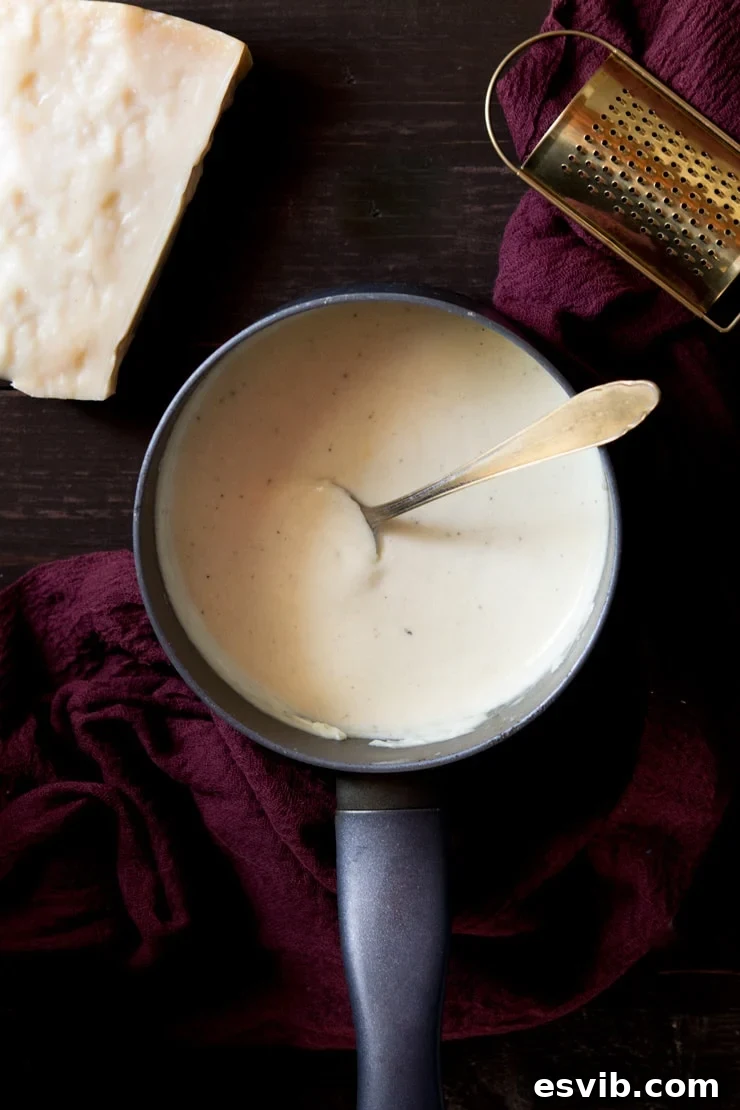
How to make Bechamel sauce without butter – it’s a revelation! This recipe delivers an incredibly creamy, wonderfully silky smooth, and utterly delicious white sauce. Master this fundamental culinary skill and use this versatile base for many classic comfort food dishes, even when you’ve unexpectedly run out of butter or are looking for a lighter, healthier alternative.
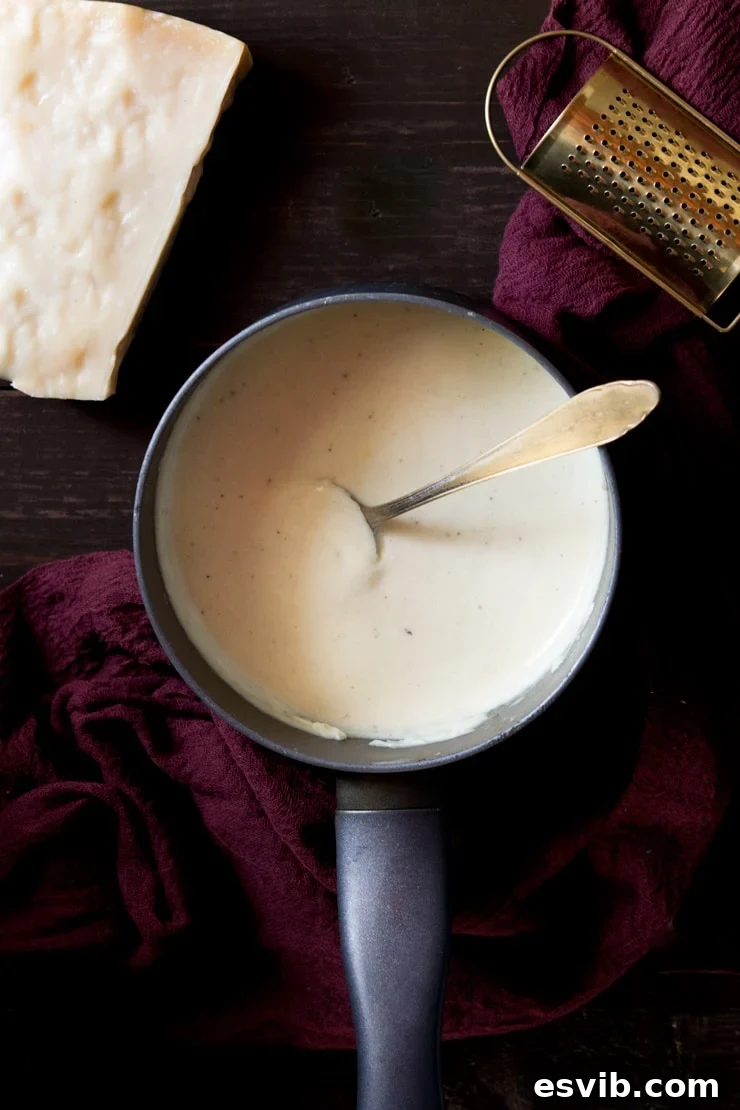
The Essential Bechamel: A Foundation of Classic Cuisine
Bechamel sauce, often celebrated as one of the five “mother sauces” of French cuisine, holds a foundational place in the culinary world. It’s typically one of the first basic sauces aspiring cooks learn, and for good reason: mastering it unlocks an incredible array of delicious recipes. This rich, creamy white sauce is essentially a simple blend of a roux (a cooked mixture of fat and flour) and milk, delicately seasoned with salt, pepper, and a touch of nutmeg. Its simplicity belies its profound impact on flavor and texture in numerous dishes.
But what if you find yourself in the middle of preparing a meal, only to realize you’ve run out of butter? Or perhaps you’re seeking a dairy-free or lighter version of this classic sauce? This is a common kitchen predicament, one that has undoubtedly happened to even the most seasoned home chefs. Instead of rushing to the store or completely altering your meal plan, there’s an elegant, simple solution that almost everyone, especially those with a passion for Italian cooking, will have readily available in their pantry.
Why Opt for a Butter-Free Bechamel?
While traditional Bechamel relies on butter for its characteristic richness and depth, a version made with olive oil can achieve equally remarkable results. Beyond being a clever substitute for when butter is unavailable, this butter-free white sauce offers several advantages:
- Healthier Alternative: Olive oil, particularly extra virgin, is packed with monounsaturated fats and antioxidants, making this version a potentially healthier choice with fewer saturated fats compared to its butter-laden counterpart.
- Distinct Flavor Profile: Olive oil imparts a subtle, slightly peppery or fruity note that can beautifully complement dishes with Mediterranean or Italian flavors, offering a nuanced taste that differs pleasantly from butter.
- Dietary Needs: For those avoiding dairy or seeking vegan options (when paired with plant-based milk), this method provides a fantastic workaround.
- Pantry Staple: Olive oil is a ubiquitous ingredient in many kitchens, making this recipe a convenient go-to when you need a creamy sauce in a pinch.
Olive Oil: Your Key to a Silky Smooth White Sauce
The secret to creating a perfectly luscious and smooth Bechamel without butter lies in utilizing the incredible properties of **olive oil**. That’s right – this golden liquid, a staple in Mediterranean cooking, is not just for dressings and sautéing; it makes an exceptional roux. With olive oil, you can effortlessly prepare a silky, smooth, thick, and wonderfully creamy Bechamel sauce that sacrifices absolutely nothing in terms of flavor or texture. Many even find that the unique profile of olive oil enhances the overall taste, especially when the sauce is destined for dishes with a robust flavor.
Choosing the Right Olive Oil for Your Sauce
For a truly exceptional butter-free Bechamel, the type of olive oil you choose can influence the final flavor. A good quality extra virgin olive oil is often recommended for its pleasant aroma and mild fruitiness, which adds a subtle complexity to the sauce. However, if you prefer a more neutral-tasting Bechamel, a lighter olive oil or even a refined olive oil will work perfectly well, allowing the other ingredients in your dish to shine through without competition. Avoid very strong, intensely flavored or peppery extra virgin olive oils if you desire a classic, subtle Bechamel flavor.
The Versatility of Bechamel Sauce: Elevating Comfort Food Classics
Regardless of whether it’s made with butter or olive oil, Bechamel is an indispensable, incredibly versatile sauce that forms the backbone of countless beloved dishes. If you, like me, adore hearty comfort food such as lasagna or macaroni and cheese, then mastering this basic white sauce is an essential culinary skill. It is truly a base sauce that many home cooks consider indispensable, capable of transforming simple ingredients into extraordinary meals. Incorporate it into:
- Baked Cauliflower Cheese: A quintessentially comforting British dish, where tender cauliflower florets are enveloped in a rich, cheesy Bechamel and baked to bubbly, golden perfection.
- Macaroni Cheese: The quintessential creamy indulgence, turning humble pasta into a decadent and satisfying meal that appeals to all ages.
- Cheesy Leeks: A delightful and simple side dish or a light main course, featuring tender, sweet leeks bathed in a savory cheese sauce.
- Lasagna: The crucial creamy layer that adds moisture, richness, and binds together the flavors in both meat-based and vegetarian lasagnas.
- Cannelloni: A perfect and luxurious topping or a key component in the filling for various baked pasta dishes.
- Savory Soufflé: The light yet sturdy foundation for impressive and airy savory soufflés, offering elegance and flavor.
- Croque Madame/Monsieur: The creamy, gratin-like star of these iconic French toasted ham and cheese sandwiches.
- Homemade Pies & Gratins: Mix Bechamel with various cooked vegetables, meats, herbs, and spices to create incredible, hearty fillings for homemade savory pies, or use it as a rich, bubbly topping for baked cheesy vegetable gratins.
- Creamed Spinach or Other Vegetables: A simple yet effective way to elevate everyday vegetable side dishes into something truly special and comforting.
- Moussaka: The traditional, creamy topping that characterizes this beloved and hearty Greek eggplant and meat casserole.
The Basic Ratios for a Perfectly Thick White Sauce
The fundamental principle for crafting any classic Bechamel sauce (or white sauce) revolves around a simple 1:1 ratio of fat to flour by volume. This means that for every tablespoon of fat you choose – whether it’s butter or, in this case, olive oil – you’ll need an equal amount of flour to create the roux, which is the essential thickening agent for your sauce.
This specific recipe utilizes 1 tablespoon of olive oil and 1 heaped tablespoon of all-purpose flour. This balanced combination is designed to perfectly thicken approximately 2 cups (or 500ml) of milk. However, the beauty of Bechamel is its adaptability: you can easily adjust the quantity of milk to achieve your desired sauce consistency. For a thicker, more robust sauce ideal for gratins or certain fillings, simply add slightly less milk. If you prefer a thinner, more pourable sauce, perfect for coating pasta or vegetables, incorporate a little more milk until it reaches your liking. This flexibility ensures your Bechamel always meets the needs of your dish.
Step-by-Step Guide: How To Make Bechamel Sauce Without Butter
Creating a smooth, lump-free Bechamel sauce is a surprisingly straightforward process, even for beginners, and especially so when using olive oil. Follow these precise steps for a perfect olive oil Bechamel every time:
- Prepare the Roux: Begin by adding 1 tablespoon of olive oil to a medium-sized saucepan over medium heat. Allow the olive oil to warm for just a few seconds until it’s slightly shimmering but not smoking. This gentle warmth ensures the flour cooks evenly.
- Create the Roux: Once the olive oil is warm, promptly add 1 heaped tablespoon of all-purpose flour to the saucepan. Immediately begin whisking or stirring vigorously with a wooden spoon to thoroughly combine the fat and flour. This action will quickly form a thick, cohesive paste, which is your roux. Continue cooking this roux for precisely one minute, stirring constantly. This crucial step is vital for cooking out the raw flour taste, preventing your finished sauce from having an unpleasant, starchy flavor. The goal is a “white roux,” meaning it should cook without browning significantly.
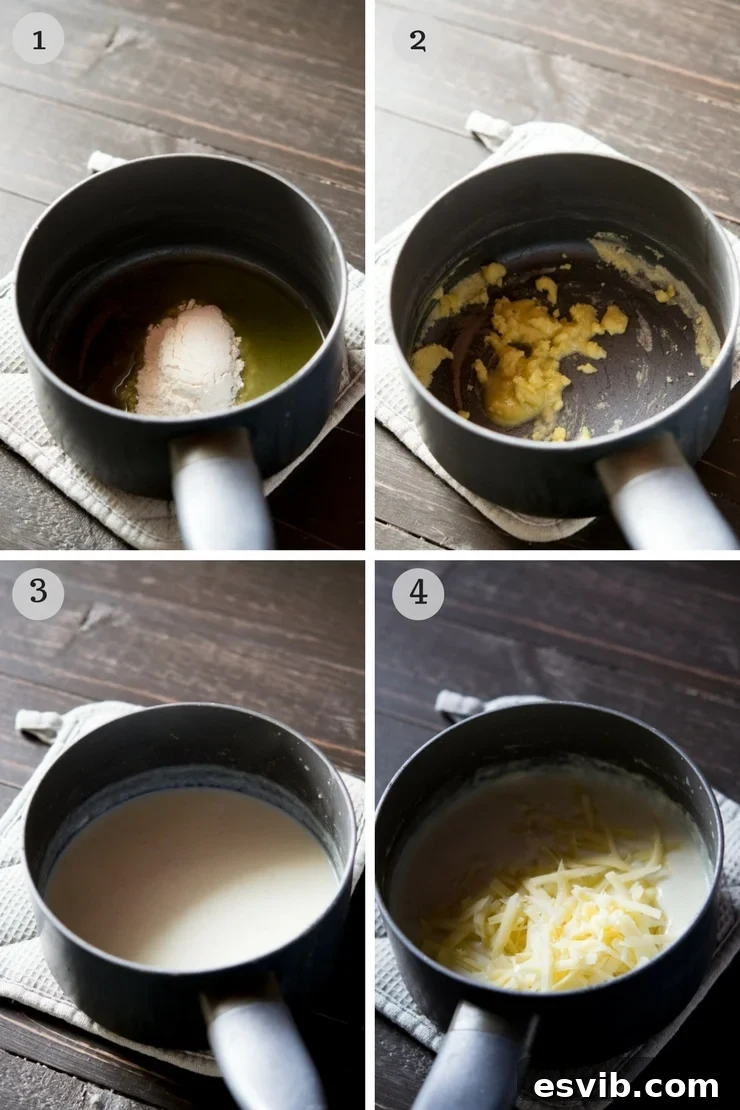
- Gradual Milk Incorporation (The Key to No Lumps): Now, it’s time to introduce the milk. The absolute key to a lump-free sauce is gradual addition and constant, vigorous whisking. Begin by adding approximately 1/4 of the total milk (around 1/2 cup or 125ml) to the hot roux. Whisk immediately and continuously to ensure the liquid is fully incorporated and any initial lumps are swiftly broken down. The mixture will initially be very thick.
- Continue Adding Milk and Whisking: Once the first addition of milk has been absorbed and the mixture has begun to thicken further, add another 1/4 of the milk, continuing to whisk without interruption. Repeat this careful process, adding small increments of milk (about 1/4 cup each time) and whisking thoroughly after each addition until all 2 cups (500ml) of milk have been smoothly incorporated into the sauce.
- Thicken and Cook to Perfection: Continue to gently heat the sauce over medium-low heat, stirring frequently with your whisk or spoon, until it reaches your desired thickness. The sauce is perfectly cooked when it’s thick enough to generously coat the back of a metal spoon without immediately running off, leaving a clear trail when you run your finger across the spoon.
- Season and Finish: Once the Bechamel has reached its ideal consistency and thickness, remove the saucepan from the heat. Stir in 1/2 teaspoon of freshly grated nutmeg (a traditional and essential seasoning for Bechamel), and season generously with salt and freshly ground black pepper to taste. Adjust seasonings as needed.
Turning Bechamel into a Cheesy Mornay Sauce (Optional)
If your culinary goal is a rich and decadent cheese sauce, commonly known as Mornay sauce, this is the perfect stage to introduce your cheese. After removing the thickened Bechamel from the heat and seasoning it to your liking, stir in your chosen grated cheese. For this recipe, we suggest 1 tablespoon of finely grated Parmesan or 2.8 oz (80g) of grated Gruyere cheese. Continue stirring gently until the cheese has completely melted and is smoothly incorporated into the sauce, creating a homogeneous, velvety texture. If the sauce cools too much during this process and the cheese isn’t melting properly, you may return the saucepan to very low heat for a few seconds, stirring constantly. Be cautious not to overheat the sauce, as this can sometimes cause the cheese to separate. Should the sauce become too thick after the addition of cheese, simply whisk in another splash of warm milk until it achieves your preferred consistency.
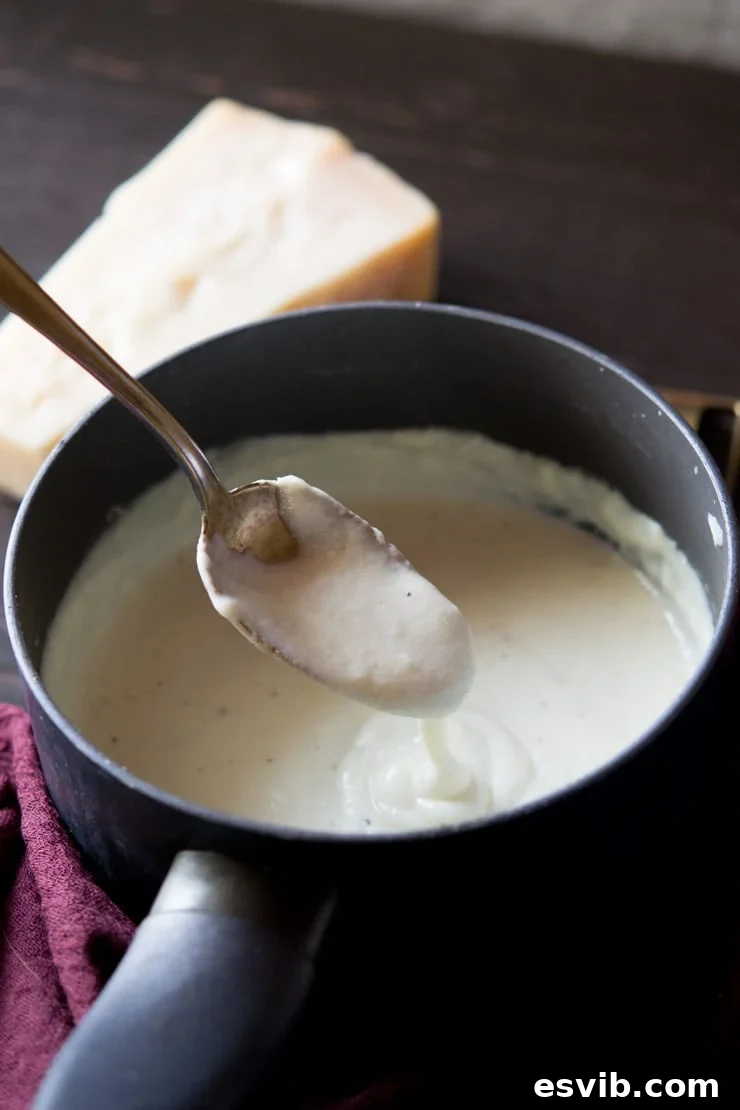
Best Cheeses for Bechamel (Mornay) Sauce:
The secret to a truly delightful and smooth cheese sauce lies in selecting cheeses that melt beautifully and offer a complementary flavor profile. Excellent choices that ensure a creamy, lump-free Mornay include:
- Parmesan: Adds a sharp, salty, and wonderfully savory depth, essential for many Italian-inspired dishes.
- Gruyere: Offers a complex nutty, earthy, and slightly sweet flavor with outstanding melting qualities, creating a luxurious sauce.
- Fontina: A semi-soft Italian cheese with a mild, creamy, and subtly nutty taste, making it perfect for a smooth and mellow cheese sauce.
- Cheddar: A widely popular choice, providing a familiar sharp and tangy flavor. For the best results and melting, opt for a good quality sharp or medium cheddar.
- Mozzarella (low-moisture): Adds a delightful stretch and mild creaminess, often combined with other stronger cheeses to balance flavors and textures.
Expert Tips for a Perfectly Smooth, Lump-Free Sauce Every Time
Achieving a perfectly smooth Bechamel is simpler than you might imagine, even if you’re new to sauce making. Here are a few expert tips to ensure success:
- Constant Whisking is Key: This cannot be overstated. Vigorous and continuous whisking, especially during the milk addition phase, is absolutely paramount to preventing lumps. Don’t be shy with your whisk – it’s your best friend here!
- Gradual Milk Addition: Patience pays off. Adding the milk slowly, about a quarter cup at a time, allows the flour in the roux to properly absorb the liquid and expand smoothly without clumping. Resist the urge to dump all the milk in at once.
- Consider Milk Temperature: While cold milk added to a hot roux often works wonders (the temperature shock can help separate starch granules and prevent clumping), room temperature or even slightly warmed milk can also be used. The crucial factor is slow addition and constant whisking.
- Cook Out the Flour: Don’t rush the initial cooking of the roux. That one minute of cooking ensures the raw flour taste is eliminated, resulting in a cleaner, more refined sauce flavor.
- Prevent Overheating: Once your sauce has reached its desired thickness, remove it from direct high heat. Overheating can cause the sauce to become grainy, separate, or even burn at the bottom of the pan. Gentle simmering is all it needs.
- Emergency Fix for Lumps: In the rare event that you do end up with a few stubborn lumps despite your best efforts, don’t despair! Simply pass your finished sauce through a fine-mesh sieve for an instantly smooth and velvety result. For a quicker fix, an immersion blender can also save a lumpy sauce.
- Preventing a Skin: If you’re not using the sauce immediately, cover it directly with cling film (plastic wrap), pressing the film gently onto the surface of the sauce. This prevents a skin from forming as it cools.
Recipe Overview: Butter-Free Bechamel Sauce
How to Make Bechamel Sauce Without Butter
By Emily
2 mins
10 mins
12 mins
2 cups (approx. 4 servings)
Ingredients
- 1 tbsp extra virgin olive oil
- 1 heaped tbsp all-purpose flour
- 2 cups (500ml) full-fat milk (or desired alternative)
- 1/2 tsp freshly grated nutmeg
- Salt and freshly ground black pepper, to season
- **Optional (for cheese sauce):**
- 1 tbsp grated Parmesan
- 2.8 oz (80g) grated Gruyere cheese (or other good melting cheese like Fontina, Cheddar)
Instructions
- Add the olive oil to a medium-sized saucepan and warm it for a couple of seconds over medium heat.
- Once the oil is warm, add the all-purpose flour. Immediately whisk or stir vigorously with a wooden spoon to form a thick paste (roux). Cook this roux for one minute, stirring constantly, to cook out the raw flour taste without browning it.
- Gradually add about 1/4 of the milk to the roux, whisking constantly and vigorously to remove any lumps and ensure smooth incorporation.
- Continue adding the remaining milk in small increments (about 1/4 cup at a time), whisking thoroughly after each addition until all the milk is incorporated and the sauce begins to thicken to a smooth consistency.
- Continue heating the sauce over medium-low heat, stirring frequently, until it reaches your desired thickness and coats the back of a metal spoon without running off.
- Remove the sauce from the heat. Stir in the freshly grated nutmeg, and season generously with salt and freshly ground black pepper to taste.
- If making a cheese sauce (Mornay): Stir in the grated Parmesan or Gruyere cheese (or your chosen cheese) until completely melted and smooth. If the sauce becomes too thick, add an extra splash of warm milk to reach the desired consistency. Serve immediately.
Notes
- The best cheeses for a smooth Bechamel (Mornay) sauce are those that melt well, such as Parmesan, Gruyere, Fontina, or Cheddar.
- This recipe yields approximately 2 cups of sauce, suitable for 4 servings in a dish like macaroni cheese.
- To prevent a skin from forming on the sauce if not serving immediately, press plastic wrap directly onto the surface of the sauce.
- If the sauce becomes too thick while cooking or reheating, a splash of warm milk can help restore its creamy consistency.
- For an extra layer of flavor, consider infusing your milk with aromatics like half an onion studded with a bay leaf and a few cloves, before adding it to the roux. Simply warm the milk with the aromatics, strain, then proceed with the recipe.
Helpful Information for All Our Recipes
- We consistently use high-quality extra virgin olive oil in all our recipes unless explicitly stated otherwise, prioritizing superior flavor and health benefits.
- When our recipes call for canned or jarred tomatoes, we highly recommend using Cirio or Mutti brands. Their consistent quality ensures the best results and authentic Italian flavor in your dishes.
- Unless specifically stated otherwise in the recipe, all vegetables are assumed to be medium-sized.
- Every recipe featured on our blog is meticulously tested and developed using a fan (convection) oven to ensure consistent and reliable results for your home cooking.
- For more detailed insights into the nutritional values of our dishes, please refer to our nutrition calculation policy.
- To keep your kitchen well-stocked for delicious Italian meals, don’t forget to check out our list of must-have Italian Pantry Staples.
- Elevate your culinary experience further by exploring our recommendations for Essential Kitchen Tools for Italian Cooking.
Nutrition Information (Approximate, per serving without optional cheese)
Carbohydrates: 15g |
Protein: 20g |
Fat: 28g |
Saturated Fat: 13g |
Cholesterol: 69mg |
Sodium: 278mg |
Potassium: 354mg |
Sugar: 12g |
Vitamin A: 770 IU |
Calcium: 707mg |
Iron: 0.2mg
Nutrition information provided is an approximation, automatically calculated based on the primary ingredients and serves as a guideline. Please note that adding optional ingredients like cheese will significantly alter these values. For precise dietary needs, it’s recommended to calculate based on specific products used.
Did you try this butter-free Bechamel recipe? We’d absolutely love to hear about your experience! Please take a moment to leave a comment below and share how your silky smooth white sauce turned out. Your feedback is invaluable, not only to us but also to other home cooks looking to master this versatile sauce!
If you’ve tried this or any other recipe on the blog, please don’t forget to rate the recipe and let me know how you got on in the comments below. Your thoughts and experiences are always a joy to hear! You can also FOLLOW ME on FACEBOOK, TWITTER, INSTAGRAM, and PINTEREST to discover more delicious food ideas, behind-the-scenes glimpses, and what I’m getting up to in the kitchen.