

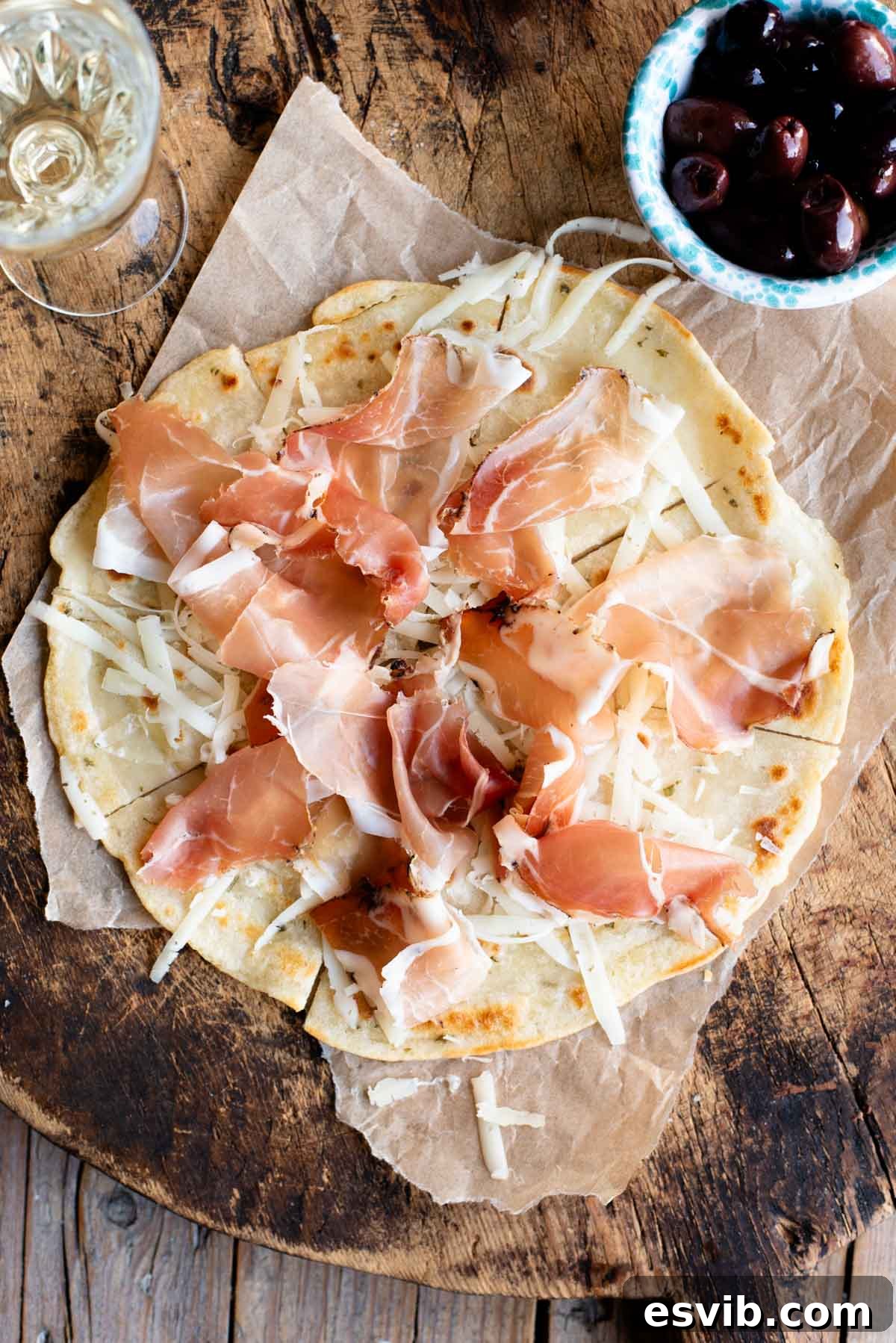
Brustengo di Gubbio is a truly delicious and authentic Italian flatbread that hails from the picturesque region of Umbria. Crafted with the simplest of ingredients, this traditional delicacy boasts an incredibly satisfying flavor and texture profile. Each bite offers a delightful contrast: a wonderfully soft interior enveloped by a perfectly crispy exterior, making it an ideal accompaniment for an array of cured meats and fine cheeses. It’s more than just a flatbread; it’s a taste of Umbrian heritage, promising to transport your palate straight to the heart of Italy.
Discovering the Rustic Charm of Brustengo: An Umbrian Delight
There’s a special joy in sharing small, flavorful bites with loved ones, and few things are as satisfying as creating a magnificent antipasti board. Imagine an artfully arranged spread of artisanal meats, exquisite cheeses, vibrant dips, and freshly baked breads, all enjoyed alongside a few glasses of fine wine. For many, this is the epitome of culinary bliss, fostering connection and shared pleasure. It is within this spirit that the discovery of new and exciting Italian snacks becomes a true delight, and Brustengo stands out as a recent and utterly captivating addition.
This remarkable flatbread originates from Gubbio, a charming medieval town nestled in the heart of Umbria. Often described as a delightful hybrid, Brustengo shares characteristics with both a delicate crêpe and a rustic flatbread. Its unique preparation results in a beautifully soft and tender middle, exquisitely contrasted by a thin, golden, and wonderfully crispy exterior. This textural harmony is a hallmark of its appeal, offering a sensory experience that is both comforting and exciting.
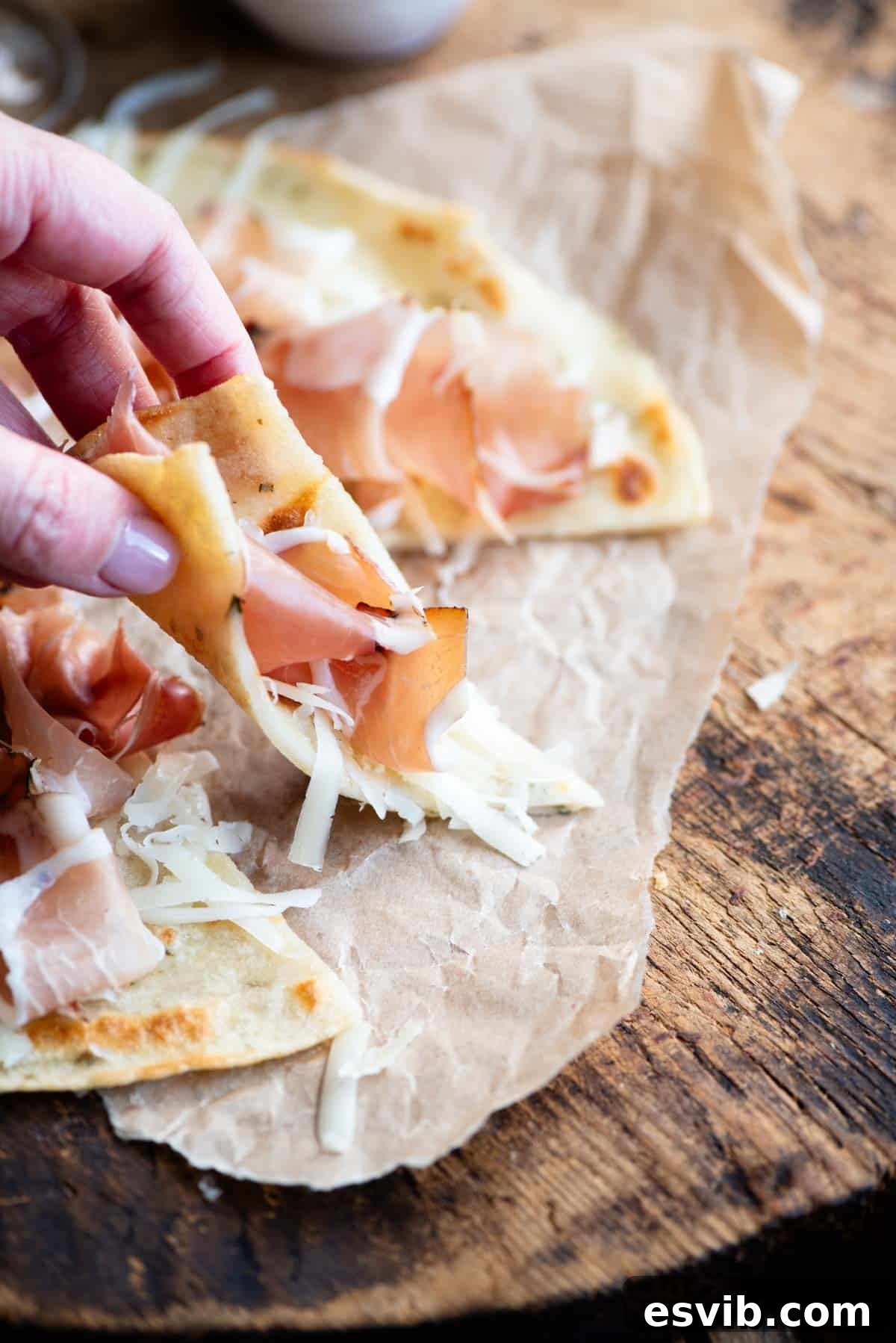
In its purest, traditional form, Brustengo is typically sliced like a pizza, making it easy to share and enjoy. It’s often generously adorned with a dusting of grated Pecorino cheese, its sharp, salty notes complementing the flatbread beautifully. The preferred cured meat pairing in Gubbio is often Prosciutto di Norcina, a flavorful ham from the Norcia region of Umbria, renowned for its rich taste and delicate texture. However, the beauty of Brustengo lies in its remarkable versatility. It pairs effortlessly with virtually any Italian cheese and cured meat, transforming it into the ultimate snack or an indispensable centerpiece for any antipasti platter. Moreover, its straightforward preparation means that this exquisite taste of Umbria is surprisingly easy to recreate in your own kitchen, allowing you to bring a piece of Italian tradition home.
The Simple Origins: A Taste of Umbrian History
Flatbreads have been a staple across many cultures for millennia, evolving from the earliest forms of baked goods. In Italy, each region, town, and even family often boasts its own unique version, reflecting local ingredients and traditions. Brustengo di Gubbio is a proud example of this rich culinary heritage. Born out of the necessity and ingenuity of Umbrian peasant cooking, it embodies the philosophy of making something extraordinary from humble beginnings.
Historically, Brustengo was a practical and nourishing food, made with readily available flour and water, cooked quickly over an open fire or in a hot pan. It was a dish often associated with harvest times, festivals, and communal gatherings, offering a simple yet profoundly satisfying treat. The addition of fresh rosemary, common in the Umbrian landscape, infused the flatbread with an aromatic earthiness, elevating its flavor without requiring complex ingredients. This tradition of simplicity and honest flavor continues to define Brustengo today, making it a beloved symbol of Umbrian culinary identity.
Ingredients: The Essence of Authentic Brustengo
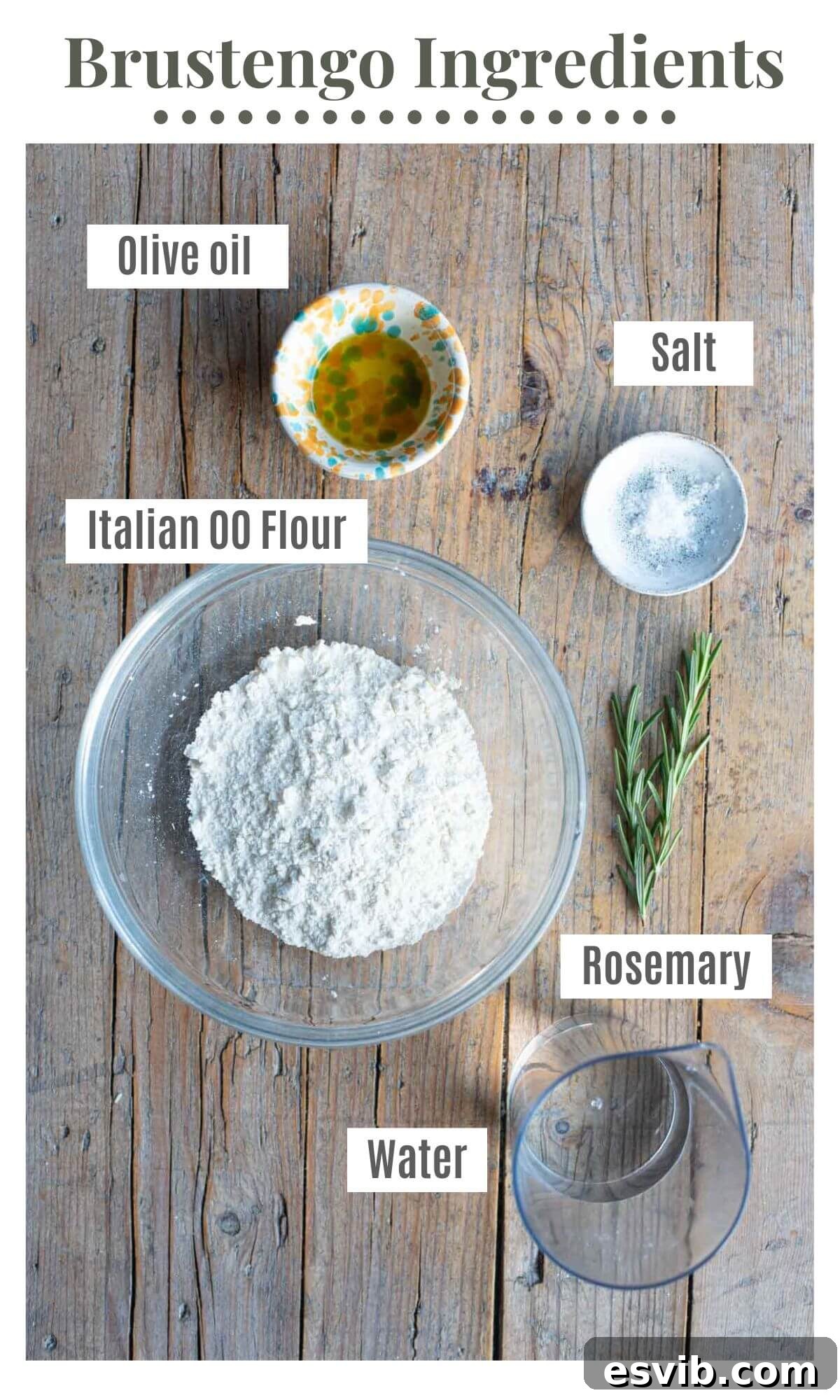
Creating authentic Brustengo requires just a handful of quality ingredients. The beauty of this recipe lies in how these simple components come together to form a truly delicious and satisfying flatbread. Each ingredient plays a crucial role in achieving Brustengo’s signature texture and flavor.
Ingredient Notes and Substitutions for Perfect Results
- Flour: For the most authentic experience, Italian 00 flour is traditionally used. This finely milled wheat flour produces a delicate and tender crumb, perfect for Brustengo. However, if 00 flour is not readily available, a good quality all-purpose (plain) flour will work beautifully as a substitute. The key is to use a flour that will create a smooth, pourable batter.
- Water: The temperature of your water can subtly affect the batter. Cold or room temperature water is ideal for this recipe. Using extremely hot or cold water might impact the flour’s gluten development, so aim for a moderate temperature.
- Rosemary: Fresh, finely chopped rosemary is a traditional and highly recommended addition, imparting a wonderful fragrant note to the flatbread. The aromatic oils in fresh rosemary truly enhance Brustengo’s flavor profile. While some versions of Brustengo are made without rosemary, we find it adds an irresistible layer of complexity. If fresh rosemary is unavailable, you could use a very small amount of dried rosemary (about half a teaspoon), but be aware that the flavor will be more concentrated. Fresh thyme is another excellent herb that would complement this recipe wonderfully if you’re looking for an alternative.
- Olive Oil: Essential for frying, olive oil contributes to the crispy exterior and golden-brown finish of the Brustengo. Using a good quality extra virgin olive oil will also impart a subtle, fruity flavor.
- Salt: A pinch of salt is vital for seasoning the flatbread, balancing the flavors and enhancing the overall taste.
Crafting Brustengo: A Simple Visual Walk-through
Making Brustengo is a straightforward process, requiring minimal effort but delivering maximum flavor. Follow these simple steps to create this delightful Umbrian flatbread at home.
- Combine the Dry Ingredients: In a spacious mixing bowl, measure out your chosen flour. Add the finely chopped fresh rosemary and a pinch of salt. Using a whisk or a spoon, mix these dry ingredients thoroughly until they are well combined. This ensures an even distribution of flavor throughout the batter. (See illustrative photos 1 and 2 for guidance).
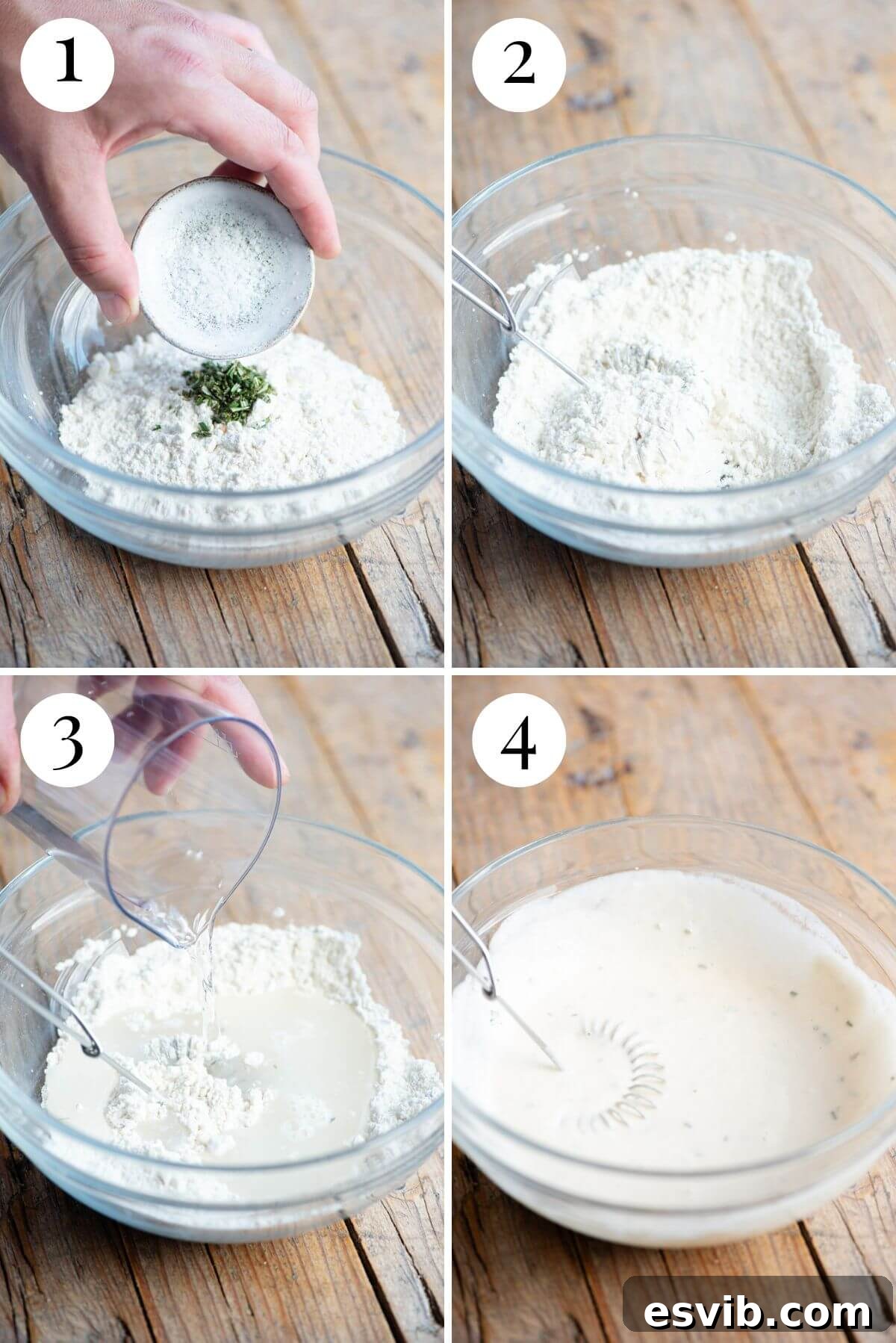
- Incorporate the Liquid: Gradually pour the water into the bowl containing the dry ingredients. Whisk continuously and vigorously until you achieve a smooth, liquid batter. Ensure there are no lumps remaining, as a smooth batter is crucial for a perfectly thin and even flatbread. (Refer to photos 3 and 4 for the desired consistency).
- Prepare the Pan: Place a medium-sized frying pan over a medium heat. Add approximately 1/2 tablespoon of olive oil to the pan. Allow the pan and oil to heat up sufficiently; the oil should shimmer slightly, indicating it’s ready for cooking.
- Pour and Spread the Batter: Once the pan is hot, pour about 1/3 of the prepared batter into the center of the pan. This typically amounts to one large ladleful. Working quickly, gently tilt and swirl the pan in a spiraling motion to spread the batter thinly and evenly across the entire surface, much like you would when making a crêpe. The goal is a thin, uniform layer. (Photo 5 demonstrates this technique).
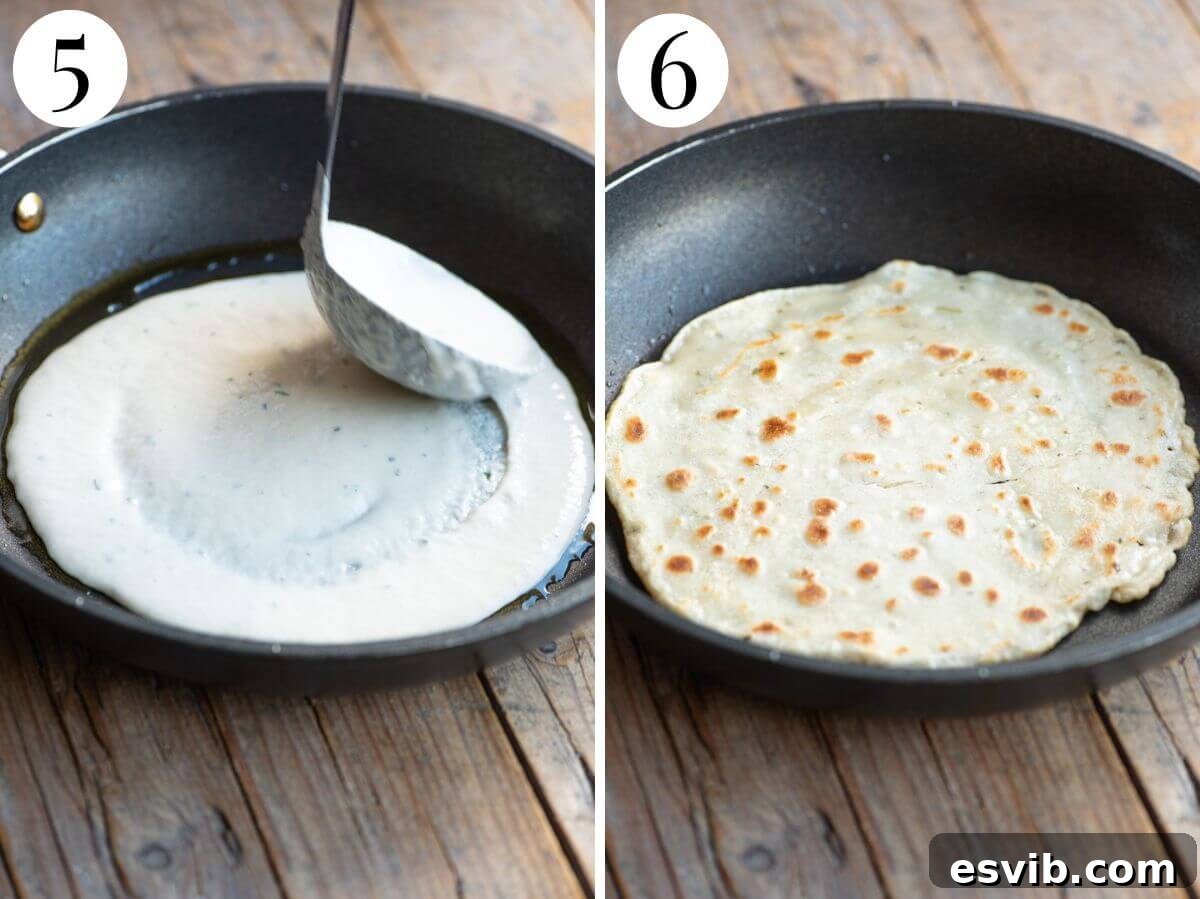
- Cook to Golden Perfection: Allow the flatbread to cook for 2-3 minutes on one side. You’ll know it’s ready to flip when the edges start to lift and turn golden brown, and the surface appears set. Carefully flip the flatbread and cook for another 2-3 minutes on the second side, until it is beautifully golden brown and crispy all over.
- Drain and Repeat: Once cooked, carefully remove the Brustengo from the pan and place it on a plate lined with kitchen paper to absorb any excess oil. Repeat the process with the remaining batter, adding another 1/2 tablespoon of olive oil to the pan before cooking each of the next two flatbreads. This recipe yields approximately three delicious flatbreads.
- Serve and Enjoy: To serve, cut the warm Brustengo into slices, just as you would a pizza. For a traditional Umbrian experience, grate a generous amount of Pecorino cheese over the top and arrange slices of fine prosciutto alongside. Serve immediately to savor its optimal warm, soft-crispy texture.
Expert Tips for the Best Brustengo
- The Right Pan is Key: A good quality non-stick pan or a well-seasoned cast-iron skillet works best for cooking Brustengo. Ensure your pan is medium-sized, around 8-10 inches (20-25 cm) in diameter, to allow for thin, manageable flatbreads.
- Achieving the Perfect Batter: A lump-free batter is crucial for a smooth, even flatbread. If you find your batter has small lumps, consider straining it through a fine-mesh sieve before cooking. This extra step ensures a truly delicate texture.
- Flour Accuracy Matters: While cup measurements are provided as a convenience, for the most accurate and consistent results, especially when baking or making batters, we highly recommend using a kitchen scale and following the metric measurements for flour. This can significantly impact the final texture of your Brustengo.
- Cheese for Serving: While a soft or aged Pecorino cheese is traditionally grated over or served in slices with Brustengo, feel free to experiment with other fantastic Italian cheeses. Gorgonzola (for a pungent kick), Taleggio (creamy and mild), Fontina (nutty and semi-hard), Toma (buttery), and Asiago (sharp and granular) are all excellent choices that will complement the flatbread beautifully.
- Prosciutto for Serving: Prosciutto di Norcina is the traditional choice in Umbria, but any high-quality prosciutto or Italian salami will make a superb pairing. Consider Prosciutto di Parma or San Daniele for a classic combination, or a spicy salami for added zest.
- Controlling the Heat: The cooking temperature is vital. Cook the flatbread on a medium heat. If the heat is too high, the exterior will burn quickly before the interior is fully cooked and the flavors have developed. A medium heat ensures even cooking and a beautiful golden-brown crispness.
- Herbal Infusion: Brustengo can be served plain, allowing the inherent flavor of the flatbread to shine. However, incorporating fresh chopped rosemary into the batter, as we’ve done here, adds an exquisite aromatic depth that we absolutely adore. Fresh thyme is another herb that would complement the flavor profile very well.
Frequently Asked Questions About Brustengo
Brustengo is truly best enjoyed immediately after cooking, while it is still warm. This is when its unique soft-crispy texture is at its peak. While you technically could prepare the batter a few hours in advance and keep it covered in the refrigerator, we strongly recommend cooking and serving the flatbreads fresh for the optimal experience. Reheating pre-cooked Brustengo might result in a less desirable texture.
Freezing cooked Brustengo is not recommended as it will significantly alter the texture upon thawing and reheating, leading to a much less crispy exterior and potentially a rubbery interior. For the best quality, always make and serve it fresh.
The key to a crispy Brustengo is adequate cooking time and proper pan temperature. Ensure your pan is hot enough (medium heat) and that you’re using enough olive oil. Don’t rush the cooking process; allow each side to cook for the full 2-3 minutes or until deeply golden brown and the edges are visibly crisp. If your pan isn’t hot enough, the flatbread will steam rather than fry, resulting in a softer texture.
While the traditional recipe uses wheat flour, you can experiment with gluten-free flour blends. Look for a blend specifically designed for baking or flatbreads, and you may need to adjust the water quantity slightly as gluten-free flours absorb liquids differently. The texture might vary from the original, but you can still achieve a delicious result.
Explore More Delicious Italian Light Bites
If you’ve enjoyed the simplicity and flavor of Brustengo, you’ll love these other delightful Italian small plates and appetizers. Perfect for entertaining, snacking, or rounding out an antipasti spread, these recipes bring more authentic Italian flavors to your table.
Breakfast
Pane Frattau (Sardinian Bread with Tomato and Poached Egg)
Antipasti
Italian Tuna Stuffed Cherry Peppers
Antipasti
Rustici Leccesi (Tomato and Mozzarella Pastries)
Antipasti
Cheesy Puff Pastry Potato Tart
If you’ve tried this delightful Brustengo recipe or any other recipe on the blog, please don’t hesitate to rate the recipe and share your experience in the comments below – we absolutely love hearing from you! Your feedback helps us grow and inspires other home cooks. You can also follow us on Facebook, Instagram, and Pinterest to stay updated with our latest delicious creations, or sign up for our exclusive Newsletter to receive new recipes directly in your inbox every week!
Step By Step Photos Above
Most of our recipes come with step by step photos, helpful tips and tricks to make it perfectly first time and even video!
Brustengo (Umbrian Flatbread)
By Emily
Ingredients
- 200 g (1.5 cups) Italian 00 flour, (can also use all-purpose flour)
- 300 ml (1 1/3 cups) water
- 1 sprig fresh rosemary, finely chopped (about 1 teaspoon)
- Olive oil, for frying
- Salt
Instructions
- Add the flour to a large bowl. Add the chopped rosemary and a pinch of salt and stir to combine.
- Add the water and whisk to a smooth, liquid batter.
- Add ½ a tablespoon of olive oil to a medium-sized pan and heat it until hot on a medium heat. Pour ⅓ of the batter (a large ladleful) into the pan and quickly spread it out like you would a crepe in a spiralling motion.
- Let the flatbread cook for about 2-3 minutes on each side until golden brown and the edges are crispy.
- Remove to plate with kitchen paper and repeat with the next 2 flatbread adding another ½ tablespoon of olive oil each time for frying.
- Cut the flatbread into slices just like a pizza and serve warm with cured meats and cheese. Traditionally, Pecorino cheese is grated over the top of the Brustengo and it’s served with Prosciutto di Norcina.
Notes
-
- Kitchen Scale: While we provide convenient cup measurements that we meticulously test for every recipe, for highly accurate results, especially when working with flour, we strongly recommend using a kitchen scale and adhering to the metric measurements. This ensures consistency and the best possible outcome for your Brustengo.
- Cheese for Serving: Traditionally, a soft or aged Pecorino cheese is grated over the top or served in delicate slices alongside Brustengo. However, any good quality Italian cheese will pair wonderfully. Consider Gorgonzola, Taleggio, Fontina, Toma, or Asiago for varied flavor profiles.
- Prosciutto for Serving: Although Prosciutto alla Norcina is the classic choice in Umbria, feel free to serve your Brustengo with any excellent quality prosciutto or flavorful salami you prefer.
- Frying Technique: Always cook your flatbread on a medium heat. If the heat is excessively high, the Brustengo will tend to burn on the outside before it is thoroughly cooked through, compromising its delicious texture.
- Adding Herbs: Brustengo can be enjoyed plain for a simpler taste, or you can elevate its flavor by adding fresh chopped rosemary directly into the batter, which is a method we particularly love. Fresh thyme also works exceptionally well, lending its distinct aromatic notes.
- Serving Temperature: For the ultimate culinary experience, Brustengo is best served warm, straight from the pan.
Helpful Info for All Recipes
- I always use extra virgin olive oil in all of my recipes unless stated otherwise, ensuring a rich and authentic flavor base.
- When incorporating canned or jarred tomatoes of any kind, I consistently opt for Cirio or Mutti brands. Their superior quality guarantees the best results and deepest flavor in every dish.
- All vegetables specified in recipes are of medium size unless a different size is explicitly stated.
- All recipes are carefully tested and developed using a fan (convection) oven, so cooking times may vary slightly with conventional ovens.
- Find out more about how nutrition is calculated, offering transparency regarding dietary information.
- Check out our must-have Italian Pantry Staples to stock your kitchen with essential ingredients for authentic Italian cooking.
- You can also find all our recommendations for Essential Kitchen Tools for Italian Cooking, designed to make your culinary journey smoother and more enjoyable.
Nutrition
Nutrition information is automatically calculated, so should only be used as an approximation and is based on a serving size of 6 servings (3 flatbreads).