
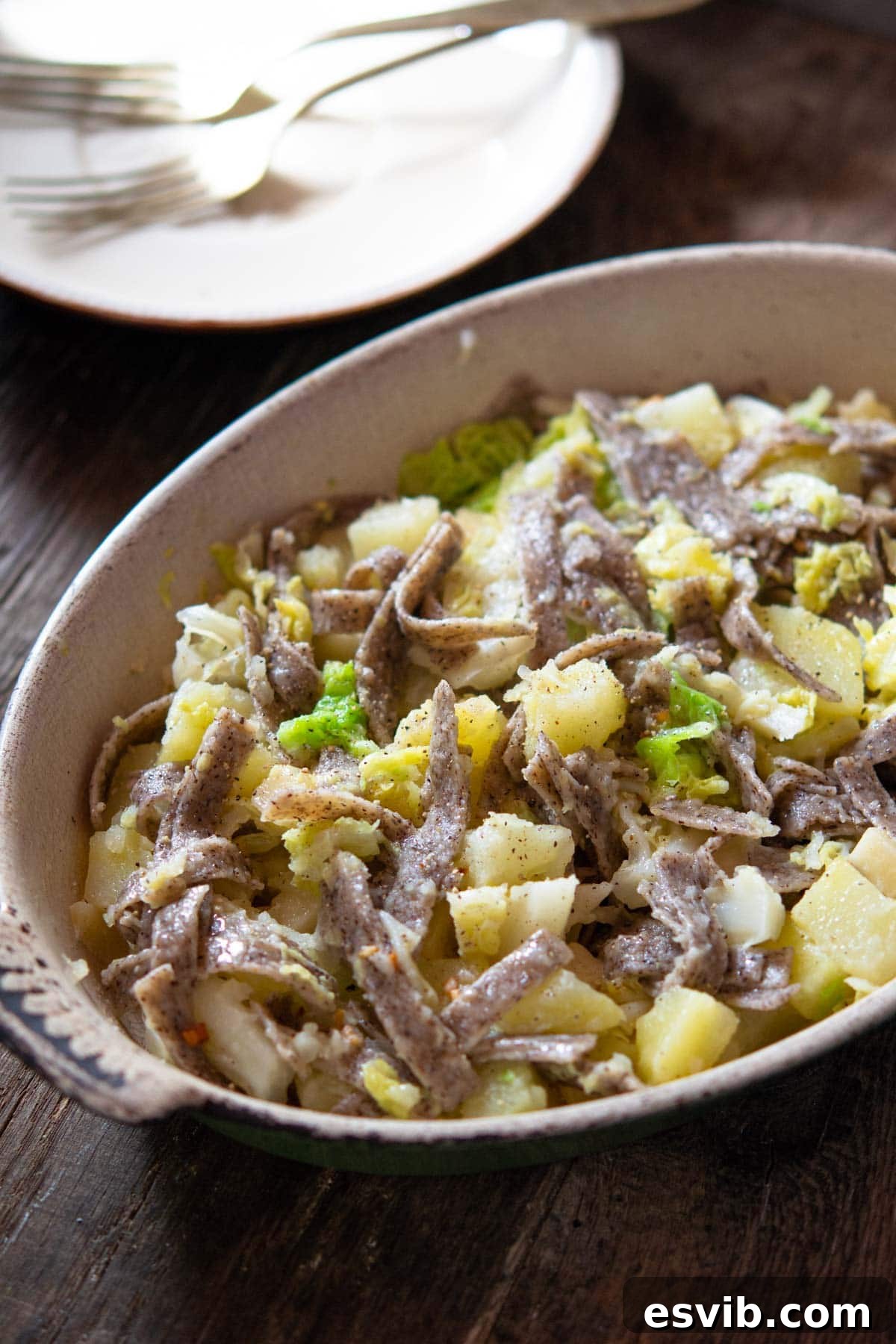
Pizzoccheri alla Valtellina is more than just a pasta dish; it’s a culinary embrace, a warm hug from the majestic valleys of Valtellina in Lombardy, Northern Italy. This robust and comforting meal features unique buckwheat pasta (known as Pizzoccheri) combined with tender cabbage, soft potatoes, and luxurious Fontina cheese, all brought together with a fragrant garlic butter. It’s the ultimate antidote to chilly days, offering deep flavors and satisfying textures in every forkful. Our quick and easy recipe ensures you can bring this authentic taste of Italy to your table, providing perfect comfort for those frosty evenings in under 30 minutes.
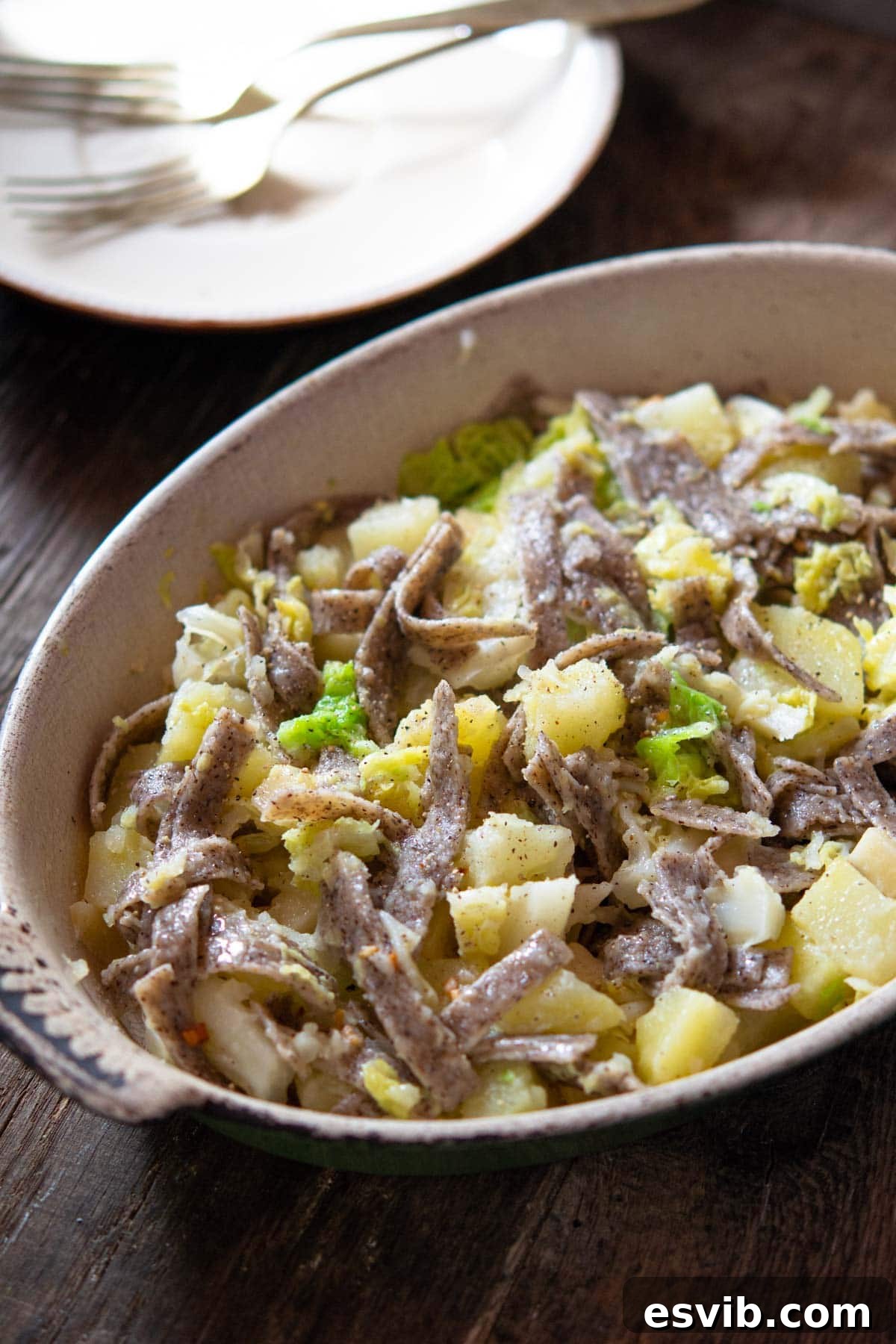
Pizzoccheri alla Valtellina: A Northern Italian Gem
Pizzoccheri, pronounced Pee-zoh-kay-ree, holds a special place in the heart of Northern Italian cuisine, particularly in the mountainous Valtellina valley. It’s a dish we cherish and prepare regularly as the temperatures drop, eagerly anticipating its rich, satisfying flavors. This traditional recipe is so ingrained in the region’s culinary identity that it boasts an official, recorded recipe. This original version, protected by tradition, specifies the use of Valtellina Casera DOP cheese and precise pasta dimensions, highlighting the deep respect for authenticity in Italian cooking.
While the official recipe calls for Valtellina Casera DOP, a local specialty rarely found outside Lombardy, our recipe offers a delicious and accessible alternative using Fontina cheese. Fontina is another popular choice for Pizzoccheri due to its excellent melting properties and rich, nutty flavor, making it a fantastic substitute that’s much easier to source globally. The beauty of this dish lies in its simplicity and efficiency: the buckwheat pasta, cabbage, and potatoes are all cooked together in a single pot, streamlining the process. Once perfectly tender, they are drained and then lovingly tossed with the melted Fontina and an aromatic garlic butter. The combination of pungent garlic butter and creamy, melted cheese creates a flavor profile that is truly beyond delicious – it’s the kind of hearty meal you instinctively crave when the weather turns cold, and the best part is it can be ready to enjoy in approximately 15-20 minutes of active cooking time.
Ready to cook? Dive into the full recipe below, where you’ll find detailed notes on ingredients, step-by-step photos, invaluable cooking tips, exciting variations, and answers to frequently asked questions. For a full printable version of this delightful recipe, simply scroll to the bottom of the page.
Essential Ingredients for Authentic Pizzoccheri
Crafting the perfect Pizzoccheri alla Valtellina begins with selecting the right ingredients. Below, you’ll find a visual guide and crucial tips to help you gather everything needed for this delightful pasta dish. Each component plays a vital role in achieving the rich, earthy flavors and comforting texture that make this recipe so beloved.
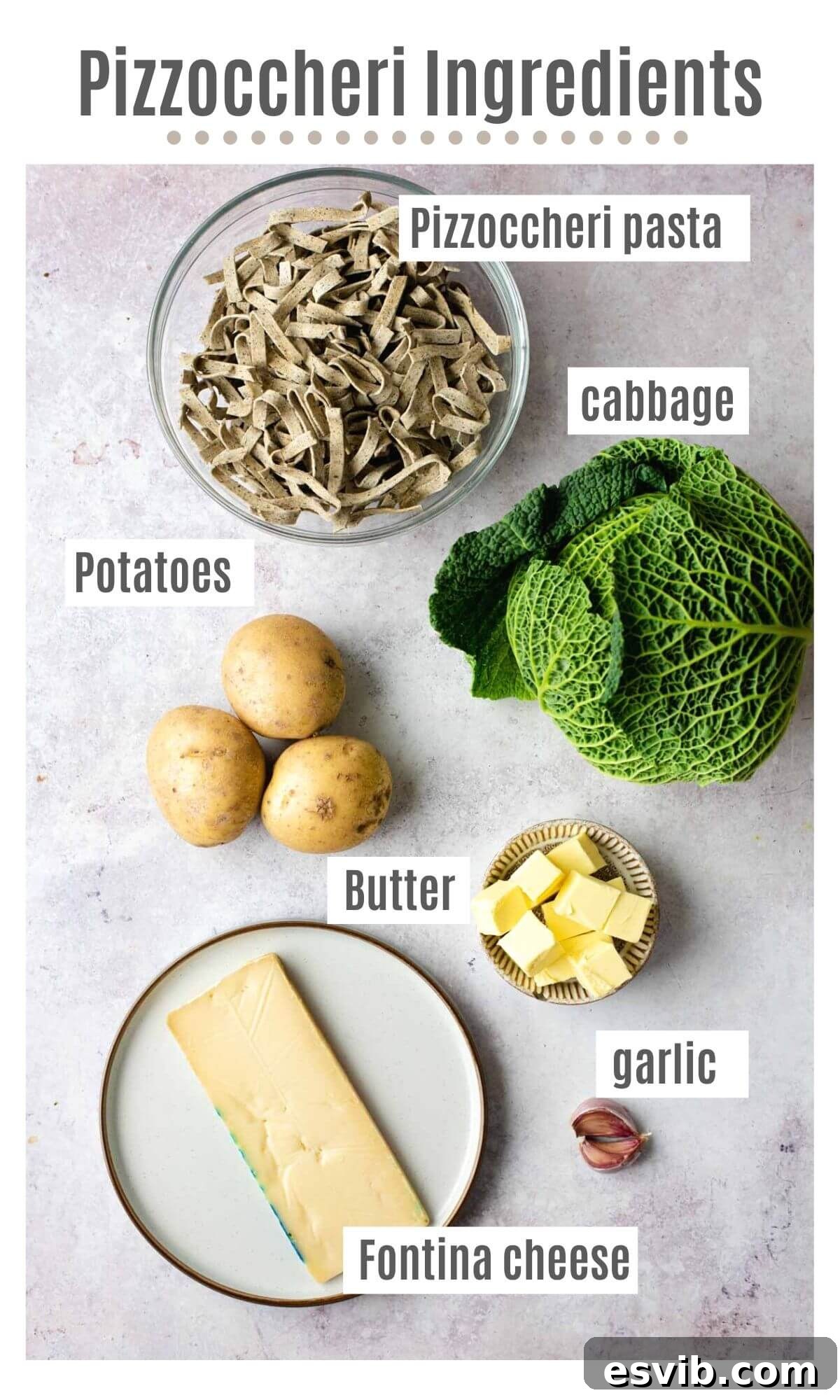
- Pizzoccheri Pasta: This is the star of our dish! Pizzoccheri is a distinctive type of flat, ribbon-like pasta, similar to tagliatelle, traditionally made from a blend of buckwheat flour and wheat flour. The buckwheat gives it a unique nutty flavor and a slightly darker hue. You might find it in well-stocked Italian specialty food stores or available for purchase online. If authentic Pizzoccheri is unavailable, you can substitute it with another shape of buckwheat pasta or even a hearty whole wheat tagliatelle, though the flavor profile will differ slightly.
- Potatoes: Essential for adding a comforting, starchy element that perfectly complements the buckwheat pasta. Choose firm, waxy potatoes that hold their shape well after cooking, such as Yukon Gold or new potatoes. They should be peeled and cut into medium-sized cubes to ensure they cook evenly and are tender when the pasta is ready.
- Cabbage: Savoy cabbage is our preferred choice for its tender leaves and mild, slightly sweet flavor that becomes wonderfully delicate when boiled. Its crinkled texture also helps to catch the garlic butter and cheese. If Savoy cabbage is hard to find, a tender green cabbage or even collard greens can be used, though you might need to adjust cooking times.
- Fontina Cheese: While the traditional choice is Valtellina Casera DOP, Fontina is an excellent and widely available substitute. Fontina cheese, particularly Fontina Val d’Aosta, is known for its creamy texture and superb melting capabilities, creating a luxurious, cohesive sauce when mixed with the hot pasta and vegetables. Its mild, nutty, and slightly earthy flavor pairs beautifully with the buckwheat and garlic. Look for it in most Italian delis or specialty cheese shops. As an alternative, Gruyere cheese also melts well and offers a similar nutty profile.
- Unsalted Butter: The foundation for our aromatic garlic butter. Using unsalted butter allows you to control the overall seasoning of the dish. Its richness is crucial for carrying the garlic flavor and coating the pasta beautifully.
- Fresh Garlic: Absolutely non-negotiable! Fresh garlic is key to infusing the butter with its signature pungent and savory aroma. Avoid pre-minced garlic for the best flavor; fresh cloves will make a significant difference in the final taste of your garlic butter.
- Salt and Pepper: To season generously throughout the cooking process, bringing out the best in all the ingredients.
Crafting Pizzoccheri: Step-by-Step Guide
Making Pizzoccheri alla Valtellina is surprisingly straightforward, relying on simple techniques that yield impressive results. Follow these steps, complete with visual aids, to create this beloved Italian comfort food in your own kitchen.
Essential Preparation Tips for Efficiency
- Begin by bringing a large pot of water to a rolling boil. Remember, pasta loves salt, so add a generous amount to the water – it should taste like the sea!
- While the water heats, prepare your vegetables: peel and cut the potatoes into uniform, medium-sized cubes (about 1-inch pieces) to ensure even cooking. Roughly chop the Savoy cabbage into manageable pieces.
- Next, prepare your cheese: cut the Fontina (or Gruyere) into small, ½-inch cubes. Smaller cubes will melt more quickly and evenly when tossed with the hot pasta.
- Finally, finely chop or mince your fresh garlic. The finer the chop, the more flavor it will release into the butter.
With all your ingredients prepped and ready, the cooking process is incredibly fast and efficient:
Step 1: Boil the Vegetables and Pasta. Once your heavily salted water is boiling vigorously, add the cubed potatoes. Allow them to cook for 2-3 minutes on their own to give them a head start, as they take slightly longer to soften than the cabbage and pasta. After 2-3 minutes, add the roughly chopped cabbage and the Pizzoccheri pasta to the same pot. Continue to boil all three together for approximately 10 minutes, or until the pasta is al dente and the vegetables are tender but not mushy. It’s crucial to taste test to ensure everything is cooked to your preference (refer to photos 1 & 2 below for visual guidance).
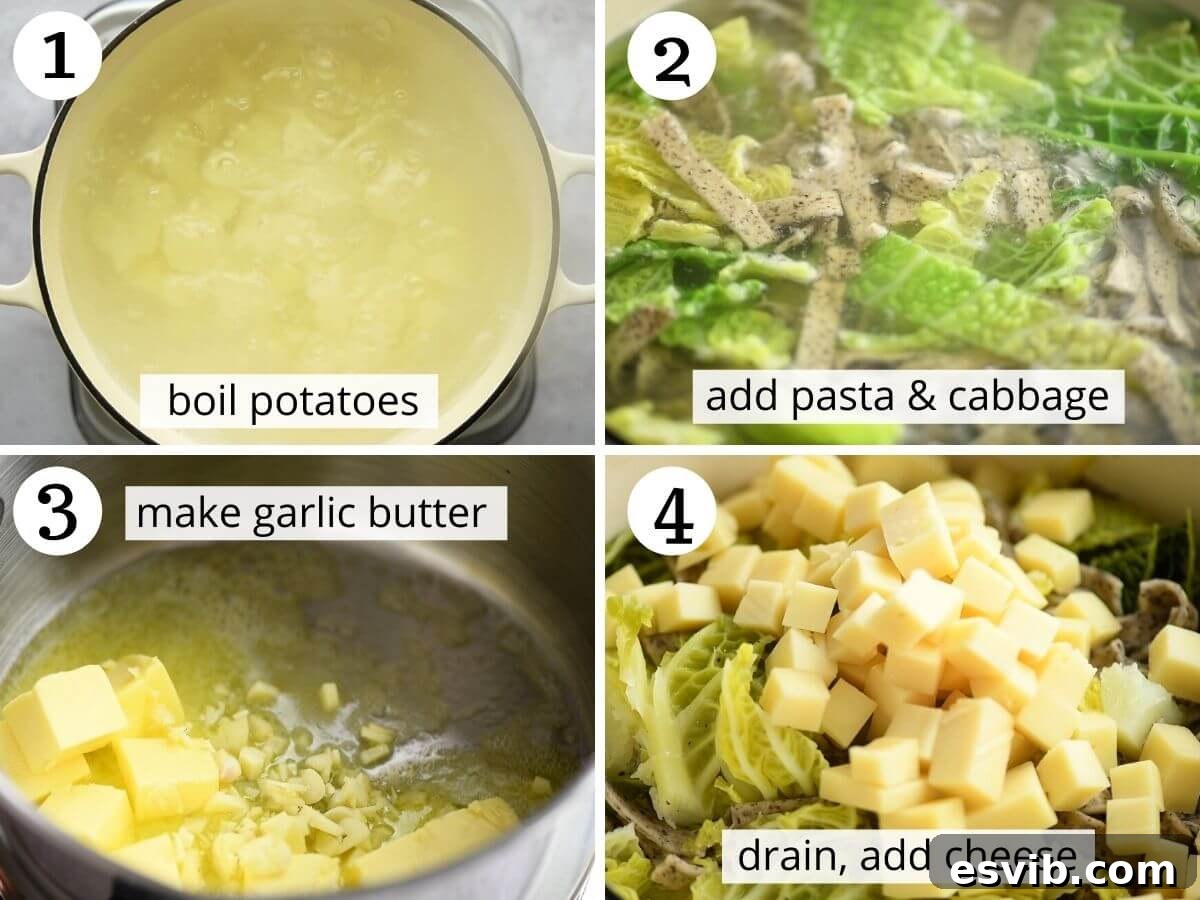
Step 2: Prepare the Aromatic Garlic Butter. While the pasta and vegetables are nearing completion, melt the unsalted butter in a small pan over medium-low heat. Add the finely chopped garlic and sauté it gently for just a minute or two, until it becomes wonderfully fragrant. Be careful not to let the garlic brown, as burnt garlic can taste bitter. The goal is to infuse the butter with its delightful aroma, not to crisp the garlic (see photo 3). Once fragrant, remove the pan from the heat and set aside.
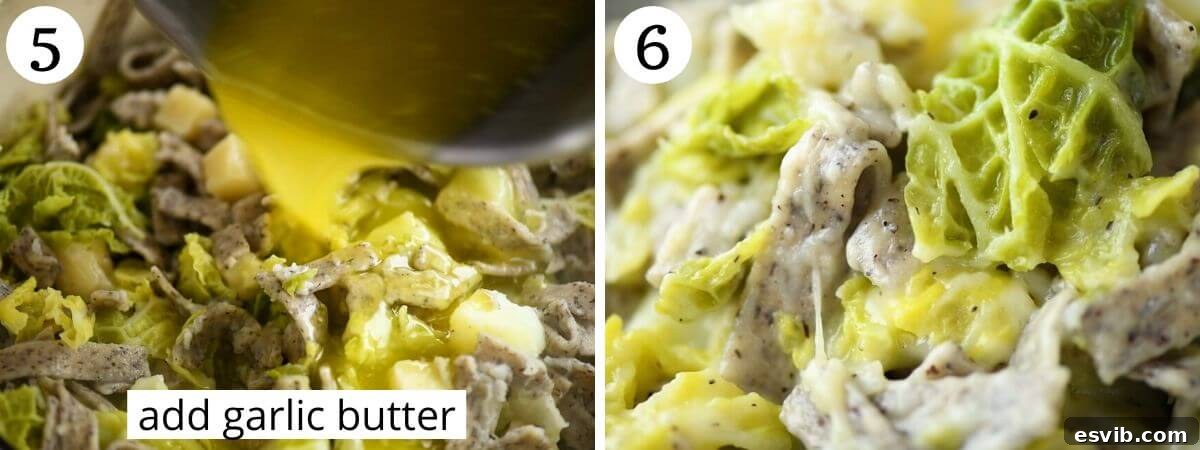
Step 3: Combine and Serve. As soon as the pasta and vegetables are perfectly cooked, promptly drain them well. Immediately return the hot pasta and vegetables to the empty pot. Add the cubed Fontina cheese and the fragrant melted garlic butter directly into the pot. Stir everything together vigorously and quickly until the cheese completely melts, creating a creamy, glossy coating that beautifully adheres to the pasta and vegetables. The residual heat from the pasta and pot will ensure the cheese melts into a luxurious sauce. Season with an extra pinch of salt and freshly ground black pepper to taste, and serve immediately to enjoy its maximum deliciousness (photos 4-6 demonstrate the final mixing steps).
Expert Tips & Frequently Asked Questions for Pizzoccheri
To ensure your Pizzoccheri alla Valtellina is nothing short of spectacular, keep these key tips in mind and get answers to common questions about this delightful Italian dish.
- Act Quickly for Optimal Cheese Melt: The moment you drain the Pizzoccheri pasta and vegetables, return them to the hot pot without delay. Immediately add the cubed cheese and garlic butter. The residual heat is crucial for the cheese to melt quickly and evenly, creating that signature creamy texture. Lingering too long can result in less-than-perfect melted cheese.
- Serve Immediately for Best Experience: This recipe truly shines when served right after it’s made. The creamy texture of the melted cheese is at its peak when hot. Therefore, we highly recommend enjoying Pizzoccheri alla Valtellina fresh from the pot and do not advise preparing it in advance or storing leftovers for optimal taste and texture.
- Enhance with Fresh Herbs: A sprinkle of fresh sage or parsley at the end can elevate the flavors. Sage, in particular, pairs wonderfully with butter and buckwheat.
- A Touch of Spice: For those who enjoy a little heat, a pinch of red pepper flakes sautéed with the garlic can add a pleasant kick.
- Pairing Suggestions: Pizzoccheri is a hearty dish on its own. Serve it with a simple green salad dressed with a light vinaigrette to cut through the richness. A glass of crisp white wine from the Valtellina region, if you can find one, would be the perfect accompaniment.
Frequently Asked Questions
Pizzoccheri hails from Valtellina, a picturesque mountain valley nestled within the Lombardy region of Northern Italy. This area is celebrated not only for its stunning alpine landscapes and skiing opportunities but also for its vineyards. This robust and rich dish perfectly embodies the spirit of the region, providing much-needed warmth and sustenance during the cold, snowy Italian winters. It’s a testament to the ingenious ways mountain communities created nourishing meals from readily available local ingredients.
If you find yourself unable to locate Fontina cheese, Gruyere is an excellent and highly recommended substitute. It shares a similar nutty flavor profile and boasts fantastic melting properties, ensuring your Pizzoccheri maintains its creamy, luxurious texture. Other semi-hard, meltable cheeses like Emmental or even a good quality sharp cheddar could work, though they might alter the traditional flavor slightly.
Due to the delicate nature of the buckwheat pasta and the creamy, melted cheese component, we do not recommend freezing Pizzoccheri alla Valtellina. The texture of the pasta and cheese can change significantly upon thawing and reheating, often becoming mushy or grainy. This dish is truly at its best when enjoyed freshly prepared.
Pizzoccheri is a unique type of short, flat, ribbon-like pasta, akin to a narrow tagliatelle, indigenous to the Valtellina valley. Its distinctiveness comes from being made primarily with buckwheat flour (farina di grano saraceno), often mixed with a smaller proportion of wheat flour. This gives Pizzoccheri a darker color, a firm, chewy texture, and a characteristic earthy, nutty flavor that sets it apart from traditional wheat-based pastas. It’s perfectly suited for hearty, rustic sauces and the robust vegetables found in this recipe.
Explore More Authentic Italian Recipes
If you’ve enjoyed the rustic charm and comforting flavors of Pizzoccheri alla Valtellina, we invite you to delve deeper into the rich tapestry of Italian cuisine with these other authentic and equally delicious recipes from our kitchen. Expand your culinary horizons and bring more of Italy’s regional specialties to your home.
- Trofie al Pesto Genovese with Potatoes and Green Beans: A vibrant Ligurian classic featuring twisted pasta, fresh basil pesto, and the surprising addition of potatoes and green beans for added texture and heartiness.
- Easy Zucchini Pesto Pasta (Fresh and Delicious): A light yet flavorful pasta dish showcasing a homemade pesto made with fresh zucchini, perfect for a lighter summer meal.
- Hearty Sausage and Cavolo Nero Pasta: A robust Tuscan-inspired pasta dish combining savory Italian sausage with the earthy bitterness of cavolo nero (black kale), perfect for a satisfying dinner.
- Creamy Pasta al Limone (Authentic Lemon Pasta): A bright and zesty Roman pasta dish featuring a velvety lemon-infused cream sauce that is both elegant and simple to prepare.
- Pici, Cacio e Pepe (Authentic Roman Recipe): Master the art of this iconic Roman pasta, a deceptively simple dish of Pecorino Romano cheese and freshly ground black pepper, traditionally served with thick pici pasta.
This comprehensive guide to Pizzoccheri alla Valtellina was originally published on September 28th, 2017, and has since been extensively updated and refined to enhance user experience, provide more detailed information, and ensure the most accurate and enjoyable recipe for our readers.
We truly hope you enjoy preparing and savoring this authentic Pizzoccheri alla Valtellina recipe. If you’ve tried this or any other recipe from our blog, please don’t hesitate to share your experience! We love hearing your thoughts, so kindly take a moment to rate the recipe and leave your comments below. Your feedback means the world to us! To stay connected and discover more of our delicious food adventures, be sure to FOLLOW US on FACEBOOK, INSTAGRAM, and PINTEREST. You can also sign up for our exclusive NEWSLETTER to receive new recipes and culinary insights directly in your inbox every week.
Step By Step Photos Above
Most of our recipes come with step-by-step photos, helpful tips and tricks to make it perfectly the first time!
Pizzoccheri Pasta with Cabbage, Potatoes and Fontina Cheese
By Emily
10
20
30
4 servings
Print Recipe
Ingredients
- 10.5 oz Pizzoccheri pasta, (300g)
- 3 medium potatoes, (about 430g, peeled and cubed)
- 4 cups cabbage, roughly chopped (300g/10 oz, Savoy preferred)
- 1 cup Fontina cheese, cut into small cubes (150g, Gruyere can also be used)
- 9 tablespoons unsalted butter, (125g)
- 2 cloves fresh garlic, (finely chopped or minced)
- Salt and freshly ground black pepper, to season
Instructions
Preparation
-
Bring a large pot of water to a boil and add a generous amount of salt. Peel and chop the potatoes into medium-sized cubes. Roughly chop the cabbage. Cut the Fontina cheese into small cubes and finely chop or mince the fresh garlic.
Cooking Pizzoccheri
-
Add the cubed potatoes to the vigorously boiling, salted water and boil for 2-3 minutes. Then, add the chopped cabbage and the Pizzoccheri pasta to the same pot. Continue to boil for another 10 minutes, or until the pasta is al dente and the vegetables are tender.
-
While the pasta and vegetables are cooking, prepare the garlic butter. Melt the unsalted butter in a small pan over medium-low heat. Add the finely chopped garlic and sauté gently for 1-2 minutes until fragrant, being careful not to let it brown. Remove from heat and set aside.
-
Once cooked, immediately drain the pasta and vegetables thoroughly. Return them to the hot, empty pot. Add the cubed Fontina cheese and the fragrant melted garlic butter. Stir everything together quickly and vigorously until the cheese has completely melted, beautifully coating the pasta and vegetables. Season with an extra pinch of salt and freshly ground black pepper to taste, then serve piping hot.
Notes
- Add the cheese and butter straight away: To achieve the best melting consistency, it’s crucial to add the Fontina cheese and garlic butter to the hot Pizzoccheri pasta and vegetables immediately after draining them. The residual heat from the ingredients and the pot will ensure the cheese melts smoothly and coats everything perfectly.
- Best served immediately: This dish is truly designed to be enjoyed fresh. The creamy texture of the melted cheese is at its peak when hot. Therefore, we do not recommend preparing it in advance or storing leftovers, as the quality and texture can decline upon reheating.
- Cheese Substitutions: If Fontina is unavailable, Gruyere is a fantastic alternative due to its similar nutty flavor and excellent melting properties.
Helpful Information for All Our Recipes
- We always use high-quality extra virgin olive oil in all our recipes unless specified otherwise for specific culinary reasons.
- For canned or jarred tomatoes, we consistently choose premium brands like Cirio or Mutti to ensure the best possible flavor and results in our Italian dishes.
- Unless otherwise stated, all vegetables mentioned in our recipes are assumed to be medium-sized.
- All recipes featured on our blog are meticulously tested and developed using a fan (convection) oven, so please adjust baking times if using a conventional oven.
- Learn more about how our nutrition information is calculated for your peace of mind.
- Discover our essential Italian Pantry Staples to stock your kitchen for authentic cooking.
- Explore our recommended Essential Kitchen Tools for Italian Cooking to equip yourself like a pro.
Nutrition Information (per serving)
Carbohydrates: 44g |
Protein: 16g |
Fat: 37g |
Saturated Fat: 23g |
Polyunsaturated Fat: 2g |
Monounsaturated Fat: 10g |
Trans Fat: 1g |
Cholesterol: 106mg |
Sodium: 511mg |
Potassium: 641mg |
Fiber: 8g |
Sugar: 4g |
Vitamin A: 1162IU |
Vitamin C: 48mg |
Calcium: 244mg |
Iron: 2mg
Nutrition information is automatically calculated and should only be used as an approximation. For precise dietary needs, please consult a qualified professional.