
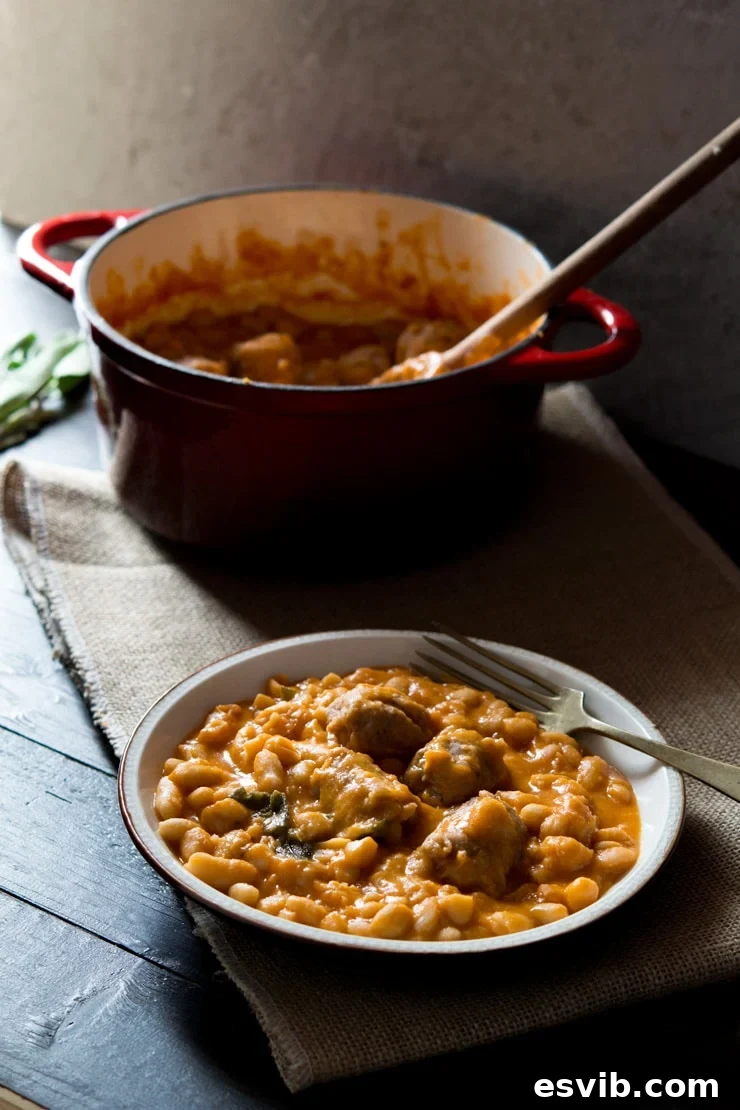
Indulge in the rustic charm of Italy with this unbelievably quick and easy Tuscan Bean Stew. Featuring robust Italian sausages, creamy cannellini beans, rich tomatoes, aromatic sage, and pungent garlic, this hearty and filling dish is the ultimate comfort food, guaranteed to warm you from the inside out on any chilly evening.
Prepare to be amazed by the deceptive simplicity of this bean stew. While it tastes like a dish that has simmered for hours, our secret lies in utilizing convenient pre-cooked cannellini beans, the kind readily available in cans. This smart shortcut means significantly less “stewing” time for you and more time enjoying a truly delicious meal. Don’t let the swift preparation time mislead you; this recipe is jam-packed with deep, savory flavors, making it a beloved staple in our collection of comforting winter recipes. It’s the perfect solution when you crave something satisfying and authentic without spending an entire afternoon in the kitchen.
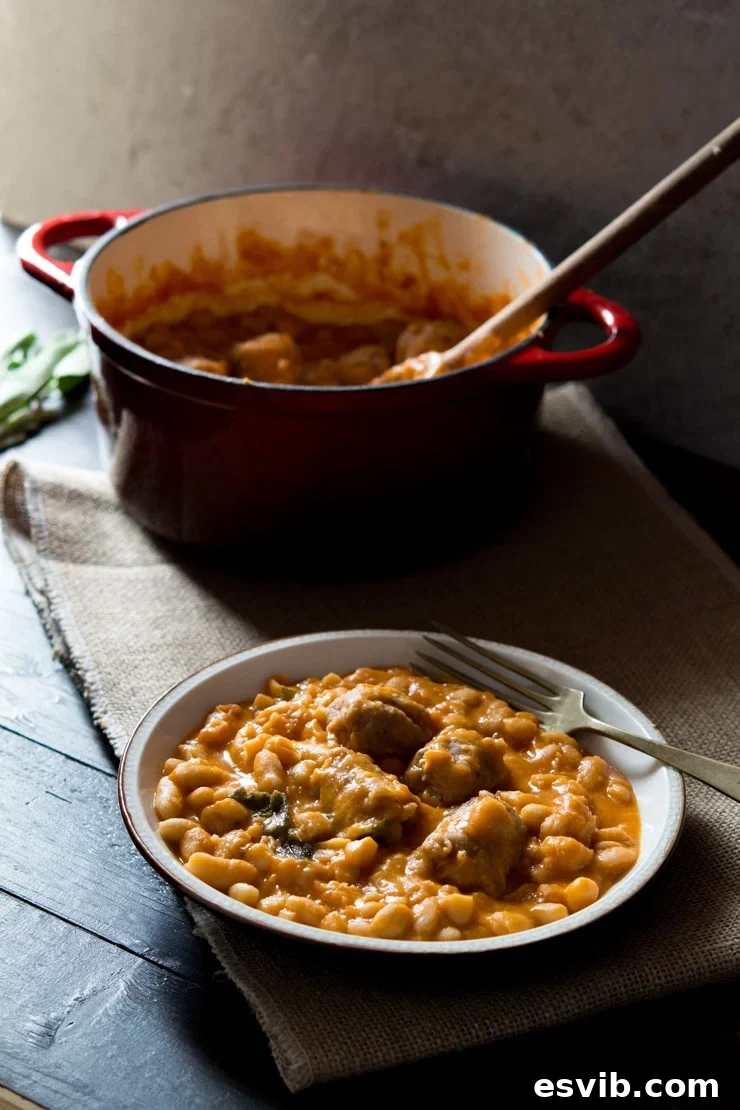
Hearty Tuscan Bean Stew with Italian Sausages: An Effortless Comfort Meal
Welcome to a taste of Tuscany, delivered straight to your kitchen with minimal effort but maximum flavor. This Tuscan Bean Stew, inspired by the traditional “Fagioli all’Uccelletto” but with a delicious savory twist of Italian sausages, embodies the rustic elegance of Italian cooking. It’s a dish that celebrates simple, high-quality ingredients, transforming them into a deeply satisfying and nourishing meal that’s perfect for any occasion. Whether you’re a seasoned chef or just starting your culinary journey, you’ll find this Italian sausage and cannellini bean stew incredibly approachable and immensely rewarding.
Why This Tuscan Bean Stew Will Become Your New Favorite
There’s a reason why this Tuscan Bean Stew with Italian Sausages frequently makes an appearance on dinner tables, especially when comfort and warmth are desired. It’s more than just a meal; it’s an experience of rustic Italian flavor and cozy satisfaction.
- Effortlessly Delicious: Utilizing canned cannellini beans significantly cuts down on active cooking time without compromising an ounce of flavor. You get all the richness and depth of a slow-cooked stew in less than an hour, making it an ideal weeknight dinner solution.
- Hearty & Satisfying: The robust combination of savory Italian sausages and fiber-packed beans makes this stew incredibly filling and satisfying. It’s the perfect dish to combat hunger and provide sustained energy on a chilly evening.
- Authentic Tuscan Flavors: The simple yet powerful blend of fragrant sage, pungent garlic, ripe tomatoes, and high-quality Italian sausages creates a truly authentic Tuscan taste profile. Each spoonful will transport your senses straight to the sun-drenched Italian countryside.
- Simple, Accessible Ingredients: You won’t need a pantry full of exotic or hard-to-find items. This recipe shines by relying on just a handful of readily available, affordable ingredients, proving that extraordinary flavor doesn’t require extravagance.
- Remarkably Versatile: While perfect on its own, this stew also pairs beautifully with a variety of sides, from crusty bread to a crisp salad, making it a flexible and welcome addition to your regular meal rotation. It’s a dish that truly pleases everyone.
The Heart of Tuscan Cuisine: Ingredient Spotlight
The undeniable secret to any truly great Italian dish lies in the meticulous selection and quality of its ingredients. For this Tuscan Bean Stew, a few key components are absolutely crucial to achieving that authentic, heartwarming flavor.
Choosing the Best Italian Sausages
The Italian sausages are, without a doubt, the star of this comforting stew, lending their savory depth and aromatic spices to every single bite. It is paramount to prioritize good quality Italian sausages, ideally those boasting classic flavor profiles like fragrant fennel seeds, a subtle hint of garlic, and perhaps a touch of red wine or rosemary. These premium sausages are often found at local specialty butchers or in the gourmet sections of well-stocked supermarkets. Remember, the higher the quality of your sausage, the richer and more nuanced your stew will become. If authentic Italian sausages prove difficult to source, you can opt for a high-quality plain pork sausage and enhance it by mixing in a pinch of dried fennel or Italian seasoning to closely replicate that traditional taste. Crucially, removing the skins from the sausages allows the seasoned meat to effortlessly break apart and meld beautifully with the creamy cannellini beans and savory tomato sauce, creating a wonderfully cohesive and delightful texture throughout the stew.
The Creaminess of Cannellini Beans
Cannellini beans, with their distinctively creamy texture and mild, slightly nutty flavor, are the traditional and perfect choice for this rustic Tuscan delicacy. The genius of this recipe lies in using canned, pre-cooked beans, a fantastic shortcut that means you can have this comforting meal on the table in record time without any compromise on taste or quality. A vital tip: do not discard all the liquid from the can! Reserving and adding a few tablespoons of this starchy liquid will naturally help to thicken the stew, imparting extra body and carrying additional flavor. If cannellini beans are unavailable, alternatives such as great northern beans or even borlotti beans can serve as excellent substitutes, offering a similar desirable creaminess and an impressive ability to absorb the rich flavors of the sauce.
Essential Aromatics and Liquids for Depth
- Fresh Sage Leaves: Sage is the quintessential herb of Tuscan cooking, and its warm, slightly peppery notes are absolutely indispensable here. Using fresh leaves will provide the most vibrant and authentic aroma, elevating the entire dish.
- Garlic: Whole, peeled garlic cloves are gently fried to carefully infuse the olive oil with a subtle, sweet garlic essence. This method ensures the garlic’s flavor is present without becoming overpowering, and the cloves are removed before serving.
- Passata (Pureed Tomatoes): This smooth, strained tomato product provides a vibrant, consistent, and rich tomato base for the stew. If passata isn’t available, high-quality crushed tomatoes can be used as a suitable alternative, though the final texture of the stew will be slightly chunkier.
- Extra Virgin Olive Oil: As with all authentic Italian cooking, a good quality extra virgin olive oil is not just a cooking fat but a key flavor component. It’s essential for sautéing the aromatics and contributes a rich, fruity undertone to the entire dish.
- Salt and Freshly Ground Black Pepper: These simple seasonings are all that’s truly needed to enhance and harmonize the natural, delicious flavors of the core ingredients. Always remember to taste as you go and adjust the seasoning precisely to your personal preference.
As you can clearly observe, the true elegance and depth of this hearty Italian bean stew lie in its incredibly simple yet powerful ingredient list. Each carefully selected component plays a crucial and synergistic role in building the stew’s deep, satisfying, and unforgettable flavor profile, making every spoonful a delight.
Step-by-Step Guide to Your Perfect Tuscan Bean Stew
Crafting this delightful and rustic Tuscan Bean Stew is incredibly straightforward, even for novice cooks. Follow these clear, detailed instructions carefully, and you’ll have a hearty, flavorful, and wonderfully comforting meal ready to impress everyone at your table.
Preparation and Sautéing the Aromatics
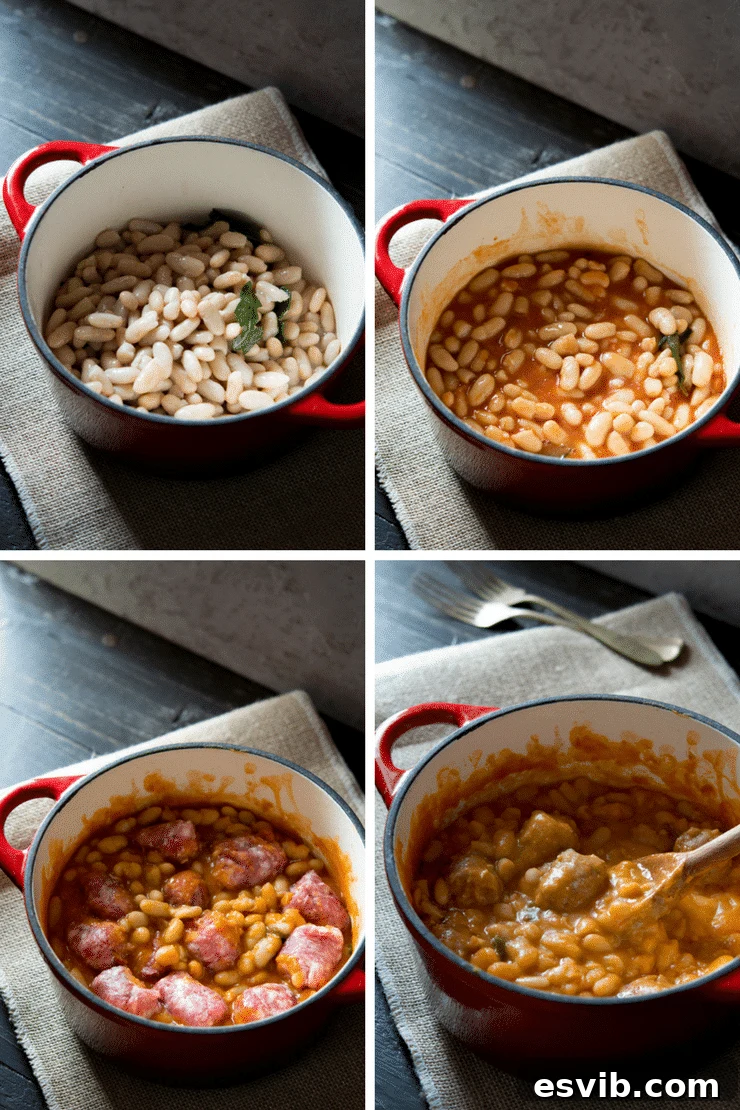
- Begin by adding approximately 1/2 tablespoon of a good quality extra virgin olive oil to a large, heavy-bottomed pot or a sturdy Dutch oven. Place the pot over a medium-low heat setting.
- Carefully peel two whole garlic cloves, ensuring they remain intact (do not mince them, as they will infuse the oil and be removed later). Add these whole cloves along with five fresh sage leaves to the warmed pot.
- Gently fry the sage and garlic for a few minutes. Your goal is for the garlic to just begin to take on a light golden color and for the sage to become wonderfully fragrant, truly releasing its beautiful, earthy aroma into the olive oil. Exercise caution not to burn them, as scorched aromatics can impart an unpleasant bitter taste to your stew.
Building the Rich Flavor Base
- Once your aromatics are beautifully fragrant and the garlic displays a subtle golden hue, add the canned cannellini beans to the pot. This is a crucial step: make sure to include about 6 tablespoons of the starchy cooking liquid directly from the bean can. This liquid will significantly help in creating a richer, slightly thicker, and more flavorful sauce.
- Next, pour in the tomato passata (pureed tomatoes). Stir all the ingredients gently but thoroughly to combine everything, ensuring the beans are well coated in the tomato base.
- Allow the beans and tomato mixture to simmer gently for approximately 10 minutes. This initial simmering period is essential, as it allows all the delicious flavors to meld, deepen, and truly harmonize, establishing a robust and delicious base for the stew.
Adding the Sausages and Finishing the Stew
- While your bean and tomato base is gently simmering, take this opportunity to prepare your Italian sausages. Carefully remove the skins from all four sausages. This step is important for achieving the desired rustic, broken-up sausage texture that integrates perfectly into the stew.
- Cut each skinned sausage into rough, bite-sized chunks. Aim for about three substantial pieces per sausage, but don’t obsess over perfect uniformity; the charming rustic feel is an integral part of this dish’s appeal.
- Once prepared, add the sausage chunks directly to the simmering bean stew.
- Season the stew generously with both salt and freshly ground black pepper. Remember the golden rule of cooking: taste as you go and adjust the seasoning precisely to your personal preference for a perfectly balanced flavor.
- Continue to simmer the bean stew gently for an additional 15 to 20 minutes, or until the sausages are thoroughly cooked through and no longer pink. Stir the stew occasionally, being particularly careful not to mash the delicate cannellini beans. A gentle stir every few minutes is perfectly sufficient to prevent sticking.
- Just before you’re ready to serve, carefully locate and remove the whole garlic cloves from the pot. They have successfully served their purpose of infusing exquisite flavor and can now be thoughtfully discarded.
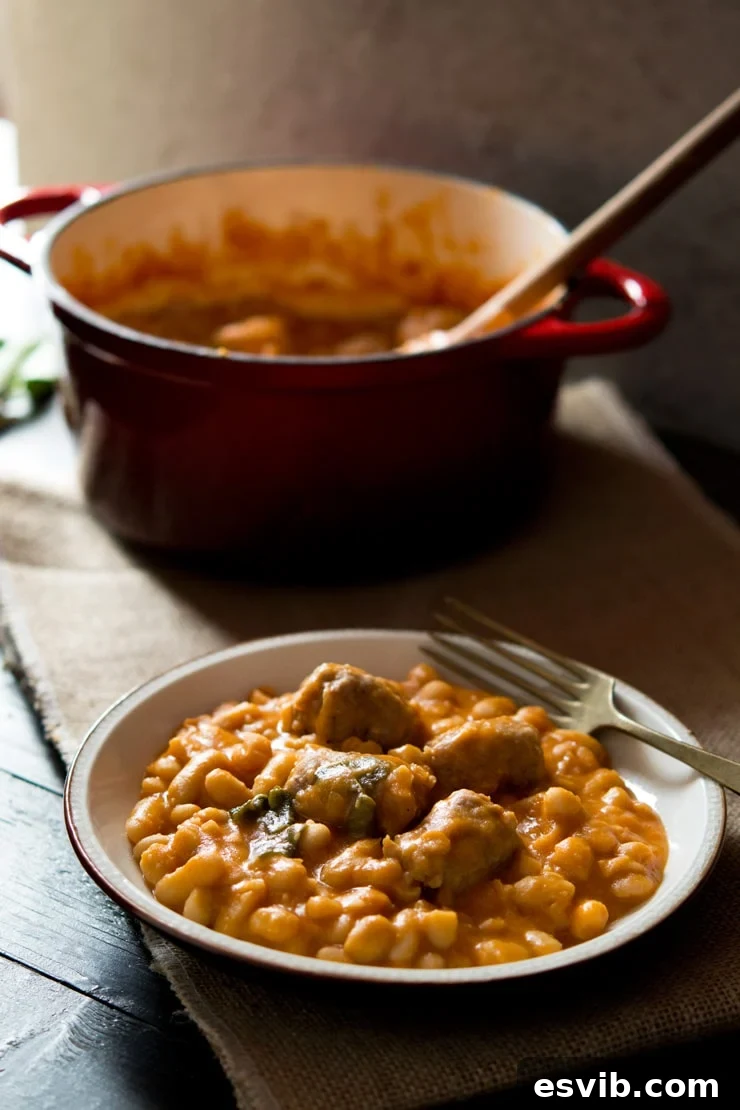
Serving Suggestions & Perfect Pairings for Your Tuscan Bean Stew
This Tuscan Bean Stew with Italian Sausages is a wonderfully complete and satisfying meal in itself, but it truly excels and becomes an even more memorable dining experience when served alongside a few simple, well-chosen accompaniments. This is the epitome of proper comfort food, designed not just to satiate a hungry soul but to provide a moment of pure, rustic culinary bliss.
- Abundant Crusty Bread: An absolute, non-negotiable must-have! Serve with generous amounts of crusty bread, such as a hearty ciabatta, a tangy sourdough, or a good rustic Italian loaf. It is utterly perfect for soaking up every last drop of the rich, savory, and deeply flavorful broth. For an extra touch, you might even lightly toast or grill slices of bread and rub them with a raw garlic clove before serving for an additional aromatic kick.
- Fresh Green Salad: A simple, lightly dressed green salad provides a crisp, refreshing, and welcome contrast to the comforting richness of the stew. A classic vinaigrette, crafted with good quality extra virgin olive oil and a touch of tangy red wine vinegar, would be an ideal pairing, balancing the flavors beautifully.
- Grated Parmesan or Pecorino: A generous sprinkle of freshly grated Parmigiano Reggiano or Pecorino Romano cheese adds another glorious layer of salty, umami flavor, enhancing the overall depth and complexity of the dish.
- A Drizzle of Extra Virgin Olive Oil: A final, delicate drizzle of high-quality extra virgin olive oil just before serving can magically elevate the existing flavors and add a beautiful, glossy sheen to your masterpiece.
- A Glass of Complementary Wine: To truly complete the Tuscan experience, pair this rustic stew with a medium-bodied red wine. A classic Chianti or another robust Tuscan red would perfectly complement its robust and earthy flavors, enhancing your dining pleasure.
This Italian bean and sausage stew is incredibly satisfying and profoundly comforting, especially when you find yourself in need of something hearty and nourishing but are either short on time or already feeling really hungry. It’s undeniably the kind of dish that feels like a warm, loving hug on a plate, providing both sustenance and soul-warming contentment.
Tips for Success & Delightful Variations
While making this Tuscan bean stew is inherently simple, a few expert tips can help ensure perfect results every single time. Furthermore, exploring some delightful variations can keep things exciting and allow you to customize this classic dish to your taste.
Achieving the Best Flavor
- Don’t Skimp on Sausage Quality: As emphasized earlier, the type and quality of Italian sausage you choose will make a significant difference in the final flavor of your stew. Invest in good quality, well-seasoned links for the most authentic and delicious taste.
- Fresh Sage is Key: While dried sage can be used in a pinch, fresh sage leaves provide a much brighter, more vibrant, and complex aromatic profile that truly defines the Tuscan character of this dish.
- Taste and Adjust: Always taste your stew before serving. You might find it needs a little more salt, freshly ground black pepper, or even a tiny splash of red wine vinegar or lemon juice to brighten and balance the flavors.
- Simmer, Don’t Boil: A gentle, steady simmer allows the flavors to meld beautifully and develop slowly without overcooking the delicate beans or breaking down the ingredients too much, maintaining a pleasant texture.
Creative Variations to Explore
- Boost with More Vegetables: Enhance the nutritional value and texture of your stew by stirring in some hardy greens like fresh spinach or chopped kale during the last 5-10 minutes of cooking, just until they wilt. Diced carrots, celery, or zucchini could also be added with the beans for a more vegetable-rich and robust stew.
- A Touch of Spice: For those who enjoy a little heat, a pinch of red pepper flakes added along with the garlic and sage will provide a subtle yet invigorating kick that complements the savory notes beautifully.
- Herbal Twists: While sage is traditional, fresh rosemary or thyme sprigs can also be added during the simmering stage for alternative aromatic notes, offering a slightly different but equally delicious character.
- White Wine Boost: For an extra layer of complexity and depth, deglaze the pot with a splash of dry white wine (like Pinot Grigio or Sauvignon Blanc) after sautéing the aromatics and before adding the beans. Allow it to reduce for a minute or two to concentrate the flavors.
- Naturally Creamier Texture: For an even richer and thicker stew, you can easily mash about a quarter of the cannellini beans against the side of the pot during the simmering process. This method naturally thickens the sauce without the need for any flour or additional thickeners.
Storage and Make-Ahead Tips for Convenience
- Refrigeration: Leftover Tuscan Bean Stew can be conveniently stored in an airtight container in the refrigerator for up to 3-4 days, making it perfect for meal prepping.
- Freezing: This hearty stew freezes beautifully, retaining its delicious flavor and texture. Allow it to cool completely to room temperature, then transfer it to freezer-safe containers or heavy-duty freezer bags. It can be safely frozen for up to 3 months. When ready to enjoy, thaw it overnight in the refrigerator and reheat gently on the stovetop, adding a splash of broth or water if needed to adjust the consistency.
- Make Ahead: The flavors of this stew often deepen and improve overnight, making it an excellent candidate for meal prep. Consider cooking it a day in advance for an even more harmonious and delicious experience that requires minimal effort on serving day.
Frequently Asked Questions About Tuscan Bean Stew with Sausages
- Can I use dried cannellini beans instead of canned?
- Yes, absolutely! If you prefer using dried beans, you will need to soak them overnight and then cook them separately until they are tender before adding them to the stew as directed. Be aware that this will significantly increase the overall preparation and cooking time, but it offers a fresh, homemade bean texture for those who prefer it.
- What if I can’t find authentic Italian sausages?
- If authentic Italian sausages are unavailable in your local grocery store, you can successfully substitute them with a high-quality plain pork sausage. To best mimic the Italian flavor profile, we recommend mixing in about a teaspoon of dried fennel seeds, a pinch of red pepper flakes (for a subtle kick), and a dash of dried oregano with the sausage meat before adding it to the stew.
- Is this Tuscan Bean Stew spicy?
- Typically, traditional Tuscan bean stew is not inherently spicy. However, if your chosen Italian sausages already contain red pepper flakes, or if you decide to add them yourself as a variation, it will naturally have a pleasant and subtle heat. Always adjust the level of spice according to your personal preference.
- Can I make this stew vegetarian?
- Yes, it’s very easy to adapt this recipe to be vegetarian-friendly! Simply omit the Italian sausages entirely. You can enhance the stew by adding more vegetables such as sliced mushrooms, diced bell peppers, or additional hardy greens. Alternatively, you could use a high-quality vegetarian sausage alternative. If adding extra liquid, ensure you use vegetable broth instead of chicken broth.
- How thick should the stew be?
- The stew should have a hearty and robust consistency, leaning towards being somewhat thick, but it should not be overly dense or pasty. It should ideally have enough flavorful liquid to be easily spoonable and, crucially, to be beautifully absorbed by crusty bread. If you find your stew becomes too thick during cooking or reheating, simply add a small amount of water or vegetable broth until it reaches your desired, perfect consistency.
More Comfort Food Recipes to Warm Your Soul
If you thoroughly enjoyed this rustic and comforting Tuscan Bean Stew with Italian Sausages, you’ll undoubtedly love exploring more of our cozy Italian-inspired recipes. These carefully curated dishes are absolutely perfect for those evenings when you crave something truly satisfying, deeply flavorful, and wonderfully delicious:
- Eggplant (Aubergine) Parmigiana: A quintessential Italian baked dish, artfully layered with tender slices of eggplant, rich and tangy tomato sauce, and generous amounts of melted cheese.
- Comforting Zucchini Potato Soup: A deceptively simple yet incredibly flavorful soup that is perfect for a light but deeply warming and nourishing meal.
- Apple Olive Oil Cake: A delightful and moist dessert that is wonderfully fragrant, offering a uniquely charming and delicious take on a classic cake.
- Pappa al Pomodoro – Tomato Bread Soup: A time-honored traditional Tuscan peasant soup, lovingly made with ripe, juicy tomatoes, stale bread, aromatic garlic, and fresh basil.
We genuinely love hearing from you, our wonderful readers! If you’ve tried this delightful Tuscan Bean Stew with Italian Sausages or any other enticing recipe from our blog, please don’t hesitate for a moment to leave a comment below and share your experience. Your valuable feedback is incredibly important to us and helps our culinary community grow! You can also connect with us and discover even more delicious food, behind-the-scenes glimpses, and culinary inspiration by following us on
FACEBOOK,
TWITTER,
INSTAGRAM, and
PINTEREST.
Step By Step Photos Above
Our recipes come with helpful tips and tricks to make it perfectly the first time!
Tuscan Bean Stew with Sausages
Rated 5 out of 5 stars by 2 users.
By Emily
2 mins
30 mins
32 mins
4 people

Print Recipe
A quick and easy Tuscan bean stew made with Italian sausages, cannellini beans, tomato, sage, and garlic. It’s hearty, filling and just what you need to warm yourself up on a chilly evening.
Ingredients
- 4 Italian sausages, skins removed
- 1.6 lbs (740g) cannellini beans, canned + 6 tbsp of cooking liquid
- 2 cloves of garlic, peeled whole
- 5 fresh sage leaves
- 7 oz (200g) passata/pureed tomatoes
- 1/2 tbsp extra virgin olive oil
- Salt and freshly ground black pepper, to season
Instructions
- Add the olive oil to a large pot on a medium-low heat. Add the two peeled whole garlic cloves and 5 sage leaves.
- Lightly fry the sage and garlic until the garlic starts to take on a light golden color and becomes fragrant.
- Add the cannellini beans along with 6 tablespoons of their cooking liquid from the can, and the tomato passata (pureed tomatoes). Stir to combine.
- Let the beans and tomato mixture simmer gently for about 10 minutes.
- Remove the skins from the Italian sausages and cut each sausage into three rough chunks.
- Add the sausage chunks to the simmering beans. Season generously with salt and freshly ground black pepper.
- Continue to simmer the stew gently for another 15-20 minutes, or until the sausages are thoroughly cooked through. Stir occasionally, taking care not to mash the beans.
- Once ready, carefully remove and discard the whole garlic cloves. Serve hot with suggested pairings.
Notes
- Please note the recipe was tested and developed using metric measurements; all imperial measurements are approximate.
- The weight of the beans mentioned (1.6 lbs / 740g) refers to the drained weight, not including the cooking liquid.
Helpful Info for All Recipes
- I always use extra virgin olive oil in all of my recipes unless stated otherwise.
- When I use canned or jarred tomatoes of any kind, I always recommend Cirio or Mutti brands for the best results and flavor.
- All vegetables are medium-sized unless stated otherwise.
- All recipes are tested and developed using a fan (convection) oven.
- Find out more about how nutrition is calculated.
- Check out our must-have Italian Pantry Staples.
- You can also find all our Essential Kitchen Tools for Italian Cooking.
Nutrition
Calories: 554kcal |
Carbohydrates: 33g |
Protein: 26g |
Fat: 36g |
Saturated Fat: 12g |
Cholesterol: 85mg |
Sodium: 1222mg |
Potassium: 501mg |
Fiber: 9g |
Sugar: 2g |
Vitamin A: 255IU |
Vitamin C: 8mg |
Calcium: 141mg |
Iron: 6.1mg
Nutrition information is automatically calculated, so should only be used as an approximation.
Leave a comment below!