
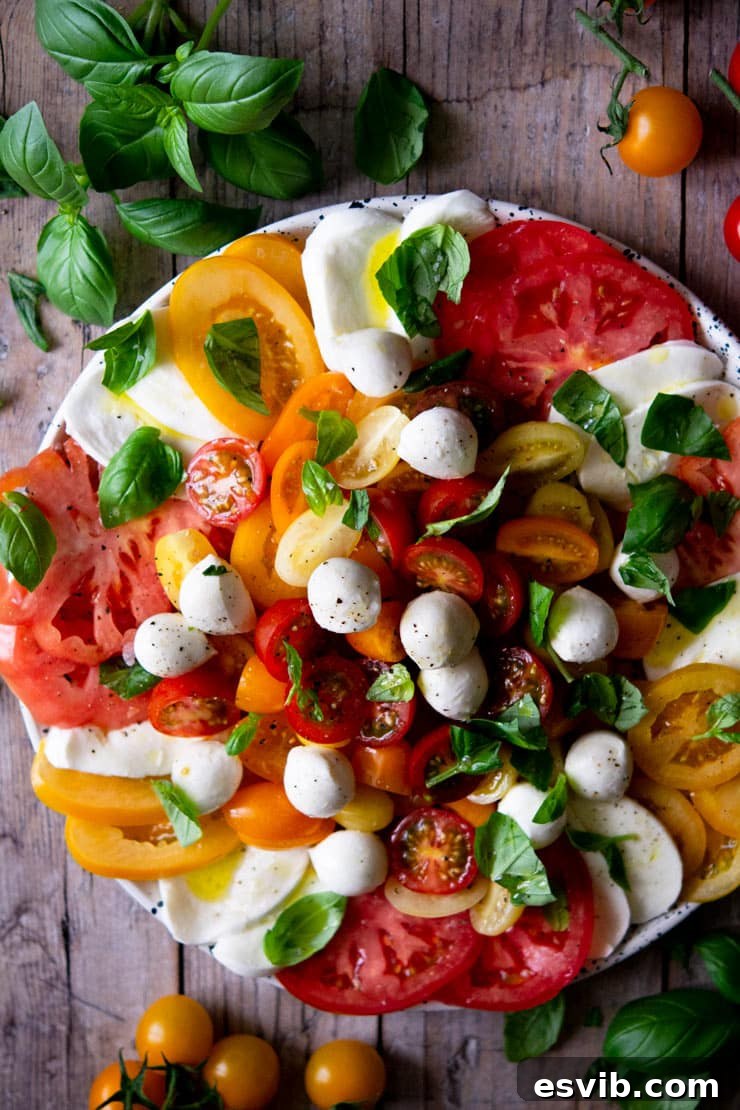
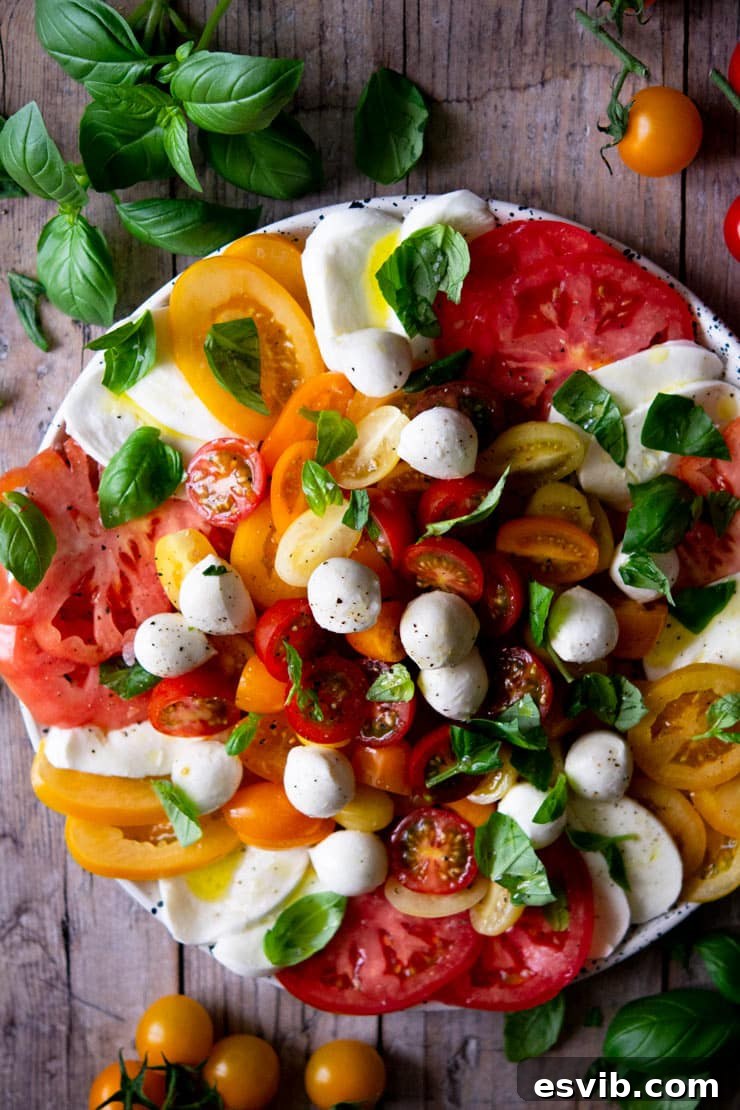
The Ultimate Classic Caprese Salad: A Taste of Italian Summer
Ah, the Caprese Salad! More than just a simple dish, it’s an emblem of Italian culinary philosophy: starting with the finest, freshest ingredients and letting their natural flavors shine. This iconic salad, hailing from the sun-drenched Isle of Capri, embodies simplicity and elegance. With its vibrant red tomatoes, creamy white mozzarella, and fragrant green basil, it beautifully mirrors the colors of the Italian flag, making it not just a meal, but a patriotic celebration on a plate.
Whether you’re seeking a refreshing side dish to complement your main course, a light and satisfying lunch, or an elegant appetizer to kick off a summer gathering, the classic Caprese Salad stands as the ultimate way to savor the bounty of peak-season produce. It’s a testament to the fact that extraordinary food doesn’t require complex techniques or a lengthy ingredient list—just pure, unadulterated quality and a deep respect for the natural goodness of each component.
In this comprehensive guide, we’ll delve into the nuances of creating a Caprese salad that transports you straight to the heart of Italy. From selecting the perfect tomatoes to understanding the intricacies of authentic mozzarella and the proper handling of fresh basil, every detail contributes to a truly unforgettable culinary experience. Prepare to impress your taste buds and your guests with this timeless Italian classic.
The Art of Simplicity: Why Ingredient Quality is Non-Negotiable for Caprese Perfection
Like many masterpieces of Italian cuisine, the Caprese salad is deceptively simple, relying on just a handful of core components: fresh mozzarella, ripe tomatoes, fragrant basil, and a drizzle of exquisite extra virgin olive oil. This minimalism is precisely why the quality of each ingredient becomes paramount. There are no heavy sauces, complex marinades, or elaborate spices to mask imperfections; every element must stand on its own, contributing its absolute best to the symphony of flavors and textures.
Imagine trying to play a beautiful melody with out-of-tune instruments or bake a gourmet cake with subpar flour. It simply wouldn’t work. The same principle applies here: if your tomatoes are bland and watery, your mozzarella rubbery and tasteless, or your basil wilted and bruised, the inherent magic of Caprese simply won’t materialize. This isn’t just a recipe; it’s a philosophy—a celebration of natural produce. Investing in the highest quality ingredients is an investment in taste that pays off immensely, transforming a seemingly simple salad into an unforgettable culinary journey.
Each ingredient plays a crucial role, and understanding their individual characteristics and how to select the best versions will be your key to unlocking the true potential of this classic Italian dish. Let’s explore each one in detail.
Sourcing the Perfect Tomatoes: The Juicy, Sweet Heart of Your Caprese
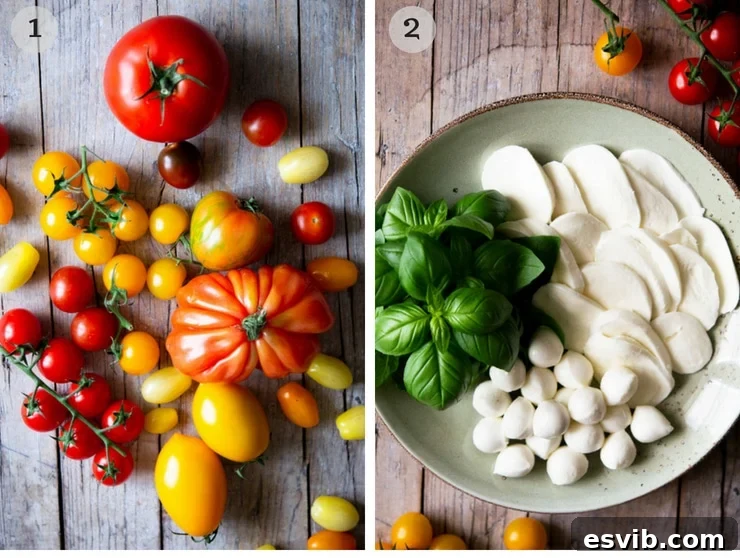
The tomato is, without a doubt, the undisputed star of the Caprese show. Its juicy sweetness, delicate acidity, and vibrant color form the very backbone of the salad’s flavor profile and aesthetic appeal. For a truly exceptional Caprese, you must bid farewell to the pale, hard, and often disappointingly tasteless tomatoes commonly found in average supermarkets. These watery imposters will only lead to a bland and unsatisfying experience.
Embrace Local and Seasonal: The Golden Rule. The most crucial rule for Caprese tomatoes is “local and in season.” If you’re fortunate enough to live in Italy during the summer months, you’ll find an abundance of incredibly flavorful local varieties. However, if you’re elsewhere in the world, trying to source “Italian tomatoes” might be missing the point. The absolute best tomatoes are almost always those grown closest to you, picked at their peak ripeness when their flavor is most concentrated. Farmers’ markets are your best friend here, offering a treasure trove of possibilities. Seek out:
- Heirloom Tomatoes: These magnificent varieties come in an array of stunning colors, captivating shapes, and varying sizes—from deep reds and vibrant yellows to striped greens and even purples. Their often-irregular appearance belies an incredibly rich, complex flavor that can range from intensely sweet to subtly tangy, offering layers of taste.
- Beefsteak Tomatoes: Large, meaty, and wonderfully juicy, these are perfect for slicing into thick, impressive rounds that make a bold statement on the plate.
- Roma Tomatoes (Plum Tomatoes): While often favored for sauces due to their low water content, perfectly ripe Roma tomatoes can offer a good balance of sweetness and firmness for slicing.
- Cherry or Grape Tomatoes: These small, bursting spheres of flavor are ideal for adding bursts of intense sweetness, especially when halved and scattered throughout the salad or used as a delightful filler around larger slices.
How to Choose the Best Tomatoes: When selecting tomatoes, look for ones that are firm but yield slightly to gentle pressure. They should feel heavy for their size, indicating a high juice content, and, most importantly, smell wonderfully fragrant and earthy at the stem end. This aroma is a sure sign of ripeness and flavor. Avoid any with blemishes, soft spots, bruising, or a dull, lifeless appearance. Once you bring them home, store them at room temperature, away from direct sunlight, and never, ever in the refrigerator, which can dramatically mute their flavor and turn their texture mealy and unappealing.
What Cheese to Use? The Creamy, Decadent Counterpart
When it comes to the cheese for your Caprese, there’s only one authentic answer: **mozzarella**. But, as any Italian food enthusiast will tell you, not all mozzarella is created equal. The most celebrated, traditional, and authentic choice is **mozzarella di bufala** (buffalo mozzarella). Made from the rich, nutrient-dense milk of Italian Mediterranean buffaloes, it boasts a uniquely rich, slightly tangy flavor and an incredibly creamy, delicate texture that is simply unparalleled by other varieties. Its smooth, porcelain-white appearance and satisfying chew make it a true delicacy.
If genuine buffalo mozzarella isn’t readily available in your area or is outside your budget, a high-quality **fior di latte** (cow’s milk mozzarella) can be a suitable substitute, but it’s crucial to ensure it’s fresh. Look for mozzarella that is stored in its own brine, as this preserves its moisture and delicate flavor. Steer clear of the rubbery, pre-packaged, low-moisture varieties often found shredded or in solid blocks—these are entirely unsuitable for a Caprese salad. A good rule of thumb: if it feels like a rubber ball, it’s not the right kind for Caprese.
For an extra touch of indulgence and a truly luxurious experience, consider incorporating **burrata**. Often described as mozzarella’s decadent cousin, burrata is a fresh Italian cheese crafted from mozzarella and cream. Its outer shell is solid mozzarella, while the inside contains a rich, soft mixture of stracciatella (shredded mozzarella curds) and fresh cream. When cut open, the luscious, creamy interior spills out, making for an exquisitely rich and luxurious experience. It’s truly a taste of heaven and brings a fantastic textural contrast to the salad, especially when paired with firmer tomato slices.
Another delightful option, particularly for visual appeal and ease of eating, is **bocconcini di mozzarella**, which are small, bite-sized mozzarella balls. These are especially fun for individual servings, as part of a skewer, or for scattering throughout the salad, adding a playful and convenient twist to the classic presentation. While sometimes a little harder to find in premium quality, they are well worth seeking out for their charm and versatility.
Storage Tip for Fresh Mozzarella: Always keep fresh mozzarella in its original brine until you are absolutely ready to use it. This crucial step preserves its moisture, texture, and delicate flavor. Drain it thoroughly just before slicing or serving.
The Aromatic Essence: Fragrant Fresh Basil Leaves
No Caprese Salad is truly complete, nor would it be authentic, without the aromatic lift of fresh basil. Its sweet, peppery, and slightly anise-like notes are the perfect, quintessential complement to the richness of the mozzarella and the natural sweetness of the tomatoes. The freshness here is paramount; dried basil simply won’t do justice to this vibrant salad, as it lacks the bright, essential oils that define the dish.
Always opt for vibrant green leaves that appear healthy and are free from any wilting, dark spots, or blemishes. A time-honored tip from Italian nonnas, which is crucial for preserving its integrity, is to **gently tear the basil leaves** rather than cutting them with a knife. Tearing helps to release the basil’s delicate essential oils more effectively and, crucially, prevents bruising, which can lead to unsightly discoloration and an undesirable metallic taste. Gently scattering these freshly torn leaves over the finished salad provides both an incredible burst of flavor and a beautiful, natural visual appeal, completing the Italian flag’s colors.
The Golden Finish: The Perfect Drizzle of Extra Virgin Olive Oil, Sea Salt, and Fresh Pepper
The final touches applied to your Caprese salad are just as crucial as the selection of the primary ingredients. A generous drizzle of **high-quality extra virgin olive oil (EVOO)** acts as the unifying element, harmoniously bringing all the individual flavors together into a cohesive and delightful whole. Look for an EVOO with a rich, fruity aroma, a pleasant peppery finish (a sign of its freshness and polyphenols), and a vibrant, golden-green hue. It should taste fresh, clean, and never heavy or greasy, adding a luscious mouthfeel without overwhelming the delicate flavors beneath.
A delicate sprinkle of **flaky sea salt** (such as Maldon or another high-quality brand) is essential. It enhances the natural sweetness and savory notes of the tomatoes, providing a delightful textural crunch with every bite. Do not underestimate the transformative power of freshly ground black pepper to add a subtle kick and an additional layer of complexity, awakening the palate without being overpowering. These seemingly simple seasonings are vital; they elevate the entire dish, ensuring every bite is perfectly balanced and utterly delicious.
How To Craft the Perfect Caprese Salad – A Simple, Step-by-Step Guide
Creating a truly stunning Caprese salad is less about complicated cooking techniques and more about careful, thoughtful assembly and respecting the quality of your ingredients. Here’s how to bring together these magnificent components into a dish that’s as beautiful to behold as it is delicious to taste:
- Prepare Your Tomatoes: Begin by washing and gently drying your chosen tomatoes. For a visually captivating salad, slice larger tomatoes (like heirlooms or beefsteaks) into thick, uniform rounds, approximately 1/4 to 1/2 inch thick. If you opt for smaller cherry or grape tomatoes, you can either halve them or leave them whole for scattering, depending on your preference. Mixing different colors, shapes, and sizes of tomatoes adds an artistic touch and makes the salad significantly more vibrant and interesting to the eye and the palate.
- Slice the Mozzarella: Carefully drain your buffalo mozzarella or fior di latte from its brine. Using a sharp knife, slice it into thick rounds, aiming for a thickness similar to your tomato slices for a balanced bite. If you’re incorporating bocconcini, you can leave them whole or halve them if they are particularly large. Combining different types of mozzarella, such as large buffalo mozzarella slices with smaller bocconcini, adds both visual variety and delightful textural complexity, making it perfect for impressing guests at a dinner party.
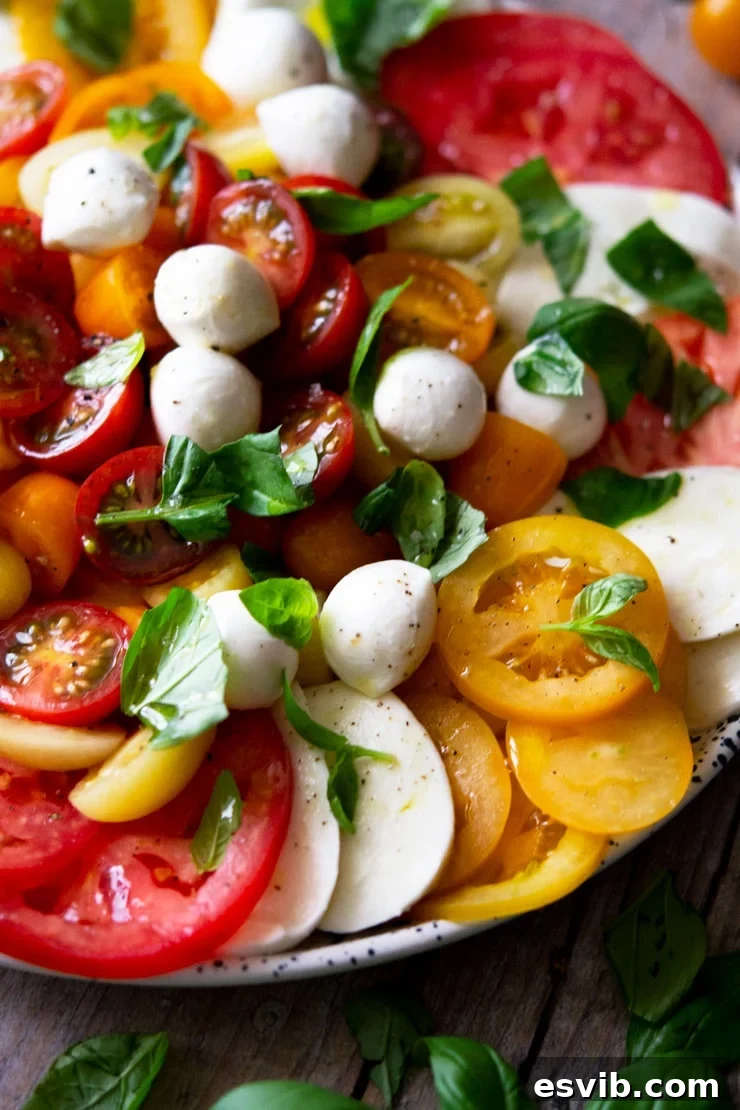
- Arrange with Flair: The presentation is an integral part of the Caprese charm. On a large, elegant serving platter or individual plates, begin to artfully arrange your tomato and mozzarella slices. The classic method involves alternating slices, slightly overlapping them in a circular pattern around the edge of the plate, mimicking the iconic Italian flag. For the center of your platter, you can fill any gaps or create an additional layer with smaller cherry tomato halves and bocconcini, creating a beautiful mosaic of colors and textures. If you’re not using smaller tomatoes or mozzarella, simply continue the harmonious overlapping pattern until your plate is beautifully and fully covered.
- Garnish and Season to Perfection: Finally, take your fresh basil leaves and gently tear them (do not cut) over the meticulously arranged salad. This ensures their essential oils are released for maximum aroma and flavor while preventing bruising. Drizzle generously with a high-quality extra virgin olive oil, letting it cascade over the vibrant ingredients. Finish with a liberal sprinkle of flaky sea salt, which will awaken the flavors of the tomatoes, and a few grinds of fresh black pepper to add a subtle warmth and complexity.
Serve your Caprese salad immediately to ensure you enjoy the ingredients at their peak freshness and optimal temperature. Caprese is universally best enjoyed at room temperature, as this allows the full, nuanced flavors of the tomatoes and mozzarella to properly develop and shine, creating a truly harmonious and exquisite dish.
To Balsamic Or Not To Balsamic? Understanding the Great Caprese Debate
The question of whether to add balsamic vinegar to a Caprese salad is a long-standing culinary debate that often sparks lively discussion among food enthusiasts and purists alike. Traditionally, and according to the strict canons of authentic Italian culinary rules, a true Caprese salad does **not** include balsamic vinegar—or any vinegar, for that matter. The dish is designed to highlight the pure, unadulterated flavors of fresh tomatoes, creamy mozzarella, fragrant basil, and rich olive oil, allowing each component to shine in its own right.
The historical origin of Caprese is deeply rooted in the simple, local ingredients readily available on the Isle of Capri. Balsamic vinegar, on the other hand, hails from the Modena region of Emilia-Romagna, a distinct geographical and cultural area far removed from Capri. Purists vehemently argue that balsamic’s strong, sweet-tart flavor, especially when not of the highest quality, can easily overpower the delicate nuances of the fresh basil, the inherent sweetness of perfectly ripe tomatoes, and the subtle creaminess of buffalo mozzarella. The goal of Caprese is harmonious balance, not a battle of flavors.
However, modern culinary tastes have certainly evolved, and many people genuinely adore the tangy counterpoint that a good quality balsamic glaze or reduction brings to the salad. If you do choose to venture into the world of balsamic, it is absolutely imperative to opt for a high-quality, aged balsamic vinegar or a meticulously crafted, pre-made balsamic glaze. A thick, syrupy glaze offers a more concentrated flavor and provides a beautiful aesthetic appeal when drizzled sparingly over the salad. Remember, at the end of the day, food is ultimately meant to be enjoyed, shared, and customized to your palate. While a traditionalist might gasp in horror, your kitchen is your domain, and personal preference should always prevail over rigid rules. The “food police” certainly have no jurisdiction over your delicious creations!
Key Tips for Mastering Your Classic Caprese Salad
To ensure your Caprese salad is nothing short of spectacular, keep these essential tips in mind:
- Prioritize Peak Freshness: This cannot be stressed enough. Every single ingredient, from the star tomatoes to the supporting basil, must be at its absolute peak of freshness and quality.
- Choose Mozzarella Wisely: Invest in the highest quality buffalo mozzarella you can find. Its superior creaminess, delicate texture, and rich flavor are non-negotiable for an authentic experience.
- Go Local for Tomatoes: Always seek out ripe, juicy, locally grown tomatoes. Farmers’ markets are your best source for unparalleled taste and variety. Avoid refrigerated tomatoes at all costs.
- Don’t Skimp on Olive Oil: A generous drizzle of a good quality extra virgin olive oil (EVOO) will act as the crucial binding agent and flavor enhancer, elevating the entire dish.
- Tear, Don’t Cut Basil: Gently tear fresh basil leaves with your hands to release their aromatic oils without bruising, preserving their vibrant color and delicate taste.
- Season Simply, But Effectively: Flaky sea salt and freshly ground black pepper are all you need to perfectly enhance the natural flavors of the main ingredients. Use them generously but wisely.
- Serve at Room Temperature: Allow the assembled salad to sit for 15-20 minutes after preparation. This crucial step allows the flavors to meld beautifully and the cheese to soften slightly, reaching its ideal texture.
- Consider Presentation: While taste is king, a beautiful arrangement makes the salad even more enticing. Play with different tomato colors, shapes, and sizes for an artistic flair.
- Avoid Balsamic (for traditionalists): If you’re aiming for a truly classic and authentic Caprese, step away from the balsamic vinegar. The purest form celebrates the inherent flavors without it.
Recipe: The Classic Caprese Salad
Caprese Salad
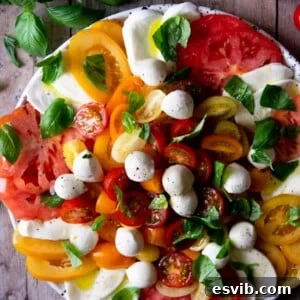
The most famous Italian salad ever, the classic Caprese, is a celebration of fresh, ripe summer tomatoes, creamy mozzarella, and aromatic basil. Easy to prepare and utterly delicious, it’s the ultimate choice for a light lunch, a vibrant side, or an elegant appetizer.
Ingredients
- 2.2 lbs (1 kg) Fresh, ripe tomatoes (a delightful mixture of colors, shapes, and sizes works best for visual appeal and varied flavor)
- 8.8 oz (250g / 2 balls) High-quality Buffalo Mozzarella (or fresh fior di latte)
- 3.5 oz (100g) Bocconcini di mozzarella (small baby mozzarella balls, optional but highly recommended for added variety and charm)
- 1 large handful Fresh Basil leaves, vibrant green and fragrant
- Extra virgin olive oil (a generous, high-quality drizzle)
- Flaky sea salt, to taste
- Freshly ground black pepper, to taste
Instructions
- Wash and gently dry all your tomatoes. Slice larger tomatoes (such as heirlooms or beefsteaks) into thick, even rounds. If using smaller cherry or grape tomatoes, you can halve them or leave them whole. Aim for a beautiful mix of colors and sizes.
- Carefully drain the fresh mozzarella from its brine. Slice the buffalo mozzarella (or fior di latte) into thick pieces, ideally of a similar thickness to your tomato slices. If incorporating bocconcini, they can be left whole or halved.
- Begin arranging the tomato and mozzarella slices on a large serving platter or individual plates. A classic and visually appealing method is to alternate slices, slightly overlapping them in a circular pattern around the edge of the plate. Fill any inner spaces or gaps with smaller chopped cherry tomatoes and whole or halved baby mozzarella balls (bocconcini).
- Take your fresh basil leaves and gently tear them by hand (avoid cutting with a knife) over the entire arranged salad. This technique helps to release their aromatic oils without bruising the leaves.
- To finish, drizzle a generous amount of high-quality extra virgin olive oil over the salad. Season evenly with flaky sea salt and freshly ground black pepper according to your taste preferences.
- Serve your Classic Caprese Salad immediately, ideally at room temperature, to allow all the exquisite flavors to fully meld and shine. Enjoy this taste of Italian summer!
Chef’s Notes
For the most authentic Caprese experience, it is traditionally served without balsamic vinegar. If you do wish to add a tangy element, opt for a very high-quality balsamic glaze and use it sparingly to avoid overpowering the delicate main ingredients. Remember to serve at room temperature for optimal flavor development.
Helpful Information for All Your Italian Cooking Adventures
- We consistently recommend and use extra virgin olive oil in all our recipes for its superior flavor, health benefits, and authentic taste, unless a specific alternative is explicitly stated.
- When our recipes call for canned or jarred tomatoes of any kind, we exclusively use Cirio or Mutti brands. Their exceptional quality and consistent authentic Italian flavor are unmatched.
- Unless otherwise specified within a recipe, please assume all vegetables mentioned are of medium size for accurate proportions.
- All recipes featured on this blog are meticulously tested and thoughtfully developed using a fan (convection) oven to ensure consistent and reliable results every time.
- Curious about the nutritional values of our dishes? Find out more about how nutrition information is calculated for all our published recipes.
- Stock your kitchen like an Italian chef with our indispensable guide to Italian Pantry Staples – essential ingredients for authentic flavors.
- Equip yourself with the right tools for culinary success! Explore all our recommended Essential Kitchen Tools for Italian Cooking.
Approximate Nutrition Information (per serving)
Calories: 407 kcal
Carbohydrates: 38 g
Protein: 25 g
Fat: 20 g
Saturated Fat: 10 g
Cholesterol: 56 mg
Sodium: 350 mg
Potassium: 1460 mg
Fiber: 19 g
Vitamin A: 12450 IU
Vitamin C: 79.4 mg
Calcium: 2086 mg
Iron: 12.9 mg
Nutrition information provided is automatically calculated and should only be used as an approximation. Actual values may vary based on specific ingredient brands and preparation methods.
Did You Try This Ultimate Caprese Salad Recipe?
We absolutely love hearing from our readers! Your culinary adventures inspire us. Please share your thoughts, tips, and how this delicious Caprese Salad turned out for you in the comments section below.
For more mouthwatering Italian recipes, cooking inspiration, and to stay updated with our latest posts, make sure to follow us on social media:
FACEBOOK |
INSTAGRAM |
PINTEREST