
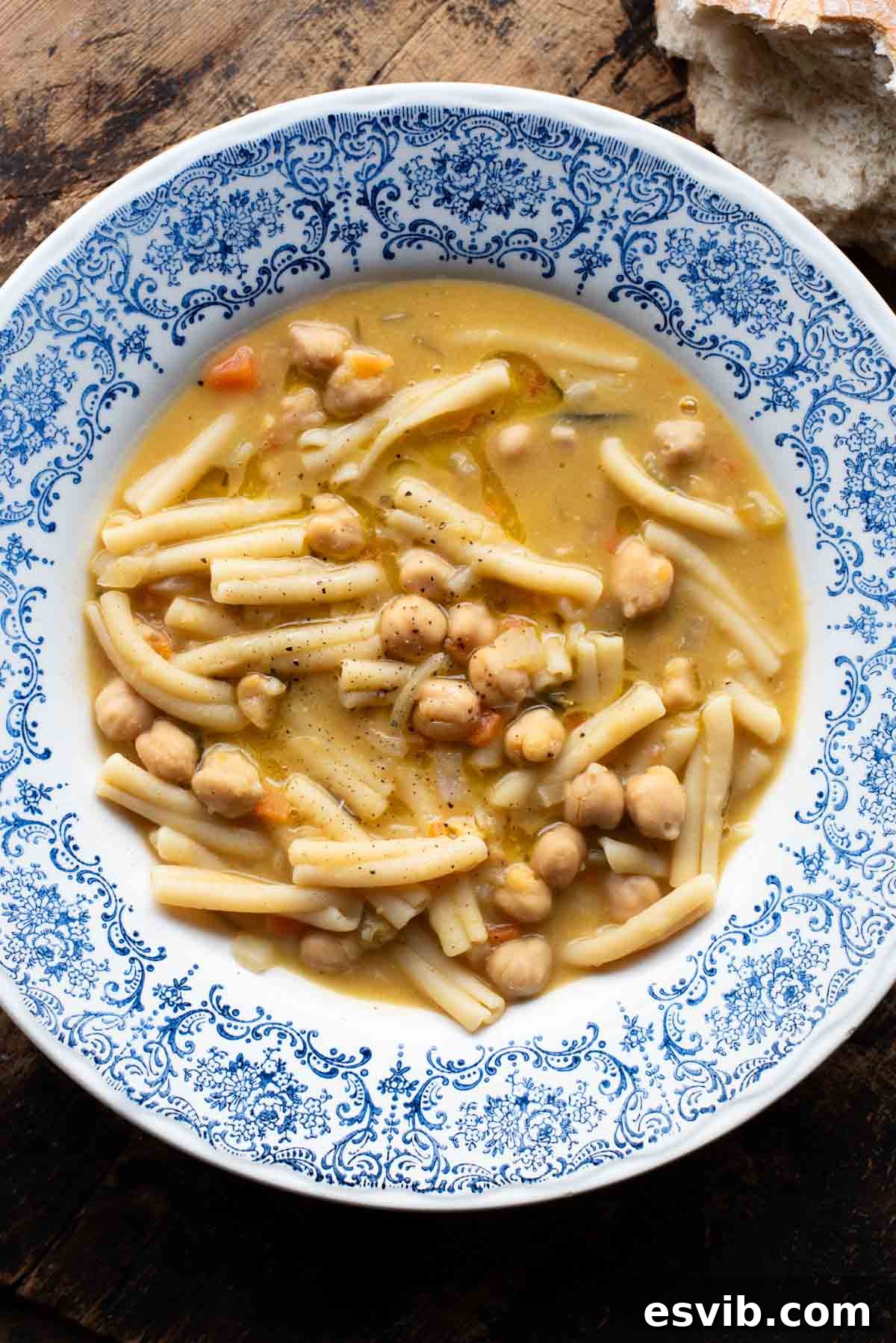
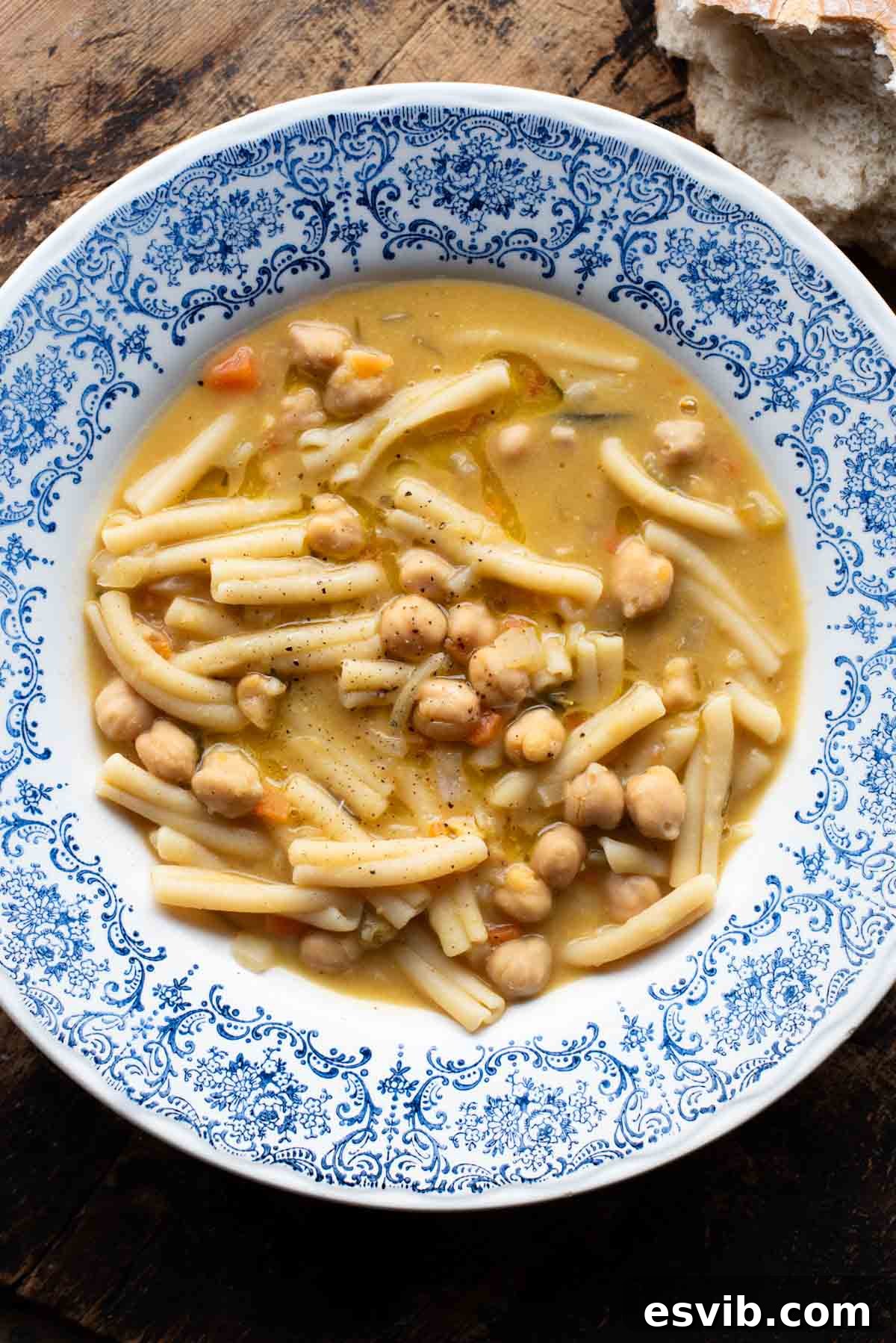
Pasta e Ceci, an iconic Italian chickpea and pasta soup, is a testament to the beauty of simple, wholesome ingredients coming together to create an extraordinarily comforting and deeply satisfying meal. This beloved dish, rich in flavor and tradition, offers a cozy embrace during the colder months, making it a staple in Italian homes and a favorite around the world. Our recipe focuses on an incredibly simple preparation, highlighting the natural goodness of fresh vegetables, fragrant rosemary, and hearty chickpeas, culminating in a creamy, flavourful soup that warms you from the inside out.
Discovering the Heart of Italian Comfort Food: Pasta e Ceci
Pasta e Ceci, literally “pasta and chickpeas,” is more than just a soup; it’s a culinary journey deeply rooted in Italian regional diversity. While the core elements – short pasta and chickpeas – remain consistent, this beautiful dish boasts countless variations across Italy, reflecting local tastes, available ingredients, and cherished family traditions. From the robust, tomato-infused versions found in some southern regions to the more rustic, herbaceous preparations, each household often has its own secret touch that makes their Pasta e Ceci uniquely special.
At its heart, Pasta e Ceci always features a short pasta shape, such as ditalini or casarecce, combined with tender chickpeas and typically a rich aromatic base known as soffritto (a finely diced mix of carrot, celery, and onion). Some popular variations incorporate tomatoes for a brighter, tangier profile, while in Rome, it’s common to find anchovies subtly melted into the base, adding an incredible depth of umami. Our preferred rendition, and arguably the most comforting, embraces simplicity. It utilizes minimal yet powerful ingredients, creating a soup that is unbelievably flavourful and profoundly satisfying.
What truly sets our recipe apart is the technique of blending a portion of the chickpeas back into the soup. This creates an amazingly thick, velvety, and creamy consistency without the need for any dairy, making it a naturally wholesome and comforting dish. This simple step transforms the soup from merely good to absolutely irresistible, ensuring every spoonful is rich and satisfying. It’s truly the perfect recipe to keep you warm and cozy when the weather turns chilly, offering a taste of authentic Italian home cooking.
Explore the full recipe below, including detailed ingredient insights, step-by-step photos, essential tips, and exciting variations. For a printable version of this delightful recipe, scroll down to the bottom.
Essential Ingredients for Perfect Pasta e Ceci
Ingredient Notes and Expert Substitutions
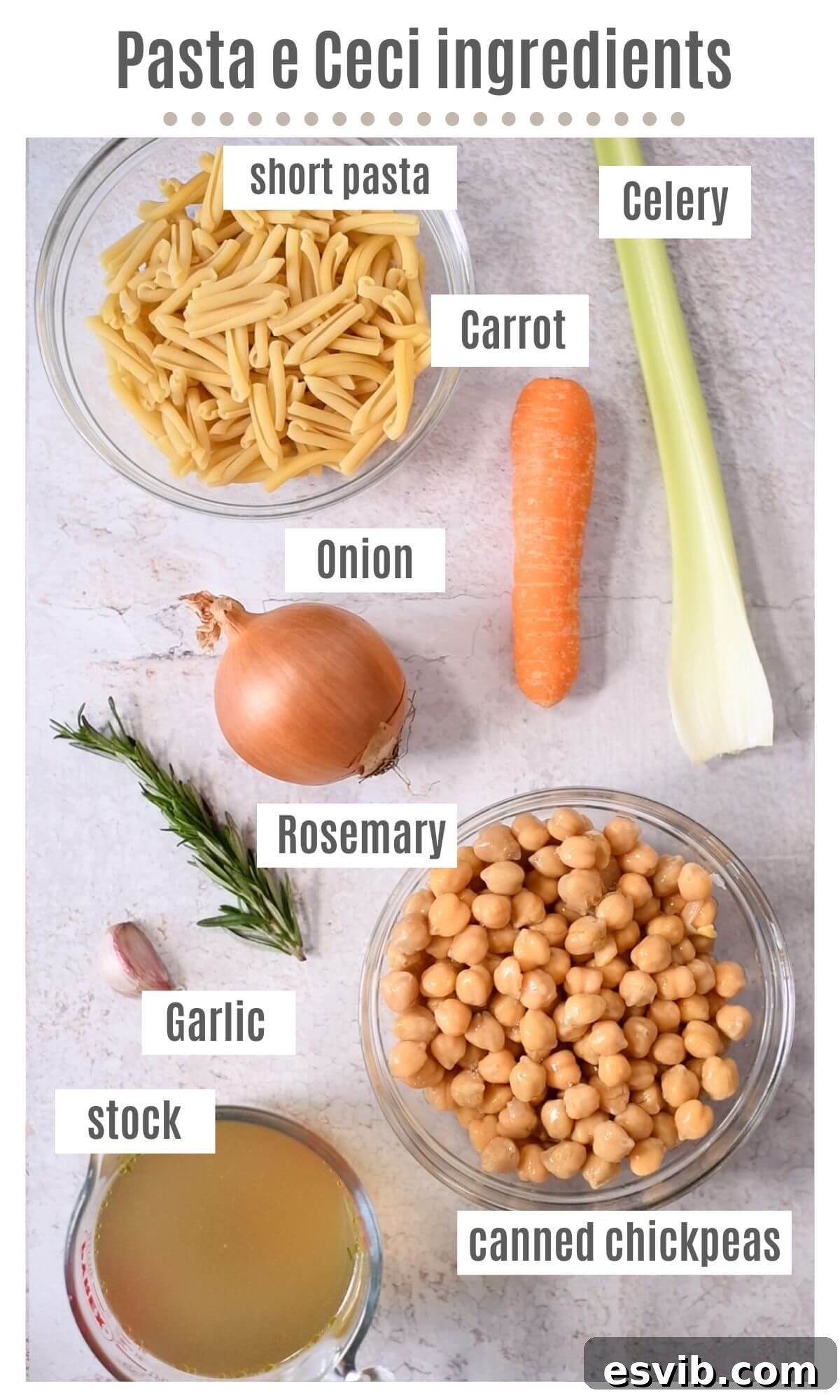
- Soffritto (Carrot, Celery, and Onion): This aromatic trinity forms the essential flavor base of many Italian dishes, including Pasta e Ceci. Finely chopping and slowly sautéing these vegetables releases their sweet, earthy notes, building a foundational layer of flavor that is indispensable. We strongly recommend against omitting any of these vegetables, as they contribute significantly to the soup’s complexity and depth.
- Stock (Chicken or Vegetable): The choice of stock greatly influences the final taste of your soup. While both chicken and vegetable stock work wonderfully, we often find chicken stock adds a richer, more rounded flavor profile. If using store-bought stock, opt for a low-sodium variety to better control the seasoning and prevent the soup from becoming overly salty. Always taste and adjust salt levels as needed.
- Chickpeas: The star of the show! High-quality canned chickpeas, drained and thoroughly rinsed, offer a deliciously creamy texture and are incredibly convenient. If you have time, using dried chickpeas that have been soaked and cooked from scratch can elevate the flavor and texture even further, but canned chickpeas provide an excellent shortcut without compromising on quality for this recipe.
- Pasta: Any short pasta shape is suitable for Pasta e Ceci. The smaller shapes are ideal as they blend beautifully with the chickpeas and broth. We used Casarecce for its delightful twists that capture the sauce, but traditional options like Ditali, Ditalini, Conchiglie (small shells), or Annelini (tiny rings) are also fantastic choices. Experiment with your favorite short pasta to find what you love most!
- Garlic and Rosemary: Fresh garlic, finely chopped, adds a pungent warmth, while a sprig of fresh rosemary infuses the soup with its distinctive aromatic, slightly piney notes, truly embodying the essence of Italian cooking. These fresh herbs are crucial for a vibrant flavor.
- Extra Virgin Olive Oil: Beyond being essential for sautéing, a generous drizzle of good quality extra virgin olive oil at the end is non-negotiable. It adds a fruity, peppery finish and incredible richness that ties all the flavors together.
- Salt and Freshly Ground Black Pepper: Seasoning is key! Use sea salt and freshly ground black pepper to taste, enhancing all the natural flavors of the ingredients.
Crafting Your Pasta e Ceci: Step-by-Step Guide
Creating this deeply satisfying Pasta e Ceci soup is a straightforward process, built on layering simple flavors. Start by finely chopping your carrot, celery, and onion for the soffritto. Heat 1-2 tablespoons of high-quality olive oil in a large pot or Dutch oven over medium heat. Add the chopped vegetables and sauté them gently for about 10 minutes, or until they have softened beautifully but haven’t taken on any significant color. This slow sautéing process is crucial as it allows the vegetables to release their sugars and develop a deep, sweet foundation for the soup, so resist the urge to rush this stage (photo 1).
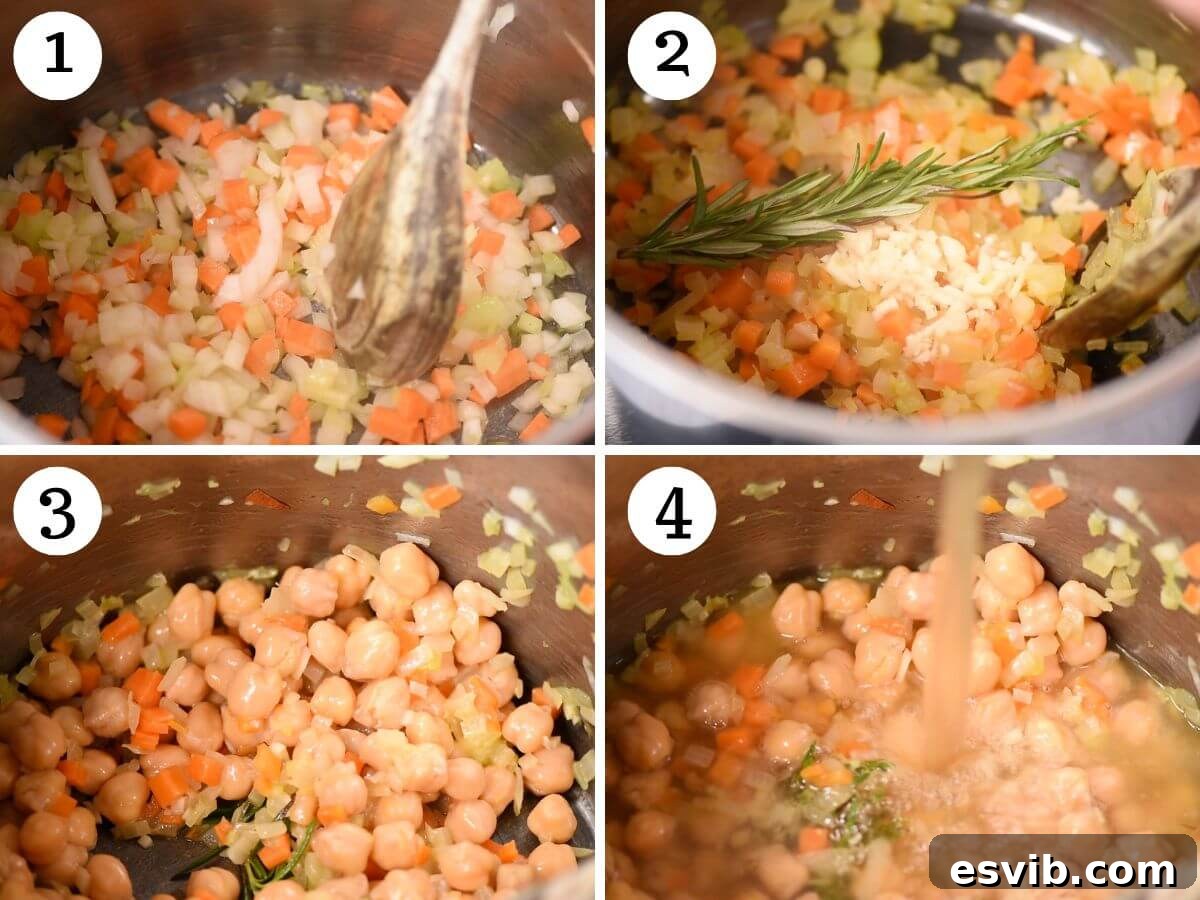
Once the soffritto is tender and aromatic, it’s time to introduce more layers of flavor. Finely chop the garlic and add it to the pot along with the fresh rosemary sprig. Continue to sauté for just about 1 minute, allowing the garlic to become fragrant but ensuring it doesn’t burn, which can make it bitter. Immediately after, add the drained and rinsed chickpeas to the pot and stir everything well to combine, letting the chickpeas absorb some of those incredible aromatic flavors (photos 2 and 3).
Pour in the chicken or vegetable stock, ensuring the chickpeas and vegetables are well submerged. Season generously with a good pinch of salt and freshly ground black pepper. Bring the mixture to a gentle simmer, then cover the pot and allow it to simmer for 15 minutes. This simmering time is essential for the flavors to meld and deepen, creating a rich broth (photos 4 and 5).
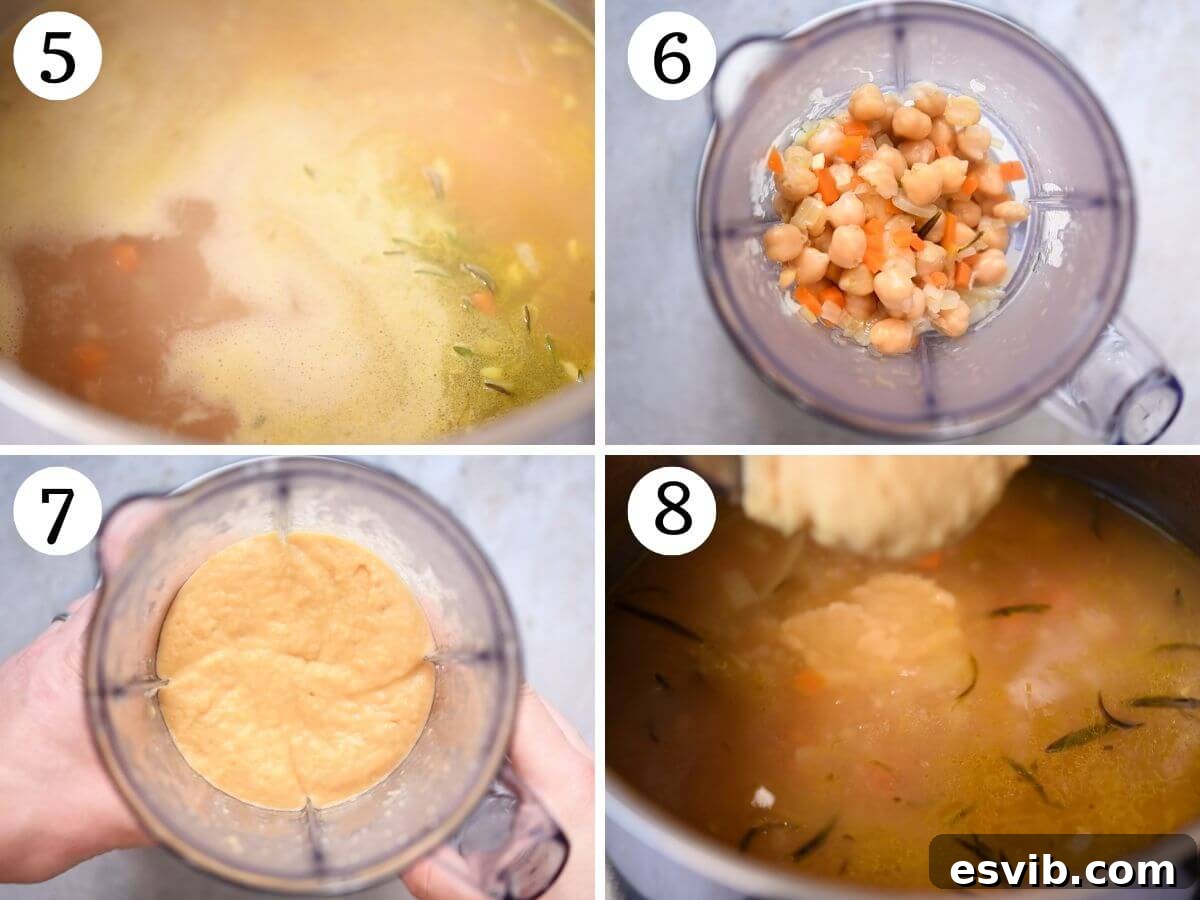
To achieve the signature thick and creamy consistency of our Pasta e Ceci, turn off the heat temporarily. Carefully remove about 1.5 cups of chickpeas from the pot (roughly two ladlefuls). Using either a regular blender or an immersion blender directly in the pot, blitz these removed chickpeas to a smooth, thick puree. This step is key for creaminess without dairy. Once pureed, return the chickpea mixture back into the soup, stirring thoroughly to combine and integrate the creamy texture throughout (photos 6-9).
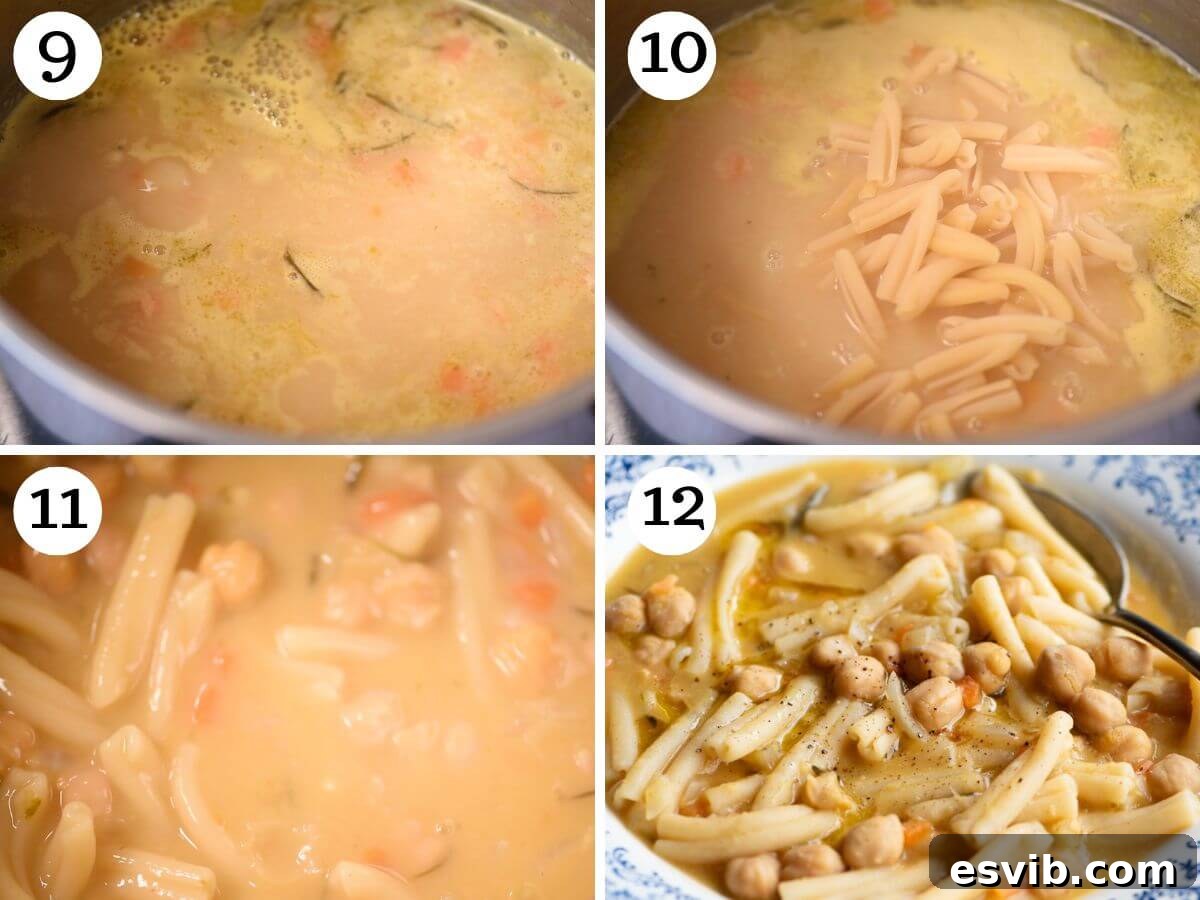
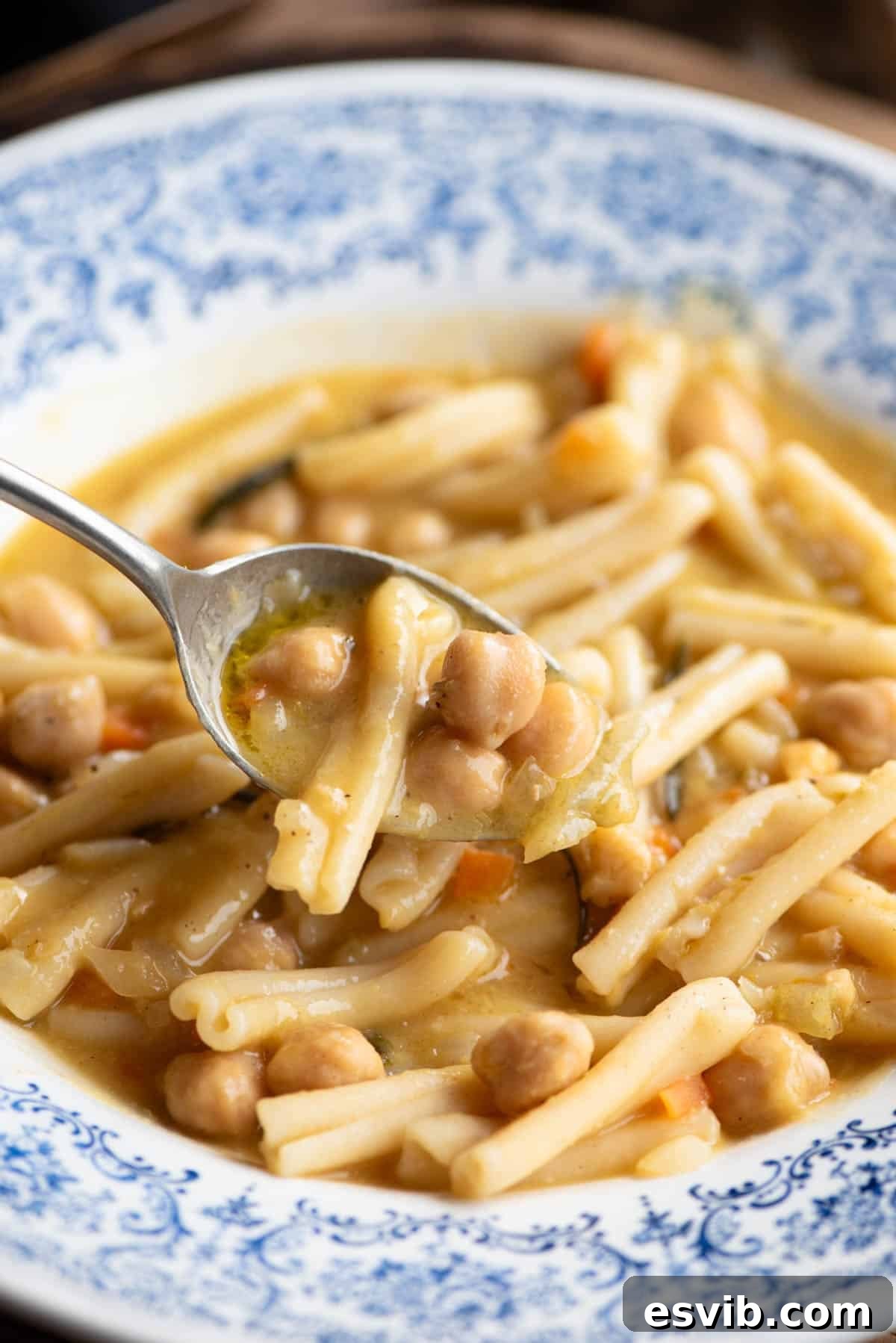
Turn the heat back on to medium-low and bring the soup back to a gentle simmer. Add your chosen short pasta and cook it according to package instructions until it reaches a perfect al dente texture. This usually takes about 8-10 minutes, but check frequently to avoid overcooking. Once the pasta is ready, ladle the heartwarming Pasta e Ceci into bowls. Finish each serving with a generous drizzle of high-quality extra virgin olive oil and a sprinkle of freshly ground black pepper for an authentic Italian touch (photos 10-12).
Expert Tips and Frequently Asked Questions for Pasta e Ceci
- Adjusting the Consistency: Our Pasta e Ceci recipe yields a wonderfully thick and creamy consistency, thanks to the blended chickpeas. However, you can easily customize this to your preference. For an even thicker soup, blend a larger portion of the chickpeas, or add a little more pasta, keeping in mind that pasta will continue to absorb liquid. If you prefer a thinner soup, simply add more stock, a splash at a time, until you reach your desired texture.
- Seasoning to Perfection: The key to a truly delicious soup is proper seasoning. We highly recommend using a low-sodium stock (or homemade, if you have it) as many store-bought varieties are heavily seasoned. This allows you complete control over the salt content. Always taste the soup before serving and adjust with additional salt and freshly ground black pepper as needed. A final sprinkle of Parmesan cheese can also add a salty, umami kick.
- Adding a Tomato Touch: While our preferred version is tomato-free to highlight the chickpeas and rosemary, adding a touch of tomato can introduce a lovely depth and brightness. Sometimes, after sautéing the garlic, we stir in 1 tablespoon of tomato concentrate (double concentrated paste) and let it cook for a minute before adding the stock. Alternatively, you could incorporate a small amount of tomato puree (passata) along with the stock. Start with a small amount and adjust to your taste.
- Optimal Serving Suggestion: Without a doubt, the absolute best way to finish this rustic dish is with a generous drizzle of good quality extra virgin olive oil. This isn’t just for garnish; it adds a fresh, fruity, and slightly peppery flavor that is truly transformative. Do not skip this step! And, of course, no Italian soup is complete without some crusty bread for dipping and soaking up every last drop of the flavorful broth.
- Can I make Pasta e Ceci in advance? Yes, you can certainly prepare the base of the soup 1-2 days in advance. However, it’s crucial to *not* add the pasta until you are ready to serve. If the pasta sits in the soup for too long, it will continue to absorb liquid, become mushy, and significantly alter the soup’s texture. Store the chickpea and vegetable base in an airtight container in the fridge, then reheat and cook the pasta just before serving.
- How long do leftovers last and how should they be stored? Pasta e Ceci is truly best enjoyed immediately after it’s cooked, when the pasta is perfectly al dente and the broth is at its ideal consistency. If you have leftovers, they can be stored in an airtight container in the fridge for up to 1 day. When reheating, you will likely need to add a splash more stock or water, as the pasta will have absorbed a lot of the liquid and become softer. While still delicious, the texture will be different from freshly made soup. Freezing is not recommended for soup containing pasta for the same reason.
- What’s the best pasta to use for Pasta e Ceci? We recommend using any small, short pasta shape that can easily be spooned up with the chickpeas. Excellent choices include Ditalini (small tubes), Conchiglie (small shells), or Casarecce, which we used in this recipe. Their shapes help to hold the delicious broth.
I recommend using a short pasta shape such as Ditalini, Conchiglie, or Casarecce, as we have used in this recipe. These smaller shapes are ideal for soups.
Yes, you can prepare the chickpea and vegetable soup base 1-2 days in advance. However, only add and cook the pasta when you are ready to serve the soup, to prevent it from becoming mushy.
Pasta e Ceci is best enjoyed immediately after preparation. Leftovers can be stored in an airtight container in the refrigerator for up to 1 day and reheated. Be aware that the pasta will continue to absorb liquid and soften upon storage.
Explore More Heartwarming Italian Soups
Delicious Italian Soups to Cozy Up With
If you loved the comforting flavors of Pasta e Ceci, you’ll surely enjoy these other traditional Italian soup recipes:
Soups
Italian Lentil Soup (Zuppa di Lenticchie)
Soups
Pasta Fagioli Soup – Pasta & Beans
Soups
Pappa al Pomodoro (Italian Bread Soup)
Soups
Lemon Chicken Orzo Soup
We hope you’ve enjoyed learning how to prepare this delightful **Pasta e Ceci recipe**. If you’ve tried this recipe or any other on our blog, we’d love to hear from you! Please don’t forget to rate the recipe and share your experience in the comments section below. Your feedback truly helps us grow and connect with our wonderful community. You can also **follow us** on Facebook, Instagram, and Pinterest to discover more of our delicious and authentic Italian food creations.
Step By Step Photos Above
Most of our recipes come with step by step photos, helpful tips and tricks to make it perfectly first time and even video!
Pasta e Ceci (Italian Chickpea & Pasta Soup)
By Emily
10 minutes
35 minutes
45 minutes
4
– 6 servings
Print Recipe
Ingredients
- 1 medium carrot
- 1 stick celery
- 1 medium onion
- 1 clove garlic, finely chopped
- 1 sprig fresh rosemary
- 1.5 lbs canned chickpeas, (approx. 700g, drained and rinsed)
- 5 cups chicken stock, (approx. 1.2 litres, low sodium, or vegetable stock)
- 7 oz short pasta, (approx. 200g, we used Casarecce)
- Salt and freshly ground black pepper, to season
- 2 tablespoons Extra virgin olive oil, plus extra for serving
Instructions
-
Finely chop the carrot, celery, and onion. Add them to a large pot or Dutch oven with 1-2 tablespoons of olive oil. Sauté the vegetables over medium heat for about 10 minutes until they are softened and translucent but not browned. This slow cooking creates the flavorful soffritto base.
-
Once the soffritto is tender, finely chop the garlic and add it to the pot along with the rosemary sprig. Sauté for another minute until the garlic is fragrant. Then, add the drained and rinsed chickpeas, stirring to combine all the ingredients.
-
Pour in the chicken (or vegetable) stock. Season with a good pinch of salt and freshly ground black pepper. Bring the soup to a gentle simmer, then cover the pot and let it simmer for 15 minutes to allow the flavors to deepen and meld.
-
Turn off the heat. Carefully remove about 1.5 cups of chickpeas (approximately two ladlefuls) from the pot. Using an immersion blender directly in the pot, or a regular blender for the removed chickpeas, blitz them into a smooth, thick puree. Return the chickpea puree to the soup and stir well to create a creamy consistency.
-
Turn the heat back on to medium-low and bring the soup to a gentle simmer again. Add your short pasta and cook according to the package directions until it is al dente (firm to the bite). Serve immediately in bowls, garnished with an extra drizzle of good quality olive oil and a final sprinkle of black pepper. Enjoy with crusty bread!
Video Tutorial
Notes for Success
- Adjust the consistency: Our Pasta e Ceci recipe has a pleasingly thick and creamy texture, but you can easily tailor it to your liking. For a thicker consistency, blend more chickpeas or add a slightly larger amount of pasta (be careful not to add too much, or it will absorb too much liquid). To thin it out, simply add more stock, a splash at a time, until it reaches your desired consistency.
- Season to taste: For optimal flavor control, we highly recommend using low-sodium stock (or homemade, if available), as regular store-bought chicken or vegetable stocks can be quite heavily seasoned. This allows you to add salt and pepper to your exact preference, ensuring a perfectly balanced dish. Always taste before serving!
- Serving suggestion: To truly elevate this dish, a generous drizzle of high-quality extra virgin olive oil before serving is indispensable. It adds a wonderful depth of flavor and richness. Don’t skip it! And, of course, serve with plenty of crusty bread for dipping.
- To add tomato: If you enjoy a hint of tomato flavor, you can easily incorporate it. After sautéing the garlic, stir in 1 tablespoon of tomato concentrate (paste) and cook for a minute before adding the stock. Alternatively, you can add a small amount of smooth tomato puree (passata) along with the stock.
- Prep ahead: The soup base (vegetables, chickpeas, and stock) can be prepared 1-2 days in advance and stored in the refrigerator. However, *do not* add the pasta until you are ready to serve the soup, as it will become mushy if left to sit in the broth.
- Storage and leftovers: Pasta e Ceci is at its best when served immediately. If you have leftovers, store them in an airtight container in the fridge for up to 1 day and reheat gently. Keep in mind that the pasta will continue to absorb liquid and soften, so you may need to add a splash of extra stock or water when reheating to restore the desired consistency.
Helpful Info for All Recipes
- I always use extra virgin olive oil in all of my recipes unless stated otherwise. Its robust flavor is key to authentic Italian cooking.
- When I use canned or jarred tomatoes of any kind (crushed, diced, pureed), I always choose premium brands like Cirio or Mutti for the best results and authentic flavor.
- All vegetables mentioned in our recipes are typically medium-sized unless specifically stated otherwise.
- All recipes on this blog are carefully tested and developed using a fan (convection) oven to ensure consistent results.
- Find out more about how nutrition is calculated for our recipes.
- Check out our must-have Italian Pantry Staples to stock your kitchen like an Italian chef.
- You can also find all our Essential Kitchen Tools for Italian Cooking to equip yourself for culinary success.
Nutrition Information (per serving)
Carbohydrates: 69g |
Protein: 22g |
Fat: 13g |
Saturated Fat: 2g |
Polyunsaturated Fat: 3g |
Monounsaturated Fat: 7g |
Sodium: 592mg |
Potassium: 716mg |
Fiber: 10g |
Sugar: 4g |
Vitamin A: 2580IU |
Vitamin C: 3mg |
Calcium: 97mg |
Iron: 4mg
Nutrition information is automatically calculated, so should only be used as an approximation.