
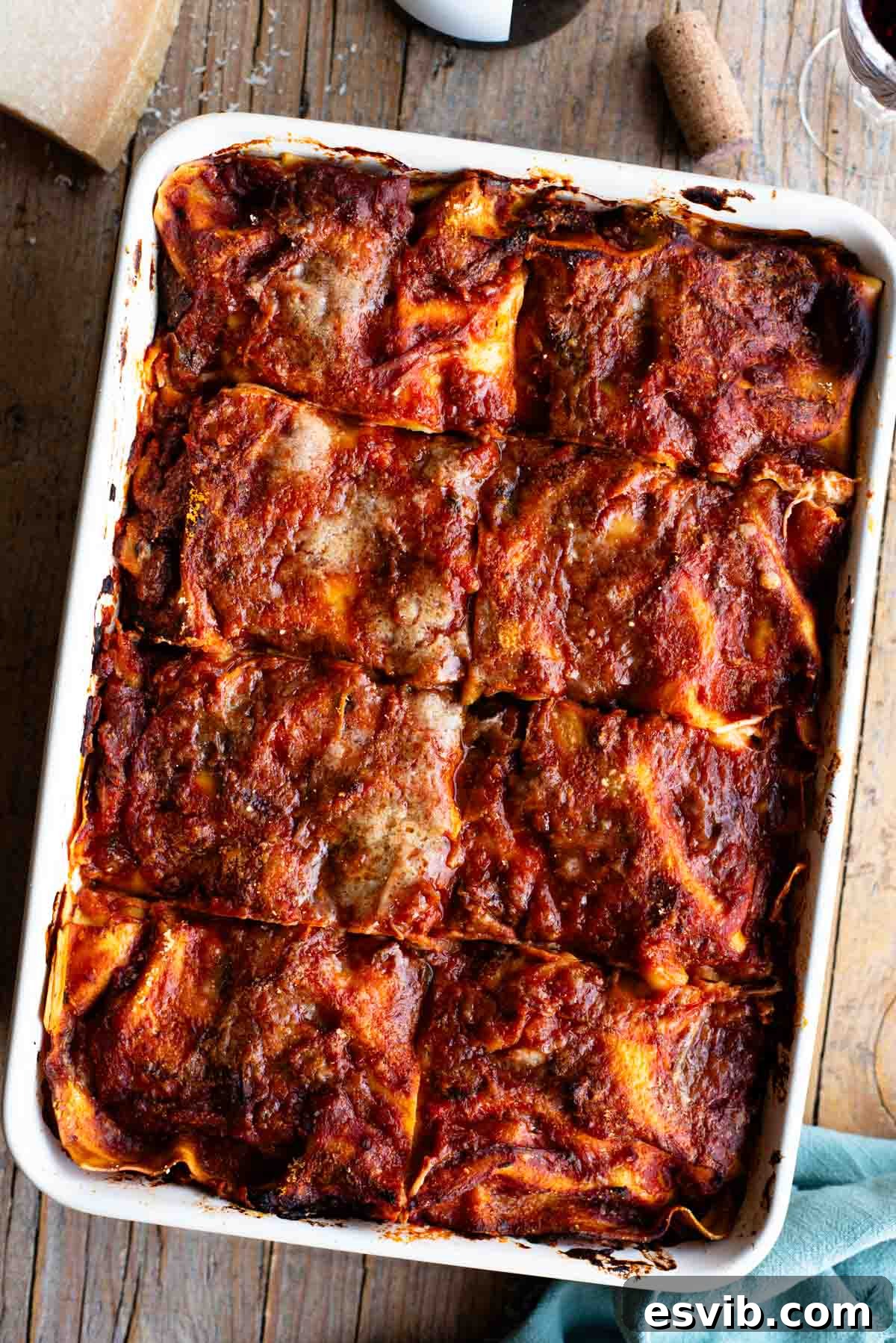
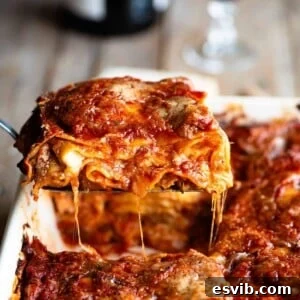
Lasagna di Carnevale, often hailed as the King of Lasagnas in Southern Italy, is a majestic Neapolitan dish traditionally prepared to mark the joyous festivities of Carnevale (Carnival). This isn’t just any lasagna; it’s a rich, deeply indulgent culinary masterpiece, brimming with layers of tender pasta, creamy ricotta, savory mini meatballs, and even slices of hard-boiled eggs, all enveloped in an exquisite, slow-cooked meat ragù. Perfect for a grand Italian Sunday dinner, a special family gathering, or any celebration that calls for truly spectacular food, this recipe promises an unforgettable experience.
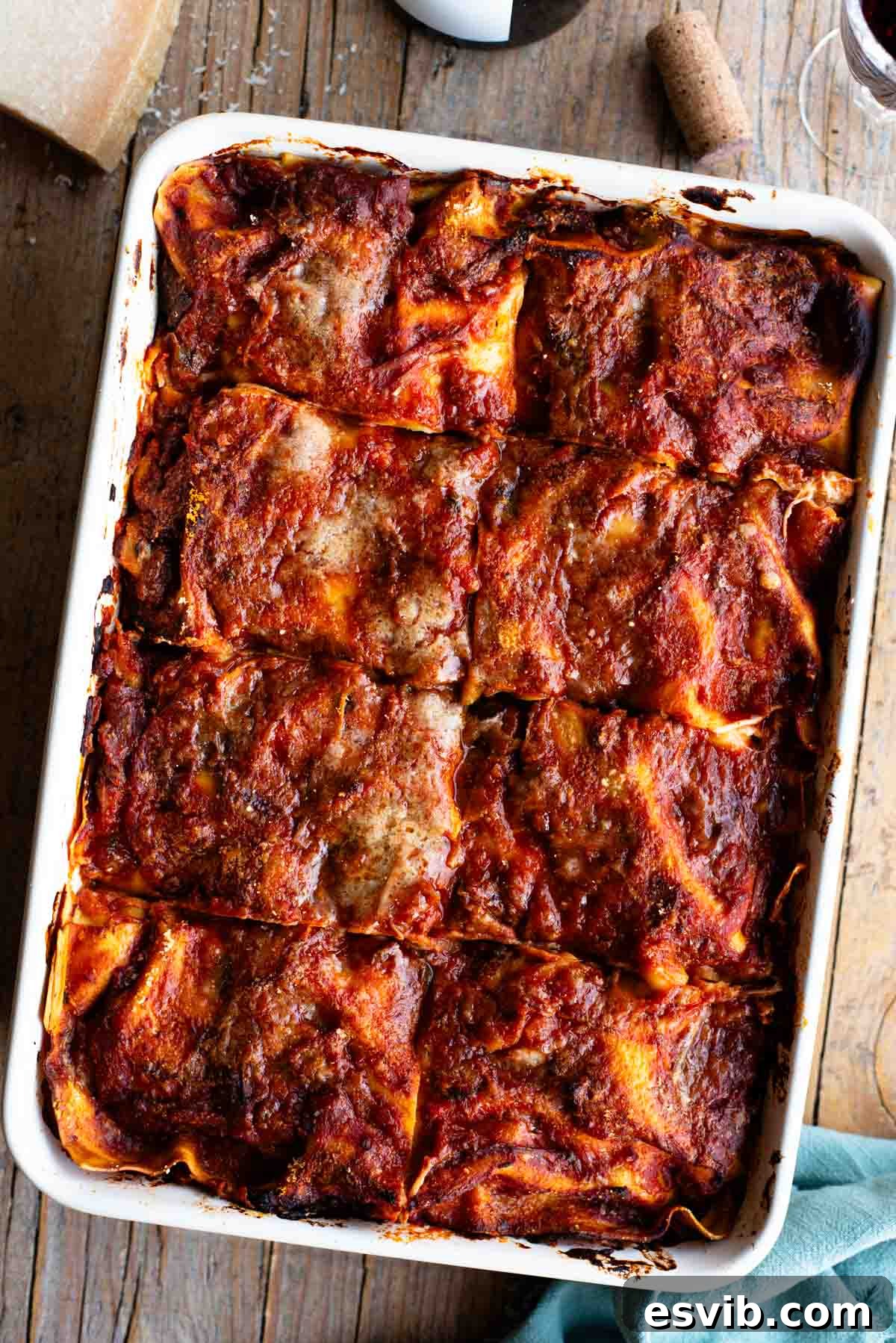
Understanding the Art of Italian Lasagna: North vs. South
The culinary landscape of Italy is a vibrant tapestry woven with diverse regional traditions, and nowhere is this more evident than in the beloved dish of lasagna. While many might think of lasagna as a singular entity, there are distinct and fascinating differences between the versions found in the north and the south of Italy.
In the northern regions, particularly Emilia-Romagna, lasagna is often characterized by its elegant simplicity and profound flavors. The most renowned northern lasagna, Lasagna Bolognese, is typically crafted with an irresistible, rich beef ragù – often cooked for hours to develop its deep umami notes – and a creamy, delicate Béchamel sauce. These layers are meticulously assembled with thin, fresh egg pasta sheets, creating a dish that is comforting, refined, and globally recognized.
Journeying south, specifically to the bustling heart of Naples, you discover a different philosophy, a more exuberant and hearty approach to lasagna. Neapolitan lasagna, exemplified by our Carnevale celebration dish, tells a story of abundance and celebration. Here, the lasagna boasts a rustic, deeply flavorful Neapolitan meat ragù (Ragù alla Napoletana), often simmered with various cuts of meat like pork ribs and beef brisket. What truly sets it apart is the absence of Béchamel. Instead, creamy, fresh ricotta cheese forms a luscious layer, offering a delightful tang and moisture. Adding to its unique character are tiny, fried meatballs and slices of hard-boiled eggs, creating a truly extravagant and textural experience. This Southern Italian style of lasagna, with its generous fillings and robust flavors, is often the variation most familiar to Americans, albeit with local adaptations.
My Journey to Neapolitan Lasagna
For a long time, I was convinced that nothing could surpass the classic elegance of Lasagna Bolognese. Its balance of rich ragù and creamy Béchamel seemed like the pinnacle of comfort food. It took me considerable time and persuasion to venture into making a Southern Italian lasagna, as I truly believed my go-to Bolognese recipe couldn’t be beaten.
However, experiencing this Neapolitan Lasagna was nothing short of a revelation. To say we were blown away would be an understatement. The depth of flavor, the interplay of textures from the tender pasta, the savory meatballs, the creamy ricotta, and the surprising touch of hard-boiled eggs created a symphony for the senses. It’s absolutely incredible, and honestly, choosing a favorite between the two distinct styles has become an impossible task (so I happily won’t!).
This particular Lasagna di Carnevale holds a special place in Italian culinary tradition. It is meticulously prepared to celebrate Carnevale (Mardi Gras), a vibrant festival of feasting and indulgence that precedes the solemn period of Lent. This dish perfectly embodies that spirit, ticking all the boxes for a truly celebratory meal. Despite its inherent richness, each bite is so satisfying that it will leave you yearning for more, a true testament to its irresistible charm.
If you’ve enjoyed our highly acclaimed Classic Lasagne al Forno, which boasts over 100 5-star reviews, you are absolutely guaranteed to fall in love with this magnificent Neapolitan rendition as well. It’s a dish that demands attention and rewards generously.
Key Ingredients for an Authentic Lasagna di Carnevale
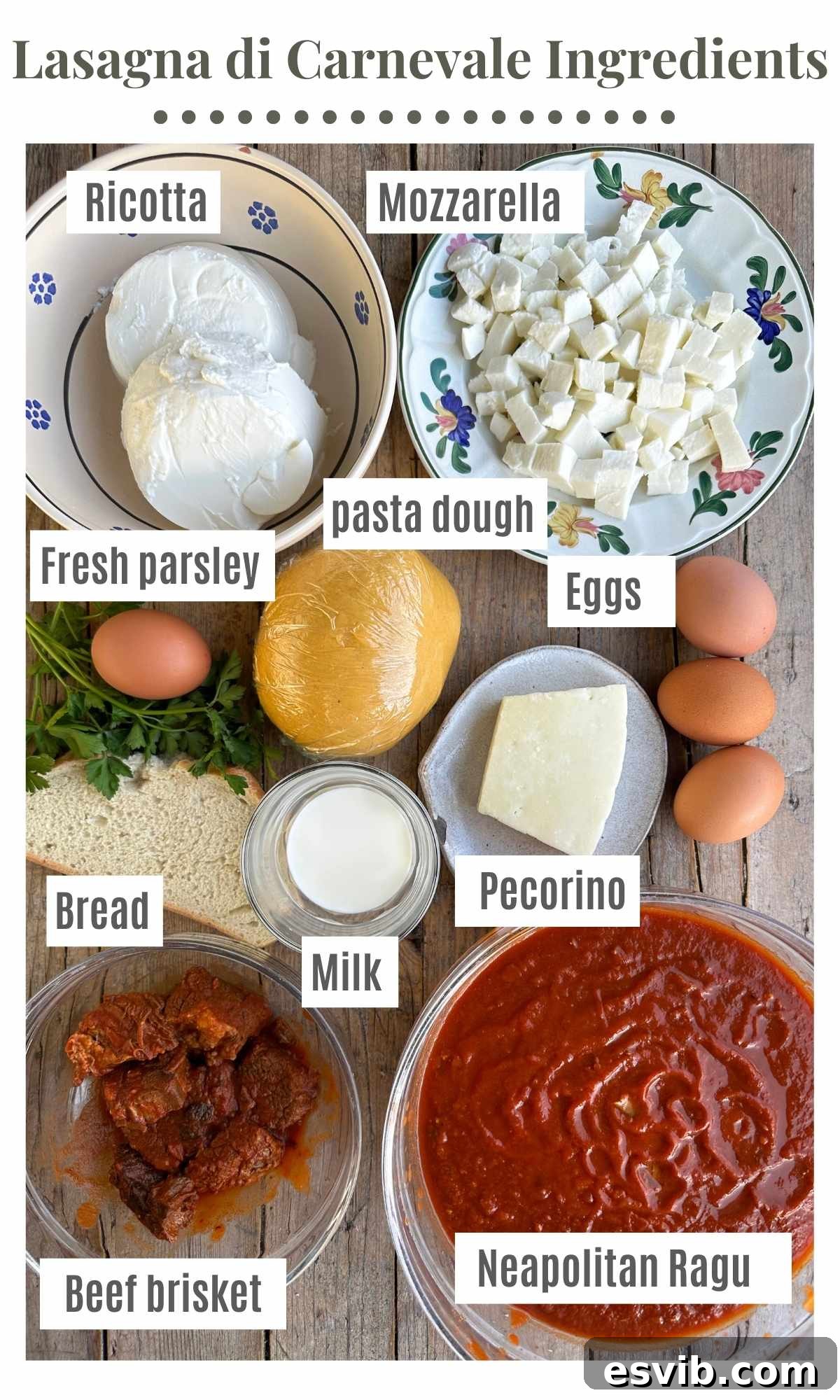
Crafting the perfect Lasagna di Carnevale requires attention to a few key ingredients, each playing a vital role in building the rich, complex flavors and textures characteristic of this Southern Italian masterpiece. Below are the essential components and some helpful notes for selection and substitution.
Ingredient Notes and Expert Tips
- Ragu alla Napoletana – The Heart of the Dish: This incredible, slow-cooked meat sauce is absolutely crucial; it provides the deep “wow factor” that elevates this lasagna. Our recipe for Ragù alla Napoletana includes sausages and pork ribs, which are traditionally enjoyed as a separate meal. For the lasagna, we reserve all the rich, flavorful sauce and the tender beef brisket, transforming them into the foundation of this layered dish. Preparing the ragù a day in advance allows the flavors to deepen and meld, making the lasagna even more extraordinary.
- Homemade Pasta – Freshness Matters: Traditionally, Lasagne di Carnevale features semolina pasta (without eggs) for its rustic texture. However, modern variations often incorporate egg pasta dough, which offers a silkier, more tender bite. We highly recommend using our homemade egg pasta dough for the best results, as its freshness significantly enhances the overall dish. If time is a constraint, good quality store-bought fresh lasagna sheets can be used as a convenient alternative.
- Ricotta – The Creamy Core: Opt for full-fat ricotta cheese, whether made from cow’s or sheep’s milk. The full-fat variety ensures a wonderfully creamy texture and rich flavor that is essential for the decadent Southern Italian style of lasagna. It acts as the creamy binder and flavor enhancer, standing in for the Béchamel of Northern lasagnas.
- Beef for Meatballs – Flavorful Additions: A unique aspect of Neapolitan lasagna is the inclusion of tiny, flavorful meatballs. We typically use the tender beef brisket that has been slow-cooked in the Ragù alla Napoletana, blitzing it to create these incredible morsels. This method infuses the meatballs with the deep flavors of the ragù. Alternatively, you can use ground beef (which we’ve tested with delicious results) or a mixture of half ground beef and veal for a lighter, yet still savory, option.
- Mozzarella – The Melting Delight: Fresh mozzarella is always our top choice for its superior melt and milky flavor. Remember to gently dap it with kitchen paper to remove any excess water, preventing the lasagna from becoming watery. Some traditional variations also call for Caciocavallo cheese, which adds a distinct, slightly piquant note, complementing the rich flavors beautifully.
- Parmigiano Reggiano or Pecorino Romano – The Finishing Touch: These hard, aged Italian cheeses are crucial for layering flavor and adding a sharp, salty finish. Use whichever you prefer or have readily available. Parmigiano Reggiano offers a nutty, milder profile, while Pecorino Romano provides a bolder, saltier, and tangier kick. Both are excellent choices.
- Hard-Boiled Eggs – The Traditional Surprise: Sliced hard-boiled eggs are a hallmark of true Lasagna di Carnevale, adding a unique texture and subtle richness to the layers. Don’t skip this traditional ingredient!
Step-by-Step Guide to Crafting Lasagna di Carnevale
Creating this magnificent Neapolitan lasagna is a labor of love, but the process can be made significantly smoother with a little forward planning. This section provides a detailed step-by-step guide to ensure your Lasagna di Carnevale is nothing short of perfection.
Prepare in Advance for Effortless Cooking
To simplify your cooking day and maximize flavor, we highly recommend preparing the Ragu alla Napoletana a full day in advance. Not only does this ingenious strategy make the entire lasagna-making process more manageable and time-efficient, but the ragù itself develops an even deeper, more complex flavor profile when allowed to rest overnight. For this specific recipe, ensure you save all the rich sauce and the tender cooked beef from the ragù. The sausages and ribs can be enjoyed separately for another delicious dinner, allowing the beef and sauce to truly shine in your lasagna.
Similarly, you can efficiently prepare your hard-boiled eggs the day before. On the day you plan to assemble and bake your lasagna, prioritize preparing your homemade pasta dough first, allowing it adequate resting time.
Below, you’ll find our detailed step-by-step instructions accompanied by helpful photos to give you a clear visual representation of each stage of the recipe. For the complete written recipe, including our expert tips and precise measurements, please refer to the comprehensive recipe card further down the page.
Crafting the Savory Mini Meatballs
- Prepare the Bread Softener: Begin by tearing a thick slice of crusty bread into small pieces. Place these pieces in a bowl and pour milk over them, allowing the bread to soak until it becomes completely soft and absorbent. This step is crucial for creating tender, moist meatballs.
- Process the Beef: While the bread is soaking, prepare your beef. If you are using the beef brisket cooked in your Ragù alla Napoletana, transfer it to a food processor and blitz until it reaches a finely shredded or minced consistency. If you’re opting for ground beef, simply place it directly into a large mixing bowl, saving time and effort.
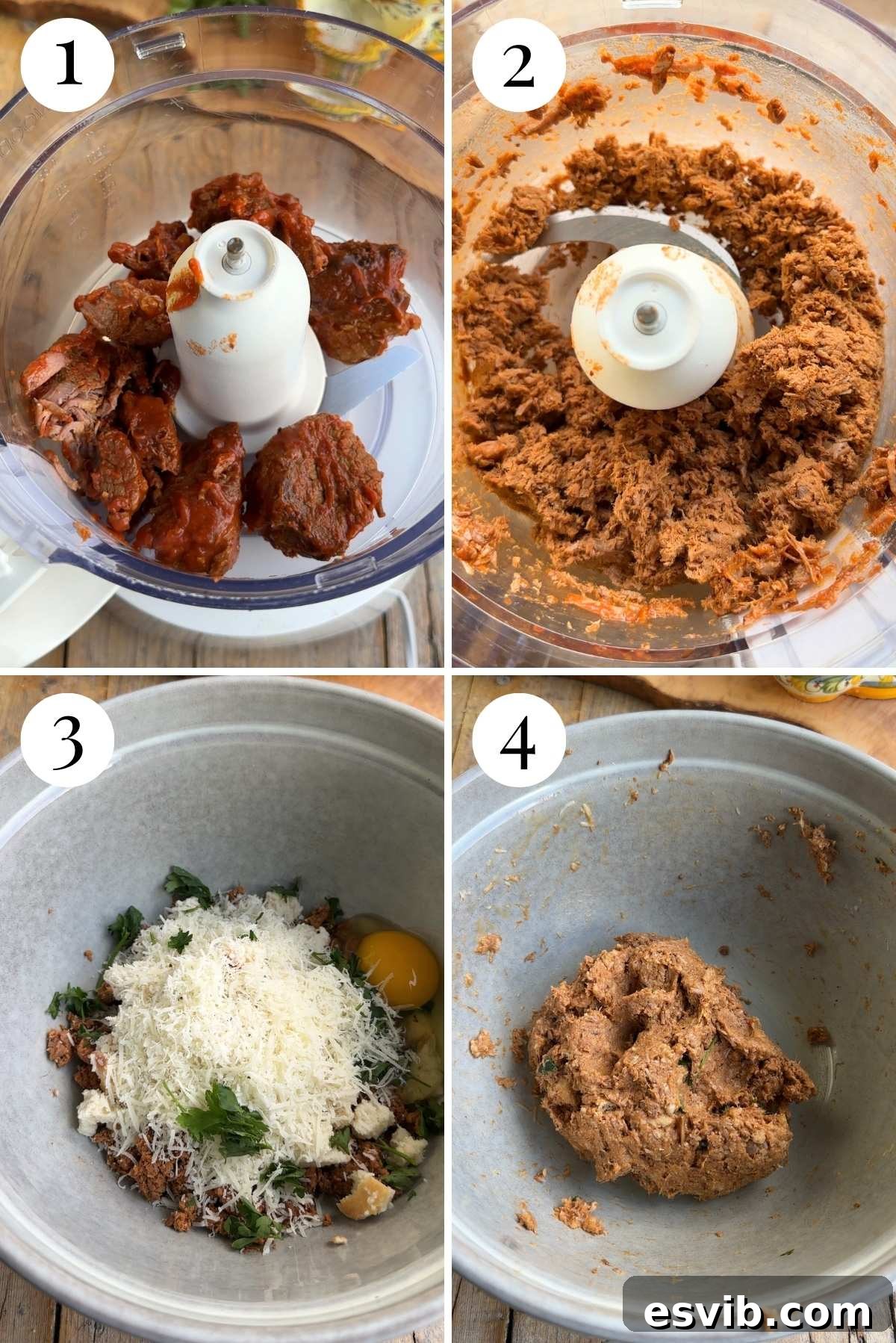
- Assemble the Meatball Mixture: Transfer the processed beef (or ground beef) to a mixing bowl. Add finely chopped fresh parsley, grated Pecorino Romano (or Parmigiano Reggiano for a milder flavor), and one egg. Carefully squeeze out the excess milk from the soaked bread and crumble it into the beef mixture. Season with a generous pinch of salt. Using your hands, mix all the ingredients thoroughly until everything is well combined. Be careful not to overmix, as this can lead to tough meatballs.
- Roll the Tiny Meatballs: Take small portions of the meat mixture, approximately ½ teaspoon per meatball, and gently roll them into tiny, uniform spheres. The goal is to create between 60 to 70 miniature meatballs, ensuring each layer of your lasagna gets a delightful sprinkle. Their small size allows them to cook quickly and distribute evenly throughout the dish.
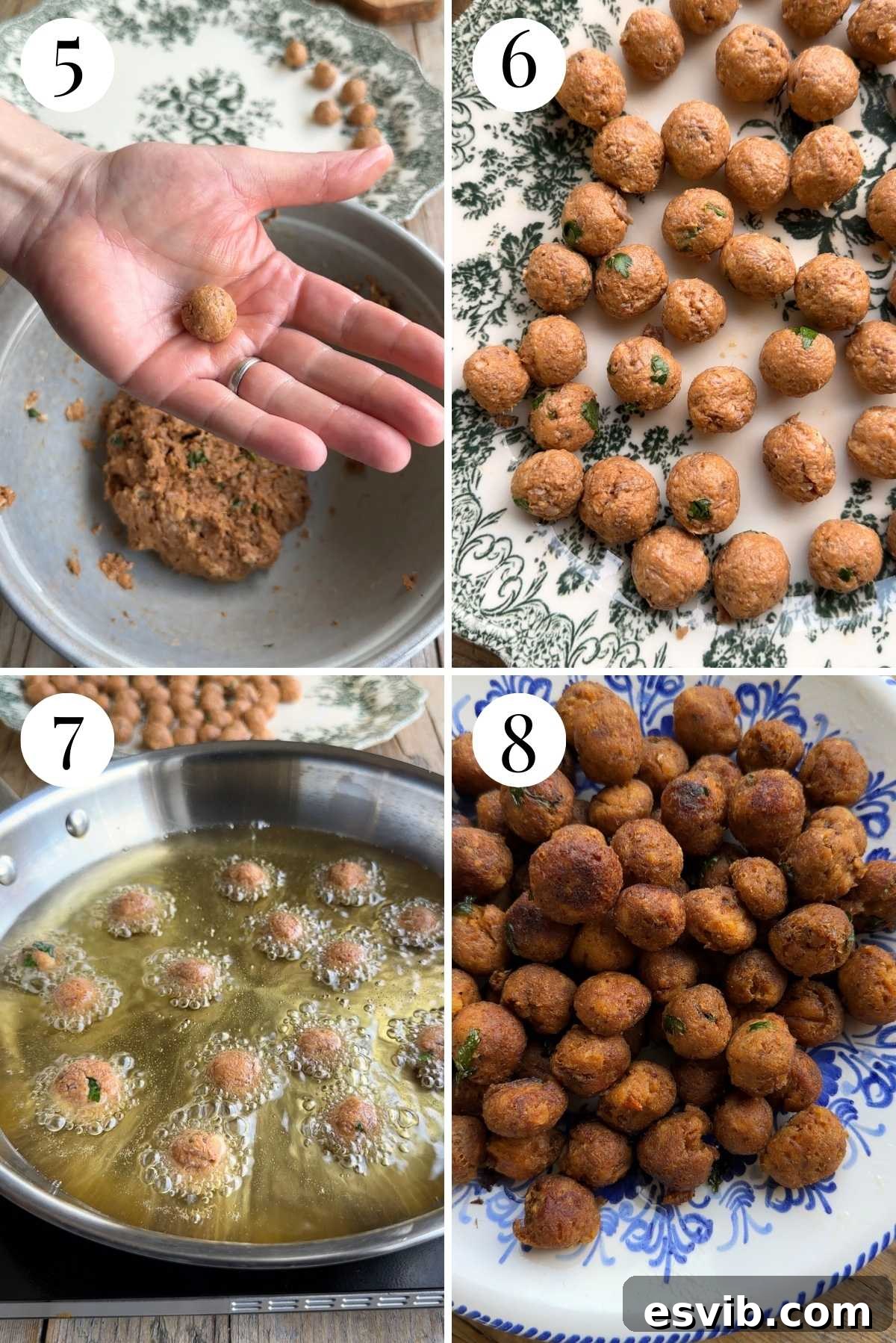
- Fry the Meatballs to Perfection: Heat about 1 inch of sunflower oil (or another neutral-flavored oil) in a large, heavy-bottomed pan until hot but not smoking. Carefully fry the tiny meatballs in batches, ensuring not to overcrowd the pan. Cook until they are beautifully browned and cooked through. Once fried, transfer them to a plate lined with kitchen paper to drain any excess oil, ensuring they remain crisp and flavorful.
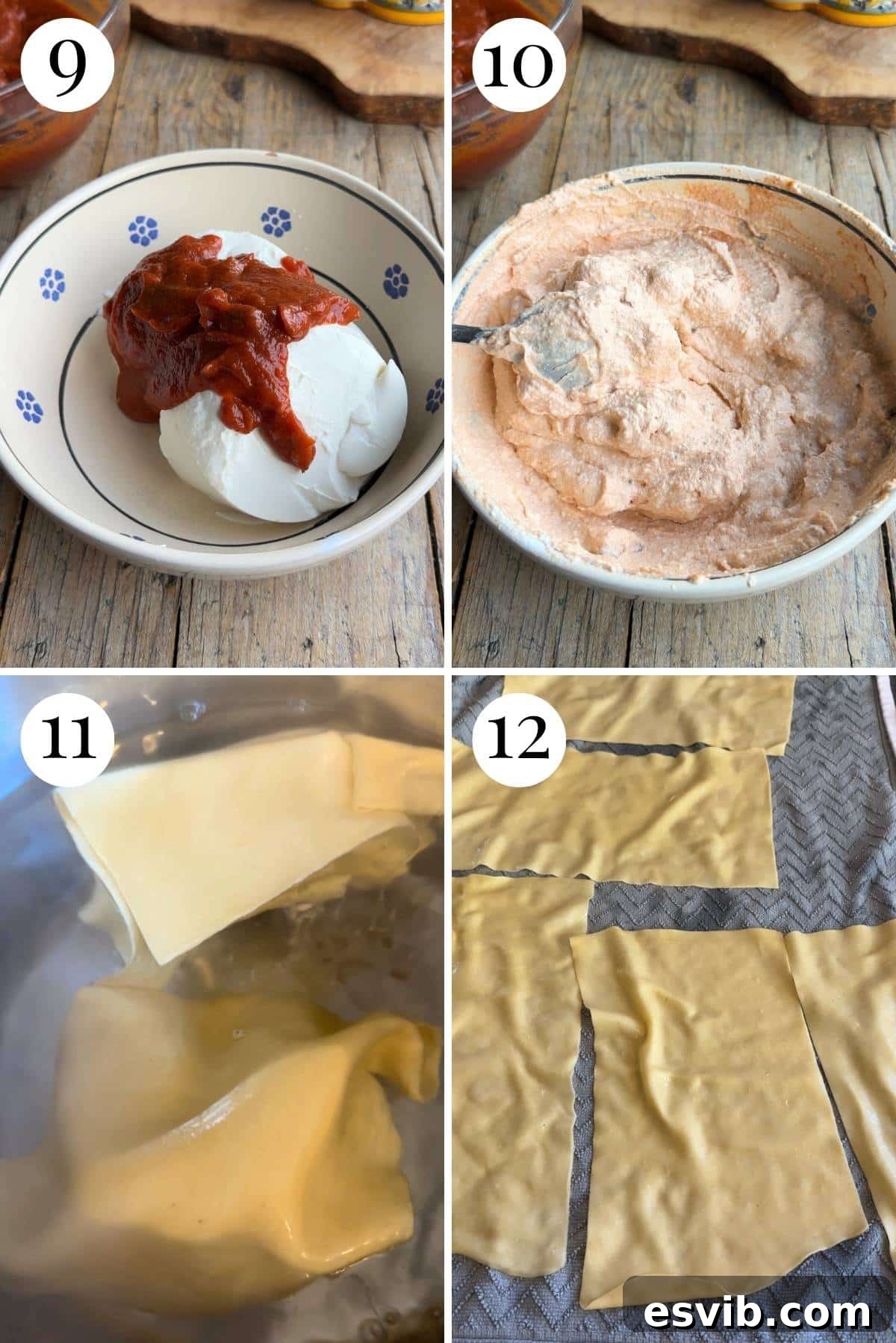
- Prepare the Creamy Ricotta Mixture: In a separate bowl, combine the fresh ricotta cheese with about ¼ cup (60ml) of your prepared Ragù alla Napoletana sauce. Mix these two ingredients together until they are thoroughly combined and create a smooth, creamy, and slightly pink mixture. This seasoned ricotta will add a rich, tangy creaminess to your lasagna layers, characteristic of the Neapolitan style.
Assembling Your Lasagna di Carnevale
- Prepare and Blanch the Pasta Sheets: If using homemade pasta, roll out your pasta dough into thin sheets, ensuring they are sized to fit your lasagna dish. Bring a large pot of heavily salted water to a rolling boil. Blanch the pasta sheets in batches for a mere 10-20 seconds—just enough to make them pliable. Carefully remove them with tongs and lay them flat on a clean kitchen towel to prevent sticking. If using store-bought fresh pasta, blanch them similarly.
- Begin Layering the Lasagna: Spread a small, thin spoonful of your rich Ragù alla Napoletana sauce evenly across the bottom of your lasagna dish. This prevents the first pasta layer from sticking and infuses flavor from the base up. Next, lay a single layer of blanched pasta sheets over the sauce, trimming any overlaps to fit perfectly. Spoon a generous amount of the tomato sauce over the pasta, followed by several dollops of the creamy ricotta mixture. Gently spread the ricotta to create an even layer, covering the pasta completely.
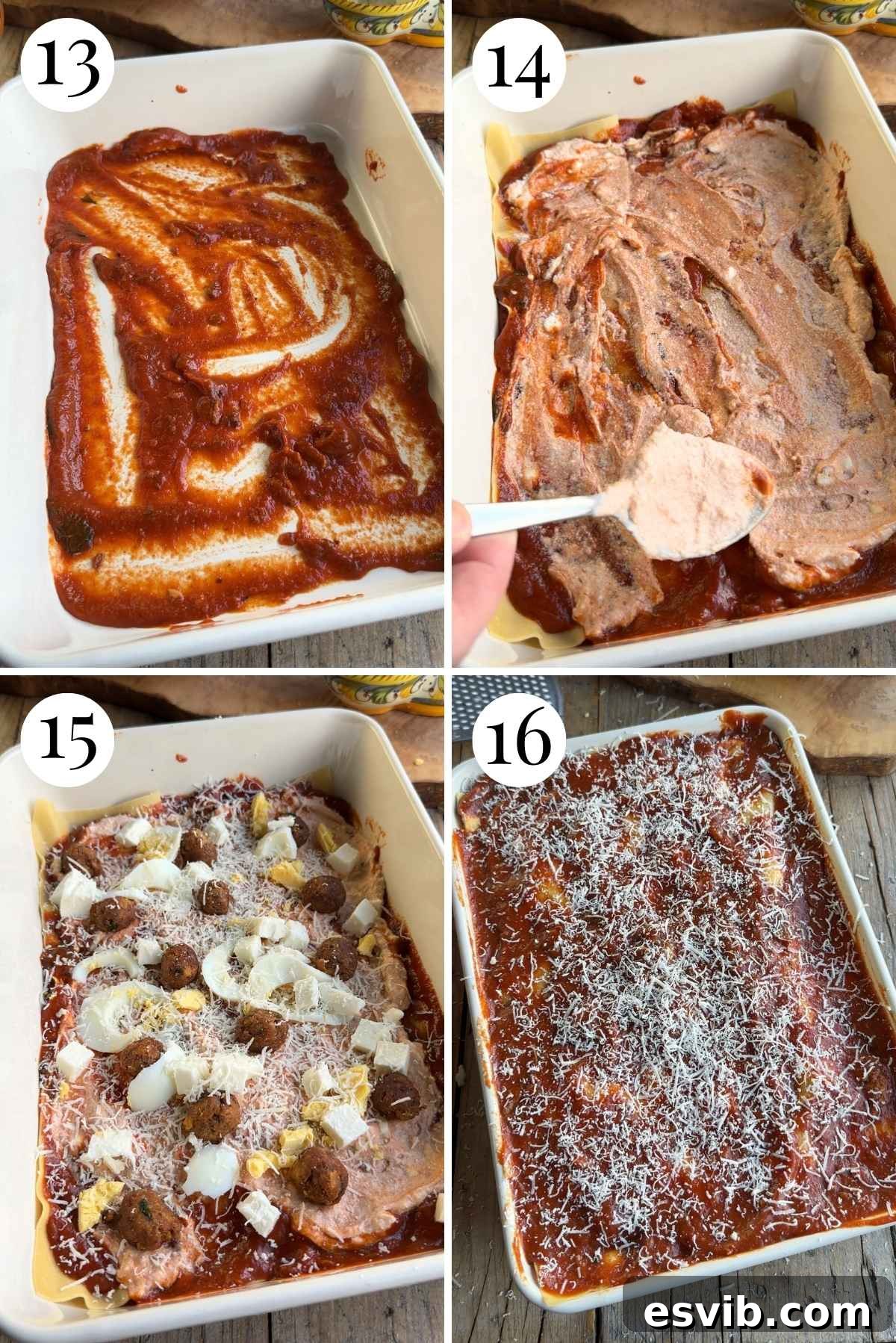
- Add the Hearty Fillings: Over the ricotta and sauce layer, generously sprinkle about 15 of your perfectly fried mini meatballs. Distribute pieces of sliced hard-boiled egg evenly across the layer. Next, add a scattering of fresh mozzarella chunks for that classic gooey melt. Finally, complete the layer with a grating of Pecorino Romano or Parmigiano Reggiano, adding a sharp, salty depth of flavor.
- Repeat the Layers: Continue this layering process: pasta, sauce, ricotta, meatballs, eggs, mozzarella, and grated cheese. You should aim for a total of 5 distinct layers of pasta, which will result in 4 luscious layers of filling. Finish the very top layer of pasta with a generous coating of the rich Ragù alla Napoletana sauce and a final grating of Pecorino or Parmigiano (this top layer typically omits mozzarella for a crispier, more defined finish).
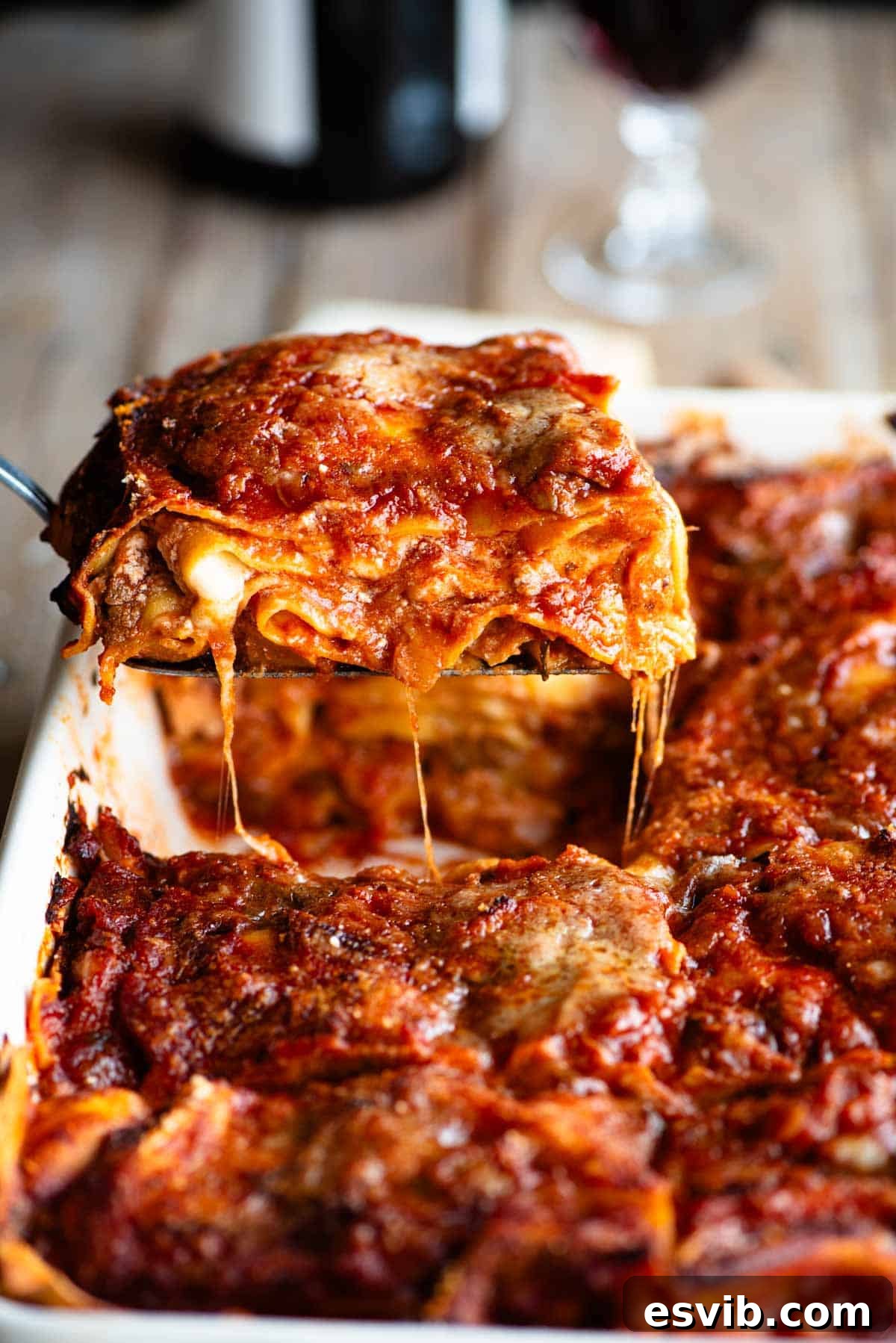
- Bake to Golden Perfection: Place your assembled lasagna, uncovered, into a preheated oven at 180°C (350°F). Bake for approximately 40-45 minutes, or until the top is bubbling, golden brown, and invitingly caramelized. Once baked, remove the lasagna from the oven and allow it to rest for at least 5-10 minutes before serving. This crucial resting period allows the layers to set, making for cleaner, more intact slices and ensuring the flavors have time to truly meld.
Explore More Italian Lasagna Creations
If you’ve enjoyed the journey through Neapolitan flavors with Lasagna di Carnevale, you’ll love exploring these other incredible Italian lasagna recipes. Each offers a unique taste of Italy’s diverse culinary heritage.
Pasta
Lasagne al Forno (Italian Beef Lasagna)
Pasta
Authentic Lasagna Bolognese (Lasagne alla Bolognese)
Pasta
Italian Lamb Lasagna with Pecorino Bechamel
Mains
Eggplant Lasagna with Prosciutto and Mozzarella
If you’ve tried this delightful Lasagna di Carnevale recipe or any other recipe from our blog, please don’t hesitate to rate it and share your experiences in the comments section below. We absolutely love hearing from you and seeing your culinary creations! You can also follow us on Facebook, Instagram, and Pinterest for daily inspiration. Or, for a direct dose of deliciousness, sign up for our Newsletter to receive our latest recipes straight to your inbox.
Step By Step Photos Above
Most of our recipes come with step by step photos, helpful tips and tricks to make it perfectly first time and even video!
Lasagna di Carnevale (Neapolitan Lasagna)
By Emily
2 hrs
25 mins
4 hrs
6 hrs
25 mins
8 servings
Equipment
-
Baking dish 9×13 inch
-
Clean kitchen towel
-
Kitchen paper
Ingredients
Sauce
- 1 batch Ragu alla Napoletana, (make this 1 day in advance, see notes)
Meatballs
- 1 thick slice crusty bread (crusts removed), (50g/2oz)
- ⅓ cup (80ml) milk
- 1 egg
- 8 oz (250g) beef brisket or ground beef, (see notes)
- 1/4 cup (30g) Pecorino or Parmigiano Reggiano, finely grated, plus extra for the layers
- Small handful fresh parsley, finely chopped
- Sunflower oil, or other flavourless oil, for frying
Fresh pasta (or use 450g/1 lb fresh store-bought pasta sheets)
- 300 g 00 flour, (2 and 1/4 cups, spooned and levelled)
- 3 large eggs
- 1 egg yolk
Other ingredients
- 2 cups (500g/1.1 lb) Ricotta
- 3 hard boiled eggs
- 8.8 oz (250g) fresh mozzarella, (2 balls)
Instructions
Prepare the ragu (1 day in advance)
-
Follow the recipe to make our Ragu alla Napoletana. Keep all of the sauce and beef for this recipe. The sausages and ribs in the sauce can be eaten as they are not needed here. Making the ragu 1 day in advance is not only easier for timing but it tastes even better the next day.
Prep the pasta dough
-
Place the flour on a clean work surface and create a wide well in the middle. Add 3 whole eggs and 1 egg yolk to the well.
-
Using a fork whisk the eggs whilst slowly incorporating the flour until it’s combined and looks like a very rough dough. You may need to use your hands once most of the egg is incorporated to help it along.
-
Bring the dough together with your hands to form a ball. Knead the dough for 10 minutes until it’s smooth and pliable. Wrap the dough in cling film and leave it to rest for at least 30 minutes at room temperature.
-
Note: if you prep the pasta the day before place it in the fridge and bring it to room temp before using. You can find a visual guide to making homemade pasta here.
To make the meatballs
-
Tear up the slice of bread and let it soak in a bowl with milk until soft.
-
Meanwhile, blitz the beef brisket in a food processor. If using ground beef mince just add it straight to a mixing bowl.
-
Put blitzed beef in a mixing bowl with finely chopped parsley, grated Pecorino (or Parmigiano) and 1 egg. Squeeze the milk out of the bread and crumble the bread into the meat mixture. Add a pinch of salt then mix everything until well combined.
-
Roll the meat mixture into tiny meatballs, we use about ½ teaspoon of mixture per meatball (you should get between 60-70 meatballs).
-
Heat about 1 inch of oil in a large pan. Once hot fry the meatballs until browned in batches, let them drain on kitchen paper.
Ricotta mixture
-
Put the ricotta in a bowl with a spoonful of sauce (about ¼ cup/60ml), mix together until well combined.
Roll out pasta dough
-
Cut the pasta dough into quarters. Work with one-quarter at a time and keep the rest wrapped up.
-
Set up your pasta machine and dust your work surface and machine lightly with flour.
-
Flatten your piece of dough and roll it through the widest setting. Fold one end of the pasta into the middle and the other end directly over it (like a leaflet) press it to flatten and pass it through the widest setting again. Repeat this process 1 more time.
-
Now pass the dough through each setting once (without folding) until you reach the second last setting (usually number 7).
Blanch the pasta
-
Bring a large pot of water to a boil and salt it well. Pre-heat your oven to 180C/350F.
-
Note: I find it easier for space to roll out the pasta and blanch it in batches as I’m assembling the lasagna.
-
Cut the lasagna sheets to fit the size of your dish then blanch them in the boiling water for about 10-20 seconds. Gently remove the sheets with kitchen tongs and place on a clean kitchen towel.
-
Repeat the rolling out and blanching process with each quarter of dough (as I mentioned you might find it easier to assemble that blanched pasta as you go).
Assemble the lasagna
-
Spread a small spoonful of tomato sauce on the bottom of your lasagna dish. Lay over 1 layer of blanched pasta (you can cut any overlaps).
-
Spoon more tomato sauce over the pasta followed by a few dollops of ricotta. Spread it out to cover the pasta.
-
Sprinkle over around 15 meatballs and pieces of hard-boiled egg. Add some mozzarella then a grating of Pecorino or Parmigiano Reggiano.
-
Repeat the layers. You should have 5 layers of pasta in total with 4 layers of filling. Finish the very top layer of pasta with sauce and grated Pecorino or Parmigiano (no mozzarella).
-
Bake uncovered 180C/350F for 40-45 mins. Let the lasagna rest for 5-10 minutes before serving.
Video
Notes
- Ragu alla Napoletana – we eat the sausages and pork ribs the day before for 1 dinner with vegetable sides. Keep as much sauce as possible for the lasagna and keep the brisket for meatballs.
- Beef – if you don’t have beef brisket for the meatballs you can use ground beef mince or even a mix of beef and veal/pork.
- Meatball size – the number of meatballs will vary depending on the size you roll them, we go with about ½ teaspoon of mixture per meatball which should make between 60-70 meatballs. Aim for around 15 meatballs per layer if you have more just divide the meatballs by four for each layer.
- Boiled eggs – we find 3 eggs to be the perfect amount. There are four layers of filling so it’s just under 1 egg per layer (just eyeball it). If you want 1 egg per layer just prepare 1 more.
- Time saving tips – make the ragu 1 day in advance. If you don’t want to make homemade pasta you can use fresh store-bought lasagna sheets (still blanch them).
- Prep in advance – you can assemble the whole lasagna 1 day in advance and bake it the next day.
- Leftovers – the lasagna will keep well in the fridge for 2 days. Reheat it in the oven until piping hot (about 30-40 minutes).
Helpful Info for All Recipes
- I always use extra virgin olive oil in all of my recipes unless stated otherwise.
- When I use canned or jarred tomatoes of any kind I always use Cirio or Mutti brands for the best results and flavour.
- All vegetables are medium sized unless stated otherwise.
- All recipes are tested and developed using a fan (convection) oven.
- Find out more about how nutrition is calculated.
- Check out our must-have Italian Pantry Staples.
- You can also find all our Essential Kitchen Tools for Italian Cooking.
Nutrition
Carbohydrates: 54g |
Protein: 37g |
Fat: 25g |
Saturated Fat: 13g |
Polyunsaturated Fat: 2g |
Monounsaturated Fat: 8g |
Trans Fat: 0.01g |
Cholesterol: 264mg |
Sodium: 504mg |
Potassium: 1375mg |
Fiber: 4g |
Sugar: 12g |
Vitamin A: 1880IU |
Vitamin C: 23mg |
Calcium: 427mg |
Iron: 7mg
Nutrition information is automatically calculated, so should only be used as an approximation.
Did you try this recipe?
Leave a comment below!