
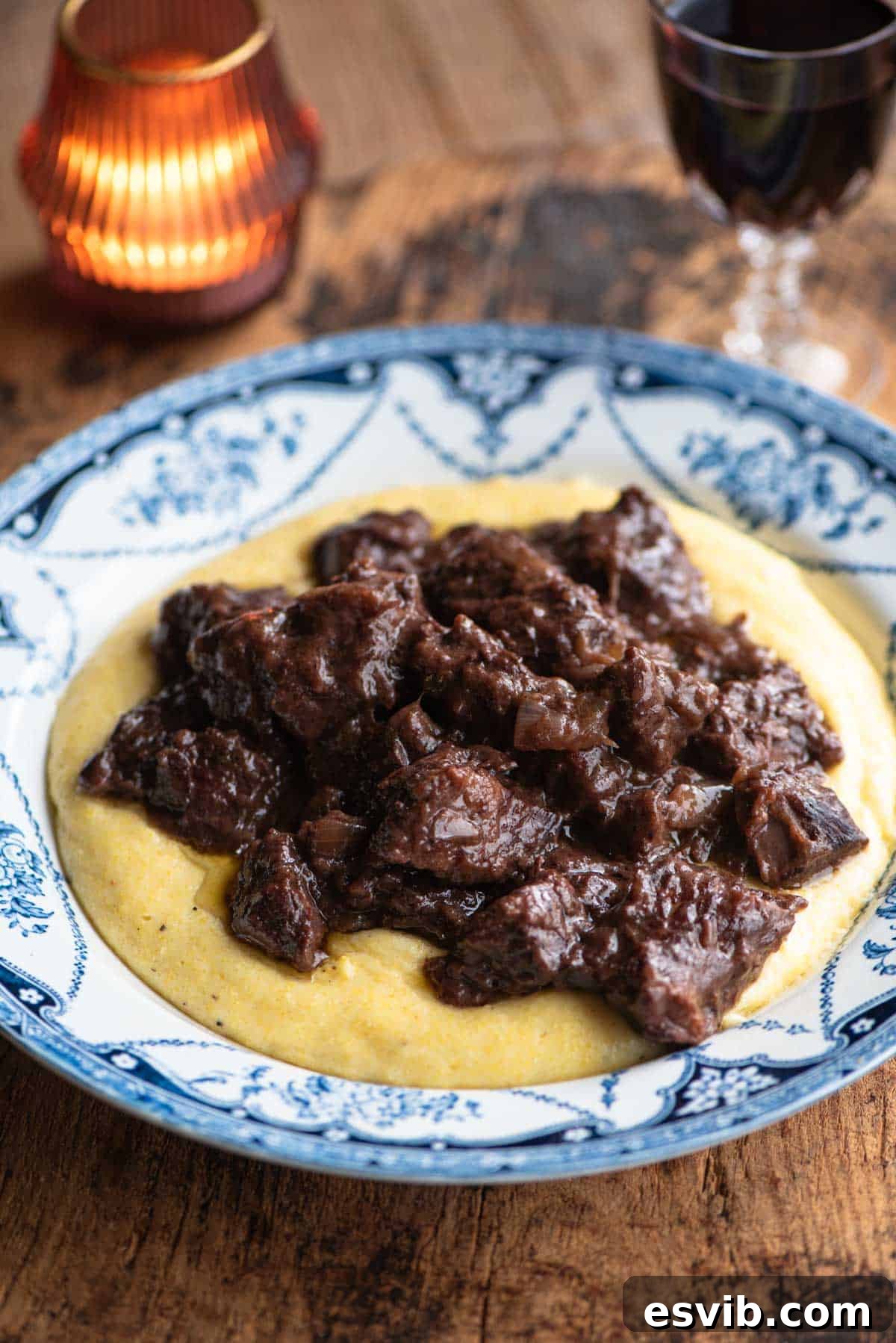
Carbonade Valdostana: The Ultimate Italian Red Wine Beef Stew
Prepare to be transported to the snow-capped peaks of the Italian Alps with Carbonade Valdostana, a truly magnificent beef stew hailing from the picturesque Aosta Valley. This iconic regional dish is much more than just a meal; it’s an embrace in a bowl, a warming symphony of robust flavors that makes it the quintessential comfort food for chilly evenings. Crafted with generous amounts of full-bodied red wine, deeply aromatic spices like cinnamon and cloves, fresh herbs, and sweet onions, this stew promises a culinary experience unlike any other. It’s absolutely perfect for a cozy night in, especially when served alongside a luxurious, creamy polenta, which soaks up every drop of its rich, savory sauce.
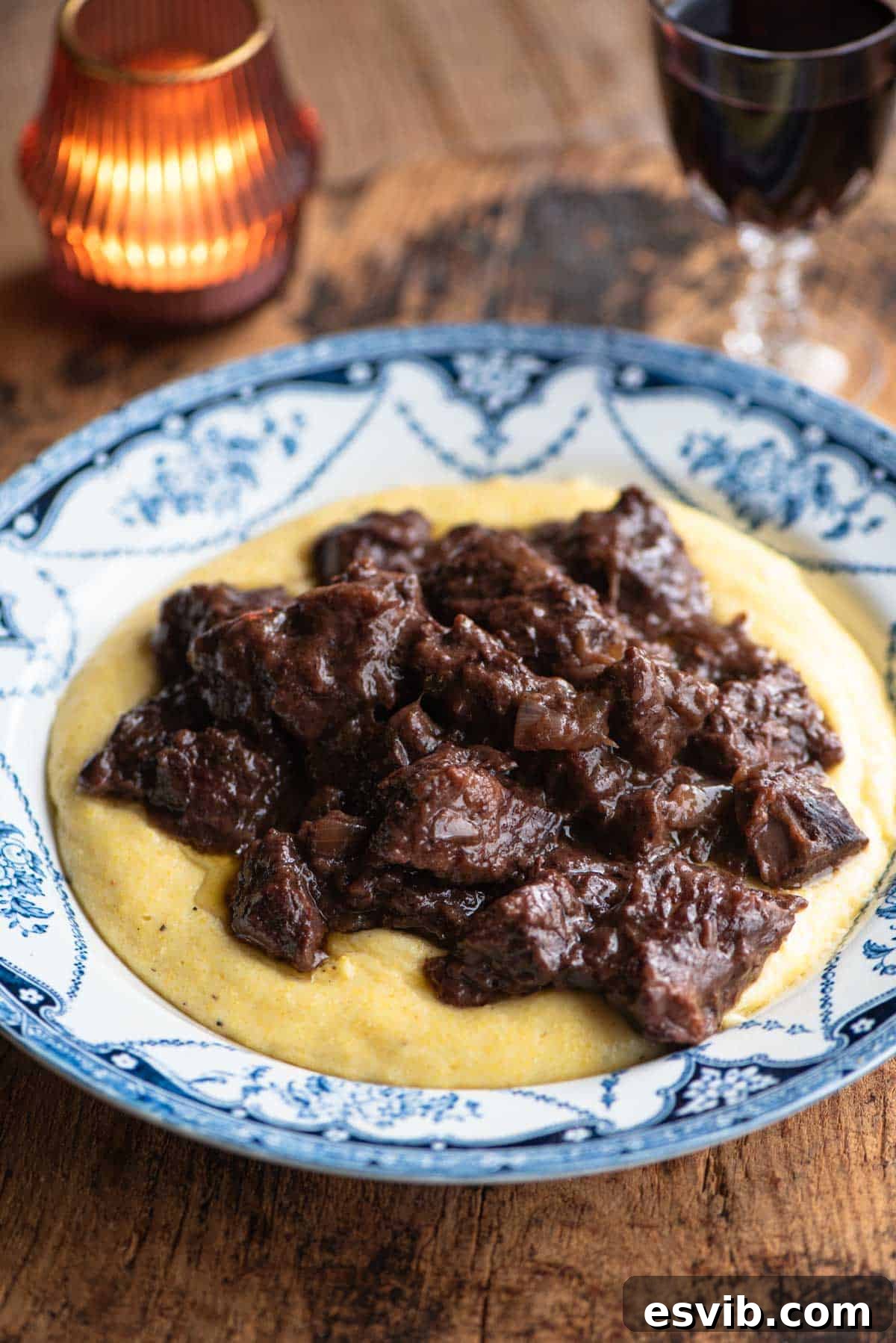
The Aosta Valley: A Culinary Gem in the Italian Alps
Nestled high in the Italian Alps, the Aosta Valley is a unique autonomous region celebrated for its breathtaking landscapes, rich history, and distinctive culinary heritage. The harsh mountain climate and historical isolation have shaped a cuisine that is wonderfully rustic, incredibly hearty, and profoundly comforting. Staples include local cheeses like Fontina, robust cured meats, and dishes designed to provide warmth and sustenance. Beyond Carbonade Valdostana, the region boasts other beloved creations such as Zuppa alla Valpellinese, a hearty bread and cabbage gratin, and Fontina cheese risotto, showcasing the region’s prized dairy.
Carbonade Valdostana: A Historical and Flavorful Tradition
Carbonade, or Carbonada as it’s sometimes called (and emphatically *not* to be confused with Carbonara, the famous Roman pasta dish!), stands as a testament to Aostan culinary ingenuity. Historically, this stew was often prepared with beef that had been preserved in salt – a common practice in mountain regions before modern refrigeration. This salting process imparted a deeper, more complex flavor to the meat, which is then further enhanced by slow cooking in red wine, a medley of fragrant herbs, and incredible, warming spices. The result is a profoundly savory and aromatic dish that nourishes both body and soul.
The magic of Carbonade lies in its long, gentle simmer, allowing the beef to become incredibly tender and the flavors to meld into a rich, cohesive sauce. The interplay of sweet onions, earthy sage and bay leaf, and the unique notes of cloves, juniper berries, cinnamon, and nutmeg creates an unforgettable aroma that fills your kitchen. Each spoonful offers a delightful balance of savory meat, sweet wine, and exotic spice.
Serving Suggestions: The Perfect Accompaniment
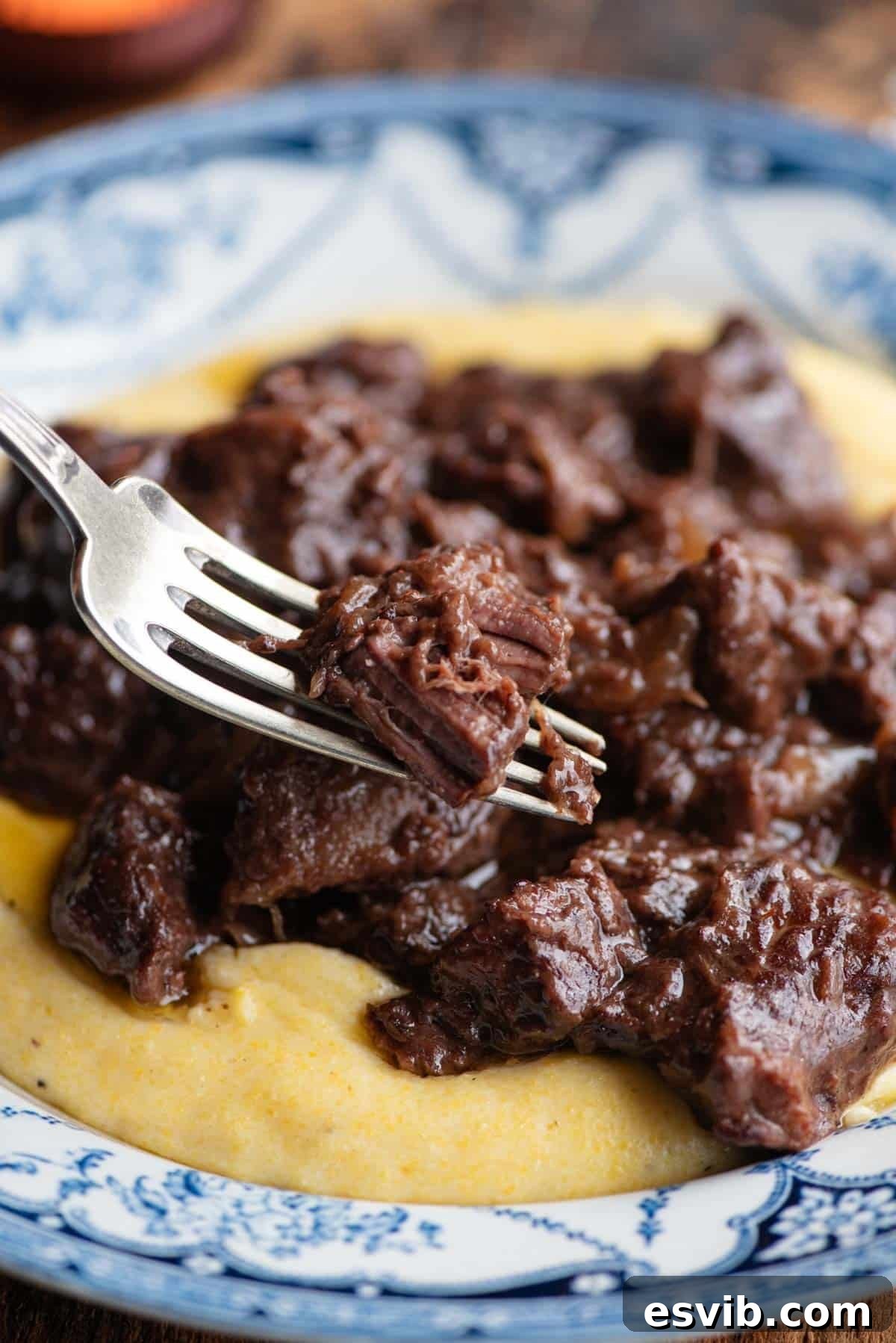
Traditionally, Carbonade Valdostana is served on a generous bed of creamy polenta. Making fresh polenta from scratch is highly recommended, as its subtle corn flavor and velvety texture provide the perfect canvas for the stew’s robust sauce, making the entire dish even more comforting and satisfying. The polenta acts like a sponge, absorbing all the delicious juices. However, if polenta isn’t to your taste or you’re short on time, fluffy mashed potatoes are another excellent alternative, offering a similar comforting embrace. Crusty bread is also a must for soaking up any remaining sauce.
The Importance of Wine Selection in Carbonade
The choice of red wine is paramount to achieving an authentic and deeply flavored Carbonade Valdostana. While many recipes suggest using “any good red wine,” for true authenticity, a red wine from the Aosta Valley itself, such as a Torette, would be ideal. These wines often possess the earthy notes and acidity that complement the stew’s rich profile. If Aostan wines are hard to find, a good quality Northern Italian red wine will work beautifully. We’ve had fantastic results using a Barbera d’Asti, known for its bright acidity and dark fruit notes, which cut through the richness of the beef perfectly. Other excellent choices include a Nebbiolo from Piedmont, a Valpolicella from Veneto, or even a robust Chianti from Tuscany, provided it’s not overly tannic or oaky. The key is a dry, full-bodied red that you would enjoy drinking on its own, as its flavors will concentrate during the long cooking process, becoming the very backbone of your stew.
Essential Ingredients for Carbonade Valdostana
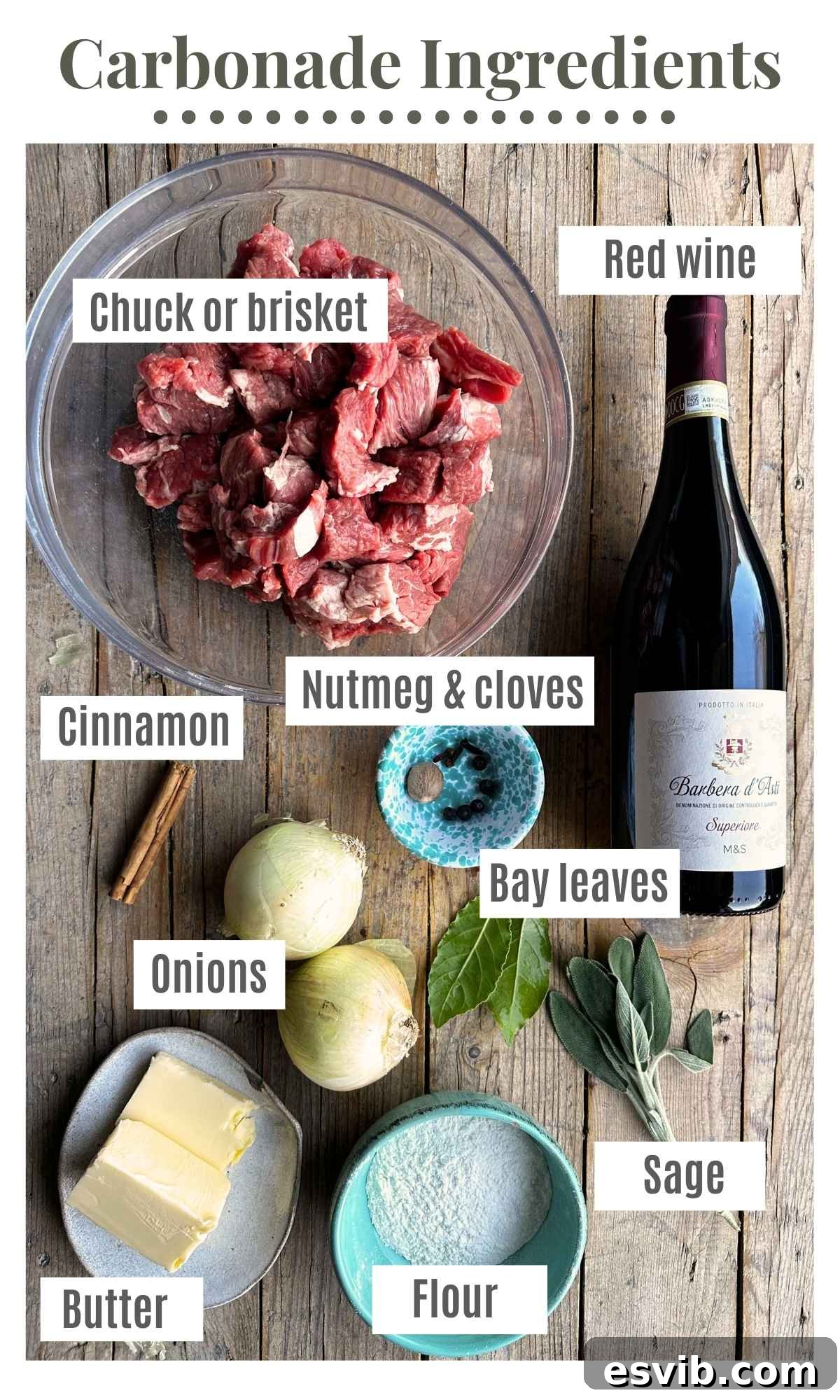
Ingredient Notes and Substitutions for Best Results
- Beef Brisket or Chuck: These cuts are ideal for slow cooking as they contain connective tissue that breaks down into gelatin, resulting in incredibly tender, melt-in-your-mouth beef. If you’re using beef chuck, ensure it has ample fat marbling throughout; this fat renders during cooking, adding flavor and preventing the meat from becoming dry and tough. Avoid overly lean cuts, as they won’t yield the same rich texture and depth of flavor.
- Italian Red Wine: As discussed, a northern Italian red wine is highly recommended. Barbera d’Asti is an excellent choice, providing a lovely balance of acidity and fruit. Other suitable options include Nebbiolo, Valpolicella, or any dry, medium-to-full-bodied red wine. If you prefer a non-alcoholic version, a high-quality beef broth can be used, though it won’t replicate the distinct flavor profile imparted by the wine.
- White Onions: White onions tend to be milder and sweeter when cooked down, contributing a lovely caramelized depth to the stew. Brown onions can also be used; they offer a slightly more pungent flavor that mellows beautifully with slow cooking. Ensure they are sliced to a medium thickness to withstand the long simmer without disintegrating entirely.
- Cloves, Juniper Berries, Nutmeg & Cinnamon Stick: These are the “festive” spices that give Carbonade its unique warmth and aromatic complexity. Cloves offer a pungent sweetness, juniper berries provide a piney, slightly peppery note, nutmeg adds a delicate, earthy warmth, and a cinnamon stick infuses a subtle sweetness and spice. Together, they create a wonderfully nuanced flavor profile that distinguishes this stew. Feel free to adjust the quantities to your preference, but don’t omit them entirely, as they are crucial to the authentic taste.
- Sage and Bay Leaf: Fresh sage leaves are a hallmark of Aostan cuisine and are particularly wonderful in this dish, lending an earthy, slightly peppery aroma. Bay leaves contribute a subtle, almost minty depth. While this recipe specifically calls for sage and bay, some traditional recipes also include fresh thyme or rosemary, which can be lovely additions if you enjoy their flavors.
- All-Purpose Flour: A light dusting of flour on the beef serves two important purposes: it helps create a beautiful brown crust during searing (the Maillard reaction), locking in juices and developing complex savory notes, and it slightly thickens the sauce as the stew simmers. Ensure you shake off any excess flour to prevent a gummy texture.
- Unsalted Butter & Olive Oil: Carbonade is traditionally cooked in butter, a common practice in many Northern Italian dishes, contributing to its rich flavor. However, butter can burn easily at high temperatures. To prevent this, adding a drizzle of olive oil along with the butter raises the smoke point, allowing you to achieve a perfect sear on the beef without burning the fat.
- Salt and Pepper: Essential for seasoning the beef and balancing the final flavors of the stew. Always season generously at various stages of cooking.
Step-by-Step Cooking Guide for Carbonade Valdostana
This is a visual guide to help you with each step, ensuring you achieve a perfect Carbonade every time. For the full written recipe, ingredient amounts, and additional tips, please scroll to the recipe card below.
- Prepare and Brown the Beef: Begin by cutting your beef chuck or brisket into medium-sized chunks if not already done. Season the beef generously with salt, ensuring an even coating. Next, lightly dust the salted beef with all-purpose flour, making sure to shake off any excess flour; you want just a thin film to aid in browning and thickening. In a heavy-based pot or Dutch oven, melt half of the unsalted butter with a drizzle of olive oil over medium-high heat. Once the fat is shimmering, brown the beef in batches on all sides. This is a crucial step for developing deep flavor (the Maillard reaction). Avoid overcrowding the pot, as this will steam the meat instead of searing it. Remove the browned beef to a plate and set aside, retaining any juices that accumulate (photos 1-3).
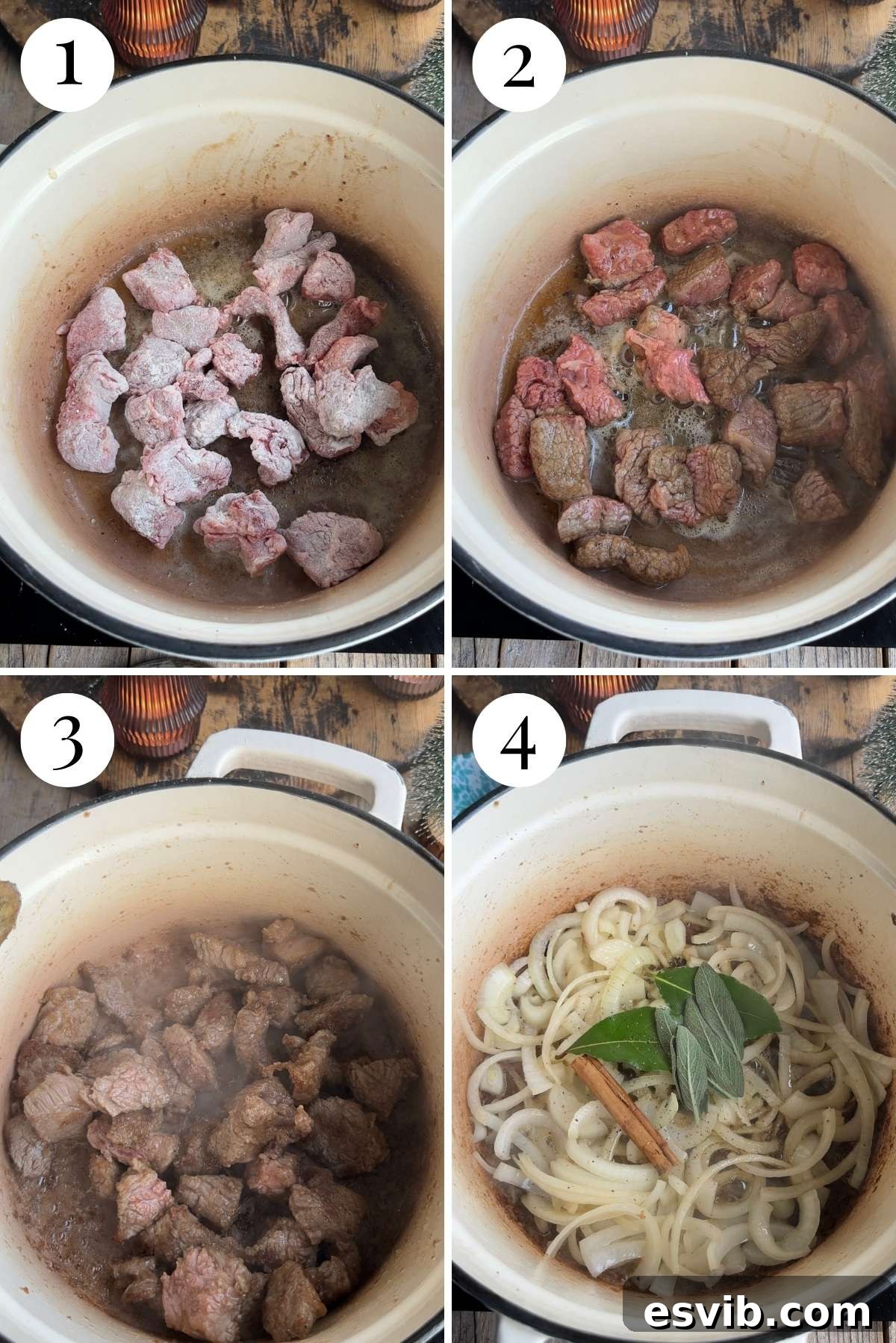
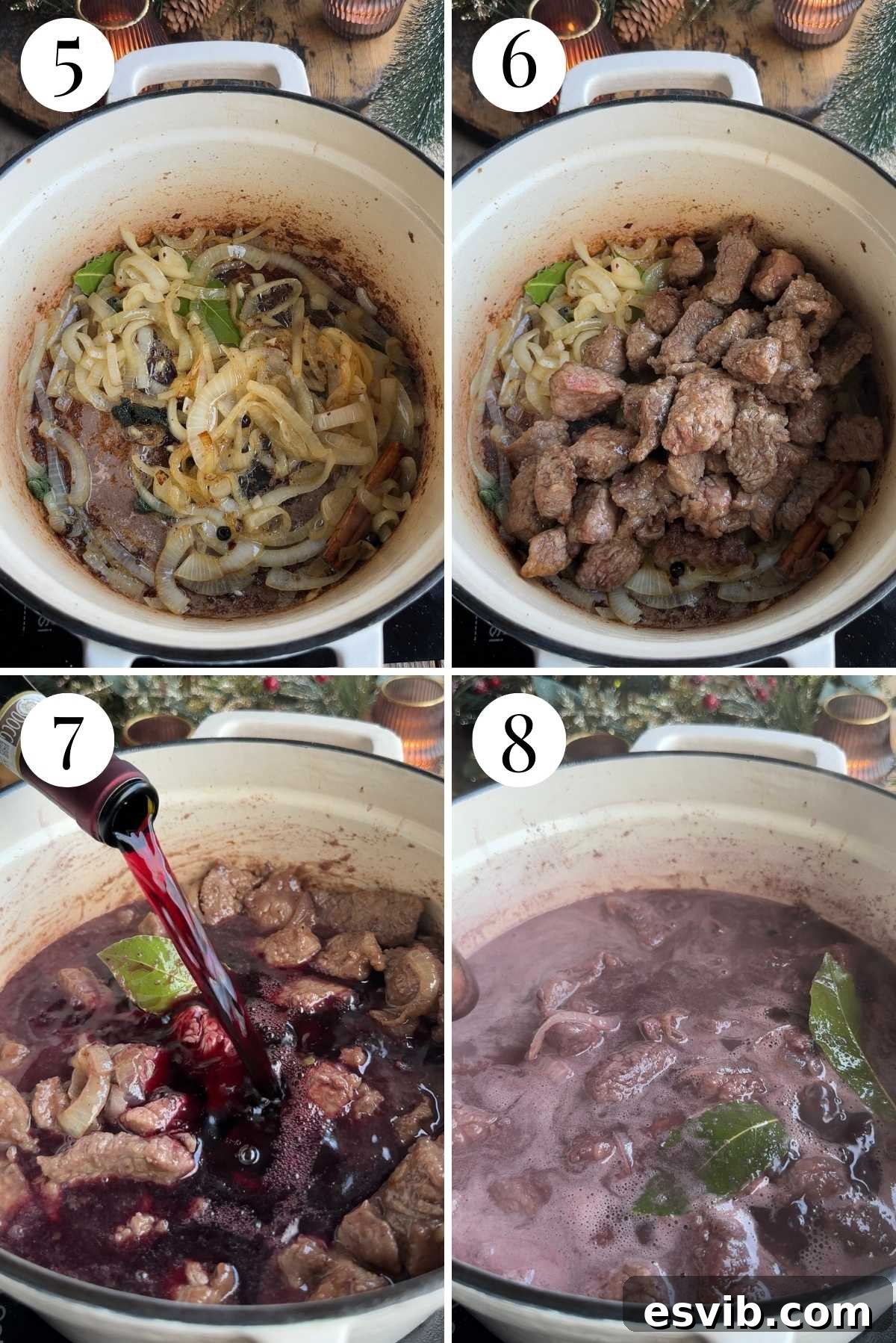
- Sauté the Onions and Infuse Spices: Once all the beef is browned and removed, add the remaining half of the butter and another drizzle of olive oil to the same pot. Reduce the heat to medium-low. Add the sliced white onions along with all the herbs and whole spices (cloves, juniper berries, nutmeg, cinnamon stick, sage, and bay leaves). Sauté gently, stirring often, for about 7-10 minutes until the onions are beautifully softened and translucent, and the spices have become wonderfully fragrant. This slow sauté allows the onions to sweeten and the spices to release their full aroma without burning (photos 4 and 5).
- Deglaze and Simmer: Return the browned beef and any accumulated juices to the pot with the softened onions and spices. Pour in a splash of red wine. Increase the heat slightly and let it bubble for a few seconds, using a wooden spoon to scrape up any delicious brown bits (known as “fond”) stuck to the bottom of the pot. This deglazing step adds immense flavor to the sauce. Once deglazed, add the rest of the bottle of red wine. Bring the liquid to a gentle simmer, then reduce the heat to very low. Cover the pot with a lid, leaving it slightly ajar to allow some steam to escape and the sauce to subtly concentrate. Cook for 2 hours, allowing the flavors to deepen and the beef to tenderize (photos 6-8).
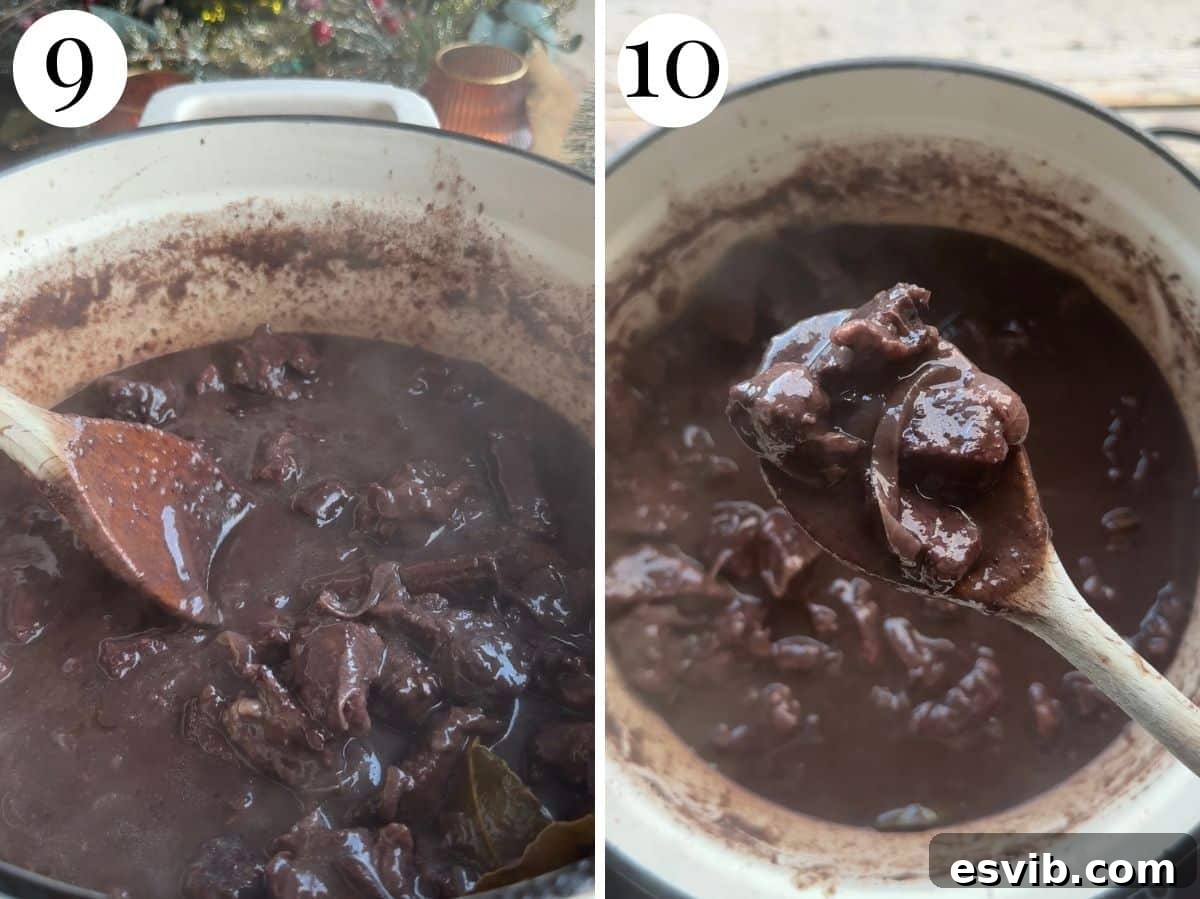
- Uncover and Reduce: After the initial 2 hours of simmering, completely uncover the pot. Continue to cook the stew for another 30 minutes (or longer, if needed), allowing the sauce to reduce slightly and thicken to your desired consistency. The beef should be incredibly tender and easily pierced with a fork. Season with salt and freshly ground black pepper to taste. Serve immediately with creamy polenta or mashed potatoes, and enjoy this authentic taste of the Aosta Valley (photos 9 and 10).
More Comforting Italian Recipes to Try
Mains
Peposo – Tuscan Red Wine Beef Stew
Mains
Zuppa alla Valpellinese (Cheese and Cabbage Casserole)
Pasta
Pasta alla Norcina (Creamy Sausage and Truffle Pasta)
Italian Ragu and Stews
Italian Beef Stew with Potatoes (Spezzatino di Manzo)
We hope you thoroughly enjoy preparing and savoring this magnificent Carbonade Valdostana recipe. If you’ve tried this dish or any other recipe from our blog, please don’t hesitate to rate the recipe and let us know how it turned out in the comments below. We absolutely love hearing from you and seeing your culinary creations! You can also follow us on Facebook, Instagram, and Pinterest, or sign up for our Newsletter to discover more of our delicious, rustic Italian food.
Step By Step Photos Above
Most of our recipes come with step by step photos, helpful tips and tricks to make it perfectly first time and even video!
Carbonade Valdostana
By Emily
Equipment
-
Heavy based pot or Dutch oven
Ingredients
- 1 kg/ 2 lbs beef chuck or brisket, make sure it’s not too lean
- all-purpose flour, for dusting
- 2 white onions, cut into slices (medium thickness)
- 1 bottle Italian red wine, (we used Barbera d’Asti)
- 3 cloves
- 4 juniper berries
- 1 pinch nutmeg
- 1 cinnamon stick
- 5-6 sage leaves
- 2 bay leaves
- 7 tablespoons (100g) unsalted butter
- olive oil
- salt and pepper
Instructions
-
If not already, cut the beef into medium-sized chunks and salt it generously. Dust the beef in flour shaking off any excess.
-
Heat half the butter with a drizzle of olive oil in a heavy-based pot, once melted, cook the beef in batches until browned. Set aside on a plate.
-
Add the other half of butter and another drizzle of olive oil and add the sliced onion with all of the herbs and spices. Cook the onions with the herbs and spices on a medium-low heat for about 7-10 minutes until softened.
-
Add the beef back in with any juices and add a splash of red wine. Let it bubble and deglaze the pot, scraping any brown bits for a few seconds. Add the remaining bottle of red wine. Bring to a simmer then turn down low. Cover the pot leaving the lid ajar and cook the stew for 2 hours.
-
Uncover the pot completely then let the stew simmer for another 30 minutes until the sauce has reduced slightly.
-
Serve with creamy polenta.
Notes
- Don’t use too much flour: Shake off all the excess so the beef is just lightly coated to avoid a gummy sauce.
- Spices: Feel free to adjust the herbs and spices to your own preference. Some recipes use rosemary or thyme, which can be a really nice addition for a slightly different aromatic profile.
- Serving suggestion: As with most stews, this dish tastes even better the next day as the flavors have more time to meld and deepen. Let it cool completely, refrigerate, then gently reheat the next day and serve with fresh polenta.
- Leftovers: Leftovers will keep well in an airtight container in the fridge for up to 3 days.
Helpful Info for All Recipes
- I always use extra virgin olive oil in all of my recipes unless stated otherwise.
- When I use canned or jarred tomatoes of any kind, I always use Cirio or Mutti brands for the best results and flavor.
- All vegetables are medium sized unless stated otherwise.
- All recipes are tested and developed using a fan (convection) oven.
- Find out more about how nutrition is calculated.
- Check out our must-have Italian Pantry Staples.
- You can also find all our Essential Kitchen Tools for Italian Cooking.
Nutrition
Carbohydrates: 12g |
Protein: 53g |
Fat: 36g |
Saturated Fat: 15g |
Polyunsaturated Fat: 3g |
Monounsaturated Fat: 18g |
Trans Fat: 2g |
Cholesterol: 452mg |
Sodium: 225mg |
Potassium: 1183mg |
Fiber: 2g |
Sugar: 4g |
Vitamin A: 417IU |
Vitamin C: 4mg |
Calcium: 114mg |
Iron: 7mg
Nutrition information is automatically calculated, so should only be used as an approximation.