
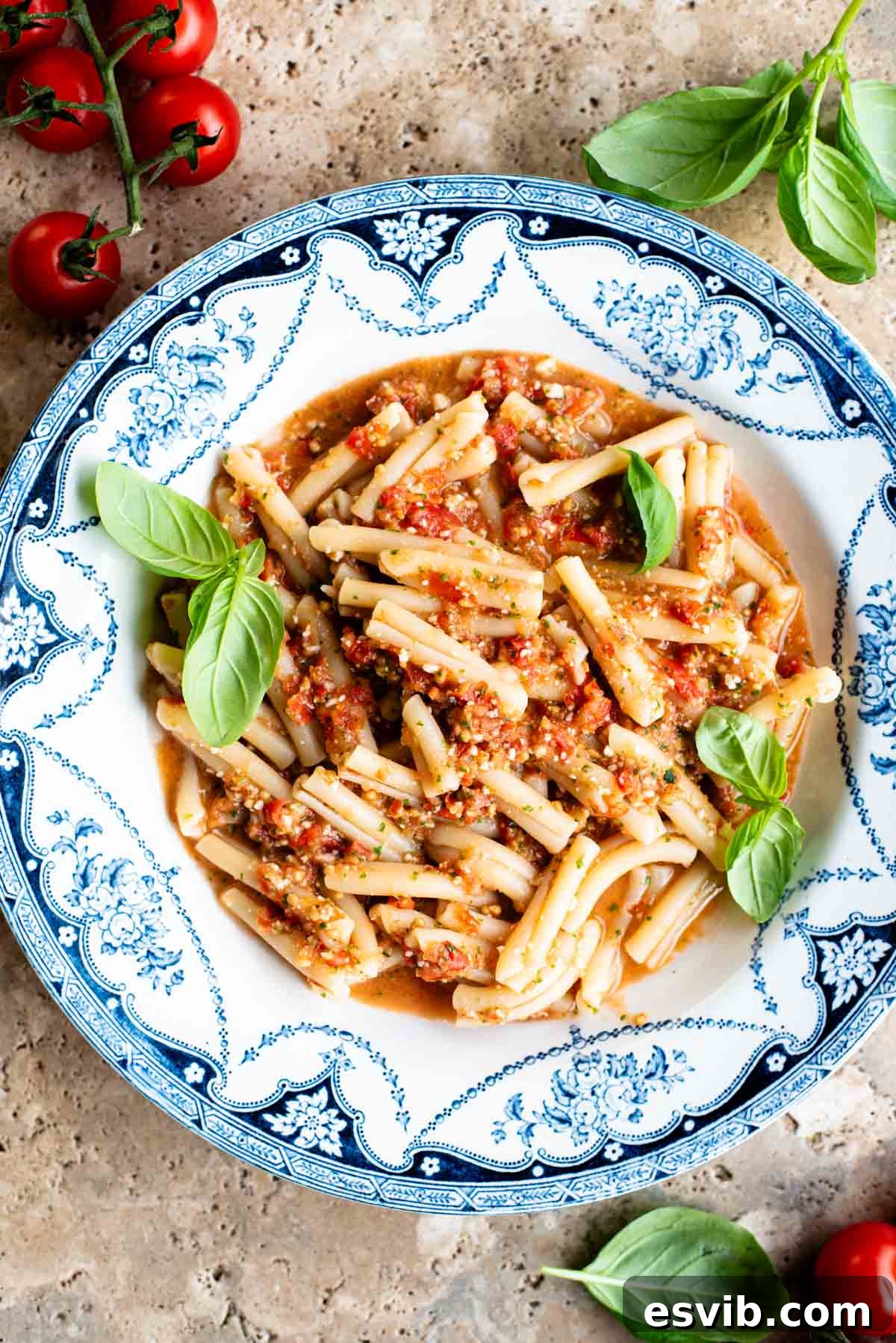
Effortless & Flavorful: The Ultimate No-Cook Tomato Pasta Sauce for Summer
Imagine a pasta dish so incredibly fresh and vibrant, it tastes like pure sunshine. Now imagine it requires no cooking for the sauce itself and is ready in less time than it takes to boil your pasta! This isn’t a dream; it’s our ultimate no-cook tomato sauce. Made with a mere handful of peak-season ingredients, it delivers an explosion of natural flavors that will revolutionize your summer cooking. It’s truly one of the easiest, most delicious, and refreshing pasta recipes you can whip up when the temperatures soar, making it an absolute lifesaver for busy weeknights or lazy weekends.
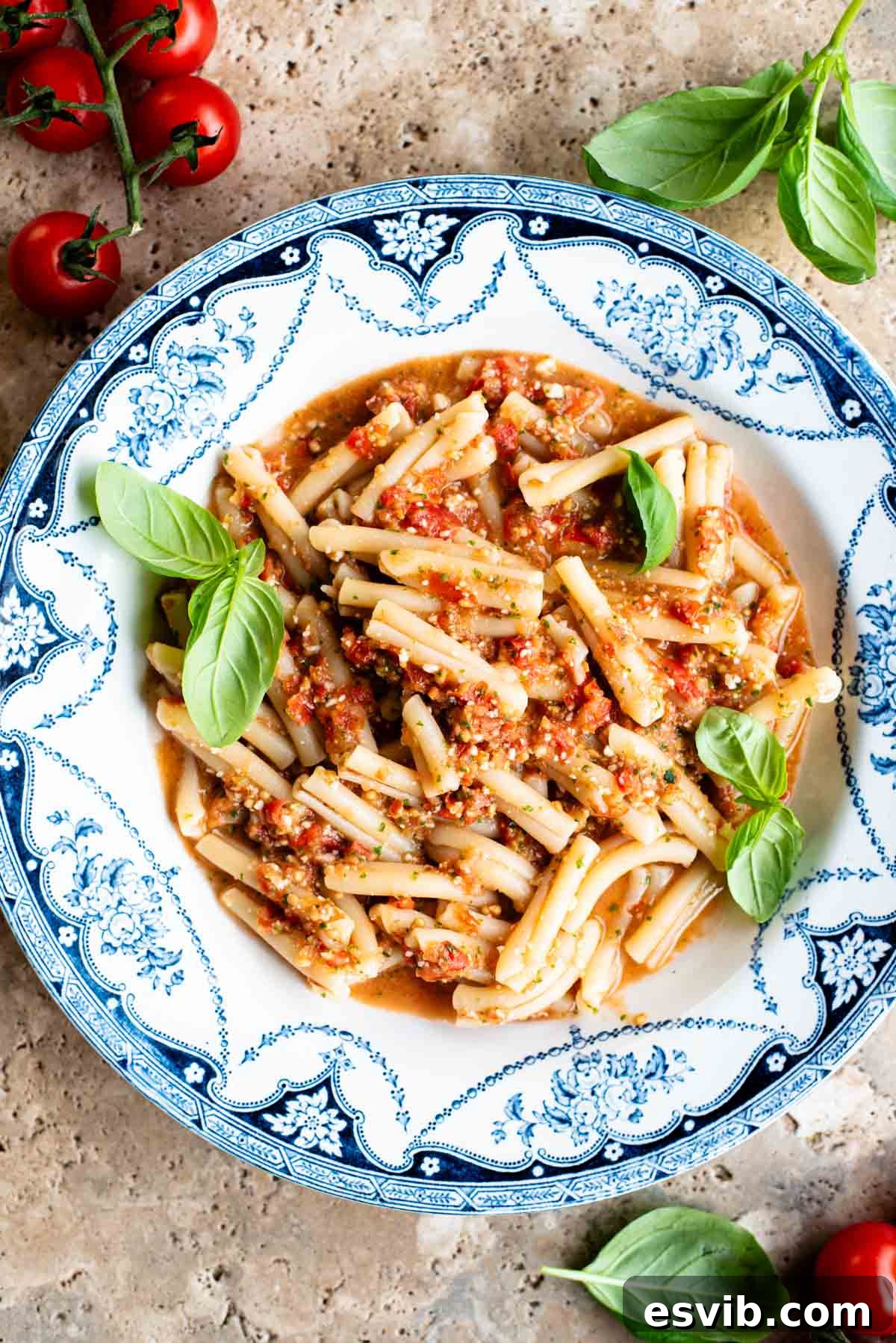
The Magic of No-Cook: Why This Pasta is a Summer Essential
This pasta embodies the very essence of summer in a bowl. It’s your absolute go-to when the thought of standing over a hot stove is unbearable, and especially when tomatoes are at their peak ripeness – bursting with natural sweetness and juiciness. There’s an unparalleled joy in creating something so utterly delicious with minimal effort, allowing you to savor the warmth of the season without adding to it in your kitchen.
The sauce is astonishingly refreshing, intensely flavorful, and deceptively simple. Its magic lies in just four core ingredients, each playing a crucial role in creating a harmonious, bright, and satisfying meal: ripe cherry tomatoes, fragrant garlic, savory Parmigiano Reggiano, and fresh basil. This combination is a testament to Italian culinary philosophy – embracing high-quality, seasonal ingredients to create profound flavors.
The versatility of this dish is another reason it will become a regular in your rotation. Enjoy it warm, straight from the pot, with your freshly cooked pasta tossed directly into the vibrant sauce. Or, for a truly cooling experience, let your pasta cool completely before mixing it with the sauce. This makes it an ideal candidate for meal prepping, packing for a picnic in the park, a light lunch at the beach, or any occasion where a chilled, flavorful pasta salad hits the spot. Its delightful simplicity means you’ll want to be making this all summer long.
Ingredient Spotlight: Choosing the Best for Maximum Flavor
The success of any simple dish hinges on the quality of its ingredients, and this no-cook tomato sauce is no exception. Here’s a detailed look at what you’ll need and how to select the best components to ensure an unforgettable meal:
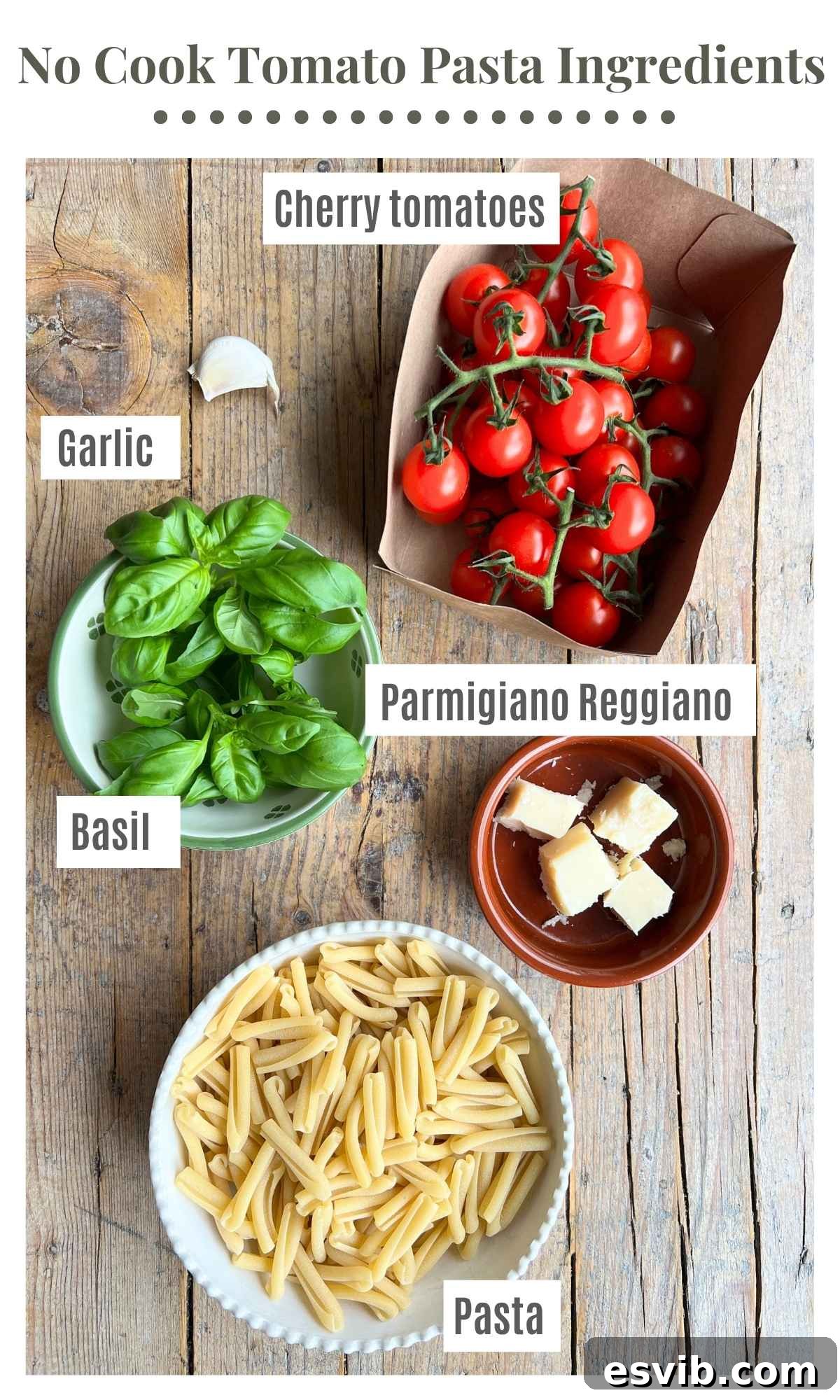
- Cherry Tomatoes: The Star of the Show – The quality of your tomatoes is absolutely paramount here. Seek out good quality, intensely ripe cherry tomatoes, preferably still on the vine if available. Their concentrated sweetness is what makes this sauce so special and complements the other ingredients perfectly. While you can use larger tomatoes like plum or San Marzano style, be aware that the flavor profile and texture of the sauce will be noticeably different and perhaps less vibrant due to their higher water content and milder sweetness. For the best result, opt for sweet, juicy cherry tomatoes that yield slightly to a gentle squeeze.
- Parmigiano Reggiano: The Umami Kick – Authentic Parmigiano Reggiano offers a salty, nutty, and deeply savory depth that is irreplaceable. Its distinctive flavor is essential for balancing the sweetness of the tomatoes and the sharpness of the garlic. If true Parmigiano Reggiano is unavailable, you can use Pecorino Romano for a sharper, saltier kick, or Grana Padano for a slightly milder, sweeter alternative. Always buy it in a block and break it into chunks for optimal texture in the sauce, rather than using pre-grated cheese.
- Fresh Garlic: The Aromatic Foundation – Just one clove of garlic is enough to infuse the sauce with its pungent, aromatic notes without overpowering the fresh tomato flavor. Ensure your garlic clove is firm and free of sprouts for the best taste.
- Fresh Basil: The Herbaceous Brightness – A generous handful of fresh basil is non-negotiable for this recipe. Its sweet, peppery, and slightly minty aroma is synonymous with summer and Italian cuisine. Use fresh leaves, not dried, as the dried version will not deliver the same bright, herbaceous quality.
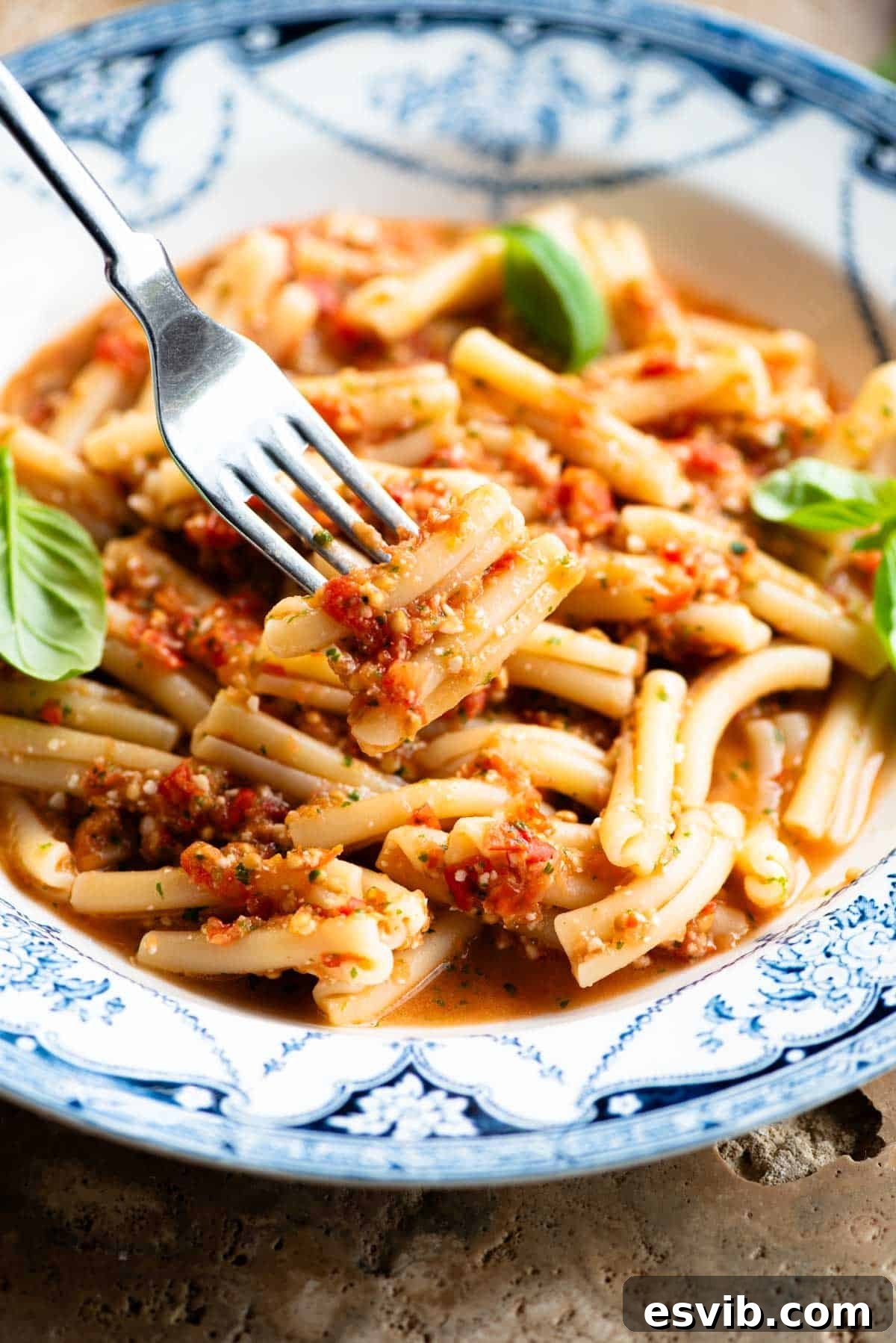
- Pasta: The Perfect Vehicle – I strongly recommend using a short pasta shape. The nooks and crannies of shapes like casarecce, fusilli, orecchiette, or penne are ideal for catching and holding onto every delicious morsel of this chunky yet saucy mixture. We used casarecce for its distinctive twisted shape, but fusilli would also be a fantastic option, allowing the sauce to cling beautifully.
- Olive Oil: The Finishing Touch – A drizzle of good quality extra virgin olive oil not only adds a silky texture to the sauce but also enhances all the flavors, bringing a richness and subtle fruitiness that ties everything together.
- Salt: To Taste – Essential for bringing out and balancing all the flavors. I prefer sea salt flakes for their texture and clean taste.
Crafting Your Perfect No-Cook Sauce: A Simple Process
The beauty of this recipe lies in its incredibly straightforward preparation, leveraging the power of your food processor. With just a few pulses, you’ll transform simple ingredients into a gourmet-level sauce. Here’s how to achieve the ideal texture and flavor:
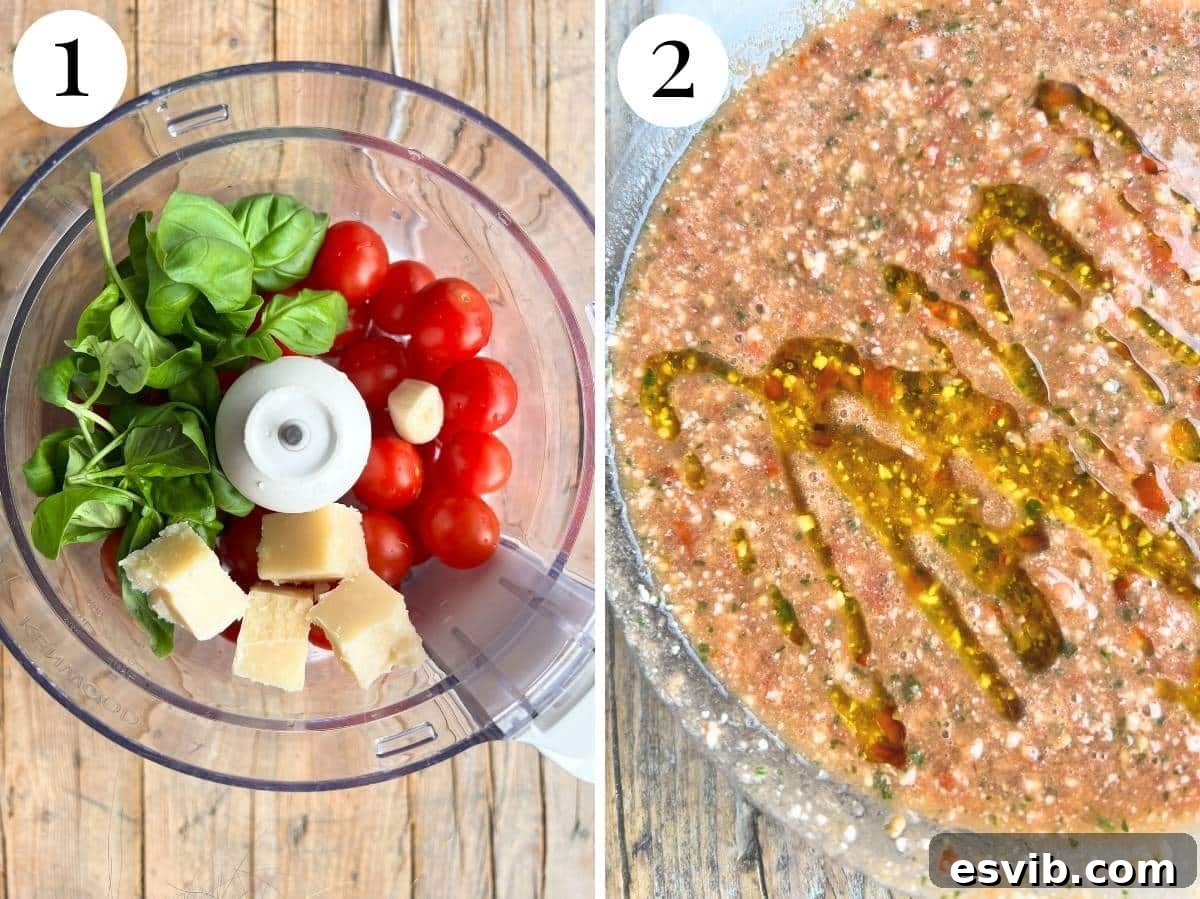
The process is as simple as gathering your ingredients and letting your food processor do the work. The goal is to achieve a delightful texture – saucy enough to coat the pasta beautifully, yet with fine, discernible pieces of tomato, cheese, and basil that provide bursts of flavor in every bite. This isn’t a completely smooth purée, but rather a rustic, fresh concoction that celebrates its raw components. Don’t be afraid to pause and scrape down the sides of your food processor bowl to ensure everything is evenly incorporated.
Pro Tips for a Flawless Finish
- Embrace the Chunk: Don’t Grate Your Cheese – This is a critical tip for texture! Purchase your Parmigiano Reggiano (or alternative) in a solid block and break it into large, irregular chunks before adding it to the food processor. Grating it beforehand would result in a paste-like consistency. Breaking it into chunks allows the food processor to create delightful, fine pieces of cheese throughout the sauce, adding a wonderful mouthfeel and more pronounced flavor pockets that we absolutely adore.
- Achieve the Perfect Sauce Consistency – After blitzing, your sauce should have a thick, vibrant, and saucy consistency. Look for fine, evenly distributed pieces of cheese, tomato, and herbs. It should not be completely smooth like a marinara, but rather have a rustic, fresh texture. Refer to the “before and after” photo above (photo 2) for a visual guide. If it’s too thick, a tiny splash of the starchy pasta cooking water can help loosen it.
- Always Taste and Adjust Seasoning – Once you’ve blended your sauce, take a moment to taste it before serving. Add a pinch of good quality sea salt flakes, stir well, and taste again. Tomatoes vary in sweetness and acidity, and cheeses vary in saltiness, so adjusting the seasoning to your preference is key. A touch of freshly cracked black pepper can also elevate the flavors.
- Serve Hot or Cold: Your Preference, Your Pleasure – This pasta is wonderfully versatile. For a warm meal, transfer your al dente pasta directly from the pot (reserving some pasta water) to the bowl with the fresh sauce and toss immediately. The warmth of the pasta will slightly ‘cook’ the sauce, intensifying the flavors and releasing their aromas. For a refreshing cold pasta, drain your pasta, rinse it briefly with cold water to stop cooking, and let it cool completely before mixing it with the sauce. This makes it perfect for advance preparation or packed lunches.
- Don’t Forget the Pasta Water – Always reserve a cup or so of the starchy pasta cooking water before draining your pasta. This liquid gold can be added spoonful by spoonful to the finished dish to help emulsify the sauce, make it silkier, and ensure it clings beautifully to every strand or shape of pasta. It’s an Italian chef’s secret for a reason!
Unleashing Your Creativity: Delicious Variations to Explore
While the classic no-cook tomato pasta sauce is perfect as is, it also serves as a fantastic base for customization. Feel free to experiment with these delicious variations to suit your taste or whatever you have on hand:
- Make it Spicy – For those who enjoy a little heat, add a generous pinch of dried chilli flakes (peperoncino) to the food processor along with the other sauce ingredients. Start with a small amount and increase to taste. A drizzle of chili oil at the end can also provide a wonderful spicy kick.
- Herb Swaps and Additions – While fresh basil is traditional and highly recommended, you can certainly explore other herbs. Swap a portion of the basil for fresh parsley for a brighter, more peppery note, or add a pinch of dried oregano for a more rustic, earthy Italian flavor profile. Fresh mint also pairs surprisingly well with tomatoes in summer.
- Add Crunch with Nuts – For an added layer of texture and richness, incorporate some toasted pine nuts, slivered almonds, or even chopped walnuts into the sauce or as a garnish. Toasting them lightly in a dry pan before adding will enhance their flavor significantly.
- Transform into a Pasta Salad Style Dish – This sauce is an excellent foundation for a hearty and flavorful pasta salad, perfect for lunchboxes or entertaining. Get creative by adding:
- Protein: Cooked shrimp or prawns, grilled chicken, crumbled feta cheese, or cannellini beans for a vegetarian protein boost.
- Marinated or Jarred Veggies: Sun-dried tomatoes (oil-packed, drained and chopped), Kalamata olives, briny capers, or artichoke hearts.
- Fresh Veggies: Thinly sliced cucumbers, diced bell peppers (red or yellow for sweetness), finely chopped red onion, or fresh corn kernels.
- Grilled or Roasted Vegetables: Zucchini ribbons, eggplant, or bell peppers, cooled and tossed in.
- More Cheese: Cubes of fresh mozzarella (bocconcini or ciliegine), crumbled goat cheese, or extra shavings of Parmigiano Reggiano.
- A Touch of Acidity – A tiny splash of good quality balsamic vinegar or red wine vinegar can brighten the sauce and add another layer of complexity, especially if your tomatoes aren’t as sweet as you’d like.
- Boost the Umami – For an even deeper flavor, a teaspoon of tomato paste (mixed with a tiny bit of water) can be added to the food processor, or a few anchovy fillets, which will dissolve into the sauce and provide a savory depth without making it taste fishy.
More Refreshing Summer Dinner Ideas
Pasta
Summer Tuna Pasta Sauce
Pasta
Creamy Zucchini and Stracchino Pasta
Pasta
Paccheri alla Vittorio (Tomato Butter Sauce)
Pasta
Orecchiette alla Positanese (Sausage, Tomato and Burrata)
If you’ve tried this No-Cook Tomato Pasta recipe or any other recipe on our blog, we’d love to hear from you! Please don’t forget to rate the recipe below and share your experience in the comments – your feedback truly helps other home cooks. You can also follow us on Facebook, Instagram, and Pinterest for daily inspiration, or sign up for our Newsletter to get our latest delicious recipes delivered straight to your inbox.
Step By Step Photos Above
Most of our recipes come with step-by-step photos, helpful tips, and tricks to make it perfectly the first time, and even video!
No-Cook Tomato Pasta Sauce
By Emily
2 mins
8 mins
10 mins
4 servings (small portions)
Pin
Ingredients
- ½ lb (225g) short pasta, (we used casarecce)
- 14 oz (400g) cherry tomatoes, washed and dried
- 2 oz (50g) Parmigiano Reggiano, cut into large chunks
- 1 clove garlic, peeled
- 1 large handful fresh basil, (about 1 cup)
- 1 tablespoon extra virgin olive oil
- Salt, to taste
- Freshly ground black pepper, optional
Instructions
-
Bring a large pot of water to a rolling boil and salt it generously. Add your chosen short pasta and cook according to package directions until al dente. Reserve about 1 cup of pasta cooking water before draining.
-
While the pasta is cooking, add the washed cherry tomatoes, chunks of Parmigiano Reggiano, fresh basil, and the peeled garlic clove to a food processor. Blitz the mixture until it is well combined and has a saucy consistency with fine pieces of cheese, tomato, and basil throughout. You will need to pause halfway through and scrape down the sides of the food processor bowl to ensure everything is evenly processed.
-
Transfer the freshly made sauce to a large serving bowl. Add a sprinkling of salt to taste and 1 tablespoon of olive oil. Stir well to combine all the flavors.
-
Once the pasta is cooked and drained, add it directly to the bowl with the no-cook tomato sauce. Toss vigorously to ensure every piece of pasta is coated. If the sauce seems too thick, add a tablespoon or two of the reserved pasta cooking water until it reaches your desired consistency. Serve immediately, garnished with extra fresh basil if desired. For a cold version, let the pasta cool completely before tossing with the sauce.
Video
Notes
Helpful Info for All Recipes
- I always use extra virgin olive oil in all of my recipes unless stated otherwise. Opt for a good quality one for the best flavor.
- When I use canned or jarred tomatoes of any kind, I always use Cirio or Mutti brands for the best results and flavor, though in this recipe we use fresh!
- All vegetables are medium-sized unless stated otherwise.
- All recipes are tested and developed using a fan (convection) oven.
- Find out more about how nutrition is calculated.
- Check out our must-have Italian Pantry Staples.
- You can also find all our Essential Kitchen Tools for Italian Cooking.
Nutrition
|
Carbohydrates: 47g
|
Protein: 8g
|
Fat: 15g
|
Saturated Fat: 7g
|
Polyunsaturated Fat: 1g
|
Monounsaturated Fat: 5g
|
Trans Fat: 0.4g
|
Cholesterol: 27mg
|
Sodium: 95mg
|
Potassium: 349mg
|
Fiber: 3g
|
Sugar: 4g
|
Vitamin A: 803IU
|
Vitamin C: 23mg
|
Calcium: 27mg
|
Iron: 1mg
Nutrition information is automatically calculated, so should only be used as an approximation.
Did you try this recipe?
Leave a comment below!