
Authentic Veal Milanese: A Taste of Lombardy’s Culinary Heart
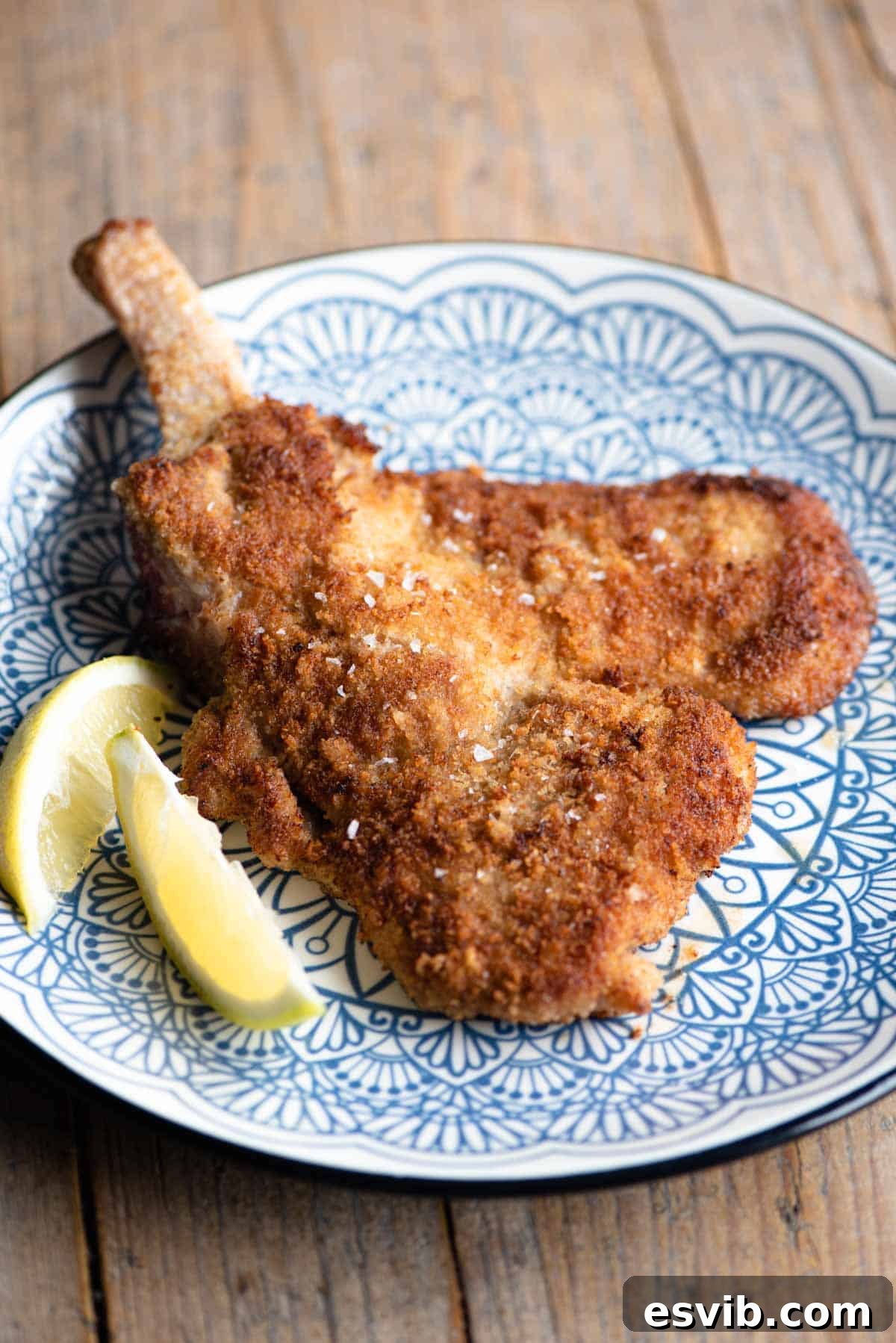
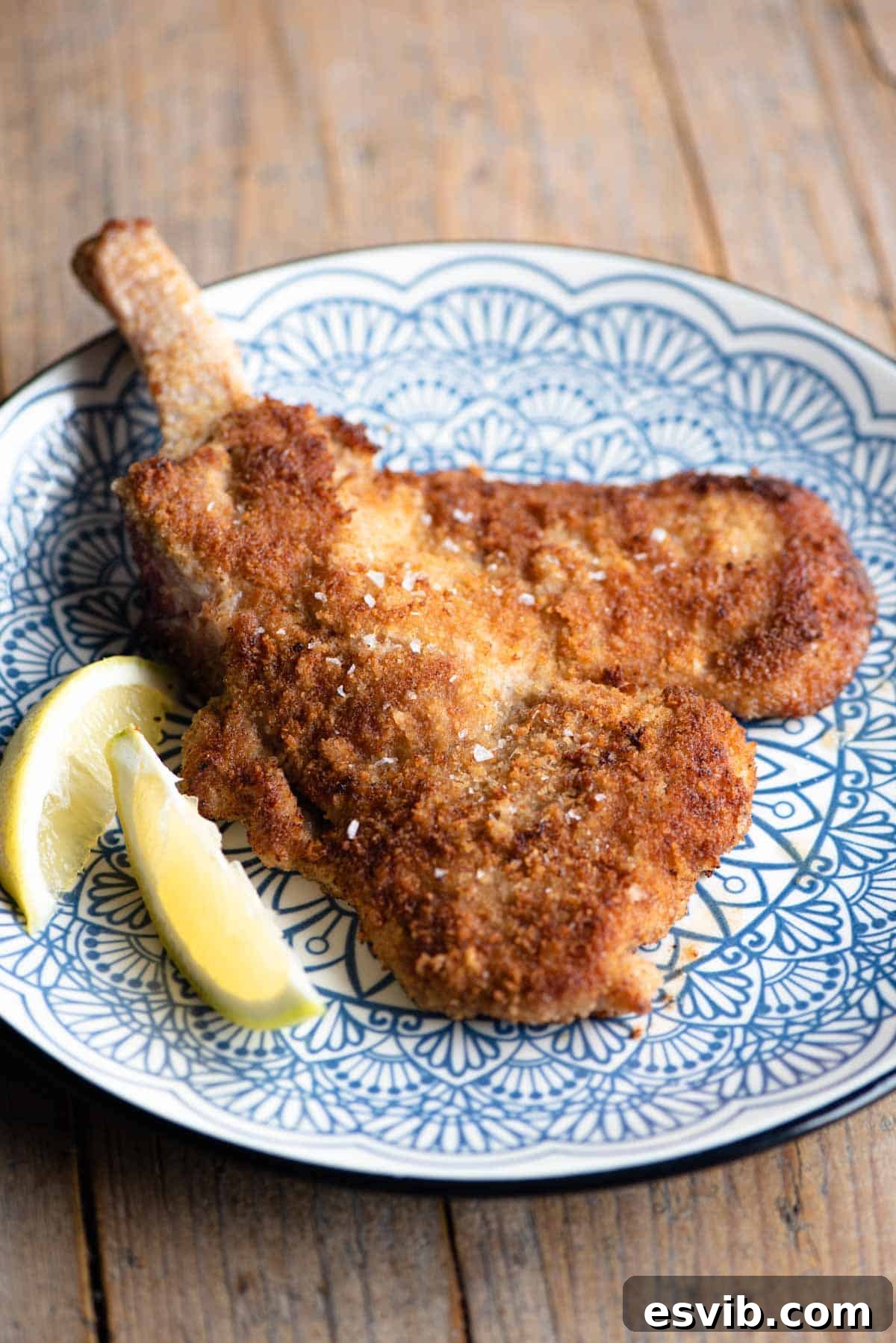
Veal Milanese, known in Italy as Cotoletta alla Milanese, is a celebrated culinary masterpiece hailing from Milan, the vibrant capital of Lombardy. This iconic dish features a succulent, tender veal chop, traditionally bone-in, encased in a remarkably crispy breadcrumb coating. Pan-fried to a golden perfection in a blend of butter and olive oil, then finished with a vibrant squeeze of fresh lemon, it offers an irresistible symphony of textures and flavors. Whether you’re a seasoned chef or an enthusiastic home cook, mastering this classic promises a truly delicious and authentic Italian experience. It pairs wonderfully with a refreshing arugula salad or classic roast potatoes.
The Enduring Legacy of Cotoletta alla Milanese
Veal Milanese stands as a testament to Milan’s rich gastronomic heritage, a city revered for culinary gems like creamy Saffron Risotto and the rich, slow-cooked Ossobuco. This seemingly simple dish carries centuries of tradition, showcasing the elegance of Italian cooking through humble, high-quality ingredients.
A Glimpse into History: Veal Milanese vs. Wiener Schnitzel
The origins of Cotoletta alla Milanese are often debated, particularly its relationship with the Austrian Wiener Schnitzel. Historical records suggest that a breaded veal cutlet, known as “Lombata cum panitio,” was served in Milan as early as the 12th century, predating the first documented appearance of Wiener Schnitzel. While both dishes feature breaded and fried cutlets, traditional Veal Milanese is distinctively made with a bone-in veal rib chop, pan-fried in butter, which imparts a unique richness and depth of flavor. This method ensures the veal remains incredibly juicy and tender on the inside, while developing an irresistibly crunchy, golden-brown crust on the outside.
The Milanese Art of Breading
Traditionally, an authentic Cotoletta alla Milanese relies solely on finely ground breadcrumbs, omitting the use of flour or even egg in some purist preparations. Our simplified yet highly effective method embraces this spirit by directly pressing the veal into the breadcrumbs. This technique, also successfully employed in our Breaded Chicken Cutlets, results in a lighter, yet exceptionally crispy coating that adheres beautifully without the extra steps and mess of a three-stage breading process. The result is consistently delicious, showcasing the pure flavor of the veal and its delicate crust.
Continue scrolling to discover the full printable recipe, including detailed notes on ingredients, step-by-step photos, expert tips, exciting variations, and even a video tutorial to guide you through every stage of preparation.
Key Ingredients for Exceptional Veal Milanese
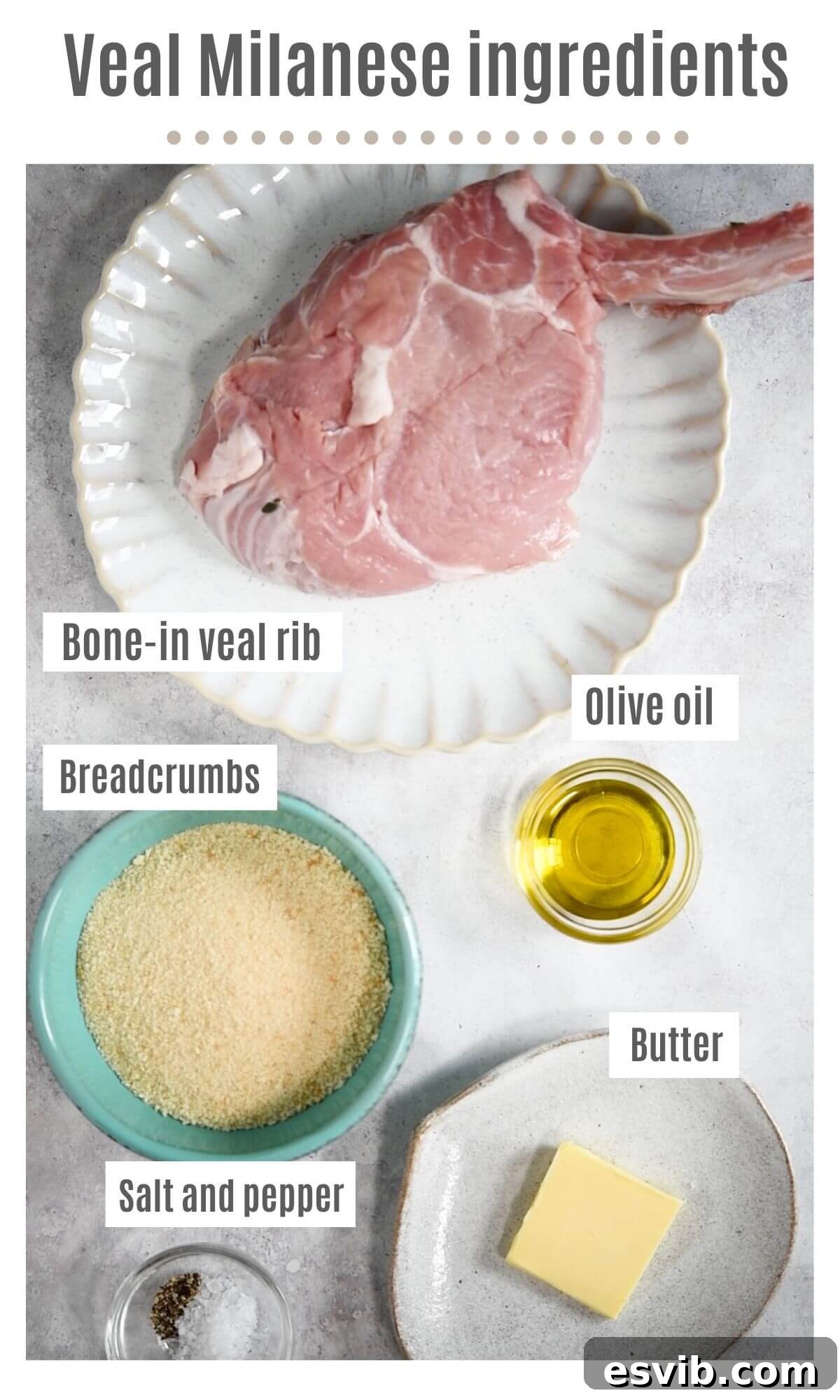
Crafting the perfect Veal Milanese starts with selecting the right ingredients. Each component plays a vital role in achieving that authentic taste and texture.
Ingredient Notes and Expert Substitutions
- Veal: The cornerstone of this dish is bone-in veal rib, also known as a veal chop. The bone infuses the meat with extra flavor and helps keep it moist during cooking. If bone-in cuts are unavailable, boneless veal chops or escalopes can be used, but remember that thinner cuts will require a reduced cooking time to prevent drying out. Aim for high-quality, ethically sourced veal for the best flavor and tenderness.
- Breadcrumbs: For a truly authentic Cotoletta alla Milanese, fine breadcrumbs are essential. These create a delicate, crisp crust that is a hallmark of the dish. Avoid using coarse Panko-style breadcrumbs, as they tend to absorb more oil and create a different texture. If you’re breading without egg (our preferred method), fine breadcrumbs adhere best. For an elevated touch, consider making your own fine breadcrumbs from stale, crusty bread.
- Butter and Olive Oil: Traditionally, clarified butter (ghee) is used for frying Veal Milanese because its high smoke point prevents burning while imparting a rich, nutty flavor. Our recipe ingeniously combines regular unsalted butter with olive oil. The olive oil helps to raise the overall smoke point of the fat, allowing the butter to brown without burning, thus delivering that characteristic depth of flavor. This blend ensures a beautifully golden and crispy exterior.
- Lemon: Fresh lemon wedges are non-negotiable for serving. A generous squeeze of lemon juice brightens the rich veal and cuts through the butteriness, adding a crucial zesty counterpoint that elevates the entire dish.
- Sea Salt Flakes: A simple sprinkle of high-quality sea salt flakes at the end enhances the flavor and adds a pleasant textural contrast to the crispy coating.
Step-by-Step Guide to Crafting Perfect Veal Milanese
Follow these simple steps to prepare your own authentic Cotoletta alla Milanese at home.
Prepare the Veal Chops
- Prepare the Veal: Begin by removing any tough silverskin or sinew around the edges of the veal chops. This prevents the meat from curling up during frying and ensures an even cook. If the silverskin is difficult to remove with a knife, make small incisions around it in several places.
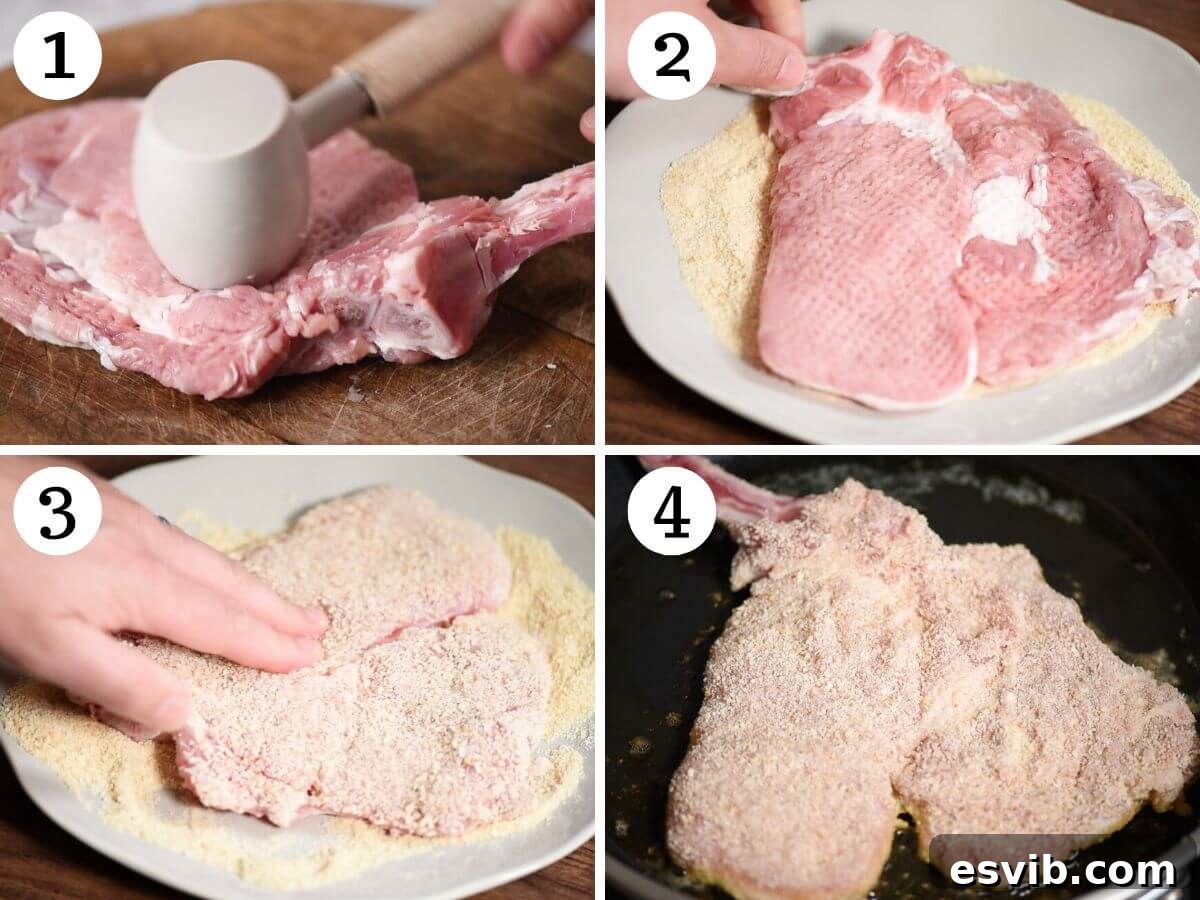
- Bash the Veal: Place each veal chop between two sheets of plastic wrap or parchment paper. Using a meat mallet or a rolling pin, gently but firmly bash the veal until it reaches an even thickness of approximately 1 cm (¼ inch). This tenderizes the meat and ensures quick, even cooking (photo 1).
Breading and Frying to Perfection
- Bread the Veal: Spread the fine breadcrumbs evenly on a large plate. Take one pounded veal chop and press it firmly into the breadcrumbs, ensuring both sides are thoroughly coated. Repeat this process a couple of times, pressing down well to ensure the crumbs adhere tightly. With our method, you don’t need flour or egg; the moisture from the veal is enough to create a light, crispy, and mess-free coating every time (photos 2 & 3).
- Prepare for Frying: If your pan isn’t large enough to comfortably fry both veal chops at once, it’s best to cook them individually in batches. Preheat your oven to a low temperature (around 100°C / 210°F) to keep the first chop warm while the second one cooks. If cooking in batches, divide the butter and olive oil for frying accordingly.
- Fry the Veal: Heat the olive oil and butter in a large, heavy-bottomed pan over medium-high heat. Once the butter is melted and slightly foaming, and the oil shimmers, carefully place a breaded veal chop into the hot fat. Fry for about 4 minutes on each side, or until it’s beautifully golden brown, crisp, and cooked through. The internal temperature should reach 63°C (145°F) for medium-rare or 71°C (160°F) for well-done (photos 4 & 5).
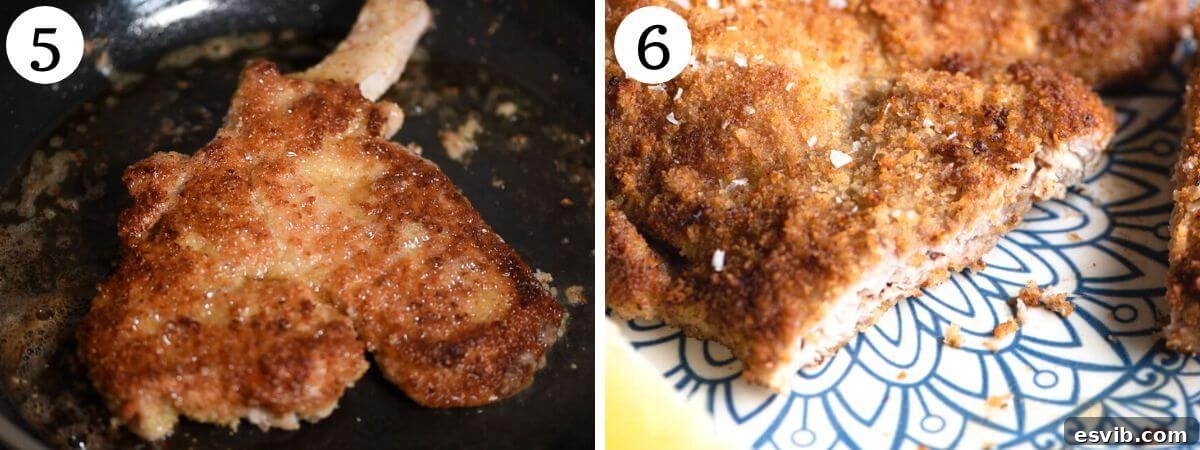
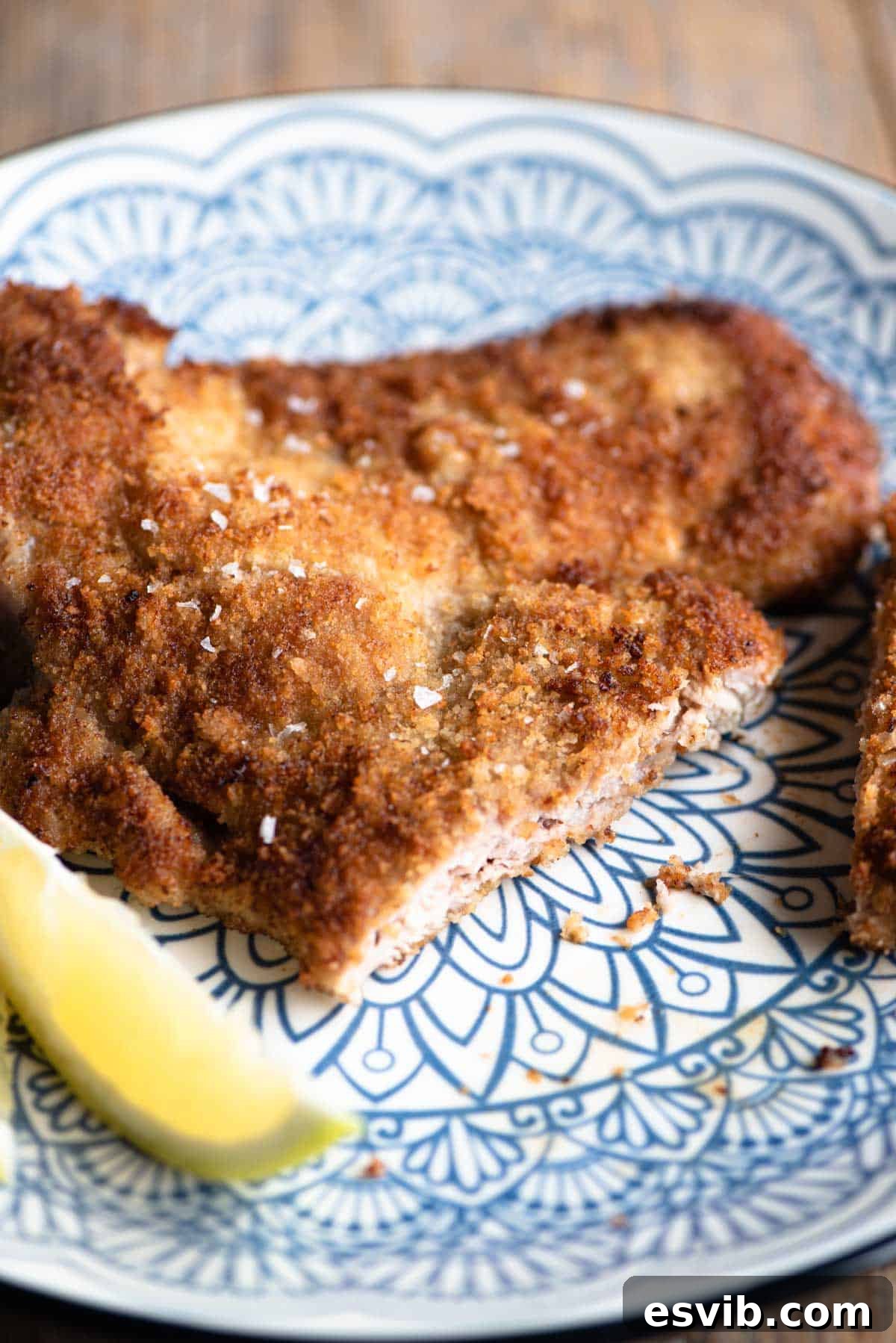
- Serve Immediately: Once cooked, transfer the Veal Milanese to a plate. Sprinkle generously with sea salt flakes and immediately squeeze fresh lemon juice over the top. Serve hot for the best flavor and crispness (photo 6).
Perfect Pairings: Serving Suggestions for Veal Milanese
Veal Milanese is a versatile dish that shines with a variety of accompaniments, offering both traditional and lighter options to suit any preference.
Classic Side Dishes
Traditionally, Cotoletta alla Milanese is often served with golden fries or hearty roast potatoes. We particularly enjoy it with crushed potatoes, simply dressed with a squeeze of lemon juice and a drizzle of extra virgin olive oil, which adds another layer of bright flavor. A crisp arugula salad with shavings of Parmesan cheese and a light vinaigrette is also a fantastic companion, providing a peppery, fresh counterpoint to the rich veal.
Lighter Alternatives
While delicious, Veal Milanese can be quite satisfying. If you prefer a lighter meal, consider skipping the potatoes in favor of fresh green vegetables. Steamed green beans, sautéed spinach with garlic, or a simple mixed green salad dressed with lemon and olive oil would all be excellent choices. These options allow the flavors of the veal to truly shine while keeping the meal fresh and balanced.
Expert Tips for the Best Veal Milanese
- Choosing the Right Veal Cut: While bone-in veal rib (chop) is ideal for its flavor and moisture, veal escalopes (thin cutlets) can also be used. Just ensure they are pounded to an even thickness for consistent cooking.
- Veal Alternatives: If veal is not available or preferred, this recipe works beautifully with other proteins. Try our breaded chicken cutlets recipe for inspiration, or use thin pork cutlets. Adjust cooking times accordingly for different meats.
- Removing Silverskin: The silverskin, a thin, silvery membrane found on some cuts of meat, can cause the chop to curl and become tough during cooking. Carefully trim it off with a sharp knife or make small snips along its length if it’s too difficult to remove entirely.
- Breadcrumb Type Matters: Stick to fine breadcrumbs for this recipe, especially when using our no-egg breading method. Panko breadcrumbs, while crispy, have a different texture and absorb more oil. However, if you opt for a traditional egg wash breading, Panko can certainly provide a very crisp result.
- Seasoning the Breadcrumbs: For authentic Milanese flavor, focus on simple seasoning. Avoid pre-mixed “Italian breadcrumbs” common in some regions, as these often contain dried herbs and garlic powder that aren’t traditional. Instead, season your fine breadcrumbs with plenty of salt and freshly cracked black pepper. For an added touch of umami and richness, mix in some freshly grated Parmigiano Reggiano.
- Oil Temperature Control: Maintaining the correct fat temperature is crucial for a golden, crispy crust and evenly cooked veal. Ensure your oil and butter mixture is hot enough (shimmering, butter slightly foaming) but not smoking before adding the veal. If the fat is too cold, the veal will absorb too much oil and become greasy; if it’s too hot, the breading will burn before the veal cooks through.
- Don’t Overcrowd the Pan: Give your veal chops ample space in the pan to fry properly. Overcrowding lowers the fat temperature and can lead to steaming instead of frying, resulting in a soggy crust. Cook in batches if necessary, keeping cooked chops warm in a low oven.
Frequently Asked Questions About Veal Milanese
What does ‘Milanese’ mean?
In Italian cuisine, “Milanese” (or “alla Milanese”) simply means “from Milan,” indicating the dish’s origin in the city of Milan. This regional designation applies to various traditional dishes that may not otherwise be similar in ingredients or preparation, such as Risotto alla Milanese (saffron risotto) and Ossobuco alla Milanese (braised veal shanks). For cotoletta, it refers to the specific Milanese style of preparing a breaded cutlet.
Can I prepare Veal Milanese in advance?
You can certainly prepare the veal chops in advance by pounding them to the correct thickness. However, it is not recommended to bread them ahead of time. The breadcrumbs will absorb moisture from the meat and become soft, losing their desired crispness when fried. Fortunately, our simple breading method is quick enough to do just before cooking, ensuring the best texture.
How long does cooked Veal Milanese last?
Once cooked, Veal Milanese is best enjoyed fresh to appreciate its crispy coating. Leftovers can be stored in an airtight container in the refrigerator for up to 2 days. Be aware that the breading will soften over time. To reheat, place the veal in a preheated oven at 180°C (350°F) for about 10 minutes, or until thoroughly heated through, to help restore some crispness.
What wine pairs well with Veal Milanese?
For a classic pairing, a light-bodied, crisp white wine from Lombardy, such as a Lugana or a Franciacorta Brut (sparkling), complements the rich, buttery flavors beautifully. If you prefer red, a delicate Barbera or a young Nebbiolo can also work, offering a pleasant contrast without overpowering the veal.
More Delicious Italian Recipes to Explore
Discover More Italian Classics
Mains
Veal Saltimbocca with Prosciutto and Sage
Mains
Breaded Veal Cutlets with Parmesan Cream
Mains
Ossobuco Milanese (Braised Veal Shanks)
Mains
Simple Saffron Risotto
If you’ve had the pleasure of trying this Veal Milanese recipe or any other recipe from our collection, please take a moment to rate it and share your experience in the comments section below – we love hearing from you! You can also connect with us on Facebook, Instagram, and Pinterest, or sign up for our Newsletter for weekly culinary inspiration and more delicious Italian recipes.
Step-by-step photos and video tutorial available above.
Veal Milanese Recipe
By Emily
Prep: 10 mins | Cook: 10 mins | Total: 20 mins
Servings: 2 servings
Print Recipe
Veal Milanese (Cotoletta alla Milanese) is a traditional recipe from Milan, Lombardy. Made with tender veal chops and a crispy breadcrumb coating fried in butter and drizzled with lemon, so delicious! Serve with an arugula salad and roast potatoes.
Ingredients
- 2 bone-in veal chops (veal rib)
- 1 cup (130g) fine breadcrumbs (recommended fine breadcrumbs)
- 3 tablespoons (40g) unsalted butter
- 1-2 tablespoons olive oil (recommended olive oil)
- Lemon wedges for serving
- Sea salt flakes, to taste
Instructions
Prepare the veal for cooking
- Remove any silverskin (sinew) from around the chop to prevent it from curling when frying. If difficult to remove, make small incisions around the sinew.
- Bash the veal with a meat mallet or rolling pin until they are about 1cm (1/4 inch) thick.
To bread and cook the veal
- Place the breadcrumbs on a large plate. Press the veal chops firmly into the crumbs on both sides multiple times until fully coated (no need for flour or egg).
- Note: Your veal chops may be too large to fit both in one pan. If so, cook them one at a time. Keep the first cooked chop warm in a pre-heated oven at 100°C (210°F) while the second one cooks. If batch cooking, use half of the butter and oil for each chop.
- Heat the olive oil and butter in a large pan over medium-high heat. Once hot and shimmering, fry the veal for 4 minutes on each side, or until golden brown, crispy, and cooked through.
- Serve the veal immediately, sprinkled with sea salt flakes and a generous squeeze of fresh lemon juice.
Video
Watch our video tutorial for a visual guide on how to prepare perfect Veal Milanese.
Watch Veal Milanese (Cotoletta alla Milanese) Video
Notes
- What cut of veal to use: For optimal flavor and moisture, use bone-in veal rib (chop). Alternatively, thin veal escalopes (cutlets) can be used, adjusting cooking time as needed.
- If you don’t have veal: This recipe can be adapted using chicken or pork cutlets. Refer to our breaded chicken cutlets recipe for guidance.
- Remove silverskin or sinew: Trimming or snipping the silverskin prevents the chop from curling and toughening during frying.
- Breadcrumbs: Fine breadcrumbs are crucial for the best texture with our no-egg breading method. Panko breadcrumbs are suitable if you prefer a different texture or use an egg wash.
- Seasoning the breadcrumbs: For an authentic taste, avoid pre-mixed “Italian breadcrumbs” that contain dried herbs and garlic powder. Instead, season fine breadcrumbs with salt and pepper, or add freshly grated Parmigiano Reggiano for extra flavor.
- Leftovers: Veal Milanese is best served fresh for maximum crispness. Leftovers will keep in the fridge for about 2 days, though the coating will soften. Reheat in an oven at 180°C (350°F) for around 10 minutes until hot.
Helpful Info for All Recipes
- I always use extra virgin olive oil in all of my recipes unless stated otherwise.
- When I use canned or jarred tomatoes of any kind, I always use Cirio or Mutti brands for the best results and flavor.
- All vegetables are medium sized unless stated otherwise.
- All recipes are tested and developed using a fan (convection) oven.
- Find out more about how nutrition is calculated.
- Check out our must-have Italian Pantry Staples.
- You can also find all our Essential Kitchen Tools for Italian Cooking.
Nutrition Information
Calories: 630kcal | Carbohydrates: 23g | Protein: 47g | Fat: 37g | Saturated Fat: 15g | Polyunsaturated Fat: 3g | Monounsaturated Fat: 16g | Trans Fat: 0.3g | Cholesterol: 200mg | Sodium: 494mg | Potassium: 753mg | Fiber: 1g | Sugar: 2g | Vitamin A: 250IU | Calcium: 98mg | Iron: 3mg
Nutrition information is automatically calculated and should only be used as an approximation.
Did you try this recipe?
Leave a comment below and share your experience!