
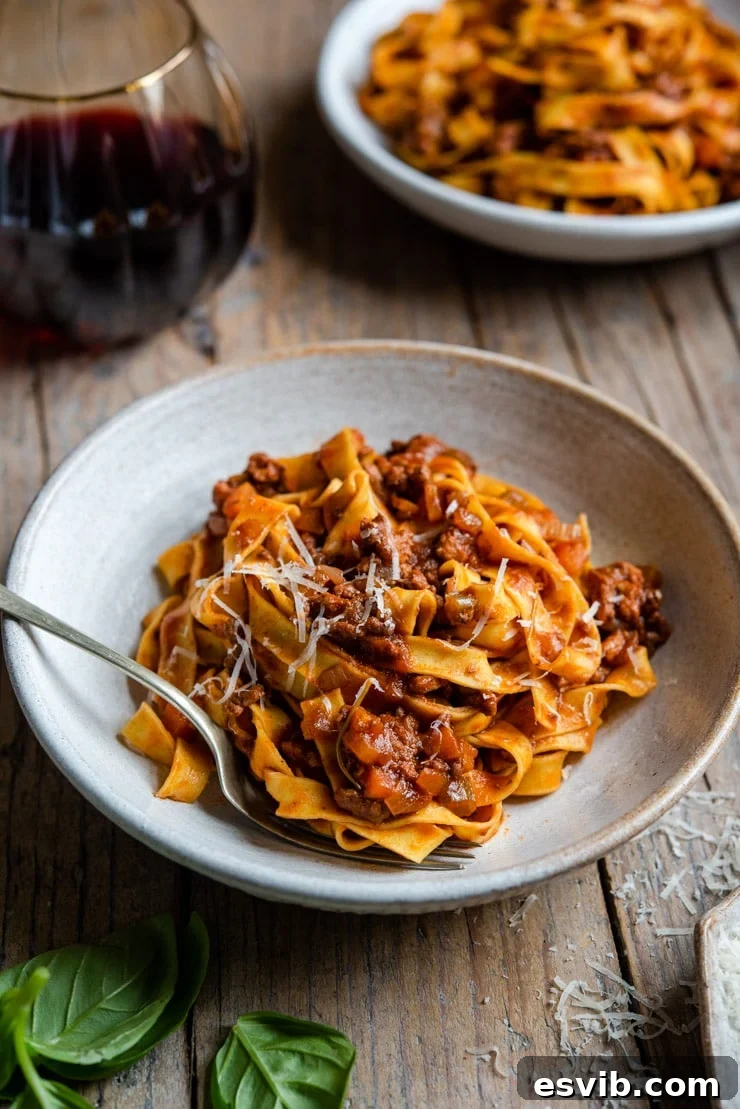
Authentic Italian Beef Ragu: A Timeless Classic for Your Kitchen
Discover the art of creating a truly authentic **Italian beef ragu**—a dish celebrated for its profound flavors, rich texture, and incredible versatility. This ground beef and pork ragu, crafted from a handful of simple yet high-quality ingredients, promises a culinary experience that transports you straight to the heart of Italy. Whether you’re tossing it with freshly made tagliatelle, layering it into a magnificent lasagne with creamy Béchamel sauce, or using it as a savory filling for homemade ravioli, this recipe is your guide to an unforgettable Italian meal. Follow our detailed step-by-step instructions and photos below to master this beloved classic.
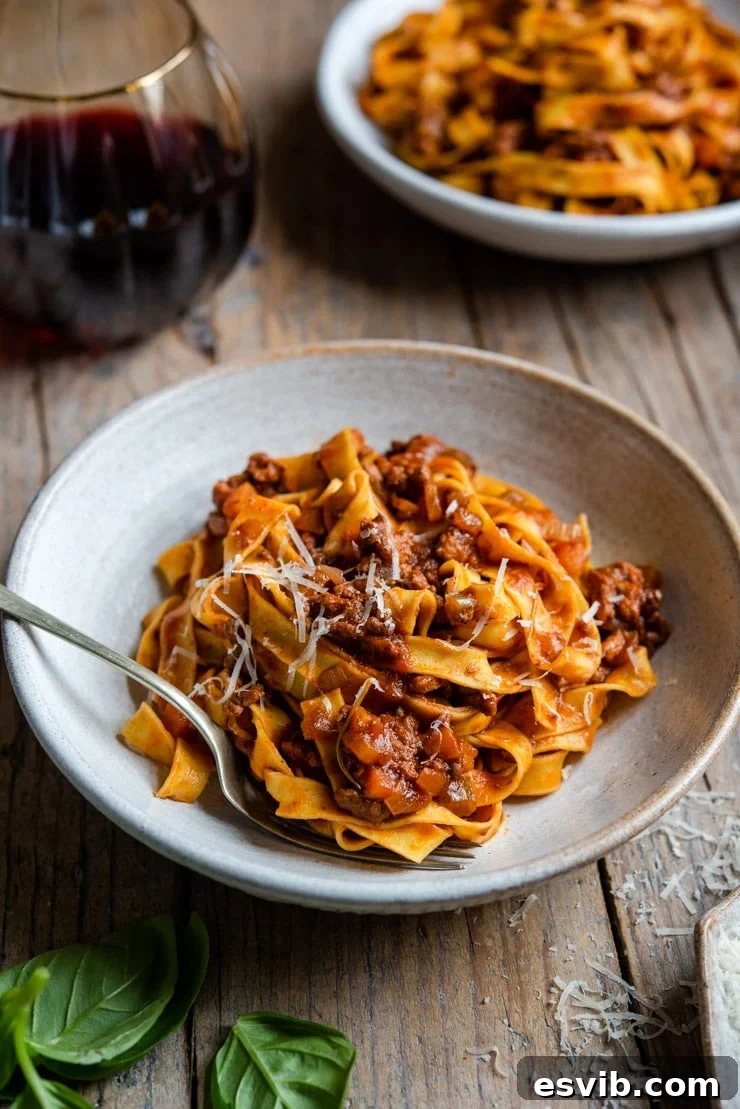
There are few dishes as comforting and universally loved as a classic beef ragu. It’s more than just a meat sauce; it’s a culinary embrace, a dish that patiently simmers on the stovetop, filling your home with an irresistible aroma, promising a delicious reward. Perfect for a leisurely Sunday afternoon, this ragu allows you to relax, perhaps with a glass of your favorite Italian red wine, before bringing the family together for a heartwarming meal. This recipe ensures a wonderfully rich and deeply flavorful sauce that’s surprisingly easy to achieve, making it a staple for both novice and experienced cooks alike.
Table of Contents
- The True Difference Between Ragu and Bolognese
- The Magic of Slow-Cooked Beef Ragu
- Mastering Italian Beef Ragu – Step By Step
- Unlocking the BEST Flavor in Your Ragu
- Versatile Ways to Enjoy Beef Ragu & Serving Suggestions
- Storing and Freezing Leftover Beef Ragu
- Expert Tips for Making the Ultimate Beef Ragu
- More Authentic Italian Recipes To Explore
- Full Recipe Card
The True Difference Between Ragu and Bolognese
The terms “ragu” and “Bolognese” are often used interchangeably, particularly outside of Italy, leading to widespread confusion about their true definitions. In Italian cuisine, **Ragu** is a broad umbrella term for any meat-based sauce, typically characterized by finely chopped vegetables, ground or braised meat, and a liquid component such as wine, tomatoes, or stock. Italy boasts an incredible diversity of ragu recipes, each reflecting the culinary traditions of its specific region. For example, our exquisite Venetian Duck Ragu offers a rich and sophisticated flavor, ideal for special occasions, while our straightforward Easy Sausage Ragu provides a hearty and delicious option for any day of the week.
**Bolognese**, on the other hand, specifically refers to “Ragu alla Bolognese,” a particular type of meat sauce that proudly originates from the city of Bologna in the Emilia-Romagna region. Over time, the authentic recipe for Bolognese has often been misinterpreted and modified, especially when adapted into international dishes. While sharing many similarities with a classic beef ragu, traditional Bolognese often incorporates distinct elements such as white wine (rather than red) and occasionally a touch of milk, which is traditionally believed to gently tenderize the meat and impart a subtle creaminess. Most importantly, in its true form, this opulent sauce is almost exclusively served with broad, flat pasta shapes like **tagliatelle**, never with spaghetti. This is precisely why you’ll frequently hear Italians assert that “Spaghetti Bolognese” is not an authentic Italian dish, as it deviates significantly from the time-honored traditions of Bologna.
Grasping this distinction not only enhances your culinary knowledge but also fosters a deeper appreciation for the rich history and nuanced traditions embedded within Italian cooking. Our recipe, while drawing inspiration from the fundamental principles of Bolognese, emphasizes the robust, savory flavors characteristic of a broader classic Italian beef ragu, delivering a profoundly satisfying sauce that beautifully complements a variety of pasta and other culinary applications.
The Magic of Slow-Cooked Beef Ragu
The hallmark of an truly outstanding Italian ragu is its commitment to **slow cooking**. This patient, unhurried process is not merely a suggestion but an essential technique that allows all the individual flavors to converge, intermingle, and profoundly deepen, transforming simple raw ingredients into a complex, harmonious, and exquisitely balanced sauce. While the term “slow-cooked” might conjure images of an entire day spent over a hot stove, this classic beef ragu recipe, utilizing a blend of ground beef and pork, doesn’t demand the extensive cooking time typically associated with larger, tougher cuts of meat that require hours to break down and become meltingly tender.
This particular ragu requires a **minimum of 2.5 hours of gentle simmering**. This convenient timing means you can comfortably begin preparation just a few hours before you plan to serve, making it an achievable culinary endeavor even on a bustling weekend afternoon. However, it’s a widely acknowledged culinary truth that the longer a ragu is allowed to simmer, the more profound and seamlessly integrated its flavors become. The extended cooking duration facilitates the meat’s transformation into an incredibly tender texture, allows the aromatic vegetables to subtly dissolve into the sauce, and enables the rich tomato base to develop a wonderfully sweet, concentrated, and umami-rich taste. During these longer simmering periods, it’s crucial to periodically check on your sauce, stirring it gently to prevent any sticking to the bottom of the pan, and replenishing the liquid with additional water or beef stock as needed to maintain its perfect consistency. This patient and attentive approach is what truly elevates a good ragu to a truly exceptional one, delivering a depth of flavor and tenderness that rapid cooking methods simply cannot replicate.
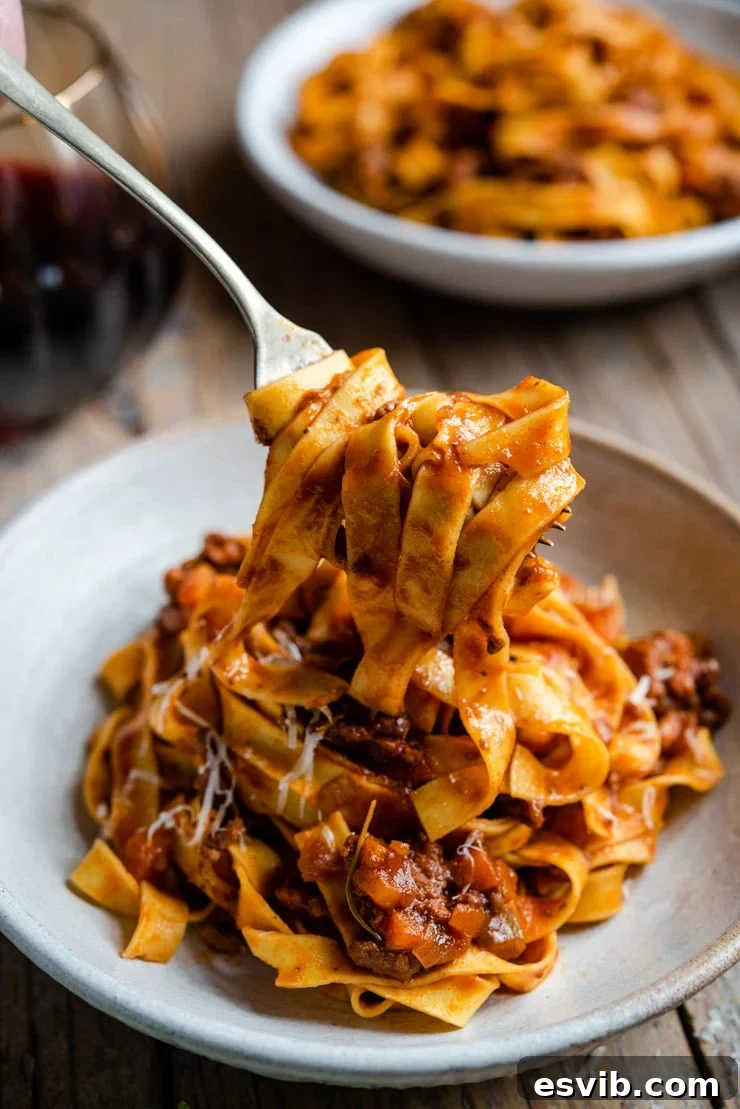
Mastering Italian Beef Ragu – Step By Step
Every truly great Italian sauce, whether it’s a stew, a soup, or a rich pasta sauce, typically finds its foundational essence in a culinary technique known as **Il Soffritto**. This aromatic base is often considered the very soul of countless Italian dishes, and our beef ragu is certainly no exception. Il Soffritto is elegantly simple yet critically important, consisting of a finely diced blend of carrots, celery, and white onion. These vegetables are gently sautéed in high-quality olive oil until they become perfectly soft, translucent, and deeply fragrant, without ever allowing them to brown. This methodical and patient approach ensures that the vegetables fully release their natural sugars and complex savory notes, establishing an incredible, sweet, and umami-rich foundation of flavor that will permeate and elevate the entire ragu. Investing sufficient time and care in this initial step is paramount, as it profoundly influences the ultimate richness, complexity, and overall deliciousness of your finished sauce. It’s a culinary investment that truly pays dividends in taste.
Crafting the Perfect Il Soffritto
To prepare your indispensable soffritto, begin by meticulously finely chopping equal amounts of carrot, white onion, and celery. For this particular Italian beef ragu recipe, we recommend using 1 medium-sized carrot, 1 stalk of celery, and 1 medium white onion. Precision in your chopping technique is important here, as it promotes even cooking and ensures a uniformly smooth and integrated base for your sauce.
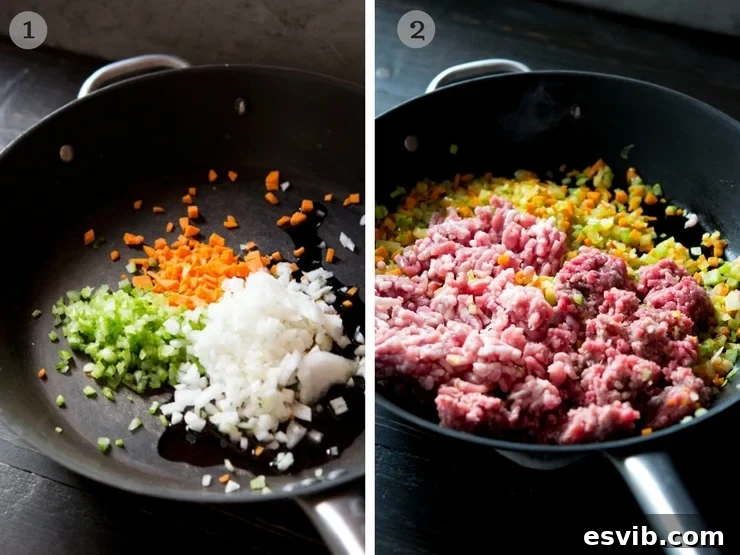
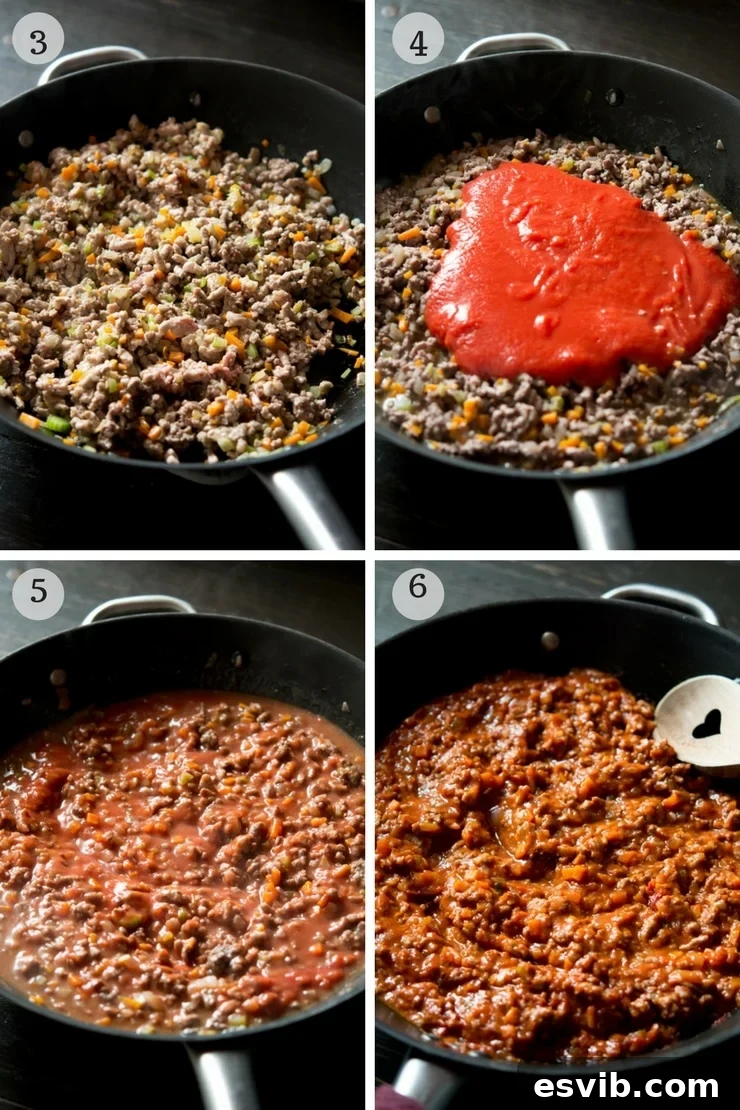
Next, carefully heat a generous tablespoon of high-quality extra virgin olive oil in a large, heavy-bottomed pan or a Dutch oven over a low to medium heat setting. Once the oil is shimmering, add your finely chopped vegetables. Sauté them slowly and patiently, stirring occasionally. The objective is to allow these vegetables to gently soften and become beautifully translucent, ensuring they release all their delightful aromatic compounds without developing any significant color or browning. This crucial process typically takes approximately 7-8 minutes, culminating in a wonderfully fragrant, subtly sweet, and complex base (as can be observed in photo 1 of the detailed guide).
Once your soffritto has reached its perfect, tender state, increase the heat slightly and introduce the ground beef and ground pork to the pan. Using a wooden spoon or spatula, break up the meat into smaller pieces and cook, stirring frequently, until it is thoroughly browned on all sides. This browning step is absolutely vital for initiating the Maillard reaction, a chemical process that develops deep, savory, and umami-rich flavors. Once the meat is beautifully browned, if you notice an excessive accumulation of fat, carefully drain a portion of it from the pan. Then, pour in the red wine and continue to cook, stirring diligently, allowing the wine to reduce by half. This step not only concentrates the wine’s rich flavors but also effectively deglazes the bottom of the pan, lifting all those delicious browned bits, or “fond,” into the sauce.
After the red wine has delightfully reduced and its flavors have intensified, it’s time to build the foundational heart of your ragu. Carefully stir in the tomato passata (which are simply pureed tomatoes, providing a smooth base) and half of the beef stock. Season the sauce judiciously with a pinch of salt and freshly ground black pepper to taste. Bring this nascent sauce to a gentle, bubbling simmer, then immediately reduce the heat to its lowest setting. Partially cover the pan with a lid, allowing a small gap for steam to escape, and let it cook slowly and patiently for a minimum of 2 and a half hours. Throughout this extended simmering period, the various flavors will gradually deepen, intertwine, and meld into a rich, cohesive whole. Remember to check on your ragu periodically, stirring it gently to ensure it doesn’t stick to the bottom of the pan, and adding the remaining beef stock (or a little water) as needed to maintain your desired consistency. The ultimate goal is a sauce that is wonderfully rich, satisfyingly thick, and brimming with tender, flavorful meat.
Unlocking the BEST Flavor in Your Ragu
Achieving the most authentic, deeply flavorful, and utterly delicious classic Italian beef ragu hinges on incorporating a few critical culinary insights. One of the single most important tips for mastering this recipe is to rigorously adhere to an **equal ratio of ground beef and ground pork**. This specific combination of meats is not just a preference but a time-honored tradition in authentic Italian cooking, and it makes an undeniable and immense difference to the final taste and textural profile of your finished sauce.
Here’s a deeper dive into why this specific ratio is so profoundly vital: while ground beef inherently offers a robust, deeply savory flavor and a satisfying chew, it can sometimes be quite lean, potentially leading to a drier sauce if used exclusively. Ground pork, on the other hand, is distinctly sweeter and naturally possesses a higher fat content. This additional fat, when rendered slowly and patiently during the long cooking process, infuses the ragu with an incredible amount of moisture, luxurious richness, and a foundational depth of flavor that is simply unattainable with beef alone. Furthermore, the inherent sweetness of the pork expertly balances the natural acidity of the tomatoes and the profound richness of the beef, resulting in a perfectly rounded, complex, and harmoniously flavored sauce. Trust us implicitly on this point: once you experience the profound and unmistakable difference that a 50/50 blend of high-quality ground beef and pork makes, you will unequivocally understand why this is the cherished and traditional Italian method for crafting the very best ragu. It’s a seemingly small adjustment that yields truly monumental results in both taste and an undeniable sense of authenticity.
Versatile Ways to Enjoy Beef Ragu & Serving Suggestions
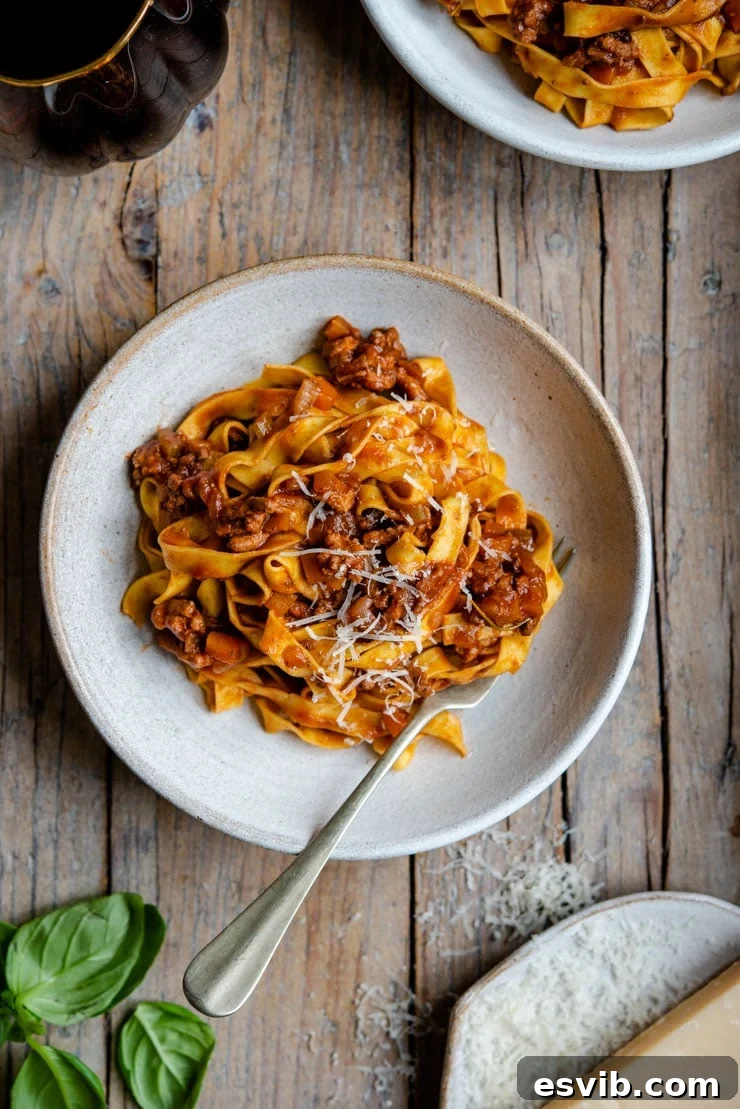
The true genius of this authentic beef ragu lies not only in its exquisitely rich and comforting flavor but also in its unparalleled culinary versatility. While it is undeniably **perfectly tossed with tagliatelle pasta** (or indeed any broad, flat pasta shape that offers ample surface area to cling beautifully to every luscious strand of the rich sauce), its potential applications extend far beyond the confines of a simple pasta dish. Imagine the delight of layering this robust ragu into a magnificent, show-stopping classic lasagne, its savory depths complemented perfectly by a silky, homemade cheesy Béchamel sauce, creating a truly impressive and crowd-pleasing meal. This versatile ragu also serves as a superb and incredibly hearty filling for savory baked cannelloni or delicate ravioli (simply substitute the original fillings in these recipes with your delicious homemade ragu).
But why stop there? Let your culinary creativity soar! Consider serving this deeply satisfying ragu over a velvety bed of creamy polenta, elegantly adorned with generous shavings of fresh Parmesan cheese and a delicate drizzle of your finest extra virgin olive oil. It transforms into a rustic, profoundly comforting dish that pairs exquisitely with a full-bodied Italian red wine. You could also creatively use this hearty sauce to stuff bell peppers, hollowed-out zucchinis, or even elevate a classic shepherd’s pie by giving it a distinctly Italian twist. For a quick yet elegant appetizer, spoon some warm ragu over perfectly toasted bruschetta, perhaps garnished with fresh basil. This dish embodies comfort food at its absolute pinnacle, and with such a vast array of delightful and inventive ways to enjoy it, you can be sure you’ll never grow tired of this truly incredible and adaptable Italian sauce.
Storing and Freezing Leftover Beef Ragu
One of the many commendable virtues of a lovingly slow-cooked sauce like this authentic Italian beef ragu is its remarkable ability to taste even more sublime the day after it’s prepared. The overnight rest allows all the complex and nuanced flavors to further develop, intermingle, and deepen, culminating in an even more harmonious, rich, and intensely satisfying culinary experience. This inherent quality makes ragu an absolutely ideal candidate for make-ahead meals, whether you’re planning a dinner party for guests or simply stocking your fridge with healthy, delicious options for busy weeknight dinners.
For efficient and safe refrigeration, ensure the ragu has completely cooled to room temperature before transferring it into sturdy, airtight containers. It can be safely stored in the refrigerator for an impressive duration of up to 3-4 days. When it comes time to reheat, you might observe that the sauce has naturally thickened quite a bit. Simply loosen it to your desired consistency by adding a splash of water or extra beef stock, ensuring it is heated through thoroughly and reaches a piping hot temperature before serving to guarantee food safety and optimal taste.
Beyond refrigeration, this exquisite beef ragu also **freezes beautifully**, cementing its status as an excellent component for advanced meal prepping. To freeze, divide the completely cooled ragu into individual or family-sized portions, using robust freezer-safe containers or heavy-duty freezer bags. Properly stored, it can maintain its quality in the freezer for up to 3 months without compromising flavor or texture. When you’re ready to enjoy it, simply thaw the ragu completely in the refrigerator overnight, then gently reheat it on the stovetop or in the microwave, adjusting its consistency with a little liquid as needed. Having a stash of homemade ragu readily available in your freezer is truly a culinary lifesaver, offering gourmet convenience at your fingertips!
Expert Tips for Making the Ultimate Beef Ragu
Transform your delicious Italian beef ragu into an extraordinary culinary masterpiece with these invaluable insider tips and techniques:
- Embrace Patience with the Soffritto: This initial step is the undisputed soul of your entire sauce. It is absolutely crucial to never rush the initial sautéing of the finely chopped carrots, celery, and onion. Cook them slowly and gently over a consistently low heat until they achieve a state of perfect softness and translucence, carefully avoiding any browning. This meticulous, slow caramelization of their natural sugars forms the sweet, aromatic, and deeply complex base that grants ragu its signature depth and layered flavor profile.
- Master the Essential Meat Blend: As previously emphasized, employing a **50/50 blend of high-quality ground beef and ground pork** is not merely a preference but a foundational requirement for true authenticity and exceptional flavor. The leaner beef provides a robust, savory backbone, while the fattier pork introduces a delicate sweetness, crucial moisture, and an unparalleled richness that profoundly elevates the entire dish. This specific combination is non-negotiable for achieving an authentic Italian taste.
- Prioritize Quality Tomatoes: Given that tomatoes form the vibrant heart of your sauce, the quality of this ingredient is paramount. Always opt for **high-quality passata (sieved tomatoes)**. Inferior or cheaper brands can often be excessively acidic or simply lack the rich, sweet, and concentrated flavor essential for crafting a truly exceptional ragu. Seek out reputable Italian brands known for their superior taste and consistency.
- Choose Your Wine Wisely: When incorporating red wine, always ensure you select a bottle that you would genuinely savor drinking on its own. **Never, under any circumstances, resort to using “cooking wine,”** which typically contains undesirable additives and lacks the nuanced, complex flavor necessary to effectively deglaze the pan and infuse your sauce with its desired depth and complexity. A medium-bodied red, such as a Sangiovese, Chianti, or a Nero d’Avola, works exquisitely.
- Invest in Superior Stock: A sauce that appears as deceptively simple as ragu relies heavily on the inherent quality of its core ingredients. Therefore, utilize the **highest quality beef stock or broth** you can possibly find. While homemade stock is undeniably the gold standard, a premium store-bought option will yield a significantly superior result compared to generic or highly processed versions.
- Season Throughout the Process: A common mistake is to wait until the very end to season. Instead, practice seasoning in layers: add a modest pinch of salt and pepper when browning the meat, and again when you introduce the tomatoes and stock. Continuously taste and adjust the seasonings as the sauce simmers and develops, allowing them to fully marry with all the other magnificent flavors.
- Use the Right Pot: For optimal simmering results, a heavy-bottomed pot or a sturdy Dutch oven is unequivocally the ideal choice for preparing ragu. Its exceptional ability to distribute heat evenly and retain it consistently over extended periods effectively prevents scorching and ensures a steady, gentle simmer, which is absolutely crucial for the gradual and profound development of flavor.
- The Traditional Pasta Finish: To achieve an authentic Italian serving experience with tagliatelle or any other long pasta, **boil the pasta until it is perfectly al dente**. Then, using tongs, transfer the cooked pasta directly into the simmering ragu in the pan. Toss vigorously for a minute or two, allowing the pasta to thoroughly absorb the rich flavors of the sauce and creating a perfectly cohesive, restaurant-quality dish. Finish with a generous grating of fresh, aged Parmesan cheese.
More Authentic Italian Recipes To Explore
If you’ve fallen in love with the rich flavors of this classic Italian Beef Ragu, we warmly invite you to embark on a deeper culinary journey into the diverse and enchanting tapestry of authentic Italian cuisine with these other remarkable recipes:
- Pici and Tuscan Sausage Ragu: A truly rustic Tuscan delight, featuring thick, hand-rolled pici pasta perfectly paired with a robust and savory homemade sausage sauce.
- Venetian Duck Ragu with Pappardelle: An exceptionally elegant and profoundly flavorful ragu, exquisitely suited for special occasions, traditionally served with wide, luxurious pappardelle noodles.
- Easy Sausage Ragu With Ricotta Gnocchi: A wonderfully comforting and quick-to-prepare sausage ragu, served alongside delicate, tender, and pillowy homemade ricotta gnocchi.
- Pizzoccheri Pasta with Potatoes and Cabbage: A unique, hearty, and wholesome buckwheat pasta dish hailing from the Valtellina region, traditionally prepared with savory Savoy cabbage and tender potatoes.
- Farfalle Pasta with Pancetta, Chili and Garlic: A deceptively simple yet incredibly flavorful pasta dish with a delightful kick, brilliantly highlighting essential Italian ingredients.
- Mafalde Pasta with Butter and Parmesan: A seemingly simple but utterly delicious classic, magnificently showcasing the inherent beauty of high-quality pasta and rich Parmesan cheese.
- Tuscan Bean Stew with Sausages: A wonderfully rustic and deeply warming stew, absolutely perfect for cooler evenings, generously packed with savory sausages and tender, wholesome beans.
We are always thrilled to hear from our community! If you’ve had the pleasure of trying this **Authentic Italian Beef Ragu** or any other recipe featured on our blog, please don’t hesitate to **rate the recipe** and graciously share your invaluable experience in the comments section below. Your feedback is not only deeply appreciated but also inspires us and guides fellow home cooks! You can also **FOLLOW US** on FACEBOOK, INSTAGRAM, and PINTEREST for a continuous stream of delicious food ideas, culinary inspiration, and exciting updates.
Italian Beef Ragu
By Emily
15 mins
2 hrs 30 mins
2 hrs 45 mins
6 people
A classic Italian beef ragu that’s easy and packed full of flavour! This ground beef ragu is made using only a few simple ingredients and can be used in so many ways. Toss it with fresh tagliatelle pasta, make it into lasagne with bechamel sauce or use it as a filling for homemade ravioli for a truly authentic Italian meal.
Ingredients
- 1 carrot
- 1 white onion
- 1 stalk celery
- 8.8 oz (250g) ground beef (mince)
- 8.8 oz (250g) ground pork (mince)
- 2 cups (470g) sieved tomatoes (passata)
- 1 tablespoon tomato paste
- 1 cup (230ml) red wine
- 4 cups (1 litre) beef stock
- 1 bay leaf (optional)
- 1 tbsp olive oil
- 1 pinch salt and pepper
Instructions
- Finely chop the carrot, onion, and celery. In a large frying pan or Dutch oven, gently sweat these vegetables in olive oil over low heat until soft and translucent (this is your soffritto). Once soft, add the ground beef and pork, breaking it up with a spoon, and cook until thoroughly browned.
- If there is a lot of excess fat in the pan, carefully drain some out. Add the red wine and continue to cook, stirring, until the wine has reduced by half and the pan is deglazed.
- Once the wine has reduced, stir in the tomato passata, tomato paste, and half of the beef stock, along with a pinch of salt and pepper.
- Stir the sauce well, then add the bay leaf. Bring to a gentle simmer, then reduce the heat to low. Partially cover the pan and let it simmer for at least 2 and a half hours, stirring occasionally and topping up with the rest of the stock (or a little water) as the sauce reduces, ensuring it maintains a rich, thick consistency.
- To serve with pasta, boil your chosen pasta until al dente. Add the cooked pasta directly into the ragu and toss to coat thoroughly before serving. Alternatively, use the ragu as desired in other recipes.
Video
A video demonstrating the preparation of this Italian Beef Ragu is available.
Notes
- Don’t rush the soffritto to achieve optimal flavor depth.
- Ensure you use a **50/50 ratio of ground beef and pork** for the best taste and texture.
- Opt for **high-quality passata (sieved tomatoes)** to avoid acidity and ensure rich flavor.
- Always use a **red wine good enough to drink**; never use cooking wine.
- Utilize the **highest quality beef stock or broth** possible, preferably homemade.
- For traditional serving, boil tagliatelle pasta until al dente, then **toss it directly with the ragu** in the pan before plating.
- Leftovers can be **stored in the fridge for 3-4 days** and reheated, loosening with water or stock as needed.
- This ragu **freezes perfectly** in airtight containers; thaw completely before reheating.
Helpful Info for All Recipes
- We always use extra virgin olive oil in all of our recipes unless stated otherwise.
- For canned or jarred tomatoes, we recommend Cirio or Mutti brands for superior results and flavor.
- All vegetables are medium-sized unless specified differently.
- All recipes are meticulously tested and developed using a fan (convection) oven.
- Find out more about how nutrition is calculated.
- Check out our must-have Italian Pantry Staples.
- You can also find all our Essential Kitchen Tools for Italian Cooking.
Nutrition
Carbohydrates: 12g |
Protein: 33g |
Fat: 36g |
Saturated Fat: 13g |
Cholesterol: 119mg |
Sodium: 457mg |
Potassium: 1228mg |
Fiber: 2g |
Sugar: 6g |
Vitamin A: 2130IU |
Vitamin C: 11.1mg |
Calcium: 67mg |
Iron: 4.4mg
Nutrition information is automatically calculated, so should only be used as an approximation.