
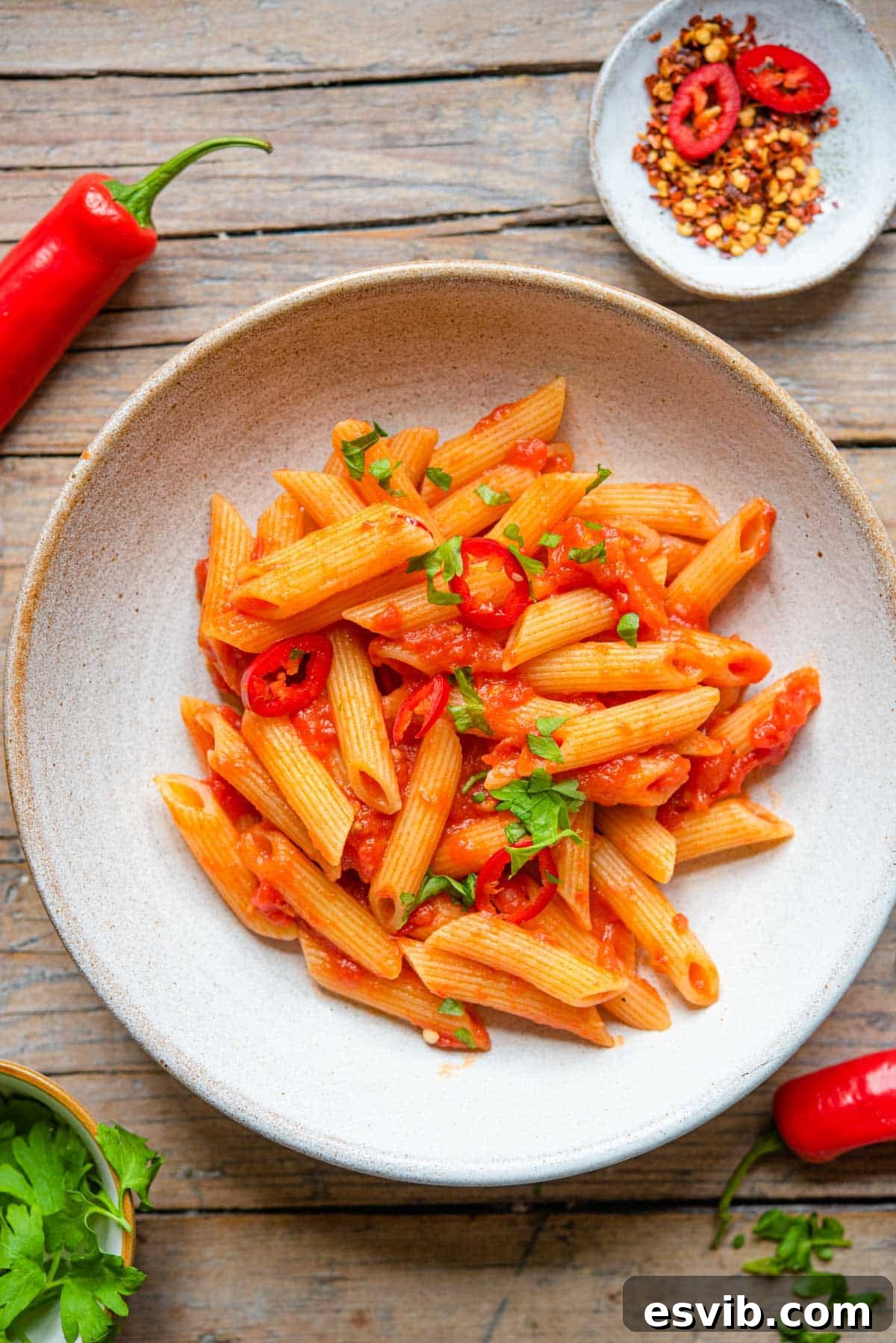
Penne all’ Arrabbiata is more than just a dish; it’s a vibrant celebration of simple, bold Italian flavors. This beloved Italian pasta recipe features perfectly al dente penne bathed in a beautiful, robustly spicy tomato sauce. Renowned for its quick preparation and exhilarating kick, it’s the ideal choice for anyone seeking an easy yet profoundly satisfying meal that truly awakens the palate. If you crave a dish that brings both warmth and excitement to your table, your search ends here.
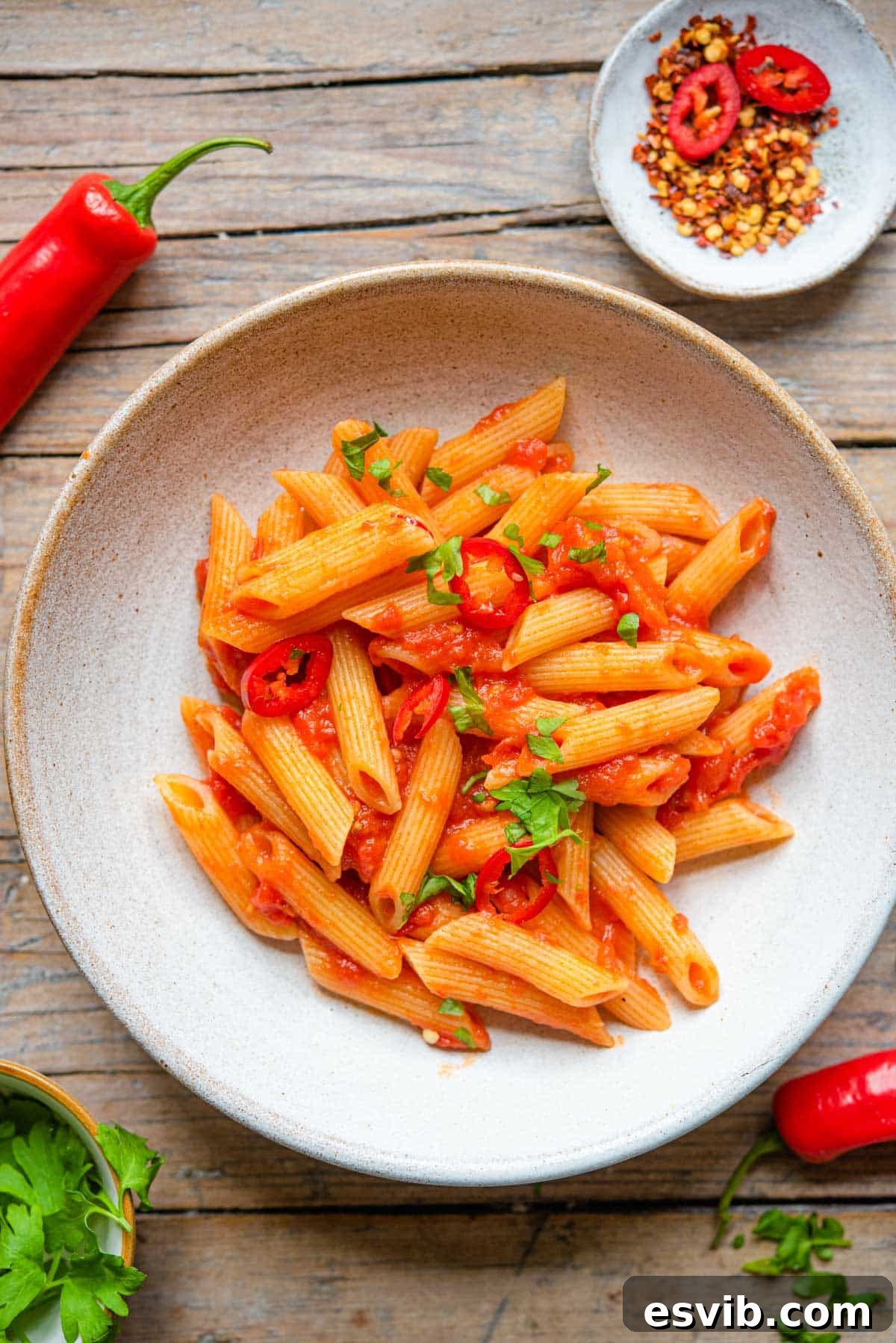
Penne all’ Arrabbiata: The Ultimate Guide to This Spicy Italian Pasta
The name Arrabbiata itself is a testament to the sauce’s character. Literally meaning “angry” in Italian, it perfectly encapsulates the fiery heat and intense, bright red hue of this classic tomato sauce. Originating from the heart of Rome, the Eternal City, Penne all’ Arrabbiata stands proudly alongside other iconic Roman dishes like Spaghetti alla Carbonara. Its enduring popularity stems from its elegance in simplicity, relying on just a handful of high-quality ingredients to deliver an explosion of taste. While traditionally paired with penne, this versatile sauce is incredibly adaptable and complements almost any pasta shape you prefer, from spaghetti to rigatoni, proving its universal appeal in Italian cuisine.
The Fiery Heart: Understanding Authentic Arrabbiata Sauce
Arrabbiata is a pasta sauce characterized by its striking simplicity and intense flavor profile. At its core, it’s a vibrant tomato sauce infused with a generous amount of garlic and, most importantly, a potent kick from red chili pepper. The true artistry of this sauce lies in its ability to transform humble, readily available ingredients into something truly extraordinary. A well-made Arrabbiata should be bright, aromatic, and leave a memorable, lingering warmth on your tongue, without ever overpowering the delicate sweetness of the tomatoes.
The quality of each component in Arrabbiata sauce is paramount. Sun-ripened, flavorful tomatoes, fragrant garlic, a perfectly balanced heat from fresh or dried chillies, and a generous drizzle of excellent extra virgin olive oil are the undisputed cornerstones. When these fundamental ingredients are carefully balanced and cooked with attention, they create a harmonious symphony of flavors that is both deeply comforting and delightfully exhilarating. It serves as a beautiful testament to the Italian culinary philosophy: allowing the natural, inherent quality of fresh produce to shine through with minimal, yet skillful, intervention.
Choosing Your Heat: Fresh vs. Dried Chilli for Perfect Spice
One of the most exciting and customizable aspects of Penne all’ Arrabbiata is adjusting its heat level to your personal preference. During my culinary explorations in Italy, I’ve had the pleasure of savoring this dish prepared with both vibrant fresh chillies and robust dried red pepper flakes, finding both versions equally delightful and authentic. Your choice will often depend on what you have readily available in your pantry, or whether you prefer the nuanced flavor profile of fresh chilli versus the consistent intensity of dried flakes.
Fresh red chillies, such as common red chillies, Calabrian chillies, or even Bird’s Eye peppers, offer a brighter, more pungent heat and often a subtle, herbaceous note that adds depth. When opting for fresh chillies, it’s crucial to remember that their heat can vary significantly from one pepper to another. It is always a wise strategy to begin with a conservative amount – perhaps half a chilli, finely sliced – and gradually add more, tasting as you go. You can easily amplify the spiciness, but it’s nearly impossible to diminish it once it has been incorporated into the sauce. For a quick preliminary assessment, cut a tiny sliver of the chilli and dab it on the tip of your tongue to gauge its inherent intensity before adding it to your dish.
Dried red pepper flakes, commonly found in most spice cabinets, provide a more consistent and earthy heat that thoroughly infuses into the sauce over time. Similar to fresh chillies, the heat level of dried pepper flakes can vary across different brands. A good starting point is half a teaspoon; allow the sauce to simmer for a few minutes to absorb the flavor, then taste and adjust by adding more until it reaches your desired level of ‘anger’. Whether you choose fresh or dried, the ultimate goal is to experiment and discover the perfect balance that tantalizes your taste buds and suits your individual palate.
Crafting Penne all’ Arrabbiata: A Step-by-Step Culinary Journey to Perfection
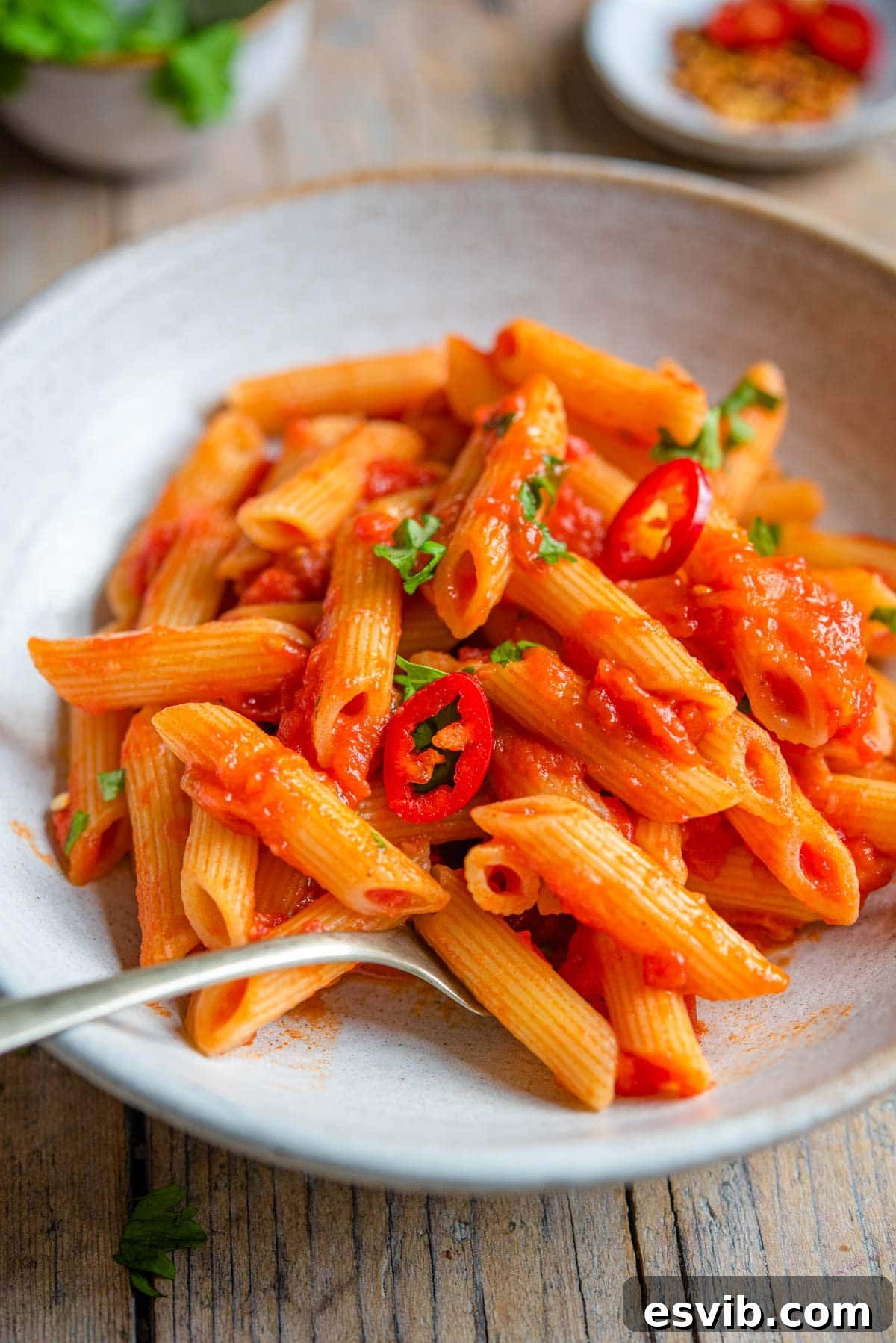
Creating a mouthwatering Penne all’ Arrabbiata is surprisingly straightforward, beautifully demonstrating that achieving incredible depth of flavor doesn’t always necessitate complex techniques or an extensive ingredient list. By following these clear and concise steps, you can confidently prepare a perfect rendition of this classic Italian dish every single time:
1. Preparing the Penne Pasta to Al Dente Perfection
Your culinary journey begins by bringing a large pot of generously salted water to a vigorous, rolling boil. A time-honored guideline for salting pasta water is to make it taste noticeably like the sea – this is essential for seasoning the pasta from within. Once boiling, add your penne pasta and cook it precisely according to the package instructions until it reaches that coveted al dente stage – meaning it’s firm and offers a satisfying resistance to the bite, yet is cooked perfectly through. This typically takes around 8-10 minutes. It’s crucial to resist the temptation to overcook the pasta, as it will continue to cook slightly when it’s combined and tossed with the hot, simmering arrabbiata sauce, ensuring it retains its ideal texture.
2. Building the Aromatic Flavor Base for Your Sauce
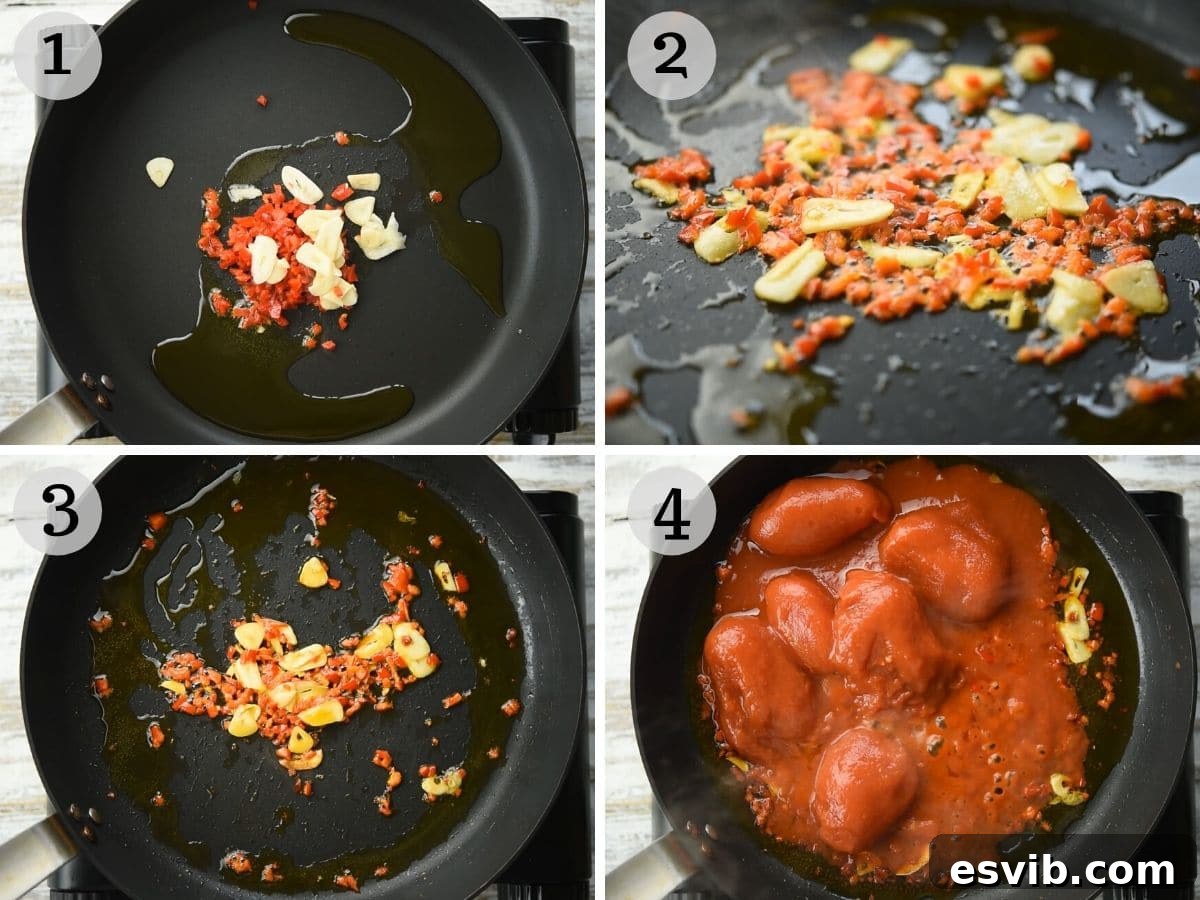
While your penne pasta is busy cooking, turn your attention to the sauce. Heat a tablespoon of high-quality extra virgin olive oil in a large skillet or a wide, non-stick pan over a steady medium heat. Once the oil is shimmering, add your finely sliced garlic cloves and your chosen chilli – whether it’s fresh, thinly sliced red chilli, or dried red pepper flakes. Sauté these aromatics gently for approximately 1-2 minutes. The goal here is to allow the garlic to become fragrant and acquire a very light golden hue. Exercise caution and make sure not to burn the garlic, as scorched garlic will impart an undesirable bitter taste that can compromise the entire sauce. This crucial step is all about infusing the olive oil with the pungent essence of garlic and the spicy kick of the chilli, laying down a robust flavor foundation for the arrabbiata sauce.
3. Introducing the Tomatoes: The Heart of the Arrabbiata
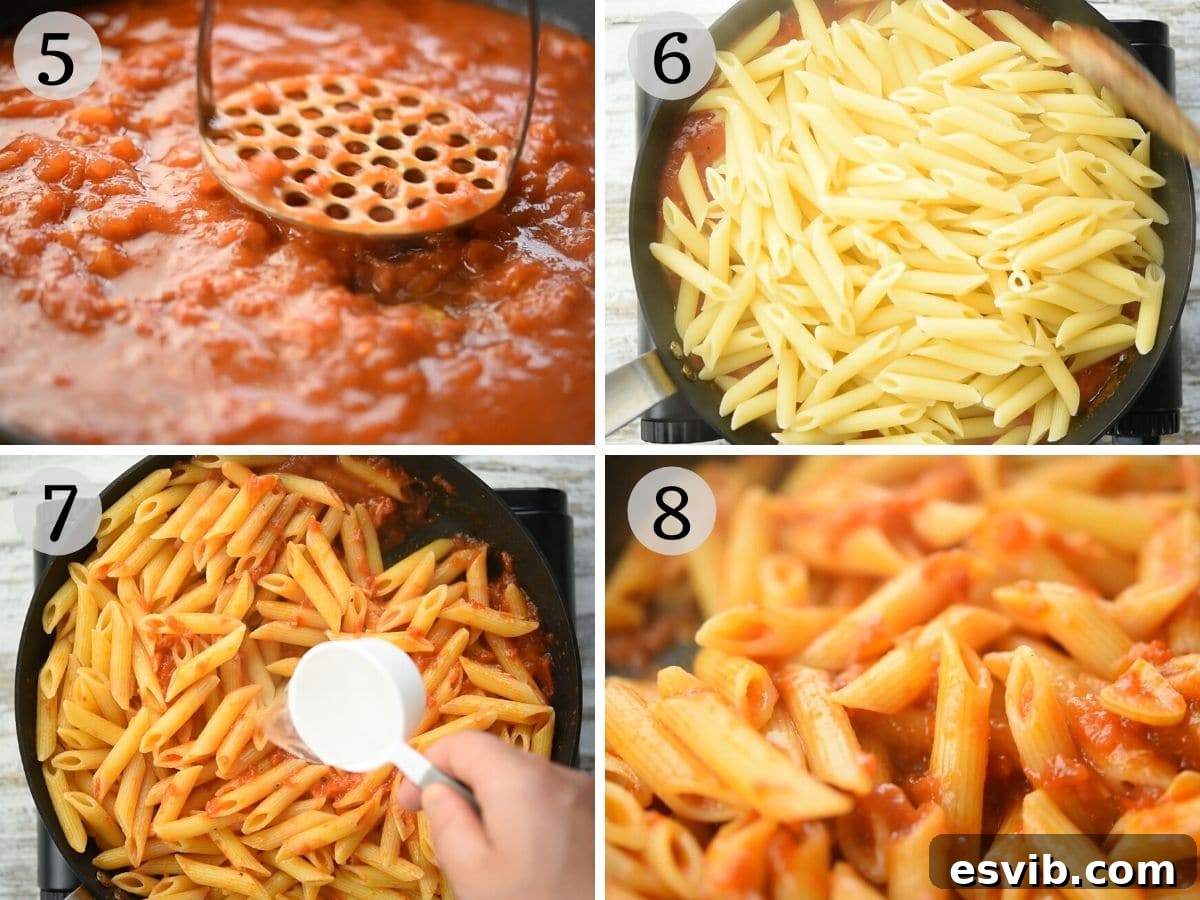
Once the garlic and chilli have released their enticing aromas, it’s time to introduce the star of the show: the canned whole peeled plum tomatoes. Add them directly to the pan. If you’re using whole tomatoes, take a potato masher or the back of a sturdy spoon and gently crush them directly in the pan to achieve a rustic, chunky sauce texture. An alternative method, favored by many chefs, is to crush the tomatoes by hand in a separate bowl before adding them to the skillet. To capture every last drop of flavorful tomato goodness, rinse the empty tomato can with approximately ¼ cup (60ml) of water and pour this rich liquid into the sauce. Season the sauce generously with a pinch of salt and freshly ground black pepper to taste. Bring the sauce to a gentle simmer and allow it to cook undisturbed for about 8-10 minutes. This simmering period is vital for allowing the distinct flavors to meld together beautifully and for the sauce to naturally thicken to an ideal consistency. This timing should conveniently coincide perfectly with your pasta’s cooking time, ensuring everything is ready simultaneously.
4. Bringing It All Together: Combining Pasta and Sauce
Before you drain your cooked pasta, remember to reserve about ¼ to ½ cup of the starchy pasta water. This “liquid gold” is an indispensable component for achieving a perfectly emulsified sauce that coats every strand of pasta beautifully. Once you’ve reserved the water, drain the cooked penne and immediately transfer it into the pan with the simmering arrabbiata sauce. Toss the pasta thoroughly and vigorously with the sauce, ensuring that every single piece of penne is generously coated. If at this stage the sauce appears too thick or seems a bit dry, gradually add a tablespoon at a time of the reserved pasta water, continuing to toss continually, until the sauce achieves a wonderfully silky and clingy consistency. The natural starch released from the pasta into the cooking water acts as a magical emulsifier, helping the sauce adhere perfectly to the pasta, thereby creating a richer flavor and an incredibly luscious texture that truly defines a well-made pasta dish.
5. Serving with Flair: The Final Touch
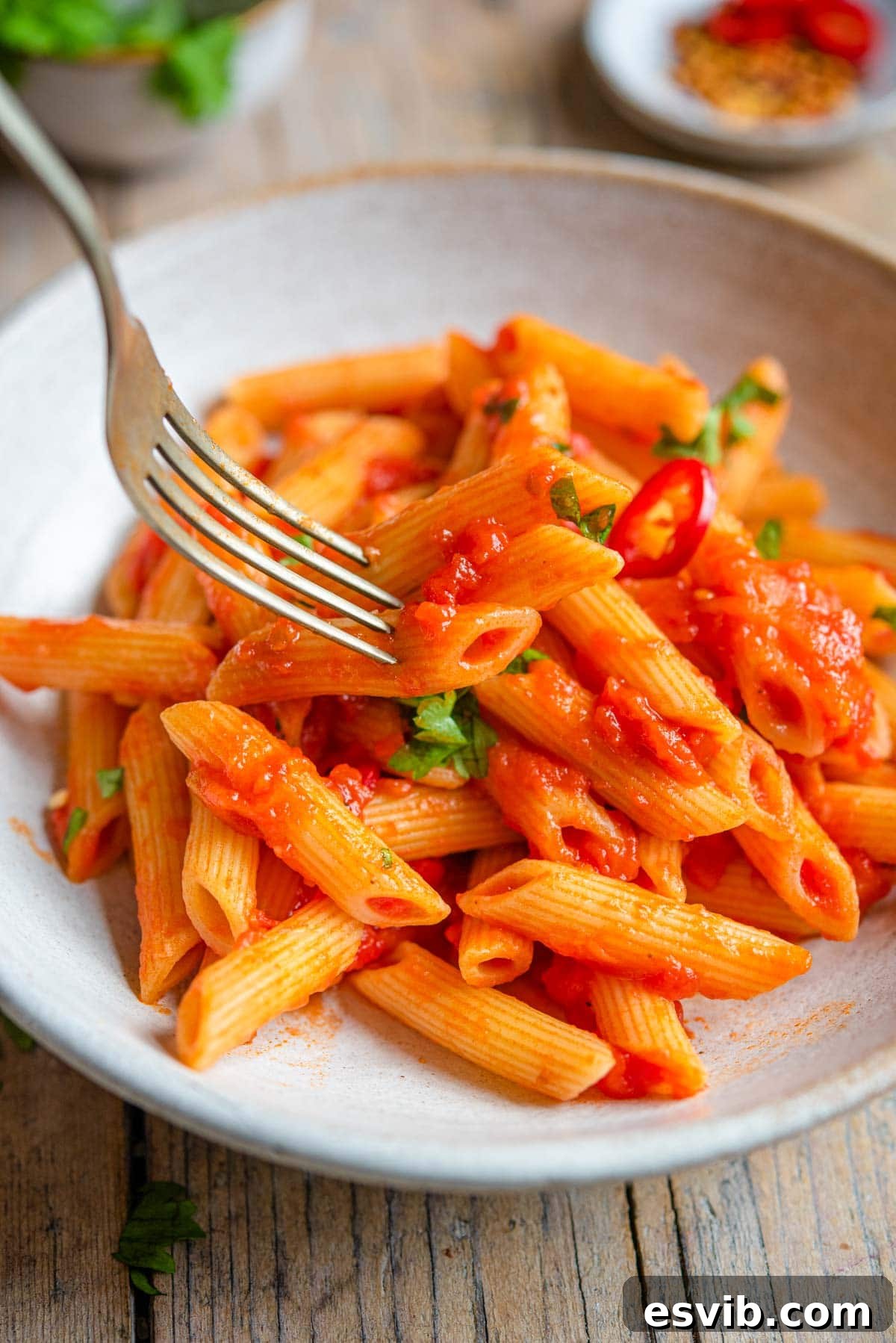
Your delectable Penne all’ Arrabbiata is now ready to be savored! Serve it immediately, piping hot. For a touch of vibrant freshness and an appealing burst of color, liberally sprinkle the dish with freshly chopped parsley. While authentic arrabbiata often foregoes cheese to let the pure, spicy tomato flavor truly shine, a light grating of Pecorino Romano or Parmesan can be added if you desire a subtle salty, umami note. However, it’s generally best to keep the cheese minimal to ensure the inherent spiciness and robust tomato essence remain the stars of the dish. To complete this quintessential Italian meal, a simple green salad dressed with vinaigrette and some crusty Italian bread are perfect accompaniments, ideal for soaking up every last, irresistible drop of that incredible sauce.
Beyond Penne: Other Creative and Versatile Uses for Arrabbiata Sauce
While Penne all’ Arrabbiata stands as a culinary masterpiece in its own right, the incredible versatility of this spicy tomato sauce means its potential extends far beyond just one specific pasta dish. Its bold, vibrant, and piquant flavor profile makes it an exceptionally excellent base or a delightful accompaniment for an impressive array of other culinary creations. Don’t limit its use; let your creativity flow:
- Elevate Pasta Bakes: Give your favorite baked pasta dishes an exciting upgrade by swapping out the standard tomato sauce for the fiery arrabbiata version. Imagine the tantalizing difference in a Pasta Al Forno (Baked Pasta) with a spicy kick, or a Spicy Sausage Pasta Bake that genuinely lives up to its name, offering layers of robust flavor.
- Enhance Meat and Fish Dishes: This sauce serves wonderfully as a simmering base for tender meatballs, a vibrant and zesty liquid for braised chicken, or even as a piquant accompaniment to perfectly grilled fish. Its balanced acidity and delightful spice beautifully cut through the richness of meats and seafood. Consider incorporating it into a One-Pot Chicken With Olives, Tomatoes And Lentils for an entirely new, invigorating flavor dimension.
- Transform Vegetable Sides: Breathe new life into simple vegetable side dishes. Classic Italian green beans, for instance, are incredibly delicious when cooked in tomato sauce; they become even more exciting and flavorful with an arrabbiata twist. The same principle applies brilliantly to hearty beans in tomato sauce, giving them an unexpected zing.
- Pizza and Bruschetta Perfection: For those who truly adore a bit of heat, arrabbiata sauce makes an utterly incredible and unforgettable pizza base. It also serves as a wonderfully flavorful topping for crispy bruschetta, offering an exciting departure from traditional options.
- Savory Breakfasts and Comforting Polenta: Serve this versatile sauce alongside perfectly poached or fried eggs for a hearty and satisfying breakfast or brunch that wakes up the senses. Alternatively, spoon it generously over creamy, warm polenta for a deeply comforting and wonderfully spicy meal, perfect for cooler evenings.
Expert Tips for a Flawless Penne all’ Arrabbiata
- Tomato Quality is Non-Negotiable: The foundation of any great Italian tomato sauce is the quality of its tomatoes. Always invest in the highest quality canned whole peeled plum tomatoes you can possibly find. San Marzano tomatoes, cultivated in the volcanic soil near Mount Vesuvius in Italy, are widely considered the absolute gold standard. They offer a uniquely sweeter, less acidic flavor profile that genuinely elevates the arrabbiata sauce, making a profound and noticeable difference in the final taste of your dish.
- Master the Heat Control: When it comes to incorporating chilli into your arrabbiata, always remember this golden culinary rule: you can always add more heat, but once it’s in, you cannot easily take it away. Begin with a conservative amount of chilli, whether you’re using fresh or dried varieties. Continuously taste the sauce as it simmers, and incrementally add more chilli until it precisely reaches your desired level of piquant spiciness. This careful approach ensures a perfectly balanced heat that tantalizes rather than overwhelms.
- Fresh Garlic is Essential: While garlic powder might appear to be a convenient shortcut, it simply cannot replicate the vibrant, pungent, and fresh flavor that finely sliced or minced fresh garlic imparts to an authentic arrabbiata sauce. For a truly genuine and deliciously aromatic result, always commit to using fresh garlic. The difference in depth and complexity of flavor is remarkable.
- The Magic of Starchy Pasta Water: Never, ever forget to reserve some of that precious, starchy pasta water before you drain your cooked penne! This “liquid gold” is an invaluable tool for creating a perfectly emulsified sauce. The starch in the water helps the sauce to thicken slightly and adhere beautifully to the pasta, ensuring every piece is coated in a luscious, flavorful glaze. It also adds an extra layer of savory depth to the overall dish.
- Storage and Freezing Guidelines: This arrabbiata sauce is a fantastic make-ahead option, perfect for meal prepping or simply having on hand. It will maintain its beautiful flavor and quality when stored in an airtight container in the refrigerator for up to 5 days. For longer-term convenience, it can be frozen in suitable freezer-safe containers for up to 3 months. When ready to use, simply thaw completely in the refrigerator, gently reheat, and toss with freshly cooked pasta for a quick and delicious meal.
- Achieve Al Dente Perfection: The texture of your pasta is crucial in arrabbiata. Ensure your penne is cooked perfectly al dente. This firm, yet yielding texture provides a wonderfully satisfying bite and, importantly, prevents the pasta from becoming mushy or overcooked when it’s combined and vigorously tossed with the hot, flavorful sauce.
More Easy Italian Pasta Recipes You Might Love
If you’ve thoroughly enjoyed the delightful simplicity and robust, fiery flavors of Penne all’ Arrabbiata, you’ll undoubtedly appreciate these other exquisite and easy-to-prepare Italian pasta dishes. Each recipe offers a unique taste of Italy’s diverse culinary landscape:
- Pasta Amatriciana – Bucatini, Tomato And Guanciale: Another iconic Roman classic featuring a rich sauce made with cured pork cheek (guanciale), sweet San Marzano tomatoes, and a generous grating of Pecorino Romano cheese.
- Pasta With Puttanesca Sauce (Spaghetti Alla Puttanesca): A bold, intensely savory, and wonderfully aromatic sauce characterized by the inclusion of olives, capers, anchovies, and garlic – a true flavor bomb!
- Ricotta Pasta Sauce: 2 Ways: Explore two delightful variations of a creamy and incredibly comforting pasta sauce made with fresh ricotta cheese, perfect for a milder, yet equally satisfying, alternative to spicy dishes.
- Penne alla Vodka – Pasta with Tomato Vodka Sauce: A sophisticated and utterly indulgent pasta dish featuring a luxurious, rich, and creamy tomato sauce subtly enhanced with a hint of vodka, creating a smooth and irresistible texture.
- Cavatelli and Broccoli Pasta: A hearty, wholesome, and delicious vegetable-based pasta dish that beautifully combines tender cavatelli pasta with nutrient-rich broccoli, often with a touch of garlic and chilli for extra zest.
Penne Arrabbiata Recipe Card
This quick and easy Penne all’ Arrabbiata recipe delivers a delicious, customizable spicy kick that is sure to become a weeknight favorite. It’s simple enough for even beginner cooks to master, yielding an impressive, flavorful meal with minimal effort.
Prep Time: 5 minutes
Cook Time: 15 minutes
Total Time: 20 minutes
Servings: 4
Recipe by Emily
Ingredients
- 14 oz (400g) penne pasta
- 14 oz (400g) canned whole peeled plum tomatoes (San Marzano or other high-quality brand recommended)
- 2 large garlic cloves, finely sliced
- 1 whole red chilli, seeds removed and finely sliced (or ½-1 tsp red pepper flakes, adjusted to your preferred heat level)
- 1 tbsp extra virgin olive oil
- Salt and freshly ground black pepper, to taste and season generously
- Freshly chopped parsley, for serving (optional, but highly recommended for freshness)
- Parmesan or Pecorino Romano cheese, freshly grated, for serving (optional, use sparingly if desired)
Instructions
- Bring a large pot of generously salted water to a rolling boil. Add the penne pasta and cook according to package directions until it is perfectly al dente (this typically takes between 8-10 minutes).
- While the pasta cooks, heat the olive oil in a large skillet or a wide, non-stick pan over medium heat. Add the finely sliced garlic and the chilli (fresh or dried flakes). Sauté for 1-2 minutes until the garlic is fragrant and turns a very light golden color, being careful to prevent it from burning.
- Add the whole peeled tomatoes to the pan. Using a potato masher or the back of a sturdy spoon, crush the tomatoes directly in the pan until they form a chunky sauce. Rinse the tomato can with ¼ cup (60ml) of water and add this liquid to the sauce. Season generously with a good pinch of salt and freshly ground black pepper.
- Bring the sauce to a gentle simmer and continue to cook for 8-10 minutes, or until the pasta is ready, stirring occasionally to prevent sticking.
- Before draining the pasta, remember to reserve about ¼ to ½ cup of the starchy pasta water. Drain the cooked penne and immediately transfer it to the arrabbiata sauce in the skillet.
- Toss the pasta thoroughly with the sauce until every piece is well coated. If the sauce appears too thick or dry, gradually add a tablespoon at a time of the reserved pasta water, tossing constantly, until the desired silky and clingy consistency is achieved.
- Serve immediately, garnished with freshly chopped parsley and a light sprinkle of freshly grated Parmesan or Pecorino Romano cheese, if desired. Enjoy!
Notes
- For the most authentic and flavorful arrabbiata sauce, always opt for the highest quality canned tomatoes available, such as San Marzano.
- The heat level of this dish is entirely customizable. Start with a smaller amount of chilli and add more if you prefer a spicier dish. Always taste as you go!
- Fresh garlic is absolutely essential for the true, vibrant taste of arrabbiata. Avoid using garlic powder as a substitute, as it will not provide the same depth of flavor.
- Leftover arrabbiata sauce can be stored in an airtight container in the refrigerator for up to 5 days, making it excellent for meal prep. For longer storage, it can be frozen for up to 3 months.
- The reserved starchy pasta water is a crucial ingredient for emulsifying the sauce and helping it beautifully cling to the pasta, enhancing both flavor and texture.
Approximate Nutrition Information Per Serving
- Calories: 423 kcal
- Carbohydrates: 80g
- Protein: 14g
- Fat: 5g
- Saturated Fat: 1g
- Sodium: 149mg
- Potassium: 444mg
- Fiber: 4g
- Sugar: 6g
- Vitamin A: 223 IU
- Vitamin C: 26mg
- Calcium: 54mg
- Iron: 2mg
Nutrition information is automatically calculated and should be used as an approximation. Actual values may vary based on specific ingredients and preparation methods.
Helpful Information for All Your Italian Cooking Adventures
- I always recommend and use extra virgin olive oil in all of my recipes unless a different type of oil is specifically stated.
- When utilizing canned or jarred tomatoes of any kind, I consistently suggest using premium brands like Cirio or Mutti for the very best results and superior flavor.
- Unless explicitly stated otherwise within a recipe, all vegetables referenced are assumed to be of medium size.
- All recipes provided have been carefully tested and meticulously developed using a standard fan (convection) oven, ensuring reliable results.
- To understand more about the methodologies used for calculating nutritional content, please find out more about how nutrition is calculated.
- Equip your kitchen for success by checking out our must-have list of Italian Pantry Staples.
- Discover the essential tools that every home chef needs for authentic Italian cooking with our guide to Essential Kitchen Tools for Italian Cooking.
If you tried this Penne all’ Arrabbiata recipe or any other delightful recipes on my blog, please be sure to leave me a comment below to let me know how your cooking adventure went. I truly cherish hearing from you and your experiences! You can also FOLLOW ME on FACEBOOK, INSTAGRAM, and PINTEREST to discover even more delicious food, behind-the-scenes glimpses, and what exciting culinary creations I’m getting up to next.