
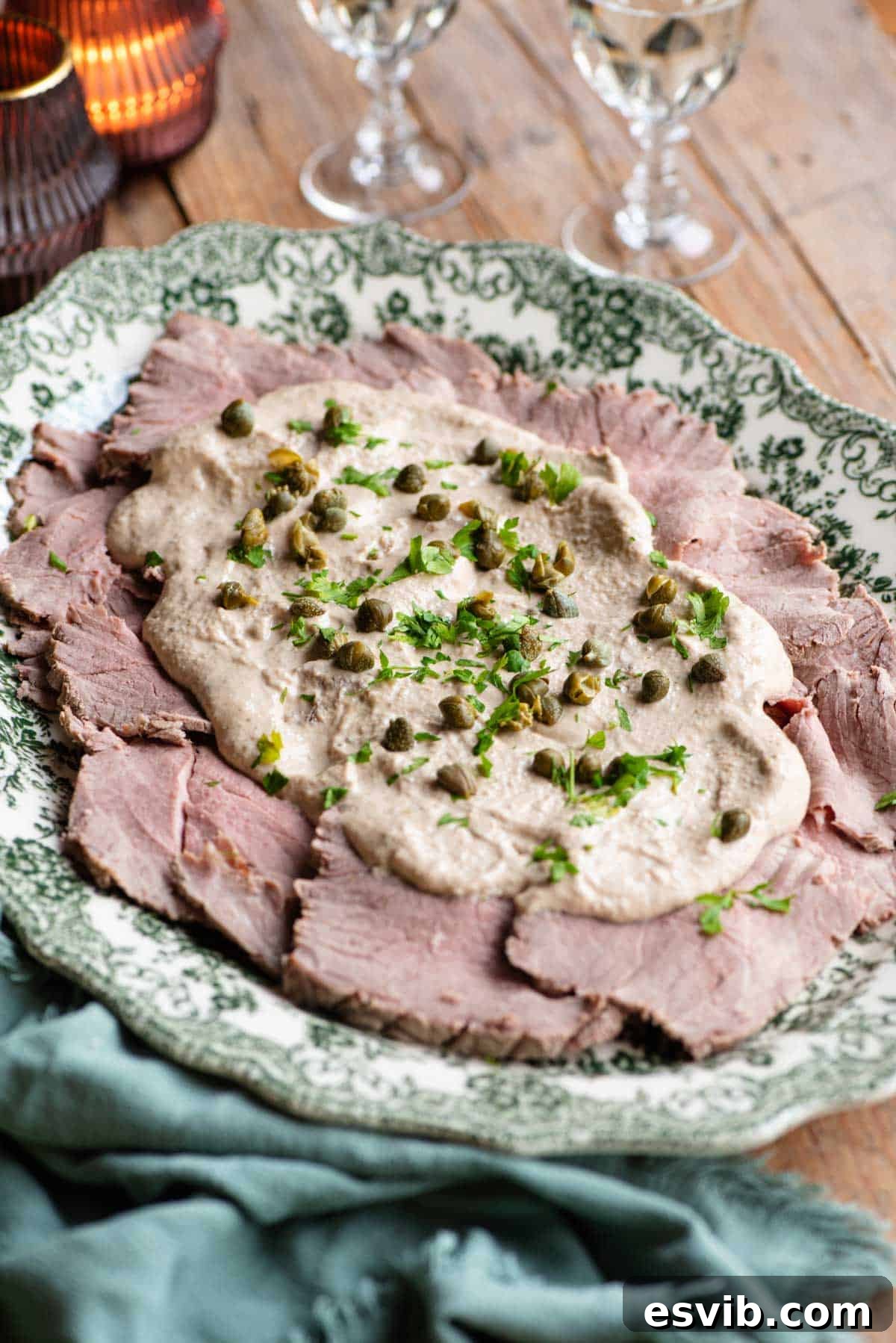
Vitello Tonnato stands as a testament to Italian culinary ingenuity, a classic Piemontese dish that masterfully blends seemingly disparate flavors into a harmonious and unbelievably delicious experience. It features succulent, thinly sliced veal, delicately poached and then generously draped with a creamy, umami-rich sauce made from tuna, capers, and mayonnaise. This iconic dish, celebrated for its unique flavor profile, is traditionally savored during the warm summer months and also holds a special place at the festive Christmas table, making it a versatile staple in Italian gastronomy.
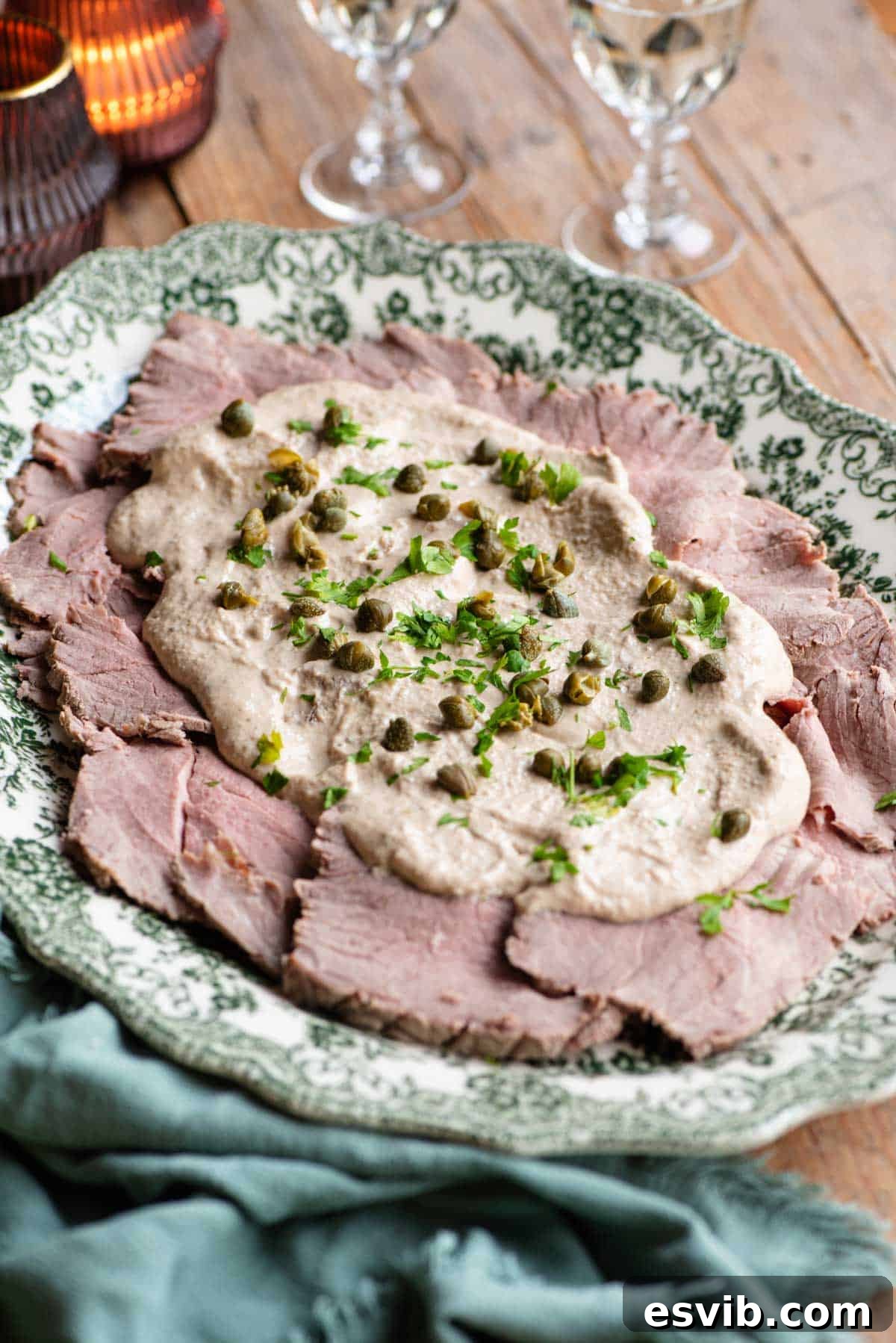
For many, including myself, Vitello Tonnato ranks among the absolute finest Italian dishes. The magic lies in the exquisite contrast and balance: the tender, perfectly cooked slices of veal provide a delicate canvas, while the accompanying tuna sauce delivers an unparalleled depth of umami, richness, and an utterly addictive quality. This isn’t just food; it’s a sensory journey that captures the essence of Italian tradition and innovation.
While the combination of veal and tuna might initially strike some as unusual, I urge you to set aside any reservations and trust in this age-old pairing. It’s a culinary revelation that has captivated palates for generations, proving that the most unexpected ingredients can create something truly extraordinary. Once you try it, you’ll understand why it’s a must-experience dish.
Across Italy, Vitello Tonnato is enjoyed throughout the year. Its sophisticated presentation and complex yet balanced flavors make it a particularly elegant choice for special occasions, frequently gracing tables during holidays, most notably Christmas. Its versatility extends beyond festive gatherings; it’s also a beloved fixture during the warmer seasons.
Crucially, this dish is traditionally served cold, but always at room temperature, never chilled straight from the refrigerator. Serving it at room temperature allows the nuanced flavors of both the veal and the tuna sauce to fully bloom, creating a more cohesive and pleasurable dining experience. This characteristic makes it an incredibly popular and refreshing option for summer lunches and light dinners.
Historically, the sauce for Vitello Tonnato was crafted by blending hard-boiled eggs with some of the veal cooking broth. While this traditional method is still cherished, modern interpretations often opt for a mayonnaise-based sauce, which is now widely common in restaurants throughout Italy. Both versions are undeniably delicious, offering distinct yet equally appealing profiles. My personal preference leans slightly towards the rich, creamy mayonnaise version, which brings a delightful smoothness to the dish. Interestingly, my mother-in-law ingeniously combines elements of both, blending hard-boiled eggs with mayonnaise for a unique hybrid that offers the best of both worlds. For your convenience, we’ve included instructions for both sauce variations in the detailed recipe card below. Both are surprisingly easy to prepare, but I wholeheartedly recommend trying the mayonnaise-based sauce first – its irresistibility makes it absolutely perfect for dunking crispy roast potatoes!
The Fascinating History of Vitello Tonnato
The origins of Vitello Tonnato are steeped in the rich culinary traditions of Piedmont, a region in northern Italy renowned for its sophisticated cuisine. While often associated with the 19th century, earlier versions of this dish can be traced back even further. Originally, the “tonnato” sauce was not made with mayonnaise, but rather with a mixture of anchovies, capers, and olive oil, often emulsified with veal broth. This earlier iteration reflects Piedmont’s inland location and its historical connections to the sea via trade routes, allowing for access to preserved fish like tuna and anchovies. The introduction of mayonnaise to the recipe came later, likely influenced by French culinary techniques, eventually becoming the popular and beloved rendition we know today. It embodies the Piedmontese spirit of combining hearty, local produce with refined flavors, transforming simple ingredients into an elegant masterpiece.
Essential Ingredients for Perfect Vitello Tonnato
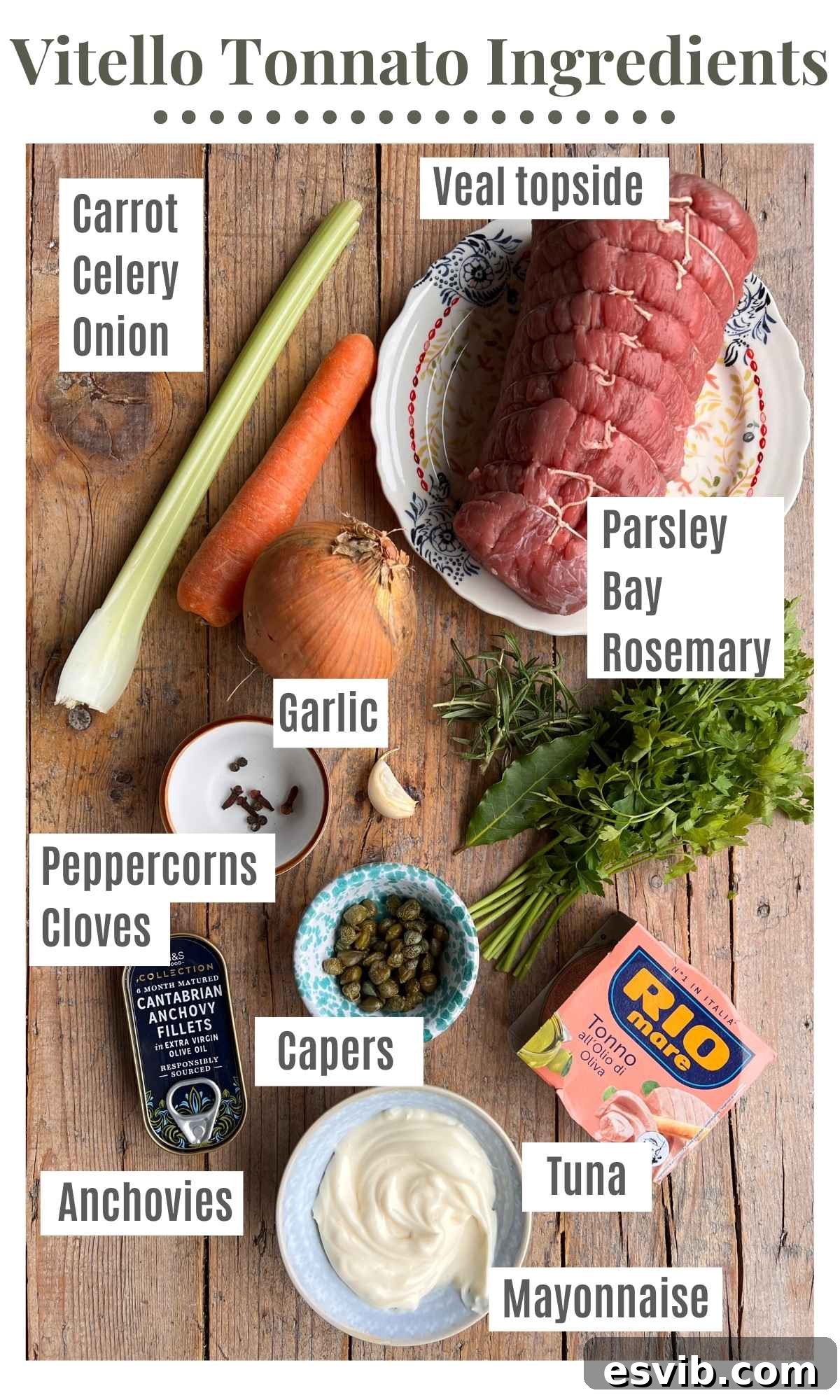
Ingredient Notes and Expert Substitutions
- Veal Topside or Eye of Round: The quality of your veal makes a significant difference in this dish. Opting for a lean cut like topside or eye of round is highly recommended for its tenderness and ability to hold shape when thinly sliced. While finding high-quality veal is worth the effort, especially for a special occasion, excellent substitutes include pork loin or even pork tenderloin, which will yield an extra tender result (though adjust cooking times accordingly). Some contemporary interpretations of Vitello Tonnato roast the meat instead of poaching it, offering a different textural experience if preferred.
- Aromatic Vegetables: A foundation of flavor is built with fresh garlic, onion, carrot, and celery. These humble vegetables are essential for creating a fragrant and savory poaching liquid, infusing the veal with a delicate complexity during cooking. They are the backbone of the broth, contributing to the overall depth of the dish.
- Fresh Herbs: Bay leaf, fresh parsley (including stalks for maximum flavor), and rosemary are indispensable for their fragrant contributions to the poaching liquid. Their aromatic qualities are crucial for enhancing the veal’s natural taste. Some regional variations also incorporate fresh sage, which adds another layer of earthy notes. Always prioritize fresh herbs for the best flavor.
- Spices: A few whole cloves and black peppercorns add subtle warmth and a gentle spice to the poaching broth. We typically use 3-4 cloves, as any more can easily overpower the delicate flavors of the veal and vegetables. These spices are key to a well-rounded poaching liquid.
- Premium Tuna: This is arguably the most critical ingredient for achieving a superior sauce. It is imperative to use high-quality tuna canned in olive oil. The oil from the tuna is vital for creating a smooth, emulsified sauce. If you use tuna canned in water, or a lower-quality brand, the sauce will likely have a grainy or less refined texture, lacking the desired richness. Brands like Rio Mare are excellent choices.
- Mayonnaise: For the sauce, select a good quality mayonnaise that you genuinely enjoy the taste of. A superior mayonnaise contributes significantly to the creamy texture and overall flavor of the sauce. We found Hellman’s to be a consistently reliable choice.
- Capers: Capers preserved in brine are essential for their briny, tangy counterpoint to the richness of the tuna and veal. They add a bright, piquant note that elevates the entire dish. Ensure they are drained well before use.
- Anchovies: Even if you consider yourself an anchovy skeptic, please do not skip this ingredient! Anchovy fillets are a secret weapon in Vitello Tonnato sauce. When blended, they dissolve completely, imparting a profound umami depth and savory complexity without any discernible “fishy” taste. They are a game-changer for the sauce’s character, providing that authentic Italian flavor.
Step-by-Step Preparation: Crafting Your Vitello Tonnato
This section provides a clear visual guide to assist you through each step of preparing Vitello Tonnato. For the complete written recipe, precise ingredient measurements, and additional expert tips, please scroll down to the comprehensive recipe card below.
- Prepare the Veal and Aromatics: Begin by carefully trimming any silverskin from your veal topside or eye of round. Once trimmed, tie the veal securely with kitchen string at even intervals. This helps the meat maintain its shape during poaching, ensuring it cooks uniformly and is easier to slice thinly later. Rub the entire surface of the veal generously with salt. This initial seasoning penetrates the meat, enhancing its flavor from within. Set the seasoned veal aside while you prepare the poaching liquid. Next, take your carrot, celery, and onion. Cut the carrot and celery in half. Peel the onion and insert the whole cloves into one half of the onion bulb. This technique allows the cloves to gently infuse their flavor into the broth without scattering. Add all the prepared vegetables, along with the cold water, fresh parsley (including stalks for maximum aroma), bay leaf, rosemary, and garlic clove, to a large stockpot. These aromatics will create a rich and flavorful broth for poaching the veal. (See photo 1 for visual guidance).
- Poach and Cool the Veal: Place the stockpot with the water and aromatics over high heat and bring it to a rolling boil. Once boiling, carefully add the salt-rubbed veal to the hot water. Immediately reduce the heat to a gentle simmer. Cover the pot with a lid, leaving it slightly ajar to allow some steam to escape. Let the veal poach undisturbed for 40 minutes. The slow simmer ensures the veal cooks gently, resulting in a wonderfully tender texture. After 40 minutes, remove the veal from the pot and transfer it to a clean cutting board or plate. Wrap it tightly in aluminum foil. This traps residual heat and juices, allowing the veal to continue cooking slightly and reabsorb its moisture. It is crucial to let the veal cool completely, preferably to room temperature, before attempting to slice it. This cooling process firms up the meat, making it much easier to achieve those signature ultra-thin slices. (Refer to photos 2 and 3 for these steps).
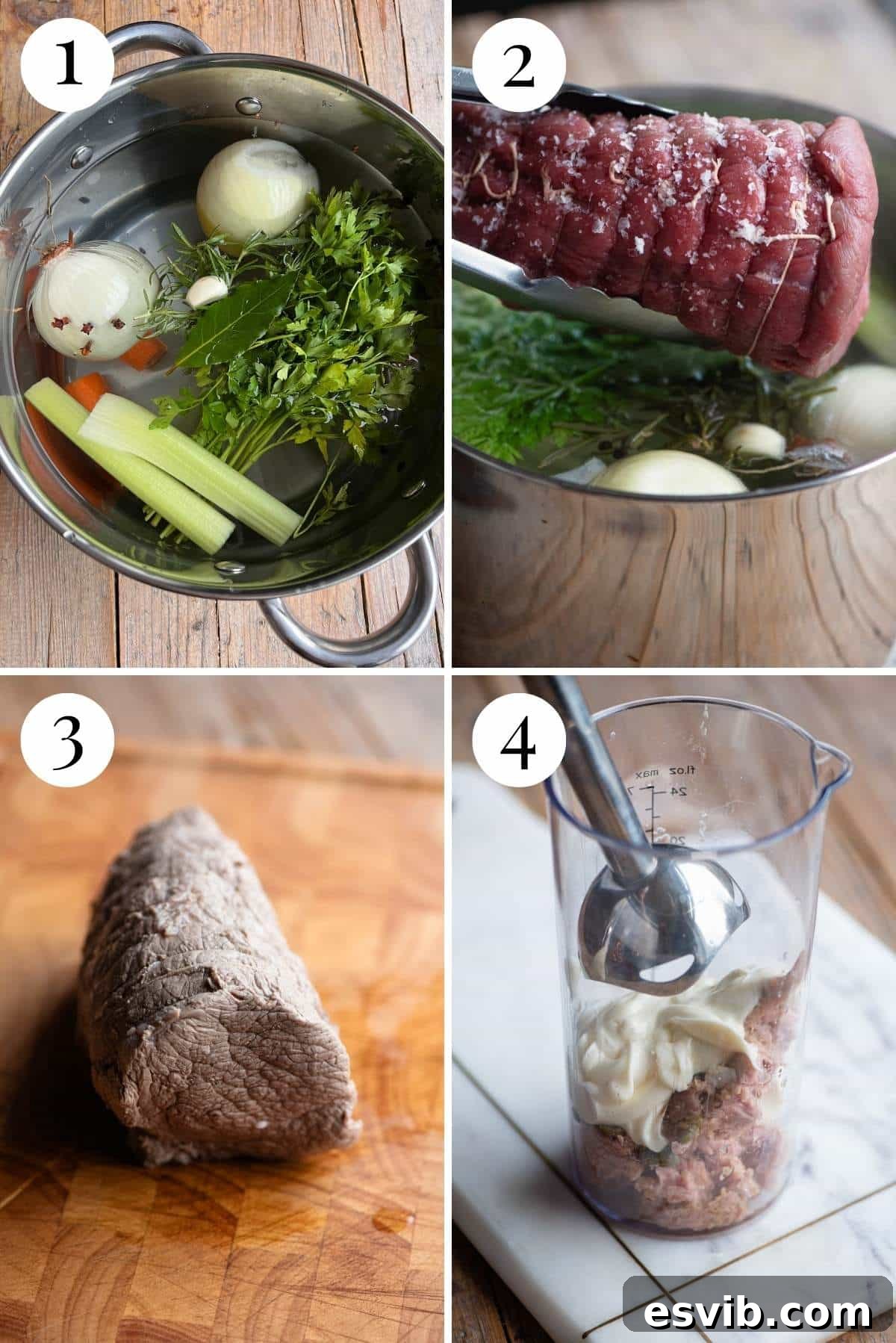
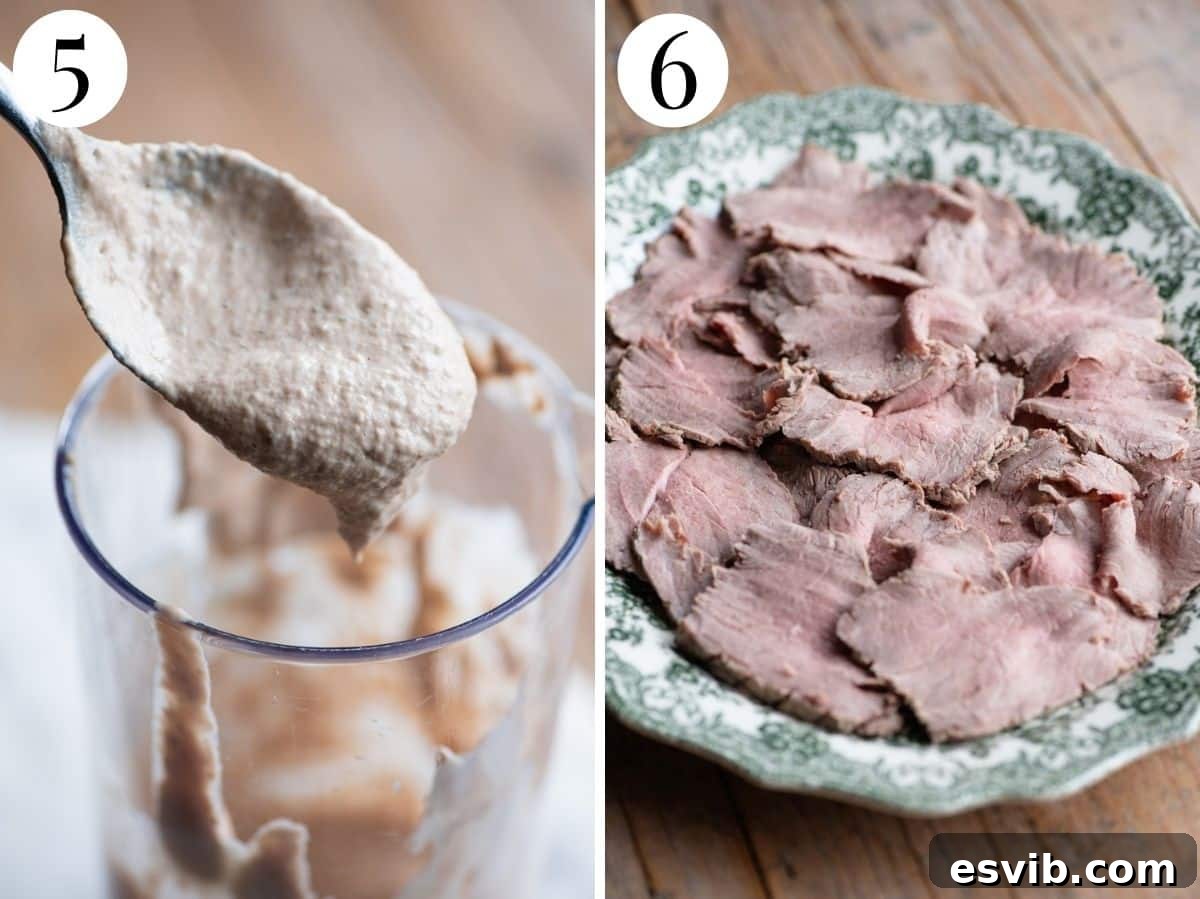
- Prepare the Velvety Tuna Sauce: While the veal is cooling, it’s time to create the star of the show: the Vitello Tonnato sauce. Gather all your sauce ingredients – the canned tuna in olive oil (drained, reserving a little oil if desired for consistency), good quality mayonnaise, anchovy fillets, and capers in brine (drained). Add all these ingredients to the bowl of a food processor or a tall container if using an immersion blender. Blitz the mixture until it is completely smooth and wonderfully creamy. The key here is to process it sufficiently to achieve a velvety, luxurious texture without any visible chunks of tuna or capers. An immersion blender, especially, can help achieve an extra-smooth consistency. This rich, emulsified sauce is what truly defines Vitello Tonnato. (Photos 4 and 5 guide you through the sauce-making process).
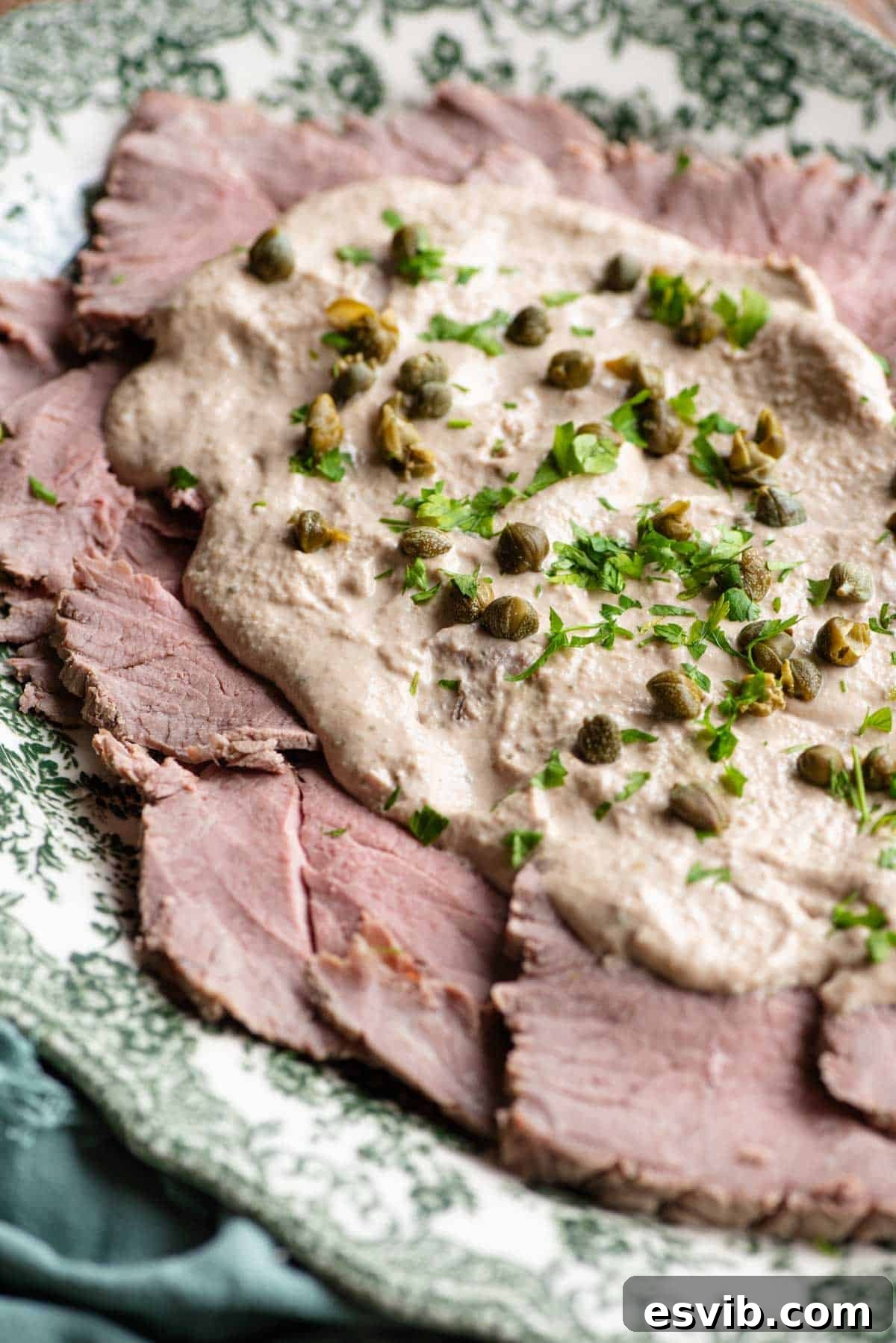
- Slice and Masterful Presentation: Once the poached veal has completely cooled to room temperature, it’s ready for slicing. Using a very sharp knife (a carving knife or electric slicer works best), slice the veal as thinly as humanly possible. The hallmark of an authentic Vitello Tonnato lies in its paper-thin slices, which enhance its delicate texture and allow the sauce to truly shine. Arrange these delicate slices of veal elegantly on individual serving plates or a large communal platter. Generously spoon the prepared tuna sauce over the veal, ensuring every slice is beautifully coated. For a final flourish and added bursts of flavor, garnish the dish with additional capers or elegant caper berries, and a sprinkle of freshly chopped parsley. Serve immediately and watch your guests be enchanted by this exquisite Italian classic. (See photo 6 for serving inspiration).
Elegant Serving Suggestions for Vitello Tonnato
In Italy, Vitello Tonnato enjoys a flexible role on the menu, often served as a sophisticated appetizer (antipasto) or a lighter main course (secondo). Here are some of our favorite ways to serve this versatile and delicious dish, ensuring a memorable dining experience.
- As an Antipasto: For a stunning start to any meal, arrange the ultra-thin slices of veal artfully on a large serving platter or on individual small plates. Blanket the veal generously with the creamy tuna sauce, ensuring a luscious coating. Crown each portion with more capers or plump caper berries for a briny pop and a touch of visual elegance. Accompanying this with some crusty Italian bread is a must – it’s perfect for mopping up every last drop of the exquisite sauce.
- With a Fresh Salad for a Light Lunch: During the height of summer, Vitello Tonnato makes for a wonderfully refreshing and satisfying light lunch. Serve it alongside a simple bed of fresh arugula, lightly dressed with a drizzle of high-quality extra virgin olive oil and a pinch of black pepper. A squeeze of fresh lemon juice over the salad can add an extra layer of brightness that complements the dish beautifully.
- As a Main Course (Secondo): My absolute favorite way to enjoy Vitello Tonnato is as a main course, paired with complementary side dishes. The rich sauce finds a perfect companion in Italian roast potatoes – their crispy exterior and fluffy interior are ideal for dunking into the savory sauce. Simple green beans, blanched and then tossed with a little olive oil and freshly cracked black pepper, offer a refreshing green element. Other popular and excellent sides include roasted asparagus, steamed spinach, or a medley of seasonal roasted vegetables, all of which provide a delightful textural contrast to the tender veal and smooth sauce.
Explore More Authentic Piedmontese Recipes
Antipasti
Bagna Cauda (Anchovy, Garlic & Butter Dip)
Fresh Pasta
Homemade Agnolotti (Step by Step)
Sides
Ricotta Chicken Croquettes
Italian Desserts
Chocolate Budino (Budino al Cioccolato)
If you’ve had the pleasure of trying this Vitello Tonnato recipe or any other delightful recipe from our blog, please don’t hesitate to share your experience! We encourage you to rate the recipe and leave a comment below – your feedback is invaluable and we love hearing from you! You can also connect with us and discover more of our delicious culinary creations by following us on Facebook, Instagram, and Pinterest. For a weekly dose of fresh recipes delivered straight to your inbox, consider signing up for our Newsletter.
Step By Step Photos Above
Most of our recipes come with detailed step-by-step photos, helpful tips, and tricks to ensure perfect results on your first attempt, and sometimes even a video!
Vitello Tonnato (Veal with Tuna Sauce)
By Emily
20
40
4
5
4
servings as a main
Equipment
-
Kitchen string
-
Large stockpot
-
Food processor or immersion blender
-
Sharp carving knife
Ingredients
-
1.9
lbs (850g)
veal topside or eye of round,
tied -
1
gallon (4 litres)
cold water -
1
onion -
1
stick celery -
1
large carrot -
1
bunch fresh parsley with stalks -
1
sprig of fresh rosemary -
1
bay leaf,
fresh or dried -
4
cloves -
6
peppercorns -
1
fresh
garlic clove -
1
tablespoon
sea salt (for rubbing the veal)
For the Sauce
-
5.6
oz (110g)
canned tuna in olive oil,
preferably good quality like Rio Mare -
½
cup (90g)
good quality mayonnaise -
2
anchovy fillets (essential for umami, not fishiness) -
1.5
tablespoons (20g)
capers in brine,
drained
Garnish (Optional)
- Extra capers or caper berries
- Freshly chopped parsley
Instructions
Prep the Veal & Broth
-
Carefully trim any silverskin from the veal, then tie it with kitchen string at regular intervals to ensure it maintains its shape while cooking. Rub the veal generously with a tablespoon of sea salt, then set it aside.
-
Cut the carrot and celery in half. Peel the onion and insert the cloves into one half. Fill a large stockpot with 1 gallon (4 liters) of cold water. Add the prepared vegetables, peppercorns, garlic clove, bay leaf, rosemary sprig, and the bunch of fresh parsley with stalks to the pot.
Cook the Veal
-
Bring the water and aromatics to a rolling boil. Once boiling, carefully submerge the entire piece of seasoned veal into the pot. Immediately reduce the heat to a gentle simmer. Cover the pot with a lid, leaving it slightly ajar to allow steam to escape, and let the veal poach for 40 minutes. This gentle cooking ensures maximum tenderness.
-
Remove the veal from the poaching liquid and transfer it to a cutting board or plate. Wrap it tightly in aluminum foil and allow it to cool completely to room temperature. This is a crucial step for achieving perfect, thin slices later on.
Make the Tuna Sauce
-
Add all the sauce ingredients – drained canned tuna in olive oil, mayonnaise, anchovy fillets, and drained capers – to a food processor. Alternatively, combine them in a tall container if using an immersion blender. Blitz until the mixture is completely smooth and creamy. Ensure there are no visible chunks for a velvety texture.
To Serve
-
Once the veal is cold (at room temperature), remove the kitchen string and slice it as thinly as possible using a very sharp knife. Arrange the delicate slices of veal beautifully on serving plates or a large platter. Generously spoon the velvety tuna sauce over the veal.
-
For a final touch, garnish with extra capers or elegant caper berries and a sprinkle of freshly chopped parsley. Serve immediately and enjoy this classic Italian delicacy.
Recipe Notes and Expert Tips
- Optimal Storage: Vitello Tonnato often tastes even better the day after it’s prepared, allowing the flavors to meld beautifully. Once the cooked veal has cooled completely, wrap it tightly in aluminum foil and store it in the refrigerator overnight. Always bring the veal to room temperature before serving to ensure the best flavor and texture. Cooked veal will keep well in the fridge for up to 3 days.
- Advance Sauce Preparation: The tuna sauce can also be made in advance, up to 2 days prior to serving. Store it in an airtight container in the refrigerator. Remember to bring the sauce to room temperature before assembling and serving the dish, as this will optimize its consistency and flavor.
- Veal Alternatives: If high-quality veal is difficult to source, several excellent alternatives can be used. Pork loin or pork tenderloin are fantastic substitutes, offering a tender texture (note that pork tenderloin will require significantly less cooking time). Turkey breast is another good alternative that can provide a similar lean protein base for the dish.
- Traditional Sauce Variation: For a more classic and perhaps richer sauce, instead of a pure mayonnaise base, you can blend all the sauce ingredients (tuna, anchovies, capers) with 2 hard-boiled eggs. Use a small amount of the reserved veal poaching broth to help emulsify the mixture into a smooth, creamy sauce. This method offers a slightly different depth of flavor.
- Roasting Option: While poaching is the traditional method for Vitello Tonnato, you can certainly roast the veal (or pork/turkey alternative) instead if you prefer a different texture. If roasting, ensure the meat is cooked through but still tender, then slice thinly once cooled.
- Achieving Thin Slices: The secret to truly authentic Vitello Tonnato lies in the paper-thin slices of veal. A very sharp carving knife is essential. For best results, chill the veal briefly (about 30 minutes) before slicing, as this can firm up the meat and make it easier to slice thinly. An electric meat slicer can also achieve professional-level thinness if available.
Helpful Information for All Our Recipes
- We consistently use high-quality extra virgin olive oil in all our recipes, unless explicitly stated otherwise, for superior flavor and health benefits.
- For canned or jarred tomatoes, we exclusively recommend using Cirio or Mutti brands. Their exceptional quality guarantees the best results and authentic flavor in your Italian dishes.
- All vegetables specified in our recipes are assumed to be of medium size, unless a different size is indicated.
- Every recipe shared on our blog has been thoroughly tested and developed using a fan (convection) oven to ensure reliable and consistent results for your home cooking.
- Gain a better understanding of how nutrition information is calculated for our recipes.
- Explore our guide to must-have Italian Pantry Staples to stock your kitchen with essential ingredients.
- Discover all our recommended Essential Kitchen Tools for Italian Cooking to elevate your culinary journey.
Nutrition Facts (Per Serving)
Calories:
444
kcal
|
Carbohydrates:
5
g
|
Protein:
48
g
|
Fat:
25
g
|
Saturated Fat:
5
g
|
Polyunsaturated Fat:
11
g
|
Monounsaturated Fat:
7
g
|
Trans Fat:
0.04
g
|
Cholesterol:
182
mg
|
Sodium:
553
mg
|
Potassium:
839
mg
|
Fiber:
1
g
|
Sugar:
2
g
|
Vitamin A:
2623
IU
|
Vitamin C:
4
mg
|
Calcium:
70
mg
|
Iron:
2
mg
Please note that nutrition information is automatically calculated and should be used as an approximation only.
Did you try this recipe?
Leave a comment below!