
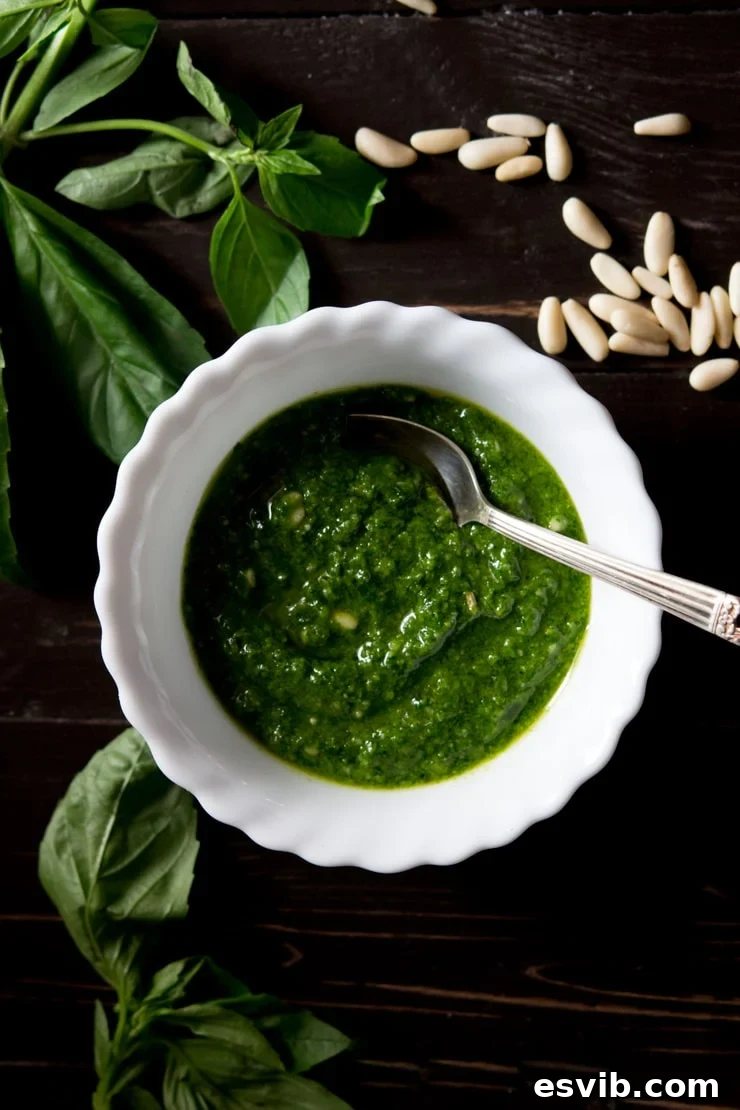
The Ultimate Guide to Authentic Homemade Basil Pesto: Fresh, Flavorful, and Fast
Embark on a culinary journey to the heart of Italy with this timeless recipe for basil pesto, often hailed as “the best sauce in the world.” Crafted with just a handful of vibrant ingredients, this intensely flavorful green gold is incredibly versatile. Whether you’re dressing fresh pasta, enhancing salads, elevating sandwiches, or topping a gourmet pizza, homemade pesto adds an unparalleled burst of freshness and aroma to countless dishes. Forget store-bought versions; creating your own authentic basil pesto from scratch is surprisingly simple, takes less than five minutes, and will revolutionize your kitchen!
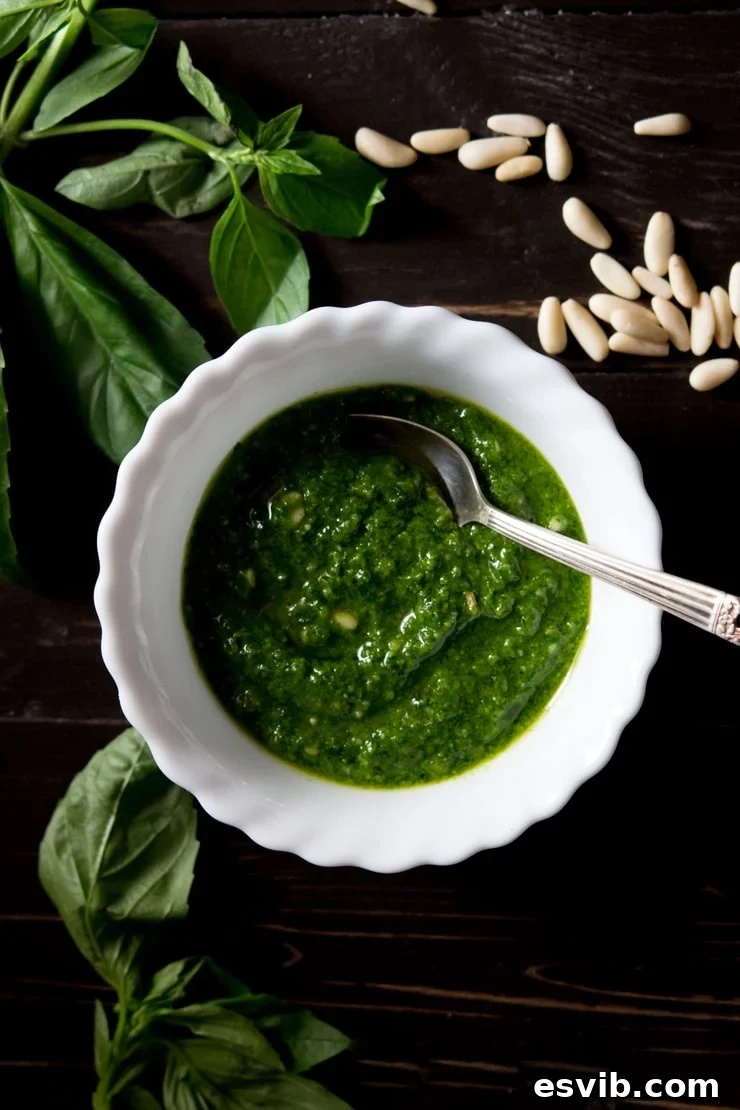
For many, including myself, basil pesto holds a special place as the ultimate condiment. It’s a testament to the power of simple, high-quality ingredients harmonizing to create something truly extraordinary. The brilliant mind who first combined **fresh basil, toasted pine nuts, pungent garlic, salty Pecorino or Parmigiano Reggiano cheese, and rich olive oil** to form this exquisite “green gold” deserves endless gratitude. Seriously, this sauce has the magical ability to transform even the simplest meal into a gourmet experience.
Pesto Alla Genovese: A Taste of Ligurian Tradition
The story of basil pesto begins in Genoa, the bustling capital of Liguria, a beautiful coastal region in northwestern Italy. Here, the traditional method for making “Pesto alla Genovese” involves a marble mortar and a wooden pestle – a slow, rhythmic process that gently bruises the basil leaves, releasing their essential oils without heating them. This careful technique is believed to preserve the basil’s vibrant color and delicate, aromatic flavor, which can be lost when subjected to the high-speed blades of a modern food processor.
While the authentic recipe strictly calls for pine nuts, many culinary enthusiasts and home cooks experiment with various nut substitutes. Cashews, pistachios, almonds, and walnuts can all create delicious variations, each adding its unique subtle flavor profile and texture. For instance, my experience at a charming family restaurant in Siena, where I enjoyed gnocchi with a walnut and chili pesto, inspired me to explore these delightful alternatives. If you’re keen to add a spicy kick to your pesto, don’t hesitate to check out that inspired gnocchi with walnut and chili pesto recipe.
The Core Ingredients: What Makes Pesto So Special?
Understanding the role of each ingredient is key to mastering the art of homemade pesto:
- Fresh Basil: The Aromatic Heart
The star of the show! For the best flavor, seek out fresh, vibrant Italian basil (Genovese basil is ideal). Its sweet, peppery, and slightly minty notes are crucial. Ensure your basil leaves are bright green, firm, and free from any black spots or wilting, as these can impart bitterness. - Pine Nuts: Creamy Texture and Subtle Sweetness
Traditionally, small, elongated pine nuts (pignoli) provide a delicate, buttery texture and a subtle sweetness that complements the basil without overpowering it. Lightly toasting them before blending can enhance their flavor, but it’s an optional step. - Garlic: A Punch of Flavor
Just one fresh clove of garlic is usually enough to add a distinct, pungent kick. Be careful not to use too much, as raw garlic can quickly become overwhelming and spicy. - Pecorino Romano or Parmigiano Reggiano: Salty, Umami Depth
These hard Italian cheeses contribute a crucial salty, savory, and umami depth. Pecorino Romano, made from sheep’s milk, is sharper and saltier, while Parmigiano Reggiano (cow’s milk) offers a nuttier, more nuanced flavor. Many authentic recipes use a blend of both, but using one or the other is perfectly acceptable to suit your taste and budget. - Extra Virgin Olive Oil: The Binding Elixir
A high-quality extra virgin olive oil is not just a binder; it’s a flavor component. Its fruity, sometimes peppery notes emulsify with the other ingredients, creating a smooth, rich sauce. Using a good quality Italian olive oil will significantly impact the final taste. - Salt and Pepper: Essential Seasoning
A pinch of sea salt and freshly ground black pepper bring all the flavors together, balancing the richness and freshness of the pesto.
How to Make Basil Pesto: Your Quick Guide
Making basil pesto is incredibly straightforward, especially with modern kitchen equipment. While the traditional mortar and pestle method yields a uniquely rustic texture, a food processor or immersion blender offers speed and convenience without sacrificing much flavor.
Method with a Food Processor or Immersion Blender:
- Combine Ingredients: Add all your ingredients (fresh basil, pine nuts, garlic, and cheese) into the bowl of a food processor or a deep bowl if using an immersion blender.
- Start Blending: Begin to blitz the ingredients. While blending, slowly drizzle in the extra virgin olive oil until a smooth, vibrant green sauce forms. The key is to blend just until smooth but not over-process, as excessive blending can heat the basil and cause it to oxidize, turning the pesto slightly brown and dulling its fresh flavor.
- Season to Taste: Taste your pesto and season with a pinch of sea salt and freshly ground black pepper as needed. If the pesto is too thick, add a little more olive oil until you reach your desired consistency.
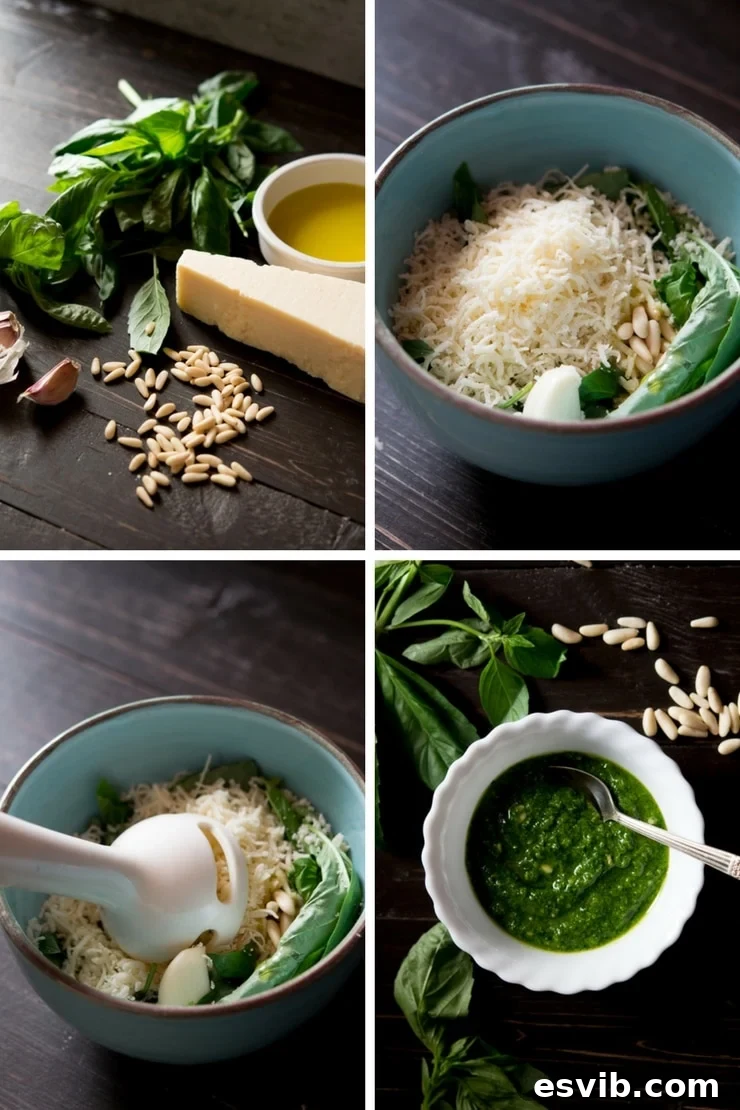
See? Super easy! In mere minutes, you’ll have a batch of fresh, fragrant pesto ready to transform your meals. Toss it through freshly boiled pasta for a quick and satisfying dinner, drizzle it over a simple spinach salad, or spread it generously on your favorite sandwiches. And don’t forget to explore other delightful variations; my sun-dried tomato pesto recipe is equally simple and just as versatile!
Top Tips for Crafting the Best Basil Pesto
- Quality Basil is Key: Always use the freshest Italian basil you can find. Avoid any leaves with black spots or signs of wilting, as these can introduce bitterness to your pesto. Gently wash and thoroughly dry your basil before use.
- Invest in Good Olive Oil: The flavor of your pesto largely depends on the quality of your olive oil. Opt for a high-quality extra virgin olive oil, preferably Italian, for the most authentic and robust taste.
- Nut Alternatives: While pine nuts are traditional, don’t hesitate to experiment! Cashews offer a creamy texture, walnuts a slightly bitter earthiness, and almonds a milder flavor. Lightly toasting nuts beforehand can enhance their depth.
- Cheese Choices: A blend of Pecorino Romano and Parmigiano Reggiano is classic, but using either one alone is perfectly fine. Pecorino offers a sharper, saltier kick, while Parmigiano is milder and nuttier.
- Prevent Oxidation for Vibrant Color: To keep your pesto a beautiful, bright green:
- Ensure all ingredients, especially basil, are cold before blending.
- Blend quickly and avoid over-processing, which generates heat.
- If storing, press a layer of olive oil over the surface of the pesto in an airtight container before refrigerating. A squeeze of lemon juice can also help.
- Storage: Fresh pesto can be kept in an airtight container in the fridge for up to 3-4 days. If it starts to oxidize and turn slightly brown on top, simply give it a good stir to refresh it. For longer storage, pesto freezes beautifully in ice cube trays or small containers for several months.
- Adjust Consistency: The amount of olive oil can be adjusted to your preference. For a thinner sauce, add more oil. For a thicker, more spreadable pesto, use less.
Unleash the Versatility: More Ways to Enjoy Pesto
Pesto’s uses extend far beyond pasta. Its intense flavor profile makes it a fantastic addition to a wide array of dishes:
- Pasta alla Montecarlo: Elevate a creamy meat sauce with a dollop of pesto.
- Pesto and Roasted Tomato Pizza: A vibrant and fresh alternative to traditional pizza sauce.
- Pesto Provolone Cannelloni: Infuse baked pasta with layers of cheesy pesto goodness.
- Sour Cream Pesto Dip with Prosciutto Dippers: A quick and flavorful appetizer.
- Chicken Pesto Ciabatta: A gourmet sandwich option for lunch or dinner.
- Easy Pesto Gnocchi: A simple yet satisfying meal where pesto coats soft potato dumplings.
- Bruschetta Topping: Spread on toasted bread for an instant appetizer.
- Grilled Meats and Vegetables: Spoon over grilled chicken, fish, or roasted vegetables for added flavor.
- Eggs: Swirl into scrambled eggs or spread on toast with fried eggs.
- Soups: A spoonful can add depth and freshness to vegetable or minestrone soups.
- Dressings: Whisk with a little extra olive oil and vinegar for a vibrant salad dressing.
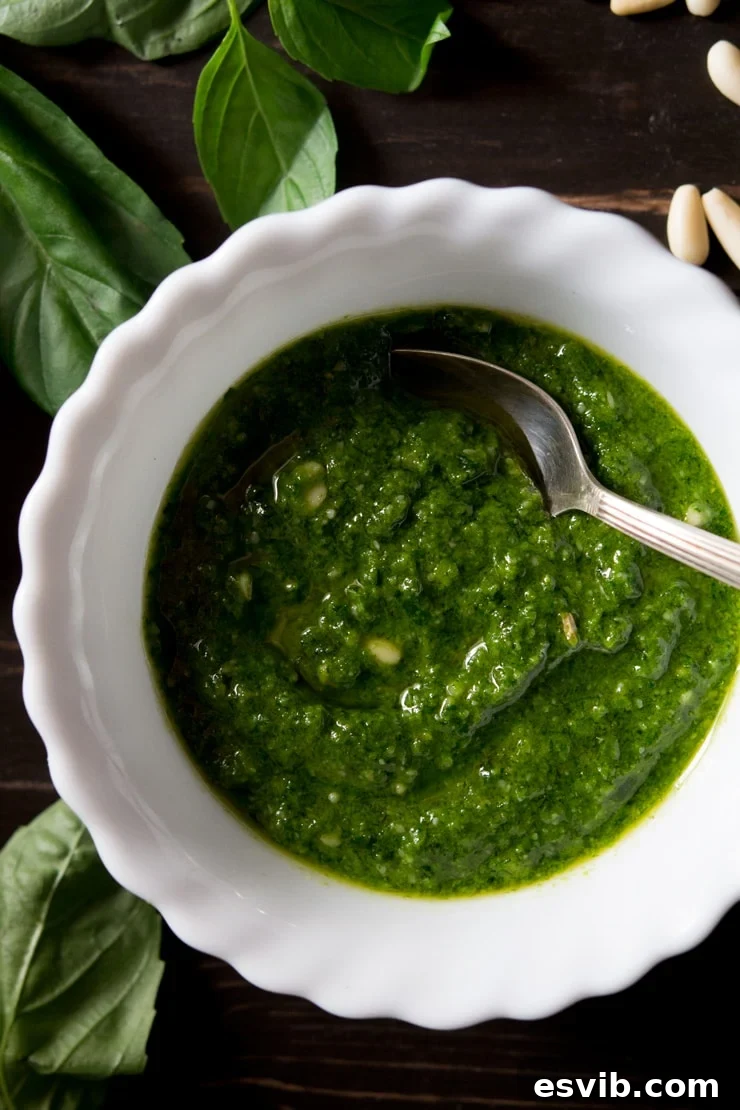
Explore More Pesto Creations
The world of pesto is vast and exciting! Once you master this classic basil version, consider venturing into other regional Italian pestos and creative variations:
- Pesto alla Trapanese (Sicilian Pesto): A fresh tomato-based pesto with almonds.
- The Easiest Red Pesto Recipe (Sun-dried Tomato): A rich and savory red pesto.
- Parsley Pesto Recipe – Fresh And Easy: A bright and herbaceous alternative to basil.
We love hearing about your culinary adventures! If you’ve tried this authentic basil pesto recipe or any other delightful dish from our collection, please don’t hesitate to rate the recipe and share your thoughts in the comments section below. Your feedback inspires us to keep creating and sharing delicious food! You can also FOLLOW ME on FACEBOOK, TWITTER, INSTAGRAM, and PINTEREST to discover more delectable recipes and see what we’re cooking up next.
How To Make Basil Pesto
By Emily
5 mins
5 mins
4 servings
Pin Recipe
Print Recipe
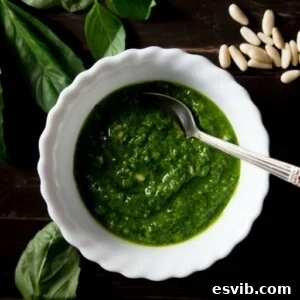
A classic and easy recipe for authentic basil pesto, known as one of the world’s best sauces. Made with only five essential ingredients, this intense, flavor-packed basil pesto is perfect for dressing pasta, enhancing salads, spreading on sandwiches, topping pizza, and so much more!
Ingredients
- 2 cups (30g) fresh basil leaves
- 1/8 cup (15g) pine nuts (lightly toasted for extra flavor, optional)
- 1 clove garlic, minced
- 3 tbsp (45ml) good quality extra virgin olive oil
- 1/4 cup (25g) Pecorino Romano or Parmigiano Reggiano cheese, grated
- Salt and freshly ground black pepper, to taste
Instructions
- Place the basil leaves, pine nuts, minced garlic, and grated cheese into the bowl of a food processor or a deep container suitable for an immersion blender.
- Begin to blend the ingredients. While blending, slowly drizzle in the extra virgin olive oil until a smooth, vibrant green sauce is formed. Avoid over-processing, which can heat the basil and affect its color and flavor.
- Taste the pesto and season with a pinch of salt and freshly ground black pepper as needed. If the pesto is too thick, add a little more olive oil until it reaches your desired consistency.
Video
Notes
Please note: This recipe was tested and developed using metric measurements. All imperial measurements are approximate. For best results, use fresh, high-quality ingredients.
- Ensure you use fresh, bright green basil leaves, free from any blemishes, for the best flavor and color.
- The quality of your extra virgin olive oil significantly impacts the final taste of your pesto.
- If pine nuts are unavailable or you prefer an alternative, cashews, walnuts, or almonds make excellent substitutes.
- To preserve its vibrant green color, store pesto in an airtight container with a thin layer of olive oil on top in the refrigerator for up to 3-4 days. It can also be frozen for longer storage.
Helpful Info for All Recipes
- I consistently use extra virgin olive oil in all my recipes unless explicitly stated otherwise.
- For canned or jarred tomatoes, I always recommend Cirio or Mutti brands for their superior quality and flavor.
- Unless otherwise specified, assume all vegetables are medium-sized.
- All recipes are meticulously tested and developed using a fan (convection) oven.
- Find out more about how nutrition is calculated.
- Discover our must-have Italian Pantry Staples.
- Explore all our Essential Kitchen Tools for Italian Cooking.
Nutrition
Calories: 149 kcal | Carbohydrates: 1g | Protein: 2g | Fat: 15g | Saturated Fat: 2g | Cholesterol: 6mg | Sodium: 75mg | Potassium: 60mg | Vitamin A: 660IU | Vitamin C: 2.4mg | Calcium: 88mg | Iron: 0.7mg
Nutrition information is automatically calculated, so it should only be used as an approximation.
Did you try this recipe?
Leave a comment below and share your experience!